11AA02UID
2K UNI/O® Serial EEPROM with Unique 32-Bit Serial Number
DEVICE SELECTION TABLE
Part Number
Density
(bits)
VCC Range
Page Size
(Bytes)
Temp.
Ranges
Packages
Unique ID
Length
11AA02UID
2K
1.8-5.5V
16
I
SN, TT
32-Bit
Features:
Description:
• Preprogrammed 32-Bit Serial Number:
- Unique across all UID-family EEPROMs
- Scalable to 48-bit, 64-bit, 128-bit, 256-bit,
and other lengths
• Single I/O, UNI/O® Serial Interface Bus
• Low-Power CMOS Technology:
- 1 mA active current, typical
- 1 µA standby current (max.)
• 256 x 8 Bit Organization
• Schmitt Trigger Inputs for Noise Suppression
• Output Slope Control to Eliminate Ground Bounce
• 100 kbps Max. Bit Rate – Equivalent to 100 kHz
Clock Frequency
• Self-Timed Write Cycle (including Auto-Erase)
• Page-Write Buffer for up to 16 Bytes
• STATUS Register for Added Control:
- Write enable latch bit
- Write-In-Progress bit
• Block Write Protection:
- Protect none, 1/4, 1/2 or all of array
• Built-in Write Protection:
- Power-on/off data protection circuitry
- Write enable latch
• High Reliability:
- Endurance: 1,000,000 erase/write cycles
- Data retention: > 200 years
- ESD protection: > 4,000V
• 3-Lead SOT-23 and 8-Lead SOIC Packages
• RoHS Compliant
• Available Temperature Ranges:
- Industrial (I):
-40°C to +85°C
The Microchip Technology Inc. 11AA02UID device is a
2 Kbit Serial Electrically Erasable PROM with a
preprogrammed, 32-bit unique ID. The device is
organized in blocks of x8-bit memory and support the
patented* single I/O UNI/O® serial bus. By using
Manchester encoding techniques, the clock and data
are combined into a single, serial bit stream (SCIO),
where the clock signal is extracted by the receiver to
correctly decode the timing and value of each bit.
Low-voltage design permits operation down to 1.8V,
with standby and active currents of only 1 uA and 1 mA,
respectively.
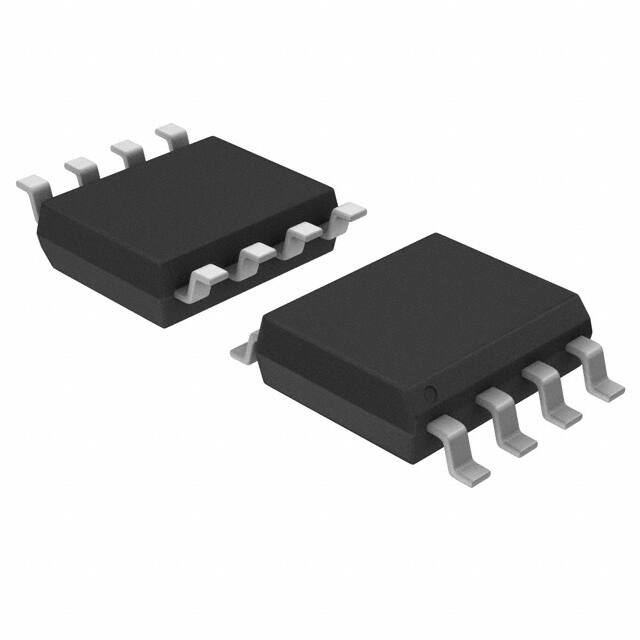
The 11AA02UID is available in standard 8-lead SOIC
and 3-lead SOT-23 packages.
Package Types (not to scale)
SOIC
SOT23
(SN)
(TT)
2
VCC
VSS 3
1 SCIO
NC
NC
1
2
8
7
VCC
NC
3
6
NC
VSS 4
5
SCIO
NC
Pin Function Table
Name
SCIO
VSS
VCC
Function
Serial Clock, Data Input/Output
Ground
Supply Voltage
* Microchip’s UNI/O® Bus products are covered by the following patents issued in the U.S.A.: 7,376,020 and 7,788,430.
2013 Microchip Technology Inc.
DS20005206A-page 1
�11AA02UID
1.0
ELECTRICAL CHARACTERISTICS
Absolute Maximum Ratings (†)
VCC .............................................................................................................................................................................6.5V
SCIO w.r.t. VSS .................................................................................................................................... -0.6V to VCC+1.0V
Storage temperature .................................................................................................................................-65°C to 150°C
Ambient temperature under bias .................................................................................................................-40°C to 85°C
ESD protection on all pins ..........................................................................................................................................4 kV
† NOTICE: Stresses above those listed under ‘Absolute Maximum Ratings’ may cause permanent damage to the
device. This is a stress rating only and functional operation of the device at those or any other conditions above those
indicated in the operational listings of this specification is not implied. Exposure to maximum rating conditions for an
extended period of time may affect device reliability.
TABLE 1-1:
DC CHARACTERISTICS
DC CHARACTERISTICS
Param.
No.
Sym.
D1
VIH
D2
VIL
D3
VHYS
D4
Characteristic
Electrical Characteristics:
Industrial (I):
VCC = 2.5V to 5.5V
VCC = 1.8V to 2.5V
TA = -40°C to +85°C
TA = -20°C to +85°C
Min.
Max.
Units
Test Conditions
High-level Input
Voltage
0.7*VCC
VCC+1
V
Low-level Input
Voltage
-0.3
-0.3
0.3*VCC
0.2*VCC
V
V
VCC2.5V
VCC < 2.5V
Hysteresis of Schmitt
Trigger inputs (SCIO)
0.05*Vcc
—
V
VCC2.5V (Note 1)
VOH
High-level Output
Voltage
VCC -0.5
VCC -0.5
—
—
V
V
IOH = -300 A, VCC = 5.5V
IOH = -200 A, Vcc = 2.5V
D5
VOL
Low-level Output
Voltage
—
—
0.4
0.4
V
V
IOI = 300 A, VCC = 5.5V
IOI = 200 A, Vcc = 2.5V
D6
IO
Output Current Limit
(Note 2)
—
—
±4
±3
mA
mA
VCC = 5.5V (Note 1)
Vcc = 2.5V (Note 1)
D7
ILI
Input Leakage
Current (SCIO)
—
±1
A
VIN = VSS or VCC
D8
CINT
Internal Capacitance
(all inputs and
outputs)
—
7
pF
TA = 25°C, FCLK = 1 MHz,
VCC = 5.0V (Note 1)
D9
ICC Read Read Operating
Current
—
—
3
1
mA
mA
VCC=5.5V, FBUS=100 kHz, CB=100 pF
VCC=2.5V, FBUS=100 kHz, CB=100 pF
D10
ICC Write Write Operating
Current
—
—
5
3
mA
mA
VCC = 5.5V
VCC = 2.5V
D11
Iccs
Standby Current
—
1
A
VCC = 5.5V, TA = 85°C
D12
ICCI
Idle Mode Current
—
50
A
VCC = 5.5V
Note 1:
2:
This parameter is periodically sampled and not 100% tested.
The SCIO output driver impedance will vary to ensure IO is not exceeded.
DS20005206A-page 2
2013 Microchip Technology Inc.
�11AA02UID
TABLE 1-2:
AC CHARACTERISTICS
Electrical Characteristics:
Industrial (I):
VCC = 2.5V to 5.5V
VCC = 1.8V to 2.5V
AC CHARACTERISTICS
Param.
No.
Sym.
1
FBUS
2
TE
3
TIJIT
Characteristic
Min.
Max.
Units
Serial Bus Frequency
10
100
kHz
Bit Period
10
100
µs
—
Input Edge Jitter
Tolerance
—
±0.06
UI
(Note 3)
—
±0.50
FDRIFT Serial Bus Frequency
Drift Rate Tolerance
4
TA = -40°C to +85°C
TA = -20°C to +85°C
Test Conditions
—
% per byte —
5
FDEV
Serial Bus Frequency
Drift Limit
—
±5
6
TOJIT
Output Edge Jitter
—
±0.25
UI
(Note 3)
7
TR
SCIO Input Rise Time
(Note 1)
—
100
ns
—
8
TF
SCIO Input Fall Time
(Note 1)
—
100
ns
—
TSTBY Standby Pulse Time
% per
command
—
600
—
µs
—
10
TSS
Start Header Setup Time
10
—
µs
—
11
THDR
Start Header Low Pulse
Time
5
—
µs
—
12
TSP
Input Filter Spike
Suppression (SCIO)
—
50
ns
(Note 1)
13
TWC
Write Cycle Time
(byte or page)
—
—
5
10
ms
ms
Write, WRSR commands
ERAL, SETAL commands
14
—
Endurance (per page)
1M
—
cycles
25°C, VCC = 5.5V (Note 2)
9
Note 1: This parameter is periodically sampled and not 100% tested.
2: This parameter is not tested but ensured by characterization. For endurance estimates in a specific
application, please consult the Total Endurance™ Model which can be obtained on Microchip’s web site at
www.microchip.com.
3: A Unit Interval (UI) is equal to 1-bit period (TE) at the current bus frequency.
TABLE 1-3:
AC TEST CONDITIONS
AC Waveform:
VLO = 0.2V
VHI = VCC - 0.2V
CL = 100 pF
Timing Measurement Reference Level
Input
0.5 VCC
Output
0.5 VCC
2013 Microchip Technology Inc.
DS20005206A-page 3
�11AA02UID
FIGURE 1-1:
10
BUS TIMING – START HEADER
11
2
SCIO
Data ‘0’
FIGURE 1-2:
Data ‘1’
Data ‘0’
Data ‘1’
Data ‘0’
Data ‘0’
Data ‘1’ MAK bit NoSAK bit
BUS TIMING – DATA
2
7
8
Data ‘1’
Data ‘0’
12
SCIO
Data ‘0’
FIGURE 1-3:
Data ‘1’
Data ‘1’
BUS TIMING – STANDBY PULSE
9
SCIO
Standby
Mode
FIGURE 1-4:
BUS TIMING – JITTER
2
3
Ideal Edge
from Master
DS20005206A-page 4
2
3
Ideal Edge
from Master
6
6
Ideal Edge
from Slave
6
6
Ideal Edge
from Slave
2013 Microchip Technology Inc.
�11AA02UID
2.0
FUNCTIONAL DESCRIPTION
2.1
Principles of Operation
The 11AA02UID family of serial EEPROMs support
the UNI/O® protocol. They can be interfaced with
microcontrollers, including Microchip’s PIC® microcontrollers, ASICs, or any other device with an available
discrete I/O line that can be configured properly to
match the UNI/O protocol.
The 11AA02UID devices contain an 8-bit instruction
register. The devices are accessed via the SCIO pin.
Data is embedded into the I/O stream through
Manchester encoding. The bus is controlled by a
master device which determines the clock period, controls the bus access and initiates all operations, while
the 11AA02UID works as slave. Both master and slave
can operate as transmitter or receiver, but the master
device determines which mode is active.
FIGURE 2-1:
BLOCK DIAGRAM
STATUS
Register
HV Generator
EEPROM
Memory
Control
Logic
I/O Control
Logic
X
Array
Dec
Page Latches
CurrentLimited
Slope
Control
Y Decoder
SCIO
VCC
VSS
2013 Microchip Technology Inc.
Sense Amp.
R/W Control
DS20005206A-page 5
�11AA02UID
3.0
BUS CHARACTERISTICS
3.1
Standby Pulse
If a command is terminated in any manner other than a
NoMAK/SAK combination, then the master must
perform a standby pulse before beginning a new
command, regardless of which device is to be selected.
When the master has control of SCIO, a standby pulse
can be generated by holding SCIO high for TSTBY. At
this time, the 11AA02UID will reset and return to
Standby mode. Subsequently, a high-to-low transition
on SCIO (the first low pulse of the header) will return
the device to the active state.
Note:
An example of two consecutive commands is shown in
Figure 3-1. Note that the device address is the same
for both commands, indicating that the same device is
being selected both times.
Once a command is terminated satisfactorily (i.e., via
a NoMAK/SAK combination during the Acknowledge
sequence), performing a standby pulse is not required
to begin a new command as long as the device to be
selected is the same device selected during the previous command. However, a period of TSS must be
observed after the end of the command and before the
beginning of the start header. After TSS, the start
header (including THDR low pulse) can be transmitted
in order to begin the new command.
A standby pulse cannot be generated while the slave
has control of SCIO. In this situation, the master must
wait for the slave to finish transmitting and to release
SCIO before the pulse can be generated.
If, at any point during a command an error is detected
by the master, a standby pulse should be generated
and the command should be performed again.
Standby Pulse(1)
Start Header
MAK
SAK
CONSECUTIVE COMMANDS EXAMPLE
MAK
NoSAK
FIGURE 3-1:
After a POR/BOR event occurs, a low-tohigh transition on SCIO must be generated before proceeding with communication, including a standby pulse.
Device Address
SCIO
Start Header
1 0 1 0 0 0 0 0
MAK
SAK
MAK
NoSAK
NoMAK
SAK
TSS
0 1 0 1 0 1 0 1
Device Address
SCIO
0 1 0 1 0 1 0 1
1 0 1 0 0 0 0 0
Note 1: After a POR/BOR event, a low-to-high transition on SCIO is required to occur before the first
standby pulse.
3.2
Start Data Transfer
All operations must be preceded by a start header. The
start header consists of holding SCIO low for a period
of THDR, followed by transmitting an 8-bit ‘01010101’
code. This code is used to synchronize the slave’s
internal clock period with the master’s clock period, so
accurate timing is very important.
FIGURE 3-2:
When a standby pulse is not required (i.e., between
successive commands to the same device), a period of
TSS must be observed after the end of the command
and before the beginning of the start header.
Figure 3-2 shows the waveform for the start header,
including the required Acknowledge sequence at the
end of the byte.
START HEADER
SCIO
TSS
THDR
DS20005206A-page 6
Data ‘0’
Data ‘1’
Data ‘0’
Data ‘1’
Data ‘0’
Data ‘1’
Data ‘0’
Data ‘1’
MAK
NoSAK
2013 Microchip Technology Inc.
�11AA02UID
3.3
Acknowledge
FIGURE 3-4:
MAK (‘1’)
SAK (‘1’)
NoMAK (‘0’)
NoSAK(1)
An Acknowledge routine occurs after each byte is
transmitted, including the start header. This routine
consists of two bits. The first bit is transmitted by the
master, and the second bit is transmitted by the slave.
Note:
A MAK must always be transmitted
following the start header.
The Master Acknowledge, or MAK, is signified by transmitting a ‘1’, and informs the slave that the current
operation is to be continued. Conversely, a Not
Acknowledge, or NoMAK, is signified by transmitting a
‘0’, and is used to end the current operation (and initiate
the write cycle for write operations).
Note:
When a NoMAK is used to end a WRITE
or WRSR instruction, the write cycle is not
initiated if no bytes of data have been
received.
The slave Acknowledge, or SAK, is also signified by
transmitting a ‘1’, and confirms proper communication.
However, unlike the NoMAK, the NoSAK is signified by
the lack of a middle edge during the bit period.
Note:
In order to guard against bus contention, a
NoSAK will occur after the start header.
Note 1:
3.4
A NoSAK is defined as any sequence that is not a
valid SAK.
Device Addressing
A device address byte is the first byte received from the
master device following the start header. The device
address byte consists of a 4-bit family code, for the
11AA02UID this is set as ‘1010’. The last four bits of
the device address byte are the device code, which is
hardwired to ‘0000’.
FIGURE 3-5:
See Figure 3.3 and Figure 3-4 for details.
If a NoSAK is received from the slave after any byte
(except the start header), an error has occurred. The
master should then perform a standby pulse and begin
the desired command again.
FIGURE 3-3:
DEVICE ADDRESS BYTE
ALLOCATION
SLAVE ADDRESS
A NoSAK will occur for the following events:
• Following the start header
• Following the device address, if no slave on the
bus matches the transmitted address
• Following the command byte, if the command is
invalid, including Read, CRRD, Write, WRSR,
SETAL, and ERAL during a write cycle.
• If the slave becomes out of sync with the master
• If a command is terminated prematurely by using
a NoMAK, with the exception of immediately after
the device address.
ACKNOWLEDGE BITS
1
3.5
0
1
0
0
MAK SAK
0
0
0
Bus Conflict Protection
To help guard against high current conditions arising
from bus conflicts, the 11AA02UID features a currentlimited output driver. The IOL and IOH specifications
describe the maximum current that can be sunk or
sourced, respectively, by the SCIO pin. The
11AA02UID will vary the output driver impedance to
ensure that the maximum current level is not exceeded.
ACKNOWLEDGE
ROUTINE
Master
Slave
MAK
SAK
2013 Microchip Technology Inc.
DS20005206A-page 7
�11AA02UID
3.6
Device Standby
The 11AA02UID features a low-power Standby mode
during which the device is waiting to begin a new
command. A high-to-low transition on SCIO will exit
Low-Power mode and prepare the device for receiving
the start header.
Standby mode will be entered upon the following
conditions:
• A NoMAK followed by a SAK (i.e., valid termination of a command)
• Reception of a standby pulse
Note:
3.7
In the case of the WRITE, WRSR, SETAL,
or ERAL commands, the write cycle is
initiated upon receipt of the NoMAK,
assuming all other write requirements
have been met.
Device Idle
The 11AA02UID features an Idle mode during which
all serial data is ignored until a standby pulse occurs.
Idle mode will be entered upon the following conditions:
• Invalid device address
• Invalid command byte, including Read, CRRD,
Write, WRSR, SETAL and ERAL during a write
cycle.
• Missed edge transition
• Reception of a MAK following a WREN, WRDI,
SETAL, or ERAL command byte
• Reception of a MAK following the data byte of a
WRSR command
An invalid start header will indirectly cause the device
to enter Idle mode. Whether or not the start header is
invalid cannot be detected by the slave, but will
prevent the slave from synchronizing properly with the
master. If the slave is not synchronized with the
master, an edge transition will be missed, thus causing
the device to enter Idle mode.
3.8
Synchronization
At the beginning of every command, the 11AA02UID
utilizes the start header to determine the master’s bus
clock period. This period is then used as a reference for
all subsequent communication within that command.
The 11AA02UID features re-synchronization circuitry
which will monitor the position of the middle data edge
during each MAK bit and subsequently adjust the internal time reference in order to remain synchronized with
the master.
DS20005206A-page 8
There are two variables which can cause the
11AA02UID to lose synchronization. The first is
frequency drift, defined as a change in the bit period,
TE. The second is edge jitter, which is a single occurrence change in the position of an edge within a bit
period, while the bit period itself remains constant.
3.8.1
FREQUENCY DRIFT
Within a system, there is a possibility that frequencies
can drift due to changes in voltage, temperature, etc.
The re-synchronization circuitry provides some tolerance for such frequency drift. The tolerance range is
specified by two parameters, FDRIFT and FDEV. FDRIFT
specifies the maximum tolerable change in bus frequency per byte. FDEV specifies the overall limit in frequency deviation within an operation (i.e., from the end
of the start header until communication is terminated
for that operation). The start header at the beginning of
the next operation will reset the re-synchronization
circuitry and allow for another FDEV amount of
frequency drift.
3.8.2
EDGE JITTER
Ensuring that edge transitions from the master always
occur exactly in the middle or end of the bit period is not
always possible. Therefore, the re-synchronization
circuitry is designed to provide some tolerance for edge
jitter.
The 11AA02UID adjusts its phase every MAK bit, so
TIJIT specifies the maximum allowable peak-to-peak
jitter relative to the previous MAK bit. Since the position
of the previous MAK bit would be difficult to measure by
the master, the minimum and maximum jitter values for
a system should be considered the worst-case. These
values will be based on the execution time for different
branch paths in software, jitter due to thermal noise,
etc.
The difference between the minimum and maximum
values, as a percentage of the bit period, should be calculated and then compared against TIJIT to determine
jitter compliance.
Note:
Because the 11AA02UID only re-synchronizes during the MAK bit, the overall ability
to remain synchronized depends on a
combination of frequency drift and edge
jitter (i.e., if the MAK bit edge is experiencing the maximum allowable edge jitter,
then there is no room for frequency drift).
Conversely, if the frequency has drifted to
the maximum amount tolerable within a
byte, then no edge jitter can be present.
2013 Microchip Technology Inc.
�11AA02UID
4.0
DEVICE COMMANDS
After the device address byte, a command byte must
be sent by the master to indicate the type of operation
to be performed. The code for each instruction is listed
in Table 4-1.
TABLE 4-1:
INSTRUCTION SET
Instruction Name
Hex Code
Description
READ
0000 0011
0x03
Read data from memory array beginning at specified address
CRRD
0000 0110
0x06
Read data from current location in memory array
WRITE
0110 1100
0x6C
Write data to memory array beginning at specified address
WREN
1001 0110
0x96
Set the write enable latch (enable write operations)
WRDI
1001 0001
0x91
Reset the write enable latch (disable write operations)
RDSR
0000 0101
0x05
Read STATUS register
WRSR
0110 1110
0x6E
Write STATUS register
ERAL
0110 1101
0x6D
Write ‘0x00’ to entire array
SETAL
0110 0111
0x67
Write ‘0xFF’ to entire array
Read Instruction
The Read command allows the master to access any
memory location in a random manner. After the READ
instruction has been sent to the slave, the two bytes of
the Word Address are transmitted, with an Acknowledge sequence being performed after each byte. Then,
the slave sends the first data byte to the master. If more
data is to be read, the master sends a MAK, indicating
that the slave should output the next data byte. This
continues until the master sends a NoMAK, which ends
the operation.
READ COMMAND SEQUENCE
Standby Pulse
Start Header
Device Address
MAK
SAK
FIGURE 4-1:
To provide sequential reads in this manner, the
11AA02UID contains an internal Address Pointer which
is incremented by one after the transmission of each
byte. This Address Pointer allows the entire memory
contents to be serially read during one operation. When
the highest address is reached, the Address Pointer
rolls over to address ‘0x00’ if the master chooses to
continue the operation by providing a MAK.
MAK
NoSAK
4.1
Instruction Code
SCIO
7 6 5 4 3 2 1 0
15 14 13 12 11 10 9 8
SCIO
Word Address LSB
MAK
SAK
Word Address MSB
1 0 1 0 0 0 0 0
MAK
SAK
Command
MAK
SAK
0 1 0 1 0 1 0 1
SCIO
7 6 5 4 3 2 1 0
2013 Microchip Technology Inc.
7 6 5 4 3 2 1 0
Data Byte n
NoMAK
SAK
Data Byte 2
MAK
SAK
Data Byte 1
MAK
SAK
0 0 0 0 0 0 1 1
7 6 5 4 3 2 1 0
DS20005206A-page 9
�11AA02UID
Current Address Read (CRRD)
Instruction
TABLE 4-2:
The internal address counter featured on the
11AA02UID maintains the address of the last memory
array location accessed. The CRRD instruction allows
the master to read data back beginning from this
current location. Consequently, no word address is
provided upon issuing this command.
Note that, except for the initial word address, the
READ and CRRD instructions are identical, including
the ability to continue requesting data through the use
of MAKs in order to sequentially read from the array.
As with the READ instruction, the CRRD instruction is
terminated by transmitting a NoMAK.
Command
Event
Action
—
Power-on Reset Counter is undefined
Read or
Write
MAK edge
following each
Address byte
Counter is updated
with newly received
value
Read,
Write, or
CRRD
MAK/NoMAK
edge following
each data byte
Counter is incremented by 1
Note:
If, following each data byte in a READ,
WRITE, or CRRD instruction, neither a
MAK nor a NoMAK edge is received (i.e.,
if a standby pulse occurs instead), the
internal address counter will not be incremented.
Table 4-2 lists the events upon which the internal
address counter is modified.
Note:
During a Write command, once the last
data byte for a page has been loaded, the
internal Address Pointer will rollover to the
beginning of the selected page.
CRRD COMMAND SEQUENCE
Standby Pulse
Start Header
MAK
NoSAK
FIGURE 4-2:
INTERNAL ADDRESS
COUNTER
Device Address
MAK
SAK
4.2
SCIO
7 6 5 4 3 2 1 0
SCIO
Data Byte 2
MAK
SAK
Data Byte 1
1 0 1 0 0 0 0 0
MAK
SAK
Command
MAK
SAK
0 1 0 1 0 1 0 1
7 6 5 4 3 2 1 0
Data Byte n
SCIO
NoMAK
SAK
0 0 0 0 0 1 1 0
7 6 5 4 3 2 1 0
DS20005206A-page 10
2013 Microchip Technology Inc.
�11AA02UID
Write Instruction
Prior to any attempt to write data to the 11AA02UID, the
write enable latch must be set by issuing the WREN
instruction (see Section 4.4 “Write Enable (WREN)
and Write Disable (WRDI) Instructions”).
Once the write enable latch is set, the user may
proceed with issuing a WRITE instruction (including
the header and device address bytes) followed by the
MSB and LSB of the Word Address. Once the last
Acknowledge sequence has been performed, the
master transmits the data byte to be written.
Upon receipt of each word, the four lower-order
Address Pointer bits are internally incremented by one.
The higher-order bits of the word address remain constant. If the master should transmit data past the end of
the page, the address counter will roll over to the beginning of the page, where further received data will be
written.
Note:
The 11AA02UID features a 16-byte page buffer, meaning that up to 16 bytes can be written at one time. To
utilize this feature, the master can transmit up to 16
data bytes to the 11AA02UID, which are temporarily
stored in the page buffer. After each data byte, the
master sends a MAK, indicating whether or not another
data byte is to follow. A NoMAK indicates that no more
data is to follow, and as such will initiate the internal
write cycle.
If a NoMAK is generated before any data
has been provided, or if a standby pulse
occurs before the NoMAK is generated,
the 11AA02UID will be reset, and the write
cycle will not be initiated.
FIGURE 4-3:
WRITE COMMAND SEQUENCE
Standby Pulse
Start Header
MAK
NoSAK
Note:
Page write operations are limited to writing bytes within a single physical page,
regardless of the number of bytes actually being written. Physical page boundaries start at addresses that are integer
multiples of the page size (16 bytes) and
end at addresses that are integer multiples of the page size minus 1. As an
example, the page that begins at address
0x30 ends at address 0x3F. If a page
Write command attempts to write across a
physical page boundary, the result is that
the data wraps around to the beginning of
the current page (overwriting data previously stored there), instead of being written to the next page as might be expected.
It is therefore necessary for the application software to prevent page write operations that would attempt to cross a page
boundary.
MAK
SAK
4.3
Device Address
SCIO
Word Address LSB
7 6 5 4 3 2 1 0
15 14 13 12 11 10 9 8
SCIO
MAK
SAK
Word Address MSB
1 0 1 0 0 0 0 0
MAK
SAK
Command
MAK
SAK
0 1 0 1 0 1 0 1
SCIO
7 6 5 4 3 2 1 0
7 6 5 4 3 2 1 0
No MAK
SAK
Data Byte 2
MAK
SAK
Data Byte 1
MAK
SAK
0 1 1 0 1 1 0 0
Data Byte n
7 6 5 4 3 2 1 0
Twc
2013 Microchip Technology Inc.
DS20005206A-page 11
�11AA02UID
Write Enable (WREN) and Write
Disable (WRDI) Instructions
The 11AA02UID contains a write enable latch. See
Table 6-1 for the Write-Protect Functionality Matrix.
This latch must be set before any write operation will be
completed internally. The WREN instruction will set the
latch, and the WRDI instruction will reset the latch.
The WREN and WRDI instructions must be
terminated with a NoMAK following the
command byte. If a NoMAK is not
received at this point, the command will be
considered invalid, and the device will go
into Idle mode without responding with a
SAK or executing the command.
FIGURE 4-4:
•
•
•
•
•
•
Power-up
WRDI instruction successfully executed
WRSR instruction successfully executed
WRITE instruction successfully executed
ERAL instruction successfully executed
SETAL instruction successfully executed
WRITE ENABLE COMMAND SEQUENCE
Standby Pulse
Start Header
Device Address
MAK
SAK
Note:
The following is a list of conditions under which the
write enable latch will be reset:
MAK
NoSAK
4.4
SCIO
Command
1 0 1 0 0 0 0 0
NoMAK
SAK
0 1 0 1 0 1 0 1
SCIO
1 0 0 1 0 1 1 0
Standby Pulse
Start Header
Device Address
MAK
SAK
WRITE DISABLE COMMAND SEQUENCE
MAK
NoSAK
FIGURE 4-5:
SCIO
Command
1 0 1 0 0 0 0 0
NoMAK
SAK
0 1 0 1 0 1 0 1
SCIO
1 0 0 1 0 0 0 1
DS20005206A-page 12
2013 Microchip Technology Inc.
�11AA02UID
Read Status Register (RDSR)
Instruction
The Block Protection (BP0 and BP1) bits indicate
which blocks are currently write-protected. These bits
are set by the user through the WRSR instruction.
These bits are nonvolatile.
The RDSR instruction provides access to the STATUS
register. The STATUS register may be read at any time,
even during a write cycle. The STATUS register is
formatted as follows:
Note:
7
6
5
4
3
2
1
0
X X X X
BP1
BP0
WEL
WIP
Note: Bits 4-7 are don’t cares, and will read as ‘0’.
The WIP and WEL bits will update dynamically (asynchronous to issuing the RDSR instruction). Furthermore, after the STATUS register data is received, the
master can provide a MAK during the Acknowledge
sequence to request that the data be transmitted again.
This allows the master to continuously monitor the WIP
and WEL bits without the need to issue another full
command.
The Write-In-Process (WIP) bit indicates whether the
11AA02UID is busy with a write operation. When set to
a ‘1’, a write is in progress, when set to a ‘0’, no write
is in progress. This bit is read-only.
The Write Enable Latch (WEL) bit indicates the status
of the write enable latch. When set to a ‘1’, the latch
allows writes to the array, when set to a ‘0’, the latch
prohibits writes to the array. This bit is set and cleared
using the WREN and WRDI instructions, respectively.
This bit is read-only for any other instruction.
Once the master is finished, it provides a NoMAK to
end the operation.
Note:
The current drawn for a Read Status
Register command during a write cycle is
a combination of the ICC Read and ICC
Write operating currents.
READ STATUS REGISTER COMMAND SEQUENCE
Standby Pulse
Start Header
Device Address
MAK
SAK
FIGURE 4-6:
If Read Status Register command is
initiated while the 11AA02UID is currently
executing an internal write cycle on the
STATUS register, the new Block
Protection bit values will be read during
the entire command.
MAK
NoSAK
4.5
SCIO
STATUS Register Data
1 0 1 0 0 0 0 0
NoMAK
SAK
Command
MAK
SAK
0 1 0 1 0 1 0 1
3 2 1 0
SCIO
0 0 0 0 0 1 0 1
0 0 0 0
Note: The STATUS register data can continuously be read, or polled, by transmitting a MAK in place of the NoMAK.
2013 Microchip Technology Inc.
DS20005206A-page 13
�11AA02UID
Write Status Register (WRSR)
Instruction
TABLE 4-3:
The WRSR instruction allows the user to select one of
four levels of protection for the array by writing to the
appropriate bits in the STATUS register. The array is
divided up into four segments. The user has the ability
to write-protect none, one, two, or all four of the segments of the array. The partitioning is controlled as
illustrated in Table 4-3.
BP1
BP0
Array Addresses
Write-Protected
0
0
none
0
1
upper 1/4
(C0h-FFh)
1
0
upper 1/2
(80h-FFh)
1
1
all
(00h-FFh)
After transmitting the STATUS register data, the master
must transmit a NoMAK during the Acknowledge
sequence in order to initiate the internal write cycle.
The WRSR instruction must be terminated
with a NoMAK following the data byte. If a
NoMAK is not received at this point, the
command will be considered invalid, and
the device will go into Idle mode without
responding with a SAK or executing the
command.
FIGURE 4-7:
WRITE STATUS REGISTER COMMAND SEQUENCE
Standby Pulse
Start Header
Device Address
MAK
SAK
Note:
ARRAY PROTECTION
MAK
NoSAK
4.6
SCIO
Status Register Data
1 0 1 0 0 0 0 0
NoMAK
SAK
Command
MAK
SAK
0 1 0 1 0 1 0 1
7 6 5 4 3 2 1 0
SCIO
0 1 1 0 1 1 1 0
DS20005206A-page 14
Twc
2013 Microchip Technology Inc.
�11AA02UID
Erase All (ERAL) Instruction
The ERAL instruction allows the user to write ‘0x00’ to
the entire memory array with one command. Note that
the write enable latch (WEL) must first be set by issuing
the WREN instruction.
The ERAL instruction is ignored if either of the Block
Protect bits (BP0, BP1) are not ‘0’, meaning 1/4, 1/2, or
all of the array is protected.
Note:
Once the write enable latch is set, the user may proceed with issuing a ERAL instruction (including the
header and device address bytes). Immediately after
the NoMAK bit has been transmitted by the master, the
internal write cycle is initiated, during which time all
words of the memory array are written to ‘0x00’.
ERASE ALL COMMAND SEQUENCE
Standby Pulse
MAK
NoSAK
FIGURE 4-8:
The ERAL instruction must be terminated
with a NoMAK following the command
byte. If a NoMAK is not received at this
point, the command will be considered
invalid, and the device will go into Idle
mode without responding with a SAK or
executing the command.
Start Header
Device Address
MAK
SAK
4.7
SCIO
Command
1 0 1 0 0 0 0 0
NoMAK
SAK
0 1 0 1 0 1 0 1
SCIO
Twc
0 1 1 0 1 1 0 1
Set All (SETAL) Instruction
The SETAL instruction allows the user to write ‘0xFF’
to the entire memory array with one command. Note
that the write enable latch (WEL) must first be set by
issuing the WREN instruction.
The SETAL instruction is ignored if either of the Block
Protect bits (BP0, BP1) are not ‘0’, meaning 1/4, 1/2, or
all of the array is protected.
Note:
Once the write enable latch is set, the user may proceed with issuing a SETAL instruction (including the
header and device address bytes). Immediately after
the NoMAK bit has been transmitted by the master, the
internal write cycle is initiated, during which time all
words of the memory array are written to ‘0xFF’.
SET ALL COMMAND SEQUENCE
Standby Pulse
Start Header
Device Address
MAK
SAK
FIGURE 4-9:
The SETAL instruction must be terminated with a NoMAK following the command byte. If a NoMAK is not received at
this point, the command will be considered invalid, and the device will go into
Idle mode without responding with a SAK
or executing the command.
MAK
NoSAK
4.8
SCIO
Command
1 0 1 0 0 0 0 0
NoMAK
SAK
0 1 0 1 0 1 0 1
SCIO
0 1 1 0 0 1 1 1
2013 Microchip Technology Inc.
Twc
DS20005206A-page 15
�11AA02UID
5.0
DATA PROTECTION
The following protection has been implemented to
prevent inadvertent writes to the array:
• The Write Enable Latch (WEL) is reset on powerup
• A Write Enable (WREN) instruction must be issued
to set the write enable latch
• After a write, ERAL, SETAL, or WRSR command,
the write enable latch is reset
• Commands to access the array or write to the
STATUS register are ignored during an internal
write cycle and programming is not affected
6.0
POWER-ON STATE
The 11AA02UID powers on in the following state:
• The device is in low-power Shutdown mode,
requiring a low-to-high transition on SCIO to enter
Idle mode
• The Write Enable Latch (WEL) is reset
• The internal Address Pointer is undefined
• A low-to-high transition, standby pulse and subsequent high-to-low transition on SCIO (the first low
pulse of the header) are required to enter the
active state
.
TABLE 6-1:
WRITE PROTECT FUNCTIONALITY MATRIX
WEL
Protected Blocks
Unprotected Blocks
Status Register
0
Protected
Protected
Protected
1
Protected
Writable
Writable
DS20005206A-page 16
2013 Microchip Technology Inc.
�11AA02UID
7.0
PREPROGRAMMED UNIQUE
32-BIT SERIAL NUMBER
7.1
In addition to the serial number, a manufacturer code is
stored at location 0xFA and a device identifier is stored
at 0xFB. The manufacturer code is fixed as 0x29. For
the 11AA02UID, the device identifier is ‘0x11’. The first
‘1’ indicates the UNI/O® bus family and the second ‘1’
indicates a 2 Kbit memory density.
The 11AA02UID is programmed at the factory with a
unique 32-bit serial number stored in the upper 1/4 of
the array and write-protected through the STATUS
register. The remaining 1,536 bits are available for
application use.
Note:
The 32-bit serial number is unique across
all Microchip UID-family serial EEPROM
devices.
FIGURE 7-1:
7.2
00h
7
X
—
Standard
EEPROM
FFh
Manufacturer
Code
Device
Code
Data
29h
11h
Type
7.3
5
X
—
4
X
—
3
BP1
0
2
BP0
1
1
WEL
—
0
WIP
—
SERIAL NUMBER PHYSICAL MEMORY MAP EXAMPLE
Description
Array
Address
6
X
—
This protects the upper 1/4 of the array (0xC0 to 0xFF)
from write operations. This array block can be utilized
for writing by clearing the BP bits with a Write Status
Register (WRSR) instruction. Note that if this is
performed, care must be taken to prevent overwriting
the serial number.
C0h
The 4-byte serial number is stored in array locations
0xFC through 0xFF, as shown in Figure 7-2.
FIGURE 7-2:
Factory-Programmed Write
Protection
In order to help guard against accidental corruption of
the serial number, the BP1 and BP0 bits of the STATUS
register are programmed at the factory to ‘0’ and ‘1’,
respectively, as shown in the following table:
MEMORY ORGANIZATION
Write-Protected
Serial Number Block
Manufacturer and Device Codes
32-bit Serial Number
12h
34h
Fixed
FAh
78h
FEh
FFh
Serialized
FBh
Extending the 32-bit Serial
Number
For applications that require serial numbers larger than
32 bits, additional data bytes can be used to pad the
provided serial number to meet the required length.
Any data byte values can be used for padding as the
32-bit serial number ensures the extended serial
number remains unique.
The padding can be performed in two ways. The first
method is to pad the data in software by combining the
32-bit serial number from the 11AA02UID with fixed
data. The second method is to extend the number of
bytes read from the 11AA02UID to meet the required
length. Table 7-1 shows example address ranges and
their corresponding serial number lengths.
2013 Microchip Technology Inc.
56h
FCh
FDh
TABLE 7-1:
EXTENDED READ EXAMPLES
Start Address
End Address
Serial Number
Length
0xFC
0xFF
32 bits
0xFA
0xFF
48 bits
0xF8
0xFF
64 bits
0xF0
0xFF
128 bits
0xE0
0xFF
256 bits
DS20005206A-page 17
�11AA02UID
8.0
PIN DESCRIPTIONS
The descriptions of the pins are listed in Table 8-1.
TABLE 8-1:
PIN FUNCTION TABLE
Name
3-pin SOT-23
8-pin SOIC
SCIO
1
5
Serial Clock, Data Input/Output
VCC
2
8
Supply Voltage
Ground
VSS
3
4
NC
—
1,2,3,6,7
8.1
Description
No Internal Connection
Serial Clock, Data Input/Output
(SCIO)
SCIO is a bidirectional pin used to transfer commands
and addresses into, as well as data into and out of, the
device. The serial clock is embedded into the data
stream through Manchester encoding. Each bit is
represented by a signal transition at the middle of the
bit period.
DS20005206A-page 18
2013 Microchip Technology Inc.
�11AA02UID
9.0
PACKAGING INFORMATION
9.1
Package Marking Information
Example:
8-Lead SOIC
11A2UIDI
SN e3 1328
1L7
XXXXXXXT
XXXXYYWW
NNN
3-Lead SOT-23
Example:
XXXNNN
AAB1L7
1st Line Marking Code
Part Number
11AA02UID
Legend: XX...X
Y
YY
WW
NNN
e3
*
Note:
SOT-23
SOIC
I Temp.
I Temp.
AABNNN
11A2UIDT
Customer-specific information
Year code (last digit of calendar year)
Year code (last 2 digits of calendar year)
Week code (week of January 1 is week ‘01’)
Alphanumeric traceability code
Pb-free JEDEC designator for Matte Tin (Sn)
This package is Pb-free. The Pb-free JEDEC designator ( e3 )
can be found on the outer packaging for this package.
In the event the full Microchip part number cannot be marked on one line, it will
be carried over to the next line, thus limiting the number of available
characters for customer-specific information.
2013 Microchip Technology Inc.
DS20005206A-page 19
�11AA02UID
Note:
For the most current package drawings, please see the Microchip Packaging Specification located at
http://www.microchip.com/packaging
DS20005206A-page 20
2013 Microchip Technology Inc.
�11AA02UID
Note:
For the most current package drawings, please see the Microchip Packaging Specification located at
http://www.microchip.com/packaging
2013 Microchip Technology Inc.
DS20005206A-page 21
�11AA02UID
�������
���
�����
����
�������������������������� ��!�"��#$%
����&
�
�����!
"���# �������$����% �&���"'�����"��"����������
�����(��$�����������)�����
���
����%����
����*++&&&�!��
������
!+���$�����
DS20005206A-page 22
2013 Microchip Technology Inc.
�11AA02UID
�������
���
�����
����
���'����
������''��"��'�(�%
����&
�
�����!
"���# �������$����% �&���"'�����"��"����������
�����(��$�����������)�����
���
����%����
����*++&&&�!��
������
!+���$�����
b
N
E
E1
2
1
e
e1
D
c
A
φ
A2
A1
L
>���"
��!��"�
��?�!��"
@#!G� �
)�(��"
��??��3
3��
��@
@A�
��E
@
H
?��%�(����
�
���7�;�<
A#�"�%��?��%�(����
�1
A=� ����J�����
�
����
K
�
�%�%�(��$����
���$��""
��
����
���7
1���
����%
))
�1
���1
K
��1�
1����;�<
1�1�
A=� ����L�%��
3
��1�
K
��N�
�
�%�%�(��$����L�%��
31
1�1N
1�H�
1���
A=� ����?�����
�
��N�
����
H��7
�
��?�����
?
��1H
��7�
��N�
�
�������
�
�O
K
1�O
?��%�
���$��""
�
����
K
����
?��%�L�%��
G
��H�
K
��7�
�����&
1� ��!��"�
�"�����%�31�%
��
������#%��!
�%�)��"��
��
� #"�
�"���
�%�)��"��
��
� #"�
�"�"������
���6���%����7�!!��� �"�%��
�� ��!��"�
�������%��
�� ��������� ����3�81��7��
;�










 工商网监
湘ICP备2023018690号
工商网监
湘ICP备2023018690号