24AA32A/24LC32A
32K I2C™ Serial EEPROM
Device Selection Table
Description:
Part
Number
VCC
Range
Max. Clock
Frequency
Temp.
Ranges
24AA32A
1.8-5.5
400 kHz(1)
I
2.5-5.5
400 kHz
I, E
24LC32A
Note 1:
100 kHz for VCC 200 years
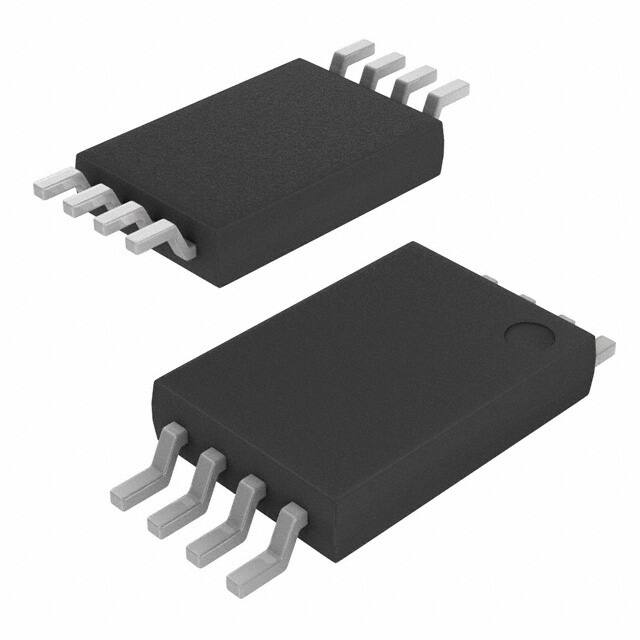
• 8-lead PDIP, SOIC, TSSOP, DFN and MSOP
packages
• Pb-free finish available
• Available temperature ranges:
- Industrial (I):
-40°C to +85°C
- Automotive (E): -40°C to +125°C
The Microchip Technology Inc. 24AA32A/24LC32A
(24XX32A*) is a 32 Kbit Electrically Erasable PROM.
The device is organized as a single block of 4K x 8-bit
memory with a 2-wire serial interface. Low-voltage
design permits operation down to 1.8V, with standby
and active currents of only 1 μA and 1 mA,
respectively. It has been developed for advanced, lowpower applications such as personal communications
or data acquisition. The 24XX32A also has a page write
capability for up to 32 bytes of data. Functional address
lines allow up to eight devices on the same bus, for up
to 256 Kbits address space. The 24XX32A is available
in the standard 8-pin PDIP, surface mount SOIC,
TSSOP, 2x3 DFN and MSOP packages.
Package Types
SOIC, TSSOP
PDIP, MSOP
A0
1
8
VCC
A0
1
8
VCC
A1
2
7
WP
A1
2
7
WP
A2
3
6
SCL
A2
3
6
SCL
VSS
4
5
SDA VSS
4
5
SDA
ROTATED TSSOP
DFN
WP
1
8
SCL
Vcc
2
7
SDA
A0 1
A1 2
A0
3
6
Vss
A1
4
5
A2
A2 3
VSS 4
8 VCC
7 WP
6 SCL
5 SDA
Block Diagram
A0 A1 A2 WP
I/O
Control
Logic
Memory
Control
Logic
HV Generator
XDEC
EEPROM
Array
Page Latches
I/O
SCL
YDEC
SDA
*24XX32A is used in this document as a generic part
number for the 24AA32A/24LC32A devices.
© 2006 Microchip Technology Inc.
Vcc
VSS
Sense Amp.
R/W Control
DS21713G-page 1
�24AA32A/24LC32A
1.0
ELECTRICAL CHARACTERISTICS
Absolute Maximum Ratings (†)
VCC .............................................................................................................................................................................6.5V
All inputs and outputs w.r.t. VSS ......................................................................................................... -0.3V to VCC +1.0V
Storage temperature ...............................................................................................................................-65°C to +150°C
Ambient temperature with power applied ................................................................................................-40°C to +125°C
ESD protection on all pins ......................................................................................................................................................≥ 4 kV
† NOTICE: Stresses above those listed under “Absolute Maximum Ratings” may cause permanent damage to
the device. This is a stress rating only and functional operation of the device at those or any other conditions
above those indicated in the operational listings of this specification is not implied. Exposure to maximum rating
conditions for extended periods may affect device reliability.
TABLE 1-1:
DC CHARACTERISTICS
DC CHARACTERISTICS
Param.
Symbol
No.
Characteristic
Industrial (I):
TA = -40°C to +85°C, VCC = +1.8V to +5.5V
Automotive (E): TA = -40°C to +125°C, VCC = +2.5V to +5.5V
Min.
Typ.
Max.
Units
Conditions
—
—
—
—
—
D1
—
A0, A1, A2, WP, SCL
and SDA pins
D2
VIH
High-level input voltage
0.7 VCC
—
—
V
—
D3
VIL
Low-level input voltage
—
—
0.3 VCC
0.2 VCC
V
V
VCC ≥ 2.5V
VCC < 2.5V
D4
VHYS
Hysteresis of Schmitt
Trigger inputs (SDA,
SCL pins)
0.05 VCC
—
—
V
VCC ≥ 2.5V (Note 1)
D5
VOL
Low-level output voltage
—
—
0.40
V
IOL = 3.0 mA, VCC = 4.5V
IOL = 2.1 mA, Vcc = 2.5V
D6
ILI
Input leakage current
—
—
±1
μA
VIN = VSS or VCC, WP = VSS
VIN = VSS or VCC, WP = VCC
D7
ILO
Output leakage current
—
—
±1
μA
VOUT = VSS or VCC
D8
CIN,
COUT
Pin capacitance
(all inputs/outputs)
—
—
10
pF
VCC = 5.0V (Note 1)
TA = 25°C, FCLK = 1 MHz
D9
ICC write Operating current
—
0.1
3
mA
VCC = 5.5V, SCL = 400 kHz
D10
ICC read
—
0.05
400
μA
D11
ICCS
—
—
0.01
—
1
5
μA
μA
Note 1:
2:
Standby current
Industrial
Automotive
SDA = SCL = VCC = 5.5V
A0, A1, A2, WP = VSS
This parameter is periodically sampled and not 100% tested.
Typical measurements taken at room temperature.
DS21713G-page 2
© 2006 Microchip Technology Inc.
�24AA32A/24LC32A
TABLE 1-2:
AC CHARACTERISTICS
Industrial (I):
Automotive (E):
AC CHARACTERISTICS
Param.
Symbol
No.
Characteristic
TA = -40°C to +85°C, VCC = +1.8V to +5.5V
TA = -40°C to +125°C, VCC = +2.5V to +5.5V
Min.
Max.
Units
Conditions
1
FCLK
Clock Frequency
—
—
400
100
kHz
2.5V ≤ VCC ≤ 5.5V
1.8V ≤ VCC < 2.5V (24AA32A)
2
THIGH
Clock High Time
600
4000
—
—
ns
2.5V ≤ VCC ≤ 5.5V
1.8V ≤ VCC < 2.5V (24AA32A)
3
TLOW
Clock Low Time
1300
4700
—
—
ns
2.5V ≤ VCC ≤ 5.5V
1.8V ≤ VCC < 2.5V (24AA32A)
4
TR
SDA and SCL Rise Time
(Note 1)
—
—
300
1000
ns
2.5V ≤ VCC ≤ 5.5V
1.8V ≤ VCC < 2.5V (24AA32A)
5
TF
SDA and SCL Fall Time
—
300
ns
(Note 1)
6
THD:STA
Start Condition Hold Time
600
4000
—
—
ns
2.5V ≤ VCC ≤ 5.5V
1.8V ≤ VCC < 2.5V (24AA32A)
7
TSU:STA
Start Condition Setup Time
600
4700
—
—
ns
2.5V ≤ VCC ≤ 5.5V
1.8V ≤ VCC < 2.5V (24AA32A)
8
THD:DAT
Data Input Hold Time
0
—
ns
(Note 2)
9
TSU:DAT
Data Input Setup Time
100
250
—
—
ns
2.5V ≤ VCC ≤ 5.5V
1.8V ≤ VCC < 2.5V (24AA32A)
10
TSU:STO
Stop Condition Setup Time
600
4000
—
—
ns
2.5V ≤ VCC ≤ 5.5V
1.8V ≤ VCC < 2.5V (24AA32A)
11
TSU:WP
WP Setup Time
600
4000
—
—
ns
2.5V ≤ VCC ≤ 5.5V
1.8V ≤ VCC < 2.5V (24AA32A)
12
THD:WP
WP Hold Time
1300
4700
—
—
ns
2.5V ≤ VCC ≤ 5.5V
1.8V ≤ VCC < 2.5V (24AA32A)
13
TAA
Output Valid from Clock
(Note 2)
—
—
900
3500
ns
2.5V ≤ VCC ≤ 5.5V
1.8V ≤ VCC < 2.5V (24AA32A)
14
TBUF
Bus free time: Time the bus
must be free before a new
transmission can start
1300
4700
—
—
ns
2.5V ≤ VCC ≤ 5.5V
1.8V ≤ VCC < 2.5V (24AA32A)
15
TOF
Output Fall Time from VIH
Minimum to VIL Maximum
20+0.1CB
—
250
250
ns
2.5V ≤ VCC ≤ 5.5V
1.8V ≤ VCC < 2.5V (24AA32A)
16
TSP
Input Filter Spike Suppression
(SDA and SCL pins)
—
50
ns
(Notes 1 and 3)
17
TWC
Write Cycle Time (byte or
page)
—
5
ms
—
18
—
Endurance
1M
—
Note 1:
2:
3:
4:
cycles 25°C, (Note 4)
Not 100% tested. CB = total capacitance of one bus line in pF.
As a transmitter the device must provide an internal minimum delay time to bridge the undefined region
(minimum 300 ns) of the falling edge of SCL to avoid unintended generation of Start or Stop conditions.
The combined TSP and VHYS specifications are due to new Schmitt Trigger inputs which provide improved
noise spike suppression. This eliminates the need for a TI specification for standard operation.
This parameter is not tested but ensured by characterization. For endurance estimates in a specific
application, please consult the Total Endurance™ Model which can be obtained on Microchip’s web site at
www.microchip.com.
© 2006 Microchip Technology Inc.
DS21713G-page 3
�24AA32A/24LC32A
FIGURE 1-1:
BUS TIMING DATA
5
SCL
SDA
IN
7
3
4
D4
2
8
10
9
6
16
14
13
SDA
OUT
WP
DS21713G-page 4
(protected)
(unprotected)
11
12
© 2006 Microchip Technology Inc.
�24AA32A/24LC32A
2.0
FUNCTIONAL DESCRIPTION
The 24XX32A supports a bidirectional, 2-wire bus and
data transmission protocol. A device that sends data
onto the bus is defined as transmitter, while a device
receiving data is defined as a receiver. The bus has to
be controlled by a master device which generates the
Serial Clock (SCL), controls the bus access and generates the Start and Stop conditions, while the 24XX32A
works as slave. Both master and slave can operate as
transmitter or receiver, but the master device
determines which mode is activated.
3.0
BUS CHARACTERISTICS
The following bus protocol has been defined:
• Data transfer may be initiated only when the bus
is not busy.
• During data transfer, the data line must remain
stable whenever the clock line is high. Changes in
the data line while the clock line is high will be
interpreted as a Start or Stop condition.
Accordingly, the following bus conditions have been
defined (Figure 3-1).
3.1
Start Data Transfer (B)
A high-to-low transition of the SDA line while the clock
(SCL) is high determines a Start condition. All
commands must be preceded by a Start condition.
3.3
Stop Data Transfer (C)
A low-to-high transition of the SDA line while the clock
(SCL) is high determines a Stop condition. All
operations must be ended with a Stop condition.
FIGURE 3-1:
(A)
Data Valid (D)
The state of the data line represents valid data when,
after a Start condition, the data line is stable for the
duration of the high period of the clock signal.
The data on the line must be changed during the low
period of the clock signal. There is one clock pulse per
bit of data.
Each data transfer is initiated with a Start condition and
terminated with a Stop condition. The number of data
bytes transferred between Start and Stop conditions is
determined by the master device and is, theoretically,
unlimited (although only the last thirty-two bytes will be
stored when doing a write operation). When an overwrite does occur, it will replace data in a first-in first-out
(FIFO) fashion.
3.5
Acknowledge
Each receiving device, when addressed, is obliged to
generate an acknowledge after the reception of each
byte. The master device must generate an extra clock
pulse which is associated with this Acknowledge bit.
Note:
Bus Not Busy (A)
Both data and clock lines remain high.
3.2
3.4
The 24XX32A does not generate any
Acknowledge
bits
if
an
internal
programming cycle is in progress.
The device that acknowledges, has to pull down the
SDA line during the Acknowledge clock pulse in such a
way that the SDA line is stable low during the high
period of the acknowledge related clock pulse. Of
course, setup and hold times must be taken into
account. During reads, a master must signal an end of
data to the slave by not generating an Acknowledge bit
on the last byte that has been clocked out of the slave.
In this case, the slave (24XX32A) will leave the data
line high to enable the master to generate the Stop
condition.
DATA TRANSFER SEQUENCE ON THE SERIAL BUS
(B)
(D)
Start
Condition
Address or
Acknowledge
Valid
(D)
(C)
(A)
SCL
SDA
© 2006 Microchip Technology Inc.
Data
Allowed
to Change
Stop
Condition
DS21713G-page 5
�24AA32A/24LC32A
3.6
FIGURE 3-2:
Device Addressing
A control byte is the first byte received following the
Start condition from the master device (Figure 3-2).
The control byte consists of a four-bit control code. For
the 24XX32A, this is set as ‘1010’ binary for read and
write operations. The next three bits of the control byte
are the Chip Select bits (A2, A1, A0). The Chip Select
bits allow the use of up to eight 24XX32A devices on
the same bus and are used to select which device is
accessed. The Chip Select bits in the control byte must
correspond to the logic levels on the corresponding A2,
A1 and A0 pins for the device to respond. These bits
are in effect the three Most Significant bits of the word
address.
The last bit of the control byte defines the operation to
be performed. When set to a ‘1’, a read operation is
selected. When set to a zero, a write operation is
selected. The next two bytes received define the
address of the first data byte (Figure 3-3). Because
only A11 to A0 are used, the upper four address bits are
“don’t care” bits. The upper address bits are transferred
first, followed by the Less Significant bits.
Following the Start condition, the 24XX32A monitors
the SDA bus checking the device type identifier being
transmitted and, upon receiving a ‘1010’ code and
appropriate device select bits, the slave device outputs
an Acknowledge signal on the SDA line. Depending on
the state of the R/W bit, the 24XX32A will select a read
or write operation.
FIGURE 3-3:
0
1
Read/Write Bit
Chip Select
Bits
Control Code
S
1
0
1
A2 A1 A0 R/W ACK
0
Slave Address
Start Bit
3.7
Acknowledge Bit
Contiguous Addressing Across
Multiple Devices
The Chip Select bits A2, A1 and A0 can be used to
expand the contiguous address space for up to 256K
bits by adding up to eight 24XX32A devices on the
same bus. In this case, software can use A0 of the control byte as address bit A12; A1 as address bit A13; and
A2 as address bit A14. It is not possible to sequentially
read across device boundaries.
ADDRESS SEQUENCE BIT ASSIGNMENTS
Control Byte
1
CONTROL BYTE FORMAT
0
Control
Code
DS21713G-page 6
A
2
A
1
Address High Byte
A
0 R/W
Chip
Select
Bits
x
x
x
x
A A
11 10
A
9
Address Low Byte
A
8
A
7
•
•
•
•
•
•
A
0
x = “don’t care” bit
© 2006 Microchip Technology Inc.
�24AA32A/24LC32A
4.0
WRITE OPERATIONS
4.1
Byte Write
Following the Start condition from the master, the
control code (4 bits), the Chip Select (3 bits), and the
R/W bit (which is a logic low) are clocked onto the bus
by the master transmitter. This indicates to the
addressed slave receiver that the address high byte
will follow once it has generated an Acknowledge bit
during the ninth clock cycle. Therefore, the next byte
transmitted by the master is the high-order byte of the
word address and will be written into the Address
Pointer of the 24XX32A. The next byte is the Least
Significant Address Byte. After receiving another
Acknowledge signal from the 24XX32A, the master
device will transmit the data word to be written into the
addressed memory location. The 24XX32A acknowledges again and the master generates a Stop
condition. This initiates the internal write cycle and,
during this time, the 24XX32A will not generate
Acknowledge signals (Figure 4-1). If an attempt is
made to write to the array with the WP pin held high,
the device will acknowledge the command, but no
write cycle will occur. No data will be written and the
device will immediately accept a new command. After
a byte Write command, the internal address counter
will point to the address location following the one that
was just written.
4.2
Page Write
The write control byte, word address and the first data
byte are transmitted to the 24XX32A in the same way
as in a byte write. However, instead of generating a
Stop condition, the master transmits up to 31 additional
bytes which are temporarily stored in the on-chip page
buffer and will be written into memory once the master
has transmitted a Stop condition. Upon receipt of each
word, the five lower Address Pointer bits are internally
incremented by ‘1’. If the master should transmit more
than 32 bytes prior to generating the Stop condition, the
address counter will roll over and the previously
received data will be overwritten. As with the byte write
operation, once the Stop condition is received, an
internal write cycle will begin (Figure 4-2). If an attempt
is made to write to the array with the WP pin held high,
the device will acknowledge the command, but no write
cycle will occur, no data will be written, and the device
will immediately accept a new command.
Note:
4.3
Page write operations are limited to writing
bytes within a single physical page,
regardless of the number of bytes
actually being written. Physical page
boundaries start at addresses that are
integer multiples of the page buffer size (or
‘page size’) and end at addresses that are
integer multiples of [page size – 1]. If a
Page Write command attempts to write
across a physical page boundary, the
result is that the data wraps around to the
beginning of the current page (overwriting
data previously stored there), instead of
being written to the next page as might be
expected. It is therefore necessary for the
application software to prevent page write
operations that would attempt to cross a
page boundary.
Write Protection
The WP pin allows the user to write-protect the entire
array (000-FFF) when the pin is tied to VCC. If tied to
VSS the write protection is disabled. The WP pin is
sampled at the Stop bit for every Write command
(Figure 3-1). Toggling the WP pin after the Stop bit will
have no effect on the execution of the write cycle.
© 2006 Microchip Technology Inc.
DS21713G-page 7
�24AA32A/24LC32A
FIGURE 4-1:
BYTE WRITE
Bus Activity
Master
S
T
A
R
T
Control
Byte
Address
High Byte
AA
S 1 0 1 0A
210 0
SDA Line
S
T
O
P
Data
xxx x
P
A
C
K
A
C
K
A
C
K
A
C
K
Bus Activity
Address
Low Byte
x = “don’t care” bit
FIGURE 4-2:
PAGE WRITE
Bus Activity
Master
S
T
A
R
T
SDA Line
AA
S10 1 0A
2100
Bus Activity
Control
Byte
Address
High Byte
Address
Low Byte
Data Byte 0
S
T
O
P
P
Data Byte 31
xxxx
A
C
K
A
C
K
A
C
K
A
C
K
A
C
K
x = “don’t care” bit
DS21713G-page 8
© 2006 Microchip Technology Inc.
�24AA32A/24LC32A
5.0
ACKNOWLEDGE POLLING
Since the device will not acknowledge during a write
cycle, this can be used to determine when the cycle is
complete (this feature can be used to maximize bus
throughput). Once the Stop condition for a Write
command has been issued from the master, the device
initiates the internally-timed write cycle. ACK polling
can then be initiated immediately. This involves the
master sending a Start condition followed by the control
byte for a Write command (R/W = 0). If the device is still
busy with the write cycle, then no ACK will be returned.
If no ACK is returned, the Start bit and control byte must
be re-sent. If the cycle is complete, the device will
return the ACK and the master can then proceed with
the next Read or Write command. See Figure 5-1 for
flow diagram of this operation.
FIGURE 5-1:
ACKNOWLEDGE POLLING
FLOW
Send
Write Command
Send Stop
Condition to
Initiate Write Cycle
Send Start
Send Control Byte
with R/W = 0
Did Device
Acknowledge
(ACK = 0)?
No
Yes
Next
Operation
© 2006 Microchip Technology Inc.
DS21713G-page 9
�24AA32A/24LC32A
6.0
READ OPERATION
6.3
Read operations are initiated in the same way as write
operations, with the exception that the R/W bit of the
control byte is set to ‘1’. There are three basic types of
read operations: current address read, random read
and sequential read.
6.1
Current Address Read
The 24XX32A contains an address counter that maintains the address of the last word accessed, internally
incremented by ‘1’. Therefore, if the previous read
access was to address ‘n’ (n is any legal address), the
next current address read operation would access data
from address n + 1.
Upon receipt of the control byte with R/W bit set to ‘1’,
the 24XX32A issues an acknowledge and transmits the
8-bit data word. The master will not acknowledge the
transfer, but does generate a Stop condition and the
24XX32A discontinues transmission (Figure 6-1).
6.2
Sequential Read
Sequential reads are initiated in the same way as a
random read, except that once the 24XX32A transmits
the first data byte, the master issues an acknowledge
as opposed to the Stop condition used in a random
read. This acknowledge directs the 24XX32A to
transmit the next sequentially addressed 8-bit word
(Figure 6-3). Following the final byte transmitted to the
master, the master will NOT generate an acknowledge,
but will generate a Stop condition. To provide sequential reads, the 24XX32A contains an internal Address
Pointer which is incremented by ‘1’ upon completion of
each operation. This Address Pointer allows the entire
memory contents to be serially read during one
operation. The internal Address Pointer will automatically roll over from address FFF to address 000 if the
master acknowledges the byte received from the array
address FFF.
Random Read
Random read operations allow the master to access
any memory location in a random manner. To perform
this type of read operation, the word address must
first be set. This is accomplished by sending the word
address to the 24XX32A as part of a write operation
(R/W bit set to ‘0’). Once the word address is sent, the
master generates a Start condition following the
acknowledge. This terminates the write operation, but
not before the internal Address Pointer is set. The
master issues the control byte again, but with the R/W
bit set to a ‘1’. The 24XX32A will then issue an
acknowledge and transmit the 8-bit data word. The
master will not acknowledge the transfer, but does
generate a Stop condition which causes the 24XX32A
to discontinue transmission (Figure 6-2). After a
random Read command, the internal address counter
will point to the address location following the one that
was just read.
FIGURE 6-1:
CURRENT ADDRESS READ
Bus Activity
Master
S
T
A
R
T
SDA Line
S
Bus Activity
DS21713G-page 10
Control
Byte
S
T
O
P
Data (n)
P
A
C
K
N
O
A
C
K
© 2006 Microchip Technology Inc.
�24AA32A/24LC32A
FIGURE 6-2:
Bus Activity
Master
RANDOM READ
S
T
A
R
T
Control
Byte
Address
High Byte
AA
xxxx
S1010A
2100
A
C
Bus Activity
K
x = “don’t care” bit
S
T
A
R
T
Address
Low Byte
Bus Activity
Master
S
T
O
P
Data
Byte
S 1 0 1 0 A A A1
210
SDA Line
FIGURE 6-3:
Control
Byte
A
C
K
A
C
K
P
N
O
A
C
K
A
C
K
SEQUENTIAL READ
Control
Byte
Data n
Data n + 1
Data n + 2
Data n + x
S
T
O
P
P
SDA Line
Bus Activity
© 2006 Microchip Technology Inc.
A
C
K
A
C
K
A
C
K
A
C
K
N
O
A
C
K
DS21713G-page 11
�24AA32A/24LC32A
7.0
PIN DESCRIPTIONS
The descriptions of the pins are listed in Table 7-1.
TABLE 7-1:
PIN FUNCTION TABLE
Name
PDIP
SOIC
TSSOP
DFN
MSOP
ROTATED
TSSOP
A0
1
1
1
1
1
3
Chip Address Input
A1
2
2
2
2
2
4
Chip Address Input
7.1
A2
3
3
3
3
3
5
Chip Address Input
VSS
4
4
4
4
4
6
Ground
SDA
5
5
5
5
5
7
Serial Address/Data I/O
SCL
6
6
6
6
6
8
Serial Clock
WP
7
7
7
7
7
1
Write-Protect Input
VCC
8
8
8
8
8
2
+1.8V to 5.5V Power Supply
A0, A1, A2 Chip Address Inputs
The A0, A1 and A2 inputs are used by the 24XX32A for
multiple device operation. The levels on these inputs
are compared with the corresponding bits in the slave
address. The chip is selected if the comparison is true.
Up to eight devices may be connected to the same bus
by using different Chip Select bit combinations. These
inputs must be connected to either VCC or VSS.
In most applications, the chip address inputs A0, A1
and A2 are hard-wired to logic ‘0’ or logic ‘1’. For
applications in which these pins are controlled by a
microcontroller or other programmable device, the chip
address pins must be driven to logic ‘0’ or logic ‘1’
before normal device operation can proceed.
7.2
Description
7.3
Serial Clock (SCL)
The SCL input is used to synchronize the data transfer
to and from the device.
7.4
Write-Protect (WP)
This pin must be connected to either VSS or VCC. If tied
to VSS, write operations are enabled. If tied to VCC,
write operations are inhibited but read operations are
not affected.
Serial Data (SDA)
SDA is a bidirectional pin used to transfer addresses
and data into and out of the device. It is an open-drain
terminal, therefore, the SDA bus requires a pull-up
resistor to VCC (typical 10 kΩ for 100 kHz, 2 kΩ for
400 kHz)
For normal data transfer, SDA is allowed to change
only during SCL low. Changes during SCL high are
reserved for indicating Start and Stop conditions.
DS21713G-page 12
© 2006 Microchip Technology Inc.
�24AA32A/24LC32A
8.0
PACKAGING INFORMATION
8.1
Package Marking Information
8-Lead PDIP (300 mil)
XXXXXXXX
T/XXXNNN
YYWW
8-Lead SOIC (150 mil)
XXXXXXXT
XXXXYYWW
NNN
8-Lead SOIC (208 mil)
XXXXXXXX
T/XXXXXX
YYWWNNN
Example:
24LC32A
I/P e3 13F
0527
Example:
24LC32AI
SN e3 0527
13F
Example:
24LC32A
I/SM e3
052713F
8-Lead TSSOP
Example:
XXXX
4LA
TYWW
I527
NNN
13F
8-Lead 2x3 DFN
XXX
YWW
NN
8-Lead MSOP
XXXXXT
YWWNNN
© 2006 Microchip Technology Inc.
Example:
264
527
13
Example:
4L32AI
52713F
DS21713G-page 13
�24AA32A/24LC32A
1st Line Marking Codes
Part Number
TSSOP
DFN
MSOP
24AA32A
24LC32A
Note:
Standard
Rotated
4AA
4AAX
4LA
4LAX
I Temp.
E Temp.
4A32AT
261
262
4L32AT
264
265
T = Temperature grade (I, E)
Legend: XX...X
T
Y
YY
WW
NNN
e3
Note:
Part number or part number code
Temperature (I, E)
Year code (last digit of calendar year)
Year code (last 2 digits of calendar year)
Week code (week of January 1 is week ‘01’)
Alphanumeric traceability code (2 characters for small packages)
Pb-free JEDEC designator for Matte Tin (Sn)
Note:
For very small packages with no room for the Pb-free JEDEC designator
e3 , the marking will only appear on the outer carton or reel label.
Note:
In the event the full Microchip part number cannot be marked on one line, it will
be carried over to the next line, thus limiting the number of available
characters for customer-specific information.
Please visit www.microchip.com/Pbfree for the latest information on Pb-free conversion.
*Standard OTP marking consists of Microchip part number, year code, week code, and traceability code.
DS21713G-page 14
© 2006 Microchip Technology Inc.
�24AA32A/24LC32A
8-Lead Plastic Dual In-line (P) – 300 mil (PDIP)
E1
D
2
n
1
α
E
A2
A
L
c
A1
β
B1
p
eB
B
Units
Dimension Limits
n
p
Number of Pins
Pitch
Top to Seating Plane
Molded Package Thickness
Base to Seating Plane
Shoulder to Shoulder Width
Molded Package Width
Overall Length
Tip to Seating Plane
Lead Thickness
Upper Lead Width
Lower Lead Width
Overall Row Spacing
Mold Draft Angle Top
Mold Draft Angle Bottom
* Controlling Parameter
§ Significant Characteristic
A
A2
A1
E
E1
D
L
c
§
B1
B
eB
α
β
MIN
.140
.115
.015
.300
.240
.360
.125
.008
.045
.014
.310
5
5
INCHES*
NOM
MAX
8
.100
.155
.130
.170
.145
.313
.250
.373
.130
.012
.058
.018
.370
10
10
.325
.260
.385
.135
.015
.070
.022
.430
15
15
MILLIMETERS
NOM
8
2.54
3.56
3.94
2.92
3.30
0.38
7.62
7.94
6.10
6.35
9.14
9.46
3.18
3.30
0.20
0.29
1.14
1.46
0.36
0.46
7.87
9.40
5
10
5
10
MIN
MAX
4.32
3.68
8.26
6.60
9.78
3.43
0.38
1.78
0.56
10.92
15
15
Notes:
Dimensions D and E1 do not include mold flash or protrusions. Mold flash or protrusions shall not exceed
.010” (0.254mm) per side.
JEDEC Equivalent: MS-001
Drawing No. C04-018
© 2006 Microchip Technology Inc.
DS21713G-page 15
�24AA32A/24LC32A
8-Lead Plastic Small Outline (SN) – Narrow, 150 mil (SOIC)
E
E1
p
D
2
B
n
1
h
α
45°
c
A2
A
φ
β
L
Units
Dimension Limits
n
p
Number of Pins
Pitch
Overall Height
Molded Package Thickness
Standoff §
Overall Width
Molded Package Width
Overall Length
Chamfer Distance
Foot Length
Foot Angle
Lead Thickness
Lead Width
Mold Draft Angle Top
Mold Draft Angle Bottom
* Controlling Parameter
§ Significant Characteristic
A
A2
A1
E
E1
D
h
L
φ
c
B
α
β
MIN
.053
.052
.004
.228
.146
.189
.010
.019
0
.008
.013
0
0
A1
INCHES*
NOM
8
.050
.061
.056
.007
.237
.154
.193
.015
.025
4
.009
.017
12
12
MAX
.069
.061
.010
.244
.157
.197
.020
.030
8
.010
.020
15
15
MILLIMETERS
NOM
8
1.27
1.35
1.55
1.32
1.42
0.10
0.18
5.79
6.02
3.71
3.91
4.80
4.90
0.25
0.38
0.48
0.62
0
4
0.20
0.23
0.33
0.42
0
12
0
12
MIN
MAX
1.75
1.55
0.25
6.20
3.99
5.00
0.51
0.76
8
0.25
0.51
15
15
Notes:
Dimensions D and E1 do not include mold flash or protrusions. Mold flash or protrusions shall not exceed
.010” (0.254mm) per side.
JEDEC Equivalent: MS-012
Drawing No. C04-057
DS21713G-page 16
© 2006 Microchip Technology Inc.
�24AA32A/24LC32A
8-Lead Plastic Small Outline (SM) – Medium, 208 mil (SOIC)
E
E1
p
D
2
1
n
B
α
c
A2
A
φ
L
β
Units
Dimension Limits
n
p
Number of Pins
Pitch
Overall Height
Molded Package Thickness
Standoff §
Overall Width
Molded Package Width
Overall Length
Foot Length
Foot Angle
Lead Thickness
Lead Width
Mold Draft Angle Top
Mold Draft Angle Bottom
A
A2
A1
E
E1
D
L
φ
c
B
α
β
MIN
.070
.069
.002
.300
.201
.202
.020
0
.008
.014
0
0
INCHES*
NOM
8
.050
.075
.074
.005
.313
.208
.205
.025
4
.009
.017
12
12
A1
MAX
.080
.078
.010
.325
.212
.210
.030
8
.010
.020
15
15
MILLIMETERS
NOM
8
1.27
1.78
1.97
1.75
1.88
0.05
0.13
7.62
7.95
5.11
5.28
5.13
5.21
0.51
0.64
0
4
0.20
0.23
0.36
0.43
0
12
0
12
MIN
MAX
2.03
1.98
0.25
8.26
5.38
5.33
0.76
8
0.25
0.51
15
15
* Controlling Parameter
§ Significant Characteristic
Notes:
Dimensions D and E1 do not include mold flash or protrusions. Mold flash or protrusions shall not exceed
.010” (0.254mm) per side.
Drawing No. C04-056
© 2006 Microchip Technology Inc.
DS21713G-page 17
�24AA32A/24LC32A
8-Lead Plastic Thin Shrink Small Outline (ST) – 4.4 mm (TSSOP)
E
E1
p
D
2
1
n
B
α
A
c
φ
β
A1
A2
L
Units
Dimension Limits
n
p
Number of Pins
Pitch
Overall Height
Molded Package Thickness
Standoff §
Overall Width
Molded Package Width
Molded Package Length
Foot Length
Foot Angle
Lead Thickness
Lead Width
Mold Draft Angle Top
Mold Draft Angle Bottom
* Controlling Parameter
§ Significant Characteristic
A
A2
A1
E
E1
D
L
φ
c
B
α
β
MIN
INCHES
NOM
MAX
8
.026
.033
.002
.246
.169
.114
.020
0
.004
.007
0
0
.035
.004
.251
.173
.118
.024
4
.006
.010
5
5
.043
.037
.006
.256
.177
.122
.028
8
.008
.012
10
10
MILLIMETERS*
NOM
MAX
8
0.65
1.10
0.85
0.90
0.95
0.05
0.10
0.15
6.25
6.38
6.50
4.30
4.40
4.50
2.90
3.00
3.10
0.50
0.60
0.70
0
4
8
0.09
0.15
0.20
0.19
0.25
0.30
0
5
10
0
5
10
MIN
Notes:
Dimensions D and E1 do not include mold flash or protrusions. Mold flash or protrusions shall not exceed
.005” (0.127mm) per side.
JEDEC Equivalent: MO-153
Drawing No. C04-086
DS21713G-page 18
© 2006 Microchip Technology Inc.
�24AA32A/24LC32A
8-Lead Plastic Dual Flat No Lead Package (MC) 2x3x0.9 mm Body (DFN) – Saw Singulated
b
D
p
n
L
K
E2
E
EXPOSED
METAL
PAD
(NOTE 2)
PIN 1
ID INDEX
AREA
(NOTE 1)
2
DETAIL
ALTERNATE
CONTACT
CONFIGURATION
TOP VIEW
A1
MIN
n
MILLIMETERS*
INCHES
Units
Number of Pins
BOTTOM VIEW
EXPOSED
TIE BAR
(NOTE 3)
A
A3
Dimension Limits
1
D2
MAX
NOM
MIN
MAX
NOM
8
8
Pitch
e
Overall Height
A
.031
.035
.039
0.80
0.90
1.00
Standoff
A1
.000
.001
.002
0.00
0.02
0.05
Contact Thickness
A3
.008 REF.
0.20 REF.
Overall Length
D
.079 BSC
2.00 BSC
Overall Width
E
.118 BSC
0.50 BSC
.020 BSC
3.00 BSC
Exposed Pad Length
D2
.051
–
.069
1.30**
–
1.75
Exposed Pad Width
E2
.059
–
.075
1.50**
–
1.90
L
.012
K
.008
b
.008
Contact Length §
Contact-to-Exposed Pad
Contact Width
§
.016
.020
–
.010
–
.012
* Controlling Parameter
** Not within JEDEC parameters
§ Significant Characteristic
Notes:
1. Pin 1 visual index feature may vary, but must be located within the hatched area.
2. Exposed pad may vary according to die attach paddle size.
3. Package may have one or more exposed tie bars at ends.
BSC: Basic Dimension. Theoretically exact value shown without tolerances.
See ASME Y14.5M
REF: Reference Dimension, usually without tolerance, for information purposes only.
See ASME Y14.5M
JEDEC Equivalent MO-229 VCED-2
DWG No. C04-123
© 2006 Microchip Technology Inc.
0.30
0.20
0.20
0.40
0.50
–
–
0.25
0.30
Revised 09-12-05
DS21713G-page 19
�24AA32A/24LC32A
8-Lead Plastic Micro Small Outline Package (MS) (MSOP)
E
E1
p
D
2
B
n
1
α
A2
A
c
φ
A1
(F)
L
β
Units
Dimension Limits
n
p
MIN
INCHES
NOM
MAX
MILLIMETERS*
NOM
8
0.65 BSC
0.75
0.85
0.00
4.90 BSC
3.00 BSC
3.00 BSC
0.40
0.60
0.95 REF
0°
0.08
0.22
5°
5°
-
MIN
8
Number of Pins
Pitch
.026 BSC
A
.043
Overall Height
A2
Molded Package Thickness
.030
.033
.037
A1
.000
.006
Standoff
E
Overall Width
.193 TYP.
E1
.118 BSC
Molded Package Width
D
.118 BSC
Overall Length
L
.016
.024
.031
Foot Length
Footprint (Reference)
F
.037 REF
φ
0°
8°
Foot Angle
c
.003
.006
.009
Lead Thickness
B
.009
.012
.016
Lead Width
α
5°
15°
Mold Draft Angle Top
β
5°
15°
Mold Draft Angle Bottom
*Controlling Parameter
Notes:
Dimensions D and E1 do not include mold flash or protrusions. Mold flash or protrusions shall not
exceed .010" (0.254mm) per side.
MAX
1.10
0.95
0.15
0.80
8°
0.23
0.40
15°
15°
JEDEC Equivalent: MO-187
Drawing No. C04-111
DS21713G-page 20
© 2006 Microchip Technology Inc.
�24AA32A/24LC32A
APPENDIX A:
REVISION HISTORY
Revision D
Corrections to Section 1.0, Electrical Characteristics.
Revision E
Added DFN package.
Revision F
Revised Sections 4.3, 7.2 and 7.4.
Revision G
Replaced 2x3 DFN (MC) Package
© 2006 Microchip Technology Inc.
DS21713G-page 21
�24AA32A/24LC32A
NOTES:
DS21713G-page 22
© 2006 Microchip Technology Inc.
�24AA32A/24LC32A
THE MICROCHIP WEB SITE
CUSTOMER SUPPORT
Microchip provides online support via our WWW site at
www.microchip.com. This web site is used as a means
to make files and information easily available to
customers. Accessible by using your favorite Internet
browser, the web site contains the following
information:
Users of Microchip products can receive assistance
through several channels:
• Product Support – Data sheets and errata,
application notes and sample programs, design
resources, user’s guides and hardware support
documents, latest software releases and archived
software
• General Technical Support – Frequently Asked
Questions (FAQ), technical support requests,
online discussion groups, Microchip consultant
program member listing
• Business of Microchip – Product selector and
ordering guides, latest Microchip press releases,
listing of seminars and events, listings of
Microchip sales offices, distributors and factory
representatives
•
•
•
•
•
Distributor or Representative
Local Sales Office
Field Application Engineer (FAE)
Technical Support
Development Systems Information Line
Customers
should
contact
their
distributor,
representative or field application engineer (FAE) for
support. Local sales offices are also available to help
customers. A listing of sales offices and locations is
included in the back of this document.
Technical support is available through the web site
at: http://support.microchip.com
CUSTOMER CHANGE NOTIFICATION
SERVICE
Microchip’s customer notification service helps keep
customers current on Microchip products. Subscribers
will receive e-mail notification whenever there are
changes, updates, revisions or errata related to a
specified product family or development tool of interest.
To register, access the Microchip web site at
www.microchip.com, click on Customer Change
Notification and follow the registration instructions.
© 2006 Microchip Technology Inc.
DS21713G-page 23
�24AA32A/24LC32A
READER RESPONSE
It is our intention to provide you with the best documentation possible to ensure successful use of your Microchip product. If you wish to provide your comments on organization, clarity, subject matter, and ways in which our documentation
can better serve you, please FAX your comments to the Technical Publications Manager at (480) 792-4150.
Please list the following information, and use this outline to provide us with your comments about this document.
To:
Technical Publications Manager
RE:
Reader Response
Total Pages Sent ________
From: Name
Company
Address
City / State / ZIP / Country
Telephone: (_______) _________ - _________
FAX: (______) _________ - _________
Application (optional):
Would you like a reply?
Y
Device: 24AA32A/24LC32A
N
Literature Number: DS21713G
Questions:
1. What are the best features of this document?
2. How does this document meet your hardware and software development needs?
3. Do you find the organization of this document easy to follow? If not, why?
4. What additions to the document do you think would enhance the structure and subject?
5. What deletions from the document could be made without affecting the overall usefulness?
6. Is there any incorrect or misleading information (what and where)?
7. How would you improve this document?
DS21713G-page 24
© 2006 Microchip Technology Inc.
�24AA32A/24LC32A
PRODUCT IDENTIFICATION SYSTEM
To order or obtain information, e.g., on pricing or delivery, refer to the factory or the listed sales office.
X
PART NO.
Temperature Package
Range
Device
X
Lead Finish
I2C
Device:
24AA32A: 1.8V, 32 Kbit
Serial EEPROM
24AA32AT: 1.8V, 32 Kbit I2C Serial EEPROM
(Tape and Reel)
24AA32AX 1.8V, 32 Kbit I2C Serial EEPROM in
alternate pinout (ST only)
24AA32AXT 1.8V, 32 Kbit I2C Serial EEPROM in
alternate pinout (ST only)
24LC32A: 2.5V, 32 Kbit I2C Serial EEPROM
24LC32AT: 2.5V, 32 Kbit I2C Serial EEPROM
(Tape and Reel)
24LC32AX 2.5V, 32 Kbit I2C Serial EEPROM in
alternate pinout (ST only)
24LC32AXT 2.5V, 32 Kbit I2C Serial EEPROM in
alternate pinout (ST only)
Temperature I
Range:
E
=
=
Package:
P
SN
SM
ST
MS
MC
Lead Finish:
Blank =
G
=
Note 1:
/XX
=
=
=
=
=
=
-40°C to +85°C
-40°C to +125°C
Plastic DIP (300 mil body), 8-lead
Plastic SOIC (150 mil body), 8-lead
Plastic SOIC (208 mil body), 8-lead
Plastic TSSOP (4.4 mm), 8-lead
Plastic Micro Small Outline (MSOP), 8-lead
2x3 DFN, 8-lead
Examples:
a)
24AA32A-I/P: Industrial Temperature,1.8V,
PDIP package
b)
24AA32A-I/SN: Industrial Temperature,1.8V,
SOIC package
c)
24AA32A-I/SM: Industrial Temperature.,1.8V,
SOIC (208 mil) package
d)
24AA32AX-I/ST: Industrial Temp.,1.8V,
Rotated TSSOP package
e)
24AA32A-I/ST: Industrial Temperature.,1.8V,
TSSOP package
f)
24LC32A-I/P: Industrial Temperature, 2.5V,
PDIP package
g)
24LC32A-E/SN: Automotive
2.5V SOIC package
h)
24LC32A-E/SM: Automotive Temperature,
2.5V SOIC (208 mil) package
i)
24LC32AX-E/ST: Automotive Temperature,
2.5V, Rotated TSSOP package
j)
24LC32AT-I/ST: Industrial Temperature, 2.5V,
TSSOP package, Tape and Reel
Temperature,
Pb-free – Matte Tin (see Note 1)
Pb-free – Matte Tin only
Most products manufactured after January 2005 will have a Matte Tin (Pb-free) finish. Most products manufactured
before January 2005 will have a finish of approximately 63% Sn and 37% Pb (Sn/Pb).
Please visit www.microchip.com for the latest information on Pb-free conversion, including conversion date codes.
© 2006 Microchip Technology Inc.
DS21713G-page 25
�24AA32A/24LC32A
NOTES:
DS21713G-page 26
© 2006 Microchip Technology Inc.
�Note the following details of the code protection feature on Microchip devices:
•
Microchip products meet the specification contained in their particular Microchip Data Sheet.
•
Microchip believes that its family of products is one of the most secure families of its kind on the market today, when used in the
intended manner and under normal conditions.
•
There are dishonest and possibly illegal methods used to breach the code protection feature. All of these methods, to our
knowledge, require using the Microchip products in a manner outside the operating specifications contained in Microchip’s Data
Sheets. Most likely, the person doing so is engaged in theft of intellectual property.
•
Microchip is willing to work with the customer who is concerned about the integrity of their code.
•
Neither Microchip nor any other semiconductor manufacturer can guarantee the security of their code. Code protection does not
mean that we are guaranteeing the product as “unbreakable.”
Code protection is constantly evolving. We at Microchip are committed to continuously improving the code protection features of our
products. Attempts to break Microchip’s code protection feature may be a violation of the Digital Millennium Copyright Act. If such acts
allow unauthorized access to your software or other copyrighted work, you may have a right to sue for relief under that Act.
Information contained in this publication regarding device
applications and the like is provided only for your convenience
and may be superseded by updates. It is your responsibility to
ensure that your application meets with your specifications.
MICROCHIP MAKES NO REPRESENTATIONS OR
WARRANTIES OF ANY KIND WHETHER EXPRESS OR
IMPLIED, WRITTEN OR ORAL, STATUTORY OR
OTHERWISE, RELATED TO THE INFORMATION,
INCLUDING BUT NOT LIMITED TO ITS CONDITION,
QUALITY, PERFORMANCE, MERCHANTABILITY OR
FITNESS FOR PURPOSE. Microchip disclaims all liability
arising from this information and its use. Use of Microchip
devices in life support and/or safety applications is entirely at
the buyer’s risk, and the buyer agrees to defend, indemnify and
hold harmless Microchip from any and all damages, claims,
suits, or expenses resulting from such use. No licenses are
conveyed, implicitly or otherwise, under any Microchip
intellectual property rights.
Trademarks
The Microchip name and logo, the Microchip logo, Accuron,
dsPIC, KEELOQ, microID, MPLAB, PIC, PICmicro, PICSTART,
PRO MATE, PowerSmart, rfPIC, and SmartShunt are
registered trademarks of Microchip Technology Incorporated
in the U.S.A. and other countries.
AmpLab, FilterLab, Migratable Memory, MXDEV, MXLAB,
SEEVAL, SmartSensor and The Embedded Control Solutions
Company are registered trademarks of Microchip Technology
Incorporated in the U.S.A.
Analog-for-the-Digital Age, Application Maestro, dsPICDEM,
dsPICDEM.net, dsPICworks, ECAN, ECONOMONITOR,
FanSense, FlexROM, fuzzyLAB, In-Circuit Serial
Programming, ICSP, ICEPIC, Linear Active Thermistor, Mindi,
MiWi, MPASM, MPLIB, MPLINK, PICkit, PICDEM,
PICDEM.net, PICLAB, PICtail, PowerCal, PowerInfo,
PowerMate, PowerTool, REAL ICE, rfLAB, rfPICDEM, Select
Mode, Smart Serial, SmartTel, Total Endurance, UNI/O,
WiperLock and ZENA are trademarks of Microchip
Technology Incorporated in the U.S.A. and other countries.
SQTP is a service mark of Microchip Technology Incorporated
in the U.S.A.
All other trademarks mentioned herein are property of their
respective companies.
© 2006, Microchip Technology Incorporated, Printed in the
U.S.A., All Rights Reserved.
Printed on recycled paper.
Microchip received ISO/TS-16949:2002 certification for its worldwide
headquarters, design and wafer fabrication facilities in Chandler and
Tempe, Arizona, Gresham, Oregon and Mountain View, California. The
Company’s quality system processes and procedures are for its
PICmicro® 8-bit MCUs, KEELOQ® code hopping devices, Serial
EEPROMs, microperipherals, nonvolatile memory and analog
products. In addition, Microchip’s quality system for the design and
manufacture of development systems is ISO 9001:2000 certified.
© 2006 Microchip Technology Inc.
DS21713G-page 27
�WORLDWIDE SALES AND SERVICE
AMERICAS
ASIA/PACIFIC
ASIA/PACIFIC
EUROPE
Corporate Office
2355 West Chandler Blvd.
Chandler, AZ 85224-6199
Tel: 480-792-7200
Fax: 480-792-7277
Technical Support:
http://support.microchip.com
Web Address:
www.microchip.com
Australia - Sydney
Tel: 61-2-9868-6733
Fax: 61-2-9868-6755
India - Bangalore
Tel: 91-80-4182-8400
Fax: 91-80-4182-8422
China - Beijing
Tel: 86-10-8528-2100
Fax: 86-10-8528-2104
India - New Delhi
Tel: 91-11-5160-8631
Fax: 91-11-5160-8632
Austria - Wels
Tel: 43-7242-2244-3910
Fax: 43-7242-2244-393
Denmark - Copenhagen
Tel: 45-4450-2828
Fax: 45-4485-2829
China - Chengdu
Tel: 86-28-8676-6200
Fax: 86-28-8676-6599
India - Pune
Tel: 91-20-2566-1512
Fax: 91-20-2566-1513
France - Paris
Tel: 33-1-69-53-63-20
Fax: 33-1-69-30-90-79
China - Fuzhou
Tel: 86-591-8750-3506
Fax: 86-591-8750-3521
Japan - Yokohama
Tel: 81-45-471- 6166
Fax: 81-45-471-6122
Germany - Munich
Tel: 49-89-627-144-0
Fax: 49-89-627-144-44
China - Hong Kong SAR
Tel: 852-2401-1200
Fax: 852-2401-3431
Korea - Gumi
Tel: 82-54-473-4301
Fax: 82-54-473-4302
China - Qingdao
Tel: 86-532-8502-7355
Fax: 86-532-8502-7205
Korea - Seoul
Tel: 82-2-554-7200
Fax: 82-2-558-5932 or
82-2-558-5934
Asia Pacific Office
Suites 3707-14, 37th Floor
Tower 6, The Gateway
Habour City, Kowloon
Hong Kong
Tel: 852-2401-1200
Fax: 852-2401-3431
Atlanta
Alpharetta, GA
Tel: 770-640-0034
Fax: 770-640-0307
Boston
Westborough, MA
Tel: 774-760-0087
Fax: 774-760-0088
Chicago
Itasca, IL
Tel: 630-285-0071
Fax: 630-285-0075
Dallas
Addison, TX
Tel: 972-818-7423
Fax: 972-818-2924
Detroit
Farmington Hills, MI
Tel: 248-538-2250
Fax: 248-538-2260
Kokomo
Kokomo, IN
Tel: 765-864-8360
Fax: 765-864-8387
Los Angeles
Mission Viejo, CA
Tel: 949-462-9523
Fax: 949-462-9608
China - Shanghai
Tel: 86-21-5407-5533
Fax: 86-21-5407-5066
China - Shenyang
Tel: 86-24-2334-2829
Fax: 86-24-2334-2393
China - Shenzhen
Tel: 86-755-8203-2660
Fax: 86-755-8203-1760
China - Shunde
Tel: 86-757-2839-5507
Fax: 86-757-2839-5571
China - Wuhan
Tel: 86-27-5980-5300
Fax: 86-27-5980-5118
China - Xian
Tel: 86-29-8833-7250
Fax: 86-29-8833-7256
Malaysia - Penang
Tel: 60-4-646-8870
Fax: 60-4-646-5086
Philippines - Manila
Tel: 63-2-634-9065
Fax: 63-2-634-9069
Italy - Milan
Tel: 39-0331-742611
Fax: 39-0331-466781
Netherlands - Drunen
Tel: 31-416-690399
Fax: 31-416-690340
Spain - Madrid
Tel: 34-91-708-08-90
Fax: 34-91-708-08-91
UK - Wokingham
Tel: 44-118-921-5869
Fax: 44-118-921-5820
Singapore
Tel: 65-6334-8870
Fax: 65-6334-8850
Taiwan - Hsin Chu
Tel: 886-3-572-9526
Fax: 886-3-572-6459
Taiwan - Kaohsiung
Tel: 886-7-536-4818
Fax: 886-7-536-4803
Taiwan - Taipei
Tel: 886-2-2500-6610
Fax: 886-2-2508-0102
Thailand - Bangkok
Tel: 66-2-694-1351
Fax: 66-2-694-1350
San Jose
Mountain View, CA
Tel: 650-215-1444
Fax: 650-961-0286
Toronto
Mississauga, Ontario,
Canada
Tel: 905-673-0699
Fax: 905-673-6509
06/08/06
DS21713G-page 28
© 2006 Microchip Technology Inc.
�










 工商网监
湘ICP备2023018690号
工商网监
湘ICP备2023018690号