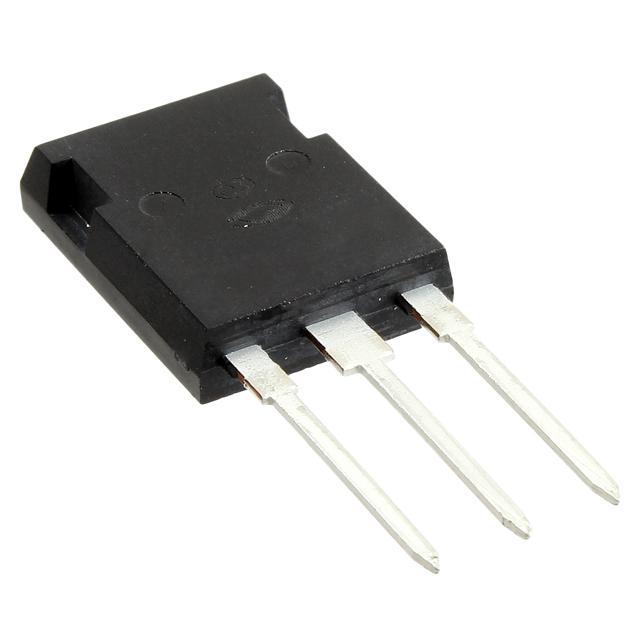
APT38N60BC6
APT38N60SC6
600V
COOLMOS
38A 0.099Ω
Super Junction MOSFET
Power Semiconductors
TO
• Ultra Low RDS(ON)
-2
47
D3PAK
• Low Miller Capacitance
• Ultra Low Gate Charge, Qg
• Avalanche Energy Rated
• Extreme dv/dt Rated
D
• Popular TO-247 or Surface Mount D3 package.
G
S
All Ratings per die: TC = 25°C unless otherwise specified.
MAXIMUM RATINGS
Symbol
VDSS
ID
Parameter
APT38N60B_SC6
UNIT
Drain-Source Voltage
600
Volts
Continuous Drain Current @ TC = 25°C
38
Continuous Drain Current @ TC = 100°C
24
1
Amps
112
IDM
Pulsed Drain Current
VGS
Gate-Source Voltage Continuous
±20
Volts
PD
Total Power Dissipation @ TC = 25°C
278
Watts
TJ,TSTG
TL
dv/
dt
Operating and Storage Junction Temperature Range
-55 to 150
°C
Lead Temperature: 0.063" from Case for 10 Sec.
260
Drain-Source Voltage slope (VDS = 480V, ID = 38A, TJ = 125°C)
15
V/ns
6.6
Amps
2
IAR
Avalanche Current
EAR
Repetitive Avalanche Energy
EAS
Single Pulse Avalanche Energy
2
1.2
( Id = 6.6A, Vdd = 50V )
mJ
796
( Id = 6.6A, Vdd = 50V )
STATIC ELECTRICAL CHARACTERISTICS
Characteristic / Test Conditions
BV(DSS)
Drain-Source Breakdown Voltage (VGS = 0V, ID = 250μA)
RDS(on)
Drain-Source On-State Resistance
IDSS
IGSS
VGS(th)
MIN
3
TYP
MAX
600
Volts
0.099
(VGS = 10V, ID = 18A)
Zero Gate Voltage Drain Current (VDS = 600V, VGS = 0V)
25
Zero Gate Voltage Drain Current (VDS = 600V, VGS = 0V, TC = 150°C)
100
Gate-Source Leakage Current (VGS = ±20V, VDS = 0V)
Gate Threshold Voltage (VDS = VGS, ID = 1.2mA)
2.5
UNIT
3
Ohms
μA
±100
nA
3.5
Volts
CAUTION: These Devices are Sensitive to Electrostatic Discharge. Proper Handling Procedures Should Be Followed.
"COOLMOS™ comprise a new family of transistors developed by Infineon Technologies AG. "COOLMOS" is a trademark of Infineon Technologies AG."
Microsemi Website - http://www.microsemi.com
050-7207 Rev C 1-2011
Symbol
�DYNAMIC CHARACTERISTICS
APT38N60B_SC6
Symbol Characteristic
Test Conditions
Ciss
Input Capacitance
Coss
Output Capacitance
Crss
Reverse Transfer Capacitance
Qg
Total Gate Charge
Qgs
Gate-Source Charge
Qgd
Gate-Drain ("Miller ") Charge
td(on)
Turn-on Delay Time
tr
2428
Turn-on Switching Energy
Eoff
Turn-off Switching Energy
Eon
Turn-on Switching Energy
Eoff
Turn-off Switching Energy
5
18
nC
58
14
29
ns
118
69
710
INDUCTIVE SWITCHING @ 25°C
VDD = 400V, VGS = 15V
ID = 38A, RG = 4.3Ω
5
pF
112
INDUCTIVE SWITCHING
VGS = 15V
VDD = 400V
ID = 38A @ 25°C
RG = 4.3Ω
Eon
UNIT
261
VGS = 10V
VDD = 300V
ID = 38A @ 25°C
Fall Time
MAX
2826
4
Turn-off Delay Time
tf
TYP
VGS = 0V
VDS = 25V
f = 1 MHz
Rise Time
td(off)
MIN
550
μJ
1100
INDUCTIVE SWITCHING @ 125°C
VDD = 400V, VGS = 15V
ID = 38A, RG = 4.3Ω
625
SOURCE-DRAIN DIODE RATINGS AND CHARACTERISTICS
Symbol
Characteristic / Test Conditions
MIN
TYP
MAX
IS
Continuous Source Current (Body Diode)
33
ISM
Pulsed Source Current
112
VSD
Diode Forward Voltage
1
(Body Diode)
3
(VGS = 0V, IS = -38A)
UNIT
Amps
1.3
Volts
8
V/ns
/dt
Peak Diode Recovery /dt
t rr
Reverse Recovery Time
(IS = -38A, di/dt = 100A/μs)
Tj = 25°C
667
ns
Q rr
Reverse Recovery Charge
(IS = -38A, di/dt = 100A/μs)
Tj = 25°C
18
μC
IRRM
Peak Recovery Current
(IS = -38A, di/dt = 100A/μs)
Tj = 25°C
49
Amps
dv
dv
6
THERMAL CHARACTERISTICS
Symbol
Characteristic
RθJC
Junction to Case
RθJA
Junction to Ambient
MIN
TYP
MAX
UNIT
0.45
°C/W
40
1 Repetitive Rating: Pulse width limited by maximum junction temperature
4 See MIL-STD-750 Method 3471
2 Repetitive avalanche causes additional power losses that can be calculated as 5 Eon includes diode reverse recovery.
PAV = EAR*f . Pulse width tp limited by Tj max.
6 Maximum 125°C diode commutation speed = di/dt 600A/μs
3 Pulse Test: Pulse width < 380 μs, Duty Cycle < 2%
Microsemi reserves the right to change, without notice, the specifications and information contained herein.
D = 0.9
0.4
0.7
0.3
0.5
Note:
0.2
PDM
ZθJC, THERMAL IMPEDANCE (°C/W)
050-7207 Rev C 1-2011
0.5
0.3
t1
t2
0.1
t
0.1
SINGLE PULSE
0.05
Duty Factor D = 1/t2
Peak TJ = PDM x ZθJC + TC
0
10-5
10-4
10-2
10-3
0.1
RECTANGULAR PULSE DURATION (SECONDS)
Figure 1, Maximum Effective Transient Thermal Impedance, Junction-To-Case vs Pulse Duration
1
�APT38N60B_SC6
Typical Performance Curves
100
60
10 &15V
50
7V
60
6.5V
6V
40
5.5V
20
5V
ID, DRAIN CURRENT (A)
80
40
30
20
TJ= 25°C
10
4.5V
0
0
5
10
15
20
25
30
VDS, DRAIN-TO-SOURCE VOLTAGE (V)
FIGURE 2, Low Voltage Output Characteristics
3.00
0
2.50
GS
= 10V @ 19A
35
2.00
VGS = 10V
1.50
VGS = 20V
1.00
0.50
0
0
25
20
15
10
40
60
80
100
120
ID, DRAIN CURRENT (A)
FIGURE 4, RDS(ON) vs Drain Current
0
20
.15
1.10
1.05
.00
.95
0.90
0.85
50
75
100
125
150
2.5
2.0
1.5
1.0
0.5
0
-50
0
50
100
150
TJ, Junction Temperature (°C)
FIGURE 6, Breakdown Voltage vs Temperature
1.2
25
TC, CASE TEMPERATURE (C°)
FIGURE 5, Maximum Drain Current vs Case Temperature
3.0
RDS(ON), DRAIN-TO-SOURCE ON
RESISTANCE (NORMALIZED)
BVDSS, DRAIN-TO-SOURCE BREAKDOWN
VOLTAGE (NORMALIZED)
30
5
.20
-50
0
50
100
150
TJ, JUNCTION TEMPERATURE (C°)
FIGURE 7, On-Resistance vs Temperature
800
1.1
100
ID, DRAIN CURRENT (A)
VGS(TH), THRESHOLD VOLTAGE
(NORMALIZED)
1 2
3 4
5 6 7
8 9 10
VGS, GATE-TO-SOURCE VOLTAGE (V)
FIGURE 3, Transfer Characteristics
40
NORMALIZED TO
V
ID, DRAIN CURRENT (A)
RDS(on), DRAIN-TO-SOURCE ON RESISTANCE
0
TJ= -55°C
TJ= 125°C
1.0
0.9
0.8
0.7
10
Rds(on)
100µs
1ms
10µs
1
10ms
100ms
0.1
- 50
0
50
100
150
TC, Case Temperature (°C)
FIGURE 8, Threshold Voltage vs Temperature
1
10
100
800
VDS, DRAIN-TO-SOURCE VOLTAGE (V)
FIGURE 9, Maximum Safe Operating Area
050-7207 Rev C 1-2011
IC, DRAIN CURRENT (A)
VDS> ID (ON) x RDS (ON)MAX.
250μSEC. PULSE TEST
@