Features
• Low-voltage and Standard-voltage Operation
•
•
•
•
•
•
•
•
•
•
•
•
– 1.8 (VCC = 1.8V to 5.5V)
Internally Organized as 32,768 x 8
Two-wire Serial Interface
Schmitt Trigger, Filtered Inputs for Noise Suppression
Bidirectional Data Transfer Protocol
1 MHz (5.0V, 2.7V, 2.5V), and 400 kHz (1.8V) Compatibility
Write Protect Pin for Hardware and Software Data Protection
64-byte Page Write Mode (Partial Page Writes Allowed)
Self-timed Write Cycle (5 ms Max)
High Reliability
– Endurance: One Million Write Cycles
– Data Retention: 40 Years
Lead-free/Halogen-free Devices Available
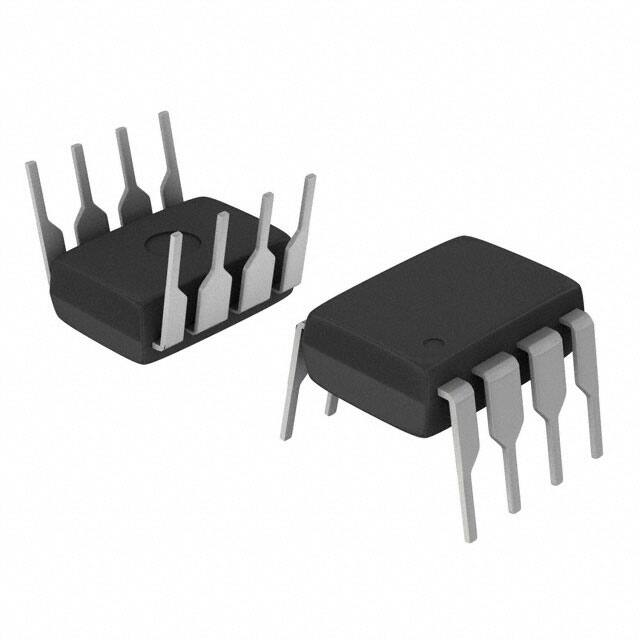
8-lead JEDEC PDIP, 8-lead JEDEC SOIC, EIAJ SOIC, 8-lead Ultra Thin Small Array
Package (SAP), 8-lead TSSOP, and 8-ball dBGA2 Packages
Die Sales: Wafer Form, Waffle Pack and Bumped Wafers
Two-wire Serial
EEPROM
256K (32,768 x 8)
AT24C256B
Description
The AT24C256B provides 262,144 bits of serial electrically erasable and programmable read-only memory (EEPROM) organized as 32,768 words of 8 bits each. The
device’s cascadable feature allows up to eight devices to share a common two-wire
bus. The device is optimized for use in many industrial and commercial applications
where low-power and low-voltage operation are essential. The devices are available
in space-saving 8-lead JEDEC PDIP, 8-lead JEDEC SOIC, 8-lead Ultra Thin SAP, 8lead TSSOP, and 8-ball dBGA2 packages. In addition, the entire family is available in
a 1.8V (1.8V to 5.5V) version.
Pin Configurations
Pin Name
A0–A2
Function
Address Inputs
SDA
Serial Data
SCL
Serial Clock Input
WP
Write Protect
GND
Ground
8-lead PDIP
Not
Recommended
for New Design
8-lead SOIC
A0
1
8
VCC
A0
1
8
VCC
A1
2
7
WP
A1
2
7
WP
A2
3
6
SCL
A2
3
6
SCL
GND
4
5
SDA
GND
4
5
SDA
8-lead dBGA2
8-lead TSSOP
VCC
8
1
A0
WP
7
2
A1
SCL
6
3
A2
SDA
5
4
GND
A0
1
8
VCC
A1
2
7
WP
A2
3
6
SCL
GND
4
5
SDA
Bottom View
8-lead Ultra Thin SAP
VCC
8
1
A0
WP
7
2
A1
SCL
6
3
A2
SDA
5
4
GND
Bottom View
Rev. 5279C–SEEPR–3/09
�1. Absolute Maximum Ratings*
Operating Temperature 55C to +125C
*NOTICE:
Storage Temperature 65C to +150C
Voltage on Any Pin
with Respect to Ground 1.0V to +7.0V
Maximum Operating Voltage .......................................... 6.25V
Stresses beyond those listed under “Absolute
Maximum Ratings” may cause permanent damage to the device. This is a stress rating only;
functional operation of the device at these or any
other conditions beyond those indicated in the
operational sections of this specification is not
implied. Exposure to absolute maximum rating
conditions for extended periods may affect device
reliability.
DC Output Current........................................................ 5.0 mA
Block Diagram
VCC
GND
WP
START
STOP
LOGIC
SCL
SDA
SERIAL
CONTROL
LOGIC
LOAD
DEVICE
ADDRESS
COMPARATOR
A2
A1
A0
R/W
EN
H.V. PUMP/TIMING
COMP
LOAD
DATA RECOVERY
INC
DATA WORD
ADDR/COUNTER
Y DEC
X DEC
Figure 1-1.
EEPROM
SERIAL MUX
DOUT/ACK
LOGIC
DIN
DOUT
2
AT24C256B
5279C–SEEPR–3/09
�AT24C256B
2. Pin Description
SERIAL CLOCK (SCL): The SCL input is used to positive-edge clock data into each EEPROM
device and negative-edge clock data out of each device.
SERIAL DATA (SDA): The SDA pin is bidirectional for serial data transfer. This pin is opendrain driven and may be wire-ORed with any number of other open-drain or open-collector
devices.
DEVICE/PAGE ADDRESSES (A2, A1, A0): The A2, A1, and A0 pins are device address inputs
that are hardwired (directly to GND or to Vcc) for compatibility with other AT24Cxx devices.
When the pins are hardwired, as many as eight 256K devices may be addressed on a single bus
system. (Device addressing is discussed in detail under “Device Addressing,” page 9.) A device
is selected when a corresponding hardware and software match is true. If these pins are left
floating, the A2, A1, and A0 pins will be internally pulled down to GND. However, due to capacitive coupling that may appear during customer applications, Atmel recommends always
connecting the address pins to a known state. When using a pull-up resistor, Atmel recommends
using 10k or less.
WRITE PROTECT (WP): The write protect input, when connected to GND, allows normal write
operations. When WP is connected directly to Vcc, all write operations to the memory are inhibited. If the pin is left floating, the WP pin will be internally pulled down to GND. However, due to
capacitive coupling that may appear during customer applications, Atmel recommends always
connecting the WP pins to a known state. When using a pull-up resistor, Atmel recommends
using 10k or less.
3. Memory Organization
AT24C256B, 256K SERIAL EEPROM: The 256K is internally organized as 512 pages of 64
bytes each. Random word addressing requires a 15-bit data word address.
Table 3-1.
Pin Capacitance(1)
Applicable over recommended operating range from TA = 25C, f = 1.0 MHz, VCC = +1.8V
Symbol
Test Condition
CI/O
CIN
Note:
Max
Units
Conditions
Input/Output Capacitance (SDA)
8
pF
VI/O = 0V
Input Capacitance (A0, A1, SCL)
6
pF
VIN = 0V
1. This parameter is characterized and is not 100% tested.
3
5279C–SEEPR–3/09
�Table 3-2.
DC Characteristics
Applicable over recommended operating range from: TAI = 40C to +85C, VCC = +1.8V to +5.5V (unless otherwise noted)
Symbol
Parameter
VCC1
Supply Voltage
ICC1
Supply Current
VCC = 5.0V
READ at 400 kHz
ICC2
Supply Current
VCC = 5.0V
WRITE at 400 kHz
ISB1
Standby Current
(1.8V option)
VCC = 1.8V
ILI
Input Leakage
Current VCC = 5.0V
VIN = VCC or VSS
ILO
Output Leakage
Current VCC = 5.0V
VOUT = VCC or VSS
VIL
Input Low Level(1)
VIH
Input High Level
(1)
VOL2
Output Low Level
VCC = 3.0V
VOL1
Output Low Level
VCC = 1.8V
Notes:
4
Test Condition
Min
Typ
Max
Units
5.5
V
1.0
2.0
mA
2.0
3.0
mA
1.0
µA
6.0
µA
0.10
3.0
µA
0.05
3.0
µA
0.6
VCC x 0.3
V
VCC x 0.7
VCC + 0.5
V
IOL = 2.1 mA
0.4
V
IOL = 0.15 mA
0.2
V
1.8
VCC = 5.5V
VIN = VCC or VSS
1. VIL min and VIH max are reference only and are not tested.
AT24C256B
5279C–SEEPR–3/09
�AT24C256B
Table 3-3.
AC Characteristics (Industrial Temperature)
Applicable over recommended operating range from TAI = 40C to +85C, VCC = +1.8V to +5.5V, CL = 100 pF (unless otherwise noted). Test conditions are listed in Note 2.
1.8-volt
Symbol
Parameter
Min
fSCL
Clock Frequency, SCL
tLOW
Clock Pulse Width Low
tHIGH
Clock Pulse Width High
2.5, 5.0-volt
Max
Min
400
Max
Units
1000
kHz
1.3
0.4
µs
0.6
0.4
µs
(1)
ti
Noise Suppression Time
100
tAA
Clock Low to Data Out Valid
0.05
tBUF
Time the bus must be free before a
new transmission can start(1)
1.3
0.5
µs
tHD.STA
Start Hold Time
0.6
0.25
µs
tSU.STA
Start Set-up Time
0.6
0.25
µs
tHD.DAT
Data In Hold Time
0
0
µs
tSU.DAT
Data In Set-up Time
100
100
ns
tR
Inputs Rise Time(1)
(1)
0.9
0.05
50
ns
0.55
µs
0.3
0.3
µs
300
100
ns
tF
Inputs Fall Time
tSU.STO
Stop Set-up Time
0.6
0.25
µs
tDH
Data Out Hold Time
50
50
ns
tWR
Write Cycle Time
Endurance(1)
25°C, Page Mode, 3.3V
Notes:
5
5
1,000,000
ms
Write
Cycles
1. This parameter is ensured by characterization and is not 100% tested.
2. AC measurement conditions:
RL (connects to VCC): 1.3 k (2.5V, 5.5V), 10 k (1.8V)
Input pulse voltages: 0.3 VCC to 0.7 VCC
Input rise and fall times: 50 ns
Input and output timing reference voltages: 0.5 VCC
5
5279C–SEEPR–3/09
�4. Device Operation
CLOCK and DATA TRANSITIONS: The SDA pin is normally pulled high with an external device.
Data on the SDA pin may change only during SCL low time periods (see Figure 4-1). Data
changes during SCL high periods will indicate a start or stop condition as defined below.
Figure 4-1.
Data Validity
SDA
SCL
DATA STABLE
DATA STABLE
DATA
CHANGE
START CONDITION: A high-to-low transition of SDA with SCL high is a start condition that must
precede any other command (see Figure 4-2).
Figure 4-2.
Start and Stop Definition
SDA
SCL
START
STOP
STOP CONDITION: A low-to-high transition of SDA with SCL high is a stop condition. After a
read sequence, the stop command will place the EEPROM in a standby power mode (see Figure 4-2).
ACKNOWLEDGE: All addresses and data words are serially transmitted to and from the
EEPROM in 8-bit words. The EEPROM sends a “0” during the ninth clock cycle to acknowledge
that it has received each word.
STANDBY MODE: The AT24C256B features a low-power standby mode that is enabled upon
power-up and after the receipt of the stop bit and the completion of any internal operations.
6
AT24C256B
5279C–SEEPR–3/09
�AT24C256B
SOFTWARE RESET: After an interruption in protocol, power loss or system reset, any 2-wire
part can be protocol reset by following these steps: (a) Create a start bit condition, (b) clock 9
cycles, (c) create another start bit followed by stop bit condition as shown below. The device is
ready for next communication after above steps have been completed.
Figure 4-3.
Software Reset
Dummy Clock Cycles
Start bit
SCL
1
2
Start bit
3
8
Stop bit
9
SDA
Figure 4-4.
Bus Timing
tHIGH
tF
tR
tLOW
SCL
tSU.STA
tLOW
tHD.STA
tHD.DAT
tSU.DAT
tSU.STO
SDA IN
tAA
tDH
tBUF
SDA OUT
Figure 4-5.
Write Cycle Timing
SCL
SDA
8th BIT
ACK
WORDn
(1)
twr
STOP
CONDITION
Note:
START
CONDITION
1. The write cycle time tWR is the time from a valid stop condition of a write sequence to the end of the internal clear/write cycle.
7
5279C–SEEPR–3/09
�Figure 4-6.
Output Acknowledge
1
SCL
8
9
DATA IN
DATA OUT
START
8
ACKNOWLEDGE
AT24C256B
5279C–SEEPR–3/09
�AT24C256B
5. Device Addressing
The 256K EEPROM requires an 8-bit device address word following a start condition to enable
the chip for a read or write operation (see Figure 5-1). The device address word consists of a
mandatory “1”, “0” sequence for the first four most significant bits as shown. This is common to
all two-wire EEPROM devices.
Figure 5-1.
Device Address
1
MSB
0
1
0
A2
A1
A0
R/W
LSB
The next three bits are the A2, A1, A0 device address bits to allow as many as eight devices on
the same bus. These bits must compare to their corresponding hardwired input pins. The A2,
A1, and A0 pins use an internal proprietary circuit that biases them to a logic low condition if the
pins are allowed to float.
The eighth bit of the device address is the read/write operation select bit. A read operation is initiated if this bit is high, and a write operation is initiated if this bit is low.
Upon a compare of the device address, the EEPROM will output a “0”. If a compare is not made,
the device will return to a standby state.
DATA SECURITY: The AT24C256B has a hardware data protection scheme that allows the user
to write protect the whole memory when the WP pin is at VCC.
9
5279C–SEEPR–3/09
�6. Write Operations
BYTE WRITE: A write operation requires two 8-bit data word addresses following the device
address word and acknowledgment. Upon receipt of this address, the EEPROM will again
respond with a “0” and then clock in the first 8-bit data word. Following receipt of the 8-bit data
word, the EEPROM will output a “0”. The addressing device, such as a microcontroller, must
then terminate the write sequence with a stop condition. At this time the EEPROM enters an
internally-timed write cycle, tWR, to the nonvolatile memory. All inputs are disabled during this
write cycle and the EEPROM will not respond until the write is complete (see Figure 6-1).
Figure 6-1.
Note:
Byte Write
* = DON’T CARE bit
PAGE WRITE: The 256K EEPROM is capable of 64-byte page writes.
A page write is initiated the same way as a byte write, but the microcontroller does not send a
stop condition after the first data word is clocked in. Instead, after the EEPROM acknowledges
receipt of the first data word, the microcontroller can transmit up to 63 more data words. The
EEPROM will respond with a “0” after each data word received. The microcontroller must terminate the page write sequence with a stop condition (see Figure 6-2).
Figure 6-2.
Note:
Page Write
* = DON’T CARE bit
The data word address lower six bits are internally incremented following the receipt of each
data word. The higher data word address bits are not incremented, retaining the memory page
row location. When the word address, internally generated, reaches the page boundary, the following byte is placed at the beginning of the same page. If more than 64 data words are
transmitted to the EEPROM, the data word address will “roll over” and previous data will be
overwritten. The address “roll over” during write is from the last byte of the current page to the
first byte of the same page.
ACKNOWLEDGE POLLING: Once the internally-timed write cycle has started and the
EEPROM inputs are disabled, acknowledge polling can be initiated. This involves sending a
start condition followed by the device address word. The read/write bit is representative of the
operation desired. Only if the internal write cycle has completed will the EEPROM respond with
a “0”, allowing the read or write sequence to continue.
10
AT24C256B
5279C–SEEPR–3/09
�AT24C256B
7. Read Operations
Read operations are initiated the same way as write operations with the exception that the
read/write select bit in the device address word is set to “1”. There are three read operations:
current address read, random address read, and sequential read.
CURRENT ADDRESS READ: The internal data word address counter maintains the last
address accessed during the last read or write operation, incremented by one. This address
stays valid between operations as long as the chip power is maintained. The address “roll over”
during read is from the last byte of the last memory page, to the first byte of the first page.
Once the device address with the read/write select bit set to “1” is clocked in and acknowledged
by the EEPROM, the current address data word is serially clocked out. The microcontroller does
not respond with an input “0” but does generate a following stop condition (see Figure 7-1).
Figure 7-1.
Current Address Read
RANDOM READ: A random read requires a “dummy” byte write sequence to load in the data
word address. Once the device address word and data word address are clocked in and
acknowledged by the EEPROM, the microcontroller must generate another start condition. The
microcontroller now initiates a current address read by sending a device address with the
read/write select bit high. The EEPROM acknowledges the device address and serially clocks
out the data word. The microcontroller does not respond with a “0” but does generate a following
stop condition (see Figure 7-2).
Figure 7-2.
Note:
Random Read
* = DON’T CARE bit
11
5279C–SEEPR–3/09
�SEQUENTIAL READ: Sequential reads are initiated by either a current address read or a random address read. After the microcontroller receives a data word, it responds with an
acknowledge. As long as the EEPROM receives an acknowledge, it will continue to increment
the data word address and serially clock out sequential data words. When the memory address
limit is reached, the data word address will “roll over” and the sequential read will continue. The
sequential read operation is terminated when the microcontroller does not respond with a “0” but
does generate a following stop condition (see Figure 7-3).
Figure 7-3.
12
Sequential Read
AT24C256B
5279C–SEEPR–3/09
�AT24C256B
8. AT24C256B Ordering Codes
Ordering Code
Voltage
Package
Operation Range
AT24C256B-PU (Bulk Form Only)
AT24C256BN-SH-B(1) (NiPdAu Lead Finish)
AT24C256BN-SH-T(2) (NiPdAu Lead Finish)
AT24C256BW-SH-B(1) (NiPdAu Lead Finish)
AT24C256BW-SH-T(2) (NiPdAu Lead Finish)
AT24C256B-TH-B(1) (NiPdAu Lead Finish)
AT24C256B-TH-T(2) (NiPdAu Lead Finish)
AT24C256BY7-YH-T(2) (NiPdAu Lead Finish)
AT24C256BU2-UU-T(2)
1.8
1.8
1.8
1.8
1.8
1.8
1.8
1.8
1.8
8P3
8S1
8S1
8S2
8S2
8A2
8A2
8Y7
8U2-1
Lead-free/Halogen-free
Industrial Temperature
40C to 85C)
AT24C256B-W-11
1.8
Die Sale
Industrial Temperature
40C to 85C)
Notes:
1. “-B” denotes bulk.
2. “-T” denotes tape and reel. SOIC = 4K per reel. TSSOP and dBGA2 = 5K per reel. SAP = 3K per reel. EIAJ = 2K per reel.
3. Available in tape & reel and wafer form; order as SL788 for inkless wafer form. Bumped die available upon request. Please
contact Serial Interface Marketing.
Package Type
8P3
8-lead, 0.300" Wide, Plastic Dual Inline Package (PDIP)
8S1
8-lead, 0.150" Wide, Plastic Gull Wing Small Outline Package (JEDEC SOIC)
8S2
8-lead, 0.200” Wide, Plastic Gull Wing Small Outline Package (EIAJ SOIC)
8U2-1
8-ball, die Ball Grid Array Package (dBGA2)
8A2
8-lead, 4.40 mm Body, Plastic Thin Shrink Small Outline Package (TSSOP)
8Y7
8-lead, 6.00 mm x 4.90 mm Body, Ultra Thin, Dual Footprint, Non-leaded, Small Array Package (SAP)
Options
1.8
Low-voltage (1.8V to 5.5V)
13
5279C–SEEPR–3/09
�9. Part Marking Scheme
8-PDIP
TOP MARK
Seal Year
| Seal Week
|
|
|
|---|---|---|---|---|---|---|---|
A
T
M
L
U
Y
W
W
Y = SEAL YEAR
6: 2006
0: 2010
7: 2007
8: 2008
9: 2009
1: 2011
2: 2012
3: 2013
|---|---|---|---|---|---|---|---|
2
E
B
WW = SEAL WEEK
02 = Week 2
04 = Week 4
:: : :::: :
:: : :::: ::
50 = Week 50
1
52 = Week 52
|---|---|---|---|---|---|---|---|
*
Lot Number
|---|---|---|---|---|---|---|---|
|
Pin 1 Indicator (Dot)
Lot Number to Use ALL Characters in Marking
BOTTOM MARK
No Bottom Mark
8-SOIC
TOP MARK
Seal Year
| Seal Week
|
|
|
|---|---|---|---|---|---|---|---|
A
T
M
L
H
Y
W
W
Y = SEAL YEAR
6: 2006
0: 2010
7: 2007
8: 2008
9: 2009
1: 2011
2: 2012
3: 2013
|---|---|---|---|---|---|---|---|
2
E
B
14
04 = Week 4
:: : :::: :
:: : :::: ::
50 = Week 50
1
|---|---|---|---|---|---|---|---|
*
Lot Number
|---|---|---|---|---|---|---|---|
|
Pin 1 Indicator (Dot)
WW = SEAL WEEK
02 = Week 2
52 = Week 52
Lot Number to Use ALL Characters in Marking
BOTTOM MARK
No Bottom Mark
AT24C256B
5279C–SEEPR–3/09
�AT24C256B
8-TSSOP
TOP MARK
Pin 1 Indicator (Dot)
|
|---|---|---|---|
*
H
Y
W
W
|---|---|---|---|---|
2
E
B
Y = SEAL YEAR
6:
7:
8:
9:
2006
2007
2008
2009
0:
1:
2:
3:
WW = SEAL WEEK
2010
2011
2012
2013
1
=
=
:
:
Week
Week
::::
::::
2
4
:
::
50 = Week 50
|---|---|---|---|---|
BOTTOM MARK
|---|---|---|---|---|---|---|
02
04
::
::
52 = Week 52
XX = Country of Origin
X
X
|---|---|---|---|---|---|---|
A
A
A
A
A
A
A
|---|---|---|---|---|---|---|
LINE 2------->
Y
4:
5:
6:
2EBU
YMTC
|









 工商网监
湘ICP备2023018690号
工商网监
湘ICP备2023018690号