Features
• Fast Read Access Time – 70 ns
• 5-volt Only Reprogramming
• Sector Program Operation
•
•
•
•
•
•
•
•
•
•
– Single Cycle Reprogram (Erase and Program)
– 1024 Sectors (256 Bytes/Sector)
– Internal Address and Data Latches for 256 Bytes
Internal Program Control and Timer
Hardware and Software Data Protection
Two 8K Bytes Boot Blocks with Lockout
Fast Sector Program Cycle Time – 10 ms
DATA Polling for End of Program Detection
Low Power Dissipation
– 40 mA Active Current
– 100 µA CMOS Standby Current
Typical Endurance > 10,000 Cycles
Single 5V ±10% Supply
CMOS and TTL Compatible Inputs and Outputs
Commercial and Industrial Temperature Ranges
2-megabit
(256K x 8)
5-volt Only
Flash Memory
AT29C020
Description
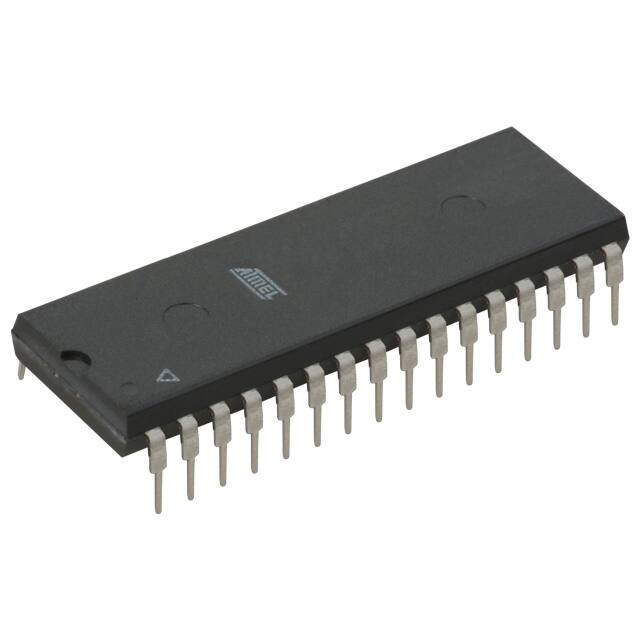
The AT29C020 is a 5-volt-only in-system Flash programmable and erasable read-only
memory (PEROM). Its 2 megabits of memory is organized as 262,144 bytes. Manufactured with Atmel’s advanced nonvolatile CMOS technology, the device offers
access times to 70 ns with power dissipation of just 220 mW over the commercial temperature range. When the device is deselected, the CMOS standby current is less
than 100 µA. Device endurance is such that any sector can typically be written to in
excess of 10,000 times.
Pin Configurations
DIP Top View
Pin Name
Function
A0 - A17
Addresses
CE
Chip Enable
OE
Output Enable
WE
Write Enable
I/O0 - I/O7
Data Inputs/Outputs
NC
No Connect
NC
A16
A15
A12
A7
A6
A5
A4
A3
A2
A1
A0
I/O0
I/O1
I/O2
GND
TSOP Top View
Type 1
1
2
3
4
5
6
7
8
9
10
11
12
13
14
15
16
32
31
30
29
28
27
26
25
24
23
22
21
20
19
18
17
VCC
WE
A17
A14
A13
A8
A9
A11
OE
A10
CE
I/O7
I/O6
I/O5
I/O4
I/O3
32
31
30
29
28
27
26
25
24
23
22
21
20
19
18
17
OE
A10
CE
I/O7
I/O6
I/O5
I/O4
I/O3
GND
I/O2
I/O1
I/O0
A0
A1
A2
A3
A7
A6
A5
A4
A3
A2
A1
A0
I/O0
5
6
7
8
9
10
11
12
13
29
28
27
26
25
24
23
22
21
14
15
16
17
18
19
20
1
2
3
4
5
6
7
8
9
10
11
12
13
14
15
16
I/O1
I/O2
GND
I/O3
I/O4
I/O5
I/O6
A11
A9
A8
A13
A14
A17
WE
VCC
NC
A16
A15
A12
A7
A6
A5
A4
4
3
2
1
32
31
30
A12
A15
A16
NC
VCC
WE
A17
PLCC Top View
A14
A13
A8
A9
A11
OE
A10
CE
I/O7
Rev. 0291N–FLASH–07/02
1
�To allow for simple in-system reprogrammability, the AT29C020 does not require high input
voltages for programming. Five-volt-only commands determine the operation of the device.
Reading data out of the device is similar to reading from an EPROM. Reprogramming the
AT29C020 is performed on a sector basis; 256 bytes of data are loaded into the device and
then simultaneously programmed.
During a reprogram cycle, the address locations and 256 bytes of data are internally latched,
freeing the address and data bus for other operations. Following the initiation of a program
cycle, the device will automatically erase the sector and then program the latched data using
an internal control timer. The end of a program cycle can be detected by DATA polling of I/O7.
Once the end of a program cycle has been detected, a new access for a read or program can
begin.
Block Diagram
Device
Operation
READ: The AT29C020 is accessed like an EPROM. When CE and OE are low and WE is
high, the data stored at the memory location determined by the address pins is asserted on
the outputs. The outputs are put in the high impedance state whenever CE or OE is high. This
dual-line control gives designers flexibility in preventing bus contention.
BYTE LOAD: Byte loads are used to enter the 256 bytes of a sector to be programmed or
the software codes for data protection. A byte load is performed by applying a low pulse on the
WE or CE input with CE or WE low (respectively) and OE high. The address is latched on the
falling edge of CE or WE, whichever occurs last. The data is latched by the first rising edge of
CE or WE.
PROGRAM: The device is reprogrammed on a sector basis. If a byte of data within a sector
is to be changed, data for the entire sector must be loaded into the device. Any byte that is not
loaded during the programming of its sector will be indeterminate. Once the bytes of a sector
are loaded into the device, they are simultaneously programmed during the internal programming period. After the first data byte has been loaded into the device, successive bytes are
entered in the same manner. Each new byte to be programmed must have its high-to-low transition on WE (or CE) within 150 µs of the low-to-high transition of WE (or CE) of the preceding
byte. If a high-to-low transition is not detected within 150 µs of the last low-to-high transition,
the load period will end and the internal programming period will start. A8 to A17 specify the
sector address. The sector address must be valid during each high-to-low transition of WE (or
CE). A0 to A7 specify the byte address within the sector. The bytes may be loaded in any
order; sequential loading is not required. Once a programming operation has been initiated,
and for the duration of tWC, a read operation will effectively be a polling operation.
2
AT29C020
0291N–FLASH–07/02
�AT29C020
SOFTWARE DATA PROTECTION: A software controlled data protection feature is available on the AT29C020. Once the software protection is enabled a software algorithm must be
issued to the device before a program may be performed. The software protection feature may
be enabled or disabled by the user; when shipped from Atmel, the software data protection
feature is disabled. To enable the software data protection, a series of three program commands to specific addresses with specific data must be performed. After the software data
protection is enabled the same three program commands must begin each program cycle in
order for the programs to occur. All software program commands must obey the sector program timing specifications. Once set, the software data protection feature remains active
unless its disable command is issued. Power transitions will not reset the software data protection feature; however, the software feature will guard against inadvertent program cycles
during power transitions.
After setting SDP, any attempt to write to the device without the 3-byte command sequence
will start the internal write timers. No data will be written to the device; however, for the duration of tWC, a read operation will effectively be a polling operation.
After the software data protection’s 3-byte command code is given, a sector of data is loaded
into the device using the sector program timing specifications.
HARDWARE DATA PROTECTION: Hardware features protect against inadvertent programs to the AT29C020 in the following ways: (a) VCC sense – if VCC is below 3.8V (typical),
the program function is inhibited; (b) VCC power on delay – once VCC has reached the V CC
sense level, the device will automatically time out 5 ms (typical) before programming; (c) Program inhibit – holding any one of OE low, CE high or WE high inhibits program cycles; and (d)
Noise filter – pulses of less than 15 ns (typical) on the WE or CE inputs will not initiate a program cycle.
PRODUCT IDENTIFICATION: The product identification mode identifies the device and
manufacturer as Atmel. It may be accessed by hardware or software operation. The hardware
operation mode can be used by an external programmer to identify the correct programming
algorithm for the Atmel product. In addition, users may wish to use the software product identification mode to identify the part (i.e. using the device code), and have the system software
use the appropriate sector size for program operations. In this manner, the user can have a
common board design for 256K to 4-megabit densities and, with each density’s sector size in
a memory map, have the system software apply the appropriate sector size.
For details, see Operating Modes (for hardware operation) or Software Product Identification.
The manufacturer and device code is the same for both modes.
DATA POLLING: The AT29C020 features DATA polling to indicate the end of a program
cycle. During a program cycle an attempted read of the last byte loaded will result in the complement of the loaded data on I/O7. Once the program cycle has been completed, true data is
valid on all outputs and the next cycle may begin. DATA polling may begin at any time during
the program cycle.
TOGGLE BIT: In addition to DATA polling the AT29C020 provides another method for determining the end of a program or erase cycle. During a program or erase operation, successive
attempts to read data from the device will result in I/O6 toggling between one and zero. Once
the program cycle has completed, I/O6 will stop toggling and valid data will be read. Examining the toggle bit may begin at any time during a program cycle.
OPTIONAL CHIP ERASE MODE: The entire device can be erased by using a 6-byte software code. Please see Software Chip Erase application note for details.
3
0291N–FLASH–07/02
�BOOT BLOCK PROGRAMMING LOCKOUT: The AT29C020 has two designated memory
blocks that have a programming lockout feature. This feature prevents programming of data in
the designated block once the feature has been enabled. Each of these blocks consists of 8K
bytes; the programming lockout feature can be set independently for either block. While the
lockout feature does not have to be activated, it can be activated for either or both blocks.
These two 8K memory sections are referred to as boot blocks. Secure code which will bring up
a system can be contained in a boot block. The AT29C020 blocks are located in the first 8K
bytes of memory and the last 8K bytes of memory. The boot block programming lockout feature can therefore support systems that boot from the lower addresses of memory or the
higher addresses. Once the programming lockout feature has been activated, the data in that
block can no longer be erased or programmed; data in other memory locations can still be
changed through the regular programming methods. To activate the lockout feature, a series
of seven program commands to specific addresses with specific data must be performed.
Please see Boot Block Lockout Feature Enable Algorithm.
If the boot block lockout feature has been activated on either block, the chip erase function will
be disabled.
BOOT BLOCK LOCKOUT DETECTION: A software method is available to determine
whether programming of either boot block section is locked out. See Software Product Identification Entry and Exit sections. When the device is in the software product identification mode,
a read from location 00002H will show if programming the lower address boot block is locked
out while reading location 3FFF2H will do so for the upper boot block. If the data is FE, the corresponding block can be programmed; if the data is FF, the program lockout feature has been
activated and the corresponding block cannot be programmed. The software product identification exit mode should be used to return to standard operation.
Absolute Maximum Ratings*
Temperature Under Bias................................ -55°C to +125°C
Storage Temperature ..................................... -65°C to +150°C
All Input Voltages (including NC Pins)
with Respect to Ground ...................................-0.6V to +6.25V
All Output Voltages
with Respect to Ground .............................-0.6V to VCC + 0.6V
*NOTICE:
Stresses beyond those listed under “Absolute
Maximum Ratings” may cause permanent damage to the device. This is a stress rating only and
functional operation of the device at these or any
other conditions beyond those indicated in the
operational sections of this specification is not
implied. Exposure to absolute maximum rating
conditions for extended periods may affect
device reliability.
Voltage on OE
with Respect to Ground ...................................-0.6V to +13.5V
4
AT29C020
0291N–FLASH–07/02
�AT29C020
DC and AC Operating Range
Operating
Temperature (Case)
Com.
Ind.
VCC Power Supply
AT29C020-70
AT29C020-90
AT29C020-10
AT29C020-12
AT29C020-15
0°C - 70°C
0°C - 70°C
0°C - 70°C
0°C - 70°C
0°C - 70°C
-40°C - 85°C
-40°C - 85°C
-40°C - 85°C
-40°C - 85°C
-40°C - 85°C
5V ± 10%
5V ± 10%
5V ± 10%
5V ± 10%
5V ± 10%
Not recommended for New Designs.
Note:
Operating Modes
Mode
CE
OE
WE
Ai
I/O
Read
VIL
VIL
VIH
Ai
DOUT
Program (2)
VIL
VIH
VIL
Ai
DIN
5V Chip Erase
VIL
VIH
VIL
Ai
X
X
Standby/Write Inhibit
(1)
VIH
X
Program Inhibit
X
X
VIH
Program Inhibit
X
VIL
X
Output Disable
X
VIH
X
VIL
VIL
VIH
High Z
High Z
Product Identification
Hardware
A1 - A17 = VIL, A9 = VH,(3) A0 = VIL
A1 - A17 = VIL, A9 = VH, A0 = VIH
Software(5)
Notes:
1.
2.
3.
4.
5.
Manufacturer Code(4)
Device Code(4)
A0 = VIL
Manufacturer Code(4)
A0 = VIH
Device Code(4)
X can be VIL or VIH.
Refer to AC Programming Waveforms.
VH = 12.0V ± 0.5V.
Manufacturer Code: 1F, Device Code: DA.
See details under Software Product Identification Entry/Exit.
DC Characteristics
Symbol
Parameter
Condition
ILI
Input Load Current
ILO
ISB1
Min
Max
Units
VIN = 0V to VCC
10
µA
Output Leakage Current
VI/O = 0V to VCC
10
µA
VCC Standby Current CMOS
CE = V CC - 0.3V to VCC
Com.
100
µA
Ind.
300
µA
ISB2
VCC Standby Current TTL
CE = 2.0V to VCC
3
mA
ICC
VCC Active Current
f = 5 MHz; IOUT = 0 mA
40
mA
VIL
Input Low Voltage
0.8
V
VIH
Input High Voltage
VOL
Output Low Voltage
IOL = 2.1 mA
VOH1
Output High Voltage
IOH = -400 µA
2.4
V
VOH2
Output High Voltage CMOS
IOH = -100 µA; VCC = 4.5V
4.2
V
2.0
V
0.45
V
5
0291N–FLASH–07/02
�AC Read Characteristics
AT29C020-90
Symbol
Parameter
tACC
Address to Output Delay
AT29C020-90
AT29C020-10
Min
Max
Min
Max
0
70
0
90
100
90
100
Min
Max
AT29C020-12
Min
AT29C020-15
Max
Units
120
150
ns
120
150
ns
Max
Min
(1)
CE to Output Delay
tOE(2)
OE to Output Delay
0
40
0
40
0
50
0
50
0
70
ns
CE or OE to Output Float
0
25
0
25
0
25
0
30
0
40
ns
Output Hold from OE, CE
or Address, whichever
occurred first
0
tCE
tDF
(3)(4)
tOH
Note:
70
0
0
0
0
ns
Not recommended for New Designs.
AC Read Waveforms(1)(2)(3)(4)
Notes:
6
1. CE may be delayed up to tACC - tCE after the address transition without impact on tACC.
2. OE may be delayed up to tCE - tOE after the falling edge of CE without impact on tCE or by tACC - tOE after an address change
without impact on tACC.
3. tDF is specified from OE or CE whichever occurs first (CL = 5 pF).
4. This parameter is characterized and is not 100% tested.
AT29C020
0291N–FLASH–07/02
�AT29C020
Input Test Waveforms and Measurement Level
tR, t F < 5 ns
Output Test Load
Pin Capacitance
f = 1 MHz, T = 25°C(1)
Symbol
Typ
Max
Units
Conditions
CIN
4
6
pF
VIN = 0V
COUT
8
12
pF
VOUT = 0V
Note:
1. This parameter is characterized and is not 100% tested.
7
0291N–FLASH–07/02
�AC Byte Load Characteristics
Symbol
Parameter
Min
Max
Units
tAS, tOES
Address, OE Set-up Time
0
ns
tAH
Address Hold Time
50
ns
tCS
Chip Select Set-up Time
0
ns
tCH
Chip Select Hold Time
0
ns
tWP
Write Pulse Width (WE or CE)
90
ns
tDS
Data Set-up Time
50
ns
tDH, tOEH
Data, OE Hold Time
0
ns
tWPH
Write Pulse Width High
100
ns
AC Byte Load Waveforms
WE Controlled
CE Controlled
8
AT29C020
0291N–FLASH–07/02
�AT29C020
Program Cycle Characteristics
Symbol
Parameter
Min
Max
Units
tWC
Write Cycle Time
10
ms
tAS
Address Set-up Time
0
ns
tAH
Address Hold Time
50
ns
tDS
Data Set-up Time
50
ns
tDH
Data Hold Time
0
ns
tWP
Write Pulse Width
90
ns
tBLC
Byte Load Cycle Time
tWPH
Write Pulse Width High
150
100
µs
ns
Program Cycle Waveforms(1)(2)(3)
Notes:
1. A8 through A17 must specify the sector address during each high-to-low transition of WE (or CE).
2. OE must be high when WE and CE are both low.
3. All words that are not loaded within the sector being programmed will be indeterminate.
9
0291N–FLASH–07/02
�Software Data Protection Enable Algorithm()
Software Data Protection Disable Algorithm()
LOAD DATA AA
TO
ADDRESS 5555
LOAD DATA AA
TO
ADDRESS 5555
LOAD DATA 55
TO
ADDRESS 2AAA
LOAD DATA 55
TO
ADDRESS 2AAA
LOAD DATA A0
TO
ADDRESS 5555
WRITES ENABLED
LOAD DATA 80
TO
ADDRESS 5555
LOAD DATA
TO
PAGE (128 BYTES)(4)
ENTER DATA
PROTECT STATE(2)
LOAD DATA AA
TO
ADDRESS 5555
LOAD DATA 55
TO
ADDRESS 2AAA
LOAD DATA 20
TO
ADDRESS 5555
EXIT DATA
PROTECT STATE(3)
LOAD DATA
TO
PAGE (128 BYTES)(4)
Notes:
1.
2.
3.
4.
Data Format: I/O7 - I/O0 (Hex); Address Format: A14 - A0 (Hex).
Data Protect state will be activated at end of program cycle.
Data Protect state will be deactivated at end of program period.
256 bytes of data MUST BE loaded.
Software Protected Program Cycle Waveform(1)(4)(5)
Notes:
10
1. A8 through A17 must specify the sector address during each high-to-low transition of WE (or CE) after the software code
has been entered.
4. OE must be high when WE and CE are both low.
5. All bytes that are not loaded within the sector being programmed will be indeterminate.
AT29C020
0291N–FLASH–07/02
�AT29C020
Data Polling Characteristics(1)
Symbol
Parameter
tDH
Data Hold Time
tOEH
OE Hold Time
Min
Max
OE to Output Delay
tWR
Write Recovery Time
Units
10
ns
10
ns
(2)
tOE
Notes:
Typ
ns
0
ns
1. These parameters are characterized and not 100% tested.
2. See tOE spec in AC Read Characteristics.
Data Polling Waveforms
Toggle Bit Characteristics(1)
Symbol
Parameter
tDH
Data Hold Time
tOEH
OE Hold Time
Min
OE to Output Delay
tOEHP
OE High Pulse
tWR
Write Recovery Time
Notes:
Max
Units
10
ns
10
ns
(2)
tOE
Typ
ns
150
ns
0
ns
1. These parameters are characterized and not 100% tested.
2. See tOE spec in AC Read Characteristics.
Toggle Bit Waveforms(1)(2)(3)
Notes:
1. Toggling either OE or CE or both OE and CE will operate toggle bit.
2. Beginning and ending state of I/O6 may vary.
3. Any address location may be used but the address should not vary.
11
0291N–FLASH–07/02
�Software Product Identification Entry(1)
LOAD DATA AA
TO
ADDRESS 5555
Boot Block Lockout
Feature Enable Algorithm(1)
LOAD DATA AA
TO
ADDRESS 5555
LOAD DATA 55
TO
ADDRESS 2AAA
LOAD DATA 55
TO
ADDRESS 2AAA
LOAD DATA 90
TO
ADDRESS 5555
PAUSE 10 mS
LOAD DATA 80
TO
ADDRESS 5555
ENTER PRODUCT
IDENTIFICATION
MODE(2)(3)(5)
LOAD DATA AA
TO
ADDRESS 5555
Software Product Identification Exit(1)
LOAD DATA AA
TO
ADDRESS 5555
LOAD DATA 55
TO
ADDRESS 2AAA
LOAD DATA 55
TO
ADDRESS 2AAA
LOAD DATA 40
TO
ADDRESS 5555
LOAD DATA F0
TO
ADDRESS 5555
PAUSE 10 mS
EXIT PRODUCT
IDENTIFICATION
MODE(4)
Notes:
Notes:
12
1. Data Format: I/O15 - I/O0 (Hex);
Address Format: A14 - A0 (Hex).
2. A1 - A17 = VIL.
Manufacturer Code is read for A0 = VIL;
Device Code is read for A0 = VIH.
3. The device does not remain in identification mode
if powered down.
4. The device returns to standard operation mode.
5. Manufacturer Code is 1F. The Device Code is DA.
LOAD DATA 00
TO
ADDRESS 00000H(2)
LOAD DATA FF
TO
ADDRESS 3FFFFH(3)
PAUSE 20 mS
PAUSE 20 mS
1. Data Format: I/O7 - I/O0 (Hex);
Address Format: A14 - A0 (Hex).
2. Lockout feature set on lower address boot block.
3. Lockout feature set on higher address boot block.
AT29C020
0291N–FLASH–07/02
�AT29C020
Ordering Information
ICC (mA)
tACC
(ns)
Active
Standby
Ordering Code
Package
70
40
0.1
AT29C020-70JC
AT29C020-70PC
AT29C020-70TC
32J
32P6
32T
Commercial
(0° to 70°C)
40
0.1
AT29C020-70JI
AT29C020-70PI
AT29C020-70TI
32J
32P6
32T
Industrial
(-40° to 85°C)
40
0.1
AT29C020-90JC
AT29C020-90PC
AT29C020-90TC
32J
32P6
32T
Commercial
(0° to 70°C)
40
0.1
AT29C020-90JI
AT29C020-90PI
AT29C020-90TI
32J
32P6
32T
Industrial
(-40° to 85°C)
40
0.1
AT29C020-10JC
AT29C020-10PC
AT29C020-10TC
32J
32P6
32T
Commercial
(0° to 70°C)
40
0.3
AT29C020-10JI
AT29C020-10PI
AT29C020-10TI
32J
32P6
32T
Industrial
(-40° to 85°C)
40
0.1
AT29C020-12JC
AT29C020-12PC
AT29C020-12TC
32J
32P6
32T
Commercial
(0° to 70°C)
40
0.3
AT29C020-12JI
AT29C020-12PI
AT29C020-12TI
32J
32P6
32T
Industrial
(-40° to 85°C)
40
0.1
AT29C020-15JC
AT29C020-15PC
AT29C020-15TC
32J
32P6
32T
Commercial
(0° to 70°C)
40
0.3
AT29C020-15JI
AT29C020-15PI
AT29C020-15TI
32J
32P6
32T
Industrial
(-40° to 85°C)
90
100
120
150
Note:
Operation Range
Not recommended for New Designs.
Package Type
32J
32-lead, Plastic J-leaded Chip Carrier (PLCC)
32P6
32-pin, 0.600" Wide, Plastic Dual Inline Package (PDIP)
32T
32-lead, Thin Small Outline Package (TSOP)
13
0291N–FLASH–07/02
�Packaging Information
32J – PLCC
1.14(0.045) X 45˚
PIN NO. 1
IDENTIFIER
1.14(0.045) X 45˚
0.318(0.0125)
0.191(0.0075)
E1
E2
B1
E
B
e
A2
D1
A1
D
A
0.51(0.020)MAX
45˚ MAX (3X)
COMMON DIMENSIONS
(Unit of Measure = mm)
D2
Notes:
1. This package conforms to JEDEC reference MS-016, Variation AE.
2. Dimensions D1 and E1 do not include mold protrusion.
Allowable protrusion is .010"(0.254 mm) per side. Dimension D1
and E1 include mold mismatch and are measured at the extreme
material condition at the upper or lower parting line.
3. Lead coplanarity is 0.004" (0.102 mm) maximum.
SYMBOL
MIN
NOM
MAX
A
3.175
–
3.556
A1
1.524
–
2.413
A2
0.381
–
–
D
12.319
–
12.573
D1
11.354
–
11.506
D2
9.906
–
10.922
E
14.859
–
15.113
E1
13.894
–
14.046
E2
12.471
–
13.487
B
0.660
–
0.813
B1
0.330
–
0.533
e
NOTE
Note 2
Note 2
1.270 TYP
10/04/01
R
14
2325 Orchard Parkway
San Jose, CA 95131
TITLE
32J, 32-lead, Plastic J-leaded Chip Carrier (PLCC)
DRAWING NO.
REV.
32J
B
AT29C020
0291N–FLASH–07/02
�AT29C020
32P6 – PDIP
D
PIN
1
E1
A
SEATING PLANE
A1
L
B
B1
e
E
0º ~ 15º
C
COMMON DIMENSIONS
(Unit of Measure = mm)
REF
SYMBOL
eB
Note:
1. Dimensions D and E1 do not include mold Flash or Protrusion.
Mold Flash or Protrusion shall not exceed 0.25 mm (0.010").
MIN
NOM
MAX
A
–
–
4.826
A1
0.381
–
–
D
41.783
–
42.291
E
15.240
–
15.875
E1
13.462
–
13.970
B
0.356
–
0.559
B1
1.041
–
1.651
L
3.048
–
3.556
C
0.203
–
0.381
eB
15.494
–
17.526
e
NOTE
Note 1
Note 1
2.540 TYP
09/28/01
R
2325 Orchard Parkway
San Jose, CA 95131
TITLE
32P6, 32-lead (0.600"/15.24 mm Wide) Plastic Dual
Inline Package (PDIP)
DRAWING NO.
32P6
REV.
B
15
0291N–FLASH–07/02
�32T – TSOP
PIN 1
0º ~ 8º
c
Pin 1 Identifier
D1 D
L
b
e
L1
A2
E
A
GAGE PLANE
SEATING PLANE
COMMON DIMENSIONS
(Unit of Measure = mm)
A1
MIN
NOM
MAX
A
–
–
1.20
A1
0.05
–
0.15
A2
0.95
1.00
1.05
D
19.80
20.00
20.20
D1
18.30
18.40
18.50
Note 2
E
7.90
8.00
8.10
Note 2
L
0.50
0.60
0.70
SYMBOL
Notes:
1. This package conforms to JEDEC reference MO-142, Variation BD.
2. Dimensions D1 and E do not include mold protrusion. Allowable
protrusion on E is 0.15 mm per side and on D1 is 0.25 mm per side.
3. Lead coplanarity is 0.10 mm maximum.
L1
0.25 BASIC
b
0.17
0.22
0.27
c
0.10
–
0.21
e
NOTE
0.50 BASIC
10/18/01
R
16
2325 Orchard Parkway
San Jose, CA 95131
TITLE
32T, 32-lead (8 x 20 mm Package) Plastic Thin Small Outline
Package, Type I (TSOP)
DRAWING NO.
REV.
32T
B
AT29C020
0291N–FLASH–07/02
�Atmel Headquarters
Atmel Operations
Corporate Headquarters
Memory
2325 Orchard Parkway
San Jose, CA 95131
TEL 1(408) 441-0311
FAX 1(408) 487-2600
Europe
Atmel Sarl
Route des Arsenaux 41
Case Postale 80
CH-1705 Fribourg
Switzerland
TEL (41) 26-426-5555
FAX (41) 26-426-5500
Asia
Room 1219
Chinachem Golden Plaza
77 Mody Road Tsimshatsui
East Kowloon
Hong Kong
TEL (852) 2721-9778
FAX (852) 2722-1369
Japan
9F, Tonetsu Shinkawa Bldg.
1-24-8 Shinkawa
Chuo-ku, Tokyo 104-0033
Japan
TEL (81) 3-3523-3551
FAX (81) 3-3523-7581
2325 Orchard Parkway
San Jose, CA 95131
TEL 1(408) 441-0311
FAX 1(408) 436-4314
RF/Automotive
Theresienstrasse 2
Postfach 3535
74025 Heilbronn, Germany
TEL (49) 71-31-67-0
FAX (49) 71-31-67-2340
Microcontrollers
2325 Orchard Parkway
San Jose, CA 95131
TEL 1(408) 441-0311
FAX 1(408) 436-4314
La Chantrerie
BP 70602
44306 Nantes Cedex 3, France
TEL (33) 2-40-18-18-18
FAX (33) 2-40-18-19-60
ASIC/ASSP/Smart Cards
1150 East Cheyenne Mtn. Blvd.
Colorado Springs, CO 80906
TEL 1(719) 576-3300
FAX 1(719) 540-1759
Biometrics/Imaging/Hi-Rel MPU/
High Speed Converters/RF Datacom
Avenue de Rochepleine
BP 123
38521 Saint-Egreve Cedex, France
TEL (33) 4-76-58-30-00
FAX (33) 4-76-58-34-80
Zone Industrielle
13106 Rousset Cedex, France
TEL (33) 4-42-53-60-00
FAX (33) 4-42-53-60-01
1150 East Cheyenne Mtn. Blvd.
Colorado Springs, CO 80906
TEL 1(719) 576-3300
FAX 1(719) 540-1759
Scottish Enterprise Technology Park
Maxwell Building
East Kilbride G75 0QR, Scotland
TEL (44) 1355-803-000
FAX (44) 1355-242-743
e-mail
literature@atmel.com
Web Site
http://www.atmel.com
© Atmel Corporation 2002.
Atmel Corporation makes no warranty for the use of its products, other than those expressly contained in the Company’s standard warranty
which is detailed in Atmel’s Terms and Conditions located on the Company’s web site. The Company assumes no responsibility for any errors
which may appear in this document, reserves the right to change devices or specifications detailed herein at any time without notice, and does
not make any commitment to update the information contained herein. No licenses to patents or other intellectual property of Atmel are granted
by the Company in connection with the sale of Atmel products, expressly or by implication. Atmel’s products are not authorized for use as critical
components in life support devices or systems.
ATMEL ® is the registered trademark of Atmel.
Other terms and product names may be the trademarks of others.
Printed on recycled paper.
0291N–FLASH–07/02
/xM
�









 工商网监
湘ICP备2023018690号
工商网监
湘ICP备2023018690号