MCP14A0051/2
0.5A MOSFET Driver with
Low Threshold Input and Enable
Features
General Description
• High Peak Output Current: 0.5A (typical)
• Wide Input Supply Voltage Operating Range:
- 4.5V to 18V
• Low Shoot-Through/Cross-Conduction Current in
Output Stage
• High Capacitive Load Drive Capability:
- 1000 pF in 40 ns (typical)
• Short Delay Times: 33 ns (tD1), 24 ns (tD2) (typical)
• Low Supply Current: 375 µA (typical)
• Low Voltage Threshold Input and Enable with
Hysteresis
• Latch-up Protected: Withstands 500 mA Reverse
Current
• Space-Saving Packages:
- 6-Lead SOT-23
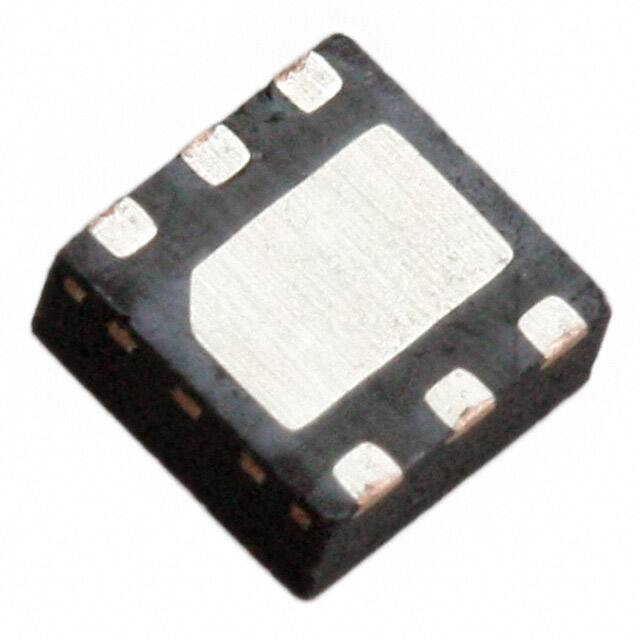
- 6-Lead 2x2 DFN
The MCP14A0051/2 devices are high-speed MOSFET
drivers that are capable of providing up to 0.5A of peak
current while operating from a single 4.5V to 18V
supply. The inverting (MCP14A0051) or noninverting
(MCP14A0052) single-channel output is directly
controlled from either TTL or CMOS (2V to 18V) logic.
These devices also feature low shoot-through current,
matched rise and fall times and short propagation
delays, which make them ideal for high switching
frequency applications.
Applications
•
•
•
•
•
Switch Mode Power Supplies (SMPS)
Pulse Transformer Drive
Line Drivers
Level Translator
Motor and Solenoid Drive
The MCP14A0051/2 family of devices offers enhanced
control with enable functionality. The active-high
Enable (EN) pin can be driven low to drive the output of
the MCP14A0051/2 low, regardless of the status of the
Input (IN) pin. An integrated pull-up resistor allows the
user to leave the Enable pin floating for standard
operation.
Additionally, the MCP14A0051/2 devices feature separate ground pins (AGND and GND), allowing greater
noise isolation between the level-sensitive Input/
Enable pins and the fast, high-current transitions of the
push-pull output stage.
These devices are highly latch-up resistant under any
condition within their power and voltage ratings. They
can accept up to 500 mA of reverse current being
forced back into their outputs without damage or logic
upset. All terminals are fully protected against
Electrostatic Discharge (ESD) up to 1.75 kV (HBM) and
100V (MM).
Package Types
6-Lead SOT-23
VDD
1
MCP14A0051
MCP14A0052
6
OUT
AGND
2
5
GND
IN
3
4
EN
OUT
MCP14A0051
MCP14A0052
OUT
2x2 DFN-6*
OUT 1
GND 2
EN 3
EP
7
6 VDD
5 IN
4 AGND
* Includes Exposed Thermal Pad (EP); see Table 3-1.
2014-2022 Microchip Technology Inc. and its subsidiaries
DS20005369B-page 1
�MCP14A0051/2
Functional Block Diagram
VD D
Internal
Pull-up
MCP14A0051 Inverting
MCP14A0052 Noninverting
Enable
VR EF
AGND
Inverting
Output
VD D
Input
Noninverting
VR EF
AGND
DS20005369B-page 2
GND
2014-2022 Microchip Technology Inc. and its subsidiaries
�MCP14A0051/2
1.0
ELECTRICAL CHARACTERISTICS
Absolute Maximum Ratings†
VDD, Supply Voltage..................................................................................................................................................+20V
VIN, Input Voltage............................................................................................................... (VDD + 0.3V) to (GND – 0.3V)
VEN, Enable Voltage .......................................................................................................... (VDD + 0.3V) to (GND – 0.3V)
Package Power Dissipation (TA = +50°C)
6-Lead SOT-23 .................................................................................................................................................0.52 W
6-Lead 2x2 DFN................................................................................................................................................1.09 W
ESD Protection on All Pins.........................................................................................................................1.75 kV (HBM)
.............................................................................................................................. 100V (MM)
† Notice: Stresses above those listed under “Maximum Ratings” may cause permanent damage to the device. This
is a stress rating only and functional operation of the device at those or any other conditions above those
indicated in the operational sections of this specification is not intended. Exposure to maximum rating conditions
for extended periods may affect device reliability.
DC CHARACTERISTICS
Electrical Specifications: Unless otherwise noted, TA = +25°C with 4.5V VDD 18V.
Parameters
Sym.
Min.
Input
GND – 0.3V
Input Voltage Range
VIN
Logic ‘1’ High Input Voltage
VIH
2.0
Logic ‘0’ Low Input Voltage
VIL
—
Input Voltage Hysteresis
VHYST(IN)
—
Input Current
IIN
-1
Enable
Enable Voltage Range
VEN
GND – 0.3V
Logic ‘1’ High Enable Voltage
VEH
2.0
Logic ‘0’ Low Enable Voltage
VEL
—
Enable Voltage Hysteresis
VHYST(EN)
—
Enable Pin Pull-up Resistance
RENBL
—
Enable Input Current
IEN
—
Propagation Delay
tD3
—
Propagation Delay
tD4
—
Typ.
Max.
Units
—
1.6
1.2
0.4
—
VDD + 0.3
—
0.8
—
+1
V
V
V
V
µA
—
1.6
1.2
0.4
1.8
10
35
VDD + 0.3
—
0.8
—
—
—
43
V
V
V
V
MΩ
µA
ns
23
31
ns
—
0.025
17
10
—
—
V
V
Ω
Ω
A
A
Output
VDD – 0.025 —
High Output Voltage
VOH
Low Output Voltage
VOL
—
—
Output Resistance, High
ROH
—
12.5
Output Resistance, Low
ROL
—
7.5
—
0.5
Peak Output Current
IPK
Latch-up Protection Withstand
IREV
0.5
—
Reverse Current
Note 1: Tested during characterization, not production tested.
2014-2022 Microchip Technology Inc. and its subsidiaries
Conditions
0V VIN VDD
VDD = 18V, ENB = AGND
VDD = 18V, ENB = AGND
VDD = 18V, VEN = 5V,
see Figure 4-3 (Note 1)
VDD = 18V, VEN = 5V,
see Figure 4-3 (Note 1)
IOUT = 0A
IOUT = 0A
IOUT = 10 mA, VDD = 18V
IOUT = 10 mA, VDD = 18V
VDD = 18V (Note 1)
Duty cycle 2%, t 300 µs
(Note 1)
DS20005369B-page 3
�MCP14A0051/2
DC CHARACTERISTICS (CONTINUED)
Electrical Specifications: Unless otherwise noted, TA = +25°C with 4.5V VDD 18V.
Parameters
Sym.
Min.
Typ.
Max.
Units
Switching Time (Note 1)
Rise Time
tR
—
40
51
ns
Fall Time
tF
—
28
39
ns
Delay Time
tD1
—
33
41
ns
Delay Time
tD2
—
24
32
ns
18
560
580
580
600
V
µA
µA
µA
µA
Power Supply
Supply Voltage
VDD
4.5
—
IDD
—
330
IDD
—
360
Power Supply Current
IDD
—
360
IDD
—
375
Note 1: Tested during characterization, not production tested.
Conditions
VDD = 18V, CL = 1000 pF,
see Figure 4-1, Figure 4-2
(Note 1)
VDD = 18V, CL = 1000 pF,
see Figure 4-1, Figure 4-2
(Note 1)
VDD = 18V, VIN = 5V,
see Figure 4-1, Figure 4-2
(Note 1)
VDD = 18V, VIN = 5V,
see Figure 4-1, Figure 4-2
(Note 1)
VIN = 3V, VEN = 3V
VIN = 0V, VEN = 3V
VIN = 3V, VEN = 0V
VIN = 0V, VEN = 0V
DC CHARACTERISTICS (OVER OPERATING TEMP. RANGE)(1)
Electrical Specifications: Unless otherwise indicated, over the operating range with 4.5V VDD 18V.
Parameters
Sym.
Min.
Input
Input Voltage Range
VIN
GND – 0.3V
Logic ‘1’ High Input Voltage
VIH
2.0
Logic ‘0’ Low Input Voltage
VIL
—
Input Voltage Hysteresis
VHYST(IN)
—
Input Current
IIN
-10
Enable
Enable Voltage Range
VEN
GND – 0.3V
Logic ‘1’ High Enable Voltage
VEH
2.0
Logic ‘0’ Low Enable Voltage
VEL
—
Enable Voltage Hysteresis
VHYST(EN)
—
Enable Input Current
IEN
—
Propagation Delay
tD3
—
Propagation Delay
tD4
—
Typ.
Max.
Units
—
1.6
1.2
0.4
—
VDD + 0.3
—
0.8
—
+10
V
V
V
V
µA
—
1.6
1.2
0.4
12
33
VDD + 0.3
—
0.8
—
—
41
V
V
V
V
µA
ns
25
33
ns
Output
VDD – 0.025 —
—
High Output Voltage
VOH
Low Output Voltage
VOL
—
—
0.025
Output Resistance, High
ROH
—
—
24
Output Resistance, Low
ROL
—
—
15
Note 1: Tested during characterization, not production tested.
DS20005369B-page 4
V
V
Conditions
0V VIN VDD
VDD = 18V, ENB = AGND
VDD = 18V, VEN = 5V, TA = +125°C,
see Figure 4-3
VDD = 18V, VEN = 5V, TA = +125°C,
see Figure 4-3
DC test
DC test
IOUT = 10 mA, VDD = 18V
IOUT = 10 mA, VDD = 18V
2014-2022 Microchip Technology Inc. and its subsidiaries
�MCP14A0051/2
DC CHARACTERISTICS (OVER OPERATING TEMP. RANGE)(1) (CONTINUED)
Electrical Specifications: Unless otherwise indicated, over the operating range with 4.5V VDD 18V.
Parameters
Sym.
Min.
Typ.
Max.
Units
Conditions
Switching Time (Note 1)
Rise Time
tR
—
45
56
ns
Fall Time
tF
—
34
45
ns
Delay Time
tD1
—
32
40
ns
Delay Time
tD2
—
27
35
ns
VDD = 18V, CL = 1000 pF,
TA = +125°C, see Figure 4-1,
Figure 4-2
VDD = 18V, CL = 1000 pF,
TA = +125°C, see Figure 4-1,
Figure 4-2
VDD = 18V, VIN = 5V, TA = +125°C,
see Figure 4-1, Figure 4-2
VDD = 18V, VIN = 5V, TA = +125°C,
see Figure 4-1, Figure 4-2
18
760
780
780
800
V
uA
uA
uA
uA
Power Supply
Supply Voltage
VDD
4.5
—
IDD
—
—
IDD
—
—
Power Supply Current
IDD
—
—
IDD
—
—
Note 1: Tested during characterization, not production tested.
VIN = 3V, VEN = 3V
VIN = 0V, VEN = 3V
VIN = 3V, VEN = 0V
VIN = 0V, VEN = 0V
TEMPERATURE CHARACTERISTICS
Electrical Specifications: Unless otherwise noted, all parameters apply with 4.5V VDD 18V
Parameter
Sym.
Min.
Typ.
Max.
Units
Comments
Temperature Ranges
Specified Temperature Range
TA
-40
—
+125
°C
Maximum Junction Temperature
TJ
—
—
+150
°C
Storage Temperature Range
TA
-65
—
+150
°C
Thermal Resistance, 6-Lead 2x2 DFN
JA
—
91
—
°C/W
Thermal Resistance, 6-Lead SOT-23
JA
—
192
—
°C/W
Package Thermal Resistances
2014-2022 Microchip Technology Inc. and its subsidiaries
DS20005369B-page 5
�MCP14A0051/2
2.0
TYPICAL PERFORMANCE CURVES
Note:
The graphs and tables provided following this note are a statistical summary based on a limited number of
samples and are provided for informational purposes only. The performance characteristics listed herein
are not tested or guaranteed. In some graphs or tables, the data presented may be outside the specified
operating range (e.g., outside specified power supply range) and therefore outside the warranted range.
Note: Unless otherwise indicated, TA = +25°C with 4.5V VDD 18V.
300
160
5V
120
Fall Time (ns)
Rise Time (ns)
140
6800 pF
250
200
3300 pF
150
100
470 pF
100 pF
12V
80
18V
60
40
1000 pF
50
100
20
0
0
4
6
8
10
12
14
16
18
100
1000
Supply Voltage (V)
FIGURE 2-1:
Voltage.
FIGURE 2-4:
Load.
Rise Time vs. Supply
200
50
160
VDD = 18V
tR, 1000 pF
45
140
40
12V
Time (ns)
Rise Time (ns)
Fall Time vs. Capacitive
55
5V
180
120
100
80
18V
tF, 1000 pF
35
30
25
60
20
40
15
20
10
0
tR, 470 pF
tF, 470 pF
5
100
1000
10000
-40 -25 -10
Capacitive Load (pF)
FIGURE 2-2:
Load.
5
20 35 50 65 80 95 110 125
Temperature (°C)
Rise Time vs. Capacitive
FIGURE 2-5:
Temperature.
Rise and Fall Time vs.
10000
200
Crossover Current (µA)
250
Fall Time (ns)
10000
Capacitive Load (pF)
6800 pF
150
3300 pF
100
470 pF
100 pF
50
1000 pF
500 kHz
200 kHz
100 kHz
50 kHz
1000
100
10
1
0
4
6
8
10
12
14
16
18
4
6
FIGURE 2-3:
Voltage.
DS20005369B-page 6
Fall Time vs. Supply
8
10
12
14
16
18
Supply Voltage (V)
Supply Voltage (V)
FIGURE 2-6:
Supply Voltage.
Crossover Current vs.
2014-2022 Microchip Technology Inc. and its subsidiaries
�MCP14A0051/2
Note: Unless otherwise indicated, TA = +25°C with 4.5V VDD 18V.
Enable Propagation Delay (ns)
Input Propagation Delay (ns)
50
VIN = 5V
45
40
35
tD1
30
tD2
25
20
50
VEN = 5V
45
tD3
40
35
tD4
30
25
20
4
6
8
10
12
14
16
18
4
6
8
Supply Voltage (V)
FIGURE 2-7:
Supply Voltage.
Input Propagation Delay vs.
14
16
18
FIGURE 2-10:
Enable Propagation Delay
vs. Supply Voltage.
VDD = 18V
35
tD1
30
tD2
25
Enable Propagation Delay (ns)
Input Propogation Delay (ns)
12
40
40
20
VDD = 18V
tD3
35
30
25
tD4
20
4
6
8
10
12
14
16
18
4
6
8
10
12
FIGURE 2-8:
Input Propagation Delay
Time vs. Input Amplitude.
16
18
FIGURE 2-11:
Enable Propagation Delay
Time vs. Enable Voltage Amplitude.
40
VDD = 18V
VIN = 5V
35
30
tD2
25
20
Enable Propagation Delay (ns)
40
tD1
14
Enable Voltage Amplitude (V)
Input Voltage Amplitude (V)
Input Propagation Delay (ns)
10
Supply Voltage (V)
VDD = 18V
VEN = 5V
tD3
35
30
25
tD4
20
-40 -25 -10
5
20 35 50 65 80 95 110 125
-40 -25 -10
Temperature (°C)
FIGURE 2-9:
Temperature.
Input Propagation Delay vs.
2014-2022 Microchip Technology Inc. and its subsidiaries
5
20 35 50 65 80 95 110 125
Temperature (°C)
FIGURE 2-12:
vs. Temperature.
Enable Propagation Delay
DS20005369B-page 7
�MCP14A0051/2
Note: Unless otherwise indicated, TA = +25°C with 4.5V VDD 18V.
1.8
1.7
VIN = 0V,VEN = 0V
Input Threshold (V)
Quiescent Current (µA)
400
350
VIN = 3V,VEN = 3V
300
VIN = 3V,VEN = 0V or VIN = 0V,VEN = 3V
VIH
1.6
1.5
1.4
1.3
VIL
1.2
1.1
250
1
4
6
8
10
12
14
16
18
4
6
8
Supply Voltage (V)
FIGURE 2-13:
Quiescent Supply Current
vs. Supply Voltage.
450
VIN = 0V,VEN = 0V
VIN = 5V,VEN = 5V
350
300
250
VIN = 5V,VEN = 0V or VIN = 0V,VEN = 5V
5
FIGURE 2-14:
vs. Temperature.
VDD = 18V
VEH
1.6
1.5
1.4
1.3
VEL
1.2
1.1
1
0.9
-40 -25 -10
20 35 50 65 80 95 110 125
5
FIGURE 2-17:
Temperature.
1.7
Enable Threshold (V)
VIH
1.5
1.4
VIL
1.1
1
Enable Threshold vs.
1.8
VDD = 18V
1.7
20 35 50 65 80 95 110 125
Temperature (°C)
Quiescent Supply Current
1.8
Input Threshold (V)
18
Input Threshold vs Supply
Temperature (°C)
1.2
16
0.8
-40 -25 -10
1.3
14
1.7
200
1.6
12
1.8
VDD = 18V
500
400
FIGURE 2-16:
Voltage.
Enable Threshold (V)
Quiescent Current (µA)
550
10
Supply Voltage (V)
VEH
1.6
1.5
1.4
1.3
VEL
1.2
1.1
0.9
0.8
1
-40 -25 -10
5
20 35 50 65 80 95 110 125
4
6
Temperature (°C)
FIGURE 2-15:
Temperature.
DS20005369B-page 8
Input Threshold vs.
8
10
12
14
16
18
Supply Voltage (V)
FIGURE 2-18:
Supply Voltage.
Enable Threshold vs.
2014-2022 Microchip Technology Inc. and its subsidiaries
�MCP14A0051/2
Note: Unless otherwise indicated, TA = +25°C with 4.5V VDD 18V.
45
50
ROH - Output Resistance (Ω)
VIN = 0V (MCP14A0051)
VIN = 5V (MCP14A0052)
35
TA = +125°C
30
25
20
TA = +25°C
15
40
1 MHz
500 kHz
200 kHz
100 kHz
50 kHz
10 kHz
35
30
25
20
15
10
5
0
10
4
6
8
10
12
14
Supply Voltage (V)
16
100
18
30
VIN = 5V (MCP14A0051)
VIN = 0V (MCP14A0052)
VDD = 6V
Supply Current (mA)
ROL - Output Resistance (Ω)
10000
FIGURE 2-22:
Supply Current vs.
Capacitive Load (VDD = 12V).
25
20
TA = +125°C
15
10
1000
Capacitive Load (pF)
FIGURE 2-19:
Output Resistance (Output
High) vs. Supply Voltage.
TA = +25°C
25
1 MHz
500 kHz
200 kHz
100 kHz
50 kHz
10 kHz
20
15
10
5
0
5
4
6
8
10
12
14
Supply Voltage (V)
16
100
18
10000
FIGURE 2-23:
Supply Current vs.
Capacitive Load (VDD = 6V).
100
100
90
1000
Capacitive Load (pF)
FIGURE 2-20:
Output Resistance (Output
Low) vs. Supply Voltage.
VDD = 18V
90
80
Supply Current (mA)
Supply Current (mA)
VDD = 12V
45
Supply Current (mA)
40
1 MHz
500 kHz
200 kHz
100 kHz
50 kHz
10 kHz
70
60
50
40
30
20
VDD = 18V
80
10000 pF
6800 pF
3300 pF
1000 pF
470 pF
100 pF
70
60
50
40
30
20
10
10
0
0
100
1000
Capacitive Load (pF)
FIGURE 2-21:
Supply Current vs.
Capacitive Load (VDD = 18V).
2014-2022 Microchip Technology Inc. and its subsidiaries
10000
10
100
1000
Switching Frequency (kHz)
FIGURE 2-24:
Supply Current vs.
Frequency (VDD = 18V).
DS20005369B-page 9
�MCP14A0051/2
Note: Unless otherwise indicated, TA = +25°C with 4.5V VDD 18V.
14
50
VDD = 12V
13
40
Enable Current (uA)
Supply Current (mA)
45
10000 pF
6800 pF
3300 pF
1000 pF
470 pF
100 pF
35
30
25
20
15
10
TA = +125°C
12
11
TA = +25°C
10
9
5
0
10
100
1000
8
4
6
Switching Frequency (kHz)
FIGURE 2-25:
Supply Current vs.
Frequency (VDD = 12V).
FIGURE 2-27:
Voltage.
8
10
12
14
Supply Voltage (V)
16
18
Enable Current vs. Supply
30
Supply Current (mA)
VDD = 6V
25
10000 pF
6800 pF
3300 pF
1000 pF
470 pF
100 pF
20
15
10
5
0
10
100
1000
Switching Frequency (kHz)
FIGURE 2-26:
Supply Current vs.
Frequency (VDD = 6V).
DS20005369B-page 10
2014-2022 Microchip Technology Inc. and its subsidiaries
�MCP14A0051/2
3.0
PIN DESCRIPTIONS
The descriptions of the pins are listed in Table 3-1.
TABLE 3-1:
PIN FUNCTION TABLE
Pin No.
Symbol
Description
6-Lead 2x2 DFN
6-Lead SOT-23
1
6
OUT/OUT
2
5
GND
3
4
EN
Device Enable
4
2
AGND
Analog Ground
5
3
IN
Control Input
6
1
VDD
Supply Input
EP
—
EP
Exposed Thermal Pad (GND)
3.1
Output Pin (OUT, OUT)
The Output is a CMOS push-pull output that is capable
of sourcing and sinking 0.5A of peak current
(VDD = 18V). The low output impedance ensures the
gate of the external MOSFET stays in the intended
state, even during large transients. This output also has
a reverse current latch-up rating of 500 mA.
3.2
Power Ground Pin (GND)
GND is the device return pin for the output stage. The
GND pin should have a low-impedance connection to
the bias supply source return. When the capacitive load
is being discharged, high peak currents will flow out of
the ground pin.
3.3
Device Enable Pin (EN)
The MOSFET driver Device Enable is a highimpedance, TTL/CMOS compatible input. The Enable
input also has hysteresis between the high and low
input levels, allowing them to be driven from slow rising
and falling signals and to provide noise immunity.
Driving the Enable pin below the threshold will disable
the output of the device, pulling OUT/OUT low,
regardless of the status of the Input pin. Driving the
Enable pin above the threshold allows normal
operation of the OUT/OUT pin based on the status of
the Input pin. The Enable pin utilizes an internal pull-up
resistor, allowing the pin to be left floating for standard
driver operation.
2014-2022 Microchip Technology Inc. and its subsidiaries
Push-Pull Output
Power Ground
3.4
Analog Ground Pin (AGND)
AGND is the device return pin for the input and enable
stages of the MOSFET driver. The AGND pin should be
connected to an electrically “quiet” ground node to
provide a low noise reference for the Input and Enable
pins.
3.5
Control Input Pin (IN)
The MOSFET driver Control Input is a high-impedance,
TTL/CMOS compatible input. The Input also has
hysteresis between the high and low input levels, allowing them to be driven from slow rising and falling
signals and to provide noise immunity.
3.6
Supply Input Pin (VDD)
VDD is the bias supply input for the MOSFET driver and
has a voltage range of 4.5V to 18V. This input must be
decoupled to ground with a local capacitor. This bypass
capacitor provides a localized low-impedance path for
the peak currents that are provided to the load.
3.7
Exposed Metal Pad Pin (EP)
The exposed metal pad of the DFN package is not
internally connected to any potential. Therefore, this
pad can be connected to a ground plane, or other
copper plane on a Printed Circuit Board, to aid in heat
removal from the package.
DS20005369B-page 11
�MCP14A0051/2
4.0
APPLICATION INFORMATION
VDD = 18V
4.1
General Information
1 µF
MOSFET drivers are high-speed, high-current devices,
which are intended to source/sink high peak currents to
charge/discharge the gate capacitance of external
MOSFETs or Insulated-Gate Bipolar Transistors
(IGBTs). In high-frequency switching power supplies, the
Pulse-Width Modulation (PWM) controller may not have
the drive capability to directly drive the power MOSFET.
A MOSFET driver, such as the MCP14A0051/2 family,
can be used to provide additional source/sink current
capability.
4.2
Input
0.1 µF
Output
CL = 1000 pF
MCP14A0052
5V
MOSFET Driver Timing
The ability of a MOSFET driver to transition from a fully
OFF state to a fully ON state is characterized by the
driver’s Rise Time (tR), Fall Time (tF) and Propagation
Delays (tD1 and tD2). Figure 4-1 and Figure 4-2 show
the test circuit and timing waveform used to verify the
MCP14A0051/2 timing.
Input
VIH (Typ.)
0V
VIL (Typ.)
tD1
tR
tD2
18V
tF
90%
Output
10%
0V
VDD = 18V
1 µF
FIGURE 4-2:
Waveform.
0.1 µF
4.3
Input
Output
CL = 1000 pF
MCP14A0051
5V
Input
VIH (Typ.)
0V
VIL (Typ.)
tD1
18V
tF
tD2
tR
90%
Output
0V
FIGURE 4-1:
Waveform.
DS20005369B-page 12
10%
Inverting Driver Timing
Noninverting Driver Timing
Enable Function
The Enable pin (EN) provides additional control of the
Output pin (OUT). This pin is active-high and is internally pulled up to VDD so that the pin can be left floating
to provide standard MOSFET driver operation.
When the Enable pin’s voltage is above the Enable pin
High-Voltage Threshold, (VEN_H), the output is enabled
and allowed to react to the status of the Input pin. However, when the voltage applied to the Enable pin falls
below the Low Threshold Voltage (VEN_L), the driver
output is disabled and doesn't respond to changes in
the status of the Input pin. When the driver is disabled,
the output is pulled down to a Low state. Refer to
Table 4-1 for Enable pin logic. The threshold voltage
levels for the Enable pin are similar to the threshold
voltage levels of the Input pin, and are TTL and CMOS
compatible. Hysteresis is provided to help increase the
noise immunity of the enable function, avoiding false
triggers of the enable signal during driver switching.
There are propagation delays associated with the
driver receiving an enable signal and the output reacting. These Propagation Delays, tD3 and tD4, are
graphically represented in Figure 4-3.
2014-2022 Microchip Technology Inc. and its subsidiaries
�MCP14A0051/2
TABLE 4-1:
4.6
ENABLE PIN LOGIC
Power Dissipation
ENB
IN
MCP14A0051
OUT
MCP14A0052
OUT
H
H
L
H
The total internal power dissipation in a MOSFET driver
is the summation of three separate power dissipation
elements, as shown in Equation 4-1.
H
L
H
L
EQUATION 4-1:
L
X
L
L
P
T
= P +P +P
L
Q
CC
Where:
5V
PT = Total power dissipation
Enable
PL = Load power dissipation
VEH (Typ.)
PQ = Quiescent power dissipation
0V
VEL (Typ.)
tD3
PCC = Operating power dissipation
tD4
18V
90%
Output
10%
0V
FIGURE 4-3:
4.4
Enable Timing Waveform.
Decoupling Capacitors
Careful PCB layout and decoupling capacitors are
required when using power MOSFET drivers. Large
current is required to charge and discharge capacitive
loads quickly. For example, approximately 720 mA are
needed to charge a 1000 pF load with 18V in 25 ns.
To operate the MOSFET driver over a wide frequency
range with low supply impedance, it is recommended to
place 1.0 µF and 0.1 µF low-ESR ceramic capacitors in
parallel between the driver VDD and GND. These
capacitors should be placed close to the driver to minimize circuit board parasitics and provide a local source
for the required current.
4.5
PCB Layout Considerations
Proper Printed Circuit Board (PCB) layout is important
in high-current, fast switching circuits to provide proper
device operation and robustness of design. Improper
component placement may cause errant switching,
excessive voltage ringing or circuit latch-up. The PCB
trace loop length and inductance should be minimized
by the use of ground planes or traces under the
MOSFET gate drive signal, separate analog and power
grounds and local driver decoupling.
Placing a ground plane beneath the MCP14A0051/2
devices will help as a radiated noise shield, as well as
providing some heat sinking for power dissipated within
the device.
2014-2022 Microchip Technology Inc. and its subsidiaries
4.6.1
CAPACITIVE LOAD DISSIPATION
The power dissipation caused by a capacitive load is a
direct function of the frequency, total capacitive load
and supply voltage. The power lost in the MOSFET
driver for a complete charging and discharging cycle of
a MOSFET is shown in Equation 4-2.
EQUATION 4-2:
P
Where:
L
= fC V
T
DD
2
f = Switching frequency
CT = Total load capacitance
VDD = MOSFET driver supply voltage
4.6.2
QUIESCENT POWER DISSIPATION
The power dissipation associated with the quiescent
current draw depends on the state of the Input and
Enable pins. Refer to Section 1.0 “Electrical Characteristics” for typical quiescent current draw values in
different operating states. The quiescent power
dissipation is shown in Equation 4-3.
EQUATION 4-3:
P
Q
= I
QH
D+I
QL
1 – D V
DD
Where:
IQH = Quiescent current in the High state
D = Duty cycle
IQL = Quiescent current in the Low state
VDD = MOSFET driver supply voltage
DS20005369B-page 13
�MCP14A0051/2
4.6.3
OPERATING POWER DISSIPATION
The operating power dissipation occurs each time the
MOSFET driver output transitions, because for a very
short period of time, both MOSFETs in the output stage
are on simultaneously. This cross-conduction current
leads to a power dissipation as described in
Equation 4-4.
EQUATION 4-4:
P
CC
= CC f V
DD
Where:
CC = Cross-conduction constant
(ampere x second)
f = Switching frequency
VDD = MOSFET driver supply voltage
DS20005369B-page 14
2014-2022 Microchip Technology Inc. and its subsidiaries
�MCP14A0051/2
5.0
PACKAGING INFORMATION
5.1
Package Marking Information
6-Lead DFN (2x2x0.9 mm)
Example
Part Number
Code
MCP14A0051T-E/MAY
ABG
MCP14A0052T-E/MAY
ABH
Note:
The content of this table
applies to 6-Lead DFN.
6-Lead SOT-23
Example
Part Number
Code
MCP14A0051T-E/CH
AAAQ
MCP14A0052T-E/CH
AAAR
Note:
Legend: XX...X
Y
YY
WW
NNN
e3
*
ABG
256
AAAQ2
08256
The content of this table
applies to 6-Lead SOT-23.
Product code or customer-specific information
Year code (last digit of calendar year)
Year code (last 2 digits of calendar year)
Week code (week of January 1 is week ‘01’)
Alphanumeric traceability code
Pb-free JEDEC® designator for Matte Tin (Sn)
This package is Pb-free. The Pb-free JEDEC designator ( e3 )
can be found on the outer packaging for this package.
●, ▲, ▼ Pin one index is identified by a dot, delta up, or delta down (triangle
mark).
Note:
In the event the full Microchip part number cannot be marked on one line, it will
be carried over to the next line, thus limiting the number of available
characters for customer-specific information. Package may or may not include
the corporate logo.
Underbar (_) and/or Overbar (‾) symbol may not be to scale.
2014-2022 Microchip Technology Inc. and its subsidiaries
DS20005369B-page 15
�MCP14A0051/2
DS20005369B-page 16
2014-2022 Microchip Technology Inc. and its subsidiaries
�MCP14A0051/2
2014-2022 Microchip Technology Inc. and its subsidiaries
DS20005369B-page 17
�MCP14A0051/2
Note:
For the most current package drawings, please see the Microchip Packaging Specification located at
http://www.microchip.com/packaging
DS20005369B-page 18
2014-2022 Microchip Technology Inc. and its subsidiaries
�MCP14A0051/2
������
���
�� ����� ��
���� �������
�� ���� ��������
�
�!
8���%�
�!�"%��&��
�%�
��;��
�#��7���"