MCP16251/2
Low Quiescent Current, PFM/PWM Synchronous Boost Regulator
with True Output Disconnect or Input/Output Bypass Option
Features
Applications
• Up to 96% Typical Efficiency
• 650 mA Typical Peak Input Current Limit:
- IOUT > 100 mA @ 3.3V VOUT, 1.2V VIN
- IOUT > 250 mA @ 3.3V VOUT, 2.4V VIN
- IOUT > 225 mA @ 5.0V VOUT, 3.3V VIN
• Low Device Quiescent Current:
- Output Quiescent Current: < 4 µA typical,
device is not switching (VOUT > VIN,
excluding feedback divider current)
- Input Sleep Current: 1 µA
- No Load Input Current: 14 µA typical
• Shutdown Current: 0.6 µA typical
• Low Start-Up Voltage: 0.82V, 1 mA load
• Low Operating Input Voltage: down to 0.35V
• Adjustable Output Voltage Range: 1.8V to 5.5V
• Maximum Input Voltage VOUT < 5.5V
• Automatic PFM/PWM Operation:
- PWM Operation: 500 kHz
- PFM Output Ripple: 150 mV typical
• Feedback Voltage: 1.23V
• Internal Synchronous Rectifier
• Internal Compensation
• Inrush Current Limiting and Internal Soft Start
(1.5 ms typical)
• Selectable, Logic Controlled, Shutdown States:
- True Load Disconnect Option (MCP16251)
- Input-to-Output Bypass Option (MCP16252)
• Anti-Ringing Control
• Overtemperature Protection
• Available Packages:
- SOT-23, 6-Lead
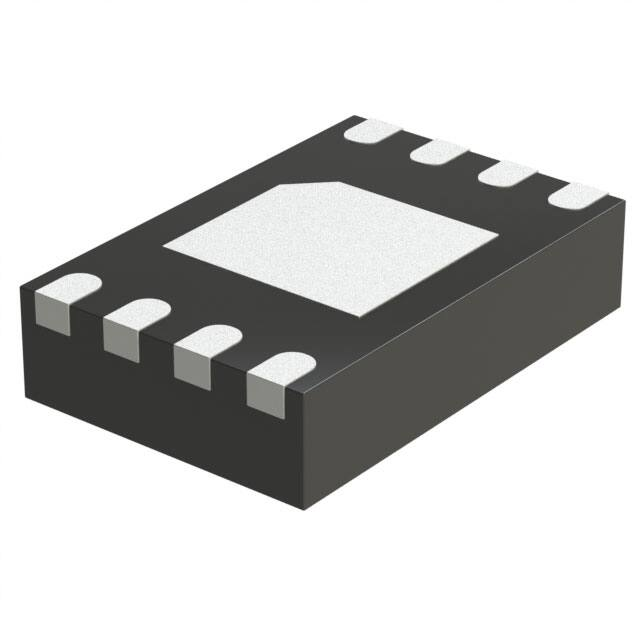
- TDFN, 2 x 3 x 0.8 mm, 8-Lead
• One, Two and Three-Cell Alkaline and NiMH/NiCd
Portable Products
• Solar Cell Applications
• Personal Care and Medical Products
• Bias for Status LEDs
• Smartphones, MP3 Players, Digital Cameras
• Remote Controllers, Portable Instruments
• Wireless Sensors
• Bluetooth Headsets
• +3.3V to +5.0V Distributed Power Supply
General Description
The MCP16251/2 is a compact, high-efficiency, fixed
frequency, synchronous step-up DC-DC converter.
This family of devices provides an easy-to-use power
supply solution for applications powered by either
one-cell, two-cell or three-cell alkaline, NiCd, NiMH,
one-cell Li-Ion or Li-Polymer batteries.
Low-voltage technology allows the regulator to start-up
without high inrush current or output voltage overshoot
from a low-voltage input. High efficiency is
accomplished by integrating the low-resistance
N-Channel boost switch and synchronous P-Channel
switch. All compensation and protection circuitry are
integrated to minimize external components.
MCP16251/2 operates and consumes less than 14 µA
from battery after start-up, while operating at no load
(VOUT = 3.3V, VIN = 1.5V). The devices provide a true
disconnect from input to output (MCP16251) or an
input-to-output bypass (MCP16252), while in shutdown
(EN = GND). Both shutdown options consume less
than 0.6 µA from battery.
Output voltage is set by a small external resistor
divider. Two package options, SOT-23, 6-lead and
TDFN, 2 x 3 x 0.8 mm, 8-lead are available.
Package Types
MCP16251/2
6-Lead SOT-23
SW 1
GND 2
EN 3
6 VIN
MCP16251/2
2x3x0.8 TDFN*
VFB 1
5 VOUT
SGND 2
4 VFB
PGND 3
EN 4
8 VIN
EP
9
7 VOUTS
6 VOUTP
5 SW
* Includes Exposed Thermal Pad (EP); see Table 3-1.
2013 - 2016 Microchip Technology Inc.
DS20005173B-page 1
�MCP16251/2
Typical Application
L
4.7 µH
VOUT
VIN
3.3V / 75 mA
SW
0.9V to 1.7V
VOUT
VIN
CIN
4.7 µF
Alkaline
+
RTOP
1.69 M
VFB
EN
COUT
10 µF
RBOT
1 M
GND
-
L
4.7 µH
VIN
3.0V to 4.2V
CIN
4.7 µF
Li-Ion
+
SW V
OUTS
VIN
VOUTP
EN
VFB
VOUT
5.0V / 200 mA
RTOP
3.09 M
RBOT
COUT
10 µF
1 M
PGND SGND
-
100
95
VIN = 3.0V
Efficiency (%)
90
85
VIN = 1.5V
80
VIN = 2.4V
75
70
65
60
55
VOUT = 3.3V
50
0.1
DS20005173B-page 2
1
10
IOUT (mA)
100
1000
2013 - 2016 Microchip Technology Inc.
�MCP16251/2
1.0
ELECTRICAL
CHARACTERISTICS
† Notice: Stresses above those listed under “Maximum
Ratings” may cause permanent damage to the device.
This is a stress rating only and functional operation of
the device at those or any other conditions above those
indicated in the operational sections of this
specification is not intended. Exposure to maximum
rating conditions for extended periods may affect
device reliability.
Absolute Maximum Ratings †
EN, VFB, VIN, VSW, VOUT - GND ......................... +6.5V
EN, VFB .........< maximum VOUT or VIN > (GND - 0.3V)
Output Short-Circuit Current ...................... Continuous
Output Current Bypass Mode........................... 400 mA
Power Dissipation ............................ Internally Limited
Storage Temperature ......................... -65°C to +150°C
Ambient Temp. with Power Applied...... -40°C to +85°C
Operating Junction Temperature........ -40°C to +125°C
ESD Protection On All Pins:
HBM ............................................................... 4 kV
MM ................................................................ 400V
DC CHARACTERISTICS
Electrical Characteristics: Unless otherwise indicated, VIN = 1.5V, COUT = CIN = 10 µF, L = 4.7 µH, VOUT = 3.3V,
IOUT = 0 mA, TA = +25°C. Boldface specifications apply over the TA range of -40°C to +85°C.
Parameters
Sym.
Min.
Typ.
Max.
Units
Conditions
Minimum Start-Up Voltage
VIN
—
0.82
—
V
Note 1
Minimum Input Voltage
After Start-Up
VIN
—
0.35
—
V
Note 1
Output Voltage Adjust
Range
VOUT
1.8
—
5.5
V
VOUT VIN
Note 2
150
—
Maximum Output Current
IOUT
100
125
—
225
—
Feedback Voltage
VFB
1.1931
1.23
1.2669
V
Feedback Input
Bias Current
IVFB
—
10
—
nA
Input Characteristics
1.2V VIN, 2.0V VOUT
mA
1.5V VIN, 3.3V VOUT
3.3V VIN, 5.0V VOUT
IQOUT
—
4.0
8
µA
IOUT = 0 mA, device is not
switching, EN = VIN = 4.0V,
VOUT = 5.0V, does not
include feedback divider
current (Note 3)
VIN Sleep Current
IQIN
—
1.0
2.3
µA
IOUT = 0 mA, EN = VIN
(Note 3), (Note 5)
No Load Input Current
IIN0
—
14
25
µA
IOUT = 0 mA,
device is switching
Quiescent Current –
Shutdown
IQSHDN
—
0.6
—
µA
VOUT = EN = GND;
includes N-Channel and
P-Channel Switch Leakage
VOUT Quiescent Current
Note 1:
2:
3:
4:
5:
3.3 k resistive load, 3.3VOUT (1 mA).
For VIN > VOUT, VOUT will not remain in regulation.
IQOUT is measured at VOUT, VOUT is supplied externally for VOUT > VIN (device is not switching), IQIN is
measured at VIN pin during Sleep period, no load.
220 resistive load, 3.3VOUT (15 mA).
Determined by characterization, not production tested.
2013 - 2016 Microchip Technology Inc.
DS20005173B-page 3
�MCP16251/2
DC CHARACTERISTICS (CONTINUED)
Electrical Characteristics: Unless otherwise indicated, VIN = 1.5V, COUT = CIN = 10 µF, L = 4.7 µH, VOUT = 3.3V,
IOUT = 0 mA, TA = +25°C. Boldface specifications apply over the TA range of -40°C to +85°C.
Parameters
Sym.
Min.
Typ.
Max.
Units
Conditions
NMOS Switch Leakage
INLK
—
0.15
—
µA
VIN = VSW = 5V
VOUT = 5.5V
VEN = VFB = GND
PMOS Switch Leakage
IPLK
—
0.15
—
µA
VIN = VSW = GND
VOUT = 5.5V
NMOS Switch
ON Resistance
RDS(ON)N
—
0.45
—
VIN = 3.3V
ISW = 100 mA
PMOS Switch
ON Resistance
RDS(ON)P
—
0.9
—
VIN = 3.3V
ISW = 100 mA
NMOS Peak
Switch Current Limit
IN(MAX)
—
650
—
mA
VOUT Accuracy
VOUT%
-3
—
+3
%
Line Regulation
(VOUT/VOUT)
/VIN
-0.4
0.3
0.4
%/V
Load Regulation
VOUT/VOUT
-1.5
0.1
1.5
%
IOUT = 25 mA to 100 mA
VIN = 1.5V
Note 5
Note 5
Includes Line and Load
Regulation; VIN = 1.5V
VIN = 1.5V to 2.8V
IOUT = 50 mA
Maximum Duty Cycle
DCMAX
87
89
91
%
Switching Frequency
fSW
425
500
575
kHz
EN Input Logic High
VIH
70
—
—
% of VIN IOUT = 1 mA
EN Input Logic Low
VIL
—
—
20
IENLK
—
5.0
—
% of VIN IOUT = 1 mA
nA
VEN = 5V
Soft Start Time
tSS
—
—
1.5
ms
EN Low to High
90% of VOUT
(Note 4), (Note 5)
Thermal Shutdown
Die Temperature
TSD
—
160
—
C
IOUT = 20 mA
VIN > 1.4V
TSDHYS
—
20
—
C
EN Input Leakage Current
Die Temperature
Hysteresis
Note 1:
2:
3:
4:
5:
3.3 k resistive load, 3.3VOUT (1 mA).
For VIN > VOUT, VOUT will not remain in regulation.
IQOUT is measured at VOUT, VOUT is supplied externally for VOUT > VIN (device is not switching), IQIN is
measured at VIN pin during Sleep period, no load.
220 resistive load, 3.3VOUT (15 mA).
Determined by characterization, not production tested.
TEMPERATURE SPECIFICATIONS
Electrical Characteristics: Unless otherwise indicated, VIN = 1.5V, COUT = CIN = 10 µF, L = 4.7 µH, VOUT = 3.3V, IOUT = 0 mA.
Parameters
Sym.
Min.
Typ.
Max.
Units
Operating Temperature Range
TJ
-40
Storage Temperature Range
TA
-65
Maximum Junction Temperature
TJ
Thermal Resistance, SOT-23, 6-LD
Thermal Resistance, TDFN, 2x3x0.8m, 8-LD
Conditions
—
+85
°C
—
+150
°C
—
—
+150
°C
JA
—
190.5
—
°C/W EIA/JESD51-3 Standard
JA
—
52.5
—
°C/W
Temperature Ranges
Steady State
Transient
Package Thermal Resistances
DS20005173B-page 4
2013 - 2016 Microchip Technology Inc.
�MCP16251/2
2.0
TYPICAL PERFORMANCE CURVES
Note:
The graphs and tables provided following this note are a statistical summary based on a limited number of
samples and are provided for informational purposes only. The performance characteristics listed herein
are not tested or guaranteed. In some graphs or tables, the data presented may be outside the specified
operating range (e.g., outside specified power supply range) and therefore outside the warranted range.
Note: Unless otherwise indicated, VIN = EN = 1.5V, COUT = CIN = 10 µF, L = 4.7 µH, VOUT = 3.3V, ILOAD = 0 mA,
TA = +25°C, SOT-23 package.
100
VOUT = 3.3V
RTOP = 1.69 Mȍ
RBOT = 1.0 Mȍ
8
VOUT = 2.0V
95
90
Efficiency (%)
Quies
scent Current (uA)
10
6
4
85
80
75
VIN = 1.5V
70
65
2
VIN = 1.2V
60
VIN = 0.9V
55
0
50
-40
-25
-10
5
20
35
50
Ambient Temperature (°C)
FIGURE 2-1:
Temperature.
65
80
1
VOUT IQ vs. Ambient
FIGURE 2-4:
IOUT.
1000
2.0V VOUT Efficiency vs.
100
VOUT = 3.3V
RTOP = 1.69 Mȍ
RBOT = 1.0 Mȍ
25
90
20
VIN = 1.2V
15
VOUT = 3.3V
95
Efficiency (%)
No Load Input Current (µA)
100
IOUT (mA)
30
VIN = 1.5V
10
VIN = 3.0V
85
80
VIN = 2.5V
75
VIN = 1.2V
70
65
5
VIN = 0.9V
60
0
55
-40 -30 -20 -10 0 10 20 30 40 50 60 70 80
Ambient Temperature (°C)
FIGURE 2-2:
Temperature.
No Load Input Current vs.
35
25
20
15
VOUT = 5.0V
10
VOUT = 2.0V
100
1000
IOUT (mA)
FIGURE 2-5:
IOUT.
3.3V VOUT Efficiency vs.
VOUT = 5.0V
95
5
10
100
RBOT = 1.0 Mȍ
30
1
Efficiency (%)
No Load Input Current (µA)
10
VIN = 3.6V
90
85
VIN = 2.5V
80
75
VIN = 1.2V
VIN = 1.8V
70
VOUT = 3.3V
65
0
1
1.5
2
2.5
3
3.5
Input Voltage (V)
4
4.5
FIGURE 2-3:
No Load Input Current vs.
VIN, after Start-Up.
2013 - 2016 Microchip Technology Inc.
60
1
FIGURE 2-6:
IOUT.
10
IOUT (mA)
100
1000
5.0V VOUT Efficiency vs.
DS20005173B-page 5
�MCP16251/2
Note: Unless otherwise indicated, VIN = EN = 1.5V, COUT = CIN = 10 µF, L = 4.7 µH, VOUT = 3.3V, ILOAD = 0 mA,
TA = +25°C, SOT-23 package.
500
3.33
450
Load Current (mA)
Outtput Voltage (V)
3.32
ILOAD = 1 mA
3.31
ILOAD = 10 mA
3.30
ILOAD = 50 mA
3 29
3.29
VOUT = 5.0V
VOUT = 3.3V
400
VOUT = 2.0V
350
300
250
200
150
100
3.28
50
3.27
0
-40
-25
-10
5
20
35
50
65
Ambient Temperature (°C)
FIGURE 2-7:
Temperature.
80
3.3V VOUT vs. Ambient
0.9 1.2 1.5 1.8 2.1 2.4 2.7 3 3.3 3.6 3.9 4.2 4.5
Input Voltage (V)
FIGURE 2-10:
Maximum IOUT vs. VIN, after
Start-up, VOUT Maximum 5% below Regulation
Point.
3.32
Ou
utput Voltage (V)
Switch
hing Frequency (kHz)
510
VIN = 1.2V
3.31
VIN = 1.5V
3.30
3.29
3.28
VIN = 2.4V
2 4V
3.27
3.26
VIN = 0.9V
ILOAD = 20 mA
3.25
500
495
490
485
480
475
470
-40
-25
-10
5
20
35
50
65
Ambient Temperature (°C)
FIGURE 2-8:
Temperature.
80
3.3V VOUT vs. Ambient
-40
-25
-10
5
20
35
50
65
Ambient Temperature (°C)
FIGURE 2-11:
Temperature.
3.33
80
FOSC vs. Ambient
1.2
VOUT = 3.3V
TA = +85°C
1.1
In
nput Voltage (V)
3.32
Output Voltage (V)
505
3.31
TA = +25°C
3.30
3.29
3.28
TA = -40°C
ILOAD = 20 mA
1
0.9
08
0.8
ILOAD = 1 mA
0.7
3.27
ILOAD = 50 mA
3.26
1.5 1.6 1.7 1.8 1.9 2 2.1 2.2 2.3 2.4 2.5 2.6 2.7 2.8
Input Voltage (V)
FIGURE 2-9:
DS20005173B-page 6
3.3V VOUT vs. VIN.
---- Electronic Load, CC
Resistive Load
0.6
-40
-25
-10
5
20
35
50
65
Ambient Temperature (°C)
80
FIGURE 2-12:
VIN Start-Up vs.
Temperature into Resistive Load and Constant
Current.
2013 - 2016 Microchip Technology Inc.
�MCP16251/2
Note: Unless otherwise indicated, VIN = EN = 1.5V, COUT = CIN = 10 µF, L = 4.7 µH, VOUT = 3.3V, ILOAD = 0 mA,
TA = +25°C, SOT-23 package.
8
VOUT =1.8V
Switch
h Resistance (Ohms)
Input Voltage (V)
1.3
1.1
0.9
Startup
0.7
0.5
Shutdown
0.3
0
10
20
30 40 50 60
Load Current (mA)
70
80
P - Channel
6
5
4
3
N - Channel
2
1
0
90
FIGURE 2-13:
1.8VOUT Minimum Start-Up
and Shutdown VIN into Resistive Load vs. IOUT.
7
0.9 1.2 1.5 1.8 2.1 2.4 2.7 3
> VIN or VOUT
3.3 3.6 3.9 4.2
FIGURE 2-16:
N-Channel and P-Channel
RDSON vs. the Maximum VIN or VOUT.
45
VOUT = 3.3V
40
Load Current (mA)
Input Voltage (V)
1.3
1.1
0.9
Startup
0.7
0.5
Shutdown
VOUT = 3.3V
30
VOUT = 2.0V
25
20
15
10
0.3
5
0
10
20
30 40 50 60 70
Load Current (mA)
80
90 100
FIGURE 2-14:
3.3VOUT Minimum Start-Up
and Shutdown VIN into Resistive Load vs. IOUT.
0.8
1.2
1.6
2
2.4 2.8 3.2
Input Voltage (V)
3.6
4
4.4
FIGURE 2-17:
Average of PFM-to-PWM
Threshold Current vs. VIN.
IOUT = 1 mA
1.7
Input Voltage (V)
VOUT = 5.0V
35
VOUT = 5.0V
1.5
VOUT 100 mV/div
AC Coupled
1.3
1.1
VSW
2 V/div
Startup
0.9
0.7
0.5
Shutdown
0.3
0
10
20
30 40 50 60 70
Load Current (mA)
80
90 100
FIGURE 2-15:
5.0VOUT Minimum Start-Up
and Shutdown VIN into Resistive Load vs. IOUT.
2013 - 2016 Microchip Technology Inc.
IL 100 mA/div
200 µs/div
FIGURE 2-18:
MCP16251 3.3V VOUT PFM
Mode Waveforms.
DS20005173B-page 7
�MCP16251/2
Note: Unless otherwise indicated, VIN = EN = 1.5V, COUT = CIN = 10 µF, L = 4.7 µH, VOUT = 3.3V, ILOAD = 0 mA,
TA = +25°C, SOT-23 package.
VOUT 50 mV/div
AC Coupled
IOUT = 50 mA
ISTEP = 1 mA to 75 mA
PFM Mode
PWM Mode
VOUT 100 mV/div
AC Coupled
VSW
2 V/div
IOUT 50 mA/div
IL 200 mA/div
400 µs/div
2 µs/div
FIGURE 2-19:
MCP16251 3.3V VOUT
PWM Mode Waveforms.
IOUT = 15 mA
VOUT = 3.3V
VIN = 1.5V
FIGURE 2-22:
MCP16251 3.3V VOUT Load
Transient Waveforms.
IOUT = 20 mA
VSTEP from 1V to 2.5V
VIN
1 V/div
VEN
2 V/div
VOUT 100 mV/div
AC Coupled
VOUT 2 V/div
1 ms/div
400 µs/div
FIGURE 2-20:
3.3V Start-up after Enable.
IOUT = 15 mA
FIGURE 2-23:
Waveforms.
3.3V VOUT Line Transient
IOUT = 0 mA
VOUT 2V/div
VOUT 100 mV/div
AC Coupled
VIN = EN
1 V/div
IL 100 mA/div
IL 20 mA/div
400 µs/div
FIGURE 2-21:
VIN = VENABLE.
DS20005173B-page 8
3.3V Start-Up when
100 ms/div
FIGURE 2-24:
MCP16251 3.3V No Load
VOUT PFM Mode Output Ripple.
2013 - 2016 Microchip Technology Inc.
�MCP16251/2
3.0
PIN DESCRIPTIONS
The descriptions of the pins are listed in Table 3-1.
TABLE 3-1:
PIN FUNCTION TABLE
MCP16251/2
SOT-23
MCP16251/2
TDFN 2x3x0.8
3.1
Symbol
Description
4
1
VFB
—
2
SGND
Feedback Voltage Pin
Signal Ground Pin
—
3
PGND
Power Ground Pin
3
4
EN
Enable Control Input Pin
Switch Node, Boost Inductor Input Pin
1
5
SW
—
6
VOUTP
Output Voltage Power Pin
—
7
VOUTS
Output Voltage Sense Pin
6
8
VIN
Input Voltage Pin
—
9
EP
Exposed Thermal Pad (EP); must be connected to SGND and PGND.
2
—
GND
Ground Pin
5
—
VOUT
Output Voltage Pin
Feedback Voltage Pin (VFB)
The VFB pin is used to provide output voltage regulation
by using a resistor divider. Feedback voltage will
typically be 1.23V, with the output voltage in regulation.
3.2
Signal Ground Pin (SGND)
The signal ground pin is used as a return for the
integrated VREF and error amplifier. In the 2x3x0.8
TDFN package, the SGND and power ground (PGND)
pins are connected externally.
3.3
Power Ground Pin (PGND)
The power ground pin is used as a return for the
high-current N-Channel switch. In the 2x3x0.8 TDFN
package, the PGND and signal ground (SGND) pins are
connected externally.
3.4
Enable Pin (EN)
The EN pin is a logic-level input used to enable or
disable device switching and lower quiescent current
while disabled. A logic high (>70% of VIN) will enable
the regulator output. A logic low (