MCP33151D/41D-XX
1 Msps/500 kSPS, 14/12-Bit Differential Input SAR ADC
Features
Typical Applications
• Sample Rate (Throughput):
- MCP33151D/41D-10: 1 Msps
- MCP33151D/41D-05: 500 kSPS
• 14/12-Bit Resolution with No Missing Codes
• No Latency Output
• Wide Operating Voltage Range:
- Analog supply voltage (AVDD): 1.8V
- Digital input/output interface voltage (DVIO):
1.7-5.5V
- External reference voltage (VREF): AVDD - 5.1V
• Differential Input Operation
- Input full-scale range: -VREF to +VREF
• Ultra Low Current Consumption (typical):
- During input acquisition (standby): ~1.5 µA
- During conversion:
MCP33151D/41D-10: ~0.66 mA
MCP33151D/41D-05: ~0.33 mA
• SPI-Compatible Serial Communication:
- SCLK clock rate: up to 100 MHz
- 3-wire with optional BUSY indicator
• ADC Self-Calibration for Offset, Gain, and
Linearity Errors:
- During power-up (automatic)
- On-Demand via user’s command during
normal operation
• Built In Data Accumulator
- Integrate up to 1024 consecutive converted
samples
- Increase ENOB up to 18.5 bits by
automatically averaging conversion results
• AEC-Q100 Qualified:
- Temperature grade 1: -40°C to +125°C
• Package Options: MSOP-10 and TDFN-10
•
•
•
•
•
•
•
High-Precision Data Acquisition
Medical Instruments
Test Equipment
Electric Vehicle Battery Management Systems
Motor Control Applications
Switch-Mode Power Supply Applications
Battery-Powered Equipment
System Design Supports
The MCP331x1D-XX Evaluation Kit demonstrates the
performance of the MCP331x1D-XX SAR ADC family
devices. The evaluation kit includes: (a) MCP331x1D
Evaluation Board, (b) PIC32MZ EF Curiosity Board for
data collection, and (c) SAR ADC Utility PC GUI.
Contact Microchip Technology Inc. for the evaluation
tools and the PIC32 firmware example codes.
Package Types
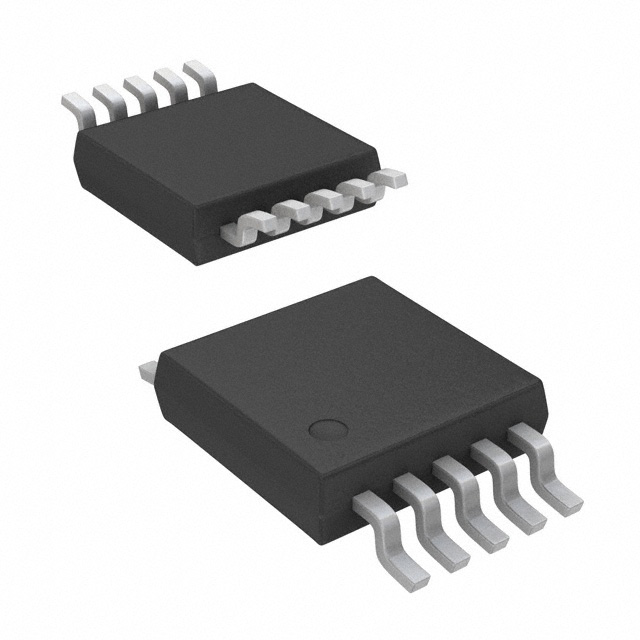
MSOP-10
TDFN-10 *
* Includes Exposed Thermal Pad (see Table 4-1).
MCP331x1D-XX Device Offering (Note 1)
Part Number
Resolution
Sample
Rate
MCP33151D-10
14-bit
1 Msps
Differential
MCP33141D-10
12-bit
1 Msps
MCP33151D-05
14-bit
500 kSPS
MCP33141D-05
12-bit
500 kSPS
Note 1:
Input Range
Input Type
(Differential)
Performance (Typical)
SNR
(dBFS)
SFDR
(dB)
±5.1V
83.8
Differential
±5.1V
Differential
±5.1V
Differential
±5.1V
THD
(dB)
INL
(LSB)
DNL
(LSB)
107.3
-104.7 ±0.27
±0.11
73.8
100.0
-101.5 ±0.07
±0.05
83.7
103.8
-100.9 ±0.27
±0.11
73.8
99.8
-98.9
±0.05
±0.07
SNR, SFDR, and THD are measured with fIN = 10 kHz, VIN = -1 dBFS, VREF = 5.1V.
2019 Microchip Technology Inc.
DS20006219A-page 1
�MCP33151D/41D-XX
Application Diagram
AVDD to 5.1V
1.8V
1.8V to 5.5V
VREF
AVDD
DVIO
15Ω
AIN+
0V to VREF
SDI
2.2nF
MCP331x1D-XX
15Ω
2.2nF
Description
The MCP33151D/41D-10 and MCP33151D/41D-05
are fully-differential, 14-bit and 12-bit, single-channel,
1 Msps and 500 kSPS ADC family devices,
respectively, featuring low power consumption and
high performance, using a successive approximation
register (SAR) architecture.
The device operates with an external voltage reference
(VREF) from AVDD to 5.1V, which supports a wide range
of input full-scale range from -VREF to +VREF. The
reference voltage setting is independent of the analog
supply voltage (AVDD). The conversion output is
available through an easy-to-use simple SPIcompatible 3-wire interface.
The device requires a 1.8V analog supply voltage
(AVDD) and a 1.7V to 5.5V digital I/O interface supply
voltage (DVIO). The wide digital I/O interface supply
(DVIO) range (1.7-5.5V) allows the device to interface
with most host devices (Master) available in the current
industry such as the PIC32 microcontrollers, without
using external voltage level shifters.
Once all supply voltages are connected, the device will
power-up and perform an automatic calibration to
minimize offset, gain and linearity errors. The
automatic calibration takes place approximately 40 ms
following power-up, and it is necessary to ensure that
all power supplies are fully settled and stable after this
time. See Section 4.3 “Power-Up Sequence and
Auto-Calibration” for more details. The device
performance stays stable across the specified
temperature range. However, when extreme changes
in the operating environment, such as in the reference
voltage, are made with respect to the initial conditions
(e.g. the reference voltage did not fully settle during the
initial power-up sequence), the user may send a
recalibrate command anytime to initiate another
self-calibration and restore optimum performance.
Host Device
SCLK
AIN-
0V to VREF
CNVST
SDO
(PIC32MZ)
GND
During Standby, most of the internal analog circuitry is
shutdown in order to reduce current consumption.
Typically, the device consumes approximately 1.5 µA
during Standby. A new conversion is started on the
rising edge of CNVST. When the conversion is
complete and the host lowers CNVST, the output data
is presented on SDO, and the device enters Standby to
begin acquiring the next input sample. The user can
clock out the ADC output data using the
SPI-compatible serial clock during Standby.
The ADC system clock is generated by the internal
on-chip clock, therefore the conversion is performed
independent of the SPI serial clock (SCLK).
This device can be used for various high-speed and
high-accuracy analog-to-digital data conversion
applications, where design simplicity, low power, and
no output latency are needed.
The device is AEC-Q100 qualified for automotive
applications and operates over the extended
temperature range of -40°C to +125°C. The available
package options are Pb-free small 3 mm × 3 mm
TDFN-10 and MSOP-10.
When the initial power-up sequence is completed, the
device enters a low-current input acquisition mode
(also referred to as ‘Standby mode’), where sampling
capacitors are connected to the input pins.
DS20006219A-page 2
2019 Microchip Technology Inc.
�MCP33151D/41D-XX
1.0
KEY ELECTRICAL CHARACTERISTICS
1.1
Absolute Maximum Ratings †
External Analog Supply Voltage (AVDD) ...................................................................................................... -0.3V to 2.0V
External Digital Supply Voltage (DVIO)......................................................................................................... -0.3V to 5.8V
External Reference Voltage (VREF).............................................................................................................. -0.3V to 5.8V
Analog Inputs w.r.t GND ................................................................................................................. -0.3V to VREF + 0.3V
Current at Input Pins ..............................................................................................................................................±2 mA
Current at Output and Supply Pins .................................................................................................................... ±250 mA
Storage Temperature ..............................................................................................................................-65°C to +150°C
Maximum Junction Temperature (TJ) ................................................................................................................... +150°C
ESD Protection on All Pins ......................................................................................................≤ 4 kV HBM, ≤ 2 kV CDM
† Notice: Stresses above those listed under “Absolute Maximum Ratings” may cause permanent damage to the
device. This is a stress rating only and functional operation of the device at those or any other conditions above those
indicated in the operational listings of this specification is not implied. Exposure to maximum rating conditions for
extended periods may affect device reliability.
1.2
Electrical Specifications
TABLE 1-1:
ELECTRICAL CHARACTERISTICS
Electrical Specifications: Unless otherwise specified, all parameters apply for TA = -40°C to +125°C, AVDD = 1.8V, DVIO = 3.3V, VREF = 5V,
GND = 0V, Differential Analog Input (VIN) = -1 dBFS sine wave, fIN = 10 kHz, CLOAD_SDO = 20 pF, +25°C is applied
for typical values.
MCP331x1D-10: Sample Rate (fS) = 1 Msps, SPI Clock Input (SCLK) = 60 MHz.
MCP331x1D-05: Sample Rate (fS) = 500 kSPS, SPI Clock Input (SCLK) = 30 MHz.
Parameters
Sym.
Min.
Typ.
Max.
Units
Conditions
Analog Supply Voltage Range
AVDD
1.7
1.8
1.9
V
Digital Input/Output Interface
Voltage Range
DVIO
1.7
—
5.5
IDDAN
—
—
—
660
330
1.5
900
600
—
µA
µA
µA
fS = 1 Msps (MCP331x1D-10)
fS = 500 kSPS (MCP331x1D-05)
During Input Acquisition (tACQ)
IIO_STBY
—
—
—
—
—
400
343
200
171
120
—
—
—
—
—
µA
µA
µA
µA
nA
fS = 1 Msps (MCP33151D-10)
fS = 1 Msps (MCP33141D-10)
fS = 500 kSPS (MCP33151D-05)
fS = 500 kSPS (MCP33141D-05)
During Input Acquisition (tACQ)
VREF
AVDD
—
5.1
V
Power Supply Requirements
Analog Supply Current at AVDD
Pin:
During Conversion
During Standby
IDDAN_STBY
Average Digital Supply Current
at DVIO Pin:
During Data Transfer
During Standby
IIO_DATA
Note 3
Note 3
External Reference Voltage Input
Reference Voltage (Note 2,
Note 3)
Note 1:
2:
3:
4:
5:
6:
This parameter is ensured by design and not 100% tested.
This parameter is ensured by characterization and not 100% tested.
Decoupling capacitor is recommended on the following pins:
(a) AVDD pin: 1 µF ceramic capacitor, (b) DVIO pin: 0.1 µF ceramic capacitor,
(c) VREF pin: 10 µF tantalum capacitor.
Differential Input Full-Scale Range (FSR) = 2 × VREF.
PSRR (dB) = -20 log(DVOUT/AVDD), where DVOUT = change in conversion result.
ENOB = (SINAD - 1.76)/6.02.
2019 Microchip Technology Inc.
DS20006219A-page 3
�MCP33151D/41D-XX
TABLE 1-1:
ELECTRICAL CHARACTERISTICS (CONTINUED)
Electrical Specifications: Unless otherwise specified, all parameters apply for TA = -40°C to +125°C, AVDD = 1.8V, DVIO = 3.3V, VREF = 5V,
GND = 0V, Differential Analog Input (VIN) = -1 dBFS sine wave, fIN = 10 kHz, CLOAD_SDO = 20 pF, +25°C is applied
for typical values.
MCP331x1D-10: Sample Rate (fS) = 1 Msps, SPI Clock Input (SCLK) = 60 MHz.
MCP331x1D-05: Sample Rate (fS) = 500 kSPS, SPI Clock Input (SCLK) = 30 MHz.
Parameters
Reference Load Current at
VREF Pin:
During Conversion
During Standby
Sym.
Min.
Typ.
Max.
Units
IREF
—
—
—
220
110
40
290
180
—
µA
µA
nA
fS = 1 Msps (MCP331x1D-10)
fS = 500 kSPS (MCP331x1D-05)
During Input Acquisition (tACQ)
IREF_STBY
Conditions
Total Power Consumption (Including AVDD, DVIO, VREF pins)
MCP331x1D-10
—
—
—
—
3.6
1.8
0.4
3.3
—
—
—
—
mW
mW
mW
µW
Averaged power for tACQ + tCNV
1.8
0.4
3.3
—
—
—
mW
mW
µW
Averaged power for tACQ + tCNV
PDISS_STBY
—
—
—
Input Voltage Range
(Note 2)
VIN+
-0.1
—
VREF + 0.1
V
VIN-
-0.1
—
VREF + 0.1
Input Full-Scale Voltage Range
FSR
-VREF
—
+VREF
Input Common-mode Voltage
Range
VCM
0
VREF/2
VREF
Input Sampling Capacitance
CS
—
10
—
pF
at 1 Msps
at 500 kSPS
at 100 kSPS
During Standby
PDISS_TOTAL
PDISS_STBY
Input acquisition (tACQ)
MCP331x1D-05
at 500 kSPS
at 100 kSPS
During Standby
PDISS_TOTAL
Input acquisition (tACQ)
Analog Inputs
-3dB Input Bandwidth
BW-3dB
Differential Input (Note 2, Note 4)
Note 2
Note 1
—
45
—
MHz
—
2.5
—
ns
Time delay between CNVST rising
edge and when input is sampled
ILEAK_AN_INPUT
—
±2.2
±200
nA
During Standby
fS
—
—
1
Msps MCP331x1D-10
—
—
500
kSPS MCP331x1D-05
14
—
—
Aperture Delay
(Note 1)
Leakage Current at Analog
Input Pin
VPP
Differential Input:
VIN = VIN+ – VIN-
Note 1
System Performance
Sample Rate
(Throughput Rate)
Resolution
(No Missing Codes)
bits
MCP33151D-XX
12
—
—
bits
MCP33141D-XX
Integral Nonlinearity
INL
-1.5
±0.27
+1.5
LSB
MCP33151D-XX
—
±0.07
—
LSB
MCP33141D-XX
Differential Nonlinearity
DNL
-0.8
±0.11
+0.8
LSB
MCP33151D-XX
-0.3
±0.05
+0.3
LSB
MCP33141D-XX
Note 1:
2:
3:
4:
5:
6:
This parameter is ensured by design and not 100% tested.
This parameter is ensured by characterization and not 100% tested.
Decoupling capacitor is recommended on the following pins:
(a) AVDD pin: 1 µF ceramic capacitor, (b) DVIO pin: 0.1 µF ceramic capacitor,
(c) VREF pin: 10 µF tantalum capacitor.
Differential Input Full-Scale Range (FSR) = 2 × VREF.
PSRR (dB) = -20 log(DVOUT/AVDD), where DVOUT = change in conversion result.
ENOB = (SINAD - 1.76)/6.02.
DS20006219A-page 4
2019 Microchip Technology Inc.
�MCP33151D/41D-XX
TABLE 1-1:
ELECTRICAL CHARACTERISTICS (CONTINUED)
Electrical Specifications: Unless otherwise specified, all parameters apply for TA = -40°C to +125°C, AVDD = 1.8V, DVIO = 3.3V, VREF = 5V,
GND = 0V, Differential Analog Input (VIN) = -1 dBFS sine wave, fIN = 10 kHz, CLOAD_SDO = 20 pF, +25°C is applied
for typical values.
MCP331x1D-10: Sample Rate (fS) = 1 Msps, SPI Clock Input (SCLK) = 60 MHz.
MCP331x1D-05: Sample Rate (fS) = 500 kSPS, SPI Clock Input (SCLK) = 30 MHz.
Parameters
Sym.
Offset Error
Offset Error Drift with Temperature
Gain Error
GER
Gain Error Drift with
Temperature
Min.
Typ.
Max.
Units
-1.62
±0.4
1.62
mV
MCP33151D-XX
-1.33
±0.4
1.33
mV
MCP33141D-XX
—
±0.1
—
µV/°C
—
±1
—
LSB
MCP33151D-XX
—
±0.2
—
LSB
MCP33141D-XX
—
±8
—
µV/°C
Input Common-mode Rejection
Ratio
CMRR
—
84
—
dB
Power Supply Rejection Ratio
PSRR
—
75
—
dB
Conditions
Note 5
Dynamic Performance
Signal-to-Noise Ratio
SNR
MCP33151D-10 and MCP33151D-05: 14-bit ADC
dBFS VREF = 5V, fIN = 1 kHz
—
83.9
—
—
79.2
—
VREF = 1.8V, fIN = 1 kHz
82.6
83.7
—
VREF = 5V, fIN = 10 kHz
—
78.8
—
VREF = 1.8V, fIN = 10 kHz
—
73.8
MCP33141D-10 and MCP33141D-05: 12-bit ADC
Signal-to-Noise Distortion Ratio
(Note 6)
—
—
73.1
—
dBFS VREF = 5V, fIN = 1 kHz
VREF = 1.8V, fIN = 1 kHz
73.4
73.8
—
VREF = 5V, fIN = 10 kHz
—
73.0
—
VREF = 1.8V, fIN = 10 kHz
MCP33151D-10 and MCP33151D-05: 14-bit ADC
SINAD
—
83.9
—
—
79.2
—
dBFS VREF = 5V, fIN = 1 kHz
VREF = 1.8V, fIN = 1 kHz
—
83.6
—
VREF = 5V, fIN = 10 kHz
—
77.8
—
VREF = 1.8V, fIN = 10 kHz
—
73.8
MCP33141D-10 and MCP33141D-05: 12-bit ADC
Note 1:
2:
3:
4:
5:
6:
—
73.1
—
dBFS VREF = 5V, fIN = 1 kHz
VREF = 1.8V, fIN = 1 kHz
—
73.8
—
VREF = 5V, fIN = 10 kHz
—
73.0
—
VREF = 1.8V, fIN = 10 kHz
—
This parameter is ensured by design and not 100% tested.
This parameter is ensured by characterization and not 100% tested.
Decoupling capacitor is recommended on the following pins:
(a) AVDD pin: 1 µF ceramic capacitor, (b) DVIO pin: 0.1 µF ceramic capacitor,
(c) VREF pin: 10 µF tantalum capacitor.
Differential Input Full-Scale Range (FSR) = 2 × VREF.
PSRR (dB) = -20 log(DVOUT/AVDD), where DVOUT = change in conversion result.
ENOB = (SINAD - 1.76)/6.02.
2019 Microchip Technology Inc.
DS20006219A-page 5
�MCP33151D/41D-XX
TABLE 1-1:
ELECTRICAL CHARACTERISTICS (CONTINUED)
Electrical Specifications: Unless otherwise specified, all parameters apply for TA = -40°C to +125°C, AVDD = 1.8V, DVIO = 3.3V, VREF = 5V,
GND = 0V, Differential Analog Input (VIN) = -1 dBFS sine wave, fIN = 10 kHz, CLOAD_SDO = 20 pF, +25°C is applied
for typical values.
MCP331x1D-10: Sample Rate (fS) = 1 Msps, SPI Clock Input (SCLK) = 60 MHz.
MCP331x1D-05: Sample Rate (fS) = 500 kSPS, SPI Clock Input (SCLK) = 30 MHz.
Parameters
Sym.
Spurious Free Dynamic Range
SFDR
Min.
Typ.
Max.
Units
Conditions
MCP33151D-10 and MCP33151D-05: 14-bit ADC
—
110.5
—
—
107.2
—
dBc
VREF = 5V, fIN = 1 kHz
VREF = 1.8V, fIN = 1 kHz
—
105.9
—
VREF = 5V, fIN = 10 kHz
—
96.3
—
VREF = 1.8V, fIN = 10 kHz
—
99.8
MCP33141D-10 and MCP33141D-05: 12-bit ADC
Total Harmonic Distortion
(first five harmonics)
—
dBc
VREF = 5V, fIN = 1 kHz
—
99.4
—
VREF = 1.8V, fIN = 1 kHz
—
99.9
—
VREF = 5V, fIN = 10 kHz
—
95.2
—
VREF = 1.8V, fIN = 10 kHz
THD
MCP33151D-10 and MCP33151D-05: 14-bit ADC
—
-105.0
—
—
-105.2
—
dBc
VREF = 5V, fIN = 1 kHz
VREF = 1.8V, fIN = 1 kHz
—
103.2
—
VREF = 5V, fIN = 10 kHz
—
95.2
—
VREF = 1.8V, fIN = 10 kHz
—
-100.7
MCP33141D-10 and MCP33141D-05: 12-bit ADC
—
dBc
VREF = 5V, fIN = 1 kHz
—
-100.3
—
VREF = 1.8V, fIN = 1 kHz
—
-100.4
—
VREF = 5V, fIN = 10 kHz
—
-94.2
—
VREF = 1.8V, fIN = 10 kHz
tCAL
—
400
550
ReCalNSCLK
—
1024
—
System Self-Calibration
Self-Calibration Time
Number of SCLK Clocks for
Recalibrate Command
ms
Note 2
clocks Includes clocks for data bits
Serial Interface Timing Information: See Serial Interface Timing Specifications
Digital Inputs/Outputs
High-level Input Voltage
VIH
0.7 × D
VIO
—
DVIO + 0.3
V
DVIO < 2.3V
0.9 × D
VIO
Low-level Input Voltage
VIL
-0.3
—
-0.3
Hysteresis of Schmitt Trigger
Inputs
Note 1:
2:
3:
4:
5:
6:
VHYST
—
DVIO ≥ 2.3V
0.3 × DVIO
V
DVIO ≥ 2.3V
V
All digital inputs
0.2 × DVIO
0.2 ×
DVIO
—
DVIO < 2.3V
This parameter is ensured by design and not 100% tested.
This parameter is ensured by characterization and not 100% tested.
Decoupling capacitor is recommended on the following pins:
(a) AVDD pin: 1 µF ceramic capacitor, (b) DVIO pin: 0.1 µF ceramic capacitor,
(c) VREF pin: 10 µF tantalum capacitor.
Differential Input Full-Scale Range (FSR) = 2 × VREF.
PSRR (dB) = -20 log(DVOUT/AVDD), where DVOUT = change in conversion result.
ENOB = (SINAD - 1.76)/6.02.
DS20006219A-page 6
2019 Microchip Technology Inc.
�MCP33151D/41D-XX
TABLE 1-1:
ELECTRICAL CHARACTERISTICS (CONTINUED)
Electrical Specifications: Unless otherwise specified, all parameters apply for TA = -40°C to +125°C, AVDD = 1.8V, DVIO = 3.3V, VREF = 5V,
GND = 0V, Differential Analog Input (VIN) = -1 dBFS sine wave, fIN = 10 kHz, CLOAD_SDO = 20 pF, +25°C is applied
for typical values.
MCP331x1D-10: Sample Rate (fS) = 1 Msps, SPI Clock Input (SCLK) = 60 MHz.
MCP331x1D-05: Sample Rate (fS) = 500 kSPS, SPI Clock Input (SCLK) = 30 MHz.
Parameters
Sym.
Min.
Typ.
Max.
Units
Low-level Output Voltage
VOL
—
—
0.2 × DVIO
V
IOL = 500 µA (source)
High-level Output Voltage
VOH
0.8 × D
VIO
—
—
V
IOH = -500 µA (sink)
Input Leakage Current
ILI
—
—
±1
µA
CNVST/SDI/SCLK = GND or DVIO
Output Leakage Current
ILO
—
—
±1
µA
Output is high-Z, SDO = GND or
DVIO
CINT
—
7
—
pF
TA = +25°C
Internal Capacitance
(all digital inputs and outputs)
Note 1:
2:
3:
4:
5:
6:
Conditions
This parameter is ensured by design and not 100% tested.
This parameter is ensured by characterization and not 100% tested.
Decoupling capacitor is recommended on the following pins:
(a) AVDD pin: 1 µF ceramic capacitor, (b) DVIO pin: 0.1 µF ceramic capacitor,
(c) VREF pin: 10 µF tantalum capacitor.
Differential Input Full-Scale Range (FSR) = 2 × VREF.
PSRR (dB) = -20 log(DVOUT/AVDD), where DVOUT = change in conversion result.
ENOB = (SINAD - 1.76)/6.02.
TABLE 1-2:
SERIAL INTERFACE TIMING SPECIFICATIONS
Electrical Specifications: Unless otherwise specified, all parameters apply for TA = -40°C to +125°C, AVDD = 1.8V,
DVIO = 3.3V, GND = 0V,
Differential Analog Input (AIN) = -1 dBFS sine wave, Resolution = 14-bit (MCP33151D-10), fIN = 10 kHz, Sample Rate (fS) = 1
Msps, +25°C is applied for typical values. All timings are measured at 50%. See Figure 1-1 for timing diagram.
Parameters
Sym.
Min.
Typ.
Max.
Units
Serial Clock Frequency
fSCLK
—
—
100
MHz
SCLK Period
tSCLK
10
—
—
ns
12
—
—
DVIO ≥ 2.3V, fSCLK = 83.3 MHz
(Max.)
16
—
—
DVIO ≥ 1.7V, fSCLK = 62.5 MHz
(Max.)
3
—
—
SCLK Low Time
tSCLK_L
SCLK High Time
tSCLK_H
Output Valid from SCLK Low
Quiet Time
tDO
tQUIET
Conditions
See tSCLK specification
DVIO ≥ 3.3V, fSCLK = 100 MHz
(Max.)
ns
DVIO ≥ 2.3V
ns
DVIO ≥ 2.3V
ns
DVIO ≥ 3.3V
DVIO ≥ 1.7V
4.5
—
—
3
—
—
4.5
—
—
—
—
10
—
—
12
DVIO ≥ 2.3V
—
—
16
DVIO ≥ 1.7V
10
—
—
DVIO ≥ 1.7V
ns
3-wire Operation:
Note 1:
2:
This parameter is ensured by design and not 100% tested.
This parameter is ensured by characterization and not 100% tested.
2019 Microchip Technology Inc.
DS20006219A-page 7
�MCP33151D/41D-XX
TABLE 1-2:
SERIAL INTERFACE TIMING SPECIFICATIONS (CONTINUED)
Electrical Specifications: Unless otherwise specified, all parameters apply for TA = -40°C to +125°C, AVDD = 1.8V,
DVIO = 3.3V, GND = 0V,
Differential Analog Input (AIN) = -1 dBFS sine wave, Resolution = 14-bit (MCP33151D-10), fIN = 10 kHz, Sample Rate (fS) = 1
Msps, +25°C is applied for typical values. All timings are measured at 50%. See Figure 1-1 for timing diagram.
Parameters
SDI Valid Setup Time
Sym.
Min.
Typ.
Max.
Units
ns
Conditions
tSU_SDIH_CNV
5
—
—
—
—
SDI High to CNVST Rising Edge
—
10
DVIO ≥ 2.3V
tCNVH
10
Output Enable Time
tEN
—
—
—
15
DVIO ≥ 1.7V
Output Disable Time
tDIS
—
—
15
Note 2
CNVST Pulse Width Time
MCP331x1D-10
Sample Rate
fS
—
—
1
Msps
Input Acquisition Time
tACQ
250
490
—
ns
Data Conversion Time
tCNV
—
510
750
ns
Time Between Conversions
tCYC
1
—
—
µs
Throughput Rate
tCYC = tACQ + tCNV, fS = 1 Msps
MCP331x1D-05
fS
—
—
500
kSPS
Input Acquisition Time
Sample Rate
tACQ
600
800
—
ns
Data Conversion Time
tCNV
—
1200
1400
ns
Time Between Conversions
tCYC
2
—
—
µs
Note 1:
2:
Throughput Rate
tCYC = tACQ + tCNV, fS = 500 kSPS
This parameter is ensured by design and not 100% tested.
This parameter is ensured by characterization and not 100% tested.
TCYC = 1/fs
SDI = 1
tSU_SDIH_CNV
tCNVH
tEN (late CNV) (Note 1)
CNV (CS)
tSCLK
1
tDO
SC>K
“High” (with pull-up)
SDO
Hi-Z (with no pull-up)
D13
3
4
tSCLK_L
D12
D11
5
12
13
tSCLK_H
D10
D9
14
tDIS
D2
D1
D0
tEN (early CNV) (Note 2)
ADC
State
Converting Phase
(tCNV )
Note
2
tQUIET
1:
tEN when CNVST is lowered after tCNV (MAX).
2:
tEN when CNVST is lowered before tCNV (MAX).
Input Acquisition
(tACQ)
FIGURE 1-1:
Interface Timing Diagram (14-bit device). CNVST is Used as Chip Select. See
Section 6.0 “Digital Serial Interface” for More Details.
DS20006219A-page 8
2019 Microchip Technology Inc.
�MCP33151D/41D-XX
TABLE 1-3:
TEMPERATURE CHARACTERISTICS
Parameters
Symbol
Min.
Typ.
Max.
Units
Conditions
Operating Temperature
Range
TA
-40
—
+125
°C
Note 1
Storage Temperature
Range
TA
-65
—
+150
°C
Note 1
Thermal Resistance,
MSOP-10
JA
—
202
—
°C/W
Thermal Resistance,
TDFN-10
JA
—
68
—
°C/W
Temperature Ranges
Thermal Package Resistance
Note 1:
The internal junction temperature (Tj) must not exceed the absolute maximum specification of +150oC.
2019 Microchip Technology Inc.
DS20006219A-page 9
�MCP33151D/41D-XX
NOTES:
DS20006219A-page 10
2019 Microchip Technology Inc.
�MCP33151D/41D-XX
2.0
TYPICAL PERFORMANCE CURVES FOR 14-BIT DEVICES (MCP33151D-XX)
Note:
The graphs and tables provided following this note are a statistical summary based on a limited number of
samples and are provided for informational purposes only. The performance characteristics listed herein
are not tested or guaranteed. In some graphs or tables, the data presented may be outside the specified
operating range (e.g., outside specified power supply range) and therefore outside the warranted range.
Note:
Unless otherwise specified, all parameters apply for TA = +25°C, AVDD = 1.8V, DVIO = 3.3V, VREF = 5V,
GND = 0V, Differential Analog Input (VIN) = -1 dBFS, fIN = 10 kHz, CLOAD_SDO = 20 pF.
MCP33151D-10: Sample Rate (fS) = 1 Msps, SPI Clock Input = 60 MHz.
MCP33151D-05: Sample Rate (fS) = 500 kSPS, SPI Clock Input = 30 MHz.
0.25
0.5
VREF = 5V
VREF = 5V
0.1
DNL (LSB)
INL (LSB)
0.25
0
0
-0.1
-.25
-0.5
0
4,096
8,192
12,288
-0.25
16,384
Code
FIGURE 2-1:
VREF = 5V.
0
4,096
8,192
12,288
INL vs. Output Code:
FIGURE 2-4:
VREF = 5V.
0.5
DNL vs. Output Code:
0.25
VREF = 1.8V
VREF = 1.8V
0.10
DNL (LSB)
INL (LSB)
0.25
0
0
-0.10
-0.25
-0.5
0
4,096
8,192
12,288
16,384
-0.25
0
4,096
8,192
Code
FIGURE 2-2:
VREF = 1.8V.
12,288
16,384
Code
INL vs. Output Code:
FIGURE 2-5:
VREF = 1.8V.
1.5
DNL vs. Output Code:
0.5
Max DNL (LSB)
1
0.3
Max INL (LSB)
DNL (LSB)
0.5
INL (LSB)
16,384
Code
0
0.1
-0.1
-0.5
Min INL (LSB)
-0.3
-1
-1.5
1.5
Min DNL (LSB)
2
2.5
3
3.5
4
4.5
5
5.5
-0.5
1.5
2
Reference Voltage (V)
FIGURE 2-3:
INL vs. Reference Voltage.
2019 Microchip Technology Inc.
2.5
3
3.5
4
4.5
5
5.5
Reference Voltage (V)
FIGURE 2-6:
DNL vs. Reference Voltage.
DS20006219A-page 11
�MCP33151D/41D-XX
Note:
Unless otherwise specified, all parameters apply for TA = +25°C, AVDD = 1.8V, DVIO = 3.3V, VREF = 5V,
GND = 0V, Differential Analog Input (VIN) = -1 dBFS, fIN = 10 kHz, CLOAD_SDO = 20 pF.
MCP33151D-10: Sample Rate (fS) = 1 Msps, SPI Clock Input = 60 MHz.
MCP33151D-05: Sample Rate (fS) = 500 kSPS, SPI Clock Input = 30 MHz.
1
0.3
0.2
Max INL (LSB)
0
DNL (LSB)
INL (LSB)
0.5
VREF = 5V
Max DNL (LSB)
0.1
0
VREF = 5V
-0.1
Min INL (LSB)
Min DNL (LSB)
-0.5
-0.2
-1
-40
-20
0
20
40
60
80
100
120
-0.3
-40
140
-20
0
Temperature (°C)
FIGURE 2-7:
-20
fs = 1 Msps
-60
-80
-100
-120
-140
-160
80
100
120
140
DNL vs. Temperature.
VREF = 1.8V
-20
SNR = 83.8 dBFS
SINAD = 83.8 dBFS
SFDR = 109.2 dBc
THD = -104.9 dBc
Offset = -1 LSB
Resolution = 14-bit
-40
60
MCP33151D-10
0
Amplitude (dBFS)
Amplitude (dBFS)
FIGURE 2-10:
MCP33151D-10
VREF = 5V
40
Temperature (°C)
INL vs. Temperature.
0
20
fs = 1 Msps
SNR = 79.1 dBFS
SINAD = 79.0 dBFS
SFDR = 105.6 dBc
THD = -102.6 dBc
Offset = -2 LSB
Resolution = 14-bit
-40
-60
-80
-100
-120
-140
0
100
200
300
400
-160
500
0
100
200
300
400
500
Frequency (kHz)
Frequency (kHz)
FIGURE 2-8:
FFT for 10 kHz Input Signal:
fS = 1 Msps, VIN = -1 dBFS, VREF = 5V.
FIGURE 2-11:
FFT for 10 kHz Input Signal:
fS = 1 Msps, VIN = -1 dBFS, VREF = 1.8V.
MCP33151D-05
0
VREF = 5V
fs = 0.5 Msps
-60
-80
-100
-120
-140
-160
VREF = 1.8V
-20
SNR = 83.8 dBFS
SINAD = 83.7 dBFS
SFDR = 106.9 dBc
THD = -102.4 dBc
Offset = -1 LSB
Resolution = 14-bit
-40
Amplitude (dBFS)
Amplitude (dBFS)
-20
MCP33151D-05
0
fs = 0.5 Msps
SNR = 79.0 dBFS
SINAD = 78.9 dBFS
SFDR = 101.8 dBc
THD = -98.8 dBc
Offset = -2 LSB
Resolution = 14-bit
-40
-60
-80
-100
-120
-140
0
50
100
150
200
250
-160
0
50
100
150
200
250
Frequency (kHz)
Frequency (kHz)
FIGURE 2-9:
FFT for 10 kHz Input Signal:
fS = 500 kSPS, VIN = -1 dBFS, VREF = 5V.
FIGURE 2-12:
FFT for 10 kHz Input Signal:
fS = 500 kSPS, VIN = -1 dBFS, VREF = 1.8V.
DS20006219A-page 12
2019 Microchip Technology Inc.
�MCP33151D/41D-XX
Unless otherwise specified, all parameters apply for TA = +25°C, AVDD = 1.8V, DVIO = 3.3V, VREF = 5V,
GND = 0V, Differential Analog Input (VIN) = -1 dBFS, fIN = 10 kHz, CLOAD_SDO = 20 pF.
MCP33151D-10: Sample Rate (fS) = 1 Msps, SPI Clock Input = 60 MHz.
MCP33151D-05: Sample Rate (fS) = 500 kSPS, SPI Clock Input = 30 MHz.
-95
14
82.5
110
80
13
75
1.5
2
2.5
3
3.5
4
4.5
5
THD (dB)
SFDR(dB)
-105
SNR (dB)
SINAD(dB)
ENOB
77.5
105
THD(dB)
-100
100
12.5
12
5.5
-110
2
3
Reference Voltage (V)
FIGURE 2-16:
Voltage.
84.1
5
95
THD/SFDR vs. Reference
79.8
SNR (dB)
84
SNR (dB)
79.6
SINAD(dB)
SINAD(dB)
SNR/SINAD (dB)
SNR/SINAD (dB)
4
Reference Voltage (V)
FIGURE 2-13:
SNR/SINAD/ENOB vs.
Reference Voltage.
83.9
83.8
79.4
79.2
79
78.8
VREF = 5V
83.7
78.6
83.6
-50
0
50
100
VREF = 1.8V
78.4
-50
150
0
50
100
FIGURE 2-17:
SNR/SINAD vs.
Temperature: VREF = 1.8V.
FIGURE 2-14:
SNR/SINAD vs.
Temperature: VREF = 5V.
-105
114
THD(dB)
SFDR(dB)
-93
103
-94
102
THD(dB)
SFDR(dB)
-107
110
VREF = 5V
0
20
40
60
80
108
100 120 140
Temperature (°C)
FIGURE 2-15:
THD/SFDR vs.
Temperature: VREF = 5V.
2019 Microchip Technology Inc.
THD(dB)
THD(dB)
112
SFDR(dB)
-95
-106
-20
150
Temperature (°C)
Temperature (°C)
-108
-40
SFDR(dB)
13.5
ENOB
SNR/SINAD (dB)
85
-96
101
100
-97
VREF = 1.8V
99
-98
98
-99
97
-100
-40
-20
0
20
40
60
80
SFDR(dB)
Note:
96
100 120 140
Temperature (°C)
FIGURE 2-18:
THD/SFDR vs.
Temperature: VREF = 1.8V.
DS20006219A-page 13
�MCP33151D/41D-XX
Note:
Unless otherwise specified, all parameters apply for TA = +25°C, AVDD = 1.8V, DVIO = 3.3V, VREF = 5V,
GND = 0V, Differential Analog Input (VIN) = -1 dBFS, fIN = 10 kHz, CLOAD_SDO = 20 pF.
MCP33151D-10: Sample Rate (fS) = 1 Msps, SPI Clock Input = 60 MHz.
MCP33151D-05: Sample Rate (fS) = 500 kSPS, SPI Clock Input = 30 MHz.
85
79
SNR (dB)
SINAD(dB)
83
82
81
78
77.5
77
76.5
VREF = 5V
1
76
10
100
200
VREF = 1.8V
1
10
110
-75
THD (dB)
SFDR (dB) 105
-80
100
-85
95
-90
90
-95
85
-100
80
110
-90
105
-95
100
-100
95
-105
90
-110
85
VREF = 5V
1
10
100
80
200
THD (dB)
THD (dB)
-70
115
THD (dB)
SFDR (dB)
SFDR (dB)
-80
-115
-105
-110
75
VREF = 1.8V
1
10
100
Input Frequency (kHz)
FIGURE 2-23:
THD/SFDR vs. Input
Frequency: VREF = 1.8V.
85
80
SNR (dB)
SINAD(dB)
SNR (dB)
SINAD(dB)
84.5
SNR/SINAD (dB)
SNR/SINAD (dB)
70
200
Input Frequency (kHz)
FIGURE 2-20:
THD/SFDR vs. Input
Frequency: VREF = 5V.
84
83.5
83
-30
200
FIGURE 2-22:
SNR/SINAD vs.Input
Frequency: VREF = 1.8V.
FIGURE 2-19:
SNR/SINAD vs.Input
Frequency: VREF = 5V.
-85
100
Input Frequency (kHz)
Input Frequency (kHz)
SFDR (dB)
80
SNR (dB)
SINAD(dB)
78.5
SNR/SINAD (dB)
SNR/SINAD (dB)
84
79.5
79
78.5
VREF = 5V
-25
-20
-15
-10
-5
0
Input Amplitude (dBFS)
FIGURE 2-21:
SNR/SINAD vs. Input
Amplitude: VREF = 5V.
DS20006219A-page 14
78
-30
VREF = 1.8V
-25
-20
-15
-10
-5
0
Input Amplitude (dBFS)
FIGURE 2-24:
SNR/SINAD vs. Input
Amplitude: VREF = 1.8V.
2019 Microchip Technology Inc.
�MCP33151D/41D-XX
Unless otherwise specified, all parameters apply for TA = +25°C, AVDD = 1.8V, DVIO = 3.3V, VREF = 5V,
GND = 0V, Differential Analog Input (VIN) = -1 dBFS, fIN = 10 kHz, CLOAD_SDO = 20 pF.
MCP33151D-10: Sample Rate (fS) = 1 Msps, SPI Clock Input = 60 MHz.
MCP33151D-05: Sample Rate (fS) = 500 kSPS, SPI Clock Input = 30 MHz.
-95
115
-99
107
-105
-100
106
-101
105
-102
104
105
VREF = 5V
-25
-20
-15
-10
-5
0
100
-103
-30
VREF = 1.8V
-25
Amplitude (dBFS)
-15
-10
80
84.2
13.6
83.4
13.2
82.6
SNR (dB)
SINAD(dB)
ENOB
81.8
12.8
SNR/SINAD (dB)
14
100
12.4
79.2
13.4
78.4
12.8
77.6
SNR (dB)
SINAD(dB)
ENOB
76.8
250
500
12
1000
76
25
-90
50
100
112
11
1000
114
-98
104
-102
100
-106
THD(dB)
SFDR(dB)
96
THD(dB)
108
-94
110
-98
106
-102
102
-106
98
VREF = 5V
VREF = 1.8V
250
500
92
1000
-110
25
50
Sample Rate (kSPS)
THD/SFDR vs Sample Rate:
2019 Microchip Technology Inc.
500
-90
SFDR(dB)
THD(dB)
-94
FIGURE 2-27:
VREF = 5V.
250
FIGURE 2-29:
SNR/SINAD/ENOB vs.
Sample Rate: VREF = 1.8V.
THD(dB)
SFDR(dB)
100
11.6
Sample Rate (kSPS)
FIGURE 2-26:
SNR/SINAD/ENOB vs.
Sample Rate: VREF = 5V.
50
12.2
VREF = 1.8V
Sample Rate (kSPS)
-110
25
103
14
VREF = 5V
50
0
FIGURE 2-28:
THD/SFDR vs. Input
Amplitude: VREF = 1.8V.
ENOB
85
81
25
-5
Amplitude (dBFS)
FIGURE 2-25:
THD/SFDR vs. Input
Amplitude: VREF = 5V.
SNR/SINAD (dB)
-20
ENOB
-110
-30
THD(dB)
110
THD(dB)
-100
SFDR(dB)
THD (dB)
SFDR(dB)
SFDR(dB)
THD (dB)
SFDR(dB)
SFDR(dB)
Note:
100
250
500
94
1000
Sample Rate (kSPS)
FIGURE 2-30:
VREF = 1.8V.
THD/SFDR vs Sample Rate:
DS20006219A-page 15
�MCP33151D/41D-XX
Note:
Unless otherwise specified, all parameters apply for TA = +25°C, AVDD = 1.8V, DVIO = 3.3V, VREF = 5V,
GND = 0V, Differential Analog Input (VIN) = -1 dBFS, fIN = 10 kHz, CLOAD_SDO = 20 pF.
MCP33151D-10: Sample Rate (fS) = 1 Msps, SPI Clock Input = 60 MHz.
MCP33151D-05: Sample Rate (fS) = 500 kSPS, SPI Clock Input = 30 MHz.
10
10
5
86
VREF = 5V
841918
84
82
CMRR (dB)
Occurrences
8
6
4
80
78
76
184932
74
21725
-2
-1
0
1
2
3
10
-2
10
1.2
500
0.8
250
0
0.0
-250
-0.4
-500
-0.8
-750
-1000
-40
-1.2
VREF = 5V
-20
0
20
40
60
80
100
120
-1.6
140
1
10
2
10
3
3.9
OFFSET ERROR
GAIN ERROR
650
3.0
450
2.0
250
1.1
50
0.2
-150
-0.7
VREF = 1.8V
-350
-40
-20
0
20
40
60
80
100
-1.6
140
120
Temperature (°C)
FIGURE 2-32:
Offset and Gain Error vs.
Temperature: VREF = 5V.
MCP33151D-10
FIGURE 2-35:
Offset and Gain Error vs.
Temperature: VREF = 1.8V.
MCP33151D-05
5
0.5
3
0.4
2.4
0.8
4
n
tio
0.7
0.6
0.5
er
ow
lP
ta
To
3.5
n
Co
3
)
(AV DD
0.4
p
sum
=
V
1.8
2.5
2
I DDAN
V)
0.3
I IO_DATA
0.2
(DV IO
I REF (V REF
0.1
= 3.3
1.5
1
= 5V)
0
0.1 0.2 0.3 0.4 0.5 0.6 0.7 0.8 0.9
1
0
FIGURE 2-33:
Power Consumption vs.
Sample Rate, MCP33151D-10:
CLOAD_SDO = 20 pF.
)
.8V
0.3
(AV DD
=1
I DDAN
Tota
I IO_DATA
0.1
(DV IO
I REF (V REF =
0
0.1
1.8
on
mpti
nsu
Co
wer
l Po
0.2
0.5
Sample Rate (Msps)
DS20006219A-page 16
Current (mA)
4.5
Total Power (mW)
0.9
Current (mA)
10
CMRR vs. Input Frequency:
Temperature (°C)
1
0
850
0.4
OFFSET ERROR
GAIN ERROR
FIGURE 2-34:
VREF = 5V.
OFFSET/GAIN ERROR (uV)
1.6
750
OFFSET/GAIN ERROR (LSB)
OFFSET/GAIN ERROR (uV)
Shorted Input Histogram:
1000
10
Frequency (kHz)
Output Code
FIGURE 2-31:
VREF = 5V.
-1
0.2
0.3
0.4
1.2
)
= 3.3V
0.6
Total Power (mW)
0
-3
VREF = 5V
72
-3
10
1
OFFSET/GAIN ERROR (LSB)
2
5V)
0
0.5
Sample Rate (Msps)
FIGURE 2-36:
Power Consumption vs.
Sample Rate, MCP33151D-05:
CLOAD_SDO = 20 pF.
2019 Microchip Technology Inc.
�MCP33151D/41D-XX
Unless otherwise specified, all parameters apply for TA = +25°C, AVDD = 1.8V, DVIO = 3.3V, VREF = 5V,
GND = 0V, Differential Analog Input (VIN) = -1 dBFS, fIN = 10 kHz, CLOAD_SDO = 20 pF.
MCP33151D-10: Sample Rate (fS) = 1 Msps, SPI Clock Input = 60 MHz.
MCP33151D-05: Sample Rate (fS) = 500 kSPS, SPI Clock Input = 30 MHz.
MCP33151D-10
1
5
4
ion
Total Power Consumpt
0.7
0.6
3.5
I DDAN (AV DD
= 1.8V)
0.5
3
IIO_DATA (DVIO = 3.3V)
0.4
0.3
I
REF
(V
REF
= 5V)
2.5
2
1.5
0.2
1
0.1
0.5
0
-40 -25 -10 5
0
20 35 50 65 80 95 110 125
ion
1.8
IIO_DATA (DVIO = 3.3V)
0.2
1.2
IREF (VREF = 5V)
0.1
0.6
0
20 35 50 65 80 95 110 125
FIGURE 2-39:
Power Consumption vs.
Temperature, MCP33151D-05:
CLOAD_SDO = 20 pF.
5
12
10
Total Power Consumption
6
IIO_STBY (DVIO = 3.3V)
1
4
IREF_STBY (VREF = 5V)
0
-40 -25 -10 5
8
Total Power ( W)
Current ( A)
Total Power Consumpt
14
IDDAN_STBY (AVDD = 1.8V)
6
2
0.3
2.4
16
7
3
I DDAN (AV DD
Temperature (°C)
FIGURE 2-37:
Power Consumption vs.
Temperature, MCP33151D-10:
CLOAD_SDO = 20 pF.
8
= 1.8V)
0.4
0
-40 -25 -10 5
Temperature (°C)
4
3
Total Power (mW)
Current (mA)
0.8
MCP33151D-05
4.5
Current (mA)
0.9
0.5
Total Power (mW)
Note:
2
0
20 35 50 65 80 95 110 125
Temperature (°C)
FIGURE 2-38:
Power Consumption vs.
Temperature during Shutdown (Standby).
2019 Microchip Technology Inc.
DS20006219A-page 17
�MCP33151D/41D-XX
NOTES:
DS20006219A-page 18
2019 Microchip Technology Inc.
�MCP33151D/41D-XX
3.0
TYPICAL PERFORMANCE CURVES FOR 12-BIT DEVICES (MCP33141D-XX)
Note:
The graphs and tables provided following this note are a statistical summary based on a limited number of
samples and are provided for informational purposes only. The performance characteristics listed herein
are not tested or guaranteed. In some graphs or tables, the data presented may be outside the specified
operating range (e.g., outside specified power supply range) and therefore outside the warranted range.
Note:
Note: Unless otherwise specified, all parameters apply for TA = +25°C, AVDD = 1.8V, DVIO = 3.3V,
VREF = 5V, GND = 0V, Differential Analog Input (VIN) = -1 dBFS, fIN = 10 kHz, CLOAD_SDO = 20 pF.
MCP33141D-10: Sample Rate (fS) = 1 Msps, SPI Clock Input = 60 MHz.
MCP33141D-05: Sample Rate (fS) = 500 kSPS, SPI Clock Input = 30 MHz.
0.2
0.2
VREF = 5V
VREF = 5V
0.1
DNL (LSB)
INL (LSB)
0.1
0
-0.1
-0.1
-0.2
0
-0.2
0
1,024
2,048
3,072
4,096
0
1,024
2,048
FIGURE 3-1:
VREF = 5V.
3,072
INL vs. Output Code:
FIGURE 3-4:
VREF = 5V.
0.2
DNL vs. Output Code:
0.2
VREF = 1.8V
VREF = 1.8V
0.1
DNL (LSB)
INL (LSB)
0.1
0
-0.1
-0.2
0
-0.1
0
1,024
2,048
3,072
-0.2
4,096
0
1,024
2,048
Code
FIGURE 3-2:
VREF = 1.8V.
3,072
4,096
Code
INL vs. Output Code:
FIGURE 3-5:
VREF = 1.8V.
0.5
DNL vs. Output Code:
0.3
0.25
0.15
Max INL (LSB)
Max DNL (LSB)
DNL (LSB)
INL (LSB)
4,096
Code
Code
0
0
Min DNL (LSB)
-0.25
-0.5
1.5
-0.15
Min INL (LSB)
2
2.5
3
3.5
4
4.5
5
5.5
-0.3
1.5
2
Reference Voltage (V)
FIGURE 3-3:
INL vs. Reference Voltage.
2019 Microchip Technology Inc.
2.5
3
3.5
4
4.5
5
5.5
Reference Voltage (V)
FIGURE 3-6:
DNL vs. Reference Voltage.
DS20006219A-page 19
�MCP33151D/41D-XX
Note:
Note: Unless otherwise specified, all parameters apply for TA = +25°C, AVDD = 1.8V, DVIO = 3.3V,
VREF = 5V, GND = 0V, Differential Analog Input (VIN) = -1 dBFS, fIN = 10 kHz, CLOAD_SDO = 20 pF.
MCP33141D-10: Sample Rate (fS) = 1 Msps, SPI Clock Input = 60 MHz.
MCP33141D-05: Sample Rate (fS) = 500 kSPS, SPI Clock Input = 30 MHz.
0.5
0.5
VREF = 5V
VREF = 5V
0.25
Max INL (LSB)
Max DNL (LSB)
DNL (LSB)
INL (LSB)
0.25
0
0
Min INL (LSB)
Min DNL (LSB)
-0.25
-0.25
-0.5
-40
-20
0
20
40
60
80
100
120
-0.5
-40
140
-20
0
Temperature (°C)
FIGURE 3-7:
-80
-100
-120
100
120
140
fs = 1 Msps
-20
Amplitude (dBFS)
-60
80
DNL vs. Temperature.
VREF = 1.8V
SNR = 73.9 dBFS
SINAD = 73.9 dBFS
SFDR = 100.6 dBc
THD = -98.7 dBc
Offset = 0 LSB
Resolution = 12-bit
-40
60
MCP33141D-10
0
fs = 1 Msps
-20
Amplitude (dBFS)
FIGURE 3-10:
MCP33141D-10
VREF = 5V
40
Temperature (°C)
INL vs. Temperature.
0
20
SNR = 73.0 dBFS
SINAD = 73.0 dBFS
SFDR = 101.0 dBc
THD = -100.0 dBc
Offset = -1 LSB
Resolution = 12-bit
-40
-60
-80
-100
0
100
200
300
400
-120
500
0
100
200
300
400
500
Frequency (kHz)
Frequency (kHz)
FIGURE 3-8:
FFT for 10 kHz Input Signal:
fS = 1 Msps, VIN = -1 dBFS, VREF = 5V.
FIGURE 3-11:
FFT for 10 kHz Input Signal:
fS = 1 Msps, VIN = -1 dBFS, VREF = 1.8V.
MCP33141D-05
0
VREF = 5V
-40
-60
-80
-100
-120
fs = 0.5 Msps
-20
SNR = 73.8 dBFS
SINAD = 73.8 dBFS
SFDR = 99.6 dBc
THD = -99.9 dBc
Offset = -1 LSB
Resolution = 12-bit
Amplitude (dBFS)
Amplitude (dBFS)
VREF = 1.8V
fs = 0.5 Msps
-20
MCP33141D-05
0
SNR = 73.0 dBFS
SINAD = 73.0 dBFS
SFDR = 100.7 dBc
THD = -94.9 dBc
Offset = -1 LSB
Resolution = 12-bit
-40
-60
-80
-100
0
50
100
150
200
250
-120
0
50
100
150
200
250
Frequency (kHz)
Frequency (kHz)
FIGURE 3-9:
FFT for 10 kHz Input Signal:
fS = 500 kSPS, VIN = -1 dBFS, VREF = 5V.
FIGURE 3-12:
FFT for 10 kHz Input Signal:
fS = 500 kSPS, VIN = -1 dBFS, VREF = 1.8V.
DS20006219A-page 20
2019 Microchip Technology Inc.
�MCP33151D/41D-XX
Note: Unless otherwise specified, all parameters apply for TA = +25°C, AVDD = 1.8V, DVIO = 3.3V,
VREF = 5V, GND = 0V, Differential Analog Input (VIN) = -1 dBFS, fIN = 10 kHz, CLOAD_SDO = 20 pF.
MCP33141D-10: Sample Rate (fS) = 1 Msps, SPI Clock Input = 60 MHz.
MCP33141D-05: Sample Rate (fS) = 500 kSPS, SPI Clock Input = 30 MHz.
12.5
12
THD(dB)
73
ENOB
SNR/SINAD (dB)
74
72
11.5
SNR (dB)
SINAD(dB)
ENOB
71
1.5
2
2.5
3
3.5
4
4.5
5
11
5.5
-96
100.5
-97
100
-98
99.5
-99
THD (dB)
SFDR(dB)
-100
98
-102
97.5
-103
2
3
4
5
97
Reference Voltage (V)
FIGURE 3-16:
Voltage.
FIGURE 3-13:
SNR/SINAD/ENOB vs.
Reference Voltage.
73.86
THD/SFDR vs. Reference
73.2
SNR (dB)
SINAD(dB)
SNR (dB)
73.15
SINAD(dB)
SNR/SINAD (dB)
73.84
SNR/SINAD (dB)
98.5
-101
Reference Voltage (V)
73.82
73.8
73.78
99
SFDR(dB)
Note:
VREF = 5V
73.1
73.05
73
72.95
VREF = 1.8V
72.9
73.76
-50
0
50
100
72.85
-50
150
0
50
100
150
Temperature (°C)
Temperature (°C)
FIGURE 3-17:
SNR/SINAD vs.
Temperature: VREF = 1.8V.
FIGURE 3-14:
SNR/SINAD vs.
Temperature: VREF = 5V.
-98.2
99
-92
99
-93
98
98
97.5
-98.8
THD(dB)
THD(dB)
-98.6
SFDR(dB)
98.5
-98.4
-94
THD(dB)
SFDR(dB)
97
-95
VREF = 1.8V
96
-96
SFDR(dB)
THD(dB)
SFDR(dB)
95
VREF = 5V
-99
-40
-20
0
20
40
60
80
97
100 120 140
Temperature (°C)
FIGURE 3-15:
THD/SFDR vs.
Temperature: VREF = 5V.
2019 Microchip Technology Inc.
-97
-40
-20
0
20
40
60
80
94
100 120 140
Temperature (°C)
FIGURE 3-18:
THD/SFDR vs.
Temperature: VREF = 5V.
DS20006219A-page 21
�MCP33151D/41D-XX
Note:
Note: Unless otherwise specified, all parameters apply for TA = +25°C, AVDD = 1.8V, DVIO = 3.3V,
VREF = 5V, GND = 0V, Differential Analog Input (VIN) = -1 dBFS, fIN = 10 kHz, CLOAD_SDO = 20 pF.
MCP33141D-10: Sample Rate (fS) = 1 Msps, SPI Clock Input = 60 MHz.
MCP33141D-05: Sample Rate (fS) = 500 kSPS, SPI Clock Input = 30 MHz.
73
72.6
SNR/SINAD (dB)
72.9
SNR/SINAD (dB)
72.4
SNR (dB)
SINAD(dB)
72.8
72.7
SNR (dB)
SINAD(dB)
72.2
72
71.8
71.6
71.4
72.6
71.2
1
71
10
100
200
VREF = 1.8V
1
10
-80
105
-75
100
-90
95
-95
90
-100
85
10
100
80
200
THD (dB)
-85
VREF = 5V
105
THD (dB)
SFDR (dB)
SFDR (dB)
THD (dB)
THD (dB)
SFDR (dB)
1
-80
100
-85
95
-90
90
-95
85
-100
-105
80
VREF = 1.8V
1
10
Input Frequency (kHz)
100
Input Frequency (kHz)
75
74
SNR (dB)
SINAD(dB)
SNR (dB)
SINAD(dB)
74.5
SNR/SINAD (dB)
SNR/SINAD (dB)
75
200
FIGURE 3-23:
THD/SFDR vs. Input
Frequency: VREF = 1.8V.
FIGURE 3-20:
THD/SFDR vs. Input
Frequency: VREF = 5V.
74
73.5
73
-30
200
FIGURE 3-22:
SNR/SINAD vs. Input
Frequency: VREF = 1.8V.
FIGURE 3-19:
SNR/SINAD vs. Input
Frequency: VREF = 5V.
-105
100
Input Frequency (kHz)
Input Frequency (kHz)
SFDR (dB)
72.5
VREF = 5V
73.5
73
72.5
VREF = 5V
-25
-20
-15
-10
-5
0
Input Amplitude (dBFS)
FIGURE 3-21:
SNR/SINAD vs. Input
Amplitude: VREF = 5V.
DS20006219A-page 22
72
-30
VREF = 1.8V
-25
-20
-15
-10
-5
0
Input Amplitude (dBFS)
FIGURE 3-24:
SNR/SINAD vs. Input
Amplitude: VREF = 1.8V.
2019 Microchip Technology Inc.
�MCP33151D/41D-XX
Note: Unless otherwise specified, all parameters apply for TA = +25°C, AVDD = 1.8V, DVIO = 3.3V,
VREF = 5V, GND = 0V, Differential Analog Input (VIN) = -1 dBFS, fIN = 10 kHz, CLOAD_SDO = 20 pF.
MCP33141D-10: Sample Rate (fS) = 1 Msps, SPI Clock Input = 60 MHz.
MCP33141D-05: Sample Rate (fS) = 500 kSPS, SPI Clock Input = 30 MHz.
-90
105
-90
105
-100
95
-95
100
-100
95
THD(dB)
100
THD(dB)
-95
VREF = 1.8V
VREF = 5V
-25
-20
-15
-10
-5
0
90
-105
-30
-25
Input Amplitude (dBFS)
-10
73.4
12.6
72.8
12.2
SNR (dB)
SINAD(dB)
ENOB
50
100
250
11.8
11.4
12.4
71.8
11.8
71.2
SNR (dB)
SINAD(dB)
ENOB
70.6
500
11
1000
70
25
50
100
110
-86
-96
102
-100
98
-104
94
THD(dB)
106
SFDR(dB)
THD(dB)
500
10
1000
109
THD(dB)
SFDR(dB)
-92
-90
105
-94
101
-98
97
-102
93
VREF = 1.8V
VREF = 5V
250
500
90
1000
Sample Rate (kSPS)
THD/SFDR vs. Sample
2019 Microchip Technology Inc.
250
FIGURE 3-29:
SNR/SINAD/ENOB vs.
Sample Rate: VREF = 1.8V.
THD(dB)
SFDR(dB)
FIGURE 3-27:
Rate: VREF = 5V.
10.6
Sample Rate (kSPS)
-88
100
11.2
VREF = 1.8V
FIGURE 3-26:
SNR/SINAD/ENOB vs.
Sample Rate: VREF = 5V.
50
90
72.4
Sample Rate (kSPS)
-108
25
0
13
VREF = 5V
71
25
-5
73
SNR/SINAD (dB)
13
ENOB
SNR/SINAD (dB)
74
71.6
-15
FIGURE 3-28:
THD/SFDR vs. Input
Amplitude: VREF = 1.8V.
FIGURE 3-25:
THD/SFDR vs. Input
Amplitude: VREF = 5V.
72.2
-20
Input Amplitude (dBFS)
ENOB
-105
-30
SFDR(dB)
THD (dB)
SFDR(dB)
SFDR(dB)
THD (dB)
SFDR(dB)
SFDR(dB)
Note:
-106
25
50
100
250
500
89
1000
Sample Rate (kSPS)
FIGURE 3-30:
THD/SFDR vs. Sample
Rate: VREF = 1.8V.
DS20006219A-page 23
�MCP33151D/41D-XX
Note: Unless otherwise specified, all parameters apply for TA = +25°C, AVDD = 1.8V, DVIO = 3.3V,
VREF = 5V, GND = 0V, Differential Analog Input (VIN) = -1 dBFS, fIN = 10 kHz, CLOAD_SDO = 20 pF.
MCP33141D-10: Sample Rate (fS) = 1 Msps, SPI Clock Input = 60 MHz.
MCP33141D-05: Sample Rate (fS) = 500 kSPS, SPI Clock Input = 30 MHz.
105
86
84
82
CMRR (dB)
Occurrences
VREF = 5V
779082
8
6
4
80
78
76
269494
2
74
0
-3
-2
-1
0
1
2
VREF = 5V
72
-3
10
3
10
-2
10
Output Code
Shorted Input Histogram:
OFFSET ERROR
GAIN ERROR
1000
500
0.6
1000
0.4
800
0.2
0
0.0
-500
-0.2
-1000
-0.4
-1500
-0.6
-2000
-2500
-40
-0.8
VREF = 5V
-20
0
20
40
60
80
100
-1.0
140
120
FIGURE 3-34:
VREF = 5V.
OFFSET/GAIN ERROR (uV)
OFFSET/GAIN ERROR (uV)
1500
OFFSET/GAIN ERROR (LSB)
FIGURE 3-31:
VREF = 5V.
10
0
10
1
10
2
10
3
CMRR vs. Input Frequency:
1.1
OFFSET ERROR
GAIN ERROR
0.9
600
0.7
400
0.5
200
0.2
0
0.0
-200
-0.2
-400
-0.5
-600
-0.7
-800
-1000
-40
-0.9
VREF = 1.8V
-20
0
20
Temperature (°C)
40
60
80
100
-1.1
140
120
Temperature (°C)
FIGURE 3-32:
Offset and Gain Error vs.
Temperature: VREF = 5V.
FIGURE 3-35:
Offset and Gain Error vs.
Temperature: VREF = 1.8V.
MCP33141D-10
MCP33141D-05
1
5
0.5
3
0.4
2.4
0.8
4
n
tio
mp
0.7
0.6
tal
To
0.5
3.5
o
rC
we
Po
u
ns
3
)
(AV DD
0.4
I DDAN
0.3
I REF (V REF
0.2
=
V
1.8
2.5
2
= 5V)
1.5
1
3V)
I IO_DATA
0.1
(DV IO = 3.
0
0.1 0.2 0.3 0.4 0.5 0.6 0.7 0.8 0.9
1
0
(AV DD
I DDAN
0.2
FIGURE 3-33:
Power Consumption vs.
Sample Rate, MCP33141D-10:
CLOAD_SDO = 20 pF.
=1
1.8
tion
mp
r
owe
al P
Tot
0.1
0
0.1
)
.8V
0.3
su
Con
I REF (V REF
1.2
= 5V)
V)
V = 3.3
I IO_DATA (D IO
0.5
Sample Rate (Msps)
DS20006219A-page 24
Current (mA)
4.5
Total Power (mW)
0.9
Current (mA)
-1
Frequency (kHz)
OFFSET/GAIN ERROR (LSB)
10
0.2
0.3
0.4
0.6
Total Power (mW)
Note:
0
0.5
Sample Rate (Msps)
FIGURE 3-36:
Power Consumption vs.
Sample Rate, MCP33141D-05:
CLOAD_SDO = 20 pF.
2019 Microchip Technology Inc.
�MCP33151D/41D-XX
Note: Unless otherwise specified, all parameters apply for TA = +25°C, AVDD = 1.8V, DVIO = 3.3V,
VREF = 5V, GND = 0V, Differential Analog Input (VIN) = -1 dBFS, fIN = 10 kHz, CLOAD_SDO = 20 pF.
MCP33141D-10: Sample Rate (fS) = 1 Msps, SPI Clock Input = 60 MHz.
MCP33141D-05: Sample Rate (fS) = 500 kSPS, SPI Clock Input = 30 MHz.
MCP33141D-10
1
3.5
8V)
V DD = 1.
I DDAN (A
3
2.5
0.4
2
I
0.3
0.2
REF
(V
REF
= 5V)
IIO_DATA (DVIO = 3.3V)
0.1
1.5
1
0
20 35 50 65 80 95 110 125
Total Power Consumpt
1.8
0.2
IREF (VREF = 5V)
1.2
ion
I
IO_DATA
(DV
IO
= 3.3V)
0.1
0.6
8
0
20 35 50 65 80 95 110 125
Temperature (°C)
FIGURE 3-37:
Power Consumption vs.
Temperature, MCP33141D-10:
CLOAD_SDO = 20 pF.
FIGURE 3-39:
Power Consumption vs.
Temperature, MCP33141D-05:
CLOAD_SDO = 20 pF.
16
14
IDDAN_STBY (AVDD = 1.8V)
6
5
12
10
Total Power Consumption
6
IIO_STBY (DVIO = 3.3V)
1
4
IREF_STBY (VREF = 5V)
0
-40 -25 -10 5
8
Total Power ( W)
7
Current ( A)
0.3
0
-40 -25 -10 5
Temperature (°C)
2
2.4
8V)
V DD = 1.
I DDAN (A
0.5
0
-40 -25 -10 5
3
0.4
Current (mA)
Current (mA)
4
ion
Total Power Consumpt
0.5
4
3
4.5
0.7
0.6
0.5
Total Power (mW)
0.9
0.8
MCP33141D-05
5
Total Power (mW)
Note:
2
0
20 35 50 65 80 95 110 125
Temperature (°C)
FIGURE 3-38:
Power Consumption vs.
Temperature during Shutdown (Standby).
2019 Microchip Technology Inc.
DS20006219A-page 25
�MCP33151D/41D-XX
NOTES:
DS20006219A-page 26
2019 Microchip Technology Inc.
�MCP33151D/41D-XX
4.0
PIN DESCRIPTIONS
MSOP-10
TDFN-10 *
* Includes Exposed Thermal Pad (see Table 4-1).
FIGURE 4-1:
Pin Configurations.
TABLE 4-1:
PIN FUNCTION TABLE
Pin Number
Pin Name
Description
MSOP-10
TDFN-10
1
1
VREF
Reference voltage input (AVDD - 5.1V).
This pin should be decoupled with a 10 F tantalum capacitor.
2
2
AVDD
DC supply voltage input for analog section (1.8V).
This pin should be decoupled with a 1 F ceramic capacitor.
3
3
AIN+
Differential positive analog input.
4
4
AIN-
Differential negative analog input.
5
5
GND
Power supply ground reference. This pin is a common ground for both the
analog power supply (AVDD) and digital I/O supply (DVIO).
6
6
CNVST
Conversion-start control and active-low SPI chip-select digital input.
A new conversion is started on the rising edge of CNVST.
When the conversion is complete, output data is available at SDO by lowering
CNVST.
7
7
SDO
SPI-compatible serial digital data output: ADC conversion data is shifted out
by SCLK clock, with MSB first.
8
8
SCLK
SPI-compatible serial data clock digital input.
The ADC output is synchronously shifted out by this clock.
9
9
SDI
SPI-compatible serial data digital input. Tie to DVIO for normal operation.
10
10
DVIO
DC supply voltage for digital input/output interface (1.7V - 5.5V).
This pin should be decoupled with a 0.1 µF ceramic capacitor.
—
11
EP
2019 Microchip Technology Inc.
Exposed Thermal Pad. Not internally bonded (NC).
DS20006219A-page 27
�MCP33151D/41D-XX
4.1
Supply Voltages (AVDD, DVIO)
4.3
The device has two power supply pins: (a) 1.8V
analog power supply (AVDD), and (b) 1.7V to 5.5V
digital input/output interface power supply (DVIO).
Since DVIO has a very wide voltage range, some I/O
interface signal parameters have slightly different
timing specifications depending on the DVIO value.
See Serial Interface Timing Specifications for details.
Note:
4.2
Proper decoupling capacitors (1 µF to
AVDD, 0.1 µF to DVIO) should be mounted
as close as possible to the respective
pins.
Reference Voltage (VREF)
The device requires a single-ended external reference
voltage (VREF). The external input reference range is
from AVDD to 5.1V. This reference voltage sets the
differential input full-scale range from -VREF to +VREF.
The reference pin needs a tantalum decoupling
capacitor (10 F, 10V rating). Additional multiple
ceramic capacitors can be added in parallel to
decouple high-frequency noise.
4.2.1
Power-Up Sequence and
Auto-Calibration
The device will perform an automatic calibration on
power-up approximately 40 ms after all three power
rails (AVDD, DVIO, and VREF) are powered by their
respective voltage supplies. The calibration process
will take approximately 400 ms to complete before the
device will be ready for acquisition. To avoid potential
auto-calibration issues, all supplies must be fully
stabilized < 40 ms from the moment power is initially
supplied. All digital activity must be avoided prior to
and during device calibration. At higher operating
temperatures (>85°C) it may be necessary to provide
additional time for the device to complete calibration
(up to 550ms at 125°C). Therefore it is advisable to
wait at least 450-500 ms following power-on before
initiating any other activity. Otherwise, it may be
necessary to send a manual recalibration command to
ensure proper operation. See Figure 4-2 for example
power-on operation timing, and refer to Section 6.2
“Recalibrate Command” for more details regarding
initiating manual recalibration. Once the device
finishes calibration it will automatically enter
Acquisition (ACQ) mode.
VOLTAGE REFERENCE
SELECTION
The performance of the voltage reference has a large
impact on the accuracy of high-precision data
acquisition systems. The voltage reference should
have high accuracy, low-noise, and low-temperature
drift. A ±0.1% output accuracy of the reference directly
corresponds to ±0.1% absolute accuracy of the ADC
output. The RMS output noise voltage of the reference
must be less than 1/2 LSB of the ADC.
Wait (tWAIT = ~40 ms)
ADC
State
WAIT
Device Calibration (tCAL = ~ϰ00ms)
ACQUISITION MODE
CALIBRATION
AVDD
VREF
DVIO
FIGURE 4-2:
Note:
Power-Up Sequence and Auto-Calibration Timing Diagram.
Unlike manual recalibration, there will be no activity on SDO to indicate completion of auto-calibration.
Refer to Section 6.2 “Recalibrate Command” for more details.
DS20006219A-page 28
2019 Microchip Technology Inc.
�MCP33151D/41D-XX
5.0
DEVICE OVERVIEW
When the MCP33151D/41D-XX is first powered-up, it
automatically performs a self-calibration and enters a
low-current input acquisition mode (Standby).
The external reference voltage (VREF), ranging from
AVDD to 5.1V, sets the differential input full-scale range
(FSR) from -VREF to +VREF.
VREF
SW1
AIN+
+
RSON
C S+
SW2+
(350Ω) (10 pF)
CPIN
D2
ILEAKAGE
The differential input signal needs an appropriate input
common-mode voltage from 0V to VREF, depending on
the input signal condition. VREF/2 is typically used for a
symmetric differential input.
During input acquisition (Standby), the internal input
sampling capacitors are connected to the input signal,
while most of the internal analog circuits are shutdown
to save power. During this input acquisition time
(tACQ), the device consumes a typical current of
1.5 µA.
Sample VIN+
VT = 0.6V
D1
(~±1 nA)
VREF
Sample VIN-
VT = 0.6V
D1
SW1-
AINCPIN
RSON
C S-
SW2-
(350Ω) (10 pF)
D2
ILEAKAGE
(~±1 nA)
The user can operate the device with an easy-to-use,
SPI-compatible, 3-wire interface.
The device initiates data conversion on the rising edge
of the conversion-start control (CNVST). The data
conversion time (tCNV) is set by the internal clock.
Once the conversion is complete and the host lowers
CNVST, the output data is available on SDO and the
device automatically starts the next input acquisition.
During this input acquisition time (tACQ), the user can
clock out the output data by providing the
SPI-compatible serial clock (SCLK).
The device provides conversion data with no missing
codes. This ADC device family has a large input
full-scale range, high precision, high throughput with
no output latency, and is an ideal choice for various
ADC applications.
5.1
Analog Inputs
Figure 5-1 shows a simplified equivalent circuit of the
differential input architecture with a switched capacitor
input stage. The input sampling capacitors
(CS+ and CS-) are about 10 pF each. The back-to-back
diodes (D1 – D2) at each input are ESD protection
diodes. Note that these ESD diodes are tied to VREF, so
that each input signal can swing from 0V to +VREF and
from -VREF to +VREF differentially.
During input acquisition (Standby), the sampling
switches are closed and each input sees the sampling
capacitor (≈ 10 pF) in series with the on-resistance of
the sampling switch, RSON (≈ 350).
Where:
CS +, CS -
=
RSON
=
On-resistance of the sampling switch ≈ 350
CPIN
=
Package pin + ESD capacitor ≈ 2 pF.
input sample and hold capacitor ≈ 10 pF,
FIGURE 5-1:
Simplified Equivalent
Analog Input Circuit.
5.1.1
ABSOLUTE MAXIMUM INPUT
VOLTAGE RANGE
The input voltage at each input pin (AIN+ and AIN-)
must meet the following absolute maximum input
voltage limits:
• (VIN+, VIN-) < VREF + 0.1V
• (VIN+, VIN-) > GND - 0.1V
Note:
The ESD diodes at the analog input pins
are biased from VREF. Any input voltage
outside the absolute maximum range can
turn on the input ESD protection diodes
and results in input leakage current which
may cause conversion errors and
permanent damage to the device. Care
must be taken in setting the input voltage
ranges so that the input voltage does not
exceed the absolute maximum input
voltage range.
For high-precision data conversion applications, the
input voltage needs to be fully settled within 1/2 LSB
during the input acquisition period (tACQ). The settling
time is directly related to the source impedance: A
lower impedance source results in faster input settling
time. Although the device can be driven directly with a
low impedance source, using a low-noise input driver,
such as the MCP6D11, is highly recommended.
2019 Microchip Technology Inc.
DS20006219A-page 29
�MCP33151D/41D-XX
5.1.2
INPUT VOLTAGE RANGE
The differential input (VIN) and common-mode voltage
(VCM) at the input pins are defined by Equation 5-1:
EQUATION 5-1:
DIFFERENTIAL INPUT
V IN = V
IN
+
–V
IN
-
V ++V IN
IN
VCM = --------------------------2
Where:
VIN+
=
the input at the AIN+ pin,
VIN-
=
the input at the AIN- pin.
The input signal swings around an input
common-mode voltage (VCM), typically centered at
VREF/2 for the best performance.
The absolute value of the differential input (VIN) needs
to be less than the reference voltage. The device will
output saturated output codes if the absolute value of
the input (VIN) is greater than the reference voltage.
Note:
Saturation output codes:
01111111111111 for VIN > VREF
10000000000000 for VIN < -VREF
The differential input full-scale voltage range (FSR) is
given by the external reference voltage (VREF) setting
(see Equation 5-2).
EQUATION 5-2:
FSR AND INPUT RANGE
Input Full-Scale Range (FSR) = 2V REF
Input Range: – V REF V IN VREF – 1 LSB
5.2
Analog Input Conditioning
Circuits
The MCP33151D/41D-XX supports various input
types, such as: fully-differential inputs, arbitrary
waveform inputs and single-ended inputs.
5.2.1
FULLY-DIFFERENTIAL INPUT
SIGNALS
The MCP33151D/41D-XX provides the best linearity
performance with fully-differential inputs. Figure 5-2
shows an example of a fully-differential input
conditioning circuit with a differential input driver
followed by an RC anti-aliasing filter. Figure 5-3 shows
its transfer function.
The front-end differential driver provides a low output
impedance, which provides fast settling of the analog
inputs during the acquisition phase and provides
isolation between the signal source and the ADC. The
RC low-pass anti-aliasing filter band-limits the output
noise of the input driver and attenuates the kick-back
noise spikes from the ADC during conversion.
Figure 5-2 is the reference circuit that is used to collect
most of the linearity performance data shown in
Section 1.0 “Key Electrical Characteristics”.
The differential input driver shown in Figure 5-2 can be
replaced with a low noise dual-channel op-amp. See
Section 5.3 “ADC Input Driver Selection” for the
driver selection.
5.2.2
ARBITRARY WAVEFORM INPUT
SIGNALS
The MCP33151D/41D-XX can convert input signals
with arbitrary waveforms at the inputs AIN+ and AIN-.
These inputs can be symmetric, non-symmetric or
independent with respect to each other.
In the arbitrary input configuration, each ADC analog
input is connected to a single ended source ranging
from 0V to VREF. In this case, the ADC converts the
voltage difference between the two input signals.
Figure 5-4 shows the configuration example for the
arbitrary input signals.
5.2.3
SINGLE-ENDED INPUT SIGNALS
Although the MCP33151D/41D-10 is a fully-differential
input device, it can also convert single-ended input
signals. The most commonly recommended
single-ended configurations are:
• pseudo-differential bipolar configuration, and
• pseudo-differential unipolar configuration.
5.2.3.1
Pseudo-Differential Bipolar
Configuration
In the pseudo-differential bipolar configuration, one of
the ADC analog inputs (typically AIN-) is driven with a
fixed DC voltage (typically VREF/2), while the other
(AIN+) is connected to a single-ended signal in the
range 0V to VREF.
In this case, the ADC converts the voltage difference
between the single-ended signal and the DC voltage.
Figure 5-5 shows the configuration example and
Figure 5-6 shows its transfer function.
The differential input (VIN) between the two differential
ADC analog input pins (AIN+, AIN-) swings from -VREF
to +VREF centered at the input common-mode voltage
(VOCM).
DS20006219A-page 30
2019 Microchip Technology Inc.
�MCP33151D/41D-XX
5.2.3.2
Pseudo-Differential Unipolar
Configuration
In the pseudo-differential unipolar input configuration,
one of the ADC analog inputs (typically AIN-) is
connected to ground, while the other (AIN+) is
connected to a single ended signal in the range 0V to
VREF.
In this case, the ADC converts the voltage difference
between the single ended signal and ground.
Figure 5-7 shows the configuration example and
Figure 5-8 shows its transfer function.
VDC
Voltage Reference VREF
(MCP1501)
CR
(Note 2)
Differential
Inputs
VREF
1.8V
1.8V to 5.5V
AVDD
DVIO
10 μF
RF
RG
VREF
VREF/2
0V
R1
VREF
AIN+
0V
SDI
C1
VREF/2
MCP331x1D-XX
VOCM
CNVST
R1
VREF
AIN0V
RG
RF
Input Driver
(Note 1)
Note
fc =
SDO
VREF
VREF/2
0V
C1
(PIC32MZ)
GND
1
2πR1C1
1:
Contact Microchip Technology Inc. for availability of MCP6D11 differential driver application circuits.
2:
Contact Microchip Technology Inc. for the MCP1501 voltage reference application circuit.
FIGURE 5-2:
Host Device
SCLK
Input Conditional Circuit for Fully-Differential Input.
Digital Output Code (Two’s Complement)
2n/2 - 1
-VREF
+VREF - 1 LSB
0
VIN
Differential Input Voltage
- 2n/2
Available VIN range
FIGURE 5-3:
Transfer Function for Figure 5-2.
2019 Microchip Technology Inc.
DS20006219A-page 31
�MCP33151D/41D-XX
Voltage Reference VREF
(MCP1501)
CR
(Note 2)
VDC
1.8V
1.8V to 5.5V
AVDD
DVIO
10 μF
Arbitrary Waveform
Differential Input
VREF
R1
VREF
AIN+
SDI
C1
0V
MCP331x1D-XX
CNVST
R1
Low Noise Input Buffer
(Note 1)
Note
SDO
C1
0V
fc =
(PIC32MZ)
GND
1
2πR1C1
1:
Contact Microchip Technology Inc. for availability of the low-noise driver application circuits.
2:
Contact Microchip Technology Inc. for the MCP1501 voltage reference application circuit.
FIGURE 5-4:
Host Device
SCLK
AIN-
VREF
Input Configuration for Arbitrary Waveform Input Signals.
VDC
Voltage Reference VREF
(MCP1501)
CR
(Note 2)
1.8V
1.8V to 5.5V
AVDD
DVIO
10 μF
Low Noise Input Buffer
(Note 1)
Single-Ended Input
VREF
VREF/2
0V
R1
VREF
AIN+
VREF
SDI
C1
0V
MCP331x1D-XX
R1
C1
Host Device
SCLK
AINVREF/2
CNVST
(PIC32MZ)
SDO
GND
1 μF
fc =
Note
1
2πR1C1
1:
Contact Microchip Technology Inc. for availability of the low-noise driver application circuits.
2:
Contact Microchip Technology Inc. for the MCP1501 voltage reference application circuit.
FIGURE 5-5:
Pseudo-Differential Bipolar-Input Configuration for Single-Ended Input Signal.
Digital Output Code (Two’s Complement)
2n/2 - 1
2n/4
-VREF
-VREF/2
0
+VREF/2
+VREF - 1 LSB
VIN
Analog Input Voltage
- 2n/4
Available VIN range
- 2n/2
FIGURE 5-6:
DS20006219A-page 32
Transfer Function for Figure 5-5.
2019 Microchip Technology Inc.
�MCP33151D/41D-XX
VDC
Voltage Reference VREF
(MCP1501)
CR
(Note 2)
1.8V
1.8V to 5.5V
AVDD
DVIO
10 μF
Low Noise Input Buffer
(Note 1)
Single-Ended Input
VREF
VREF/2
0V
R1
VREF
AIN+
VREF
VREF/2
0V
SDI
C1
MCP331x1D-XX
R1
GND
1
2πR1C1
1:
Contact Microchip Technology Inc. for availability of the low-noise driver application circuits.
2:
Contact Microchip Technology Inc. for the MCP1501 voltage reference application circuit.
FIGURE 5-7:
(PIC32MZ)
SDO
C1
Note
Host Device
SCLK
AIN-
fc =
CNVST
Pseudo-Differential Unipolar-Input Configuration for Single-Ended Input Signal.
Digital Output Code (Two’s Complement)
2n/2 - 1
2n/4
-VREF
-VREF/2
0
+VREF/2
+VREF
VIN
Analog Input Voltage
Available VIN range
- 2n/4
- 2n/2
FIGURE 5-8:
Transfer Function for Figure 5-7.
2019 Microchip Technology Inc.
DS20006219A-page 33
�MCP33151D/41D-XX
5.3
ADC Input Driver Selection
The noise and distortion of the ADC input driver can
degrade the dynamic performance (SNR, SFDR, and
THD) of the overall ADC application system. Therefore,
the ADC input driver needs better performance
specifications than the ADC itself. The data sheet of the
driver typically shows the output noise voltage and
harmonic distortion parameters.
Figure 5-9 shows a simplified system noise presentation block diagram for the front-end driver and ADC.
When the ADC is operating with a full-scale input
range, the ADC input-referred RMS noise is
approximated as shown in Equation 5-5:
EQUATION 5-5:
ADC INPUT-REFERRED
NOISE
VN_ADC Input-Referred Noise (V)
FSR
= ---------- 10
2 2
SNR
– ---------20
SNR
Front-End Driver
VN_ADC
V REF – --------20
= ------------ 10
2
Input-Referred Noise
SNR
R
-+
-+
ADC
C
Simplified System Noise
• Unity Gain Bandwidth:
An input driver with higher bandwidth usually results in
better overall linearity performance. Typically, the
driver should have the unity gain bandwidth greater
than 5 times the -3 dB cutoff frequency of the
anti-aliasing filter:
EQUATION 5-3:
BANDWIDTH
REQUIREMENT FOR ADC
INPUT DRIVER
BW Input Driver 5 f B
Where:
• Noise Contribution from the Front-End Driver:
The noise from the input driver can degrade the ADC’s
SNR performance. Therefore, the selected input driver
should have the lowest possible broadband noise
density and 1/f noise. When an anti-aliasing filter is
used after the input driver, the output noise density of
the input driver is integrated over the -3 dB bandwidth
of the filter.
Equation 5-6 shows the RMS output noise voltage
calculation using the RC filter’s bandwidth and noise
density (eN) of the input driver. GN in Equation 5-6 is
the noise gain of the driver amplifier and becomes 1 for
a unity gain buffer driver.
(Hz)
5
-------------- , for a single-pole RC filter.
2 RC
fB = -3 dB bandwidth of RC anti-aliasing
filter, as shown in Figure 5-9.
• Distortion:
The nonlinearity characteristics of the input driver
cause distortions in the ADC output. Therefore, the
input driver should have less distortion than the ADC
itself. The recommended total harmonic distortion
(THD) of the driver is at least 10 dB less than that of the
ADC:
EQUATION 5-4:
, for single-ended input.
Where FSR is the input full-scale range of the ADC.
VN_RMS_Driver Noise
FIGURE 5-9:
Representation.
V REF – --------20
= ------------ 10
2 2
, for differential input;
RECOMMENDED THD
FOR ADC INPUT DRIVER
THD Input Driver THD ADC – 10
• ADC Input-Referred Noise:
(dB)
EQUATION 5-6:
NOISE FROM FRONT-END
DRIVER AMPLIFIER
eN
VN_RMS_Driver_Noise = G N ------- fB
2
V
Where eN is the broadband noise density (V/√Hz) of
the front-end driver amplifier and is typically given in
its data sheet.
In Equation 5-6, 1/f noise (eNFlicker) is ignored
assuming it is very small compared to the broadband
noise (eN).
For high precision ADC applications, the noise
contribution from the front-end input driver amplifier is
typically constrained to be less than about 20% (or 1/5
times) of the ADC input-referred noise as shown in
Equation 5-7:
EQUATION 5-7:
RECOMMENDED ADC
INPUT DRIVER NOISE
1
V N_RMS_Driver_Noise --- V N_ADC_Input-Referred_Noise
5
DS20006219A-page 34
2019 Microchip Technology Inc.
�MCP33151D/41D-XX
Using Equation 5-5 to Equation 5-7, the recommended
noise voltage density (eN) limit of the ADC input driver
is expressed in Equation 5-8:
EQUATION 5-8:
TABLE 5-2:
NOISE DENSITY FOR ADC
INPUT DRIVER
ADC (Note 1)
eN
1
G N ------- f B --- V N_ADC_Input_Referred_Noise
5
2
(a) eN for differential input ADC:
1
1
e N ----------- ------------V REF 10
5G N f
B
VREF
SNR
– ---------20
V
--------- Hz
NOISE VOLTAGE DENSITY
(eN) OF INPUT DRIVER FOR
MCP33141D-XX
SNR
– ---------20
1.8V
B
3V
72
319.7 µV
Using Equation 5-8, the recommended maximum
noise voltage density limit for unity gain input driver for
differential input ADC can be estimated. Table 5-1 and
Table 5-2 show a few example results with GN = 1.
These tables may be used as a reference when
selecting the ADC input driver amplifier.
TABLE 5-1:
NOISE VOLTAGE DENSITY
(EN) OF INPUT DRIVER FOR
MCP33151D-XX
ADC (Note 1)
VREF
1.8V
3V
5V
RC
Filter
73.6
443.2 µV
V
--------- Hz-
5V
ADC Input
Driver
Amplifier
(GN = 1)
ADC
Noise
SNR
fB
Input-Referred
Voltage
(dBFS)
(Note 2)
Noise
Density (eN)
(a) eN for single-ended input ADC:
1
1
e N -------------- ------------VREF 10
10G N f
RC
Filter
73.8
Note 1:
2:
721.9 µV
3 MHz
29.5 nV/√Hz
4 MHz
25.5 nV/√Hz
5 MHz
22.8 nV/√Hz
3 MHz
40.8 nV/√Hz
4 MHz
35.4 nV/√Hz
5 MHz
31.6 nV/√Hz
3 MHz
66.5 nV/√Hz
4 MHz
57.6 nV/√Hz
5 MHz
51.5 nV/√Hz
See Equation 5-5 for the ADC
input-referred noise calculation for
differential input.
fB is -3dB bandwidth of the RC anti-aliasing
filter.
ADC Input
Driver
Amplifier
(GN = 1)
ADC
Noise
SNR
fB
Input-Referred
Voltage
(dBFS)
(Note 2)
Noise
Density (eN)
78.8
81.8
83.7
Note 1:
2:
146 µV
172 µV
231 µV
3 MHz
13.5 nV/√Hz
4 MHz
11.7 nV/√Hz
5 MHz
10.4 nV/√Hz
3 MHz
15.9 nV/√Hz
4 MHz
13.8 nV/√Hz
5 MHz
12.3 nV/√Hz
3 MHz
21.3 nV/√Hz
4 MHz
18.4 nV/√Hz
5 MHz
16.5 nV/√Hz
See Equation 5-5 for the ADC
input-referred noise calculation for
differential input.
fB is -3dB bandwidth of the RC anti-aliasing
filter.
2019 Microchip Technology Inc.
DS20006219A-page 35
�MCP33151D/41D-XX
5.4
Device Operation
5.4.2
The start of the conversion is controlled by CNVST. On
the rising edge of CNVST, the sampled charge is
locked (sample switches are opened) and the ADC
performs the conversion. Once a conversion is started,
it will not stop until the current conversion is complete.
The data conversion time (tCNV) is not user
controllable. After the conversion is complete and the
host lowers CNVST, the output data is presented on
SDO.
When the MCP33151D/41D-XX is first powered-up, it
self-calibrates internal systems and automatically
enters Input Acquisition mode. The device operates in
two phases: (a) Input Acquisition (Standby) and (b)
Data Conversion. Figure 5-10 shows the ADC’s
operating sequence.
5.4.1
DATA CONVERSION PHASE
INPUT ACQUISITION PHASE
(STANDBY)
Any noise injection during the conversion phase may
affect the accuracy of the conversion. To reduce
external environment noise, minimize I/O events and
running clocks during the conversion time.
During the input acquisition phase (tACQ), also called
Standby, the two input sampling capacitors, CS+ and
CS-, are connected to the AIN+ and AIN- pins,
respectively. The input voltage is sampled until a rising
edge on CNVST is detected. The input voltage should
be fully settled within 1/2 LSB during tACQ.
The output data is clocked out MSB first. While the
output data is being transferred, the device enters the
next input acquisition phase.
The acquisition time (tACQ) is user-controllable. The
system designer can increase the acquisition time
(tACQ) as much as needed to reduce sampling rate for
additional power savings.
Note:
Transferring output data during the
acquisition phase can disturb the next
input sample. It is highly recommended to
allow at least tQUIET (10 ns, typical)
between the last edge on the SPI interface
and the rising edge on CNVST. See
Figure 1-1 for tQUIET.
tCYC = 1/fS
Input Acquisition
(Standby)
Operating
Condition
IDDAN
Data Conversion
tACQ
MCP331x1D-10: 490 ns (typical)
MCP331x1D-05: 800 ns (typical)
tCNV
MCP331x1D-10: 510 ns (typical)
MCP331x1D-05: 1200 ns (typical)
Input Acquisition
(Standby)
tACQ
MCP331x1D-10: 490 ns (typical)
MCP331x1D-05: 800 ns (typical)
(a) ADC acquires input sample #1. (a) Conversion is initiated at the rising edge of CNVST. (a) At the falling edge of CNVST,
ADC output is available at SDO.
(b) No ADC output is available yet. (b) All circuits are turned-on.
(b) ADC output can be clocked out
(c) Most analog circuits are
(c) ADC output is not available yet.
by providing clocks.
turned off.
(c) ADC acquires input sample #2.
MCP331x1D-10: ~0.66 mA
(d) Most analog circuits are turned off.
MCP331x1D-05: ~0.33 mA
I
~ 1.5 µA
Off
(a) Device is first powered-up and
(b) Performs a power-up self-calibration.
Output Data
SDO
FIGURE 5-10:
DS20006219A-page 36
Device Operating Sequence.
2019 Microchip Technology Inc.
�MCP33151D/41D-XX
5.4.3
SAMPLE THROUGHPUT RATE
The device completes data conversion within the
maximum specification of the data conversion time
(tCNV). The continuous input sample rate is the inverse
of the sum of input acquisition time (tACQ) and data
conversion time (tCNV). Equation 5-9 shows the
continuous sample rate calculation using the minimum
and maximum specifications of the input acquisition
time (tACQ) and data conversion time (tCNV).
EQUATION 5-9:
EQUATION 5-10:
t ACQ = N T SCLK + t QUIET + t EN
1
N
fSCLK = -------------- = ----------------------------------------------------T SCLK
t ACQ – tQUIET + t EN
Where:
fSCLK
=
minimum SPI serial clock
frequency required to transfer all
N-bits of output data during tACQ
SAMPLE RATE
1
Sample Rate = ---------------------------------- t ACQ + t CNV
N
=
number of output data bits
TSCLK
=
Period of SPI clock
N × TSCLK
=
Output data window
tQUIET
=
Quiet time between the last output
bit and beginning of the next
conversion start
=
10 ns (Min.)
=
Output enable time
=
10 ns (Max.) with DVIO ≥ 2.3V
(a) MCP331X1D-10:
1
Sample Rate = -------------------------------------------- = 1 Msps
250 ns + 750 ns
(b) MCP331X1D-05:
1
Sample Rate = ----------------------------------------------- = 500 kSPS
600 ns + 1400 ns
5.4.4
tEN
Note:
SERIAL SPI CLOCK FREQUENCY
REQUIREMENT
The ADC output is collected during the input acquisition
time (tACQ). For continuous input sampling and data
conversion sequence, the SPI clock frequency should
be fast enough to clock out all output data bits during
the input acquisition time (tACQ). For the continuous
sampling rate (fS), the minimum SPI clock frequency
requirement is determined by Equation 5-10:
2019 Microchip Technology Inc.
SPI CLOCK FREQUENCY
REQUIREMENT
5.4.5
Refer to Serial Interface Timing
Specifications for relevant timing
information and see Figure 1-1 for
interface timing diagram.
SERIAL SPI CLOCK FREQUENCY
REQUIREMENT
The ADC output is collected during the input acquisition
time (tACQ). For continuous input sampling and data
conversion sequence, the SPI clock frequency should
be fast enough to clock out all output data bits during
the input acquisition time (tACQ). For the continuous
sampling rate (fS), the minimum SPI clock frequency
requirement is determined by Equation 5-10:
DS20006219A-page 37
�MCP33151D/41D-XX
5.5
Transfer Function
5.6
The differential analog input is VIN = (VIN+) – (VIN-).
The LSB size is given by Equation 5-11. and an
example of LSB size vs. reference voltage is
summarized in Table 5-3.
EQUATION 5-11:
LSB SIZE (EXAMPLE)
2VREF
LSB = -------------N
2
Where N is the resolution of the ADC in bits.
TABLE 5-3:
LSB SIZE VS. REFERENCE
LSB Size
Reference
Voltage
(VREF)
MCP33151D-XX MCP33141D-XX
(14-bit)
(12-bit)
1.8V
219.7 µV
879.8 µV
2V
244 µV
976.6 µV
2.5V
305.2 µV
1.2207 mV
3V
366.2 µV
1.4648 mV
3.3V
402.8 µV
1.6113 mV
3.5V
427.3 µV
1.7090 mV
4V
488.3 µV
1.9531 mV
4.5V
549.3 µV
2.1973 mV
5V
610.4 µV
2.4414 mV
5.1V
622.6 µV
2.4902 mV
Digital Output Code
The digital output code is proportional to the input
voltage. The output data is in binary two’s complement
format. With this coding scheme the MSB can be
considered a sign indicator. When the MSB is a logic
‘0’, the input is positive. When the MSB is a logic ‘1’, the
input is negative. The following is an example of the
output code:
(a) for a negative full-scale input:
Analog Input: (VIN+) – (VIN-) = -VREF
Output Code: 1000...0000
(b) for a zero differential input:
Analog Input: (VIN+) – (VIN-) = 0V
Output Code: 0000...0000
(c) for a positive full-scale input:
Analog Input: (VIN+) – (VIN-) = +VREF
Output Code: 0111...1111
The MSB (sign bit) is always transmitted first through
the SDO pin.
The code will be locked at 0111...11 for all voltages
greater than (VREF - 1 LSB) and 1000...00 for
voltages less than -VREF. Table 5-4 shows an example
of output codes of various input levels.
Figure 5-11 shows the ideal transfer function and
Table 5-4 shows the digital output codes for the
MCP33151D/41D-XX.
011 … 111
Digital Output Code (Two’s Complement)
011 … 110
000 … 000
100 … 001
100 … 000
0V
-VREF + 1 LSB
-VREF + 0.5 LSB
-VREF
+VREF - 2 LSB
+VREF - 1.5 LSB
+VREF - 1 LSB
Differential Analog Input Voltage
FIGURE 5-11:
Ideal Transfer Function for
Fully-Differential Input Signal.
DS20006219A-page 38
2019 Microchip Technology Inc.
�MCP33151D/41D-XX
TABLE 5-4:
DIGITAL OUTPUT CODE
Digital Output Codes
Input Voltage (V)
MCP33151D-XX
(14-bit)
MCP33141D-XX
(12-bit)
VREF
01-1111-1111-1111
0111-1111-1111
VREF - 1 LSB
01-1111-1111-1111
0111-1111-1111
.
.
.
.
.
.
2 LSB
00-0000-0000-0010
0000-0000-0010
1 LSB
00-0000-0000-0001
0000-0000-0001
00-0000-0000-0000
0000-0000-0000
11-1111-1111-1111
1111-1111-1111
-2 LSB
11-1111-1111-1110
1111-1111-1110
.
.
.
.
.
.
-VREF
10-0000-0000-0000
1000-0000-0000
< -VREF
10-0000-0000-0000
1000-0000-0000
The MCP33151D/41D-XX devices feature an internal
integrator capable of accumulating consecutive sample
data and transmitting the accumulated data directly
from the ADC, without requiring any special SPI
settings to operate. This enables the user to achieve a
higher ENOB through consecutive sample integration
utilizing the ADC hardware, without requiring any
external computational resources and reducing the
amount of data transmitted on the serial bus. See
Figure 5-12 for an example FFT performance plot after
1024 integrated samples while sampling a 75Hz input
signal with a 5V reference voltage. Refer to Figure 5-13
for an example of FFT performance across possible
integration lengths.
0
Amplitude (dBFS)
-20
VREF = 5V
-40
-60
-80
-80
110
-85
105
-90
100
-95
SNR (dB)
SINAD(dB)
SFDR(dBc)
THD (dB)
95
90
-100
-105
85
-110
80
-115
75
1
4
16
64
256
-120
1024
Integration Length
FIGURE 5-13:
FFT with 1024 integrated
samples: Input Freq = 75Hz.
5.7.1
Data accumulation is performed automatically within
the
device
between
each
sequential
Conversion/Acquisition cycle (TCYC) whenever the
current conversion results are not read out, up to a total
of 1024 consecutive conversions for an ENOB increase
of up to 5 bits above typical. To begin data
accumulation, the user simply avoids transmitting any
SCLK pulses during each sequential conversion cycle.
-140
0.1
115
SNR = 116.7 dBFS
SINAD = 111.5 dBFS
SFDR = 117.2 dBc
THD = -113.5 dBc
ENOB = 18-bit
Resolution = 24-bit
-120
0
-75
fs = 1/1024 Msps
-100
-160
120
THD (dB)
Data Accumulator
SNR/SINAD (dB), SFDR (dBc)
5.7
0V
-1 LSB
0.2
0.3
0.4
0.5
Frequency (kHz)
FIGURE 5-12:
FFT with 1024 integrated
samples: Input Freq = 75Hz.
2019 Microchip Technology Inc.
Note:
DATA ACCUMULATOR USAGE
If a sample has been converted but not
read out, the sample can be discarded by
providing at least 1 SCLK pulse before initiating the next conversion. Providing at
least 1 SCLK will reset the system for single acquisition. Otherwise all consecutive
conversions without an SCLK pulse will
automatically be integrated with the previous conversion results.
DS20006219A-page 39
�MCP33151D/41D-XX
Consecutive sample integration increases the bit size
of the output data, up to the maximum output size of the
ADC (24-bits / 18.5 ENOB at 1024 samples for a 14-bit
ADC).
Because the addition of two binary values can produce
a sum with an increased bit size, the ADC will need to
output data proportional to the amount of samples
being integrated. See Table 5-5 for an estimate of the
data size and ENOB capability depending on the
number of conversions the user chooses to integrate.
When using the accumulator, it is important to consider
the frequency content of the input signal being
sampled. Because the accumulator is averaging all
consecutive conversions over the accumulated time
period, the input frequency must be low enough to
ensure that no signal information is being filtered out.
This means that there is a performance trade-off
between sample integration length (and resulting
ENOB improvement) and the maximum input
frequency that can be sampled. Refer to Table 5-6 to
understand the roll-off frequencies for various
integration lengths, and refer to Figure 5-14 for an
example of the dB attenuation across integration
lengths.
TABLE 5-5:
ACCUMULATED DATA SIZE
AND ENOB FOR 14-BIT ADC
Number of
Conversions
ADC
transmission
size (bits)
Effective
Number of bits
(ENOB) (1)
1
14
13.5
2
15
14
3-4
16
14 - 14.5
5-8
17
14.5 - 15
9 - 16
18
15 - 15.5
17 - 32
19
15.5 - 16
33 - 64
20
16 - 16.5
65 - 128
21
16.5 - 17
129 - 256
22
17 - 17.5
257 - 512
23
17.5 - 18
513 - 1024
24
18 - 18.5
Note:
The discrepancy between the output data
size and the actual ENOB is a result of
sample integration doubling both the signal
amplitude and the noise power for each
factor of two that the samples are integrated. By integrating 2 samples, the signal
amplitude increases SNR by 6 dB, and the
noise power decreases SNR by 3 dB,
resulting in an overall SNR increase of 3 dB
(+0.5 ENOB).
TABLE 5-6:
INPUT SIGNAL ROLL-OFF
FREQUENCY VS
INTEGRATION LENGTH
Integration
Length
Roll-Off (Hz @ 1MSPS)
0.1 dB
0.01 dB
0.001 dB
2
41781.9
13226.3
4183.0
4
20890.9
6613.2
2091.5
8
10445.5
3306.6
1045.7
16
5222.7
1653.3
522.9
32
2611.4
826.6
261.4
64
1305.7
413.3
130.7
128
652.8
206.7
65.4
256
326.4
103.3
32.7
512
163.2
51.7
16.3
1024
81.6
25.8
8.2
0.02
0
Attenuation (dB)
After completing the desired number of conversions to
achieve the target ENOB, the user can begin
transferring the total accumulated data by transmitting
the necessary number of SCLK pulses to transfer all
stored bits. Refer to Table 5-5 for number of
conversions, bit size and ENOB relationship. See
Figure 6-5
and
Figure 6-8
for
example
Conversion/Acquisition control and SPI timing
operation.
-0.02
-0.04
-0.06
-0.08
1
4
16
64
256
1024
Integration Length
FIGURE 5-14:
Measured Attenuation of
Fundamental Frequency (dB) vs Integration
Length: Input Freq = 75 Hz.
Note 1: ENOB values based on typical 14b device
characteristics under nominal conditions
and setting N to the maximum value in the
corresponding row.
DS20006219A-page 40
2019 Microchip Technology Inc.
�MCP33151D/41D-XX
6.0
DIGITAL SERIAL INTERFACE
The device has an SPI compatible serial digital
interface using four digital interface pins: CNV, SDI,
SDO and SCLK.
The following sections describe the operation of the
MCP33151D/41D-XX using the digital serial interface.
Table 6-1 summarizes the descriptions of both digital
interface pins and interface options, respectively. The
communication is always started by the host device
(Master).
Note:
This device supports a standard SPI
Mode 0,0 only.
SPI MODE 0,0: In this mode, the SCLK
Idle state is “Low”. Data is clocked out on
the SDO pin on the falling edge of the
SCLK pin.
For the MCP33151D/41D-XX, this means
that there will be a rising edge before
there is a falling edge.
TABLE 6-1:
6.1
Serial Interface Options and Serial
Communications
The device offers a CS mode with 3-wire interface,
and can operate either with or without a BUSY
indicator status output. This BUSY status output bit is
followed by the conversion output bits, and can be
used as an interrupt request (IRQ) input for the digital
host device.
The 3-Wire CS mode (using CNV, SCLK, SDO)
interface is simple and useful when the host device
handles a single MCP33151D/41D-XX device.
The following sections detail the serial communication
of the 3-Wire CS modes with or without a BUSY output.
INTERFACE MODE SELECTION SUMMARY
SDI Pin
Interface Mode
At CNV
Rising Edge
After CNV
Rising Edge
CNV Pin at tCNV
(recommended)
SCLK at
CNV
Rising
Edge
BUSY bit
at SDO
3-Wire CS Mode without
BUSY output bit
“High”
Transition from “High” to
“Low” after tCNV (Max)
—
No
3-Wire CS Mode with
BUSY output bit
“Low”
Transition from “High” to
“Low” before tCNV (Max)
—
Yes
6.1.1
Note:
6.1.1.1
CS MODES
The timing diagram examples in the
following subsections are shown for 14-bit
mode only. The examples are applicable
for 12-bit mode in the same way with
reduced bits.
3-Wire CS MODE WITHOUT BUSY
OUTPUT BIT
This interface option is most useful when a single
MCP33151D/41D-XX
is
connected
to
an
SPI-compatible digital host. Figure 6-1 shows the
connection diagram with the host device. In this mode,
CNV functions as both conversion control and chip
select (CS).
To enable this interface option, SDI can either be tied
to VIO, or otherwise permanently held in a Logic = 1
state. By doing so, the device will never output a BUSY
status bit.
As shown in Figure 6-2, at the rising edge of CNV, the
conversion is initiated. The SDO pin becomes high-Z
state (if no external pull-up is used). Once the
conversion is initiated, it continues and the ADC
2019 Microchip Technology Inc.
completes the conversion regardless of the state of the
CNV pin. This means the CNV pin can be used for
other SPI devices after the conversion is initiated.
When conversion is complete, the device enters the
acquisition phase (Power-Down state), and SDO
comes out of the high-Z state when CNV is lowered.
The device exits the acquisition phase when CNV goes
“High”. SDO returns to a high-Z state after the 14th
SCLK falling edge or when CNV goes high, whichever
occurs first.
The device will output the MSB on the SDO pin
following the falling edge of CNV, or once the
Converting Phase (tCNV) completes, whichever
happens later. The remaining data bits are then
clocked out on the subsequent SCLK falling edges.
Data is valid on both edges of SCLK and can be
captured on either edge. However, a digital host
capturing data on the SCLK falling edge can achieve a
faster read out rate.
It is recommended to use this mode only when the ADC
Converting Phase (tCNV) will complete before the falling edge of CNV.
Figure 6-2 and Figure 6-3 show the timing diagrams for
both early and late CNV lowering scenarios.
DS20006219A-page 41
�MCP33151D/41D-XX
VIO
CNVST
VIO
CNV
47 kΩ
SDI� SDO�
SC>K
SDI
(Data In)
SC>K
(a) MCP331xx
(b) Digital Host (Master)
FIGURE 6-1:
Connection Diagram for
3-Wire CS Mode without BUSY Status Indicator
Output Bit.
TCYC = 1/fs
SDI = 1
tCNVH
tSU_SDIH_CNV
CNV (CS)
tSCLK
tEN
SC>K
SDO
1
tDO
“High” (with pull-up)�
,ŝŐŚ-Z (with no pull-up)
D13
2
3
tQUIET
4
tSCLK_L
D12
D11
5
12
13
tSCLK_H
D10
D9
14
tDIS
D2
D1
D0
ADC
State
Converting Phase
(tCNV )
Input Acquisition
(tACQ)
FIGURE 6-2:
Interface Timing Diagram for 3-Wire CS Mode without BUSY Status Indicator Output
Bit, Late CNV (Recommended).
DS20006219A-page 42
2019 Microchip Technology Inc.
�MCP33151D/41D-XX
TCYC = 1/fs
SDI = 1
tCNVH
tSU_SDIH_CNV
CNV (CS)
tSCLK
SC>K
1
tDO
“High” (with pull-up)�
SDO
HŝŐŚ-Z (with no pull-up)�
D13
2
3
tQUIET
4
tSCLK_L
D12
D11
5
12
13
14
tSCLK_H
D10
tDIS
D2
D9
D1
D0
tEN
ADC
State
Converting Phase
(tCNV )
FIGURE 6-3:
Bit, Early CNV.
Input Acquisition
(tACQ)
Interface Timing Diagram for 3-Wire CS Mode without BUSY Status Indicator Output
TCYC(1)
= 1/fs
TCYC(2)
= 1/fs
TCYC(3) … TCYC(N-1)
TCYC(N) = 1/fs
SDI = 1
tSU_SDIH_CNV
tCNVH
tCNVH
tCNVH
CNV (CS)
tSCLK
tEN
1
tDO
SCLK
D14
SDO
D15
DM-1
2
tQUIET
3
4
M-1
tSCLK_L
tSCLK_H
DM-2
M-2
DM-3
DM-4
M
tDIS
D2
D1
D0
ADC
State
tCNV
tACQ
tCNV
tACQ
tACQ
tCNV
tACQ
Legend
No signal transitions during compressed time
Signal transitions during compressed time
FIGURE 6-4:
Interface Timing Diagram for Accumulator Operation in 3-Wire CS Mode without
BUSY Status Indicator Output Bit.
Note:
Refer to Section 5.7, Data Accumulator for more details about using the data accumulator feature.
2019 Microchip Technology Inc.
DS20006219A-page 43
�MCP33151D/41D-XX
6.1.1.2
3-Wire CS Mode with BUSY Output
Bit
CNVST
This interface option is typically used when a single
MCP33151D/41D-XX
is
connected
to
an
SPI-compatible digital host that has an interrupt (IRQ)
input.
VIO
CNV
Figure 6-5 shows the connection diagram with the host
device. In this mode, CNV functions as both conversion
control and chip select (CS).
To enable this interface option, SDI can either be tied
to GND, or otherwise permanently held in a Logic = 0
state. By doing so, the device will output a BUSY bit
before each conversion data sample.
As shown in Figure 6-6, at the rising edge of CNV,
conversion is initiated. The SDO pin becomes high-Z
state (if no external pull-up is used). Once the
conversion is initiated, it continues and the ADC
completes the conversion regardless of the state of the
CNV pin. This means the CNV pin can be used for
other SPI devices after the conversion is initiated.
When conversion is complete, the device enters an
acquisition phase and Power-Down state, SDO comes
out of the high-Z state, and outputs a BUSY status indicator bit (“Low” level). The device exits the acquisition
phase when CNV once again returns to a “High” state.
SDO then returns to a high-Z state after the 15th SCLK
falling edge or when CNV goes high, whichever occurs
first.
Note:
47 kΩ
SDI� SDO�
SC>K
(a) MCP331xx
SDI
(Data In)
IRQ
SC>K
(b) Digital Host (Master)
FIGURE 6-5:
Connection Diagram for
3-Wire CS Mode with BUSY Status Indicator
Output Bit. IRQ Pin in the Host Device Is Used
for Interrupt Event.
Note:
The pull-up resistor on the SDO pin is
required in this mode as it ensures that the
IRQ pin of the digital host is held high
when SDO goes to high-Z state.
It is recommended that CNV be driven low
before the minimum conversion time
(tCNV) expires, and remain “Low” until the
maximum possible conversion time
(tCONV) expires. A “Low” level on the CNV
input at the end of a conversion ensures
the device generates a BUSY status
indicator bit when the ADC has finished
converting.
This configuration provides a high-to-low transition on
the IRQ pin of the digital host caused by the BUSY bit.
The data bits are clocked out, MSB first, on the subsequent SCLK falling edges. Data are valid on both edges
of SCLK and can be captured on either edge. However,
a digital host capturing data on the SCLK falling edge
can achieve a faster reading rate.
Figure 6-6 and Figure 6-7 show the timing diagrams for
both early and late CNV lowering scenarios.
DS20006219A-page 44
2019 Microchip Technology Inc.
�MCP33151D/41D-XX
TCYC = 1/fs
SDI = 0
tSU_SDIL_CNV
tCNVH
CNV (CS)
tSCLK
SC>K
SDO
1
tDO
“High” (with pull-up)�
2
4
tSCLK_L
BUSY
HiŐŚ-Z (with no pull-up)�
3
tQUIET
D13
5
13
14
tSCLK_H
D12
D11
15
tDIS
D10
D2
D1
D0
tEN
ADC
State
Converting Phase
(tCNV )
Input Acquisition
(tACQ)
FIGURE 6-6:
Timing Diagram for 3-Wire CS Mode with BUSY Status indicator Output Bit, Early
CNV (Recommended).
TCYC = 1/fs
SDI = 0
tSU_SDIL_CNV
tCNVH
CNV (CS)
tSCLK
tEN
SC>K
1
2
tDO
SDO
“High” (with pull-up)�
HiŐŚ-Z (with no pull-up)
BUSY
3
tQUIET
4
tSCLK_L
D13
D12
5
13
14
tSCLK_H
D11
D10
15
tDIS
D2
D1
D0
ADC
State
Converting Phase
(tCNV )
FIGURE 6-7:
CNV.
Input Acquisition
(tACQ)
Timing Diagram for 3-Wire CS Mode with BUSY Status Indicator Output Bit, Late
2019 Microchip Technology Inc.
DS20006219A-page 45
�MCP33151D/41D-XX
TCYC(1)
= 1/fs
TCYC(2)
= 1/fs
TCYC(3) … TCYC(N-1)
TCYC(N) = 1/fs
SDI = 1
tSU_SDIH_CNV
tCNVH
tCNVH
tCNVH
CNV (CS)
tSCLK
1
tDO
SCLK
BUSY
SDO
BUSY
BUSY
BUSY
2
tQUI
3
tSCLK_L
tSCLK_H
DM-2
M-2
4
M-1
DM-3
DM-4
M
tDIS
D2
D1
D0
tEN
ADC
State
tCNV
tACQ
tCNV
tACQ
tACQ
tCNV
tACQ
Legend
No signal transitions during compressed time
Signal transitions during compressed time
FIGURE 6-8:
Timing Diagram for Accumulator Operation in 3-Wire CS Mode with BUSY Status
Indicator Output Bit.
Note:
Refer to Section 5.7, Data Accumulator for more details about using the data accumulator feature.
DS20006219A-page 46
2019 Microchip Technology Inc.
�MCP33151D/41D-XX
6.2
Recalibrate Command
A self-calibration is initiated by sending the recalibrate
command. The host device sends a recalibrate
command by transmitting 1024 SCLK pulses (including
the clocks for data bits) while the device is in the
acquisition phase (Standby).
The recalibrate command may be used in the following
cases:
• When the reference voltage was not fully settled
during the initial power-on sequence.
• During operation, to ensure optimum performance
across varying environment conditions, such as
reference voltage and temperature.
The device drives SDO low during the recalibration
procedure, and returns to high-Z once completed. The
status of the recalibration procedure can be monitored
by placing a pull-up on SDO, so that SDO goes high
when the recalibration is complete.
Figure 6-9 shows the recalibrate command timing
diagram. The calibration takes approximately 500 ms
(tCAL).
(Note 1)
SDI = 1
Start recalibration
Finish recalibration
Complete data reading
Device Recalibration
CNV (CS)
1024 clocks
(SPITM Recalibrate command)
1
2
3
...
13
14
...
1023
1024
tCAL
SC>K
(Note 2)
“High” (with pull-up)
SDO
HiŐŚ-Z (with no pull-up)
ADC Output Data Stream
“Low”
(Note 3)
ADC
State
tCNV
Note
1:
SDI must remain “High” during the entire recalibration cycle.
2:
The 1024 clocks include the clocks for data bits.
3:
SDO outputs “Low” during calibration, and high-Z when exiting the calibration. This SDO activity is only present during manual recalibration and is not present during initial power-on auto-calibration. (See Section 4.3 “Power-Up Sequence and Auto-Calibration”
for more details)
4:
After finishing the recalibration procedure, the device is ready for a new input sampling immediately.
FIGURE 6-9:
Note:
(Note 4)
Recalibrate Command Timing Diagram.
When the device performs a calibration, it is important to note that the analog supply voltage (AVDD), the
reference voltage (VREF) and the digital I/O interface supply voltage (DVIO) must be stabilized for a correct
calibration. This is particularly relevant during the initial power-on sequence. Refer to Section 4.3
“Power-Up Sequence and Auto-Calibration” for more details.
2019 Microchip Technology Inc.
DS20006219A-page 47
�MCP33151D/41D-XX
NOTES:
DS20006219A-page 48
2019 Microchip Technology Inc.
�MCP33151D/41D-XX
7.0
DEVELOPMENT SUPPORT
7.1
Device Evaluation Board
Microchip Technology Inc. offers a high speed/high
precision SAR ADC evaluation platform which can be
used to evaluate Microchip’s latest high speed/high
resolution SAR ADC products. The platform consists of
an MCP331x1D-XX evaluation board, a data capture
board (PIC32 MZ EF Curiosity Board), and a PC-based
Graphical User Interface (GUI) software.
Figure 7-1 and Figure 7-2 show this evaluation tool.
This evaluation platform allows users to quickly
evaluate the ADC's performance for their specific
application requirements.
Note:
Contact Microchip Technology Inc. for the
PIC32 MCU firmware and the
MCP331x1D-XX Evaluation Kit.
(a) MCP331x1D-XX Evaluation Board
(b) PIC32MZ EF Curiosity Board
FIGURE 7-1:
MCP331x1D-XX Evaluation Kit.
FIGURE 7-2:
PC-Based Graphical User Interface Software.
2019 Microchip Technology Inc.
DS20006219A-page 49
�MCP33151D/41D-XX
7.2
PCB Layout Guidelines
The following four layers are recommended:
(a) Top Layer: Most of the noise-sensitive
analog components are populated on the top
layer. Use all unused surface area as ground
planes: analog ground plane in analog circuit
section and digital ground in digital circuit
section. These ground planes need to be tied to
the corresponding ground planes in the second
and bottom layers using multiple vias.
Microchip provides the schematics and PCB layout of
the MCP331x1D-XX Evaluation Board (P/N:
ADM00873). It is strongly recommended that the user
references the example circuits and PCB layouts.
A good schematic with low noise PCB layout is critical
for high performing ADC application system designs. A
few guidelines are listed below:
• Use low noise supplies (AVDD, DVIO, and VREF).
• All supply voltage pins, including reference
voltage, need decoupling capacitors. Decoupling
capacitor requirements for each supply pin are
shown in Figure 4-1.
• Use NPO or COG type capacitor for the RC
anti-aliasing filters in the analog input network.
• Keep the analog circuit section (analog input
driver amplifiers, filters, voltage reference, ADC,
etc.) with an analog ground plane, and the digital
circuit section (MCU, digital I/O interface) with a
digital ground plane. Keep these sections as
much apart as possible. This will minimize any
digital switching noise coupling into the analog
section.
• Connect the analog and digital ground planes at a
single point (away from the sensitive analog
sections) with a 0resistor or with a ferrite bead.
See Figure 7-3 as an example of separated
ground planes.
• Keep the clock and digital output data lines short
and away from the sensitive analog sections as
much as possible.
• PCB Material and Layers: Low-loss FR-4
material is most commonly used.
(b) 2nd Layer: Use this layer as the ground
plane: Analog ground plane under the analog
circuit section of the top layer and digital ground
plane under the digital circuit section on the top
layer. Each ground plane is tied to its
corresponding ground plane of top and bottom
layers using multiple vias.
(c) 3rd Layer: This layer is used to distribute
various power supplies of the circuits. Use
separate trace paths for the power supplies of
analog and digital sections. Do not use the same
power supply source for both analog and digital
circuits.
(d) Bottom Layer: This layer is mostly used as
a solid ground plane: Analog ground plane
under the analog circuit section of the top layer
and digital ground plane under the digital circuit
section on the top layer. Each ground plane is
tied to its corresponding ground plane of all
layers using multiple vias.
Figure 7-3 and Figure 7-4 show brief examples of the
PCB layout. See more details of the schematics and
PCB layout in the MCP331x1D-XX Evaluation Board
User’s Guide.
Analog Ground Plane
(GND)
MCP331x1D-XX
SCLK
Analog Ground Plane
(GND)
SDO
R56
Note: Analog and digital
ground planes are
connected via R56.
Digital Interface
Connectors for MCU
Digital Ground Plane
(DGND)
FIGURE 7-3:
DS20006219A-page 50
(DGND)
Digital Ground Plane
PCB Layout Example: Analog and Digital Ground Planes.
2019 Microchip Technology Inc.
�C7
C9
C59
C6
C10
MCP33151D/41D-XX
AVDD VREF
AIN+
AIN-
VIO
GND
MCP331x1D-XX
SDI
SCLK
SDO
CNVST
(a) PCB layout example
(b) Schematic example from the MCP331x1D-XX Evaluation Board
FIGURE 7-4:
PCB Layout Example: See More Details in the MCP331x1D-XX EV Kit User’s Guide.
2019 Microchip Technology Inc.
DS20006219A-page 51
�MCP33151D/41D-XX
NOTES:
DS20006219A-page 52
2019 Microchip Technology Inc.
�MCP33151D/41D-XX
8.0
TERMINOLOGY
Analog Input Bandwidth (Full-Power
Bandwidth)
EQUATION 8-2:
PS
SINAD = 10 log ----------------------
PD + P N
The analog input frequency at which the spectral power
of the fundamental frequency (as determined by FFT
analysis) is reduced by 3 dB.
Aperture Delay or Sampling Delay
This is the time delay between the rising edge of the
CNVST input and when the input signal is held for a
conversion.
Differential Nonlinearity
(DNL, No Missing Codes)
An ideal ADC exhibits code transitions that are exactly
1 LSB apart. DNL is the deviation from this ideal value.
No missing codes indicates that all 16384 codes for
14-bit (4096 codes for 12-bit) must be present over all
the operating conditions.
= – 10 log 10
SNR
– ----------10
– 10
THD
– -----------10
SINAD is either given in units of dBc (dB to carrier),
when the absolute power of the fundamental is used as
the reference, or dBFS (dB to full-scale), when the
power of the fundamental is extrapolated to the
converter full-scale range.
Effective Number of Bits (ENOB)
The effective number of bits for a sine wave input at a
given input frequency can be calculated directly from its
measured SINAD using the following formula:
EQUATION 8-3:
SINAD – 1.76
ENOB = ---------------------------------6.02
Integral Nonlinearity (INL)
INL is the maximum deviation of each individual code
from an ideal straight line drawn from negative full
scale through positive full scale.
Signal-to-Noise Ratio (SNR)
SNR is the ratio of the power of the fundamental (PS)
to the noise floor power (PN), below the Nyquist
frequency and excluding the power at DC and the first
nine harmonics.
EQUATION 8-1:
PS
SNR = 10 log -------
PN
Gain Error
Gain error is the deviation of the ADC’s actual input
full-scale range from its ideal value. The gain error is
given as a percentage of the ideal input full-scale
range. Gain error is usually expressed in LSB or as a
percentage of full-scale range (%FSR).
Offset Error
The major carry transition should occur for an analog
value of ½ LSB below AIN+ = AIN−. Offset error is
defined as the deviation of the actual transition from
that point.
Temperature Drift
SNR is either given in units of dBc (dB to carrier), when
the absolute power of the fundamental is used as the
reference, or dBFS (dB to full-scale), when the power
of the fundamental is extrapolated to the converter
full-scale range.
The temperature drift for offset error and gain error
specifies the maximum change from the initial (+25°C)
value to the value at across the TMIN to TMAX range.
The value is normalized by the reference voltage and
expressed in µV/oC or ppm/oC.
Signal-to-Noise and Distortion (SINAD)
Maximum Conversion Rate
SINAD is the ratio of the power of the fundamental (PS)
to the power of all the other spectral components
including noise (PN) and distortion (PD) below the
Nyquist frequency, but excluding DC:
The maximum clock rate at which parametric testing is
performed.
Spurious-Free Dynamic Range (SFDR)
SFDR is the ratio of the power of the fundamental to the
highest other spectral component (either spur or
harmonic). SFDR is typically given in units of dBc (dB
to carrier) or dBFS.
2019 Microchip Technology Inc.
DS20006219A-page 53
�MCP33151D/41D-XX
Total Harmonic Distortion (THD)
THD is the ratio of the power of the fundamental (PS) to
the summed power of the first 13 harmonics (PD).
EQUATION 8-4:
PS
THD = 10 log --------
PD
THD is typically given in units of dBc (dB to carrier).
THD is also shown by:
EQUATION 8-5:
2
2
2
2
V2 + V 3 + V 4 + + V n
THD = – 20 log -----------------------------------------------------------------2
V1
Where:
V1 = RMS amplitude of the
fundamental frequency
V1 through Vn = Amplitudes of the second
through nth harmonics
Common-Mode Rejection Ratio (CMRR)
Common-mode rejection is the ability of a device to
reject a signal that is common to both sides of a
differential input pair. The common-mode signal can be
an AC or DC signal or a combination of the two. CMRR
is measured using the ratio of the differential signal
gain to the common-mode signal gain and expressed in
dB with Equation 8-6:
EQUATION 8-6:
Where:
A DIFF
CMRR = 20 log ------------------
A CM
ADIFF = Output Code/Differential Voltage
ADIFF = Output Code/Common-Mode Voltage
DS20006219A-page 54
2019 Microchip Technology Inc.
�MCP33151D/41D-XX
9.0
PACKAGING INFORMATION
9.1
Package Marking Information
10-Lead MSOP (3 × 3 mm)
Example
Part Number
Code
MCP33151D-10-E/MS
51D-10
MCP33151D-05-E/MS
51D-05
MCP33141D-10-E/MS
41D-10
MCP33141D-05-E/MS
41D-05
Note:
Applies to 10-Lead MSOP.
10-Lead TDFN (3 × 3 × 0.8 mm)
XXXX
YYWW
NNN
51D-10
922256
Example
Part Number
Code
MCP33151D-10-E/MN
51D1
MCP33151D-05-E/MN
51D0
MCP33141D-10-E/MN
41D1
MCP33141D-05-E/MN
41D0
Note:
Applies to 10-Lead TDFN.
XXXX
YYWW
NNN
51D1
1922
256
PIN 1
PIN 1
Legend: XX...X
Y
YY
WW
NNN
e3
*
Note:
Customer-specific information
Year code (last digit of calendar year)
Year code (last 2 digits of calendar year)
Week code (week of January 1 is week ‘01’)
Alphanumeric traceability code
Pb-free JEDEC® designator for Matte Tin (Sn)
This package is Pb-free. The Pb-free JEDEC designator ( e3 )
can be found on the outer packaging for this package.
In the event the full Microchip part number cannot be marked on one line, it will
be carried over to the next line, thus limiting the number of available
characters for customer-specific information.
2019 Microchip Technology Inc.
DS20006219A-page 55
�MCP33151D/41D-XX
10-Lead Plastic Micro Small Outline Package (MS) [MSOP]
Note:
For the most current package drawings, please see the Microchip Packaging Specification located at
http://www.microchip.com/packaging
0.20 H
D
D
2
A
N
E
2
E1
2
E1
E
0.20 H
1
0.25 C
2
e
B
8X b
0.13
C A B
TOP VIEW
H
C
SEATING
PLANE
A2
A
8X
A1
0.10 C
SEE DETAIL A
SIDE VIEW
END VIEW
Microchip Technology Drawing C04-021D Sheet 1 of 2
DS20006219A-page 56
2019 Microchip Technology Inc.
�MCP33151D/41D-XX
10-Lead Plastic Micro Small Outline Package (MS) [MSOP]
Note:
For the most current package drawings, please see the Microchip Packaging Specification located at
http://www.microchip.com/packaging
4X Ĭ1
c
C
SEATING
PLANE
L
Ĭ
(L1)
4X Ĭ1
DETAIL A
Units
Dimension Limits
Number of Pins
N
e
Pitch
Overall Height
A
Molded Package Thickness
A2
Standoff
A1
Overall Width
E
Molded Package Width
E1
Overall Length
D
Foot Length
L
Footprint
L1
Mold Draft Angle
Ĭ
Foot Angle
Ĭ1
c
Lead Thickness
b
Lead Width
MIN
0.75
0.00
0.40
0°
5°
0.08
0.15
MILLIMETERS
NOM
10
0.50 BSC
0.85
4.90 BSC
3.00 BSC
3.00 BSC
0.60
0.95 REF
-
MAX
1.10
0.95
0.15
0.80
8°
15°
0.23
0.33
Notes:
1. Pin 1 visual index feature may vary, but must be located within the hatched area.
2. Dimensions D and E1 do not include mold flash or protrusions. Mold flash or
protrusions shall not exceed 0.15mm per side.
3. Dimensioning and tolerancing per ASME Y14.5M.
BSC: Basic Dimension. Theoretically exact value shown without tolerances.
REF: Reference Dimension, usually without tolerance, for information purposes only.
Microchip Technology Drawing C04-021D Sheet 2 of 2
2019 Microchip Technology Inc.
DS20006219A-page 57
�MCP33151D/41D-XX
10-Lead Plastic Micro Small Outline Package (MS) [MSOP]
Note:
For the most current package drawings, please see the Microchip Packaging Specification located at
http://www.microchip.com/packaging
G
SILK SCREEN
Z
C
G1
Y1
X1
E
RECOMMENDED LAND PATTERN
Units
Dimension Limits
E
Contact Pitch
Contact Pad Spacing
C
Overall Width
Z
Contact Pad Width (X10)
X1
Contact Pad Length (X10)
Y1
Distance Between Pads (X5)
G1
Distance Between Pads (X8)
G
MIN
MILLIMETERS
NOM
0.50 BSC
4.40
MAX
5.80
0.30
1.40
3.00
0.20
Notes:
1. Dimensioning and tolerancing per ASME Y14.5M
BSC: Basic Dimension. Theoretically exact value shown without tolerances.
Microchip Technology Drawing No. C04-2021B
DS20006219A-page 58
2019 Microchip Technology Inc.
�MCP33151D/41D-XX
Note:
For the most current package drawings, please see the Microchip Packaging Specification located at
http://www.microchip.com/packaging
2019 Microchip Technology Inc.
DS20006219A-page 59
�MCP33151D/41D-XX
Note:
For the most current package drawings, please see the Microchip Packaging Specification located at
http://www.microchip.com/packaging
DS20006219A-page 60
2019 Microchip Technology Inc.
�MCP33151D/41D-XX
APPENDIX A:
REVISION HISTORY
Revision A (June 2019)
• Initial release of this document
2019 Microchip Technology Inc.
DS20006219A-page 59
�MCP33151D/41D-XX
NOTES:
2019 Microchip Technology Inc.
DS20006219A-page 60
�MCP33151D/41D-XX
PRODUCT IDENTIFICATION SYSTEM
To order or obtain information, e.g., on pricing or delivery, refer to the factory or the listed sales office.
PART NO.
Device
[X](1)
XX
X
X
/XX
Input Type Sample Rate Tape and Reel Temperature Package
Range
Option
Device:
MCP33151D-10
MCP33141D-10
MCP33151D-05
MCP33141D-05
=
=
=
=
1 Msps, 14-Bit Differential Input SAR ADC
1 Msps, 12-Bit Differential Input SAR ADC
500 kSPS, 14-Bit Differential Input SAR ADC
500 kSPS, 12-Bit Differential Input SAR ADC
Input Type:
D
= Differential Input
Sample Rate:
10
05
= 1 Msps
= 500 kSPS
Tape and Reel
Option:
Blank
T
= Standard packaging (tube or tray)
= Tape and Reel (Note 1)
Temperature
Range:
E
= -40C to +125C
Package:
MS
=
MN
=
Examples:
a) MCP33151D-10-E/MS:
14-bit, 1 Msps,
10-LD MSOP package
b) MCP33151D-10T-E/MS:
14-bit, 1 Msps,
Tape and Reel,
10-LD MSOP package
c) MCP33151D-10-E/MN:
14-bit, 1 Msps,
10-LD TDFN package
d) MCP33151D-10T-E/MN:
14-bit, 1 Msps,
Tape and Reel,
10-LD TDFN package
e) MCP33141D-10-E/MS:
12-bit, 1 Msps,
10-LD MSOP package
f) MCP33141D-10T-E/MS:
12-bit, 1 Msps,
Tape and Reel,
10-LD MSOP package
g) MCP33141D-10-E/MN:
12-bit, 1 Msps,
10-LD TDFN package
h) MCP33141D-10T-E/MN:
12-bit, 1 Msps,
Tape and Reel,
10-LD TDFN package
i) MCP33151D-05-E/MS:
14-bit, 500 kSPS,
10-LD MSOP package
j) MCP33151D-05T-E/MS:
14-bit, 500 kSPS,
Tape and Reel,
10-LD MSOP package
k) MCP33151D-05T-E/MN:
14-bit, 500 kSPS,
Tape and Reel,
10-LD TDFN package
l) MCP33141D-05-E/MS:
12-bit, 500 kSPS,
10-LD MSOP package
m) MCP33141D-05T-E/MN:
12-bit, 500 kSPS,
Tape and Reel,
10-LD TDFN package
(Extended)
Plastic Micro Small Outline Package (MSOP),
10-Lead
Thin Plastic Dual Flat No Lead Package (TDFN),
10-Lead (Note 2)
Note
1:
2:
2019 Microchip Technology Inc.
Tape and Reel identifier only appears in
the catalog part number description. This
identifier is used for ordering purposes and
is not printed on the device package.
Check with your Microchip Sales Office for
package availability with the Tape and Reel
option.
Contact Microchip Technology Inc. for
availability.
DS20006219A-page 61
�MCP33151D/41D-XX
NOTES:
DS20006219A-page 62
2019 Microchip Technology Inc.
�Note the following details of the code protection feature on Microchip devices:
•
Microchip products meet the specification contained in their particular Microchip Data Sheet.
•
Microchip believes that its family of products is one of the most secure families of its kind on the market today, when used in the
intended manner and under normal conditions.
•
There are dishonest and possibly illegal methods used to breach the code protection feature. All of these methods, to our
knowledge, require using the Microchip products in a manner outside the operating specifications contained in Microchip’s Data
Sheets. Most likely, the person doing so is engaged in theft of intellectual property.
•
Microchip is willing to work with the customer who is concerned about the integrity of their code.
•
Neither Microchip nor any other semiconductor manufacturer can guarantee the security of their code. Code protection does not
mean that we are guaranteeing the product as “unbreakable.”
Code protection is constantly evolving. We at Microchip are committed to continuously improving the code protection features of our
products. Attempts to break Microchip’s code protection feature may be a violation of the Digital Millennium Copyright Act. If such acts
allow unauthorized access to your software or other copyrighted work, you may have a right to sue for relief under that Act.
Information contained in this publication regarding device
applications and the like is provided only for your convenience
and may be superseded by updates. It is your responsibility to
ensure that your application meets with your specifications.
MICROCHIP MAKES NO REPRESENTATIONS OR
WARRANTIES OF ANY KIND WHETHER EXPRESS OR
IMPLIED, WRITTEN OR ORAL, STATUTORY OR
OTHERWISE, RELATED TO THE INFORMATION,
INCLUDING BUT NOT LIMITED TO ITS CONDITION,
QUALITY, PERFORMANCE, MERCHANTABILITY OR
FITNESS FOR PURPOSE. Microchip disclaims all liability
arising from this information and its use. Use of Microchip
devices in life support and/or safety applications is entirely at
the buyer’s risk, and the buyer agrees to defend, indemnify and
hold harmless Microchip from any and all damages, claims,
suits, or expenses resulting from such use. No licenses are
conveyed, implicitly or otherwise, under any Microchip
intellectual property rights unless otherwise stated.
Trademarks
The Microchip name and logo, the Microchip logo, Adaptec,
AnyRate, AVR, AVR logo, AVR Freaks, BesTime, BitCloud, chipKIT,
chipKIT logo, CryptoMemory, CryptoRF, dsPIC, FlashFlex,
flexPWR, HELDO, IGLOO, JukeBlox, KeeLoq, Kleer, LANCheck,
LinkMD, maXStylus, maXTouch, MediaLB, megaAVR, Microsemi,
Microsemi logo, MOST, MOST logo, MPLAB, OptoLyzer,
PackeTime, PIC, picoPower, PICSTART, PIC32 logo, PolarFire,
Prochip Designer, QTouch, SAM-BA, SenGenuity, SpyNIC, SST,
SST Logo, SuperFlash, Symmetricom, SyncServer, Tachyon,
TempTrackr, TimeSource, tinyAVR, UNI/O, Vectron, and XMEGA
are registered trademarks of Microchip Technology Incorporated in
the U.S.A. and other countries.
APT, ClockWorks, The Embedded Control Solutions Company,
EtherSynch, FlashTec, Hyper Speed Control, HyperLight Load,
IntelliMOS, Libero, motorBench, mTouch, Powermite 3, Precision
Edge, ProASIC, ProASIC Plus, ProASIC Plus logo, Quiet-Wire,
SmartFusion, SyncWorld, Temux, TimeCesium, TimeHub,
TimePictra, TimeProvider, Vite, WinPath, and ZL are registered
trademarks of Microchip Technology Incorporated in the U.S.A.
Adjacent Key Suppression, AKS, Analog-for-the-Digital Age, Any
Capacitor, AnyIn, AnyOut, BlueSky, BodyCom, CodeGuard,
CryptoAuthentication, CryptoAutomotive, CryptoCompanion,
CryptoController, dsPICDEM, dsPICDEM.net, Dynamic Average
Matching, DAM, ECAN, EtherGREEN, In-Circuit Serial
Programming, ICSP, INICnet, Inter-Chip Connectivity, JitterBlocker,
KleerNet, KleerNet logo, memBrain, Mindi, MiWi, MPASM, MPF,
MPLAB Certified logo, MPLIB, MPLINK, MultiTRAK, NetDetach,
Omniscient Code Generation, PICDEM, PICDEM.net, PICkit,
PICtail, PowerSmart, PureSilicon, QMatrix, REAL ICE, Ripple
Blocker, SAM-ICE, Serial Quad I/O, SMART-I.S., SQI,
SuperSwitcher, SuperSwitcher II, Total Endurance, TSHARC,
USBCheck, VariSense, ViewSpan, WiperLock, Wireless DNA, and
ZENA are trademarks of Microchip Technology Incorporated in the
U.S.A. and other countries.
SQTP is a service mark of Microchip Technology Incorporated in
the U.S.A.
The Adaptec logo, Frequency on Demand, Silicon Storage
Technology, and Symmcom are registered trademarks of Microchip
Technology Inc. in other countries.
GestIC is a registered trademark of Microchip Technology Germany
II GmbH & Co. KG, a subsidiary of Microchip Technology Inc., in
other countries.
All other trademarks mentioned herein are property of their
respective companies.
© 2019, Microchip Technology Incorporated, All Rights Reserved.
For information regarding Microchip’s Quality Management Systems,
please visit www.microchip.com/quality.
2019 Microchip Technology Inc.
ISBN: 978-1-522-4701-6
DS20006219A-page 63
�Worldwide Sales and Service
AMERICAS
ASIA/PACIFIC
ASIA/PACIFIC
EUROPE
Corporate Office
2355 West Chandler Blvd.
Chandler, AZ 85224-6199
Tel: 480-792-7200
Fax: 480-792-7277
Technical Support:
http://www.microchip.com/
support
Web Address:
www.microchip.com
Australia - Sydney
Tel: 61-2-9868-6733
India - Bangalore
Tel: 91-80-3090-4444
China - Beijing
Tel: 86-10-8569-7000
India - New Delhi
Tel: 91-11-4160-8631
Austria - Wels
Tel: 43-7242-2244-39
Fax: 43-7242-2244-393
China - Chengdu
Tel: 86-28-8665-5511
India - Pune
Tel: 91-20-4121-0141
Denmark - Copenhagen
Tel: 45-4450-2828
Fax: 45-4485-2829
China - Chongqing
Tel: 86-23-8980-9588
Japan - Osaka
Tel: 81-6-6152-7160
Finland - Espoo
Tel: 358-9-4520-820
China - Dongguan
Tel: 86-769-8702-9880
Japan - Tokyo
Tel: 81-3-6880- 3770
China - Guangzhou
Tel: 86-20-8755-8029
Korea - Daegu
Tel: 82-53-744-4301
France - Paris
Tel: 33-1-69-53-63-20
Fax: 33-1-69-30-90-79
China - Hangzhou
Tel: 86-571-8792-8115
Korea - Seoul
Tel: 82-2-554-7200
China - Hong Kong SAR
Tel: 852-2943-5100
Malaysia - Kuala Lumpur
Tel: 60-3-7651-7906
China - Nanjing
Tel: 86-25-8473-2460
Malaysia - Penang
Tel: 60-4-227-8870
China - Qingdao
Tel: 86-532-8502-7355
Philippines - Manila
Tel: 63-2-634-9065
China - Shanghai
Tel: 86-21-3326-8000
Singapore
Tel: 65-6334-8870
China - Shenyang
Tel: 86-24-2334-2829
Taiwan - Hsin Chu
Tel: 886-3-577-8366
China - Shenzhen
Tel: 86-755-8864-2200
Taiwan - Kaohsiung
Tel: 886-7-213-7830
China - Suzhou
Tel: 86-186-6233-1526
Taiwan - Taipei
Tel: 886-2-2508-8600
China - Wuhan
Tel: 86-27-5980-5300
Thailand - Bangkok
Tel: 66-2-694-1351
China - Xian
Tel: 86-29-8833-7252
Vietnam - Ho Chi Minh
Tel: 84-28-5448-2100
Atlanta
Duluth, GA
Tel: 678-957-9614
Fax: 678-957-1455
Austin, TX
Tel: 512-257-3370
Boston
Westborough, MA
Tel: 774-760-0087
Fax: 774-760-0088
Chicago
Itasca, IL
Tel: 630-285-0071
Fax: 630-285-0075
Dallas
Addison, TX
Tel: 972-818-7423
Fax: 972-818-2924
Detroit
Novi, MI
Tel: 248-848-4000
Houston, TX
Tel: 281-894-5983
Indianapolis
Noblesville, IN
Tel: 317-773-8323
Fax: 317-773-5453
Tel: 317-536-2380
Los Angeles
Mission Viejo, CA
Tel: 949-462-9523
Fax: 949-462-9608
Tel: 951-273-7800
Raleigh, NC
Tel: 919-844-7510
New York, NY
Tel: 631-435-6000
San Jose, CA
Tel: 408-735-9110
Tel: 408-436-4270
Canada - Toronto
Tel: 905-695-1980
Fax: 905-695-2078
DS20006219A-page 64
China - Xiamen
Tel: 86-592-2388138
China - Zhuhai
Tel: 86-756-3210040
Germany - Garching
Tel: 49-8931-9700
Germany - Haan
Tel: 49-2129-3766400
Germany - Heilbronn
Tel: 49-7131-72400
Germany - Karlsruhe
Tel: 49-721-625370
Germany - Munich
Tel: 49-89-627-144-0
Fax: 49-89-627-144-44
Germany - Rosenheim
Tel: 49-8031-354-560
Israel - Ra’anana
Tel: 972-9-744-7705
Italy - Milan
Tel: 39-0331-742611
Fax: 39-0331-466781
Italy - Padova
Tel: 39-049-7625286
Netherlands - Drunen
Tel: 31-416-690399
Fax: 31-416-690340
Norway - Trondheim
Tel: 47-7288-4388
Poland - Warsaw
Tel: 48-22-3325737
Romania - Bucharest
Tel: 40-21-407-87-50
Spain - Madrid
Tel: 34-91-708-08-90
Fax: 34-91-708-08-91
Sweden - Gothenberg
Tel: 46-31-704-60-40
Sweden - Stockholm
Tel: 46-8-5090-4654
UK - Wokingham
Tel: 44-118-921-5800
Fax: 44-118-921-5820
2019 Microchip Technology Inc.
05/14/19
�