MIC4722
3mm x 3mm 2.7MHz 3A PWM Buck Regulator
General Description
Features
The Micrel MIC4722 is a high efficiency PWM buck (stepdown) regulator that provides up to 3A of output current.
The MIC4722 operates at 2.7MHz that makes it suitable
for next generation XDSL modems requiring operating
frequencies in excess of 2.4MHz and has proprietary
internal compensation that allows a closed loop bandwidth
of over 200KHz.
The low on-resistance internal p-channel MOSFET of the
MIC4722 allows efficiencies over 92%, reduces external
components count and eliminates the need for an
expensive current sense resistor.
The MIC4722 operates from 2.7V to 5.5V input and the
output can be adjusted down to 1V. The devices can
operate with a maximum duty cycle of 100% for use in lowdropout conditions.
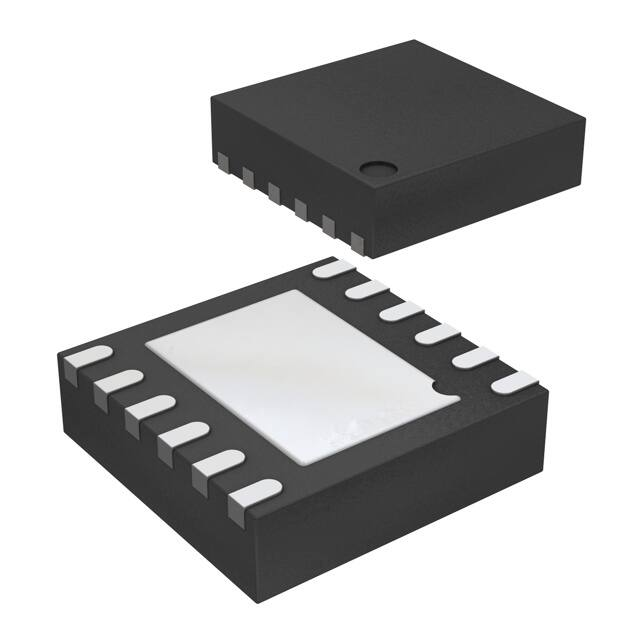
The MIC4722 is available in the exposed pad 12-pin
3mm x 3mm MLF® package with a junction operating
range from –40°C to +125°C.
•
•
•
•
•
•
•
•
•
•
•
•
•
2.7 to 5.5V supply voltage
2.7MHz PWM mode
Output current to 3A
>92% efficiency
100% maximum duty cycle
Adjustable output voltage option down to 1V
Ultra-fast transient response
Ultra-small external components
Stable with a 0.47µH inductor and a 4.7µF output
capacitor
Fully integrated 3A MOSFET switch
Micropower shutdown
Thermal shutdown and current limit protection
Pb-free 12-pin 3mm x 3mm MLF® package
–40°C to +125°C junction temperature range
Applications
•
•
•
•
•
5V or 3.3V Point of Load Conversion
Telecom/Networking Equipment
Set Top Boxes
Storage Equipment
Video Cards
Typical Application
MIC4722
3A 2.7MHz Buck Regulator
MLF and MicroLeadFrame are registered trademarks of Amkor Technology, Inc.
Micrel Inc. • 2180 Fortune Drive • San Jose, CA 95131 • USA • tel +1 (408) 944-0800 • fax + 1 (408) 474-1000 • http://www.micrel.com
May 2010
M9999-051410-C
�Micrel, Inc.
MIC4722
Ordering Information
Part Number
Voltage
MIC4722YML
Junction Temp. Range
Adj.
Package
–40° to +125°C
12-Pin 3x3 MLF
Lead Finish
®
Pb-Free
Note:
MLF® is a GREEN RoHS compliant package. Lead finish is NiPdAu. Mold compound is Halogen Free.
Pin Configuration
SW 1
12 SW
VIN 2
11 VIN
PGND 3
10 PGND
SGND 4
9 PGOOD
BIAS 5
FB 6
8 EN
EP
7 NC
12-Pin 3mm x 3mm MLF® (ML)
Pin Description
Pin Number
Pin Name
Pin Function
1,12
SW
Switch (Output): Internal power P-Channel MOSFET output switch
2,11
VIN
Supply Voltage (Input): Supply voltage for the source of the internal P-channel
MOSFET and driver.
3,10
PGND
Power Ground. Provides the ground return path for the high-side drive current.
4
SGND
Signal (Analog) Ground. Provides return path for control circuitry and internal
reference.
5
BIAS
6
FB
Feedback. Input to the error amplifier, connect to the external resistor divider
network to set the output voltage.
7
NC
No Connect. Not internally connected to die. This pin can be tied to any other pin
if desired.
8
EN
Enable (Input). Logic level low, will shutdown the device, reducing the current
draw to less than 5µA.
9
PGOOD
EP
GND
Requires bypass capacitor to GND.
May 2010
Internal circuit bias supply. Must be bypassed with a 0.1µF ceramic capacitor to
SGND.
Power Good. Open drain output that is pulled to ground when the output voltage
is within +/- 7.5% of the set regulation voltage
Connect to ground.
2
M9999-051410-C
�Micrel, Inc.
MIC4722
Absolute Maximum Ratings(1)
Operating Ratings(2)
Supply Voltage (VIN) .......................................................+6V
Output Switch Voltage (VSW). .........................................+6V
Output Switch Current (SW).............................................11A
Logic Input Voltage (VEN) .................................. –0.3V to VIN
Storage Temperature (Ts) .........................–60°C to +150°C
Junction Temperature ................................................ 150°C
EDS Rating(3) .................................................................. 2kV
Supply voltage (VIN) ..................................... +2.7V to +5.5V
Logic Input Voltage (VEN) ....................................... 0V to VIN
Junction Temperature (TJ) ........................ –40°C to +125°C
Junction Thermal Resistance
3x3 MLF-12 (θJA) ...............................................60°C/W
Electrical Characteristics(4)
VIN = VEN = 3.6V; L = 0.47µH; COUT = 4.7µF; TA = 25°C, unless noted. Bold values indicate –40°C< TJ < +125°C.
Parameter
Condition
Min
(turn-on)
2.45
Supply Voltage Range
Under-Voltage Lockout Threshold
Typ
Max
Units
5.5
V
2.55
2.65
V
2.7
UVLO Hysteresis
100
Quiescent Current
VFB = 0.9 * VNOM (not switching)
Shutdown Current
VEN = 0V
[Adjustable] Feedback Voltage
± 1% ILOAD = 100mA
± 2% (over temperature) ILOAD = 100mA
Current Limit
VFB = 0.9 * VNOM
Output Voltage Line Regulation
mV
570
900
µA
2
10
µA
0.99
0.98
1
1.01
1.02
V
1
nA
3.5
5
A
VOUT > 2V; VIN = VOUT+500mV to 5.5V; ILOAD= 100mA
VOUT < 2V; VIN = 2.7V to 5.5V; ILOAD= 100mA
0.07
%
Output Voltage Load Regulation
20mA < ILOAD < 3A
0.2
%
Maximum Duty Cycle
VFB ≤ 0.4V
FB pin input current
Switch ON-Resistance
%
100
ISW = 50mA VFB = 0.7VFB_NOM (High Side Switch)
95
200
300
mΩ
Oscillator Frequency
2.4
2.7
3.0
MHz
Enable Threshold
0.5
0.85
1.3
V
Enable Hysteresis
50
Enable Input Current
0.1
2
µA
Power Good Range
±7
±10
%
145
250
Ω
Power Good Resistance
IPGOOD = 500µA
mV
Over-Temperature Shutdown
150
°C
Over-Temperature Hysteresis
25
°C
Notes:
1. Exceeding the absolute maximum rating may damage the device.
2. The device is not guaranteed to function outside its operating rating.
3. Devices are ESD sensitive. Handling precautions recommended. Human body model, 1.5k in series with 100pF.
4. Specification for packaged product only.
May 2010
3
M9999-051410-C
�Micrel, Inc.
MIC4722
Typical Characteristics
94
4.5VIN
92
90
88
94
5VIN
92
5.5VIN
86
0.5
1
1.5
2
2.5
OUTPUT CURRENT (A)
90
88 4.5VIN
5VIN
86
84
82
80
5.5VIN
78
76
74
72
70
68
66
64
62
60
0
0.5
1
1.5
2
2.5
OUTPUT CURRENT (A)
3
92
90
3VIN
88
3.3VIN
86
84
82
3.6VIN
80
78
76
74
72
70
68
66
64
0
0.5
1
1.5
2
2.5
OUTPUT CURRENT (A)
3
3
MIC4722
1V OUT Efficiency
80
0
90
88
86
84
82
80
78
76
74
72
70
68
66
64
62
60
0
MIC4722
2.5V OUT Efficiency
3VIN
3.3VIN
3.6VIN
84
82
0.5
1
1.5
2
2.5
OUTPUT CURRENT (A)
80
0
3
86
84
82
80
78
76
74
72
70
68
66
64
0
3
MIC4722
1.2V OUT Efficiency
4.5VIN
3
MIC4722
1.5V OUT Efficiency
4.5VIN
5VIN
5.5VIN
0.5
1
1.5
2
2.5
OUTPUT CURRENT (A)
3
MIC4722
1.2V OUT Efficiency
90
88
86 3VIN
84
3.3VIN
82
80
78
76
3.6VIN
74
72
70
68
66
64
62
60
0
0.5
1
1.5
2
2.5
OUTPUT CURRENT (A)
5VIN
5.5VIN
0.5
1
1.5
2
2.5
OUTPUT CURRENT (A)
0.5
1
1.5
2
2.5
OUTPUT CURRENT (A)
3
MIC4722
1V OUT Efficiency
1.010
3
Load Regulation
82
80
78
5VIN
3VIN
3.3VIN
76
74
72
5.5VIN
66
64
70
68
62
66
60
0
64
0
May 2010
88
86
96
94
92 3VIN
3.3VIN
90
88
86
84
3.6VIN
82
80
78
76
74
72
70
68
66
0
0.5
1
1.5
2
2.5
OUTPUT CURRENT (A)
84
4.5VIN
72
68
5.5VIN
MIC4722
1.8V OUT Efficiency
MIC4722
1.5V OUT Efficiency
70
92
90
82
MIC4722
1.8V OUT Efficiency
74
96
94
5VIN
84
78
76
100
98
88
82
80
78
4.5VIN
90
86
84
76
0
MIC4722
2.5V OUT Efficiency
OUTPUT VOLTAGE (V)
96
MIC4722
3.3V OUT Efficiency
0.5
1
1.5
2
2.5
OUTPUT CURRENT (A)
3
3.6VIN
0.5
1
1.5
2
2.5
OUTPUT CURRENT (A)
4
3
1.005
1.000
0.995
0.990
0
3.3V
VIN = 3.3V
0.5
1
1.5
2
2.5
OUTPUT CURRENT (A)
3
M9999-051410-C
�Micrel, Inc.
MIC4722
Typical Characteristics (cont.)
Line Regulation
1.0010
1.010
Feedback Voltage
vs. Temperature
1.0008
1.008
3.2
3.1
1.0006
1.0004
1.006
1.004
3.0
2.9
1.0002
1.002
1.000
2.8
2.7
0.998
2.6
2.5
1.0000
0.9998
Frequency
vs. Temperature
0.9996
0.9994
0.996
0.994
0.9992
0.992 V = 3.3V
IN
0.990
20 40 60 80
TEMPERATURE (°C)
2.4
2.3 V = 3.3V
IN
2.2
20 40 60 80
TEMPERATURE (°C)
Quiescent Current
vs. Supply Voltage
R DSON
vs. Supply Voltage
0.9990
2.7
3.2 3.7 4.2 4.7 5.2
SUPPLY VOLTAGE (V)
Feedback Voltage
vs. Supply Voltage
1.2
800
700
1.0
110
600
0.8
0.6
0.4
105
500
100
400
95
300
90
85
200
0.2
VEN = VIN
0
012345
SUPPLY VOLTAGE (V)
R DSON
vs. Temperature
160
140
120
115
80
100
VEN = VIN
0
0123456
SUPPLY VOLTAGE (V)
1.2
Enable Threshold
vs. Supply Voltage
75
70
2.7
1.2
1.0
1.0
0.8
0.8
0.6
0.6
0.4
0.4
0.2
0.2
3.2 3.7 4.2 4.7 5.2
SUPPLY VOLTAGE (V)
Enable Threshold
vs. Temperature
120
100
80
60
40
20
0
VIN = 3.3V
May 2010
20 40 60 80
TEMPERATURE (°C)
0
2.7
3.2
3.7
4.2
4.7
SUPPLY VOLTAGE (V)
5
0
VIN = 3.3V
20 40 60 80
TEMPERATURE (°C)
M9999-051410-C
�Micrel, Inc.
MIC4722
Functional Characteristics
Discontinuous Current
VIN = 3.3V
VOUT = 1V
L = 1µH
0A
VIN = 3.3V
Inductor Current
(200mA/div)
Inductor Current
(500mA/div)
Continuous Current
VOUT = 1V
L = 1µH
COUT = 4.7µF
0A
IOUT = 300mA
COUT = 4.7µF
Switch Voltag e
(2V/div)
Switch Voltag e
(2V/div)
IOUT = 1A
Time (200ns/div )
Time (200ns/div )
Load Transient
Output Voltag e
AC Coupled
(10mV/div)
Output Current
(2A/div)
Output Ripple
Switch Voltage
(2V/div)
Output Voltag e
(20mV/div)
0A
VIN = 3.3V
VOUT = 1.8V
Time (400µs/div )
IOUT = 3A
Time (400ns/div )
Inductor Current
(2A/div)
Feedback Voltag e
(1V/div)
Enable Voltag e
(2V/div)
Input Current
(1A/div)
Start-Up Waveforms
May 2010
Time (40µs/div )
6
M9999-051410-C
�Micrel, Inc.
MIC4722
Functional Diagram
VIN
VIN
P-Channel
Current Limit
BIAS
HSD
SW
SW
PWM
Control
EN
Enable and
Control Logic
Bias,
UVLO,
Thermal
Shutdown
Soft
Start
EA
FB
1.0V
PGOOD
1.0V
PGND
SGND
MIC4722 Block Diagram
May 2010
7
M9999-051410-C
�Micrel, Inc.
MIC4722
Pin Description
SW
The switch (SW) pin connects directly to the inductor
and provides the switching current necessary to operate
in PWM mode. Due to the high speed switching on this
pin, the switch node should be routed away from
sensitive nodes. This pin also connects to the cathode of
the free-wheeling diode.
VIN
Two pins for VIN provide power to the source of the
internal P-channel MOSFET along with the current
limiting sensing. The VIN operating voltage range is from
2.7V to 5.5V. Due to the high switching speeds, a 10µF
capacitor is recommended close to VIN and the power
ground (PGND) for each pin for bypassing. Please refer
to layout recommendations.
PGOOD
Power good is an open drain pull down that indicates
when the output voltage has reached regulation. For a
power good low, the output voltage is within ±10% of the
set regulation voltage. For output voltages greater or
less than 10%, the PGOOD pin is high. This should be
connected to the input supply through a pull up resistor.
A delay can be added by placing a capacitor from
PGOOD to ground.
BIAS
The bias (BIAS) provides power to the internal reference
and control sections of the MIC4722. A 10Ω resistor
from VIN to BIAS and a 0.1µF from BIAS to SGND is
required for clean operation.
EN
The enable pin provides a logic level control of the
output. In the off state, supply current of the device is
greatly reduced (typically 100MHz bandwidth is more than sufficient for most
power supplies (which includes both linear and
switching) and are more common and significantly
cheaper than the injection transformers previously
mentioned. The one disadvantage to using the op-amp
injection method; is that the supply voltages need to be
below the maximum operating voltage of the op-amp.
Also, the maximum output voltage for driving 50Ω inputs
using the MIC922 is 3V. For measuring higher output
voltages, 1MΩ input impedance is required for the A and
R channels. Remember to always measure the output
voltage with an oscilloscope to ensure the measurement
is working properly. You should see a single sweeping
sinusoidal waveform without distortion on the output. If
there is distortion of the sinusoid, reduce the amplitude
of the source signal. You could be overdriving the
feedback causing a large signal response.
Figure 7. Transformer Injection
A 50Ω resistor allows impedance matching from the
network analyzer source. This method allows the DC
loop to maintain regulation and allow the network
analyzer to insert an AC signal on top of the DC voltage.
The network analyzer will then sweep the source while
monitoring A and R for an A/R measurement. While this
is the most common method for measuring the gain and
phase of a power supply, it does have significant
limitations. First, to measure low frequency gain and
phase, the transformer needs to be high in inductance.
This makes frequencies
很抱歉,暂时无法提供与“MIC4722YML-TR”相匹配的价格&库存,您可以联系我们找货
免费人工找货