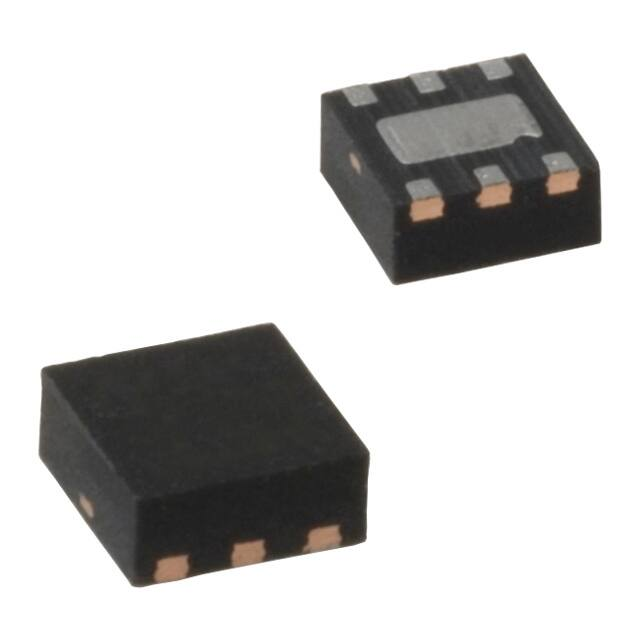
MIC5321
High-Performance, Dual 150 mA µCap
Ultra-Low Dropout Regulator
Features
General Description
• 2.3V to 5.5V Input Voltage Range
• Ultra-Low Dropout Voltage 35 mV @ 150 mA
• Tiny 6-Pin 1.6 mm x 1.6 mm Thin UDFN Leadless
Package
• Low Cost 6-Lead TSOT-23 Package
• Bypass Pin for Improved Noise Performance
• High PSRR: >75 dB on Each LDO
• Ultra-Low Noise Output: >30 µVRMS
• Dual 150 mA Outputs
• µCap Stable with 1 µF Ceramic Capacitor
• Low Quiescent Current: 150 µA
• Fast Turn-On Time: 45 µs
• Thermal Shutdown Protection
• Current Limit Protection
The MIC5321 is a tiny, dual ultra-low dropout linear
regulator ideally suited for applications that require high
PSRR because it provides a bypass pin for those noise
sensitive portable electronics. The MIC5321 integrates
two high-performance 150 mA ULDOs into a very
compact 1.6 mm x 1.6 mm leadless UDFN package
that
provides
exceptional
thermal
package
characteristics.
Applications
•
•
•
•
•
•
Mobile Phones
PDAs
GPS Receivers
Portable Electronics
Portable Media Players
Digital Still and Video Cameras
The MIC5321 is a µCap design that enables operation
with very small ceramic output capacitors for stability,
thereby reducing required board space and component
cost. The combination of extremely low dropout
voltage, very high power supply rejection, very low
output noise, and exceptional thermal package
characteristics makes it ideal for powering RF
application, cellular phone camera modules, imaging
sensors for digital still cameras, PDAs, MP3 players
and WebCam applications.
The MIC5321 is available in fixed-output voltages in the
tiny 6-pin 1.6 mm x 1.6 mm leadless UDFN package,
which is only 2.56 mm2 in area, less than 30% the area
of the SOT-23 and TSOP 3x3 packages. It’s also
available in the thin SOT-23 6-lead package and the
standard size 6-pin 1.6 mm x 1.6 mm leadless WDFN
package. Additional voltage options are available. For
more information, contact Microchip.
Package Types
MIC5321
6-Pin 1.6 mm x 1.6 mm UDFN (MT)/WDFN (ML)
(Top View)
VIN 1
6
VOUT1
GND 2
5
VOUT2
BYP 3
4
EN
MIC5321
6-Lead SOT-23 (D6)
(Top View)
VIN
GND
BYP
3
2
1
4
5
VOUT1 VOUT2
2022 Microchip Technology Inc. and its subsidiaries
6
EN
DS20006678A-page 1
�MIC5321
Typical Application Circuit
RF Power Supply Circuit
MIC5321-x.xYML
VIN
VOUT 1
Rx/Synth
VOUT 2
Tx
EN
1μF
BYP
GND
1μF
1μF
RF
Transceiver
0.01μF
Functional Block Diagram
VIN
VOUT 1
LDO1
LDO2
VOUT 2
EN
Enable
BYP
Reference
GND
DS20006678A-page 2
2022 Microchip Technology Inc. and its subsidiaries
�MIC5321
1.0
ELECTRICAL CHARACTERISTICS
Absolute Maximum Ratings †
Supply Input Voltage (VIN) ................................................................................................................................ 0V to +6V
Enable Input Voltage (VEN) ............................................................................................................................... 0V to +6V
Power Dissipation (PD) Note 1............................................................................................................... Internally Limited
ESD Rating (Note 2) .................................................................................................................................................. 2 kV
Operating Ratings ‡
Supply Input Voltage (VIN) ........................................................................................................................ +2.3V to +5.5V
Enable Input Voltage (VEN) .................................................................................................................................0V to VIN
† Notice: Stresses above those listed under “Absolute Maximum Ratings” may cause permanent damage to the device.
This is a stress rating only and functional operation of the device at those or any other conditions above those indicated
in the operational sections of this specification is not intended. Exposure to maximum rating conditions for extended
periods may affect device reliability.
‡ Notice: The device is not guaranteed to function outside its operating ratings.
Note 1: The maximum allowable power dissipation at any TA (ambient temperature) is PD(MAX) = (TJ(MAX) – TA)/θJA.
Exceeding the maximum allowable power dissipation will result in excessive die temperature, and the regulator will go into thermal shutdown.
2: Devices are ESD sensitive. Handling precautions recommended. Human body model, 1.5 kΩ in series with
100 pF.
ELECTRICAL CHARACTERISTICS
Electrical Characteristics: VIN = EN = VOUT + 1.0V; higher of the two regulator outputs, IOUTLDO1 = IOUTLDO2 =
100 µA; COUT1 = COUT2 = 1 µF; CBYP = 0.01 µF; TJ = 25°C, bold values valid for –40°C ≤ TJ ≤ +125°C, unless noted.
(Note 1)
Parameter
Output Voltage Accuracy
Symbol
VOUT
Line Regulation
ΔVOUT/
(VOUT x
ΔVIN)
Load Regulation
ΔVOUT/
VOUT
Dropout Voltage (Note 2)
VDO
Min.
Typ.
Max.
–2.0
—
2.0
–3.0
—
3.0
—
0.02
0.3
—
—
0.6
—
0.5
2.0
—
0.1
—
—
12
50
—
25
75
—
35
100
Units
%
Conditions
Variation from nominal VOUT
Variation from nominal VOUT;
–40°C to +125°C
%/V
VIN = VOUT + 1V to 5.5V;
IOUT = 100 µA
%
IOUT = 100 µA to 150 mA
IOUT = 100 µA
mV
IOUT = 50 mA
IOUT = 100 mA
IOUT = 150 mA
Ground Current
IGND
—
150
190
µA
Ground Current in Shutdown
ISHDN
—
0.01
2
EN = High; IOUT1 = 150 mA,
IOUT2 = 150 mA
µA
EN1 ≤ 0.2V
—
75
—
Ripple Rejection
PSRR
dB
—
45
—
Current Limit
ILIM
300
550
950
mA
Output Voltage Noise
eN
—
30
—
µVRMS
2022 Microchip Technology Inc. and its subsidiaries
f = 1 kHz; COUT = 1.0 µF;
CBYP = 0.1 µF
f = 20 kHz; COUT = 1.0 µF;
CBYP = 0.1 µF
VOUT = 0V
COUT = 1.0 µF; CBYP = 0.01 µF;
10 Hz to 100 kHz
DS20006678A-page 3
�MIC5321
ELECTRICAL CHARACTERISTICS (CONTINUED)
Electrical Characteristics: VIN = EN = VOUT + 1.0V; higher of the two regulator outputs, IOUTLDO1 = IOUTLDO2 =
100 µA; COUT1 = COUT2 = 1 µF; CBYP = 0.01 µF; TJ = 25°C, bold values valid for –40°C ≤ TJ ≤ +125°C, unless noted.
(Note 1)
Parameter
Symbol
Min.
Typ.
Max.
VIL
—
—
0.2
Units
Conditions
Enable Inputs (EN)
Enable Input Voltage
Enable Input Current
Turn-On Time
Turn-On Time
(LDO1 and LDO2)
Note 1:
2:
VIH
1.1
—
—
IIL
—
0.01
1
IIH
—
0.01
1
—
40
100
—
45
100
tON
V
µA
µs
Logic Low
Logic High
VIL ≤ 0.2V
VIH ≥ 1.0V
COUT = 1.0 µF; No CBYP
COUT = 1.0 µF; CBYP = 0.01 µF
Specification for packaged product only.
Dropout voltage is defined as the input-to-output differential at which the output voltage drops 2% below its
nominal VOUT. For outputs below 2.3V, the dropout voltage is the input-to-output differential with the minimum input voltage 2.3V.
TEMPERATURE SPECIFICATIONS
Parameters
Sym.
Min.
Typ.
Max.
Units
Conditions
TJ
–40
—
+125
°C
Note 1
TLEAD
—
—
+260
°C
Soldering, 3 sec.
TS
–65
—
+150
°C
—
Thermal Resistance, UDFN/WDFN
6-Ld
JA
—
100
—
°C/W
—
Thermal Resistance, TSOT-23 6-Ld
JA
—
235
—
°C/W
—
Temperature Ranges
Operating Junction Temperature
Range
Lead Temperature
Storage Temperature
Package Thermal Resistances
Note 1:
The maximum allowable power dissipation is a function of ambient temperature, the maximum allowable
junction temperature and the thermal resistance from junction to air (i.e., TA, TJ, JA). Exceeding the
maximum allowable power dissipation will cause the device operating junction temperature to exceed the
maximum +125°C rating. Sustained junction temperatures above +125°C can impact the device reliability.
DS20006678A-page 4
2022 Microchip Technology Inc. and its subsidiaries
�MIC5321
2.0
Note:
TYPICAL PERFORMANCE CURVES
The graphs and tables provided following this note are a statistical summary based on a limited number of
samples and are provided for informational purposes only. The performance characteristics listed herein
are not tested or guaranteed. In some graphs or tables, the data presented may be outside the specified
operating range (e.g., outside specified power supply range) and therefore outside the warranted range.
-90
160
-80
155
-70
150
-60
-50
50mA
-40
140
135
-30
V =V
+1V
150mA
-20 VIN =OUT
OUT 2.8V
C
=
1μF
-10 OUT
CBYP = 0.1μF
0
0.1
1
10
100
1,000
FREQUENCY (kHz)
FIGURE 2-1:
Ratio.
Power Supply Rejection
130
125
120
FIGURE 2-4:
Temperature.
40
160
35
155
30
150
25
145
20
140
5
0
0
FIGURE 2-2:
Current.
VIN = VOUT + 1V
VOUT = 2.8V
COUT = 1μF
EN = VIN
25 50 75 100 125 150
OUTPUT CURRENT (mA)
Dropout Voltage vs. Output
3.00
2.95
2.90
2.85
2.80
2.75
2.70
2.65
2.60
2.55
2.50
FIGURE 2-3:
Temperature.
VIN = VOUT + 1V
VOUT = 3V
COUT = 1μF
EN = VIN
20 40 60 80
TEMPERATURE (°C)
Ground Current vs.
150mA
135
15
10
100μA
145
130
125
120
FIGURE 2-5:
Temperature.
VIN = VOUT + 1V
VOUT = 3V
COUT = 1μF
EN = VIN
20 40 60 80
TEMPERATURE (°C)
Ground Current vs.
3.0
2.5
2.8V
2.0
1.5
VIN = VOUT + 1V
VOUT = 2.8V
COUT = 1μF
EN = VIN
20 40 60 80
TEMPERATURE (°C)
Output Voltage vs.
2022 Microchip Technology Inc. and its subsidiaries
1.5V
1.0
0.5
0.0
0
FIGURE 2-6:
Voltage.
IOUT = 100μA
COUT = 1μF
1
2
3
4
5
6
INPUT VOLTAGE (V)
Output Voltage vs. Input
DS20006678A-page 5
�MIC5321
50
VIN = VOUT + 1V
45 VOUT = 2.8V
40 COUT = 1μF
150mA
35
30
25
100mA
20
15
10
5
0
FIGURE 2-7:
Temperature.
162
50mA
10mA
146
100μA
20 40 60 80
TEMPERATURE (°C)
Dropout Voltage vs.
2.80
2.75 VIN = VOUT + 1V
VOUT = 2.8V
COUT1 = COUT2 = 1μF
EN = VIN
2.70
0
25 50 75 100 125 150
OUTPUT CURRENT (mA)
Output Voltage vs. Output
138
0
FIGURE 2-10:
Current.
VIN = VOUT + 1V
VOUT = 2.85V
EN = VIN
COUT1 = COUT2 = 1μF
25 50 75 100 125 150
OUTPUT CURRENT (mA)
Ground Current vs. Output
570
560
550
540
530
520
510
3
FIGURE 2-11:
Voltage.
EN = VIN
COUT = 1μF
3.5
4
4.5
5
INPUT VOLTAGE (V)
5.5
Current Limit vs. Input
10
1.60
1
1.55
0.1
1.50
1.45 VIN = VOUT + 1V
VOUT = 1.5V
COUT1 = COUT2 = 1μF
EN = VIN
1.40
0
25 50 75 100 125 150
OUTPUT CURRENT (mA)
DS20006678A-page 6
142
610
600
590
580
2.85
FIGURE 2-9:
Current.
154
150
2.90
FIGURE 2-8:
Current.
158
Output Voltage vs. Output
0.01 VIN = 3.8V
VOUT = 2.8V
COUT = 1μF
CBYP = 0.01μF
0.001
0.01 0.1 1
10 100 1,000 10,000
FREQUENCY (kHz)
FIGURE 2-12:
Density.
Output Noise Spectral
2022 Microchip Technology Inc. and its subsidiaries
�VOUT1
(1V/div)
Enable
(1V/div)
MIC5321
VOUT2
(1V/div)
VIN = VOUT + 1V
VOUT1 = VOUT2 = 3.0V
COUT = 1μF
CBYP = 0.1μF
Time (10μs/div)
FIGURE 2-13:
Output Voltage
(20mV/div)
Enable Turn-On.
VIN = VOUT + 1V
150mA
VOUT = 2.8V
COUT = 1μF
Output Current
(50mA/div)
CBYP = 0.1μF
10mA
Time (40μs/div)
FIGURE 2-14:
Load Transient.
5.5V
Input Voltage
(2V/div)
4V
VIN = VOUT + 1V
VOUT = 2.8V
COUT = 1μF
Output Voltage
(50mV/div)
IOUT = 10mA
Time (40μs/div)
FIGURE 2-15:
Line Transient.
2022 Microchip Technology Inc. and its subsidiaries
DS20006678A-page 7
�MIC5321
3.0
PIN DESCRIPTIONS
The descriptions of the pins are listed in Table 3-1.
TABLE 3-1:
PIN FUNCTION TABLE
Pin Number
UDFN/WDFN
Pin Number
TSOT
Pin Name
1
3
VIN
Supply Input.
2
2
GND
Ground.
3
1
BYP
Reference Bypass: Connect external 0.01µF to GND to reduce
output noise. May be left open.
4
6
EN
Description
Enable Input (both regulators): Active-High Input. Logic High = On;
Logic Low = Off; Do not leave floating.
5
5
VOUT2
Regulator Output: LDO2
6
4
VOUT1
Regulator Output: LDO1
HS Pad
—
ePAD
DS20006678A-page 8
Exposed heatsink pad connected internally 3rto ground.
2022 Microchip Technology Inc. and its subsidiaries
�MIC5321
4.0
APPLICATION INFORMATION
4.1
Enable/Shutdown
The MIC5321 comes with a single active-high enable
pin that allows both regulators to be disabled
simultaneously. Forcing the enable pin low disables the
regulator and sends it into a “zero” off-mode current
state. In this state, current consumed by the regulator
goes nearly to zero. Forcing the enable pin high
enables the output voltage. The active-high enable pin
uses CMOS technology and the enable pin cannot be
left floating; a floating enable pin may cause an
indeterminate state on the output.
4.2
Input Capacitor
The MIC5321 is a high-performance, high-bandwidth
device. Therefore, it requires a well-bypassed input
supply for optimal performance. A 1 µF capacitor is
required from the input to ground to provide stability.
Low-ESR ceramic capacitors provide optimal
performance at a minimum of space. Additional
high-frequency capacitors, such as small-valued NPO
dielectric-type capacitors, help filter out high-frequency
noise and are good practice in any RF-based circuit.
4.3
Output Capacitor
The MIC5321 requires an output capacitor of 1 µF or
greater to maintain stability. The design is optimized for
use with low-ESR ceramic chip capacitors. High ESR
capacitors may cause high frequency oscillation. The
output capacitor can be increased, but performance
has been optimized for a 1 µF ceramic output capacitor
and does not improve significantly with larger
capacitance.
X7R/X5R dielectric-type ceramic capacitors are
recommended because of their temperature
performance. X7R-type capacitors change capacitance
by 15% over their operating temperature range and are
the most stable type of ceramic capacitors. Z5U and
Y5V dielectric capacitors change value by as much as
50% and 60%, respectively, over their operating
temperature ranges. To use a ceramic chip capacitor
with Y5V dielectric, the value must be much higher than
an X7R ceramic capacitor to ensure the same
minimum capacitance over the equivalent operating
temperature range.
4.4
Bypass Capacitor
A capacitor can be placed from the noise bypass pin to
ground to reduce output voltage noise. The capacitor
bypasses the internal reference. A 0.1 µF capacitor is
recommended for applications that require low-noise
outputs. The bypass capacitor can be increased,
further reducing noise and improving PSRR. Turn-on
time increases slightly with respect to bypass
capacitance. A unique, quick-start circuit allows the
2022 Microchip Technology Inc. and its subsidiaries
MIC5321 to drive a large capacitor on the bypass pin
without significantly slowing turn-on time. Refer to the
Typical Performance Curves section for performance
with different bypass capacitors.
4.5
No-Load Stability
Unlike many other voltage regulators, the MIC5321 will
remain stable and in regulation with no load. This is
especially important in CMOS RAM keep-alive
applications.
4.6
Thermal Considerations
The MIC5321 is designed to provide 150 mA of
continuous current for both outputs in a very small
package. Maximum ambient operating temperature
can be calculated based on the output current and the
voltage drop across the part. Given that the input
voltage is 3.3V, the output voltage is 2.8V for VOUT1,
2.5V for VOUT2 and the output current equals 150 mA.
The actual power dissipation of the regulator circuit can
be determined using the equation:
EQUATION 4-1:
P D = V IN – V OUT1 I OUT1 + V IN – V OUT2 I OUT2 + V IN I GND
Because this device is CMOS and the ground current
is typically