PIC18F26/45/46Q10
28/40-Pin, Low-Power, High-Performance Microcontrollers
Description
PIC18F26/45/46Q10 microcontrollers feature analog, core independent, and communication peripherals
for a wide range of general purpose and low-power applications. These 28/40/44-pin devices are
equipped with a 10-bit ADC with Computation (ADC2) automating Capacitive Voltage Divider (CVD)
techniques for advanced touch sensing, averaging, filtering, oversampling and performing automatic
threshold comparisons. They also offer a set of core independent peripherals such as Complementary
Waveform Generator (CWG), Windowed Watchdog Timer (WWDT), Cyclic Redundancy Check (CRC)/
Memory Scan, Zero-Cross Detect (ZCD), Configurable Logic Cell (CLC), and Peripheral Pin Select
(PPS), providing increased design flexibility and lower system cost.
Core Features
• C Compiler Optimized RISC Architecture
• Operating Speed:
– DC – 64 MHz clock input over the full VDD range
– 62.5 ns minimum instruction cycle
• Programmable 2-Level Interrupt Priority
• 31-Level Deep Hardware Stack
• Three 8-Bit Timers (TMR2/4/6) with Hardware Limit Timer (HLT)
• Four 16-Bit Timers (TMR0/1/3/5)
• Low-Current Power-on Reset (POR)
• Power-up Timer (PWRT)
• Brown-out Reset (BOR)
• Low-Power BOR (LPBOR) Option
• Windowed Watchdog Timer (WWDT):
– Watchdog Reset on too long or too short interval between watchdog clear events
– Variable prescaler selection
– Variable window size selection
– All sources configurable in hardware or software
Memory
•
•
•
•
Up to 64K Bytes Program Flash Memory
Up to 3615 Bytes Data SRAM Memory
Up to 1024 Bytes Data EEPROM
Programmable Code Protection
© 2019 Microchip Technology Inc.
Preliminary Datasheet
DS40001996C-page 1
�PIC18F26/45/46Q10
• Direct, Indirect and Relative Addressing modes
Operating Characteristics
• Operating Voltage Range:
– 1.8V to 5.5V
• Temperature Range:
– Industrial: -40°C to 85°C
– Extended: -40°C to 125°C
Power-Saving Operation Modes
•
•
•
•
Doze: CPU and Peripherals Running at Different Cycle Rates (typically CPU is lower)
Idle: CPU Halted While Peripherals Operate
Sleep: Lowest Power Consumption
Peripheral Module Disable (PMD):
– Ability to selectively disable hardware module to minimize active power consumption of unused
peripherals
• Extreme Low-Power mode (XLP)
– Sleep: 500 nA typical @ 1.8V
– Sleep and Watchdog Timer: 900 nA typical @ 1.8V
Digital Peripherals
• Configurable Logic Cell (CLC):
– Integrated combinational and sequential logic
• Complementary Waveform Generator (CWG):
– Rising and falling edge dead-band control
– Full-bridge, half-bridge, 1-channel drive
– Multiple signal sources
• Capture/Compare/PWM (CCP) modules:
– Two CCPs
– 16-bit resolution for Capture/Compare modes
– 10-bit resolution for PWM mode
• 10-Bit Pulse-Width Modulators (PWM):
– Two 10-bit PWMs
• Serial Communications:
– Two Enhanced USART (EUSART) with Auto-Baud Detect, Auto-wake-up on Start.
RS-232, RS-485, LIN compatible
– SPI
– I2C, SMBus and PMBus™ compatible
• Up to 35 I/O Pins and One Input Pin:
– Individually programmable pull-ups
– Slew rate control
© 2019 Microchip Technology Inc.
Datasheet Preliminary
DS40001996C-page 2
�PIC18F26/45/46Q10
•
•
•
•
– Interrupt-on-change on all pins
– Input level selection control
Programmable CRC with Memory Scan:
– Reliable data/program memory monitoring for Fail-Safe operation (e.g., Class B)
– Calculate CRC over any portion of Flash or EEPROM
– High-speed or background operation
Hardware Limit Timer (TMR2/4/6+HLT):
– Hardware monitoring and Fault detection
Peripheral Pin Select (PPS):
– Enables pin mapping of digital I/O
Data Signal Modulator (DSM)
Analog Peripherals
• 10-Bit Analog-to-Digital Converter with Computation (ADC2):
– 35 external channels
– Conversion available during Sleep
– Four internal analog channels
– Internal and external trigger options
– Automated math functions on input signals:
• Averaging, filter calculations, oversampling and threshold comparison
– 8-bit hardware acquisition timer
• Hardware Capacitive Voltage Divider (CVD) Support:
– 8-bit precharge timer
– Adjustable Sample-and-Hold capacitor array
– Guard ring digital output drive
• Zero-Cross Detect (ZCD):
– Detect when AC signal on pin crosses ground
• 5-Bit Digital-to-Analog Converter (DAC):
– Output available externally
– Programmable 5-bit voltage (% of VDD,[VREF+ - VREF-], FVR)
– Internal connections to comparators and ADC
• Two Comparators (CMP):
– Four external inputs
– External output via PPS
• Fixed Voltage Reference (FVR) Module:
– 1.024V, 2.048V and 4.096V output levels
– Two buffered outputs: One for DAC/CMP and one for ADC
Clocking Structure
• High-Precision Internal Oscillator Block (HFINTOSC):
– Selectable frequencies up to 64 MHz
– ±1% at calibration
© 2019 Microchip Technology Inc.
Datasheet Preliminary
DS40001996C-page 3
�PIC18F26/45/46Q10
• 32 kHz Low-Power Internal Oscillator (LFINTOSC)
• External 32 kHz Crystal Oscillator (SOSC)
• External High-frequency Oscillator Block:
– Three crystal/resonator modes
– Digital Clock Input mode
– 4x PLL with external sources
• Fail-Safe Clock Monitor:
– Allows for safe shutdown if external clock stops
• Oscillator Start-up Timer (OST)
Programming/Debug Features
• In-Circuit Serial Programming™ (ICSP™) via Two Pins
• In-Circuit Debug (ICD) with Three Breakpoints via Two Pins
• Debug Integrated On-Chip
PIC18F26/45/46Q10 Family Types
CLC
Low Voltage Detect (LVD)
8-bit TMR with HLT
CRC with Memory Scan
EUSART
I2C/SPI
PPS
Peripheral Module Disable
Temperature Indicator
Debug(1)
24
1
1
2/2
1
8
1
3
Y
Y
2
2
Y
Y
Y
I
PIC18F45Q10
32k
2304
256
36
4
2
35
1
1
2/2
1
8
1
3
Y
Y
2
2
Y
Y
Y
I
PIC18F46Q10
64k
3615
1024
36
4
2
35
1
1
2/2
1
8
1
3
Y
Y
2
2
Y
Y
Y
I
Timer
CWG
2
Windowed Watchdog
Zero-Cross Detect
4
CCP/10-bit PWM
5-bit DAC
25
Computation (ch)
Comparators
1024
10-bit ADC2 with
16-bit Timers
3615
Data EEPROM
(bytes)
64k
Device
Data SRAM
(bytes)(2)
PIC18F26Q10
Program Memory Flash
(bytes)
I/O Pins
Table 1. Devices included in this data sheet
Note:
1.
Debugging Methods: (I) – Integrated on-chip.
2.
SRAM includes 256 bytes of SECTOR space which is not included in the data size displayed by MPLAB X.
CWG
CLC
Low Voltage Detect (LVD)
8-bit TMR with HLT
CRC with Memory Scan
EUSART
I2C/SPI
PPS
Peripheral Module Disable
Temperature Indicator
Debug(1)
2
24
1
1
2/2
1
0
1
3
Y
Y
1
1
Y
Y
Y
I
PIC18F25Q10
32k
2304
256
25
4
2
24
1
1
2/2
1
0
1
3
Y
Y
1
1
Y
Y
Y
I
PIC18F27Q10
128k
3615
1024
25
4
2
24
1
1
2/2
1
8
1
3
Y
Y
2
2
Y
Y
Y
I
© 2019 Microchip Technology Inc.
Datasheet Preliminary
Timer
Zero-Cross Detect
4
Windowed Watchdog
5-bit DAC
25
CCP/10-bit PWM
Comparators
256
Computation (ch)
16-bit Timers
1280
10-bit ADC2 with
I/O Pins
16k
Device
Data SRAM
(bytes)(2)
PIC18F24Q10
Program Memory Flash
(bytes)
Data EEPROM
(bytes)
Table 2. Devices not included in this data sheet
DS40001996C-page 4
�PIC18F26/45/46Q10
PPS
Peripheral Module Disable
Temperature Indicator
Debug(1)
Y
I2C/SPI
3
EUSART
1
CRC with Memory Scan
8-bit TMR with HLT
8
Timer
Low Voltage Detect (LVD)
1
2/2
Windowed Watchdog
CLC
1
CCP/10-bit PWM
1
CWG
35
Zero-Cross Detect
2
Computation (ch)
4
10-bit ADC2 with
36
5-bit DAC
1024
Comparators
3615
16-bit Timers
128k
I/O Pins
PIC18F47Q10
Data EEPROM
(bytes)
Device
Data SRAM
(bytes)(2)
Program Memory Flash
(bytes)
...........continued
Y
2
2
Y
Y
Y
I
Note:
1.
Debugging Methods: (I) – Integrated on-chip.
2.
SRAM includes 256 bytes of SECTOR space which is not included in the data size displayed by MPLAB X.
Data Sheet Index:
1.
2.
DS40001945 Data Sheet, 28-Pin, 8-bit Flash Microcontrollers
DS40002043 Data Sheet, 28/40-Pin, 8-bit Flash Microcontrollers
Packages
Important: For other small form-factor package availability and marking information, visit
http://www.microchip.com/packaging or contact your local Microchip sales office.
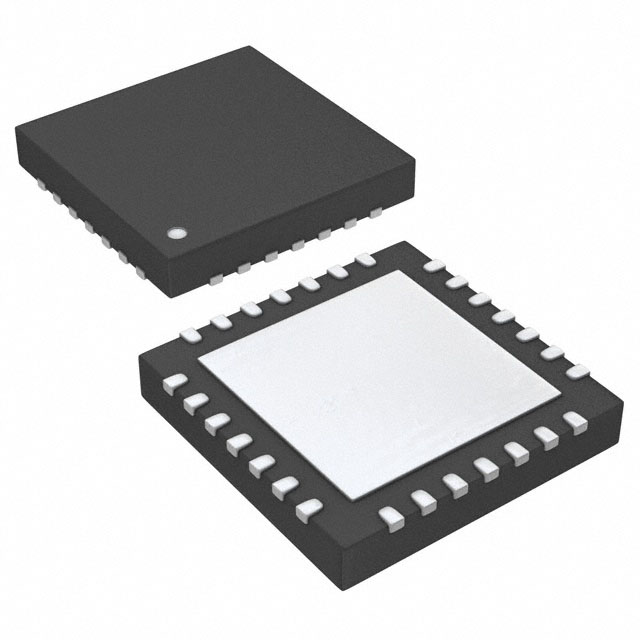
TQFP
(PT)
PDIP
(P)
QFN
(MP)
(5x5x0.9)
PIC18F45Q10
●
●
●
PIC18F46Q10
●
●
●
Packages
PIC18F26Q10
SPDIP
(SP)
SOIC
(SO)
SSOP
(SS)
QFN
(ML)
(6x6x0.9)
VQFN
(STX)
(4x4x1)
●
●
●
●
●
Important: Pin details are subject to change.
© 2019 Microchip Technology Inc.
Datasheet Preliminary
DS40001996C-page 5
�Filename:
Title:
Last Edit:
First Used:
Notes:
PIC18F26/45/46Q10
00-000028A.vsd
28-pin DIP
10/3/2018
N/A
Generic 28-pin dual in-line diagram
Pin Diagrams
Figure 1. 28-pin SPDIP, SSOP, SOIC
Rev. 00-000028A
10/3/2018
MCLR/VPP/RE3
RA0
RA1
RA2
RA3
RA4
RA5
VSS
RA7
RA6
RC0
RC1
RC2
RC3
1
2
3
4
5
6
7
8
9
10
11
12
13
14
28
27
26
25
24
23
22
21
20
19
18
17
16
15
RB7/ICSPDAT
RB6/ICSPCLK
RB5
RB4
RB3
RB2
RB1
RB0
VDD
VSS
RC7
RC6
RC5
RC4
RA1
RA0
RE3/MCLR/VPP
RB7/ICSPDAT
RB6/ICSPCLK
RB5
RB4
Figure 2. 28-pin QFN VQFN
Rev. 00-000028B
6/23/2017
28 27 26 25 24 23 22
RA2 1
RA3
RA4
RA5
VSS
RA7
RA6
21 RB3
20 RB2
2
3
19 RB1
18 RB0
4
5
17 VDD
16 VSS
6
7
15 RC7
RC0
RC1
RC2
RC3
RC4
RC5
RC6
8 9 10 11 12 13 14
Note: It is recommended that the exposed bottom pad be connected to VSS, however it must not be the
only VSS connection to the device.
© 2019 Microchip Technology Inc.
Datasheet Preliminary
DS40001996C-page 6
�Filename:
Title:
Last Edit:
First Used:
Notes:
00-000040A.vsd
40-pin DIP
10/3/2018
N/A
Generic 40-pin dual in-line diagram
PIC18F26/45/46Q10
Figure 3. 40-pin PDIP
Rev. 00-000040A
10/3/2018
Filename:
Title:
Last Edit:
First Used:
Notes:
MCLR/VPP/RE3
RA0
RA1
RA2
RA3
RA4
RA5
RE0
RE1
RE2
VDD
VSS
RA7
RA6
RC0
RC1
00-000040B.vsd
RC2
40-pin QFN
RC3
11/6/2017
N/A
RD0
Generic 40-pin QFN diagram
RD1
40
39
38
37
36
35
34
33
32
31
30
29
28
27
1
2
3
4
5
6
7
8
9
10
11
12
13
14
15
16
17
18
19
20
26
25
24
23
22
21
RB7/ICSPDAT
RB6/ICSPCLK
RB5
RB4
RB3
RB2
RB1
RB0
VDD
VSS
RD7
RD6
RD5
RD4
RC7
RC6
RC5
RC4
RD3
RD2
Figure 4. 40-pin QFN
RC6
RC5
RC4
RD3
RD2
RD1
RD0
RC3
RC2
RC1
Rev. 00-000040B
11/6/2017
40 39 38 37 36 35 34 33 32 31
RC7
RD4
RD5
RD6
RD7
VSS
VDD
RB0
RB1
RB2
1
2
3
4
5
6
7
8
9
10
30
29
28
27
26
25
24
23
22
21
RC0
RA6
RA7
VSS
VDD
RE2
RE1
RE0
RA5
RA4
RB3
RB4
RB5
ICSPCLK/RB6
ICSPDAT/RB7
VPP/MCLR/RE3
RA0
RA1
RA2
RA3
11 12 13 14 15 16 17 18 19 20
Note: It is recommended that the exposed bottom pad be connected to VSS, however it must not be the
only VSS connection to the device.
© 2019 Microchip Technology Inc.
Datasheet Preliminary
DS40001996C-page 7
�Filename:
Title:
Last Edit:
First Used:
Notes:
00-000044A.vsd
44-pin TQFP
11/6/2017
N/A
Generic 44-pin TQFP diagram
PIC18F26/45/46Q10
RC6
RC5
RC4
RD3
RD2
RD1
RD0
RC3
RC2
RC1
NC
Figure 5. 44-pin TQFP
Rev. 00-000044A
11/6/2017
44 43 42 41 40 39 38 37 36 35 34
RC7
RD4
RD5
RD6
RD7
VSS
VDD
RB0
RB1
RB2
RB3
1
2
3
4
5
6
7
8
9
10
11
NC
RC0
RA6
RA7
VSS
VDD
RE2
RE1
RE0
RA5
RA4
33
32
31
30
29
28
27
26
25
24
23
NC
NC
RB4
RB5
ICSPCLK/RB6
ICSPDAT/RB7
VPP/MCLR/RE3
RA0
RA1
RA2
RA3
12 13 14 15 16 17 18 19 20 21 22
Pin Allocation Tables
Table 3. 28-Pin Allocation Table
I/O(2)
RA0
28-Pin
SPDIP,
SOIC,
SSOP
28-Pin
(V)QFN
A/D
Reference
2
27
ANA0
—
Comparator Timers
DSM
MSSP
Pullup
Basic
—
—
—
Y
—
IOCA1
—
—
—
Y
—
—
IOCA2
—
—
—
Y
—
—
—
IOCA3
—
MDCARL(1)
—
Y
—
CCP
CWG
—
—
—
—
IOCA0
—
—
—
—
—
—
—
C1IN1+
—
—
C1IN0-
ZCD Interrupt EUSART
C2IN0RA1
3
28
ANA1
—
C1IN1C2IN1-
RA2
4
1
ANA2
DAC1OUT1
C1IN0+
VREF- (DAC)
C2IN0+
VREF- (ADC)
RA3
5
2
ANA3
VREF+ (DAC)
VREF+ (ADC)
RA4
6
3
ANA4
—
—
T0CKI(1)
—
—
—
IOCA4
—
MDCARH(1)
—
Y
—
RA5
7
4
ANA5
—
—
—
—
—
—
IOCA5
—
MDSRC(1)
SS1(1)
Y
—
RA6
10
7
ANA6
—
—
—
—
—
—
IOCA6
—
—
—
Y
CLKOUT
OSC2
RA7
9
6
ANA7
—
—
—
—
—
—
IOCA7
—
—
—
Y
OSC1
CLKIN
RB0
21
18
ANB0
—
C2IN1+
—
—
CWG1(1) ZCDIN IOCB0
—
—
SS2(1)
Y
—
—
—
SCK2(1)
Y
—
INT0(1)
RB1
22
19
ANB1
—
© 2019 Microchip Technology Inc.
C1IN3C2IN3-
—
—
—
—
IOCB1
INT1(1)
Datasheet Preliminary
SCL2(3,4)
DS40001996C-page 8
�PIC18F26/45/46Q10
...........continued
I/O(2)
RB2
28-Pin
SPDIP,
SOIC,
SSOP
28-Pin
(V)QFN
A/D
Reference
23
20
ANB2
—
Comparator Timers
—
—
CCP
CWG
—
—
ZCD Interrupt EUSART
—
IOCB2
INT2(1)
—
DSM
MSSP
Pullup
Basic
—
SDI2(1)
Y
—
SDA2(3,4)
RB3
24
21
ANB3
—
C1IN2C2IN2-
—
—
—
—
IOCB3
—
—
—
Y
—
RB4
25
22
ANB4
—
—
—
—
—
IOCB4
—
—
—
Y
—
RB5
26
23
ANB5
—
—
T5G(1)
T1G(1)
—
—
—
IOCB5
—
—
—
Y
—
RB6
27
24
ANB6
—
—
—
—
—
—
IOCB6
—
—
—
Y
ICSPCLK
RB7
28
25
ANB7
DAC1OUT2
—
T6IN(1)
—
—
—
IOCB7
—
—
—
Y
ICSPDAT
—
T1CKI(1)
T3CKI(1)
—
—
—
IOCC0
—
—
—
Y
SOSCO
CCP2(1)
—
—
IOCC1
—
—
—
Y
SOSCIN
SOSCI
T5CKI(1) CCP1(1)
T2IN(1)
—
—
—
IOCC2
—
—
—
Y
—
—
—
IOCC3
—
—
SCK1(1)
SCL1(3,4)
Y
—
—
—
SDI1(1)
SDA1(3,4)
Y
—
RC0
11
8
ANC0
—
T3G(1)
RC1
12
9
ANC1
—
—
—
RC2
13
10
ANC2
—
—
RC3
14
11
ANC3
—
—
RC4
15
12
ANC4
—
—
—
—
—
—
IOCC4
RC5
16
13
ANC5
—
—
T4IN(1)
—
—
—
IOCC5
—
—
—
Y
—
RC6
17
14
ANC6
—
—
—
—
—
—
IOCC6
CK1(1,3)
—
—
Y
—
RC7
18
15
ANC7
—
—
—
—
—
—
IOCC7
RX1/
DT1(1,3)
—
—
Y
—
RE3
1
26
—
—
—
—
—
—
—
IOCE3
—
—
—
Y
Vpp/MCLR
VSS
19
16
—
—
—
—
—
—
—
—
—
—
—
—
VDD(5)
20
17
—
—
—
—
—
—
—
—
—
—
—
—
VSS
VDD
VSS
8
5
—
—
—
—
—
—
—
—
—
—
—
—
VSS
OUT(2)
—
—
ADGRDA
ADGRDB
—
C1OUT
C2OUT
TMR0
CCP1
CCP2
CWG1A
CWG1B
—
—
DSM
SDO1
SCK1
—
—
PWM3
CWG1C
TX1/
CK1(3)
DT1(3)
PWM4
CWG1D
Note:
1.
This is a PPS remappable input signal. The input function may be moved from the default location shown to one of several other PORTx pins. Refer to the
peripheral input selection table for details on which port pins may be used for this signal.
2.
All output signals shown in this row are PPS remappable. These signals may be mapped to output onto one of several PORTx pin options as described in the
peripheral output selection table.
3.
4.
This is a bidirectional signal. For normal module operation, the firmware should map this signal to the same pin in both the PPS input and PPS output registers.
These pins are configured for I2C logic levels; The SCLx/SDAx signals may be assigned to any of these pins. PPS assignments to the other pins (e.g., RB1) will
operate, but input logic levels will be standard TTL/ST as selected by the INLVL register, instead of the I2C specific or SMBus input buffer thresholds.
5.
A 0.1 uF bypass capacitor to VSS is required on the VDD pin.
Table 4. 40/44-Pin Allocation Table
I/O(2)
40-Pin
PDIP
4044-Pin
Pin
TQFP
QFN
A/D
Reference Comparator Timers
CCP
CWG
ZCD Interrupt EUSART
DSM
MSSP
Pullup
Basic
RA0
2
17
19
ANA0
—
C1INOC2IN0-
—
—
—
—
IOCA0
—
—
—
Y
—
RA1
3
18
20
ANA1
—
C1IN1-
—
—
—
—
IOCA1
—
—
—
Y
—
C2IN1-
© 2019 Microchip Technology Inc.
Datasheet Preliminary
DS40001996C-page 9
�PIC18F26/45/46Q10
...........continued
I/O(2)
RA2
40-Pin
PDIP
4
4044-Pin
Pin
TQFP
QFN
19
21
A/D
ANA2
Reference Comparator Timers
DSM
MSSP
Pullup
Basic
—
—
—
Y
—
IOCA3
—
MDCARL(1)
—
Y
—
IOCA4
—
MDCARH(1)
—
Y
—
SS1(1)
CCP
CWG
—
—
—
—
IOCA2
C1IN1+
—
—
—
—
—
T0CKI(1)
—
—
—
DAC1OUT1
C1IN0+
VREF(DAC5)
C2IN0+
ZCD Interrupt EUSART
VREF(ADC)
RA3
5
20
22
ANA3
VREF+
(DAC5)
VREF+
(ADC)
RA4
6
21
23
ANA4
—
RA5
7
22
24
ANA5
—
—
—
—
—
—
IOCA5
—
MDSRC(1)
Y
—
RA6
14
29
31
ANA6
—
—
—
—
—
—
IOCA6
—
—
—
Y
CLKOUT
RA7
13
28
30
ANA7
—
—
—
—
—
—
IOCA7
—
—
—
Y
RB0
33
8
8
ANB0
—
C2IN1+
—
—
CWG1(1) ZCDIN IOCB0
—
—
SS2(1)
Y
—
—
—
SCK2(1)
Y
—
Y
—
OSC2
OSC1
CLKIN
INT0(1)
RB1
34
9
9
ANB1
—
C1IN3-
—
—
—
—
INT1(1)
C2IN3RB2
35
10
10
ANB2
—
—
IOCB1
—
—
—
—
IOCB2
SCL2(3,4)
—
—
INT2(1)
RB3
36
11
11
ANB3
—
RB4
37
12
14
ANB4
—
RB5
38
13
15
ANB5
—
C1IN2-
SDI2(1)
SDA2(3,4)
—
—
—
—
IOCB3
—
—
—
Y
—
—
T5G(1)
—
—
—
IOCB4
—
—
—
Y
—
—
T1G(1)
—
—
—
IOCB5
—
—
—
Y
—
—
—
Y
ICSPCLK
C2IN2-
RB6
39
14
16
ANB6
—
—
—
—
—
—
IOCB6
CK2(1,3)
—
—
—
IOCB7
RX2/
DT2(1,3)
—
—
Y
ICSPDAT
—
—
—
IOCC0
—
—
—
Y
SOSCO
CCP2(1)
—
—
IOCC1
—
—
—
Y
SOSCIN
RB7
40
15
17
ANB7
DAC1OUT2
—
T6IN(1)
RC0
15
30
32
ANC0
—
—
T1CKI(1)
T3CKI(1)
T3G(1)
RC1
16
31
35
ANC1
—
—
—
SOSCI
RC2
RC3
17
18
32
33
36
37
ANC2
ANC3
—
—
—
—
T5CKI(1) CCP1(1)
T2IN(1)
—
—
—
—
—
IOCC2
IOCC3
—
—
—
—
Y
—
—
SCK1(1)
Y
—
—
—
SCL1(3,4)
RC4
23
38
42
ANC4
—
—
—
—
—
—
IOCC4
—
—
SDI1(1)
SDA1(3,4)
RC5
24
39
43
ANC5
—
—
T4IN(1)
—
—
—
IOCC5
—
—
—
Y
—
RC6
25
40
44
ANC6
—
—
—
—
—
—
IOCC6
CK1(1,3)
—
—
Y
—
RC7
26
1
1
ANC7
—
—
—
—
—
—
IOCC7
RX1/
DT1(1,3)
—
—
Y
—
RD0
19
34
38
AND0
—
—
—
—
—
—
—
—
—
—
Y
—
RD1
20
35
39
AND1
—
—
—
—
—
—
—
—
—
—
Y
—
© 2019 Microchip Technology Inc.
Datasheet Preliminary
DS40001996C-page 10
�PIC18F26/45/46Q10
...........continued
4044-Pin
Pin
TQFP
QFN
I/O(2)
40-Pin
PDIP
DSM
MSSP
Pullup
Basic
RD2
21
36
40
AND2
—
—
—
—
—
Y
—
RD3
22
37
41
AND3
—
—
—
—
—
Y
—
RD4
27
2
2
AND4
RD5
28
3
3
AND5
—
—
—
—
—
Y
—
—
—
—
—
—
Y
—
RD6
29
4
4
—
—
—
—
—
—
Y
—
RD7
30
5
—
—
—
—
—
—
—
Y
—
RE0
8
RE1
9
—
—
—
—
—
—
—
—
Y
—
—
—
—
—
—
—
—
—
Y
—
RE2
—
—
—
—
—
—
—
—
—
Y
—
—
—
—
—
—
—
IOCE3
—
—
—
Y
Vpp/MCLR
—
—
—
—
—
—
—
—
—
—
—
VSS
—
—
—
—
—
—
—
—
—
—
—
—
VDD
28
—
—
—
—
—
—
—
—
—
—
—
—
VSS
29
—
—
—
—
—
—
—
—
—
—
—
—
VSS
—
ADGRDA
—
C1OUT
TMR0
CCP1
CCP2
CWG1A
—
—
TX1/
CK1(3)
DSM
SDO1
SCK1
—
—
A/D
Reference Comparator Timers
CCP
CWG
—
—
—
—
—
—
—
—
—
—
—
—
—
—
—
—
—
—
—
—
AND6
—
—
—
—
5
AND7
—
—
—
23
25
ANE0
—
—
24
26
ANE1
—
—
10
25
27
ANE2
—
RE3
1
16
18
—
VSS
12
6
6
—
VDD(5)
11
7
7
VDD(5)
32
26
VSS
31
27
OUT(2)
—
—
ADGRDB
C2OUT
PWM3
PWM4
ZCD Interrupt EUSART
CWG1B
CWG1C
CWG1D
DT1(3)
SDO2
TX2/
CK2(3)
SCK2
DT2(3)
Note:
1.
This is a PPS remappable input signal. The input function may be moved from the default location shown to one of several other PORTx pins. Refer to the
peripheral input selection table for details on which port pins may be used for this signal.
2.
All output signals shown in this row are PPS remappable. These signals may be mapped to output onto one of several PORTx pin options as described in the
peripheral output selection table.
3.
This is a bidirectional signal. For normal module operation, the firmware should map this signal to the same pin in both the PPS input and PPS output registers.
4.
These pins are configured for I2C logic levels; The SCLx/SDAx signals may be assigned to any of these pins. PPS assignments to the other pins (e.g., RB1) will
operate, but input logic levels will be standard TTL/ST as selected by the INLVL register, instead of the I2C specific or SMBus input buffer thresholds.
5.
A 0.1 uF bypass capacitor to VSS is required on all VDD pins.
© 2019 Microchip Technology Inc.
Datasheet Preliminary
DS40001996C-page 11
�PIC18F26/45/46Q10
Table of Contents
Description.......................................................................................................................1
Core Features..................................................................................................................1
Memory............................................................................................................................1
Operating Characteristics................................................................................................ 2
Power-Saving Operation Modes......................................................................................2
Digital Peripherals........................................................................................................... 2
Analog Peripherals.......................................................................................................... 3
Clocking Structure........................................................................................................... 3
Programming/Debug Features........................................................................................ 4
PIC18F26/45/46Q10 Family Types................................................................................. 4
Packages.........................................................................................................................5
Pin Diagrams................................................................................................................... 6
Pin Allocation Tables....................................................................................................... 8
1. Device Overview......................................................................................................15
2. Guidelines for Getting Started with PIC18F26/45/46Q10 Microcontrollers............. 23
3. Device Configuration............................................................................................... 28
4. Oscillator Module (with Fail-Safe Clock Monitor).....................................................44
5. Reference Clock Output Module............................................................................. 66
6. Power-Saving Operation Modes..............................................................................72
7. (PMD) Peripheral Module Disable........................................................................... 81
8. Resets..................................................................................................................... 90
9. (WWDT) Windowed Watchdog Timer....................................................................104
10. Memory Organization............................................................................................ 116
11. (NVM) Nonvolatile Memory Control.......................................................................151
© 2019 Microchip Technology Inc.
Datasheet Preliminary
DS40001996C-page 12
�PIC18F26/45/46Q10
12. 8x8 Hardware Multiplier.........................................................................................180
13. (CRC) Cyclic Redundancy Check Module with Memory Scanner.........................185
14. Interrupts............................................................................................................... 206
15. I/O Ports................................................................................................................ 237
16. Interrupt-on-Change.............................................................................................. 285
17. (PPS) Peripheral Pin Select Module......................................................................301
18. Timer0 Module.......................................................................................................312
19. Timer1 Module with Gate Control.......................................................................... 321
20. Timer2 Module.......................................................................................................341
21. Capture/Compare/PWM Module........................................................................... 368
22. (PWM) Pulse-Width Modulation............................................................................ 384
23. (ZCD) Zero-Cross Detection Module.....................................................................393
24. (CWG) Complementary Waveform Generator Module..........................................401
25. (CLC) Configurable Logic Cell...............................................................................431
26. (DSM) Data Signal Modulator Module...................................................................454
27. (MSSP) Master Synchronous Serial Port Module................................................. 469
28. (EUSART) Enhanced Universal Synchronous Asynchronous Receiver Transmitter
...............................................................................................................................533
29. (FVR) Fixed Voltage Reference.............................................................................568
30. Temperature Indicator Module...............................................................................573
31. (DAC) 5-Bit Digital-to-Analog Converter Module................................................... 576
32. (ADC2) Analog-to-Digital Converter with Computation Module............................. 582
33. (CMP) Comparator Module................................................................................... 630
34. (HLVD) High/Low-Voltage Detect.......................................................................... 643
35. Register Summary.................................................................................................651
36. In-Circuit Serial Programming™ (ICSP™) .............................................................662
37. Instruction Set Summary....................................................................................... 665
© 2019 Microchip Technology Inc.
Datasheet Preliminary
DS40001996C-page 13
�PIC18F26/45/46Q10
38. Development Support............................................................................................764
39. Electrical Specifications.........................................................................................769
40. DC and AC Characteristics Graphs and Tables.................................................... 801
41. Packaging Information...........................................................................................802
42. Revision History.....................................................................................................824
The Microchip Web Site.............................................................................................. 825
Customer Change Notification Service........................................................................825
Customer Support....................................................................................................... 825
Product Identification System...................................................................................... 826
Microchip Devices Code Protection Feature............................................................... 826
Legal Notice.................................................................................................................827
Trademarks................................................................................................................. 827
Quality Management System Certified by DNV...........................................................828
Worldwide Sales and Service......................................................................................829
© 2019 Microchip Technology Inc.
Datasheet Preliminary
DS40001996C-page 14
�PIC18F26/45/46Q10
Device Overview
1.
Device Overview
This document contains device specific information for the following devices:
• PIC18F26Q10
• PIC18F45Q10
• PIC18F46Q10
This family offers the advantages of all PIC18 microcontrollers – namely, high computational performance
at an economical price – with the addition of high-endurance Program Flash Memory. In addition to these
features, the PIC18F26/45/46Q10 family introduces design enhancements that make these
microcontrollers a logical choice for many high-performance, power sensitive applications.
1.1
New Core Features
1.1.1
Low-Power Technology
All of the devices in the PIC18F26/45/46Q10 family incorporate a range of features that can significantly
reduce power consumption during operation. Key items include:
• Alternate Run modes: By clocking the microcontroller from the secondary oscillator or the internal
oscillator block, power consumption during code execution can be reduced by as much as 90%.
• Multiple Idle modes: The controller can also run with its CPU core disabled but the peripherals are
still active. In these states, power consumption can be reduced even further, to as little as 4% of
normal operation requirements.
• On-the-fly mode switching: The Power-Managed modes are invoked by user code during operation,
allowing the user to incorporate power-saving ideas into their application’s software design.
• Peripheral Module Disable: Modules that are not being used in the code can be selectively disabled
using the PMD module. This further reduces the power consumption.
1.1.2
Multiple Oscillator Options and Features
All of the devices in the PIC18F26/45/46Q10family offer several different oscillator options. The
PIC18F26/45/46Q10 family can be clocked from several different sources:
• HFINTOSC
– 1-64 MHz precision digitally controlled internal oscillator
• LFINTOSC
– 31 kHz internal oscillator
• EXTOSC
– External clock (EC)
– Low-power oscillator (LP)
– Medium power oscillator (XT)
– High power oscillator (HS)
• SOSC
– Secondary oscillator circuit optimized for 31 kHz clock crystals
• A Phase Lock Loop (PLL) frequency multiplier (4x) is available to the External Oscillator modes
enabling clock speeds of up to 64 MHz
© 2019 Microchip Technology Inc.
Datasheet Preliminary
DS40001996C-page 15
�PIC18F26/45/46Q10
Device Overview
• Fail-Safe Clock Monitor: This option constantly monitors the main clock source against a reference
signal provided by the LFINTOSC. If a clock failure occurs, the controller is switched to the internal
oscillator block, allowing for continued operation or a safe application shutdown.
1.2
Other Special Features
• Memory Endurance: The Flash cells for both program memory and data EEPROM are rated to last
for many thousands of erase/write cycles – up to 10K for program memory and 100K for EEPROM.
Data retention without refresh is conservatively estimated to be greater than 40 years.
• Self-programmability: These devices can write to their own program memory spaces under internal
software control. By using a boot loader routine located in the protected Boot Block at the top of
program memory, it becomes possible to create an application that can update itself in the field.
• Extended Instruction Set: The PIC18F26/45/46Q10 family includes an optional extension to the
PIC18 instruction set, which adds eight new instructions and an Indexed Addressing mode. This
extension, enabled as a device configuration option, has been specifically designed to optimize reentrant application code originally developed in high-level languages, such as C.
• Enhanced Peripheral Pin Select: The Peripheral Pin Select (PPS) module connects peripheral inputs
and outputs to the device I/O pins. Only digital signals are included in the selections. All analog
inputs and outputs remain fixed to their assigned pins.
• Enhanced Addressable EUSART: This serial communication module is capable of standard
RS-232 operation and provides support for the LIN bus protocol. Other enhancements include
automatic baud rate detection and a 16-bit Baud Rate Generator for improved resolution. When the
microcontroller is using the internal oscillator block, the EUSART provides stable operation for
applications that talk to the outside world without using an external crystal (or its accompanying
power requirement).
• 10-bit A/D Converter with Computation: This module incorporates programmable acquisition time,
allowing for a channel to be selected and a conversion to be initiated without waiting for a sampling
period and thus, reduce code overhead. It has a new module called ADC2 with computation features,
which provides a digital filter and threshold interrupt functions.
• Windowed Watchdog Timer (WWDT):
– Timer monitoring of overflow and underflow events
– Variable prescaler selection
– Variable window size selection
– All sources configurable in hardware or software
1.3
Details on Individual Family Members
Devices in the PIC18F26/45/46Q10 family are available in 28-pin and 40/44-pin packages. The block
diagram for this device is shown in Figure 1-1.
The devices have the following differences:
1.
2.
3.
4.
5.
6.
Program Flash Memory
Data Memory SRAM
Data Memory EEPROM
A/D channels
I/O ports
Enhanced USART
© 2019 Microchip Technology Inc.
Datasheet Preliminary
DS40001996C-page 16
�PIC18F26/45/46Q10
Device Overview
7.
Input Voltage Range/Power Consumption
All other features for devices in this family are identical. These are summarized in the following Device
Features table.
The pinouts for all devices are listed in the pin summary tables.
Table 1-1. Device Features
Features
PIC18F26Q10
PIC18F45Q10
PIC18F46Q10
Program Memory (Bytes)
65536
32768
65536
Program Memory
(Instructions)
32768
16384
32768
Data Memory (Bytes)
3615
2048
3615
Data EEPROM Memory
(Bytes)
1024
256
1024
A,B,C,E(1)
A,B,C,D,E
A,B,C,D,E
Capture/Compare/PWM
Modules (CCP)
2
2
2
10-Bit Pulse-Width
Modulator (PWM)
2
2
2
4 internal
24 external
4 internal
35 external
4 internal
35 external
28-pin SPDIP
28-pin SOIC
28-pin SSOP
28-pin VQFN
28-pin QFN
40-pin PDIP
40-pin QFN
44-pin TQFP
40-pin PDIP
40-pin QFN
44-pin TQFP
4/3
4/3
4/3
2 MSSP,
2 EUSART
2 MSSP,
2 EUSART
2 MSSP,
2 EUSART
Enhanced Complementary
Waveform Generator
(ECWG)
1
1
1
Zero-Cross Detect (ZCD)
1
1
1
Data Signal Modulator
(DSM)
1
1
1
Configurable Logic Cell
(CLC)
8
8
8
Yes
Yes
Yes
I/O Ports
10-Bit Analog-to-Digital
Module (ADC2) with
Computation Accelerator
Packages
Timers (16-/8-bit)
Serial Communications
Peripheral Pin Select (PPS)
© 2019 Microchip Technology Inc.
Datasheet Preliminary
DS40001996C-page 17
�PIC18F26/45/46Q10
Device Overview
...........continued
Features
PIC18F26Q10
PIC18F45Q10
PIC18F46Q10
Peripheral Module Disable
(PMD)
Yes
Yes
Yes
16-bit CRC with NVMSCAN
Yes
Yes
Yes
Programmable High/LowVoltage Detect (HLVD)
Yes
Yes
Yes
Programmable Brown-out
Reset (BOR)
Yes
Yes
Yes
POR, BOR,
RESET Instruction,
POR, BOR,
RESET Instruction,
POR, BOR,
RESET Instruction,
Stack Overflow,
Stack Overflow,
Stack Overflow,
Stack Underflow
Stack Underflow
Stack Underflow
(PWRT, OST),
(PWRT, OST),
(PWRT, OST),
MCLR, WDT
MCLR, WDT
MCLR, WDT
75 Instructions;
83 with Extended
Instruction Set enabled
75 Instructions;
83 with Extended
Instruction Set enabled
75 Instructions;
83 with Extended
Instruction Set
enabled
DC – 64 MHz
DC – 64 MHz
DC – 64 MHz
Resets (and Delays)
Instruction Set
Operating Frequency
Note 1: PORTE contains the single RE3 read-only bit.
© 2019 Microchip Technology Inc.
Datasheet Preliminary
DS40001996C-page 18
�PIC18F26/45/46Q10
Device Overview
Figure 1-1. PIC18F26/45/46Q10 Family Block Diagram
Rev. 30-000131B
6/14/2017
Data Bus
Table Pointer
Data Latch
8
8
inc/dec logic
Data Memory
PCLATU PCLATH
21
PORTA
Address Latch
20
PCU PCH PCL
Program Counter
RA
12
Data Address
31-Level Stack
4
BSR
Address Latch
Program Memory
(8/16/32/64 Kbytes)
STKPTR
12
Data Latch
8
PORTB
12
RB
inc/dec
logic
Table Latch
Instruction Bus
4
Access
Bank
FSR0
FSR1
FSR2
Address
Decode
ROM Latch
PORTC
RC
IR
8
State machine
control signals
Instruction
Decode and
Control
PRODH PRODL
3
8
W
BITOP
8
Internal
Oscillator
Block
Power-up
Timer
SOSCI
LFINTOSC
Oscillator
SOSCO
64 MHz
Oscillator
Oscillator
Start-up Timer
Power-on
Reset
OSC1(2)
OSC2(2)
Single-Supply
Programming
In-Circuit
Debugger
MCLR(1)
BOR
HLVD
FVR
DAC
Note
Comparators
C1/C2
Brown-out
Reset
Fail-Safe
Clock Monitor
NVM
Timer0
Controller
CCP1
CCP2
PWM3
PWM4
Timer1
Timer3
Timer5
8
Timer2
Timer4
Timer6
RE3 is only available when MCLR functionality is disabled.
2:
3:
PORTD and PORTE not implemented on 28-pin devices.
PORTE
RE(3)
RE3(1)
8
Precision
Band Gap
Reference
MSSP1 EUSART1
ECWG
MSSP2 EUSART2
1:
8
ALU
ZCD
RD
8
8
Watchdog
Timer
PORTD(3)
8x8 Multiply
FVR
CRC-Scan
DSM
DAC
PMD
ADC
10-bit
FVR
FVR
OSC1/CLKIN and OSC2/CLKOUT are only available in select oscillator modes.
© 2019 Microchip Technology Inc.
Datasheet Preliminary
DS40001996C-page 19
�PIC18F26/45/46Q10
Device Overview
1.4
Register and Bit Naming Conventions
1.4.1
Register Names
When there are multiple instances of the same peripheral in a device, the Peripheral Control registers will
be depicted as the concatenation of a peripheral identifier, peripheral instance, and control identifier. The
control registers section will show just one instance of all the register names with an ‘x’ in the place of the
peripheral instance number. This naming convention may also be applied to peripherals when there is
only one instance of that peripheral in the device to maintain compatibility with other devices in the family
that contain more than one.
1.4.2
Bit Names
There are two variants for bit names:
• Short name: Bit function abbreviation
• Long name: Peripheral abbreviation + short name
1.4.2.1
Short Bit Names
Short bit names are an abbreviation for the bit function. For example, some peripherals are enabled with
the EN bit. The bit names shown in the registers are the short name variant.
Short bit names are useful when accessing bits in C programs. The general format for accessing bits by
the short name is RegisterNamebits.ShortName. For example, the enable bit, EN, in the CM1CON0
register can be set in C programs with the instruction CM1CON0bits.EN = 1.
Short names are generally not useful in assembly programs because the same name may be used by
different peripherals in different bit positions. When this occurs, during the include file generation, all
instances of that short bit name are appended with an underscore plus the name of the register in which
the bit resides to avoid naming contentions.
1.4.2.2
Long Bit Names
Long bit names are constructed by adding a peripheral abbreviation prefix to the short name. The prefix is
unique to the peripheral, thereby making every long bit name unique. The long bit name for the COG1
enable bit is the COG1 prefix, G1, appended with the enable bit short name, EN, resulting in the unique
bit name G1EN.
Important: The COG1 peripheral is used as an example. Not all devices have the COG
peripheral.
Long bit names are useful in both C and assembly programs. For example, in C the COG1CON0 enable
bit can be set with the G1EN = 1 instruction. In assembly, this bit can be set with the BSF
COG1CON0,G1EN instruction.
1.4.2.3
Bit Fields
Bit fields are two or more adjacent bits in the same register. Bit fields adhere only to the short bit naming
convention. For example, the three Least Significant bits of the COG1CON0 register contain the Mode
Control bits. The short name for this field is MD. There is no long bit name variant. Bit field access is only
possible in C programs. The following example demonstrates a C program instruction for setting the
COG1 to the Push-Pull mode:
COG1CON0bits.MD = 0x5;
© 2019 Microchip Technology Inc.
Datasheet Preliminary
DS40001996C-page 20
�PIC18F26/45/46Q10
Device Overview
Individual bits in a bit field can also be accessed with long and short bit names. Each bit is the field name
appended with the number of the bit position within the field. For example, the Most Significant mode bit
has the short bit name MD2 and the long bit name is G1MD2. The following two examples demonstrate
assembly program sequences for setting the COG1 to Push-Pull mode:
Example 1:
MOVLW
ANDWF
MOVLW
IORWF
~(1










 工商网监
湘ICP备2023018690号
工商网监
湘ICP备2023018690号