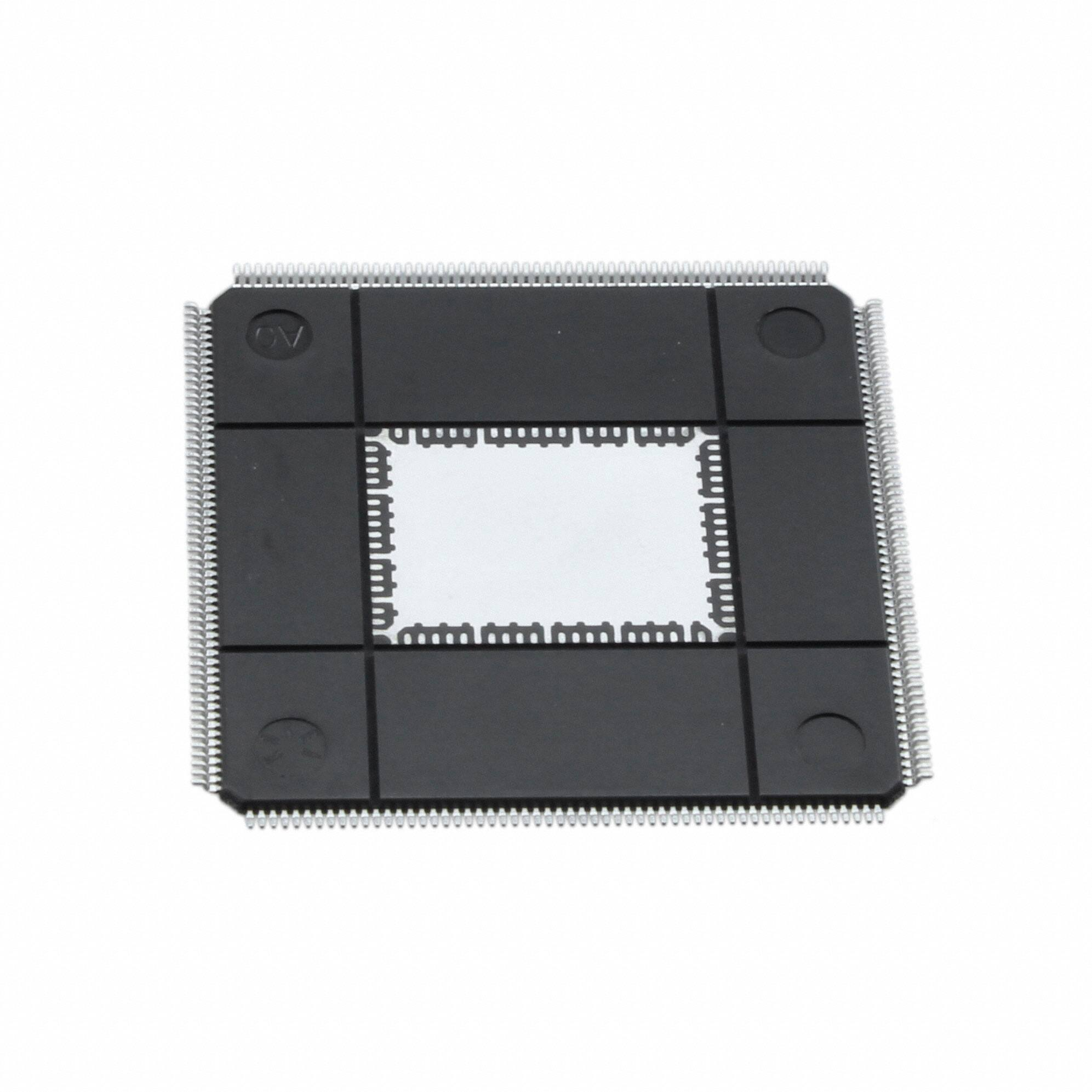
VSC8522-02 Datasheet
12-Port 10/100/1000BASE-T PHY with QSGMII MAC
�Microsemi Headquarters
One Enterprise, Aliso Viejo,
CA 92656 USA
Within the USA: +1 (800) 713-4113
Outside the USA: +1 (949) 380-6100
Sales: +1 (949) 380-6136
Fax: +1 (949) 215-4996
Email: sales.support@microsemi.com
www.microsemi.com
©2018 Microsemi, a wholly owned
subsidiary of Microchip Technology Inc. All
rights reserved. Microsemi and the
Microsemi logo are registered trademarks of
Microsemi Corporation. All other trademarks
and service marks are the property of their
respective owners.
Microsemi makes no warranty, representation, or guarantee regarding the information contained herein or the suitability of
its products and services for any particular purpose, nor does Microsemi assume any liability whatsoever arising out of the
application or use of any product or circuit. The products sold hereunder and any other products sold by Microsemi have
been subject to limited testing and should not be used in conjunction with mission-critical equipment or applications. Any
performance specifications are believed to be reliable but are not verified, and Buyer must conduct and complete all
performance and other testing of the products, alone and together with, or installed in, any end-products. Buyer shall not
rely on any data and performance specifications or parameters provided by Microsemi. It is the Buyer’s responsibility to
independently determine suitability of any products and to test and verify the same. The information provided by Microsemi
hereunder is provided “as is, where is” and with all faults, and the entire risk associated with such information is entirely
with the Buyer. Microsemi does not grant, explicitly or implicitly, to any party any patent rights, licenses, or any other IP
rights, whether with regard to such information itself or anything described by such information. Information provided in this
document is proprietary to Microsemi, and Microsemi reserves the right to make any changes to the information in this
document or to any products and services at any time without notice.
About Microsemi
Microsemi, a wholly owned subsidiary of Microchip Technology Inc. (Nasdaq: MCHP), offers a comprehensive portfolio of
semiconductor and system solutions for aerospace & defense, communications, data center and industrial markets.
Products include high-performance and radiation-hardened analog mixed-signal integrated circuits, FPGAs, SoCs and
ASICs; power management products; timing and synchronization devices and precise time solutions, setting the world's
standard for time; voice processing devices; RF solutions; discrete components; enterprise storage and communication
solutions, security technologies and scalable anti-tamper products; Ethernet solutions; Power-over-Ethernet ICs and
midspans; as well as custom design capabilities and services. Learn more at www.microsemi.com.
VMDS-10397. 4.2 2/19
�Contents
1 Revision History . . . . . . . . . . . . . . . . . . . . . . . . . . . . . . . . . . . . . . . . . . . . . . . . . . . . . 1
1.1
1.2
1.3
1.4
Revision 4.2
Revision 4.1
Revision 4.0
Revision 2.0
.......................................................................
.......................................................................
.......................................................................
.......................................................................
1
1
1
1
2 Introduction . . . . . . . . . . . . . . . . . . . . . . . . . . . . . . . . . . . . . . . . . . . . . . . . . . . . . . . . 2
2.1
Register and Bit Conventions . . . . . . . . . . . . . . . . . . . . . . . . . . . . . . . . . . . . . . . . . . . . . . . . . . . . . . . . . 2
3 Overview . . . . . . . . . . . . . . . . . . . . . . . . . . . . . . . . . . . . . . . . . . . . . . . . . . . . . . . . . . 3
3.1
3.2
Key Features . . . . . . . . . . . . . . . . . . . . . . . . . . . . . . . . . . . . . . . . . . . . . . . . . . . . . . . . . . . . . . . . . . . . . . 3
Block Diagram . . . . . . . . . . . . . . . . . . . . . . . . . . . . . . . . . . . . . . . . . . . . . . . . . . . . . . . . . . . . . . . . . . . . . 3
4 Functional Descriptions . . . . . . . . . . . . . . . . . . . . . . . . . . . . . . . . . . . . . . . . . . . . . . . 5
4.1
4.2
4.3
4.4
4.5
4.6
4.7
4.8
4.9
4.10
4.11
4.12
Operating Mode . . . . . . . . . . . . . . . . . . . . . . . . . . . . . . . . . . . . . . . . . . . . . . . . . . . . . . . . . . . . . . . . . . . . 5
SerDes MAC Interface . . . . . . . . . . . . . . . . . . . . . . . . . . . . . . . . . . . . . . . . . . . . . . . . . . . . . . . . . . . . . . . 5
4.2.1
QSGMII MAC . . . . . . . . . . . . . . . . . . . . . . . . . . . . . . . . . . . . . . . . . . . . . . . . . . . . . . . . . . . . . . . 5
PHY Addressing and Port Mapping . . . . . . . . . . . . . . . . . . . . . . . . . . . . . . . . . . . . . . . . . . . . . . . . . . . . . 5
4.3.1
PHY Addressing . . . . . . . . . . . . . . . . . . . . . . . . . . . . . . . . . . . . . . . . . . . . . . . . . . . . . . . . . . . . 5
4.3.2
SerDes Port Mapping . . . . . . . . . . . . . . . . . . . . . . . . . . . . . . . . . . . . . . . . . . . . . . . . . . . . . . . . 6
Cat5 Twisted Pair Media Interface . . . . . . . . . . . . . . . . . . . . . . . . . . . . . . . . . . . . . . . . . . . . . . . . . . . . . . 6
4.4.1
Voltage-Mode Line Driver . . . . . . . . . . . . . . . . . . . . . . . . . . . . . . . . . . . . . . . . . . . . . . . . . . . . . 6
4.4.2
Cat5 Autonegotiation and Parallel Detection . . . . . . . . . . . . . . . . . . . . . . . . . . . . . . . . . . . . . . . 7
4.4.3
1000BASE-T Forced Mode Support . . . . . . . . . . . . . . . . . . . . . . . . . . . . . . . . . . . . . . . . . . . . . 7
4.4.4
Automatic Crossover and Polarity Detection . . . . . . . . . . . . . . . . . . . . . . . . . . . . . . . . . . . . . . . 7
4.4.5
Manual HP Auto-MDIX Setting . . . . . . . . . . . . . . . . . . . . . . . . . . . . . . . . . . . . . . . . . . . . . . . . . 8
4.4.6
Link Speed Downshift . . . . . . . . . . . . . . . . . . . . . . . . . . . . . . . . . . . . . . . . . . . . . . . . . . . . . . . . 8
4.4.7
Energy Efficient Ethernet . . . . . . . . . . . . . . . . . . . . . . . . . . . . . . . . . . . . . . . . . . . . . . . . . . . . . . 8
Reference Clock . . . . . . . . . . . . . . . . . . . . . . . . . . . . . . . . . . . . . . . . . . . . . . . . . . . . . . . . . . . . . . . . . . . 9
4.5.1
Configuring the REFCLK . . . . . . . . . . . . . . . . . . . . . . . . . . . . . . . . . . . . . . . . . . . . . . . . . . . . . . 9
4.5.2
Single-Ended REFCLK Input . . . . . . . . . . . . . . . . . . . . . . . . . . . . . . . . . . . . . . . . . . . . . . . . . . . 9
4.5.3
Differential REFCLK Input . . . . . . . . . . . . . . . . . . . . . . . . . . . . . . . . . . . . . . . . . . . . . . . . . . . . 10
Ethernet Inline Powered Devices . . . . . . . . . . . . . . . . . . . . . . . . . . . . . . . . . . . . . . . . . . . . . . . . . . . . . . 10
IEEE 802.3af PoE Support . . . . . . . . . . . . . . . . . . . . . . . . . . . . . . . . . . . . . . . . . . . . . . . . . . . . . . . . . . 12
ActiPHY Power Management . . . . . . . . . . . . . . . . . . . . . . . . . . . . . . . . . . . . . . . . . . . . . . . . . . . . . . . . 12
4.8.1
Low Power State . . . . . . . . . . . . . . . . . . . . . . . . . . . . . . . . . . . . . . . . . . . . . . . . . . . . . . . . . . . 13
4.8.2
Link Partner Wake-Up State . . . . . . . . . . . . . . . . . . . . . . . . . . . . . . . . . . . . . . . . . . . . . . . . . . 13
4.8.3
Normal Operating State . . . . . . . . . . . . . . . . . . . . . . . . . . . . . . . . . . . . . . . . . . . . . . . . . . . . . . 13
Serial Management Interface . . . . . . . . . . . . . . . . . . . . . . . . . . . . . . . . . . . . . . . . . . . . . . . . . . . . . . . . . 13
4.9.1
SMI Frames . . . . . . . . . . . . . . . . . . . . . . . . . . . . . . . . . . . . . . . . . . . . . . . . . . . . . . . . . . . . . . . 13
4.9.2
SMI Interrupt . . . . . . . . . . . . . . . . . . . . . . . . . . . . . . . . . . . . . . . . . . . . . . . . . . . . . . . . . . . . . . 15
LED Interface . . . . . . . . . . . . . . . . . . . . . . . . . . . . . . . . . . . . . . . . . . . . . . . . . . . . . . . . . . . . . . . . . . . . . 15
4.10.1 LED Modes . . . . . . . . . . . . . . . . . . . . . . . . . . . . . . . . . . . . . . . . . . . . . . . . . . . . . . . . . . . . . . . 15
4.10.2 LED Behavior . . . . . . . . . . . . . . . . . . . . . . . . . . . . . . . . . . . . . . . . . . . . . . . . . . . . . . . . . . . . . 17
4.10.3 Enhanced Serial LED Mode . . . . . . . . . . . . . . . . . . . . . . . . . . . . . . . . . . . . . . . . . . . . . . . . . . 17
GPIO Pins . . . . . . . . . . . . . . . . . . . . . . . . . . . . . . . . . . . . . . . . . . . . . . . . . . . . . . . . . . . . . . . . . . . . . . . 17
Testing Features . . . . . . . . . . . . . . . . . . . . . . . . . . . . . . . . . . . . . . . . . . . . . . . . . . . . . . . . . . . . . . . . . . 18
4.12.1 Ethernet Packet Generator . . . . . . . . . . . . . . . . . . . . . . . . . . . . . . . . . . . . . . . . . . . . . . . . . . . 18
4.12.2 CRC Counters . . . . . . . . . . . . . . . . . . . . . . . . . . . . . . . . . . . . . . . . . . . . . . . . . . . . . . . . . . . . . 18
4.12.3 Far-End Loopback . . . . . . . . . . . . . . . . . . . . . . . . . . . . . . . . . . . . . . . . . . . . . . . . . . . . . . . . . . 18
VMDS-10397 VSC8522-02 Datasheet Revision 4.2
iii
�4.13
4.12.4 Near-End Loopback . . . . . . . . . . . . . . . . . . . . . . . . . . . . . . . . . . . . . . . . . . . . . . . . . . . . . . . . .
4.12.5 Connector Loopback . . . . . . . . . . . . . . . . . . . . . . . . . . . . . . . . . . . . . . . . . . . . . . . . . . . . . . . .
4.12.6 SerDes Loopbacks . . . . . . . . . . . . . . . . . . . . . . . . . . . . . . . . . . . . . . . . . . . . . . . . . . . . . . . . .
4.12.7 VeriPHY Cable Diagnostics . . . . . . . . . . . . . . . . . . . . . . . . . . . . . . . . . . . . . . . . . . . . . . . . . . .
4.12.8 JTAG Boundary Scan . . . . . . . . . . . . . . . . . . . . . . . . . . . . . . . . . . . . . . . . . . . . . . . . . . . . . . .
4.12.9 JTAG Instruction Codes . . . . . . . . . . . . . . . . . . . . . . . . . . . . . . . . . . . . . . . . . . . . . . . . . . . . .
4.12.10 Boundary Scan Register Cell Order . . . . . . . . . . . . . . . . . . . . . . . . . . . . . . . . . . . . . . . . . . . .
4.12.11 JTAG Boundary Scan Interface . . . . . . . . . . . . . . . . . . . . . . . . . . . . . . . . . . . . . . . . . . . . . . . .
Configuration . . . . . . . . . . . . . . . . . . . . . . . . . . . . . . . . . . . . . . . . . . . . . . . . . . . . . . . . . . . . . . . . . . . . .
19
19
19
22
22
22
24
24
24
5 Registers . . . . . . . . . . . . . . . . . . . . . . . . . . . . . . . . . . . . . . . . . . . . . . . . . . . . . . . . . 25
5.1
5.2
5.3
5.4
5.5
IEEE Standard and Main Registers . . . . . . . . . . . . . . . . . . . . . . . . . . . . . . . . . . . . . . . . . . . . . . . . . . . .
5.1.1
Mode Control . . . . . . . . . . . . . . . . . . . . . . . . . . . . . . . . . . . . . . . . . . . . . . . . . . . . . . . . . . . . . .
5.1.2
Mode Status . . . . . . . . . . . . . . . . . . . . . . . . . . . . . . . . . . . . . . . . . . . . . . . . . . . . . . . . . . . . . .
5.1.3
Device Identification . . . . . . . . . . . . . . . . . . . . . . . . . . . . . . . . . . . . . . . . . . . . . . . . . . . . . . . .
5.1.4
Autonegotiation Advertisement . . . . . . . . . . . . . . . . . . . . . . . . . . . . . . . . . . . . . . . . . . . . . . . .
5.1.5
Link Partner Autonegotiation Capability . . . . . . . . . . . . . . . . . . . . . . . . . . . . . . . . . . . . . . . . .
5.1.6
Autonegotiation Expansion . . . . . . . . . . . . . . . . . . . . . . . . . . . . . . . . . . . . . . . . . . . . . . . . . . .
5.1.7
Transmit Autonegotiation Next Page . . . . . . . . . . . . . . . . . . . . . . . . . . . . . . . . . . . . . . . . . . . .
5.1.8
Autonegotiation Link Partner Next Page Receive . . . . . . . . . . . . . . . . . . . . . . . . . . . . . . . . . .
5.1.9
1000BASE-T Control . . . . . . . . . . . . . . . . . . . . . . . . . . . . . . . . . . . . . . . . . . . . . . . . . . . . . . . .
5.1.10 1000BASE-T Status . . . . . . . . . . . . . . . . . . . . . . . . . . . . . . . . . . . . . . . . . . . . . . . . . . . . . . . .
5.1.11 MMD Access Control Register . . . . . . . . . . . . . . . . . . . . . . . . . . . . . . . . . . . . . . . . . . . . . . . .
5.1.12 MMD Address or Data Register . . . . . . . . . . . . . . . . . . . . . . . . . . . . . . . . . . . . . . . . . . . . . . . .
5.1.13 1000BASE-T Status Extension 1 . . . . . . . . . . . . . . . . . . . . . . . . . . . . . . . . . . . . . . . . . . . . . . .
5.1.14 100BASE-TX Status Extension . . . . . . . . . . . . . . . . . . . . . . . . . . . . . . . . . . . . . . . . . . . . . . . .
5.1.15 1000BASE-T Status Extension 2 . . . . . . . . . . . . . . . . . . . . . . . . . . . . . . . . . . . . . . . . . . . . . . .
5.1.16 Bypass Control . . . . . . . . . . . . . . . . . . . . . . . . . . . . . . . . . . . . . . . . . . . . . . . . . . . . . . . . . . . .
5.1.17 Error Counter 1 . . . . . . . . . . . . . . . . . . . . . . . . . . . . . . . . . . . . . . . . . . . . . . . . . . . . . . . . . . . .
5.1.18 Error Counter 2 . . . . . . . . . . . . . . . . . . . . . . . . . . . . . . . . . . . . . . . . . . . . . . . . . . . . . . . . . . . .
5.1.19 Error Counter 3 . . . . . . . . . . . . . . . . . . . . . . . . . . . . . . . . . . . . . . . . . . . . . . . . . . . . . . . . . . . .
5.1.20 Extended Control and Status . . . . . . . . . . . . . . . . . . . . . . . . . . . . . . . . . . . . . . . . . . . . . . . . . .
Extended PHY Control 1 . . . . . . . . . . . . . . . . . . . . . . . . . . . . . . . . . . . . . . . . . . . . . . . . . . . . . . . . . . . .
5.2.1
Extended PHY Control 2 . . . . . . . . . . . . . . . . . . . . . . . . . . . . . . . . . . . . . . . . . . . . . . . . . . . . .
5.2.2
Interrupt Mask . . . . . . . . . . . . . . . . . . . . . . . . . . . . . . . . . . . . . . . . . . . . . . . . . . . . . . . . . . . . .
5.2.3
Interrupt Status . . . . . . . . . . . . . . . . . . . . . . . . . . . . . . . . . . . . . . . . . . . . . . . . . . . . . . . . . . . .
5.2.4
Device Auxiliary Control and Status . . . . . . . . . . . . . . . . . . . . . . . . . . . . . . . . . . . . . . . . . . . .
5.2.5
LED Mode Select . . . . . . . . . . . . . . . . . . . . . . . . . . . . . . . . . . . . . . . . . . . . . . . . . . . . . . . . . . .
5.2.6
LED Behavior . . . . . . . . . . . . . . . . . . . . . . . . . . . . . . . . . . . . . . . . . . . . . . . . . . . . . . . . . . . . .
5.2.7
Extended Page Access . . . . . . . . . . . . . . . . . . . . . . . . . . . . . . . . . . . . . . . . . . . . . . . . . . . . . .
Extended Page 1 Registers . . . . . . . . . . . . . . . . . . . . . . . . . . . . . . . . . . . . . . . . . . . . . . . . . . . . . . . . . .
5.3.1
Cu Media CRC Good Counter . . . . . . . . . . . . . . . . . . . . . . . . . . . . . . . . . . . . . . . . . . . . . . . . .
5.3.2
Extended Mode Control . . . . . . . . . . . . . . . . . . . . . . . . . . . . . . . . . . . . . . . . . . . . . . . . . . . . . .
5.3.3
ActiPHY Control . . . . . . . . . . . . . . . . . . . . . . . . . . . . . . . . . . . . . . . . . . . . . . . . . . . . . . . . . . . .
5.3.4
PoE and Miscellaneous Functionality . . . . . . . . . . . . . . . . . . . . . . . . . . . . . . . . . . . . . . . . . . .
5.3.5
Ethernet Packet Generator Control 1 . . . . . . . . . . . . . . . . . . . . . . . . . . . . . . . . . . . . . . . . . . .
5.3.6
Ethernet Packet Generator Control 2 . . . . . . . . . . . . . . . . . . . . . . . . . . . . . . . . . . . . . . . . . . .
Extended Page 2 Registers . . . . . . . . . . . . . . . . . . . . . . . . . . . . . . . . . . . . . . . . . . . . . . . . . . . . . . . . . .
5.4.1
Cu PMD Transmit Control . . . . . . . . . . . . . . . . . . . . . . . . . . . . . . . . . . . . . . . . . . . . . . . . . . . .
5.4.2
EEE Control . . . . . . . . . . . . . . . . . . . . . . . . . . . . . . . . . . . . . . . . . . . . . . . . . . . . . . . . . . . . . . .
Extended Page 3 Registers . . . . . . . . . . . . . . . . . . . . . . . . . . . . . . . . . . . . . . . . . . . . . . . . . . . . . . . . . .
5.5.1
MAC SerDes PCS Control . . . . . . . . . . . . . . . . . . . . . . . . . . . . . . . . . . . . . . . . . . . . . . . . . . . .
5.5.2
MAC SerDes PCS Status . . . . . . . . . . . . . . . . . . . . . . . . . . . . . . . . . . . . . . . . . . . . . . . . . . . .
5.5.3
MAC SerDes Clause 37 Advertised Ability . . . . . . . . . . . . . . . . . . . . . . . . . . . . . . . . . . . . . . .
5.5.4
MAC SerDes Clause 37 Link Partner Ability . . . . . . . . . . . . . . . . . . . . . . . . . . . . . . . . . . . . . .
5.5.5
MAC SerDes Status . . . . . . . . . . . . . . . . . . . . . . . . . . . . . . . . . . . . . . . . . . . . . . . . . . . . . . . .
5.5.6
Media SerDes Transmit Good Packet Counter . . . . . . . . . . . . . . . . . . . . . . . . . . . . . . . . . . . .
VMDS-10397 VSC8522-02 Datasheet Revision 4.2
25
27
28
28
29
29
30
30
30
31
31
32
32
32
33
33
34
35
35
35
35
36
37
37
38
39
40
40
41
41
42
42
43
44
44
45
45
45
46
47
47
48
49
49
49
50
iv
�5.6
5.7
5.5.7
Media SerDes Transmit CRC Error Counter . . . . . . . . . . . . . . . . . . . . . . . . . . . . . . . . . . . . . .
General Purpose Registers . . . . . . . . . . . . . . . . . . . . . . . . . . . . . . . . . . . . . . . . . . . . . . . . . . . . . . . . . .
5.6.1
COMA_MODE Control . . . . . . . . . . . . . . . . . . . . . . . . . . . . . . . . . . . . . . . . . . . . . . . . . . . . . .
5.6.2
GPIO Input . . . . . . . . . . . . . . . . . . . . . . . . . . . . . . . . . . . . . . . . . . . . . . . . . . . . . . . . . . . . . . . .
5.6.3
GPIO Output . . . . . . . . . . . . . . . . . . . . . . . . . . . . . . . . . . . . . . . . . . . . . . . . . . . . . . . . . . . . . .
5.6.4
GPIO Pin Configuration . . . . . . . . . . . . . . . . . . . . . . . . . . . . . . . . . . . . . . . . . . . . . . . . . . . . . .
5.6.5
Global Command and SerDes Configuration . . . . . . . . . . . . . . . . . . . . . . . . . . . . . . . . . . . . .
5.6.6
MAC Mode and Fast Link Configuration . . . . . . . . . . . . . . . . . . . . . . . . . . . . . . . . . . . . . . . . .
5.6.7
Enhanced LED Control . . . . . . . . . . . . . . . . . . . . . . . . . . . . . . . . . . . . . . . . . . . . . . . . . . . . . .
5.6.8
Global Interrupt Status . . . . . . . . . . . . . . . . . . . . . . . . . . . . . . . . . . . . . . . . . . . . . . . . . . . . . . .
Clause 45 Registers to Support Energy Efficient Ethernet . . . . . . . . . . . . . . . . . . . . . . . . . . . . . . . . . .
5.7.1
PCS Status 1 . . . . . . . . . . . . . . . . . . . . . . . . . . . . . . . . . . . . . . . . . . . . . . . . . . . . . . . . . . . . . .
5.7.2
EEE Capability . . . . . . . . . . . . . . . . . . . . . . . . . . . . . . . . . . . . . . . . . . . . . . . . . . . . . . . . . . . . .
5.7.3
EEE Wake Error Counter . . . . . . . . . . . . . . . . . . . . . . . . . . . . . . . . . . . . . . . . . . . . . . . . . . . .
5.7.4
EEE Advertisement . . . . . . . . . . . . . . . . . . . . . . . . . . . . . . . . . . . . . . . . . . . . . . . . . . . . . . . . .
5.7.5
EEE Link Partner Advertisement . . . . . . . . . . . . . . . . . . . . . . . . . . . . . . . . . . . . . . . . . . . . . . .
50
50
51
51
51
51
52
52
53
53
54
55
55
55
56
56
6 Electrical Specifications . . . . . . . . . . . . . . . . . . . . . . . . . . . . . . . . . . . . . . . . . . . . . . 57
6.1
6.2
6.3
6.4
DC Characteristics . . . . . . . . . . . . . . . . . . . . . . . . . . . . . . . . . . . . . . . . . . . . . . . . . . . . . . . . . . . . . . . . . 57
6.1.1
VDD_IO . . . . . . . . . . . . . . . . . . . . . . . . . . . . . . . . . . . . . . . . . . . . . . . . . . . . . . . . . . . . . . . . . . 57
6.1.2
Internal Pull-Up or Pull-Down Resistors . . . . . . . . . . . . . . . . . . . . . . . . . . . . . . . . . . . . . . . . . 57
6.1.3
Reference Clock . . . . . . . . . . . . . . . . . . . . . . . . . . . . . . . . . . . . . . . . . . . . . . . . . . . . . . . . . . . 58
6.1.4
Enhanced SerDes Interface (QSGMII) . . . . . . . . . . . . . . . . . . . . . . . . . . . . . . . . . . . . . . . . . . 58
6.1.5
Current Consumption . . . . . . . . . . . . . . . . . . . . . . . . . . . . . . . . . . . . . . . . . . . . . . . . . . . . . . . 59
AC Characteristics . . . . . . . . . . . . . . . . . . . . . . . . . . . . . . . . . . . . . . . . . . . . . . . . . . . . . . . . . . . . . . . . . 59
6.2.1
Reference Clock . . . . . . . . . . . . . . . . . . . . . . . . . . . . . . . . . . . . . . . . . . . . . . . . . . . . . . . . . . . 59
6.2.2
Enhanced SerDes Interface . . . . . . . . . . . . . . . . . . . . . . . . . . . . . . . . . . . . . . . . . . . . . . . . . . 60
6.2.3
Enhanced SerDes Outputs . . . . . . . . . . . . . . . . . . . . . . . . . . . . . . . . . . . . . . . . . . . . . . . . . . . 61
6.2.4
Enhanced Serial LEDs . . . . . . . . . . . . . . . . . . . . . . . . . . . . . . . . . . . . . . . . . . . . . . . . . . . . . . 61
6.2.5
Enhanced SerDes Driver Jitter Characteristics . . . . . . . . . . . . . . . . . . . . . . . . . . . . . . . . . . . . 62
6.2.6
Enhanced SerDes Inputs . . . . . . . . . . . . . . . . . . . . . . . . . . . . . . . . . . . . . . . . . . . . . . . . . . . . . 62
6.2.7
Enhanced SerDes Receiver Jitter Tolerance . . . . . . . . . . . . . . . . . . . . . . . . . . . . . . . . . . . . . 62
6.2.8
JTAG Interface . . . . . . . . . . . . . . . . . . . . . . . . . . . . . . . . . . . . . . . . . . . . . . . . . . . . . . . . . . . . 63
6.2.9
Serial Management Interface . . . . . . . . . . . . . . . . . . . . . . . . . . . . . . . . . . . . . . . . . . . . . . . . . 64
6.2.10 Reset Timing . . . . . . . . . . . . . . . . . . . . . . . . . . . . . . . . . . . . . . . . . . . . . . . . . . . . . . . . . . . . . . 65
6.2.11 Serial LEDs . . . . . . . . . . . . . . . . . . . . . . . . . . . . . . . . . . . . . . . . . . . . . . . . . . . . . . . . . . . . . . . 65
6.2.12 Power Supply Sequencing . . . . . . . . . . . . . . . . . . . . . . . . . . . . . . . . . . . . . . . . . . . . . . . . . . . 66
Operating Conditions . . . . . . . . . . . . . . . . . . . . . . . . . . . . . . . . . . . . . . . . . . . . . . . . . . . . . . . . . . . . . . . 66
Stress Ratings . . . . . . . . . . . . . . . . . . . . . . . . . . . . . . . . . . . . . . . . . . . . . . . . . . . . . . . . . . . . . . . . . . . . 66
7 Pin Descriptions . . . . . . . . . . . . . . . . . . . . . . . . . . . . . . . . . . . . . . . . . . . . . . . . . . . . 68
7.1
7.2
7.3
7.4
Pin Diagram . . . . . . . . . . . . . . . . . . . . . . . . . . . . . . . . . . . . . . . . . . . . . . . . . . . . . . . . . . . . . . . . . . . . . .
Pins by Function . . . . . . . . . . . . . . . . . . . . . . . . . . . . . . . . . . . . . . . . . . . . . . . . . . . . . . . . . . . . . . . . . .
7.2.1
JTAG Interface Pins . . . . . . . . . . . . . . . . . . . . . . . . . . . . . . . . . . . . . . . . . . . . . . . . . . . . . . . .
7.2.2
MAC SerDes/QSGMII Interface Pins . . . . . . . . . . . . . . . . . . . . . . . . . . . . . . . . . . . . . . . . . . . .
7.2.3
Miscellaneous Pins . . . . . . . . . . . . . . . . . . . . . . . . . . . . . . . . . . . . . . . . . . . . . . . . . . . . . . . . .
7.2.4
Multipurpose Pins . . . . . . . . . . . . . . . . . . . . . . . . . . . . . . . . . . . . . . . . . . . . . . . . . . . . . . . . . .
7.2.5
Power Supply Pins . . . . . . . . . . . . . . . . . . . . . . . . . . . . . . . . . . . . . . . . . . . . . . . . . . . . . . . . .
7.2.6
Reserved Pins . . . . . . . . . . . . . . . . . . . . . . . . . . . . . . . . . . . . . . . . . . . . . . . . . . . . . . . . . . . . .
7.2.7
Serial Management Interface Pins . . . . . . . . . . . . . . . . . . . . . . . . . . . . . . . . . . . . . . . . . . . . .
7.2.8
Twisted Pair Interface Pins . . . . . . . . . . . . . . . . . . . . . . . . . . . . . . . . . . . . . . . . . . . . . . . . . . .
Pins by Number . . . . . . . . . . . . . . . . . . . . . . . . . . . . . . . . . . . . . . . . . . . . . . . . . . . . . . . . . . . . . . . . . . .
Pins by Name . . . . . . . . . . . . . . . . . . . . . . . . . . . . . . . . . . . . . . . . . . . . . . . . . . . . . . . . . . . . . . . . . . . . .
68
69
69
69
70
70
71
71
72
72
74
78
8 Package Information . . . . . . . . . . . . . . . . . . . . . . . . . . . . . . . . . . . . . . . . . . . . . . . . 82
8.1
Package Drawing . . . . . . . . . . . . . . . . . . . . . . . . . . . . . . . . . . . . . . . . . . . . . . . . . . . . . . . . . . . . . . . . . . 82
VMDS-10397 VSC8522-02 Datasheet Revision 4.2
v
�8.2
8.3
Thermal Specifications . . . . . . . . . . . . . . . . . . . . . . . . . . . . . . . . . . . . . . . . . . . . . . . . . . . . . . . . . . . . . . 83
Moisture Sensitivity . . . . . . . . . . . . . . . . . . . . . . . . . . . . . . . . . . . . . . . . . . . . . . . . . . . . . . . . . . . . . . . . 84
9 Design Considerations . . . . . . . . . . . . . . . . . . . . . . . . . . . . . . . . . . . . . . . . . . . . . . 85
9.1
9.2
9.3
9.4
9.5
9.6
9.7
10BASE-T mode unable to re-establish link . . . . . . . . . . . . . . . . . . . . . . . . . . . . . . . . . . . . . . . . . . . . .
Software script for link performance . . . . . . . . . . . . . . . . . . . . . . . . . . . . . . . . . . . . . . . . . . . . . . . . . . .
10BASE-T signal amplitude . . . . . . . . . . . . . . . . . . . . . . . . . . . . . . . . . . . . . . . . . . . . . . . . . . . . . . . . . .
Clause 45 register 7.60 . . . . . . . . . . . . . . . . . . . . . . . . . . . . . . . . . . . . . . . . . . . . . . . . . . . . . . . . . . . . .
Clause 45 register 3.22 . . . . . . . . . . . . . . . . . . . . . . . . . . . . . . . . . . . . . . . . . . . . . . . . . . . . . . . . . . . . .
Clause 45 register 3.1 . . . . . . . . . . . . . . . . . . . . . . . . . . . . . . . . . . . . . . . . . . . . . . . . . . . . . . . . . . . . . .
Clause 45 register address post-increment . . . . . . . . . . . . . . . . . . . . . . . . . . . . . . . . . . . . . . . . . . . . . .
85
85
85
85
85
85
85
10 Ordering Information . . . . . . . . . . . . . . . . . . . . . . . . . . . . . . . . . . . . . . . . . . . . . . . . 87
VMDS-10397 VSC8522-02 Datasheet Revision 4.2
vi
�Figures
Figure 1
Figure 2
Figure 3
Figure 4
Figure 5
Figure 6
Figure 7
Figure 8
Figure 9
Figure 10
Figure 11
Figure 12
Figure 13
Figure 14
Figure 15
Figure 16
Figure 17
Figure 18
Figure 19
Figure 20
Figure 21
Figure 22
Figure 23
Figure 24
Figure 25
Figure 26
Figure 27
Figure 28
Figure 29
Figure 30
QSGMII Application Diagram . . . . . . . . . . . . . . . . . . . . . . . . . . . . . . . . . . . . . . . . . . . . . . . . . . . . . . 3
Block Diagram . . . . . . . . . . . . . . . . . . . . . . . . . . . . . . . . . . . . . . . . . . . . . . . . . . . . . . . . . . . . . . . . . 4
QSGMII MAC Interface . . . . . . . . . . . . . . . . . . . . . . . . . . . . . . . . . . . . . . . . . . . . . . . . . . . . . . . . . . . 5
Cat5 Media Interface . . . . . . . . . . . . . . . . . . . . . . . . . . . . . . . . . . . . . . . . . . . . . . . . . . . . . . . . . . . . 7
Low Power Idle Operation . . . . . . . . . . . . . . . . . . . . . . . . . . . . . . . . . . . . . . . . . . . . . . . . . . . . . . . . 8
2.5 V CMOS Single-Ended REFCLK Input Resistor Network . . . . . . . . . . . . . . . . . . . . . . . . . . . . . . 9
3.3 V CMOS Single-Ended REFCLK Input Resistor Network . . . . . . . . . . . . . . . . . . . . . . . . . . . . . . 9
AC-Coupling Required for REFCLK Input . . . . . . . . . . . . . . . . . . . . . . . . . . . . . . . . . . . . . . . . . . . 10
Inline Powered Ethernet Switch Diagram . . . . . . . . . . . . . . . . . . . . . . . . . . . . . . . . . . . . . . . . . . . . 11
ActiPHY State Diagram . . . . . . . . . . . . . . . . . . . . . . . . . . . . . . . . . . . . . . . . . . . . . . . . . . . . . . . . . 12
SMI Read Frame . . . . . . . . . . . . . . . . . . . . . . . . . . . . . . . . . . . . . . . . . . . . . . . . . . . . . . . . . . . . . . 14
SMI Write Frame . . . . . . . . . . . . . . . . . . . . . . . . . . . . . . . . . . . . . . . . . . . . . . . . . . . . . . . . . . . . . . . 14
MDINT Configured as an Open-Drain (Active-Low) Pin . . . . . . . . . . . . . . . . . . . . . . . . . . . . . . . . . 15
MDINT Configured as an Open-Source (Active-High) Pin . . . . . . . . . . . . . . . . . . . . . . . . . . . . . . . 15
Far-End Loopback Diagram . . . . . . . . . . . . . . . . . . . . . . . . . . . . . . . . . . . . . . . . . . . . . . . . . . . . . . 19
Near-End Loopback Diagram . . . . . . . . . . . . . . . . . . . . . . . . . . . . . . . . . . . . . . . . . . . . . . . . . . . . . 19
Connector Loopback Diagram . . . . . . . . . . . . . . . . . . . . . . . . . . . . . . . . . . . . . . . . . . . . . . . . . . . . 19
Data Loops of the SerDes Macro . . . . . . . . . . . . . . . . . . . . . . . . . . . . . . . . . . . . . . . . . . . . . . . . . . 20
Test Access Port and Boundary Scan Architecture . . . . . . . . . . . . . . . . . . . . . . . . . . . . . . . . . . . . 22
Register Space Diagram . . . . . . . . . . . . . . . . . . . . . . . . . . . . . . . . . . . . . . . . . . . . . . . . . . . . . . . . . 25
QSGMII DC Transmit Test Circuit . . . . . . . . . . . . . . . . . . . . . . . . . . . . . . . . . . . . . . . . . . . . . . . . . . 59
QSGMII Transient Parameters . . . . . . . . . . . . . . . . . . . . . . . . . . . . . . . . . . . . . . . . . . . . . . . . . . . . 60
Enhanced Serial LED Timing . . . . . . . . . . . . . . . . . . . . . . . . . . . . . . . . . . . . . . . . . . . . . . . . . . . . . 61
JTAG Interface Timing Diagram . . . . . . . . . . . . . . . . . . . . . . . . . . . . . . . . . . . . . . . . . . . . . . . . . . . 63
Test Circuit for TDO Disable Time . . . . . . . . . . . . . . . . . . . . . . . . . . . . . . . . . . . . . . . . . . . . . . . . . 64
SMI Interface Timing . . . . . . . . . . . . . . . . . . . . . . . . . . . . . . . . . . . . . . . . . . . . . . . . . . . . . . . . . . . . 65
Reset Timing . . . . . . . . . . . . . . . . . . . . . . . . . . . . . . . . . . . . . . . . . . . . . . . . . . . . . . . . . . . . . . . . . . 65
Serial LED Timing . . . . . . . . . . . . . . . . . . . . . . . . . . . . . . . . . . . . . . . . . . . . . . . . . . . . . . . . . . . . . . 66
Pin Diagram . . . . . . . . . . . . . . . . . . . . . . . . . . . . . . . . . . . . . . . . . . . . . . . . . . . . . . . . . . . . . . . . . . 68
Package Drawing . . . . . . . . . . . . . . . . . . . . . . . . . . . . . . . . . . . . . . . . . . . . . . . . . . . . . . . . . . . . . . 83
VMDS-10397 VSC8522-02 Datasheet Revision 4.2
vii
�Tables
Table 1
Table 2
Table 3
Table 4
Table 5
Table 6
Table 7
Table 8
Table 9
Table 10
Table 11
Table 12
Table 13
Table 14
Table 15
Table 16
Table 17
Table 18
Table 19
Table 20
Table 21
Table 22
Table 23
Table 24
Table 25
Table 26
Table 27
Table 28
Table 29
Table 30
Table 31
Table 32
Table 33
Table 34
Table 35
Table 36
Table 37
Table 38
Table 39
Table 40
Table 41
Table 42
Table 43
Table 44
Table 45
Table 46
Table 47
Table 48
Table 49
Table 50
Table 51
Table 52
Table 53
Table 54
PHY Address Range Selection . . . . . . . . . . . . . . . . . . . . . . . . . . . . . . . . . . . . . . . . . . . . . . . . . . . . . 6
SerDes Port Mapping . . . . . . . . . . . . . . . . . . . . . . . . . . . . . . . . . . . . . . . . . . . . . . . . . . . . . . . . . . . . 6
Supported MDI Pair Combinations . . . . . . . . . . . . . . . . . . . . . . . . . . . . . . . . . . . . . . . . . . . . . . . . . . 8
REFCLK Frequency Selection . . . . . . . . . . . . . . . . . . . . . . . . . . . . . . . . . . . . . . . . . . . . . . . . . . . . . 9
LED Mode and Function Summary . . . . . . . . . . . . . . . . . . . . . . . . . . . . . . . . . . . . . . . . . . . . . . . . . 16
IDCODE JTAG Device Identification Register Descriptions . . . . . . . . . . . . . . . . . . . . . . . . . . . . . . 23
USERCODE JTAG Device Identification Register Descriptions . . . . . . . . . . . . . . . . . . . . . . . . . . . 23
JTAG Interface Instruction Codes . . . . . . . . . . . . . . . . . . . . . . . . . . . . . . . . . . . . . . . . . . . . . . . . . . 24
IEEE 802.3 Standard Registers . . . . . . . . . . . . . . . . . . . . . . . . . . . . . . . . . . . . . . . . . . . . . . . . . . . 25
Main Registers . . . . . . . . . . . . . . . . . . . . . . . . . . . . . . . . . . . . . . . . . . . . . . . . . . . . . . . . . . . . . . . . 26
Mode Control, Address 0 (0x00) . . . . . . . . . . . . . . . . . . . . . . . . . . . . . . . . . . . . . . . . . . . . . . . . . . . 27
Mode Status, Address 1 (0x01) . . . . . . . . . . . . . . . . . . . . . . . . . . . . . . . . . . . . . . . . . . . . . . . . . . . 28
Identifier 1, Address 2 (0x02) . . . . . . . . . . . . . . . . . . . . . . . . . . . . . . . . . . . . . . . . . . . . . . . . . . . . . 28
Identifier 2, Address 3 (0x03) . . . . . . . . . . . . . . . . . . . . . . . . . . . . . . . . . . . . . . . . . . . . . . . . . . . . . 28
Device Autonegotiation Advertisement, Address 4 (0x04) . . . . . . . . . . . . . . . . . . . . . . . . . . . . . . . 29
Autonegotiation Link Partner Ability, Address 5 (0x05) . . . . . . . . . . . . . . . . . . . . . . . . . . . . . . . . . 29
Autonegotiation Expansion, Address 6 (0x06) . . . . . . . . . . . . . . . . . . . . . . . . . . . . . . . . . . . . . . . . 30
Autonegotiation Next Page Transmit, Address 7 (0x07) . . . . . . . . . . . . . . . . . . . . . . . . . . . . . . . . . 30
Autonegotiation LP Next Page Receive, Address 8 (0x08) . . . . . . . . . . . . . . . . . . . . . . . . . . . . . . 30
1000BASE-T Control, Address 9 (0x09) . . . . . . . . . . . . . . . . . . . . . . . . . . . . . . . . . . . . . . . . . . . . . 31
1000BASE-T Status, Address 10 (0x0A) . . . . . . . . . . . . . . . . . . . . . . . . . . . . . . . . . . . . . . . . . . . . 31
MMD EEE Access, Address 13 (0x0D) . . . . . . . . . . . . . . . . . . . . . . . . . . . . . . . . . . . . . . . . . . . . . 32
MMD Address or Data Register, Address 14 (0x0E) . . . . . . . . . . . . . . . . . . . . . . . . . . . . . . . . . . . 32
1000BASE-T Status Extension 1, Address 15 (0x0F) . . . . . . . . . . . . . . . . . . . . . . . . . . . . . . . . . . 32
100BASE-TX Status Extension, Address 16 (0x10) . . . . . . . . . . . . . . . . . . . . . . . . . . . . . . . . . . . . 33
1000BASE-T Status Extension 2, Address 17 (0x11) . . . . . . . . . . . . . . . . . . . . . . . . . . . . . . . . . . 33
Bypass Control, Address 18 (0x12) . . . . . . . . . . . . . . . . . . . . . . . . . . . . . . . . . . . . . . . . . . . . . . . . 34
Extended Control and Status, Address 19 (0x13) . . . . . . . . . . . . . . . . . . . . . . . . . . . . . . . . . . . . . 35
Extended Control and Status, Address 20 (0x14) . . . . . . . . . . . . . . . . . . . . . . . . . . . . . . . . . . . . . 35
Extended Control and Status, Address 21 (0x15) . . . . . . . . . . . . . . . . . . . . . . . . . . . . . . . . . . . . . 35
Extended Control and Status, Address 22 (0x16) . . . . . . . . . . . . . . . . . . . . . . . . . . . . . . . . . . . . . 35
Extended PHY Control 1, Address 23 (0x17) . . . . . . . . . . . . . . . . . . . . . . . . . . . . . . . . . . . . . . . . . 36
Extended PHY Control 2, Address 24 (0x18) . . . . . . . . . . . . . . . . . . . . . . . . . . . . . . . . . . . . . . . . . 37
Interrupt Mask, Address 25 (0x19) . . . . . . . . . . . . . . . . . . . . . . . . . . . . . . . . . . . . . . . . . . . . . . . . . 37
Interrupt Status, Address 26 (0x1A) . . . . . . . . . . . . . . . . . . . . . . . . . . . . . . . . . . . . . . . . . . . . . . . . 38
Auxiliary Control and Status, Address 28 (0x1C) . . . . . . . . . . . . . . . . . . . . . . . . . . . . . . . . . . . . . . 39
LED Mode Select, Address 29 (0x1D) . . . . . . . . . . . . . . . . . . . . . . . . . . . . . . . . . . . . . . . . . . . . . . 40
LED Behavior, Address 30 (0x1E) . . . . . . . . . . . . . . . . . . . . . . . . . . . . . . . . . . . . . . . . . . . . . . . . . 40
Extended/GPIO Page Access, Address 31 (0x1F) . . . . . . . . . . . . . . . . . . . . . . . . . . . . . . . . . . . . . 41
Extended Registers Page 1 Space . . . . . . . . . . . . . . . . . . . . . . . . . . . . . . . . . . . . . . . . . . . . . . . . . 41
Cu Media CRC Good Counter, Address 18E1 (0x12) . . . . . . . . . . . . . . . . . . . . . . . . . . . . . . . . . . 42
Extended Mode Control, Address 19E1 (0x13) . . . . . . . . . . . . . . . . . . . . . . . . . . . . . . . . . . . . . . . 42
Extended PHY Control 3, Address 20E1 (0x14) . . . . . . . . . . . . . . . . . . . . . . . . . . . . . . . . . . . . . . . 43
Extended PHY Control 4, Address 23E1 (0x17) . . . . . . . . . . . . . . . . . . . . . . . . . . . . . . . . . . . . . . . 44
EPG Control 1, Address 29E1 (0x1D) . . . . . . . . . . . . . . . . . . . . . . . . . . . . . . . . . . . . . . . . . . . . . . 44
EPG Control 2, Address 30E1 (0x1E) . . . . . . . . . . . . . . . . . . . . . . . . . . . . . . . . . . . . . . . . . . . . . . 45
Extended Registers Page 2 Space . . . . . . . . . . . . . . . . . . . . . . . . . . . . . . . . . . . . . . . . . . . . . . . . . 45
Cu PMD Transmit Control, Address 16E2 (0x10) . . . . . . . . . . . . . . . . . . . . . . . . . . . . . . . . . . . . . . 46
EEE Control, Address 17E2 (0x11) . . . . . . . . . . . . . . . . . . . . . . . . . . . . . . . . . . . . . . . . . . . . . . . . 46
Extended Registers Page 3 Space . . . . . . . . . . . . . . . . . . . . . . . . . . . . . . . . . . . . . . . . . . . . . . . . . 47
MAC SerDes PCS Control, Address 16E3 (0x10) . . . . . . . . . . . . . . . . . . . . . . . . . . . . . . . . . . . . . 47
MAC SerDes PCS Status, Address 17E3 (0x11) . . . . . . . . . . . . . . . . . . . . . . . . . . . . . . . . . . . . . . 48
MAC SerDes Cl37 Advertised Ability, Address 18E3 (0x12) . . . . . . . . . . . . . . . . . . . . . . . . . . . . . 49
MAC SerDes Cl37 LP Ability, Address 19E3 (0x13) . . . . . . . . . . . . . . . . . . . . . . . . . . . . . . . . . . . . 49
VMDS-10397 VSC8522-02 Datasheet Revision 4.2
viii
�Table 55
Table 56
Table 57
Table 58
Table 59
Table 60
Table 61
Table 62
Table 63
Table 64
Table 65
Table 66
Table 67
Table 68
Table 69
Table 70
Table 71
Table 72
Table 73
Table 74
Table 75
Table 76
Table 77
Table 78
Table 79
Table 80
Table 81
Table 82
Table 83
Table 84
Table 85
Table 86
Table 87
Table 88
Table 89
Table 90
Table 91
Table 92
Table 93
Table 94
Table 95
Table 96
Table 97
Table 98
Table 99
Table 100
Table 101
MAC SerDes Status, Address 20E3 (0x14) . . . . . . . . . . . . . . . . . . . . . . . . . . . . . . . . . . . . . . . . . . 49
Media SerDes Tx Good Packet Counter, Address 21E3 (0x15) . . . . . . . . . . . . . . . . . . . . . . . . . . . 50
Media SerDes Tx CRC Error Counter, Address 22E3 (0x16) . . . . . . . . . . . . . . . . . . . . . . . . . . . . . 50
General Purpose Registers Page Space . . . . . . . . . . . . . . . . . . . . . . . . . . . . . . . . . . . . . . . . . . . . 50
COMA_MODE Control, Address 14G (0x0E) . . . . . . . . . . . . . . . . . . . . . . . . . . . . . . . . . . . . . . . . . 51
GPIO Input, Address 15G (0x0F) . . . . . . . . . . . . . . . . . . . . . . . . . . . . . . . . . . . . . . . . . . . . . . . . . . 51
GPIO Output, Address 16G (0x10) . . . . . . . . . . . . . . . . . . . . . . . . . . . . . . . . . . . . . . . . . . . . . . . . . 51
GPIO Input/Output Configuration, Address 17G (0x11) . . . . . . . . . . . . . . . . . . . . . . . . . . . . . . . . . 51
Global Command and SerDes Configuration, Address 18G (0x12) . . . . . . . . . . . . . . . . . . . . . . . . 52
MAC Mode and Fast Link Configuration, Address 19G (0x13) . . . . . . . . . . . . . . . . . . . . . . . . . . . . 52
Enhanced LED Control, Address 25G (0x19) . . . . . . . . . . . . . . . . . . . . . . . . . . . . . . . . . . . . . . . . . 53
Global Interrupt Status, Address 29G (0x1D) . . . . . . . . . . . . . . . . . . . . . . . . . . . . . . . . . . . . . . . . . 53
Clause 45 Registers Page Space . . . . . . . . . . . . . . . . . . . . . . . . . . . . . . . . . . . . . . . . . . . . . . . . . . 54
PCS Status 1, Address 3.1 . . . . . . . . . . . . . . . . . . . . . . . . . . . . . . . . . . . . . . . . . . . . . . . . . . . . . . . 55
EEE Capability, Address 3.20 . . . . . . . . . . . . . . . . . . . . . . . . . . . . . . . . . . . . . . . . . . . . . . . . . . . . . 55
EEE Wake Error Counter, Address 3.22 . . . . . . . . . . . . . . . . . . . . . . . . . . . . . . . . . . . . . . . . . . . . 55
EEE Advertisement, Address 7.60 . . . . . . . . . . . . . . . . . . . . . . . . . . . . . . . . . . . . . . . . . . . . . . . . . 56
EEE Advertisement, Address 7.61 . . . . . . . . . . . . . . . . . . . . . . . . . . . . . . . . . . . . . . . . . . . . . . . . . 56
VDD_IO DC Characteristics . . . . . . . . . . . . . . . . . . . . . . . . . . . . . . . . . . . . . . . . . . . . . . . . . . . . . . 57
Internal Pull-Up or Pull-Down Resistors . . . . . . . . . . . . . . . . . . . . . . . . . . . . . . . . . . . . . . . . . . . . . 57
Reference Clock DC Characteristics . . . . . . . . . . . . . . . . . . . . . . . . . . . . . . . . . . . . . . . . . . . . . . . 58
Enhanced SerDes Driver DC Specifications . . . . . . . . . . . . . . . . . . . . . . . . . . . . . . . . . . . . . . . . . . 58
Enhanced SerDes Receiver DC Specifications . . . . . . . . . . . . . . . . . . . . . . . . . . . . . . . . . . . . . . . 58
QSGMII to 1000BASE-T Current Consumption . . . . . . . . . . . . . . . . . . . . . . . . . . . . . . . . . . . . . . . 59
Reference Clock AC Characteristics . . . . . . . . . . . . . . . . . . . . . . . . . . . . . . . . . . . . . . . . . . . . . . . 59
Enhanced SerDes Outputs AC Specifications, QSGMII Mode . . . . . . . . . . . . . . . . . . . . . . . . . . . . 61
Enhanced Serial LEDs AC Characteristics . . . . . . . . . . . . . . . . . . . . . . . . . . . . . . . . . . . . . . . . . . . 61
Enhanced SerDes Driver Jitter Characteristics, QSGMII Mode . . . . . . . . . . . . . . . . . . . . . . . . . . . 62
Enhanced SerDes Inputs AC Specifications, QSGMII Mode . . . . . . . . . . . . . . . . . . . . . . . . . . . . . 62
Enhanced SerDes Receiver Jitter Tolerance, QSGMII Mode . . . . . . . . . . . . . . . . . . . . . . . . . . . . . 62
JTAG Interface AC Specifications . . . . . . . . . . . . . . . . . . . . . . . . . . . . . . . . . . . . . . . . . . . . . . . . . 63
SMI Interface AC Characteristics . . . . . . . . . . . . . . . . . . . . . . . . . . . . . . . . . . . . . . . . . . . . . . . . . . 64
NRESET Timing Specifications . . . . . . . . . . . . . . . . . . . . . . . . . . . . . . . . . . . . . . . . . . . . . . . . . . . 65
Serial LEDs AC Characteristics . . . . . . . . . . . . . . . . . . . . . . . . . . . . . . . . . . . . . . . . . . . . . . . . . . . 65
Recommended Operating Conditions . . . . . . . . . . . . . . . . . . . . . . . . . . . . . . . . . . . . . . . . . . . . . . . 66
Stress Ratings . . . . . . . . . . . . . . . . . . . . . . . . . . . . . . . . . . . . . . . . . . . . . . . . . . . . . . . . . . . . . . . . 66
Pin Type Symbol Definitions . . . . . . . . . . . . . . . . . . . . . . . . . . . . . . . . . . . . . . . . . . . . . . . . . . . . . . 69
JTAG Pins . . . . . . . . . . . . . . . . . . . . . . . . . . . . . . . . . . . . . . . . . . . . . . . . . . . . . . . . . . . . . . . . . . . . 69
MAC SerDes/QSGMII Interface Pins . . . . . . . . . . . . . . . . . . . . . . . . . . . . . . . . . . . . . . . . . . . . . . . 69
Miscellaneous Pins . . . . . . . . . . . . . . . . . . . . . . . . . . . . . . . . . . . . . . . . . . . . . . . . . . . . . . . . . . . . . 70
Multipurpose Pins . . . . . . . . . . . . . . . . . . . . . . . . . . . . . . . . . . . . . . . . . . . . . . . . . . . . . . . . . . . . . . 70
Power Supply Pins . . . . . . . . . . . . . . . . . . . . . . . . . . . . . . . . . . . . . . . . . . . . . . . . . . . . . . . . . . . . . 71
Reserved Pins . . . . . . . . . . . . . . . . . . . . . . . . . . . . . . . . . . . . . . . . . . . . . . . . . . . . . . . . . . . . . . . . 71
Serial Management Interface Pins . . . . . . . . . . . . . . . . . . . . . . . . . . . . . . . . . . . . . . . . . . . . . . . . . 72
Twisted Pair Interface Pins . . . . . . . . . . . . . . . . . . . . . . . . . . . . . . . . . . . . . . . . . . . . . . . . . . . . . . . 72
Thermal Resistances . . . . . . . . . . . . . . . . . . . . . . . . . . . . . . . . . . . . . . . . . . . . . . . . . . . . . . . . . . . 84
Ordering Information . . . . . . . . . . . . . . . . . . . . . . . . . . . . . . . . . . . . . . . . . . . . . . . . . . . . . . . . . . . . 87
VMDS-10397 VSC8522-02 Datasheet Revision 4.2
ix
�Revision History
1
Revision History
The revision history describes the changes that were implemented in the document. The changes are
listed by revision, starting with the most current publication.
1.1
Revision 4.2
Revision 4.2 of this datasheet was published in February 2019. In revision 4.2, VeriPHY descriptions
were updated and VeriPHY register information was deleted. For functional details of the VeriPHY suite
and operating instructions, see the ENT-AN0125 PHY, Integrated PHY-Switch VeriPHY - Cable
Diagnostics application note.
1.2
Revision 4.1
Revision 4.1 of this datasheet was published in May 2014. The following is a summary of the changes
made to the datasheet:
•
•
•
•
•
•
1.3
Information about the device SerDes MAC and the device media interface was updated. Neither the
integrated SerDes media access controller (MAC) or the enhanced SerDes media interface of the
device include internal AC-decoupling capacitors; external capacitors must be used.
The functional block diagram of the device was changed to show the correct direction of the
SERDES_E(3:1)_TXN, the SERDES_E(3:1)_RXP, and the SERDES_E(3:1)_RXN signals.
Information about AC-coupling, which is required when using a differential reference clock
(REFCLK) input, was added.
Information about the typical input impedance for a differential REFCLK signal (RI) was added.
The order of the information in the Pins by Function section was changed to match the alphabetical
sort in the Pins spreadsheet attached to this document.
References to SFP functionality, Basic Serial LED functionality, and Parallel LED signal detection
(part of the Enhanced LED Control) were removed from this document. These functions are not
supported in this device. The Functional Group of pins 40, 41, 42, 43, 44, 45, 47, 49, 50, A14, and
A15 were changed from Multipurpose to Miscellaneous.
Revision 4.0
Revision 4.0 of this datasheet was published in December 2012. In revision 4.0 of the document, errata
items, which were previously published in the VSC8522-02 Errata revision 1.0 as open issues, are now
reconciled in the datasheet. Now that the information is available in the datasheet, the previously
published errata document no longer applies, and it has been removed from the Microsemi Web site.
1.4
Revision 2.0
•
Revision 2.0 of this datasheet was published in September 2012. This was the first publication of the
document.
VMDS-10397 VSC8522-02 Datasheet Revision 4.2
1
�Introduction
2
Introduction
This document consists of descriptions and specifications for both functional and physical aspects of the
VSC8522-02 12-port 10/100/1000BASE-T PHY device for the Ethernet market segment.
In addition to datasheets, the Microsemi Web site offers an extensive library of documentation, support
files, and application materials specific to each device. The address of the Microsemi Web site is
www.microsemi.com.
2.1
Register and Bit Conventions
This document refers to registers by their address and bit number in decimal notation. A range of bits is
indicated with a colon. For example, a reference to address 26, bits 15 through 14 is shown as 26.15:14.
A register with an E and a number attached (example 27E1) means it is a register contained within
extended register page number 1. A register with a G attached (example 13G) means it is a GPIO page
register.
Bit numbering follows the IEEE standard with bit 15 being the most significant bit and bit 0 being the least
significant bit.
VMDS-10397 VSC8522-02 Datasheet Revision 4.2
2
�Overview
3
Overview
The VSC8522-02 is a low-power 12-port Gigabit Ethernet transceiver. It has a low electromagnetic
interference (EMI) line driver and integrated line side termination resistors that conserve both power and
printed circuit board (PCB) space.
Microsemi’s mixed signal and digital signal processing (DSP) architecture is a key operational feature of
the VSC8522-02, assuring robust performance even under less-than-favorable environmental
conditions. It supports both half-duplex and full duplex 10BASE-T, 100BASE-TX, and 1000BASE-T
communication speeds over Category 5 (Cat5) unshielded twisted pair (UTP) cable at distances greater
than 100 m, displaying excellent tolerance to NEXT, FEXT, echo, and other types of ambient
environmental and system electronic noise.
The following illustration shows a high-level, general view of a typical VSC8522-02 application.
Figure 1 •
QSGMII Application Diagram
QSGMII
1.0 V
2.5 V
QSGMII Ethernet MAC
QSGMII Ethernet MAC
VSC8522
12 ports copper media
QSGMII MAC interface
12× RJ-45
and Magnetics
QSGMII Ethernet MAC
3.1
Key Features
This section lists the main features and benefits of the VSC8522-02 device.
Low Power
•
•
•
•
Low power consumption of approximately 425 mW per port in 1000BASE-T mode, 200 mW per port
in 100BASE-TX mode, and 225 mW per port in 10BASE-T mode
ActiPHY™ link down power savings
PerfectReach™ smart cable reach algorithm
IEEE 802.3az Energy Efficient Ethernet idle power savings
Wide Range of Support
•
•
•
•
•
Compliant with IEEE 802.3 (10BASE-T, 100BASE-TX, and 1000BASE-T) specifications
Support for >16 kB jumbo frames in all speeds with programmable synchronization FIFOs
Supports Cisco QSGMII v1.3, IEEE 1149.1 JTAG boundary scan, and IEEE 1149.6 AC-JTAG
Support for applications that need to meet 2 kV CDE, IEC 61000-4-2 at 8 kV
Available in a low-cost, 302-pin TQFP package with a 24 mm × 24 mm body size for low-power,
fanless applications
Flexibility
•
•
•
•
3.2
VeriPHY® cable diagnostics suite provides extensive network cable operating conditions and status
Patented, low EMI line driver with integrated line side termination resistors
Serial LED interface option
Extensive test features including near end, far end, copper media connector, SerDes MAC loopback,
and Ethernet packet generator with CRC error counter to decrease time-to-market
Block Diagram
The following illustration shows the primary functional blocks of the VSC8522-02 device.
VMDS-10397 VSC8522-02 Datasheet Revision 4.2
3
�Overview
SERDES_E[3:1]_TXP
SERDES_E[3:1]_TXN
SERDES_E[3:1]_RXP
SERDES_E[3:1]_RXN
COMA_MODE
NRESET
MDC
MDIO
GPIO_30
Auto-Negotiation (SGMII, FIFOs)
Block Diagram
Serial MAC Interface (SerDes)
Figure 2 •
10/100/
1000BASE-T
PCS
Management
and
Control Interface
(MIIM)
10/100/
1000BASE-T
PMA
MDI
Twisted Pair
Interface
PLL and Analog
JTAG
LED Interface
P[11:0]_D0P
P[11:0]_D0N
P[11:0]_D1P
P[11:0]_D1N
P[11:0]_D2P
P[11:0]_D2N
P[11:0]_D3P
P[11:0]_D3N
REFCLK_P
REFCLK_N
REFCLK_SEL[2:0]
REF_FILT_[2:0]
REF_REXT_[2:0]
SERDES_REXT_[1:0]
GPIO_[8:5]
GPIO_[3:0]
JTAG_TRST
JTAG_TMS
JTAG_CLK
JTAG_DO
JTAG_DI
VMDS-10397 VSC8522-02 Datasheet Revision 4.2
4
�Functional Descriptions
4
Functional Descriptions
This section provides detailed information about the functionality of the VSC8522-02 device, available
configurations, operational features, and testing functionality. It includes descriptions of the various
device interfaces and their configuration. With the information in this section, the device setup
parameters can be determined for configuring the VSC8522-02 part for use in a particular application.
4.1
Operating Mode
The VSC8522-02 supports 10/100/1000BASE-T media through the QSGMII MAC-to-Cat5 Link Partner
operating mode (ports 8-11). For more information, see Figure 1, page 3.
4.2
SerDes MAC Interface
The VSC8522-02 SerDes MAC interface performs data serialization and deserialization functions using
an integrated SerDes block. The interface operates in QSGMII mode. The Enhanced SerDes block
includes an integrated termination resistor. Register 19G is a global register and only needs to be set
once to configure the device. The other register bits are configured on a per-port basis and the operation
either needs to be repeated for each port, or a broadcast write needs to be used by setting register 22,
bit 0 to configure all the ports simultaneously.
4.2.1
QSGMII MAC
The VSC8522-02 device supports a QSGMII MAC to convey four ports of network data and port speed
between 10BASE-T, 100BASE-T, and 1000BASE-T data rates and operates in both half-duplex and fullduplex at all port speeds. To configure the device for QSGMII MAC mode, set register 19G,
bits 15:14 = 00 or 10. This device also supports SGMII MAC-side autonegotiation on each individual port
and is enabled through register 16E3, bit 7, of that port.
Figure 3 •
QSGMII MAC Interface
TxP
0.1 µF
SERDES_E_RxP
PHY
Port_n
TxN
0.1 µF
SERDES_E_RxN
0.1 µF
SERDES_E_TxP
QSGMII MAC
RxP
100 Ω
RxN
4.3
0.1 µF
QSGMII Mux
100 Ω
100 Ω
PHY
Port_n-1
PHY
Port_n-2
PHY
Port_n-3
SERDES_E_TxN
PHY Addressing and Port Mapping
This section contains information about PHY addressing and port mapping.
4.3.1
PHY Addressing
The VSC8522-02 includes two external PHY address pins to allow control of multiple PHY devices on a
system board that are sharing a common management bus. Based on the settings of these two address
VMDS-10397 VSC8522-02 Datasheet Revision 4.2
5
�Functional Descriptions
control pins, the internal PHYs in the VSC8522-02 device take on the address ranges as shown in the
following table.
Table 1 •
4.3.2
PHY Address Range Selection
PHYADD4
PHYADD3
Internal PHY Addresses
0
0
0–11
0
1
12–23
1
0
4–15
1
1
20–31
SerDes Port Mapping
The VSC8522-02 includes three 5 GHz enhanced SerDes macros. The following table shows the
SerDes port mapping in QSGMII to CAT5 mode of operation.
Table 2 •
SerDes Port Mapping
Interface Pins
Mode
SERDES_E1_TXP, SERDES_E1_TXN QSGMII0
SERDES_E1_RXP, SERDES_E1_RXN QSGMII0
SERDES_E2_TXP, SERDES_E2_TXN QSGMII1
SERDES_E2_RXP, SERDES_E2_RXN QSGMII1
SERDES_E3_TXP, SERDES_E3_TXN QSGMII2
SERDES_E3_RXP, SERDES_E3_RXN QSGMII2
4.4
Cat5 Twisted Pair Media Interface
The VSC8522-02 twisted pair interface is compliant with IEEE 802.3-2008 and the IEEE 802.3az
standard for Energy Efficient Ethernet.
4.4.1
Voltage-Mode Line Driver
Unlike many other gigabit PHYs, the VSC8522-02 uses a patented voltage-mode line driver that allows it
to fully integrate the series termination resistors, which are required to connect the PHY’s Cat5 interface
to an external 1:1 transformer. Also, the interface does not require the user to place an external voltage
on the center tap of the magnetic. The following illustration shows the connections.
VMDS-10397 VSC8522-02 Datasheet Revision 4.2
6
�Functional Descriptions
Figure 4 •
Cat5 Media Interface
PHY Port_n
RJ-45
Transformer
TXVPA_n
1
A+
TXVNA_n
2
A–
TXVPB_n
3
B+
6
B–
4
C+
5
C–
7
D+
8
D–
0.1 µF
0.1 µF
TXVNB_n
TXVPC_n
0.1 µF
TXVNC_n
TXVPD_n
0.1 µF
TXVND_n
75 Ω
75 Ω
1000 pF,
2 kV
75 Ω
75 Ω
4.4.2
Cat5 Autonegotiation and Parallel Detection
The VSC8522-02 supports twisted pair autonegotiation, as defined by IEEE 802.3-2008 Clause 28 and
IEEE 802.3az. The autonegotiation process evaluates the advertised capabilities of the local PHY and its
link partner to determine the best possible operating mode. In particular, autonegotiation can determine
speed, duplex configuration, and master or slave operating modes for 1000BASE-TX. Autonegotiation
also enables a connected MAC to communicate with its link partner MAC through the VSC8522-02 using
optional next pages, which set attributes that may not otherwise be defined by the IEEE standard.
If the Cat5 link partner does not support autonegotiation, the VSC8522-02 automatically uses parallel
detection to select the appropriate link speed.
Autonegotiation is disabled by clearing register 0, bit 12. If autonegotiation is disabled, the state of
register bits 0.6, 0.13, and 0.8 determine the device operating speed and duplex mode. Note that while
10BASE-T and 100BASE-T do not require autonegotiation, Clause 40 has defined 1000BASE-T to
require autonegotiation.
4.4.3
1000BASE-T Forced Mode Support
VSC8522-02 provides support for a 1000BASE-T forced test mode. In this mode, the PHY can be forced
into 1000BASE-T mode and does not require manual setting of master/slave at the two ends of the link.
This mode is for test purposes only, and should not be used in normal operation. To configure a PHY in
this mode, set register 17E2, bit 5 = 1 and register 0, bits 6 and 13 = 10.
4.4.4
Automatic Crossover and Polarity Detection
For trouble-free configuration and management of Ethernet links, the VSC8522-02 includes a robust
automatic crossover detection feature for all three speeds on the twisted-pair interface (10BASE-T,
100BASE-T, and 1000BASE-T). Known as HP Auto-MDIX, the function is fully compliant with Clause 40
of IEEE 802.3-2008.
VMDS-10397 VSC8522-02 Datasheet Revision 4.2
7
�Functional Descriptions
Additionally, the device detects and corrects polarity errors on all MDI pairs — a useful capability that
exceeds the requirements of the standard.
Both HP Auto-MDIX detection and polarity correction are enabled in the device by default. Default
settings can be changed using device register bits 18.5:4. Status bits for each of these functions are
located in register 28.
Note: The VSC8522-02 can be configured to perform HP Auto-MDIX, even when autonegotiation is disabled
and the link is forced into 10/100 speeds. To enable this feature, set register 18.7 to 0. To disable the
feature, set register 0.12 to 0.
The HP Auto-MDIX algorithm successfully detects, corrects, and operates with any of the MDI wiring pair
combinations listed in the following table.
Table 3 •
Supported MDI Pair Combinations
1, 2
3, 6
4, 5
7, 8
Mode
A
B
C
D
Normal MDI
B
A
D
C
Normal MDI-X
A
B
D
C
Normal MDI with pair swap on C and D pair
B
A
C
D
Normal MDI-X with pair swap on C and D pair
4.4.5
Manual HP Auto-MDIX Setting
As an alternative to HP Auto-MDIX detection, the PHY can be forced to be MDI or MDI-X using
register 19E1, bits 3:2. Setting these bits to 10 forces MDI and setting 11 forces MDI-X. Leaving the
bits 00 enables the HP Auto-MDIX setting to be based on register 18, bits 7 and 5.
4.4.6
Link Speed Downshift
For operation in cabling environments that are incompatible with 1000BASE-T, the VSC8522-02 provides
an automatic link speed downshift option. When enabled, the device automatically changes its
1000BASE-T autonegotiation advertisement to the next slower speed after a set number of failed
attempts at 1000BASE-T. No reset is required to get out of this state if a subsequent link partner with
1000BASE-T support is connected. This feature is useful in setting up in networks using older cable
installations that include only pairs A and B, and not pairs C and D.
To configure and monitor link speed downshifting, set register 20E1, bits 4:1. For more information, see
Table 43, page 43.
4.4.7
Energy Efficient Ethernet
The VSC8522-02 supports the IEEE 802.3az Energy Efficient Ethernet standard that is currently in
development. This new standard provides a method for reducing power consumption on an Ethernet link
during times of low utilization. It uses low power idles (LPI) to achieve this objective.
Figure 5 •
Low Power Idle Operation
Active
Low-Power Idle
Active
Wake
Tq
Quiet
Refresh
Ts
Refresh
Sleep
Active
Quiet
Active
Quiet
Tr
Using LPI, the usage model for the link is to transmit data as fast as possible and then return to a low
power idle state. Energy is saved on the link by cycling between active and low power idle states. During
VMDS-10397 VSC8522-02 Datasheet Revision 4.2
8
�Functional Descriptions
LPI, power is reduced by turning off unused circuits and using this method, energy use scales with
bandwidth utilization.
The VSC8522-02 uses LPI to optimize power dissipation in 100BASE-TX and 1000BASE-T modes of
operation. In addition, the IEEE 802.3az standard defines a 10BASE-Te mode that reduces transmit
signal amplitude from 5 Vp-p to ~3.3 Vp-p. This mode reduces power consumption in 10 Mbps link speed
and fully interoperates with legacy 10BASE-T compliant PHYs over 100 m Cat5 cable or better.
To configure the VSC8522-02 in 10BASE-Te mode, set register 17E2.15 to 1 for each port. Additional
Energy Efficient Ethernet features are controlled through Clause 45 registers. For more information, see
Clause 45 Registers to Support Energy Efficient Ethernet, page 54.
4.5
Reference Clock
The device reference clock can be a 25 MHz, 125 MHz, or 156.25 MHz clock signal. It can be either a
differential reference clock or a single-ended clock. However, 25 MHz single-ended operation is not
recommended when using QSGMII due to the jitter specification requirements of this interface. For more
information, see Reference Clock, page 58.
4.5.1
Configuring the REFCLK
There are three REFCLK_SEL pins to configure the REFCLK speed. The following table shows the
functionality and associated REFCLK frequency.
Table 4 •
REFCLK Frequency Selection
REFCLK_SEL2 REFCLK_SEL1 REFCLK_SEL0 REFCLK Frequency
4.5.2
0
0
0
125 MHz
0
0
1
156.25 MHz
1
0
0
25 MHz
Single-Ended REFCLK Input
To use a single-ended REFCLK, an external resistor network is required. The purpose of the network is
to limit the amplitude and to adjust the center of the swing. The configurations for a single-ended
REFCLK are shown in the following illustrations.
Figure 6 •
2.5 V CMOS Single-Ended REFCLK Input Resistor Network
2.5 V
CMOS
220 Ω
910 Ω
REFCLK_P
VDD_A
REFCLK_N
VSS
Figure 7 •
3.3 V CMOS Single-Ended REFCLK Input Resistor Network
3.3 V
CMOS
270 Ω
430 Ω
REFCLK_P
VDD_A
REFCLK_N
VSS
VMDS-10397 VSC8522-02 Datasheet Revision 4.2
9
�Functional Descriptions
4.5.3
Differential REFCLK Input
AC-coupling is required when using a differential REFCLK. Differential clocks must be capacitively
coupled and LVDS-compliant. The following illustration shows the configuration.
Figure 8 •
AC-Coupling Required for REFCLK Input
REFCLK_P
PHY Equivalent
Termination Circuit
0.1 µF
50 Ω
50 Ω
REFCLK_N
VTT (Internal Voltage)
0.1 µF
4.6
Ethernet Inline Powered Devices
The VSC8522-02 can detect legacy inline powered devices in Ethernet network applications. Inline
powered detection capability is useful in systems that enable IP phones and other devices (such as
wireless access points) to receive power directly from their Ethernet cable, similar to office digital phones
receiving power from a private branch exchange (PBX) office switch over telephone cabling. This type of
setup eliminates the need for an external power supply and enables the inline powered device to remain
active during a power outage, assuming that the Ethernet switch is connected to an uninterrupted power
supply, battery, back-up power generator, or other uninterruptable power source.
For more information about legacy inline powered device detection, visit the Cisco Web site at
www.cisco.com. The following illustration shows an example of an inline powered Ethernet switch
application.
VMDS-10397 VSC8522-02 Datasheet Revision 4.2
10
�Functional Descriptions
Figure 9 •
Inline Powered Ethernet Switch Diagram
Gigabit Switch
Processor
Control
SMI
QSGMII
Interface
PHY_port0
PHY_port1
PHY_portn
Transformer
Transformer
Transformer
RJ-45
I/F
RJ-45
I/F
RJ-45
I/F
Link
Partner
Link
Partner
Inline,
Power-Over-Ethernet
(PoE)
Power Supply
Cat5
Link
Partner
The following procedure describes the process that an Ethernet switch must perform to process inline
power requests made by a link partner (LP) that is, in turn, capable of receiving inline power:
1.
2.
3.
4.
5.
6.
Enable the inline powered device detection mode on each VSC8522-02 PHY using its serial
management interface. Set register bit 23E1.10 to 1.
Ensure that the VSC8522-02 autonegotiation enable bit (register 0.12) is also set to 1. In the
application, the device sends a special fast link pulse (FLP) signal to the LP. Reading register
bit 23E1.9:8 returns 00 during the search for devices that require power over Ethernet (PoE).
The VSC8522-02 PHY monitors its inputs for the FLP signal looped back by the LP. An LP capable
of receiving PoE loops back the FLP pulses when the LP is in a powered down state. This is
reported when VSC8522-02 register bit 23E1.9:8 reads back 01. It can also be verified as an inline
power detection interrupt by reading VSC8522-02 register bit 26.9, which should be a 1, and which
is subsequently cleared and the interrupt de-asserted after the read. If an LP device does not loop
back the FLP after a specific time, VSC8522-02 register bit 23E1.9:8 automatically resets to 10.
If the VSC8522-02 PHY reports that the LP requires PoE, the Ethernet switch must enable inline
power on this port, externally of the PHY.
The PHY automatically disables inline powered device detection if the VSC8522-02 register
bits 23E1.9:8 automatically resets to 10, and then automatically changes to its normal
autonegotiation process. A link is then auto-negotiated and established when the link status bit is set
(register bit 1.2 is set to 1).
In the event of a link failure (indicated when VSC8522-02 register bit 1.2 reads 0), the inline power
should be disabled to the inline powered device external to the PHY. The VSC8522-02 PHY disables
its normal autonegotiation process and re-enables its inline powered device detection mode.
VMDS-10397 VSC8522-02 Datasheet Revision 4.2
11
�Functional Descriptions
4.7
IEEE 802.3af PoE Support
The VSC8522-02 is compatible with switch designs that are intended for use in systems that supply
power to data terminal equipment (DTE) by means of the MDI or twisted pair cable, as described in
IEEE 802.3af Clause 33.
4.8
ActiPHY Power Management
In addition to the IEEE-specified power-down control bit (device register bit 0.11), the device also
includes an ActiPHY power management mode for each PHY. This mode enables support for powersensitive applications. It utilizes a signal-detect function that monitors the media interface for the
presence of a link to determine when to automatically power-down the PHY. The PHY wakes up at a
programmable interval and attempts to wake up the link partner PHY by sending a burst of FLP over
copper media.
The ActiPHY power management mode in the VSC8522-02 is enabled on a per-port basis during normal
operation at any time by setting register bit 28.6 to 1.
The following operating states are possible when ActiPHY mode is enabled:
•
•
•
Low power state
LP wake-up state
Normal operating state (link-up state)
The VSC8522-02 switches between the low power state and LP wake-up state at a programmable rate
(the default is two seconds) until signal energy has been detected on the media interface pins. When
signal energy is detected, the PHY enters the normal operating state. If the PHY is in its normal operating
state and the link fails, the PHY returns to the low power state after the expiration of the link status timeout timer. After reset, the PHY enters the low power state.
When autonegotiation is enabled in the PHY, the ActiPHY state machine operates as described. If
autonegotiation is disabled and the link is forced to use 10BASE-T or 100BASE-TX modes while the
PHY is in its low power state, the PHY continues to transition between the low power and LP wake-up
states until signal energy is detected on the media pins. At that time, the PHY transitions to the normal
operating state and stays in that state even when the link is dropped. If autonegotiation is disabled while
the PHY is in the normal operation state, the PHY stays in that state when the link is dropped and does
not transition back to the low power state.
The following illustration shows the relationship between ActiPHY states and timers.
Figure 10 • ActiPHY State Diagram
Low Power State
Signal Energy Detected on
Media
FLP Burst or
Clause 37 Restart
Signal Sent
Sleep Timer Expires
Timeout Timer Expires and
Auto-negotiation Enabled
LP Wake-up
State
Normal
Operation State
VMDS-10397 VSC8522-02 Datasheet Revision 4.2
12
�Functional Descriptions
4.8.1
Low Power State
In the low power state, all major digital blocks are powered down. However, the following functionality is
provided:
•
•
SMI interface (MDC, MDIO, and MDINT pins)
CLKOUT
In this state, the PHY monitors the media interface pins for signal energy. The PHY comes out of low
power state and transitions to the normal operating state when signal energy is detected on the media.
This happens when the PHY is connected to one of the following:
•
•
Autonegotiation-capable link partner
Another PHY in enhanced ActiPHY LP wake-up state
In the absence of signal energy on the media pins, the PHY periodically transitions from low-power state
to LP wake-up state, based on the programmable sleep timer (register bits 20E1.14:13). The actual sleep
time duration is randomized from –80 ms to 60 ms to avoid two linked PHYs in ActiPHY mode entering a
lock-up state during operation.
4.8.2
Link Partner Wake-Up State
In the link partner wake-up state, the PHY attempts to wake up the link partner. Up to three complete FLP
bursts are sent on alternating pairs A and B of the Cat5 media for a duration based on the wake-up timer,
which is set using register bits 20E1.12:11.
In this state, the following functionality is provided:
•
•
SMI interface (MDC, MDIO, and MDINT pins)
CLKOUT
After sending signal energy on the relevant media, the PHY returns to the low power state.
4.8.3
Normal Operating State
In the normal operating state, the PHY establishes a link with a link partner. When the media is
unplugged or the link partner is powered down, the PHY waits for the duration of the programmable link
status time-out timer, which is set using register bit 28.7 and bit 28.2. It then enters the low power state.
4.9
Serial Management Interface
The VSC8522-02 device includes an IEEE 802.3-compliant serial management interface (SMI) that is
affected by use of its MDC and MDIO pins. The SMI provides access to device control and status
registers. The register set that controls the SMI consists of 32 16-bit registers, including all required
IEEE-specified registers. Also, there are additional pages of registers accessible using device
register 31.
Energy Efficient Ethernet control registers are available through the SMI using Clause 45 registers and
Clause 22 register access in registers 13 through 14. For more information, see Table 22, page 32 and
Table 67, page 54.
The SMI is a synchronous serial interface with input data to the VSC8522-02 on the MDIO pin that is
clocked on the rising edge of the MDC pin. The output data is sent on the MDIO pin on the rising edge of
the MDC signal. The interface can be clocked at a rate from 0 MHz to 12.5 MHz, depending on the total
load on MDIO. An external 2-kΩ pull-up resistor is required on the MDIO pin.
4.9.1
SMI Frames
Data is transferred over the SMI using 32-bit frames with an optional, arbitrary-length preamble. Before
the first frame can be sent, at least two clock pulses on MDC must be provided with the MDIO signal at
logic one to initialize the SMI state machine. The following illustrations show the SMI frame format for
read and write operations.
VMDS-10397 VSC8522-02 Datasheet Revision 4.2
13
�Functional Descriptions
Figure 11 • SMI Read Frame
Station manager drives MDIO
PHY drives MDIO
MDC
MDIO
Z
Z
1
0
1
Idle Preamble SFD
(optional)
1
0
A4 A3 A2 A1 A0 R4 R3 R2 R1 R0 Z
PHY Address
Read
Register Address
to PHY
0 D15 D14 D13 D12 D11 D10 D9 D8 D7 D6 D5 D4 D3 D2 D1 D0 Z
TA
Register Data
from PHY
Z
Idle
Figure 12 • SMI Write Frame
Station manager drives MDIO (PHY tri-states MDIO during the entire sequence)
MDC
MDIO
Z
Z
1
0
1
0
1
A4 A3 A2 A1 A0 R4 R3 R2 R1 R0
Idle Preamble SFD Write
(optional)
PHY Address
Register Address
to PHY
1
0 D15 D14 D13 D12 D11 D10 D9 D8 D7 D6 D5 D4 D3 D2 D1 D0 Z
TA
Register Data
from PHY
Z
Idle
The following list provides additional information about the terms used in the SMI read and write timing
diagrams.
4.9.1.1
Idle
During idle, the MDIO node goes to a high-impedance state. This allows an external pull-up resistor to
pull the MDIO node up to a logical 1 state. Because the idle mode should not contain any transitions on
MDIO, the number of bits is undefined during idle.
4.9.1.2
Preamble
By default, preambles are not expected or required. The preamble is a string of ones. If it exists, the
preamble must be at least one bit; otherwise, it can be of an arbitrary length.
4.9.1.3
Start of Frame (SFD)
A pattern of 01 indicates the start of frame. If the pattern is not 01, all following bits are ignored until the
next preamble pattern is detected.
4.9.1.4
Read or Write Opcode
A pattern of 10 indicates a read. A 01 pattern indicates a write. If the bits are not either 01 or 10, all
following bits are ignored until the next preamble pattern is detected.
4.9.1.5
PHY Address
The particular VSC8522-02 responds to a message frame only when the received PHY address matches
its physical address. The physical address is 5 bits long (4:0).
4.9.1.6
Register Address
The next five bits are the register address.
4.9.1.7
Turnaround
The two bits used to avoid signal contention when a read operation is performed on the MDIO are called
the turnaround (TA) bits. During read operations, the VSC8522-02 drives the second TA bit, a logical 0.
VMDS-10397 VSC8522-02 Datasheet Revision 4.2
14
�Functional Descriptions
4.9.1.8
Data
The 16-bits read from or written to the device are considered the data or data stream. When data is read
from a PHY, it is valid at the output from one rising edge of MDC to the next rising edge of MDC. When
data is written to the PHY, it must be valid around the rising edge of MDC.
4.9.1.9
Idle
The sequence is repeated.
4.9.2
SMI Interrupt
The SMI includes an output interrupt signal, MDINT, for signaling the station manager when certain
events occur in the VSC8522-02.
The MDINT pin can be configured for open-drain (active-low) by tying the pin to a pull-up resistor and to
VDDIO. The following illustration shows this configuration.
Figure 13 • MDINT Configured as an Open-Drain (Active-Low) Pin
VDDIO
PHY_n
Interrupt Pin Enable
(Register 25.15)
External Pull-up
Resistor at the
Station Manager
for Open-drain
(Active-low Mode)
MDINT
(to the Station
Manager)
MDINT
Interrupt Pin Status
(Register 26.15)
Alternatively, the MDINT pin can be configured for open-source (active-high) by tying the pin to a pulldown resistor and to VSS. The following illustration shows this configuration.
Figure 14 • MDINT Configured as an Open-Source (Active-High) Pin
VDDIO
Interrupt Pin Enable
(Register 25.15)
MDINT
Interrupt Pin Status
(Register 26.15)
PHY_n
MDINT
(to the Station
Manager)
External Pull -down
at the Station
Manager
For Open-source
(Active-high Mode)
When a PHY generates an interrupt, the MDINT pin is asserted (driven high or low, depending on resistor
connection) if the interrupt pin enable bit (MII register 25.15) is set.
4.10
LED Interface
The VSC8522-02 outputs four LED signals per port (LED0, LED1, LED2, and LED3) through an
enhanced serial LED mode. For more information, see Enhanced Serial LED Mode, page 17. The
polarity of the LED outputs is programmable and can be changed through register 17E2.13:10. The
default polarity is active low.
4.10.1
LED Modes
Each LED pin can be configured to display different status information that can be selected by setting the
LED mode in register 29. The modes listed in the following table are equivalent to the setting used in
register 29 to configure each LED pin. The default LED state is active low and can be changed by
VMDS-10397 VSC8522-02 Datasheet Revision 4.2
15
�Functional Descriptions
modifying the value in register 17E2, bits 13:10. The blink/pulse-stretch is dependent on the LED
behavior setting in register 30.
Table 5 •
LED Mode and Function Summary
Mode Function Name
LED State and Description
0
Link/Activity
1 = No link in any speed on any media interface.
0 = Valid link at any speed on any media interface.
Blink or pulse-stretch = Valid link at any speed on any media
interface with activity present.
1
Link1000/Activity
1 = No link in 1000BASE-T.
0 = Valid 1000BASE-T.
Blink or pulse-stretch = Valid 1000BASE-T link with activity
present.
2
Link100/Activity
1 = No link in 100BASE-TX.
0 = Valid 100BASE-TX.
Blink or pulse-stretch = Valid 100BASE-TX link with activity
present.
3
Link10/Activity
1 = No link in 10BASE-T.
0 = Valid 10BASE-T link.
Blink or pulse-stretch = Valid 10BASE-T link with activity
present.
4
Link100/1000/Activity
1 = No link in 100BASE-TX or 1000BASE-T.
0 = Valid 100BASE-TX or 1000BASE-T link.
Blink or pulse-stretch = Valid 100BASE-TX or 1000BASE-T link
with activity present.
5
Link10/1000/Activity
1 = No link in 10BASE-T or 1000BASE-T.
0 = Valid 10BASE-T or 1000BASE-T link.
Blink or pulse-stretch = Valid 10BASE-T or 1000BASE-T link
with activity present.
6
Link10/100/Activity
1 = No link in 10BASE-T, or 100BASE-TX.
0 = Valid 10BASE-T or 100BASE-TX, link.
Blink or pulse-stretch = Valid 10BASE-T, or 100BASE-TX link
with activity present.
7
Duplex/Collision
1 = Link established in half-duplex mode, or no link established.
0 = Link established in full-duplex mode.
Blink or pulse-stretch = Link established in half-duplex mode but
collisions are present.
8
Collision
1 = No collision detected.
Blink or pulse-stretch = Collision detected.
9
Activity
1 = No activity present.
Blink or pulse-stretch = Activity present (becomes TX activity
present if register bit 30.14 is set to 1).
10
Autonegotiation Fault
1 = No autonegotiation fault present.
0 = Autonegotiation fault occurred.
11
Reserved
Reserved.
12
Force LED Off
1 = De-asserts the LED(1).
13
Force LED On
0 = Asserts the LED(1).
1.
Setting this mode suppresses LED blinking after reset.
VMDS-10397 VSC8522-02 Datasheet Revision 4.2
16
�Functional Descriptions
4.10.2
LED Behavior
Several LED behaviors can be programmed into the VSC8522-02. Use the settings in register 30 to
program LED behavior, which includes the following:
4.10.2.1
LED Combine
Enables an LED to display the status for a combination of primary and secondary modes. This can be
enabled or disabled for each LED pin. For example, a copper link running in 1000BASE-T mode and
activity present can be displayed with one LED by configuring an LED pin to Link1000/Activity mode. The
LED asserts when linked to a 1000BASE-T partner and also blinks or performs pulse-stretch when
activity is either transmitted by the PHY or received by the Link Partner. When disabled, the combine
feature only provides status of the selected primary function. In this example, only Link1000 asserts the
LED, and the secondary mode, activity, does not display if the combine feature is disabled.
4.10.2.2
LED Blink or Pulse-Stretch
This behavior is used for activity and collision indication. This can be uniquely configured for each LED
pin. Activity and collision events can occur randomly and intermittently throughout the link-up period.
Blink is a 50% duty cycle oscillation of asserting and de-asserting an LED pin. Pulse-stretch guarantees
that an LED is asserted and de-asserted for a specific period of time when activity is either present or not
present. These rates can also be configured using a register setting.
4.10.2.3
Rate of LED Blink or Pulse-Stretch
This behavior controls the LED blink rate or pulse-stretch length when blink/pulse-stretch is enabled on
an LED pin. The blink rate, which alternates between a high and low voltage level at a 50% duty cycle,
can be set to 2.5 Hz, 5 Hz, 10 Hz, or 20 Hz. For pulse-stretch, the rate can be set to 50 ms, 100 ms,
200 ms, or 400 ms. The blink rate selection for PHY0 globally sets the rate used for all LED pins on all
PHY ports.
4.10.2.4
LED Pulsing Enable
To provide additional power savings, the LEDs (when asserted) can be pulsed at 5 kHz, 20% duty cycle.
4.10.2.5
LED Blink After Reset
The LEDs will blink for one second after power-up and after any time all resets have been de-asserted.
This can be disabled through register 19E1, bit 11 = 0.
4.10.2.6
Pulse Programmable Control
These bits add the ability to width and frequency of LED pulses. This feature facilities power reduction
options.
4.10.3
Enhanced Serial LED Mode
VSC8522-02 can be configured to output up to four LED signals per port on a serial stream that can be
de-serialized externally to drive LEDs on the system board. This functionality is controlled by setting
register 25G, bits 7:1. In this mode, the serial LED_DATA is shifted out on the falling edge of LED_CLK
and is latched in the external serial to parallel converter on the rising edge of LED_CLK. The falling edge
of LED_LD signal can be used to shift the data from the shift register in the converter to the parallel
output drive register. If a separate parallel output drive register is not used in the external serial to parallel
converter, then the LEDs will blink at a high frequency as the data bits are being shifted through which
may be undesirable. The LED_PULSE signal provides a 5 kHz pulse stream whose duty cycle can be
modulated to turn on/off LEDs at a high rate. This signal can be tied to the output enable signal of the
serial to parallel converter to provide the LED dimming functionality to save energy.
4.11
GPIO Pins
The VSC8522-02 provides nine multiplexed multipurpose pins. For more information about the available
GPIO pins, see LED and Multi/General Purpose Input and Output Pins, page 99, and for information
about configuring them, see General Purpose Registers, page 50.
VMDS-10397 VSC8522-02 Datasheet Revision 4.2
17
�Functional Descriptions
4.12
Testing Features
The VSC8522-02 device includes several testing features designed to facilitate performing system-level
debugging and in-system production testing. This section describes the available features.
4.12.1
Ethernet Packet Generator
The Ethernet packet generator (EPG) can be used at each of the 10/100/1000BASE-T speed settings for
copper Cat5 media to isolate problems between the MAC and the VSC8522-02, or between a locally
connected PHY and its remote link partner. Enabling the EPG feature effectively disables all MAC
interface transmit pins and selects the EPG as the source for all data transmitted onto the twisted pair
interface.
Important The EPG is intended for use with laboratory or in-system testing equipment only. Do not use
the EPG testing feature when the VSC8522-02 is connected to a live network.
To enable the VSC8522-02 EPG feature, set the device register bit 29E1.15 to 1.
When the EPG is enabled, packet loss occurs during transmission of packets from the MAC to the PHY.
However, the PHY receive output pins to the MAC are still active when the EPG is enabled. If it is
necessary to disable the MAC receive pins as well, set the register bit 0.10 to 1.
When the device register bit 29E1.14 is set to 1, the PHY begins transmitting Ethernet packets based on
the settings in registers 29E1 and 30E1. These registers set:
•
•
•
•
•
•
Source and destination addresses for each packet
Packet size
Inter-packet gap
FCS state
Transmit duration
Payload pattern
If register bit 29E1.13 is set to 0, register bit 29E1.14 is cleared automatically after 30,000,000 packets
are transmitted.
4.12.2
CRC Counters
A set of cyclical redundancy check (CRC) counters is available in all PHYs in VSC8522-02 to monitor
traffic on the copper interface.
The device CRC counters operate in 10/100/1000BASE-T mode as follows:
•
•
•
After receiving a packet on the media interface, register bit 15 in register 18E1 or register 28E3 is set
and cleared after being read.
The packet then is counted by either the good CRC counter or the bad CRC counter.
Both CRC counters are also automatically cleared when read.
The good CRC counter’s highest value is 9,999 packets. After this value is reached, the counter clears
on the 10,000th packet and continues to count additional packets beyond that value. The bad CRC
counter stops counting when it reaches its maximum counter limit of 255 packets.
4.12.2.1
Copper Interface CRC Counters
Two separate CRC counters are available and reside between the copper interface PCSs and SerDes
MAC interface. There is a 14-bit good CRC counter available through register bits 18E1.13:0 and a
separate 8-bit bad CRC counter available in register bits 23E1.7:0.
4.12.3
Far-End Loopback
The far-end loopback testing feature is enabled by setting register bit 23.3 to 1. When enabled, it forces
incoming data from a link partner on the current media interface, into the MAC interface of the PHY, to be
retransmitted back to the link partner on the media interface as shown in the following illustration. In
addition, the incoming data also appears on the receive data pins of the MAC interface. Data present on
the transmit data pins of the MAC interface is ignored when using this testing feature.
VMDS-10397 VSC8522-02 Datasheet Revision 4.2
18
�Functional Descriptions
Figure 15 • Far-End Loopback Diagram
PHY_port_n
RX
Link Partner
RXD
TXD
TX
MAC
Cat5
4.12.4
Near-End Loopback
When the near-end loopback testing feature is enabled, transmitted data (TXD) is looped back in the
PCS block onto the receive data signals (RXD), as shown in the following illustration. When using this
testing feature, no data is transmitted over the network. To enable near-end loopback, set the device
register bit 0.14 to 1.
Figure 16 • Near-End Loopback Diagram
PHY_port_n
RX
Link Partner
RXD
TXD
TX
MAC
Cat5
4.12.5
Connector Loopback
The connector loopback testing feature allows the twisted pair interface to be looped back externally.
When using this feature, the PHY must be connected to a loopback connector or a loopback cable.
Pair A should be connected to pair B, and pair C to pair D, as shown in the following illustration. The
connector loopback feature functions at all available interface speeds.
Figure 17 • Connector Loopback Diagram
A
Cat5
B
RXD
PHY_port_n
C
TXD
MAC
D
When using the connector loopback testing feature, the device autonegotiation, speed, and duplex
configuration is set using device registers 0, 4, and 9. For 1000BASE-T connector loopback, the
following additional writes are required. Execute the additional writes in the following order:
1.
2.
4.12.6
Enable the 1000BASE-T connector loopback. Set register bit 24.0 to 1.
Disable pair swap correction. Set register bit 18.5 to 1.
SerDes Loopbacks
For test purposes, the enhanced SerDes macro interfaces provide several data loops. The following
illustration shows the SerDes loopbacks.
VMDS-10397 VSC8522-02 Datasheet Revision 4.2
19
�Functional Descriptions
Figure 18 • Data Loops of the SerDes Macro
n bit IF
n bit IF
DIRECT_TX
DIRECT_RX
SLIVER
Digital interface, configuration, and control logic
D Q
Facility Loop
HS-ref. clock
HS-ref. clock
RC-PLL
DES
n:1
SER
1:n
Equipment-Loop
Input-Loop
OB
Analog Service Modules
(BIAS, clk tree buffers, ESD
protection, )
IB
Pad-Loop
RX
4.12.6.1
TX
QSGMII Mode
When the MAC interface is configured in QSGMII mode, write the following 16-bit value to register 18G:
Bits 15:12 0x9
Bits 11:8: Port address (0xC to 0xE)
Bits 7:4: Loopback type
Bits 3:0: 0x2
where loopback type is:
0x0: No loopback
0x1: Pad loopback
0x2: Input loopback
0x4: Facility loopback
0x8: Equipment loopback
and port addresses (bits 11:8) are:
0xC: Enhanced SerDes macro for ports 0–3
VMDS-10397 VSC8522-02 Datasheet Revision 4.2
20
�Functional Descriptions
0xD: Enhanced SerDes macro for ports 4–7
0xE: Enhanced SerDes macro for ports 8-11
Note: Loopback configuration affects all four ports associated with a QSGMII. Individual port loopback within a
QSGMII is not possible.
4.12.6.2
Facility Loop
The recovered and de-multiplexer deserializer data output is looped back to the serializer data input and
replaces the data delivered by the digital core. This test loop provides the possibility to test the complete
analog macro data path from outside including input buffer, clock and data recovery, serialization and
output buffer. The data received by the input buffer must be transmitted by the output buffer after some
delay.
Additional configuration of the Enhanced SerDes macro is required for facility loopback mode. When
entering facility loopback mode, the set = 1 option should be run; when exiting facility loopback mode,
the set = 0 option should be run. The following software script must be executed after running the
command to enable/disable facility loopback mode.
PhyWrite(PhyBaseAddr, 31, 0x0010);
PhyWrite(PhyBaseAddr, 18, 0x8s13);
// where "s" is the physical address of the SerDes macro
PhyWrite(PhyBaseAddr, 18, 0xd7d3);
PhyWrite(PhyBaseAddr, 18, 0x8007);
tmp1 = PhyRead(PhyBaseAddr, 18);
tmp2 = tmp1 & 0x0ff0;
if (set)
tmp3 = tmp2 | 0x0100;
else
tmp3 = tmp2 & 0x0ef0;
tmp4 = tmp3 | 0x8006;
PhyWrite(PhyBaseAddr, 18, tmp4);
PhyWrite(PhyBaseAddr, 18, 0x9p40);
// where "p" is the logical address of the SGMII or QSGMII interface
PhyBaseAddr is the base address of the internal PHYs and is equal to 0, 12, 4, or 20 based on the value
of the PHYADD4 and PHYADD3 pins. For more information, see Table 1, page 6.
The value of s is 1–3 and corresponds to the physical address of the enhanced SerDes macro. The value
of p is 0–2 and is the logical address of the QSGMII lane that corresponds to the enhanced SerDes
macro with physical address s. For more information about address mapping, see Table 2, page 6.
4.12.6.2.1 Equipment Loop
The 1-bit data stream at the serializer output is looped back to the deserializer and replaces the received
data stream from the input buffer. This test loop provides the possibility to verify the digital data path
internally. The transmit data goes through the serialization, the clock and data recovery and
deserialization before the data is fed back to the digital core.
4.12.6.2.2 Input Loop
The received 1-bit data stream of the input buffer is looped back asynchronously to the output buffer. This
test loop provides the possibility to the test only the analog parts of the QSGMII interface because only
the input and output buffer are part of this loop.
4.12.6.2.3 Pad Loop
The 1-bit data stream at the output buffer output is looped back to the input buffer input and added to the
differential pad signal. Therefore, the input pad should not be driven when the output loop is activated.
The test loop provides a means to test the complete QSGMII macro data path, including the input and
output buffers.
VMDS-10397 VSC8522-02 Datasheet Revision 4.2
21
�Functional Descriptions
4.12.7
VeriPHY Cable Diagnostics
The VSC8522-02 includes a comprehensive suite of cable diagnostic functions that are available using
SMI reads and writes. These functions enable a variety of cable operating conditions and status to be
accessed and checked. The VeriPHY suite has the ability to identify the cable length and operating
conditions and to isolate a variety of common faults that can occur on Cat5 twisted pair cabling.
For functional details of the VeriPHY suite and the operating instructions, see the ENT-AN0125 PHY,
Integrated PHY-Switch VeriPHY - Cable Diagnostics application note.
4.12.8
JTAG Boundary Scan
The VSC8522-02 supports the test access port (TAP) and boundary scan architecture described in
IEEE 1149.1. The device includes an IEEE 1149.1-compliant test interface, referred to as a JTAG TAP
interface.
The JTAG boundary scan logic on the VSC8522-02, accessed using its TAP interface, consists of a
boundary scan register and other logic control blocks. The TAP controller includes all IEEE-required
signals (TMS, TCK, TDI, and TDO), in addition to the optional asynchronous reset signal NTRST. The
following illustration shows the TAP and boundary scan architecture.
Figure 19 • Test Access Port and Boundary Scan Architecture
Boundary Scan
Register
Device Identification
Register
Bypass Register
Control
Instruction Register,
Instruction Decode
Control
TDI
TMS
NTRST
MUX,
DFF
TDO
Control
Test Access Port
Controller
Select
TDO Enable
TCK
After a TAP reset, the device identification register is serially connected between TDI and TDO by
default. The TAP instruction register is loaded either from a shift register when a new instruction is shifted
in, or, if there is no new instruction in the shift register, a default value of 6’b100100 (IDCODE) is loaded.
Using this method, there is always a valid code in the instruction register, and the problem of toggling
instruction bits during a shift is avoided. Unused codes are mapped to the BYPASS instruction.
4.12.9
JTAG Instruction Codes
The VSC8522-02 supports the following instruction codes:
VMDS-10397 VSC8522-02 Datasheet Revision 4.2
22
�Functional Descriptions
4.12.9.1
EXTEST
Allows tests of the off-chip circuitry and board-level interconnections by sampling input pins and loading
data onto output pins. Outputs are driven by the contents of the boundary-scan cells, which have to be
updated with valid values, with the PRELOAD instruction, prior to the EXTEST instruction.
4.12.9.2
SAMPLE/PRELOAD
Allows a snapshot of inputs and outputs during normal system operation to be taken and examined. It
also allows data values to be loaded into the boundary-scan cells prior to the selection of other boundaryscan test instructions.
4.12.9.3
IDCODE
Provides the version number (bits 31:28), device family ID (bits 27:12), and the manufacturer identity
(bits 11:1) to be serially read from the device.
The following table provides information about the meaning of IDCODE binary values stored in the
device JTAG registers.
Table 6 •
4.12.9.4
IDCODE JTAG Device Identification Register Descriptions
Description
Device Version
Family ID
Manufacturing Identity
LSB
Bit field
31–28
27–12
11–1
0
Binary value
0000
1011 0000 0000 0001
000 0111 0100
1
USERCODE
Provides the version number (bits 31:28), part number (bits 27:12), and the manufacturer identity
(bits 11:1) to be serially read from the device. The following table provides information about the meaning
of USERCODE binary values stored in the device JTAG registers.
Table 7 •
4.12.9.5
USERCODE JTAG Device Identification Register Descriptions
Description
Device Version
Model Number
Manufacturing Identity
LSB
Bit field
31–28
27–12
11–1
0
Binary value
0010
1000 0101 0010 0010
000 0111 0100
1
CLAMP
Allows the state of the signals driven from the component pins to be determined from the boundary scan
register while the bypass register is selected as the serial path between TDI and TDO. While the CLAMP
instruction is selected, the signals driven from the component pins do not change.
4.12.9.6
HIGHZ
Places the component in a state in which all of its system logic outputs are placed in a high-impedance
state. In this state, an in-circuit test system can drive signals onto the connections normally driven by a
component output without incurring a risk of damage to the component. This makes it possible to use a
board where not all of the components are compatible with the IEEE 1149.1 standard.
4.12.9.7
BYPASS
The bypass register contains a single shift-register stage and is used to provide a minimum-length serial
path (one TCK clock period) between TDI and TDO to bypass the device when no test operation is
required.
VMDS-10397 VSC8522-02 Datasheet Revision 4.2
23
�Functional Descriptions
The following table provides information about the location and IEEE compliance of the JTAG instruction
codes used in the VSC8522-02. Instructions not explicitly listed in the table are reserved. For more
information about these IEEE specifications, visit the IEEE Web site at www.IEEE.org.
Table 8 •
JTAG Interface Instruction Codes
Instruction
Code
Selected Register
Register
Width
IEEE 1149.1
EXTEST
6'b000000
Boundary-Scan
161
Mandatory
SAMPLE/PREL 6'b000001
OAD
Boundary-Scan
161
Mandatory
IDCODE
6'b100100
Device Identification
32
Optional
USERCODE
6'b100101
Device Identification
32
Optional
CLAMP
6'b000010
Bypass Register
1
Optional
HIGHZ
6'b000101
Bypass Register
1
Optional
BYPASS
6'b111111
Bypass Register
1
Mandatory
IEEE 1149.6
EXTEST_PULS 6'b000011
E
Boundary-Scan Register 161
Mandatory
EXTEST_TRAI
N
Boundary-Scan Register 161
Mandatory
6'b000100
4.12.10 Boundary Scan Register Cell Order
All inputs and outputs are observed in the boundary scan register cells. All outputs are additionally driven
by the contents of boundary scan register cells. Bidirectional pins have all three related boundary scan
register cells: input, output, and control.
The complete boundary scan cell order is available as a BSDL file format on the Microsemi Web site at
www.microsemi.com.
4.12.11 JTAG Boundary Scan Interface
The IEEE 1149.6 AC-JTAG solution integrated on all SerDes ports of the VSC8522-02 extends the
capability of IEEE 1149.1 boundary scan for robust board-level testing. This interface is backwardcompatible to the IEEE 1149.1 standard.
4.13
Configuration
The VSC8522-02 can be configured by setting internal memory registers using the management
interface.
VMDS-10397 VSC8522-02 Datasheet Revision 4.2
24
�Registers
5
Registers
This section provides information about how to configure the VSC8522-02 using its internal memory
registers and the management interface.
The VSC8522-02 uses several different types of registers:
•
•
•
•
IEEE Clause 22 device registers with addresses from 0 to 31
Three pages of extended registers with addresses from 16E1–30E1, 16E2–30E2, and 16E3–30E3
General-purpose registers with addresses from 0G to 30G
IEEE Clause 45 devices registers accessible through the Clause 22 registers 13 and 14 to support
IEEE 802.3az Energy Efficient Ethernet registers
The following illustration shows the relationship between the device registers and their address spaces.
Figure 20 • Register Space Diagram
0
1
2
3
.
.
.
13
14
15
0G
1G
2G
3G
.
.
.
.
.
15G
Clause 45
Registers
IEEE 802.3
Standard
Registers
General Purpose
Registers
16
17
18
19
.
.
.
.
.
30
Main Registers
31
0x0000
•
•
5.1
16E1
17E1
18E1
19E1
.
.
.
.
.
30E1
Extended
Registers 1
16E2
17E2
18E2
19E2
.
.
.
.
.
30E2
0x0001
Extended
Registers 2
16E3
17E3
18E3
19E3
.
.
.
.
.
30E3
Extended
Registers 3
0x0002
0x0003
16G
17G
18G
19G
.
.
.
.
.
30G
0x0010
Reserved Registers—For main registers 16–31, extended registers 16E1–30E1, 16E2–30E2,
16E3–30E3, and general purpose registers 0G–30G, any bits marked as Reserved should be
processed as read-only and their states as undefined.
Reserved Bits—In writing to registers with reserved bits, use a read-modify-then-write technique,
where the entire register is read but only the intended bits to be changed are modified. Reserved bits
cannot be changed and their read state cannot be considered static or unchanging.
IEEE Standard and Main Registers
In the VSC8522-02, the page space of the standard registers consists of the IEEE standard registers and
the Microsemi standard registers. The following table lists the names of the registers associated with the
addresses as dictated by the IEEE standard.
Table 9 •
IEEE 802.3 Standard Registers
Address
Name
0
Mode Control
1
Mode Status
2
PHY Identifier 1
3
PHY Identifier 2
4
Autonegotiation Advertisement
5
Autonegotiation Link Partner Ability
6
Autonegotiation Expansion
VMDS-10397 VSC8522-02 Datasheet Revision 4.2
25
�Registers
Table 9 •
IEEE 802.3 Standard Registers (continued)
Address
Name
7
Autonegotiation Next-Page Transmit
8
Autonegotiation Link Partner Next-Page Receive
9
1000BASE-T Control
10
1000BASE-T Status
11–12
Reserved
13
Clause 45 access registers from IEEE 802.3
Table 22-6 and 22.24.3.11-12 and Annex 22D
14
Clause 45 access registers from IEEE 802.3
Table 22-6 and 22.24.3.11-12 and Annex 22D
15
1000BASE-T Status Extension 1
The following table lists the names of the registers in the main page space of the device. These registers
are accessible only when register address 31 is set to 0x0000.
Table 10 •
Main Registers
Address
Name
16
100BASE-TX Status Extension 1
17
1000BASE-T Status Extension 2
18
Bypass Control
19
Error Counter 1
20
Error Counter 2
21
Error Counter 3
22
Extended Control and Status
23
Extended PHY Control 1
24
Extended PHY Control 2
25
Interrupt Mask
26
Interrupt Status
27
Reserved
28
Auxiliary Control and Status
29
LED Mode Select
30
LED Behavior
31
Extended Register Page Access
VMDS-10397 VSC8522-02 Datasheet Revision 4.2
26
�Registers
5.1.1
Mode Control
The device register at memory address 0 controls several aspects of VSC8522-02 functionality. The
following table shows the available bit settings in this register and what they control.
Table 11 •
Mode Control, Address 0 (0x00)
Bit
Name
Access Description
Default
15
Software reset
R/W
Self-clearing. Restores all serial
management interface (SMI) registers to
default state, except for sticky and
super-sticky bits.
1: Reset asserted.
0: Reset de-asserted. Wait [X] after setting
this bit to initiate another SMI register
access.
0
14
Loopback
R/W
1: Loopback enabled.
0
0: Loopback disabled.
When loop back is enabled, the device
functions at the current speed setting and
with the current duplex mode setting (bits 6,
8, and 13 of this register).
13
Forced speed selection
LSB
R/W
Least significant bit. MSB is bit 6.
00: 10 Mbps.
01: 100 Mbps.
10: 1000 Mbps.
11: Reserved.
0
12
Autonegotiation enable
R/W
1: Autonegotiation enabled.
0: Autonegotiation disabled.
1
11
Power-down
R/W
1: Power-down enabled.
0
10
Isolate
R/W
1: Disable MAC interface outputs and ignore 0
MAC interface inputs.
9
Restart autonegotiation
R/W
Self-clearing bit.
1: Restart autonegotiation on media
interface.
0
8
Duplex
R/W
1: Full-duplex.
0: Half-duplex.
0
7
Collision test enable
R/W
1: Collision test enabled.
0
6
Forced speed selection
MSB
R/W
Most significant bit. LSB is bit 13.
00: 10 Mbps.
01: 100 Mbps.
10: 1000 Mbps.
11: Reserved.
10
5:0
Reserved
RO
Reserved.
All zeros
VMDS-10397 VSC8522-02 Datasheet Revision 4.2
27
�Registers
5.1.2
Mode Status
The register at address 1 in the device main registers space allows you to read the currently enabled
mode setting. The following table shows possible readouts of this register.
Table 12 •
Mode Status, Address 1 (0x01)
Bit
Name
Access Description
Default
15
100BASE-T4 capability
RO
1: 100BASE-T4 capable.
0
14
100BASE-TX FDX capability RO
1: 100BASE-TX FDX capable.
1
13
100BASE-TX HDX capability RO
1: 100BASE-TX HDX capable.
1
12
10BASE-T FDX capability
RO
1: 10BASE-T FDX capable.
1
11
10BASE-T HDX capability
RO
1: 10BASE-T HDX capable.
1
10
100BASE-T2 FDX capability RO
1: 100BASE-T2 FDX capable.
0
9
100BASE-T2 HDX capability RO
1: 100BASE-T2 HDX capable.
0
8
Extended status enable
RO
1: Extended status information present in
register 15.
1
7
Reserved
RO
6
Preamble suppression
capability
RO
1: MF preamble can be suppressed.
0: MF required.
1
5
Autonegotiation complete
RO
1: Autonegotiation complete.
0
4
Remote fault
RO
Latches high.
1: Far-end fault detected.
0
3
Autonegotiation capability
RO
1: Autonegotiation capable.
1
2
Link status
RO
Latches low.
1: Link is up.
0
1
Jabber detect
RO
Latches high.
1: Jabber condition detected.
0
0
Extended capability
RO
1: Extended register capable.
1
5.1.3
Note: Reserved.
1
Device Identification
All 16 bits in both register 2 and register 3 in the VSC8522-02 are used to provide information associated
with aspects of the device identification. The following tables list the expected readouts.
Table 13 •
Identifier 1, Address 2 (0x02)
Bit
Name
Access Description
Default
15:0
Organizationally unique identifier
(OUI)
RO
0×0007
Table 14 •
OUI most significant bits (3:18)
Identifier 2, Address 3 (0x03)
Bit
Name
Access Description
Default
15:10
OUI
RO
OUI least significant bits (19:24)
000001
9:4
Microsemi model
number
RO
VSC8522-02 (0x2f)
101111
3:0
Device revision number
RO
VMDS-10397 VSC8522-02 Datasheet Revision 4.2
0011
28
�Registers
5.1.4
Autonegotiation Advertisement
The bits in address 4 in the main registers space control the VSC8522-02 ability to notify other devices of
the status of its autonegotiation feature. The following table shows the available settings and readouts.
Device Autonegotiation Advertisement, Address 4 (0x04)
Table 15 •
Bit
Name
Access Description
Default
15
Next page transmission request
R/W
1: Request enabled
0
14
Reserved
RO
Reserved
0
13
Transmit remote fault
R/W
1: Enabled
0
12
Reserved
R/W
Reserved
0
11
Advertise asymmetric pause
R/W
1: Advertises asymmetric pause
0
10
Advertise symmetric pause
R/W
1: Advertises symmetric pause
0
9
Advertise100BASE-T4
R/W
1: Advertises 100BASE-T4
0
8
Advertise100BASE-TX FDX
R/W
1: Advertise 100BASE-TX FDX
1
7
Advertise100BASE-TX HDX
R/W
1: Advertises 100BASE-TX HDX
1
6
Advertise10BASE-T FDX
R/W
1: Advertises 10BASE-T FDX
1
5
Advertise10BASE-T HDX
R/W
1: Advertises 10BASE-T HDX
4:0
Advertise selector
R/W
5.1.5
1
00001
Link Partner Autonegotiation Capability
The bits in main register 5 can be used to determine if the Cat5 link partner (LP) used with the
VSC8522-02 is compatible with the autonegotiation functionality.
Table 16 •
Autonegotiation Link Partner Ability, Address 5 (0x05)
Bit
Name
Access Description
15
LP next page transmission request RO
1: Requested
0
14
LP acknowledge
RO
1: Acknowledge
0
13
LP remote fault
RO
1: Remote fault
0
12
Reserved
RO
Reserved
0
11
LP advertise asymmetric pause
RO
1: Capable of asymmetric pause
0
10
LP advertise symmetric pause
RO
1: Capable of symmetric pause
0
9
LP advertise 100BASE-T4
RO
1: Capable of 100BASE-T4
0
8
LP advertise 100BASE-TX FDX
RO
1: Capable of 100BASE-TX FDX
0
7
LP advertise 100BASE-TX HDX
RO
1: Capable of 100BASE-TX HDX
0
6
LP advertise 10BASE-T FDX
RO
1: Capable of 10BASE-T FDX
0
5
LP advertise 10BASE-T HDX
RO
1: Capable of 10BASE-T HDX
0
4:0
LP advertise selector
RO
VMDS-10397 VSC8522-02 Datasheet Revision 4.2
Default
00000
29
�Registers
5.1.6
Autonegotiation Expansion
The bits in main register 6 work together with those in register 5 to indicate the status of the LP
autonegotiation functioning. The following table shows the available settings and readouts.
Autonegotiation Expansion, Address 6 (0x06)
Table 17 •
Bit
Name
Access Description
Default
15:5
Reserved
RO
Reserved.
All zeros
4
Parallel detection fault
RO
This bit latches high.
1: Parallel detection fault.
0
3
LP next page capable
RO
1: LP is next page capable.
0
2
Local PHY next page capable
RO
1: Local PHY is next page capable.
1
1
Page received
RO
This bit latches low.
1: New page is received.
0
0
LP is autonegotiation capable
RO
1: LP is capable of autonegotiation.
0
5.1.7
Transmit Autonegotiation Next Page
The settings in register 7 in the main registers space provide information about the number of pages in
an autonegotiation sequence. The following table shows the settings available.
Table 18 •
Autonegotiation Next Page Transmit, Address 7 (0x07)
Bit
Name
Access Description
Default
15
Next page
R/W
1: More pages follow
0
14
Reserved
RO
Reserved
0
13
Message page
R/W
1: Message page
0: Unformatted page
1
12
Acknowledge 2
R/W
1: Complies with request
0: Cannot comply with request
0
11
Toggle
RO
1: Previous transmitted LCW = 0
0: Previous transmitted LCW = 1
0
10:0
Message/unformatted code
R/W
5.1.8
00000000001
Autonegotiation Link Partner Next Page Receive
The bits in register 8 of the main register space work together with register 7 to determine certain aspects
of the LP autonegotiation. The following table shows the possible readouts.
Table 19 •
Autonegotiation LP Next Page Receive, Address 8 (0x08)
Bit
Name
Access Description
Default
15
LP next page
RO
1: More pages follow
0
14
Acknowledge
RO
1: LP acknowledge
0
13
LP message page
RO
1: Message page
0: Unformatted page
0
12
LP acknowledge 2
RO
1: LP complies with request
0
11
LP toggle
RO
1: Previous transmitted LCW = 0
0: Previous transmitted LCW = 1
0
10:0
LP message/unformatted code
RO
VMDS-10397 VSC8522-02 Datasheet Revision 4.2
All zeros
30
�Registers
5.1.9
1000BASE-T Control
The VSC8522-02’s 1000BASE-T functionality is controlled by the bits in register 9 of the main register
space. The following table shows the settings and readouts available.
Table 20 •
1000BASE-T Control, Address 9 (0x09)
Bit
Name
Access Description
Default
15:13
Transmitter test
mode
R/W
000: Normal.
001: Mode 1: Transmit waveform test.
010: Mode 2: Transmit jitter test as master.
011: Mode 3: Transmit jitter test as slave.
100: Mode 4: Transmitter distortion test.
101–111: Reserved
000
12
Master/slave manual R/W
configuration
1: Master/slave manual configuration enabled.
0
11
Master/slave value
R/W
This register is only valid when bit 9.12 is set to
1.
1: Configure PHY as master during negotiation.
0: Configure PHY as slave during negotiation.
0
10
Port type
R/W
1: Multi-port device.
0: Single-port device.
1
9
1000BASE-T FDX
capability
R/W
1: PHY is 1000BASE-T FDX capable.
1
8
1000BASE-T HDX
capability
R/W
1: PHY is 1000BASE-T HDX capable.
1
7:0
Reserved
R/W
Reserved.
0x00
Note: Transmitter test mode (bits 15:13) operates in the manner described in IEEE 802.3 section 40.6.1.1.2.
When using any of the transmitter test modes, the automatic media-sense feature must be disabled. For
more information, see Extended PHY Control 2, page 37.
5.1.10
1000BASE-T Status
The bits in register 10 of the main register space can be read to obtain the status of the 1000BASE-T
communications enabled in the device. The following table shows the readouts.
Table 21 •
1000BASE-T Status, Address 10 (0x0A)
Bit
Name
Access Description
Default
15
Master/slave
configuration fault
RO
This bit latches high.
1: Master/slave configuration fault detected.
0: No master/slave configuration fault detected.
0
14
Master/slave
configuration
resolution
RO
1: Local PHY configuration resolved to master.
0: Local PHY configuration resolved to slave.
1
13
Local receiver status RO
1: Local receiver is operating normally.
0
12
Remote receiver
status
RO
1: Remote receiver OK.
0
11
LP 1000BASE-T
FDX capability
RO
1: LP 1000BASE-T FDX capable.
0
10
LP 1000BASE-T
HDX capability
RO
1: LP 1000BASE-T HDX capable.
0
VMDS-10397 VSC8522-02 Datasheet Revision 4.2
31
�Registers
1000BASE-T Status, Address 10 (0x0A) (continued)
Table 21 •
Bit
Name
Access Description
Default
9:8
Reserved
RO
Reserved.
00
7:0
Idle error count
RO
Self-clearing register.
0x00
5.1.11
MMD Access Control Register
The bits in register 13 of the main register space are a window to the EEE registers as defined in
IEEE 802.3az Clause 45.
MMD EEE Access, Address 13 (0x0D)
Table 22 •
Bit
Name
Access Description
15:14
Function
R/W
13:5
Reserved R/W
Reserved
4:0
DVAD
Device address as defined in IEEE 802.3az table 45-1
5.1.12
R/W
00: Address
01: Data, no post increment
10: Data, post increment for read and write
11: Data, post increment for write only
MMD Address or Data Register
The bits in register 14 of the main register space are a window to the EEE registers as defined in
IEEE 802.3az Clause 45.
Table 23 •
MMD Address or Data Register, Address 14 (0x0E)
Bit
Name
Access Description
15:0
Register Address/Data
R/W
5.1.13
If register 13.15:14 = 2'b00, address of register of the
device that is specified by 13.4:0. Otherwise, the data to
be written to or read from the register.
1000BASE-T Status Extension 1
Register 15 provides additional information about the operation of the device 1000BASE-T
communications. The following table shows the readouts available.
Table 24 •
Bit
1000BASE-T Status Extension 1, Address 15 (0x0F)
Name
Access Description
Default
15
1000BASE-X FDX capability RO
1: PHY is 1000BASE-X FDX capable
0
14
1000BASE-X HDX capability RO
1: PHY is 1000BASE-X HDX capable
0
13
1000BASE-T FDX capability RO
1: PHY is 1000BASE-T FDX capable
1
12
1000BASE-T HDX capability RO
1: PHY is 1000BASE-T HDX capable
1
11:0
Reserved
Reserved
0x000
RO
VMDS-10397 VSC8522-02 Datasheet Revision 4.2
32
�Registers
5.1.14
100BASE-TX Status Extension
Register 16 in the main registers page space of the VSC8522-02 provides additional information about
the status of the device’s 100BASE-TX operation.
Table 25 •
100BASE-TX Status Extension, Address 16 (0x10)
Bit
Name
Access Description
Default
15
100BASE-TX Descrambler
RO
1: Descrambler locked.
0
14
100BASE-TX lock error
RO
Self-clearing bit.
1: Lock error detected.
0
13
100BASE-TX disconnect state
RO
Self-clearing bit.
1: PHY 100BASE-TX link disconnect
detected.
0
12
100BASE-TX current link status RO
1: PHY 100BASE-TX link active.
0
11
100BASE-TX receive error
RO
Self-clearing bit.
1: Receive error detected.
0
10
100BASE-TX transmit error
RO
Self-clearing bit.
1: Transmit error detected.
0
9
100BASE-TX SSD error
RO
Self-clearing bit.
1: Start-of-stream delimiter error
detected.
0
8
100BASE-TX ESD error
RO
Self-clearing bit.
1: End-of-stream delimiter error
detected.
0
7:0
Reserved
RO
Reserved
5.1.15
1000BASE-T Status Extension 2
The second status extension register is at address 17 in the device main registers space. It provides
information about another set of parameters associated with 1000BASE-T communications. For
information about the first status extension register, see Table 24, page 32.
Table 26 •
1000BASE-T Status Extension 2, Address 17 (0x11)
Bit
Name
Access Description
Default
15
1000BASE-T descrambler
RO
1: Descrambler locked.
0
14
1000BASE-T lock error
RO
Self-clearing bit.
1: Lock error detected.
0
13
1000BASE-T disconnect state
RO
Self-clearing bit.
1: PHY 1000BASE-T link disconnect
detected.
0
12
1000BASE-T current link status
RO
1: PHY 1000BASE-T link active.
0
11
1000BASE-T receive error
RO
Self-clearing bit.
1: Receive error detected.
0
10
1000BASE-T transmit error
RO
Self-clearing bit.
1: Transmit error detected.
0
9
1000BASE-T SSD error
RO
Self-clearing bit.
1: Start-of-stream delimiter error
detected.
0
VMDS-10397 VSC8522-02 Datasheet Revision 4.2
33
�Registers
Table 26 •
1000BASE-T Status Extension 2, Address 17 (0x11) (continued)
Bit
Name
Access Description
Default
8
1000BASE-T ESD error
RO
Self-clearing bit.
1: End-of-stream delimiter error
detected.
0
7
1000BASE-T carrier extension
error
RO
Self-clearing bit.
1: Carrier extension error detected.
0
6
Non-compliant BCM5400
detected
RO
1: Non-compliant BCM5400 link
partner detected.
0
0
5
MDI crossover error
RO
1: MDI crossover error was detected.
4:0
Reserved
RO
Reserved
5.1.16
Bypass Control
The bits in this register control aspects of functionality in effect when the device is disabled for the
purpose of traffic bypass. The following table shows the settings available.
Table 27 •
Bypass Control, Address 18 (0x12)
Bit
Name
Access Description
Default
15
Transmit disable
R/W
1: PHY transmitter disabled.
0
14
4B5B encoder/decoder
R/W
1: Bypass 4B/5B encoder/decoder.
0
13
Scrambler
R/W
1: Bypass scrambler.
0
12
De-scrambler
R/W
1: Bypass de-scrambler.
0
11
PCS receive
R/W
1: Bypass PCS receiver.
0
10
PCS transmit
R/W
1: Bypass PSC transmit.
0
9
LFI timer
R/W
1: Bypass Link Fail Inhibit (LFI) timer.
0
8
Reserved
RO
Reserved.
7
HP Auto-MDIX at forced
10/100
R/W
Sticky bit.
1: Disable HP Auto-MDIX at forced 10/100
speeds.
1
6
Non-compliant BCM5400
detect disable
R/W
Sticky bit.
1: Disable non-compliant BCM5400
detection.
0
5
Disable pair swap
R/W
correction (HP Auto-MDIX
when autonegotiation
enabled)
Sticky bit.
0
1: Disable the automatic pair swap correction.
4
Disable polarity correction R/W
Sticky bit.
1: Disable polarity inversion correction on
each subchannel.
0
3
Parallel detect control
R/W
Sticky bit.
1: Do not ignore advertised ability.
0: Ignore advertised ability.
1
2
Pulse shaping filter
R/W
1: Disable pulse shaping filter
0
1
Disable automatic
1000BASE-T next page
exchange
R/W
Sticky bit.
0
1: Disable automatic 1000BASE-T next page
exchanges.
VMDS-10397 VSC8522-02 Datasheet Revision 4.2
34
�Registers
Table 27 •
Bypass Control, Address 18 (0x12) (continued)
Bit
Name
Access Description
0
Reserved
RO
Default
Reserved.
Note: If bit 18.1 is set to 1 in this register, automatic exchange of next pages is disabled, and control is returned
to the user through the SMI after the base page is exchanged. The user then must send the correct
sequence of next pages to the link partner, determine the common capabilities, and force the device into
the correct configuration following the successful exchange of pages.
5.1.17
Error Counter 1
The bits in register 19 provide an error counter. The following table shows the settings available.
Table 28 •
Extended Control and Status, Address 19 (0x13)
Bit
Name
Access Description
15:8
Reserved
RO
Reserved.
7:0
100/1000BASE-TX
receive error counter
RO
8-bit counter that saturates when it reaches
255. These bits are self-clearing when read.
5.1.18
Default
0x00
Error Counter 2
The bits in register 20 provide an error counter. The following table shows the settings available.
Table 29 •
Extended Control and Status, Address 20 (0x14)
Bit
Name
Access Description
15:8
Reserved
RO
Reserved.
7:0
100/1000BASE-TX
false carrier counter
RO
8-bit counter that saturates when it reaches
255. These bits are self-clearing when read.
5.1.19
Default
0x00
Error Counter 3
The bits in register 21 provide an error counter. The following table shows the settings available.
Table 30 •
Extended Control and Status, Address 21 (0x15)
Bit
Name
Access Description
15:8
Reserved
RO
Reserved.
7:0
Copper media link
disconnect counter
RO
8-bit counter that saturates when it reaches 255.
These bits are self-clearing when read.
5.1.20
Default
0x00
Extended Control and Status
The bits in register 22 provide additional device control and readouts. The following table shows the
settings available.
Table 31 •
Extended Control and Status, Address 22 (0x16)
Bit
Name
Access Description
Default
15
Force 10BASE-T link high
R/W
Sticky bit.
1: Bypass link integrity test.
0: Enable link integrity test.
0
14
Jabber detect disable
R/W
Sticky bit.
1: Disable jabber detect.
0
VMDS-10397 VSC8522-02 Datasheet Revision 4.2
35
�Registers
Table 31 •
Extended Control and Status, Address 22 (0x16) (continued)
Bit
Name
Access Description
Default
13
Disable 10BASE-T echo
R/W
Sticky bit.
1: Disable 10BASE-T echo.
1
12
Disable SQE mode
R/W
Sticky bit.
1: Disable SQE mode.
1
11:10
10BASE-T squelch control
R/W
Sticky bit.
00: Normal squelch.
01: Low squelch.
10: High squelch.
11: Reserved.
00
9
Sticky reset enable
R/W
Super-sticky bit.
1: Enabled.
1
8
EOF Error
RO
This bit is self-clearing.
1: EOF error detected.
0
7
10BASE-T disconnect state RO
This bit is self-clearing.
1: 10BASE-T link disconnect detected.
0
6
10BASE-T link status
RO
1: 10BASE-T link active.
0
5:1
Reserved
RO
Reserved.
0
SMI broadcast write
R/W
Sticky bit.
1: Enabled.
0
The following information applies to the extended control and status bits:
•
•
•
•
5.2
When bit 22.15 is set, the link integrity state machine is bypassed and the PHY is forced into a link
pass status.
When bits 22.11:10 are set to 00, the squelch threshold levels are based on the IEEE standard for
10BASE-T. When set to 01, the squelch level is decreased, which can improve the bit error rate
performance on long loops. When set to 10, the squelch level is increased and can improve the bit
error rate in high-noise environments.
When bit 22.9 is set, all sticky register bits retain their values during a software reset. Clearing this
bit causes all sticky register bits to change to their default values upon software reset. Super-sticky
bits retain their values upon software reset regardless of the setting of bit 22.9.
When bit 22.0 is set, if a write to any PHY register (registers 0–31, including extended registers), the
same write is broadcast to all PHYs. For example, if bit 22.0 is set to 1 and a write to PHY0 is
executed (register 0 is set to 0x1040), all PHYs’ register 0s are set to 0x1040. Disabling this bit
restores normal PHY write operation. Reads are still possible when this bit is set, but the value that
is read corresponds only to the particular PHY being addressed.
Extended PHY Control 1
The following table shows the settings available.
Table 32 •
Extended PHY Control 1, Address 23 (0x17)
Bit
Name
Access Description
Default
15:13
Reserved
RO
Reserved.
110
12
Reserved
R/W
Reserved.
0
11:4
Reserved
RO
Reserved.
0
3
Far-end loopback R/W
mode
1: Enabled.
0
2:0
Reserved
Reserved.
RO
VMDS-10397 VSC8522-02 Datasheet Revision 4.2
36
�Registers
5.2.1
Extended PHY Control 2
The second set of extended controls is located in register 24 in the main register space for the device.
The following table shows the settings and readouts available.
Table 33 •
Extended PHY Control 2, Address 24 (0x18)
Bit
Name
Access Description
Default
15:13
100BASE-TX edge rate R/W
control
Sticky bit.
011: +5 Edge rate (slowest).
010: +4 Edge rate.
001: +3 Edge rate.
000: +2 Edge rate.
111: +1 Edge rate.
110: Default edge rate.
101: –1 Edge rate.
100: –2 Edge rate (fastest).
000
12
PICMG 2.16 reduced
power mode
R/W
Sticky bit.
1: Enabled.
0
11:6
Reserved
RO
Reserved.
5:4
Jumbo packet mode
R/W
Sticky bit.
00: Normal IEEE 1.5 kB packet length.
01: 9 kB jumbo packet length (12 kB with
60 ppm or better reference clock).
10: 12 kB jumbo packet length (16 kB with
70 ppm or better reference clock).
11: Reserved.
3:1
Reserved
RO
Reserved.
0
1000BASE-T connector R/W
loopback
1: Enabled.
00
0
Note: When bits 5:4 are set to jumbo packet mode, the default maximum packet values are based on 100 ppm
driven reference clock to the device. Controlling the ppm offset between the MAC and the PHY as
specified in the bit description results in a higher jumbo packet length.
5.2.2
Interrupt Mask
These bits control the device interrupt mask. The following table shows the settings available.
Table 34 •
Interrupt Mask, Address 25 (0x19)
Bit
Name
Access Description
Default
15
MDINT interrupt status enable
R/W
Sticky bit.
1: Enabled.
0
14
Speed state change mask
R/W
Sticky bit.
1: Enabled.
0
13
Link state change mask
R/W
Sticky bit.
1: Enabled.
0
12
FDX state change mask
R/W
Sticky bit.
1: Enabled.
0
11
Autonegotiation error mask
R/W
Sticky bit.
1: Enabled.
0
10
Autonegotiation complete mask
R/W
Sticky bit.
1: Enabled.
0
VMDS-10397 VSC8522-02 Datasheet Revision 4.2
37
�Registers
Table 34 •
Interrupt Mask, Address 25 (0x19) (continued)
Bit
Name
Access Description
Default
9
Inline powered device (PoE) detect mask
R/W
Sticky bit.
1: Enabled.
0
8
Symbol error interrupt mask
R/W
Sticky bit.
1: Enabled.
0
7
Reserved
RO
Reserved.
0
6
TX FIFO over/underflow interrupt mask
R/W
Sticky bit.
1: Enabled.
0
5
RX FIFO over/underflow interrupt mask
R/W
Sticky bit.
1: Enabled.
0
4
AMS media changed mask
R/W
Sticky bit.
1: Enabled.
0
3
False-carrier interrupt mask
R/W
Sticky bit.
1: Enabled.
0
2
Link speed downshift detect mask
R/W
Sticky bit.
1: Enabled.
0
1
Master/Slave resolution error mask
R/W
Sticky bit.
1: Enabled.
0
0
RX_ER interrupt mask
R/W
Sticky bit.
1: Enabled.
0
Note: When bit 25.15 is set, the MDINT pin is enabled. When enabled, the state of this pin reflects the state of
bit 26.15. Clearing this bit only inhibits the MDINT pin from being asserted. Also, before enabling this bit,
read register 26 to clear any previously inactive interrupts pending that will cause bit 25.15 to be set.
5.2.3
Interrupt Status
The status of interrupts already written to the device are available for reading from register 26 in the main
registers space. The following table shows the expected readouts.
Table 35 •
Interrupt Status, Address 26 (0x1A)
Bit
Name
Access Description
Default
15
Interrupt status
RO
Self-clearing bit.
1: Interrupt pending.
0
14
Speed state change status
RO
Self-clearing bit.
1: Interrupt pending.
0
13
Link state change status
RO
Self-clearing bit.
1: Interrupt pending.
0
12
FDX state change status
RO
Self-clearing bit.
1: Interrupt pending.
0
11
Autonegotiation error status
RO
Self-clearing bit.
1: Interrupt pending.
0
10
Autonegotiation complete status
RO
Self-clearing bit.
1: Interrupt pending.
0
9
Inline powered device detect status
RO
Self-clearing bit.
1: Interrupt pending.
0
8
Symbol error status
RO
Self-clearing bit.
1: Interrupt pending.
0
VMDS-10397 VSC8522-02 Datasheet Revision 4.2
38
�Registers
Table 35 •
Interrupt Status, Address 26 (0x1A) (continued)
Bit
Name
Access Description
Default
7
Fast link failure detect status
RO
Self-clearing bit.
1: Interrupt pending.
0
6
TX FIFO over/underflow detect status
RO
Self-clearing bit.
1: Interrupt pending.
0
5
RX FIFO over/underflow detect status
RO
Self-clearing bit.
1: Interrupt pending.
0
4
AMS media changed mask
RO
Self-clearing bit.
1: Interrupt pending.
0
3
False-carrier interrupt status
RO
Self-clearing bit.
1: Interrupt pending.
0
2
Link speed downshift detect status
RO
Self-clearing bit.
1: Interrupt pending.
0
1
Master/Slave resolution error status
RO
Self-clearing bit.
1: Interrupt pending.
0
0
RX_ER interrupt status
RO
Self-clearing bit.
1: Interrupt pending.
0
The following information applies to the interrupt status bits:
•
•
•
•
5.2.4
All set bits in this register are cleared after being read (self-clearing). If bit 26.15 is set, the cause of
the interrupt can be read by reading bits 26.14:0.
For bits 26.14 and 26.12, bit 0.12 must be set for this interrupt to assert.
For bit 26.2, bits 4.8:5 must be set for this interrupt to assert.
For bit 26.0, this interrupt will not occur when RX_ER is used for carrier-extension decoding of a link
partner’s data transmission.
Device Auxiliary Control and Status
Register 28 provides control and status information for several device functions not controlled or
monitored by other device registers. The following table shows the settings available and the expected
readouts.
Table 36 •
Auxiliary Control and Status, Address 28 (0x1C)
Bit
Name
Access Description
Default
15
Autonegotiation complete
RO
Duplicate of bit 1.5.
0
14
Autonegotiation disabled
RO
Inverted duplicate of bit 0.12.
0
13
HP Auto-MDIX crossover
indication
RO
1: HP Auto-MDIX crossover performed
internally.
0
12
CD pair swap
RO
1: CD pairs are swapped.
0
11
A polarity inversion
RO
1: Polarity swap on pair A.
0
10
B polarity inversion
RO
1: Polarity swap on pair B.
0
9
C polarity inversion
RO
1: Polarity swap on pair C.
0
8
D polarity inversion
RO
1: Polarity swap on pair D.
0
VMDS-10397 VSC8522-02 Datasheet Revision 4.2
39
�Registers
Table 36 •
Auxiliary Control and Status, Address 28 (0x1C) (continued)
Bit
Name
7
ActiPHY link status time-out R/W
control [1]
Sticky bit. Bits 7 and 2 are part of the
0
ActiPHY Link Status time-out control. Bit 7 is
the MSB.
00: 1 second.
01: 2 seconds.
10: 3 seconds.
11: 4 seconds.
6
ActiPHY mode enable
R/W
Sticky bit.
1: Enabled.
0
5
FDX status
RO
1: Full-duplex.
0: Half-duplex.
00
4:3
Speed status
RO
00: Speed is 10BASE-T.
01: Speed is 100BASE-TX.
10: Speed is 1000BASE-T.
11: Reserved.
0
2
ActiPHY link status time-out R/W
control [0]
Sticky bit. Bits 7 and 2 are part of the
1
ActiPHY Link Status time-out control. Bit 7 is
the MSB.
00: 1 second.
01: 2 seconds.
10: 3 seconds.
11: 4 seconds.
1:0
Media mode status
00: No media selected.
01: Reserved.
10: SerDes media selected.
11: Reserved.
5.2.5
Access Description
RO
Default
00
LED Mode Select
The device LED outputs are controlled using the bits in register 29 of the main register space. The
following table shows the information needed to access the functionality of each of the outputs.
Table 37 •
5.2.6
LED Mode Select, Address 29 (0x1D)
Bit
Name
Access Description
Default
15:12
LED3 mode select R/W
Sticky bit. Select from LED modes 0–15.
1000
11:8
LED2 mode select R/W
Sticky bit. Select from LED modes 0–15.
0000
7:4
LED1 mode select R/W
Sticky bit. Select from LED modes 0–15.
0010
3:0
LED0 mode select R/W
Sticky bit. Select from LED modes 0–15.
0001
LED Behavior
The bits in register 30 control and enable you to read the status of the pulse or blink rate of the device
LEDs. The following table shows the settings you can write to the register or read from the register.
Table 38 •
LED Behavior, Address 30 (0x1E)
Bit
Name
Access Description
15:13
Reserved
RO
Default
Reserved.
VMDS-10397 VSC8522-02 Datasheet Revision 4.2
40
�Registers
LED Behavior, Address 30 (0x1E) (continued)
Table 38 •
Bit
Name
Access Description
Default
12
LED pulsing enable
R/W
Sticky bit.
0
0: Normal operation.
1: LEDs pulse with a 5 kHz, programmable duty
cycle when active.
11:10
LED blink/pulsestretch rate
R/W
Sticky bit.
00: 2.5 Hz blink rate/400 ms pulse-stretch.
01: 5 Hz blink rate/200 ms pulse-stretch.
10: 10 Hz blink rate/100 ms pulse-stretch.
11: 20 Hz blink rate/50 ms pulse-stretch. The
blink rate selection for PHY0 globally sets the
rate used for all LED pins on all PHY ports.
9:0
Reserved
RO
Reserved.
01
Note: Bits 30.11:10 are active only in port 0 and affect the behavior of LEDs for all the ports.
5.2.7
Extended Page Access
To provide functionality beyond the IEEE 802.3-specified registers and main device registers, the
VSC8522-02 includes an extended set of registers that provide an additional 15 register spaces.
The register at address 31 controls the access to the extended registers for the VSC8522-02. Accessing
the GPIO page register space is similar to accessing the extended page registers. The following table
shows the settings available.
Extended/GPIO Page Access, Address 31 (0x1F)
Table 39 •
5.3
Bit
Name
Access Description
15:0
Extended/GPIO page R/W
register access
Default
0x0000: Register 16–30 accesses main register 0x0000
space. Writing 0x0000 to register 31 restores the
main register access.
0x0001: Register 16–30 accesses extended
register space 1
0x0002: Register 16–30 accesses extended
register space 2
0x0003: Register 16–30 accesses extended
register space 3
0x0010: Register 0–30 accesses GPIO register
space
Extended Page 1 Registers
To access the extended page 1 registers (16E1–30E1), enable extended register access by writing
0x0001 to register 31. Writing 0x0000 to register 31 restores the main register access.
When extended page 1 register access is enabled, reads and writes to registers 16–30 affect the
extended registers 16E1–30E1 instead of those same registers in the IEEE-specified register space.
Registers 0–15 are not affected by the state of the extended page register access.
Table 40 •
Extended Registers Page 1 Space
Address
Name
16E1–17E1 Reserved
18E1
Cu Media CRC Good Counter
19E1
Extended Mode Control (LED blink control and MDI control)
VMDS-10397 VSC8522-02 Datasheet Revision 4.2
41
�Registers
Table 40 •
Extended Registers Page 1 Space (continued)
Address
Name
20E1
Extended PHY Control 3 (ActiPHY)
21E1–22E1 Reserved
23E1
Extended PHY Control 4 (PoE and CRC error counter)
27E1–28E1 Reserved
5.3.1
29E1
Ethernet Packet Generator (EPG) Control 1
30E1
EPG Control 2
Cu Media CRC Good Counter
Register 18E1 makes it possible to read the contents of the CRC good counter for packets that are
received on the Cu media interface; the number of CRC routines that have executed successfully. The
following table shows the expected readouts.
Table 41 •
Cu Media CRC Good Counter, Address 18E1 (0x12)
Bit
Name
Access Description
Default
15
Packet since last read
RO
Self-clearing bit.
1: Packet received since last read.
0
14
Reserved
RO
Reserved.
13:0
Cu Media CRC good counter
contents
RO
Self-clearing counter containing the 0x0000
number of packets with valid CRCs
modulo 10,000. This counter does
not saturate and will roll over to 0 on
the next good packet received after
9,999.
5.3.2
Extended Mode Control
Register 19E1 controls the extended LED and other chip modes. The following table shows the settings
available.
Table 42 •
Extended Mode Control, Address 19E1 (0x13)
Bit
Name
Access Description
Default
15:12
Reserved
RO
Reserved.
0
11
LED Reset Blink
Suppress
R/W
1: Blink LEDs after COMA_MODE is
deasserted.
0: Suppress LED blink after COMA_MODE
is deasserted.
0
10:4
Reserved
RO
Reserved
0
3:2
Force MDI crossover
R/W
00: Normal HP Auto-MDIX operation.
01: Reserved.
10: Copper media forced to MDI.
11: Copper media forced MDI-X.
00
1:0
Reserved
RO
Reserved
VMDS-10397 VSC8522-02 Datasheet Revision 4.2
42
�Registers
5.3.3
ActiPHY Control
Register 20E1 controls the device ActiPHY sleep timer, its wake-up timer, the frequency of the CLKOUT
signal, and its link speed downshifting feature. The following table shows the settings available.
Table 43 •
Extended PHY Control 3, Address 20E1 (0x14)
Bit
Name
Access Description
Default
15
Disable carrier
extension
R/W
1: Disable carrier extension in SGMII1000BASE-T copper links.
1
14:13
ActiPHY sleep timer
R/W
Sticky bit.
00: 1 second.
01: 2 seconds.
10: 3 seconds.
11: 4 seconds.
01
12:11
ActiPHY wake-up
timer
R/W
Sticky bit.
00: 160 ms.
01: 400 ms.
10: 800 ms.
11: 2 seconds.
00
10
Reserved
RO
Reserved
9
PHY address reversal R/W
1: Enabled
8
Reserved
RO
Valid only on PHY0.
7:6
Media mode status
RO
00: No media selected.
01: Copper media selected.
10: SerDes media selected.
11: Reserved.
00
5
Enable 10BASE-T no
preamble mode
R/W
Sticky bit.
1: 10BASE-T will assert RX_DV indication
when data is presented to the receiver even
without a preamble preceding it.
0
4
Enable link speed
R/W
auto-downshift feature
Sticky bit.
1: Enable auto link speed downshift from
1000BASE-T.
0
3:2
Link speed auto
downshift control
R/W
Sticky bit.
00: Downshift after 2 failed 1000BASE-T
autonegotiation attempts.
01: Downshift after 3 failed 1000BASE-T
autonegotiation attempts.
10: Downshift after 4 failed 1000BASE-T
autonegotiation attempts.
11: Downshift after 5 failed 1000BASE-T
autonegotiation attempts.
01
1
Link speed auto
downshift status
RO
0: No downshift.
1: Downshift is required or has occurred.
0
0
Reserved
RO
Reserved
VMDS-10397 VSC8522-02 Datasheet Revision 4.2
Address
43
�Registers
5.3.4
PoE and Miscellaneous Functionality
The register at address 23E1 controls various aspects of inline powering and the CRC error counter in
the VSC8522-02.
Table 44 •
Extended PHY Control 4, Address 23E1 (0x17)
Bit
Name
Access Description
15:11
PHY address
RO
PHY address; latched on reset.
10
Inline powered device
detection
R/W
Sticky bit.
1: Enabled.
0
9:8
Inline powered device
detection status
RO
Only valid when bit 10 is set.
00: Searching for devices.
01: Device found; requires inline power.
10: Device found; does not require inline
power.
11: Reserved.
00
7:0
Cu Media CRC error
counter
RO
Self-clearing bit.
0x00
RC error counter for packets received on the
Cu media interface. The value saturates at
0xFF and subsequently clears when read
and restarts count.
5.3.5
Default
Ethernet Packet Generator Control 1
The EPG control register provides access to and control of various aspects of the EPG testing feature.
There are two separate EPG control registers. The following table shows the settings available in the first
register.
Table 45 •
EPG Control 1, Address 29E1 (0x1D)
Bit
Name
Access Description
Default
15
EPG enable
R/W
1: Enable EPG
0
14
EPG run or stop
R/W
1: Run EPG
0
13
Transmission duration
R/W
1: Continuous (sends in 10,000-packet
increments)
0: Send 30,000,000 packets and stop
0
12:11
Packet length
R/W
00: 125 bytes
01: 64 bytes
10: 1518 bytes
11: 10,000 bytes (jumbo packet)
0
10
Inter-packet gap
R/W
1: 8,192 ns
0: 96 ns
0
9:6
Destination address
R/W
Lowest nibble of the 6-byte destination
address
0001
5:2
Source address
R/W
Lowest nibble of the 6-byte destination
address
0000
1
Payload type
R/W
1: Randomly generated payload pattern
0: Fixed based on payload pattern
0
0
Bad frame check
sequence (FCS)
generation
R/W
1: Generate packets with bad FCS
0: Generate packets with good FCS
0
VMDS-10397 VSC8522-02 Datasheet Revision 4.2
44
�Registers
The following information applies to the EPG control number 1:
•
•
•
•
•
5.3.6
Do not run the EPG when the VSC8522-02 is connected to a live network.
Bit 29E1.13 (continuous EPG mode control): When enabled, this mode causes the device to send
continuous packets. When disabled, the device continues to send packets only until it reaches the
next 10,000-packet increment mark. It then ceases to send packets.
The 6-byte destination address in bits 9:6 is assigned one of 16 addresses in the range of 0xFF FF
FF FF FF F0 through 0xFF FF FF FF FF FF.
The 6-byte source address in bits 5:2 is assigned one of 16 addresses in the range of 0xFF FF FF
FF FF F0 through 0xFF FF FF FF FF FF.
If any of bits 13:0 are changed while the EPG is running (bit 14 is set to 1), bit 14 must be cleared
and then set back to 1 for the change to take effect and to restart the EPG.
Ethernet Packet Generator Control 2
Register 30E1 consists of the second set of bits that provide access to and control over the various
aspects of the EPG testing feature. The following table shows the settings available.
Table 46 •
EPG Control 2, Address 30E1 (0x1E)
Bit
Name
Access Description
15:0
EPG packet payload R/W
Data pattern repeated in the payload of packets
generated by the EPG
Default
0x00
Note: If any of bits 15:0 in this register are changed while the EPG is running (bit 14 of register 29E1 is set to
1), that bit (29E1.14) must first be cleared and then set back to 1 for the change to take effect and to
restart the EPG.
5.4
Extended Page 2 Registers
To access the extended page 2 registers (16E2–30E2), enable extended register access by writing
0x0002 to register 31. For more information, see Table 39, page 41.
When extended page 2 register access is enabled, reads and writes to registers 16–30 affect the
extended registers 16E2–30E2 instead of those same registers in the IEEE-specified register space.
Registers 0–15 are not affected by the state of the extended page register access.
Writing 0x0000 to register 31 restores the main register access.
The following table lists the addresses and register names in the extended register page 2 space. These
registers are accessible only when the device register 31 is set to 0x0002.
Table 47 •
Extended Registers Page 2 Space
Address
Name
16E2
Cu PMD Transmit Control
17E2
EEE Control
18E2–30E2 Reserved
5.4.1
Cu PMD Transmit Control
The register at address 16E2 consists of the bits that provide control over the amplitude settings for the
transmit side Cu PMD interface. These bits provide the ability to make small adjustments in the signal
amplitude to compensate for minor variations in the magnetics from different vendors. Extreme caution
must be exercised when changing these settings from the default values as they have a direct impact on
VMDS-10397 VSC8522-02 Datasheet Revision 4.2
45
�Registers
the signal quality. Changing these settings also affects the linearity and harmonic distortion of the
transmitted signals. Contact Microsemi for further help with changing these values.
Cu PMD Transmit Control, Address 16E2 (0x10)
Table 48 •
5.4.2
Bit
Name
Access Description
15:12
1000BASE-T signal
amplitude trim
R/W
Change 1000BASE-T 0000
signal amplitude
Default
11:8
100BASE-TX signal
amplitude trim
R/W
Change 100BASE-TX 0010
signal amplitude
7:4
10BASE-T signal
amplitude trim
R/W
Change 10BASE-T
signal amplitude
1111
3:0
10BASE-Te signal
amplitude trim
R/W
Change 10BASE-Te
signal amplitude
0000
EEE Control
The register at address 17E2 consists of the bits that provide additional control over the chip behavior in
Energy Efficient Ethernet (IEEE 802.3az) mode for debug and to allow interoperation with legacy MACs
that do not support IEEE 802.3az.
Table 49 •
EEE Control, Address 17E2 (0x11)
Bit
Name
Access Description
Default
15
Enable 10BASE-Te
R/W
Enable Energy Efficient (IEEE 802.3az)
10BASE-Te operating mode.
0
14
Reserved
RO
Reserved.
0
13:10
Invert LED polarity
R/W
Invert polarity of LED[3:0] signals. Default is to 0000
drive an active low signal on the LED pins.
9:6
Reserved
R/O
Reserved.
5
Enable 1000BASE-T R/W
force mode
0
1: Enable 1000BASE-T force mode to allow
PHY to link up in 1000BASE-T mode without
forcing master/slave when register 0, bits 6 and
13 are set to 2'b10.
4
Force transmit LPI
R/W
1: Enable the EPG to transmit LPI on the MDI 0
instead of normal idles when receiving normal
idles from the MAC.
0: Transmit idles being received from the MAC.
3
Inhibit 100BASE-TX
transmit EEE LPI
R/W
1: Disable transmission of EEE LPI on transmit 0
path MDI in 100BASE-TX mode when receiving
LPI from MAC.
2
Inhibit 100BASE-TX
receive EEE LPI
R/W
1: Disable transmission of EEE LPI on receive
path MAC interface in 100BASE-TX mode
when receiving LPI from the MDI.
1
Inhibit 1000BASE-T
transmit EEE LPI
R/W
1: Disable transmission of EEE LPI on transmit 0
path MDI in 1000BASE-T mode when receiving
LPI from MAC.
0
Inhibit 1000BASE-T
receive EEE LPI
R/W
1: Disable transmission of EEE LPI on receive 0
path MAC interface in 1000BASE-T mode when
receiving LPI from the MDI.
VMDS-10397 VSC8522-02 Datasheet Revision 4.2
0
46
�Registers
5.5
Extended Page 3 Registers
To access the extended page 3 registers (16E3–30E3), enable extended register access by writing
0x0003 to register 31. For more information, see Table 39, page 41.
When extended page 3 register access is enabled, reads and writes to registers 16–30 affect the
extended registers 16E3–30E3 instead of those same registers in the IEEE-specified register space.
Registers 0–15 are not affected by the state of the extended page register access.
Writing 0x0000 to register 31 restores the main register access.
The following table lists the addresses and register names in the extended register page 3 space. These
registers are accessible only when the device register 31 is set to 0x0003.
Table 50 •
Extended Registers Page 3 Space
Address
Name
16E3
MAC SerDes PCS Control
17E3
MAC SerDes PCS Status
18E3
MAC SerDes Clause 37 Advertised Ability
19E3
MAC SerDes Clause 37 Link Partner Ability
20E3
MAC SerDes Status
21E3
Media SerDes Transmit Good Packet Counter
22E3
Media SerDes Transmit CRC Error Counter
23E3–30E3 Reserved
5.5.1
MAC SerDes PCS Control
The register at address 16E3 consists of the bits that provide access to and control over MAC SerDes
PCS block. The following table shows the settings available.
Table 51 •
MAC SerDes PCS Control, Address 16E3 (0x10)
Bit
Name
Access Description
Default
15
MAC interface disable
R/W
Sticky bit.
1: 1000BASE-X MAC interface disable
when media link down.
0
14
MAC interface restart
R/W
Sticky bit.
1: 1000BASE-X MAC interface restart on
media link change.
0
13
MAC interface PD enable
R/W
Sticky bit.
1: MAC interface autonegotiation parallel
detect enable.
0
12
MAC interface
autonegotiation restart
R/W
Self-clearing bit.
1: Restart MAC interface autonegotiation.
0
11
Force advertised ability
R/W
1: Force 16-bit advertised ability from
register 18E3.
0
VMDS-10397 VSC8522-02 Datasheet Revision 4.2
47
�Registers
Table 51 •
MAC SerDes PCS Control, Address 16E3 (0x10) (continued)
Bit
Name
Access Description
10:8
SGMII preamble control
R/W
000 = No effect on the start of packet.
001
001 = If both the first two nibbles of the
10/100 packet are not 0x5, a byte of 0x55
must be prefixed to the output, otherwise
there will be no effect on the start of packet.
010 = If both the first two nibbles of the
10/100 packet are not 0x5, a byte of 0x55
must be prefixed to the output. An
additional byte of 0x55 must be prefixed to
the output if the next two nibbles are also
not 0x5.
011–111 = Reserved.
7
MAC SerDes
autonegotiation enable
R/W
1: MAC SerDes ANEG enable.
6
SerDes polarity at input of
MAC
R/W
1: Invert polarity of signal received at input 0
of MAC.
5
SerDes polarity at output of R/W
MAC
1: Invert polarity of signal at output of MAC.
4
Fast link status enable
R/W
1: Use fast link fail indication as link status 0
indication to MAC SerDes
0: Use normal link status indication to MAC
SerDes
3
Unidirectional enable
R/W
1: Enable transmit on MAC interface
0
regardless of whether the PHY has
determined that a valid link has been
established.
0: Enable transmit on MAC interface only
when the PHY has determined that a valid
link has been established.
2:0
Reserved
RO
Reserved.
5.5.2
Default
0
MAC SerDes PCS Status
The register at address 17E3 consists of the bits that provide status from the MAC SerDes PCS block.
The following table shows the settings available.
Table 52 •
MAC SerDes PCS Status, Address 17E3 (0x11)
Bit
Name
Access Description
15:13
Reserved
RO
Reserved
12
SGMII alignment error
RO
1: SGMII alignment error occurred
11
MAC interface LP
autonegotiation restart
RO
1: MAC interface link partner autonegotiation restart
request occurred
10
Reserved
RO
Reserved
9:8
MAC remote fault
RO
01, 10, and 11: Remote fault detected from MAC
00: No remote fault detected from MAC
7
Asymmetric pause
advertisement
RO
1: Asymmetric pause advertised by MAC
VMDS-10397 VSC8522-02 Datasheet Revision 4.2
48
�Registers
Table 52 •
MAC SerDes PCS Status, Address 17E3 (0x11) (continued)
Bit
Name
Access Description
6
Symmetric pause
advertisement
RO
1: Symmetric pause advertised by MAC
5
Full duplex advertisement
RO
1: Full duplex advertised by MAC
4
Half duplex advertisement
RO
1: Half duplex advertised by MAC
3
MAC interface LP
autonegotiation capable
RO
1: MAC interface link partner autonegotiation
capable
2
MAC interface link status
RO
1: MAC interface link status connected
1
MAC interface
autonegotiation complete
RO
1: MAC interface autonegotiation complete
0
MAC interface PCS signal
detect
RO
1: MAC interface PCS signal detect present
5.5.3
MAC SerDes Clause 37 Advertised Ability
The register at address 18E3 consists of the bits that provide access to and control over MAC SerDes
Clause 37 advertised ability. The following table shows the settings available.
Table 53 •
MAC SerDes Cl37 Advertised Ability, Address 18E3 (0x12)
Bit
Name
Access Description
Default
15:0
MAC SerDes
advertised ability
R/W
0x0000
5.5.4
Current configuration code word being advertised
(this register is read/write if 16E3.11 = 1)
MAC SerDes Clause 37 Link Partner Ability
The register at address 19E3 consists of the bits that provide status of the MAC SerDes link partner’s
Clause 37 advertised ability. The following table shows the settings available.
Table 54 •
5.5.5
MAC SerDes Cl37 LP Ability, Address 19E3 (0x13)
Bit
Name
Access Description
15:0
MAC SerDes LP ability RO
Last configuration code word received from link partner
MAC SerDes Status
The register at address 20E3 consists of the bits that provide access to MAC SerDes status. The
following table shows the settings available.
Table 55 •
MAC SerDes Status, Address 20E3 (0x14)
Bit
Name
Access Description
15
K28.5 comma realignment
RO
Self-clearing bit.
1: a K28.5 comma re-alignment has occurred
14
SerDes signal detect
RO
Self-clearing bit. Sticky bit.
1: SerDes signal detection occurred
13:0
Reserved
RO
Reserved
VMDS-10397 VSC8522-02 Datasheet Revision 4.2
49
�Registers
5.5.6
Media SerDes Transmit Good Packet Counter
The register at address 21E3 consists of the bits that provide status of the media SerDes transmit good
packet counter. The following table shows the settings available.
Media SerDes Tx Good Packet Counter, Address 21E3 (0x15)
Table 56 •
5.5.7
Bit
Name
Access Description
15
Tx good packet counter active
RO
1: Transmit good packet counter active
14
Reserved
RO
Reserved
13:0
Tx good packet count
RO
Transmit good packet count modulo 10000
Media SerDes Transmit CRC Error Counter
The register at address 22E3 consists of the bits that provide status of the media SerDes transmit packet
count that had a CRC error. The following table shows the settings available.
Media SerDes Tx CRC Error Counter, Address 22E3 (0x16)
Table 57 •
5.6
Bit
Name
Access Description
15:8
Reserved
RO
7:0
Tx CRC packet count RO
Reserved
Transmit CRC packet count (saturates at 255)
General Purpose Registers
Accessing the General Purpose register space is similar to accessing the extended page registers. Set
register 31 to 0x0010. This sets all 32 registers to the general purpose register space.
To restore main register page access, write 0x0000 to register 31.
The following table lists the addresses and register names in the general purpose register page space.
These registers are accessible only when the device register 31 is set to 0x0010.
Table 58 •
General Purpose Registers Page Space
Address
Name
0G–12G
Reserved
13G
Reserved
14G
COMA_MODE Control
15G
GPIO Input
16G
GPIO Output
17G
GPIO Output Enable
18G
Global Command and SerDes Configuration
19G
MAC Mode and Fast Link Configuration
20G–24G Reserved
25G
Enhanced LED Control
26G–28G Reserved
29G
Global Interrupt Status
30G
Reserved
VMDS-10397 VSC8522-02 Datasheet Revision 4.2
50
�Registers
5.6.1
COMA_MODE Control
Register 14G configures the functionality of the COMA_MODE input pin.
COMA_MODE Control, Address 14G (0x0E)
Table 59 •
Bit
Name
Access Description
15:14
Reserved
RO
Reserved
13
COMA_MODE output
enable (active low)
R/W
1: COMA_MODE pin is an input
0: COMA_MODE pin is an output
12
COMA_MODE output data R/W
Value to output on the COMA_MODE pin 0
when it is configured as an output
11
COMA_MODE input data
RO
Data read from the COMA_MODE pin
10
Reserved
R/W
Reserved
0
9
Tri-state enable for LEDs
R/W
1: Tri-state LED output signals instead of
driving them high. This allows those
signals to be pulled above VDDIO using
an external pull-up resistor.
0: Drive LED bus output signals to high
and low values as appropriate.
0
8:0
Reserved
RO
Reserved.
0
5.6.2
Default
1
GPIO Input
The input register contains information about the input to the device GPIO pins. Read from this register to
access the data on the device GPIO pins. The following table shows the readout you can expect.
GPIO Input, Address 15G (0x0F)
Table 60 •
5.6.3
Bit
Name
Access Description
15:2
Reserved
RO
1:0
GPIO input RO
Default
Reserved
Data read from the GPIO_[3:2] pins
GPIO Output
The output register allows you to access and control the output from the device GPIO pins. The following
table shows the values you can write.
Table 61 •
5.6.4
GPIO Output, Address 16G (0x10)
Bit
Name
Access Description
15:2
Reserved
RO
1:0
GPIO output R/W
Default
Reserved
Data written to the GPIO_[3:2] pins
0x00
GPIO Pin Configuration
Register 17G in the GPIO register space controls whether a particular GPIO pin functions as an input or
an output. The following table shows the settings available.
Table 62 •
GPIO Input/Output Configuration, Address 17G (0x11)
Bit
Name
Access Description
15:2
Reserved
RO
Default
Reserved
VMDS-10397 VSC8522-02 Datasheet Revision 4.2
51
�Registers
Table 62 •
GPIO Input/Output Configuration, Address 17G (0x11) (continued)
Bit
Name
Access Description
Default
1:0
GPIO_[3:2] pin input or output
enable
R/W
0x00
5.6.5
1: Pin is configured as an output.
0: Pin is configured as an input.
Global Command and SerDes Configuration
Register 18G is a command window. Bit 15 tells the internal processor to execute the command. When
bit 15 is cleared the command has completed. Software needs to wait until bit 15 = 0 before proceeding
with the next PHY register access. The following table lists the values to write to register 18G to execute
the various commands.
Table 63 •
Command
Value
Enable 12 PHYs MAC SGMII
0x80B0
Enable 12 PHYs MAC QSGMII
0x80A0
Enable 4 PHYs (PHY8 to PHY11) media 1000BASE-X
0x8F81(1)
Enable 4 PHYs (PHY8 to PHY11) media 100BASE-FX
0x8F91(1)
1.
5.6.6
Global Command and SerDes Configuration, Address 18G (0x12)
The “F” in the command has a bit representing each of the four PHYs. To exclude a PHY from the
configuration, set its bit to 0. For example, the configuration of PHY 3 and PHY 2 to 1000BASE-X
would be 1100 or a “C” and the command would be 0x8CC1.
MAC Mode and Fast Link Configuration
Register 19G controls the MAC interface mode and the selection of the source PHY for the fast link
failure indication. The following table shows the settings available for the FAST_LINK_STATUS pin.
Table 64 •
MAC Mode and Fast Link Configuration, Address 19G (0x13)
Bit
Name
Access Description
Default
15:14
MAC interface mode select
for all PHYs in the
VSC8522-02
R/W
Select MAC interface mode
00: QSGMII to CAT5 mode
01: SGMII to CAT5 mode
10: QSGMII to CAT5 mode
11: Reserved
00
13:4
Reserved
RO
Reserved
3:0
Fast link failure port setting
R/W
0000: PHY0
0001: PHY1
0010: PHY2
0011: PHY3
0100: PHY4
0101: PHY5
0110: PHY6
0111: PHY7
1000: PHY8
1001: PHY9
1010: PHY10
1011: PHY11
1100–1111: Output disabled
VMDS-10397 VSC8522-02 Datasheet Revision 4.2
0xF
52
�Registers
5.6.7
Enhanced LED Control
The following table contains the bits to control advanced functionality of the serial LED signals.
Enhanced LED Control, Address 25G (0x19)
Table 65 •
Bit
Name
15:8
LED pulsing duty cycle R/W
control
Programmable control for LED pulsing duty
cycle when bit 30.12 is set to 1. Valid settings
are between 0 and 198. A setting of 0
corresponds to a 0.5% duty cycle and 198
corresponds to a 99.5% duty cycle.
Intermediate values change the duty cycle in
0.5% increments
00
7
Serial LED output 2
enable
R/W
Enable the serial LED output functionality for
GPIO_5, GPIO_6, GPIO_7, and GPIO_8 pins
1: Pins function as serial LED outputs
0: Pins retain their normal function
0
6
Serial LED output 1
enable
R/W
Enable the serial LED output functionality for
GPIO_[3:0] pins
1: Pins function as serial LED outputs
0: Pins retain their normal function
0
5:3
Serial LED frame rate
selection
R/W
Select frame rate of serial LED stream
000: 2500 Hz frame rate
001: 1000 Hz frame rate
010: 500 Hz frame rate
011: 250 Hz frame rate
100: 200 Hz frame rate
101: 125 Hz frame rate
110: 40 Hz frame rate
111: Reserved.
2:1
Serial LED select
R/W
Select which LEDs from each PHY to enable on 00
the serial stream
00: Enable all 4 LEDs of each PHY
01: Enable LEDs 2, 1 and 0 of each PHY
10: Enable LEDs 1 and 0 of each PHY
11: Enable LED 0 of each PHY
0
Reserved
RO
Reserved.
5.6.8
Access Description
Default
0
Global Interrupt Status
The following table contains the interrupt status from the various sources to indicate which one caused
that last interrupt on the pin.
Table 66 •
Global Interrupt Status, Address 29G (0x1D)
Bit
Name
15:12
Reserved
Access
Description
RO
Reserved
11
PHY11 interrupt source
(1)
RO
PHY11 interrupt source indication
0: PHY caused the interrupt
1: PHY did not cause an interrupt
10
PHY10 interrupt source(1)
RO
PHY10 interrupt source indication
0: PHY caused the interrupt
1: PHY did not cause an interrupt
VMDS-10397 VSC8522-02 Datasheet Revision 4.2
53
�Registers
Table 66 •
Bit
Name
Access
Description
9
PHY9 interrupt source(1)
RO
PHY9 interrupt source indication
0: PHY caused the interrupt
1: PHY did not cause an interrupt
8
PHY8 interrupt source(1)
RO
PHY8 interrupt source indication
0: PHY caused the interrupt
1: PHY did not cause an interrupt
7
PHY7 interrupt source(1)
RO
PHY7 interrupt source indication
0: PHY caused the interrupt
1: PHY did not cause an interrupt
6
PHY6 interrupt source(1)
RO
PHY6 interrupt source indication
0: PHY caused the interrupt
1: PHY did not cause an interrupt
5
PHY5 interrupt source(1)
RO
PHY5 interrupt source indication
0: PHY caused the interrupt
1: PHY did not cause an interrupt
4
PHY4 interrupt source(1)
RO
PHY4 interrupt source indication
0: PHY caused the interrupt
1: PHY did not cause an interrupt
3
PHY3 interrupt source(1)
RO
PHY3 interrupt source indication
0: PHY caused the interrupt
1: PHY did not cause an interrupt
2
PHY2 interrupt source(1)
RO
PHY2 interrupt source indication
0: PHY caused the interrupt
1: PHY did not cause an interrupt
1
PHY1 interrupt source(1)
RO
PHY1 interrupt source indication
0: PHY caused the interrupt
1: PHY did not cause an interrupt
0
PHY0 interrupt source(1)
RO
PHY0 interrupt source indication
0: PHY caused the interrupt
1: PHY did not cause an interrupt
1.
5.7
Global Interrupt Status, Address 29G (0x1D) (continued)
This bit is set to 1 when the corresponding PHY’s Interrupt Status register 26 (0x1A) is read.
Clause 45 Registers to Support Energy Efficient Ethernet
This section describes the Clause 45 registers that are required to support Energy Efficient Ethernet.
Access to these registers is through the IEEE standard registers 13 and 14 (MMD access control and
MMD data or address registers) as described in section 4.2.11 and 4.2.12.
The following table lists the addresses and register names in the Clause 45 register page space.
Table 67 •
Clause 45 Registers Page Space
Address
Name
3.1
PCS Status 1
3.20
EEE Capability
3.22
EEE Wake Error Counter
7.60
EEE Advertisement
7.61
EEE Link Partner Advertisement
VMDS-10397 VSC8522-02 Datasheet Revision 4.2
54
�Registers
5.7.1
PCS Status 1
The bits in the PCS Status 1 register provide a status of the EEE operation from the PCS for the link that
is currently active.
Table 68 •
5.7.2
PCS Status 1, Address 3.1
Bit
Name
Access Description
15:12
Reserved
RO
Reserved
11
Tx LPI received
RO/LH
1: Tx PCS has received LPI
0: LPI not received
10
Rx LPI received
RO/LH
1: Rx PCS has received LPI
0: LPI not received
9
Tx LPI indication
RO
1: Tx PCS is currently receiving LPI
0: PCS is not currently receiving LPI
8
Rx LPI indication
RO
1: Rx PCS is currently receiving LPI
0: PCS is not currently receiving LPI
7:3
Reserved
RO
Reserved
2
PCS receive link status RO
1: PCS receive link up
0: PCS receive link down
1:0
Reserved
Reserved
RO
EEE Capability
This register is used to indicate the capability of the PCS to support EEE functions for each PHY type.
The following table shows the bit assignments for the EEE capability register.
Table 69 •
Bit
5.7.3
EEE Capability, Address 3.20
Name
Access Description
15:3
Reserved
RO
2
1000BASE-T EEE RO
1: EEE is supported for 1000BASE-T
0: EEE is not supported for 1000BASE-T
1
100BASE-TX
EEE
RO
1: EEE is supported for 100BASE-TX
0: EEE is not supported for 100BASE-TX
0
Reserved
RO
Reserved
Reserved
EEE Wake Error Counter
This register is used by PHY types that support EEE to count wake time faults where the PHY fails to
complete its normal wake sequence within the time required for the specific PHY type. The definition of
the fault event to be counted is defined for each PHY and can occur during a refresh or a wakeup as
defined by the PHY. This 16-bit counter is reset to all zeros when the EEE wake error counter is read or
when the PHY undergoes hardware or software reset.
EEE Wake Error Counter, Address 3.22
Table 70 •
Bit
Name
Access Description
15:0
Wake error counter
RO
Count of wake time faults for a PHY
VMDS-10397 VSC8522-02 Datasheet Revision 4.2
55
�Registers
5.7.4
EEE Advertisement
This register defines the EEE advertisement that is sent in the unformatted next page following a EEE
technology message code. The following table shows the bit assignments for the EEE advertisement
register.
Table 71 •
EEE Advertisement, Address 7.60
Bit
Name
Access Description
15:3
Reserved
RO
2
1000BASE-T EEE R/W
1: Advertise that the 1000BASE-T has EEE
capability
0: Do not advertise that the 1000BASE-T has EEE
capability
0
1
100BASE-TX
EEE
R/W
1: Advertise that the 100BASE-TX has EEE
capability
0: Do not advertise that the 100BASE-TX has EEE
capability
0
0
Reserved
RO
Reserved
5.7.5
Default
Reserved
EEE Link Partner Advertisement
All the bits in the EEE LP Advertisement register are read only. A write to the EEE LP advertisement
register has no effect. When the AN process has been completed, this register will reflect the contents of
the link partner’s EEE advertisement register. The following table shows the bit assignments for the EEE
advertisement register.
Table 72 •
EEE Advertisement, Address 7.61
Bit
Name
Access Description
15:3
Reserved
RO
2
1000BASE-T EEE RO
1: Link partner is advertising EEE capability for 1000BASE-T
0: Link partner is not advertising EEE capability for
1000BASE-T
1
100BASE-TX
EEE
RO
1: Link partner is advertising EEE capability for 100BASE-TX
0: Link partner is not advertising EEE capability for
100BASE-TX
0
Reserved
RO
Reserved
Reserved
VMDS-10397 VSC8522-02 Datasheet Revision 4.2
56
�Electrical Specifications
6
Electrical Specifications
This section provides the DC characteristics, AC characteristics, recommended operating conditions,
and stress ratings for the VSC8522-02 device.
6.1
DC Characteristics
This section contains the DC specifications for the VSC8522-02 device.
6.1.1
VDD_IO
The following table shows the DC specifications for the pins referenced to VDD_IO. The specifications
listed in the following table are valid only when VDD = 1.0 V, VDD_VS = 1.0 V, VDD_AL = 1.0 V, or
VDD_AH = 2.5 V.
Table 73 •
VDD_IO DC Characteristics
Parameter
Symbol
Minimum
Maximum
Unit
Condition
Output high voltage
VOH
2.0
2.8
V
IOH = –1.0 mA
Output low voltage
VOL
–0.3
0.4
V
IOL = 1.0 mA
Input high voltage
VIH
1.85
3.0
V
Input low voltage
VIL
–0.3
0.7
V
Input leakage current,
GPIO pins
IILEAK_GPIO
–89
32
µA
Internal resistor included
–32
32
µA
Internal resistor included
Output leakage current,
GPIO pins
IOLEAK_GPIO –89
32
µA
Internal resistor included
Output leakage current,
all other pins
IOLEAK
32
µA
Internal resistor included
6
mA
Input leakage current, all IILEAK
other pins
–32
Output low current drive IOL
strength
Output high current drive IOH
strength
6.1.2
–6
mA
Internal Pull-Up or Pull-Down Resistors
Internal pull-up or pull-down resistors are specified in the following table. For more information about
signals with internal pull-up or pull-down resistors, see Pins by Function, page 69.
All internal pull-up resistors are connected to their respective I/O supply.
Table 74 •
Internal Pull-Up or Pull-Down Resistors
Parameter
Symbol
Minimum
Typical
Maximum
Unit
Internal pull-up resistor, GPIO pins
RPU
33
53
90
kΩ
Internal pull-up resistor, all other pins
RPU
96
120
144
kΩ
Internal pull-down resistor
RPD
96
120
144
kΩ
VMDS-10397 VSC8522-02 Datasheet Revision 4.2
57
�Electrical Specifications
6.1.3
Reference Clock
The following table shows the DC specifications for a differential reference clock input signal.
Reference Clock DC Characteristics
Table 75 •
Parameter
Symbol
Minimum
Input voltage range
VIP,VIN
–25
Input differential voltage
VID
Input common-mode voltage
VICM
Differential input impedance
RI
1.
150
Typical
(1)
Maximum
Unit
1260
mV
1000
0
1200
mV
(2)
mV
Ω
100
To meet jitter specifications, the minimum input differential voltage must be 400 mV. When using a singleended clock input, the REFCLK_P low voltage must be less than VDDA – 200 mV, and the high voltage
level must be greater than VDDA + 200 mV.
The maximum common-mode voltage is provided without a differential signal. The common-mode voltage
is only limited by the maximum and minimum input voltage range and by the differential amplitude of the
input signal.
2.
6.1.4
Enhanced SerDes Interface (QSGMII)
All DC specifications for the enhanced SerDes interface are compliant with QSGMII Specification
Revision 1.3 and meet or exceed the requirements in the standard. They are also compliant with OIFCEI-02.0 requirements where applicable. The following table shows the DC specifications for the
enhanced SerDes driver.
Table 76 •
Enhanced SerDes Driver DC Specifications
Parameter
Symbol
Minimum
Maximum
Unit
Condition
Output differential peak voltage,
QSGMII mode
|VODp|
250
400
mV
VDD_VS = 1.0 V
RL = 100 Ω ±1%
maximum drive
Output current, drivers shorted to
ground, SGMII and QSGMII
modes
|IOSA|,
|IOSB|
40
mA
Output current, drivers shorted
together, SGMII and QSGMII
modes
|IOSAB|
12
mA
The following table lists the DC specifications for the enhanced SerDes receiver.
Table 77 •
Enhanced SerDes Receiver DC Specifications
Parameter
Symbol
Minimum
Maximum
Unit
VI
–0.25
1.2
V
Input differential peak-to-peak voltage
|VID|
100
1600
mV
Input common-mode voltage
VICM
0
1200
mV
Receiver differential input impedance
RI
80
120
Ω
Input voltage range, VIA or
1.
VIB(1)
Typical
100
QSGMII DC input sensitivity is less than 400 mV.
VMDS-10397 VSC8522-02 Datasheet Revision 4.2
58
�Electrical Specifications
Figure 21 • QSGMII DC Transmit Test Circuit
VOA
VOD = VOA – VOB
100 Ω ±1%
VOS = ½ (VOA + VOB)
VOB
6.1.5
Current Consumption
The typical current consumption values in QSGMII to 1000BASE-T mode are based on nominal voltages
with the MAC interface operating in QSGMII mode, and all media side ports operating in 1000BASE-T
with full-duplex enabled. Data traffic is a 64-bit random data pattern at 100% utilization.
QSGMII to 1000BASE-T Current Consumption
Table 78 •
Parameter
Symbol
Typical
Worst-case power consumption PD
6.2
Maximum
Unit
6.75
W
Current with VDD at 1.0 V
IVDD
1.15
A
Current with VDD_A at 1.0 V
IVDD_A
0.18
A
Current with VDD_AH at 2.5 V
IVDD_AH
1.37
A
Current with VDD_AL at 1.0 V
IVDD_AL
0.19
A
Current with VDD_IO at 2.5 V
IVDD_IO
0.06
A
Current with VDD_VS at 1.0 V
IVDD_VS
0.09
A
AC Characteristics
This section provides the AC specifications for the VSC8522-02 device.
6.2.1
Reference Clock
To meet QSGMII jitter generation requirements, Microsemi requires the use of a differential reference
clock source. Use of a 25 MHz single-ended reference clock is not recommended. However, to
implement a QSGMII chip interconnect using a 25 MHz single-ended reference clock and achieve errorfree data transfer on that interface, use an Ethernet switch with higher jitter tolerance than specified in
the standard, such as Microsemi VSC742x family of products. For more information about QSGMII
interoperability when using a 25 MHz single-ended reference clock, contact your Microsemi
representative.
The following table shows the AC specifications for a differential reference clock input. Performance is
guaranteed for 156.25 MHz and 125 MHz differential clocks only, however 25 MHz and single-ended
clocks are also supported.
Table 79 •
Reference Clock AC Characteristics
Parameter
Symbol
Minimum
Typical
Maximum
Unit
Reference clock frequency,
REFCLK_SEL[2:0] = 100
ƒ
–100 ppm
25.00
100 ppm
MHz
Reference clock frequency,
REFCLK_SEL[2:0] = 000
ƒ
–100 ppm
125.00
100 ppm
MHz
Reference clock frequency,
REFCLK_SEL[2:0] = 001
ƒ
–100 ppm
156.25
100 ppm
MHz
Duty cycle
DC
40
50
60
%
VMDS-10397 VSC8522-02 Datasheet Revision 4.2
Condition
59
�Electrical Specifications
Table 79 •
Reference Clock AC Characteristics (continued)
Parameter
Symbol
Rise time and fall time
tR, tF
Maximum
Unit
Condition
1.5
ns
20% to 80%
threshold
REFCLK input RMS jitter,
bandwidth from 12 kHz to
500 kHz
20
ps
REFCLK input RMS jitter,
bandwidth from 500 kHz to
15 MHz
4
ps
REFCLK input RMS jitter,
bandwidth from 15 MHz to
40 MHz
20
ps
REFCLK input RMS jitter,
bandwidth from 40 MHz to
80 MHz
100
ps
Jitter gain from REFCLK to
SerDes output, bandwidth
from 0 MHz to 0.1 MHz
0.3
dB
Jitter gain from REFCLK to
SerDes output, bandwidth
from 0.1 MHz to 7 MHz
3
dB
Jitter gain from REFCLK to
SerDes output, bandwidth
greater than 7 MHz
3 –20 × log dB
(ƒ/7 MHz)
6.2.2
Minimum
Typical
Enhanced SerDes Interface
All AC specifications for the enhanced SerDes interface are compliant with QSGMII Specification
Revision 1.3 and meet or exceed the requirements in the standard. They are also compliant with the OIFCEI-02.0 requirements where applicable.
The values in the tables in the following sections apply to QSGMII mode and are based on the test circuit
shown in Figure 21, page 59. The transmit and receive eye specifications relate to the eye diagrams
shown in the following illustration, with the compliance load as defined in the test circuit.
Figure 22 • QSGMII Transient Parameters
Transmitter Eye Mask
Receiver Eye Mask
R_Y2
Amplitude (mV)
Amplitude (mV)
T_Y2
T_Y1
0
–T_Y1
–T_Y2
R_Y1
0
–R_Y1
–R_Y2
0
T_X1
T_X2
1–T_X2 1–T_X1
Time (UI)
1.0
0
R_X1
0.5
1–R_X1
1.0
Time (UI)
VMDS-10397 VSC8522-02 Datasheet Revision 4.2
60
�Electrical Specifications
6.2.3
Enhanced SerDes Outputs
The following table provides the AC specifications for the enhanced SerDes outputs in QSGMII mode.
Table 80 •
6.2.4
Enhanced SerDes Outputs AC Specifications, QSGMII Mode
Parameter
Symbol
Unit interval, 5G
UI
VOD rise time and fall time
tR, tF
Differential peak-to-peak
output voltage
VOD
Differential output return
loss, 100 MHz to 2.5 GHz
Minimum
Maximum
Unit
Condition
200 ps
30
96
ps
20% to 80% of VS
RL = 100 Ω ±1%
30
mV
Tx disabled
RLO_DIFF 8
dB
RL = 100 Ω ±1%
Differential output return
loss, 2.5 GHz to 5 GHz
RLO_DIFF 8 dB – 16.6 log
(ƒ/2.5 GHz)
dB
RL = 100 Ω ±1%
Eye mask X1
T_X1
0.15
UI
Eye mask X2
T_X2
0.4
UI
Eye mask Y1
T_Y1
Eye mask Y2
T_Y2
200
mV
450
mV
Enhanced Serial LEDs
This section contains the AC specifications for the enhanced serial LEDs. The duty cycle of the
LED_PULSE signal is programmable and can be varied from 0.5% to 99.5%.
Table 81 •
Enhanced Serial LEDs AC Characteristics
Parameter
Symbol
Minimum
Maximum
Unit
LED_CLK cycle time
tCYC
255
257
ns
Pause between LED_DATA bit sequences tPAUSE
387.712
24987
µs
LED_CLK to LED_DATA
tCO
127
129
ns
LED_CLK to LED_LD
tCL
255
257
ns
LED_LD pulse width
tLW
127
129
ns
LED_PULSE cycle time
tPULSE
199
201
µs
Figure 23 • Enhanced Serial LED Timing
tcyc
tpause
LED_CLK
tcl
t co
LED_DATA
Bit 1
Bit 2
Bit X
Bit 1
Bit 2
t lw
LED_LD
t pulse
LED_PULSE
VMDS-10397 VSC8522-02 Datasheet Revision 4.2
61
�Electrical Specifications
6.2.5
Enhanced SerDes Driver Jitter Characteristics
The following table lists the jitter characteristics for the enhanced SerDes driver in QSGMII mode.
Table 82 •
6.2.6
Enhanced SerDes Driver Jitter Characteristics, QSGMII Mode
Parameter
Symbol
Maximum
Unit
Condition
Total output jitter
TJO
60
ps
Measured according to
IEEE 802.3.38.5.
Deterministic output jitter
DJO
10
ps
Measured according to
IEEE 802.3.38.5.
Enhanced SerDes Inputs
The following table lists the AC specifications for the enhanced SerDes inputs in QSGMII mode.
Table 83 •
Enhanced SerDes Inputs AC Specifications, QSGMII Mode
Parameter
Symbol
Unit interval, 5G
UI
Differential input return loss,
100 MHz to 2.5 GHz
RLI_DIFF 8
dB
RL = 100 Ω ±1%
Differential input return loss,
2.5 GHz to 5 GHz
RLI_DIFF 8 dB – 16.6 log
(ƒ/2.5 GHz)
dB
RL = 100 Ω ±1%
Common-mode input return
loss, 100 MHz to 2.5 GHz
RLICM
dB
Eye mask X1
R_X1
0.3
UI
Eye mask Y1
R_Y1
50
mV
Eye mask Y2
R_Y2
450
mV
6.2.7
Minimum
Maximum
Unit
Condition
200 ps
6
Enhanced SerDes Receiver Jitter Tolerance
The following table lists the jitter tolerance for the enhanced SerDes receiver in QSGMII mode.
Table 84 •
Enhanced SerDes Receiver Jitter Tolerance, QSGMII Mode
Parameter
Symbol
Maximum
Unit
Condition
Bounded high-probability jitter(1)
BHPJ
90
ps
92 ps peak-to-peak random
jitter and 38 ps sinusoidal jitter
(SJHF).
Sinusoidal jitter, maximum
SJMAX
1000
ps
Sinusoidal jitter, high frequency
SJHF
10
ps
Total jitter tolerance
TJTI
120
ps
1.
92 ps peak-to-peak random
jitter and 38 ps sinusoidal jitter
(SJHF).
This is the sum of uncorrelated bounded high probability jitter (0.15 UI), and correlated bounded high
probability jitter (0.30 UI). Uncorrelated bounded high probability jitter is distribution where the value of the
jitter shows no correlation to any signal level being transmitted, formally defined as deterministic jitter (DJ).
Correlated bounded high probability jitter is jitter distribution where the value of the jitter shows a strong
correlation to the signal level being transmitted.
VMDS-10397 VSC8522-02 Datasheet Revision 4.2
62
�Electrical Specifications
6.2.8
JTAG Interface
This section provides the AC specifications for the JTAG interface. The specifications meet or exceed the
requirements of IEEE 1149.1-2001. The JTAG receive signal requirements are requested at the pin of
the device. The JTAG_TRST signal is asynchronous to the clock, and does not have a setup or hold time
requirement.
Table 85 •
JTAG Interface AC Specifications
Parameter
Symbol
Minimum
TCK frequency
ƒ
TCK cycle time
tC
100
ns
TCK high time
tW(CH)
40
ns
TCK low time
tW(CL)
40
ns
Setup time to TCK rising
tSU
10
ns
Hold time from TCK rising
tH
10
ns
TDO valid after TCK falling tV(C)
Unit
10
MHz
28
TDO hold time from TCK
falling
tH(TDO)
TDO disable time(1)
tDIS
nTRST time low
tW(TL)
1.
Maximum
0
30
30
Condition
ns
CL = 10 pF
ns
CL = 0 pF
ns
See Figure 25, page 64.
ns
The pin begins to float when a 300 mV change from the actual VOH/VOL level occurs.
Figure 24 • JTAG Interface Timing Diagram
tC
TCK
tW(CH)
tW(CL)
TDI
TMS
tSU
tV(C)
tH
TDO
tH(TDO)
tDIS
See definition.
nTRST
tW(TL)
VMDS-10397 VSC8522-02 Datasheet Revision 4.2
63
�Electrical Specifications
Figure 25 • Test Circuit for TDO Disable Time
3.3 V
500 Ω
From output under test
5 pF
500 Ω
6.2.9
Serial Management Interface
This section contains the AC specifications for the serial management interface (SMI).
Table 86 •
SMI Interface AC Characteristics
Parameter
Symbol
Minimum
Maximum
Unit
ƒCLK
0.488
20.83
MHz
MDC cycle time
tCYC
48
2048
ns
MDC time high
tWH
20
ns
CL = 50 pF
MDC time low
tWL
20
ns
CL = 50 pF
MDIO setup time to MDC tSU
on write
15
ns
MDIO hold time to MDC
on write
tH
15
ns
MDC rise time,
MDC = 0: 1 MHz
tR
100
ns
MDC rise time,
MDC = 1 MHz:
ƒCLK maximum
tR
tCYC ×
10%(1)
ns
MDC fall time,
MDC = 0: 1 MHz
tF
100
ns
MDC fall time,
MDC = 1 MHz:
ƒCLK maximum
tF
tCYC ×
10%(1)
ns
MDC to MDIO valid
tCO
300
ns
MDC
1.
frequency(1)
Typical
10
Condition
Time-dependant
on the value of
the external pullup resistor on the
MDIO pin
For ƒCLK greater than 1 MHz, the minimum rise time and fall time is in relation to the frequency of the MDC
clock period. For example, if ƒCLK is 2 MHz, the minimum clock rise time and fall time is 50 ns.
VMDS-10397 VSC8522-02 Datasheet Revision 4.2
64
�Electrical Specifications
Figure 26 • SMI Interface Timing
tWH
tWL
MDC
tCYC
tSU
tH
MDIO
(write)
Data
tCO
MDIO
(read)
6.2.10
Data
Reset Timing
This section contains the AC specifications that apply to device reset functionality. The signal applied to
the NRESET input must comply with the specifications listed in the following table.
Table 87 •
NRESET Timing Specifications
Parameter
Symbol
NRESET assertion time after power supplies tW
and clock stabilize
Minimum
Maximum
2
Unit
ms
Recovery time from reset inactive to device
fully active
tREC
105
ms
NRESET pulse width
tW(RL)
100
ns
Wait time between NRESET de-assert and
access of the SMI interface
tWAIT
105
ms
Figure 27 • Reset Timing
tcyc
LED_CLK
tco
LED_DATA
6.2.11
tpause
Bit 1
Bit 2
Bit X
Bit 1
Serial LEDs
This section contains the AC specifications for the serial LEDs.
Table 88 •
Serial LEDs AC Characteristics
Parameter
Symbol
Minimum
LED_CLK cycle time
tCYC
1
µs
25
ms
Pause between LED bit sequences tPAUSE
LED_CLK to LED_DATA
tCO
Maximum
1
VMDS-10397 VSC8522-02 Datasheet Revision 4.2
Unit
ns
65
�Electrical Specifications
Figure 28 • Serial LED Timing
tcyc
LED_CLK
tco
LED_DATA
6.2.12
tpause
Bit 1
Bit 2
Bit X
Bit 1
Power Supply Sequencing
During power on and off, VDD_A and VDD_VS must never be more than 300 mV above VDD. VDD_VS must
be powered, even if the associated interface is not used. These power supplies must not remain at
ground or left floating.
There are no sequencing requirements for VDD_AL, VDD_AH, or VDD_IO. These power supplies can
remain at ground or left floating if not used.
The NRESET and JTAG_nTRST inputs must be held low until all power supply voltages
have reached their recommended operating condition values.
6.3
Operating Conditions
The following table shows the recommended operating conditions for the device.
Recommended Operating Conditions
Table 89 •
Parameter
Symbol
Minimum
Typical
Maximum
Unit
Power supply voltage for VDD
VDD
0.95
1.00
1.05
V
Power supply voltage for VDD_A
VDD_A
0.95
1.00
1.05
V
Power supply voltage for VDD_AH
VDD_AH
2.38
2.50
2.62
V
Power supply voltage for VDD_AL
VDD_AL
0.95
1.00
1.05
V
Power supply voltage for VDD_IO
VDD_IO
2.38
2.50
2.62
V
Power supply voltage for VDD_VS
1.00
1.05
V
VDD_VS
0.95
VSC8522-02 operating
temperature(1)
T
0
125
°C
VSC8522-04 operating
temperature(1)
T
–40
125
°C
1.
6.4
Minimum specification is ambient temperature, and the maximum is junction temperature.
Stress Ratings
This section contains the stress ratings for the VSC8522-02 device.
Warning Stresses listed in the following table may be applied to devices one at a time without causing
permanent damage. Functionality at or exceeding the values listed is not implied. Exposure to these
values for extended periods may affect device reliability.
Table 90 •
Stress Ratings
Parameter
Symbol
Minimum
Maximum
Unit
Power supply voltage for core supply
VDD
–0.3
1.10
V
Power supply voltage for SerDes and Enhanced
SerDes interfaces
VDD_VS
–0.3
1.32
V
VMDS-10397 VSC8522-02 Datasheet Revision 4.2
66
�Electrical Specifications
Table 90 •
Stress Ratings (continued)
Parameter
Symbol
Minimum
Maximum
Unit
Power supply voltage for analog circuits in twisted pair VDD_AL
interface
–0.3
1.10
V
Power supply voltage for analog circuits in twisted pair VDD_AH
interface
–0.3
2.75
V
Power supply voltage for MIIM, PI, and miscellaneous
I/O
–0.3
2.75
V
3.3
V
125
°C
Electrostatic discharge voltage, charged device model VESD_CDM –500
500
V
Electrostatic discharge voltage, human body model
1750
V
VDD_IO
Input voltage for GPIO and logic input pins
Storage temperature
TS
–55
VESD_HBM –1750
Warning This device can be damaged by electrostatic discharge (ESD) voltage. Microsemi
recommends that all integrated circuits be handled with appropriate precautions. Failure to observe
proper handling and installation procedures may adversely affect reliability of the device.
VMDS-10397 VSC8522-02 Datasheet Revision 4.2
67
�Pin Descriptions
7
Pin Descriptions
The VSC8522-02 device has 302 pins, which are described in this section.
The pin information is also provided as an attached Microsoft Excel file, so that you can copy it
electronically. In Adobe Reader, double-click the attachment icon.
7.1
Pin Diagram
The following illustration shows the pin diagram for the VSC8522-02 device, as seen from the top view
looking through the device.
Figure 29 • Pin Diagram
224 223 222 221 220 219 218 217 216 215 214 213 212 211 210 209 208 207 206 205 204 203 202 201 200 199 198 197 196 195 194 193 192 191 190 189 188 187 186 185 184 183 182 181 180 179 178 177 176 175 174 173 172 171 170 169
1
2
3
4
5
6
7
8
9
10
11
12
13
14
15
16
17
18
19
20
21
22
23
24
25
26
27
28
29
30
31
32
33
34
35
36
37
38
39
40
41
42
43
44
45
46
47
48
49
50
51
52
53
54
55
56
A78 A77 A76 A75 A74 A73 A72 A71 A70 A69 A68 A67 A66 A65 A64 A63 A62 A61 A60 A59 A58 A57
A1
A56
A2
A55
A3
A54
A4
A53
A5
A52
A6
A51
A7
A50
A8
A49
A9
A48
A10
A47
A11
A46
A12
A45
A13
A44
A14
A43
A15
A42
A16
A41
A17
A40
A18 A19 A20 A21 A22 A23 A24 A25 A26 A27 A28 A29 A30 A31 A32 A33 A34 A35 A36 A37 A38 A39
168
167
166
165
164
163
162
161
160
159
158
157
156
155
154
153
152
151
150
149
148
147
146
145
144
143
142
141
140
139
138
137
136
135
134
133
132
131
130
129
128
127
126
125
124
123
122
121
120
119
118
117
116
115
114
113
57 58 59 60 61 62 63 64 65 66 67 68 69 70 71 72 73 74 75 76 77 78 79 80 81 82 83 84 85 86 87 88 89 90 91 92 93 94 95 96 97 98 99 100 101 102 103 104 105 106 107 108 109 110 111 112
VMDS-10397 VSC8522-02 Datasheet Revision 4.2
68
�Pin Descriptions
7.2
Pins by Function
This section contains the functional pin descriptions for the VSC8522-02 device. The following table lists
the definitions for the pin type symbols.
Table 91 •
Symbol
Pin Type Symbol Definitions
Pin Type
Description
3V
7.2.1
3.3 V-tolerant pin.
ABIAS
Analog bias
Analog bias pin.
ADIFF
Analog differential
Analog differential signal pair.
I
Input
Input without on-chip pull-up or pull-down resistor.
I/O
Bidirectional
Bidirectional input or output signal.
NC
No connect
No connect pins must be left floating.
O
Output
Output signal.
OD
Open drain
Open drain output.
OS
Open source
Open source output.
PD
Pull-down
On-chip pull-down resistor to VSS.
PU
Pull-up
On-chip pull-up resistor to VDD_IO.
ST
Schmitt-trigger
Input has Schmitt-trigger circuitry.
JTAG Interface Pins
The following table shows the functional pins for the JTAG interface.
7.2.2
Table 92 •
JTAG Pins
Name
Pin
Type
Description
JTAG_CLK
175
I, PU, ST, 3V JTAG clock pin
JTAG_DI
174
I, PU, ST, 3V JTAG data input pin
JTAG_DO
172
O
JTAG data output pin
JTAG_TMS 173
I, PU, ST, 3V JTAG test mode select pin
JTAG_TRS 171
T
I, PU, ST, 3V JTAG reset pin
MAC SerDes/QSGMII Interface Pins
The following table shows the functional pins for the MAC SerDes/QSGMII interface.
Table 93 •
MAC SerDes/QSGMII Interface Pins
Name
Pin
Type
Description
SERDES_E[1:3]_RXN
A31, A27, A21
ADIFF 6G SerDes receive negative polarity pins
SERDES_E[1:3]_RXP
A30, A28, A20
ADIFF 6G SerDes receive positive polarity pins
SERDES_E[1:3]_TXN
A33, A25, A23
ADIFF 6G SerDes transmit negative polarity pins
SERDES_E[1:3]_TXP
A32, A26, A22
ADIFF 6G SerDes transmit positive polarity pins
SERDES_REXT_[0:1]
106, 107
ABIAS Analog bias calibration. Connect an external
620 Ω ±1% resistor between
SERDES_REXT_1 and SERDES_REXT_0.
VMDS-10397 VSC8522-02 Datasheet Revision 4.2
69
�Pin Descriptions
7.2.3
Miscellaneous Pins
The following table shows the miscellaneous pins.
Table 94 •
7.2.4
Miscellaneous Pins
Name
Pin
Type
Description
ESLED0_CLK
50
I/O
Enhanced serial LED clock
ESLED0_LD
49
I/O
Enhanced serial LED load
ESLED1_CLK
45
I/O
LED direct-drive output
Enhanced serial LED clock
ESLED1_DO
44
I/O
LED direct-drive output
Enhanced serial LED data
ESLED1_LD
A14
I/O
LED direct-drive output
Enhanced serial LED load
ESLED1_PULSE
43
I/O
LED direct-drive output
Enhanced serial LED pulse
FAST_LINK_STATUS
38
I/O
Fast link failure indication.
GPIO_15
42
I/O
LED direct-drive output
General purpose I/O
GPIO_16
41
I/O
LED direct-drive output
General purpose I/O
GPIO_29
40
I/O
General purpose I/O
PHYADD[3:4]
222, 221
I, PD
PHY address range select.
REFCLK_N
REFCLK_P
69
70
I, ADIFF
Reference clock input. The input can be
either differential or single-ended. In
differential mode, REFCLK_P is the true
part of the differential signal, and
REFCLK_N is the complement part of the
differential signal. In single-ended mode,
REFCLK_P is used as single-ended LVTTL
input, and the REFCLK_N should be pulled
to VDD_A. Required applied frequency
depends on REFCLK_SEL[2:0] input state.
REFCLK_SEL[0:2]
216, 217, 215
I, PD
Reference clock frequency select.
0: Connect to pull-down or leave floating.
1: Connect to pull-up to VDD_IO.
000: 125 MHz (default).
001: 156.25 MHz.
100: 25 MHz.
Multipurpose Pins
The following table shows the functional descriptions for the multipurpose I/O pins.
Table 95 •
Multipurpose Pins
Name
Pin
Type
ESLED0_DO / GPIO_2
A15 I/O
Enhanced serial LED data
General purpose I/O
ESLED0_PULSE / GPIO_3
47
Enhanced serial LED pulse
General purpose I/O
I/O
Description
VMDS-10397 VSC8522-02 Datasheet Revision 4.2
70
�Pin Descriptions
7.2.5
Power Supply Pins
The following table shows the power supply pins. All power supply pins must be connected to their
respective voltage input, even though certain pin functions may not be used for a specific application.
Table 96 •
7.2.6
Power Supply Pins
Name
Pin
Type
VDD_[1:41]
57, 58, 59, 76, 77, 78, 86, 87, 88, 1.0V
89, 90, 99, 100, 101, 102, 105,
109, 110, 111, 112, 113, 114, 115,
116, 117, 118, 119, 120, 121, 122,
123, 124, 125, A10, A43, A44,
A45, A61, A62, A72, A73
Connect to 1.0 V
VDD_A_[1:15]
60, 63, 64, 68, 71, 72, 74, 80, 82, 1.0V
85, 91, 93, 95, 98, 104
Analog SerDes 1.0 V
VDD_AH_[1:21]
A2, A3, A4, A5, A7, A8, A9, A47,
A48, A49, A50, A51, A53, A54,
A55, A64, A65, A66, A67, A68,
A69
2.5V
Analog 2.5 V
VDD_AL_[1:12]
1, 20, 37, 126, 127, 128, 129,
130, 133, 160, 183, 201
1.0V
Analog 1.0 V
VDD_IO_[1:11]
39, 56, 67, 83, 108, A59, A60,
A71, A75, A76, A77
2.5V
Connect to 2.5 V
VDD_VS_[1:12]
61, 62, 73, 75, 79, 81, 84, 92, 94, 1.0V
96, 97, 103
Analog SerDes 1.0 V
VSS_[1:16]
VSS_163
A6, A13, A18, A19, A24, A29,
A34, A39, A40, A41, A42, A46,
A52, A58, A63, A70, A74
Ground
0V
Description
Reserved Pins
The following table shows the reserved device pins. Except for pin 223 (RESERVED_0), which must be
connected to ground, all RESERVED pins must be left floating.
Table 97 •
Reserved Pins
Name
Pin
Type
Description
RESERVED_0
223
NC
Reserved. Connect to ground.
RESERVED_[3:8]
220, 218, 167, 168, 169, 170
NC
Reserved. Leave unconnected.
RESERVED_[10:18]
A56, A57, 212, 213, A78, A1,
A17, A16
NC
Reserved. Leave unconnected.
RESERVED_[22:30]
66, 65, A11, 53, 52, 48, 51,
219, 46
NC
Reserved. Leave unconnected.
RESERVED_[100:103]
A38, A37, A36, A35
NC
Reserved. Leave unconnected.
VMDS-10397 VSC8522-02 Datasheet Revision 4.2
71
�Pin Descriptions
7.2.7
Serial Management Interface Pins
The following table shows the functional pins for the serial management interface.
Table 98 •
7.2.8
Serial Management Interface Pins
Name
Pin
Type
Description
COMA_MOD
E
214
I/O, PU, ST, 3V When this pin is asserted high, all PHYs are held in a
powered down state. When this pin is deasserted low, all
PHYs are powered up and resume normal operation. This
signal is also used to synchronize the operation of multiple
chips on the same PCB to provide visual synchronization for
LEDs driven from the separate chips.
MDC
54
I
Management data clock pin.
MDINT
A12 I/O, OD, OS
Management interrupt signal.
MDIO
55
I/O, OD
Management data input/output pin.
NRESET
224
I, PD, ST, 3V
Device reset pin, active low.
Twisted Pair Interface Pins
The following table shows the functional pins for the twisted pair interface.
Table 99 •
Twisted Pair Interface Pins
Name
Pin
Type
Description
P[0:11]_D0N
138, 146, 156, 165,
182, 191, 202, 210,
8, 16, 27, 35
ADIFF Connects to RJ45 pin 2 through a magnetic.
P[0:11]_D0P
139, 147, 157, 166, ADIFF Connects to RJ45 Pin 1 through a magnetic.
184, 192, 203, 211, 9,
17, 28, 36
P[0:11]_D1N
136, 144, 154, 163,
180, 189, 199, 208,
6, 14, 25, 33
ADIFF Connects to RJ45 Pin 6 through a magnetic.
P[0:11]_D1P
137, 145, 155, 164,
181, 190, 200, 209,
7, 15, 26, 34
ADIFF Connects to RJ45 Pin 3 through a magnetic.
P[0:11]_D2N
134, 142, 152, 161,
178, 187, 197, 206,
4, 12, 23, 31
ADIFF Connects to RJ45 Pin 5 through a magnetic.
P[0:11]_D2P
135, 143, 153, 162,
179, 188, 198, 207,
5, 13, 24, 32
ADIFF Connects to RJ45 Pin 4 through a magnetic.
P[0:11]_D3N
131, 140, 150, 158,
176, 185, 195, 204,
2, 10, 21, 29
ADIFF Connects to RJ45 Pin 8 through a magnetic.
P[11:0]_D3P
132, 141, 151, 159,
177, 186, 196, 205,
3, 11, 22, 30
ADIFF Connects to RJ45 Pin 7 through a magnetic.
REF_FILT_[0:2]
148, 193, 18
ABIAS Copper media reference filter pins. Connect
each of these pins to one external 1 µF
capacitor each and then all going to ground.
VMDS-10397 VSC8522-02 Datasheet Revision 4.2
72
�Pin Descriptions
Table 99 •
Name
Twisted Pair Interface Pins (continued)
Pin
Type
REF_REXT_[0:2] 149, 194, 19
Description
ABIAS Copper media reference external pins. Connect
each of these pins to one external 2.0 kΩ (1%)
resistor each and then all going to ground.
VMDS-10397 VSC8522-02 Datasheet Revision 4.2
73
�12-Port 10/100/1000BASE-T PHY with QSGMII MAC
7.3
Pins by Number
This section provides a numeric list of the VSC8522-02 pins.
1
VDD_AL_1
2
P8_D3N
3
P8_D3P
4
P8_D2N
5
P8_D2P
6
P8_D1N
7
P8_D1P
8
P8_D0N
9
P8_D0P
10
P9_D3N
11
P9_D3P
12
P9_D2N
13
P9_D2P
14
P9_D1N
15
P9_D1P
16
P9_D0N
17
P9_D0P
18
REF_FILT_2
19
REF_REXT_2
20
VDD_AL_2
21
P10_D3N
22
P10_D3P
23
P10_D2N
24
P10_D2P
25
P10_D1N
26
P10_D1P
27
P10_D0N
28
P10_D0P
29
P11_D3N
30
P11_D3P
31
P11_D2N
32
P11_D2P
33
P11_D1N
34
P11_D1P
35
P11_D0N
36
P11_D0P
37
VDD_AL_3
38
FAST_LINK_STATUS
39
VDD_IO_1
40
GPIO_29
41
GPIO_16
42
GPIO_15
43
ESLED1_PULSE
44
ESLED1_DO
45
ESLED1_CLK
46
RESERVED_30
47
ESLED0_PULSE / GPIO_3
48
RESERVED_27
49
ESLED0_LD
50
ESLED0_CLK
51
RESERVED_28
52
RESERVED_26
53
RESERVED_25
54
MDC
55
MDIO
56
VDD_IO_2
57
VDD_1
58
VDD_2
59
VDD_3
60
VDD_A_1
61
VDD_VS_1
62
VDD_VS_2
63
VDD_A_2
64
VDD_A_3
65
RESERVED_23
66
RESERVED_22
67
VDD_IO_3
68
VDD_A_4
69
REFCLK_N
70
REFCLK_P
71
VDD_A_5
72
VDD_A_6
73
VDD_VS_3
74
VDD_A_7
75
VDD_VS_4
VMDS-10397 VSC8522-02 Datasheet Revision 4.2
74
�Pins by number (continued)
76
VDD_4
114
VDD_22
77
VDD_5
115
VDD_23
78
VDD_6
116
VDD_24
79
VDD_VS_5
117
VDD_25
80
VDD_A_8
118
VDD_26
81
VDD_VS_6
119
VDD_27
82
VDD_A_9
120
VDD_28
83
VDD_IO_4
121
VDD_29
84
VDD_VS_7
122
VDD_30
85
VDD_A_10
123
VDD_31
86
VDD_7
124
VDD_32
87
VDD_8
125
VDD_33
88
VDD_9
126
VDD_AL_4
89
VDD_10
127
VDD_AL_5
90
VDD_11
128
VDD_AL_6
91
VDD_A_11
129
VDD_AL_7
92
VDD_VS_8
130
VDD_AL_8
93
VDD_A_12
131
P0_D3N
94
VDD_VS_9
132
P0_D3P
95
VDD_A_13
133
VDD_AL_9
96
VDD_VS_10
134
P0_D2N
97
VDD_VS_11
135
P0_D2P
98
VDD_A_14
136
P0_D1N
99
VDD_12
137
P0_D1P
100
VDD_13
138
P0_D0N
101
VDD_14
139
P0_D0P
102
VDD_15
140
P1_D3N
103
VDD_VS_12
141
P1_D3P
104
VDD_A_15
142
P1_D2N
105
VDD_16
143
P1_D2P
106
SERDES_REXT_0
144
P1_D1N
107
SERDES_REXT_1
145
P1_D1P
108
VDD_IO_5
146
P1_D0N
109
VDD_17
147
P1_D0P
110
VDD_18
148
REF_FILT_0
111
VDD_19
149
REF_REXT_0
112
VDD_20
150
P2_D3N
113
VDD_21
151
P2_D3P
VMDS-10397 VSC8522-02 Datasheet Revision 4.2
75
�Pins by number (continued)
152
P2_D2N
190
P5_D1P
153
P2_D2P
191
P5_D0N
154
P2_D1N
192
P5_D0P
155
P2_D1P
193
REF_FILT_1
156
P2_D0N
194
REF_REXT_1
157
P2_D0P
195
P6_D3N
158
P3_D3N
196
P6_D3P
159
P3_D3P
197
P6_D2N
160
VDD_AL_10
198
P6_D2P
161
P3_D2N
199
P6_D1N
162
P3_D2P
200
P6_D1P
163
P3_D1N
201
VDD_AL_12
164
P3_D1P
202
P6_D0N
165
P3_D0N
203
P6_D0P
166
P3_D0P
204
P7_D3N
167
RESERVED_5
205
P7_D3P
168
RESERVED_6
206
P7_D2N
169
RESERVED_7
207
P7_D2P
170
RESERVED_8
208
P7_D1N
171
JTAG_TRST
209
P7_D1P
172
JTAG_DO
210
P7_D0N
173
JTAG_TMS
211
P7_D0P
174
JTAG_DI
212
RESERVED_12
175
JTAG_CLK
213
RESERVED_13
176
P4_D3N
214
COMA_MODE
177
P4_D3P
215
REFCLK_SEL2
178
P4_D2N
216
REFCLK_SEL0
179
P4_D2P
217
REFCLK_SEL1
180
P4_D1N
218
RESERVED_4
181
P4_D1P
219
RESERVED_29
182
P4_D0N
220
RESERVED_3
183
VDD_AL_11
221
PHYADD4
184
P4_D0P
222
PHYADD3
185
P5_D3N
223
RESERVED_0
186
P5_D3P
224
NRESET
187
P5_D2N
A1
RESERVED_15
188
P5_D2P
A2
VDD_AH_1
189
P5_D1N
A3
VDD_AH_2
VMDS-10397 VSC8522-02 Datasheet Revision 4.2
76
�Pins by number (continued)
A4
VDD_AH_3
A42
VSS_10
A5
VDD_AH_4
A43
VDD_35
A6
VSS_1
A44
VDD_36
A7
VDD_AH_5
A45
VDD_37
A8
VDD_AH_6
A46
VSS_11
A9
VDD_AH_7
A47
VDD_AH_8
A10
VDD_34
A48
VDD_AH_9
A11
RESERVED_24
A49
VDD_AH_10
A12
MDINT
A50
VDD_AH_11
A13
VSS_2
A51
VDD_AH_12
A14
ESLED1_LD
A52
VSS_12
A15
ESLED0_DO / GPIO_2
A53
VDD_AH_13
A16
RESERVED_18
A54
VDD_AH_14
A17
RESERVED_17
A55
VDD_AH_15
A18
VSS_163
A56
RESERVED_10
A19
VSS_3
A57
RESERVED_11
A20
SERDES_E3_RXP
A58
VSS_13
A21
SERDES_E3_RXN
A59
VDD_IO_6
A22
SERDES_E3_TXP
A60
VDD_IO_7
A23
SERDES_E3_TXN
A61
VDD_38
A24
VSS_4
A62
VDD_39
A25
SERDES_E2_TXN
A63
VSS_14
A26
SERDES_E2_TXP
A64
VDD_AH_16
A27
SERDES_E2_RXN
A65
VDD_AH_17
A28
SERDES_E2_RXP
A66
VDD_AH_18
A29
VSS_5
A67
VDD_AH_19
A30
SERDES_E1_RXP
A68
VDD_AH_20
A31
SERDES_E1_RXN
A69
VDD_AH_21
A32
SERDES_E1_TXP
A70
VSS_15
A33
SERDES_E1_TXN
A71
VDD_IO_8
A34
VSS_6
A72
VDD_40
A35
RESERVED_103
A73
VDD_41
A36
RESERVED_102
A74
VSS_16
A37
RESERVED_101
A75
VDD_IO_9
A38
RESERVED_100
A76
VDD_IO_10
A39
VSS_7
A77
VDD_IO_11
A40
VSS_8
A78
RESERVED_14
A41
VSS_9
VMDS-10397 VSC8522-02 Datasheet Revision 4.2
77
�12-Port 10/100/1000BASE-T PHY with QSGMII MAC
7.4
Pins by Name
This section provides an alphabetical list of the VSC8522-02 pins.
COMA_MODE
214
ESLED0_CLK
50
ESLED0_DO / GPIO_2
A15
ESLED0_LD
49
ESLED0_PULSE / GPIO_3
47
ESLED1_CLK
45
ESLED1_DO
44
ESLED1_LD
A14
ESLED1_PULSE
43
FAST_LINK_STATUS
38
GPIO_15
42
GPIO_16
41
GPIO_29
40
JTAG_CLK
175
JTAG_DI
174
JTAG_DO
172
JTAG_TMS
173
JTAG_TRST
171
MDC
54
MDINT
A12
MDIO
55
NRESET
224
P0_D0N
138
P0_D0P
139
P0_D1N
136
P0_D1P
137
P0_D2N
134
P0_D2P
135
P0_D3N
131
P0_D3P
132
P1_D0N
146
P1_D0P
147
P1_D1N
144
P1_D1P
145
P1_D2N
142
P1_D2P
143
P1_D3N
140
P1_D3P
141
P10_D0N
27
P10_D0P
28
P10_D1N
25
P10_D1P
26
P10_D2N
23
P10_D2P
24
P10_D3N
21
P10_D3P
22
P11_D0N
35
P11_D0P
36
P11_D1N
33
P11_D1P
34
P11_D2N
31
P11_D2P
32
P11_D3N
29
P11_D3P
30
P2_D0N
156
P2_D0P
157
P2_D1N
154
P2_D1P
155
P2_D2N
152
P2_D2P
153
P2_D3N
150
P2_D3P
151
P3_D0N
165
P3_D0P
166
P3_D1N
163
P3_D1P
164
P3_D2N
161
P3_D2P
162
P3_D3N
158
P3_D3P
159
P4_D0N
182
P4_D0P
184
P4_D1N
180
P4_D1P
181
P4_D2N
178
VMDS-10397 VSC8522-02 Datasheet Revision 4.2
78
�Pins by name (continued)
P4_D2P
179
P9_D1P
15
P4_D3N
176
P9_D2N
12
P4_D3P
177
P9_D2P
13
P5_D0N
191
P9_D3N
10
P5_D0P
192
P9_D3P
11
P5_D1N
189
PHYADD3
222
P5_D1P
190
PHYADD4
221
P5_D2N
187
REF_FILT_0
148
P5_D2P
188
REF_FILT_1
193
P5_D3N
185
REF_FILT_2
18
P5_D3P
186
REF_REXT_0
149
P6_D0N
202
REF_REXT_1
194
P6_D0P
203
REF_REXT_2
19
P6_D1N
199
REFCLK_N
69
P6_D1P
200
REFCLK_P
70
P6_D2N
197
REFCLK_SEL0
216
P6_D2P
198
REFCLK_SEL1
217
P6_D3N
195
REFCLK_SEL2
215
P6_D3P
196
RESERVED_0
223
P7_D0N
210
RESERVED_3
220
P7_D0P
211
RESERVED_4
218
P7_D1N
208
RESERVED_5
167
P7_D1P
209
RESERVED_6
168
P7_D2N
206
RESERVED_7
169
P7_D2P
207
RESERVED_8
170
P7_D3N
204
RESERVED_10
A56
P7_D3P
205
RESERVED_11
A57
P8_D0N
8
RESERVED_12
212
P8_D0P
9
RESERVED_13
213
P8_D1N
6
RESERVED_14
A78
P8_D1P
7
RESERVED_15
A1
P8_D2N
4
RESERVED_17
A17
P8_D2P
5
RESERVED_18
A16
P8_D3N
2
RESERVED_22
66
P8_D3P
3
RESERVED_23
65
P9_D0N
16
RESERVED_24
A11
P9_D0P
17
RESERVED_25
53
P9_D1N
14
RESERVED_26
52
VMDS-10397 VSC8522-02 Datasheet Revision 4.2
79
�Pins by name (continued)
RESERVED_27
48
VDD_17
109
RESERVED_28
51
VDD_18
110
RESERVED_29
219
VDD_19
111
RESERVED_30
46
VDD_20
112
RESERVED_100
A38
VDD_21
113
RESERVED_101
A37
VDD_22
114
RESERVED_102
A36
VDD_23
115
RESERVED_103
A35
VDD_24
116
SERDES_E1_RXN
A31
VDD_25
117
SERDES_E1_RXP
A30
VDD_26
118
SERDES_E1_TXN
A33
VDD_27
119
SERDES_E1_TXP
A32
VDD_28
120
SERDES_E2_RXN
A27
VDD_29
121
SERDES_E2_RXP
A28
VDD_30
122
SERDES_E2_TXN
A25
VDD_31
123
SERDES_E2_TXP
A26
VDD_32
124
SERDES_E3_RXN
A21
VDD_33
125
SERDES_E3_RXP
A20
VDD_34
A10
SERDES_E3_TXN
A23
VDD_35
A43
SERDES_E3_TXP
A22
VDD_36
A44
SERDES_REXT_0
106
VDD_37
A45
SERDES_REXT_1
107
VDD_38
A61
VDD_1
57
VDD_39
A62
VDD_2
58
VDD_40
A72
VDD_3
59
VDD_41
A73
VDD_4
76
VDD_A_1
60
VDD_5
77
VDD_A_2
63
VDD_6
78
VDD_A_3
64
VDD_7
86
VDD_A_4
68
VDD_8
87
VDD_A_5
71
VDD_9
88
VDD_A_6
72
VDD_10
89
VDD_A_7
74
VDD_11
90
VDD_A_8
80
VDD_12
99
VDD_A_9
82
VDD_13
100
VDD_A_10
85
VDD_14
101
VDD_A_11
91
VDD_15
102
VDD_A_12
93
VDD_16
105
VDD_A_13
95
VMDS-10397 VSC8522-02 Datasheet Revision 4.2
80
�Pins by name (continued)
VDD_A_14
98
VDD_IO_4
VDD_A_15
104
VDD_IO_5
108
VDD_AH_1
A2
VDD_IO_6
A59
VDD_AH_2
A3
VDD_IO_7
A60
VDD_AH_3
A4
VDD_IO_8
A71
VDD_AH_4
A5
VDD_IO_9
A75
VDD_AH_5
A7
VDD_IO_10
A76
VDD_AH_6
A8
VDD_IO_11
A77
VDD_AH_7
A9
VDD_VS_1
61
VDD_AH_8
A47
VDD_VS_2
62
VDD_AH_9
A48
VDD_VS_3
73
VDD_AH_10
A49
VDD_VS_4
75
VDD_AH_11
A50
VDD_VS_5
79
VDD_AH_12
A51
VDD_VS_6
81
VDD_AH_13
A53
VDD_VS_7
84
VDD_AH_14
A54
VDD_VS_8
92
VDD_AH_15
A55
VDD_VS_9
94
VDD_AH_16
A64
VDD_VS_10
96
VDD_AH_17
A65
VDD_VS_11
97
VDD_AH_18
A66
VDD_VS_12
103
VDD_AH_19
A67
VSS_1
A6
VDD_AH_20
A68
VSS_2
A13
VDD_AH_21
A69
VSS_3
A19
VDD_AL_1
1
VSS_4
A24
VDD_AL_2
20
VSS_5
A29
VDD_AL_3
37
VSS_6
A34
VDD_AL_4
126
VSS_7
A39
VDD_AL_5
127
VSS_8
A40
VDD_AL_6
128
VSS_9
A41
VDD_AL_7
129
VSS_10
A42
VDD_AL_8
130
VSS_11
A46
VDD_AL_9
133
VSS_12
A52
VDD_AL_10
160
VSS_13
A58
VDD_AL_11
183
VSS_14
A63
VDD_AL_12
201
VSS_15
A70
VDD_IO_1
39
VSS_16
A74
VDD_IO_2
56
VSS_163
A18
VDD_IO_3
67
VMDS-10397 VSC8522-02 Datasheet Revision 4.2
83
81
�Package Information
8
Package Information
VSC8522XJQ-02 and VSC8522XJQ-04 are packaged in a lead-free (Pb-free), 302-pin, plastic thin quad
flat package (TQFP) with an exposed pad, 24 mm × 24 mm body size, 1 mm body thickness, 0.4 mm pin
pitch for the outer leads, 0.5 mm pin pitch for the inner leads, and 1.2 mm maximum height.
Lead-free products from Microsemi comply with the temperatures and profiles defined in the joint IPC
and JEDEC standard IPC/JEDEC J-STD-020. For more information, see the IPC and JEDEC standard.
This section provides the package drawing, thermal specifications, and moisture sensitivity rating for the
device.
8.1
Package Drawing
The following illustration shows the package drawing for the device. The drawing contains the top view,
bottom view, side view, detail views, dimensions, tolerances, and notes.
VMDS-10397 VSC8522-02 Datasheet Revision 4.2
82
�Package Information
Figure 30 • Package Drawing
Top View
Bottom View
24.00
Pin 1 corner
5
6
Pin 1
corner
22.00
26.00
4
D
224
12.50
11.40 ±0.10
3
Detail B
224
1
1
13 (13×)
3
A78
A1
3
B
8.00
9.50
24.00
22.00
26.00
8.40 ±0.10
A
4
5
6
Detail D
Detail C
0.20 (4×) C A-B D
Side View
Detail A
Detail A
11°–13°
H
2
0.10 C
0.08
2
9
Detail C
3
5M
A-B
8.2
Gauge plane
0.60 ±0.15
1.00
0.40 ±0.10
D (
4×
)
0.18
±0.05
3
8
A, B, or D
Ø 0.10 M H A-B D
Detail E
0.50 BSC
Odd land side
Notes
14.
0.25
Even land side
H
0.40 maximum cut width
0.25 maximum cut depth
9.
10.
11.
12.
13.
0°–7°
Detail D
Ø0
.0
6.8
5/5
.35
0.08 R min C
0.051+0.049
–0.051
0.40 BSC
4.
5.
6.
7.
8.
C
C
C A-B D
Detail B
3.
0° min
0.08/0.20 R
H
1.20 1.00
max ±0.05
Seating plane
1.
2.
0.20 min
0.05
C
Ø 0.08 M
Ø 0.05 M H A-B D
0.20 (4×) H A-B D
Detail E
0.05
0.22 ±0.05 (78×)
10.50
All dimensions and tolerances are in millimeters (mm).
Datum plane H is located at the mold parting line and coincident lead, where the
lead exits the plastic body at the bottom of the parting line.
Datums A–B and D are determined at the centerline, between leads, where the
leads exit the plastic body at datum plane H.
Determined at seating plane C.
Dimensions do not include a mold protrusion allowance of 0.254 mm.
8
Determined at datum plane H.
Top of package may be smaller than the bottom of package by 0.15 mm.
Dimension does not include a dambar protrusion allowance of 0.08 mm total in
14
excess of the pin width maximum.
0.144/0.200
Measured from the seating plane to the lowest point of the package body.
Exposed pad size tolerance is 0.10 mm maximum.
Exposed pad is coplanar with the bottom of the package within 0.05 mm.
Unilateral coplanarity zone applies to the exposed pad and terminals.
Mechanical connect tabs are counted as ground signal pins and are included in the
total package pin count.
Applies to the flat section of the lead between 0.10 mm and 0.25 mm from lead tip.
D
0.50 BSC
D
Cross section C-C
Ø 0.08 M
0.18 ±0.05
Base metal
with lead
finish
C A-B D
Cross section D-D
0.08 H
0.22 ±0.05
0 ±0.05
Base metal
with lead
finish
0.152
Mold compound
Thermal Specifications
Thermal specifications for this device are based on the JEDEC JESD51 family of documents. These
documents are available on the JEDEC Web site at www.jedec.org. The thermal specifications are
VMDS-10397 VSC8522-02 Datasheet Revision 4.2
83
�Package Information
modeled using a four-layer test board with two signal layers, a power plane, and a ground plane (2s2p
PCB). For more information about the thermal measurement method used for this device, see the
JESD51-1 standard.
Table 100 • Thermal Resistances
Symbol
°C/W
Parameter
θJCtop
5.13
Die junction to package case top
θJB
7.86
Die junction to printed circuit board
θJA
15.39
Die junction to ambient
θJMA at 1 m/s
11.53
Die junction to moving air measured at an air speed of 1 m/s
θJMA at 2 m/s
9.34
Die junction to moving air measured at an air speed of 2 m/s
To achieve results similar to the modeled thermal measurements, the guidelines for board design
described in the JESD51 family of publications must be applied. For information about applications using
QFP packages with an exposed pad, see the following:
•
•
•
•
•
8.3
JESD51-2A, Integrated Circuits Thermal Test Method Environmental Conditions, Natural Convection
(Still Air)
JESD51-6, Integrated Circuit Thermal Test Method Environmental Conditions, Forced Convection
(Moving Air)
JESD51-8, Integrated Circuit Thermal Test Method Environmental Conditions, Junction-to-Board
JESD51-7, High Effective Thermal Conductivity Test Board for Leaded Surface Mount Packages
JESD51-5, Extension of Thermal Test Board Standards for Packages with Direct Thermal
Attachment Mechanisms
Moisture Sensitivity
This device is rated moisture sensitivity level 4 as specified in the joint IPC and JEDEC standard
IPC/JEDEC J-STD-020. For more information, see the IPC and JEDEC standard.
VMDS-10397 VSC8522-02 Datasheet Revision 4.2
84
�Design Considerations
9
Design Considerations
This section provides information about the design considerations for the VSC8522-02 device.
9.1
10BASE-T mode unable to re-establish link
10BASE-T mode is unable to re-establish link with the following devices if the link drops while sending
data: SparX-III™ and Caracal™ family of switches, VSC8512-02, VSC8522-02, VSC8522-12, VSC8504,
VSC8552, VSC8572, and VSC8574. No issue is observed for other link partner devices. The probability
of this error occurring is low except in a test environment.
The workaround is to contact Microsemi for the current API software release.
This item was previously published in the VSC8522-02 Errata revision 1.0 as EA100054.
9.2
Software script for link performance
Software script is required for improved link performance. PHY ports may exhibit suboptimal
performance. Contact Microsemi for a script to be applied during system initialization.
This item was previously published in the VSC8522-02 Errata revision 1.0 as EA100034.
9.3
10BASE-T signal amplitude
10BASE-T signal amplitude can be lower than the minimum specified in IEEE 802.3 paragraph
14.3.1.2.1 (2.2 V) at low supply voltages. This issue is not estimated to present any system level impact.
Performance is not impaired with cables up to 130 m with various link partners.
This item was previously published in the VSC8522-02 Errata revision 1.0 as EA100036.
9.4
Clause 45 register 7.60
Clause 45, register 7.60, bit 10 reads back as a logic 1. This is a reserved bit in the standard and should
be ignored by software.
This item was previously published in the VSC8522-02 Errata revision 1.0 as EA100037.
9.5
Clause 45 register 3.22
Clause 45, register 3.22 is cleared upon read only when extended page access register (register 31) is
set to 0. This register cannot be read when page access register is set to a value other than 0.
The workaround is to set the extended page access register to 0 before accessing clause 45, register
3.22.
This item was previously published in the VSC8522-02 Errata revision 1.0 as EA100038.
9.6
Clause 45 register 3.1
Clause 45, register 3.1, Rx and Tx LPI received bits are cleared upon read only when extended page
access register (register 31) is set to 0.
The workaround is to set the extended page access register to 0 before accessing clause 45, register
3.1.
This item was previously published in the VSC8522-02 Errata revision 1.0 as EA100039.
9.7
Clause 45 register address post-increment
Clause 45 register address post-increment only works when reading registers and only when the
extended page access register (register 31) is set to 0. The estimated impact is low, as there are very few
Clause 45 registers in a Gigabit PHY, and they can be addressed individually.
The workaround is to access Clause 45 registers individually.
VMDS-10397 VSC8522-02 Datasheet Revision 4.2
85
�Design Considerations
This item was previously published in the VSC8522-02 Errata revision 1.0 as EA100040.
VMDS-10397 VSC8522-02 Datasheet Revision 4.2
86
�Ordering Information
10
Ordering Information
The device is offered with two operating temperature ranges. The range for VSC8522-02 is 0 °C ambient
to 125 °C junction. The range for VSC8522-04 is
–40 °C ambient to 125 °C junction.
VSC8522XJQ-02 and VSC8522XJQ-04 are packaged in a lead-free (Pb-free), 302-pin, plastic thin quad
flat package (TQFP) with an exposed pad, 24 mm × 24 mm body size, 1 mm body thickness, 0.4 mm pin
pitch for the outer leads, 0.5 mm pin pitch for the inner leads, and 1.2 mm maximum height.
Lead-free products from Microsemi comply with the temperatures and profiles defined in the joint IPC
and JEDEC standard IPC/JEDEC J-STD-020. For more information, see the IPC and JEDEC standard.
The following table lists the ordering information for the device.
Table 101 • Ordering Information
Part Order Number
Description
VSC8522XJQ-02
Lead-free, 302-pin, plastic TQFP with an exposed pad, 24 mm × 24 mm
body size, 1 mm body thickness, 0.4 mm pin pitch for the outer leads,
0.5 mm pin pitch for the inner leads, and 1.2 mm maximum height. The
operating temperature is 0 °C ambient to 125 °C junction.
VSC8522XJQ-04
Lead-free, 302-pin, plastic TQFP with an exposed pad, 24 mm × 24 mm
body size, 1 mm body thickness, 0.4 mm pin pitch for the outer leads,
0.5 mm pin pitch for the inner leads, and 1.2 mm maximum height. The
operating temperature is –40 °C ambient to 125 °C junction.
VMDS-10397 VSC8522-02 Datasheet Revision 4.2
87
�