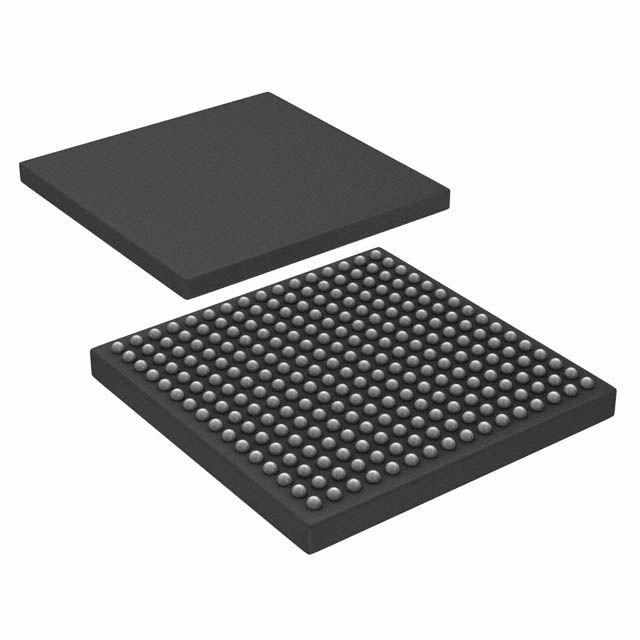
VSC8575-11 Datasheet
Quad-Port 10/100/1000BASE-T PHY with Synchronous
Ethernet, VeriTime™, and QSGMII/SGMII/RGMII MAC
�Microsemi Headquarters
One Enterprise, Aliso Viejo,
CA 92656 USA
Within the USA: +1 (800) 713-4113
Outside the USA: +1 (949) 380-6100
Sales: +1 (949) 380-6136
Fax: +1 (949) 215-4996
Email: sales.support@microsemi.com
www.microsemi.com
©2018 Microsemi, a wholly owned
subsidiary of Microchip Technology Inc. All
rights reserved. Microsemi and the
Microsemi logo are registered trademarks of
Microsemi Corporation. All other trademarks
and service marks are the property of their
respective owners.
Microsemi makes no warranty, representation, or guarantee regarding the information contained herein or the suitability of
its products and services for any particular purpose, nor does Microsemi assume any liability whatsoever arising out of the
application or use of any product or circuit. The products sold hereunder and any other products sold by Microsemi have
been subject to limited testing and should not be used in conjunction with mission-critical equipment or applications. Any
performance specifications are believed to be reliable but are not verified, and Buyer must conduct and complete all
performance and other testing of the products, alone and together with, or installed in, any end-products. Buyer shall not
rely on any data and performance specifications or parameters provided by Microsemi. It is the Buyer’s responsibility to
independently determine suitability of any products and to test and verify the same. The information provided by Microsemi
hereunder is provided “as is, where is” and with all faults, and the entire risk associated with such information is entirely
with the Buyer. Microsemi does not grant, explicitly or implicitly, to any party any patent rights, licenses, or any other IP
rights, whether with regard to such information itself or anything described by such information. Information provided in this
document is proprietary to Microsemi, and Microsemi reserves the right to make any changes to the information in this
document or to any products and services at any time without notice.
About Microsemi
Microsemi, a wholly owned subsidiary of Microchip Technology Inc. (Nasdaq: MCHP), offers a comprehensive portfolio of
semiconductor and system solutions for aerospace & defense, communications, data center and industrial markets.
Products include high-performance and radiation-hardened analog mixed-signal integrated circuits, FPGAs, SoCs and
ASICs; power management products; timing and synchronization devices and precise time solutions, setting the world's
standard for time; voice processing devices; RF solutions; discrete components; enterprise storage and communication
solutions, security technologies and scalable anti-tamper products; Ethernet solutions; Power-over-Ethernet ICs and
midspans; as well as custom design capabilities and services. Learn more at www.microsemi.com.
VMDS-10457. 4.2 4/19
�Contents
1 Revision History . . . . . . . . . . . . . . . . . . . . . . . . . . . . . . . . . . . . . . . . . . . . . . . . . . . . . 1
1.1
1.2
1.3
1.4
Revision 4.2
Revision 4.1
Revision 4.0
Revision 2.0
.......................................................................
.......................................................................
.......................................................................
.......................................................................
1
1
1
2
2 Overview . . . . . . . . . . . . . . . . . . . . . . . . . . . . . . . . . . . . . . . . . . . . . . . . . . . . . . . . . . 3
2.1
2.2
Key Features . . . . . . . . . . . . . . . . . . . . . . . . . . . . . . . . . . . . . . . . . . . . . . . . . . . . . . . . . . . . . . . . . . . . . .
2.1.1
Low Power . . . . . . . . . . . . . . . . . . . . . . . . . . . . . . . . . . . . . . . . . . . . . . . . . . . . . . . . . . . . . . . . .
2.1.2
Advanced Carrier Ethernet Support . . . . . . . . . . . . . . . . . . . . . . . . . . . . . . . . . . . . . . . . . . . . .
2.1.3
Wide Range of Support . . . . . . . . . . . . . . . . . . . . . . . . . . . . . . . . . . . . . . . . . . . . . . . . . . . . . . .
2.1.4
Flexibility . . . . . . . . . . . . . . . . . . . . . . . . . . . . . . . . . . . . . . . . . . . . . . . . . . . . . . . . . . . . . . . . . .
2.1.5
IEEE 1588v2 . . . . . . . . . . . . . . . . . . . . . . . . . . . . . . . . . . . . . . . . . . . . . . . . . . . . . . . . . . . . . . .
Block Diagram . . . . . . . . . . . . . . . . . . . . . . . . . . . . . . . . . . . . . . . . . . . . . . . . . . . . . . . . . . . . . . . . . . . . .
4
4
4
4
4
4
5
3 Functional Descriptions . . . . . . . . . . . . . . . . . . . . . . . . . . . . . . . . . . . . . . . . . . . . . . . 6
3.1
3.2
3.3
3.4
3.5
3.6
3.7
3.8
Operating Modes . . . . . . . . . . . . . . . . . . . . . . . . . . . . . . . . . . . . . . . . . . . . . . . . . . . . . . . . . . . . . . . . . . . 6
3.1.1
QSGMII/SGMII MAC to 1000BASE-X Link Partner . . . . . . . . . . . . . . . . . . . . . . . . . . . . . . . . . . 6
3.1.2
QSGMII/SGMII MAC to 100BASE-FX Link Partner . . . . . . . . . . . . . . . . . . . . . . . . . . . . . . . . . . 7
3.1.3
QSGMII/SGMII MAC to AMS and 1000BASE-X Media SerDes . . . . . . . . . . . . . . . . . . . . . . . . 8
3.1.4
QSGMII/SGMII MAC to AMS and 100BASE-FX Media SerDes . . . . . . . . . . . . . . . . . . . . . . . . 8
3.1.5
QSGMII/SGMII MAC-to-AMS and Protocol Transfer Mode . . . . . . . . . . . . . . . . . . . . . . . . . . . . 9
3.1.6
QSGMII/SGMII MAC to Cat5 Link Partner . . . . . . . . . . . . . . . . . . . . . . . . . . . . . . . . . . . . . . . 10
3.1.7
QSGMII/SGMII MAC-to-Protocol Transfer Mode . . . . . . . . . . . . . . . . . . . . . . . . . . . . . . . . . . . 10
3.1.8
1000BASE-X MAC to Cat5 Link Partner . . . . . . . . . . . . . . . . . . . . . . . . . . . . . . . . . . . . . . . . . 11
SerDes MAC Interface . . . . . . . . . . . . . . . . . . . . . . . . . . . . . . . . . . . . . . . . . . . . . . . . . . . . . . . . . . . . . . 11
3.2.1
1000BASE-X MAC . . . . . . . . . . . . . . . . . . . . . . . . . . . . . . . . . . . . . . . . . . . . . . . . . . . . . . . . . 11
3.2.2
SGMII MAC . . . . . . . . . . . . . . . . . . . . . . . . . . . . . . . . . . . . . . . . . . . . . . . . . . . . . . . . . . . . . . . 12
3.2.3
QSGMII MAC . . . . . . . . . . . . . . . . . . . . . . . . . . . . . . . . . . . . . . . . . . . . . . . . . . . . . . . . . . . . . . 12
SerDes Media Interface . . . . . . . . . . . . . . . . . . . . . . . . . . . . . . . . . . . . . . . . . . . . . . . . . . . . . . . . . . . . . 13
3.3.1
QSGMII/SGMII to 1000BASE-X . . . . . . . . . . . . . . . . . . . . . . . . . . . . . . . . . . . . . . . . . . . . . . . 13
3.3.2
QSGMII/SGMII to 100BASE-FX . . . . . . . . . . . . . . . . . . . . . . . . . . . . . . . . . . . . . . . . . . . . . . . 13
3.3.3
QSGMII to SGMII Protocol Conversion . . . . . . . . . . . . . . . . . . . . . . . . . . . . . . . . . . . . . . . . . . 13
3.3.4
Unidirectional Transport for Fiber Media . . . . . . . . . . . . . . . . . . . . . . . . . . . . . . . . . . . . . . . . . 14
PHY Addressing and Port Mapping . . . . . . . . . . . . . . . . . . . . . . . . . . . . . . . . . . . . . . . . . . . . . . . . . . . . 14
3.4.1
PHY Addressing . . . . . . . . . . . . . . . . . . . . . . . . . . . . . . . . . . . . . . . . . . . . . . . . . . . . . . . . . . . 14
3.4.2
SerDes Port Mapping . . . . . . . . . . . . . . . . . . . . . . . . . . . . . . . . . . . . . . . . . . . . . . . . . . . . . . . 14
Cat5 Twisted Pair Media Interface . . . . . . . . . . . . . . . . . . . . . . . . . . . . . . . . . . . . . . . . . . . . . . . . . . . . . 14
3.5.1
Voltage Mode Line Driver . . . . . . . . . . . . . . . . . . . . . . . . . . . . . . . . . . . . . . . . . . . . . . . . . . . . 14
3.5.2
Cat5 Autonegotiation and Parallel Detection . . . . . . . . . . . . . . . . . . . . . . . . . . . . . . . . . . . . . . 15
3.5.3
Automatic Crossover and Polarity Detection . . . . . . . . . . . . . . . . . . . . . . . . . . . . . . . . . . . . . . 15
3.5.4
Manual MDI/MDIX Setting . . . . . . . . . . . . . . . . . . . . . . . . . . . . . . . . . . . . . . . . . . . . . . . . . . . . 16
3.5.5
Link Speed Downshift . . . . . . . . . . . . . . . . . . . . . . . . . . . . . . . . . . . . . . . . . . . . . . . . . . . . . . . 16
3.5.6
Energy Efficient Ethernet . . . . . . . . . . . . . . . . . . . . . . . . . . . . . . . . . . . . . . . . . . . . . . . . . . . . . 16
3.5.7
Ring Resiliency . . . . . . . . . . . . . . . . . . . . . . . . . . . . . . . . . . . . . . . . . . . . . . . . . . . . . . . . . . . . 17
Automatic Media Sense Interface Mode . . . . . . . . . . . . . . . . . . . . . . . . . . . . . . . . . . . . . . . . . . . . . . . . 17
Reference Clock . . . . . . . . . . . . . . . . . . . . . . . . . . . . . . . . . . . . . . . . . . . . . . . . . . . . . . . . . . . . . . . . . . 18
3.7.1
Configuring the Reference Clock . . . . . . . . . . . . . . . . . . . . . . . . . . . . . . . . . . . . . . . . . . . . . . . 18
3.7.2
Single-Ended REFCLK Input . . . . . . . . . . . . . . . . . . . . . . . . . . . . . . . . . . . . . . . . . . . . . . . . . . 18
3.7.3
Differential REFCLK Input . . . . . . . . . . . . . . . . . . . . . . . . . . . . . . . . . . . . . . . . . . . . . . . . . . . . 19
IEEE 1588 Reference Clock . . . . . . . . . . . . . . . . . . . . . . . . . . . . . . . . . . . . . . . . . . . . . . . . . . . . . . . . . 19
VMDS-10457 VSC8575-11 Datasheet Revision 4.2
iii
�3.9
3.10
3.11
3.12
3.13
3.14
3.15
3.16
3.17
3.18
3.19
3.20
3.21
Ethernet Inline Powered Devices . . . . . . . . . . . . . . . . . . . . . . . . . . . . . . . . . . . . . . . . . . . . . . . . . . . . . . 19
IEEE 802.3af PoE Support . . . . . . . . . . . . . . . . . . . . . . . . . . . . . . . . . . . . . . . . . . . . . . . . . . . . . . . . . . 21
ActiPHY Power Management . . . . . . . . . . . . . . . . . . . . . . . . . . . . . . . . . . . . . . . . . . . . . . . . . . . . . . . . 21
3.11.1 Low Power State . . . . . . . . . . . . . . . . . . . . . . . . . . . . . . . . . . . . . . . . . . . . . . . . . . . . . . . . . . . 22
3.11.2 Link Partner Wake-Up State . . . . . . . . . . . . . . . . . . . . . . . . . . . . . . . . . . . . . . . . . . . . . . . . . . 22
3.11.3 Normal Operating State . . . . . . . . . . . . . . . . . . . . . . . . . . . . . . . . . . . . . . . . . . . . . . . . . . . . . . 22
IEEE 1588 Block Operation . . . . . . . . . . . . . . . . . . . . . . . . . . . . . . . . . . . . . . . . . . . . . . . . . . . . . . . . . . 22
3.12.1 IEEE 1588 Block . . . . . . . . . . . . . . . . . . . . . . . . . . . . . . . . . . . . . . . . . . . . . . . . . . . . . . . . . . . 23
3.12.2 IEEE 1588 One-Step E2E TC in Systems . . . . . . . . . . . . . . . . . . . . . . . . . . . . . . . . . . . . . . . . 25
3.12.3 IEEE 1588 TC and BC in Systems . . . . . . . . . . . . . . . . . . . . . . . . . . . . . . . . . . . . . . . . . . . . . 25
3.12.4 Enhancing IEEE 1588 Accuracy for CE Switches and MACs . . . . . . . . . . . . . . . . . . . . . . . . . 26
3.12.5 Supporting One-Step Boundary Clock/Ordinary Clock . . . . . . . . . . . . . . . . . . . . . . . . . . . . . . 26
3.12.6 Supporting Two- Step Boundary/Ordinary Clock . . . . . . . . . . . . . . . . . . . . . . . . . . . . . . . . . . . 28
3.12.7 Supporting One-Step End-to-End Transparent Clock . . . . . . . . . . . . . . . . . . . . . . . . . . . . . . . 30
3.12.8 Supporting One-Step Peer-to-Peer Transparent Clock . . . . . . . . . . . . . . . . . . . . . . . . . . . . . . 33
3.12.9 Supporting Two-Step Transparent Clock . . . . . . . . . . . . . . . . . . . . . . . . . . . . . . . . . . . . . . . . 37
3.12.10 Calculating OAM Delay Measurements . . . . . . . . . . . . . . . . . . . . . . . . . . . . . . . . . . . . . . . . . . 39
3.12.11 Supporting Y.1731 One-Way Delay Measurements . . . . . . . . . . . . . . . . . . . . . . . . . . . . . . . . 39
3.12.12 Supporting Y.1731 Two-Way Delay Measurements . . . . . . . . . . . . . . . . . . . . . . . . . . . . . . . . 41
3.12.13 Device Synchronization for IEEE 1588 Support . . . . . . . . . . . . . . . . . . . . . . . . . . . . . . . . . . . 43
3.12.14 Time Stamp Update Block . . . . . . . . . . . . . . . . . . . . . . . . . . . . . . . . . . . . . . . . . . . . . . . . . . . . 44
3.12.15 Analyzer . . . . . . . . . . . . . . . . . . . . . . . . . . . . . . . . . . . . . . . . . . . . . . . . . . . . . . . . . . . . . . . . . . 47
3.12.16 Time Stamp Processor . . . . . . . . . . . . . . . . . . . . . . . . . . . . . . . . . . . . . . . . . . . . . . . . . . . . . . 68
3.12.17 Time Stamp FIFO . . . . . . . . . . . . . . . . . . . . . . . . . . . . . . . . . . . . . . . . . . . . . . . . . . . . . . . . . . 69
3.12.18 Serial Time Stamp Output Interface . . . . . . . . . . . . . . . . . . . . . . . . . . . . . . . . . . . . . . . . . . . . 70
3.12.19 Rewriter . . . . . . . . . . . . . . . . . . . . . . . . . . . . . . . . . . . . . . . . . . . . . . . . . . . . . . . . . . . . . . . . . . 71
3.12.20 Local Time Counter . . . . . . . . . . . . . . . . . . . . . . . . . . . . . . . . . . . . . . . . . . . . . . . . . . . . . . . . . 72
3.12.21 Serial Time of Day . . . . . . . . . . . . . . . . . . . . . . . . . . . . . . . . . . . . . . . . . . . . . . . . . . . . . . . . . . 74
3.12.22 Programmable Offset for LTC Load Register . . . . . . . . . . . . . . . . . . . . . . . . . . . . . . . . . . . . . 76
3.12.23 Adjustment of LTC counter . . . . . . . . . . . . . . . . . . . . . . . . . . . . . . . . . . . . . . . . . . . . . . . . . . . 76
3.12.24 Pulse per Second Output . . . . . . . . . . . . . . . . . . . . . . . . . . . . . . . . . . . . . . . . . . . . . . . . . . . . 77
3.12.25 Accuracy and Resolution . . . . . . . . . . . . . . . . . . . . . . . . . . . . . . . . . . . . . . . . . . . . . . . . . . . . . 78
3.12.26 Loopbacks . . . . . . . . . . . . . . . . . . . . . . . . . . . . . . . . . . . . . . . . . . . . . . . . . . . . . . . . . . . . . . . . 78
3.12.27 IEEE 1588 Register Access using SMI (MDC/MDIO) . . . . . . . . . . . . . . . . . . . . . . . . . . . . . . . 78
3.12.28 1588_DIFF_INPUT_CLK Configuration . . . . . . . . . . . . . . . . . . . . . . . . . . . . . . . . . . . . . . . . . 79
Daisy-Chained SPI Time Stamping . . . . . . . . . . . . . . . . . . . . . . . . . . . . . . . . . . . . . . . . . . . . . . . . . . . . 79
SPI I/O Register Access . . . . . . . . . . . . . . . . . . . . . . . . . . . . . . . . . . . . . . . . . . . . . . . . . . . . . . . . . . . . 79
Media Recovered Clock Outputs . . . . . . . . . . . . . . . . . . . . . . . . . . . . . . . . . . . . . . . . . . . . . . . . . . . . . . 80
3.15.1 Clock Selection Settings . . . . . . . . . . . . . . . . . . . . . . . . . . . . . . . . . . . . . . . . . . . . . . . . . . . . . 81
3.15.2 Clock Output Squelch . . . . . . . . . . . . . . . . . . . . . . . . . . . . . . . . . . . . . . . . . . . . . . . . . . . . . . . 81
Serial Management Interface . . . . . . . . . . . . . . . . . . . . . . . . . . . . . . . . . . . . . . . . . . . . . . . . . . . . . . . . . 81
3.16.1 SMI Frames . . . . . . . . . . . . . . . . . . . . . . . . . . . . . . . . . . . . . . . . . . . . . . . . . . . . . . . . . . . . . . . 82
3.16.2 SMI Interrupt . . . . . . . . . . . . . . . . . . . . . . . . . . . . . . . . . . . . . . . . . . . . . . . . . . . . . . . . . . . . . . 82
LED Interface . . . . . . . . . . . . . . . . . . . . . . . . . . . . . . . . . . . . . . . . . . . . . . . . . . . . . . . . . . . . . . . . . . . . . 83
3.17.1 LED Modes . . . . . . . . . . . . . . . . . . . . . . . . . . . . . . . . . . . . . . . . . . . . . . . . . . . . . . . . . . . . . . . 83
3.17.2 Extended LED Modes . . . . . . . . . . . . . . . . . . . . . . . . . . . . . . . . . . . . . . . . . . . . . . . . . . . . . . . 85
3.17.3 LED Behavior . . . . . . . . . . . . . . . . . . . . . . . . . . . . . . . . . . . . . . . . . . . . . . . . . . . . . . . . . . . . . 85
3.17.4 Basic Serial LED Mode . . . . . . . . . . . . . . . . . . . . . . . . . . . . . . . . . . . . . . . . . . . . . . . . . . . . . . 86
3.17.5 Enhanced Serial LED Mode . . . . . . . . . . . . . . . . . . . . . . . . . . . . . . . . . . . . . . . . . . . . . . . . . . 87
3.17.6 LED Port Swapping . . . . . . . . . . . . . . . . . . . . . . . . . . . . . . . . . . . . . . . . . . . . . . . . . . . . . . . . . 87
Fast Link Failure Indication . . . . . . . . . . . . . . . . . . . . . . . . . . . . . . . . . . . . . . . . . . . . . . . . . . . . . . . . . . 87
Integrated Two-Wire Serial Multiplexer . . . . . . . . . . . . . . . . . . . . . . . . . . . . . . . . . . . . . . . . . . . . . . . . . 87
3.19.1 Read/Write Access Using the Two-Wire Serial MUX . . . . . . . . . . . . . . . . . . . . . . . . . . . . . . . 88
GPIO Pins . . . . . . . . . . . . . . . . . . . . . . . . . . . . . . . . . . . . . . . . . . . . . . . . . . . . . . . . . . . . . . . . . . . . . . . 89
Testing Features . . . . . . . . . . . . . . . . . . . . . . . . . . . . . . . . . . . . . . . . . . . . . . . . . . . . . . . . . . . . . . . . . . 90
3.21.1 Ethernet Packet Generator . . . . . . . . . . . . . . . . . . . . . . . . . . . . . . . . . . . . . . . . . . . . . . . . . . . 90
VMDS-10457 VSC8575-11 Datasheet Revision 4.2
iv
�3.22
3.23
3.21.2 CRC Counters . . . . . . . . . . . . . . . . . . . . . . . . . . . . . . . . . . . . . . . . . . . . . . . . . . . . . . . . . . . . .
3.21.3 Loopbacks . . . . . . . . . . . . . . . . . . . . . . . . . . . . . . . . . . . . . . . . . . . . . . . . . . . . . . . . . . . . . . . .
3.21.4 VeriPHY Cable Diagnostics . . . . . . . . . . . . . . . . . . . . . . . . . . . . . . . . . . . . . . . . . . . . . . . . . . .
3.21.5 JTAG Boundary Scan . . . . . . . . . . . . . . . . . . . . . . . . . . . . . . . . . . . . . . . . . . . . . . . . . . . . . . .
3.21.6 JTAG Instruction Codes . . . . . . . . . . . . . . . . . . . . . . . . . . . . . . . . . . . . . . . . . . . . . . . . . . . . .
3.21.7 Boundary Scan Register Cell Order . . . . . . . . . . . . . . . . . . . . . . . . . . . . . . . . . . . . . . . . . . . .
100BASE-FX Far-End Fault Indication (FEFI) . . . . . . . . . . . . . . . . . . . . . . . . . . . . . . . . . . . . . . . . . . . .
3.22.1 100BASE-FX Halt Code Transmission and Reception . . . . . . . . . . . . . . . . . . . . . . . . . . . . . .
Configuration . . . . . . . . . . . . . . . . . . . . . . . . . . . . . . . . . . . . . . . . . . . . . . . . . . . . . . . . . . . . . . . . . . . . .
3.23.1 Initialization . . . . . . . . . . . . . . . . . . . . . . . . . . . . . . . . . . . . . . . . . . . . . . . . . . . . . . . . . . . . . . .
90
91
95
96
96
98
98
98
98
99
4 Registers . . . . . . . . . . . . . . . . . . . . . . . . . . . . . . . . . . . . . . . . . . . . . . . . . . . . . . . . 100
4.1
4.2
4.3
4.4
Register and Bit Conventions . . . . . . . . . . . . . . . . . . . . . . . . . . . . . . . . . . . . . . . . . . . . . . . . . . . . . . . 100
IEEE 802.3 and Main Registers . . . . . . . . . . . . . . . . . . . . . . . . . . . . . . . . . . . . . . . . . . . . . . . . . . . . . . 101
4.2.1
Mode Control . . . . . . . . . . . . . . . . . . . . . . . . . . . . . . . . . . . . . . . . . . . . . . . . . . . . . . . . . . . . . 102
4.2.2
Mode Status . . . . . . . . . . . . . . . . . . . . . . . . . . . . . . . . . . . . . . . . . . . . . . . . . . . . . . . . . . . . . 103
4.2.3
Device Identification . . . . . . . . . . . . . . . . . . . . . . . . . . . . . . . . . . . . . . . . . . . . . . . . . . . . . . . 104
4.2.4
Autonegotiation Advertisement . . . . . . . . . . . . . . . . . . . . . . . . . . . . . . . . . . . . . . . . . . . . . . . 104
4.2.5
Link Partner Autonegotiation Capability . . . . . . . . . . . . . . . . . . . . . . . . . . . . . . . . . . . . . . . . 105
4.2.6
Autonegotiation Expansion . . . . . . . . . . . . . . . . . . . . . . . . . . . . . . . . . . . . . . . . . . . . . . . . . . 105
4.2.7
Transmit Autonegotiation Next Page . . . . . . . . . . . . . . . . . . . . . . . . . . . . . . . . . . . . . . . . . . . 106
4.2.8
Autonegotiation Link Partner Next Page Receive . . . . . . . . . . . . . . . . . . . . . . . . . . . . . . . . . 106
4.2.9
1000BASE-T/X Control . . . . . . . . . . . . . . . . . . . . . . . . . . . . . . . . . . . . . . . . . . . . . . . . . . . . . 106
4.2.10 1000BASE-T Status . . . . . . . . . . . . . . . . . . . . . . . . . . . . . . . . . . . . . . . . . . . . . . . . . . . . . . . 107
4.2.11 MMD Access Control Register . . . . . . . . . . . . . . . . . . . . . . . . . . . . . . . . . . . . . . . . . . . . . . . 108
4.2.12 MMD Address or Data Register . . . . . . . . . . . . . . . . . . . . . . . . . . . . . . . . . . . . . . . . . . . . . . . 108
4.2.13 1000BASE-T Status Extension 1 . . . . . . . . . . . . . . . . . . . . . . . . . . . . . . . . . . . . . . . . . . . . . . 108
4.2.14 100BASE-TX/FX Status Extension . . . . . . . . . . . . . . . . . . . . . . . . . . . . . . . . . . . . . . . . . . . . 108
4.2.15 1000BASE-T Status Extension 2 . . . . . . . . . . . . . . . . . . . . . . . . . . . . . . . . . . . . . . . . . . . . . . 109
4.2.16 Bypass Control . . . . . . . . . . . . . . . . . . . . . . . . . . . . . . . . . . . . . . . . . . . . . . . . . . . . . . . . . . . 110
4.2.17 Error Counter 1 . . . . . . . . . . . . . . . . . . . . . . . . . . . . . . . . . . . . . . . . . . . . . . . . . . . . . . . . . . . 111
4.2.18 Error Counter 2 . . . . . . . . . . . . . . . . . . . . . . . . . . . . . . . . . . . . . . . . . . . . . . . . . . . . . . . . . . . 111
4.2.19 Error Counter 3 . . . . . . . . . . . . . . . . . . . . . . . . . . . . . . . . . . . . . . . . . . . . . . . . . . . . . . . . . . . 111
4.2.20 Extended Control and Status . . . . . . . . . . . . . . . . . . . . . . . . . . . . . . . . . . . . . . . . . . . . . . . . . 111
4.2.21 Extended PHY Control Set 1 . . . . . . . . . . . . . . . . . . . . . . . . . . . . . . . . . . . . . . . . . . . . . . . . . 112
4.2.22 Extended PHY Control Set 2 . . . . . . . . . . . . . . . . . . . . . . . . . . . . . . . . . . . . . . . . . . . . . . . . . 113
4.2.23 Interrupt Mask . . . . . . . . . . . . . . . . . . . . . . . . . . . . . . . . . . . . . . . . . . . . . . . . . . . . . . . . . . . . 114
4.2.24 Interrupt Status . . . . . . . . . . . . . . . . . . . . . . . . . . . . . . . . . . . . . . . . . . . . . . . . . . . . . . . . . . . 115
4.2.25 Device Auxiliary Control and Status . . . . . . . . . . . . . . . . . . . . . . . . . . . . . . . . . . . . . . . . . . . 115
4.2.26 LED Mode Select . . . . . . . . . . . . . . . . . . . . . . . . . . . . . . . . . . . . . . . . . . . . . . . . . . . . . . . . . . 116
4.2.27 LED Behavior . . . . . . . . . . . . . . . . . . . . . . . . . . . . . . . . . . . . . . . . . . . . . . . . . . . . . . . . . . . . 117
4.2.28 Extended Page Access . . . . . . . . . . . . . . . . . . . . . . . . . . . . . . . . . . . . . . . . . . . . . . . . . . . . . 118
Extended Page 1 Registers . . . . . . . . . . . . . . . . . . . . . . . . . . . . . . . . . . . . . . . . . . . . . . . . . . . . . . . . . 118
4.3.1
SerDes Media Control . . . . . . . . . . . . . . . . . . . . . . . . . . . . . . . . . . . . . . . . . . . . . . . . . . . . . . 119
4.3.2
Cu Media CRC Good Counter . . . . . . . . . . . . . . . . . . . . . . . . . . . . . . . . . . . . . . . . . . . . . . . . 120
4.3.3
Extended Mode Control . . . . . . . . . . . . . . . . . . . . . . . . . . . . . . . . . . . . . . . . . . . . . . . . . . . . . 120
4.3.4
ActiPHY Control . . . . . . . . . . . . . . . . . . . . . . . . . . . . . . . . . . . . . . . . . . . . . . . . . . . . . . . . . . . 121
4.3.5
PoE and Miscellaneous Functionality . . . . . . . . . . . . . . . . . . . . . . . . . . . . . . . . . . . . . . . . . . 122
4.3.6
Ethernet Packet Generator Control 1 . . . . . . . . . . . . . . . . . . . . . . . . . . . . . . . . . . . . . . . . . . 122
4.3.7
Ethernet Packet Generator Control 2 . . . . . . . . . . . . . . . . . . . . . . . . . . . . . . . . . . . . . . . . . . 123
Extended Page 2 Registers . . . . . . . . . . . . . . . . . . . . . . . . . . . . . . . . . . . . . . . . . . . . . . . . . . . . . . . . . 123
4.4.1
Cu PMD Transmit Control . . . . . . . . . . . . . . . . . . . . . . . . . . . . . . . . . . . . . . . . . . . . . . . . . . . 124
4.4.2
EEE Control . . . . . . . . . . . . . . . . . . . . . . . . . . . . . . . . . . . . . . . . . . . . . . . . . . . . . . . . . . . . . . 126
4.4.3
Extended Chip ID, Address 18E2 (0x12) . . . . . . . . . . . . . . . . . . . . . . . . . . . . . . . . . . . . . . . . 127
4.4.4
Entropy Data, Address 19E2 (0x13) . . . . . . . . . . . . . . . . . . . . . . . . . . . . . . . . . . . . . . . . . . . 127
4.4.5
Extended Interrupt Mask, Address 28E2 (0x1C) . . . . . . . . . . . . . . . . . . . . . . . . . . . . . . . . . . 127
4.4.6
Extended Interrupt Status, Address 29E2 (0x1D) . . . . . . . . . . . . . . . . . . . . . . . . . . . . . . . . . 128
VMDS-10457 VSC8575-11 Datasheet Revision 4.2
v
�4.5
4.6
4.7
4.8
4.4.7
Ring Resiliency Control (0x1E) . . . . . . . . . . . . . . . . . . . . . . . . . . . . . . . . . . . . . . . . . . . . . . . 128
Extended Page 3 Registers . . . . . . . . . . . . . . . . . . . . . . . . . . . . . . . . . . . . . . . . . . . . . . . . . . . . . . . . . 129
4.5.1
MAC SerDes PCS Control . . . . . . . . . . . . . . . . . . . . . . . . . . . . . . . . . . . . . . . . . . . . . . . . . . . 129
4.5.2
MAC SerDes PCS Status . . . . . . . . . . . . . . . . . . . . . . . . . . . . . . . . . . . . . . . . . . . . . . . . . . . 130
4.5.3
MAC SerDes Clause 37 Advertised Ability . . . . . . . . . . . . . . . . . . . . . . . . . . . . . . . . . . . . . . 131
4.5.4
MAC SerDes Clause 37 Link Partner Ability . . . . . . . . . . . . . . . . . . . . . . . . . . . . . . . . . . . . . 131
4.5.5
MAC SerDes Status . . . . . . . . . . . . . . . . . . . . . . . . . . . . . . . . . . . . . . . . . . . . . . . . . . . . . . . 132
4.5.6
Media/MAC SerDes Transmit Good Packet Counter . . . . . . . . . . . . . . . . . . . . . . . . . . . . . . 132
4.5.7
Media/MAC SerDes Transmit CRC Error Counter . . . . . . . . . . . . . . . . . . . . . . . . . . . . . . . . 132
4.5.8
Media SerDes PCS Control . . . . . . . . . . . . . . . . . . . . . . . . . . . . . . . . . . . . . . . . . . . . . . . . . . 133
4.5.9
Media SerDes PCS Status . . . . . . . . . . . . . . . . . . . . . . . . . . . . . . . . . . . . . . . . . . . . . . . . . . 134
4.5.10 Media SerDes Clause 37 Advertised Ability . . . . . . . . . . . . . . . . . . . . . . . . . . . . . . . . . . . . . 135
4.5.11 Media SerDes Clause 37 Link Partner Ability . . . . . . . . . . . . . . . . . . . . . . . . . . . . . . . . . . . . 135
4.5.12 Media SerDes Status . . . . . . . . . . . . . . . . . . . . . . . . . . . . . . . . . . . . . . . . . . . . . . . . . . . . . . . 135
4.5.13 Media/MAC SerDes Receive CRC Good Counter . . . . . . . . . . . . . . . . . . . . . . . . . . . . . . . . . 136
4.5.14 Media/MAC SerDes Receive CRC Error Counter . . . . . . . . . . . . . . . . . . . . . . . . . . . . . . . . . 136
Extended Page 4 Registers . . . . . . . . . . . . . . . . . . . . . . . . . . . . . . . . . . . . . . . . . . . . . . . . . . . . . . . . . 136
4.6.1
CSR Access Controls and Status . . . . . . . . . . . . . . . . . . . . . . . . . . . . . . . . . . . . . . . . . . . . . 137
4.6.2
1588_PPS_0/1 Mux Control . . . . . . . . . . . . . . . . . . . . . . . . . . . . . . . . . . . . . . . . . . . . . . . . . 138
4.6.3
SPI Daisy-Chain Controls and Status . . . . . . . . . . . . . . . . . . . . . . . . . . . . . . . . . . . . . . . . . . 138
General Purpose Registers . . . . . . . . . . . . . . . . . . . . . . . . . . . . . . . . . . . . . . . . . . . . . . . . . . . . . . . . . 139
4.7.1
Reserved General Purpose Address Space . . . . . . . . . . . . . . . . . . . . . . . . . . . . . . . . . . . . . 140
4.7.2
LED/SIGDET/GPIO Control . . . . . . . . . . . . . . . . . . . . . . . . . . . . . . . . . . . . . . . . . . . . . . . . . . 140
4.7.3
GPIO Control 2 . . . . . . . . . . . . . . . . . . . . . . . . . . . . . . . . . . . . . . . . . . . . . . . . . . . . . . . . . . . 141
4.7.4
GPIO Input . . . . . . . . . . . . . . . . . . . . . . . . . . . . . . . . . . . . . . . . . . . . . . . . . . . . . . . . . . . . . . . 142
4.7.5
GPIO Output . . . . . . . . . . . . . . . . . . . . . . . . . . . . . . . . . . . . . . . . . . . . . . . . . . . . . . . . . . . . . 143
4.7.6
GPIO Pin Configuration . . . . . . . . . . . . . . . . . . . . . . . . . . . . . . . . . . . . . . . . . . . . . . . . . . . . . 143
4.7.7
Microprocessor Command . . . . . . . . . . . . . . . . . . . . . . . . . . . . . . . . . . . . . . . . . . . . . . . . . . 144
4.7.8
MAC Configuration and Fast Link . . . . . . . . . . . . . . . . . . . . . . . . . . . . . . . . . . . . . . . . . . . . . 144
4.7.9
Two-Wire Serial MUX Control 1 . . . . . . . . . . . . . . . . . . . . . . . . . . . . . . . . . . . . . . . . . . . . . . 145
4.7.10 Two-Wire Serial MUX Control 2 . . . . . . . . . . . . . . . . . . . . . . . . . . . . . . . . . . . . . . . . . . . . . . 145
4.7.11 Two-Wire Serial MUX Data Read/Write . . . . . . . . . . . . . . . . . . . . . . . . . . . . . . . . . . . . . . . . . 146
4.7.12 Recovered Clock 1 Control . . . . . . . . . . . . . . . . . . . . . . . . . . . . . . . . . . . . . . . . . . . . . . . . . . 146
4.7.13 Recovered Clock 2 Control . . . . . . . . . . . . . . . . . . . . . . . . . . . . . . . . . . . . . . . . . . . . . . . . . . 147
4.7.14 Enhanced LED Control . . . . . . . . . . . . . . . . . . . . . . . . . . . . . . . . . . . . . . . . . . . . . . . . . . . . . 148
4.7.15 Global Interrupt Status . . . . . . . . . . . . . . . . . . . . . . . . . . . . . . . . . . . . . . . . . . . . . . . . . . . . . . 149
Clause 45 Registers to Support Energy Efficient Ethernet and 802.3bf . . . . . . . . . . . . . . . . . . . . . . . 150
4.8.1
PMA/PMD Status 1 . . . . . . . . . . . . . . . . . . . . . . . . . . . . . . . . . . . . . . . . . . . . . . . . . . . . . . . . 151
4.8.2
PCS Status 1 . . . . . . . . . . . . . . . . . . . . . . . . . . . . . . . . . . . . . . . . . . . . . . . . . . . . . . . . . . . . . 151
4.8.3
EEE Capability . . . . . . . . . . . . . . . . . . . . . . . . . . . . . . . . . . . . . . . . . . . . . . . . . . . . . . . . . . . . 151
4.8.4
EEE Wake Error Counter . . . . . . . . . . . . . . . . . . . . . . . . . . . . . . . . . . . . . . . . . . . . . . . . . . . 151
4.8.5
EEE Advertisement . . . . . . . . . . . . . . . . . . . . . . . . . . . . . . . . . . . . . . . . . . . . . . . . . . . . . . . . 152
4.8.6
EEE Link Partner Advertisement . . . . . . . . . . . . . . . . . . . . . . . . . . . . . . . . . . . . . . . . . . . . . . 152
5 Electrical Specifications . . . . . . . . . . . . . . . . . . . . . . . . . . . . . . . . . . . . . . . . . . . . . 154
5.1
DC Characteristics . . . . . . . . . . . . . . . . . . . . . . . . . . . . . . . . . . . . . . . . . . . . . . . . . . . . . . . . . . . . . . . . 154
5.1.1
VDD25 and VDDMDIO (2.5 V) . . . . . . . . . . . . . . . . . . . . . . . . . . . . . . . . . . . . . . . . . . . . . . . 154
5.1.2
VDDMDIO (1.2 V) . . . . . . . . . . . . . . . . . . . . . . . . . . . . . . . . . . . . . . . . . . . . . . . . . . . . . . . . . 154
5.1.3
Supply Voltage . . . . . . . . . . . . . . . . . . . . . . . . . . . . . . . . . . . . . . . . . . . . . . . . . . . . . . . . . . . 155
5.1.4
LED and GPIO . . . . . . . . . . . . . . . . . . . . . . . . . . . . . . . . . . . . . . . . . . . . . . . . . . . . . . . . . . . . 155
5.1.5
Internal Pull-Up or Pull-Down Resistors . . . . . . . . . . . . . . . . . . . . . . . . . . . . . . . . . . . . . . . . 155
5.1.6
Reference Clock . . . . . . . . . . . . . . . . . . . . . . . . . . . . . . . . . . . . . . . . . . . . . . . . . . . . . . . . . . 156
5.1.7
1588 Reference Clock . . . . . . . . . . . . . . . . . . . . . . . . . . . . . . . . . . . . . . . . . . . . . . . . . . . . . . 156
5.1.8
SerDes Interface (SGMII) . . . . . . . . . . . . . . . . . . . . . . . . . . . . . . . . . . . . . . . . . . . . . . . . . . . 156
5.1.9
Enhanced SerDes Interface (QSGMII) . . . . . . . . . . . . . . . . . . . . . . . . . . . . . . . . . . . . . . . . . 158
5.1.10 Current Consumption . . . . . . . . . . . . . . . . . . . . . . . . . . . . . . . . . . . . . . . . . . . . . . . . . . . . . . 159
5.1.11 Thermal Diode . . . . . . . . . . . . . . . . . . . . . . . . . . . . . . . . . . . . . . . . . . . . . . . . . . . . . . . . . . . . 160
VMDS-10457 VSC8575-11 Datasheet Revision 4.2
vi
�5.2
5.3
5.4
AC Characteristics . . . . . . . . . . . . . . . . . . . . . . . . . . . . . . . . . . . . . . . . . . . . . . . . . . . . . . . . . . . . . . . . 161
5.2.1
Reference Clock . . . . . . . . . . . . . . . . . . . . . . . . . . . . . . . . . . . . . . . . . . . . . . . . . . . . . . . . . . 161
5.2.2
Recovered Clock . . . . . . . . . . . . . . . . . . . . . . . . . . . . . . . . . . . . . . . . . . . . . . . . . . . . . . . . . . 162
5.2.3
SerDes Outputs . . . . . . . . . . . . . . . . . . . . . . . . . . . . . . . . . . . . . . . . . . . . . . . . . . . . . . . . . . . 163
5.2.4
SerDes Driver Jitter . . . . . . . . . . . . . . . . . . . . . . . . . . . . . . . . . . . . . . . . . . . . . . . . . . . . . . . . 163
5.2.5
SerDes Inputs . . . . . . . . . . . . . . . . . . . . . . . . . . . . . . . . . . . . . . . . . . . . . . . . . . . . . . . . . . . . 164
5.2.6
SerDes Receiver Jitter Tolerance . . . . . . . . . . . . . . . . . . . . . . . . . . . . . . . . . . . . . . . . . . . . . 164
5.2.7
Enhanced SerDes Interface . . . . . . . . . . . . . . . . . . . . . . . . . . . . . . . . . . . . . . . . . . . . . . . . . 164
5.2.8
Basic Serial LEDs . . . . . . . . . . . . . . . . . . . . . . . . . . . . . . . . . . . . . . . . . . . . . . . . . . . . . . . . . 167
5.2.9
Enhanced Serial LEDs . . . . . . . . . . . . . . . . . . . . . . . . . . . . . . . . . . . . . . . . . . . . . . . . . . . . . 167
5.2.10 Serial CPU Interface (SI) for Slave Mode . . . . . . . . . . . . . . . . . . . . . . . . . . . . . . . . . . . . . . . 168
5.2.11 JTAG Interface . . . . . . . . . . . . . . . . . . . . . . . . . . . . . . . . . . . . . . . . . . . . . . . . . . . . . . . . . . . 169
5.2.12 Serial Management Interface . . . . . . . . . . . . . . . . . . . . . . . . . . . . . . . . . . . . . . . . . . . . . . . . 171
5.2.13 Reset Timing . . . . . . . . . . . . . . . . . . . . . . . . . . . . . . . . . . . . . . . . . . . . . . . . . . . . . . . . . . . . . 172
5.2.14 IEEE 1588 Timing Specifications . . . . . . . . . . . . . . . . . . . . . . . . . . . . . . . . . . . . . . . . . . . . . 172
5.2.15 Serial Timestamp Interface . . . . . . . . . . . . . . . . . . . . . . . . . . . . . . . . . . . . . . . . . . . . . . . . . . 172
5.2.16 Local Time Counter Load/Save Timing . . . . . . . . . . . . . . . . . . . . . . . . . . . . . . . . . . . . . . . . . 173
5.2.17 Daisy-Chained SPI Timestamping Inputs . . . . . . . . . . . . . . . . . . . . . . . . . . . . . . . . . . . . . . . 173
Operating Conditions . . . . . . . . . . . . . . . . . . . . . . . . . . . . . . . . . . . . . . . . . . . . . . . . . . . . . . . . . . . . . . 174
Stress Ratings . . . . . . . . . . . . . . . . . . . . . . . . . . . . . . . . . . . . . . . . . . . . . . . . . . . . . . . . . . . . . . . . . . . 175
6 Pin Descriptions . . . . . . . . . . . . . . . . . . . . . . . . . . . . . . . . . . . . . . . . . . . . . . . . . . . 176
6.1
6.2
6.3
Pin Identifications . . . . . . . . . . . . . . . . . . . . . . . . . . . . . . . . . . . . . . . . . . . . . . . . . . . . . . . . . . . . . . . . .
Pin Diagram . . . . . . . . . . . . . . . . . . . . . . . . . . . . . . . . . . . . . . . . . . . . . . . . . . . . . . . . . . . . . . . . . . . . .
Pins by Function . . . . . . . . . . . . . . . . . . . . . . . . . . . . . . . . . . . . . . . . . . . . . . . . . . . . . . . . . . . . . . . . .
6.3.1
1588 Support . . . . . . . . . . . . . . . . . . . . . . . . . . . . . . . . . . . . . . . . . . . . . . . . . . . . . . . . . . . . .
6.3.2
1588 Support and GPIO . . . . . . . . . . . . . . . . . . . . . . . . . . . . . . . . . . . . . . . . . . . . . . . . . . . .
6.3.3
GPIO and Two-Wire Serial . . . . . . . . . . . . . . . . . . . . . . . . . . . . . . . . . . . . . . . . . . . . . . . . . .
6.3.4
JTAG . . . . . . . . . . . . . . . . . . . . . . . . . . . . . . . . . . . . . . . . . . . . . . . . . . . . . . . . . . . . . . . . . . .
6.3.5
Miscellaneous . . . . . . . . . . . . . . . . . . . . . . . . . . . . . . . . . . . . . . . . . . . . . . . . . . . . . . . . . . . .
6.3.6
Power Supply and Ground . . . . . . . . . . . . . . . . . . . . . . . . . . . . . . . . . . . . . . . . . . . . . . . . . .
6.3.7
SerDes MAC Interface . . . . . . . . . . . . . . . . . . . . . . . . . . . . . . . . . . . . . . . . . . . . . . . . . . . . . .
6.3.8
SerDes Media Interface . . . . . . . . . . . . . . . . . . . . . . . . . . . . . . . . . . . . . . . . . . . . . . . . . . . . .
6.3.9
Serial Management Interface . . . . . . . . . . . . . . . . . . . . . . . . . . . . . . . . . . . . . . . . . . . . . . . .
6.3.10 SIGDET/GPIO . . . . . . . . . . . . . . . . . . . . . . . . . . . . . . . . . . . . . . . . . . . . . . . . . . . . . . . . . . . .
6.3.11 SPI Interface . . . . . . . . . . . . . . . . . . . . . . . . . . . . . . . . . . . . . . . . . . . . . . . . . . . . . . . . . . . . .
6.3.12 Twisted Pair Interface . . . . . . . . . . . . . . . . . . . . . . . . . . . . . . . . . . . . . . . . . . . . . . . . . . . . . .
176
176
178
178
179
179
180
180
181
182
182
183
183
183
184
7 Package Information . . . . . . . . . . . . . . . . . . . . . . . . . . . . . . . . . . . . . . . . . . . . . . . 185
7.1
7.2
7.3
Package Drawing . . . . . . . . . . . . . . . . . . . . . . . . . . . . . . . . . . . . . . . . . . . . . . . . . . . . . . . . . . . . . . . . . 185
Thermal Specifications . . . . . . . . . . . . . . . . . . . . . . . . . . . . . . . . . . . . . . . . . . . . . . . . . . . . . . . . . . . . . 186
Moisture Sensitivity . . . . . . . . . . . . . . . . . . . . . . . . . . . . . . . . . . . . . . . . . . . . . . . . . . . . . . . . . . . . . . . 187
8 Design Considerations . . . . . . . . . . . . . . . . . . . . . . . . . . . . . . . . . . . . . . . . . . . . . 188
8.1
8.2
8.3
8.4
8.5
8.6
8.7
8.8
8.9
8.10
8.11
Clause 45 register address post-increment . . . . . . . . . . . . . . . . . . . . . . . . . . . . . . . . . . . . . . . . . . . . . 188
Clause 45, register 7.60 . . . . . . . . . . . . . . . . . . . . . . . . . . . . . . . . . . . . . . . . . . . . . . . . . . . . . . . . . . . . 188
10BASE-T signal amplitude . . . . . . . . . . . . . . . . . . . . . . . . . . . . . . . . . . . . . . . . . . . . . . . . . . . . . . . . . 188
10BASE-T Half-Duplex linkup after initial reset from power up . . . . . . . . . . . . . . . . . . . . . . . . . . . . . . 188
Link performance in 100BASE-TX and 1000BASE-T modes . . . . . . . . . . . . . . . . . . . . . . . . . . . . . . . 188
Clause 36 PCS incompatibilities in 1000BASE-X media mode . . . . . . . . . . . . . . . . . . . . . . . . . . . . . . 188
1000BASE-X parallel detect mode with Clause 37 auto-negotiation enabled . . . . . . . . . . . . . . . . . . . 189
Near-end loopback non-functional in protocol transfer mode . . . . . . . . . . . . . . . . . . . . . . . . . . . . . . . 189
LED Duplex/Collision function not working when in protocol transfer mode 10/100 Mbps . . . . . . . . . 189
Fast Link Failover indication delay when using interrupts . . . . . . . . . . . . . . . . . . . . . . . . . . . . . . . . . . 189
Anomalous Fast Link Failure indication in 1000BT Energy Efficient Ethernet mode . . . . . . . . . . . . . . 189
VMDS-10457 VSC8575-11 Datasheet Revision 4.2
vii
�8.12
8.13
8.14
8.15
8.16
8.17
8.18
Anomalous PCS error indications in Energy Efficient Ethernet mode . . . . . . . . . . . . . . . . . . . . . . . . . 189
EEE allowed only for MACs supporting IEEE 802.3az-2010 in 1588 applications . . . . . . . . . . . . . . . 189
Auto-Negotiation Management Register Test failures . . . . . . . . . . . . . . . . . . . . . . . . . . . . . . . . . . . . . 190
1588 bypass switch may drop packets . . . . . . . . . . . . . . . . . . . . . . . . . . . . . . . . . . . . . . . . . . . . . . . . 190
1588 bypass shall be enabled during engine reconfiguration . . . . . . . . . . . . . . . . . . . . . . . . . . . . . . . 190
Time stamp errors due to IEEE 1588 reference clock interruption . . . . . . . . . . . . . . . . . . . . . . . . . . . 190
Soft power-down procedure . . . . . . . . . . . . . . . . . . . . . . . . . . . . . . . . . . . . . . . . . . . . . . . . . . . . . . . . . 190
9 Ordering Information . . . . . . . . . . . . . . . . . . . . . . . . . . . . . . . . . . . . . . . . . . . . . . . 191
VMDS-10457 VSC8575-11 Datasheet Revision 4.2
viii
�Figures
Figure 1
Figure 2
Figure 3
Figure 4
Figure 5
Figure 6
Figure 7
Figure 8
Figure 9
Figure 10
Figure 11
Figure 12
Figure 13
Figure 14
Figure 15
Figure 16
Figure 17
Figure 18
Figure 19
Figure 20
Figure 21
Figure 22
Figure 23
Figure 24
Figure 25
Figure 26
Figure 27
Figure 28
Figure 29
Figure 30
Figure 31
Figure 32
Figure 33
Figure 34
Figure 35
Figure 36
Figure 37
Figure 38
Figure 39
Figure 40
Figure 41
Figure 42
Figure 43
Figure 44
Figure 45
Figure 46
Figure 47
Figure 48
Figure 49
Figure 50
Figure 51
Figure 52
Figure 53
Figure 54
Dual Media Application Diagram . . . . . . . . . . . . . . . . . . . . . . . . . . . . . . . . . . . . . . . . . . . . . . . . . . . 3
Copper Transceiver Application Diagram . . . . . . . . . . . . . . . . . . . . . . . . . . . . . . . . . . . . . . . . . . . . . 3
Fiber Media Transceiver Application Diagram . . . . . . . . . . . . . . . . . . . . . . . . . . . . . . . . . . . . . . . . . 4
Block Diagram . . . . . . . . . . . . . . . . . . . . . . . . . . . . . . . . . . . . . . . . . . . . . . . . . . . . . . . . . . . . . . . . . 5
SGMII MAC to 1000BASE-X Link Partner . . . . . . . . . . . . . . . . . . . . . . . . . . . . . . . . . . . . . . . . . . . . 6
QSGMII MAC to 1000BASE-X Link Partner . . . . . . . . . . . . . . . . . . . . . . . . . . . . . . . . . . . . . . . . . . . 7
QSGMII/SGMII MAC to 100BASE-FX Link Partner . . . . . . . . . . . . . . . . . . . . . . . . . . . . . . . . . . . . . 7
QSGMII/SGMII MAC to AMS and 1000BASE-X Media SerDes . . . . . . . . . . . . . . . . . . . . . . . . . . . . 8
QSGMII/SGMII MAC to AMS and 100BASE-FX Media SerDes . . . . . . . . . . . . . . . . . . . . . . . . . . . . 9
QSGMII/SGMII MAC-to-AMS and Protocol Transfer Mode . . . . . . . . . . . . . . . . . . . . . . . . . . . . . . . 9
QSGMII/SGMII MAC to Cat5 Link Partner . . . . . . . . . . . . . . . . . . . . . . . . . . . . . . . . . . . . . . . . . . . 10
QSGMII/SGMII MAC to Protocol Transfer Mode . . . . . . . . . . . . . . . . . . . . . . . . . . . . . . . . . . . . . . 10
1000BASE-X MAC to Cat5 Link Partner . . . . . . . . . . . . . . . . . . . . . . . . . . . . . . . . . . . . . . . . . . . . . 11
SerDes MAC Interface . . . . . . . . . . . . . . . . . . . . . . . . . . . . . . . . . . . . . . . . . . . . . . . . . . . . . . . . . . 12
SGMII MAC Interface . . . . . . . . . . . . . . . . . . . . . . . . . . . . . . . . . . . . . . . . . . . . . . . . . . . . . . . . . . . 12
QSGMII MAC Interface . . . . . . . . . . . . . . . . . . . . . . . . . . . . . . . . . . . . . . . . . . . . . . . . . . . . . . . . . . 13
Cat5 Media Interface . . . . . . . . . . . . . . . . . . . . . . . . . . . . . . . . . . . . . . . . . . . . . . . . . . . . . . . . . . . 15
Low Power Idle Operation . . . . . . . . . . . . . . . . . . . . . . . . . . . . . . . . . . . . . . . . . . . . . . . . . . . . . . . 16
Automatic Media Sense Block Diagram . . . . . . . . . . . . . . . . . . . . . . . . . . . . . . . . . . . . . . . . . . . . . 17
2.5 V CMOS Single-Ended REFCLK Input Resistor Network . . . . . . . . . . . . . . . . . . . . . . . . . . . . . 18
3.3 V CMOS Single-Ended REFCLK Input Resistor Network . . . . . . . . . . . . . . . . . . . . . . . . . . . . . 19
5 V CMOS Single-Ended REFCLK Input Resistor Network . . . . . . . . . . . . . . . . . . . . . . . . . . . . . . 19
AC Coupling for REFCLK Input . . . . . . . . . . . . . . . . . . . . . . . . . . . . . . . . . . . . . . . . . . . . . . . . . . . 19
Inline Powered Ethernet Switch Diagram . . . . . . . . . . . . . . . . . . . . . . . . . . . . . . . . . . . . . . . . . . . . 20
ActiPHY State Diagram . . . . . . . . . . . . . . . . . . . . . . . . . . . . . . . . . . . . . . . . . . . . . . . . . . . . . . . . . 21
IEEE 1588 Architecture . . . . . . . . . . . . . . . . . . . . . . . . . . . . . . . . . . . . . . . . . . . . . . . . . . . . . . . . . 23
IEEE 1588 Block Diagram . . . . . . . . . . . . . . . . . . . . . . . . . . . . . . . . . . . . . . . . . . . . . . . . . . . . . . . 24
TC and BC Linecard Application . . . . . . . . . . . . . . . . . . . . . . . . . . . . . . . . . . . . . . . . . . . . . . . . . . . 25
One-Step E2E BC . . . . . . . . . . . . . . . . . . . . . . . . . . . . . . . . . . . . . . . . . . . . . . . . . . . . . . . . . . . . . . 27
Two-Step E2E BC . . . . . . . . . . . . . . . . . . . . . . . . . . . . . . . . . . . . . . . . . . . . . . . . . . . . . . . . . . . . . . 29
One-Step E2E TC Mode A . . . . . . . . . . . . . . . . . . . . . . . . . . . . . . . . . . . . . . . . . . . . . . . . . . . . . . . 31
One-Step E2E TC Mode B . . . . . . . . . . . . . . . . . . . . . . . . . . . . . . . . . . . . . . . . . . . . . . . . . . . . . . . 32
Delay Measurements . . . . . . . . . . . . . . . . . . . . . . . . . . . . . . . . . . . . . . . . . . . . . . . . . . . . . . . . . . . 34
One-Step P2P TC Mode B . . . . . . . . . . . . . . . . . . . . . . . . . . . . . . . . . . . . . . . . . . . . . . . . . . . . . . . 37
Two-Step E2E TC . . . . . . . . . . . . . . . . . . . . . . . . . . . . . . . . . . . . . . . . . . . . . . . . . . . . . . . . . . . . . . 38
Y.1731 1DM PDU Format . . . . . . . . . . . . . . . . . . . . . . . . . . . . . . . . . . . . . . . . . . . . . . . . . . . . . . . . 39
Y.1731 One-Way Delay . . . . . . . . . . . . . . . . . . . . . . . . . . . . . . . . . . . . . . . . . . . . . . . . . . . . . . . . . 40
Y.1731 DMM PDU Format . . . . . . . . . . . . . . . . . . . . . . . . . . . . . . . . . . . . . . . . . . . . . . . . . . . . . . . 41
Y.1731 Two-Way Delay . . . . . . . . . . . . . . . . . . . . . . . . . . . . . . . . . . . . . . . . . . . . . . . . . . . . . . . . . 42
RFC6374 DMM/DMR OAM PDU Format . . . . . . . . . . . . . . . . . . . . . . . . . . . . . . . . . . . . . . . . . . . . 43
Draft-bhh DMM/DMR/1DM OAM PDU Formats . . . . . . . . . . . . . . . . . . . . . . . . . . . . . . . . . . . . . . . 43
PTP Packet Encapsulations . . . . . . . . . . . . . . . . . . . . . . . . . . . . . . . . . . . . . . . . . . . . . . . . . . . . . . 45
OAM Packet Encapsulations . . . . . . . . . . . . . . . . . . . . . . . . . . . . . . . . . . . . . . . . . . . . . . . . . . . . . 45
TSU Block Diagram . . . . . . . . . . . . . . . . . . . . . . . . . . . . . . . . . . . . . . . . . . . . . . . . . . . . . . . . . . . . 46
Analyzer Block Diagram . . . . . . . . . . . . . . . . . . . . . . . . . . . . . . . . . . . . . . . . . . . . . . . . . . . . . . . . . 47
Type II Ethernet Basic Frame Format . . . . . . . . . . . . . . . . . . . . . . . . . . . . . . . . . . . . . . . . . . . . . . . 50
Ethernet Frame with SNAP . . . . . . . . . . . . . . . . . . . . . . . . . . . . . . . . . . . . . . . . . . . . . . . . . . . . . . . 50
Ethernet Frame with VLAN Tag and SNAP . . . . . . . . . . . . . . . . . . . . . . . . . . . . . . . . . . . . . . . . . . 50
Ethernet Frame with VLAN Tags and SNAP . . . . . . . . . . . . . . . . . . . . . . . . . . . . . . . . . . . . . . . . . 50
PBB Ethernet Frame Format (No B-Tag) . . . . . . . . . . . . . . . . . . . . . . . . . . . . . . . . . . . . . . . . . . . . 50
PBB Ethernet Frame Format (1 B-Tag) . . . . . . . . . . . . . . . . . . . . . . . . . . . . . . . . . . . . . . . . . . . . . 50
MPLS Label Format . . . . . . . . . . . . . . . . . . . . . . . . . . . . . . . . . . . . . . . . . . . . . . . . . . . . . . . . . . . . 53
MPLS Label Stack within an Ethernet Frame . . . . . . . . . . . . . . . . . . . . . . . . . . . . . . . . . . . . . . . . . 53
MPLS Labels and Control Word . . . . . . . . . . . . . . . . . . . . . . . . . . . . . . . . . . . . . . . . . . . . . . . . . . . 54
VMDS-10457 VSC8575-11 Datasheet Revision 4.2
ix
�Figure 55
Figure 56
Figure 57
Figure 58
Figure 59
Figure 60
Figure 61
Figure 62
Figure 63
Figure 64
Figure 65
Figure 66
Figure 67
Figure 68
Figure 69
Figure 70
Figure 71
Figure 72
Figure 73
Figure 74
Figure 75
Figure 76
Figure 77
Figure 78
Figure 79
Figure 80
Figure 81
Figure 82
Figure 83
Figure 84
Figure 85
Figure 86
Figure 87
Figure 88
Figure 89
Figure 90
Figure 91
Figure 92
Figure 93
Figure 94
Figure 95
Figure 96
Figure 97
Figure 98
Figure 99
Figure 100
Figure 101
Figure 102
Figure 103
Figure 104
Figure 105
Figure 106
IPv4 with UDP . . . . . . . . . . . . . . . . . . . . . . . . . . . . . . . . . . . . . . . . . . . . . . . . . . . . . . . . . . . . . . . . . 56
IPv6 with UDP . . . . . . . . . . . . . . . . . . . . . . . . . . . . . . . . . . . . . . . . . . . . . . . . . . . . . . . . . . . . . . . . . 56
ACH Header Format . . . . . . . . . . . . . . . . . . . . . . . . . . . . . . . . . . . . . . . . . . . . . . . . . . . . . . . . . . . . 57
ACH Header with Protocol ID Field . . . . . . . . . . . . . . . . . . . . . . . . . . . . . . . . . . . . . . . . . . . . . . . . 57
IPSec Header Format . . . . . . . . . . . . . . . . . . . . . . . . . . . . . . . . . . . . . . . . . . . . . . . . . . . . . . . . . . . 57
IPv6 with UDP and IPSec . . . . . . . . . . . . . . . . . . . . . . . . . . . . . . . . . . . . . . . . . . . . . . . . . . . . . . . . 58
PTP Frame Layout . . . . . . . . . . . . . . . . . . . . . . . . . . . . . . . . . . . . . . . . . . . . . . . . . . . . . . . . . . . . . 61
OAM 1DM Frame Header Format . . . . . . . . . . . . . . . . . . . . . . . . . . . . . . . . . . . . . . . . . . . . . . . . . 61
OAM DMM Frame Header Format . . . . . . . . . . . . . . . . . . . . . . . . . . . . . . . . . . . . . . . . . . . . . . . . . 62
OAM DMR Frame Header Format . . . . . . . . . . . . . . . . . . . . . . . . . . . . . . . . . . . . . . . . . . . . . . . . . 62
RFC6374 DMM/DMR OAM PDU Format . . . . . . . . . . . . . . . . . . . . . . . . . . . . . . . . . . . . . . . . . . . . 62
G8113.1/draft-bhh DMM/DMR/1DM OAM PDU Format . . . . . . . . . . . . . . . . . . . . . . . . . . . . . . . . . 63
Serial Time Stamp/Frame Signature Output . . . . . . . . . . . . . . . . . . . . . . . . . . . . . . . . . . . . . . . . . . 71
Preamble Reduction in Rewriter . . . . . . . . . . . . . . . . . . . . . . . . . . . . . . . . . . . . . . . . . . . . . . . . . . . 72
Local Time Counter Load/Save Timing . . . . . . . . . . . . . . . . . . . . . . . . . . . . . . . . . . . . . . . . . . . . . 73
Standard PPS and 1PPS with TOD Timing Relationship . . . . . . . . . . . . . . . . . . . . . . . . . . . . . . . . 74
ToD Octet Waveform . . . . . . . . . . . . . . . . . . . . . . . . . . . . . . . . . . . . . . . . . . . . . . . . . . . . . . . . . . . 75
SPI Time Stamping Format . . . . . . . . . . . . . . . . . . . . . . . . . . . . . . . . . . . . . . . . . . . . . . . . . . . . . . 79
SPI Write Cycles . . . . . . . . . . . . . . . . . . . . . . . . . . . . . . . . . . . . . . . . . . . . . . . . . . . . . . . . . . . . . . . 80
SPI Read Cycle . . . . . . . . . . . . . . . . . . . . . . . . . . . . . . . . . . . . . . . . . . . . . . . . . . . . . . . . . . . . . . . 80
SMI Read Frame . . . . . . . . . . . . . . . . . . . . . . . . . . . . . . . . . . . . . . . . . . . . . . . . . . . . . . . . . . . . . . 82
SMI Write Frame . . . . . . . . . . . . . . . . . . . . . . . . . . . . . . . . . . . . . . . . . . . . . . . . . . . . . . . . . . . . . . . 82
MDINT Configured as an Open-Drain (Active-Low) Pin . . . . . . . . . . . . . . . . . . . . . . . . . . . . . . . . . 83
Two-Wire Serial MUX with SFP Control and Status . . . . . . . . . . . . . . . . . . . . . . . . . . . . . . . . . . . . 88
Two-Wire Serial MUX Read and Write Register Flow . . . . . . . . . . . . . . . . . . . . . . . . . . . . . . . . . . 89
Far-End Loopback Diagram . . . . . . . . . . . . . . . . . . . . . . . . . . . . . . . . . . . . . . . . . . . . . . . . . . . . . . 91
Near-End Loopback Diagram . . . . . . . . . . . . . . . . . . . . . . . . . . . . . . . . . . . . . . . . . . . . . . . . . . . . . 92
Connector Loopback Diagram . . . . . . . . . . . . . . . . . . . . . . . . . . . . . . . . . . . . . . . . . . . . . . . . . . . . 92
Data Loops of the SerDes Macro . . . . . . . . . . . . . . . . . . . . . . . . . . . . . . . . . . . . . . . . . . . . . . . . . . 93
Test Access Port and Boundary Scan Architecture . . . . . . . . . . . . . . . . . . . . . . . . . . . . . . . . . . . . 96
Register Space Diagram . . . . . . . . . . . . . . . . . . . . . . . . . . . . . . . . . . . . . . . . . . . . . . . . . . . . . . . . 100
SGMII DC Transmit Test Circuit . . . . . . . . . . . . . . . . . . . . . . . . . . . . . . . . . . . . . . . . . . . . . . . . . . 157
SGMII DC Definitions . . . . . . . . . . . . . . . . . . . . . . . . . . . . . . . . . . . . . . . . . . . . . . . . . . . . . . . . . . 157
SGMII DC Driver Output Impedance Test Circuit . . . . . . . . . . . . . . . . . . . . . . . . . . . . . . . . . . . . . 157
SGMII DC Input Definitions . . . . . . . . . . . . . . . . . . . . . . . . . . . . . . . . . . . . . . . . . . . . . . . . . . . . . . 158
Thermal Diode . . . . . . . . . . . . . . . . . . . . . . . . . . . . . . . . . . . . . . . . . . . . . . . . . . . . . . . . . . . . . . . 160
Test Circuit for Recovered Clock Output Signals . . . . . . . . . . . . . . . . . . . . . . . . . . . . . . . . . . . . . 162
QSGMII Transient Parameters . . . . . . . . . . . . . . . . . . . . . . . . . . . . . . . . . . . . . . . . . . . . . . . . . . . 164
Basic Serial LED Timing . . . . . . . . . . . . . . . . . . . . . . . . . . . . . . . . . . . . . . . . . . . . . . . . . . . . . . . . 167
Enhanced Serial LED Timing . . . . . . . . . . . . . . . . . . . . . . . . . . . . . . . . . . . . . . . . . . . . . . . . . . . . 168
SI Input Data Timing Diagram for Slave Mode . . . . . . . . . . . . . . . . . . . . . . . . . . . . . . . . . . . . . . . 168
SI Output Data Timing Diagram for Slave Mode . . . . . . . . . . . . . . . . . . . . . . . . . . . . . . . . . . . . . 168
Test Circuit for SI_DO Disable . . . . . . . . . . . . . . . . . . . . . . . . . . . . . . . . . . . . . . . . . . . . . . . . . . . 169
JTAG Interface Timing Diagram . . . . . . . . . . . . . . . . . . . . . . . . . . . . . . . . . . . . . . . . . . . . . . . . . . 170
Test Circuit for TDO Disable Time . . . . . . . . . . . . . . . . . . . . . . . . . . . . . . . . . . . . . . . . . . . . . . . . 170
Serial Management Interface Timing . . . . . . . . . . . . . . . . . . . . . . . . . . . . . . . . . . . . . . . . . . . . . . 171
SPI Interface Timing . . . . . . . . . . . . . . . . . . . . . . . . . . . . . . . . . . . . . . . . . . . . . . . . . . . . . . . . . . . 173
Local Time Counter Load/Save Timing Diagram . . . . . . . . . . . . . . . . . . . . . . . . . . . . . . . . . . . . . 173
Daisy-Chained SPI Timestamping Input Timing Diagram . . . . . . . . . . . . . . . . . . . . . . . . . . . . . . . 174
Top-Left Pin Diagram . . . . . . . . . . . . . . . . . . . . . . . . . . . . . . . . . . . . . . . . . . . . . . . . . . . . . . . . . . 177
Top-Right Pin Diagram . . . . . . . . . . . . . . . . . . . . . . . . . . . . . . . . . . . . . . . . . . . . . . . . . . . . . . . . . 178
Package Drawing . . . . . . . . . . . . . . . . . . . . . . . . . . . . . . . . . . . . . . . . . . . . . . . . . . . . . . . . . . . . . 186
VMDS-10457 VSC8575-11 Datasheet Revision 4.2
x
�Tables
Table 1
Table 2
Table 3
Table 4
Table 5
Table 6
Table 7
Table 8
Table 9
Table 10
Table 11
Table 12
Table 13
Table 14
Table 15
Table 16
Table 17
Table 18
Table 19
Table 20
Table 21
Table 22
Table 23
Table 24
Table 25
Table 26
Table 27
Table 28
Table 29
Table 30
Table 31
Table 32
Table 33
Table 34
Table 35
Table 36
Table 37
Table 38
Table 39
Table 40
Table 41
Table 42
Table 43
Table 44
Table 45
Table 46
Table 47
Table 48
Table 49
Table 50
Table 51
Table 52
Table 53
Table 54
Operating Modes . . . . . . . . . . . . . . . . . . . . . . . . . . . . . . . . . . . . . . . . . . . . . . . . . . . . . . . . . . . . . . . 6
MAC Interface Mode Mapping . . . . . . . . . . . . . . . . . . . . . . . . . . . . . . . . . . . . . . . . . . . . . . . . . . . . 14
Supported MDI Pair Combinations . . . . . . . . . . . . . . . . . . . . . . . . . . . . . . . . . . . . . . . . . . . . . . . . . 16
AMS Media Preferences . . . . . . . . . . . . . . . . . . . . . . . . . . . . . . . . . . . . . . . . . . . . . . . . . . . . . . . . . 18
REFCLK Frequency Selection . . . . . . . . . . . . . . . . . . . . . . . . . . . . . . . . . . . . . . . . . . . . . . . . . . . . 18
Flows Per Engine Type . . . . . . . . . . . . . . . . . . . . . . . . . . . . . . . . . . . . . . . . . . . . . . . . . . . . . . . . . . 48
Ethernet Comparator: Next Protocol . . . . . . . . . . . . . . . . . . . . . . . . . . . . . . . . . . . . . . . . . . . . . . . . 49
Comparator ID Codes . . . . . . . . . . . . . . . . . . . . . . . . . . . . . . . . . . . . . . . . . . . . . . . . . . . . . . . . . . . 49
Ethernet Comparator (Next Protocol) . . . . . . . . . . . . . . . . . . . . . . . . . . . . . . . . . . . . . . . . . . . . . . . 51
Ethernet Comparator (Flow) . . . . . . . . . . . . . . . . . . . . . . . . . . . . . . . . . . . . . . . . . . . . . . . . . . . . . . 51
MPLS Comparator: Next Word . . . . . . . . . . . . . . . . . . . . . . . . . . . . . . . . . . . . . . . . . . . . . . . . . . . . 54
MPLS Comparator: Per-Flow . . . . . . . . . . . . . . . . . . . . . . . . . . . . . . . . . . . . . . . . . . . . . . . . . . . . . 54
MPLS Range_Upper/Lower Label Map . . . . . . . . . . . . . . . . . . . . . . . . . . . . . . . . . . . . . . . . . . . . . 54
Next MPLS Comparator . . . . . . . . . . . . . . . . . . . . . . . . . . . . . . . . . . . . . . . . . . . . . . . . . . . . . . . . . 55
Next-Protocol Registers in OAM-Version of MPLS Block . . . . . . . . . . . . . . . . . . . . . . . . . . . . . . . . 55
Comparator Field Summary . . . . . . . . . . . . . . . . . . . . . . . . . . . . . . . . . . . . . . . . . . . . . . . . . . . . . . 58
IP/ACH Next-Protocol Comparison . . . . . . . . . . . . . . . . . . . . . . . . . . . . . . . . . . . . . . . . . . . . . . . . . 59
IP/ACH Comparator Flow Verification Registers . . . . . . . . . . . . . . . . . . . . . . . . . . . . . . . . . . . . . . 60
PTP Comparison . . . . . . . . . . . . . . . . . . . . . . . . . . . . . . . . . . . . . . . . . . . . . . . . . . . . . . . . . . . . . . 63
PTP Comparison: Common Controls . . . . . . . . . . . . . . . . . . . . . . . . . . . . . . . . . . . . . . . . . . . . . . . 65
PTP Comparison: Additions for OAM-Optimized Engine . . . . . . . . . . . . . . . . . . . . . . . . . . . . . . . . 65
Frame Signature Byte Mapping . . . . . . . . . . . . . . . . . . . . . . . . . . . . . . . . . . . . . . . . . . . . . . . . . . . 66
Frame Signature Address Source . . . . . . . . . . . . . . . . . . . . . . . . . . . . . . . . . . . . . . . . . . . . . . . . . 66
LTC Time Load/Save Options . . . . . . . . . . . . . . . . . . . . . . . . . . . . . . . . . . . . . . . . . . . . . . . . . . . . 75
Output Pulse Frequencies . . . . . . . . . . . . . . . . . . . . . . . . . . . . . . . . . . . . . . . . . . . . . . . . . . . . . . . 77
Daisy-Chain Parameters . . . . . . . . . . . . . . . . . . . . . . . . . . . . . . . . . . . . . . . . . . . . . . . . . . . . . . . . . 79
SI_ADDR Mapping . . . . . . . . . . . . . . . . . . . . . . . . . . . . . . . . . . . . . . . . . . . . . . . . . . . . . . . . . . . . . 80
LED Drive State . . . . . . . . . . . . . . . . . . . . . . . . . . . . . . . . . . . . . . . . . . . . . . . . . . . . . . . . . . . . . . . 83
LED Mode and Function Summary . . . . . . . . . . . . . . . . . . . . . . . . . . . . . . . . . . . . . . . . . . . . . . . . . 84
Extended LED Mode and Function Summary . . . . . . . . . . . . . . . . . . . . . . . . . . . . . . . . . . . . . . . . 85
LED Serial Bitstream Order . . . . . . . . . . . . . . . . . . . . . . . . . . . . . . . . . . . . . . . . . . . . . . . . . . . . . . 86
Register Bits for GPIO Control and Status . . . . . . . . . . . . . . . . . . . . . . . . . . . . . . . . . . . . . . . . . . . 89
SerDes Macro Address Map . . . . . . . . . . . . . . . . . . . . . . . . . . . . . . . . . . . . . . . . . . . . . . . . . . . . . . 95
JTAG Instruction Codes . . . . . . . . . . . . . . . . . . . . . . . . . . . . . . . . . . . . . . . . . . . . . . . . . . . . . . . . . 96
IDCODE JTAG Device Identification Register Descriptions . . . . . . . . . . . . . . . . . . . . . . . . . . . . . . 97
USERCODE JTAG Device Identification Register Descriptions . . . . . . . . . . . . . . . . . . . . . . . . . . . 97
JTAG Instruction Code IEEE Compliance . . . . . . . . . . . . . . . . . . . . . . . . . . . . . . . . . . . . . . . . . . . 98
IEEE 802.3 Registers . . . . . . . . . . . . . . . . . . . . . . . . . . . . . . . . . . . . . . . . . . . . . . . . . . . . . . . . . . 101
Main Registers . . . . . . . . . . . . . . . . . . . . . . . . . . . . . . . . . . . . . . . . . . . . . . . . . . . . . . . . . . . . . . . 101
Mode Control, Address 0 (0x00) . . . . . . . . . . . . . . . . . . . . . . . . . . . . . . . . . . . . . . . . . . . . . . . . . . 102
Mode Status, Address 1 (0x01) . . . . . . . . . . . . . . . . . . . . . . . . . . . . . . . . . . . . . . . . . . . . . . . . . . 103
Identifier 1, Address 2 (0x02) . . . . . . . . . . . . . . . . . . . . . . . . . . . . . . . . . . . . . . . . . . . . . . . . . . . . 104
Identifier 2, Address 3 (0x03) . . . . . . . . . . . . . . . . . . . . . . . . . . . . . . . . . . . . . . . . . . . . . . . . . . . . 104
Device Autonegotiation Advertisement, Address 4 (0x04) . . . . . . . . . . . . . . . . . . . . . . . . . . . . . . 104
Autonegotiation Link Partner Ability, Address 5 (0x05) . . . . . . . . . . . . . . . . . . . . . . . . . . . . . . . . 105
Autonegotiation Expansion, Address 6 (0x06) . . . . . . . . . . . . . . . . . . . . . . . . . . . . . . . . . . . . . . . 105
Autonegotiation Next Page Transmit, Address 7 (0x07) . . . . . . . . . . . . . . . . . . . . . . . . . . . . . . . . 106
Autonegotiation LP Next Page Receive, Address 8 (0x08) . . . . . . . . . . . . . . . . . . . . . . . . . . . . . 106
1000BASE-T/X Control, Address 9 (0x09) . . . . . . . . . . . . . . . . . . . . . . . . . . . . . . . . . . . . . . . . . . 106
1000BASE-T Status, Address 10 (0x0A) . . . . . . . . . . . . . . . . . . . . . . . . . . . . . . . . . . . . . . . . . . . 107
MMD EEE Access, Address 13 (0x0D) . . . . . . . . . . . . . . . . . . . . . . . . . . . . . . . . . . . . . . . . . . . . 108
MMD Address or Data Register, Address 14 (0x0E) . . . . . . . . . . . . . . . . . . . . . . . . . . . . . . . . . . 108
1000BASE-T Status Extension 1, Address 15 (0x0F) . . . . . . . . . . . . . . . . . . . . . . . . . . . . . . . . . 108
100BASE-TX/FX Status Extension, Address 16 (0x10) . . . . . . . . . . . . . . . . . . . . . . . . . . . . . . . . 108
VMDS-10457 VSC8575-11 Datasheet Revision 4.2
xi
�Table 55
Table 56
Table 57
Table 58
Table 59
Table 60
Table 61
Table 62
Table 63
Table 64
Table 65
Table 66
Table 67
Table 68
Table 69
Table 70
Table 71
Table 72
Table 73
Table 74
Table 75
Table 76
Table 77
Table 78
Table 79
Table 80
Table 81
Table 82
Table 83
Table 84
Table 85
Table 86
Table 87
Table 88
Table 89
Table 90
Table 91
Table 92
Table 93
Table 94
Table 95
Table 96
Table 97
Table 98
Table 99
Table 100
Table 101
Table 102
Table 103
Table 104
Table 105
Table 106
Table 107
Table 108
Table 109
Table 110
Table 111
Table 112
Table 113
1000BASE-T Status Extension 2, Address 17 (0x11) . . . . . . . . . . . . . . . . . . . . . . . . . . . . . . . . . 109
Bypass Control, Address 18 (0x12) . . . . . . . . . . . . . . . . . . . . . . . . . . . . . . . . . . . . . . . . . . . . . . . 110
Extended Control and Status, Address 19 (0x13) . . . . . . . . . . . . . . . . . . . . . . . . . . . . . . . . . . . . 111
Extended Control and Status, Address 20 (0x14) . . . . . . . . . . . . . . . . . . . . . . . . . . . . . . . . . . . . 111
Extended Control and Status, Address 21 (0x15) . . . . . . . . . . . . . . . . . . . . . . . . . . . . . . . . . . . . 111
Extended Control and Status, Address 22 (0x16) . . . . . . . . . . . . . . . . . . . . . . . . . . . . . . . . . . . . 111
Extended PHY Control 1, Address 23 (0x17) . . . . . . . . . . . . . . . . . . . . . . . . . . . . . . . . . . . . . . . . 112
Extended PHY Control 2, Address 24 (0x18) . . . . . . . . . . . . . . . . . . . . . . . . . . . . . . . . . . . . . . . . 113
Interrupt Mask, Address 25 (0x19) . . . . . . . . . . . . . . . . . . . . . . . . . . . . . . . . . . . . . . . . . . . . . . . . 114
Interrupt Status, Address 26 (0x1A) . . . . . . . . . . . . . . . . . . . . . . . . . . . . . . . . . . . . . . . . . . . . . . . 115
Auxiliary Control and Status, Address 28 (0x1C) . . . . . . . . . . . . . . . . . . . . . . . . . . . . . . . . . . . . . 115
LED Mode Select, Address 29 (0x1D) . . . . . . . . . . . . . . . . . . . . . . . . . . . . . . . . . . . . . . . . . . . . . 117
LED Behavior, Address 30 (0x1E) . . . . . . . . . . . . . . . . . . . . . . . . . . . . . . . . . . . . . . . . . . . . . . . . 117
Extended/GPIO Register Page Access, Address 31 (0x1F) . . . . . . . . . . . . . . . . . . . . . . . . . . . . . 118
Extended Registers Page 1 Space . . . . . . . . . . . . . . . . . . . . . . . . . . . . . . . . . . . . . . . . . . . . . . . . 119
SerDes Media Control, Address 16E1 (0x10) . . . . . . . . . . . . . . . . . . . . . . . . . . . . . . . . . . . . . . . . 119
Cu Media CRC Good Counter, Address 18E1 (0x12) . . . . . . . . . . . . . . . . . . . . . . . . . . . . . . . . . 120
Extended Mode Control, Address 19E1 (0x13) . . . . . . . . . . . . . . . . . . . . . . . . . . . . . . . . . . . . . . 120
Extended PHY Control 3, Address 20E1 (0x14) . . . . . . . . . . . . . . . . . . . . . . . . . . . . . . . . . . . . . . 121
Extended PHY Control 4, Address 23E1 (0x17) . . . . . . . . . . . . . . . . . . . . . . . . . . . . . . . . . . . . . . 122
EPG Control Register 1, Address 29E1 (0x1D) . . . . . . . . . . . . . . . . . . . . . . . . . . . . . . . . . . . . . . 122
EPG Control Register 2, Address 30E1 (0x1E) . . . . . . . . . . . . . . . . . . . . . . . . . . . . . . . . . . . . . . 123
Extended Registers Page 2 Space . . . . . . . . . . . . . . . . . . . . . . . . . . . . . . . . . . . . . . . . . . . . . . . . 124
Cu PMD Transmit Control, Address 16E2 (0x10) . . . . . . . . . . . . . . . . . . . . . . . . . . . . . . . . . . . . . 124
EEE Control, Address 17E2 (0x11) . . . . . . . . . . . . . . . . . . . . . . . . . . . . . . . . . . . . . . . . . . . . . . . 126
Extended Chip ID, Address 18E2 (0x12) . . . . . . . . . . . . . . . . . . . . . . . . . . . . . . . . . . . . . . . . . . . 127
Entropy Data, Address 19E2 (0x13) . . . . . . . . . . . . . . . . . . . . . . . . . . . . . . . . . . . . . . . . . . . . . . . 127
Extended Interrupt Mask, Address 28E2 (0x1C) . . . . . . . . . . . . . . . . . . . . . . . . . . . . . . . . . . . . . 127
Extended Interrupt Status, Address 29E2 (0x1D) . . . . . . . . . . . . . . . . . . . . . . . . . . . . . . . . . . . . . 128
Ring Resiliency, Address 30E2 (0x1E) . . . . . . . . . . . . . . . . . . . . . . . . . . . . . . . . . . . . . . . . . . . . . 128
Extended Registers Page 3 Space . . . . . . . . . . . . . . . . . . . . . . . . . . . . . . . . . . . . . . . . . . . . . . . . 129
MAC SerDes PCS Control, Address 16E3 (0x10) . . . . . . . . . . . . . . . . . . . . . . . . . . . . . . . . . . . . 129
MAC SerDes PCS Status, Address 17E3 (0x11) . . . . . . . . . . . . . . . . . . . . . . . . . . . . . . . . . . . . . 130
MAC SerDes Cl37 Advertised Ability, Address 18E3 (0x12) . . . . . . . . . . . . . . . . . . . . . . . . . . . . 131
MAC SerDes Cl37 LP Ability, Address 19E3 (0x13) . . . . . . . . . . . . . . . . . . . . . . . . . . . . . . . . . . . 131
MAC SerDes Status, Address 20E3 (0x14) . . . . . . . . . . . . . . . . . . . . . . . . . . . . . . . . . . . . . . . . . 132
Media/MAC SerDes Tx Good Packet Counter, Address 21E3 (0x15) . . . . . . . . . . . . . . . . . . . . . 132
Media/MAC SerDes Tx CRC Error Counter, Address 22E3 (0x16) . . . . . . . . . . . . . . . . . . . . . . . 132
Media SerDes PCS Control, Address 23E3 (0x17) . . . . . . . . . . . . . . . . . . . . . . . . . . . . . . . . . . . 133
Media SerDes PCS Status, Address 24E3 (0x18) . . . . . . . . . . . . . . . . . . . . . . . . . . . . . . . . . . . . 134
Media SerDes Cl37 Advertised Ability, Address 25E3 (0x19) . . . . . . . . . . . . . . . . . . . . . . . . . . . 135
MAC SerDes Cl37 LP Ability, Address 26E3 (0x1A) . . . . . . . . . . . . . . . . . . . . . . . . . . . . . . . . . . 135
Media SerDes Status, Address 27E3 (0x1B) . . . . . . . . . . . . . . . . . . . . . . . . . . . . . . . . . . . . . . . . 135
Media/MAC SerDes Receive CRC Good Counter, Address 28E3 (0x1C) . . . . . . . . . . . . . . . . . . 136
Media/MAC SerDes Receive CRC Error Counter, Address 29E3 (0x1D) . . . . . . . . . . . . . . . . . . 136
Extended Registers Page 4 Space . . . . . . . . . . . . . . . . . . . . . . . . . . . . . . . . . . . . . . . . . . . . . . . . 136
CSR Access Control, Address 16E4 . . . . . . . . . . . . . . . . . . . . . . . . . . . . . . . . . . . . . . . . . . . . . . 137
CSR Buffer, Address 17E4 . . . . . . . . . . . . . . . . . . . . . . . . . . . . . . . . . . . . . . . . . . . . . . . . . . . . . . 137
CSR Buffer, Address 18E4 . . . . . . . . . . . . . . . . . . . . . . . . . . . . . . . . . . . . . . . . . . . . . . . . . . . . . . 137
CSR Access Control, Address 19E4 . . . . . . . . . . . . . . . . . . . . . . . . . . . . . . . . . . . . . . . . . . . . . . 137
1588_PPS_0 Mux Control, Address 21E4 . . . . . . . . . . . . . . . . . . . . . . . . . . . . . . . . . . . . . . . . . . 138
SPI Daisy-Chain Control, Address 26E4 . . . . . . . . . . . . . . . . . . . . . . . . . . . . . . . . . . . . . . . . . . . 138
CSR Status, Address 20E4 . . . . . . . . . . . . . . . . . . . . . . . . . . . . . . . . . . . . . . . . . . . . . . . . . . . . . 138
General Purpose Registers Page Space . . . . . . . . . . . . . . . . . . . . . . . . . . . . . . . . . . . . . . . . . . . 139
SPI Daisy-Chain Status, Address 27E4 . . . . . . . . . . . . . . . . . . . . . . . . . . . . . . . . . . . . . . . . . . . . 139
SPI Daisy-Chain Counter, Address 28E4 . . . . . . . . . . . . . . . . . . . . . . . . . . . . . . . . . . . . . . . . . . . 139
1588 RefClk Input Buffer Control (LSW), Address 29E4 . . . . . . . . . . . . . . . . . . . . . . . . . . . . . . . 139
1588 RefClk Input Buffer Control (MSW), Address 30E4 . . . . . . . . . . . . . . . . . . . . . . . . . . . . . . . 139
LED/SIGDET/GPIO Control, Address 13G (0x0D) . . . . . . . . . . . . . . . . . . . . . . . . . . . . . . . . . . . . 140
VMDS-10457 VSC8575-11 Datasheet Revision 4.2
xii
�Table 114
Table 115
Table 116
Table 117
Table 118
Table 119
Table 120
Table 121
Table 122
Table 123
Table 124
Table 125
Table 126
Table 127
Table 128
Table 129
Table 130
Table 131
Table 132
Table 133
Table 134
Table 135
Table 136
Table 137
Table 138
Table 139
Table 140
Table 141
Table 142
Table 143
Table 144
Table 145
Table 146
Table 147
Table 148
Table 149
Table 150
Table 151
Table 152
Table 153
Table 154
Table 155
Table 156
Table 157
Table 158
Table 159
Table 160
Table 161
Table 162
Table 163
Table 164
Table 165
Table 166
Table 167
Table 168
Table 169
Table 170
Table 171
Table 172
GPIO Control 2, Address 14G (0x0E) . . . . . . . . . . . . . . . . . . . . . . . . . . . . . . . . . . . . . . . . . . . . . . 141
GPIO Input, Address 15G (0x0F) . . . . . . . . . . . . . . . . . . . . . . . . . . . . . . . . . . . . . . . . . . . . . . . . . 142
GPIO Output, Address 16G (0x10) . . . . . . . . . . . . . . . . . . . . . . . . . . . . . . . . . . . . . . . . . . . . . . . . 143
GPIO Input/Output Configuration, Address 17G (0x11) . . . . . . . . . . . . . . . . . . . . . . . . . . . . . . . . 143
Microprocessor Command Register, Address 18G . . . . . . . . . . . . . . . . . . . . . . . . . . . . . . . . . . . 144
MAC Configuration and Fast Link Register, Address 19G (0x13) . . . . . . . . . . . . . . . . . . . . . . . . 144
Two-Wire Serial MUX Control 1, Address 20G (0x14) . . . . . . . . . . . . . . . . . . . . . . . . . . . . . . . . . 145
Two-Wire Serial MUX Interface Status and Control, Address 21G (0x15) . . . . . . . . . . . . . . . . . . 145
Two-Wire Serial MUX Data Read/Write, Address 22G (0x16) . . . . . . . . . . . . . . . . . . . . . . . . . . . 146
Recovered Clock 1 Control, Address 23G (0x17) . . . . . . . . . . . . . . . . . . . . . . . . . . . . . . . . . . . . . 146
Recovered Clock 2 Control, Address 24G (0x18) . . . . . . . . . . . . . . . . . . . . . . . . . . . . . . . . . . . . . 147
Enhanced LED Control, Address 25G (0x19) . . . . . . . . . . . . . . . . . . . . . . . . . . . . . . . . . . . . . . . . 148
Global Interrupt Status, Address 29G (0x1D) . . . . . . . . . . . . . . . . . . . . . . . . . . . . . . . . . . . . . . . . 149
Clause 45 Registers Page Space . . . . . . . . . . . . . . . . . . . . . . . . . . . . . . . . . . . . . . . . . . . . . . . . . 150
PMA/PMD Status 1 . . . . . . . . . . . . . . . . . . . . . . . . . . . . . . . . . . . . . . . . . . . . . . . . . . . . . . . . . . . . 151
PCS Status 1, Address 3.1 . . . . . . . . . . . . . . . . . . . . . . . . . . . . . . . . . . . . . . . . . . . . . . . . . . . . . . 151
EEE Capability, Address 3.20 . . . . . . . . . . . . . . . . . . . . . . . . . . . . . . . . . . . . . . . . . . . . . . . . . . . . 151
EEE Wake Error Counter, Address 3.22 . . . . . . . . . . . . . . . . . . . . . . . . . . . . . . . . . . . . . . . . . . . 152
EEE Advertisement, Address 7.60 . . . . . . . . . . . . . . . . . . . . . . . . . . . . . . . . . . . . . . . . . . . . . . . . 152
EEE Advertisement, Address 7.61 . . . . . . . . . . . . . . . . . . . . . . . . . . . . . . . . . . . . . . . . . . . . . . . . 152
802.3bf Registers . . . . . . . . . . . . . . . . . . . . . . . . . . . . . . . . . . . . . . . . . . . . . . . . . . . . . . . . . . . . . 153
VDD25 and VDDMDIO . . . . . . . . . . . . . . . . . . . . . . . . . . . . . . . . . . . . . . . . . . . . . . . . . . . . . . . . . 154
VDDMDIO . . . . . . . . . . . . . . . . . . . . . . . . . . . . . . . . . . . . . . . . . . . . . . . . . . . . . . . . . . . . . . . . . . . 154
Supply Voltage Specifications . . . . . . . . . . . . . . . . . . . . . . . . . . . . . . . . . . . . . . . . . . . . . . . . . . . 155
LED and GPIO . . . . . . . . . . . . . . . . . . . . . . . . . . . . . . . . . . . . . . . . . . . . . . . . . . . . . . . . . . . . . . . 155
Internal Pull-Up or Pull-Down Resistors . . . . . . . . . . . . . . . . . . . . . . . . . . . . . . . . . . . . . . . . . . . . 155
Reference Clock DC Characteristics . . . . . . . . . . . . . . . . . . . . . . . . . . . . . . . . . . . . . . . . . . . . . . 156
1588 Reference Clock DC Characteristics . . . . . . . . . . . . . . . . . . . . . . . . . . . . . . . . . . . . . . . . . . 156
SerDes Driver DC Specifications . . . . . . . . . . . . . . . . . . . . . . . . . . . . . . . . . . . . . . . . . . . . . . . . . 156
SerDes Receiver DC Specifications . . . . . . . . . . . . . . . . . . . . . . . . . . . . . . . . . . . . . . . . . . . . . . . 158
Enhanced SerDes Driver DC Specifications . . . . . . . . . . . . . . . . . . . . . . . . . . . . . . . . . . . . . . . . . 158
Enhanced SerDes Receiver DC Specifications . . . . . . . . . . . . . . . . . . . . . . . . . . . . . . . . . . . . . . 159
Current Consumption (1588 Disabled) . . . . . . . . . . . . . . . . . . . . . . . . . . . . . . . . . . . . . . . . . . . . . 159
1588 Current Consumption . . . . . . . . . . . . . . . . . . . . . . . . . . . . . . . . . . . . . . . . . . . . . . . . . . . . . . 160
Thermal Diode Parameters . . . . . . . . . . . . . . . . . . . . . . . . . . . . . . . . . . . . . . . . . . . . . . . . . . . . . . 161
Reference Clock AC Characteristics for QSGMII 125 MHz Differential Clock . . . . . . . . . . . . . . . 161
Recovered Clock AC Characteristics . . . . . . . . . . . . . . . . . . . . . . . . . . . . . . . . . . . . . . . . . . . . . . 162
SerDes Outputs AC Specifications . . . . . . . . . . . . . . . . . . . . . . . . . . . . . . . . . . . . . . . . . . . . . . . . 163
SerDes Driver Jitter Characteristics . . . . . . . . . . . . . . . . . . . . . . . . . . . . . . . . . . . . . . . . . . . . . . . 163
SerDes Input AC Specifications . . . . . . . . . . . . . . . . . . . . . . . . . . . . . . . . . . . . . . . . . . . . . . . . . . 164
SerDes Receiver Jitter Tolerance . . . . . . . . . . . . . . . . . . . . . . . . . . . . . . . . . . . . . . . . . . . . . . . . . 164
Enhanced SerDes Outputs AC Specifications, SGMII Mode . . . . . . . . . . . . . . . . . . . . . . . . . . . . 165
Enhanced SerDes Outputs AC Specifications, QSGMII Mode . . . . . . . . . . . . . . . . . . . . . . . . . . . 165
Enhanced SerDes Input AC Specifications, SGMII Mode . . . . . . . . . . . . . . . . . . . . . . . . . . . . . . 166
Enhanced SerDes Inputs AC Specifications, QSGMII Mode . . . . . . . . . . . . . . . . . . . . . . . . . . . . 166
Enhanced SerDes Receiver Jitter Tolerance . . . . . . . . . . . . . . . . . . . . . . . . . . . . . . . . . . . . . . . . 166
Basic Serial LEDs AC Characteristics . . . . . . . . . . . . . . . . . . . . . . . . . . . . . . . . . . . . . . . . . . . . . 167
Enhanced Serial LEDs AC Characteristics . . . . . . . . . . . . . . . . . . . . . . . . . . . . . . . . . . . . . . . . . . 167
SI Timing Specifications for Slave Mode . . . . . . . . . . . . . . . . . . . . . . . . . . . . . . . . . . . . . . . . . . . 168
JTAG Interface AC Specifications . . . . . . . . . . . . . . . . . . . . . . . . . . . . . . . . . . . . . . . . . . . . . . . . 169
Serial Management Interface AC Characteristics . . . . . . . . . . . . . . . . . . . . . . . . . . . . . . . . . . . . . 171
Reset Timing Specifications . . . . . . . . . . . . . . . . . . . . . . . . . . . . . . . . . . . . . . . . . . . . . . . . . . . . . 172
IEEE 1588 Timing Specifications AC Characteristics . . . . . . . . . . . . . . . . . . . . . . . . . . . . . . . . . . 172
SPI Timing . . . . . . . . . . . . . . . . . . . . . . . . . . . . . . . . . . . . . . . . . . . . . . . . . . . . . . . . . . . . . . . . . . 172
Local Time Counter Load/Save Timing Specifications . . . . . . . . . . . . . . . . . . . . . . . . . . . . . . . . . 173
Daisy-Chained SPI Timestamping Input Timing Specifications . . . . . . . . . . . . . . . . . . . . . . . . . . 174
PHY Latency in IEEE 1588 Timing Bypass Mode . . . . . . . . . . . . . . . . . . . . . . . . . . . . . . . . . . . . 174
Recommended Operating Conditions . . . . . . . . . . . . . . . . . . . . . . . . . . . . . . . . . . . . . . . . . . . . . . 174
Stress Ratings . . . . . . . . . . . . . . . . . . . . . . . . . . . . . . . . . . . . . . . . . . . . . . . . . . . . . . . . . . . . . . . 175
VMDS-10457 VSC8575-11 Datasheet Revision 4.2
xiii
�Table 173
Table 174
Table 175
Table 176
Table 177
Table 178
Table 179
Table 180
Table 181
Table 182
Table 183
Table 184
Table 185
Table 186
Table 187
Pin Type Symbol Definitions . . . . . . . . . . . . . . . . . . . . . . . . . . . . . . . . . . . . . . . . . . . . . . . . . . . . .
1588 Support Pins . . . . . . . . . . . . . . . . . . . . . . . . . . . . . . . . . . . . . . . . . . . . . . . . . . . . . . . . . . . .
1588 Support and GPIO Pins . . . . . . . . . . . . . . . . . . . . . . . . . . . . . . . . . . . . . . . . . . . . . . . . . . . .
GPIO and Two-Wire Serial Pins . . . . . . . . . . . . . . . . . . . . . . . . . . . . . . . . . . . . . . . . . . . . . . . . . .
JTAG Pins . . . . . . . . . . . . . . . . . . . . . . . . . . . . . . . . . . . . . . . . . . . . . . . . . . . . . . . . . . . . . . . . . . .
Miscellaneous Pins . . . . . . . . . . . . . . . . . . . . . . . . . . . . . . . . . . . . . . . . . . . . . . . . . . . . . . . . . . . .
Power Supply and Ground Pins . . . . . . . . . . . . . . . . . . . . . . . . . . . . . . . . . . . . . . . . . . . . . . . . . .
SerDes MAC Interface Pins . . . . . . . . . . . . . . . . . . . . . . . . . . . . . . . . . . . . . . . . . . . . . . . . . . . . .
SerDes Media Interface Pins . . . . . . . . . . . . . . . . . . . . . . . . . . . . . . . . . . . . . . . . . . . . . . . . . . . .
SMI Pins . . . . . . . . . . . . . . . . . . . . . . . . . . . . . . . . . . . . . . . . . . . . . . . . . . . . . . . . . . . . . . . . . . . .
SIGDET/GPIO Pins . . . . . . . . . . . . . . . . . . . . . . . . . . . . . . . . . . . . . . . . . . . . . . . . . . . . . . . . . . .
SPI Interface Pins . . . . . . . . . . . . . . . . . . . . . . . . . . . . . . . . . . . . . . . . . . . . . . . . . . . . . . . . . . . . .
Twisted Pair Interface Pins . . . . . . . . . . . . . . . . . . . . . . . . . . . . . . . . . . . . . . . . . . . . . . . . . . . . . .
Thermal Resistances . . . . . . . . . . . . . . . . . . . . . . . . . . . . . . . . . . . . . . . . . . . . . . . . . . . . . . . . . .
Ordering Information . . . . . . . . . . . . . . . . . . . . . . . . . . . . . . . . . . . . . . . . . . . . . . . . . . . . . . . . . . .
VMDS-10457 VSC8575-11 Datasheet Revision 4.2
176
178
179
179
180
180
181
182
182
183
183
183
184
187
191
xiv
�Revision History
1
Revision History
The revision history describes the changes that were implemented in the document. The changes are
listed by revision, starting with the most current publication.
1.1
Revision 4.2
Revision 4.2 was published in April 2019. The following is a summary of the changes in this document.
•
•
•
•
•
1.2
The VeriPHY information was updated in the Flexibility section. For more information, see Flexibility,
page 4.
VeriPHY™ Cable Diagnostics section was updated. For more information, see VeriPHY Cable
Diagnostics, page 95.
Removed the Mean Square Error Noise section.
The references to the VeriPHY were removed from the Extended Registers Page 1 Space table. For
more information, see Table 69, page 119.
The VeriPHY Control 1/2/3 sections were removed.
Revision 4.1
Revision 4.1 was published in August 2017. The following is a summary of the changes in this document.
•
•
•
•
•
•
•
•
•
•
•
•
•
•
•
1.3
All references to LVDS were clarified to reflect LVDS compatibility.
All references to CLK1588P/N were clarified as 1588_DIFF_INPUT_CLK_P/N.
All references to serial parallel interface were corrected to serial peripheral interface.
Pin E16 name was corrected to remove GPIO functionality.
Operating modes were updated to correctly reflect available functionality. For more information, see
Operating Modes, page 6.
The Analyzer block diagram was updated. For more information, see Figure 45, page 47.
A note was added about the use of recovered clock outputs and fast link failure indication in EEE
mode. For more information, see Media Recovered Clock Outputs, page 80 and Fast Link Failure
Indication, page 87.
The equipment loop description was updated to correctly reflect available functionality. For more
information, see Equipment Loop, page 94.
EEE Control register descriptions were updated to indicate sticky bits. For more information, see
Table 79, page 126.
Media/MAC SerDes transmit CRC error counter register descriptions were updated. For more
information, see Table 92, page 132.
Some GPIO register names were updated to correctly reflect available functionality. For more
information, see General Purpose Registers, page 139.
Specifications for the IEEE 1588 timing, timestamp interface, and local time counter were updated.
For more information, see Table 166, page 172, Serial Timestamp Interface, page 172, and Local
Time Counter Load/Save Timing, page 173.
Information for daisy-chained SPI timestamping was added. For more information, see DaisyChained SPI Timestamping Inputs, page 173.
Design considerations were updated. For more information, see Design Considerations, page 188.
Temperature specifications were added to the part ordering information. For more information, see
Table 187, page 191.
Revision 4.0
Revision 4.0 was published in November 2015. The following is a summary of the changes in this
document.
•
•
•
Current consumption tables were updated to better reflect device performance.
The PHY Latency values in IEEE 1588 Timing Bypass Mode were updated.
The following design considerations were added.
•
LED Duplex/Collision function not working when in protocol transfer mode 10/100 Mbps.
•
Anomalous Fast Link Failure indication in 1000BT Energy Efficient Ethernet mode.
VMDS-10457 VSC8575-11 Datasheet Revision 4.2
1
�Revision History
•
•
1.4
Energy Efficient Ethernet allowed only for MACs supporting IEEE 802.3az-2010 in 1588
applications.
•
Auto-Negotiation Management Register Test failures.
Link performance in 100BASE-TX and 1000BASE-T modes design consideration was updated.
Revision 2.0
Revision 2.0 was published in August 2015. It was the first publication of this document.
VMDS-10457 VSC8575-11 Datasheet Revision 4.2
2
�Overview
2
Overview
VSC8575-11 is a low-power, quad-port Gigabit Ethernet transceiver with four SerDes interfaces for quadport dual media capability. It also includes an integrated quad-port two-wire serial multiplexer (MUX) to
control SFPs or PoE modules. It has a low electromagnetic interference (EMI) line driver, and integrated
line side termination resistors that conserve both power and printed circuit board (PCB) space.
The VSC8575-11 includes VeriTime™, Microsemi’s patent-pending timing technology that delivers the
industry’s most accurate IEEE 1588v2 timing implementation. IEEE 1588v2 timing integrated in the
VSC8575-11 device is the quickest, lowest cost method of implementing the timing accuracy to maintain
existing timing-critical capabilities during the migration from TDM to packet-based architectures.
The VSC8575-11 device supports 1-step and 2-step PTP implementations to provide accuracies below
8 ns that greatly minimize internal system delays and variabilities for ordinary clock, boundary clock, and
transparent clock applications. Complete Y.1731 OAM performance monitoring capabilities, master,
slave, boundary, and transparent clock configurations, and sophisticated classifications (including UDP,
IPv4, IPv6 packets and VLAN, and MPLS-TP encapsulations) are also supported.
The VSC8575-11 also supports a ring resiliency feature that allows a 1000BASE-T connected PHY port
to switch between master and slave timing without having to interrupt the 1000BASE-T link.
Using Microsemi’s EcoEthernet v2.0 PHY technology, the VSC8575-11 supports energy efficiency
features such as Energy Efficient Ethernet (EEE), ActiPHY link down power savings, and PerfectReach
that can adjust power based on the cable length. It also supports fully optimized power consumption in all
link speeds.
Microsemi's mixed signal and digital signal processing (DSP) architecture is a key operational feature of
the VSC8575-11, assuring robust performance even under less-than-favorable environmental conditions.
It supports both half-duplex and full-duplex 10BASE-T, 100BASE-TX, and 1000BASE-T communication
speeds over Category 5 (Cat5) unshielded twisted pair (UTP) cable at distances greater than 100 m,
displaying excellent tolerance to NEXT, FEXT, echo, and other types of ambient environmental and
system electronic noise. The device also supports four dual media ports that can support up to four
100BASE-FX, 1000BASE-X fiber, and/or triple-speed copper SFPs.
The following illustrations show a high-level, general view of typical VSC8575-11 applications.
Figure 1 •
Dual Media Application Diagram
1x QSGMII,
4x SGMII, or
4x 1000BASE-X MAC
1x QSGMII,
4x SGMII MAC, or
4x 1000BASE-X MAC
Figure 2 •
1.0 V
1.2 V
(optional)
2.5 V
4× RJ-45
and Magnetics
VSC8575–11
4 ports dual media
(fiber or copper)
QSGMII or SGMII
MAC interface
SerDes
SCL/SDA
4× SFPs
(fiber or copper)
Copper Transceiver Application Diagram
1x QSGMII,
4x SGMII, or
4x 1000BASE-X MAC
1x QSGMII,
4x SGMII MAC, or
4x 1000BASE-X MAC
1.0 V
1.2 V
(optional)
2.5 V
VSC8575–11
4 ports copper media
QSGMII or SGMII
MAC interface
VMDS-10457 VSC8575-11 Datasheet Revision 4.2
4× RJ-45
and Magnetics
3
�Overview
Figure 3 •
Fiber Media Transceiver Application Diagram
1x QSGMII,
4x SGMII, or
4x 1000 BASE-X MAC
1.0 V
1x QSGMII,
4x SGMII MAC , or
4x 1000BASE-X MAC
2.1
1.2 V
(optional)
2.5 V
VSC8575–11
4 ports fiber media
QSGMII or SGMII
MAC interface
4× 1000BASE -X SFP
or
4x 100BASE -FX SFP
or
4x Copper SFP
Key Features
This section lists the main features and benefits of the VSC8575-11 device.
2.1.1
Low Power
•
•
•
•
2.1.2
Advanced Carrier Ethernet Support
•
•
•
•
•
2.1.3
Recovered clock outputs with programmable clock squelch control and fast link failure indication
(typical 0.15 M time stamp/second/port.
The following illustration shows the serial time stamp/frame signature output.
Figure 67 • Serial Time Stamp/Frame Signature Output
SPI_CS
SPI_Clk
SPI_DO
4 3 2 1 0
Port
9 8 7
6 5 4 3 2 1 0
12
Frame Identifier Data
(0 to 16 bytes)
9 8 7
6 5 4 3 2 1 00
Time stamp
(4 or 10 bytes)
3.12.19 Rewriter
When the rewriter block gets a valid indication it overwrites the input data starting at the offset specified
in Rewrite_offset and replaces N bytes of the input data with updated N bytes. Frames are modified by
the rewriter as indicated by the analyzer-only PTP/OAM frames are modified by the rewriter.
The output of the rewriter block is the frame data stream that includes both unmodified frames and
modified PTP frames. The block also outputs a count of the number of modified PTP frames in
INGR_RW_MODFRM_CNT/EGR_RW_MODFRM_CNT, depending upon the direction. This counter
accumulates the number of PTP frames to which a write was performed and includes errored frames.
3.12.19.1 Rewriter Ethernet FCS Calculation
The rewriter block has to recalculate the Ethernet CRC for the PTP message to modify the contents by
writing a new time stamp or clear bytes. Two versions of the Ethernet CRC are calculated in accordance
with IEEE 802.3 Clause 3.2.9: one on the unmodified input data stream and one on the modified output
data stream. The input frame FCS is checked against the input calculated FCS and if the values match,
the frame is good. If they do not, then the frame is considered a bad or errored frame. The new
calculated output FCS is used to update the FCS value in the output data frame. If the frame was good,
then the FCS is used directly. If the frame was bad, the calculated output FCS is inverted before writing
to the frame. Each version of the FCS is calculated in parallel by a separate FCS engine.
A count of the number of PTP/OAM frames that are in error is kept in the INGR_RW_FCS_ERR_CNT or
EGR_RW_FCS_ERR_CNT register, depending upon the direction.
3.12.19.2 Rewriter UDP Checksum Calculation
For IPv6/UDP, the rewriter also calculates the value to write into the dummy blocks to correct the UDP
checksum. The checksum correction is calculated by taking the original frame's checksum, the value in
the dummy bytes, and the new data to be written; and using them to modify the existing value in the
dummy byte location. The new dummy byte value is then written to the frame to ensure a valid
checksum. The location of the dummy bytes is given by the analyzer. The UDP checksum correction is
only performed when enabled using the following register bits:
•
•
•
•
INGR_IP1_UDP_CHKSUM_UPDATE_ENA
INGR_IP2_UDP_CHKSUM_UPDATE_ENA
EGR_IP1_UDP_CHKSUM_UPDATE_ENA
EGR_IP2_UDP_CHKSUM_UPDATE_ENA
Based upon the analyzer command and the rewriter configuration, the rewriter writes the time stamp in
one of the following ways:
•
•
Using PTP_REWRITE_BYTES to choose four bytes write to PTP_REWRITE_OFFSET. This
method is similar to other PTP frame modifications and the time stamp is typically written to the
reserved field in the PTP header.
Using PTP_REWRITE_BYTES and RW_REDUCE_PREAMBLE to select the mode of operation
when writing Rx time stamps into the frame.
In these modes, it cannot do both a time stamp write/append and a PTP operation in the same
frame. If PTP_REWRITE_BYTES = 0xE and RW_REDUCE_PREAMBLE = 1, it does it by
overwriting the existing FCS with the time stamp in the lowest four bytes of the calculated time
stamp and generating a new FCS and appending it.
VMDS-10457 VSC8575-11 Datasheet Revision 4.2
71
�Functional Descriptions
Because the rewriter cannot modify the IFG or change the size of the frame, if the original FCS is
overwritten with time stamp data a new FCS needs to be appended and the frame shortened by reducing
the preamble. The preamble length includes the
/S/ character and all preamble characters up to but not including the SFD. In this mode, it is assumed
that all incoming preambles are of sufficient (5 to 7-byte) length to delete four bytes and the preamble of
every frame (not only PTP frames) will be reduced by four bytes by deleting four bytes of the preamble.
Then, the new FCS is written at the end of the matched frame. For unmatched frames, or if the
PTP_REWRITE_BYTES is anything but 0xE, the IFG is increased by adding four IDLE (/I/) characters
after the /T/ which ends the packet.
To time stamp a frame in one of the modes, the actual length of the preamble is then checked and if the
preamble is too short to allow a deletion of four bytes (if the preamble is not five bytes or more) then no
operations are performed on the preamble, the FCS is not overwritten, and no time stamp is appended.
For all such frames, a counter is maintained and every time an unsuccessful operation is encountered,
the counter is incremented. This counter is read through register:
INGR_RW_PREAMBLE_ERR_CNT/EGR_RW_PREAMBLE_ERR_CNT. The following illustration shows
the deleted preamble bytes.
Figure 68 • Preamble Reduction in Rewriter
SFD
0xD5
Pre3
SFD
0xD5
Pre6
Pre2
Pre6
Pre5
Pre1
Pre5
Pre4
/S/
/S/
If PTP_REWRITE_BYTES = 0xF and RW_REDUCE_PREAMBLE = 0, the rewriter replaces the FCS of
the frame with the four lowest bytes of the calculated time stamp and does not write the FCS to the
frame. In this mode, all the frames have corrupted FCSs and the MAC needs to be configured to handle
this case. In the case of a CRC error in the original frame, the rewriter writes all ones (0xFFFFFFFF) to
the FCS instead of the time stamp. This indicates an invalid CRC to the MAC because this is reserved to
indicate an invalid time stamp. In the rare case that the actual time stamp has the value 0xFFFFFFFF
and the CRC is valid, the rewriter increments the time stamp to 0x0 and writes that value instead. This
causes an error of 1 ns but is required to reserve the time stamp value of 0xFFFFFFFF for frames with
an invalid CRC.
A flag bit may also be set in the PTP message header to indicate that the TSU has modified the frame
(when set) or to clear the bit (on egress). The analyzer sends the byte offset of the flag byte to the
rewriter in PTP_MOD_FRAME_BYTE_OFFSET and indicates whether the bit should be modified or not
using PTP_MOD_FRAME_STATUS_UPDATE. The bit offset within the byte is programmed in the
configuration register RW_FLAG_BIT. When the PTP frame is being modified, the selected bit is set to
the value in the RW_FLAG_VAL. This only occurs when the frame is being modified by the rewriter;
when the PTP frame matches and the command is not NOP.
3.12.20 Local Time Counter
The local time counter keeps the local time for the device and the time is monitored and synchronized to
an external reference by the CPU. The source clock for the counter is selected externally to be a
250 MHz, 200 MHz, 125 MHz, or some other frequency. The clock may be a line clock or the dedicated
1588_DIFF_INPUT_CLKP/N pins. The clock source is selected in register LTC_CTRL.LTC_CLK_SEL.
To support other frequencies, a flexible counter system is used that can convert almost any frequency in
the 125–250 MHz range into a usable source clock. Supported frequencies of local time counter are
125 MHz, 156.25 MHz, 200 MHz, and 250 MHz. The frequency is programmed in terms of the clock
period. Set the LTC_SEQUENCE.LTC_SEQUENCE_A register to the clock period to the nearest whole
number of nanoseconds to be added to the local time counter on each clock cycle. Set
LTC_SEQ.LTC_SEQ_E to the amount of error between the actual clock period and the
VMDS-10457 VSC8575-11 Datasheet Revision 4.2
72
�Functional Descriptions
LTC_SEQUENCE.LTC_SEQUENCE_A setting in femtoseconds. Register
LTC_SEQ.LTC_SEQ_ADD_SUB indicates the direction of the error. An internal counter keeps track of
the accumulated error. When the accumulated error exceeds 1 nanosecond, an extra nanosecond is
either added or subtracted from the local time counter. Use the following as an example to program a
5.9 ns period:
LTC_SEQUENCE.LTC_SEQUENCE_A = 6 (6 ns)
LTC_SEQ.LTC_SEQ_E = 100000 (0.1 ns)
LTC_SEQ.LTC_SEQ_ADD_SUB = 0 (subtract an extra nanosecond, i.e add 5 ns)
To support automatic PPM adjustments, an internal counter runs on the same clock as the local time
counter, and increments using the same sequence to count nanoseconds. The maximum (rollover) value
of the internal counter in nanoseconds is given in register
LTC_AUTO_ADJUST.LTC_AUTO_ADJUST_NS. At rollover, the next increment of the local time counter
is increased by one additional or one less nanosecond as determined by the
LTC_AUTO_ADJUST.LTC_AUTO_ADD_SUB_1NS register. When
LTC_AUTO_ADJUST.LTC_AUTO_ADD_SUB_1NS is set to 0x1, an additional nanosecond is added to
the local time counter. When it is set to 0x2, one less nanosecond is added to the local timer counter. No
PPM adjustments are made when the register is set to 0x0 or 0x3.
PPM adjustments to the local time counter can be made on an as-needed basis by writing to the oneshot LTC_CTRL.LTC_ADD_SUB_1NS_REQ register. One nanosecond is added or subtracted from the
local time counter each time LTC_CTRL.LTC_ADD_SUB_1NS_REQ is asserted. The
LTC_CTRL.LTC_ADD_SUB_1NS register setting controls whether the local time counter adjustment is
an addition or a subtraction.
The current time is loaded into the local time counter with the following procedure.
1.
2.
3.
4.
Configure the 1588_LOAD_SAVE pin.
Write the time to be loaded into the local time counter in registers LTC_LOAD_SEC_H,
LTC_LOAD_SEC_L and LTC_LOAD_NS.
Program LTC_CTRL.LTC_LOAD_ENA to a 1.
Drive the 1588_LOAD_SAVE pin from low to high.
The time in registers LTC_LOAD_SEC_H, LTC_LOAD_SEC_L and LTC_LOAD_NS is loaded into the
local time counter when the rising edge of the 1588 LOAD_SAVE strobe is detected. The LOAD_SAVE
strobe is synchronized to the local time counter clock domain.
When the 1588_DIFF_INPUT_CLK_P/N pins are the clock source for the local time counter, and the
LOAD_SAVE strobe is synchronous to 1588_DIFF_INPUT_CLK_P/N, the LTC_LOAD* registers are
loaded into the local time counter, as shown in the following illustration.
Figure 69 • Local Time Counter Load/Save Timing
LOAD_SAVE
1588_DIFF_INPUT_CLK_P
System generates
LOAD_SAVE here
Device captures
LOAD_SAVE here
Time loaded into Local
Time Counter here
When the LOAD_SAVE strobe is not synchronous to the 1588_DIFF_INPUT_CLK_P/N pins or an
internal clock drives the local time counter, there is some uncertainty as to when the local time counter is
loaded, when higher accuracy circuit is turned off. This reduces the accuracy of the time stamping
function by the period of the local time counter clock. When higher accuracy circuit is ON, any difference
between the 1588_DIFF_INPUT_CLK_P and the rising edge of 1588_LOAD_SAVE is compensated
within an error of 1 ns. This applies to both load and save operations.
There is a local time counter in each channel. The counter is initialized in both channels if the
LTC_CTRL.LTC_LOAD_ENA register in each channel is asserted when the LOAD_SAVE strobe occurs.
VMDS-10457 VSC8575-11 Datasheet Revision 4.2
73
�Functional Descriptions
When LTC_CTRL.LTC_SAVE_ENA register is asserted when the 1588 LOAD_SAVE input transitions
from low to high, the state of the local time counter is stored in the LTC_SAVED_SEC_H,
LTC_SAVED_SEC_L, and LTC_SAVED_NS registers.
The current local time can be stored in registers with the following procedure.
1.
2.
3.
4.
5.
Configure the 1588_LOAD_SAVE pin.
Program LTC_CTRL.LTC_SAVE_ENA to a 1.
Set SER_TOD_INTF.LOAD_SAVE_AUTO_CLR to 1 if the operation is one-time save operation.
This will clear LTC_CTRL.LTC_SAVE_ENA after the operation.
Drive the 1588_LOAD_SAVE pin from low to high.
Read the value from LTC_SAVED_SEC_H, LTC_SAVED_SEC_L, and LTC_SAVED_NS registers.
As with loading the local time counter, there is one clock cycle of uncertainty as to when the time is saved
if the LOAD_SAVE strobe is not synchronous to the clock driving the counter.
3.12.21 Serial Time of Day
In addition to loading or saving as described in the preceding sections, it is possible to load or save LTC
time in a serial fashion. For serial load, 1588_LOAD_SAVE has to send Time of Day (ToD) information in
a specific format. For serial save, when the appropriate register bits is set, then PPS will drive out the
ToD information. The following illustration shows the format for serial load and save.
Figure 70 • Standard PPS and 1PPS with TOD Timing Relationship
1PPS Cycle (1 s)
Standard
PPS Signal
High Voltage
1PPS with
ToD Signal
Low Voltage
A
1.0 μs
B
20 μs
C
160 μs
D
999819.0 μs
3.12.21.1 Pulse per Second Segment
In the preceding illustration, segment A is the pulse per second segment. The PPS signal is transmitted
with high voltage. The rising edge of the PPS signal is aligned with the rising edge of the standard PPS
signal. This segment lasts 1 µs. To obtain high accuracy, the response delay of the rising edge of the
PPS signal should be considered.
3.12.21.2 Waiting Segment
In the preceding illustration, segment B is the Waiting segment. Due to the speed of operation, this
segment is needed to make it easier for the receiver to obtain the following Time-of-Day information in
current PPS cycle. The signal is in low voltage during this segment, which lasts 20 µs.
3.12.21.3 Time-of-Day Segment
In the preceding illustration, segment C is the Time-of-Day segment. The ToD information being carried
in this segment indicates the time instant of the rising edge of the PPS signal transmitted in segment A of
the current PPS cycle. The time instant is measured using the original network clock. In this segment, the
ToD information is continuously transported and is represented in 16 octets. It consists of the following
fields:
•
•
Second field: 6 octets. It represents the time instant of the rising edge of the PPS signal in second.
The value is defined as in IEEE 1588-2008.
Date field: 6 octets. It represents the time instant of the rising edge of the PPS signal in year, month,
day, hour, minute, and second. Each part is represented by one octet (the format of this field is
0xYYMMDDHHMMSS). In particular, only the lowest 2 decimal digits of the year are represented.
The receiver can easily obtain the time instant of the rising edge of the PPS signal in this transparent
format without additional circuitry to translate the value of the second field. It also has the significant
VMDS-10457 VSC8575-11 Datasheet Revision 4.2
74
�Functional Descriptions
•
benefit of changing the value of this field when leap year or leap second occurs. (The Date field is
ignored at the serial ToD input and is not generated at the serial ToD output.)
Reserved field: 4 octets. Reserved for future use.
The ToD information is represented in units of octet, with each octet being transmitted with the low-order
bit first. The following illustration shows an octet is transmitted between a start bit with high voltage and a
stop bit with low voltage. The other octets are transmitted in the same manner. As a result,
(1+8+1) × 1 µs = 10 µs are needed to transport one octet. This segment lasts 16 × 10 µs = 160 µs to
convey the ToD information.
Figure 71 • ToD Octet Waveform
Transmitting 1 ToD Octet (10 μs)
LSB
0
High Voltage
MSB
0
1
0
1
0
1
1
Low Voltage
Stop Bit
Start Bit
ToD Octet (1 Octet)
The entire Time-of-Day segment should be detected. If the second 6 octets representing the Date field
are not used by the upper layer, the Date field should still be detected and its value can be ignored.
3.12.21.4 Idle Segment
Segment D is the Idle segment in Figure 70, page 74. It follows segment C with high voltage until the end
of the PPS cycle. The duration of the Idle segment is given by the following calculation.
1 s – 0.5 µs – 20 µs – 160 µs = 999819.5 µs.
Use the following steps to enable Serial load.
1.
2.
3.
4.
5.
Set SER_TOD_INTF.SER_TOD_INPUT_EN to 1
Set LTC_CTRL.LOAD_EN to 1.
Start the transmission of 1588_LOAD_SAVE conforming to the format.
To check the data transmission, enable serial save or save LTC time to check the registers.
To enable serial save, set SER_TOD_INTF.SER_TOD_OUTPUT_EN to 1.
The following table lists the different options to load or save LTC time.
Table 24 •
LTC Time Load/Save Options
LTC_CTRL.LOAD_EN SER_TOD_INTF.SER_TOD_INPUT_EN LTC_CTR.SAVE_EN
Expected Operation
0
0
1
Parallel Save
0
1
1
Save
0
0
0
No operation
0
1
0
No operation
1
0
0
Parallel Load
1
1
0
Serial Load
1
0
1
Parallel Load and Save
VMDS-10457 VSC8575-11 Datasheet Revision 4.2
75
�Functional Descriptions
Table 24 •
LTC Time Load/Save Options (continued)
LTC_CTRL.LOAD_EN SER_TOD_INTF.SER_TOD_INPUT_EN LTC_CTR.SAVE_EN
Expected Operation
1
Serial Load and Save
1
1
When SER_TOD_INTF.SERIAL_ToD_OUTPUT_EN is set, the PPS output is driven with a serial ToD
output based on the LTC timer value.
3.12.22 Programmable Offset for LTC Load Register
When a new LTC value is loaded into the system, a fixed offset may need to be added to the loaded
value. Program SER_TOD_INTF.LOAD_PULSE_DLY and this value will be added to LTC counter
whenever a new load occurs either through software, load_save pin or through serial ToD.
3.12.23 Adjustment of LTC counter
LTC counter value can be adjusted by about a second without reloading a new LTC value. LTC value can
be programmed to tune the current value by adding or subtracting a specific value. The offset adjustment
can be positive or negative, very similar to 1 ns adjustment being positive or negative. An adjustment
every 232 ns can be performed using LTC_OFFSET_ADJ. Additionally, an adjustment every 220 ns can
be performed using LTC_AUTO_M_x.
The purpose of this register is to add/subtract a programmable offset register of 30-bit width in ns, to the
register block in order to cover the entire nanosecond portion of the 80-bit LTC. This offset control is
independent of the LTC load control. The LTC timer is adjusted - added or subtracted as per the bit
LTC_OFFSET_ADJ.LTC_ADD_SUB_OFFSET, by the value LTC_OFFSET_ADJ.LTC_OFFSET_VAL,
when a load offset command is issued by the software (assertion of
LTC_OFFSET_ADJ.LTC_OFFSET_ADJ). The hardware sets the status bit
LTC_OFFSET_ADJ_STAT.LTC_OFFSET_DONE after completing the operation. However, in case the
hardware cannot complete the operation because of the LTC value itself getting updated synchronously
due to parallel or serial LTC load at the same time, it sets the bit
LTC_OFFSET_ADJ_STAT.LTC_OFFSET_LOAD_ERR. The software on seeing either of these status
bits set (LTC_OFFSET_ADJ_STAT.LTC_OFFSET_DONE or
LTC_OFFSET_ADJ_STAT.LTC_OFFSET_LOAD_ERR), de-asserts the control bit
LTC_OFFSET_ADJ.LTC_OFFSET_ADJ and might potentially retry the operation.
The maximum value in nanoseconds for the offset LTC_OFFSET_ADJ.LTC_OFFSET_VAL can be up to
109 - 1. Thus, for addition operation, the maximum carry to the seconds counter is 2 because of the clock
period addition to this maximum value present in the offset and LTC nanoseconds counter. For
subtraction operation, if the resultant subtraction is negative or underflows the LTC timer would be set to
wrong value. Therefore, such operations should never be allowed.
LTC_OFFSET_ADJ register (with LTC_OFFSET_VAL[29:0] and LTC_ADD_SUB_OFFSET) should be
updated before asserting LTC_OFFSET_ADJ bit in LTC_OFFSET_ADJ register.
LTC_OFFSET_ADJ_STAT.LTC_OFFSET_DONE and
LTC_OFFSET_ADJ_STAT.LTC_OFFSET_LOAD_ERR bits are set by the hardware and cleared by the
software by writing a zero.
Should a conflict occur between LTC update due to parallel/serial load and LTC update due to offset
adjustment, the load LTC takes precedence and the error condition is noted so that the polling software
does not hang on the offset status bit assertion.
LTC counter could be adjusted for any known drift that occurs on every second. This feature will add or
subtract one nanosecond every time LTC crosses over LTC_AUTO_ADJ_M_NS.
Example 1: If LTC_AUTO_ADJ_M_NS is 100 ns and LTC is started from reset with a value of 0 ns, then
LTC counter will be added/subtracted 1 ns every time counter rolls over 100 ns.
Example 2: If LTC_AUTO_ADJ_M_NS is 100 ns and LTC is started from reset with a value of 0 ns, then
LTC counter will be added/subtracted 1 ns every time counter rolls over. When counter is at 10 ns and
LTC counter is loaded with 2 sec, 80 ns. Now 1 ns is adjusted when counter increments from 10 ns and
rolls over 100 ns. It does not add/subtract when LTC timer rolls over 100 ns.
VMDS-10457 VSC8575-11 Datasheet Revision 4.2
76
�Functional Descriptions
Example 3: LTC_AUTO_ADJ_M_NS value is loaded with 400 ns and after some time
LTC_AUTO_ADJ_M_NS value is loaded with 500 ns. The AUTO_ADJ_M_COUNTER value when the
new value is loaded is 333 ns. Then the next adjustment happens after 177 ns after load because the
AUTO_ADJ_M_COUNTER continues to count until it reaches the newly loaded value 500 ns.
Example 4: LTC_AUTO_ADJ_M_NS value is loaded with 400 ns and after some time
LTC_AUTO_ADJ_M_NS value is loaded with 100 ns. The AUTO_ADJ_M_COUNTER value when the
new value is loaded is 333 ns. Then adjustment happens immediately because 333 > 100 and the
AUTO_ADJ_M_COUNTER is reset to zero after the adjustment
If LTC counter is loaded with a new value, set LTC_AUTO_ADJ_M_UPDATE bit to 1 and reload the
LTC_AUTO_ADJ_M_NS value.
3.12.24 Pulse per Second Output
The local time counter generates a one pulse-per-second (1PPS) output signal with a programmable
pulse width routed to GPIO pins. The pulse width of the 1PPS signal is determined by the
LTC_1PPS_WIDTH_ADJ register.
When the LTC counter exceeds the value in PPS_GEN_CNT (both are in nanoseconds), the PPS signal
is asserted. In default operation where PPS_GEN_CNT = 0 the LTC timer generates a PPS signal every
time LTC crosses the 1 sec boundary. By writing a large value such as 109-60 ns, the 1PPS pulse
reaches its destination 60 ns away simultaneous with the LTC second wrap thus providing time-of-day
synchronism between two systems.
The 1PPS output has an alternate mode of operation that increases the frequency of the pulses. This
mode may be used for applications such as locking an external DPLL to the IEEE 1588 frequency. In the
alternate mode the 1PPS signal is driven directly from a single bit of the nanosecond field counter of the
local time counter. The pulse width can not be controlled in this alternate operation mode. The alternate
mode is enabled with register LTC_CTRL.LTC_ALT_MODE_PPS_BIT.
The output frequencies that result are 1 divided by powers of 2 nanoseconds (bit 4 = 1/32 ns, bit
5 = 1/64 ns, bit 6 = 1/128 ns, …). The output pulses may jitter by the amount of the programmed
nanoseconds of the adder to the local nanoseconds counter, and any automatic or one-shot
adjustments.
The following table shows the possible output pulse frequencies (including the range of 1 MHz to
10 MHz) usable for external applications.
Table 25 •
Output Pulse Frequencies
Nanosecond Counter Bit Output Pulse Frequency
4
31.25 MHz
5
15.625 MHz
6
7.8125 MHz
7
3.90625 MHz
8
1.953125 MHz
In addition to the preceding frequencies, a specific frequency can be chosen by enabling the synthesizer
on the PPS pin using the following steps.
1.
2.
3.
4.
Set LTC_FREQ_SYNTH.LTC_FREQ_SYNTH_EN to 1.
A toggle signal with the frequency specified will be pushed out onto PPS. The number of
nanoseconds the signal stays high can be specified by
LTC_FREQ_SYNTH.FREQ_HI_DUTY_CYC_NS. The number of nanoseconds the signal stays low
can be specified by LTC_FREQ_SYNTH.FREQ_LO_DUTY_CYC_NS.
The above nanoseconds should be exactly divisible by clock frequency, otherwise the signal may
have a jitter as high as the high duration/clock period or low duration/clock period.
To disable the this feature and revert back to PPS functionality, reset
LTC_FREQ_SYNTH.LTC_FREQ_SYNTH_EN to 0
VMDS-10457 VSC8575-11 Datasheet Revision 4.2
77
�Functional Descriptions
For example, to output a 10 MHz signal, set the FREQ_HI_DUTY_CYC_NS to 50 ns and
FREQ_LO_DUTY_CYC_NS to 50 ns. On a 250 MHz LTC clock, this will make high time and low time of
signal shift between 48 ns and 52 ns.
3.12.25 Accuracy and Resolution
The IEEE 1588 processor achieves time stamp resolution in any mode of operation of 1 ns utilizing
special high-resolution circuitry. The accuracy of a device using high-resolution circuitry is improved
more than 100% over the first generation IEEE 1588 engine. High accuracy for these devices will be
supported regardless of the local time counter clock frequency supplied to the reference clock input. The
timestamp accuracy is a system-level property and may depend upon oscillator selection, port type, and
speed, system configuration, and calibration decisions. Supported frequencies of the local time counter
are 125 MHz, 156.25 MHz, 200 MHz, and 250 MHz.
There are a total of five high resolution blocks per port to improve resolution for the following events:
•
•
•
•
•
One pulse-per-second (1PPS) output signal
1588_PPS_RI input signal
Start-of-frame in the egress direction
Start-of-frame in the ingress direction
1588_LOAD_SAVE input (strobe) signal direction
Each of these blocks can individually be enabled using ACC_CFG_STATUS. Contact Microsemi with any
questions regarding PTP accuracy calculations.
3.12.26 Loopbacks
Loopback options provide a means to measure the delay at different points to evaluate delays between
on chip wire delays and external delays down to a nanosecond.
3.12.26.1 Loopback from PPS to PPS_RI pin
In this loopback, an external device will connect the PPS coming out of the IEEE 1588 to PPS_RI of the
IEEE 1588 device. The external device could even process the PPS signal and then loopback at a farend.
3.12.26.2 Loopback from LOAD_SAVE to PPS
When LOAD_SAVE_PPS_LPBK_EN is set, input load_save pin is connected to output PPS coming out
of the IEEE 1588. In this mode, input load_save pin is taken as close to the pin as possible without going
through any synchronization logic on the load_save pin.
3.12.26.3 Loopback of LOAD_SAVE pin
When LOAD_SAVE_LPBK_EN is set, one clock cycle before the PPS is asserted, an output enable for
load_save pin is generated and PPS signal is pushed out on the load_save pin acting as an output pin.
After two cycles, output enable is brought down and load_save will behave as an input pin.
3.12.26.4 Loopback from PPS to LOAD_SAVE pin
When PPS_LOAD_SAVE_LPBK_EN bit enabled, output pps signal is taken as close to the I/O as
possible and looped back onto load_save input pin. This is to account for any delays from PPS
generation block to the PPS output pin.
3.12.27 IEEE 1588 Register Access using SMI (MDC/MDIO)
The SMI mechanism is an IEEE defined register access mechanism (refer to Clause 22 of IEEE 802.3).
The registers are arranged as 16 bits per register address with a 5 bit address field as defined by IEEE.
However, Microsemi has extended this register address space by creating a register page key in register
31. When writing a particular key to register 31, a different set of 5 bit address space register bank can be
accessed through the SMI mechanism. (extended page, GPIO page, etc).
The IEEE 1588 registers are organized on page 4. Setting register 31 to 4 provides a window to CSR
registers through registers 16,17, and 18.
The IEEE 1588 IP registers are arranged as 32 bits of data. The access method through SMI is done by
breaking up the 32 bits of each IEEE 1588 register into the high 16 bits into register 18 and lower 16 bits
VMDS-10457 VSC8575-11 Datasheet Revision 4.2
78
�Functional Descriptions
into register 17. Then register 16 is used as a command register. Phy0 and Phy2 automatically read/write
to engine A. Phy1 and Phy3 automatically read/write to engine B. For more information, see Figure 26,
page 23.
3.12.28 1588_DIFF_INPUT_CLK Configuration
The default configuration of the 1588_DIFF_INPUT_CLK_P/N pins sets the VSC8575-11 device to use
an internal clock for the LTC. To configure these pins correctly to use an external clock for LTC, write
0xb71c to register 30E4 and 0x7ae0 to register 29E4. Set these two registers to 0x0 when an internal
clock is used for LTC.
3.13
Daisy-Chained SPI Time Stamping
Registers 26E4–29E4 enable daisy-chaining multiple devices to reduce the number of pins required to
transmit time stamping information to system ASICs gathering IEEE 1588 time stamps.
The VSC8575-11 device captures frame time stamps on the 1588_SPI_IN signals, arbitrates with the
internal IEEE 1588 SPI time stamp outputs for the SPI output, and outputs the frame time stamps. Each
device output acts as the SPI master while the input acts as the SPI slave. Up to eight devices can be
daisy-chained to operate at up to 62.5 MHz. The following table shows the key throughput characteristics
for daisy-chained SPI time stamping.
Daisy-Chain Parameters
Table 26 •
SPI Bus Frequency Maximum Time Stamps/Second per Port Maximum SPI Bus Utilization
31.25 MHz
256
5.69%
31.25 MHz
16
0.71%
The following illustration shows the SPI time stamping format for clock polarity and phase of 0.
Figure 72 • SPI Time Stamping Format
SPI_CS
SPI_CLK
SPI_DO
4 3 2 1 0
Port
3.14
9 8 7 6 5 4 3 2 1 0
Frame Identifier Data
(0 to 16 bytes)
12
9 8 7
6 5 4 3 2 1 00
Timestamp
(4 or 10 bytes)
SPI I/O Register Access
The VSC8575-11 device provides a bidirectional SPI I/O interface for register access to handle
IEEE 1588 communication to the device. The device uses one slave select (SS) per slave for a simple
slave design, and to share the SCLK, MOSI, and MISO signals. The SPI I/O port is fully independent of
either the SPI time stamp input or output ports.
The following illustrations show the write and read cycle format supported by the VSC8575-11 device,
with LSB_FIRST=0, BIG_ENDIAN=1, and PADDING _BYTES=3. No other formats are supported.
VMDS-10457 VSC8575-11 Datasheet Revision 4.2
79
�Functional Descriptions
Figure 73 • SPI Write Cycles
SPI_CS
SPI_Clk
Bigendian mode, Most significant bit first
SPI_DI
2 2 1 1 1 1 1 1 1 1 1 1
3 3 2 2 2 2 2 2 2 2 2 2 1 1 1 1 1 1 1 1 1 1
9 8 7 6 5 4 3 2 1 0
9 8 7 6 5 4 3 2 1 0
1 0 9 8 7 6 5 4 3 2 1 0
1 0 9 8 7 6 5 4 3 2 1 0 9 8 7 6 5 4 3 2 1 0
Serial Address (SI_ADDR)
Serial Data
SPI_DO
Figure 74 • SPI Read Cycle
SPI_CS
...
SPI_Clk
...
Big endian mode, Most significant bit first, three-byte padding
SPI_DI
2 2 1 1 1 1
1 0 9 8 7 6
1 1 1 1 1 1
5 4 3 2 1 0
9 8 7 6 5
4 3 2 1 0
Serial Address (SI_ADDR)
3 3 2
1 0 9
SPI_DO
2 2 2 2 2 2
8 7 6 5 4 3
2 2 2 1 1
2 1 0 9 8
padding (3-bytes)
1 1 1 1 1 1
7 6 5 4 3 2
1 1
9 8 7 6
1 0
5 4 3 2 1
0
Serial Data
A 25 MHz SPI operating rate is used to access the CSR address space.
The 22-bit address (indicated as SI_ADDR), is composed of a 2-bit ring select, an 8-bit Target ID, and a
12-bit register address. This register address represents a word address where a word is 32 bits. The
SPI data is 32 bits and is consistent with this mapping.
Table 27 •
SI_ADDR Mapping
Bit
Description
21:20
CSR ring select
00: Ring 0
01: Reserved
10: Reserved
11: Reserved
19:14
Target ID[7:2]
13:12
Target ID [1:0] for most targets
11:0
CSR register address[11:0]
The 2-bit ring select (SI_ADDR[21:20]) selects the CSR ring. A coding of 00 selects ring 0. Coding of 01,
10, and 11 are reserved.
SI_ADDR[19:14] maps to Target ID[7:2] and SI_ADDR[11:0] maps to CSR register address bits 11:0. The
Target ID[1:0] and CSR register address bits 13:12 depends on Target ID[5:3].
Target ID[1:0] is supplied by SI_ADDR[13:12] and the CSR address bits 13:12 is hard-coded to 00.
The Chip ID, Extended Chip ID, and Revision Code can be read at Target ID 0x40, address 0xFFF.
3.15
Media Recovered Clock Outputs
For Synchronous Ethernet applications, the VSC8575-11 includes two recovered clock output pins,
RCVRDCLK1 and RCVRDCLK2, controlled by registers 23G and 24G, respectively. The recovered clock
pins are synchronized to the clock of the active media link.
VMDS-10457 VSC8575-11 Datasheet Revision 4.2
80
�Functional Descriptions
To enable recovered clock output, set register 23G or 24G, bit 15, to 1. By default, the recovered clock
output pins are disabled and held low, including when NRESET is asserted. Registers 23G and 24G also
control the PHY port for clock output, the clock source, the clock frequency (either 25 MHz or 31.25 MHz
or 125 MHz), and squelch conditions.
Note: When EEE is enabled on a link, the use of the recovered clock output is not recommended due to long
holdovers occurring during EEE quiet/refresh cycles.
3.15.1
Clock Selection Settings
On each pin, the recovered clock supports the following sources, as set by registers 23G or 24G, bits 2:0:
•
Fiber SerDes media
•
Copper media
•
Copper transmitter TCLK output (RCVRDCLK1 only)
Note: When using the automatic media sense feature, the recovered clock output cannot automatically change
between each active media. Changing the media source must be managed through the recovered clock
register settings.
Adjust the squelch level to enable 1000BASE-T master mode recovered clock for SyncE operation. This
is accomplished by changing the 23G and 24G register bits 5:4 to 01. This setting also provides clock out
for 10BASE-T operation. For 1000BASE-T master mode, the clock is based on the VSC8575-11
REFCLK input, which is a local clock.
3.15.2
Clock Output Squelch
Under certain conditions, the PHY outputs a clock based on the REFCLK_P and REFCLK_N pins, such
as when there is no link present or during autonegotiation. To prevent an undesirable clock from
appearing on the recovered clock pins, the VSC8575-11 squelches, or inhibits, the clock output based on
any of the following criteria:
•
•
•
•
No link is detected (the link status register 1, bit 2 = 0).
The link is found to be unstable using the fast link failure detection feature. The
GPIO9/FASTLINK-FAIL pin is asserted high when enabled.
The active link is in 10BASE-T or in 1000BASE-T master mode. These modes produce unreliable
recovered clock sources.
CLK_SQUELCH_IN is enabled to squelch the clock.
Use registers 23G or 24G, bits 5:4 to configure the clock squelch criteria. These registers can also
disable the squelch feature. The CLK_SQUELCH_IN pin controls the squelching of the clock. Both
RCVRDCLK1 and RCVRDCLK2 are squelched when the CLK_SQUELCH_IN pin is high.
3.16
Serial Management Interface
The VSC8575-11 device includes an IEEE 802.3-compliant serial management interface (SMI) that is
affected by use of its MDC and MDIO pins. The SMI provides access to device control and status
registers. The register set that controls the SMI consists of 32 16-bit registers, including all required
IEEE-specified registers. Also, there are additional pages of registers accessible using device register
31.
Energy efficient Ethernet control registers are available through the SMI using Clause 45 registers and
Clause 22 register access in registers 13 through 14. For more information, see Table 51, page 108 and
Table 127, page 150.
The SMI is a synchronous serial interface with input data to the VSC8575-11 on the MDIO pin that is
clocked on the rising edge of the MDC pin. It is a multiple-target bus that incorporates open-collector
drivers along with an external pull-up to share the MDIO data line between multiple PHY chips. The
output data is sent on the MDIO pin on the rising edge of the MDC signal. The interface can be clocked
at a rate from 0 MHz to 12.5 MHz, depending on the total load on MDIO. An external 2-kΩ pull-up resistor
is required on the MDIO pin.
VMDS-10457 VSC8575-11 Datasheet Revision 4.2
81
�Functional Descriptions
3.16.1
SMI Frames
Data is transferred over the SMI using 32-bit frames with an optional, arbitrary-length preamble. Before
the first frame can be sent, at least two clock pulses on MDC must be provided with the MDIO signal at
logic one to initialize the SMI state machine. The following illustrations show the SMI frame format for
read and write operations.
Figure 75 • SMI Read Frame
Station manager drives MDIO
PHY drives MDIO
MDC
MDIO
Z
Z
1
0
1
Idle Preamble SFD
(optional)
1
0
Read
A4 A3 A2 A1 A0 R4 R3 R2 R1 R0 Z
PHY Address
Register Address
to PHY
0 D15 D14 D13 D12 D11 D10 D9 D8 D7 D6 D5 D4 D3 D2 D1 D0 Z
TA
Register Data
from PHY
Z
Idle
Figure 76 • SMI Write Frame
Station manager drives MDIO (PHY tri-states MDIO during the entire sequence)
MDC
MDIO
Z
Z
1
0
1
0
1
Idle Preamble SFD Write
(optional)
A4 A3 A2 A1 A0 R4 R3 R2 R1 R0
PHY Address
Register Address
to PHY
1
0 D15 D14 D13 D12 D11 D10 D9 D8 D7 D6 D5 D4 D3 D2 D1 D0 Z
TA
Register Data
to PHY
Z
Idle
The following list provides additional information about the terms used in the SMI read and write timing
diagrams.
•
•
•
•
•
•
•
•
•
3.16.2
Idle During idle, the MDIO node goes to a high-impedance state. This allows an external pull-up
resistor to pull the MDIO node up to a logical 1 state. Because the idle mode does not contain any
transitions on MDIO, the number of bits is undefined during idle.
Preamble By default, preambles are not expected or required. The preamble is a string of ones. If
it exists, the preamble must be at least 1 bit; otherwise, it can be of an arbitrary length.
Start of Frame (SFD) A pattern of 01 indicates the start of frame. If the pattern is not 01, all
following bits are ignored until the next preamble pattern is detected.
Read or Write Opcode A pattern of 10 indicates a read. A 01 pattern indicates a write. If the bits
are not either 01 or 10, all following bits are ignored until the next preamble pattern is detected.
PHY Address The particular VSC8575-11 responds to a message frame only when the received
PHY address matches its physical address. The physical address is 5 bits long (4:0).
Register Address The next five bits are the register address.
Turnaround The two bits used to avoid signal contention when a read operation is performed on
the MDIO are called the turnaround (TA) bits. During read operations, the VSC8575-11 drives the
second TA bit, a logical 0.
Data The 16-bits read from or written to the device are considered the data or data stream. When
data is read from a PHY, it is valid at the output from one rising edge of MDC to the next rising edge
of MDC. When data is written to the PHY, it must be valid around the rising edge of MDC.
Idle The sequence is repeated.
SMI Interrupt
The SMI includes an output interrupt signal, MDINT, for signaling the station manager when certain
events occur in the VSC8575-11.
VMDS-10457 VSC8575-11 Datasheet Revision 4.2
82
�Functional Descriptions
The MDINT pin is configured for open-drain (active-low). Tie the pin to a pull-up resistor to VDDIO. The
following illustration shows the configuration.
Figure 77 • MDINT Configured as an Open-Drain (Active-Low) Pin
VDDIO
PHY_n
Interrupt Pin Enable
(Register 25.15)
External Pull-up
Resistor at the
Station Manager
MDINT
(to the Station
Manager)
MDINT
Interrupt Pin Status
(Register 26.15)
When a PHY generates an interrupt, the MDINT pin is asserted by driving low if the interrupt pin enable
bit (MII register 25.15) is set.
3.17
LED Interface
The LED interface supports the following configurations: direct drive, basic serial LED mode, and
enhanced serial LED mode. The polarity of the LED outputs is programmable and can be changed
through register 17E2, bits 13:10. The default polarity is active low.
Direct drive mode provides four LED signals per port, LED0_[0:3] through LED3_[0:3]. The mode and
function of each LED signal can be configured independently. When serial LED mode is enabled, the
direct drive pins not used by the serial LED interface remain available.
In basic serial LED mode, all signals that can be displayed on LEDs are sent as LED_Data and
LED_CLK for external processing. In enhanced serial LED mode, up to four LED signals per port can be
sent as LED_Data, LED_CLK, LED_LD, and LED_Pulse. The following sections provide detailed
information about the various LED modes.
Note: LED number is listed using the convention, LED_.
The following table shows the bit 9 settings for register 14G that are used to control the LED behavior for
all the LEDs in VSC8575-11.
Table 28 •
LED Drive State
Setting
Active
Not Active
14G.9 = 1 (default)
Ground
Tristate
14G.9 = 0 (alternate setting) Ground
3.17.1
VDD
LED Modes
Each LED pin can be configured to display different status information that can be selected by setting the
LED mode in register 29. The modes listed in the following table are equivalent to the setting used in
register 29 to configure each LED pin. The default LED state is active low and can be changed by
modifying the value in register 17E2, bits 13:10. The blink/pulse-stretch is dependent on the LED
behavior setting in register 30.
VMDS-10457 VSC8575-11 Datasheet Revision 4.2
83
�Functional Descriptions
The following table provides a summary of the LED modes and functions.
Table 29 •
LED Mode and Function Summary
Mode Function Name
LED State and Description
0
Link/Activity
1: No link in any speed on any media interface.
0: Valid link at any speed on any media interface.
Blink or pulse-stretch = Valid link at any speed on any media
interface with activity present.
1
Link1000/Activity
1: No link in 1000BASE-T or 1000BASE-X.
0: Valid 1000BASE-T or 1000BASE-X.
Blink or pulse-stretch = Valid 1000BASE-T or 1000BASE-X
link with activity present.
2
Link100/Activity
1: No link in 100BASE-TX or 100BASE-FX.
0: Valid 100BASE-TX or 100BASE-FX.
Blink or pulse-stretch = Valid 100BASE-TX or 100BASE-FX
link with activity present.
3
Link10/Activity
1: No link in 10BASE-T.
0: Valid 10BASE-T link.
Blink or pulse-stretch = Valid 10BASE-T link with activity
present.
4
Link100/1000/Activity
1: No link in 100BASE-TX, 100BASE-FX, 1000BASE-X, or
1000BASE-T.
0: Valid 100BASE-TX, 100BASE-FX, 1000BASE-X, or
1000BASE-T link. Blink or pulse-stretch = Valid 100BASE-TX,
100BASE-FX, 1000BASE-X, or 1000BASE-T link with activity
present.
5
Link10/1000/Activity
1: No link in 10BASE-T, 1000BASE-X, or 1000BASE-T.
0: Valid 10BASE-T, 1000BASE-X, or 1000BASE-T link.
Blink or pulse-stretch = Valid 10BASE-T, 1000BASE-X, or
1000BASE-T link with activity present.
6
Link10/100/Activity
1: No link in 10BASE-T, 100BASE-FX, or 100BASE-TX.
0: Valid 10BASE-T, 100BASE-FX, or 100BASE-TX link.
Blink or pulse-stretch = Valid 10BASE-T, 100BASE-FX, or
100BASE-TX link with activity present.
7
Link100BASE-FX/1000BASE-X/ 1: No link in 100BASE-FX or 1000BASE-X.
Activity
0: Valid 100BASE-FX or 1000BASE-X link.
Blink or pulse-stretch = Valid 100BASE-FX or 1000BASE-X
link with activity present.
8
Duplex/Collision
1: Link established in half-duplex mode, or no link established.
0: Link established in full-duplex mode.
Blink or pulse-stretch = Link established in half-duplex mode
but collisions are present.
9
Collision
1: No collision detected.
Blink or pulse-stretch = Collision detected.
10
Activity
1: No activity present.
Blink or pulse-stretch = Activity present (becomes TX activity
present when register bit 30.14 is set to 1).
11
100BASE-FX/1000BASE-X
Fiber Activity
1: No 100BASE-FX or 1000BASE-X activity present.
Blink or pulse-stretch = 100BASE-FX or 1000BASE-X activity
present (becomes Rx activity present when register bit 30.14
is set to 1).
VMDS-10457 VSC8575-11 Datasheet Revision 4.2
84
�Functional Descriptions
Table 29 •
LED Mode and Function Summary (continued)
Mode Function Name
LED State and Description
12
Autonegotiation Fault
1: No autonegotiation fault present.
0: Autonegotiation fault occurred.
13
Serial Mode
Serial stream. See Basic Serial LED Mode, page 86. Only
relevant on PHY port 0 and reserved in others.
14
Force LED Off
1: De-asserts the LED1.
15
Force LED On
0: Asserts the LED1.
1.
3.17.2
Setting this mode suppresses LED blinking after reset.
Extended LED Modes
In addition to the LED modes in register 29, there are also additional LED modes that are enabled on the
LED0_[3:0] pins whenever the corresponding register 19E1, bits 15 to 12 are set to 1. Each of these bits
enables extended modes on a specific LED pin and these extended modes are shown in the following
table. For example, LED0 = mode 17 means that register 19E1 bit 12 = 1 and register 29 bits 3 to
0 = 0001.
The following table provides a summary of the extended LED modes and functions.
Table 30 •
Extended LED Mode and Function Summary
Mode Function Name
3.17.3
LED State and Description
16
Link1000BASE-X Activity 1: No link in 1000BASE-X.
0: Valid 1000BASE-X link.
17
Link100BASE-FX Activity 1: No link in 100BASE-FX.
0: Valid 100BASE-FX link.
18
1000BASE-X Activity
1: No 1000BASE-X activity present.
Blink or pulse-stretch = 1000BASE-X activity present.
19
100BASE-FX Activity
1: No 100BASE-FX activity present.
Blink or pulse-stretch = 100BASE-FX activity present.
20
Force LED Off
1: De-asserts the LED.
21
Force LED On
0: Asserts the LED. LED pulsing is disabled in this mode.
22
Fast Link Fail
1: Enable fast link fail on the LED pin
0: Disable
LED Behavior
Several LED behaviors can be programmed into the VSC8575-11. Use the settings in register 30 and
19E1 to program LED behavior, which includes the following.
3.17.3.1
LED Combine
Enables an LED to display the status for a combination of primary and secondary modes. This can be
enabled or disabled for each LED pin. For example, a copper link running in 1000BASE-T mode and
activity present can be displayed with one LED by configuring an LED pin to Link1000/Activity mode. The
LED asserts when linked to a 1000BASE-T partner and also blinks or performs pulse-stretch when
activity is either transmitted by the PHY or received by the Link Partner. When disabled, the combine
feature only provides status of the selected primary function. In this example, only Link1000 asserts the
LED, and the secondary mode, activity, does not display when the combine feature is disabled.
3.17.3.2
LED Blink or Pulse-Stretch
This behavior is used for activity and collision indication. This can be uniquely configured for each LED
pin. Activity and collision events can occur randomly and intermittently throughout the link-up period.
VMDS-10457 VSC8575-11 Datasheet Revision 4.2
85
�Functional Descriptions
Blink is a 50% duty cycle oscillation of asserting and de-asserting an LED pin. Pulse-stretch guarantees
that an LED is asserted and de-asserted for a specific period of time when activity is either present or not
present. These rates can also be configured using a register setting.
3.17.3.3
Rate of LED Blink or Pulse-Stretch
This behavior controls the LED blink rate or pulse-stretch length when blink/pulse-stretch is enabled on
an LED pin. The blink rate, which alternates between a high and low voltage level at a 50% duty cycle,
can be set to 2.5 Hz, 5 Hz, 10 Hz, or 20 Hz. For pulse-stretch, the rate can be set to 50 ms, 100 ms,
200 ms, or 400 ms. The blink rate selection for PHY0 globally sets the rate used for all LED pins on all
PHY ports.
3.17.3.4
LED Pulsing Enable
To provide additional power savings, the LEDs (when asserted) can be pulsed at 5 kHz, 20% duty cycle.
3.17.3.5
LED Blink After Reset
The LEDs will blink for one second after power-up and after any time all resets have been de-asserted.
This can be disabled through register 19E1, bit 11 = 0.
3.17.3.6
Fiber LED Disable
This bit controls whether the LEDs indicate the fiber and copper status (default) or the copper status only.
3.17.3.7
Pulse Programmable Control
These bits add the ability to width and frequency of LED pulses. This feature facilitates power reduction
options.
3.17.3.8
Fast Link Failure
For more information about this feature, see Fast Link Failure Indication, page 87.
3.17.4
Basic Serial LED Mode
Optionally, the VSC8575-11 can be configured so that access to all its LED signals is available through
two pins. This option is enabled by setting LED0 on PHY0 to serial LED mode in register 29, bits 3:0 to
0xD. When serial LED mode is enabled, the LED0_0 pin becomes the serial data pin, and the LED1_0
pin becomes the serial clock pin. All other LED pins can still be configured normally. The serial LED
mode clocks the 48 LED status bits on the rising edge of the serial clock.
The LED behavior settings can also be used in serial LED mode. The controls are used on a per-PHY
basis, where the LED combine and LED blink or pulse-stretch setting of LED0_n for each PHY is used to
control the behavior of each bit of the serial LED stream for each corresponding PHY. To configure LED
behavior, set device register 30.
The following table shows the 48-bit serial output bitstream of each LED signal. The individual signals
can be clocked in the following order.
Table 31 •
LED Serial Bitstream Order
Output
PHY0
PHY1
PHY2
PHY3
Link/activity
1
13
25
37
Link1000/activity
2
14
26
38
Link100/activity
3
15
27
39
Link10/activity
4
16
28
40
Fiber link/activity
5
17
29
41
Duplex/collision
6
18
30
42
Collision
7
19
31
43
Activity
8
20
32
44
VMDS-10457 VSC8575-11 Datasheet Revision 4.2
86
�Functional Descriptions
Table 31 •
3.17.5
LED Serial Bitstream Order (continued)
Output
PHY0
PHY1
PHY2
PHY3
Fiber activity
9
21
33
45
Tx activity
10
22
34
46
Rx activity
11
23
35
47
Autonegotiation fault
12
24
36
48
Enhanced Serial LED Mode
VSC8575-11 can be configured to output up to four LED signals per port on a serial stream that can be
de-serialized externally to drive LEDs on the system board. In enhanced serial LED mode, the port 0 and
port 1 LED output pins serve the following functions:
•
•
•
•
LED0_0/LED0_1: LED_DATA
LED1_0/LED1_1: LED_CLK
LED2_0/LED2_1: LED_LD
LED3_0/LED3_1: LED_PULSE
The serial LED_DATA is shifted out on the falling edge of LED_CLK and is latched in the external
serial-to-parallel converter on the rising edge of LED_CLK. The falling edge of LED_LD signal can be
used to shift the data from the shift register in the converter to the parallel output drive register. When a
separate parallel output drive register is not used in the external serial-to-parallel converter, the LEDs will
blink at a high frequency as the data bits are being shifted through, which may be undesirable. LED pin
functionality is controlled by setting register 25G, bits 7:1.
The LED_PULSE signal provides a 5 kHz pulse stream whose duty cycle can be modulated to turn on/off
LEDs at a high rate. This signal can be tied to the output enable signal of the serial-to-parallel converter
to provide the LED dimming functionality to save energy. The LED_PULSE duty cycle is controlled by
setting register 25G, bits 15:8.
3.17.6
LED Port Swapping
For additional hardware configurations, the VSC8575-11 can have its LED port order swapped. This is a
useful feature to help simplify PCB layout design. Register 25G bit 0 controls the LED port swapping
mode. LED port swapping only applies to the direct-drive LEDs and not to any serial LED output modes.
3.18
Fast Link Failure Indication
To aid Synchronous Ethernet applications, the VSC8575-11 can indicate the onset of a link failure in less
than 1 ms (worst-case