FEATURES
FUNCTIONAL BLOCK DIAGRAM
+VS
Wide input range beyond supplies
Rugged input overvoltage protection
Low supply current: 200 μA maximum per channel
Low power dissipation: 0.5 mW at VS = 2.5 V
Bandwidth: 550 kHz
CMRR: 86 dB minimum, dc to 10 kHz
Low offset voltage drift: ±2 μV/°C maximum (B Grade)
Low gain drift: 1 ppm/°C maximum (B Grade)
Enhanced slew rate: 1.1 V/μs
Wide power supply range:
Single supply: 2 V to 36 V
Dual supplies: ±2 V to ±18 V
7
AD8276
–IN 2
+IN 3
40kΩ
40kΩ
40kΩ
40kΩ
5
SENSE
6
OUT
1
REF
12
SENSEA
13
OUTA
14
REFA
10
SENSEB
9
OUTB
8
REFB
07692-001
Data Sheet
Low Power, Wide Supply Range, Low Cost
Unity-Gain Difference Amplifiers
AD8276/AD8277
4
–VS
Figure 1. AD8276
+VS
11
APPLICATIONS
AD8277
Voltage measurement and monitoring
Current measurement and monitoring
Differential output instrumentation amplifier
Portable, battery-powered equipment
Test and measurement
–INA 2
+INA 3
40kΩ
40kΩ
40kΩ
40kΩ
40kΩ
40kΩ
The AD8276/AD8277 are general-purpose, unity-gain difference
amplifiers intended for precision signal conditioning in power
critical applications that require both high performance and low
power. They provide exceptional common-mode rejection ratio
(86 dB) and high bandwidth while amplifying signals well beyond
the supply rails. The on-chip resistors are laser-trimmed for
excellent gain accuracy and high CMRR. They also have extremely
low gain drift vs. temperature.
The common-mode range of the amplifiers extends to almost
double the supply voltage, making these amplifiers ideal for singlesupply applications that require a high common-mode voltage
range. The internal resistors and ESD circuitry at the inputs also
provide overvoltage protection to the op amps.
The AD8276/AD8277 are unity-gain stable. While they are
optimized for use as difference amplifiers, they can also be
connected in high precision, single-ended configurations with
G = −1, +1, +2. The AD8276/AD8277 provide an integrated
precision solution that has smaller size, lower cost, and better
performance than a discrete alternative.
The AD8276/AD8277 operate on single supplies (2.0 V to 36 V)
or dual supplies (±2 V to ±18 V). The maximum quiescent
supply current is 200 μA per channel, which is ideal for batteryoperated and portable systems.
–INB 6
+INB 5
40kΩ
40kΩ
4
–VS
07692-052
GENERAL DESCRIPTION
Figure 2. AD8277
Table 1. Difference Amplifiers by Category
Low
Distortion
AD8270
AD8271
AD8273
AD8274
AMP03
1
High
Voltage
AD628
AD629
Current
Sensing1
AD8202 (U)
AD8203 (U)
AD8205 (B)
AD8206 (B)
AD8216 (B)
Low Power
AD8276
AD8277
AD8278
U = unidirectional, B = bidirectional.
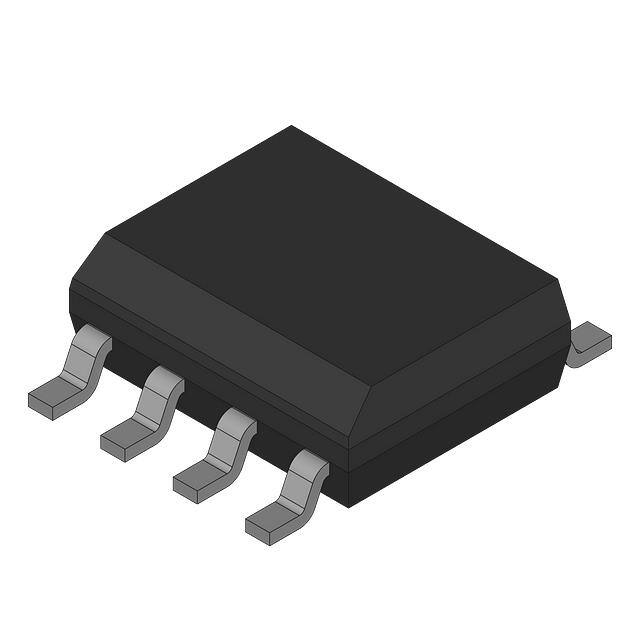
The AD8276 is available in the space-saving 8-lead MSOP and
SOIC packages, and the AD8277 is offered in a 14-lead SOIC
package. Both are specified for performance over the industrial
temperature range of −40°C to +85°C and are fully RoHS
compliant.
Rev. C
Information furnished by Analog Devices is believed to be accurate and reliable. However, no
responsibility is assumed by Analog Devices for its use, nor for any infringements of patents or other
rights of third parties that may result from its use. Specifications subject to change without notice. No
license is granted by implication or otherwise under any patent or patent rights of Analog Devices.
Trademarks and registered trademarks are the property of their respective owners.
One Technology Way, P.O. Box 9106, Norwood, MA 02062-9106, U.S.A.
Tel: 781.329.4700
www.analog.com
Fax: 781.461.3113 ©2009–2011 Analog Devices, Inc. All rights reserved.
�AD8276/AD8277
Data Sheet
TABLE OF CONTENTS
Features .............................................................................................. 1
Circuit Information.................................................................... 14
Applications ....................................................................................... 1
Driving the AD8276/AD8277 .................................................. 14
General Description ......................................................................... 1
Input Voltage Range ................................................................... 14
Functional Block Diagram .............................................................. 1
Power Supplies ............................................................................ 15
Revision History ............................................................................... 2
Applications Information .............................................................. 16
Specifications..................................................................................... 3
Configurations ............................................................................ 16
Absolute Maximum Ratings............................................................ 5
Differential Output .................................................................... 16
Thermal Resistance ...................................................................... 5
Current Source............................................................................ 17
Maximum Power Dissipation ..................................................... 5
Voltage and Current Monitoring.............................................. 17
Short-Circuit Current .................................................................. 5
Instrumentation Amplifier........................................................ 18
ESD Caution .................................................................................. 5
RTD .............................................................................................. 18
Pin Configurations and Function Descriptions ........................... 6
Outline Dimensions ....................................................................... 19
Typical Performance Characteristics ............................................. 8
Ordering Guide .......................................................................... 20
Theory of Operation ...................................................................... 14
REVISION HISTORY
11/11—Rev. B to Rev. C
Change to Figure 53 ....................................................................... 18
4/10—Rev. A to Rev. B
Changes to Figure 53 ...................................................................... 18
Updated Outline Dimensions ....................................................... 19
7/09—Rev. 0 to Rev. A
Added AD8277 ................................................................... Universal
Changes to Features Section............................................................ 1
Changes to General Description Section ...................................... 1
Added Figure 2; Renumbered Sequentially .................................. 1
Changes to Specifications Section .................................................. 3
Changes to Figure 3 and Table 5 ..................................................... 5
Added Figure 5 and Table 7; Renumbered Sequentially ............. 7
Changes to Figure 10.........................................................................8
Changes to Figure 34...................................................................... 12
Added Figure 36 ............................................................................. 13
Changes to Input Voltage Range Section .................................... 14
Changes to Power Supplies Section and Added Figure 40........ 15
Added to Figure 40 ......................................................................... 15
Changes to Differential Output Section ...................................... 16
Added Figure 47 and Changes to Current Source Section ....... 17
Added Voltage and Current Monitoring Section and Figure 49..... 17
Moved Instrumentation Amplifier Section and Added RTD
Section ........................................................................................................18
Changes to Ordering Guide .......................................................... 20
5/09—Revision 0: Initial Version
Rev. C | Page 2 of 20
�Data Sheet
AD8276/AD8277
SPECIFICATIONS
VS = ±5 V to ±15 V, VREF = 0 V, TA = 25°C, RL = 10 kΩ connected to ground, G = 1 difference amplifier configuration, unless
otherwise noted.
Table 2.
G=1
Parameter
INPUT CHARACTERISTICS
System Offset 1
vs. Temperature
Average Temperature
Coefficient
vs. Power Supply
Common-Mode Rejection
Ratio (RTI)
Input Voltage Range 2
Impedance 3
Differential
Common Mode
DYNAMIC PERFORMANCE
Bandwidth
Slew Rate
Settling Time to 0.01%
Settling Time to 0.001%
Channel Separation
GAIN
Gain Error
Gain Drift
Gain Nonlinearity
OUTPUT CHARACTERISTICS
Output Voltage Swing 4
Short-Circuit Current Limit
Capacitive Load Drive
NOISE 5
Output Voltage Noise
POWER SUPPLY
Supply Current 6
vs. Temperature
Operating Voltage Range 7
TEMPERATURE RANGE
Operating Range
Conditions
Min
Grade B
Typ
Max
100
500
500
µV
µV
0.5
2
5
2
5
10
µV/°C
µV/V
+2(VS − 1.5)
dB
V
+2(VS − 1.5)
80
−2(VS + 0.1)
80
40
550
1.1
10 V step on output,
CL = 100 pF
130
0.005
TA = −40°C to +85°C
VOUT = 20 V p-p
VS = ±15 V, RL = 10 kΩ,
TA = −40°C to +85°C
0.9
80
40
kΩ
kΩ
550
1.1
kHz
V/µs
15
16
f = 1 kHz
−VS + 0.2
0.02
1
5
+VS − 0.2
2
65
15
16
µs
µs
dB
0.05
5
10
%
ppm/°C
ppm
+VS − 0.2
V
mA
pF
130
0.01
−VS + 0.2
±15
200
f = 0.1 Hz to 10 Hz
f = 1 kHz
Unit
200
200
86
−2(VS + 0.1)
0.9
Grade A
Typ Max
100
TA = −40°C to +85°C
TA = −40°C to +85°C
VS = ±5 V to ±18 V
VS = ±15 V, VCM = ±27 V,
RS = 0 Ω
Min
±15
200
2
65
70
70
μV p-p
nV/√Hz
μA
μA
V
°C
±2
200
250
±18
±2
200
250
±18
−40
+125
−40
+125
TA = −40°C to +85°C
Includes input bias and offset current errors, RTO (referred to output).
The input voltage range may also be limited by absolute maximum input voltage or by the output swing. See the Input Voltage Range section in the Theory of
Operation section for details.
3
Internal resistors are trimmed to be ratio matched and have ±20% absolute accuracy.
4
Output voltage swing varies with supply voltage and temperature. See Figure 18 through Figure 21 for details.
5
Includes amplifier voltage and current noise, as well as noise from internal resistors.
6
Supply current varies with supply voltage and temperature. See Figure 22 and Figure 24 for details.
7
Unbalanced dual supplies can be used, such as −VS = −0.5 V and +VS = +2 V. The positive supply rail must be at least 2 V above the negative supply and reference
voltage.
1
2
Rev. C | Page 3 of 20
�AD8276/AD8277
Data Sheet
VS = +2.7 V to
很抱歉,暂时无法提供与“AD8276ARZ-RL”相匹配的价格&库存,您可以联系我们找货
免费人工找货