14-Bit, 1.25 GSPS JESD204B,
Dual Analog-to-Digital Converter
AD9691
Data Sheet
FUNCTIONAL BLOCK DIAGRAM
FD_A
FD_B
VIN+B
VIN–B
V_1P0
BUFFER
ADC
CORE
AVDD3
(3.3V)
14
AVDD_SR
(1.25V)
DVDD
(1.25V)
DIGITAL
DOWNCONVERTER
SIGNAL
MONITOR
ADC
CORE
14
DIGITAL
DOWNCONVERTER
CONTROL
REGISTERS
BUFFER
AD9691
AGND
DRGND DGND
JESD204B
SUBCLASS 1
CONTROL
SPI CONTROL
÷2
÷4
÷8
SDIO
8
SERDOUT0±
SERDOUT1±
SERDOUT2±
SERDOUT3±
SERDOUT4±
SERDOUT5±
SERDOUT6±
SERDOUT7±
FAST
DETECT
SIGNAL
MONITOR
CLOCK
GENERATION
CLK+
CLK–
SPIVDD
DRVDD
(1.25V) (1.8V TO 3.3V)
SCLK
SYNCINB±
SYSREF±
PDWN/
STBY
CSB
13092-001
VIN+A
VIN–A
AVDD2
(2.50V)
Tx OUTPUTS
AVDD1
(1.25V)
FAST
DETECT
JESD204B (Subclass 1) coded serial digital outputs
1.9 W total power per channel (default settings)
SFDR = 77 dBFS at 340 MHz
SNR = 63.4 dBFS at 340 MHz (AIN = −1.0 dBFS)
Noise density = −152.6 dBFS/Hz
1.25 V, 2.50 V, and 3.3 V dc supply operation
No missing codes
1.58 V p-p differential full scale input voltage
Flexible termination impedance
400 Ω, 200 Ω, 100 Ω, and 50 Ω differential
1.5 GHz usable analog input full power bandwidth
95 dB channel isolation/crosstalk
Amplitude detection bits for efficient AGC implementation
2 integrated wideband digital processors per channel
12-bit NCO, up to 4 cascaded half-band filters
Integer clock divide by 1, 2, 4, or 8
Flexible JESD204B lane configurations
Timestamp feature
Small signal dither
JESD204B
HIGH SPEED SERIALIZER
FEATURES
Figure 1.
APPLICATIONS
Communications (wideband receivers and digital predistortion)
Instrumentation (spectrum analyzers, network analyzers,
integrated RF test solutions)
DOCSIS 3.x CMTS upstream receive paths
High speed data acquisition systems
GENERAL DESCRIPTION
The AD9691 is a dual, 14-bit, 1.25 GSPS analog-to-digital converter
(ADC). The device has an on-chip buffer and sample-and-hold
circuit designed for low power, small size, and ease of use. The
device is designed for sampling wide bandwidth analog signals
of up to 1.5 GHz.
The dual ADC cores feature a multistage, differential pipelined
architecture with integrated output error correction logic. Each
ADC features wide bandwidth inputs supporting a variety of
user-selectable input ranges. An integrated voltage reference
eases design considerations.
Each ADC data output is internally connected to two digital
downconverters (DDCs). Each DDC consists of four cascaded
signal processing stages: a 12-bit frequency translator (NCO)
and four half-band decimation filters.
In addition to the DDC blocks, the AD9691 has a programmable
threshold detector that allows monitoring of the incoming
signal power using the fast detect output bits of the ADC. Because
Rev. 0
this threshold indicator has low latency, the user can quickly
turn down the system gain to avoid an overrange condition at
the ADC input.
Users can configure the Subclass 1 JESD204B-based high speed
serialized output in a variety of one-, two-, four- or eight-lane
configurations, depending on the DDC configuration and the
acceptable lane rate of the receiving logic device. Multiple device
synchronization is supported through the SYSREF± input pins.
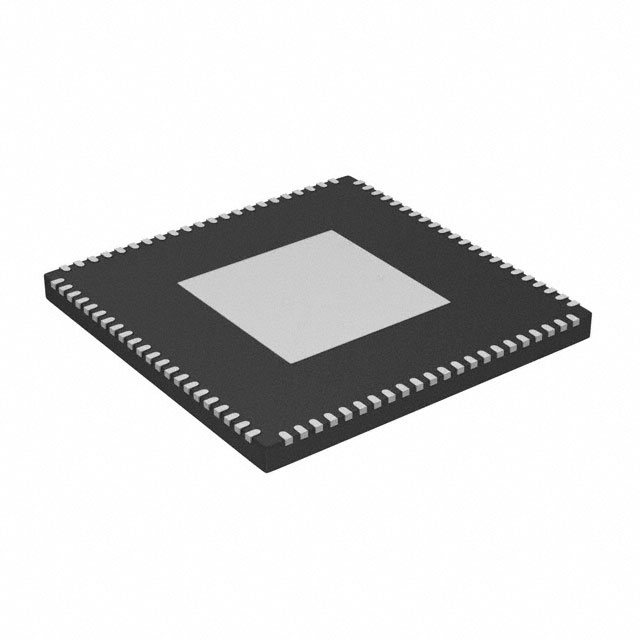
The AD9691 is available in a Pb-free, 88-lead LFCSP and is
specified over the −40°C to +85°C industrial temperature range.
This product is protected by a U.S. patent.
PRODUCT HIGHLIGHTS
1.
2.
3.
4.
5.
6.
Low power consumption analog core, 14-bit, 1.25 GSPS
dual ADC with 1.9 W per channel.
Wide full power bandwidth supports intermediate
frequency (IF) sampling of signals up to 1.5 GHz.
Buffered inputs with programmable input termination
eases filter design and implementation.
Flexible serial port interface (SPI) controls various product
features and functions to meet specific system requirements.
Programmable fast overrange detection.
12 mm × 12 mm, 88-lead LFCSP.
Document Feedback
Information furnished by Analog Devices is believed to be accurate and reliable. However, no
responsibility is assumed by Analog Devices for its use, nor for any infringements of patents or other
rights of third parties that may result from its use. Specifications subject to change without notice. No
license is granted by implication or otherwise under any patent or patent rights of Analog Devices.
Trademarks and registered trademarks are the property of their respective owners.
One Technology Way, P.O. Box 9106, Norwood, MA 02062-9106, U.S.A.
Tel: 781.329.4700
©2015 Analog Devices, Inc. All rights reserved.
Technical Support
www.analog.com
�AD9691
Data Sheet
TABLE OF CONTENTS
Features .............................................................................................. 1
DDC NCO Plus Mixer Loss and SFDR ................................... 34
Applications ....................................................................................... 1
Numerically Controlled Oscillator .......................................... 34
General Description ......................................................................... 1
FIR Filters ........................................................................................ 36
Functional Block Diagram .............................................................. 1
General Description ................................................................... 36
Product Highlights ........................................................................... 1
Half-Band Filters ........................................................................ 37
Revision History ............................................................................... 2
DDC Gain Stage ......................................................................... 39
Specifications..................................................................................... 3
DDC Complex to Real Conversion Block............................... 39
DC Specifications ......................................................................... 3
DDC Example Configurations ................................................. 40
AC Specifications.......................................................................... 4
Digital Outputs ............................................................................... 43
Digital Specifications ................................................................... 5
Introduction to the JESD204B Interface ................................. 43
Switching Specifications .............................................................. 6
JESD204B Overview .................................................................. 43
Timing Specifications .................................................................. 7
Functional Overview ................................................................. 44
Absolute Maximum Ratings ............................................................ 9
JESD204B Link Establishment ................................................. 45
Thermal Characteristics .............................................................. 9
Physical Layer (Driver) Outputs .............................................. 47
ESD Caution .................................................................................. 9
Configuring the JESD204B Link .............................................. 48
Pin Configuration and Function Descriptions ........................... 10
Multichip Synchronization............................................................ 51
Typical Performance Characteristics ........................................... 12
SYSREF± Setup/Hold Window Monitor ................................. 52
Equivalent Circuits ......................................................................... 16
Test Modes ....................................................................................... 54
Theory of Operation ...................................................................... 18
ADC Test Modes ........................................................................ 54
ADC Architecture ...................................................................... 18
JESD204B Block Test Modes .................................................... 54
Analog Input Considerations.................................................... 18
Serial Port Interface ........................................................................ 57
Voltage Reference ....................................................................... 20
Configuration Using the SPI ..................................................... 57
Clock Input Considerations ...................................................... 21
Hardware Interface ..................................................................... 57
Power-Down/Standby Mode .................................................... 22
SPI Accessible Features .............................................................. 57
Temperature Diode .................................................................... 22
Memory Map .................................................................................. 58
ADC Overrange and Fast Detect .................................................. 23
Reading the Memory Map Register Table............................... 58
ADC Overrange .......................................................................... 23
Memory Map Register Table ..................................................... 59
Fast Threshold Detection (FD_A and FD_B) ........................ 23
Applications Information .............................................................. 71
Signal Monitor ................................................................................ 24
Power Supply Recommendations............................................. 71
Digital Downconverters (DDCs).................................................. 27
Exposed Pad Thermal Heat Slug Recommendations ............ 71
DDC I/Q Input Selection .......................................................... 27
AVDD1_SR (Pin 78) and AGND (Pin 77 and Pin 81) .............. 71
DDC I/Q Output Selection ....................................................... 27
Outline Dimensions ....................................................................... 72
DDC General Description ........................................................ 27
Ordering Guide .......................................................................... 72
Frequency Translation ................................................................... 33
General Description ................................................................... 33
REVISION HISTORY
7/15—Revision 0: Initial Version
Rev. 0 | Page 2 of 72
�Data Sheet
AD9691
SPECIFICATIONS
DC SPECIFICATIONS
AVDD1 = 1.25 V, AVDD2 = 2.50 V, AVDD3 = 3.3 V, AVDD1_SR = 1.25 V, DVDD = 1.25 V, DRVDD = 1.25 V, SPIVDD = 1.8 V, specified
maximum sampling rate (1250 MSPS), 1.58 V p-p full-scale differential input, AIN = −1.0 dBFS, clock divider = 2, default SPI settings,
TA = 25°C, unless otherwise noted.
Table 1.
Parameter
RESOLUTION
ACCURACY
No Missing Codes
Offset Error
Offset Matching
Gain Error
Gain Matching
Differential Nonlinearity (DNL)
Integral Nonlinearity (INL)
TEMPERATURE DRIFT
Offset Error
Gain Error
INTERNAL VOLTAGE REFERENCE
Voltage
INPUT REFERRED NOISE
VREF = 1.0 V
ANALOG INPUTS
Differential Input Voltage Range
Common-Mode Voltage (VCM)
Differential Input Capacitance
Analog Input Full Power Bandwidth
POWER SUPPLY
AVDD1
AVDD2
AVDD3
AVDD1_SR
DVDD
DRVDD
SPIVDD
IAVDD1
IAVDD2
IAVDD3
IAVDD1_SR
IDVDD 1
IDRVDD 2
ISPIVDD
POWER CONSUMPTION
Total Power Dissipation (Including Output Drivers)1
Power-Down Dissipation
Standby 3
1
2
3
Temperature
Full
Full
Full
Full
Full
Full
Full
Full
Min
14
−0.31
−6
−0.8
−6.5
Typ
Max
Unit
Bits
Guaranteed
0
0
0
1
±0.5
±2.6
+0.31
0.3
+6
3.9
+0.8
+6.5
% FSR
% FSR
% FSR
% FSR
LSB
LSB
25°C
25°C
−26
±9.8
ppm/°C
ppm/°C
Full
1.0
V
25°C
3.53
LSB rms
Full
25°C
25°C
25°C
1.58
2.05
1.5
2
V p-p
V
pF
GHz
Full
Full
Full
Full
Full
Full
Full
Full
Full
Full
Full
Full
Full
Full
Full
Full
Full
Default mode. No DDCs used. L = 8, M = 2, and F = 1.
All lanes running. Power dissipation on DRVDD changes with the lane rate and number of lanes used.
Standby mode can be controlled by the SPI.
Rev. 0 | Page 3 of 72
1.22
2.44
3.2
1.22
1.22
1.22
1.7
1.25
2.50
3.3
1.25
1.25
1.25
1.8
800
670
125
15
250
310
5
3.8
0.9
1.5
1.28
2.56
3.4
1.28
1.28
1.28
3.4
840
770
140
18
290
380
6
V
V
V
V
V
V
V
mA
mA
mA
mA
mA
mA
mA
W
mW
W
�AD9691
Data Sheet
AC SPECIFICATIONS
AVDD1 = 1.25 V, AVDD2 = 2.50 V, AVDD3 = 3.3 V, AVDD1_SR = 1.25 V, DVDD = 1.25 V, DRVDD = 1.25 V, SPIVDD = 1.8 V, specified
maximum sampling rate (1250 MSPS), 1.58 V p-p full-scale differential input, AIN = −1.0 dBFS, clock divider = 2, default SPI settings,
TA = 25°C, unless otherwise noted.
Table 2.
Parameter 1
ANALOG INPUT FULL SCALE
NOISE DENSITY 2
SIGNAL-TO-NOISE RATIO (SNR) 3
fIN = 10 MHz
fIN = 170 MHz
fIN = 340 MHz
fIN = 450 MHz
fIN = 750 MHz
fIN = 985 MHz
fIN = 1205 MHz
fIN = 1600 MHz
fIN = 1950 MHz
SNR AND DISTORTION RATIO (SINAD)3
fIN = 10 MHz
fIN = 170 MHz
fIN = 340 MHz
fIN = 450 MHz
fIN = 750 MHz
fIN = 985 MHz
fIN = 1205 MHz
fIN = 1600 MHz
fIN = 1950 MHz
EFFECTIVE NUMBER OF BITS (ENOB)
fIN = 10 MHz
fIN = 170 MHz
fIN = 340 MHz
fIN = 450 MHz
fIN = 750 MHz
fIN = 985 MHz
fIN = 1205 MHz
fIN = 1600 MHz
fIN = 1950 MHz
SPURIOUS-FREE DYNAMIC RANGE (SFDR)3
fIN = 10 MHz
fIN = 170 MHz
fIN = 340 MHz
fIN = 450 MHz
fIN = 750 MHz
fIN = 985 MHz
fIN = 1205 MHz
fIN = 1600 MHz
fIN = 1950 MHz
Temperature
Full
Full
25°C
Full
25°C
25°C
25°C
25°C
25°C
25°C
25°C
25°C
Full
25°C
25°C
25°C
25°C
25°C
25°C
25°C
25°C
Full
25°C
25°C
25°C
25°C
25°C
25°C
25°C
25°C
Full
25°C
25°C
25°C
25°C
25°C
25°C
25°C
Rev. 0 | Page 4 of 72
Min
60.8
60.5
9.7
72
Typ
1.58
−152.6
Max
Unit
V p-p
dBFS/Hz
64.6
64.2
63.4
62.9
61.7
59.7
58.3
56.5
55.1
dBFS
dBFS
dBFS
dBFS
dBFS
dBFS
dBFS
dBFS
dBFS
64.5
64.0
63.0
62.3
61.3
59.4
57.5
55.8
54.7
dBFS
dBFS
dBFS
dBFS
dBFS
dBFS
dBFS
dBFS
dBFS
10.4
10.3
10.2
10.1
9.9
9.6
9.2
9.0
8.8
Bits
Bits
Bits
Bits
Bits
Bits
Bits
Bits
Bits
87
79
77
72
73
72
66
66
69
dBFS
dBFS
dBFS
dBFS
dBFS
dBFS
dBFS
dBFS
dBFS
�Data Sheet
AD9691
Parameter 1
WORST HARMONIC, SECOND OR THIRD3
fIN = 10 MHz
fIN = 170 MHz
fIN = 340 MHz
fIN = 450 MHz
fIN = 750 MHz
fIN = 985 MHz
fIN = 1205 MHz
fIN = 1600 MHz
fIN = 1950 MHz
WORST OTHER, EXCLUDING SECOND OR THIRD HARMONIC3
fIN = 10 MHz
fIN = 170 MHz
fIN = 340 MHz
fIN = 450 MHz
fIN = 750 MHz
fIN = 985 MHz
fIN = 1205 MHz
fIN = 1600 MHz
fIN = 1950 MHz
TWO-TONE INTERMODULATION DISTORTION (IMD), AIN1 AND AIN2 = −7 dBFS
fIN1 = 185 MHz, fIN2 = 188 MHz, Buffer Current Setting = 3.5×
fIN1 = 449 MHz, fIN2 = 452 MHz, Buffer Current Setting = 6.5×
CHANNEL ISOLATION/CROSSTALK 4
FULL POWER BANDWIDTH 5
Temperature
Min
Typ
25°C
Full
25°C
25°C
25°C
25°C
25°C
25°C
25°C
−87
−84
−77
−72
−73
−72
−66
−66
−69
25°C
Full
25°C
25°C
25°C
25°C
25°C
25°C
25°C
−93
−81
−79
−81
−77
−76
−72
−72
−73
25°C
25°C
25°C
25°C
82
78
95
1.5
Max
−72
−76
Unit
dBFS
dBFS
dBFS
dBFS
dBFS
dBFS
dBFS
dBFS
dBFS
dBFS
dBFS
dBFS
dBFS
dBFS
dBFS
dBFS
dBFS
dBFS
dBFS
dBFS
dB
GHz
See the AN-835 Application Note, Understanding High Speed ADC Testing and Evaluation, for definitions and for details on how these tests were completed.
Noise density is measured at a low analog input frequency (30 MHz).
3
See Table 10 for the recommended settings for full-scale voltage and buffer current control.
4
Crosstalk is measured at 170 MHz with a −1.0 dBFS analog input on one channel and no input on the adjacent channel.
5
Measured with the circuit shown in Figure 41.
1
2
DIGITAL SPECIFICATIONS
AVDD1 = 1.25 V, AVDD2 = 2.50 V, AVDD3 = 3.3 V, AVDD1_SR = 1.25 V, DVDD = 1.25 V, DRVDD = 1.25 V, SPIVDD = 1.8 V, specified
maximum sampling rate (1250 MSPS), 1.58 V p-p full-scale differential input, AIN = −1.0 dBFS, clock divider = 2, default SPI settings,
TA = 25°C, unless otherwise noted.
Table 3.
Parameter
CLOCK INPUTS (CLK+, CLK−)
Logic Compliance
Differential Input Voltage
Input Common-Mode Voltage
Input Resistance (Differential)
Input Capacitance
SYSTEM REFERENCE INPUTS (SYSREF+, SYSREF−)
Logic Compliance
Differential Input Voltage
Input Common-Mode Voltage
Input Resistance (Differential)
Input Capacitance (Differential)
Temperature
Full
Full
Full
Full
Full
Full
Full
Full
Full
Full
Rev. 0 | Page 5 of 72
Min
600
Typ
LVDS/LVPECL
1200
0.85
35
Max
Unit
1800
mV p-p
V
kΩ
pF
2.5
400
0.6
LVDS/LVPECL
1200
0.85
35
1800
2.0
2.5
mV p-p
V
kΩ
pF
�AD9691
Parameter
LOGIC INPUTS (SDIO, SCLK, CSB, PDWN/STBY)
Logic Compliance
Logic 1 Voltage
Logic 0 Voltage
Input Resistance
LOGIC OUTPUT (SDIO)
Logic Compliance
Logic 1 Voltage (IOH = 800 µA)
Logic 0 Voltage (IOL = 50 µA)
SYNC INPUTS (SYNCINB+, SYNCINB−)
Logic Compliance
Differential Input Voltage
Input Common-Mode Voltage
Input Resistance (Differential)
Input Capacitance
LOGIC OUTPUTS (FD_A, FD_B)
Logic Compliance
Logic 1 Voltage
Logic 0 Voltage
Input Resistance
DIGITAL OUTPUTS (SERDOUTx±, x = 0 TO 7)
Logic Compliance
Differential Output Voltage
Output Common-Mode Voltage (VCM), AC-Coupled
Short-Circuit Current (IDSHORT)
Differential Return Loss (RLDIFF) 1
Common-Mode Return Loss (RLCM)1
Differential Termination Impedance
1
Data Sheet
Temperature
Min
Typ
Full
Full
Full
Full
0.8 × SPIVDD
0
Max
Unit
0.5
V
V
kΩ
CMOS
30
Full
Full
Full
CMOS
0.8 × SPIVDD
0
Full
Full
Full
Full
Full
400
0.6
Full
Full
Full
Full
V
V
0.5
LVDS/LVPECL/CMOS
1200
1800
0.85
2.0
35
2.5
mV p-p
V
kΩ
pF
CMOS
0.8 × SPIVDD
0
V
V
kΩ
0.5
30
Full
Full
25°C
25°C
25°C
25°C
Full
CML
360
0
−100
8
6
80
770
1.8
+100
100
mV p-p
V
mA
dB
dB
Ω
120
Differential and common-mode return loss is measured from 100 MHz to 0.75 MHz × baud rate.
SWITCHING SPECIFICATIONS
AVDD1 = 1.25 V, AVDD2 = 2.50 V, AVDD3 = 3.3 V, AVDD1_SR = 1.25 V, DVDD = 1.25 V, DRVDD = 1.25 V, SPIVDD = 1.8 V, specified
maximum sampling rate (1250 MSPS), 1.58 V p-p full-scale differential input, AIN = −1.0 dBFS, clock divider = 2, default SPI settings,
TA = 25°C, unless otherwise noted.
Table 4.
Parameter
CLOCK
Clock Rate (at CLK+/CLK− Pins)
Maximum Sample Rate 1
Minimum Sample Rate 2
Clock Pulse Width
High
Low
OUTPUT PARAMETERS
Unit Interval (UI) 3
Rise Time (tR) (20% to 80% into 100 Ω Load)
Fall Time (tF) (20% to 80% into 100 Ω Load)
PLL Lock Time
Data Rate per Channel (NRZ) 4
Temperature
Min
Full
Full
Full
0.3
1250
300
Full
Full
400
400
Full
25°C
25°C
25°C
25°C
320
24
24
Rev. 0 | Page 6 of 72
3.125
Typ
Max
Unit
4
GHz
MSPS
MSPS
ps
ps
160
32
32
2
6.25
12.5
ps
ps
ps
ms
Gbps
�Data Sheet
AD9691
Parameter
LATENCY 5
Pipeline Latency
Fast Detect Latency
Wake-Up Time 6
Standby
Power-Down
APERTURE
Aperture Delay (tA)
Aperture Uncertainty (Jitter, tj)
Out-of-Range Recovery Time
Temperature
Min
Typ
Full
Full
55
25°C
25°C
1
Full
Full
Full
530
55
1
Max
Unit
28
Clock cycles
Clock cycles
4
ms
ms
ps
fs rms
Clock cycles
The maximum sample rate is the clock rate after the divider.
The minimum sample rate operates at 300 MSPS with L = 1.
3
Baud rate = 1/UI. A subset of this range is supported by the AD9691.
4
Default L = 8. This number can be changed based on the sample rate and decimation ratio.
5
No DDCs used. L = 8, M = 2, and F = 1.
6
Wake-up time is the time required to return to normal operation from power-down mode.
1
2
TIMING SPECIFICATIONS
Table 5.
Parameter
CLK+ to SYSREF+ TIMING REQUIREMENTS
tSU_SR
tH_SR
SPI TIMING REQUIREMENTS
tDS
tDH
tCLK
tS
tH
tHIGH
tLOW
tEN_SDIO
tDIS_SDIO
Test Conditions/Comments
See Figure 2
Device clock to SYSREF+ setup time
Device clock to SYSREF+ hold time
See Figure 3
Setup time between the data and the rising edge of SCLK
Hold time between the data and the rising edge of SCLK
Period of the SCLK signal
Setup time between CSB and SCLK
Hold time between CSB and SCLK
Minimum period that SCLK must be in a logic high state
Minimum period that SCLK must be in a logic low state
Time required for the SDIO pin to switch from an input to an
output relative to the SCLK falling edge (not shown in Figure 3)
Time required for the SDIO pin to switch from an output to an
input relative to the SCLK rising edge (not shown in Figure 3)
Min
Typ
117
−96
Max
Unit
ps
ps
2
2
40
2
2
10
10
10
ns
ns
ns
ns
ns
ns
ns
ns
10
ns
Timing Diagrams
CLK–
CLK+
tSU_SR
tH_SR
13092-002
SYSREF–
SYSREF+
Figure 2. SYSREF+ Setup and Hold Timing Diagram
Rev. 0 | Page 7 of 72
�AD9691
Data Sheet
tHIGH
tDS
tS
tCLK
tDH
tH
tLOW
CSB
SDIO DON’T CARE
DON’T CARE
R/W
A14
A13
A12
A11
A10
A9
A8
A7
D5
D4
D3
D2
D1
D0
13092-003
SCLK DON’T CARE
DON’T CARE
Figure 3. SPI Timing Diagram
APERTURE
DELAY
SAMPLE N
N – 55
ANALOG
INPUT
SIGNAL
N+1
N – 54
N–1
N – 53
N – 52
CLK–
CLK+
CLK–
CLK+
SERDOUT0–
A
B
C
D
E
F
G
H
I
J
A
B
C
D
E
F
G
H
I
J
A
B
C
D
E
F
G
H
I
J
CONVERTER0 MSB
A
B
C
D
E
F
G
H
I
J
A
B
C
D
E
F
G
H
I
J
A
B
C
D
E
F
G
H
I
J
CONVERTER0 MSB
A
B
C
D
E
F
G
H
I
J
A
B
C
D
E
F
G
H
I
J
A
B
C
D
E
F
G
H
I
J
CONVERTER0 LSB
A
B
C
D
E
F
G
H
I
J
A
B
C
D
E
F
G
H
I
J
A
B
C
D
E
F
G
H
I
J
CONVERTER0 LSB
A
B
C
D
E
F
G
H
I
J
A
B
C
D
E
F
G
H
I
J
A
B
C
D
E
F
G
H
I
J
CONVERTER1 MSB
A
B
C
D
E
F
G
H
I
J
A
B
C
D
E
F
G
H
I
J
A
B
C
D
E
F
G
H
I
J
CONVERTER1 MSB
A
B
C
D
E
F
G
H
I
J
A
B
C
D
E
F
G
H
I
J
A
B
C
D
E
F
G
H
I
J
CONVERTER1 LSB
A
B
C
D
E
F
G
H
I
J
A
B
C
D
E
F
G
H
I
J
A
B
C
D
E
F
G
H
I
J
CONVERTER1 LSB
SERDOUT0+
SERDOUT1–
SERDOUT1+
SERDOUT2–
SERDOUT2+
SERDOUT3–
SERDOUT3+
SERDOUT4–
SERDOUT4+
SERDOUT5–
SERDOUT5+
SERDOUT6–
SERDOUT6+
SERDOUT7–
SAMPLE N – 55
ENCODED INTO 1
8B/10B SYMBOL
SAMPLE N – 54
ENCODED INTO 1
8B/10B SYMBOL
SAMPLE N – 53
ENCODED INTO 1
8B/10B SYMBOL
Figure 4. Data Output Timing (Full Bandwidth Mode, L = 8, M = 2, F = 1)
Rev. 0 | Page 8 of 72
13092-004
SERDOUT7+
�Data Sheet
AD9691
ABSOLUTE MAXIMUM RATINGS
THERMAL CHARACTERISTICS
Table 6.
Parameter
Electrical
AVDD1 to AGND
AVDD1_SR to AGND
AVDD2 to AGND
AVDD3 to AGND
DVDD to DGND
DRVDD to DRGND
SPIVDD to AGND
AGND to DRGND
VIN±x to AGND
SCLK, SDIO, CSB to AGND
PDWN/STBY to AGND
Environmental
Operating Temperature Range
Maximum Junction Temperature
Storage Temperature Range
(Ambient)
Rating
1.32 V
1.32 V
2.75 V
3.63 V
1.32 V
1.32 V
3.63 V
−0.3 V to +0.3 V
3.2 V
−0.3 V to SPIVDD + 0.3 V
−0.3 V to SPIVDD + 0.3 V
−40°C to +85°C
115°C
−65°C to +150°C
Typical θJA, ΨJB, θJC_TOP, and θJC_BOT values are specified vs. the
number of printed circuit board (PCB) layers in different
airflow velocities (in m/sec). Airflow increases heat dissipation
effectively reducing θJA and ΨJB. The use of appropriate thermal
management techniques is recommended to ensure that the
maximum junction temperature does not exceed the limits shown
in Table 7.
Table 7.
PCB
Type
JEDEC
2s2p
Board
Airflow
Velocity
(m/sec)
0.0
1.0
2.5
ΨJB1, 3
4.70
4.32
4.21
θJC_TOP1, 4
6.01
N/A5
N/A5
θJC_BOT1, 4
1.12
N/A5
N/A5
Per JEDEC 51-7, plus JEDEC 51-5 2s2p test board.
Per JEDEC JESD51-2 (still air) or JEDEC JESD51-6 (moving air).
3
Per JEDEC JESD51-8 (still air).
4
Per MIL-STD 883, Method 1012.1.
5
N/A means not applicable.
1
2
Stresses at or above those listed under Absolute Maximum
Ratings may cause permanent damage to the product. This is a
stress rating only; functional operation of the product at these
or any other conditions above those indicated in the operational
section of this specification is not implied. Operation beyond
the maximum operating conditions for extended periods may
affect product reliability.
θJA1, 2
17.41
13.83
12.47
ESD CAUTION
Rev. 0 | Page 9 of 72
Unit
°C/W
°C/W
°C/W
�AD9691
Data Sheet
88
87
86
85
84
83
82
81
80
79
78
77
76
75
74
73
72
71
70
69
68
67
DNC
AVDD1
AVDD2
DNC
AVDD2
AVDD1
DNC
AGND
SYSREF–
SYSREF+
AVDD1_SR
AGND
AVDD1
CLK–
CLK+
DNC
AVDD1
AVDD2
DNC
AVDD2
AVDD1
DNC
PIN CONFIGURATION AND FUNCTION DESCRIPTIONS
1
2
3
4
5
6
7
8
9
10
11
12
13
14
15
16
17
18
19
20
21
22
66
65
64
63
62
61
60
59
58
57
56
55
54
53
52
51
50
49
48
47
46
45
AD9691
TOP VIEW
(Not to Scale)
AVDD1
AVDD1
AVDD2
AVDD3
VIN–B
VIN+B
AVDD3
AVDD2
AVDD2
AVDD2
SPIVDD
CSB
SCLK
SDIO
DVDD
DGND
DNC
DNC
DNC
DNC
FD_B
DNC
NOTES
1. DNC = DO NOT CONNECT. THESE PINS MUST BE LEFT UNCONNECTED.
2. THE EXPOSED THERMAL PAD ON THE BOTTOM OF THE PACKAGE PROVIDES THE GROUND REFERENCE FOR AVDDX.
THE EXPOSED THERMAL PAD MUST BE CONNECTED TO AGND.
13092-005
DRGND
DRVDD
SYNCINB–
SYNCINB+
SERDOUT0–
SERDOUT0+
SERDOUT1–
SERDOUT1+
SERDOUT2–
SERDOUT2+
SERDOUT3–
SERDOUT3+
SERDOUT4–
SERDOUT4+
SERDOUT5–
SERDOUT5+
SERDOUT6–
SERDOUT6+
SERDOUT7–
SERDOUT7+
DRVDD
DRGND
23
24
25
26
27
28
29
30
31
32
33
34
35
36
37
38
39
40
41
42
43
44
AVDD1
AVDD1
AVDD2
AVDD3
VIN–A
VIN+A
AVDD3
AVDD2
AVDD2
AVDD2
AVDD2
V_1P0
SPIVDD
PWDN/STBY
DVDD
DGND
DNC
DNC
DNC
DNC
FD_A
DNC
Figure 5. Pin Configuration
Table 8. Pin Function Descriptions
Pin No.
Power Supplies
0
Mnemonic
Type
Description
EPAD
Ground
1, 2, 65, 66, 68, 72, 76, 83, 87
3, 8, 9, 10, 11, 57, 58, 59,
64, 69, 71, 84, 86
4, 7, 60, 63
13, 56
15, 52
16, 51
23, 44
24, 43
77, 81
78
Analog
5, 6
12
AVDD1
AVDD2
Supply
Supply
Exposed Pad. The exposed thermal pad on the bottom of the
package provides the ground reference for AVDDx. The
exposed thermal pad must be connected to AGND.
Analog Power Supply (1.25 V Nominal).
Analog Power Supply (2.50 V Nominal).
AVDD3
SPIVDD
DVDD
DGND
DRGND
DRVDD
AGND 1
AVDD1_SR1
Supply
Supply
Supply
Ground
Ground
Supply
Ground
Supply
Analog Power Supply (3.3 V Nominal).
Digital Power Supply for SPI (1.8 V to 3.3 V).
Digital Power Supply (1.25 V Nominal).
Ground Reference for DVDD.
Ground Reference for DRVDD.
Digital Driver Power Supply (1.25 V Nominal).
Ground Reference for SYSREF±.
Analog Power Supply for SYSREF± (1.25 V Nominal).
VIN−A, VIN+A
V_1P0
Input
Input/DNC
VIN+B, VIN−B
CLK+, CLK−
Input
Input
ADC A Analog Input Complement/True.
1.0 V Reference Voltage Input/Do Not Connect. This pin is
configurable through the SPI as a no connect or as an input.
Do not connect this pin if using the internal reference. This pin
requires a 1.0 V reference voltage input if using an external
voltage reference source.
ADC B Analog Input True/Complement.
Clock Input True/Complement.
61, 62
74, 75
Rev. 0 | Page 10 of 72
�Data Sheet
Pin No.
CMOS Outputs
21, 46
Digital Inputs
25, 26
79, 80
Data Outputs
27, 28
29, 30
31, 32
33, 34
35, 36
37, 38
39, 40
41, 42
Device Under Test (DUT)
Controls
14
53
54
55
No Connections
17, 18, 19, 20, 22, 45, 47,
48, 49, 50, 67, 70, 73, 82,
85, 88
1
AD9691
Mnemonic
Type
Description
FD_A, FD_B
Output
Fast Detect Outputs for Channel A and Channel B, respectively.
SYNCINB−, SYNCINB+
SYSREF+, SYSREF−
Input
Input
Active Low JESD204B LVDS Sync Input Complement/True.
Active Low JESD204B LVDS System Reference Input
True/Complement.
SERDOUT0−, SERDOUT0+
SERDOUT1−, SERDOUT1+
SERDOUT2−, SERDOUT2+
SERDOUT3−, SERDOUT3+
SERDOUT4−, SERDOUT4+
SERDOUT5−, SERDOUT5+
SERDOUT6−, SERDOUT6+
SERDOUT7−, SERDOUT7+
Output
Output
Output
Output
Output
Output
Output
Output
Lane 0 Output Data Complement/True.
Lane 1 Output Data Complement/True.
Lane 2 Output Data Complement/True.
Lane 3 Output Data Complement/True.
Lane 4 Output Data Complement/True.
Lane 5 Output Data Complement/True.
Lane 6 Output Data Complement/True.
Lane 7 Output Data Complement/True.
PDWN/STBY
Input
SDIO
SCLK
CSB
Input/output
Input
Input
Power-Down Input (Active High). The operation of this pin
depends on the SPI mode and can be configured as powerdown or standby.
SPI Serial Data Input/Output.
SPI Serial Clock.
SPI Chip Select (Active Low).
DNC
Do No Connect. These pins must be left unconnected.
To ensure proper ADC operation, connect AVDD1_SR and AGND separately from the AVDD1 and EPAD connection. For more information, see the Applications
Information section.
Rev. 0 | Page 11 of 72
�AD9691
Data Sheet
TYPICAL PERFORMANCE CHARACTERISTICS
AVDD1 = 1.25 V, AVDD1_SR = 1.25 V, AVDD2 = 2.50 V, AVDD3 = 3.3 V, DVDD = 1.25 V, DRVDD = 1.25 V, SPIVDD = 1.8 V, specified
maximum sampling rate (1250 MSPS), 1.58 V p-p full-scale differential input, AIN = −1.0 dBFS, default SPI settings, clock divider = 2,
TA = 25°C, 128k FFT sample, unless otherwise noted.
0
0
AIN = –1dBFS
SNR = 64.6dBFS
ENOB = 10.4 BITS
SFDR = 87dBFS
BUFFER CURRENT = 3.5×
–40
–60
–80
–40
–60
–80
13092-006
0
125
375
250
FREQUENCY (MHz)
500
–120
625
13092-009
–100
–100
–120
AIN = –1dBFS
SNR = 62.9dBFS
ENOB = 10.0 BITS
SFDR = 72dBFS
BUFFER CURRENT = 3.5×
–20
AMPLITUDE (dBFS)
AMPLITUDE (dBFS)
–20
0
Figure 6. Single-Tone FFT with fIN = 10.3 MHz
AIN = –1dBFS
SNR = 64.2dBFS
ENOB = 10.3 BITS
SFDR = 79dBFS
BUFFER CURRENT = 3.5×
–40
AMPLITUDE (dBFS)
–60
–80
–40
–60
–80
–100
13092-007
0
125
375
250
FREQUENCY (MHz)
500
–120
625
13092-010
AMPLITUDE (dBFS)
625
AIN = –1dBFS
SNR = 61.7dBFS
ENOB = 9.9 BITS
SFDR = 73dBFS
BUFFER CURRENT = 4.5×
–20
–100
0
125
375
250
FREQUENCY (MHz)
500
625
Figure 10. Single-Tone FFT with fIN = 752.3 MHz
Figure 7. Single-Tone FFT with fIN = 170.3 MHz
0
0
AIN = –1dBFS
SNR = 63.4dBFS
ENOB = 10.2 BITS
SFDR = 77dBFS
BUFFER CURRENT = 3.5×
AIN = –1dBFS
SNR = 59.7dBFS
ENOB = 6.9 BITS
SFDR = 72dBFS
BUFFER CURRENT = 4.5×
–20
AMPLITUDE (dBFS)
–20
–40
–60
–80
–40
–60
–80
–100
13092-008
–100
0
125
375
250
FREQUENCY (MHz)
500
–120
625
13092-011
AMPLITUDE (dBFS)
500
0
–20
–120
375
250
FREQUENCY (MHz)
Figure 9. Single-Tone FFT with fIN = 450.3 MHz
0
–120
125
0
125
375
250
FREQUENCY (MHz)
500
Figure 11. Single-Tone FFT with fIN = 985.3 MHz
Figure 8. Single-Tone FFT with fIN = 340.3 MHz
Rev. 0 | Page 12 of 72
625
�Data Sheet
AD9691
0
85
–40
SFDR
75
SNR/SFDR (dBFS)
–60
–80
65
SNR
60
–100
13092-012
55
–120
0
125
250
375
FREQUENCY (MHz)
500
50
1000
625
1050
1100
1150
1200
1250
SAMPLE RATE (MHz)
Figure 15. SNR/SFDR vs. Sample Rate (fS), fIN = 170.3 MHz, Buffer Current = 3.0×
Figure 12. Single-Tone FFT with fIN = 1205.3 MHz
90
0
AIN = –1dBFS
SNR = 56.5dBFS
ENOB = 9.0 BITS
SFDR = 66dBFS
BUFFER CURRENT = 5.5×
–20
85
80
–40
SNR/SFDR (dBFS)
AMPLITUDE (dBFS)
70
13092-015
AMPLITUDE (dBFS)
80
AIN = –1dBFS
SNR = 58.2dBFS
ENOB = 9.3 BITS
SFDR = 67dBFS
BUFFER CURRENT = 4.5×
–20
–60
–80
SFDR
75
70
SNR
65
60
–100
600.3
500.3
470.3
440.3
410.3
380.3
350.3
320.3
290.3
260.3
230.3
200.3
50
625
170.3
500
130.3
250
375
FREQUENCY (MHz)
100.3
125
9.6
0
70.3
–120
13092-016
13092-013
55
INPUT FREQUENCY (MHz)
Figure 13. Single-Tone FFT with fIN = 1600.3 MHz
Figure 16. SNR/SFDR vs. Input Frequency (fIN), fIN < 600 MHz,
Buffer Current = 3.5× (See Figure 41 and Table 9)
80
0
AIN = –1dBFS
SNR = 56.5dBFS
ENOB = 9.0 BITS
SFDR = 66dBFS
BUFFER CURRENT = 7.5×
75
SFDR
SNR/SFDR (dBFS)
–40
–60
–80
70
65
SNR
60
–120
0
125
250
375
FREQUENCY (MHz)
500
Figure 14. Single-Tone FFT with fIN = 1950.3 MHz
50
700.3
625
13092-017
55
–100
13092-014
AMPLITUDE (dBFS)
–20
800.3
900.3
1000.3
1100.3
1200.3
INPUT FREQUENCY (MHz)
Figure 17. SNR/SFDR vs. Input Frequency (fIN), 700 MHz < fIN < 1200 MHz,
Buffer Current = 4.5× (See Figure 41 and Table 9)
Rev. 0 | Page 13 of 72
�AD9691
Data Sheet
0
75
SFDR
SFDR (dBc)
–20
65
60
SNR
–40
–60
IMD3 (dBc)
–80
SFDR (dBFS)
–100
55
IMD3 (dBFS)
50
1300.3
13092-018
–120
1400.3
1500.3
1600.3
1700.3
1800.3
1900.3
–140
–80 –74 –68 –62 –56 –50 –44 –38 –32 –26 –20 –14
1990.3
Figure 21. Two-Tone SFDR/IMD3 vs. Input Amplitude (AIN) with
fIN1 = 184 MHz and fIN2 = 187 MHz
Figure 18. SNR/SFDR vs. Input Frequency (fIN), 1300 MHz < fIN < 2000 MHz,
Buffer Current = 7.5× (See Figure 41 and Table 9)
0
0
SFDR/IMD3 (dBc AND dBFS)
–40
–60
–80
–100
500
625
Figure 22. Two-Tone SFDR/IMD3 vs. Input Amplitude (AIN) with
fIN1 = 449 MHz and fIN2 = 452 MHz
110
AIN1 AND AIN2 = –7dBFS
SFDR = 78dBFS
IMD2 = 77dBFS
IMD3 = 78dBFS
BUFFER CURRENT = 6.5×
–80
13092-020
–100
SNR (dBFS)
60
50
SFDR (dBc)
40
30
SNR (dBc)
20
10
ANALOG INPUT LEVEL (dBFS)
Figure 20. Two-Tone FFT, fIN1 = 449 MHz, fIN2 = 452 MHz
Figure 23. SNR/SFDR vs. Analog Input Level, fIN = 170.3 MHz,
Buffer Current = 3.5×
Rev. 0 | Page 14 of 72
0
–5
–10
–15
–20
–25
–30
–35
–40
0
625
–45
500
70
–65
–120
80
13092-023
SNR/SFDR (dBc AND dBFS)
90
–60
250
375
FREQUENCY (MHz)
SFDR (dBFS)
100
–40
125
–8
INPUT AMPLITUDE (dBFS)
0
0
SFDR (dBFS)
–100
IMD3 (dBFS)
–140
–80 –74 –68 –62 –56 –50 –44 –38 –32 –26 –20 –14
Figure 19. Two-Tone FFT, fIN1 = 184 MHz, fIN2 = 187 MHz
–20
–80
–50
250
375
FREQUENCY (MHz)
IMD3 (dBc)
–55
125
–60
–60
0
–40
–120
13092-019
–120
SFDR (dBc)
–20
13092-022
AIN1 AND AIN2 = –7dBFS
SFDR = 82dBFS
IMD2 = 82dBFS
IMD3 = 84dBFS
BUFFER CURRENT = 3.5×
–20
AMPLITUDE (dBFS)
–8
INPUT AMPLITUDE (dBFS)
INPUT FREQUENCY (MHz)
AMPLITUDE (dBFS)
13092-021
SFDR/IMD3 (dBc AND dBFS)
SNR/SFDR (dBFS)
70
�Data Sheet
80
1000000
78
900000
SFDR
800000
NUMBER OF HITS
74
72
70
68
66
SNR
64
13092-024
600000
500000
400000
300000
20
60
40
100000
0
80
N – 10
N–9
N–8
N–7
N–6
N–5
N–4
N–3
N–2
N–1
N
N+1
N+2
N+3
N+4
N+5
N+6
N+7
N+8
N+9
N + 10
0
–20
700000
200000
62
60
–40
3.53 LSB RMS
13092-027
76
SNR/SFDR (dBFS)
AD9691
TEMPERATURE (°C)
OUTPUT CODE
Figure 24. SNR/SFDR vs. Temperature, fIN = 170.3 MHz
Figure 27. Input Referred Noise Histogram
4.00
2.5
2.0
3.95
1.5
0.5
POWER (W)
INL (LSB)
1.0
0
–0.5
3.90
3.85
–1.0
0
2000
4000
8000 10000
6000
OUTPUT CODE
12000
14000
3.75
–40
16000
60
80
Figure 28. Power vs. Temperature
4.05
0.8
4.00
13092-029
SAMPLE RATE (MHz)
Figure 26. DNL, fIN = 10 MHz
Figure 29. Power Dissipation vs. Sample Rate (fS)
Rev. 0 | Page 15 of 72
1300
3.60
1280
16000
1260
14000
1240
12000
1220
6000
8000 10000
OUTPUT CODE
1180
4000
1200
2000
3.65
1160
0
3.70
1000
13092-026
–0.6
3.75
1140
–0.4
3.80
1120
–0.2
3.85
1100
0
3.90
1080
0.2
1040
POWER DISSIPATION (W)
0.4
3.95
1020
0.6
DNL (LSB)
40
20
TEMPERATURE (°C)
Figure 25. INL, fIN = 10.3 MHz
–0.8
0
–20
1060
–2.5
13092-025
–2.0
13092-028
3.80
–1.5
�AD9691
Data Sheet
EQUIVALENT CIRCUITS
AVDD3
AVDD3
VIN+x
AVDD3
200Ω
EMPHASIS/SWING
CONTROL (SPI)
VCM
BUFFER
DRVDD
200Ω
DATA+
AVDD3
AVDD3
SERDOUTx+
x = 0 TO 7
3pF
SERDOUTx–
x = 0 TO 7
DRGND
Figure 30. Analog Inputs
Figure 33. Digital Outputs
AVDD1
DVDD
25Ω
SYNCINB+
1kΩ
DGND
AVDD1
25Ω
CLK–
DRVDD
DATA–
13092-030
AIN
CONTROL
(SPI)
CLK+
DRGND
OUTPUT
DRIVER
VIN–x
VCM = 0.85V
13092-031
20kΩ
SYNCINB–
LEVEL
TRANSLATOR
VCM
1kΩ
DGND
Figure 31. Clock Inputs
VCM = 0.85V
20kΩ
DVDD
20kΩ
20kΩ
SYNCINB± PIN
CONTROL (SPI)
13092-034
200Ω
67Ω
10pF
28Ω
400Ω
Figure 34. SYNCINB± Inputs
AVDD1_SR
SYSREF+
1kΩ
SPIVDD
20kΩ
LEVEL
TRANSLATOR
AVDD1_SR
ESD
PROTECTED
VCM = 0.85V
20kΩ
SCLK
SPIVDD
1kΩ
30kΩ
1kΩ
ESD
PROTECTED
13092-035
13092-032
SYSREF–
13092-033
67Ω
200Ω
28Ω
3pF
Figure 35. SCLK Input
Figure 32. SYSREF± Inputs
Rev. 0 | Page 16 of 72
�Data Sheet
AD9691
SPIVDD
ESD
PROTECTED
30kΩ
1kΩ
CSB
30kΩ
1kΩ
PDWN/
STBY
ESD
PROTECTED
13092-036
ESD
PROTECTED
Figure 36. CSB Input
PDWN
CONTROL (SPI)
Figure 39. PDWN/STBY Input
AVDD2
SPIVDD
ESD
PROTECTED
SDO
ESD
PROTECTED
SPIVDD
1kΩ
SDIO
13092-039
ESD
PROTECTED
SPIVDD
SDI
V_1P0
ESD
PROTECTED
13092-037
ESD
PROTECTED
V_1P0 PIN
CONTROL (SPI)
Figure 37. SDIO Input
Figure 40. V_1P0 Input
SPIVDD
FD_A/FD_B
ESD
PROTECTED
FD
JESD204B LMFC
JESD204B SYNC~
TEMPERATURE DIODE
(FD_A ONLY)
FD_x PIN CONTROL (SPI)
13092-038
ESD
PROTECTED
Figure 38. FD_A/FD_B Outputs
Rev. 0 | Page 17 of 72
13092-040
30kΩ
�AD9691
Data Sheet
THEORY OF OPERATION
The dual ADC cores feature multistage, differential pipelined
architecture with integrated output error correction logic. Each
ADC features wide bandwidth inputs supporting a variety of
user-selectable input ranges. An integrated voltage reference
eases design considerations.
The AD9691 has several functions that simplify the AGC function
in a communications receiver. The programmable threshold
detector allows monitoring of the incoming signal power using
the fast detect output bits of the ADC. If the input signal level
exceeds the programmable threshold, the fast detect indicator
goes high. Because this threshold indicator has low latency, the
user can quickly turn down the system gain to avoid an
overrange condition at the ADC input.
The Subclass 1 JESD204B-based, high speed serialized output data
rate can be configured in one-lane (L = 1), two-lane (L = 2), fourlane (L = 4), and eight-lane (L = 8) configurations, depending on
the sample rate and the decimation ratio (DCM). Multiple device
synchronization is supported through the SYSREF± and
SYNCINB± input pins.
ADC ARCHITECTURE
The architecture of the AD9691 consists of an input buffered
pipelined ADC. The input buffer provides a termination impedance to the analog input signal. This termination impedance can be
changed using the SPI to meet the termination needs of the driver
or amplifier. The default termination value is set to 400 Ω. The
equivalent circuit diagram of the analog input termination is
shown in Figure 30. The input buffer is optimized for high
linearity, low noise, and low power.
The input buffer provides a linear high input impedance (for ease
of drive) and reduces the kickback from the ADC. The buffer
is optimized for high linearity, low noise, and low power. The
quantized outputs from each stage are combined into a final
14-bit result in the digital correction logic. The pipelined architecture permits the first stage to operate with a new input sample;
at the same time, the remaining stages operate with the preceding
samples. Sampling occurs on the rising edge of the clock.
and settling within one-half of a clock cycle. A small resistor, in
series with each input, helps reduce the peak transient current
injected from the output stage of the driving source. In addition,
place low Q inductors or ferrite beads on each section of the
input to reduce high differential capacitance at the analog inputs
and, thus, achieve the maximum bandwidth of the ADC. Such
use of low Q inductors or ferrite beads is required when driving
the converter front end at high IF frequencies. Place either a
differential capacitor or two single-ended capacitors on the
inputs to provide a matching passive network. This
configuration ultimately creates a low-pass filter at the input,
which limits unwanted broadband noise. For more information,
see the AN-742 Application Note, the AN-827 Application Note,
and the Analog Dialogue article “Transformer-Coupled FrontEnd for Wideband A/D Converters” (Volume 39, April 2005). In
general, the precise values depend on the application.
For best dynamic performance, the source impedances driving
VIN+x and VIN−x must be matched such that common-mode
settling errors are symmetrical. These errors are reduced by the
common-mode rejection of the ADC. An internal reference buffer
creates a differential reference that defines the span of the ADC core.
The maximum SNR performance is achieved by setting the
ADC to the largest span in a differential configuration. In the
case of the AD9691, the available span is 1.58 V p-p differential.
Differential Input Configurations
There are several ways to drive the AD9691, either actively or
passively. However, optimum performance is achieved by
driving the analog input differentially.
For applications where SNR and SFDR are key parameters,
differential transformer coupling is the recommended input
configuration (see Figure 41 and Table 9) because the noise
performance of most amplifiers is not adequate to achieve the
true performance of the AD9691.
For low to midrange frequencies, a double balun or double
transformer network (see Figure 41) is recommended for
optimum performance of the AD9691. For higher frequencies
in the second and third Nyquist zones, it is better to remove
some of the front-end passive components to ensure wideband
operation (see Table 9).
0.1µF
R1
ANALOG INPUT CONSIDERATIONS
BALUN
The analog input to the AD9691 is a differential buffer. The internal
common-mode voltage of the buffer is 2.05 V. The clock signal
alternately switches the input circuit between sample mode and
hold mode. When the input circuit is switched into sample mode,
the signal source must be capable of charging the sample capacitors
R2
R1
R3
R2
C1
C2
0.1µF
0.1µF
ADC
R3
C1
NOTES
1. SEE TABLE 9 FOR COMPONENT VALUES.
Rev. 0 | Page 18 of 72
Figure 41. Differential Transformer-Coupled Configuration
13092-041
The AD9691 has two analog input channels and four JESD204B
output lane pairs. The ADC is designed to sample wide bandwidth
analog signals of up to 1.5 GHz. The AD9691 is optimized for
wide input bandwidth, a high sampling rate, excellent linearity,
and low power in a small package.
�Data Sheet
AD9691
Table 9. Differential Transformer-Coupled Input Configuration Component Values
Frequency Range
625 MHz
Transformer/Balun
BAL-0006/BAL-0006SMG/ETC1-1-13
BAL-0006/BAL-0006SMG
R1 (Ω)
10
10
Input Common Mode
The analog inputs of the AD9691 are internally biased to the
common mode as shown in Figure 42. The common-mode buffer
has a limited range in that the performance suffers greatly if the
common-mode voltage drops by more than 100 mV. Therefore, in
dc-coupled applications, set the common-mode voltage to 2.05 V ±
100 mV to ensure proper ADC operation.
R2 (Ω)
50
50
R3 (Ω)
15
0
C1 (pF)
Open
Open
C2 (pF)
3
Open
Figure 44, Figure 45, and Figure 46 show how the SFDR can be
optimized using the buffer current setting in Register 0x018 for
different Nyquist zones. At frequencies greater than 1 GHz, it is
better to run the ADC at input amplitudes less than −1 dBFS
(−3 dBFS, for example). This greatly improves the linearity of
the converted signal without sacrificing SNR performance.
90
Analog Input Controls and SFDR Optimization
85
The AD9691 offers flexible controls for the analog inputs, such
as input termination and buffer current. All of the available
controls are shown in Figure 42.
SFDR (dBFS)
80
AVDD3
AVDD3
4.5x
75
2.5x
70
VIN+x
3.5x
13092-045
600.3
500.3
470.3
440.3
410.3
380.3
350.3
320.3
290.3
260.3
230.3
200.3
170.3
Figure 44. Buffer Current Sweeps, SFDR vs. Analog Input Frequency vs. IBUFF;
fIN < 600 MHz
VIN–x
78
3pF
7.5x
76
13092-043
6.5x
74
SFDR (dBFS)
Figure 42. Analog Input Controls
Using Register 0x018, the buffer currents on each channel can
be scaled to optimize the SFDR over various input frequencies
and bandwidths of interest. As the input buffer currents are set,
the amount of current required by the AVDD3 supply changes.
This relationship is shown in Figure 43. For a complete list of
buffer current settings, see Table 35.
72
5.5x
70
4.5x
68
66
64
62
700.3
270
13092-046
AIN CONTROL
(SPI) REGISTERS
(REG 0x008, REG 0x015,
REG 0x016, REG0x018)
800.3
900.3
1000.3
1100.3
1200.3
ANALOG INPUT FREQUENCY (MHz)
250
Figure 45. Buffer Current Sweeps, SFDR vs. Analog Input Frequency vs. IBUFF;
700 MHz < fIN < 1200 MHz
225
200
175
150
125
100
75
1.5× 2.0× 2.5× 3.0× 3.5× 4.0× 4.5× 5.0× 5.5× 6.0× 6.5× 7.0× 7.5× 8.0× 8.5×
BUFFER CURRENT SETTING
13092-044
IAVDD3 (mA)
130.3
9.6
ANALOG INPUT FREQUENCY (MHz)
AVDD3
AVDD3
100.3
60
VCM
BUFFER
70.3
200Ω
200Ω
28Ω
67Ω
400Ω
10pF
65
AVDD3
200Ω
67Ω
200Ω
28Ω
3pF
Figure 43. AVDD3 Power (IAVDD3) vs. Buffer Current Setting
Rev. 0 | Page 19 of 72
�AD9691
Data Sheet
76
VIN+A/
VIN+B
74
7.5x
68
66
INTERNAL
V_1P0
GENERATOR
6.5x
V_1P0 ADJUST
SPI REGISTER
(REG 0x024)
64
5.5x
62
V_1P0
60
1500.3
1600.3
1700.3
1800.3
1900.3
ANALOG INPUT FREQUENCY (MHz)
1990.3
Figure 47. Internal Reference Configuration and Controls
Figure 46. Buffer Current Sweeps, SFDR vs. Analog Input Frequency vs. IBUFF;
1300 MHz < fIN < 2000 MHz
Table 10 shows the recommended buffer current and full-scale
voltage settings for the different analog input frequency ranges.
Table 10. SFDR Optimization for Input Frequencies
Input Frequency
1 GHz
Input Buffer Current
Control Setting
(Register 0x018)
3.5×
5.5× or 6.5×
6.5× or higher
Buffer Control 2
Register
(Register 0x935)
0x04
0x00
0x00
Register 0x024 enables the user to either use this internal 1.0 V
reference, or to provide an external 1.0 V reference. When using
an external voltage reference, provide a 1.0 V reference. The
full-scale adjustment is made using the SPI, irrespective of the
reference voltage. For more information on adjusting the full-scale
level of the AD9691, see the Memory Map Register Table section.
The use of an external reference may be necessary, in some
applications, to enhance the gain accuracy of the ADC or
improve thermal drift characteristics. Figure 48 shows the
typical drift characteristics of the internal 1.0 V reference.
1.0010
1.0009
Absolute Maximum Input Swing
1.0008
The absolute maximum input swing allowed at the inputs of the
AD9691 is 4.3 V p-p differential. Signals operating near or at
this level can cause permanent damage to the ADC.
V_1P0 VOLTAGE (V)
1.0007
VOLTAGE REFERENCE
A stable and accurate 1.0 V voltage reference is built into the
AD9691. This internal 1.0 V reference sets the full-scale input
range of the ADC. For more information on adjusting the input
swing, see Table 35. Figure 47 shows the block diagram of the
internal 1.0 V reference controls.
1.0006
1.0005
1.0004
1.0003
1.0002
1.0001
1.0000
0.9999
0.9998
–50
0
25
TEMPERATURE (°C)
90
Figure 48. Typical V_1P0 Drift
The external reference must be a stable 1.0 V reference. The
ADR130 is a good option for providing the 1.0 V reference.
Figure 49 shows how the ADR130 can be used to provide the
external 1.0 V reference to the AD9691. The grayed out areas
show unused blocks within the AD9691 when using the
ADR130 to provide the external reference.
INTERNAL
V_1P0
GENERATOR
ADR130
INPUT
1
NC
2
GND SET 5
3
VIN
0.1µF
V_1P0
ADJUST
NC 6
VOUT 4
V_1P0
0.1µF
V_1P0
ADJUST
Figure 49. External Reference Using the ADR130
Rev. 0 | Page 20 of 72
13092-050
56
1400.3
V_1P0 PIN
CONTROL SPI
REGISTER
(REG 0x024)
13092-047
58
ADC
CORE
FULL-SCALE
VOLTAGE
ADJUST
13092-048
70
SFDR (dBFS)
VIN–A/
VIN–B
8.5x
13092-049
72
�Data Sheet
AD9691
CLOCK INPUT CONSIDERATIONS
Input Clock Divider ½ Period Delay Adjust
For optimum performance, drive the AD9691 sample clock
inputs (CLK+ and CLK−) with a differential signal. This signal
is typically ac-coupled to the CLK+ and CLK− pins via a
transformer or clock drivers. These pins are biased internally
and require no additional biasing.
The input clock divider inside the AD9691 provides phase delay
in increments of ½ the input clock cycle. Register 0x10C can be
programmed to enable this delay independently for each channel.
Changing this register does not affect the stability of the
JESD204B link.
Figure 50 shows a preferred method for clocking the AD9691. The
low jitter clock source is converted from a single-ended signal to
a differential signal using an RF transformer.
Input Clock Divider
0.1µF
1:1Z
CLK+
ADC
100Ω
CLK–
0.1µF
Figure 50. Transformer-Coupled Differential Clock
Another option is to ac couple a differential CML or LVDS
signal to the sample clock input pins, as shown in Figure 51 and
Figure 52.
The maximum frequency at the CLK± inputs is 4 GHz. This is
the limit of the divider. In applications where the clock input is
a multiple of the sample clock, the appropriate divider ratio
must be programmed into the clock divider before applying the
clock signal. This ensures that the current transients during
device startup are controlled.
CLK+
CLK–
÷2
3.3V
÷4
71Ω
10pF
33Ω
33Ω
÷8
0.1µF
Z0 = 50Ω
REG 0x10B
CLK+
0.1µF
Z0 = 50Ω
Figure 53. Clock Divider Circuit
13092-052
ADC
CLK–
The AD9691 clock divider can be synchronized using the external
SYSREF± input. A valid SYSREF± signal causes the clock divider to
reset to a programmable state. Enable this feature by setting Bit 7 of
Register 0x10D. This synchronization feature allows multiple devices
to have their clock dividers aligned to guarantee simultaneous
input sampling. See the Multichip Synchronization section for
more information.
Figure 51. Differential CML Sample Clock
0.1µF
CLK+
0.1µF
CLOCK INPUT
50Ω1
150Ω
LVDS
DRIVER
CLK–
50Ω1
CLK+
100Ω
0.1µF
RESISTORS ARE OPTIONAL.
ADC
CLK–
Clock Fine Delay Adjust
13092-053
0.1µF
CLOCK INPUT
13092-054
50Ω
13092-051
CLOCK
INPUT
The AD9691 contains an input clock divider with the ability to
divide the Nyquist input clock by 1, 2, 4, or 8. The divider ratios
can be selected using Register 0x10B. This is shown in Figure 53.
Figure 52. Differential LVDS Sample Clock
Clock Duty Cycle Considerations
Typical high speed ADCs use both clock edges to generate a
variety of internal timing signals. As a result, these ADCs may
be sensitive to the clock duty cycle. Commonly, a 5% tolerance is
required on the clock duty cycle to maintain dynamic performance
characteristics. In applications where the clock duty cycle cannot
be guaranteed to be 50%, a higher multiple frequency clock can be
supplied to the device. The AD9691 can be clocked at 1.5 GHz
with the internal clock divider set to 2. The output of the divider
offers a 50% duty cycle, high slew rate (fast edge) clock signal to
the internal ADC. See the Memory Map section for more
details on using this feature.
The AD9691 sampling edge instant can be adjusted by writing to
Register 0x117 and Register 0x118. Setting Bit 0 of Register 0x117
enables the feature, and Register 0x118, Bits[7:0] set the value of
the delay. This value can be programmed individually for each
channel. The clock delay can be adjusted from −151.7 ps to
+150 ps in 1.7 ps increments. The clock delay adjust takes effect
immediately when it is enabled via SPI writes. Enabling the
clock fine delay adjust in Register 0x117 causes a datapath reset.
However, the contents of Register 0x118 can be changed
without affecting the stability of the JESD204B link.
Clock Jitter Considerations
High speed, high resolution ADCs are sensitive to the quality of
the clock input. The degradation in SNR at a given input
frequency (fA) due only to aperture jitter (tJ) can be calculated by
Rev. 0 | Page 21 of 72
SNR = 20log10(2 × π × fA × tJ)
�AD9691
Data Sheet
In this equation, the rms aperture jitter represents the root
mean square of all jitter sources, including the clock input,
analog input signal, and ADC aperture jitter specifications. IF
undersampling applications are particularly sensitive to jitter
(see Figure 54).
12.5fS
25fS
50fS
100fS
200fS
400fS
800fS
120
110
SNR (dB)
100
90
70
60
50
1000
10000
ANALOG INPUT FREQUENCY (MHz)
13092-055
40
100
The AD9691 contains a diode-based temperature sensor for
measuring the temperature of the die. This diode can output a
voltage and serve as a coarse temperature sensor to monitor the
internal die temperature.
The temperature diode voltage can be output to the FD_A pin
using the SPI. Use Register 0x028, Bit 0 to enable or disable the
diode. Register 0x028 is a local register; therefore, Channel A
must be selected in the device index register (Register 0x008) to
enable the temperature diode readout. Configure the FD_A pin
to output the diode voltage by programming Register 0x040,
Bits[2:0]. See Table 35 for more information.
80
30
10
TEMPERATURE DIODE
The voltage response of the temperature diode (SPIVDD =
1.8 V) is shown in Figure 55.
0.90
Figure 54. Ideal SNR vs. Analog Input Frequency and Jitter
0.85
DIODE VOLTAGE (V)
Treat the clock input as an analog signal in cases where aperture
jitter may affect the dynamic range of the AD9691. Separate
power supplies for clock drivers from the ADC output driver
supplies to avoid modulating the clock signal with digital noise.
If the clock is generated from another type of source (by gating,
dividing, or other methods), retime the clock by the original clock
at the last step. For more in-depth information about jitter
performance as it relates to ADCs, see the AN-501 Application
Note and the AN-756 Application Note.
POWER-DOWN/STANDBY MODE
0.80
0.75
0.70
0.65
0.60
The AD9691 has a PDWN/STBY pin that configures the device
in power-down or standby mode. The default operation is the
power-down function. The PDWN/STBY pin is a logic high
pin. When in power-down mode, the JESD204B link is disrupted.
The power-down option can also be set via Register 0x03F and
Register 0x040.
Rev. 0 | Page 22 of 72
–55 –45 –35 –25 –15 –5
5
15 25 35 45 55 65 75 85 95 105 115 125
TEMPERATURE (°C)
Figure 55. Diode Voltage vs. Temperature
13092-056
130
In standby mode, the JESD204B link is not disrupted and
transmits zeros for all converter samples. This can be changed
using Register 0x571, Bit 7 to select /K/ characters.
�Data Sheet
AD9691
ADC OVERRANGE AND FAST DETECT
The operation of the upper threshold and lower threshold
registers, along with the dwell time registers, is shown in
Figure 56.
In receiver applications, it is desirable to have a mechanism to
reliably determine when the converter is about to clip. The
standard overrange bit in the JESD204B outputs provides
information on the state of the analog input that is of limited
usefulness. Therefore, it is helpful to have a programmable
threshold below full scale that allows time to reduce the gain
before the clip actually occurs. In addition, because input signals
can have significant slew rates, the latency of this function is of
major concern. Highly pipelined converters can have significant
latency. The AD9691 contains fast detect circuitry for individual
channels to monitor the threshold and assert the FD_A and
FD_B pins.
The FD indicator is asserted if the input magnitude exceeds the
value programmed in the fast detect upper threshold registers,
located at Register 0x247 and Register 0x248. The selected
threshold register is compared with the signal magnitude at the
output of the ADC. The fast upper threshold detection has a
latency of 28 clock cycles (maximum). The approximate upper
threshold magnitude is defined by
Upper Threshold Magnitude (dBFS) = 20log(Threshold
Magnitude/213)
ADC OVERRANGE
The FD indicators are not cleared until the signal drops below
the lower threshold for the programmed dwell time. The lower
threshold is programmed in the fast detect lower threshold
registers, located at Register 0x249 and Register 0x24A. The fast
detect lower threshold register is a 13-bit register that is compared
with the signal magnitude at the output of the ADC. This
comparison is subject to the ADC pipeline latency, but is
accurate in terms of converter resolution. The lower threshold
magnitude is defined by
The ADC overrange indicator is asserted when an overrange is
detected on the input of the ADC. The overrange indicator can
be embedded within the JESD204B link as a control bit (when
CSB > 0). The latency of this overrange indicator matches the
sample latency.
The AD9691 also records any overrange condition in any of the
four virtual converters. For more information on the virtual
converters, see Figure 61. The overrange status of each virtual
converter is registered as a sticky bit in Register 0x563. The
contents of Register 0x563 can be cleared using Register 0x562,
by toggling the bits corresponding to the virtual converter to
the set and reset positions.
Lower Threshold Magnitude (dBFS) = 20log(Threshold
Magnitude/213)
For example, to set an upper threshold of −6 dBFS, write 0xFFF
to Register 0x247 and Register 0x248. To set a lower threshold
of −10 dBFS, write 0xA1D to Register 0x249 and Register 0x24A.
FAST THRESHOLD DETECTION (FD_A AND FD_B)
The fast detect (FD) bit (enabled via the control bits in
Register 0x559 and Register 0x55A) is immediately set
whenever the absolute value of the input signal exceeds the
programmable upper threshold level. The FD bit is cleared only
when the absolute value of the input signal drops below the
lower threshold level for greater than the programmable dwell
time. This feature provides hysteresis and prevents the FD bit
from excessively toggling.
To program the dwell time from 1 to 65,535 sample clock
cycles, place the desired value in the fast detect dwell time
registers, located at Register 0x24B and Register 0x24C. See the
Memory Map section (Register 0x040, and Register 0x245 to
Register 0x24C in Table 35) for more details.
UPPER THRESHOLD
DWELL TIME
TIMER RESET BY
RISE ABOVE
LOWER
THRESHOLD
DWELL TIME
FD_A OR FD_B
Figure 56. Threshold Settings for FD_A and FD_B Signals
Rev. 0 | Page 23 of 72
TIMER COMPLETES BEFORE
SIGNAL RISES ABOVE
LOWER THRESHOLD
13092-057
MIDSCALE
LOWER THRESHOLD
�AD9691
Data Sheet
SIGNAL MONITOR
The signal monitor block provides additional information about
the signal being digitized by the ADC. The signal monitor
computes the peak magnitude of the digitized signal. This
information can be used to drive an AGC loop to optimize the
range of the ADC in the presence of real-world signals.
The results of the signal monitor block can be obtained either
by reading back the internal values from the SPI port or by
embedding the signal monitoring information into the
JESD204B interface as special control bits. A global, 24-bit
programmable period controls the duration of the
measurement. Figure 57 shows the simplified block diagram of
the signal monitor block.
SIGNAL MONITOR
PERIOD REGISTER
(SMPR)
REG 0x271, REG 0x272,
REG 0x273
CLEAR
FROM
INPUT
MAGNITUDE
STORAGE
REGISTER
LOAD
DOWN
COUNTER
IS
COUNT = 1?
LOAD
LOAD
SIGNAL
MONITOR
HOLDING
REGISTER
COMPARE
A>B
When the monitor period timer reaches a count of 1, the 13-bit
peak level value is transferred to the signal monitor holding
register, which can be read through the memory map or output
through the SPORT over the JESD204B interface. The monitor
period timer is reloaded with the value in the SMPR, and the
countdown is restarted. In addition, the magnitude of the first
input sample is updated in the magnitude storage register, and
the comparison and update procedure continues.
SPORT Over JESD204B
TO SPORT OVER
JESD204B AND
MEMORY MAP
13092-058
FROM
MEMORY
MAP
After enabling this mode, the value in the SMPR is loaded into a
monitor period timer, which decrements at the decimated clock
rate. The magnitude of the input signal is compared to the value
in the internal magnitude storage register (not accessible to the
user), and the greater of the two is updated as the current peak
level. The initial value of the magnitude storage register is set to
the current ADC input signal magnitude. This comparison
continues until the monitor period timer reaches a count of 1.
Figure 57. Signal Monitor Block
The peak detector captures the largest signal within the
observation period. The detector only observes the magnitude
of the signal. The resolution of the peak detector is a 13-bit
value, and the observation period is 24 bits and represents
converter output samples. The peak magnitude can be derived
by using the following equation:
Peak Magnitude (dBFS) = 20log(Peak Detector Value/213)
The magnitude of the input port signal is monitored over a
programmable time period, which is determined by the signal
monitor period register (SMPR). The peak detector function is
enabled by setting Bit 1 of Register 0x270 in the signal monitor
control register. The 24-bit SMPR must be programmed before
activating this mode.
The signal monitor data can also be serialized and sent over the
JESD204B interface as control bits. These control bits must be
deserialized from the samples to reconstruct the statistical data.
This function is enabled by setting Bits[1:0] of Register 0x279
and Bit 1 of Register 0x27A. Figure 58 shows two different example
configurations for the signal monitor control bit locations inside
the JESD204B samples. A maximum of three control bits can be
inserted into the JESD204B samples; however, only one control
bit is required for the signal monitor. Control bits are inserted
from MSB to LSB. If only one control bit is to be inserted (CS =
1), only the most significant control bit is used (see Example
Configuration 1 and Example Configuration 2 in Figure 58). To
select the SPORT over JESD204B option, program Register 0x559,
Register 0x55A, and Register 0x58F. See Table 35 for more
information on setting these bits.
Figure 59 shows the 25-bit frame data that encapsulates the
peak detector value. The frame data is transmitted MSB first
with five 5-bit subframes. Each subframe contains a start bit
that can be used by a receiver to validate the deserialized data.
Figure 60 shows the SPORT over JESD204B signal monitor data
with a monitor period timer set to 80 samples.
Rev. 0 | Page 24 of 72
�Data Sheet
AD9691
16-BIT JESD204B SAMPLE SIZE (N' = 16)
EXAMPLE
CONFIGURATION 1
(N' = 16, N = 15, CS = 1)
1-BIT
CONTROL
BIT
(CS = 1)
15-BIT CONVERTER RESOLUTION (N = 15)
15
S[14]
X
14
13
S[13]
X
S[12]
X
12
S[11]
X
11
10
S[10]
X
9
S[9]
X
8
S[8]
X
7
S[7]
X
6
S[6]
X
5
S[5]
X
4
S[4]
X
S[3]
X
3
S[2]
X
2
S[1]
X
1
0
S[0]
X
CTRL
[BIT 2]
X
SERIALIZED SIGNAL MONITOR
FRAME DATA
16-BIT JESD204B SAMPLE SIZE (N' = 16)
14-BIT CONVERTER RESOLUTION (N = 14)
15
14
13
12
11
10
9
8
7
6
5
4
3
2
1
0
S[13]
X
S[12]
X
S[11]
X
S[10]
X
S[9]
X
S[8]
X
S[7]
X
S[6]
X
S[5]
X
S[4]
X
S[3]
X
S[2]
X
S[1]
X
S[0]
X
CTRL
[BIT 2]
X
TAIL
X
SERIALIZED SIGNAL MONITOR
FRAME DATA
Figure 58. Signal Monitor Control Bit Locations
5-BIT SUBFRAMES
5-BIT IDLE
SUBFRAME
(OPTIONAL)
25-BIT
FRAME
IDLE
1
IDLE
1
IDLE
1
IDLE
1
IDLE
1
5-BIT IDENTIFIER START
0
SUBFRAME
ID[3]
0
ID[2]
0
ID[1]
0
ID[0]
1
5-BIT DATA
MSB
SUBFRAME
START
0
P[12]
P[11]
P[10]
P[9]
5-BIT DATA
SUBFRAME
START
0
P[8]
P[7]
P[6]
P5]
5-BIT DATA
SUBFRAME
START
0
P[4]
P[3]
P[2]
P1]
5-BIT DATA
LSB
SUBFRAME
START
0
P[0]
0
0
0
P[] = PEAK MAGNITUDE VALUE
Figure 59. SPORT over JESD204B Signal Monitor Frame Data
Rev. 0 | Page 25 of 72
13092-060
EXAMPLE
CONFIGURATION 2
(N' = 16, N = 14, CS = 1)
13092-059
1
CONTROL
1 TAIL
BIT
BIT
(CS = 1)
�AD9691
Data Sheet
SMPR = 80 SAMPLES (REG 0x271 = 0x50; REG 0x272 = 0x00; REG 0x273 = 0x00)
80-SAMPLE PERIOD
PAYLOAD No. 3
25-BIT FRAME (N)
IDENT.
DATA
MSB
DATA
DATA
DATA
LSB
IDLE
IDLE
IDLE
IDLE
IDLE
IDLE
IDLE
IDLE
IDLE
IDLE
IDLE
IDLE
IDLE
IDLE
IDLE
IDLE
IDLE
IDLE
IDLE
IDLE
IDLE
IDLE
IDLE
80-SAMPLE PERIOD
PAYLOAD No. 3
25-BIT FRAME (N + 1)
IDENT.
DATA
MSB
DATA
DATA
DATA
LSB
IDLE
IDLE
IDLE
IDLE
IDLE
80-SAMPLE PERIOD
IDENT.
DATA
MSB
DATA
DATA
DATA
LSB
IDLE
IDLE
IDLE
IDLE
IDLE
Figure 60. SPORT over JESD204B Signal Monitor Example with Period = 80 Samples
Rev. 0 | Page 26 of 72
13092-061
PAYLOAD No. 3
25-BIT FRAME (N + 2)
�Data Sheet
AD9691
DIGITAL DOWNCONVERTERS (DDCS)
The AD9691 includes four digital downconverters (DDC 0 to
DDC 3) that provide filtering and reduce the output data rate.
This digital processing section includes a numerically controlled
oscillator (NCO), a half-band decimating filter, a finite impulse
response (FIR) filter, a gain stage, and a complex to real conversion
stage. Each of these processing blocks have control lines that
allow it to be independently enabled and disabled to provide the
desired processing function. The digital downconverters can be
configured to output either real data or complex output data.
DDC I/Q INPUT SELECTION
The AD9691 has two ADC channels and four DDC channels.
Each DDC channel has two input ports that can be paired to
support both real or complex inputs through the I/Q crossbar
mux. For real signals, both DDC input ports must select the
same ADC channel (for example, DDC Input Port I = ADC
Channel A, and Input Port Q = ADC Channel A). For complex
signals, each DDC input port must select different ADC
channels (for example, DDC Input Port I = ADC Channel A,
and Input Port Q = ADC Channel B).
The inputs to each DDC are controlled by the DDC input selection
registers (Register 0x311, Register 0x331, Register 0x351, and
Register 0x371). See Table 35 for information on how to
configure the DDCs.
DDC I/Q OUTPUT SELECTION
Each DDC channel has two output ports that can be paired to
support both real or complex outputs. For real output signals,
only the DDC Output Port I is used (the DDC Output Port Q is
invalid). For complex I/Q output signals, both DDC Output
Port I and DDC Output Port Q are used.
The I/Q outputs to each DDC channel are controlled by the
DDC complex to real enable bit (Bit 3) in the DDC control
registers (Register 0x310, Register 0x330, Register 0x350, and
Register 0x370).
The Chip Q ignore bit (Bit 5) in the chip application mode
register (Register 0x200) controls the chip output muxing of all
the DDC channels. When all DDC channels use real outputs,
this bit must be set high to ignore all DDC Q output ports.
When any of the DDC channels are set to use complex I/Q
outputs, the user must clear this bit to use both DDC Output
Port I and DDC Output Port Q. For more information, refer to
Memory Map Register Table section.
DDC GENERAL DESCRIPTION
The four DDC blocks extract a portion of the full digital
spectrum captured by the ADC(s). They are intended for IF
sampling or oversampled baseband radios requiring wide
bandwidth input signals.
Each DDC block contains the following signal processing
stages:
•
•
•
•
Frequency translation stage (optional)
Filtering stage
Gain stage (optional)
Complex to real conversion stage (optional)
Frequency Translation Stage (Optional)
The frequency translation stage consists of a 12-bit complex
NCO and quadrature mixers that can be used for frequency
translation of both real or complex input signals. This stage
shifts a portion of the available digital spectrum down to
baseband.
Filtering Stage
After shifting down to baseband, the filtering stage decimates
the frequency spectrum using a chain of up to four half-band
low-pass filters for rate conversion. The decimation process
lowers the output data rate, which in turn reduces the output
interface rate.
Gain Stage (Optional)
Due to losses associated with mixing a real input signal down to
baseband, the gain stange compensates by adding an additional
0 dB or 6 dB of gain.
Complex to Real Conversion Stage (Optional)
When real outputs are necessary, the complex to real conversion
stage converts the complex outputs back to real by performing
an fS/4 mixing operation plus a filter to remove the complex
component of the signal.
Figure 61 shows the detailed block diagram of the DDCs
implemented in the AD9691.
Rev. 0 | Page 27 of 72
�AD9691
Data Sheet
ADC
SAMPLING
AT fS
HB1 FIR
DCM = 2
COMPLEX TO REAL
CONVERSION
(OPTIONAL)
Q CONVERTER 1
REAL/I
CONVERTER 2
Q CONVERTER 3
SYSREF±
COMPLEX TO REAL
CONVERSION
(OPTIONAL)
REAL/Q Q
ADC
SAMPLING
AT fS
GAIN = 0dB
OR 6dB
NCO
+
MIXER
(OPTIONAL)
HB1 FIR
DCM = 2
I
HB2 FIR
DCM = BYPASS OR 2
DDC 2
REAL/I
REAL/I
CONVERTER 4
OUTPUT INTERFACE
COMPLEX TO REAL
CONVERSION
(OPTIONAL)
GAIN = 0dB
OR 6dB
HB1 FIR
DCM = 2
HB2 FIR
DCM = BYPASS OR 2
REAL/Q Q
HB3 FIR
DCM = BYPASS OR 2
NCO
+
MIXER
(OPTIONAL)
HB3 FIR
DCM = BYPASS OR 2
I/Q CROSSBAR MUX
I
HB4 FIR
DCM = BYPASS OR 2
DDC 1
REAL/I
REAL/I
REAL/I
CONVERTER 0
SYSREF±
HB4 FIR
DCM = BYPASS OR 2
REAL/I
GAIN = 0dB
OR 6dB
REAL/Q Q
HB2 FIR
DCM = BYPASS OR 2
NCO
+
MIXER
(OPTIONAL)
HB3 FIR
DCM = BYPASS OR 2
I
HB4 FIR
DCM = BYPASS OR 2
DDC 0
REAL/I
Q CONVERTER 5
SYSREF±
SYNCHRONIZATION
CONTROL CIRCUITS
SYSREF±
COMPLEX TO REAL
CONVERSION
(OPTIONAL)
REAL/I
CONVERTER 6
Q CONVERTER 7
13092-062
SYSREF
GAIN = 0dB
OR 6dB
REAL/Q Q
HB1 FIR
DCM = 2
NCO
+
MIXER
(OPTIONAL)
HB2 FIR
DCM = BYPASS OR 2
I
HB3 FIR
DCM = BYPASS OR 2
REAL/I
HB4 FIR
DCM = BYPASS OR 2
DDC 3
Figure 61. DDC Detailed Block Diagram
Figure 62 shows an example usage of one of the four DDC
blocks with a real input signal and four half-band filters (HB4,
HB3, HB2, and HB1). It shows both complex (decimate by 16)
and real (decimate by 8) output options.
the chip decimation ratio sample rate. Whenever the NCO
frequency is set or changed, the DDC soft reset must be issued.
If the DDC soft reset is not issued, the output may potentially
show amplitude variations.
When DDCs have different decimation ratios, the chip
decimation ratio (Register 0x201) must be set to the lowest
decimation ratio of all the DDC blocks. In this scenario,
samples of higher decimation ratio DDCs are repeated to match
Table 11, Table 12, Table 13, Table 14, and Table 15 show the
DDC samples when the chip decimation ratio is set to 1, 2, 4, 8,
or 16, respectively.
Rev. 0 | Page 28 of 72
�Data Sheet
AD9691
ADC
REAL INPUT—SAMPLED AT fS
–fS/2
–fS/3
ADC
SAMPLING
AT fS
REAL
BANDWIDTH OF
INTEREST IMAGE
–fS/4
REAL
BANDWIDTH OF
INTEREST
fS/32
–fS/32
DC
–fS/16
fS/16
–fS/8
FREQUENCY TRANSLATION STAGE (OPTIONAL)
DIGITAL MIXER + NCO FOR fS/3 TUNING, THE FREQUENCY
TUNING WORD = ROUND ((fS/3)/fS × 4096) = +1365 (0x555)
fS/8
fS/4
fS/3
fS/2
I
NCO TUNES CENTER OF
BANDWIDTH OF INTEREST
TO BASEBAND
cos(ωt)
REAL
12-BIT
NCO
90°
0°
–sin(ωt)
Q
DIGITAL FILTER
RESPONSE
–fS/2
–fS/3
–fS/4
FILTERING STAGE
4 DIGITAL HALF-BAND FILTERS
(HB4 + HB3 + HB2 + HB1)
fS/32
–fS/32
DC
–fS/16
fS/16
–fS/8
HB4 FIR
I
HALFBAND
FILTER
Q
HALFBAND
FILTER
HB3 FIR
2
HALFBAND
FILTER
2
HALFBAND
FILTER
HB4 FIR
BANDWIDTH OF
INTEREST IMAGE
(–6dB LOSS DUE TO
NCO + MIXER)
BANDWIDTH OF INTEREST
(–6dB LOSS DUE TO
NCO + MIXER)
fS/8
2
2
HALFBAND
FILTER
HB3 FIR
fS/3
fS/2
HB1 FIR
HB2 FIR
HALFBAND
FILTER
fS/4
2
HALFBAND
FILTER
2
HALFBAND
FILTER
2
I
HB1 FIR
HB2 FIR
2
Q
6dB GAIN TO
COMPENSATE FOR
NCO + MIXER LOSS
COMPLEX (I/Q) OUTPUTS
GAIN STAGE (OPTIONAL)
DIGITAL FILTER
RESPONSE
I
GAIN STAGE (OPTIONAL)
Q
0dB OR 6dB GAIN
COMPLEX TO REAL
CONVERSION STAGE (OPTIONAL)
fS/4 MIXING + COMPLEX FILTER TO REMOVE Q
fS/32
–fS/32
DC
–fS/16
fS/16
–fS/8
I
REAL (I) OUTPUTS
+6dB
+6dB
fS/8
2
+6dB
2
+6dB
I
Q
fS/32
–fS/32
DC
–fS/16
fS/16
DOWNSAMPLE BY 2
I
DECIMATE BY 8
Q
DECIMATE BY 16
0dB OR 6dB GAIN
Q
COMPLEX REAL/I
TO
REAL
–fS/8
fS/32
–fS/32
DC
–fS/16
fS/16
fS/8
Figure 62. DDC Theory of Operation Example (Real Input—Decimate by 16)
Rev. 0 | Page 29 of 72
13092-063
6dB GAIN TO
COMPENSATE FOR
NCO + MIXER LOSS
�AD9691
Data Sheet
Table 11. DDC Samples, Chip Decimation Ratio = 1
HB1 FIR
(DCM 1 =
1)
N
N+1
N+2
N+3
N+4
N+5
N+6
N+7
N+8
N+9
N + 10
N + 11
N + 12
N + 13
N + 14
N + 15
N + 16
N + 17
N + 18
N + 19
N + 20
N + 21
N + 22
N + 23
N + 24
N + 25
N + 26
N + 27
N + 28
N + 29
N + 30
N + 31
1
Real (I) Output (Complex to Real Enabled)
HB2 FIR +
HB3 FIR + HB2
HB4 FIR + HB3 FIR +
HB1 FIR
FIR + HB1 FIR
HB2 FIR + HB1 FIR
(DCM1 = 2)
(DCM1 = 4)
(DCM1 = 8)
N
N
N
N+1
N+1
N+1
N
N
N
N+1
N+1
N+1
N+2
N
N
N+3
N+1
N+1
N+2
N
N
N+3
N+1
N+1
N+4
N+2
N
N+5
N+3
N+1
N+4
N+2
N
N+5
N+3
N+1
N+6
N+2
N
N+7
N+3
N+1
N+6
N+2
N
N+7
N+3
N+1
N+8
N+4
N+2
N+9
N+5
N+3
N+8
N+4
N+2
N+9
N+5
N+3
N + 10
N+4
N+2
N + 11
N+5
N+3
N + 10
N+4
N+2
N + 11
N+5
N+3
N + 12
N+6
N+2
N + 13
N+7
N+3
N + 12
N+6
N+2
N + 13
N+7
N+3
N + 14
N+6
N+2
N + 15
N+7
N+3
N + 14
N+6
N+2
N + 15
N+7
N+3
Complex (I/Q) Outputs (Complex to Real Disabled)
HB1 FIR
(DCM1 = 2)
N
N+1
N
N+1
N+2
N+3
N+2
N+3
N+4
N+5
N+4
N+5
N+6
N+7
N+6
N+7
N+8
N+9
N+8
N+9
N + 10
N + 11
N + 10
N + 11
N + 12
N + 13
N + 12
N + 13
N + 14
N + 15
N + 14
N + 15
DCM is decimation.
Rev. 0 | Page 30 of 72
HB2 FIR +
HB1 FIR
(DCM1 = 4)
N
N+1
N
N+1
N
N+1
N
N+1
N+2
N+3
N+2
N+3
N+2
N+3
N+2
N+3
N+4
N+5
N+4
N+5
N+4
N+5
N+4
N+5
N+6
N+7
N+6
N+7
N+6
N+7
N+6
N+7
HB3 FIR + HB2
FIR + HB1 FIR
(DCM1 = 8)
N
N+1
N
N+1
N
N+1
N
N+1
N
N+1
N
N+1
N
N+1
N
N+1
N+2
N+3
N+2
N+3
N+2
N+3
N+2
N+3
N+2
N+3
N+2
N+3
N+2
N+3
N+2
N+3
HB4 FIR + HB3 FIR +
HB2 FIR + HB1 FIR
(DCM1 = 16)
N
N+1
N
N+1
N
N+1
N
N+1
N
N+1
N
N+1
N
N+1
N
N+1
N
N+1
N
N+1
N
N+1
N
N+1
N
N+1
N
N+1
N
N+1
N
N+1
�Data Sheet
AD9691
Table 12. DDC Samples, Chip Decimation Ratio = 2
Real (I) Output (Complex to Real Enabled)
HB4 FIR +
HB3 FIR +
HB3 FIR +
HB2 FIR +
HB2 FIR +
HB2 FIR +
HB1 FIR
HB1 FIR
HB1 FIR
(DCM 1 = 2)
(DCM1 = 4)
(DCM1 = 8)
N
N
N
N+1
N+1
N+1
N
N
N+2
N+1
N+1
N+3
N
+
2
N
N+4
N
+
3
N+1
N+5
N+2
N
N+6
N+3
N+1
N+7
N+4
N+2
N+8
N+5
N+3
N+9
N+4
N+2
N + 10
N+5
N+3
N + 11
N+6
N+2
N + 12
N+7
N+3
N + 13
N+6
N+2
N + 14
N+7
N+3
N + 15
1
Complex (I/Q) Outputs (Complex to Real Disabled)
HB4 FIR +
HB3 FIR +
HB3 FIR +
HB2 FIR +
HB2 FIR +
HB2 FIR +
HB1 FIR
HB1 FIR
HB1 FIR
HB1 FIR
(DCM1 = 2)
(DCM1 = 4)
(DCM1 = 8)
(DCM1 = 16)
N
N
N
N
N+1
N+1
N+1
N+1
N
N
N
N+2
N+1
N+1
N+1
N+3
N
+
2
N
N
N+4
N
+
3
N
+
1
N+1
N+5
N+2
N
N
N+6
N+3
N+1
N+1
N+7
N+4
N+2
N
N+8
N+5
N+3
N+1
N+9
N+4
N+2
N
N + 10
N+5
N+3
N+1
N + 11
N+6
N+2
N
N + 12
N+7
N+3
N+1
N + 13
N+6
N+2
N
N + 14
N+7
N+3
N+1
N + 15
DCM is decimation.
Table 13. DDC Samples, Chip Decimation Ratio = 4
Real (I) Output (Complex to Real Enabled)
HB4 FIR + HB3 FIR +
HB3 FIR + HB2 FIR +
HB2 FIR + HB1 FIR
HB1 FIR (DCM 1 = 4)
(DCM1 = 8)
N
N
N+1
N+1
N
N+2
N+1
N+3
N+2
N+4
N+3
N+5
N+2
N+6
N+3
N+7
1
Complex (I/Q) Outputs (Complex to Real Disabled)
HB4 FIR + HB3 FIR +
HB2 FIR + HB1 FIR
HB3 FIR + HB2 FIR +
HB2 FIR + HB1 FIR
(DCM1 = 4)
HB1 FIR (DCM1 = 8)
(DCM1 = 16)
N
N
N
N+1
N+1
N+1
N
N
N+2
N+1
N+1
N+3
N+2
N
N+4
N+3
N+1
N+5
N+2
N
N+6
N+3
N+1
N+7
DCM is decimation.
Table 14. DDC Samples, Chip Decimation Ratio = 8
Real (I) Output (Complex to Real Enabled)
HB4 FIR + HB3 FIR + HB2 FIR + HB1 FIR (DCM 1 = 8)
N
N+1
N+2
N+3
N+4
N+5
N+6
N+7
1
Complex (I/Q) Outputs (Complex to Real Disabled)
HB3 FIR + HB2 FIR + HB1 FIR
HB4 FIR + HB3 FIR + HB2 FIR +
(DCM1 = 8)
HB1 FIR (DCM1 = 16)
N
N
N+1
N+1
N
N+2
N+1
N+3
N+2
N+4
N+3
N+5
N+2
N+6
N+3
N+7
DCM is decimation.
Rev. 0 | Page 31 of 72
�AD9691
Data Sheet
Table 15. DDC Samples, Chip Decimation Ratio = 16
Real (I) Output (Complex to Real Enabled)
HB4 FIR + HB3 FIR + HB2 FIR + HB1 FIR (DCM = 16)
Not applicable
Not applicable
Not applicable
Not applicable
1
Complex (I/Q) Outputs (Complex to Real Disabled)
HB4 FIR + HB3 FIR + HB2 FIR + HB1 FIR (DCM 1 = 16)
N
N+1
N+2
N+3
DCM is decimation.
If the chip decimation ratio is set to decimate by 4, DDC 0 is set to use HB2 + HB1 filters (complex outputs, decimate by 4), and DDC 1 is
set to use HB4 + HB3 + HB2 + HB1 filters (real outputs, decimate by 8). Then, DDC 1 repeats its output data two times for every one
DDC 0 output. The resulting output samples are shown in Table 16.
Table 16. DDC Output Samples when Chip DCM 1 = 4, DDC 0 DCM1 = 4 (Complex), and DDC 1 DCM1 = 8 (Real)
DDC Input Samples
N
N+1
N+2
N+3
N+4
N+5
N+6
N+7
N+8
N+9
N + 10
N + 11
N + 12
N + 13
N + 14
N + 15
1
Output Port I
I0 (N)
DDC 0
Output Port Q
Q0 (N)
Output Port I
I1 (N)
DDC 1
Output Port Q
Not applicable
I0 (N + 1)
Q0 (N + 1)
I1 (N + 1)
Not applicable
I0 (N + 2)
Q0 (N + 2)
I1 (N)
Not applicable
I0 (N + 3)
Q0 (N + 3)
I1 (N + 1)
Not applicable
DCM is decimation.
Rev. 0 | Page 32 of 72
�Data Sheet
AD9691
FREQUENCY TRANSLATION
GENERAL DESCRIPTION
Variable IF Mode
Frequency translation is accomplished using a 12-bit complex
NCO with a digital quadrature mixer. The frequency translation
translates either a real or complex input signal from an IF to a
baseband complex digital output (carrier frequency = 0 Hz).
The NCO and the mixers are enabled. The NCO output
frequency can be used to digitally tune the IF frequency.
0 Hz IF (ZIF) Mode
The mixers are bypassed and the NCO is disabled.
The frequency translation stage of each DDC can be controlled
individually and supports four different IF modes using Bits[5:4] of
the DDC control registers (Register 0x310, Register 0x330,
Register 0x350, and Register 0x370). These IF modes are
The mixers and NCO are enabled in a special downmixing by
fS/4 mode to save power.
Test Mode
Variable IF mode
0 Hz IF, or zero IF (ZIF), mode
fS/4 Hz IF mode
Test mode
The input samples are forced to 0.999 to positive full scale. The
NCO is enabled. This test mode allows the NCOs to drive the
decimation filters directly.
Figure 63 and Figure 64 show examples of the frequency
translation stage for both real and complex inputs.
NCO FREQUENCY TUNING WORD (FTW) SELECTION
12-BIT NCO FTW = MIXING FREQUENCY/ADC SAMPLE RATE × 4096
I
ADC + DIGITAL MIXER + NCO
REAL INPUT—SAMPLED AT fS
REAL
ADC
SAMPLING
AT fS
REAL
12-BIT
NCO
cos(ωt)
90°
0°
COMPLEX
–sin(ωt)
Q
BANDWIDTH OF
INTEREST
BANDWIDTH OF
INTEREST IMAGE
–fS/2
–fS/3
–fS/4
–fS/8
–fS/32
fS/32
DC
–fS/16
fS/16
fS/8
fS/4
fS/3
fS/2
–6dB LOSS DUE TO
NCO + MIXER
12-BIT NCO FTW =
ROUND ((fS/3)/fS × 4096) = +1365 (0x555)
POSITIVE FTW VALUES
–fS/32
DC
fS/32
12-BIT NCO FTW =
ROUND ((fS/3)/fS × 4096) = –1365 (0xAAB)
–fS/32
NEGATIVE FTW VALUES
DC
fS/32
Figure 63. DDC NCO Frequency Tuning Word Selection—Real Inputs
Rev. 0 | Page 33 of 72
13092-064
•
•
•
•
fS/4 Hz IF Mode
�AD9691
Data Sheet
NCO FREQUENCY TUNING WORD (FTW) SELECTION
12-BIT NCO FTW = MIXING FREQUENCY/ADC SAMPLE RATE × 4096
QUADRATURE ANALOG MIXER +
2 ADCs + QUADRATURE DIGITAL REAL
MIXER + NCO
COMPLEX INPUT—SAMPLED AT fS
QUADRATURE MIXER
ADC
SAMPLING
AT fS
I
+
I
I
Q
Q
90°
PHASE
12-BIT
NCO
90°
0°
Q
Q
ADC
SAMPLING
AT fS
Q
Q
I
I
–
–sin(ωt)
I
I
+
COMPLEX
Q
+
BANDWIDTH OF
INTEREST
IMAGE DUE TO
ANALOG I/Q
MISMATCH
–fS/3
–fS/4
–fS/32
fS/32
–fS/16
fS/16
DC
–fS/8
fS/8
fS/4
fS/3
fS/2
12-BIT NCO FTW =
ROUND ((fS/3)/fS × 4096) = +1365 (0x555)
POSITIVE FTW VALUES
–fS/32
fS/32
13092-065
–fS/2
DC
Figure 64. DDC NCO Frequency Tuning Word Selection—Complex Inputs
DDC NCO PLUS MIXER LOSS AND SFDR
Setting Up the NCO FTW and POW
When mixing a real input signal down to baseband, 6 dB of loss
is introduced in the signal due to filtering of the negative image.
The NCO introduces an additional 0.05 dB of loss. The total
loss of a real input signal mixed down to baseband is 6.05 dB. For
this reason, it is recommended to compensate for this loss by
enabling the additional 6 dB of gain in the gain stage of the
DDC to recenter the dynamic range of the signal within the full
scale of the output bits.
The NCO frequency value is given by the 12-bit twos
complement number entered in the NCO FTW. Frequencies
between ±fS (+fS/2 excluded) are represented using the following
frequency words:
When mixing a complex input signal down to baseband, the
maximum value that each I/Q sample can reach is 1.414 × full
scale after it passes through the complex mixer. To avoid
overrange of the I/Q samples and to keep the data bit-widths
aligned with real mixing, introduce 3.06 dB of loss (0.707 × fullscale) in the mixer for complex signals. The NCO introduces an
additional 0.05 dB of loss. The total loss of a complex input
signal mixed down to baseband is −3.11 dB.
The worst case spurious signal from the NCO is greater than
102 dBc SFDR for all output frequencies.
NUMERICALLY CONTROLLED OSCILLATOR
The AD9691 has a 12-bit NCO for each DDC that enables the
frequency translation process. The NCO allows the input
spectrum to be tuned to dc, where it can be effectively filtered
by the subsequent filter blocks to prevent aliasing. The NCO
can be set up by providing a frequency tuning word (FTW) and
a phase offset word (POW).
0x800 represents a frequency of –fS/2.
0x000 represents dc (frequency is 0 Hz).
0x7FF represents a frequency of fS/2 – fS/212.
Calculate the NCO frequency tuning word using the following
equation:
mod f C , f S
NCO _ FTW round 2 12
fS
where:
NCO_FTW is a 12-bit twos complement number representing
the NCO FTW.
fC is the desired carrier frequency in Hz.
fS is the AD9691 sampling frequency (clock rate) in Hz.
mod( ) is a remainder function. For example, mod(110,100) =
10, and for negative numbers, mod(−32, +10) = –2.
round( ) is a rounding function. For example, round(3.6) = 4,
and for negative numbers, round(−3.4) = −3.
Note that this equation applies to the aliasing of signals in the
digital domain (that is, aliasing introduced when digitizing
analog signals).
Rev. 0 | Page 34 of 72
�Data Sheet
AD9691
For example, if the ADC sampling frequency (fS) is 1250 MSPS
and the carrier frequency (fC) is 416.667 MHz,
mod(416.667,1250
NCO _ FTW = round 212
= 1365 MHz
1250
This, in turn, converts to 0x555 in the 12-bit twos complement
representation for NCO_FTW. Calculate the actual carrier
frequency using the following equation:
f C _ ACTUAL
NCO _ FTW × f S
=
= 416.56 MHz
212
Use the following two methods to synchronize multiple PAWs
within the chip:
•
•
A 12-bit POW is available for each NCO to create a known
phase relationship between multiple AD9691 chips or
individual DDC channels inside one AD9691.
The following procedure must be followed to update the FTW
and/or POW registers to ensure proper operation of the NCO:
1.
2.
3.
Write to the FTW registers for all the DDCs.
Write to the POW registers for all the DDCs.
Synchronize the NCOs either through the DDC soft reset
bit accessible through the SPI, or through the assertion of
the SYSREF± pin.
Note that the NCOs must be synchronized either through the
SPI or through the SYSREF± pin after all writes to the FTW or
POW registers are complete. This synchronization is necessary
to ensure the proper operation of the NCO.
NCO Synchronization
Each NCO contains a separate phase accumulator word (PAW)
that determines the instantaneous phase of the NCO. The initial
reset value of each PAW is determined by the POW described in
the Setting Up the NCO FTW and POW section. The phase
increment value of each PAW is determined by the FTW.
Using the SPI. Use the DDC NCO soft reset bit in the DDC
synchronization control register (Register 0x300, Bit 4) to reset
all the PAWs in the chip. This is accomplished by toggling
the DDC NCO soft reset bit. This method synchronizes
DDC channels within the same AD9691 chip only.
Using the SYSREF± pin. When the SYSREF± pin is enabled
in the SYSREF± control registers (Register 0x120 and
Register 0x121), and the DDC synchronization is enabled
in Bits[1:0] in the DDC synchronization control register
(Register 0x300), any subsequent SYSREF± event resets all
the PAWs in the chip. This method synchronizes DDC
channels within the same AD9691 chip, or DDC channels
within separate AD9691 chips.
Mixer
The NCO is accompanied by a mixer, which operates similarly
to an analog quadrature mixer. It performs the downconversion
of input signals (real or complex) by using the NCO frequency
as a local oscillator. For real input signals, this mixer performs a
real mixer operation with two multipliers. For complex input
signals, the mixer performs a complex mixer operation with
four multipliers and two adders. The mixer adjusts its operation
based on the input signal (real or complex) provided to each
individual channel. The selection of real or complex inputs can
be controlled individually for each DDC block by using Bit 7 of
the DDC control registers (Register 0x310, Register 0x330,
Register 0x350, and Register 0x370).
Rev. 0 | Page 35 of 72
�AD9691
Data Sheet
FIR FILTERS
GENERAL DESCRIPTION
There are four sets of decimate by 2, low-pass, half-band, FIR
filters (labeled HB1 FIR, HB2 FIR, HB3 FIR, and HB4 FIR in
Figure 61) following the frequency translation stage. After the
carrier of interest is tuned down to dc (carrier frequency = 0 Hz),
these filters efficiently lower the sample rate while providing
sufficient alias rejection from unwanted adjacent carriers
around the bandwidth of interest.
HB1 FIR is always enabled and cannot be bypassed. The HB2,
HB3, and HB4 FIR filters are optional and can be bypassed for
higher output sample rates.
Table 17 shows the different bandwidth options by including
different half-band filters. In all cases, the DDC filtering stage of
the AD9691 provides less than −0.001 dB of pass-band ripple
and greater than 100 dB of stop-band alias rejection.
Table 18 shows the amount of stop-band alias rejection for multiple
pass-band ripple/cutoff points. The decimation ratio of the filtering
stage of each DDC can be controlled individually through Bits[1:0]
of the DDC control registers (Register 0x310, Register 0x330,
Register 0x350, and Register 0x370).
Table 17. DDC Filter Characteristics
ADC
Sample
Rate
(MSPS)
1250
1
DDC Decimation
Ratio
2 (HB1)
4 (HB1 + HB2)
8 (HB1 + HB2 + HB3)
16 (HB1 + HB2 + HB3 +
HB4)
Real Output
Sample Rate
(MSPS)
1250
625
312.5
156.25
Complex (I/Q)
Output Sample Rate
(MSPS)
625 (I) + 625 (Q)
312.5 (I) + 312.5 (Q)
156.25 (I) + 156.25 (Q)
78.125 (I) + 78.125 (Q)
Alias
Protected
Bandwidth
(MHz)
481.3
240.6
120.3
60.2
Ideal SNR
Improvement 1
(dB)
+1
+4
+7
+10
Pass-Band
Ripple
(dB)
100
90
85
63.3
25
19.3
10.7
1
Pass-Band Ripple/
Cutoff Point (dB)