a
10-Bit, 170 MSPS
D/A Converter
AD9731
FEATURES
170 MSPS Update Rate
TTL/High Speed CMOS-Compatible Inputs
Wideband SFDR: 66 dB @ 2 MHz/50 dB @ 65 MHz
Pin-Compatible, Lower Cost Replacement for
Industry Standard AD9721 DAC
Low Power: 439 mW @ 170 MSPS
Fast Settling: 3.8 ns to 1/2 LSB
Internal Reference
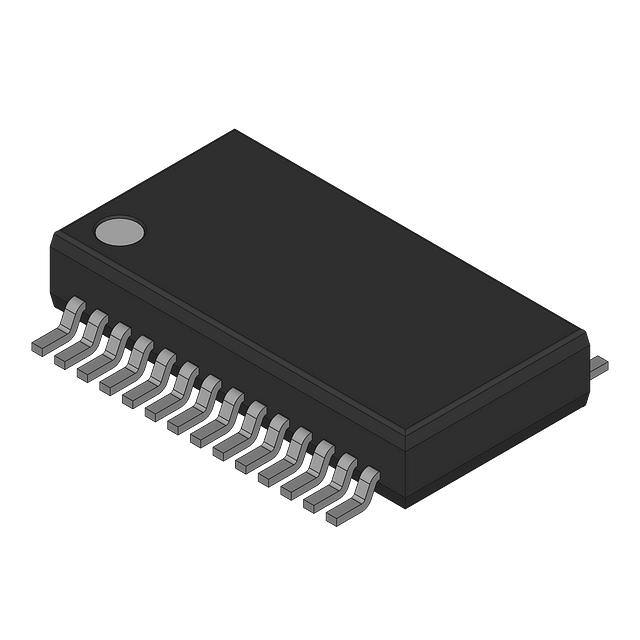
Two Package Styles: 28-Lead SOIC and SSOP
OBS
APPLICATIONS
Digital Communications
Direct Digital Synthesis
Waveform Reconstruction
High Speed Imaging
5 MHz to 65 MHz HFC Upstream Path
FUNCTIONAL BLOCK DIAGRAM
D9
D8
D7
D6
D5
D4
D3
D2
D1
D0
ANALOG
RETURN
TTL
DRIVE
LOGIC
DECODERS
AND
DRIVERS
REGISTER
SWITCH
NETWORK
IOUT
IOUT
REF IN
CLOCK
CONTROL
AMP
OLE
GENERAL DESCRIPTION
The AD9731 is a 10-bit, 170 MSPS, bipolar D/A converter that is
optimized to provide high dynamic performance, yet offer lower
power dissipation and more economical pricing than afforded by
previous bipolar high performance DAC solutions. The AD9731
was designed primarily for demanding communications systems
applications where wideband spurious-free dynamic range (SFDR)
requirements are strenuous and could previously only be met by
using a high performance DAC such as the industry-standard
AD9721. The proliferation of digital communications into base
station and high volume subscriber-end markets has created a
demand for excellent DAC performance delivered at reduced
levels of power dissipation and cost. The AD9731 is the answer
to that demand.
INTERNAL VOLTAGE
REFERENCE
RSET
REF OUT
AMP OUT
CONTROL
AMP IN
DIGITAL DIGITAL ANALOG
+VS
–VS
–VS
TE
Optimized for direct digital synthesis (DDS) waveform reconstruction, the AD9731 provides 50 dB of wideband harmonic
suppression over a dc-to-65 MHz analog output bandwidth.
This signal bandwidth addresses the transmit spectrum in many
of the emerging digital communications applications where
signal purity is critical. Narrowband, the AD9731 provides an
SFDR of greater than 79 dB. This excellent wideband and
narrowband ac performance, coupled with a lower pricing structure,
make the AD9731 the optimum high performance DAC value.
The AD9731 is packaged in 28-lead SOIC (same footprint
as the industry-standard AD9721) and super space-saving
28-lead SSOP; both are specified to operate over the extended
industrial temperature range of –40∞C to +85∞C.
REV. B
Information furnished by Analog Devices is believed to be accurate and
reliable. However, no responsibility is assumed by Analog Devices for its
use, nor for any infringements of patents or other rights of third parties that
may result from its use. No license is granted by implication or otherwise
under any patent or patent rights of Analog Devices. Trademarks and
registered trademarks are the property of their respective companies.
One Technology Way, P.O. Box 9106, Norwood, MA 02062-9106, U.S.A.
Tel: 781/329-4700
www.analog.com
Fax: 781/326-8703
© 2003 Analog Devices, Inc. All rights reserved.
�AD9731–SPECIFICATIONS
Parameter
(+VS = +5 V, –VS = –5.2 V, CLOCK = 125 MHz, RSET = 1.96 k⍀ for 20.4 mA IOUT,
VREF = –1.25 V, unless otherwise noted.)
Test
Level
Temp
RESOLUTION
MAX CONVERSION RATE
DC ACCURACY
Differential Nonlinearity
Integral Nonlinearity
INITIAL OFFSET ERROR
Zero-Scale Offset Error
OBS
Full-Scale Gain Error1
REFERENCE INPUT4
Reference Input Impedance
Reference Multiplying Bandwidth5
OUTPUT PERFORMANCE
Output Current4, 6
Output Compliance
Output Resistance
Output Capacitance
Voltage Settling Time to 1/2 LSB (tST)7
Propagation Delay (tPD)8
Glitch Impulse9
Output Slew Rate10
Output Rise Time10
Output Fall Time10
DIGITAL INPUTS
Input Capacitance
Logic “1” Voltage
Logic “0” Voltage
Logic “1” Current
Logic “0” Current
Data Setup Time (tS)11
Data Hold Time (tH)12
Clock Pulsewidth Low (pwMIN)
Clock Pulsewidth High (pwMAX)
SFDR PERFORMANCE (Wideband) 13
AOUT = 0 dBFS
2 MHz fOUT
10 MHz fOUT
20 MHz fOUT
40 MHz fOUT
65 MHz fOUT (Clock = 170 MHz)
70 MHz fOUT (Clock = 170 MHz)
Typ
Max
Unit
10
Bits
170
MHz
–40∞C to +85∞C
IV
25∞C
Full
25∞C
Full
I
VI
I
VI
0.25
0.35
0.6
0.7
1
1.5
1
1.5
LSB
LSB
LSB
LSB
25∞C
Full
25∞C
Full
I
VI
I
VI
V
35
40
2.5
2.5
0.04
70
100
5
5
mA
mA
% FS
% FS
mA/∞C
–1.15
50
2.5
V
mV/∞C
mA
kW
MHz
4.6
75
kW
MHz
Offset Drift Coefficient
REFERENCE/CONTROL AMP
Internal Reference Voltage2
Internal Reference Voltage Drift
Internal Reference Output Current3
Amplifier Input Impedance
Amplifier Bandwidth
Min
OLE
25∞C
Full
Full
25∞C
25∞C
I
IV
VI
V
V
25∞C
25∞C
V
V
25∞C
25∞C
25∞C
25∞C
25∞C
25∞C
25∞C
25∞C
25∞C
25∞C
V
IV
V
V
V
V
V
V
V
V
Full
Full
Full
25∞C
25∞C
25∞C
Full
25∞C
Full
25∞C
25∞C
IV
VI
VI
VI
VI
IV
IV
IV
IV
IV
IV
25∞C
25∞C
25∞C
25∞C
25∞C
25∞C
V
V
V
V
V
V
–2–
–1.35
–1.25
100
–50
+500
TE
20
–1.5
+3
240
5
3.8
2.9
4.1
400
1
1
2
2.0
8
30
2
2.5
1.0
1.0
2
2
0.1
0.1
66
62
61
55
50
47
0.8
50
100
mA
V
W
pF
ns
ns
pVs
V/ms
ns
ns
pF
V
V
mA
mA
ns
ns
ns
ns
ns
ns
dB
dB
dB
dB
dB
dB
REV. B
�AD9731
SPECIFICATIONS
Temp
Test
Level
SFDR PERFORMANCE (Narrowband)
2 MHz; 2 MHz Span
25 MHz, 2 MHz Span
10 MHz, 5 MHz Span (Clock = 170 MHz)
25∞C
25∞C
25∞C
V
V
V
79
61
73
dB
dB
dB
INTERMODULATION DISTORTION14
F1 = 800 kHz, F2 = 900 kHz
25∞C
V
58
dB
25∞C
Full
25∞C
Full
25∞C
Full
25∞C
Full
25∞C
I
VI
I
VI
I
VI
V
V
V
27
27
45
45
13
15
439
449
100
Parameter
Min
Typ
Max
Unit
13
POWER SUPPLY15
Digital –V Supply Current
OBS
Analog –V Supply Current
Digital +V Supply Current
OLE
Power Dissipation
PSRR
37
42
53
66
20
22
mA
mA
mA
mA
mA
mA
mW
mW
mA/V
NOTES
1
Measured as an error in ratio of full-scale current to current through R SET (640 mA nominal); ratio is nominally 32. DAC load is virtual ground.
2
Internal reference voltage is tested under load conditions specified in Internal Reference Output current specification.
3
Internal reference output current defines load conditions applied during Internal Reference Voltage test.
4
Full-scale current variations among devices are higher when driving REFERENCE IN directly.
5
Frequency at which a 3 dB change in output of DAC is observed; R L = 50 W; 100 mV modulation at midscale.
6
Based on I FS = 32 (CONTROL AMP IN/R SET) when using internal control amplifier. DAC load is virtual ground.
7
Measured as voltage settling at midscale transition to ± 0.5 LSB, RL = 50 W.
8
Measured from 50% point of rising edge of CLOCK signal to 1/2 LSB change in output signal.
9
Peak glitch impulse is measured as the largest area under a single positive or negative transient.
10
Measured with RL = 50 W and DAC operating in latched mode.
11
Data must remain stable for specified time prior to rising edge of CLOCK.
12
Data must remain stable for specified time after rising edge of CLOCK.
13
SFDR is defined as the difference in signal energy between the full-scale fundamental signal and worst-case spurious frequencies in the output spectrum window.
The frequency span is dc-to-Nyquist unless otherwise noted.
14
Intermodulation distortion is the measure of the sum and difference products produced when a two-tone input is driven into the DAC. The distortion products
created will manifest themselves at (2F 2–F1) and (2F1–F2) of the two tones.
15
Supply voltages should remain stable within ± 5% for nominal operation.
TE
Specifications subject to change without notice.
pw MIN
pw MAX
CLOCK
tS
tH
CODE 1
DATA
DATA
CODE 2
DATA
CODE 3
DATA
CODE 4
DATA
CODE 2
CODE 4
ANALOG OUTPUT
CODE 1
CODE 3
DETAIL OF SETTLING TIME
GLITCH AREA =
1/2 HEIGHT ⴛ WIDTH
CLOCK
SPECIFIED
ERROR BAND
t PD
H
ANALOG OUTPUT
W
t ST
Figure 1. Timing Diagrams
REV. B
–3–
�AD9731
EXPLANATION OF TEST LEVELS
ABSOLUTE MAXIMUM RATINGS*
Analog Output . . . . . . . . . . . . . . . . . . . . . . . . . . . . –VS to +VS
+VS . . . . . . . . . . . . . . . . . . . . . . . . . . . . . . . . . . . . . . . . +6 V
Digital Inputs . . . . . . . . . . . . . . . . . . . . . . . . . –0.7 V to +VS
–VS . . . . . . . . . . . . . . . . . . . . . . . . . . . . . . . . . . . . . . . . . –7 V
Analog Output Current . . . . . . . . . . . . . . . . . . . . . . . . 30 mA
Control Amplifier Input Voltage Range . . . . . . . . 0 V to –4 V
Reference Input Voltage Range . . . . . . . . . . . . . . . 0 V to –VS
Maximum Junction Temperature . . . . . . . . . . . . . . . . 150∞C
Operating Temperature Range . . . . . . . . . . . –40∞C to +85∞C
Internal Reference Output Current . . . . . . . . . . . . . . . 500 mA
Lead Temperature (10 sec Soldering) . . . . . . . . . . . . . 300∞C
Storage Temperature . . . . . . . . . . . . . . . . . . –65∞C to +165∞C
Control Amplifier Output Current . . . . . . . . . . . . . ± 2.5 mA
OBS
Test Level
Definition
I
II
100% production tested
The parameter is 100% production tested at
25∞C; sampled at temperature production.
Sample tested only
Parameter is guaranteed by design and
characterization testing.
Parameter is a typical value only.
All devices are 100% production tested at 25∞C;
guaranteed by design and characterization testing
for industrial temperature range devices.
III
IV
V
VI
*Stresses above those listed under Absolute Maximum Ratings may cause permanent damage to the device. This is a stress rating only; functional operation of the
device at these or any other conditions above those indicated in the operational
sections of this specification is not implied. Exposure to absolute maximum rating
conditions for extended periods may affect device reliability.
OLE
ORDERING GUIDE
Model
Temperature
Range
Package
Description
AD9731BR
AD9731BR-REEL
AD9731BRS
AD9731BRS-REEL
AD9731-PCB
–40∞C to +85∞C
–40∞C to +85∞C
–40∞C to +85∞C
–40∞C to +85∞C
0∞C to 70∞C
28-Lead Wide Body (SOIC)
28-Lead Wide Body (SOIC)
28-Lead Shrink Small (SSOP)
28-Lead Shrink Small (SSOP)
PCB
CAUTION
ESD (electrostatic discharge) sensitive device. Electrostatic charges as high as 4000 V readily
accumulate on the human body and test equipment and can discharge without detection. Although
the AD9731 features proprietary ESD protection circuitry, permanent damage may occur on
devices subjected to high energy electrostatic discharges. Therefore, proper ESD precautions are
recommended to avoid performance degradation or loss of functionality.
–4–
Package
Options
TE
R-28
R-28
RS-28
RS-28
REV. B
�AD9731
PIN FUNCTION DESCRIPTIONS
Pin No.
Mnemonic
Function
1
2–9
10
11
12, 13
14
15, 18, 28
16
17
D9(MSB)
D8–D1
D0(LSB)
CLOCK
NC
DIGITAL +VS
GND
DIGITAL –VS
RSET
Most significant data bit of digital input word
Eight bits of 10-bit digital input word
Least significant data bit of digital input word
TTL-compatible edge-triggered latch enable signal for on-board registers
No internal connection to this pin
5 V supply voltage for digital circuitry
Converter ground
–5.2 V supply voltage for digital circuitry
Connection for external reference set resistor; nominal 1.96 kW. Full-scale output
current = 32 (control amp in V/RSET).
Analog return. This point and the reference side of the DAC load resistors should be
connected to the same potential (nominally ground).
Analog current output; full-scale current occurs with a digital word input of all “1s.” With
external load resistor, output voltage = IOUT (RLOAD储RINTERNAL). RINTERNAL is
nominally 240 W.
Complementary analog current output; full-scale current occurs with a digital word input
of all “0s.”
Negative analog supply, nominally –5.2 V
Normally connected to CONTROL AMP OUT (Pin 24). Direct line to DAC current
source network. Voltage changes (noise) at this point have a direct effect on the full-scale
output current of the DAC. Full-scale current output = 32 (CONTROL AMP IN/RSET)
when using the internal amplifier. DAC load is virtual ground.
Normally connected to REF IN (Pin 23). Output of internal control amplifier that provides
a reference for the current switch network.
Normally connected to CONTROL AMP IN (Pin 26). Internal voltage reference,
nominally –1.25 V.
Normally connected to REF Out (Pin 25) if not connected to external reference.
Negative digital supply, nominally –5.2 V.
OBS
19
ANALOG RETURN
20
IOUT
21
IOUTB
22
23
ANALOG –VS
REF IN
24
CONTROL AMP OUT
25
REF OUT
26
27
CONTROL AMP IN
DIGITAL –VS
OLE
TE
PIN CONFIGURATION
D9(MSB) 1
28
GND
D8 2
27
DIGITAL –VS
D7 3
26
CONTROL AMP IN
D6 4
25
REF OUT
D5 5
24
CONTROL AMP OUT
23
REF IN
D4 6
AD9731
D3 7
TOP VIEW 22 ANALOG –VS
D2 8 (Not to Scale) 21 IOUTB
D1 9
20
IOUT
D0(LSB) 10
19
ANALOG RETURN
CLOCK 11
18
GND
NC 12
17
RSET
NC 13
16
DIGITAL –VS
DIGITAL +VS 14
15
GND
NC = NO CONNECT
REV. B
–5–
�AD9731–Typical Performance Characteristics
75
80
70
75
0dBFS
65
–6dBFS
SFDR – dB
SFDR – dB
70
65
60
55
–12dBFS
60
50
55
45
OBS
50
10
20
30
40
50
60
70
40
80
0
10
20
TPC 1. Narrowband SFDR (Clock = 170 MHz) vs.
fOUT Frequency
40
50
TPC 4. Wideband SFDR, fCLK = 125 MSPS
OLE
85
80
70
0dBFS
65
70
65
TE
60
SFDR – dB
75
SFDR – dB
30
fOUT – MHz
fOUT – MHz
–6dBFS
55
50
60
–12dBFS
45
55
40
50
10
20
30
40
50
60
0
10
20
30
40
50
60
70
80
fOUT – MHz
fOUT – MHz
TPC 2. Narrowband SFDR (Clock = 125 MHz) vs.
fOUT Frequency
TPC 5. Wideband SFDR, fCLK = 170 MSPS
60
75
fOUT = 1MHz
0dBFS
70
55
65
fOUT = 10MHz
SINAD – dB
SFDR – dB
–6dBFS
60
55
50
fOUT = 20MHz
45
–12dBFS
50
40
fOUT = 40MHz
45
40
35
0
5
10
15
20
0
50
100
150
200
fCLK – MHz
fOUT – MHz
TPC 3. Wideband SFDR, fCLK = 50 MSPS
TPC 6. SINAD, AOUT = 0 dBFS
–6–
REV. B
�AD9731
60
–10
ENCODE = 125MHz
fOUT = 2MHz
SPAN = 62.5MHz
–20
SFDR – dB
55
–30
–40
–50
50
–60
–70
45
–80
–90
40
–100
OBS
20
18
16
14
10
12
IOUT – mA
8
6
4
2
0Hz
START
TPC 7. SFDR vs. IOUT (Clock =125 MHz/fOUT = 40 MHz)
0.4
0.3
0.2
LSB
0.1
0
OLE
–10
–20
–30
–40
–50
–70
–0.2
62.5MHz
STOP
TPC 10. Wideband SFDR 2 MHz fOUT; 125 MHz Clock
–60
–0.1
6.25MHz/DIV
–80
–90
–0.3
–100
–0.4
0Hz
START
ENCODE = 125MHz
fOUT = 10MHz
SPAN = 62.5MHz
TE
6.25MHz/DIV
62.5MHz
STOP
TPC 11. Wideband SFDR 10 MHz fOUT;
125 MHz Clock
TPC 8. Typical Differential Nonlinearity
Performance (DNL)
0.6
–10
–20
0.4
ENCODE = 125MHz
fOUT = 20MHz
SPAN = 62.5MHz
–30
0.2
LSB
–40
–50
0
–60
–70
–0.2
–80
–0.4
–90
–100
–0.6
0Hz
START
62.5MHz
STOP
TPC 12. Wideband SFDR 20 MHz fOUT;
125 MHz Clock
TPC 9. Typical Integral Nonlinearity
Performance (INL)
REV. B
6.25MHz/DIV
–7–
�AD9731
–10
–10
ENCODE = 125MHz
fOUT = 40MHz
SPAN = 62.5MHz
–20
ENCODE = 125MHz
AOUT1 = 800kHz
AOUT2 = 900kHz
SPAN = 2MHz
–20
–30
–30
–40
–40
–50
–50
–60
–60
–70
–70
–80
–80
–90
–90
–100
–100
OBS
0Hz
START
6.25MHz/DIV
0Hz
START
62.5MHz
STOP
ENCODE = 170MHz
fOUT = 65MHz
SPAN = 85MHz
–10
–20
–30
OLE
–10
–20
–30
–40
–40
–50
–50
–60
–60
–70
–70
–80
–80
–90
–90
–100
0Hz
START
8.5MHz/DIV
2MHz
STOP
TPC 16. Wideband Intermodulation Distortion
F1 = 800 kHz; F2 = 900 kHz; 125 MHz Clock;
Span = 2 MHz
TPC 13. Wideband SFDR 40 MHz fOUT;
125 MHz Clock
0
200kHz/DIV
0Hz
START
85MHz
STOP
ENCODE = 125MHz
AOUT1 = 800kHz
AOUT2 = 900kHz
SPAN = 62.5MHz
TE
6.25MHz/DIV
62.5MHz
STOP
TPC 17. Wideband Intermodulation Distortion
F1 = 800 kHz; F2 = 900 kHz; 125 MHz Clock;
Span = 62.5 MHz
TPC 14. Wideband SFDR 65 MHz fOUT; 170 MHz Clock
–10
ENCODE = 170MHz
fOUT = 70MHz
SPAN = 85MHz
–20
–30
–40
–50
–60
–70
–80
–90
–100
0Hz
START
8.5MHz/DIV
85MHz
STOP
TPC 15. Wideband SFDR 70 MHz fOUT;
170 MHz Clock
–8–
REV. B
�AD9731
THEORY AND APPLICATIONS
References
The AD9731 high speed digital-to-analog converter utilizes
most significant bit decoding and segmentation techniques to
reduce glitch impulse and deliver high dynamic performance
on lower power consumption than previous bipolar DAC
technologies.
The internal band gap reference, control amplifier, and reference input are pinned out to provide maximum user flexibility
in configuring the reference circuitry for the AD9731. When
using the internal reference, REF OUT (Pin 25) should be connected to CONTROL AMP IN (Pin 26). CONTROL AMP OUT
(Pin 24) should be connected to REF IN (Pin 23). A 0.1 mF
ceramic capacitor connected from Pin 23 to Analog –VS (Pin 22)
improves settling time by decoupling switching noise from the
current sink baseline. A reference current cell provides feedback
to the control amplifier by sinking current through RSET (Pin 17).
The design is based on four main subsections: the decoder/
driver circuits, the edge-triggered data register, the switch network, and the control amplifier. An internal band gap reference
is included to allow operation of the device with minimum
external support components.
Digital Inputs/Timing
The AD9731 has TTL/high speed CMOS-compatible single-ended
inputs for data inputs and clock. The switching threshold is 1.5 V.
OBS
Full-scale current is determined by CONTROL AMP IN and
RSET according to the following equation:
IOUT (FS) = 32(CONTROL AMP IN/RSET)
In the decoder/driver section, the three MSBs are decoded to
seven “thermometer code” lines. An equalizing delay is included
for the seven least significant bits and the clock signals. This
delay minimizes data skew and data setup and hold times at the
register inputs.
The internal reference is nominally –1.25 V with a tolerance of
± 8% and typical drift over temperature of 100 ppm/∞C. If
greater accuracy or temperature stability is required, an external
reference can be used. The AD589 reference features 10 ppm/∞C
drift over the 0∞C to 70∞C temperature range.
The on-board register is rising edge triggered and should be
used to synchronize data to the current switches by applying a
pulse with proper data setup and hold times as shown in the
timing diagram. Although the AD9731 is designed to provide
isolation of the digital inputs to the analog output, some coupling of digital transitions is inevitable. Digital feedthrough can
be minimized by forming a low pass filter at the digital input by
using a resistor in series with the capacitance of each digital
input. This common high speed DAC application technique has
the effect of isolating digital input noise from the analog output.
Two modes of multiplying operation are possible with the
AD9731. Signals with bandwidths up to 2.5 MHz and input
swings from –0.6 V to –1.2 V can be applied to the CONTROL
AMP IN pin as shown in Figure 3. Because the control amplifier is internally compensated, the 0.1 mF capacitor discussed
above can be reduced to maximize the multiplying bandwidth.
However, it should be noted that output settling time, for
changes in the digital word, will be degraded.
OLE
TE
Input Clock and Data Timing Relationship
RSET
SINAD in a DAC is dependent on the relationship between the
position of the clock edges and the point in time at which the
input data changes. The AD9731 is rising edge triggered, and so
exhibits SINAD sensitivity when the data transition is close to
this edge. In general, the goal when applying the AD9731 is to
make the data transition close to the falling clock edge. This
becomes more important as the sample rate increases. Figure 2
shows the relationship of SINAD to clock placement from the
AD9731 and a competitive part, both sampling at 125 MSPS.
The AD9731 has excellent performance as far as the narrowness
of the “window” in which it is sensitive to SINAD.
60
RT
CONTROL
AMP OUT
REFERENCE IN
0.1F
AD9731
ANALOG –VS
Figure 3. Low Frequency Multiplying Circuit
SINAD – dB
40
COMPETITION
30
20
10
–3
–2
–1
0
1
2
3
TIME OF DATA PLACEMENT RELATIVE TO
RISING EDGE OF CLOCK – ns
4
Figure 2. SINAD vs. Clock Placement; fCLK = 125 MSPS,
fOUT = 20 MHz
REV. B
CONTROL
AMP IN
–0.6 TO –1.2V
2.5MHz TYPICAL
50
0
–4
AD9731
RSET
–9–
�AD9731
The REFERENCE IN pin can also be driven directly for wider
bandwidth multiplying operation. The analog signal for this mode
of operation must have a signal swing in the range of –3.3 V to
–4.25 V. This can be implemented by capacitively coupling into
REFERENCE IN a signal with a dc bias of –3.3 V (IOUT ª
22.5 mA) to –4.25 V (IOUT ª 3 mA), as shown in Figure 4, or by
dividing REFERENCE IN with a low impedance op amp whose
signal swing is limited to the stated range.
An operational amplifier can also be used to perform the I-to-V
conversion of the DAC output. Figure 5 shows an example of a
circuit that uses the AD9631, a high speed, current feedback
amplifier. The resistor values in Figure 5 provide a 4.096 V
swing, centered at ground, at the output of the AD9631 amplifier.
10k⍀
1/2
AD708
NOTE: When using an external reference, the external reference voltage must be applied prior to applying –VS.
10k⍀
1/2
AD708
IFS
R1
200⍀
R2
100⍀
AD9731
OBS
REF CONTROL
AMP IN
OUT
APPROX
–3.8V
IOUT
–VS
RL
25⍀
AD9631
2048V
VOUT
OLE
IOUTB
25⍀
Figure 5. I-to-V Conversion Using a Current Feedback
Amplifier
Figure 4. Wideband Multiplying Circuit
Analog Output
IFS
RFB
400⍀
AD9731
REFERENCE IN
–VS
RFF
25⍀
The switch network provides complementary current outputs
IOUT and IOUTB. The design of the AD9731 is based on statistical current source matching, which provides a 10-bit linearity
without trim. Current is steered to either IOUT or IOUTB in proportion to the digital input word. The sum of the two currents is
always equal to the full-scale output current minus 1 LSB. The
current can be converted to a voltage by resistive loading as
shown in the block diagram. Both IOUT and IOUTB should be
equally loaded for best overall performance. The voltage that is
developed is the product of the output current and the value of
the load resistor.
EVALUATION BOARD
TE
The performance characteristics of the AD9731 make it ideally
suited for direct digital synthesis (DDS) and other waveform
synthesis applications. The AD9731 evaluation board provides a
platform for analyzing performance under optimum layout conditions. The AD9731 also provides a reference for high speed
circuit board layout techniques.
–10–
REV. B
�REV. B
29
28
27
26
25
24
23
22
20
18
16
14
12
–11–
37
36
35
34
33
32
31
30
DGND
E7
DGND
E9
E5
R11
4.9k⍀
+V DIG
BNC1
E4
E2
E6
R12
50⍀
Figure 6. PCB Evaluation Board Schematic
Y1
DG2020 DATA
GENERATOR
E8 TO E10
EXT. CLK TO E7
J1 BNC
E6 TO E8
E6 TO E8
CON 1 PIN 10
E5 TO E7
EXT. GND TO E9
+V DIG
REMOVE R12
REMOVE Y1
–V DIG
DGND
+V DIG
U2
U3
U4
U5
U6
U7
U8
U9
U10
U11
R1
R2
R3
R4
R5
R6
R7
R8
R9
R10
U21 1
U20 2
U19 3
U18 4
U17 5
U16 6
U15 7
U14 8
U13 9
U12 10
11
12
13
–V DIG
+V DIG
C7
10F
14
DGND
C8
0.1F
NC1
NC2
+5 DIG
+V DIG
U1
DGND
GND
2
OUT
PWR
4
C9
0.1F
–VA
DIGITAL –VS
GND
ANA RETURN
GND1
RSET
CONTROL AMP IN
REF OUT
CONTROL AMP OUT
REF IN
ANALOG –VS
IOUT
IOUT
3
DGND
C6
0.1F
+VD
R14
1960⍀
BNC1J2
R16
50⍀
DGND
C3
10F
AGND
R15
25⍀
–V ANA
C2
10F
AGND
AGND
–V DIG
AGND
C1
0.1F
–V DIG
DGND
AGND
28
27
26
25
24
23
22
21
20
19
18
17
16
15
BNC
DGND
C5
0.1F
GND3
DIGITAL –VS
AD9731
Y1
OSCILLATOR
OPTIONAL
D5
D6
D7
D8
D9
D10
DAC CLOCK
D2
D3
D4
D1
–V
GND
+V
PWR3
NOTE: R1–R10 = 50⍀
+V DIG
TE
COMPUTER PROVIDES CLOCK
NOTES
CLOCK SWITCH MATRIX
DGND
10
9
20
8
19
7
18
6
17
5
16
4
15
3
14
2
13
1
12
11
SOURCE
P1
P1
P1
P1
P1
P1
P1
P1
P1
P1
P1
P1
P1
P1
P1
P1
P1
P1
P1
P1
JUMPER
DGND
R13
50⍀
E10
E8
BNC
J1
DGND
–VD
+VD
OPTIONAL
RP2 4.9k⍀
OLE
2
IEN
1
II
PA0
PA1
PA2
PA3
PA4
PA5
PA6
PA7
15
GND4
13
GND5
11
GND6
PB0
PB1
PB2
PB3
PB4
PB5
PB6
PB7
DGND
E3
E1
OPTIONAL
RP1 4.9k⍀
OBS
10
9
8
7
6
5
4
3
21
GND1
19
GND2
17
GND3
PC0
PC1
PC2
PC3
PC4
PC5
PC6
PC7
+5V1
+5V2
+12V
–12V
–5V
C37DRPF
CON1
C4
0.1F
AD9731
�AD9731
OUTLINE DIMENSIONS
28-Lead Standard Small Outline Package [SOIC]
Wide Body
(R-28)
C00609–0–5/03(B)
Dimensions shown in millimeters and (inches)
18.10 (0.7126)
17.70 (0.6969)
28
15
7.60 (0.2992)
7.40 (0.2913)
OBS
1
0.30 (0.0118)
0.10 (0.0039)
COPLANARITY
0.10
10.65 (0.4193)
10.00 (0.3937)
14
2.65 (0.1043)
2.35 (0.0925)
0.75 (0.0295)
ⴛ 45ⴗ
0.25 (0.0098)
OLE
8ⴗ
0ⴗ
1.27 (0.0500) 0.51 (0.0201) SEATING
0.32 (0.0126)
PLANE
BSC
0.33 (0.0130)
0.23 (0.0091)
1.27 (0.0500)
0.40 (0.0157)
COMPLIANT TO JEDEC STANDARDS MS-013AE
CONTROLLING DIMENSIONS ARE IN MILLIMETERS; INCH DIMENSIONS
(IN PARENTHESES) ARE ROUNDED-OFF MILLIMETER EQUIVALENTS FOR
REFERENCE ONLY AND ARE NOT APPROPRIATE FOR USE IN DESIGN
28-Lead Shrink Small Outline Package [SSOP]
(RS-28)
Dimensions shown in millimeters
10.50
10.20
9.90
28
TE
15
5.60
5.30
5.00
8.20
7.80
7.40
14
1
1.85
1.75
1.65
2.00 MAX
0.10
COPLANARITY
0.25
0.09
0.05
MIN
0.38
0.22
0.65
BSC
SEATING
PLANE
8ⴗ
4ⴗ
0ⴗ
0.95
0.75
0.55
COMPLIANT TO JEDEC STANDARDS MO-150AH
Revision History
Location
Page
5/03–Data Sheet changed from REV. A to REV. B.
Renumbered Figures and TPCs . . . . . . . . . . . . . . . . . . . . . . . . . . . . . . . . . . . . . . . . . . . . . . . . . . . . . . . . . . . . . . . . . . . . . . .Universal
Changes to SPECIFICATIONS . . . . . . . . . . . . . . . . . . . . . . . . . . . . . . . . . . . . . . . . . . . . . . . . . . . . . . . . . . . . . . . . . . . . . . . . . . . . 2
Changes to ORDERING GUIDE . . . . . . . . . . . . . . . . . . . . . . . . . . . . . . . . . . . . . . . . . . . . . . . . . . . . . . . . . . . . . . . . . . . . . . . . . . . 4
Updated TPCs 1, 2, 7, 10–15 . . . . . . . . . . . . . . . . . . . . . . . . . . . . . . . . . . . . . . . . . . . . . . . . . . . . . . . . . . . . . . . . . . . . . . . . . . . . . . 6
Added TPCs 3, 4, 5, 6 . . . . . . . . . . . . . . . . . . . . . . . . . . . . . . . . . . . . . . . . . . . . . . . . . . . . . . . . . . . . . . . . . . . . . . . . . . . . . . . . . . . . 6
Added Input Clock and Data Timing Relationship section and Figure 2 . . . . . . . . . . . . . . . . . . . . . . . . . . . . . . . . . . . . . . . . . . . . . . 9
Updated Figure 5 . . . . . . . . . . . . . . . . . . . . . . . . . . . . . . . . . . . . . . . . . . . . . . . . . . . . . . . . . . . . . . . . . . . . . . . . . . . . . . . . . . . . . . 10
Updated OUTLINE DIMENSIONS . . . . . . . . . . . . . . . . . . . . . . . . . . . . . . . . . . . . . . . . . . . . . . . . . . . . . . . . . . . . . . . . . . . . . . . 12
–12–
REV. B
�