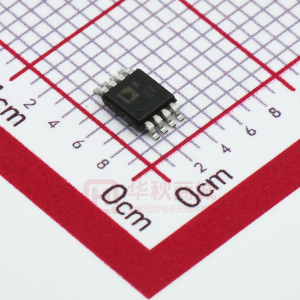
30 V, Micropower, Overvoltage Protection, Rail-to-Rail Input/Output Amplifier ADA4096-2
FEATURES
Input overvoltage protection, 32 V above and below the supply rails Rail-to-rail input and output swing Low power: 60 μA per amplifier typical Unity-gain bandwidth 800 kHz typical @ VSY = ±15 V 550 kHz typical @ VSY = ±5 V 465 kHz typical @ VSY = ±1.5 V Single-supply operation: 3 V to 30 V Low offset voltage: 300 μV maximum High open-loop gain: 120 dB typical Unity-gain stable No phase reversal Qualified for automotive applications
PIN CONFIGURATIONS
OUTA 1 –INA 2 +INA 3 –V 4
8
+V OUTB +INB
09241-001
ADA4096-2
TOP VIEW (Not to Scale)
7 6 5
–INB
Figure 1. 8-Lead, MSOP (RM-8)
OUTA 1 –INA 2 +INA 3 –V 4 8 +V
ADA4096-2
TOP VIEW (Not to Scale)
7 OUTB 6 –INB 5 +INB
09241-002
NOTES 1. CONNECT THE EXPOSED PAD TO GROUND.
Figure 2. 8-Lead LFCSP (CP-8-10)
APPLICATIONS
Battery monitoring Sensor conditioners Portable power supply control Portable instrumentation
GENERAL DESCRIPTION
The ADA4096 operational amplifier features micropower operation and rail-to-rail input and output ranges. The extremely low power requirements and guaranteed operation from 3 V to 30 V make these amplifiers perfectly suited to monitor battery usage and to control battery charging. Their dynamic performance, including 27 nV/√Hz voltage noise density, recommends them for battery-powered audio applications. Capacitive loads to 200 pF are handled without oscillation. The ADA4096-2 has overvoltage protection inputs and diodes that allow the voltage input to extend 32 V above and below the supply rails, making this device ideal for robust industrial applications. The ADA4096-2 features a unique input stage that allows the input voltage to exceed either supply safely without any phase reversal or latch-up; this is called overvoltage protection, or OVP. The dual ADA4096-2 is available in 8-lead LFCSP (2 mm × 2 mm) and 8-lead MSOP packages. The ADA409x family is specified over the extended industrial temperature range (−40°C to +125°C) and is part of the growing selection of 30 V, low power op amps from Analog Devices, Inc. (see Table 1). Table 1. Low Power, 30 V Operational Amplifiers
Op Amp Dual Quad Rail-to-Rail I/O ADA4091-2 ADA4091-4 PJFET AD8682 AD8684 Low Noise AD8622 AD8624
Rev. 0
Information furnished by Analog Devices is believed to be accurate and reliable. However, no responsibility is assumed by Analog Devices for its use, nor for any infringements of patents or other rights of third parties that may result from its use. Specifications subject to change without notice. No license is granted by implication or otherwise under any patent or patent rights of Analog Devices. Trademarks and registered trademarks are the property of their respective owners.
One Technology Way, P.O. Box 9106, Norwood, MA 02062-9106, U.S.A. Tel: 781.329.4700 www.analog.com Fax: 781.461.3113 ©2011 Analog Devices, Inc. All rights reserved.
�ADA4096-2 TABLE OF CONTENTS
Features .............................................................................................. 1 Applications....................................................................................... 1 Pin Configurations ........................................................................... 1 General Description ......................................................................... 1 Revision History ............................................................................... 2 Specifications..................................................................................... 3 Electrical Specifications............................................................... 3 Absolute Maximum Ratings............................................................ 7 Thermal Resistance ...................................................................... 7 ESD Caution.................................................................................. 7 Typical Performance Characteristics ............................................. 8 ±1.5 V Characteristics.................................................................. 8 ±5 V Characteristics................................................................... 10 ±15 V Characteristics ................................................................ 12 Comparative Voltage and Variable Voltage Graphs............... 14 Theory of Operation ...................................................................... 15 Input Stage................................................................................... 15 Phase Inversion........................................................................... 15 Input Overvoltage Protection ................................................... 16 Comparator Operation.............................................................. 17 Outline Dimensions ....................................................................... 18 Ordering Guide .......................................................................... 19 Automotive Products ................................................................. 19
REVISION HISTORY
7/11—Revision 0: Initial Version
Rev. 0 | Page 2 of 20
�ADA4096-2 SPECIFICATIONS
ELECTRICAL SPECIFICATIONS, VSY = ±1.5 V
VSY = ±1.5 V, VCM = VSY/2, TA = 25°C, unless otherwise noted. Table 2.
Parameter INPUT CHARACTERISTICS Offset Voltage Symbol VOS 0°C ≤ TA ≤ +125°C −40°C ≤ TA ≤ +125°C −40°C ≤ TA ≤ +125°C −40°C ≤ TA ≤ +125°C Input Offset Current Input Voltage Range Common-Mode Rejection Ratio Large Signal Voltage Gain IOS −40°C ≤ TA ≤ +125°C CMRR AVO VCM = 0 V to ±1.5 V −40°C ≤ TA ≤ +125°C RL = 10 kΩ, VO = −1.4 V to +1.4 V −40°C ≤ TA ≤ +125°C RL = 2 kΩ, VO = −1.3 V to +1.3 V −40°C ≤ TA ≤ +125°C TA = 25°C VOH RL = 10 kΩ to GND −40°C ≤ TA ≤ +125°C RL = 2 kΩ to GND −40°C to +125°C RL = 10 kΩ to GND −40°C ≤ TA ≤ +125°C RL = 2 kΩ to GND −40°C ≤ TA ≤ +125°C Source/sink f = 100 kHz, AV = 1 VSY = 3 V to 36 V −40°C ≤ TA ≤ +125°C VO = VSY/2 −40°C ≤ TA ≤ +125°C RL = 100 kΩ, CL = 30 pF VIN = 5 mV p-p, RL = 10 kΩ, AV = 100 VIN = 5 mV p-p, RL = 10 kΩ, AV = 1 AV = 1, VIN = 5 mV p-p 0.1 Hz to 10 Hz f = 1 kHz f = 1 kHz 1.48 1.45 1.45 1.40 −1.5 63 58 92 84 86 77 77 94 92 ±0.1 Test Conditions/Comments Min Typ 35 Max 300 450 900 ±15 ±16 ±1.5 ±3 +1.5 Unit μV μV μV μV/°C nA nA nA nA V dB dB dB dB dB dB μV V V V V V V V V mA Ω dB dB μA μA V/μs kHz kHz Degrees kHz μV p-p nV/√Hz pA/√Hz
Offset Voltage Drift Input Bias Current
∆VOS/∆T IB
1 ±10
MATCHING CHARACTERISTICS Offset Voltage OUTPUT CHARACTERISTICS Output Voltage High
100 1.49 1.46 −1.49 −1.48 ±10 102 100 90 40
300
Output Voltage Low
VOL
−1.48 −1.45 −1.47 −1.40
Short-Circuit Limit Closed-Loop Impedance POWER SUPPLY Power Supply Rejection Ratio Supply Current per Amplifier DYNAMIC PERFORMANCE Slew Rate Gain Bandwidth Product Unity-Gain Crossover Phase Margin −3 dB Closed-Loop Bandwidth NOISE PERFORMANCE Voltage Noise Voltage Noise Density Current Noise Density
ISC ZOUT PSRR ISY
80 0.25 501 465 51 97 0.7 27 0.2
SR GBP UGC ΦM −3 dB en p-p en in
Rev. 0 | Page 3 of 20
�ADA4096-2
ELECTRICAL SPECIFICATIONS, VSY = ±5 V
VSY = ±5.0 V, VCM = VSY/2, TA = 25°C, unless otherwise noted. Table 3.
Parameter INPUT CHARACTERISTICS Offset Voltage Offset Voltage Drift Input Bias Current Input Offset Current Input Voltage Range Common-Mode Rejection Ratio Symbol VOS −40°C ≤ TA ≤ +125°C ∆VOS/∆T IB −40°C ≤ TA ≤ +125°C IOS −40°C ≤ TA ≤ +125°C CMRR VCM = −5 V to +5 V −40°C ≤ TA ≤ +125°C VCM = −3 V to +3 V −40°C ≤ TA ≤ +125°C RL = 10 kΩ, VO = ±4.8 V −40°C ≤ TA ≤ +125°C RL = 2 kΩ, VO = ±4.7 V −40°C ≤ TA ≤ +125°C TA = 25°C VOH RL = 10 kΩ to GND −40°C ≤ TA ≤ +125°C RL = 2 kΩ to GND −40°C ≤ TA ≤ +125°C RL = 10 kΩ to GND −40°C ≤ TA ≤ +125°C RL = 2 kΩ to GND −40°C ≤ TA ≤ +125°C Source/sink f = 100 kHz, AV = 1 VSY = 3 V to 36 V −40°C ≤ TA ≤ +125°C VO = VSY/2 −40°C ≤ TA ≤ +125°C RL = 100 kΩ, CL = 30 pF VIN = 5 mV p-p, RL = 10 kΩ, AV = 100 VIN = 5 mV p-p, RL = 10 kΩ, AV = 1 AV = 1, VIN = 5 mV p-p 0.1 Hz to 10 Hz f = 1 kHz f = 1 kHz 4.96 4.95 4.80 4.70 −5 73 68 91 85 102 99 94 88 86 103 111 103 ±1.5 1 ±10 Test Conditions/Comments Min Typ 35 Max 300 500 ±15 ±19 ±2 ±3 +5 Unit μV μV μV/°C nA nA nA nA V dB dB dB dB dB dB dB dB μV V V V V V V V V mA Ω dB dB μA μA V/μs kHz kHz Degrees kHz μV p-p nV/√Hz pA/√Hz
Large Signal Voltage Gain
AVO
MATCHING CHARACTERISTICS Offset Voltage OUTPUT CHARACTERISTICS Output Voltage High
100 4.97 4.90 −4.98 −4.90 ±10 71 100 90 47
300
Output Voltage Low
VOL
−4.97 −4.95 −4.80 −4.75
Short-Circuit Limit Closed-Loop Impedance POWER SUPPLY Power Supply Rejection Ratio Supply Current per Amplifier DYNAMIC PERFORMANCE Slew Rate Gain Bandwidth Product Unity-Gain Crossover Phase Margin −3 dB Closed-Loop Bandwidth NOISE PERFORMANCE Voltage Noise Voltage Noise Density Current Noise Density
ISC ZOUT PSRR ISY
55 75
SR GBP UGC ΦM −3 dB en p-p en in
0.3 595 550 52 114 0.7 27 0.2
Rev. 0 | Page 4 of 20
�ADA4096-2
ELECTRICAL SPECIFICATIONS, VSY = ±15 V
VSY = ±15.0 V, VCM = VSY/2, VO = 0.0 V, TA = 25°C, unless otherwise noted. Table 4.
Parameter INPUT CHARACTERISTICS Offset Voltage Offset Voltage Drift Input Bias Current Input Offset Current Input Voltage Range Common-Mode Rejection Ratio Symbol VOS −40°C ≤ TA ≤ +125°C ∆VOS/∆T IB −40°C ≤ TA ≤ +125°C IOS −40°C ≤ TA ≤ +125°C CMRR VCM = −15 V to +15 V −40°C ≤ TA ≤ +125°C VCM = −13 V to +13 V −40°C ≤ TA ≤ +125°C RL = 10 kΩ, VO = ±14.7 V −40°C ≤ TA ≤ +125°C RL = 2 kΩ, VO = ±11 V −40°C ≤ TA ≤ +125°C −15 82 75 95 89 110 105 100 90 95 107 120 112 ±0.1 1 ±3 Test Conditions/Comments Min Typ 35 Max 300 500 ±10 ±15 ±1.5 ±3 +15 Unit μV μV μV/°C nA nA nA nA V dB dB dB dB dB dB dB dB pF pF 300 μV V V V V V V V V mA Ω dB dB μA μA V/μs μs kHz kHz Degrees kHz dB
Large Signal Voltage Gain
AVO
Input Capacitance Differential Mode Common Mode MATCHING CHARACTERISTICS Offset Voltage OUTPUT CHARACTERISTICS Output Voltage High
CDM CCM TA = 25°C VOH RL = 10 kΩ to GND −40°C ≤ TA ≤ +125°C RL = 2 kΩ to GND −40°C ≤ TA ≤ +125°C RL = 10 kΩ to GND −40°C ≤ TA ≤ +125°C RL = 2 kΩ to GND −40°C ≤ TA ≤ +125°C Source/sink f = 100 kHz, AV = 1 VSY = 3 V to 36 V −40°C ≤ TA ≤ +125°C VO = VSY/2 −40°C ≤ TA ≤ +125°C RL = 100 kΩ, CL = 30 pF To 0.1%, 10 V step VIN = 5 mV p-p, RL = 10 kΩ, AV = 100 VIN = 5 mV p-p, RL = 10 kΩ, AV = 1 AV = 1, VIN = 5 mV p-p f = 1 kHz 14.92 14.90 14.0 12.0
2.5 7 100 14.94 14.3 −14.96 −14.75 ±10 40 100 90 60 75 100 −14.80 −14.75 −14.65 −14.0
Output Voltage Low
VOL
Short-Circuit Limit Closed-Loop Impedance POWER SUPPLY Power Supply Rejection Ratio Supply Current per Amplifier DYNAMIC PERFORMANCE Slew Rate Settling Time Gain Bandwidth Product Unity-Gain Crossover Phase Margin −3 dB Closed-Loop Bandwidth Channel Separation
ISC ZOUT PSRR ISY
SR tS GBP UGC ΦM −3 dB CS
0.4 23.4 786 800 60 152 100
Rev. 0 | Page 5 of 20
�ADA4096-2
Parameter NOISE PERFORMANCE Voltage Noise Voltage Noise Density Current Noise Density Symbol en p-p en in Test Conditions/Comments 0.1 Hz to 10 Hz f = 1 kHz f = 1 kHz Min Typ 0.7 27 0.2 Max Unit μV p-p nV/√Hz pA/√Hz
Rev. 0 | Page 6 of 20
�ADA4096-2 ABSOLUTE MAXIMUM RATINGS
Table 5.
Parameter Supply Voltage Input Voltage Operating Condition Overvoltage Condition1 Differential Input Voltage2 Input Current Output Short-Circuit Duration to GND Storage Temperature Range Operating Temperature Range Junction Temperature Range Lead Temperature (Soldering, 60 sec)
1 2
THERMAL RESISTANCE
Rating 36 V −V ≤ VIN ≤ +V (−V) − 32 V ≤ VIN ≤ (+V) + 32 V ±VSY ±5 mA Indefinite −65°C to +150°C −40°C to +125°C −65°C to +150°C 300°C
θJA is specified for the device soldered on a 4-layer JEDEC standard printed circuit board (PCB) with zero airflow. The exposed pad is soldered to the application board. Table 6. Thermal Resistance
Package Type 8-Lead MSOP (RM-8) 8-Lead LFCSP (CP-8-10) θJA 142 76 θJC 45 43 Unit °C/W °C/W
ESD CAUTION
Performance not guaranteed during overvoltage conditions. Limit the input current to ±5 mA.
Stresses above those listed under Absolute Maximum Ratings may cause permanent damage to the device. This is a stress rating only; functional operation of the device at these or any other conditions above those indicated in the operational section of this specification is not implied. Exposure to absolute maximum rating conditions for extended periods may affect device reliability.
Rev. 0 | Page 7 of 20
�ADA4096-2 TYPICAL PERFORMANCE CHARACTERISTICS
TA = 25°C, unless otherwise noted.
±1.5 V CHARACTERISTICS
180 160 140 120 100 80 60 40 20
09241-006
ADA4096-2 VSY = ±1.5V TA = 25°C
10k
ADA4096-2 VSY = ±1.5V TA = 25°C
NUMBER OF AMPLIFIERS
1k
VOUT TO RAIL (mV)
100
SOURCING 10 SINKING
MORE
0
25
50
–75
–50
–25
75
100
125
150
175
–200
–175
–150
–125
–100
200
0
09241-003
1 0.001
0.01
0.1
1
10
100
VOS (µV)
LOAD CURRENT (mA)
Figure 3. Input Offset Voltage Distribution
25
Figure 6. Dropout Voltage vs. Load Current
140 120 100 PHASE 80 200
ADA4096-2 VSY = ±1.5V TA = –40°C TO +125°C
ADA4096-2 VSY = ±1.5V TA = 25°C
20 NUMBER OF AMPLIFIERS
150
GAIN (dB)
15
60 40 GAIN 20 0 0 50
10
5
–20 –40 1k 10k 100k 1M
–50
09241-004
0
0.5
1.0
1.5
2.0
2.5
TCVOS (µV/°C)
FREQUENCY (Hz)
Figure 4. Offset Voltage Drift Distribution
30 20 10 TA = +25°C TA = +125°C TA = +85°C –10 TA = 0°C –20 –30 –40 –1.5 TA = –40°C –1.0 –0.5 0 VCM (V) 0.5 1.0 1.5
09241-005
Figure 7. Open-Loop Gain and Phase vs. Frequency
50 40 30
CLOSED-LOOP GAIN (dB)
ADA4096-2 VSY = ±1.5V
G = +100
ADA4096-2 VSY = ±1.5V TA = 25°C
20 10 0 –10 –20 –30 –40
G = +10
IB (nA)
0
G = +1
100
1k
10k
100k
1M
10M
FREQUENCY (Hz)
Figure 5. Input Bias Current vs. VCM and Temperature
Figure 8. Closed-Loop Gain vs. Frequency
Rev. 0 | Page 8 of 20
09241-008
–50 10
09241-007
0 –2.5 –2.0 –1.5 –1.0 –0.5
–60 100
–100 10M
PHASE (Degrees)
100
�ADA4096-2
10k ADA4096-2 VSY = ±1.5V TA = 25°C 0.08 0.06 0.04 100
ZOUT (Ω)
1k
0.02
VOUT (V)
ADA4096-2 VSY = ±1.5V TA = 25°C RL = 10kΩ CL = 100pF G = +1
G = +100 10 G = +10 1 G = +1 0.1
0 –0.02 –0.04 –0.06 –0.08
09241-009
100
1k
10k
100k
1M
10M
0
5
10
15 TIME (µs)
20
25
30
FREQUENCY (Hz)
Figure 9. Output Impedance vs. Frequency
120 100 80 PSRR+
PSRR (dB)
Figure 12. Small Signal Transient Response
1.6 1.4 1.2 1.0
VOUT (V)
ADA4096-2 VSY = ±1.5V TA = 25°C
ADA4096-2 VSY = ±1.5V TA = 25°C RF = 10kΩ RS = 100Ω
60 PSRR– 40 20 0 –20 10
0.8 0.6 0.4 0.2
09241-052
100
1k
10k
100k
1M
10M
0
20
40 TIME (µs)
60
80
100
FREQUENCY (Hz)
Figure 10. PSRR vs. Frequency
2.0 1.5 1.0 0.5 VOUT (V)
VOUT (V)
Figure 13. Positive Overload Recovery
0.2 0 –0.2 –0.4 –0.6 –0.8 –1.0 –1.2 –1.4
09241-010
09241-056
ADA4096-2 VSY = ±1.5V TA = 25°C RL = 10kΩ CL = 100pF G = +1
ADA4096-2 VSY = ±1.5V TA = 25°C RF = 10kΩ RS = 100Ω
0 –0.5 –1.0 –1.5 –2.0
0
20
40
60 TIME (µs)
80
100
120
–1.6
0
20
40 TIME (µs)
60
80
100
Figure 11. Large Signal Transient Response
Figure 14. Negative Overload Recovery
Rev. 0 | Page 9 of 20
09241-055
0
09241-011
0.01 10
–0.10
�ADA4096-2
±5 V CHARACTERISTICS
250 ADA4096-2 VSY = ±5V TA = 25°C
10k ADA4096-2 VSY = ±5V TA = 25°C
200 NUMBER OF AMPLIFIERS
1k
150
VOUT TO RAIL (mV)
100 SOURCING 10 SINKING
100
50
MORE
09241-015
0.01
0.1
1
10
100
VOS (µV)
LOAD CURRENT (mA)
Figure 15. Input Offset Voltage Distribution
40
140 120 100
Figure 18. Dropout Voltage vs. Load Current
200
ADA4096-2 VSY = ±5V 35 T = –40°C TO +125°C A NUMBER OF AMPLIFIERS 30
ADA4096-2 VSY = ±5V TA = 25°C PHASE
150
80
25 20 15 10 GAIN (dB)
60 40 GAIN 20 0 –20 0 50
5 0 –2.5 –2.0 –1.5 –1.0 –0.5
–50
–40
09241-016
0
0.5
1.0
1.5
2.0
2.5
1k
10k
100k
1M
TCVOS (µV/°C)
FREQUENCY (Hz)
Figure 16. Offset Voltage Drift Distribution
30 20 10 TA = +125°C 0 TA = +85°C 50 40 30
Figure 19. Open-Loop Gain and Phase vs. Frequency
ADA4096-2 VSY = ±5V
G = +100
ADA4096-2 VSY = ±5V TA = 25°C
CLOSED-LOOP GAIN (dB)
20 10 0 –10 –20 –30 –40
G = +10
IB (nA)
–10 –20 –30 –40 TA = –40°C
09241-050
G = +1
TA = +25°C TA = 0°C
–4
–3
–2
–1
0 VCM (V)
1
2
3
4
5
100
1k
10k
100k
1M
10M
FREQUENCY (Hz)
Figure 17. Input Bias Current vs. VCM and Temperature
Figure 20. Closed-Loop Gain vs. Frequency
Rev. 0 | Page 10 of 20
09241-024
–50 –5
–50 10
09241-020
–60 100
–100 10M
PHASE (Degrees)
100
09241-023
0
25
50
–75
–50
–25
75
100
125
150
175
–200
–175
–150
–125
–100
200
0
1 0.001
�ADA4096-2
10k ADA4096-2 VSY = ±5V TA = 25°C 0.08 0.06 0.04 100 0.02 ADA4096-2 VSY = ±5V TA = 25°C RL = 10kΩ CL = 100pF G = +1
1k
ZOUT (Ω)
VOUT (V)
G = +1
09241-021
G = +100 10 G = +10 1
0 –0.02 –0.04 –0.06 –0.08
09241-018
09241-058 09241-057
0.1
0.01 10
100
1k
10k
100k
1M
10M
–0.10
0
5
10
15 TIME (µs)
20
25
30
FREQUENCY (Hz)
Figure 21. Output Impedance vs. Frequency
140 120 100 80 60 PSRR– 40 20 0
09241-053
Figure 24. Small Signal Transient Response
6
ADA4096-2 VSY = ±5V TA = 25°C
5
ADA4096-2 VSY = ±5V TA = 25°C RF = 10kΩ RS = 100Ω
4
PSRR (dB)
VOUT (V)
1M 10M
PSRR+
3
2
1
–20 10
100
1k
10k
100k
0
0
20
40 TIME (µs)
60
80
100
FREQUENCY (Hz)
Figure 22. PSRR vs. Frequency
6
1
Figure 25. Positive Overload Recovery
4
2 VOUT (V)
ADA4096-2 VSY = ±5V TA = 25°C RL = 10kΩ CL = 100pF G = +1 VOUT (V)
0
ADA4096-2 VSY = ±5V TA = 25°C RF = 10kΩ RS = 100Ω
–1
0
–2
–2
–3
–4
–4
0
50
100
150
200 TIME (µs)
250
300
350
400
09241-017
–6
–5
0
20
40 TIME (µs)
60
80
100
Figure 23. Large Signal Transient Response
Figure 26. Negative Overload Recovery
Rev. 0 | Page 11 of 20
�ADA4096-2
±15 V CHARACTERISTICS
250 ADA4096-2 VSY = ±15V TA = 25°C
10k ADA4096-2 VSY = ±15V TA = 25°C
200 NUMBER OF AMPLIFIERS
1k
150
VOUT TO RAIL (mV)
100
100
SOURCING 10 SINKING
50
MORE
09241-027
0.01
0.1
1
10
100
VOS (µV)
LOAD CURRENT (mA)
Figure 27. Input Offset Voltage Distribution
35
140 120 100 80
Figure 30. Dropout Voltage vs. Load Current
200
ADA4096-2 VSY = ±15V 30 TA = –40°C TO +125°C NUMBER OF AMPLIFIERS 25 20 15 10 5 0 –2.5 –2.0 –1.5 –1.0 –0.5
GAIN (dB)
ADA4096-2 VSY = ±15V TA = 25°C PHASE
150
60 40 GAIN 20 0 –20 –40 1k 10k 100k 1M 0 50
–50
09241-028
0
0.5
1.0
1.5
2.0
2.5
TCVOS (µV/°C)
FREQUENCY (Hz)
Figure 28. Offset Voltage Drift Distribution
40 50 40 TA = +125°C 30 20 10 0 –10 –20 –30
09241-051
Figure 31. Open-Loop Gain and Phase vs. Frequency
ADA4096-2 30 VSY = ±15V 20
G = +100
ADA4096-2 VSY = ±15V TA = 25°C
CLOSED-LOOP GAIN (dB)
10 0
TA = +85°C
G = +10
IB (nA)
–10 –20 –30 –40 –50 –60 –15 TA = –40°C –10 –5 0 VCM (V) 5 10 15 TA = 0°C TA = +25°C
G = +1
100
1k
10k
100k
1M
10M
FREQUENCY (Hz)
Figure 29. Input Bias Current vs. VCM and Temperature
Figure 32. Closed-Loop Gain vs. Frequency
Rev. 0 | Page 12 of 20
09241-036
–40 10
09241-030
–60 100
–100 10M
PHASE (Degrees)
100
09241-034
0
25
50
–75
–50
–25
75
100
125
150
175
–200
–175
–150
–125
–100
200
0
1 0.001
�ADA4096-2
10k ADA4096-2 VSY = ±15V TA = 25°C 0.08 0.06 0.04 100 0.02 ADA4096-2 VSY = ±15V TA = 25°C RL = 10kΩ CL = 100pF G = +1
1k
ZOUT (Ω)
VOUT (V)
G = +1
09241-035
0 –0.02 –0.04 –0.06 –0.08
09241-032
09241-060 09241-059
10
G = +100 G = +10
1
0.1
0.01 10
100
1k
10k
100k
1M
10M
–0.10
0
5
10
15 TIME (µs)
20
25
30
FREQUENCY (Hz)
Figure 33. Output Impedance vs. Frequency
120 100 80 16 ADA4096-2 VSY = ±15V TA = 25°C 14 12 PSRR+ 10
Figure 36. Small Signal Transient Response
ADA4096-2 VSY = ±15V TA = 25°C RF = 10kΩ RS = 100Ω
PSRR (dB)
VOUT (V)
09241-054
60 PSRR– 40 20 0 –20 10
8 6 4 2 0
100
1k
10k
100k
1M
10M
0
20
40 TIME (µs)
60
80
100
FREQUENCY (Hz)
Figure 34. PSRR vs. Frequency
15
0 –2 –4 –6
Figure 37. Positive Overload Recovery
10
5 VOUT (V)
ADA4096-2 VSY = ±15V TA = 25°C RL = 10kΩ CL = 100pF G = +1
VOUT (V)
ADA4096-2 VSY = ±15V TA = 25°C RF = 10kΩ RS = 100Ω
0
–8 –10 –12
–5
–10
–14
09241-031
–15
0
50
100
150
200 TIME (µs)
250
300
350
400
–16
0
20
40 TIME (µs)
60
80
100
Figure 35. Large Signal Transient Response
Figure 38. Negative Overload Recovery
Rev. 0 | Page 13 of 20
�ADA4096-2
COMPARATIVE VOLTAGE AND VARIABLE VOLTAGE GRAPHS
0.5 0.4 0.3 0.2 ADA4096-2 VSY = ±15V TA = 25°C 70 ADA4096-2 TA = 25°C RL = ∞
SUPPLY CURRENT PER AMPLIFIER (µA)
09241-039
60 50 40 30 20 10 0
NOISE (µV)
0.1 0 –0.1 –0.2 –0.3 –0.4 –10
–8
–6
–4
–2
0 TIME (s)
2
4
6
8
10
0
4
8
12
16
20
24
28
32
36
SUPPLY VOLTAGE (V)
Figure 39. Input Voltage Noise, 0.1 Hz to 10 Hz Bandwidth
–80
Figure 42. Supply Current vs. Supply Voltage
100
–90
ADA4096-2 VSY = ±15V TA = 25°C
ADA4096-2 VSY = ±15V TA = 25°C
CHANNEL SEPARATION (dB)
–100
–110 10kΩ 1kΩ 2kΩ VIN = 10V p-p
09241-040
–120
–130
en (nV/ Hz)
100
1k FREQUENCY (Hz)
10k
50k
1
10 FREQUENCY (Hz)
100
1k
Figure 40. Channel Separation vs. Frequency
120 110 100 90 VSY = ±15V VSY = ±1.5V VSY = ±5V
Figure 43. Voltage Noise Density
50
ADA4096-2 TA = 25°C
40
ADA4096-2 VSY = ±15V TA = 25°C RL = 2kΩ G = +1 VIN = 100mV p-p
CMRR (dB)
80 70 60 50 40 30
OVERSHOOT (%)
30
20
OS–
10 OS+
09241-041
1k
10k
100k
1M
10M
0.1 CLOAD (nF)
1
FREQUENCY (Hz)
Figure 41. CMRR vs. Frequency
Figure 44. Overshoot vs. Load Capacitance
Rev. 0 | Page 14 of 20
09241-100
20 100
0 0.01
09241-044
–140 20
10 0.1
09241-043
�ADA4096-2 THEORY OF OPERATION
INPUT STAGE
VCC R1 I1 R2 D6 Q5 D3 D4 Q3 Q4 Q13 Q7 Q8 C1 Q9 Q10 Q6 Q11 Q12 C2 Q14 D8 ×1 +IN –IN VEE OVP D2 OVP D1 R3 Q1 Q2 I2 R4 Q15 D7 Q16
09241-045
R5
R7 I3 D10 Q20
D9
Q18 OUT
Q17 Q19 R6 D11
Figure 45. Simplified Schematic
Figure 45 shows a simplified schematic of the ADA4096-2. The input stage comprises two differential pairs (Q1 to Q4 and Q5 to Q8) operating in parallel. When the input common-mode voltage approaches VCC − 1.5 V, Q1 to Q4 shut down as I1 reaches its minimum voltage compliance. Conversely, when the input common-mode voltage approaches VEE + 1.5 V, Q5 to Q8 shut down as I2 reaches its minimum voltage compliance. This topology allows for maximum input dynamic range because the amplifier can function with its inputs at 200 mV outside the rail (at room temperature). As with any rail-to-rail input amplifier, VOS mismatch between the two input pairs determines the CMRR of the amplifier. If the input common-mode voltage range is kept within 1.5 V of each rail, transitions between the input pairs are avoided, thus improving the CMRR by approximately 10 dB (see Table 3 and Table 4).
Although phase inversion persists for only as long as the inputs are saturated, it can be detrimental to applications where the amplifier is part of a closed-loop system. The ADA4096-2 is free from phase inversion over the entire common-mode voltage range, as well as the overvoltage protected range stated in the Absolute Maximum Ratings section, Table 5. Figure 46 shows the ADA4096-2 in a unity-gain configuration with the input signal at ±40 V and the amplifier supplies at ±10 V.
T
1
PHASE INVERSION
Some single-supply amplifiers exhibit phase inversion when the input signal extends beyond the common-mode voltage range of the amplifier. When the input devices become saturated, the inverting and noninverting inputs exchange functions, causing the output to move in the opposing direction.
CH1 10.0V
CH2 10.0V
M2.00ms T 34.20%
A CH1
–3.6V
Figure 46. No Phase Reversal
Rev. 0 | Page 15 of 20
09241-046
�ADA4096-2
INPUT OVERVOLTAGE PROTECTION
The ADA4096-2 inputs are protected from input voltage excursions up to 32 V outside each rail. This feature is of particular importance in applications with power supply sequencing issues that could cause the signal source to be active before the supplies to the amplifier. Figure 47 shows the input current limiting capability of the ADA4096-2 (green curves) compared to using a 5 kΩ series resistor (red curves).
VEE = 0V
6 5 4 3 2 1 0 –1 –2 –3 –4 –5 –6 –7 –48 –40 –32 –24 –16 –8 0 VIN (V) LOW RDSON SERIES FET 5kΩ SERIES RESISTOR 8 16 24 32 40 48
09241-047
Figure 47 was generated with the ADA4096-2 in a buffer configuration with the supplies connected to GND (or ±15 V) and the positive input swept until it exceeds the supplies by 32 V. In general, input current is limited to 1 mA during positive overvoltage conditions and 200 μA during negative undervoltage conditions. For example, at an overvoltage of 20 V, the ADA4096-2 input current is limited to 1 mA, providing a current limit equivalent to a series 20 kΩ resistor. Figure 47 also shows that the current limiting circuitry is active whether the amplifier is powered or not. Note that Figure 47 represents input protection under abnormal conditions only. The correct amplifier operation input voltage range (IVR) is specified in Table 2 to Table 4.
INPUT BIAS CURRENT (mA)
Figure 47. Input Current Limiting Capability
VCC = +15V
VEE = –15V
7
Rev. 0 | Page 16 of 20
�ADA4096-2
COMPARATOR OPERATION
Although op amps are quite different from comparators, occasionally an unused section of a dual or a quad op amp may be pressed into service as a comparator; however, this is not recommended for any rail-to-rail output op amps. For railto-rail output op amps, the output stage is generally a ratioed current mirror with bipolar or MOSFET transistors. With the part operating open loop, the second stage increases the current drive to the ratioed mirror to close the loop, but it cannot, which results in an increase in supply current. With the op amp configured as a comparator, the supply current can be significantly higher (see Figure 48).
SUPPLY CURRENT PER AMPLIFIER (µA)
500
400 VOUT = HIGH 300
200
VOUT = LOW
100 BUFFER 0
0
4
8
12
16
20
24
28
32
36
SUPPLY VOLTAGE (V)
Figure 48. Comparator Supply Current
Rev. 0 | Page 17 of 20
09241-048
�ADA4096-2 OUTLINE DIMENSIONS
3.20 3.00 2.80
3.20 3.00 2.80 PIN 1 IDENTIFIER
8
5
1
5.15 4.90 4.65
4
0.65 BSC 0.95 0.85 0.75 0.15 0.05 COPLANARITY 0.10 0.40 0.25 15° MAX 1.10 MAX 0.23 0.09 0.80 0.55 0.40
10-07-2009-B
6° 0°
COMPLIANT TO JEDEC STANDARDS MO-187-AA
Figure 49. 8-Lead Mini Small Outline Package [MSOP] (RM-8) Dimensions shown in millimeters
2.00 BSC SQ
5
1.70 1.60 1.50 0.50 BSC
8
PIN 1 INDEX AREA 0.425 0.350 0.275
4 TOP VIEW
EXPOSED PAD
1.10 1.00 0.90
1 BOTTOM VIEW
PIN 1 INDICATOR (R 0.15)
0.60 0.55 0.50 SEATING PLANE 0.30 0.25 0.20
0.05 MAX 0.02 NOM
FOR PROPER CONNECTION OF THE EXPOSED PAD, REFER TO THE PIN CONFIGURATION AND FUNCTION DESCRIPTIONS SECTION OF THIS DATA SHEET.
063009-A
0.20 REF
Figure 50. 8-Lead Lead Frame Chip Scale Package [LFCSP_UD] 2 mm × 2 mm Body, Ultra Thin, Dual Lead (CP-8-10) Dimensions shown in millimeters
Rev. 0 | Page 18 of 20
�ADA4096-2
ORDERING GUIDE
Model 1, 2 ADA4096-2ARMZ ADA4096-2ARMZ-R7 ADA4096-2ARMZ-RL ADA4096-2ACPZ-R7 ADA4096-2ACPZ-RL ADA4096-2WARMZ-R7 ADA4096-2WARMZ-RL
1 2
Temperature Range −40°C to +125°C −40°C to +125°C −40°C to +125°C −40°C to +125°C −40°C to +125°C −40°C to +125°C −40°C to +125°C
Package Description 8-Lead Mini Small Outline Package [MSOP] 8-Lead Mini Small Outline Package [MSOP] 8-Lead Mini Small Outline Package [MSOP] 8-Lead Frame Chip Scale Package [LFCSP_UD] 8-Lead Frame Chip Scale Package [LFCSP_UD] 8-Lead Mini Small Outline Package [MSOP] 8-Lead Mini Small Outline Package [MSOP]
Package Option RM-8 RM-8 RM-8 CP-8-10 CP-8-10 RM-8 RM-8
Branding A2T A2T A2T A4 A4 A2T A2T
Z = RoHS Compliant Part. W = Qualified for Automotive Applications.
AUTOMOTIVE PRODUCTS
The ADA4096-2W models are available with controlled manufacturing to support the quality and reliability requirements of automotive applications. Note that these automotive models may have specifications that differ from the commercial models; therefore, designers should review the Specifications section of this data sheet carefully. Only the automotive grade products shown are available for use in automotive applications. Contact your local Analog Devices account representative for specific product ordering information and to obtain the specific Automotive Reliability reports for these models.
Rev. 0 | Page 19 of 20
�ADA4096-2 NOTES
©2011 Analog Devices, Inc. All rights reserved. Trademarks and registered trademarks are the property of their respective owners. D09241-0-7/11(0)
Rev. 0 | Page 20 of 20
�