ADM7154CP-3.3EVALZ/ADM7154RD1.8EVALZ/ADM7155CP-02-EVALZ User Guide
UG-696
One Technology Way • P.O. Box 9106 • Norwood, MA 02062-9106, U.S.A. • Tel: 781.329.4700 • Fax: 781.461.3113 • www.analog.com
Evaluating the ADM7154 and ADM7155 Linear Regulators
REGULATOR FEATURES
EVALUATION BOARDS
Input voltage range: 2.3 V to 5.5 V
Maximum output current: 600 mA
Low noise
0.9 μV rms total integrated noise from 100 Hz to 100 kHz
1.6 μV rms total integrated noise from 10 Hz to 100 kHz
Initial accuracy: ±0.5%
Fixed 3.3 V (ADM7154) and adjustable (ADM7155) output
versions
8-lead LFCSP and 8-lead SOIC packages
EVALUATION KIT CONTENTS
ADM7154CP-3.3EVALZ, ADM7154RD-1.8EVALZ, or
ADM7155CP-02-EVALZ evaluation board
12323-001
ADDITIONAL EQUIPMENT NEEDED
DC power supply
Multimeters for voltage and current measurements
Electronic or resistive loads
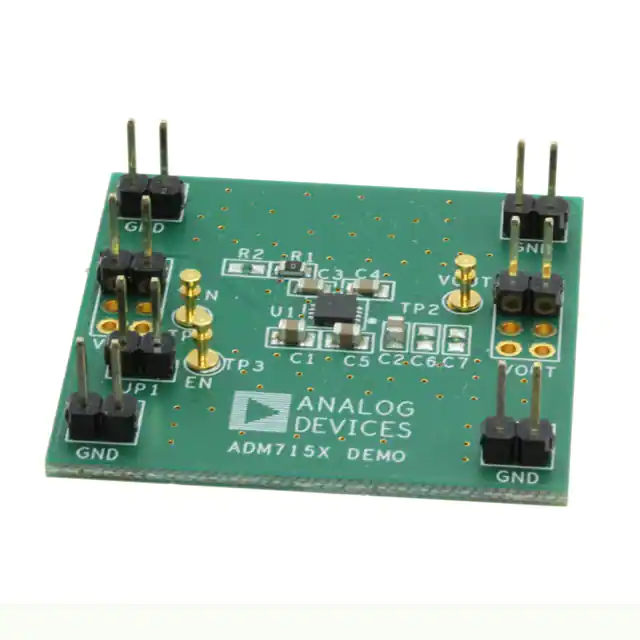
Figure 1. ADM7154CP-3.3EVALZ and ADM7155CP-02-EVALZ LFCSP
Evaluation Board
GENERAL DESCRIPTION
The ADM7154CP-3.3EVALZ, ADM7154RD-1.8-EVALZ, and
ADM7155CP-02-EVALZ evaluation boards are used to
demonstrate the functionality of the ADM7154 and ADM7155
linear regulators, respectively.
Simple device measurements, such as line and load regulation,
dropout, and ground current, can be demonstrated with just a
single voltage source, a voltmeter, an ammeter, and load resistors.
12323-002
For more details about the linear regulators, refer to the
ADM7154 and ADM7155 data sheets.
Figure 2. ADM7154RD-1.8EVALZ LFCSP Evaluation Board
PLEASE SEE THE LAST PAGE FOR AN IMPORTANT
WARNING AND LEGAL TERMS AND CONDITIONS.
Rev. 0 | Page 1 of 9
�UG-696
ADM7154CP-3.3EVALZ/ADM7154RD-1.8EVALZ/ADM7155CP-02-EVALZ User Guide
TABLE OF CONTENTS
Regulator Features ............................................................................ 1
Line Regulation..............................................................................5
Evaluation Kit Contents ................................................................... 1
Load Regulation ............................................................................5
Additional Equipment Needed ....................................................... 1
Dropout Voltage ............................................................................5
General Description ......................................................................... 1
Ground Current Measurements ......................................................6
Evaluation Boards ............................................................................. 1
Ground Current Consumption ...................................................7
Revision History ............................................................................... 2
Schematic ............................................................................................8
Evaluation Board Hardware ............................................................ 3
Bill of Materials ..................................................................................9
Evaluation Board Configurations .............................................. 3
Output Voltage Measurements ....................................................... 4
REVISION HISTORY
10/14—Revision 0: Initial Version
Rev. 0 | Page 2 of 9
�ADM7154CP-3.3EVALZ/ADM7154RD-1.8EVALZ/ADM7155CP-02-EVALZ User Guide
UG-696
EVALUATION BOARD HARDWARE
EVALUATION BOARD CONFIGURATIONS
The evaluation boards arrive supplied with different
components depending on which version is ordered. Components
common to both versions are C1, C2, C3, C4, C5, J1, and J2.
Resistors R1 and R2 are used for the ADM7155 adjustable
output option. The output voltage (VOUT) is set by
VOUT = 1.2 V × (1 + R1/R2)
Table 1. Evaluation Board Hardware Components
Component
U11
C1
C2
C3
C4
C5
C6 and C7
R1
R2
JP1
1
Function
Linear regulator
Input capacitor
Output capacitor
VREF capacitor
BYP capacitor
VREG capacitor
Output capacitor
Output divider
Output divider
Jumper
Description
ADM7154ARDZ-1.8/ADM7154ACPZ-3.3/ADM7155ACPZ-02 linear regulator.
10 μF input bypass capacitor.
10 μF output capacitor. Required for stability and transient performance.
1 μF VREF bypass capacitor.
1 μF bypass capacitor.
10 μF VREG bypass capacitor.
Optional output capacitors.
Sets output voltage with R2 in adjustable option. Short R1 for fixed output voltages.
Sets output voltage with R1 in adjustable option.
Jumper. Connects EN to VIN for automatic startup.
Component varies depending on the evaluation board ordered.
Rev. 0 | Page 3 of 9
�UG-696
ADM7154CP-3.3EVALZ/ADM7154RD-1.8EVALZ/ADM7155CP-02-EVALZ User Guide
OUTPUT VOLTAGE MEASUREMENTS
VOLTAGE SOURCE
VOLTMETER
1.99711
–
+
+
–
12323-003
LOAD
Figure 3. Output Voltage Measurement, LFCSP
VOLTAGE SOURCE
VOLTMETER
1.99711
–
+
+
–
12323-004
LOAD
Figure 4. Output Voltage Measurement, SOIC
Figure 3 shows how the evaluation board can be connected to a
voltage source and a voltmeter for basic output voltage accuracy
measurements. A resistor can be used as the load for the regulator.
Ensure that the resistor has a power rating adequate to handle
the power dissipation. Alternatively, an electronic load can also
be used in place of a resistor. Ensure that the voltage source can
supply enough current for the expected load levels.
Use the following steps to connect to a voltage source and
voltmeter:
1.
Connect the negative terminal (−) of the voltage source to
one of the GND pads on the evaluation board.
2.
3.
4.
5.
Connect the positive terminal (+) of the voltage source to
the VIN pad of the evaluation board.
Connect a load between the VOUT pad and one of the
GND pads.
Connect the negative terminal (−) of the voltmeter to one
of the GND pads.
Connect the positive terminal (+) of the voltmeter to the
VOUT pad.
The voltage source can then be turned on. If JP1 is inserted,
connecting EN to VIN for automatic startup, the regulator
powers up.
Rev. 0 | Page 4 of 9
�ADM7154CP-3.3EVALZ/ADM7154RD-1.8EVALZ/ADM7155CP-02-EVALZ User Guide
UG-696
3.33
If the load current is greater than about 200 mA, it is recommended that the user connect the voltmeter as close as possible
to the output capacitor to reduce the effects of IR drops.
3.32
LINE REGULATION
VOUT (V)
3.31
3.30
3.29
3.28
3.27
1
10
100
1000
ILOAD (mA)
12323-007
The output of the regulator is monitored and the input is varied
for line regulation measurements. For good line regulation, the
output must change as little as possible with varying input
levels. To ensure that the device is not in dropout during this
measurement, VIN must be varied between VOUTNOM + 0.5 V (or
2.3 V, whichever is greater) and VINMAX. For example, for an
ADM7154 with a fixed 3.3 V output, VIN must be varied
between 3.8 V and 5.5 V. This measurement can be repeated under
different load conditions. Figure 5 shows the typical line
regulation performance of an ADM7154 with a fixed 3.3 V output.
Figure 6. Output Voltage (VOUT) vs. Load Current (ILOAD)
3.33
DROPOUT VOLTAGE
3.32
Measure dropout voltage using the configuration shown in
Figure 3 and Figure 4. Dropout voltage is defined as the input to
output voltage differential when the input voltage is set to the
nominal output voltage. This applies only for output voltages
greater than 2.3 V. Dropout voltage increases with larger loads.
For more accurate measurements, use a second voltmeter to
monitor the input voltage across the input capacitor. The input
supply voltage may need adjusting to account for IR drops,
especially if large load currents are used. Figure 7 shows a typical
curve of dropout voltage measurements vs. load current.
3.30
3.29
3.28
3.27
3.5
ILOAD
ILOAD
ILOAD
ILOAD
ILOAD
ILOAD
= 1mA
= 10mA
= 100mA
= 200mA
= 400mA
= 600mA
4.0
4.5
5.0
VIN (V)
5.5
160
12323-008
VOUT (V)
3.31
140
The output of the regulator is monitored and the load is varied
for load regulation measurements. For good load regulation, the
output must change as little as possible with varying loads. The
input voltage must be held constant during this measurement. The
load current can be varied from 0 mA to 600 mA. Figure 6 shows
the typical load regulation performance of an ADM7154 with a
fixed 3.3 V output for an input voltage of 3.8 V.
120
100
80
60
40
20
0
1
10
100
ILOAD (mA)
Figure 7. Dropout Voltage vs. Load Current (ILOAD)
Rev. 0 | Page 5 of 9
1000
12323-010
LOAD REGULATION
DROPOUT VOLTAGE (mV)
Figure 5. Output Voltage (VOUT) vs. Input Voltage (VIN)
�UG-696
ADM7154CP-3.3EVALZ/ADM7154RD-1.8EVALZ/ADM7155CP-02-EVALZ User Guide
GROUND CURRENT MEASUREMENTS
VOLTAGE SOURCE
AMMETER
0.00112
+
–
–
+
12323-005
LOAD
Figure 8. Ground Current Measurement, LFCSP
VOLTAGE SOURCE
AMMETER
0.00112
–
–
+
LOAD
12323-006
+
Figure 9. Ground Current Measurement, SOIC
Rev. 0 | Page 6 of 9
�ADM7154CP-3.3EVALZ/ADM7154RD-1.8EVALZ/ADM7155CP-02-EVALZ User Guide
Figure 8 and Figure 9 show how the evaluation board is
connected to a voltage source and an ammeter for ground
current measurements. A resistor can be used as the load for the
regulator. Ensure that the resistor has a power rating adequate
to handle the expected power dissipation. Alternatively, an
electronic load can also be used in place of a resistor. Ensure
that the voltage source used can supply enough current for the
expected load levels.
Use the following steps to connect to a voltage source and
ammeter:
3.
4.
Ground current measurements determine how much current
the internal circuits of the regulator are consuming while the
circuits perform the regulation function. To be efficient, the
regulator needs to consume as little current as possible.
Typically, the regulator uses the maximum current when
supplying its largest load level (600 mA). Figure 10 shows the
typical ground current consumption vs. load current at an input
voltage of 3.8 V for an output voltage of 3.3 V.
10
Connect the positive terminal (+) of the voltage source to
the VIN pad on the evaluation board.
Connect the positive terminal (+) of the ammeter to one of
the GND pads of the evaluation board.
Connect the negative terminal (−) of the ammeter to the
negative (−) terminal of the voltage source.
Connect a load between the negative (−) terminal of the
voltage source and the VOUT pad of the evaluation board.
9
8
7
6
5
4
3
2
Then, the voltage source can be turned on. If JP1 is inserted,
connecting EN to VIN for automatic startup, the regulator
powers up.
1
0
1
10
100
ILOAD (mA)
1000
12323-009
2.
GROUND CURRENT CONSUMPTION
GROUND CURRENT (mA)
1.
UG-696
Figure 10. Ground Current vs. Load Current (ILOAD)
When the device is disabled (EN = GND), the ground current
drops to less than 2 μA.
Rev. 0 | Page 7 of 9
�UG-696
ADM7154CP-3.3EVALZ/ADM7154RD-1.8EVALZ/ADM7155CP-02-EVALZ User Guide
SCHEMATIC
C3
REF
R1
2
1
2
3
4
5
6
7
8
TP1
10kΩ
EN
7
1
GND
REF
BYP
EN
8
VIN
REF_SENSE
VIN
C1
10µF
VOUT
VREG
3
BYP
2
1
VOUT
C4
10µF
1
VOUT
C2
10µF
VREG
C6
10µF
C5
10µF
CON8
J5
J4
CON4
J6
1
2
3
4
1
2
3
4
CON4
J7
1
2
3
4
CON4
TP2
C7
10µF
PAD
1
1 WAY LINK
6
1µF
4
1
2
3
4
J2
1
2
3
4
5
6
7
8
CON8
C1 - VIN DECOUPLING CAPACITOR
C2 - VOUT STABILITY CAPACITOR
C3, C4 - INTERNAL REFERENCE BYPASS
C5 - VREG BYPASS CAPACITOR
R1, R2 - SET OUTPUT VOLTAGE FOR ADM715x
CON4
Figure 11. Evaluation Board Schematic
Rev. 0 | Page 8 of 9
12323-011
20kΩ
JP1
J1
5
REF_SENSE
PD
1
TP3
U1
ADM715x
R2
�ADM7154CP-3.3EVALZ/ADM7154RD-1.8EVALZ/ADM7155CP-02-EVALZ User Guide
UG-696
BILL OF MATERIALS
Table 2.
Qty
1
Reference Designator
U1
Description
ADM7154ACPZ-1.8, ADM7154ACPZ-3.3,
or ADM7155ACPZ-02
Manufacturer
Analog Devices, Inc.
3
2
1
1
C1, C2, C5
C3, C4
JP1
R1, R2
Capacitor, MLCC, 10 μF, 25 V, 0805, X5R
Capacitor, MLCC, 1 μF, 25 V, 0805, X5R
Header, single, STR, 2 pins
Resistor, 1%, 0603 case
Murata (or equivalent)
Murata (or equivalent)
Sullins Connector Solutions
Vishay Dale
Part Number
ADM7154ACPZ-1.8,
ADM7154ACPZ-3.3, or
ADM7155ACPZ-02
GRM216R61E106KA12
GRM216R61E105KA12
PEC02SAAN
CRCW0603xxxxF
ESD Caution
ESD (electrostatic discharge) sensitive device. Charged devices and circuit boards can discharge without detection. Although this product features patented or proprietary protection
circuitry, damage may occur on devices subjected to high energy ESD. Therefore, proper ESD precautions should be taken to avoid performance degradation or loss of functionality.
Legal Terms and Conditions
By using the evaluation board discussed herein (together with any tools, components documentation or support materials, the “Evaluation Board”), you are agreeing to be bound by the terms and conditions
set forth below (“Agreement”) unless you have purchased the Evaluation Board, in which case the Analog Devices Standard Terms and Conditions of Sale shall govern. Do not use the Evaluation Board until you
have read and agreed to the Agreement. Your use of the Evaluation Board shall signify your acceptance of the Agreement. This Agreement is made by and between you (“Customer”) and Analog Devices, Inc.
(“ADI”), with its principal place of business at One Technology Way, Norwood, MA 02062, USA. Subject to the terms and conditions of the Agreement, ADI hereby grants to Customer a free, limited, personal,
temporary, non-exclusive, non-sublicensable, non-transferable license to use the Evaluation Board FOR EVALUATION PURPOSES ONLY. Customer understands and agrees that the Evaluation Board is provided
for the sole and exclusive purpose referenced above, and agrees not to use the Evaluation Board for any other purpose. Furthermore, the license granted is expressly made subject to the following additional
limitations: Customer shall not (i) rent, lease, display, sell, transfer, assign, sublicense, or distribute the Evaluation Board; and (ii) permit any Third Party to access the Evaluation Board. As used herein, the term
“Third Party” includes any entity other than ADI, Customer, their employees, affiliates and in-house consultants. The Evaluation Board is NOT sold to Customer; all rights not expressly granted herein, including
ownership of the Evaluation Board, are reserved by ADI. CONFIDENTIALITY. This Agreement and the Evaluation Board shall all be considered the confidential and proprietary information of ADI. Customer may
not disclose or transfer any portion of the Evaluation Board to any other party for any reason. Upon discontinuation of use of the Evaluation Board or termination of this Agreement, Customer agrees to
promptly return the Evaluation Board to ADI. ADDITIONAL RESTRICTIONS. Customer may not disassemble, decompile or reverse engineer chips on the Evaluation Board. Customer shall inform ADI of any
occurred damages or any modifications or alterations it makes to the Evaluation Board, including but not limited to soldering or any other activity that affects the material content of the Evaluation Board.
Modifications to the Evaluation Board must comply with applicable law, including but not limited to the RoHS Directive. TERMINATION. ADI may terminate this Agreement at any time upon giving written notice
to Customer. Customer agrees to return to ADI the Evaluation Board at that time. LIMITATION OF LIABILITY. THE EVALUATION BOARD PROVIDED HEREUNDER IS PROVIDED “AS IS” AND ADI MAKES NO
WARRANTIES OR REPRESENTATIONS OF ANY KIND WITH RESPECT TO IT. ADI SPECIFICALLY DISCLAIMS ANY REPRESENTATIONS, ENDORSEMENTS, GUARANTEES, OR WARRANTIES, EXPRESS OR IMPLIED, RELATED
TO THE EVALUATION BOARD INCLUDING, BUT NOT LIMITED TO, THE IMPLIED WARRANTY OF MERCHANTABILITY, TITLE, FITNESS FOR A PARTICULAR PURPOSE OR NONINFRINGEMENT OF INTELLECTUAL
PROPERTY RIGHTS. IN NO EVENT WILL ADI AND ITS LICENSORS BE LIABLE FOR ANY INCIDENTAL, SPECIAL, INDIRECT, OR CONSEQUENTIAL DAMAGES RESULTING FROM CUSTOMER’S POSSESSION OR USE OF
THE EVALUATION BOARD, INCLUDING BUT NOT LIMITED TO LOST PROFITS, DELAY COSTS, LABOR COSTS OR LOSS OF GOODWILL. ADI’S TOTAL LIABILITY FROM ANY AND ALL CAUSES SHALL BE LIMITED TO THE
AMOUNT OF ONE HUNDRED US DOLLARS ($100.00). EXPORT. Customer agrees that it will not directly or indirectly export the Evaluation Board to another country, and that it will comply with all applicable
United States federal laws and regulations relating to exports. GOVERNING LAW. This Agreement shall be governed by and construed in accordance with the substantive laws of the Commonwealth of
Massachusetts (excluding conflict of law rules). Any legal action regarding this Agreement will be heard in the state or federal courts having jurisdiction in Suffolk County, Massachusetts, and Customer hereby
submits to the personal jurisdiction and venue of such courts. The United Nations Convention on Contracts for the International Sale of Goods shall not apply to this Agreement and is expressly disclaimed.
©2014 Analog Devices, Inc. All rights reserved. Trademarks and
registered trademarks are the property of their respective owners.
UG12323-0-10/14(0)
Rev. 0 | Page 9 of 9
�