Integrated, Precision Battery Sensor for
Automotive Systems
ADuCM330/ADuCM331
Data Sheet
FEATURES
Memory
96 kB (ADuCM330)/128 kB (ADuCM331) Flash/EE memory, ECC
6 kB SRAM, ECC
4 kB data Flash/EE memory, ECC
10,000 cycle Flash/EE endurance
20 year Flash/EE retention
In circuit download via SWD and LIN
On-chip peripherals
Serial port interface (SPI)
General-purpose input/output (GPIO) port
General-purpose timer
Wake-up timer
Watchdog timer
On-chip, power-on reset
Power
Operates directly from 12 V battery supply
Power consumption, 8 mA typical (16 MHz)
Low power monitor mode
Package and temperature range
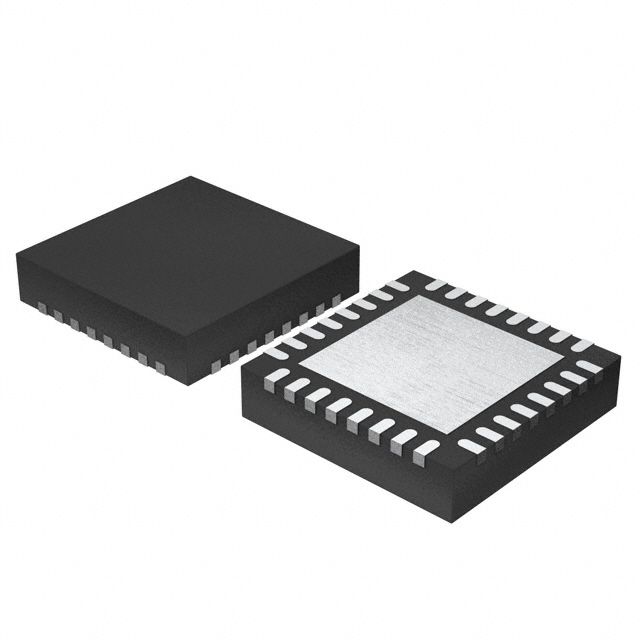
32-lead, 6 mm × 6 mm LFCSP
Fully specified for −40°C to +115°C operation; additional
specifications for 115°C to 125°C
Qualified for automotive applications
High precision analog-to-digital converters (ADCs)
Dual channel, simultaneous sampling
I-ADC 20-bit Σ-Δ (minimizes range switching)
VADC/TADC 20-bit Σ-Δ
Programmable ADC conversion rate from 1 Hz to 8 kHz
On-chip ±5 ppm/°C voltage reference
Current channel
Fully differential, buffered input
Programmable gain (from 4 to 512)
ADC absolute input range: −200 mV to +300 mV
Digital comparator with current accumulator feature
Voltage channel
Buffered, on-chip attenuator for 12 V battery input
Temperature channel
External and on-chip temperature sensor options
Microcontroller
ARM Cortex-M3 32-bit processor
16.384 MHz precision oscillator with 1% accuracy
Serial wire download (SWD) port supporting code
download and debug
Automotive qualified integrated local interconnect network
(LIN) transceiver
LIN 2.2-compatible slave, 100 kb fast download option
SAE J-2602-compatible slave
Low electromagnetic emissions (EME)
High electromagnetic immunity (EMI)
APPLICATIONS
Battery sensing/management for automotive and light
mobility vehicles
Lead acid battery measurement for power supplies in
industrial and medical domains
FUNCTIONAL BLOCK DIAGRAM
SWDIO
PRECISION ANALOG ACQUISITION
IIN+
ADuCM330/ADuCM331
20-BIT
ADC
BUF
IIN–
LDO
POR
MEMORY
96kB (ADuCM330)/
128kB (ADuCM331)
FLASH,
6kB SRAM,
4kB DATA
CORTEX-M3
PROCESSOR
16MHz
PREC OSC 1%
LPM
1 × GP TIMER
WD TIMER
W/U TIMER
GPIO PORT
SPI PORT
LIN
VBAT
LIN
11153-004
GPIO0/CS/LIN_RX
GPIO2/MISO
GPIO1/SCLK/LIN_TX
GPIO3/IRQ0/MOSI/
LC_TX/LIN_TX
PRECISION
REFERENCE
VSS
AGND
DVDD18
AVDD18
VDD
33VDD
TEMPERATURE
SENSOR
DGND
GND_SW
20-BIT
ADC
BUF
IO_VSS
MUX
VTEMP
RESET
DIGITAL
COMPARATOR
GPIO5/LC_TX/LIN_TX
RESULT
ACCUMULATOR
GPIO4/IRQ1/LC_RX/
ECLKIN/LIN_RX
PGA
SWCLK
Figure 1.
Rev. C
Document Feedback
Information furnished by Analog Devices is believed to be accurate and reliable. However, no
responsibility is assumed by Analog Devices for its use, nor for any infringements of patents or other
rights of third parties that may result from its use. Specifications subject to change without notice.
No license is granted by implication or otherwise under any patent or patent rights of Analog
Devices. Trademarks and registered trademarks are the property of their respective owners.
One Technology Way, P.O. Box 9106, Norwood, MA 02062-9106, U.S.A.
Tel: 781.329.4700
©2015 Analog Devices, Inc. All rights reserved.
Technical Support
www.analog.com
�ADuCM330/ADuCM331
Data Sheet
TABLE OF CONTENTS
Features .............................................................................................. 1
Applications Information .............................................................. 14
Applications ....................................................................................... 1
Design Guidelines ...................................................................... 14
Functional Block Diagram .............................................................. 1
Power and Ground Recommendations ................................... 14
Revision History ............................................................................... 2
Exposed Pad Thermal Recommendations .............................. 14
General Description ......................................................................... 3
General Recommendations....................................................... 14
Specifications..................................................................................... 4
Recommended Schematic ............................................................. 15
Absolute Maximum Ratings.......................................................... 10
Outline Dimensions ....................................................................... 16
ESD Caution ................................................................................ 10
Ordering Guide .......................................................................... 16
Pin Configuration and Function Descriptions ........................... 11
Automotive Products ................................................................. 16
Terminology .................................................................................... 13
REVISION HISTORY
10/15—Rev. B to Rev. C
Changes to Table 2 .......................................................................... 10
7/15—Revision B: Initial Version
Rev. C | Page 2 of 16
�Data Sheet
ADuCM330/ADuCM331
GENERAL DESCRIPTION
The ADuCM330/ADuCM331 are fully integrated, 8 kSPS, data
acquisition systems that incorporate dual, high performance
multichannel sigma-delta (Σ-Δ) ADCs, a 32-bit ARM® Cortex™-M3
processor, and flash. The ADuCM330 has 96 kB program flash
and the ADuCM331 has 128 kB program flash. Both devices
have 4 kB data flash.
The ADuCM330/ADuCM331 are complete system solutions
for battery monitoring in 12 V automotive applications. The
ADuCM330/ADuCM331 integrate all of the required features to
precisely and intelligently monitor, process, and diagnose 12 V
battery parameters including battery current, voltage, and
temperature over a wide range of operating conditions.
Minimizing external system components, the devices are
powered directly from a 12 V battery. On-chip, low dropout (LDO)
regulators generate the supply voltage for two integrated Σ-Δ
ADCs. The ADCs precisely measure battery current, voltage, and
temperature to characterize the state of the health and the charge
of the car battery.
The devices operate from an on-chip, 16.384 MHz high frequency
oscillator that supplies the system clock. This clock is routed
through a programmable clock divider from which the core clock
operating frequency is generated. The devices also contain a
32 kHz oscillator for low power operation.
The analog subsystem consists of an ADC with a programmable
gain amplifier (PGA) that allows the monitoring of various current
and voltage ranges. It also includes a precision reference on chip.
The ADuCM330/ADuCM331 integrate a range of on-chip
peripherals that can be configured under core software control
as required in the application. These peripherals include a SPI
serial input/output communication controller, six GPIO pins, one
general-purpose timer, a wake-up timer, and a watchdog timer.
The ADuCM330/ADuCM331 are specifically designed to operate
in battery-powered applications where low power operation is
critical. The microcontroller core can be configured in normal
operating mode, resulting in an overall system current consumption of 7.0 V
VLIN_CNT = (VTH_DOM + VTH_REC)/2, VDD > 7.0 V
ILIN_PAS_REC1
Min
TA = −40°C to +115°C
Typ
Max
0
Slave termination resistance
Voltage drop at the serial diode,
DSer_Int
20
0.4
Rev. C | Page 7 of 16
30
0.7
0.115 ×
VDD
0.115 ×
VDD
47
1
V
30
kΩ
V
�ADuCM330/ADuCM331
Parameter
LIN AC PARAMETERS1
D1
D2
D322
D422
tRX_PDR22
tRX_SYM22
PACKAGE THERMAL
SPECIFICATIONS
Thermal Impedance (θJA) 23
POWER REQUIREMENTS
Power Supply Voltages
VDD (Pin 26)
DVDD33 (Pin 21)
AVDD18 (Pin 19)
DVDD18 (Pin 22)
POWER CONSUMPTION
IDD (Processor Normal
Mode) 24
IDD (Processor Powered
Down)
IDD LIN
IDD IADC
Data Sheet
Test Conditions/Comments
Bus load conditions (CBUS||RBUS):
1 nF||1 kΩ, 6.8 nF||660 Ω, 10 nF||500 Ω
Duty Cycle 1
THREC(MAX) = 0.744 × VBAT
THDOM(MAX) = 0.581 × VBAT
VSUP = 7.0 V to 18 V, tBIT = 50 µs
D1 = tBUS_REC(MIN)/(2 × tBIT)
Duty Cycle 2
THREC(MIN) = 0.284 × VBAT
THDOM(MIN) = 0.422 × VBAT
VSUP = 7.0 V to 18 V, tBIT = 50 µs
D2 = tBUS_REC(MAX)/(2 × tBIT)
THREC(MAX) = 0.778 × VBAT
THDOM(MAX) = 0.616 × VBAT
VDD = 7.0 V to 18 V
tBIT = 96 µs
D3 = tBUS_REC(MIN)/(2 × tBIT)
THREC(MIN) = 0.389 × VBAT
THDOM(MIN) = 0.251 × VBAT
VDD = 7.0 V to 18 V
tBIT = 96 µs
D4 = tBUS_REC(MAX)/(2 × tBIT)
Propagation delay of receiver
Symmetry of receiver propagation
delay rising edge, with respect to
falling edge (tRX_SYM = tRF_PDR − tRX_PDF)
Min
TA = −40°C to +115°C
Typ
Max
TA = +115°C to
+125°C 1
Typ
Unit
0.396
0.581
0.417
0.590
6
+2
−2
JEDEC 4-layer board
µs
µs
40
3.6
°C/W
18
3.3
1.88
1.88
CD0 (PCLK = 16 MHz), 16 MHz 1% mode,
ADCs off, reference buffer off, executing
code from program flash
CD1 (PCLK = 8 MHz), 16 MHz 1% mode,
ADCs off, reference buffer off, executing
code from program flash
CD0 (PCLK = 16 MHz), 16 MHz 1% mode,
ADCs on, reference buffer on, executing
code from program flash
Precision oscillator off, ADC off,
external LIN master pull-up resistor
present, measured with wake-up and
watchdog timers clocked from low
power oscillator, maximum value is at
105°C, and VDD = 18 V
8
6
9.5
18.5
60
100
500
700
800
350
Gain = 4, 8, or 16
Gain = 32 or 64
LPM, gain = 64
Rev. C | Page 8 of 16
17
3.3
1.88
1.88
V
V
V
V
9
mA
7
mA
10
mA
µA
µA
µA
µA
µA
�Data Sheet
Parameter
IDD ADC1 VADC
IDD Internal Reference (1.2 V)
IDD HFOSC
ADuCM330/ADuCM331
Test Conditions/Comments
Min
Reduction from 1% to 3% mode
TA = −40°C to +115°C
Typ
Max
550
150
50
TA = +115°C to
+125°C 1
Typ
Unit
µA
µA
µA
Not guaranteed by production test, but by design and/or characterization data at production release.
Valid for PGA current ADC gain settings of 4, 8, 16, 32, and 64.
System chopping enabled.
4
These specifications include temperature drift.
5
A user system calibration removes this error at a given temperature (and at a given gain for the current channel).
6
The offset error drift is included in the offset error. This typical specification is an indicator of the offset error due to temperature drift. This typical value is the mean of
the temperature drift characterization data distribution.
7
Includes internal reference temperature drift.
8
The gain drift is included in the total gain error. This typical specification is an indicator of the gain error due to the temperature drift in the ADC. This typical value is
the mean of the temperature drift characterization data distribution.
9
Voltage channel specifications include resistive attenuator input stage, unless otherwise stated.
10
RMS noise is referred to voltage attenuator input; for example, at fADC = 1 kHz, the typical rms noise at the ADC input is 7.5 µV, scaling by the attenuator (24) yields
these input referred noise figures.
11
Valid after an initial self calibration.
12
It is possible to extend the ADC input range by up to 10% by modifying the factory set value of the gain calibration register or using system calibration. This approach
can also be used to reduce the ADC input range (LSB size).
13
Valid for a differential input less than 10 mV.
14
The absolute value of the voltage of VTEMP and GND_SW must be 100 mV (minimum) for accurate operation of the temperature analog-to-digital converter (T-ADC).
15
Measured using box method.
16
The long-term stability specification is accelerated and noncumulative. The drift in subsequent 1000 hour periods is significantly lower than in the first 1000 hour period.
17
Valid after an initial self gain calibration.
18
Die temperature.
19
Endurance is qualified to 10,000 cycles, as per JEDEC Standard 22 Method A117 and measured at −40°C, +25 °C, and +115°C. Typical endurance at +25°C is 100k cycles.
20
Data retention lifetime equivalent at junction temperature (TJ) = 85°C, as per JEDEC Standard 22 Method A117. Data retention lifetime derates with junction temperature.
21
Measured with LIN communication active.
22
These specifications are not production tested but are supported by LIN compliance testing.
23
Thermal impedance can be used to calculate the thermal gradient from ambient to die temperature.
24
Typical additional supply current consumed during Flash/EE memory program and erase cycles is 3 mA and 1 mA, respectively.
1
2
3
Rev. C | Page 9 of 16
�ADuCM330/ADuCM331
Data Sheet
ABSOLUTE MAXIMUM RATINGS
The ADuCM330/ADuCM331 operate directly from the 12 V
battery supply and is fully specified over the −40°C to +115°C
temperature range, unless otherwise noted.
Table 2.
Parameter
AGND to DGND to VSS to IO_VSS
VBAT to AGND
VDD to VSS
LIN to IO_VSS
Digital Input/Output Voltage to DGND
ADC Inputs to AGND
ESD (Human Body Model) Rating
HBM-ADI0082 (Based on ANSI/ ESD
STM5.1-2007)
All Pins Except LIN and VBAT
LIN
VBAT
IEC 61000-4-2
LIN and VBAT
Storage Temperature Range
Junction Temperature
Transient
Continuous
Lead Temperature
Soldering Reflow1
Lifetime2
Normal Mode
Standby Mode
1
2
Rating
−0.3 V to +0.3 V
−22 V to +40 V
−0.3 V to +40 V
−18 V to +40 V
−0.3 V to DVDD33 + 0.3 V
−0.3 V to AVDD18 + 0.3 V
Stresses at or above those listed under Absolute Maximum
Ratings may cause permanent damage to the product. This is a
stress rating only; functional operation of the product at these
or any other conditions above those indicated in the operational
section of this specification is not implied. Operation beyond
the maximum operating conditions for extended periods may
affect product reliability.
ESD CAUTION
±2.0 kV
±6 kV
±4 kV
±8 kV
−55°C to +150°C
150°C
130°C
260°C
480 hours at −40°C
1600 hours at +23°C
5200 hours at +60°C
640 hours at +85°C
80 hours at +105°C
12,648 hours at −40°C
60,000 hours at +25°C
50,000 hours at +50°C
JEDEC standard J-STD-020.
Using an activation energy of 0.7 eV, verified using high temperature
operating life (HTOL) at 125°C for 1000 hours.
Rev. C | Page 10 of 16
�Data Sheet
ADuCM330/ADuCM331
32
31
30
29
28
27
26
25
GPIO5/LC_TX/LIN_TX
DGND
VSS
IO_VSS
LIN
VBAT
VDD
DGND
PIN CONFIGURATION AND FUNCTION DESCRIPTIONS
1
2
3
4
5
6
7
8
ADuCM330/
ADuCM331
TOP VIEW
(Not to Scale)
24
23
22
21
20
19
18
17
DNC
DGND
DVDD18
DVDD33
33VDD
AVDD18
AGND
VREF
NOTES
1. DNC = DO NOT CONNECT. DO NOT CONNECT THIS PIN.
2. IT IS RECOMMENDED THAT THE EXPOSED PAD BE
SOLDERED TO GROUND FOR THERMAL REASONS.
11153-005
GND_SW
VTEMP
IIN+_AUX
IIN+
IIN–
IIN–_AUX
VINP_AUX
VINM_AUX
9
10
11
12
13
14
15
16
RESET
SWDIO
SWCLK
GPIO0/CS/LIN_RX
GPIO1/SCLK/LIN_TX
GPIO2/MISO
GPIO3/IRQ0/MOSI/LC_TX/LIN_TX
GPIO4/IRQ1/LC_RX/ECLKIN/LIN_RX
Figure 2. Pin Configuration
Table 3. Pin Function Descriptions
Pin No.
1
2
Mnemonic
RESET
SWDIO
Type 1
I
I/O
3
SWCLK
I
4
GPIO0/CS/LIN_RX
I/O
5
GPIO1/SCLK/LIN_TX
I/O
6
GPIO2/MISO
I/O
7
GPIO3/IRQ0/MOSI/
LC_TX/LIN_TX
I/O
Description
Reset Input Pin. Active low. This pin has an internal pull-up resistor to 33VDD.
Cortex-M3 Debug Data Input and Output Channel. At power-on, this output is disabled and
pulled high via an internal pull-up resistor. This pin can be left unconnected when not in use.
Cortex-M3 Debug Clock Input. This is an input pin only and has an internal pull-up resistor. This
pin can be left unconnected when not in use.
General-Purpose Input/Output 0 (P0.0) (GPIO0). By default, this pin is configured as an input.
The pin has an internal 25 kΩ pull-up resistor to 33VDD and, when not in use, can be left
unconnected.
Chip Select (CS). When configured, this pin also operates the SPI chip select input.
Local Interconnect Network Receiver (Rx) (LIN_RX). This pin can be configured as the Rx pin for
LIN frames in external transceiver mode.
General-Purpose Input/Output 1 (P0.1) (GPIO1). By default, this pin is configured as an input.
This pin is used by the kernel in external mode. See the ADuCM330/ADuCM331 hardware
reference manual for more information. The pin has an internal 25 kΩ pull-up resistor to 33VDD
and, when not in use, can be left unconnected.
Serial Clock Input (SCLK). When configured, this pin operates the SPI serial clock input.
Local Interconnect Network Transmitter (Tx) (LIN_TX). This pin can be configured as the Tx pin
for LIN frames in external transceiver mode.
General-Purpose Input/Output 2 (P0.2) (GPIO2). By default, this pin is configured as an input. The pin
has an internal 25 kΩ pull-up resistor to 33VDD and, when not in use, can be left unconnected.
Master Input/Slave Output (MISO). When configured, this pin also operates the SPI master
input/slave output.
General-Purpose Input/Output 3 (P0.3) (GPIO3). By default, this pin is configured as an input.
This pin is used by the kernel in external mode. See the ADuCM330/ADuCM331 hardware
reference manual for more information. The pin has an internal 25 kΩ pull-up resistor to 33VDD
and, when not in use, can be left unconnected.
Interrupt Request (IRQ0). This pin can also be configured as External Interrupt Request 0.
Master Output/Slave Input (MOSI). This pin can be configured as an SPI master output/slave
input pin.
LIN Conformance Tx (LC_TX). This pin can be connected to the LIN physical Tx for LIN
conformance testing.
Local Interconnect Network Tx (LIN_TX). This pin can also be connected as the Tx pin for LIN
frames in external transceiver mode.
Rev. C | Page 11 of 16
�ADuCM330/ADuCM331
Pin No.
8
Mnemonic
GPIO4/IRQ1/LC_RX/
ECLKIN/LIN_RX
Type 1
I/O
9
GND_SW
I
10
VTEMP
I
11
12
13
14
15
16
17
IIN+_AUX
IIN+
IIN−
IIN−_AUX
VINP_AUX
VINM_AUX
VREF
S
I
I
S
S
S
S
18
19
20
21
22
23
24
25
26
27
28
29
30
31
32
AGND
AVDD18
33VDD
DVDD33
DVDD18
DGND
DNC
DGND
VDD
VBAT
LIN
IO_VSS
VSS
DGND
GPIO5/LC_TX/LIN_TX
S
S
S
S
S
S
33
EPAD
1
2
S
S
S
I/O
S
S
S
I/O
Data Sheet
Description
General-Purpose Input/Output 4 (P0.4) (GPIO4). By default, this pin is configured as an input.
This pin is used by the kernel in external mode. See the ADuCM330/ADuCM331 hardware
reference manual for more information. The pin has an internal 25 kΩ pull-up resistor to 33VDD
and, when not in use, can be left unconnected.
Interrupt Request (IRQ1). This pin can be configured as External Interrupt Request 1.
LIN Conformance Rx (LC_RX). This pin can be connected to LIN physical RX for LIN conformance
testing.
External Clock (ECLKIN). This pin can be configured as the external clock input.
Local Interconnect Network Rx (LIN_RX). This pin can be configured as the receiving pin for LIN
frames in external transceiver mode.
Switch to Internal Analog Ground Reference. This pin is the negative input for the external
temperature channel.
External Pin for Negative Temperature Coefficient (NTC)/Positive Temperature Coefficient (PTC)
Temperature Measurement.
Auxiliary IIN+ Pin. Connect this pin to AGND.
Positive Differential Input for Current Channel.
Negative Differential Input for Current Channel.
Auxiliary IIN− Pin. Connect this pin to AGND.
Auxiliary Input Voltage Positive Channel. Connect this pin to AGND.
Auxiliary Input Voltage Negative Channel. Connect this pin to AGND.
Voltage Reference Pin. Connect this pin via a 470 nF capacitor to ground. This pin can also be
used to input an external voltage reference. This pin cannot be used to supply an external circuit.
Ground Reference for On-Chip Precision Analog Circuits.
Supply from Analog LDO. Do not connect this pin to an external circuit. 2
3.3 V Supply. Connect to Pin 21. Do not connect this pin to an external circuit.2
3.3 V Supply. Connect to Pin 20. Do not connect this pin to an external circuit.2
1.8 V Supply. Do not connect this pin to an external circuit.2
Ground Reference for On-Chip Digital Circuits.
Do Not Connect. This pin is internally connected; therefore, do not externally connect to this pin.
Ground Reference for On-Chip Digital Circuits.
Battery Power Supply for On-Chip Regulator.
Battery Voltage Input fo Resistor Divider.
Local Interconnect Network (LIN) Physical Interface Input/Output.
Ground Reference for the LIN Pin.
Ground Reference. This is the ground reference for the internal voltage regulators.
Ground Reference for On-Chip Digital Circuits.
General-Purpose Input/Output 5 (P0.5) (GPIO5). By default, this pin is configured as an input.
This pin is checked by the kernel on every reset. See the ADuCM330/ADuCM331 hardware
reference manual for further information. The pin has an internal 25 kΩ pull-up resistor to
33VDD and, when not in use, can be left unconnected.
LIN Conformance Tx (LC_TX). This pin can be connected to the LIN physical Tx for LIN
conformance testing.
Local Interconnect Network Tx (LIN_TX). This pin can be configured as the Tx pin for LIN frames
in external transceiver mode.
Exposed Pad. It is recommended that the exposed pad be soldered to ground for thermal reasons.
I is input, O is output, and S is supply.
Using the 1.8 V or 3.3 V supply to power an external circuit can have POR, EMC, and self heating implications. Device evaluation and testing completed without an
external load attached.
Rev. C | Page 12 of 16
�Data Sheet
ADuCM330/ADuCM331
TERMINOLOGY
Conversion Rate
The conversion rate specifies the rate at which an output result
is available from the ADC, after the ADC has settled.
Offset Error
Offset error is the deviation of the first code transition ADC
input voltage from the ideal first code transition.
The Σ-Δ conversion techniques used on this device means that
although the ADC front-end signal is oversampled at a relatively
high sample rate, a subsequent digital filter is used to decimate
the output, giving a valid 20-bit data conversion result at output
rates from 1 Hz to 8 kHz.
Offset Error Drift
Offset error drift is the variation in absolute offset error with
respect to temperature. This error is expressed as LSB/°C or nV/°C.
Note that, when software switches from one input to another
(on the same ADC), the digital filter must first be cleared and
then allowed to average a new result. Depending on the configuration of the ADC and the type of filter, this averaging can
require multiple conversion cycles.
Integral Nonlinearity (INL)
INL is the maximum deviation of any code from a straight line
passing through the endpoints of the transfer function. The
endpoints of the transfer function are zero scale, a point ½ LSB
below the first code transition, and full scale, a point ½ LSB
above the last code transition (111…110 to 111…111). The
error is expressed as a percentage of full scale.
Positive INL is defined as the deviation from a straight line
through ½ LSB above midscale code transition to ½ LSB above
the last code transition.
Negative INL is defined as the deviation from a straight line
from a point ½ LSB below the first code transition to a point
½ LSB above the midscale code transition.
Gain Error
Gain error is a measure of the span error of the ADC. It is a
measure of the difference between the measured and the ideal
span between any two points in the transfer function.
Output Noise
The output noise is specified as the standard deviation (or 1 × Σ)
of ADC output codes distribution collected when the ADC
input voltage is at a dc voltage. It is expressed as μV rms or
nV rms. The output, or rms noise, is used to calculate the
effective resolution of the ADC as defined by the following
equation:
Effective Resolution = log2(Full-Scale Range/rms Noise) bits
The peak-to-peak noise is defined as the deviation of codes that fall
within 6.6 × Σ of the distribution of ADC output codes collected
when the ADC input voltage is at dc. The peak-to-peak noise is
therefore calculated as 6.6 × the rms noise.
The peak-to-peak noise can be used to calculate the ADC (noise
free, code) resolution for which there is no code flicker within a
6.6 × Σ limit as defined by the following equation:
No Missing Codes
No missing codes is a measure of the differential nonlinearity of
the ADC. The error is expressed in bits and specifies the number
of codes (ADC results) as 2N bits, where N = no missing codes,
guaranteed to occur through the full ADC input range.
Rev. C | Page 13 of 16
Noise Free Code Resolution = log2(Full-Scale Range/Peakto-Peak Noise) bits
�ADuCM330/ADuCM331
Data Sheet
APPLICATIONS INFORMATION
DESIGN GUIDELINES
EXPOSED PAD THERMAL RECOMMENDATIONS
Before starting design and layout of the ADuCM330/ADuCM331
on a printed circuit board (PCB), it is recommended that the
designer become familiar with the following guidelines that
describe any special circuit considerations and layout
requirements needed.
It is required that the exposed pad on the underside of the
ADuCM330/ADuCM331 be connected to ground to achieve
the best electrical and thermal performance. It is recommended
that the user connect an exposed continuous copper plane on
the PCB to the ADuCM330/ADuCM331 exposed pad, and that
the copper plane has several vias to achieve the lowest possible
resistive thermal path for heat dissipation to flow through the
bottom of the PCB. It is recommended that these vias be solder
filled or plugged.
POWER AND GROUND RECOMMENDATIONS
Place capacitors that are connecting to the ADuCM330/
ADuCM331 as close to the pins of the device as possible, with
minimal trace length.
Capacitors connected to the 33VDD, AVDD18, and DVDD18
pins must have a low equivalent series resistance (ESR) rating.
All components must be rated accordingly to the temperature
range expected by the application.
GENERAL RECOMMENDATIONS
It is highly recommended to use the schematic given with
component values specified (see Figure 3). The component
values shown in Figure 3 are chosen from the characterization
tests and evaluated for optimum performance of the ADuCM330/
ADuCM331.
Configure the GPIOs as inputs with pull-up resistors enabled to
obtain the lowest possible current consumption in hibernate mode.
Set the Cortex-M3 core clock speed to the minimum required
to meet the application requirements.
Rev. C | Page 14 of 16
�Data Sheet
ADuCM330/ADuCM331
RECOMMENDED SCHEMATIC
Figure 3 shows external components recommended for proper operation of the ADuCM330/ADuCM331.
11
IIN+_AUX
220Ω
1nF
220Ω
12
IIN+
13
IIN–
100nF
100nF
14
IIN–_AUX
15
VINP_AUX
16
VINM_AUX
10
VTEMP
9
GND_SW
17
VREF
*
PESD1LIN
(OPTIONAL)
33VDD 20
ADuCM330/
ADuCM331
1µF
100nF
DVDD18 22
AVDD18 19
0.47µF
DGND
VSS
IO_VSS
DGND
EPAD
10nF
AGND
0.47µF
LIN
DGND
10nF
1
LIN 28
DNC
10kΩ
NTC
1kΩ
DVDD33 21
AVDD18
100kΩ
RESET
ECU
MASTER
24
25
18
23
30
29
31
33
*LIN 2.2 PHYSICAL TEST PASSED WITH 220pF CAPACITOR.
Figure 3. Recommended Schematic
Rev. C | Page 15 of 16
0.47µF
11153-003
100µΩ
SHUNT
3
SWDIO
VDD
2
SWCLK
26
10nF
32
GPIO5/LC_TX/LIN_TX
10µF
8
GPIO4/IRQ1/LC_RX/ECLKIN/LIN_RX
100nF
7
GPIO2/MISO
VBAT
6
GPIO3/IRQ0/MOSI/LC_TX/LIN_TX
27
OPTIONAL
5
GPIO0/CS/LIN_RX
VBAT
4
GPIO1/SCLK/LIN_TX
DVDD33
1kΩ
�ADuCM330/ADuCM331
Data Sheet
OUTLINE DIMENSIONS
0.30
0.25
0.18
32
25
1
24
0.50
BSC
*3.90
EXPOSED
PAD
3.80 SQ
3.70
17
0.70
0.60
0.50
TOP VIEW
PKG-003499/3916
1.00
0.95
0.85
8
16
0.05 MAX
0.02 NOM
COPLANARITY
0.08
0.15 REF
SEATING
PLANE
PIN 1
INDICATOR
9
BOTTOM VIEW
0.20 MIN
FOR PROPER CONNECTION OF
THE EXPOSED PAD, REFER TO
THE PIN CONFIGURATION AND
FUNCTION DESCRIPTIONS
SECTION OF THIS DATA SHEET.
*COMPLIANT TO JEDEC STANDARDS MO-220-VJJD-7
WITH THE EXCEPTION OF THE EXPOSED PAD DIMENSION.
07-14-2014-D
PIN 1
INDICATOR
6.10
6.00 SQ
5.90
Figure 4. 32-Lead Lead Frame Chip Scale Package [LFCSP_VQ]
6 mm × 6 mm Body, Very Thin Quad
(CP-32-15)
Dimensions shown in millimeters
ORDERING GUIDE
Model1, 2
ADuCM330WDCPZ
ADuCM330WDCPZ-RL
ADuCM331WDCPZ
ADuCM331WDCPZ-RL
EVAL-ADUCM331QSPZ
Temperature
Range3
−40°C to +115°C
−40°C to +115°C
−40°C to +115°C
−40°C to +115°C
Program Flash/
Data Flash/SRAM
96 kB/4 kB/6 kB
96 kB/4 kB/6 kB
128 kB/4 kB/6 kB
128 kB/4 kB/6 kB
Package Description
32-Lead Frame Chip Scale Package [LFCSP_VQ]
32-Lead Frame Chip Scale Package [LFCSP_VQ]
32-Lead Frame Chip Scale Package [LFCSP_VQ]
32-Lead Frame Chip Scale Package [LFCSP_VQ]
Socketed Evaluation Board with Switches and LEDs
Package
Option
CP-32-15
CP-32-15
CP-32-15
CP-32-15
1
Z = RoHS Compliant Part.
W = Qualified for Automotive Applications.
3
The ADuCM330/ADuCM331 are functional but have degraded performance at temperatures from 115°C to 125°C.
2
AUTOMOTIVE PRODUCTS
The ADuCM330W/ADuCM331W models are available with controlled manufacturing to support the quality and reliability requirements
of automotive applications. Note that these automotive models may have specifications that differ from the commercial models; therefore,
designers should review the Specifications section of this data sheet carefully. Only the automotive grade products shown are available for
use in automotive applications. Contact your local Analog Devices account representative for specific product ordering information and
to obtain the specific Automotive Reliability reports for these models.
©2015 Analog Devices, Inc. All rights reserved. Trademarks and
registered trademarks are the property of their respective owners.
D11153-0-10/15(C)
Rev. C | Page 16 of 16
�