19-6306; Rev 6/12
`
DS1312
Nonvolatile Controller with Lithium Battery Monitor
FEATURES
Converts CMOS SRAM into nonvolatile
memory
Unconditionally write-protects SRAM when
VCC is out of tolerance
Automatically switches to battery backup
supply when VCC power failure occurs
Monitors voltage of a lithium cell and
provides advanced warning of impending
battery failure
Signals low-battery condition on active low
Battery Warning output signal
Optional 5% or 10% power-fail detection
Space-saving 8-pin DIP and SOIC packages
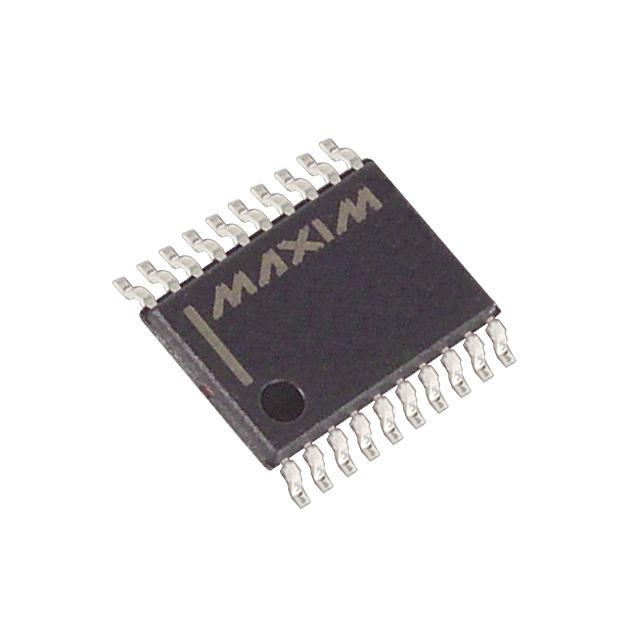
Optional 16-pin SOIC and 20-pin TSSOP
versions reset processor when power failure
occurs and hold processor in reset during
system power-up
Industrial temperature range of -40°C to
+85°C
PIN ASSIGNMENT
VCCO
1
8
VCCI
VCCO
1
8
VCCI
VBAT
2
7
BW
VBAT
2
7
BW
TOL
3
CEO
TOL
3
4
CEI
GND
4
6
5
CEO
GND
6
5
DS1312 8-Pin DIP
(300 mils)
CEI
DS1312S-2 8-Pin SOIC
(150 mils)
NC
1
16
NC
NC
1
20
NC
VCCO
2
15
VCCI
VCCO
2
19
VCCI
NC
3
14
RST
NC
3
RST
VBAT
4
13
NC
VBAT
4
18
17
NC
5
12
BW
NC
5
16
NC
TOL
6
11
CEO
NC
6
BW
NC
7
10
NC
TOL
7
15
14
GND
8
9
CEI
NC
8
13
CEO
NC
9
12
NC
10
11
CEI
DS1312S 16-Pin SOIC
(300 mils)
GND
NC
NC
DS1312E 20-Pin TSSOP
PIN DESCRIPTION
VCCI
VCCO
VBAT
CEI
CEO
TOL
BW
RST
GND
NC
DESCRIPTION
- +5V Power Supply Input
- SRAM Power Supply Output
- Backup Battery Input
- Chip Enable Input
- Chip Enable Output
- VCC Tolerance Select
- Battery Warning Output
(Open Drain)
- Reset Output (Open Drain)
- Ground
- No Connection
The DS1312 Nonvolatile Controller with Battery Monitor is a CMOS circuit which solves the application
problem of converting CMOS RAM into nonvolatile memory. Incoming power is monitored for an outof-tolerance condition. When such a condition is detected, chip enable is inhibited to accomplish write
protection and the battery is switched on to supply the RAM with uninterrupted power. Special circuitry
uses a low-leakage CMOS process which affords precise voltage detection at extremely low battery
consumption.
1 of 12
�DS1312
In addition to battery-backup support, the DS1312 performs the important function of monitoring the
remaining capacity of the lithium battery and providing a warning before the battery reaches end-of-life.
Because the open-circuit voltage of a lithium backup battery remains relatively constant over the majority
of its life, accurate battery monitoring requires loaded-battery voltage measurement. The DS1312
performs such measurement by periodically comparing the voltage of the battery as it supports an internal
resistive load with a carefully selected reference voltage. If the battery voltage falls below the reference
voltage under such conditions, the battery will soon reach end-of-life. As a result, the Battery Warning
pin is activated to signal the need for battery replacement.
MEMORY BACKUP
The DS1312 performs all the circuit functions required to provide battery-backup for an SRAM. First, the
device provides a switch to direct power from the battery or the system power supply (VCCI). Whenever
VCCI is less than the switch point VSW and VCCI is less than the battery voltage VBAT, the battery is
switched in to provide backup power to the SRAM. This switch has voltage drop of less than 0.2 volts.
Second, the DS1312 handles power failure detection and SRAM write-protection. VCCI is constantly
monitored, and when the supply goes out of tolerance, a precision comparator detects power failure and
inhibits chip enable output ( CEO ) in order to write-protect the SRAM. This is accomplished by holding
CEO to within 0.2 volts of VCCO when VCCI is out of tolerance. If CEI is (active) low at the time that
power failure is detected, the CEO signal is kept low until CEI is brought high again. Once CEI is
brought high, CEO is taken high and held high until after VCCI has returned to its nominal voltage level. If
CEI is not brought high by 1.5 µs after power failure is detected, CEO is forced high at that time. This
specific scheme for delaying write protection for up to 1.5 µs guarantees that any memory access in
progress when power failure occurs will complete properly. Power failure detection occurs in the range
of 4.75 to 4.5 volts (5% tolerance) when the TOL pin is wired to GND or in the range of 4.5 to 4.25 volts
(10% tolerance) when TOL is connected to VCCO.
BATTERY VOLTAGE MONITORING
The DS1312 automatically performs periodic battery voltage monitoring at a factory-programmed time
interval of 24 hours. Such monitoring begins within tREC after VCCI rises above VCCTP, and is suspended
when power failure occurs.
After each 24-hour period (tBTCN) has elapsed, the DS1312 connects VBAT to an internal 1.2 MΩ test
resistor (RINT) for one second (tBTPW). During this one second, if VBAT falls below the factoryprogrammed battery voltage trip point (VBTP), the battery warning output BW is asserted. While BW is
active battery testing will be performed with period tBTCW to detect battery removal and replacement.
Once asserted, BW remains active until the battery is physically removed and replaced by a fresh cell.
The battery is still retested after each VCC power-up, however, even if BW was active on power-down. If
the battery is found to be higher than VBTP during such testing, BW is deasserted and regular 24-hour
testing resumes. BW has an open-drain output driver.
Battery replacement following BW activation is normally done with VCCI nominal so that SRAM data is
not lost. During battery replacement, the minimum time duration between old battery detachment and
new battery attachment (tBDBA) must be met or BW will not deactivate following attachment of the new
2 of 12
�DS1312
battery. Should BW not deactivate for this reason, the new battery can be detached for tBDBA and then reattached to clear BW .
NOTE: The DS1312 cannot constantly monitor an attached battery because such monitoring would
drastically reduce the life of the battery. As a result, the DS1312 only tests the battery for one second out
of every 24 hours and does not monitor the battery in any way between tests. If a good battery (one that
has not been previously flagged with BW ) is removed between battery tests, the DS1312 may not
immediately sense the removal and may not activate BW until the next scheduled battery test. If a battery
is then reattached to the DS1312, the battery may not be tested until the next scheduled test.
NOTE: Battery monitoring is only a useful technique when testing can be done regularly over the entire
life of a lithium battery. Because the DS1312 only performs battery monitoring when VCC is nominal,
systems which are powered-down for excessively long periods can completely drain their lithium cells
without receiving any advanced warning. To prevent such an occurrence, systems using the DS1312
battery monitoring feature should be powered–up periodically (at least once every few months) in order
to perform battery testing. Furthermore, anytime BW is activated on the first battery test after a power-up,
data integrity should be checked via checksum or other technique.
POWER MONITORING
DS1312S and DS1312E varieties have an additional reset pin. These varieties detect out-of-tolerance
power supply conditions and warn a processor-based system of impending power failure. When VCCI falls
below the trip point level defined by the TOL pin (VCCTP), the VCCI comparator activates the reset signal
RST . Reset occurs in the range of 4.75 to 4.5 volts (5% tolerance) when the TOL pin is connected to
GND or in the range of 4.5 to 4.25 volts (10% tolerance) when TOL is connected to VCCO.
also serves as a power-on reset during power-up. After VCCI exceeds VCCTP, RST will be held active
for 200 ms nominal (tRPU). This reset period is sufficiently long to prevent system operation during
power-on transients and to allow tREC to expire. RST has an open-drain output driver.
RST
FRESHNESS SEAL MODE
When the battery is first attached to the DS1312 without VCC power applied, the device does not
immediately provide battery-backup power on VCCO. Only after VCCI exceeds VCCTP will the DS1312
leave Freshness Seal Mode. This mode allows a battery to be attached during manufacturing but not used
until after the system has been activated for the first time. As a result, no battery energy is drained during
storage and shipping.
3 of 12
�FUNCTIONAL BLOCK DIAGRAM Figure 1
4 of 12
DS1312
�DS1312
ABSOLUTE MAXIMUM RATINGS
Voltage Range on Any Pin Relative to Ground
Operating Temperature Range
Storage Temperature Range
Soldering Temperature (reflow, SO or TSSOP)
Lead Temperature (soldering, 10s)
-0.5V to +6.0V
-40°C to +85°C
-55°C to +125°C
+260°C
+300°C
This is a stress rating only and functional operation of the device at these or any other conditions above those indicated in the
operation sections of this specification is not implied. Exposure to absolute maximum rating conditions for extended periods of
time may affect reliability.
PACKAGE THERMAL CHARACTERISTICS (Note 1)
PDIP
Junction-to-Ambient Thermal Resistance (θJA).…………………...………………………....110°C/W
Junction-to-Case Thermal Resistance (θJC)……………………………………………………40°C/W
8 SO
Junction-to-Ambient Thermal Resistance (θJA).……………………………………………...132°C/W
Junction-to-Case Thermal Resistance (θJC)……………………………………………………38°C/W
16 SO
Junction-to-Ambient Thermal Resistance (θJA).…………………...………………………......71°C/W
Junction-to-Case Thermal Resistance (θJC)……………………………………………………23°C/W
TSSOP
Junction-to-Ambient Thermal Resistance (θJA).……………………………………………..73.8°C/W
Junction-to-Case Thermal Resistance (θJC)……………………………………………………20°C/W
Note 1:
Package thermal resistances were obtained using the method described in JEDEC specification JESD51-7, using a four-layer
board for the SMT packages. For detailed information on package thermal considerations, refer to www.maxim-ic.com/thermaltutorial.
RECOMMENDED OPERATING CONDITIONS
PARAMETER
Supply Voltage TOL=GND
Supply Voltage TOL=VCCO
Battery Supply Voltage
Logic 1 Input
Logic 0 Input
SYMBOL
VCCI
VCCI
VBAT
VIH
VIL
DC ELECTRICAL CHARACTERISTICS
PARAMETER
Operating Current (TTL inputs)
Operating Current (CMOS inputs)
RAM Supply Current
(VCCO ≥ VCCI -0.2V)
RAM Supply Current
(VCCO ≥ VCCI -0.3V)
VCC Trip Point (TOL=GND)
VCC Trip Point (TOL=VCCO)
VBAT Trip Point
SYMBOL
ICC1
ICC2
ICCO1
MIN
4.75
4.5
2.0
2.0
-0.3
TYP
5.0
5.0
MIN
TYP
200
50
4.50
4.25
2.5
5 of 12
UNITS
V
V
V
V
V
NOTES
2
2
2
2, 13
2, 13
(-40°C to +85°C; VCCI >VCCTP)
ICCO1
VCCTP
VCCTP
VBTP
MAX
5.5
5.5
6.0
VCCI+0.3
+0.8
(-40°C to +85°C)
4.62
4.37
2.6
MAX
400
100
140
UNITS
µA
µA
mA
NOTES
3
3, 6
4
200
mA
5
4.75
4.50
2.7
V
V
V
2
2
2
�DS1312
VCC/VBAT Switch Point
Output Current @ 2.4V
Output Current @ 0.4V
Input Leakage
Output Leakage
Battery Monitoring Test Load
VSW
IOH
IOL
IIL
ILO
RINT
2.6
-1
-1.0
-1.0
0.8
2.7
2.8
1.2
4
+1.0
+1.0
1.5
V
mA
mA
µA
µA
MΩ
2
8, 11
8, 11
DC ELECTRICAL CHARACTERISTICS (-40°C to +85°C; VCCI < VBAT; VCCI < VSW)
PARAMETER
Battery Current
Battery Backup Current
Supply Voltage
CEO Output
CAPACITANCE
PARAMETER
Input Capacitance ( CEI , TOL)
Output Capacitance
( CEO , BW , RST )
SYMBOL
IBAT
ICCO2
VCCO
VOHL
SYMBOL
CIN
COUT
AC ELECTRICAL CHARACTERISTICS
PARAMETER
CEI to CEO Propagation Delay
CE Pulse Width
VCC Valid to End of
Write Protection
VCC Valid to CEI Inactive
VCC Valid to RST Inactive
VCC Valid to BW Valid
SYMBOL
tPD
tCE
tREC
tPU
tRPU
tBPU
SYMBOL
tF
tRPD
tR
AC ELECTRICAL CHARACTERISTICS
PARAMETER
Battery Test to BW Active
Battery Test Cycle-Normal
Battery Test Cycle-Warning
Battery Test Pulse Width
Battery Detach to Battery Attach
Battery Attach to BW Inactive
SYMBOL
tBW
tBTCN
tBTCW
tBTPW
tBDBA
tBABW
TYP
MAX
100
500
VBAT-0.2
VBAT-0.2
MIN
MIN
TYP
MIN
150
MAX
7
7
TYP
5
200
6 of 12
UNITS
pF
pF
NOTES
UNITS
ns
µs
ms
2
350
1
ms
ms
s
NOTES
12
10
11
11
(-40°C to +85°C; VCCI < VCCTP)
TYP
MAX
5
15
UNITS
µs
µs
µs
NOTES
11
(-40°C to +85°C; VCCI > VCCTP)
TYP
24
5
7
NOTES
3
7
2
2, 9
(TA = +25°C)
MAX
10
1.5
125
150
MIN
UNITS
nA
µA
V
V
(-40°C to +85°C; VCCI > VCCTP)
12
150
AC ELECTRICAL CHARACTERISTICS
PARAMETER
VCC Slew Rate
VCC Fail Detect to RST Active
VCC Slew Rate
MIN
MAX
1
1
1
UNITS
s
hr
s
s
s
s
NOTES
11
11
�DS1312
TIMING DIAGRAM: POWER-UP
NOTE:
If VBAT < VSW, VCCO will begin to slew with VCCI when VCCI = VBAT.
7 of 12
�DS1312
TIMING DIAGRAM: POWER-DOWN
NOTE:
If VBAT < VSW, VCCO will slew down with VCCI until VCCI = VBAT.
8 of 12
�TIMING DIAGRAM: BATTERY WARNING DETECTION
NOTE:
DS1312
tBW is measured from the expiration of the internal timer to the activation of the battery warning output
BW .
TIMING DIAGRAM: BATTERY REPLACEMENT
9 of 12
�DS1312
NOTES:
2. All voltages referenced to ground.
3. Measured with outputs open circuited.
4. ICCO1 is the maximum average load which the DS1312 can supply to attached memories at VCCO >
VCCI -0.2V.
5. ICCO1 is the maximum average load which the DS1312 can supply to attached memories at VCCO >
VCCI -0.3V.
6. All inputs within 0.3V of ground or VCCI.
7. ICCO2 is the maximum average load current which the DS1312 can supply to the memories in the
battery backup mode.
8. Measured with a load as shown in Figure 2.
9. Chip Enable Output CEO can only sustain leakage current in the battery backup mode.
10. CEO will be held high for a time equal to tREC after VCCI crosses VCCTP on power-up.
11. BW and RST are open-drain outputs and, as such, cannot source current. External pull-up resistors
should be connected to these pins for proper operation. Both BW and RST can sink 10 mA.
12. tCE maximum must be met to ensure data integrity on power-down.
13. In battery-backup mode, inputs must never be below ground or above VCCO.
14. The DS1312 is recognized by Underwriters Laboratories (UL) under file E99151.
DC TEST CONDITIONS
Outputs Open
All voltages are referenced to ground
AC TEST CONDITIONS
Output Load: See below
Input Pulse Levels: 0 - 3.0V
Timing Measurement Reference Levels
Input: 1.5V
Output: 1.5V
Input pulse Rise and Fall Times: 5 ns
10 of 12
�DS1312
OUTPUT LOAD Figure 2
ORDERING INFORMATION
PART
DS1312+
DS1312S-2+
DS1312S+
DS1312E+
TEMP
RANGE
-40°C to +85°C
-40°C to +85°C
-40°C to +85°C
-40°C to +85°C
PIN-PACKAGE
8 PDIP
8 SO
16 SO
20 TSSOP
+Denotes a lead(Pb)-free/RoHS-compliant package.
PACKAGE INFORMATION
For the latest package outline information and land patterns (footprints), go to www.maxim-ic.com/packages. Note that a “+”,
“#”, or “-” in the package code indicates RoHS status only. Package drawings may show a different suffix character, but the
drawing pertains to the package regardless of RoHS status.
PACKAGE TYPE
8 PDIP
8 SO
16 SO
20 TSSOP
PACKAGE CODE
P8+2
S8+4
W16+1
U20+1
OUTLINE NO.
21-0043
21-0041
21-0042
21-0066
11 of 12
LAND PATTERN NO.
90-0096
90-0107
90-0116
�DS1312
DATA SHEET REVISION SUMMARY
The following represent the key differences between 12/16/96 and 06/12/97 version of the DS1312 data
sheet. Please review this summary carefully.
1. Changed VBAT max to 6V
2. Changed tBABW from 75 to 1s max
3. Changed block diagram to show UL compliance
The following represent the key differences between 06/12/97 and 08/29/97 version of the DS1312 data
sheet. Please review this summary carefully.
1. Changed AC test conditions
The following represent the key differences between 08/29/97 and 12/16/97 version of the DS1312 data
sheet. Please review this summary carefully.
1. Specified Input Capacitance as being only for CEI , TOL and output capacitance as being only for
CEO , BW and RST . This is not a change but rather a clarification.
2. Add note 13 describing UL recognition.
The following represent the key differences between 08/29/97 and 6/12 version of the DS1312 data sheet.
Please review this summary carefully.
1. Update soldering, ordering, package info, and notes.
12 of 12
Maxim cannot assume responsibility for use of any circuitry other than circuitry entirely embodied in a Maxim product. No circuit patent licenses are implied. Maxim
reserves the right to change the circuitry and specifications without notice at any time.
Maxim Integrated Products, Inc. 160 Rio Robles, San Jose, CA 95134 USA 1-408-601-1000
© 2012 Maxim Integrated Products
Maxim is a registered trademark of Maxim Integrated Products, Inc.
�