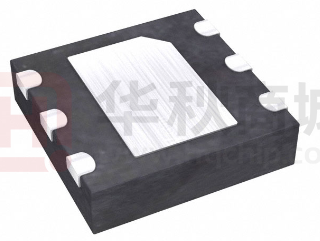
Request DS28E16 Security User Guide
EVALUATION KIT AVAILABLE
Click here for production status of specific part numbers.
DS28E16
1-Wire Secure SHA-3 Authenticator
General Description
The DS28E16 secure authenticator combines FIPS202compliant Secure Hash Algorithm (SHA-3) challenge and
response authentication with secured EEPROM.
The device provides a core set of cryptographic tools
derived from integrated blocks including a SHA-3 engine,
256 bits of secured user EEPROM, a decrement-only
counter and a unique 64-bit ROM identification number
(ROM ID). The unique ROM ID is used as a fundamental
input parameter for cryptographic operations and serves
as an electronic serial number within the application. The
device communicates over the single-contact 1-Wire® bus.
The communication follows the 1-Wire protocol with the
ROM ID acting as node address in the case of a multidevice
1-Wire network.
Applications
●● Medical Tools/Accessories Authentication and
Calibration
●● Accessory and Peripheral Secure Authentication
●● Battery Authentication and Charge Cycle Tracking
1-Wire is a registered trademark of Maxim Integrated Products, Inc.
Typical Application Circuit
Benefits and Features
●● Robust Countermeasures Protect Against Security
Attacks
• All Stored Data Cryptographically Protected from
Discovery
●● Efficient Secure Hash Algorithm Authenticates
Peripherals
• FIPS 202-Compliant SHA-3 Algorithm for
Challenge/Response Authentication
• FIPS 198-Compliant Keyed-Hash Message
Authentication Code (HMAC)
●● Supplemental Features Enable Easy Integration into
End Applications
• 17-Bit One-Time Settable, Nonvolatile DecrementOnly Counter with Authenticated Read
• Secure Storage for Secrets
• 256 Bits of Secure EEPROM for User Data
• Unique and Unalterable Factory Programmed
64-Bit Identification Number (ROM ID)
• Advanced 1-Wire Protocol Minimizes Interface to
Single Contact
• Full-Time Overdrive Communication Speed
• Internal Parasite Power Capacitor
• Operating Range: 1.71V–3.63V, -40°C to +85°C
• WLP and TDFN-EP Packages
• ±8kV HBM ESD Protection (typ)
• 3.5µA (typ) Input Load Current
VCC
Ordering Information appears at end of data sheet.
RP
VCC
µC
I2C
PORT
GND
VCC
IO
SDA
DS2477
SCL
GPIO
GND
IO
IO
DS28E16
GND
19-100438; Rev 1; 3/19
�DS28E16
1-Wire Secure SHA-3 Authenticator
Absolute Maximum Ratings
Voltage Range on Any Pin Relative to GND...........-0.5V to 4.0V
Maximum Current into Any Pin........................... -20mA to 20mA
Operating Temperature Range............................ -40°C to +85°C
Junction Temperature.......................................................+150°C
Storage Temperature Range............................. -40°C to +125°C
Lead Temperature (soldering, 10s).................................. +300°C
Soldering Temperature (reflow)........................................+260°C
Stresses beyond those listed under “Absolute Maximum Ratings” may cause permanent damage to the device. These are stress ratings only, and functional operation of the device at these
or any other conditions beyond those indicated in the operational sections of the specifications is not implied. Exposure to absolute maximum rating conditions for extended periods may affect
device reliability.
Package Information
6 WLP
Package Code
Z60E1+1
Outline Number
21-100327
Land Pattern Number
Refer to Application Note 1891
Thermal Resistance, Four-Layer Board:
Junction to Ambient (θJA)
95.15°C/W
Junction to Case (θJC)
N/A
6 TDFN-EP
Package Code
T633+2
Outline Number
21-0137
Land Pattern Number
90-0058
Thermal Resistance, Single-Layer Board:
Junction to Ambient (θJA)
55°C/W
Junction to Case (θJC)
9°C/W
Thermal Resistance, Four-Layer Board:
Junction to Ambient (θJA)
42°C/W
Junction to Case (θJC)
9°C/W
For the latest package outline information and land patterns (footprints), go to www.maximintegrated.com/packages. Note that a “+”,
“#”, or “-” in the package code indicates RoHS status only. Package drawings may show a different suffix character, but the drawing
pertains to the package regardless of RoHS status.
Package thermal resistances were obtained using the method described in JEDEC specification JESD51-7, using a four-layer board.
For detailed information on package thermal considerations, refer to www.maximintegrated.com/thermal-tutorial.
www.maximintegrated.com
Maxim Integrated │ 2
�DS28E16
1-Wire Secure SHA-3 Authenticator
Electrical Characteristics
(Limits are 100% tested at TA = +25ºC and TA = +85ºC. Limits over the operating temperature range and relevant supply voltage
range are guaranteed by design and characterization. Specifications marked GBD are guaranteed by design and not production
tested. Specifications to the minimum operating temperature are guaranteed by design and are not production tested.)
PARAMETER
SYMBOL
CONDITIONS
MIN
TYP
MAX
UNITS
3.63
V
IO PIN: GENERAL DATA
1-Wire Pullup Voltage
VPUP
System requirement
1.71
1-Wire Pullup Resistance
RPUP
(Note 1)
300
Input Capacitance
CIO
Input Load Current
IL
(Notes 1, 2)
750
1700
IO pin at VPUP
3.5
Ω
pF
11
0.65 x
VPUP
µA
High-to-Low Switching
Threshold
VTL
(Notes 3, 4)
Input Low Voltage
VIL
(Note 5)
Low-to-High Switching
Threshold
VTH
(Notes 3, 6)
0.75 x
VPUP
V
Switching Hysteresis
VHY
(Notes 3, 7)
0.3
V
Output Low Voltage
VOL
IOL = 4mA (Note 8)
Recovery Time
tREC
(Note 9)
5
μs
Time Slot Duration
tSLOT
(Note 10)
11
μs
V
0.18 x
VPUP
0.4
V
V
IO PIN: 1-Wire INTERFACE
IO PIN: 1-Wire RESET, PRESENCE-DETECT CYCLE
Reset Low Time
tRSTL
System requirement
48
60
μs
Reset High Time
tRSTH
(Note 11)
48
Presence-Detect Sample Time
tMSP
(Note 12)
7
10
μs
Write-Zero Low Time
tW0L
(Note 13)
6
16
μs
Write-One Low Time
tW1L
(Note 13)
0.25
2
μs
μs
IO PIN: 1-Wire WRITE
IO PIN: 1-Wire READ
Read Low Time
tRL
(Note 14)
0.25
2-δ
μs
tMSR
(Note 14)
tRL+ δ
2
μs
Strong Pullup Current
ISPU
(Note 15)
3
mA
Strong Pullup Voltage
VSPU
(Note 15)
Read Sample Time
STRONG PULLUP OPERATION
1.71
V
Read Memory Time
tRM
5
ms
Write Memory Time
tWM
60
ms
Short Write Memory Time
tWMS
15
ms
Computation Time
tCMP
15
ms
www.maximintegrated.com
Maxim Integrated │ 3
�DS28E16
1-Wire Secure SHA-3 Authenticator
Electrical Characteristics (continued)
(Limits are 100% tested at TA = +25ºC and TA = +85ºC. Limits over the operating temperature range and relevant supply voltage
range are guaranteed by design and characterization. Specifications marked GBD are guaranteed by design and not production
tested. Specifications to the minimum operating temperature are guaranteed by design and are not production tested.)
PARAMETER
SYMBOL
CONDITIONS
MIN
TYP
MAX
UNITS
EEPROM
Write/Erase Cycles (Endurance)
NCY
(Note 16)
Data Retention
tDR
TA = +85°C (Note 17)
100K
10
years
POWER-UP
Power-Up Time
tOSCWUP
System requirement (Note 18)
2
ms
Note 1: System requirement. Maximum allowable pullup resistance is a function of the number of 1-Wire devices in the system
and 1-Wire recovery times. The specified value here applies to systems with only one device and with the minimum 1-Wire
recovery times.
Note 2: Value represents the typical parasite capacitance when VPUP is first applied. Once the parasite capacitance is charged, it
does not affect normal communication.
Note 3: VTL, VTH, and VHY are a function of the internal supply voltage, which is a function of VPUP, RPUP, 1-Wire timing, and
capacitive loading on IO. Lower VPUP, higher RPUP, shorter tREC, and heavier capacitive loading all lead to lower values
of VTL, VTH, and VHY.
Note 4: Voltage below which, during a falling edge on IO, a logic-zero is detected.
Note 5: The voltage on IO must be less than or equal to VILMAX at all times the master is driving IO to a logic-zero level.
Note 6: Voltage above which, during a rising edge on IO, a logic-one is detected.
Note 7: After VTH is crossed during a rising edge on IO, the voltage on IO must drop by at least VHY to be detected as logic-zero.
Note 8: The I-V characteristic is linear for voltages less than 1V.
Note 9: System requirement. Applies to a single device attached to a 1-Wire line.
Note 10: Defines maximum possible bit rate. Equal to 1/(tW0LMIN + tRECMIN).
Note 11: An additional reset or communication sequence cannot begin until the reset high time has expired.
Note 12: System requirement. Interval after tRSTL during which a bus master can read a logic 0 on IO if there is a device present.
The power-up presence detect pulse can be outside this interval, but completes within 2ms after power-up.
Note 13: System requirement. ε in Figure 4 represents the time required for the pullup circuitry to pull the voltage on IO up from VIL to
VTH. The actual maximum duration for the master to pull the line low is tW1LMAX + tF - ε and tW0LMAX + tF - ε, respectively.
Note 14: System requirement. δ in Figure 4 represents the time required for the pullup circuitry to pull the voltage on IO up from VIL
to the input-high threshold of the bus master. The actual maximum duration for the master to pull the line low is tRLMAX + tF.
Note 15: Current drawn from IO during a SPU operation interval. The pullup circuit on IO during the SPU operation interval should
be such that the voltage at IO is greater than or equal to VSPUMIN. A low-impedance bypass of RPUP activated during the
SPU operation is the recommended way to meet this requirement.
Note 16: Write-cycle endurance is tested in compliance with JESD47H.
Note 17: Data retention is tested in compliance with JESD47H.
Note 18: 1-Wire communication should not take place for at least tOSCWUP..after VPUP reaches VPUP min.
www.maximintegrated.com
Maxim Integrated │ 4
�DS28E16
1-Wire Secure SHA-3 Authenticator
Pin Configuration
TOP VIEW
DNC
DNC
6
5
4
DS28E16
+
DNC
A IO
GND
GND
B IO
GND
GND
2
3
DS28E16
1
+
1
2
3
DNC
IO
GND
WLP
TDFN-EP
3mm x 3mm
Pin Description
PIN
TDFN
WLP
NAME
1, 4, 5, 6
—
DNC
2
A1, B1
IO
3
A2, A3,
B2, B3
GND
—
—
EP
www.maximintegrated.com
FUNCTION
Do Not Connect
1-Wire IO
Ground Reference. Connect all contacts to GND.
Exposed Pad (TDFN Only). Solder evenly to the board’s ground plane for proper operation.
Refer to Application Note 3273: Exposed Pads: A Brief Introduction for additional information
Maxim Integrated │ 5
�DS28E16
1-Wire Secure SHA-3 Authenticator
Functional Diagram
PARASITE
POWER
DS28E16
64-BIT ROM ID
IO
1-WIRE
INFC
&
CMD
BUFFER
SHA3-256
SECRET
E2 ARRAY
USER MEMORY
DECREMENT COUNTER
Detailed Description
The DS28E16 integrates the Maxim DeepCover® capability to protect all device stored data from invasive discovery.
In addition to the SHA-3 engine for signatures, 256-bit
EEPROM for user memory, SHA-3 secret storage, 17-bit
decrement counter, and control registers. The device operates from a 1-Wire interface with a parasitic supply by way
of an internal capacitor.
Design Resource Overview
Operation of the DS28E16 involves use of device
EEPROM and execution of device function commands.
The following section provides an overview including the
decrement counter. Refer to the DS28E16 Security User
Guide for details.
DeepCover is a registered trademark of Maxim Integrated
Products, Inc.
www.maximintegrated.com
Maxim Integrated │ 6
�DS28E16
1-Wire Secure SHA-3 Authenticator
Memory
A secured EEPROM array provides SHA-3 secret storage,
along with a decrement counter, and/or general-purpose,
user-programmable memory. Depending on the memory
space, there are either default or user-programmable
options to set protection modes.
FROM ROM FUNCTIONS
FLOW CHART
66h
COMMAND
START?
MASTER Tx
COMMAND START
Y
MASTER Tx INPUT
LENGTH BYTE
Function Commands
MASTER Tx COMMAND BYTE
After a 1-Wire reset/presence cycle and ROM function
command sequence is successful, a command start
can be accepted and then followed by a device function
command. In general, these commands follow Figure 1.
Within this diagram, the data transfer is verified when writing and reading by a 16-bit CRC (CRC-16). The CRC-16
is computed as described in Maxim's Application Note 27:
Understanding and Using Cyclic Redundancy Checks
with Maxim 1-Wire and iButton Products..
MASTER Tx
PARAMETER BYTE(S)
MASTER Rx CRC-16 (INVERTED
OF COMMAND START, LENGTH,
COMMAND, AND PARAMETERS)
MASTER Tx RELEASE BYTE
N
SLAVE Rx AAh
RELEASE BYTE?
Y
Decrement Counter
DELAY WITH STRONG PULLUP
The optional 17-bit decrement counter can be written one
time on a page of memory. A dedicated device function
command is used to decrement the count value by one
with each call. Once the count value reaches a value of
0, no additional decrements are possible.
MASTER Rx FFh DUMMY BYTE
MASTER Rx OUTPUT
LENGTH BYTE
MASTER Rx RESULT BYTE
1-Wire Bus System
The 1-Wire bus is a system that has a single bus master
and one or more slaves. In all instances, the DS28E16 is a
slave device. The bus master is typically a microcontroller
or a coprocessor like the DS2477. The discussion of this
bus system is broken down into three topics: hardware
configuration, transaction sequence, and 1-Wire signaling
(signal types and timing). The 1-Wire protocol defines bus
transactions in terms of the bus state during specific time
slots that are initiated on the falling edge of sync pulses
from the bus master.
www.maximintegrated.com
N
MASTER Rx DATA BYTE(S)
MASTER Rx CRC-16 (INVERTED
OF LENGTH, RESULT, AND DATA)
MASTER
Rx 1s
N
MASTER Tx
RESET?
Y
TO ROM FUNCTIONS
FLOW CHART
Figure 1. Device Function Flow Chart
Maxim Integrated │ 7
�DS28E16
1-Wire Secure SHA-3 Authenticator
Hardware Configuration
Transaction Sequence
The 1-Wire bus has only a single line by definition; it is
important that each device on the bus can drive it at the
appropriate time. To facilitate this, each device attached
to the 1-Wire bus must have open-drain or three-state
outputs. The 1-Wire port of the DS28E16 is open drain
with an internal circuit equivalent.
The protocol for accessing the DS28E16 through the
1-Wire port is as follows:
A multidrop bus consists of a 1-Wire bus with multiple
slaves attached. The DS28E16 supports overdrive communication speed of 90.9kbps (max). The value of the
pullup resistor primarily depends on the network size and
load conditions. The DS28E16 requires a pullup resistor
of 750Ω (max).
●● Transaction/data
The idle state for the 1-Wire bus is high. If for any reason
a transaction needs to be suspended, the bus must be left
in the idle state if the transaction is to resume. If this does
not occur and the bus is left low for more than 16μs one
or more devices on the bus could be reset.
●● Initialization
●● ROM Function command
●● Device Function command
Initialization
All transactions on the 1-Wire bus begin with an initialization sequence. The initialization sequence consists of a
reset pulse transmitted by the bus master followed by
presence pulse(s) transmitted by the slave(s). The presence pulse lets the bus master know that the DS28E16 is
on the bus and is ready to operate. For more details, see
the 1-Wire Signaling and Timing section.
VPUP
*SEE NOTE
1-WIRE SLAVE PORT
BUS MASTER
Tx
PIOX
Rx
PIOY
Tx
BIDIRECTIONAL
OPEN-DRAIN PORT
CTL
RPUP
DATA
Rx = RECEIVE
Tx = TRANSMIT
CX
Rx
IL
Tx
100Ω
MOSFET
*NOTE: USE A LOW-IMPEDANCE BYPASS OR EQUALLY DRIVE LOGIC ‘1’ WITH PIOY
Figure 2. Hardware Configuration
www.maximintegrated.com
Maxim Integrated │ 8
�DS28E16
1-Wire Secure SHA-3 Authenticator
1-Wire Signaling and Timing
Figure 3 shows the initialization sequence required to
begin any communication with the DS28E16. A reset
pulse followed by a presence pulse indicates that the
DS28E16 is ready to receive data, given the correct ROM
and device function command. If the bus master uses
slew-rate control on the falling edge, it must pull down the
line for tRSTL + tF to compensate for the edge.
The DS28E16 requires strict protocols to ensure data
integrity. The protocol consists of four types of signaling
on one line: reset sequence with reset pulse and presence pulse, write-zero, write-one, and read-data. Except
for the presence pulse, the bus master initiates all falling
edges.
After the bus master has released the line, it goes into
receive mode. Now, the 1-Wire bus is pulled to VPUP
through the pullup resistor or, in the case of a special
driver chip, through the active circuitry. When the threshold VTH is crossed, the DS28E16 waits and then transmits a presence pulse by pulling the line low. To detect a
presence pulse, the master must test the logical state of
the 1-Wire line at tMSP.
To get from idle to active, the voltage on the 1-Wire line
needs to fall from VPUP below the threshold VTL. To get
from active to idle, the voltage needs to rise from VILMAX
past the threshold VTH. The time it takes for the voltage
to make this rise is seen in Figure 3 as ε, and its duration depends on the pullup resistor (RPUP) used and the
capacitance of the 1-Wire network attached. The voltage
VILMAX is relevant for the DS28E16 when determining a
logical level, not triggering any events.
Immediately after tRSTH has expired, the DS28E16 is
ready for data communication.
MAS TER Tx RESET PULSE
MAS TER Rx P RESENCE PULSE
ε
tMSP
VPUP
VIHMASTER
VTH
VTL
VILMAX
0V
tRSTL
tREC
tF
tRSTH
RESISTOR (RPUP)
MAS TER
1-WIRE SLA VE
Figure 3. Initialization Procedure: Reset and Presence Pulse
www.maximintegrated.com
Maxim Integrated │ 9
�DS28E16
1-Wire Secure SHA-3 Authenticator
Read/Write Time Slots
Data communication with the DS28E16 takes place in
time slots that carry a single bit each. Write time slots
transport data from bus master to slave. Read time slots
transfer data from slave to master. Figure 4 illustrates the
definitions of the write and read time slots.
All communication begins with the master pulling the data
line low. As the voltage on the 1-Wire line falls below
the threshold VTL, the DS28E16 starts its internal timing
generator that determines when the data line is sampled
during a write time slot and how long data is valid during
a read time slot.
Master to Slave
For a write-one time slot, the voltage on the data line must
have crossed the VTH threshold before the write-one low
time tW1LMAX is expired. For a write-zero time slot, the
voltage on the data line must stay below the VTH threshold until the write-zero low time tW0LMIN is expired. For
the most reliable communication, the voltage on the data
line should not exceed VILMAX during the entire tW0L or
tW1L window. After the VTH threshold has been crossed,
the DS28E16 needs a recovery time tREC before it is
ready for the next time slot.
Slave to Master
A read-data time slot begins like a write-one time slot. The
voltage on the data line must remain below VTL until the
read low time tRL is expired. During the tRL window, when
responding with a 0, the DS28E16 starts pulling the data
line low; its internal timing generator determines when this
pulldown ends and the voltage starts rising again. When
responding with a 1, the DS28E16 does not hold the data
line low at all, and the voltage starts rising as soon as tRL
is over.
The sum of tRL + δ (rise time) on one side and the internal
timing generator of the DS28E16 on the other side define
the master sampling window (tMSRMIN to tMSRMAX), in
which the master must perform a read from the data line.
For the most reliable communication, tRL should be as
short as permissible, and the master should read close
to, but no later than tMSRMAX. After reading from the data
line, the master must wait until tSLOT is expired. This
guarantees sufficient recovery time tREC for the DS28E16
to get ready for the next time slot. Note that tREC specified herein applies only to a single DS28E16 attached to a
1-Wire line. For multidevice configurations, tREC must be
extended to accommodate the additional 1-Wire device
input capacitance. Alternatively, an interface that performs
active pullup during the 1-Wire recovery time such as the
special 1-Wire line drivers can be used.
1-Wire ROM Commands
Once the bus master has detected a presence, it can
issue one of the five ROM function commands that the
DS28E16 supports. All ROM function commands are 8
bits long. For operational details, see Figure 5. A descriptive list of these ROM function commands follows in the
subsequent sections and the commands are summarized
in Table 1.
Table 1. 1-Wire ROM Commands Summary
ROM FUNCTION COMMAND
CODE
DESCRIPTION
Search ROM
F0h
Search for a device
Read ROM
33h
Read ROM from device (single drop)
Match ROM
55h
Select a device by ROM number
Skip ROM
CCh
Select only device on 1-Wire
Resume
A5h
Selected device with RC bit set
www.maximintegrated.com
Maxim Integrated │ 10
�DS28E16
1-Wire Secure SHA-3 Authenticator
WRITE-ONE TI ME SLOT
tW1L
VPUP
VIHMASTER
VTH
VTL
VILMAX
0V
tF
ε
tSLOT
RESISTOR (RPUP)
MAS TER
WRITE-ZERO TIME SLOT
tW0L
VPUP
VIHMASTER
VTH
VTL
VILMAX
0V
tF
ε
tREC
tSLOT
RESISTOR (RPUP)
MAS TER
READ-DATA TIME SLOT
tMSR
tRL
VPUP
VIHMASTER
VTH
VTL
VILMAX
0V
MAS TER SAMPLING
WINDOW
tF
δ
tREC
tSLOT
RESISTOR (RPUP)
MAS TER
1-WIRE SLA VE
Figure 4. Read/Write Timing Diagrams
www.maximintegrated.com
Maxim Integrated │ 11
�DS28E16
1-Wire Secure SHA-3 Authenticator
BUS MASTER TX
RESET PULSE
FROM DEVICE FUNCTIONS
FLOW CHART
SLAVE TX
PRESENCE PULSE
BUS MASTER TX ROM
FUNCTION COMMAND
33h
READ ROM
COMMAND?
N
55h
MATCH ROM
COMMAND?
F0h
SEARCH ROM
COMMAND?
N
N
CCh
SKIP ROM
COMMAND?
Y
Y
Y
Y
RC = 0
RC = 0
RC = 0
RC = 0
N
A5h
RESUME
COMMAND?
Y
RC = 1?
SLAVE TX
FAMILY CODE
(1 BYTE)
SLAVE TX BIT 0
MASTER TX BIT 0
N
N
BIT 0 MATCH?
Y
Y
SLAVE TX BIT 1
SLAVE TX BIT 1
MASTER TX BIT 1
MASTER TX BIT 0
Y
BIT 1 MATCH?
N
N
MASTER TX
RESET?
Y
N
BIT 1 MATCH?
Y
SLAVE TX
CRC BYTE
N
SLAVE TX BIT 0
MASTER TX BIT 0
BIT 0 MATCH?
SLAVE TX
SERIAL NUMBER
(6 BYTES)
N
Y
SLAVE TX BIT 63
SLAVE TX BIT 63
MASTER TX BIT 63
MASTER TX BIT 63
BIT 63 MATCH?
N
N
BIT 63 MATCH?
RC = 1
RC = 1
TO DEVICE FUNCTIONS
FLOW CHART
Figure 5. ROM Function Flow
www.maximintegrated.com
Maxim Integrated │ 12
�DS28E16
1-Wire Secure SHA-3 Authenticator
Search ROM[F0h]
Match ROM[55h]
When a system is initially brought up, the bus master
might not know the number of devices on the 1-Wire bus
or their ROM ID numbers. By taking advantage of the
wired-AND property of the bus, the master can use a process of elimination to identify the ID of all slave devices.
For each bit in the ID number, starting with the least significant bit, the bus master issues a triplet of time slots.
On the first slot, each slave device participating in the
search outputs the true value of its ID number bit. On the
second slot, each slave device participating in the search
outputs the complemented value of its ID number bit. On
the third slot, the master writes the true value of the bit
to be selected. All slave devices that do not match the
bit written by the master stop participating in the search.
If both of the read bits are zero, the master knows that
slave devices exist with both states of the bit. By choosing which state to write, the bus master branches in the
search tree. After one complete pass, the bus master
knows the ROM ID number of a single device. Additional
passes identify the ID numbers of the remaining devices.
Refer to Application Note 187: 1-Wire Search Algorithm
for a detailed discussion, including an example.
The Match ROM command, followed by a 64-bit ROM
sequence, allows the bus master to address a specific
DS28E16 on a multidrop bus. Only the DS28E16 that
exactly matches the 64-bit ROM sequence responds
to the subsequent device function command. All other
slaves wait for a reset pulse. This command can be used
with a single device or multiple devices on the bus.
Read ROM[33h]
The Read ROM command allows the bus master to read
the DS28E16’s 8-bit family code, unique 48-bit serial
number, and 8-bit CRC. This command can only be used
if there is a single slave on the bus. If more than one
slave is present on the bus, a data collision occurs when
all slaves try to transmit at the same time (open drain
produces a wired-AND result). The resultant family code
and 48-bit serial number result in a mismatch of the CRC.
www.maximintegrated.com
Skip ROM [CCh]
This command can save time in a single-drop bus system
by allowing the bus master to access the device functions
without providing the 64-bit ROM ID. If more than one
slave is present on the bus and, for example, a read command is issued following the Skip ROM command, data
collision occurs on the bus as multiple slaves transmit
simultaneously (open-drain pulldowns produce a wiredAND result).
Resume [A5h]
To maximize the data throughput in a multidrop environment, the Resume command is available. This command checks the status of the RC bit and, if it is set,
directly transfers control to the device function commands, similar to a Skip ROM command. The only way
to set the RC bit is through successfully executing the
Match ROM or Search ROM command. Once the RC bit
is set, the device can repeatedly be accessed through
the Resume command. Accessing another device on
the bus clears the RC bit, preventing two or more
devices from simultaneously responding to the Resume
command.
Maxim Integrated │ 13
�DS28E16
1-Wire Secure SHA-3 Authenticator
Improved Network Behavior
(Switch-Point Hysteresis)
In a 1-Wire environment, line termination is possible only
during transients controlled by the bus master (1-Wire
driver). 1-Wire networks, therefore, are susceptible to
noise of various origins. Depending on the physical size
and topology of the network, reflections from end points
and branch points can add up or cancel each other to
some extent. Such reflections are visible as glitches or
ringing on the 1-Wire communication line. Noise coupled
onto the 1-Wire line from external sources can also result
in signal glitching. A glitch during the rising edge of a time
slot can cause a slave device to lose synchronization with
the master and, consequently, result in a Search ROM
command coming to a dead end or cause a device-specific function command to abort. For better performance
in network applications, the DS28E16 uses a 1-Wire front
end with a hysteresis at the low-to-high switching threshold VTH. If a negative glitch crosses VTH, but does not go
below VTH - VHY, it is not recognized (Figure 6).
VPUP
VTH
VHY
0V
Figure 6. Noise Suppression Scheme
Ordering Information
PART
TEMP RANGE
PIN-PACKAGE
DS28E16X-S+T
-40°C to +85°C
6 WLP (2.5k pcs)
DS28E16Q+T
-40°C to +85°C
6 TDFN-EP (2.5k pcs)
+Denotes a lead(Pb)-free/RoHS-compliant package.
T = Tape and reel.
EP = Exposed pad.
www.maximintegrated.com
Maxim Integrated │ 14
�DS28E16
1-Wire Secure SHA-3 Authenticator
Revision History
REVISION
NUMBER
REVISION
DATE
0
11/18
Initial release
—
1
3/19
Updated Benefits and Features section
1
DESCRIPTION
PAGES
CHANGED
For pricing, delivery, and ordering information, please visit Maxim Integrated’s online storefront at https://www.maximintegrated.com/en/storefront/storefront.html.
Maxim Integrated cannot assume responsibility for use of any circuitry other than circuitry entirely embodied in a Maxim Integrated product. No circuit patent licenses
are implied. Maxim Integrated reserves the right to change the circuitry and specifications without notice at any time. The parametric values (min and max limits)
shown in the Electrical Characteristics table are guaranteed. Other parametric values quoted in this data sheet are provided for guidance.
Maxim Integrated and the Maxim Integrated logo are trademarks of Maxim Integrated Products, Inc.
© 2019 Maxim Integrated Products, Inc. │ 15
�