LT1241 Series
High Speed Current Mode
Pulse Width Modulators
FEATURES
DESCRIPTION
Low Start-Up Current: < 250µA
nn 50ns Current Sense Delay
nn Current Mode Operation: To 500kHz
nn Pin Compatible with UC1842 Series
nn Undervoltage Lockout with Hysteresis
nn No Cross-Conduction Current
nn Trimmed Bandgap Reference
nn 1A Totem Pole Output
nn Trimmed Oscillator Frequency and Sink Current
nn Active Pull-Down on Reference and Output During
Undervoltage Lockout
nn High Level Output Clamp: 18V
nn Current Sense Leading Edge Blanking
The LT ®1241 series devices are 8-pin, fixed frequency,
current mode, pulse width modulators. They are improved
plug compatible versions of the industry standard UC1842
series. These devices have both improved speed and
lower quiescent current. The LT1241 series is optimized
for off-line and DC/DC converter applications. They contain a temperature-compensated reference, high gain
error amplifier, current sensing comparator and a high
current totem pole output stage ideally suited to driving power MOSFETs. Start-up current has been reduced
to less than 250µA. Cross-conduction current spikes in
the output stage have been eliminated, making 500kHz
operation practical. Several new features have been incorporated. Leading edge blanking has been added to the
current sense comparator. Trims have been added to the
oscillator circuit for both frequency and sink current, and
both of these parameters are tightly specified. The output stage is clamped to a maximum VOUT of 18V in the
on state. The output and the reference output are actively
pulled low during undervoltage lockout.
nn
APPLICATIONS
nn
nn
Off-Line Converters
DC/DC Converters
All registered trademarks and trademarks are the property of their respective owners.
BLOCK DIAGRAM
REFERENCE ENABLE
5V REF
MAIN BIAS
RT/CT
4
COMP
1
FB
2
OSCILLATOR
5.6V
UV
LOCKOUT
REFERENCE PULL-DOWN
OUTPUT
PULL-DOWN
8
VREF
7
VCC
6
OUTPUT
5
GND
T
1V
S
R
–
BLANKING
1mA
–
2.5V
ISENSE
+
2R
R
+
+
1.5V
3
18V
–
1241 BD01
Rev B
Document Feedback
For more information www.analog.com
1
�LT1241 Series
ABSOLUTE MAXIMUM RATINGS
Supply Voltage...........................................................25V
Output Current.........................................................± 1A*
Output Energy (Capacitive Load per Cycle)................ 5µJ
Analog Inputs (Pins 2, 3)................................ –0.3 to 6V
Error Amplifier Output Sink Current........................10mA
Power Dissipation at TA ≤ 25°C...................................1W
Operating Junction Temperature Range
LT124XC.................................................. 0°C to 100°C
LT124XI ............................................. – 40°C to 100°C
LT124XM (Obsolete)........................... – 55°C to 125°C
Storage Temperature Range.................. – 65°C to 150°C
Lead Temperature (Soldering, 10 sec).................... 300°C
*The 1A rating for output current is based on transient switching
requirements.
PIN CONFIGURATION
TOP VIEW
COMP
1
8
VREF
FB
2
7
VCC
ISENSE
3
6
OUTPUT
RT/CT
4
5
GND
TOP VIEW
J8 PACKAGE 8-LEAD CERDIP
TJMAX = 125°C, θJA = 100°C/W
COMP
1
8
VREF
FB
2
7
VCC
ISENSE
3
6
OUTPUT
RT/CT
4
5
GND
N8 PACKAGE 8-LEAD PDIP
TJMAX = 100°C, θJA = 130°C/W
OBSOLETE PACKAGE
TOP VIEW
COMP 1
8
VREF
FB 2
7
VCC
ISENSE 3
6
OUTPUT
RT/CT 4
5
GND
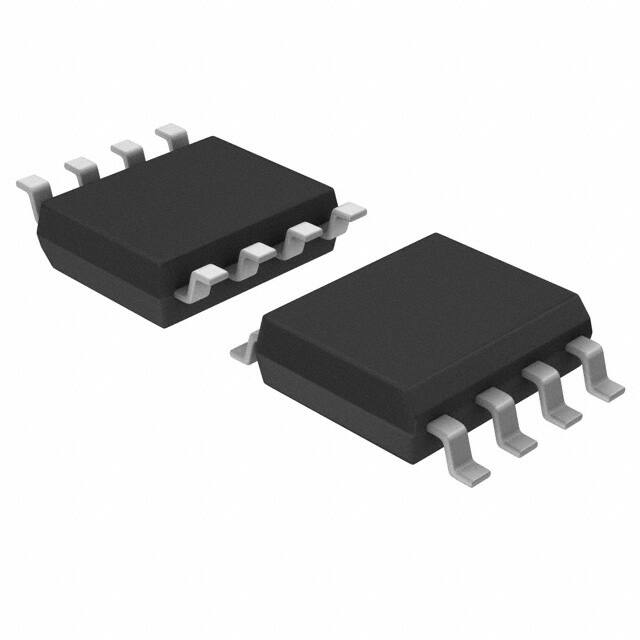
S8 PACKAGE 8-LEAD PLASTIC SO
TJMAX = 100°C, θJA = 150°C/W
ORDER INFORMATION
LEAD FREE FINISH
TAPE AND REEL
http://www.linear.com/product/LT1241#orderinfo
PART MARKING*
PACKAGE DESCRIPTION
TEMPERATURE RANGE
OBSOLETE PACKAGE
LT124XCJ8#PBF
LT124XCJ8#TRPBF
124X
8-Lead CERDIP
0°C to 100°C
LT124XCN8#PBF
LT124XCN8#TRPBF
124X
8-Lead PDIP
0°C to 100°C
LT124XCS8#PBF
LT124XCS8#TRPBF
124X
8-Lead Plastic SO
0°C to 100°C
LT124XIN8#PBF
LT124XIN8#TRPBF
124XI
8-Lead PDIP
–40°C to 125°C
LT124XIS8#PBF
LT124XIS8#TRPBF
124XI
8-Lead Plastic SO
–40°C to 125°C
OBSOLETE PACKAGE
LT124XMJ8#PBF
LT124XMJ8#TRPBF
8-Lead CERDIP
–55°C to 125°C
Consult ADI Marketing for parts specified with wider operating temperature ranges. *The temperature grade is identified by a label on the shipping container.
For more information on lead free part marking, go to: http://www.linear.com/leadfree/
For more information on tape and reel specifications, go to: http://www.linear.com/tapeandreel/. Some packages are available in 500 unit reels through
designated sales channels with #TRMPBF suffix.
Rev B
2
For more information www.analog.com
�LT1241 Series
ELECTRICAL CHARACTERISTICS
The l denotes the specifications which apply over the full operating
temperature range, otherwise specifications are at TA = 25°C. (Notes 2 and 3)
PARAMETER
CONDITIONS
MIN
TYP
MAX
UNITS
IO = 1mA, TJ = 25°C
4.925
5.000
5.075
V
Reference Section
Output Voltage
Line Regulation
12V < VCC < 25V
l
3
20
mV
Load Regulation
1mA < IVREF < 20mA
l
–6
–25
mV
l
Temperature Stability
0.1
Total Output Variation
Line, Load, Temp
Output Noise Voltage
10Hz < F < 10kHz, TJ = 25°C
Long Term Stability
TA = 125°C, 1000 Hrs
Output Short-Circuit Current
4.87
mV/°C
5.13
50
l
–30
V
µV
5
25
mV
–90
–180
mA
Oscillator Section
Initial Accuracy
RT = 10k, C T = 3.3nF, TJ = 25°C
47.5
50
52.5
kHz
RT = 13.0k, C T = 500pF, TJ = 25°C
228
248
268
kHz
1
%
Voltage Stability
12V < VCC < 25V, TJ = 25°C
Temperature Stability
TMIN < TJ < TMAX
– 0.05
Amplitude
TJ = 25°C (Pin 4)
1.7
Clock Ramp Reset Current
VOSC (Pin 4) = 2V, TJ = 25°C
%/°C
V
7.9
8.2
8.5
mA
2.42
2.50
2.58
V
–2
µA
65
90
0.7
1.3
Error Amplifier Section
Feedback Pin Input Voltage
VPIN1 = 2.5V
l
Input Bias Current
VFB = 2.5V
l
Open-Loop Voltage Gain
2 < VO < 4V
l
Unity-Gain Bandwidth
TJ = 25°C
60
dB
2
MHz
Power Supply Rejection Ratio
12V < VCC < 25V
l
Output Sink Current
VPIN2 = 2.7V, VPIN1 = 1.1V
l
2
6
mA
dB
Output Source Current
VPIN2 = 2.3V, VPIN1 = 5V
l
–0.5
–0.75
mA
Output Voltage High Level
VPIN2 = 2.3V, RL = 15k to GND
l
5
5.6
Output Voltage Low Level
VPIN2 = 2.7V, RL = 15k to Pin 8
l
Error Amplifier Section
V
0.2
1.1
V
V/V
Current Sense Section
Gain
Maximum Current Sense Input Threshold
VPIN3 < 1.1V
l
2.85
3.00
3.15
l
0.90
1.00
1.10
V
Power Supply Rejection Ratio
l
70
dB
Input Bias Current
l
–1
10
µA
Delay to Output
l
50
100
ns
Blanking Time
100
ns
Blanking Override Voltage
1.5
V
Rev B
For more information www.analog.com
3
�LT1241 Series
ELECTRICAL CHARACTERISTICS
The l denotes the specifications which apply over the full operating
temperature range, otherwise specifications are at TA = 25°C. (Notes 2 and 3)
PARAMETER
CONDITIONS
MIN
TYP
MAX
0.25
0.75
0.4
2.2
UNITS
Output Section
Output Low Level
IOUT = 20mA
IOUT = 200mA
l
l
Output High Level
IOUT = 20mA
IOUT = 200mA
l
l
Rise Time
CL = 1nF, TJ = 25°C
Fall Time
CL = 1.0nF, TJ = 25°C
Output Clamp Voltage
IO = 1mA
V
V
12.0
11.75
V
V
50
l
80
ns
30
60
ns
18
19.5
V
Undervoltage Lockout
Start-Up Threshold
LT1241
LT1242/LT1244
LT1243/LT1245
l
l
l
9.0
15
7.8
9.6
16
8.4
10.2
17
9.0
V
V
V
Minimum Operating Voltage
LT1241/LT1243/LT1245
LT1242/LT1244
l
l
7.0
9.0
7.6
10
8.2
11
V
V
1.6
5.5
0.4
2.0
6.0
0.8
V
V
V
46
94
48
96
%
%
l
0
%
Start-Up Current
l
170
250
µA
Operating Current
l
7
10
mA
Hysteresis
LT1241
LT1242/LT1244
LT1243/LT1245
PWM
Maximum Duty Cycle
LT1241/LT1244/LT1245
LT1242/LT1243
TJ = 25°C
TJ = 25°C
Minimum Duty Cycle
Total Device
Note 1: Stresses beyond those listed under Absolute Maximum Ratings
may cause permanent damage to the device. Exposure to any Absolute
Maximum Rating condition for extended periods may affect device
reliability and lifetime.
Note 2: Unless otherwise specified, VCC = 15V, RT = 10k, CT = 3.3nF.
Note 3: Low duty cycle pulse techniques are used during test to maintain
junction temperature close to ambient.
Rev B
4
For more information www.analog.com
�LT1241 Series
TYPICAL PERFORMANCE CHARACTERISTICS
Undervoltage Lockout – LT1242,
LT1244
Undervoltage Lockout – LT1241
11
MINIMUM OPERATING VOLTAGE
7
15
11
10
6
–50 –25
25
75
0
50
TEMPERATURE (°C)
100
MINIMUM OPERATING VOLTAGE
9
–50 –25
125
0
50
25
75
TEMPERATURE (°C)
LT1241 • TPC01
Start-Up Current
LT1242/4
50
TJ = 25°C
4
6
8 10
VCC (V)
12
14 16
160
9
120
100
80
40
6
0
–50 –25
18
25
75
0
50
TEMPERATURE (°C)
100
5
–50 –25
125
58
LT1242, LT1243
56
FREQUENCY (kHz)
6
5
4
3
VCC = 15V
RT = 10k
CL = 15pF
Oscillator Sink Current
VCC = 5V
RT = 10k
CT = 3300pF
54
52
50
48
46
44
1M
LT1241 • TPC18
40
–50 –25
125
8.7
42
100k
OSCILLATOR FREQUENCY (Hz)
100
LT1241 • TPC06
Oscillator Frequency
LT1241, LT1244, LT1245
25
75
0
50
TEMPERATURE (°C)
LT1241 • TPC05
9
0
10k
7
20
60
1
8
60
10
2
VCC = 15V
RT = 10k
CT = 3300pF
140
Supply Current vs Oscillator
Frequency
7
125
Supply Current
LT1241 • TPC04
8
100
10
OSCILLATOR SINK CURRENT (mA)
2
25
75
0
50
TEMPERATURE (°C)
LT1241 • TPC03
ICC (mA)
START-UP CURRENT (µA)
LT1241
MINIMUM OPERATING VOLTAGE
6
–50 –25
125
180
100
0
8
Start-Up Current
150
LT1243/5
START-UP THRESHOLD
7
200
START-UP
THRESHOLD
START-UP CURRENT (µA)
100
9
LT1241 • TPC02
200
SUPPLY CURRENT (mA)
10
VCC (V)
9
8
START-UP THRESHOLD
16
START-UP THRESHOLD
VCC (V)
VCC (V)
11
17
10
0
Undervoltage Lockout – LT1243,
LT1245
25
75
0
50
TEMPERATURE (°C)
100
125
LT1241 • TPC07
8.6
VPIN4 = 2V
8.5
8.4
8.3
8.2
8.1
8.0
7.9
7.8
7.7
–50 –25
0
50
25
75
TEMPERATURE (°C)
100
125
LT1241 • TPC08
Rev B
For more information www.analog.com
5
�LT1241 Series
TYPICAL PERFORMANCE CHARACTERISTICS
Reference Voltage
Reference Short-Circuit Current
5.03
5.02
5.01
5.00
4.99
4.98
4.97
4.96
4.95
–50 –25
0
50
25
75
TEMPERATURE (°C)
100
125
2.55
120
100
80
60
40
20
–50 –25
0
50
25
75
TEMPERATURE (°C)
LT1241 • TPC10
90
20
45
0
0
10
100
1k
100k
10k
FREQUENCY (Hz)
1M
2.47
2.46
2.45
–50 –25
125
1.02
1.01
2.5
TJ = 25°C
TJ = 125°C
1.0
0.5
100
OUTPUT SOURCE CURRENT (mA)
200
1.00
0.99
0.98
0.97
0.96
0
50
25
75
TEMPERATURE (°C)
100
LT1241 • TPC13
125
TJ = – 55°C
0.6
TJ =125°C
0.4
TJ = 25°C
0.2
0
125
0
1
2
4
5
3
ERROR AMP OUTPUT VOLTAGE (V)
6
LT1241 • TPC17
Low Level Output Saturation
Voltage During Undervoltage
Lockout
4.0
TJ = 125°C
0.5
TJ = 25°C
0
100
0.8
LT1241 • TPC12
OUTPUT SATURATION VOLTAGE (V)
TJ = –55°C
0
75
1.0
Low Level Output Saturation
Voltage
3.5
1.5
50
LT1241 • TPC11
1.0
2.0
25
Current Sense Input Threshold
1.03
0.95
–50 –25
–45
10M
4.0
3.0
0
TEMPERATURE (°C)
1.04
High Level Output Saturation
Voltage
OUTPUT SATURATION VOLTAGE (V)
2.48
1.2
LT1241 • TPC16
0
2.49
OUTPUT SATURATION VOLTAGE (V)
–20
2.50
CURRENT SENSE INPUT THRESHOLD (V)
135
CURRENT SENSE CLAMP VOLTAGE (V)
180
PHASE (DEG)
AVOL OPEN-LOOP VOLTAGE GAIN (dB)
VCC = 15V
VO = 2.0V TO 4.0V
RL = 100k
TA = 25°C
PHASE
40
2.52
2.51
1.05
225
60
2.53
Current Sense Clamp Voltage
100
GAIN
100
2.54
LT1241 • TPC09
Error Amplifier Open-Loop Gain
and Phase
80
Feedback Pin Input Voltage
140
FEEDBACK PIN INPUT VOLTAGE (V)
IO = 1mA
5.04
REFERENCE VOLTAGE (V)
REFERENCE SHORT-CIRCUIT CURRENT (mA)
5.05
0
TJ = –55°C
100
OUTPUT SINK CURRENT (mA)
200
LT1241 • TPC14
3.5
3.0
2.5
TJ = –55°C
2.0
1.5
TJ = 125°C
1.0
TJ = 25°C
0.5
0
0
5
OUTPUT SINK CURRENT (mA)
10
LT1241 • TPC15
Rev B
6
For more information www.analog.com
�LT1241 Series
TYPICAL PERFORMANCE CHARACTERISTICS
Output Deadtime vs Oscillator
Frequency – LT1241, LT1243,
LT1245
Output Deadtime vs Oscillator
Frequency – LT1242, LT1244
60
2nF
1nF
% OF DEADTIME
40
30
500pF
20
100pF
70
10nF
65
5nF
2nF 1nF
100pF
0
100
OSCILLATOR FREQUENCY (kHz)
1000
500pF
60
5nF
CT =10nF
100pF
50
0
100
OSCILLATOR FREQUENCY (kHz)
LT1241 • TPC19
1000
1M
OUTPUT
VOLTAGE
5V/DIV
Current Sense Delay
CURRENT
SENSE INPUT
1V/DIV
OUTPUT
VOLTAGE
5V/DIV
LT1241 • TPC22
OUTPUT CROSSCONDUCTION CURRENT
20mA/DIV
TIME 50ns/DIV
100k
OSCILLATOR FREQUENCY (Hz)
LT1241 • TPC21
Output Cross-Conduction
Current
OUTPUT VOLTAGE
VCC = 15V
CL = 1nF
1
10k
VCC = 15V
TJ = 25°C
LT1241 • TPC20
Output Rise and Fall Time
500pF
2nF
10
55
10
200pF
1nF
RT (kΩ)
5nF
% OF DEADTIME
100
75
50
0
Timing Resistor vs Oscillator
Frequency
VCC = 15V
CL = 1nF
TIME 50ns/DIV
LT1241 • TPC23
VCC = 15V
CL = 1nF
TIME 50ns/DIV
LT1241 • TPC24
Rev B
For more information www.analog.com
7
�LT1241 Series
PIN FUNCTIONS
COMP (Pin 1): Compensation Pin. This pin is the output of
the Error Amplifier and is made available for loop compensation. It can also be used to adjust the maximum value of
the current sense clamp voltage to less than 1V. This pin
can source a minimum of 0.5mA (0.8mA typ) and sink a
minimum of 2mA (4mA typ)
FB (Pin 2): Voltage Feedback Pin. This pin is the inverting
input of the error amplifier. The output voltage is normally
fed back to this pin through a resistive divider. The noninverting input of the error amplifier is internally committed to a 2.5V reference point.
ISENSE (Pin 3): Current Sense Pin. This is the input to the
current sense comparator. The trip point of the comparator is set by, and is proportional to, the output voltage of
the Error Amplifier.
RT/CT (Pin 4): The oscillator frequency and the deadtime
are set by connecting a resistor (RT) from VREF to RT/CT
and a capacitor (CT) from RT/CT to GND.
The rise time of the oscillator waveform is set by the RC
time constant of RT and CT. The fall time, which is equal
to the output deadtime, is set by a combination of the RC
time constant and the oscillator sink current (8.2mA typ).
GND (Pin 5): Ground.
OUTPUT (Pin 6): This pin is the output of a high current
totem pole output stage. It is capable of driving up to
±1A of current into a capacitive load such as the gate of
a MOSFET.
VCC (Pin 7): This pin is the positive supply of the control
IC.
VREF (Pin 8): Reference. This is the reference output of
the IC. The reference output is used to supply charging
current to the external timing resistor RT. The reference
provides biasing to a large portion of the internal circuitry,
and is used to generate several internal reference levels including the VFB level and the current sense clamp
voltage.
Rev B
8
For more information www.analog.com
�LT1241 Series
APPLICATIONS INFORMATION
START-UP
DEVICE
MINIMUM
OPERATING
THRESHOLD
MAXIMUM
VOLTAGE
DUTY
CYCLE
REPLACES
LT1241
9.6V
7.6V
50%
NONE
LT1242
16V
10V
100%
UC1842
LT1243
8.4V
7.6V
100%
UC1843
LT1244
16V
10V
50%
UC1844
LT1245
8.4V
7.6V
50%
UC1845
and deadtime can also be calculated using the following
formulas:
Oscillator Rise Time: t r = 0.583 • RC
Oscillator Discharge Time: t d =
(0.0164)R – 11.73
Oscillator Period: TOSC = tr + td
Oscillator
The LT1241 series devices are fixed frequency current
mode pulse width modulators. The oscillator frequency
and the oscillator discharge current are both trimmed and
tightly specified to minimize the variations in frequency
and deadtime. The oscillator frequency is set by choosing
a resistor and capacitor combination, RT and CT. This RC
combination will determine both the frequency and the
maximum duty cycle. The resistor RT is connected from
VREF (Pin 8) to the RT/CT pin (Pin 4). The capacitor CT
is connected from the RT/CT pin to ground. The charging current for CT is determined by the value of RT. The
discharge current for CT is set by the difference between
the current supplied by RT and the discharge current
of the LT124X. The discharge current of the device is
trimmed to 8.2mA. For large values of RT discharge time
will be determined by the discharge current of the device
and the value of CT. As the value of RT is reduced it will
have more effect on the discharge time of CT. During an
oscillator cycle capacitor CT is charged to approximately
2.8V and discharged to approximately 1.1V. The output is
enabled during the charge time of CT and disabled, in an
off state, during the discharge time of CT. The deadtime
of the circuit is equal to the discharge time of CT. The
maximum duty cycle is limited by controlling the deadtime
of the oscillator. There are many combinations of RT and
CT that will yield a given oscillator frequency, however
there is only one combination that will yield a specific
deadtime at that frequency. Curves of oscillator frequency
and deadtime for various values of RT and CT appear in the
Typical Performance Characteristics section. Frequency
3.46 • RC
Oscillator Frequency: fOSC =
1
T OSC
Maximum Duty Cycle:
LT1241, LT1244, LT1245
DMAX =
–t
T
= OSC d
2T OSC
2T OSC
tr
LT1242, LT1243
DMAX =
–t
T
= OSC d
T OSC
T OSC
tr
The above formulas will give values that will be accurate to approximately ± 5%, at the oscillator, over the full
operating frequency range. This is due to the fact that
the oscillator trip levels are constant versus frequency
and the discharge current and initial oscillator frequency
are trimmed. Some fine adjustment may be required to
achieve more accurate results. Once the final RT/CT combination is selected the oscillator characteristics will be
repeatable from device to device. Note that there will be
some slight differences between maximum duty cycle at
the oscillator and maximum duty cycle at the output due
to the finite rise and fall times of the output.
The output switching frequency will be equal to the
oscillator frequency for LT1242 and LT1243. The output
switching frequency will be equal to one-half the oscillator
frequency for LT1241, LT1244 and LT1245. The oscillator of LT1241 series devices will run at frequencies up to
1MHz, allowing 500kHz output switching frequencies for
all devices.
Rev B
For more information www.analog.com
9
�LT1241 Series
APPLICATIONS INFORMATION
Error Amplifier
The LT1241 series of devices contain a fully compensated
error amplifier with a DC gain of 90dB and a unity-gain
frequency of 1MHz. Phase margin at unity-gain is 80°.
The noninverting input is internally committed to a 2.5V
reference point derived from the 5V reference of Pin 8.
The inverting input (Pin 2) and the output (Pin 1) are made
available to the user. The output voltage in a regulator
circuit is normally fed back to the inverting input of the
error amplifier through a resistive divider.
The output of the error amplifier is made available for
external loop compensation. The output current of the
error amplifier is limited to approximately 0.8mA sourcing and approximately 6mA sinking. In a current mode
PWM the peak switch current is a function of the output
voltage of the error amplifier. In the LT1241 series devices
the output of the error amplifier is offset by two diodes
(1.4V at 25°C), divided by a factor of three, and fed to
the inverting input of the current sense comparator. For
error amplifier output voltages less than 1.4V the duty
cycle of the output stage will be zero. The maximum offset
that can appear at the current sense input is limited by
a 1V clamp. This occurs when the error amplifier output
reaches 4.4V at 25°C.
The output of the error amplifier can be clamped below
4.4V in order to reduce the maximum voltage allowed
across the current sensing resistor to less than 1V. The
supply current will increase by the value of the output
source current when the output voltage of the error amplifier is clamped.
Current Sense Comparator and PWM Latch
LT1241 series devices are current mode controllers.
Under normal operating conditions the output (Pin 6) is
turned on at the start of every oscillator cycle, coincident
with the rising edge of the oscillator waveform. The output
is then turned off when the current reaches a threshold
level proportional to the error voltage at the output of the
error amplifier. Once the output is turned off it is latched
off until the start of the next cycle. The peak current is
thus proportional to the error voltage and is controlled on
a cycle by cycle basis. The peak switch current is normally
sensed by placing a sense resistor in the source lead of
the output MOSFET. This resistor converts the switch current to a voltage that can be fed into the current sense
input. For normal operating conditions the peak inductor
current, which is equal to the peak switch current, will
be equal to:
IPK =
(VPIN1 – 1.4V)
(3RS )
During fault conditions the maximum threshold voltage at
the input of the current sense comparator is limited by the
internal 1V clamp at the inverting input. The peak switch
current will be equal to:
I PK(MAX) =
1V
RS
In certain applications, such as high power regulators, it
may be desirable to limit the maximum threshold voltage
to less than 1V in order to limit the power dissipated in
the sense resistor or to limit the short-circuit current of
the regulator circuit. This can be accomplished by clamping the output of the error amplifier. A voltage level of
approximately 1.4V at the output of the error amplifier will
give a threshold voltage of 0V. A voltage level of approximately 4.4V at the output of the error amplifier will give
a threshold level of 1V. Between 1.4V and 4.4V the threshold voltage will change by a factor of one-third of the
change in the error amplifier output voltage. The threshold
voltage will be 0.333V for an error amplifier voltage of
2.4V. To reduce the maximum current sense threshold to
less than 1V the error amplifier output should be clamped
to less than 4.4V.
Rev B
10
For more information www.analog.com
�LT1241 Series
APPLICATIONS INFORMATION
Blanking
A unique feature of the LT1241 series devices is the
built-in blanking circuit at the output of the current sense
comparator. A common problem with current mode
PWM circuits is erratic operation due to noise at the current sense input. The primary cause of noise problems
is the leading edge current spike due to transformer
interwinding capacitance and diode reverse recovery
time. This current spike can prematurely trip the current
sense comparator causing an instability in the regulator circuit. A filter at the current sense input is normally
required to eliminate this instability.
This filter will in turn slow down the current sense loop.
A slow current sense loop will increase the minimum
pulse width which will increase the short-circuit current
in an overload condition. The LT1241 series devices blank
(lock out) the signal at the output of the current sense
comparator for a fixed amount of time after the switch is
turned on. This effectively prevents the PWM latch from
tripping due to the leading edge current spike.
The blanking time will be a function of the voltage at the
feedback pin (Pin 2). The blanking time will be 100ns
for normal operating conditions (VFB = 2.5V). The blanking time goes to zero as the feedback pin is pulled to
0V. This means that the blanking time will be minimized
during start-up and also during an output short-circuit
fault. This blanking circuit eliminates the need for an
input filter at the current sense input except in extreme
cases. Eliminating the filter allows the current sense loop
to operate with minimum delays, reducing peak currents
during fault conditions.
Undervoltage Lockout
The LT1241 series devices incorporate an undervoltage
lockout comparator which prevents the internal reference
circuitry and the output from starting up until the supply
voltage reaches the start-up threshold voltage. The quiescent current, below the start-up threshold, has been
reduced to less than 250µA (170µA typ.) to minimize the
power loss due to the bleed resistor used for start-up
in off-line converters. In undervoltage lockout both VREF
(Pin 8) and the output (Pin 6) are actively pulled low by
Darlington connected PNP transistors. They are designed
to sink a few milliamps of current and will pull down to
about 1V. The pull-down transistor at the reference pin
can be used to reset the external soft start capacitor. The
pull-down transistor at the output eliminates the external pull-down resistor required, with earlier devices, to
hold the external MOSFET gate low during undervoltage
lockout.
Output
The LT1241 series devices incorporate a single high
current totem pole output stage. This output stage is
capable of driving up to ± 1A of output current. Crossconduction current spikes in the output totem pole have
been eliminated. This device is primarily intended for driving MOSFET switches. Rise time is typically 40ns and fall
time is typically 30ns when driving a 1.0nF load. A clamp
is built into the device to prevent the output from rising
above 18V in order to protect the gate of the MOSFET
switch.
The output is actively pulled low during undervoltage
lockout by a Darlington PNP. This PNP is designed to sink
several milliamps and will pull the output down to approximately 1V. This active pull-down eliminates the need for an
external resistor which was required in older designs. The
output pin of the device connects directly to the emitter
of the upper NPN drive transistor and the collector of the
lower NPN drive transistor in the totem pole. The collector
of the lower transistor, which is n-type silicon, forms a
p-n junction with the substrate of the device. This junction
is reverse biased during normal operation.
In some applications the parasitic LC of the external
MOSFET gate can ring and pull the OUTPUT pin below
ground. If the OUTPUT pin is pulled negative by more than
a diode drop the parasitic diode formed by the collector
Rev B
For more information www.analog.com
11
�LT1241 Series
APPLICATIONS INFORMATION
of the output NPN and the substrate will turn on. This
can cause erratic operation of the device. In these cases
a Schottky clamp diode is recommended from the output
to ground.
Reference
The internal reference of the LT1241 series devices is
a 5V bandgap reference, trimmed to within ±1% initial
tolerance. The reference is used to power the majority
of internal logic and the oscillator circuitry. The oscillator charging current is supplied from the reference. The
feedback pin voltage and the clamp level for the current
sense comparator are derived from the reference voltage.
The reference can supply up to 20mA of current to power
external circuitry. Note that using the reference in this
manner, as a voltage regulator, will significantly increase
power dissipation in the device which will reduce the useful operating ambient temperature range.
Design/Layout Considerations
LT1241 series devices are high speed circuits capable of
generating pulsed output drive currents of up to 1A peak.
The rise and fall time for the output drive current is in the
range of 10ns to 20ns. High speed circuit techniques must
be used to insure proper operation of the device. Do not
attempt to use Proto-boards or wire-wrap techniques
to breadboard high speed switching regulator circuits.
They will not work properly.
Printed circuit layouts should include separate ground
paths for the voltage feedback network, oscillator capacitor, and switch drive current. These ground paths should
be connected together directly at the ground pin (Pin 5)
of the LT124X. This will minimize noise problems due
to pulsed ground pin currents. VCC should be bypassed,
with a minimum of 0.1µF, as close to the device as possible. High current paths should be kept short and they
should be separated from the feedback voltage network
with shield traces if possible.
Rev B
12
For more information www.analog.com
�LT1241 Series
TYPICAL APPLICATIONS
External Clock Synchronization
Soft-Start
VREF
8
VREF
5V REF
8
RT
R
RT/CT
EXTERNAL
SYNC
INPUT
4
0.01µF
+
OSCILLATOR
5.6V
C
1V
1mA
FB
2
CT
47Ω
5V REF
COMP
1
–
2R
–
+
D1
R
+
+
2.5V
1.5V
ISENSE
D1 IS REQUIRED IF THE SYNC AMPLITUDE IS LARGE
ENOUGH TO PULL THE BOTTOM OF CT MORE THAN
LT1241 • TA01
300mV BELOW GROUND.
3
–
LT1241 • TA02
Adjustable Clamp Level with Soft-Start
5V REF
MAIN BIAS
VREF
8
REFERENCE ENABLE
4
100k
COMP
1
FB
2
C
R1
OSCILLATOR
5.6V
T
1mA
–
7
OUTPUT
6
S
R
1V
18V
2R
+
–
R
2.5V
VIN
VCC
OUTPUT
PULL-DOWN
RT/CT
R2
UV
LOCKOUT
REFERENCE PULL-DOWN
GND
5
BLANKING
+
+
1.5V
–
RS
ISENSE
3
VCLAMP ≈
(
1.67
R2
+1
R1
(
IPK (MAX) ≈
VCLAMP
RS
WHERE: 0V ≤ VCLAMP ≤ 1.0V
tSOFT-START = –ln 1 –
VC
3 • VCLAMP
C
R1 R2
R1 + R2
LT1241 • TA03
Rev B
For more information www.analog.com
13
�LT1241 Series
TYPICAL APPLICATIONS
300kHz Off-Line Power Supply
HOT
1
R5
1M
1/2W
90VAC
TO
240VAC
3
C2
0.1µF
250V
MP3-X2
T1
BALEN
2
NEU
C3
0.1µF
250V
MP3-X2
D5
C4
4700pF
250V
Y-CAP
–
+
2KBPO8M
4
1212-R6103
COILTRONICS
C6
4700pF
250V
Y-CAP
C5
4700pF
250V
Y-CAP
AC GND
RT1
MCID404
2KBPOO5M
+
R3
200k
1/2W
R2
660k
1/10W
C7
0.22µF
MKS-2
2
R13
12k
C10
0.1µF
MKS-2
4
12T
5
7
30T
1
CTX210433-1
3
13T
6
VCC
COMP
4
RT/CT
OUTPUT
ISENSE
GND
5
C15
3.3µF
50V
C16
3.3µF
50V
R15
750Ω
1W
RTN
C13
4700pF
1kV
Y-CAP
LT1241 • TA06
C12
22µF
25V
LT1241
1
20V
1.5A
D2
BAV21
R14
39
FB
8 V
REF
R10
20k
D1
MUR160
8
30T
2
LP = 100µH
7
R9
200k
C1
470pF
R4
660k
1/10W
C8
100pF
C9
0.01µF, 100V
MKS-2
R5
27k
2W
R7
510
1/10W
D7
BAV21
L1
5 1/2 TURN
AIRCORE
T2
R1
200k
1/2W
C14
100µF
400V
D6
1N5245B
15V
R8
152k
D3
MUR420
R11
12
6
3
Q1
MPT2N60
D4
BAT 85
R12
1k
1/10W
R18
2Ω
1/4W
C11
220pF
R16
2Ω
1/4W
R17
2Ω
1/4W
NOTES: UNLESS OTHERWISE SPECIFIED
1. ALL RESISTANCES ARE IN OHMS, 1/4W, 5%.
2. ALL CAPACITANCES ARE IN MICROFARADS, 50V, 10%.
Rev B
14
For more information www.analog.com
�LT1241 Series
TYPICAL APPLICATIONS
Slope Compensation at ISENSE Pin
5V REF
MAIN BIAS
VREF
8
RT
REFERENCE ENABLE
OUTPUT
PULL-DOWN
RT/CT
4
OSCILLATOR
CT COMP
1
FB
2
UV
LOCKOUT
REFERENCE PULL-DOWN
5.6V
–
+
2.5V
T
1V
18V
–
R
VIN
7
OUTPUT
6
S
R
1mA
2R
VCC
GND
5
BLANKING
+
+
1.5V
–
ISENSE
RS
3
LT1241 • TA04
Rev B
For more information www.analog.com
15
�LT1241 Series
PACKAGE DESCRIPTION
Please refer to http://www.linear.com/product/LT1241#packaging for the most recent package drawings.
J8 Package
8-Lead CERDIP (Narrow .300 Inch, Hermetic)
(Reference LTC DWG # 05-08-1110)
CORNER LEADS OPTION
(4 PLCS)
.023 – .045
(0.584 – 1.143)
HALF LEAD
OPTION
.045 – .068
(1.143 – 1.650)
FULL LEAD
OPTION
.005
(0.127)
MIN
.405
(10.287)
MAX
8
7
6
5
.025
(0.635)
RAD TYP
.220 – .310
(5.588 – 7.874)
1
.300 BSC
(7.62 BSC)
2
3
4
.200
(5.080)
MAX
.015 – .060
(0.381 – 1.524)
.008 – .018
(0.203 – 0.457)
0° – 15°
NOTE: LEAD DIMENSIONS APPLY TO SOLDER DIP/PLATE
OR TIN PLATE LEADS
.045 – .065
(1.143 – 1.651)
.014 – .026
(0.360 – 0.660)
.100
(2.54)
BSC
.125
3.175
MIN
J8 0801
OBSOLETE PACKAGE
Rev B
16
For more information www.analog.com
�LT1241 Series
PACKAGE DESCRIPTION
Please refer to http://www.linear.com/product/LT1241#packaging for the most recent package drawings.
N Package
8-Lead PDIP (Narrow .300 Inch)
(Reference LTC DWG # 05-08-1510 Rev I)
.400*
(10.160)
MAX
8
7
6
5
1
2
3
4
.255 ±.015*
(6.477 ±0.381)
.300 – .325
(7.620 – 8.255)
.008 – .015
(0.203 – 0.381)
(
+.035
.325 –.015
8.255
+0.889
–0.381
)
.045 – .065
(1.143 – 1.651)
.065
(1.651)
TYP
.100
(2.54)
BSC
.130 ±.005
(3.302 ±0.127)
.120
(3.048) .020
MIN
(0.508)
MIN
.018 ±.003
(0.457 ±0.076)
N8 REV I 0711
NOTE:
1. DIMENSIONS ARE
INCHES
MILLIMETERS
*THESE DIMENSIONS DO NOT INCLUDE MOLD FLASH OR PROTRUSIONS.
MOLD FLASH OR PROTRUSIONS SHALL NOT EXCEED .010 INCH (0.254mm)
Rev B
For more information www.analog.com
17
�LT1241 Series
PACKAGE DESCRIPTION
Please refer to http://www.linear.com/product/LT1241#packaging for the most recent package drawings.
S8 Package
8-Lead Plastic Small Outline (Narrow .150 Inch)
(Reference LTC DWG # 05-08-1610 Rev G)
.050 BSC
.189 – .197
(4.801 – 5.004)
NOTE 3
.045 ±.005
8
.245
MIN
.160 ±.005
.010 – .020
× 45°
(0.254 – 0.508)
NOTE:
1. DIMENSIONS IN
5
.150 – .157
(3.810 – 3.988)
NOTE 3
1
RECOMMENDED SOLDER PAD LAYOUT
.053 – .069
(1.346 – 1.752)
0°– 8° TYP
.016 – .050
(0.406 – 1.270)
6
.228 – .244
(5.791 – 6.197)
.030 ±.005
TYP
.008 – .010
(0.203 – 0.254)
7
.014 – .019
(0.355 – 0.483)
TYP
INCHES
(MILLIMETERS)
2. DRAWING NOT TO SCALE
3. THESE DIMENSIONS DO NOT INCLUDE MOLD FLASH OR PROTRUSIONS.
MOLD FLASH OR PROTRUSIONS SHALL NOT EXCEED .006" (0.15mm)
4. PIN 1 CAN BE BEVEL EDGE OR A DIMPLE
2
3
4
.004 – .010
(0.101 – 0.254)
.050
(1.270)
BSC
SO8 REV G 0212
Rev B
18
For more information www.analog.com
�LT1241 Series
REVISION HISTORY
(Revision history begins at Rev B)
REV
DATE
DESCRIPTION
B
04/18
Deleted CERDIP J8 package
PAGE NUMBER
2
Rev B
Information furnished by Analog Devices is believed to be accurate and reliable. However, no responsibility is assumed by Analog
Devices for its use, nor for any infringements of patents or other rights of third parties that may result from its use. Specifications
subject to change without notice. No license For
is granted
implication or
otherwise under any patent or patent rights of Analog Devices.
moreby
information
www.analog.com
19
�LT1241 Series
TYPICAL APPLICATION
Slope Compensation at Error Amp
5V REF
MAIN BIAS
VREF
8
RT
CT
RSLOPE
REFERENCE PULL-DOWN
RT/CT
OSCILLATOR
COMP
1
Rf
5.6V
1V
–
S
R
FB
+
2.5V
18V
2R
–
R
7
OUTPUT
6
T
1mA
2
VCC
OUTPUT
PULL-DOWN
4
TO
VOUT
UV
LOCKOUT
REFERENCE ENABLE
GND
5
BLANKING
+
+
1.5V
–
ISENSE
3
LT1241 • TA05
RELATED PARTS
PART NUMBER
DESCRIPTION
COMMENTS
LTC3895
150V Low IQ, Synchronous Step-Down DC/DC
Controller
4V ≤ VIN ≤ 140V, 150V ABS Max, 0.8V ≤ VOUT ≤ 24V, IQ = 50µA PLL Fixed
Frequency 50kHz to 900kHz
LTC3810
100V Synchronous Step-Down DC/DC Controller
Constant On-Time Valley Current Mode 6.2V ≤ VIN ≤ 100V, 0.8V ≤ VOUT
≤ 0.93VIN, SSOP-28
LTC3864
60V, Low IQ, High Voltage DC/DC Controller with
100% Duty Cycle
Fixed Frequency 50kHz to 850kHz, 3.5V ≤ VIN ≤ 60V, 0.8V ≤ VOUT ≤ VIN ,
IQ = 40µA, MSOP-12E, 3mm × 4mm DFN-12
LTC3891
60V, Low IQ, Synchronous Step-Down DC/DC
Controller with 99% Duty Cycle
4V ≤ VIN ≤ 60V, 0.8V ≤ VOUT ≤ 24V, IQ = 50µA PLL Fixed Frequency 50kHz to
900kHz
LT3840
60V, Low IQ, Synchronous Step-Down Controller 2.5V ≤ VIN ≤ 60V, 1.23V ≤ VOUT ≤ 60V, IQ = 75µA Synchronizable Fixed
with Integrated Buck-Boost Bias Voltage Regulator Frequency 100kHz to 600kHz
LTC3892/LTC3892-1
60V Low IQ, Dual, 2-Phase Synchronous StepDown DC/DC Controller with 99% Duty Cycle
LTC3890/LTC3890-1
60V, Low IQ, Dual 2-Phase Synchronous StepLTC3890-2/LTC3890-3 Down DC/DC Controller with 99% Duty Cycle
4V ≤ VIN ≤ 60V, 0.8V ≤ VOUT ≤ 0.99VIN, PLL Fixed Frequency 50kHz to
900kHz, Adjustable 5V to 10V Gate Drive, IQ = 29µA
PLL Fixed Frequency 50kHz to 900kHz, 4V ≤ VIN ≤ 60V, 0.8V ≤ VOUT ≤ 24V,
IQ = 50µA
LTC7813
60V Low IQ, Synchronous Boost + Buck DC/DC
Controller
4.5V(Down to 2.2V After Start-Up) ≤ VIN ≤ 60V, 0.8V ≤ VOUT ≤ 60V,
Adjustable 5V to 10V Gate Drive, IQ = 33µA
LTC7801
150V Low IQ, Synchronous Step-Down DC/DC
Controller
4V ≤ VIN ≤ 140V, 150V ABS Max, 0.8V ≤ VOUT ≤ 60V, IQ = 40µA PLL Fixed
Frequency 320kHz to 2.25MHz
LTC7103
105V, 2.3A Low EMI Synchronous Step-Down
Regulator
4.4V ≤ VIN ≤ 105V, 1V ≤ VOUT ≤ VIN, IQ = 2µA Fixed Frequency 200kHz to
2MHz, 5mm × 6mm QFN
Rev B
20
D16858-0-4/18(B)
www.analog.com
ANALOG DEVICES, INC. 1992-2018
�









 工商网监
湘ICP备2023018690号
工商网监
湘ICP备2023018690号