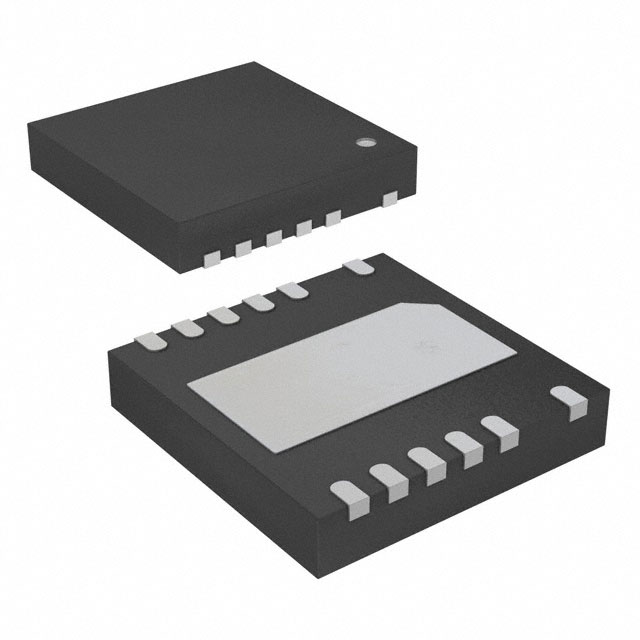
LT6376
±230V Common Mode
Voltage G = 10 Difference Amplifier
FEATURES
DESCRIPTION
±230V Common Mode Voltage Range
nn 105nV/√Hz Input Referred Noise (Resistor
Divider = 3.1)
nn 90dB Minimum CMRR
nn 0.0075% (75ppm) Maximum Gain Error
nn 1ppm/°C Maximum Gain Error Drift
nn 2ppm Maximum Gain Nonlinearity
nn Wide Supply Voltage Range: 3.3V to 50V
nn Rail-to-Rail Output
nn 350µA Supply Current
nn Selectable Internal Resistor Divider Ratio
nn 200µV Maximum Input Offset Voltage
nn 300kHz –3dB Bandwidth (Resistor Divider = 3.1)
nn 160kHz –3dB Bandwidth (Resistor Divider = 10.3)
nn –40°C to 125°C Specified Temperature Range
nn Low Power Shutdown: 20μA (DFN Package Only)
nn Space-Saving MSOP and DFN Packages
The LT®6376 is a gain of 10 difference amplifier which
combines excellent DC precision, a very high input
common mode range and a wide supply voltage range.
It includes a precision op amp and a highly-matched
thin film resistor network. It features excellent CMRR,
extremely low gain error and extremely low gain drift.
APPLICATIONS
The LT6376 is specified over the –40°C to 125°C temperature range and is available in space-saving MSOP16
and DFN14 packages.
nn
High Side or Low Side Current Sensing
Bidirectional Wide Common Mode Range Current Sensing
nn High Voltage to Low Voltage Level Translation
nn Precision Difference Amplifier
nn Replacement for Isolation Circuits
nn
nn
Comparing the LT6376 to existing difference amplifiers
with high common mode voltage range, the gain of 10
and selectable resistor divider ratios of the LT6376 offer
superior system performance by allowing the user to
achieve low input referred noise with maximum precision and speed.
The op amp at the core of the LT6376 has Over-The-Top®
protected inputs which allow for robust operation in environments with unpredictable voltage conditions. See the
Applications Information section for more details.
All registered trademarks and trademarks are the property of their respective owners.
TYPICAL APPLICATION
Precision Wide Voltage Range, Bidirectional Current Monitor
Typical Distribution of CMRR
25V
–REFB
–REFC
19k
38k
23.75k
VSOURCE+ = –230V TO 230V
76k
–IN
RSENSE
1Ω
RC
1Ω
638 UNITS
FROM TWO RUNS
100 DF14(12)
760k
–
76k
+IN
120
V+
OUT
VOUT = ±10mV/mA
+
REF
LOAD
19k
38k
+REFA
+REFB
23.75k
+REFC
760k
SHDN
V–
–25V
6376 TA01a
NUMBER OF UNITS
–REFA
VS = ±25V
VIN = ±230V
DIV = 10.3
80
60
40
20
0
–40 –30 –20 –10 0
10 20
CMRR (µV/V = ppm)
30
40
6376 TA01b
6376f
For more information www.linear.com/LT6376
1
�LT6376
ABSOLUTE MAXIMUM RATINGS
(Note 1)
Supply Voltages
(V+ to V–)...............................................................60V
+IN, –IN, (Note 2)
Each Input..........................................................±240V
Differential.........................................................±480V
+REFA, –REFA, +REFB, –REFB, +REFC, –REFC,
REF, SHDN (Note 2)................. (V+ + 0.3V) to (V– –0.3V)
Output Current (Continuous) (Note 6).....................50mA
Output Short-Circuit Duration (Note 3) Thermally Limited
Temperature Range (Notes 4, 5)
LT6376I................................................–40°C to 85°C
LT6376H............................................. –40°C to 125°C
Storage Temperature Range................... –65°C to 150°C
MSOP Lead Temperature (Soldering, 10 sec)......... 300°C
PIN CONFIGURATION
TOP VIEW
+IN
+REFA
TOP VIEW
14 –IN
1
3
–
12 –REFA
+REFA 3
11 –REFB
5
6
7
8
+REFB
4
+REFC
5
10 –REFC
REF
6
9
V+
SHDN
7
8
OUT
15 V
+IN 1
+REFB
+REFC
REF
V–
14 –REFA
–REFB
–REFC
V+
OUT
12
11
10
9
MS PACKAGE
VARIATION: MS16 (12)
16-LEAD PLASTIC MSOP
TJMAX = 150°C, qJA = 130°C/W
DF PACKAGE
14(12)-LEAD (4mm × 4mm) PLASTIC DFN
TJMAX = 150°C, qJA = 43°C/W, qJC = 4°C/W
EXPOSED PAD (PIN 15) IS V–, MUST BE SOLDERED TO PCB
ORDER INFORMATION
16 –IN
http://www.linear.com/product/LT6376#orderinfo
TUBE
TAPE AND REEL
PART MARKING*
PACKAGE DESCRIPTION
TEMPERATURE RANGE
LT6376IDF#PBF
LT6376IDF#TRPBF
6376
14-Lead (4mm × 4mm) Plastic DFN
–40°C to 85°C
LT6376HDF#PBF
LT6376HDF#TRPBF
6376
14-Lead (4mm × 4mm) Plastic DFN
–40°C to 125°C
LT6376IMS#PBF
LT6376IMS#TRPBF
6376
16-Lead Plastic MSOP
–40°C to 85°C
LT6376HMS#PBF
LT6376HMS#TRPBF
6376
16-Lead Plastic MSOP
–40°C to 125°C
*The temperature grade is identified by a label on the shipping container.
Consult ADI Marketing for parts specified with wider operating temperature ranges. Parts ending with PBF are RoHS and WEEE compliant.
For more information on lead free part marking, go to: http://www.linear.com/leadfree/
For more information on tape and reel specifications, go to: http://www.linear.com/tapeandreel/. Some packages are available in 500 unit reels through
designated sales channels with #TRMPBF suffix.
6376f
2
For more information www.linear.com/LT6376
�LT6376
The
l denotes the specifications which apply over the full operating
ELECTRICAL
CHARACTERISTICS
temperature range, –40°C < TA < 85°C for I-grade parts, –40°C < TA < 125°C for H-grade parts, otherwise specifications are at TA = 25°C,
V+ = 15V, V– = –15V, VCM = VOUT = VREF = 0V. VCMOP is the common mode voltage of the internal op amp. For Resistor Divider
Ratio = 3.1, ±REFA = ± REFC = OPEN, ±REFB = 0V. For Resistor Divider Ratio = 8.3, ±REFA = ±REFC = 0V, ±REFB = OPEN. For Resistor
Divider Ratio = 10.3, ±REFA = ±REFB = ±REFC = 0V.
SYMBOL
PARAMETER
CONDITIONS
G
Gain
VOUT = ±10V
∆G
Gain Error,
MS16 Package
VOUT = ±10V
Gain Error,
DF14 Package
VOUT = ±10V
∆G/∆T
Gain Drift vs Temperature
(Note 6)
VOUT = ±10V
GNL
Gain Nonlinearity
VOUT = ±10V
∆G
MIN
TYP
Input Offset Voltage
V– < VCMOP < V+ –1.75V
Resistor Divider Ratio = 3.1
Resistor Divider Ratio = 3.1
Resistor Divider Ratio = 8.3
Resistor Divider Ratio = 8.3
Resistor Divider Ratio = 10.3
Resistor Divider Ratio = 10.3
%
%
±0.002
±0.0085
±0.0095
%
%
±0.2
±1
ppm/°C
±1
±2
±3
ppm
ppm
50
200
600
500
1600
600
2000
l
120
l
160
l
∆VOS/∆T
Input Offset Voltage Drift
(Note 6)
V– < VCMOP < V+ –1.75V
Resistor Divider Ratio = 3.1
Resistor Divider Ratio = 10.3
l
l
RIN
Input Impedance (Note 8)
Common Mode
Resistor Divider Ratio = 3.1
Resistor Divider Ratio = 8.3
Resistor Divider Ratio = 10.3
Differential
l
l
l
l
CMRR
Common Mode Rejection Ratio,
MS16 Package
4
12
µV/°C
µV/°C
47
36
35
128
56
43
42
152
65
50
49
176
kΩ
kΩ
kΩ
kΩ
90
88
98
l
dB
dB
90
88
98
l
dB
dB
90
88
98
l
dB
dB
88
86
95
l
dB
dB
88
86
95
l
dB
dB
88
86
95
l
dB
dB
Resistor Divider Ratio = 10.3, VCM = ±150V,
VS = ±25V, TA = –40°C to 125°C
90
86
96
l
dB
dB
Resistor Divider Ratio = 10.3, VCM = ±230V,
VS = ±25V, TA = –40°C to 85°C
90
89
96
l
dB
dB
l
–230
l
l
l
105
98
96
Resistor Divider Ratio = 3.1, VCM = ±28V
Resistor Divider Ratio = 10.3, VCM = ±28V
Common Mode Rejection Ratio,
DF14 Package
Resistor Divider Ratio = 3.1, VCM = ±28V
Resistor Divider Ratio = 8.3, VCM = ±28V
Resistor Divider Ratio = 10.3, VCM = ±28V
VCM
Input Voltage Range (Note 7)
PSRR
Power Supply Rejection Ratio
(Input Referred)
VS = ±1.65V to ±25V, VCM = VOUT = Mid-Supply
Resistor Divider Ratio = 3.1
Resistor Divider Ratio = 8.3
Resistor Divider Ratio = 10.3
Input Referred Noise Voltage
Density
f = 1kHz
Resistor Divider Ratio = 3.1
Resistor Divider Ratio = 10.3
eni
µV
µV
µV
µV
µV
µV
1.5
5
Resistor Divider Ratio = 8.3, VCM = ±28V
CMRR
V/V
±0.0075
±0.0085
l
l
UNITS
±0.002
l
l
VOS
MAX
10
230
V
120
110
107
dB
dB
dB
105
245
nV/√Hz
nV/√Hz
6376f
For more information www.linear.com/LT6376
3
�LT6376
The
l denotes the specifications which apply over the full operating
ELECTRICAL
CHARACTERISTICS
temperature range, –40°C < TA < 85°C for I-grade parts, –40°C < TA < 125°C for H-grade parts, otherwise specifications are at TA = 25°C,
V+ = 15V, V– = –15V, VCM = VOUT = VREF = 0V. VCMOP is the common mode voltage of the internal op amp. For Resistor Divider
Ratio = 3.1, ±REFA = ± REFC = OPEN, ±REFB = 0V. For Resistor Divider Ratio = 8.3, ±REFA = ±REFC = 0V, ±REFB = OPEN. For Resistor
Divider Ratio = 10.3, ±REFA = ±REFB = ±REFC = 0V.
SYMBOL
PARAMETER
CONDITIONS
Input Referred Noise Voltage
f = 0.1Hz to 10Hz
Resistor Divider Ratio = 3.1
Resistor Divider Ratio = 10.3
VOL
Output Voltage Swing Low
(Referred to V–)
No Load
ISINK = 5mA
l
l
5
280
50
500
mV
mV
VOH
Output Voltage Swing High
(Referred to V+)
No Load
ISOURCE = 5mA
l
l
5
400
20
750
mV
mV
ISC
Short-Circuit Output Current
50Ω to V+
50Ω to V–
l
l
10
10
SR
Slew Rate
∆VOUT = ±5V
l
2.2
BW
Small Signal –3dB Bandwidth
Resistor Divider Ratio = 3.1
Resistor Divider Ratio = 8.3
Resistor Divider Ratio = 10.3
tS
Settling Time
Resistor Divider Ratio = 3.1
0.01%, ∆VOUT = 10V
0.1%, ∆VOUT = 10V
0.01%, ∆VCM = 10V, ∆VDIFF = 0V
41
26
15
µs
µs
µs
Resistor Divider Ratio = 10.3
0.01%, ∆VOUT = 10V
0.1%, ∆VOUT = 10V
0.01%, ∆VCM = 10V, ∆VDIFF = 0V
26
16
5
µs
µs
µs
VS
MIN
Supply Voltage
tON
Turn-On Time
VIL
SHDN Input Logic Low
(Referred to V+)
l
VIH
SHDN Input Logic High
(Referred to V+)
l
ISHDN
SHDN Pin Current
Supply Current
MAX
4
10
l
IS
TYP
µVP-P
µVP-P
28
30
mA
mA
4.1
V/µs
300
190
160
kHz
kHz
kHz
3
3.3
50
50
16
l
Active, VSHDN ≥ V+ –1.2V
Active, VSHDN ≥ V+ –1.2V
Shutdown, VSHDN ≤ V+ –2.5V
Shutdown, VSHDN ≤ V+ –2.5V
V
V
µs
–2.5
–1.2
V
V
–10
–15
µA
350
400
600
25
70
µA
µA
µA
µA
l
20
l
UNITS
6376f
4
For more information www.linear.com/LT6376
�LT6376
The
l denotes the specifications which apply over the full operating
ELECTRICAL
CHARACTERISTICS
temperature range, –40°C < TA < 85°C for I-grade parts, –40°C < TA < 125°C for H-grade parts, otherwise specifications are at TA = 25°C,
V+ = 5V, V– = 0V, VCM = VOUT = VREF = Mid-Supply. VCMOP is the common mode voltage of the internal op amp. For Resistor
Divider Ratio = 3.1, ±REFA = ±REFC = OPEN, ±REFB = Mid-Supply. For Resistor Divider Ratio = 8.3, ±REFA = ±REFC = Mid-Supply,
±REFB = OPEN. For Resistor Divider Ratio = 10.3, ±REFA = ±REFB = ±REFC = Mid-Supply.
SYMBOL
PARAMETER
CONDITIONS
MIN
TYP
MAX
UNITS
G
Gain
VOUT = 1V to 4V
10
∆G
Gain Error,
MS16 Package
VOUT = 1V to 4V
±0.002
±0.01
±0.012
%
%
Gain Error,
DF14 Package
VOUT = 1V to 4V
±0.002
±0.012
±0.013
%
%
∆G/∆T
Gain Drift vs Temperature
(Note 6)
VOUT = 1V to 4V
±0.2
±1
GNL
Gain Nonlinearity
VOUT = 1V to 4V
VOS
Input Offset Voltage
0 < VCMOP < V+ –1.75V
Resistor Divider Ratio = 3.1
Resistor Divider Ratio = 3.1
Resistor Divider Ratio = 8.3
Resistor Divider Ratio = 8.3
Resistor Divider Ratio = 10.3
Resistor Divider Ratio = 10.3
∆G
∆VOS/∆T
RIN
CMRR
CMRR
PSRR
eni
l
l
l
±1
50
l
120
l
160
l
Input Offset Voltage Drift
(Note 6)
0 < VCMOP < V+ –1.75V
Resistor Divider Ratio = 3.1
Resistor Divider Ratio = 10.3
l
l
Input Impedance (Note 8)
Common Mode
Resistor Divider Ratio = 3.1
Resistor Divider Ratio = 8.3
Resistor Divider Ratio = 10.3
Differential
l
l
l
l
Resistor Divider Ratio = 3.1
VCM = –5.25V to +4.825V
Common Mode Rejection Ratio,
MS16 Package
Common Mode Rejection Ratio,
DF14 Package
Power Supply Rejection Ratio
(Input Referred)
Input Referred Noise Voltage
Density
Input Referred Noise Voltage
V/V
ppm/°C
ppm
200
600
500
1600
600
2000
µV
µV
µV
µV
µV
µV
1.5
5
4
12
µV/°C
µV/°C
47
36
35
128
56
43
42
152
65
50
49
176
kΩ
kΩ
kΩ
kΩ
90
87
97
l
dB
dB
Resistor Divider Ratio = 8.3
VCM = –18.25V to +8.725V
90
87
97
l
dB
dB
Resistor Divider Ratio = 10.3
VCM = –23.25V to +10.225V
90
87
97
l
dB
dB
Resistor Divider Ratio = 3.1
VCM = –5.25V to +4.825V
86
85
94
l
dB
dB
Resistor Divider Ratio = 8.3
VCM = –18.25V to +8.725V
86
85
94
l
dB
dB
Resistor Divider Ratio = 10.3
VCM = –23.25V to +10.225V
86
85
94
l
dB
dB
VS = ±1.65V to ±25V, VCM = VOUT = Mid-Supply
Resistor Divider Ratio = 3.1
Resistor Divider Ratio = 8.3
Resistor Divider Ratio = 10.3
l
l
l
105
98
96
120
110
107
dB
dB
dB
f = 1kHz
Resistor Divider Ratio = 3.1
Resistor Divider Ratio = 10.3
105
245
nV/√Hz
nV/√Hz
f = 0.1Hz to 10Hz
Resistor Divider Ratio = 3.1
Resistor Divider Ratio = 10.3
4
10
µVP-P
µVP-P
VOL
Output Voltage Swing Low
(Referred to V–)
No Load
ISINK = 5mA
l
l
5
280
50
500
mV
mV
VOH
Output Voltage Swing High
(Referred to V+)
No Load
ISOURCE = 5mA
l
l
5
400
20
750
mV
mV
6376f
For more information www.linear.com/LT6376
5
�LT6376
The
l denotes the specifications which apply over the full operating
ELECTRICAL
CHARACTERISTICS
temperature range, –40°C < TA < 85°C for I-grade parts, –40°C < TA < 125°C for H-grade parts, otherwise specifications are at TA = 25°C,
V+ = 5V, V– = 0V, VCM = VOUT = VREF = Mid-Supply. VCMOP is the common mode voltage of the internal op amp. For Resistor
Divider Ratio = 3.1, ±REFA = ±REFC = OPEN, ±REFB = Mid-Supply. For Resistor Divider Ratio = 8.3, ±REFA = ±REFC = Mid-Supply,
±REFB = OPEN. For Resistor Divider Ratio = 10.3, ±REFA = ±REFB = ±REFC = Mid-Supply.
SYMBOL
PARAMETER
CONDITIONS
ISC
Short-Circuit Output Current
50Ω to V+
50Ω to V–
MIN
TYP
l
l
10
10
27
25
mA
mA
SR
Slew Rate
∆VOUT = 3V
BW
Small Signal –3dB Bandwidth
Resistor Divider Ratio = 3.1
Resistor Divider Ratio = 8.3
Resistor Divider Ratio = 10.3
l
1.9
3
V/µs
300
190
160
kHz
kHz
kHz
tS
Settling Time
Resistor Divider Ratio = 3.1
0.01%, ∆VOUT = 2V
0.1%, ∆VOUT = 2V
0.01%, ∆VCM = 2V, ∆VDIFF = 0V
34
20
10
µs
µs
µs
Resistor Divider Ratio = 10.3
0.01%, ∆VOUT = 2V
0.1%, ∆VOUT = 2V
0.01%, ∆VCM = 2V, ∆VDIFF = 0V
40
16
5
µs
µs
µs
VS
Supply Voltage
l
tON
Turn-On Time
VIL
SHDN Input Logic Low
(Referred to V+)
l
VIH
SHDN Input Logic High
(Referred to V+)
l
ISHDN
SHDN Pin Current
IS
Supply Current
3
3.3
MAX
50
50
22
l
Active, VSHDN ≥ V+ –1.2V
Active, VSHDN ≥ V+ –1.2V
Shutdown, VSHDN ≤ V+ –2.5V
Shutdown, VSHDN ≤ V+ –2.5V
Note 1: Stresses beyond those listed under Absolute Maximum Ratings
may cause permanent damage to the device. Exposure to any Absolute
Maximum Rating condition for extended periods may affect device
reliability and lifetime.
Note 2: See Common Mode Voltage Range in the Applications Information
section of this data sheet for other considerations when taking +IN/–IN
pins to ±240V. All other pins should not be taken more than 0.3V beyond
the supply rails.
Note 3: A heat sink may be required to keep the junction temperature
below absolute maximum. This depends on the power supply, input
voltages and the output current.
Note 4: The LT6376I is guaranteed functional over the operating
temperature range of –40°C to 85°C. The LT6376H is guaranteed
functional over the operating temperature range of –40°C to 125°C.
V
V
µs
–2.5
–1.2
V
V
–10
–15
µA
330
370
525
20
40
µA
µA
µA
µA
l
15
l
UNITS
Note 5: The LT6376I is guaranteed to meet specified performance from
–40°C to 85°C. The LT6376H is guaranteed to meet specified performance
from –40°C to 125°C.
Note 6: This parameter is not 100% tested.
Note 7: Input voltage range is guaranteed by the CMRR test at VS = ±25V
and all REF pins at ground (Resistor Divider Ratio = 10.3). For the other
voltages, this parameter is guaranteed by design and through correlation
with the ±25V test. See Common Mode Voltage Range in the Applications
Information section to determine the valid input voltage range under
various operating conditions.
Note 8: Input impedance is tested by a combination of direct measurement
and correlation to the CMRR and gain error tests.
6376f
6
For more information www.linear.com/LT6376
�LT6376
TYPICAL PERFORMANCE CHARACTERISTICS
Typical Distribution of CMRR
VS = ±25V
VIN = ±230V
DIV = 10.3
599 UNITS
FROM TWO RUNS
100 MS16(12)
NUMBER OF UNITS
80
60
40
20
Typical Distribution of CMRR
80
60
40
30
0
–40 –30 –20 –10 0
10 20
CMRR (µV/V = ppm)
40
1387 UNITS
FROM FOUR RUNS
BOTH PACKAGES
350
80
60
40
30
0
–40 –30 –20 –10 0
10 20
CMRR (µV/V = ppm)
40
6376 G02
Typical Distribution of Gain Error
400
Typical Distribution of Gain Error
664 UNITS
175 FROM TWO RUNS
MS16(12)
VS = ±15V
VOUT = ±10V
300
Typical Distribution of Gain Error
685 UNITS
175 FROM TWO RUNS
DF14(12)
VS = ±15V
VOUT = ±10V
125
100
75
125
100
75
100
50
50
50
25
25
0
–70
–50
–30 –10 10
30
GAIN ERROR (ppm)
50
0
–70
70
–50
–30 –10 10
30
GAIN ERROR (ppm)
50
Typical Distribution of Gain
Nonlinearity
250
1452 UNITS
225 FROM FOUR RUNS
BOTH PACKAGES
200
125
NUMBER OF UNITS
1393 UNITS
FROM FOUR RUNS
BOTH PACKAGES
150
100
75
50
25
0
0
0.2 0.4 0.6 0.8 1 1.2 1.4 1.6 1.8
GAIN NONLINEARITY (ppm)
2
6376 G07
–50
–30 –10 10
30
GAIN ERROR (ppm)
50
70
6376 G06
Typical Distribution of Input
Offset Voltage
VS = ±15V
VOUT = ±10V
175
0
–70
70
6376 G05
6376 G04
200
VS = ±15V
VOUT = ±10V
150
NUMBER OF UNITS
NUMBER OF UNITS
150
40
200
150
200
30
6376 G03
200
250
VS = ±15V
VIN = ±28V
DIV = 3.1
20
6376 G01
NUMBER OF UNITS
599 UNITS
FROM TWO RUNS
100 DF14(12)
VS = ±15V
VIN = ±28V
DIV = 3.1
20
0
–40 –30 –20 –10 0
10 20
CMRR (µV/V = ppm)
NUMBER OF UNITS
120
Typical Distribution of Input
Offset Voltage
250
DIV = 3.1
225
200
175
NUMBER OF UNITS
NUMBER OF UNITS
638 UNITS
FROM TWO RUNS
100 DF14(12)
Typical Distribution of CMRR
120
NUMBER OF UNITS
120
TA = 25°C, VS = ±15V, unless otherwise noted.
150
125
100
75
150
125
100
75
50
25
25
6376 G08
DIV = 8.3
175
50
0
–200 –150 –100 –50 0
50 100 150 200
OFFSET VOLTAGE (µV)
1452 UNITS
FROM FOUR RUNS
BOTH PACKAGES
0
–500 –375 –250 –125 0 125 250 375 500
OFFSET VOLTAGE (µV)
6376 G09
6376f
For more information www.linear.com/LT6376
7
�LT6376
TYPICAL PERFORMANCE CHARACTERISTICS
Typical Distribution of Input
Offset Voltage
300
DIV = 10.3
240
175
150
125
100
75
300
180
240
150
120
90
180
150
120
90
60
60
25
30
30
–5 –4 –3 –2 –1 0 1 2
PSRR (µV/V)
3
6376 G10
210
1452 UNITS
FROM FOUR RUNS
BOTH PACKAGES
180
150
120
90
60
30
0
–15 –12 –9 –6 –3 0 3 6
PSRR (µV/V)
9
120
12 15
80
60
40
20
DIV = 3.1
DIV = 8.3
DIV = 10.3
10
100
1k
10k 100k
FREQUENCY (Hz)
1M
6376 G13
10M
250
200
150
50
0
–50
–100
–150
–200
–250
–300
VS = ±10V
VS = ±15V
VS = ±12V
VS = ±10V
–20 –16 –12 –8 –4 0 4 8 12 16 20
OUTPUT VOLTAGE (V)
6376 G16
10 15 20 25 30 35 40
POWER SUPPLY VOLTAGE (±V)
45
VS = ±5V, RL = 10kΩ
OUTPUT ERROR (2mV/DIV)
VS = ±12V
5
Typical Gain Error for Low Supply
Voltages (Curves Offset for
Clarity)
Typical Gain Error for RL = 2kΩ
(Curves Offset for Clarity)
OUTPUT ERROR (2mV/DIV)
OUTPUT ERROR (2mV/DIV)
VS = ±15V
0
6376 G15
VS = ±18V
VS = ±18V
DIV = 3.1
DIV = 4.3
DIV = 5.1
DIV = 6.3
DIV = 7.1
DIV = 8.3
DIV = 10.3
OPAMP IN
OTT REGION
100
6376 G14
Typical Gain Error for RL = 10kΩ
(Curves Offset for Clarity)
10
300
100
0
8
Common Mode Voltage Range vs
Power Supply Voltage
COMMON MODE OPERATING RANGE (V)
240
VS = ±1.65V to ±25V
DIV = 10.3
6
6376 G12
CMRR vs Frequency
COMMON MODE REJECTION RATIO (dB)
270
0
–10 –8 –6 –4 –2 0 2 4
PSRR (µV/V)
5
6376 G11
Typical Distribution of PSRR
(Input Referred)
300
4
1452 UNITS
FROM FOUR RUNS
BOTH PACKAGES
210
50
0
VS = ±1.65V to ±25V
DIV = 8.3
270
1452 UNITS
FROM FOUR RUNS
BOTH PACKAGES
210
0
–600 –450 –300 –150 0 150 300 450 600
OFFSET VOLTAGE (µV)
NUMBER OF UNITS
Typical Distribution of PSRR
(Input Referred)
VS = ±1.65V to ±25V
DIV = 3.1
270
NUMBER OF UNITS
NUMBER OF UNITS
1452 UNITS
225 FROM FOUR RUNS
BOTH PACKAGES
200
Typical Distribution of PSRR
(Input Referred)
NUMBER OF UNITS
250
TA = 25°C, VS = ±15V, unless otherwise noted.
VS = ±5V, RL = 2kΩ
VS = ±5V, RL = 1kΩ
VS = ±2.5V, RL = 1kΩ
–20 –16 –12 –8 –4 0 4 8 12 16 20
OUTPUT VOLTAGE (V)
6376 G17
–5 –4 –3 –2 –1 0 1 2
OUTPUT VOLTAGE (V)
3
4
5
6376 G18
6376f
8
For more information www.linear.com/LT6376
�LT6376
TYPICAL PERFORMANCE CHARACTERISTICS
Gain Nonlinearity
Gain Nonlinearity
100
20
0
–20
60
GAIN ERROR (ppm)
4
ERROR (ppm)
2
0
–2
–4
–60
–6
–80
–8
–10
–5
0
5
OUTPUT VOLTAGE (V)
10
–10
–15
15
–10
–5
0
5
OUTPUT VOLTAGE (V)
6376 G19
30
OUTPUT VOLTAGE (V)
0
–10
–20
–30
5
130°C
85°C
25°C
–45°C
0
–5
–10
–15
–50
–75 –50 –25 0 25 50 75 100 125 150 175
TEMPERATURE (°C)
–20
0
5
10
15
20
25
OUTPUT CURRENT (mA)
6376 G22
40
30
30
20
GAIN (dB)
–10
–20
–80
0.001
–6
–80
–8
6376 G21
DIV = 3.1
DIV = 4.3
DIV = 5.1
DIV = 6.3
DIV = 7.1
DIV = 8.3
DIV = 10.3
0.01
0.1
1
FREQUENCY (MHz)
3
2
1
MS16(12) θJA = 130°C/W
0
–60 –40 –20 0 20 40 60 80 100 120 140 160
AMBIENT TEMPERATURE (°C)
6376 G24
500
DIV = 3.1
0
–10
–20
–30
–40
–50
10
6376 G25
DF14(12) θJA = 43°C/W
4
Input Referred Noise Density vs
Frequency
10
0
–70
–4
–60
–10
–100
–75 –50 –25 0 25 50 75 100 125 150 175
TEMPERATURE (°C)
30
20
10
–60
–2
–40
Frequency Response vs
Capacitive Load
40
–50
0
6376 G23
Gain vs Frequency
–40
0
5
10
–40
–30
2
Maximum Power Dissipation vs
Temperature
15
10
4
–20
20
20
6
20
Output Voltage vs Load Current
Vs = ±15V
20 UNITS
DIV = 3.1
40
15
8
6376 G20
CMRR vs Temperature
50
10
40
MAXIMUM POWER DISSIPATION (W)
–100
–15
VOLTAGE NOISE DENSITY (nV/√Hz)
ERROR (ppm)
40
10
VS = ±15V
G = 10
VOUT = ±10V
10 UNITS
DIV = 3.1
80
–60
0.001
0nF
0.5nF
1nF
1.5nF
2nF
3nF
5nF
0.01
0.1
1
FREQUENCY (MHz)
10
6376 G26
450
400
350
300
DIV = 10.3
250
200
150
DIV = 3.1
100
50
0
1
10
100
1k
FREQUENCY (Hz)
10k
100k
6376 G27
6376f
For more information www.linear.com/LT6376
GAIN ERROR (m%)
60
VS = ±15V
8 R = 1MΩ
L
6
–40
CMRR (µV/V)
Gain Error vs Temperature
100
10
VS = ±15V
80 R = 100kΩ
L
GAIN (dB)
TA = 25°C, VS = ±15V, unless otherwise noted.
9
�LT6376
TYPICAL PERFORMANCE CHARACTERISTICS
0.1Hz to 10Hz Noise
(Input Referred)
Positive PSRR vs Frequency
6
POWER SUPPLY REJECTION RATIO (dB)
DIV = 3.1
DIV = 10.3
4
NOISE (µV)
2
0
–2
–4
–6
–8
–10
140
130
120
110
100
90
80
70
60
50
40
30
20
10
0
DIV = 3.1
DIV = 8.3
DIV = 10.3
10
TIME (10s/DIV)
100
1k
10k
FREQUENCY (Hz)
Slew Rate vs Temperature
70
60
50
40
30
20
10
10
100
1k
10k
FREQUENCY (Hz)
3
2
100k
6376 G30
Small-Signal Step Response
DIV = 3.1
CL = 1000pF
RL = 2kΩ
VOLTAGE (25mV/DIV)
VOLTAGE (5V/DIV)
SLEW RATE (V/µs)
4
0V
0V
RL = 10kΩ
VOUT = ±5V
0
–75 –50 –25 0 25 50 75 100 125 150 175
TEMPERATURE (°C)
TIME (4µs/DIV)
TIME (4µs/DIV)
6376 G31
140
DIV = 3.1
120 R = 2kΩ
L
100
6376 G33
6376 G32
Small-Signal Step Response
vs Capacitive Load
Large-Signal Step Response
Small-Signal Step Response
DIV = 10.3
CL = 1000pF
RL = 2kΩ
20pF
560pF
1000pF
VOLTAGE (5V/DIV)
60
40
20
0
–20
DIV = 10.3
CL = 1000pF
RL = 2kΩ
VOLTAGE (25mV/DIV)
80
VOLTAGE (mV)
80
DIV = 3.1
C L = 1000pF
R L = 2kΩ
5
1
90
Large-Signal Step Response
Rising
Falling
6
100
0
100k
DIV = 3.1
DIV = 8.3
DIV = 10.3
110
6376 G29
6376 G28
7
Negative PSRR vs Frequency
120
POWER SUPPLY REJECTION RATIO (dB)
10
8
TA = 25°C, VS = ±15V, unless otherwise noted.
0V
–40
0V
–60
–80
–100
0
5
10
15 20 25
TIME (µs)
30
35
40
6376 G34
TIME (4µs/DIV)
TIME (4µs/DIV)
6376 G35
6376 G36
6376f
10
For more information www.linear.com/LT6376
�LT6376
TYPICAL PERFORMANCE CHARACTERISTICS
Small-Signal Step Response
vs Capacitive Load
DIV = 10.3
120 R = 2kΩ
L
100
Settling Time
20pF
560pF
1000pF
3.0
ERROR VOLTAGE (mV)
0
–20
–40
–60
40
–4
–6
–2.0
–8
2
0
0
–3.0
–2
–3.5
–4
–4.0
–2.5
DIV = 3.1
INPUT OFFSET VOLTAGE (µV)
OUTPUT
1V/DIV
INPUT COMMON MODE
40V/DIV
TIME (4µs/DIV)
6376 G40
–14
–16
TIME (10µs/DIV)
Quiescent Current vs Temperature
550
DIV = 3.1
20 UNITS
300
–12
6376 G39
Input Offset Voltage vs
Temperature
400
–10
OUTPUT VOLTAGE
6376 G38
Input Common Mode Step
Response
0
–1.5
0.5
6376 G37
2
–1.0
4
TIME (10µs/DIV)
ERROR VOLTAGE
4
–2
1.0
ERROR VOLTAGE
DIV = 3.1
–0.5
6
–1.0
35
10
8
–80
30
0
1.5
–100
15 20 25
TIME (µs)
0.5
12
2.0
–0.5
10
14
10 UNITS
500
QUIESCENT CURRENT (µA)
VOLTAGE (mV)
20
1.0
OUTPUT VOLTAGE (V)
40
OUTPUT VOLTAGE
2.5
16
OUTPUT VOLTAGE (V)
60
5
DIV = 3.1
3.5
80
0
Settling Time
4.0
ERROR VOLTAGE (mV)
140
TA = 25°C, VS = ±15V, unless otherwise noted.
200
100
0
–100
–200
450
400
350
300
–300
250
–400
–60 –40 –20 0 20 40 60 80 100 120 140
TEMPERATURE (°C)
200
–75 –50 –25 0 25 50 75 100 125 150 175
TEMPERATURE (°C)
6376 G42
6376 G41
Quiescent Current vs Supply
Voltage
Thermal Shutdown Hysteresis
600
600
500
500
QUIESCENT CURRENT (µA)
SUPPLY CURRENT (µA)
TA = 150°C
400
300
200
100
0
145
150
155
160
165
TEMPERATURE (°C)
170
400
300
200
TA = –55°C
100
PARAMETRIC SWEEP IN ~25°C
INCREMENTS
0
0
6376 G43
10
20
30
40
SUPPLY VOLTAGE (V)
50
6376 G44
6376f
For more information www.linear.com/LT6376
11
�LT6376
TYPICAL PERFORMANCE CHARACTERISTICS
Quiescent Current vs SHDN
Voltage
40
25°C
–40°C
–55°C
550
VSHDN = 0V
150°C
125°C
85°C
500
QUIESCENT CURRENT (µA)
QUIESCENT CURRENT (µA)
150°C
125°C
85°C
30
20
10
450
Minimum Supply Voltage
150
25°C
–40°C
–55°C
CHANGE IN INPUT OFFSET VOLTAGE (µV)
Shutdown Quiescent Current vs
Supply Voltage
50
TA = 25°C, VS = ±15V, unless otherwise noted.
VS = ±15V
400
350
300
250
200
150
100
50
0
0
10
20
30
40
SUPPLY VOLTAGE (V)
50
6376 G45
0
0
5
10
SHDN VOLTAGE (V)
15
6376 G46
DIV = 3.1
100
50
TA = 125°C
0
–50
TA = 25°C
–100
TA = –45°C
–150
0
1
2
3
4
TOTAL SUPPLY VOLTAGE (V)
5
6376 G47
6376f
12
For more information www.linear.com/LT6376
�LT6376
PIN FUNCTIONS
(DFN/MSOP)
V+ (Pin 9/Pin 10):�Positive Supply Pin.
V– (Exposed Pad Pin 15/Pin 8):�Negative Supply Pin.
OUT (Pin 8/Pin 9):�Output Pin.
+IN (Pin 1/Pin 1):�Noninverting Input Pin. Accepts input
voltages from 230V to –230V.
+REFA (Pin 3/Pin 3):�Reference Pin A. Sets the input common mode range and the output noise and offset.
+REFB (Pin 4/Pin 5):�Reference Pin B. Sets the input
common mode range and the output noise and offset.
+REFC (Pin 5/Pin 6):�Reference Pin C. Sets the input
common mode range and the output noise and offset.
–REFA (Pin 12/Pin 14):�Reference Pin A. Sets the input
common mode range and the output noise and offset.
–REFB (Pin 11/Pin 12):�Reference Pin B. Sets the input
common mode range and the output noise and offset.
–REFC (Pin 10/Pin 11):�Reference Pin C. Sets the input
common mode range and the output noise and offset.
REF (Pin 6/Pin 7):�Reference Input. Sets the output level
when the difference between the inputs is zero.
SHDN (Pin 7) DFN Only:�Shutdown Pin. Amplifier is active
when this pin is tied to V+ or left floating. Pulling the pin
>2.5V below V+ causes the amplifier to enter a low power
state.
–IN (Pin 14/Pin 16):�Inverting Input Pin. Accepts input
voltages from 230V to –230V.
6376f
For more information www.linear.com/LT6376
13
�LT6376
BLOCK DIAGRAM
–REFA
19k
–REFB
38k
V+
–REFC
23.75k
760k
–IN
76k
+IN
76k
–
OUT
+
REF
760k
V+
19k
+REFA
38k
+REFB
23.75k
+REFC
10µA
SHDN
V–
6376 BD
APPLICATIONS INFORMATION
TRANSFER FUNCTION
The LT6376 is a gain of 10 difference amplifier with the
transfer function:
VOUT = 10 • (V+IN – V–IN) + VREF
The voltage on the REF pin sets the output voltage when
the differential input voltage (VDIFF = V+IN – V–IN) is zero.
This reference is used to shift the output voltage to the
desired input level of the next stage of the signal chain.
BENEFITS OF SELECTABLE RESISTOR DIVIDER RATIOS
The LT6376 offers smaller package size, better gain
accuracy and better noise performance than existing
high common mode voltage range difference amplifiers.
Additionally, the LT6376 allows users to maximize system performance by selecting the resistor divider ratio
(DIV) appropriate to their input common mode voltage
range. A higher resistor divider ratio (DIV) enables a
higher common mode voltage range at the input pins,
but it also increases output noise and output offset/drift
and decreases the –3dB bandwidth. Therefore, a tradeoff exists between input range and DC, AC, and drift
performance of the part. It is recommended to use the
lowest resistor divider ratio that achieves the required
input common mode voltage range of the application in
order to maximize the system SNR, precision and speed.
Table 1 shows the noise, offset/drift, and –3dB bandwidth
of the LT6376 in gain of 10 configurations.
COMMON MODE VOLTAGE RANGE
The wide common mode voltage range of the LT6376 is
enabled by both a resistor divider at the input of the op
amp and by an internal op amp that can withstand high
input voltages.
The internal resistor network of the LT6376 divides down
the input common mode voltage. The resulting voltage
at the op amp inputs determines the op amp’s operating
region. In the configuration shown in Figure 1, a resistor
divider is created at both op amp inputs by the 76k input
resistor and the resistance from each input to ground,
which is ~36.19k. The resistance to ground is formed
by the 38k (REFB resistors) in parallel with the 760k
(feedback/REF resistor). The result is a divide by 3.1 of
the input voltage. As shown in Tables 1 to 5, different
connections to reference pins (i.e. pins +REFA, –REFA,
6376f
14
For more information www.linear.com/LT6376
�LT6376
APPLICATIONS INFORMATION
Table 1. LT6376 Performance at Different Resistor Divider Ratios
RESISTOR DIVIDER OPTIONS
RESISTOR
INPUT NOISE
+REFA AND +REFB AND +REFC AND
DIVIDER DIFFERENTIAL
AT 1kHz
–REFB
–REFC
REF RATIO (DIV)
–REFA
GAIN
(nV/√Hz)
19k
38k
23.75k
MAXIMUM INPUT
OFFSET (µV)
MAXIMUM INPUT
OFFSET DRIFT
(µV/°C)
–3dB
BANDWIDTH
(kHz)
760k
OPEN
GND
OPEN
REF
3.1
10
105
200
4
300
OPEN
OPEN
GND
REF
4.3
10
130
250
5.5
275
GND
OPEN
OPEN
REF
5.1
10
145
300
6.5
245
OPEN
GND
GND
REF
6.3
10
170
380
7.5
225
GND
GND
OPEN
REF
7.1
10
185
420
8.5
200
GND
OPEN
GND
REF
8.3
10
210
500
10
190
GND
GND
GND
REF
10.3
10
245
600
12
160
+REFB, –REFB, +REFC, –REFC) result in different resistor divider ratios (DIV) and different attenuation of the
LT6376’s input common mode voltage.
The internal op amp of LT6376 has two operating regions:
a) If the common mode voltage at the inputs of the internal op amp (VCMOP) is between V– and V+ –1.75V, the op
amp operates in its normal region; b) If VCMOP is between
V+ –1.75V and V– +76V, the op amp continues to operate,
but in its Over-The-Top region with degraded performance
(see Over-The-Top operation section of this data sheet for
more detail).
V+
V–
The valid input common mode range changes depending
on the voltages chosen for reference pins. Table 4 lists the
valid input common mode voltage range for an LT6376
when the part is used with a single power supply, and REF
and the other reference pins are connected to mid-supply.
If, as shown in Table 5, the REF pin remains connected to
mid-supply, while the other reference pins are connected
to ground, the result is a higher positive input range at
the expense of a more restricted negative input range.
VS+
V–IN
V+IN
–REFB
–REFC
19k
38k
23.75k
–IN
76k
+IN
76k
760k
–
OUT
+
REF
19k
38k
+REFA
+REFB
760k
23.75k
+REFC
SHDN
Table 3 lists the valid input common mode voltage range
for an LT6376 that results in the internal op amp operating
in its Over-The-Top region.
The reference pins can be connected to ground (as in
Tables 2 and 3) or to any reference voltage. In order to
achieve the specified gain accuracy and CMRR performance of the LT6376, this reference must have a very
low impedance over the entire bandwidth of interest. As
needed, ensure there are quality high frequency ceramic
or film capacitors and low frequency electrolytic capacitors, from the reference to ground.
Table 2 lists the valid input common mode voltage range
for an LT6376 with different configurations of the reference pins when used with dual power supplies. Using
–REFA
the voltage ranges in this table ensures that the internal
op amp is operating in its normal (and best) region. The
figure entitled Common Mode Voltage Range vs Power
Supply Voltage, in the Typical Performance Characteristics
section of this data sheet, illustrates the information in
Table 2 graphically.
VOUT
6376 F01
VS+
VS–
Figure 1. Basic Connections for Dual-Supply Operation
(Resistor Divider Ratio = 3.1)
6376f
For more information www.linear.com/LT6376
15
�LT6376
APPLICATIONS INFORMATION
Table 2. Common Mode Voltage Operating Range with Dual
Power Supplies (Normal Region)
Table 5. Common Mode Voltage Operating Range with a Single
Power Supply, References to GND (Normal Region)
INPUT RANGE (REF = GND)
INPUT RANGE (REF = VS/2)
+REFA +REFB +REFC
VS = ±2.5V
AND AND AND
–REFA –REFB –REFC DIV HIGH LOW
VS = ±15V
HIGH
VS = ±25V
LOW
HIGH
LOW
+REFA +REFB +REFC
VS = 5V
AND AND AND
–REFA –REFB –REFC DIV HIGH LOW
VS = 30V
VS = 50V
HIGH LOW HIGH
LOW
OPEN GND
OPEN 3.1 2.325 –7.75 41.075 –46.5 72.075 –77.5
OPEN GND
OPEN 3.1 9.825 –0.25 86.075 –1.5 147.075 –2.5
OPEN OPEN
GND 4.3 3.225 –10.75 56.975 –64.5 99.975 –107.5
OPEN OPEN
GND
4.3 13.725 –0.25 119.975 –1.5 204.975 –2.5
GND OPEN OPEN 5.1 3.825 –12.75 67.575 –76.5 118.575 –127.5
GND OPEN OPEN 5.1 16.325 –0.25 142.575 –1.5
230
–2.5
OPEN GND
GND 6.3 4.725 –15.75 83.475 –94.5 146.475 –157.5
OPEN GND
GND
6.3 20.225 –0.25 176.475 –1.5
230
–2.5
GND
GND
OPEN 7.1 5.325 –17.75 94.075 –106.5 165.075 –177.5
GND
OPEN 7.1 22.825 –0.25 199.075 –1.5
230
–2.5
GND OPEN
GND 8.3 6.225 –20.75 109.975 –124.5 192.975 –207.5
GND OPEN
GND
8.3 26.725 –0.25
230
–1.5
230
–2.5
GND
GND 10.3 7.725 –25.75 136.475 –154.5
GND
GND 10.3 33.225 –0.25
230
–1.5
230
–2.5
GND
230
–230
Table 3. Common Mode Voltage Operating Range with Dual
Power Supplies (Over-The-Top Region)
INPUT RANGE (REF = GND)
+REFA +REFB +REFC
VS = ±2.5V
VS = ±15V
VS = ±25V
AND AND AND
–REFA –REFB –REFC DIV HIGH LOW HIGH LOW HIGH LOW
OPEN GND
OPEN 3.1 227.85 –7.75 189.1 –46.5 158.1 –77.5
OPEN OPEN
GND 4.3
230 –10.75 230
–64.5 219.3 –107.5
GND OPEN OPEN 5.1
230 –12.75 230
–76.5 230 –127.5
–94.5 230 –157.5
OPEN GND
GND 6.3
230 –15.75 230
GND
GND
OPEN 7.1
230 –17.75 230 –106.5 230 –177.5
GND OPEN
GND 8.3
230 –20.75 230 –124.5 230 –207.5
GND
GND 10.3 230 –25.75 230 –154.5 230
GND
–230
Table 4. Common Mode Voltage Operating Range with a Single
Power Supply, References to Mid-Supply (Normal Region)
INPUT RANGE (REF = VS/2)
+REFA +REFB +REFC
VS = 5V
AND AND AND
–REFA –REFB –REFC DIV HIGH LOW
VS = 30V
HIGH
VS = 50V
LOW
HIGH
VS/2 OPEN OPEN 5.1 6.325 –10.25 82.575 –61.5 143.575 –102.5
VS/2
VS/2 6.3 7.225 –13.25 98.475 –79.5 171.475 –132.5
VS/2 OPEN 7.1 7.825 –15.25 109.075 –91.5 190.075 –152.5
VS/2 OPEN VS/2 8.3 8.725 –18.25 124.975 –109.5 217.975 –182.5
VS/2
VS/2
VS/2 10.3 10.225 –23.25 151.475 –139.5
230
GND
The LT6376 will not operate correctly if the common
mode voltage at its input pins goes below the range specified in above tables, but the part will not be damaged as
long as the lowest common mode voltage at the inputs
of the internal op amp (VCMOP) is always greater than
V– –25V. Also, the voltage at LT6376 input pins should
never be higher than 230V or lower than –230V under
any circumstances.
SHUTDOWN
The LT6376 in the DFN14 package has a shutdown pin
(SHDN). Under normal operation this pin should be tied
to V+ or allowed to float. Driving this pin to at least 2.5V
below V+ will cause the part to enter a low power state.
The supply current is reduced to less than 25µA and the
op amp output becomes high impedance.
LOW
OPEN VS/2 OPEN 3.1 4.825 –5.25 56.075 –31.5 97.075 –52.5
OPEN OPEN VS/2 4.3 5.725 –8.25 71.975 –49.5 124.975 –82.5
OPEN VS/2
GND
–230
SUPPLY VOLTAGE
The positive supply pin of the LT6376 should be bypassed
with a small capacitor (typically 0.1µF) as close to the
supply pin as possible. When driving heavy loads an additional 4.7µF electrolytic capacitor should be added. When
using split supplies, the same is true for the V– supply pin.
6376f
16
For more information www.linear.com/LT6376
�LT6376
APPLICATIONS INFORMATION
ACCURATE CURRENT MEASUREMENTS
The LT6376 can be used in high side, low side and bidirectional wide common mode range current sensing.
Figure 2 shows the LT6376 sensing current by measuring the voltage across RSENSE. The added sense resistors
create a CMRR error and a gain error. For RSENSE greater
than 0.5Ω the source resistance mismatch degrades the
CMRR. Adding a resistor equal in value to RSENSE in series
with the +IN terminal (RC) eliminates this mismatch.
Using an RSENSE greater than 4.7Ω will cause the gain
error to exceed the 0.0075% specification of the LT6376.
This is due to the loading effects of the LT6376.
VOUT = 10 • ILOAD • RSENSE • 76k/(76k + RSENSE)
Increasing RSENSE and RC slightly to RSENSE' removes
the gain error.
RSENSE' = RSENSE • 76k/(76k – RSENSE).
NOISE AND FILTERING
The noise performance of the LT6376 can be optimized
both by appropriate choice of its internal attenuation setting and by the addition of a filter to the amplifier output
(Figure 3). For applications that do not require the full
bandwidth of the LT6376, the addition of an output filter
will lower system noise. Table 6 shows the output noise
for different internal resistor divider ratios and output filter
bandwidths.
VS+ = 15V
–REFA
–REFB
–REFC
19k
38k
23.75k
V+
760k
VSOURCE+ = 110V
RSENSE
RC
–IN
76k
+IN
76k
–
OUT
VOUT ≅ 10 • RSENSE • ILOAD
+
ILOAD
REF
19k
38k
+REFA
+REFB
760k
23.75k
+REFC
SHDN
VS+
VREF
V–
VS– = –15V
LOAD
VS+ = 15V
–REFA
–REFB
–REFC
19k
38k
23.75k
ILOAD
RSENSE
RC
–IN
76k
+IN
76k
V+
760k
–
OUT
VOUT ≅ 10 • RSENSE • ILOAD
+
REF
VSOURCE– = –110V
19k
38k
+REFA
+REFB
760k
23.75k
+REFC
SHDN
VREF
V–
6376 F02
VS+
VS– = –15V
Figure 2. Wide Voltage Range Current Sensing
6376f
For more information www.linear.com/LT6376
17
�LT6376
APPLICATIONS INFORMATION
VS+
V–IN
V+IN
–REFA
–REFB
–REFC
19k
38k
23.75k
V+
760k
–
76k
–IN
–
76k
+IN
C2
OUT
R1
+
38k
+REFA
+REFB
760k
23.75k
+REFC
VOUT
+
C1
REF
19k
LT6015
R2
VREF
V–
SHDN
6376 F03
VS+
VS–
Figure 3. Output Filtering with 2-Pole Butterworth Filter
Table 6. Output Noise (VP-P) for 2-Pole Butterworth Filter for
Different Internal Resistor Divider Ratios
Table 7. Component Values for Different 2-Pole Butterworth
Filter Bandwidths
Corner
Frequency
Corner Frequency
3.1
4.3
5.1
6.3
7.1
8.3
10.3
No Filter
548µV
606µV 638µV 678µV 707µV 747µV 809µV
100kHz
328µV
394µV 434µV 488µV 523µV 572µV 649µV
10kHz
107µV
131µV 146µV 168µV 183µV 204µV 239µV
1kHz
33µV
41µV
46µV
53µV
57µV
64µV
75µV
100Hz
12µV
15µV
17µV
19µV
21µV
24µV
28µV
R1
R2
C1
C2
100kHz
11kΩ
11.3kΩ
100pF
200pF
10kHz
11kΩ
11.3kΩ
1nF
2nF
1kHz
11kΩ
11.3kΩ
10nF
20nF
100Hz
11kΩ
11.3kΩ
0.1µF
0.2µF
15V
–REFA
–REFB
–REFC
19k
38k
23.75k
VSOURCE+ = 80V
RSENSE
1Ω
RC, 1Ω
–IN
76k
+IN
76k
V+
760k
–
OUT
+
1A
LOAD
VOUT
REF
19k
38k
+REFA
+REFB
23.75k
+REFC
760k
V–
SHDN
6376 F04
–15V
Figure 4. Current Measurement Application
6376f
18
For more information www.linear.com/LT6376
�LT6376
APPLICATIONS INFORMATION
ERROR BUDGET ANALYSIS
Figure 4 shows the LT6376 in a current measurement
application. The error budget for this application is shown
in Table 8. The resistor divider ratio is set to 6.3 to divide
the 80V input common mode voltage down to 12.7V at
the op amp inputs. The 1A current and 1Ω sense resistor produce an output full-scale (FS) voltage of 10V (in
the LT6376) and 1V (in all the other listed parts). Table 8
shows the error sources in parts per million (ppm) of the
output full-scale voltage across the temperature range of
25°C to 85°C.
Different sources of error contribute to the maximum
accuracy that can be achieved in an application. Gain error,
offset voltage and common mode rejection error combine
to set the initial error. Additionally, the gain error and offset voltage drift across the temperature range. The excellent gain accuracy, low offset voltage, high CMRR, low
offset voltage drift and low gain error drift of the LT6376
all combine to enable extremely accurate measurements.
Over-The-Top OPERATION
When the input common mode voltage of the internal op
amp (VCMOP) in the LT6376 is biased near or above the
V+ supply, the op amp is operating in the Over-The-Top
region. The op amp continues to operate with an input
common mode voltage of up to 76V above V– (regardless
of the positive power supply voltage V+), but its performance is degraded. The op amp’s input bias currents
change from under ±2nA to 14µA. The op amp’s input
offset current rises to ±50nA which adds ±3.8mV to the
input offset voltage.
In addition, when operating in the Over-The-Top region,
the differential input impedance decreases from 1MΩ in
normal operation to approximately 3.7kΩ in Over-The-Top
operation. This resistance appears across the summing
nodes of the internal op amp and boosts noise and offset
while decreasing speed. Noise and offset will increase by
between 66% and 83% depending on the resistor divider
ratio setting. The bandwidth will be reduced by between
40% to 45%. For more detail on Over-The-Top operation,
consult the LT6015 data sheet.
OUTPUT
The output of the LT6376 can typically swing to within
5mV of either rail with no load and is capable of sourcing
and sinking approximately 25mA. The LT6376 is internally compensated to drive at least 1nF of capacitance
under any output loading conditions. A 0.22µF capacitor
in series with a 150Ω resistor between the output and
ground will compensate the amplifier to drive capacitive loads greater than 1nF. Additionally, the LT6376 has
more gain and phase margin as the resistor divider ratio
is increased.
Table 8. Error Budget Analysis
ERROR, ppm of OUTPUT FS
LT6376
(DIV = 6.3)
LT6375
(DIV = 7)
AD629B
COMPETITOR
Differential Gain (V/V)
10
1
1
1
Output FS Voltage (V)
10
1
1
1
0.0075% FS
0.006% FS
0.03% FS
0.02% FS
75
60
300
200
3800µV
450µV
500µV
1100µV
380
450
500
1100
10 • (80V/90dB)
= 25300µV
80V/89dB =
2839µV
80V/86dB =
4009µV
80V/90dB =
2530µV
2530
2839
4009
2530
2985
3349
4809
3830
10ppm/°C ×60°C
60
60
600
600
15µV/°C ×60°C
450
720
600
900
ERROR SOURCE
LT6376 LT6375
AD629B
COMPETITOR
Accuracy, TA = 25°C
Initial Gain Error
Output Offset Voltage
Common Mode
Total Accuracy Error
Temperature Drift
Gain
1ppm/°C ×60°C 1ppm/°C ×60°C 10ppm/°C ×60°C
Output Offset Voltage
75µV/°C ×60°C
12µV/°C ×60°C
10µV/°C ×60°C
Total Drift Error
510
780
1200
1500
Total Error
3495
4129
6009
5330
6376f
For more information www.linear.com/LT6376
19
�LT6376
APPLICATIONS INFORMATION
DISTORTION
The LT6376 features excellent distortion performance
when the internal op amp is operating within the supply
rails. Operating the LT6376 with input common mode
voltages that go from normal to Over-The-Top operation
will significantly degrade the LT6376’s linearity as the op
amp must transition between two different input stages.
POWER DISSIPATION CONSIDERATIONS
Because of the ability of the LT6376 to operate on power
supplies up to ±25V, to withstand very high input voltages
and to drive heavy loads, there is a need to ensure the die
junction temperature does not exceed 150°C. The LT6376
is housed in DF14 (qJA = 43°C/W, qJC = 4°C/W) and MS16
(qJA = 130°C/W) packages.
In general, the die junction temperature (TJ) can be estimated from the ambient temperature (TA), and the device
power dissipation (PD):
TJ = TA + PD • qJA
Power is dissipated by the amplifier’s quiescent current, by the output current driving a resistive load and by
the input current driving the LT6376’s internal resistor
network.
PD = ((VS+ – VS–) • IS) + POD + PRESD
For a given supply voltage, the worst-case output power
dissipation POD(MAX) occurs with the output voltage at half
of either supply voltage. POD(MAX) is given by:
POD(MAX) = (VS/2)2/RLOAD
The power dissipated in the internal resistors (PRESD)
depends on the input voltage, the resistor divider ratio
(DIV), the output voltage and the voltage on REF and the
other reference pins. The following equations and Figure 5
show different components of PRESD corresponding to
different groups of LT6376’s internal resistors (assuming
that LT6376 is used with a dual supply configuration with
REF and all reference pins at ground).
PRESDA = (V+IN)2/(76k + 76k/(DIV – 1))
PRESDB = (V–IN – V+IN/DIV)2/(76k)
PRESDC = (V+IN/DIV)2/(76k/(DIV – 1.1))
PRESDD = (V+IN/DIV – VOUT)2/(760k)
PRESD = PRESDA + PRESDB + PRESDC + PRESDD
PRESD simplifies to:
PRESD = 2(V+IN2((DIV – 1)/DIV – VOUT/(10 • V+IN)) + 0.055
• VOUT2)/76k
In general, PRESD increases with higher input voltage,
higher resistor divider ratio (DIV), and lower output, REF
and reference pin voltages.
VS+ = 25V
–REFA
–REFB
–REFC
19k
38k
23.75k
PRESDC
V+
PRESDD
760k
PRESDB
V–IN = 230V – VOUT/10
= 228.75V
V+IN = 230V
–IN
76k
+IN
76k
–
PRESDA
OUT
VOUT = 12.5V
+
REF
19k
38k
+REFA
+REFB
23.75k
+REFC
760k
SHDN
V–
VS_ = –25V
6376 F05
Figure 5. Power Dissipation Example
6376f
20
For more information www.linear.com/LT6376
�LT6376
APPLICATIONS INFORMATION
Example: An LT6376 in a DFN package mounted on a PC
board has a thermal resistance of 43°C/W. Operating on
±25V supplies and driving a 2.5kΩ load to 12.5V with
V+IN = 230V and DIV = 10.3, the total power dissipation
is given by:
PD = (50 • 0.6mA) + 12.52/2.5k + 2302/84.17k
+ (228.75 – 230/10.3)2/76k
+ (230/10.3)2/8.26k + (230/10.3
– 12.5)2/760k = 1.342W
Assuming a thermal resistance of 43°C/W, the die temperature will experience a 57.7°C rise above ambient.
This implies that the maximum ambient temperature the
LT6376 should operate under the above conditions is:
TA =150°C – 57.7°C = 92.3°C
REF offset signal. These configurations allow the LT6376
to be used as a versatile precision gain block with essentially no external components besides the supply decoupling. In most cases, only a single positive supply will be
required. In Table 9, connections are identified as NC (no
connect), INPUT (refers to both inputs driven, +signal to
+pins,–signal to –pins), CROSS (refers to inputs crosscoupled, +signal to –pins, –signal to +pins), OUT (refers
to the output fed back to –pins), or REF (refers to connecting the REF pin to +pins). The same configurations
provide inverting gains by grounding any pins intended
for the +signal source. The differential input resistance is
also tabulated as well as the amplification factor of the
internal gain section involved (noise-gain, which helps to
estimate the error-budget of the configuration).
The MSOP package has no exposed pad and a higher
thermal resistance (qJA = 130°C/W). It should not be used
in applications which have a high ambient temperature,
require driving a heavy load, or require an extreme input
voltage.
Single-ended noninverting gains are also available as
shown in Table 10, including many that operate as buffers (loaded only by the op amp input bias). A rich option
set exists by using the REF pin as an additional variable.
In Table 10, connections are identified as NC (no connect), INPUT (driven by the input), OUT (fed back from the
output), or GROUND (grounded). Table 10 also includes
tabulations of the internal resistor divider (DIV), noise
gain (re-amplification), and the input loading presented
by the circuit.
THERMAL SHUTDOWN
USE AS PRECISION AC GAIN BLOCK
For safety, the LT6376 will enter shutdown mode when
the die temperature rises to approximately 163°C. This
thermal shutdown has approximately 9°C of hysteresis
requiring the die temperature to cool 9°C before enabling
the amplifier again.
In AC-coupled applications operating from a single power
supply, it is useful to set the output voltage near midsupply to maximize dynamic range. The LT6376 readily
supports this with no additional biasing components by
connecting specific pins to the V+ and V– potentials and
AC-coupling the signal paths. Table 11 shows the available
inverting gains and also tabulates the load resistances
presented at the input. In Table 11, connections are identified as NC (no connect), AC IN (AC-coupled to the input)
OUT (fed back from the output), tied to V+, tied to V–,
or AC GND (AC- grounded). All pins that require an AC
ground can share a single bypass capacitor. Likewise, all
pins driven from the source signal may share a coupling
capacitor as well. The output should also connect to the
load circuitry using a coupling capacitor to block the midsupply DC voltage.
Keep in mind that the DFN package has an exposed pad
which can be used to lower the qJA of the package. The
more PCB metal connected to the exposed pad, the lower
the thermal resistance.
USE AT OTHER PRECISION DC GAINS
The array of resistors within the LT6376 provides numerous configurable connections that provide precision gains
other than the G = 10 differential gain options described
previously. Note that only the +IN and –IN pins can operate outside of the supply window. Since most of these
alternate configurations involve driving the REFx pins, as
well as the +IN and –IN pins, the input signals must be less
than the supply voltages. Fully differential gains are available as shown in Table 9, and may be output-shifted with a
6376f
For more information www.linear.com/LT6376
21
�LT6376
APPLICATIONS INFORMATION
The LT6376 may also be used for single-supply noninverting AC gains by employing a combination of input
attenuation and re-amplification. With numerous choices
of attenuation and re-amplification, several hundred overall gain combinations are possible, ranging from 0.1 to
73. The combinations are more plentiful than the DC configurations because there is no constraint on matching
internal source resistances to minimize offset.
The input attenuator section dedicates some pins to
establishing a bias point and with the remaining pins,
provides several choices of input signal division factors as
shown in Table 12. The bias point varies between 20% and
49% of the supply voltage depending on the configuration. Swapping V+ and V– will bias the circuit closer to V+.
The high attenuations that only use +IN for the signal
path can accept waveform peaks that significantly exceed
the supply range. Table 12 also includes tabulations of
the resulting AC load resistance presented to the signal
source. Here again, all pins that require an AC-ground
connection may share a single bypass capacitor, and all
AC signal connections may share a coupling capacitor.
The single-supply AC-coupled noninverting circuit is
completed by configuring the post-attenuator amplification factor. Table 13 shows the available re-amplification
factors. Once again, all pins that require an AC-ground
connection may share a single bypass capacitor, and the
output should use a coupling capacitor to its load destination as well.
Table 9. Configurations for Precision Differential Gains
LT6376 DIFFERENTIAL AND INVERTING PRECISION DC GAINS
GAIN
±IN
±REFA
±REFB
±REFC
REF
DIFF RIN (k)
NOISE GAIN
2
CROSS
NC
CROSS
INPUT
REF
24.52
63
8
NC
INPUT
NC
CROSS
REF
21.11
73
10
INPUT
NC
NC
NC
REF
152
11
12
NC
NC
CROSS
INPUT
REF
29.23
53
18
INPUT
INPUT
NC
CROSS
REF
18.54
83
20
NC
NC
INPUT
NC
REF
76
21
22
CROSS
NC
NC
INPUT
REF
36.19
43
30
INPUT
NC
INPUT
NC
REF
50.67
31
32
NC
NC
NC
INPUT
REF
47.50
33
40
NC
INPUT
NC
NC
REF
38
41
42
INPUT
NC
NC
INPUT
REF
36.19
43
50
INPUT
INPUT
NC
NC
REF
30.40
51
52
NC
NC
INPUT
INPUT
REF
29.23
53
60
NC
INPUT
INPUT
NC
REF
25.33
61
62
INPUT
NC
INPUT
INPUT
REF
24.52
63
70
INPUT
INPUT
INPUT
NC
REF
21.71
71
72
NC
INPUT
NC
INPUT
REF
21.11
73
82
INPUT
INPUT
NC
INPUT
REF
18.54
83
92
NC
INPUT
INPUT
INPUT
REF
16.52
93
102
INPUT
INPUT
INPUT
INPUT
REF
14.90
103
6376f
22
For more information www.linear.com/LT6376
�LT6376
APPLICATIONS INFORMATION
Table 10. Configurations for Precision Noninverting Gains
LT6376 NONINVERTING PRECISION DC GAINS
GAIN
FEATURE
1
10
11
+REFB
+REFC
REF
–IN
–REFA
–REFB
–REFC
NOISE
GAIN
DIV
RIN (k)
GROUND
NC
NC
NC
INPUT
GROUND
NC
NC
NC
11
11
836
INPUT
NC
NC
NC
GROUND
GROUND
NC
NC
NC
11
1.10
836
INPUT
NC
NC
NC
INPUT
GROUND
NC
NC
NC
11
1
Hi-Z
INPUT
NC
INPUT
NC
GROUND
GROUND
NC
GROUND
NC
31
1.03
785.33
BUFFER
INPUT
NC
INPUT
NC
INPUT
GROUND
NC
GROUND
NC
31
1
Hi-Z
NC
NC
NC
INPUT
GROUND
NC
NC
NC
GROUND
33
1.03
783.75
32
40
41
+REFA
BUFFER
30
31
+IN
BUFFER
NC
INPUT
NC
NC
GROUND
NC
GROUND
NC
NC
41
1.03
779
NC
INPUT
NC
NC
INPUT
NC
GROUND
NC
NC
41
1
Hi-Z
42
INPUT
NC
NC
INPUT
GROUND
GROUND
NC
NC
GROUND
43
1.02
778.10
50
INPUT
INPUT
NC
NC
GROUND
GROUND
GROUND
NC
NC
51
1.02
775.20
INPUT
INPUT
NC
NC
INPUT
GROUND
GROUND
NC
NC
51
1
Hi-Z
51
BUFFER
52
NC
NC
INPUT
INPUT
GROUND
NC
NC
GROUND
GROUND
53
1.02
774.62
60
NC
INPUT
INPUT
NC
GROUND
NC
GROUND
GROUND
NC
61
1.02
772.67
NC
INPUT
INPUT
NC
INPUT
NC
GROUND
GROUND
NC
61
1
Hi-Z
61
BUFFER
62
INPUT
NC
INPUT
INPUT
GROUND
GROUND
NC
GROUND
GROUND
63
1.02
772.26
70
INPUT
INPUT
INPUT
NC
GROUND
GROUND
GROUND
GROUND
NC
71
1.01
770.86
72
NC
INPUT
NC
INPUT
GROUND
NC
GROUND
NC
GROUND
73
1.01
770.56
82
INPUT
INPUT
NC
INPUT
GROUND
GROUND
GROUND
NC
GROUND
83
1.01
769.27
BUFFER
INPUT
INPUT
NC
INPUT
INPUT
GROUND
GROUND
NC
GROUND
83
1
Hi-Z
NC
INPUT
INPUT
INPUT
GROUND
NC
GROUND
GROUND
GROUND
93
1.01
768.26
BUFFER
NC
INPUT
INPUT
INPUT
INPUT
NC
GROUND
GROUND
GROUND
93
1
Hi-Z
INPUT
INPUT
INPUT
INPUT
GROUND
GROUND
GROUND
GROUND
GROUND
103
1.01
767.45
INPUT
INPUT
INPUT
INPUT
INPUT
GROUND
GROUND
GROUND
GROUND
103
1
Hi-Z
83
92
93
102
103
BUFFER
6376f
For more information www.linear.com/LT6376
23
�LT6376
APPLICATIONS INFORMATION
Table 11. Configurations for Single-Supply AC-Coupled Inverting Gains
LT6376 SINGLE-SUPPLY INVERTING AC GAINS
GAIN
–IN
–REFA
–REFB
–REFC
+IN
+REFA
+REFB
+REFC
REF
AC RIN (k)
–10
AC IN
NC
NC
NC
V–
AC GND
V–
V+
V–
76
NC
V–
AC GND
V–
V+
V–
38
AC GND
V–
V+
V–
25
AC GND
V–
V+
V–
24
V+
V–
19
–20
NC
NC
AC IN
–30
AC IN
NC
AC IN
NC
V–
–32
NC
NC
NC
AC IN
V–
NC
V–
AC GND
V–
AC GND
V–
V+
V–
18
AC GND
V–
V+
V–
15
V+
V–
15
–40
NC
AC IN
NC
–42
AC IN
NC
NC
AC IN
V–
–50
AC IN
AC IN
NC
NC
V–
AC GND
V–
AC GND
V–
V+
V–
13
V+
V–
12
–52
NC
NC
AC IN
AC IN
V–
–60
NC
AC IN
AC IN
NC
V–
AC IN
V–
AC GND
V–
AC GND
V–
V+
V–
11
AC GND
V–
V+
V–
11
V+
V–
9
–62
AC IN
NC
AC IN
–70
AC IN
AC IN
AC IN
NC
V–
–72
NC
AC IN
NC
AC IN
V–
AC GND
V–
AC GND
V–
V+
V–
8
AC GND
V–
V+
V–
7
–82
AC IN
AC IN
NC
AC IN
V–
–92
NC
AC IN
AC IN
AC IN
V–
AC IN
V–
–102
AC IN
AC IN
AC IN
Table 12. Configurations for Single-Supply AC-Coupled Input Attenuations
LT6376 SINGLE-SUPPLY AC ATTENUATOR CONFIGURATIONS
DIV
DC BIAS
+IN
+REFA
+REFB
+REFC
REF
AC RIN (k)
1.41
0.33
V+
AC IN
V–
AC IN
AC IN
36
0.33
V+
AC IN
V–
AC IN
NC
36
1.43
0.35
V+
AC IN
V–
AC IN
V+
35
1.69
0.24
V+
AC IN
AC IN
V–
AC IN
31
1.70
0.24
V+
AC IN
AC IN
V–
NC
31
1.72
0.26
V+
AC IN
AC IN
V–
V+
30
0.33
V+
AC IN
V–
NC
AC IN
44
1.75
0.33
V+
AC IN
V–
NC
NC
44
1.78
0.35
V+
AC IN
V–
NC
V+
44
0.33
V+
NC
V–
AC IN
AC IN
48
1.94
0.33
V+
NC
V–
AC IN
NC
49
1.94
0.20
V+
V–
AC IN
AC IN
AC IN
30
1.96
0.20
V+
V–
AC IN
AC IN
NC
30
1.97
0.35
V+
NC
V–
AC IN
V+
48
0.22
V+
V–
AC IN
AC IN
V+
30
AC IN
V+
V–
AC IN
30
1.42
1.73
1.91
1.98
2.02
0.38
AC IN
6376f
24
For more information www.linear.com/LT6376
�LT6376
APPLICATIONS INFORMATION
Table 12. Configurations for Single-Supply AC-Coupled Input Attenuations (continued)
LT6376 SINGLE-SUPPLY AC ATTENUATOR CONFIGURATIONS
DIV
DC BIAS
+IN
+REFA
+REFB
+REFC
REF
AC RIN (k)
2.04
0.38
AC IN
AC IN
V+
V–
NC
30
AC IN
V+
V–
V+
30
V–
2.06
0.40
AC IN
2.27
0.38
NC
AC IN
V+
AC IN
33
2.30
0.38
NC
AC IN
V+
V–
NC
34
2.33
0.40
NC
AC IN
V+
V–
V+
33
V–
2.51
0.48
V+
AC IN
V+
AC IN
31
2.55
0.48
V+
AC IN
V+
V–
NC
31
2.58
0.49
V+
AC IN
V+
V–
V+
31
3.12
0.43
V+
V–
V+
AC IN
AC IN
34
3.19
0.43
V+
V–
V+
AC IN
NC
35
3.22
0.44
V+
V–
V+
AC IN
V+
34
3.32
0.44
AC IN
V–
AC IN
V+
AC IN
35
3.40
0.44
AC IN
V–
AC IN
V+
NC
36
3.43
0.45
AC IN
V–
AC IN
V+
V+
36
0.20
V+
V–
AC IN
NC
AC IN
51
3.50
0.20
V+
V–
AC IN
NC
NC
53
3.55
0.22
V+
V–
AC IN
NC
V+
53
0.49
V–
V+
AC IN
V–
AC IN
45
5.10
0.49
V–
V+
AC IN
V–
NC
47
5.15
0.48
V–
V+
AC IN
V–
V–
47
V–
3.38
4.90
5.73
0.38
AC IN
NC
V+
AC IN
84
6.20
0.38
AC IN
NC
V+
V–
NC
91
6.30
0.40
AC IN
NC
V+
V–
V+
90
AC GND
V+
AC IN
77
AC GND
V+
NC
84
84
9.36
0.44
AC IN
V–
10.20
0.44
AC IN
V–
10.30
0.45
AC IN
V–
AC GND
V+
V+
31
0.33
V+
NC
V–
NC
AC IN
785
43
0.24
V+
NC
NC
V–
AC IN
778
51
0.20
V+
V–
NC
NC
AC IN
775
53
0.38
NC
NC
V+
V–
AC IN
775
61
0.33
NC
V–
V+
NC
AC IN
773
63
0.48
V+
NC
V+
V–
AC IN
772
71
0.43
V+
V–
V+
NC
AC IN
771
73
0.44
NC
V–
NC
V+
AC IN
771
83
0.49
V–
V+
NC
V–
AC IN
769
0.43
NC
V+
V–
V–
AC IN
768
0.49
V+
V+
V–
V–
AC IN
767
93
103
6376f
For more information www.linear.com/LT6376
25
�LT6376
APPLICATIONS INFORMATION
Table 13. Configurations for Single-Supply AC-Coupled Re-Amplications
LT6376 NONINVERTING AC RE-AMPLIFICATIONS
GAIN
–IN
–REFA
–REFB
–REFC
11
AC GND
NC
NC
NC
21
NC
NC
AC GND
NC
31
AC GND
NC
AC GND
NC
33
NC
NC
NC
AC GND
41
NC
AC GND
NC
NC
43
AC GND
NC
NC
AC GND
51
AC GND
AC GND
NC
NC
53
NC
NC
AC GND
AC GND
61
NC
AC GND
AC GND
NC
63
AC GND
NC
AC GND
AC GND
71
AC GND
AC GND
AC GND
NC
73
NC
AC GND
NC
AC GND
83
AC GND
AC GND
NC
AC GND
93
NC
AC GND
AC GND
AC GND
103
AC GND
AC GND
AC GND
AC GND
6376f
26
For more information www.linear.com/LT6376
�LT6376
TYPICAL APPLICATIONS
40.2dB Audio Gain Stage
VS = 3.3V TO 50V
2.2µF
VIN
–REFA
–REFB
–REFC
19k
38k
23.75k
76k
–IN
760k
–
76k
+IN
V+
2.2µF
OUT
VOUT
+
VOUT
VIN
REF
19k
38k
+REFA
+REFB
23.75k
+REFC
= –102
760k
SHDN
V–
2.2µF
6376 TA02
6376f
For more information www.linear.com/LT6376
27
�LT6376
PACKAGE DESCRIPTION
Please refer to http://www.linear.com/product/LT6376#packaging for the most recent package drawings.
DF Package
14(12)-Lead Plastic DFN (4mm × 4mm)
(Reference LTC DWG # 05-08-1963 Rev Ø)
1.00
BSC
3.00 REF
0.70 ±0.05
4.50 ±0.05
3.10 ±0.05
1.70 ±0.05
3.38 ±0.05
PACKAGE OUTLINE
0.25 ±0.05
0.50 BSC
RECOMMENDED SOLDER PAD PITCH AND DIMENSIONS
APPLY SOLDER MASK TO AREAS THAT ARE NOT SOLDERED
3.00 REF
4.00 ±0.10
(4 SIDES)
8
1.00
BSC
14
0.40 ±0.10
3.38 ±0.10
1.70 ±0.10
PIN 1 NOTCH
0.35 × 45°
CHAMFER
PIN 1
TOP MARK
(NOTE 6)
(DF14)(12) DFN 1113 REV 0
0.200 REF
7
R = 0.115
TYP
0.75 ±0.05
1
0.25 ±0.05
0.50 BSC
BOTTOM VIEW—EXPOSED PAD
0.00 – 0.05
NOTE:
1. PACKAGE OUTLINE DOES NOT CONFORM TO JEDEC MO-229
2. DRAWING NOT TO SCALE
3. ALL DIMENSIONS ARE IN MILLIMETERS
4. DIMENSIONS OF EXPOSED PAD ON BOTTOM OF PACKAGE DO NOT INCLUDE
MOLD FLASH. MOLD FLASH, IF PRESENT, SHALL NOT EXCEED 0.15mm ON ANY SIDE
5. EXPOSED PAD SHALL BE SOLDER PLATED
6. SHADED AREA IS ONLY A REFERENCE FOR PIN 1 LOCATION
ON THE TOP AND BOTTOM OF PACKAGE
6376f
28
For more information www.linear.com/LT6376
�LT6376
PACKAGE DESCRIPTION
Please refer to http://www.linear.com/product/LT6376#packaging for the most recent package drawings.
MS Package
16 (12)-Lead Plastic MSOP with 4 Pins Removed
(Reference LTC DWG # 05-08-1847 Rev B)
1.0
(.0394)
BSC
5.10
(.201)
MIN
0.889 ±0.127
(.035 ±.005)
3.20 – 3.45
(.126 – .136)
4.039 ±0.102
(.159 ±.004)
(NOTE 3)
16 14 121110 9
0.50
(.0197)
BSC
0.305 ±0.038
(.0120 ±.0015)
TYP
RECOMMENDED SOLDER PAD LAYOUT
0.254
(.010)
0.280 ±0.076
(.011 ±.003)
REF
3.00 ±0.102
(.118 ±.004)
(NOTE 4)
4.90 ±0.152
(.193 ±.006)
DETAIL “A”
0° – 6° TYP
1
GAUGE PLANE
0.53 ±0.152
(.021 ±.006)
DETAIL “A”
0.18
(.007)
SEATING
PLANE
1.10
(.043)
MAX
0.17 – 0.27
(.007 – .011)
TYP
0.50
(.0197)
BSC
3 567 8
1.0
(.0394)
BSC
0.86
(.034)
REF
0.1016 ±0.0508
(.004 ±.002)
MSOP (MS12) 0213 REV B
NOTE:
1. DIMENSIONS IN MILLIMETER/(INCH)
2. DRAWING NOT TO SCALE
3. DIMENSION DOES NOT INCLUDE MOLD FLASH, PROTRUSIONS OR GATE BURRS.
MOLD FLASH, PROTRUSIONS OR GATE BURRS SHALL NOT EXCEED 0.152mm (.006") PER SIDE
4. DIMENSION DOES NOT INCLUDE INTERLEAD FLASH OR PROTRUSIONS.
INTERLEAD FLASH OR PROTRUSIONS SHALL NOT EXCEED 0.152mm (.006") PER SIDE
5. LEAD COPLANARITY (BOTTOM OF LEADS AFTER FORMING) SHALL BE 0.102mm (.004") MAX
6376f
Information furnished by Analog Devices is believed to be accurate and reliable. However, no responsibility is assumed by Analog
Devices for its use, nor for any infringements of patents or other rights of third parties that may result from its use. Specifications
subject to change without notice. No license
is granted
by implication
or otherwise under any patent or patent rights of Analog Devices.
For more
information
www.linear.com/LT6376
29
�LT6376
TYPICAL APPLICATION
Bidirectional Full Range Current Monitor
VS = 5V (OR 2V GREATER THAN VMON)
–REFA
–REFB
–REFC
19k
38k
23.75k
V+
760k
VMON = 0V TO 3V
RSENSE
–IN
76k
+IN
76k
RSENSE
–
OUT
VOUT = VREF + 102 • (VSENSE)
+
REF
LOAD
19k
38k
+REFA
+REFB
23.75k
+REFC
760k
SHDN
VREF = 1.25V
V–
6376 TA03
NOTE: OPERATES OVER FULL RANGE OF LOAD VOLTAGE
RELATED PARTS
PART NUMBER
DESCRIPTION
COMMENTS
LT6375
±270V Input Range Difference Amplifier
3.3V to 50V Operation, CMRR > 90dB, Input Voltage = ±270V, G = 1
LT1990
±250V Input Range Difference Amplifier
2.7V to 36V Operation, CMRR > 70dB, Input Voltage = ±250V, G = 1 AND 10
LT1997-3
Precision, Wide Voltage Range Gain Selectable
Amplifier
3.3V to 50V Operation, CMRR > 90dB, Input Voltage = ±160V, G = 1, 3 and 9
LT1999-10/
LT1999-20/
LT1999-50
High Voltage, Bidirectional Current Sense Amplifier
Input Voltage = –5V to 80V, 750µV VOS, CMRR 80dB at 100kHz, Gain: 10V/V,
20V/V, 50V/V
LT1991
Precision, 100µA Gain Selectable Amplifier
2.7V to 36V Operation, 50μV Offset, CMRR > 75B, Input Voltage = ±60V
LT1996
Precision, 100µA Gain Selectable Amplifier
Micropower, Pin Selectable Up to Gain = 118
LTC6090
140V Operational Amplifier
50pA IB, 1.6mV VOS, 9.5V to 140V VS, 4.5mA IS, RR Output
LT6108
High Side Current Sense Amplifier with Reference
and Comparator with Shutdown
2.7V to 60V, 125µV, Resistor Set Gain, ±1.25% Threshold Error
LT1787/
LT1787HV
Precision, Bidirectional High Side Current Sense
Amplifier
2.7V to 60V Operation, 75μV Offset, 60μA Current Draw
LTC6101/
LTC6101HV
High Voltage High Side Current Sense Amplifier
4V to 60V/5V to 100V Operation, External Resistor Set Gain, SOT23
LTC6102/
LTC6102HV
Zero Drift High Side Current Sense Amplifier
4V to 60V/5V to 100V Operation, ±10μV Offset, 1μs Step Response,
MSOP8/DFN Packages
LTC6104
Bidirectional, High Side Current Sense
4V to 60V, Gain Configurable, 8-Pin MSOP Package
LT6015/LT6016/
LT6017
Single, Dual, and Quad, Over-The-Top Precision Op
Amp
3.2MHz, 0.8V/µs, 50µV VOS, 3V to 50V VS, 0.335mA IS, RRIO
AD629
High Common-Mode Voltage Difference Amplifier
5V to 36V Operation, CMRR > 86dB, Input Voltage = ±270V, G = 1
6376f
30
LT 1217 • PRINTED IN USA
www.linear.com/LT6376
ANALOG DEVICES, INC. 2017
�