LT8304/LT8304-1
100VIN Micropower
No-Opto Isolated Flyback
Converter with 150V/2A Switch
FEATURES
DESCRIPTION
3V to 100V Input Voltage Range
nn 2A, 150V Internal DMOS Power Switch
nn Low Quiescent Current:
nn 116µA in Sleep Mode
nn 390µA in Active Mode
nn Quasi-Resonant Boundary Mode Operation at
Heavy Load
nn Low Ripple Burst Mode® Operation at Light Load
nn Minimum Load < 0.5% (Typ) of Full Output
nn No Transformer Third Winding or Opto-Isolator
Required for Output Voltage Regulation
nn Accurate EN/UVLO Threshold and Hysteresis
nn Internal Compensation and Soft-Start
nn Temperature Compensation for Output Diode
nn Output Short-Circuit Protection
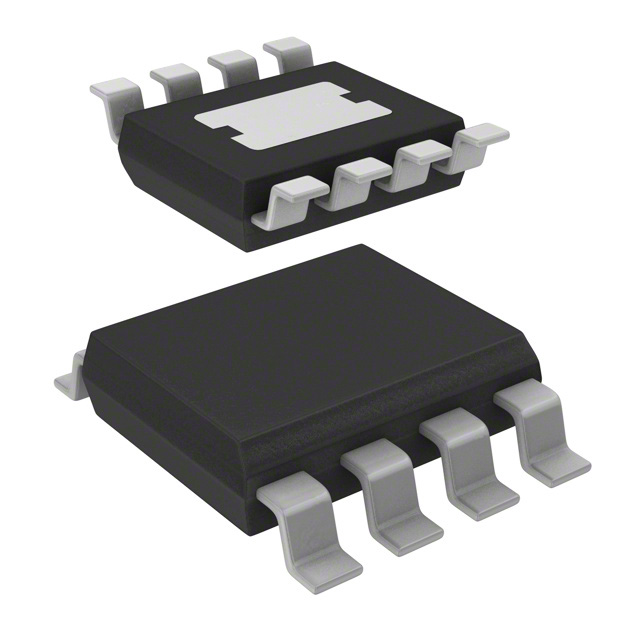
nn Thermally Enhanced 8-Lead SO Package
The LT®8304/LT8304-1 are monolithic micropower isolated flyback converters. By sampling the isolated output
voltage directly from the primary-side flyback waveform,
the parts require no third winding or opto-isolator for
regulation. The output voltage is programmed with two
external resistors and a third optional temperature compensation resistor. Boundary mode operation provides a
small magnetic solution with excellent load regulation. Low
ripple Burst Mode operation maintains high efficiency at
light load while minimizing the output voltage ripple. A 2A,
150V DMOS power switch is integrated along with all the
high voltage circuitry and control logic into a thermally
enhanced 8-lead SO package.
nn
APPLICATIONS
Isolated Automotive, Industrial, Medical, Telecom
Power Supplies
nn Isolated Auxiliary/Housekeeping Power Supplies
nn
The LT8304/LT8304-1 operate from an input voltage range
of 3V to 100V and deliver up to 24W of isolated output
power. The high level of integration and the use of boundary
and low ripple Burst Mode operation result in a simple to
use, low component count, and high efficiency application solution for isolated power delivery. The LT8304-1 is
specially optimized for high step-up output applications.
L, LT, LTC, LTM, Linear Technology, the Linear logo and Burst Mode are registered trademarks
of Linear Technology Corporation. All other trademarks are the property of their respective
owners. Protected by U.S. Patents, including 5438499, 7463497, 7471522.
TYPICAL APPLICATION
4V to 80VIN/5VOUT Isolated Flyback Converter
6:1
220pF
10µF
40µH
100Ω
VIN
SW
EN/UVLO
LT8304
GND
1µF
INTVCC
•
•
VOUT+
5V
1.1µH
VOUT–
309k
RFB
20mA TO 2.4A (VIN = 24V)
20mA TO 3.6A (VIN = 48V)
20mA TO 4.2A (VIN = 72V)
RREF
100k
TC
90
100µF
×3
EFFICIENCY (%)
VIN
4V TO 80V
Efficiency vs Load Current
100
80
70
60
10k
8304 TA01a
VIN = 24V
VIN = 48V
VIN = 72V
50
40
0
0.6
1.2 1.8 2.4 3.0
LOAD CURRENT (A)
3.6
4.2
8304 TA01b
8304fa
For more information www.linear.com/LT8304
1
�LT8304/LT8304-1
ABSOLUTE MAXIMUM RATINGS
(Note 1)
SW (Note 2).............................................................150V
VIN...........................................................................100V
EN/UVLO.....................................................................VIN
RFB.........................................................VIN – 0.5V to VIN
Current Into RFB.....................................................200µA
INTVCC, RREF, TC..........................................................4V
Operating Junction Temperature TJ Range (Notes 3, 4)
LT8304E/LT8304E-1........................... –40°C to 125°C
LT8304I/LT8304I-1............................. –40°C to 125°C
LT8304H/LT8304H-1.......................... –40°C to 150°C
Storage Temperature Range................... –65°C to 150°C
Lead Temperature (Soldering, 10 sec).................... 300°C
ORDER INFORMATION
PIN CONFIGURATION
TOP VIEW
EN/UVLO 1
INTVCC 2
VIN 3
GND 4
8
9
GND
TC
7
RREF
6
RFB
5
SW
S8E PACKAGE
8-LEAD PLASTIC SO
θJA = 33°C/W
EXPOSED PAD (PIN 9) IS GND, MUST BE SOLDERED TO PCB
http://www.linear.com/product/LT8304#orderinfo
LEAD FREE FINISH
TAPE AND REEL
PART MARKING*
PACKAGE DESCRIPTION
TEMPERATURE RANGE
LT8304ES8E#PBF
LT8304ES8E#TRPBF
8304
8-Lead Plastic SO
–40°C to 125°C
LT8304IS8E#PBF
LT8304IS8E#TRPBF
8304
8-Lead Plastic SO
–40°C to 125°C
LT8304HS8E#PBF
LT8304HS8E#TRPBF
8304
8-Lead Plastic SO
–40°C to 150°C
LT8304ES8E-1#PBF
LT8304ES8E-1#TRPBF
83041
8-Lead Plastic SO
–40°C to 125°C
LT8304IS8E-1#PBF
LT8304IS8I-1#TRPBF
83041
8-Lead Plastic SO
–40°C to 125°C
LT8304HS8E-1#PBF
LT8304HS8E-1#TRPBF
83041
8-Lead Plastic SO
–40°C to 150°C
Consult LTC Marketing for parts specified with wider operating temperature ranges. *The temperature grade is identified by a label on the shipping container
For more information on lead free part marking, go to: http://www.linear.com/leadfree/
For more information on tape and reel specifications, go to: http://www.linear.com/tapeandreel/. Some packages are available in 500 unit reels through
designated sales channels with #TRMPBF suffix.
2
8304fa
For more information www.linear.com/LT8304
�LT8304/LT8304-1
ELECTRICAL CHARACTERISTICS
The l denotes the specifications which apply over the full operating
temperature range, otherwise specifications are at TA = 25°C. VIN = 24V, VEN/UVLO = VIN, CINTVCC = 1µF to GND, unless otherwise
noted.
SYMBOL
PARAMETER
VIN
VIN Voltage Range
IQ
VIN Quiescent Current
CONDITIONS
MIN
l
TYP
3
VEN/UVLO = 0.2V
VEN/UVLO = 1.1V
Sleep Mode (Switch Off)
Active Mode (Switch On)
1.8
63
116
390
EN/UVLO Shutdown Threshold
For Lowest Off IQ
l
0.2
0.5
EN/UVLO Enable Threshold
Falling
l
1.178
1.214
EN/UVLO Enable Hysteresis
MAX
UNIT
100
V
3
µA
µA
µA
µA
V
1.250
14
V
mV
IHYS
EN/UVLO Hysteresis Current
VEN/UVLO = 0.2V
VEN/UVLO = 1.1V
VEN/UVLO = 1.3V
–0.1
2.3
–0.1
0
2.5
0
0.1
2.7
0.1
µA
µA
µA
VINTVCC
INTVCC Regulation Voltage
IINTVCC = 0mA to 10mA
2.8
3
3.1
V
IINTVCC
INTVCC Current Limit
VINTVCC = 2.8V
INTVCC UVLO Threshold
Falling
16
2.38
INTVCC UVLO Hysteresis
(RFB – VIN) Voltage
VTC
TC Pin Voltage
ITC
TC Pin Current
2.56
105
IRFB = 75µA to 125µA
–60
RREF Regulation Voltage
RREF Regulation Voltage Line Regulation
2.47
mA
l
0.98
3V ≤ VIN ≤ 100V
60
1.02
V
0.02
0.1
%
15
10
–200
18
13
µA
µA
µA
315
350
385
kHz
8
11
14
kHz
fMAX
Maximum Switching Frequency
Minimum Switching Frequency
tON(MIN)
Minimum Switch-On Time
ISW(MAX)
Maximum Switch Current Limit
ISW(MIN)
Minimum Switch Current Limit
RDS(ON)
Switch On-Resistance
ISW = 0.8A
0.5
ILKG
Switch Leakage Current
VSW = 150V
0.1
tSS
Soft-Start Timer
(LT8304)
(LT8304-1)
160
950
ns
ns
2.0
2.4
2.8
0.43
0.48
0.53
11
Note 1: Stresses beyond those listed under Absolute Maximum Ratings
may cause permanent damage to the device. Exposure to any Absolute
Maximum Rating condition for extended periods may affect device
reliability and lifetime.
Note 2: The SW pin is rated to 150V for transients. Depending on the
leakage inductance voltage spike, operating waveforms of the SW pin
should be derated to keep the flyback voltage spike below 150V as shown
in Figure 5.
Note 3: The LT8304E/LT8304E-1 are guaranteed to meet performance
specifications from 0°C to 125°C junction temperature. Specifications over
the –40°C to 125°C operating junction temperature range are assured by
design, characterization and correlation with statistical process controls.
V
12
7
fMIN
l
mV
1.00
1.00
VTC = 1.2V (LT8304)
VTC = 1.2V (LT8304-1)
VTC = 0.8V
V
mV
A
A
Ω
0.5
µA
ms
The LT8304I/LT8304I-1 are guaranteed over the full –40°C to 125°C
operating junction temperature range. LT8304H/LT304H-1 are guaranteed
over the full –40°C to 150°C operating junction temperature range. High
junction temperatures degrade operating lifetimes. Operating lifetime is
derated at junction temperature greater than 125°C.
Note 4: The LT8304/LT8304-1 includes overtemperature protection that
is intended to protect the device during momentary overload conditions.
Junction temperature will exceed 150°C when overtemperature protection
is active. Continuous operation above the specified maximum operating
junction temperature may impair device reliability.
8304fa
For more information www.linear.com/LT8304
3
�LT8304/LT8304-1
TYPICAL PERFORMANCE CHARACTERISTICS
5.20
5.3
FRONT PAGE APPLICATION
5.05
5.00
4.95
4.90
VIN = 24V
VIN = 48V
VIN = 72V
4.80
0
0.6
1.2 1.8 2.4
3.0
LOAD CURRENT (A)
3.6
500
FRONT PAGE APPLICATION
VIN = 48V
IOUT = 1A
5.2
5.10
OUTPUT VOLTAGE (V)
OUTPUT VOLTAGE (V)
5.15
4.85
5.1
RTC = 100k
5.0
RTC = OPEN
4.9
4.7
–50 –25
0
VSW
50V/DIV
VOUT
50mV/DIV
VOUT
50mV/DIV
8304 G04
0.6
1.2 1.8 2.4
3
LOAD CURRENT (A)
3.6
Burst Mode Operation Waveforms
8304 G05
8304 G06
20µs/DIV
FRONT PAGE APPLICATION
VIN = 48V
IOUT = 20mA
VIN Quiescent Current,
Active Mode
150
TJ = 150°C
TJ = 25°C
TJ = –50°C
4.2
8304 G03
VIN Quiescent Current,
Sleep Mode
450
TJ = 150°C
140
TJ = 150°C
430
4
2
IQ (µA)
130
IQ (µA)
IQ (µA)
0
VOUT
50mV/DIV
TJ = 25°C
120
110
4
VIN = 24V
VIN = 48V
VIN = 72V
VSW
50V/DIV
2µs/DIV
FRONT PAGE APPLICATION
VIN = 48V
IOUT = 0.5A
VIN Shutdown Current
6
0
0
25 50 75 100 125 150
TEMPERATURE (°)
Discontinuous Mode Waveforms
VSW
50V/DIV
8
200
8304 G02
Boundary Mode Waveforms
10
300
100
4.8
4.2
FRONT PAGE APPLICATION
400
8304 G01
2µs/DIV
FRONT PAGE APPLICATION
VIN = 48V
IOUT = 3A
Switching Frequency
vs Load Current
Output Temperature Variation
FREQUENCY (kHz)
Output Load and Line Regulation
TA = 25°C, unless otherwise noted.
20
40
60
VIN (V)
80
100
8304 G07
90
TJ = 25°C
TJ = –50°C
390
TJ = –50°C
370
100
0
410
0
20
40
60
VIN (V)
80
100
8304 G08
350
0
20
40
60
VIN (V)
80
100
8304 G09
8304fa
For more information www.linear.com/LT8304
�LT8304/LT8304-1
TYPICAL PERFORMANCE CHARACTERISTICS
EN/UVLO Enable Threshold
TA = 25°C, unless otherwise noted.
EN/UVLO Hysteresis Current
1.240
3.10
5
1.235
FALLING
1.215
1.210
3
VINTVCC (V)
1.220
2
1
1.200
–50 –25
0
0
8304 G10
2.8
3.05
INTV
INTVCC
UVLO Threshold
Threshold
CC UVLO
40
(RFB –- VVIN
Voltage
IN)) Voltage
30
RISING
2.5
FALLING
2.4
2.85
2.3
VOLTAGE (mV)
IINTVCC = 10mA
2.6
2.90
IRFB = 125µA
10
IRFB = 100µA
0
–10
–20
20
40
60
VIN (V)
80
2.2
–50 –25
100
1.010
1.008
1.008
1.006
1.006
1.004
1.004
1.002
1.002
1.000
0.998
0.994
0.994
0.992
0.992
8304 G16
25 50 75 100 125 150
TEMPERATURE (°C)
TC Pin Voltage
1.5
1.4
1.3
1.2
0.998
0.996
25 50 75 100 125 150
TEMPERATURE (°C)
0
8304 G15
RREF
REF Line Regulation
1.000
0.996
0
–40
–50 –25
25 50 75 100 125 150
TEMPERATURE (°C)
8304 G14
R
RREF
Regulation Voltage
Voltage
REF Regulation
0.990
–50 –25
0
8304 G13
VRREF (V)
VRREF (V)
1.010
0
IRFB = 75µA
–30
VTC (V)
2.80
25 50 75 100 125 150
TEMPERATURE (°C)
20
IINTVCC = 0mA
2.95
0
8304 G12
2.7
VINTVCC (V)
VINTVCC (V)
2.80
–50 –25
25 50 75 100 125 150
TEMPERATURE (°C)
8304 G11
INTVCC Voltage vs VIN
3.00
IINTVCC = 10mA
2.85
0
–50 –25
25 50 75 100 125 150
TEMPERATURE (°C)
2.95
2.90
1.205
3.10
IINTVCC = 0mA
3.00
1.225
IHYST (µA)
VEN/UVLO (V)
3.05
4
RISING
1.230
INTVCC Voltage vs Temperature
0.990
1.1
1.0
0.9
0.8
0
20
40
60
VIN (V)
80
100
8304 G17
0.7
–50 –25
0
25 50 75 100 125 150
TEMPERATURE (°C)
8304 G18
8304fa
For more information www.linear.com/LT8304
5
�LT8304/LT8304-1
TYPICAL PERFORMANCE CHARACTERISTICS
RDS(ON)
DS(ON)
Switch Current Limit
2.5
0.8
2.0
0.6
400
1.5
0.4
1.0
0.2
0.5
0
MAXIMUM CURRENT LIMIT
FREQUENCY (kHz)
1.0
0
–50 –25
MINIMUM CURRENT LIMIT
0
–50 –25
25 50 75 100 125 150
TEMPERATURE (°C)
0
8304 G19
Minimum Switching Frequency
Minimum Switch-Off Time
400
TIME (ns)
FREQUENCY (kHz)
TIME (ns)
25 50 75 100 125 150
TEMPERATURE (°C)
8304 G22
25 50 75 100 125 150
TEMPERATURE (°C)
500
200
100
0
0
8304 G21
300
4
0
–50 –25
0
–50 –25
25 50 75 100 125 150
TEMPERATURE (°C)
Minimum Switch-On Time
16
8
200
100
400
12
300
8304 G20
20
6
Maximum Switching Frequency
500
3.0
ISW (A)
RESISTANCE (Ω)
1.2
TA = 25°C, unless otherwise noted.
0
–50 –25
300
200
100
0
25 50 75 100 125 150
TEMPERATURE (°C)
8304 G23
0
–50 –25
0
25 50 75 100 125 150
TEMPERATURE (°C)
8304 G24
8304fa
For more information www.linear.com/LT8304
�LT8304/LT8304-1
PIN FUNCTIONS
EN/UVLO (Pin 1): Enable/Undervoltage Lockout. The
EN/UVLO pin is used to enable the LT8304. Pull the pin
below 0.2V to shut down the LT8304. This pin has an accurate 1.214V threshold and can be used to program a VIN
undervoltage lockout (UVLO) threshold using a resistor
divider from VIN to ground. A 2.5µA current hysteresis
allows the programming of VIN UVLO hysteresis. If neither
function is used, tie this pin directly to VIN.
INTVCC (Pin 2): Internal 3V Linear Regulator Output. The
INTVCC pin is supplied from VIN and powers the internal
control circuitry and gate driver. Do not overdrive the
INTVCC pin with any external supply, such as a third winding
supply. Locally bypass this pin to ground with a minimum
1µF ceramic capacitor.
VIN (Pin 3): Input Supply. The VIN pin supplies current to
the internal circuitry and serves as a reference voltage for
the feedback circuitry connected to the RFB pin. Locally
bypass this pin to ground with a capacitor.
GND (Pin 4, Exposed Pad Pin 9): Ground. The exposed
pad provides both electrical contact to ground and good
thermal contact to the printed circuit board. Solder the
exposed pad directly to the ground plane.
SW (Pin 5): Drain of the Internal DMOS Power Switch.
Minimize trace area at this pin to reduce EMI and voltage
spikes.
RFB (Pin 6): Input Pin for External Feedback Resistor.
Connect a resistor from this pin to the transformer primary
SW pin. The ratio of the RFB resistor to the RREF resistor,
times the internal voltage reference, determines the output
voltage (plus the effect of any non-unity transformer turns
ratio). Minimize trace area at this pin.
RREF (Pin 7): Input Pin for External Ground Referred Reference Resistor. The resistor at this pin should be in the
range of 10k, but for convenience in selecting a resistor
divider ratio, the value may range from 9.09k to 11.0k.
TC (Pin 8): Output Voltage Temperature Compensation. The
voltage at this pin is proportional to absolute temperature
(PTAT) with temperature coefficient equal to 3.35mV/°C,
i.e., equal to 1V at room temperature 25°C. The TC pin
voltage can be used to estimate the LT8304 junction temperature. Connect a resistor from this pin to the RREF pin
to compensate the output diode temperature coefficient.
8304fa
For more information www.linear.com/LT8304
7
�LT8304/LT8304-1
BLOCK DIAGRAM
T1
N:1
VIN
CIN
L1A
RFB
3
2
6
1:4
M3
M2
REN2
OSCILLATOR
–
1.214V
+
1V
–
A1
VOUT–
START-UP,
REFERENCE,
CONTROL
BOUNDARY
DETECTOR
+
1
EN/UVLO
COUT
SW
25µA
REN1
L1B
VIN
LDO
CINTVCC
•
VOUT+
5
RFB
VIN
INTVCC
•
DOUT
INTVCC
–
gm
+
S
A3
R
Q
M1
DRIVER
2.5µA
+
PTAT
VOLTAGE
M4
A2
RSENSE
–
RREF
7
GND
4, EXPOSED PAD PIN 9
TC
8
RTC
8304 BD
RREF
OPERATION
The LT8304 is a current mode switching regulator IC
designed specially for the isolated flyback topology. The
key problem in isolated topologies is how to communicate
the output voltage information from the isolated secondary
side of the transformer to the primary side for regulation.
Historically, opto-isolators or extra transformer windings
communicate this information across the isolation boundary. Opto-isolator circuits waste output power, and the
extra components increase the cost and physical size of
the power supply. Opto-isolators can also cause system
issues due to limited dynamic response, nonlinearity, unitto-unit variation and aging over lifetime. Circuits employing
8
extra transformer windings also exhibit deficiencies, as
using an extra winding adds to the transformer’s physical
size and cost, and dynamic response is often mediocre.
The LT8304 samples the isolated output voltage through
the primary-side flyback pulse waveform. In this manner,
neither opto-isolator nor extra transformer winding is required for regulation. Since the LT8304 operates in either
boundary conduction mode or discontinuous conduction
mode, the output voltage is always sampled on the SW
pin when the secondary current is zero. This method improves load regulation without the need of external load
compensation components.
8304fa
For more information www.linear.com/LT8304
�LT8304/LT8304-1
OPERATION
The LT8304 is a simple to use micropower isolated flyback converter housed in a thermally enhanced 8-lead
SO package. The output voltage is programmed with two
external resistors. An optional TC resistor provides easy
output diode temperature compensation. By integrating
the loop compensation and soft-start inside, the part
reduces the number of external components. As shown
in the Block Diagram, many of the blocks are similar to
those found in traditional switching regulators including
reference, regulators, oscillator, logic, current amplifier,
current comparator, driver, and power switch. The novel
sections include a flyback pulse sense circuit, a sampleand-hold error amplifier, and a boundary mode detector,
as well as the additional logic for boundary conduction
mode, discontinuous conduction mode, and low ripple
Burst Mode operation.
Quasi-Resonant Boundary Mode Operation
The LT8304 features quasi-resonant boundary conduction
mode operation at heavy load, where the chip turns on the
primary power switch when the secondary current is zero
and the SW rings to its valley. Boundary conduction mode
is a variable frequency, variable peak-current switching
scheme. The power switch turns on and the transformer
primary current increases until an internally controlled peak
current limit. After the power switch turns off, the voltage
on the SW pin rises to the output voltage multiplied by
the primary-to-secondary transformer turns ratio plus the
input voltage. When the secondary current through the
output diode falls to zero, the SW pin voltage collapses
and rings around VIN. A boundary mode detector senses
this event and turns the power switch back on at its valley.
Boundary conduction mode returns the secondary current
to zero every cycle, so parasitic resistive voltage drops
do not cause load regulation errors. Boundary conduction mode also allows the use of smaller transformers
compared to continuous conduction mode and does not
exhibit subharmonic oscillation.
Discontinuous Conduction Mode Operation
As the load gets lighter, boundary conduction mode increases the switching frequency and decreases the switch
peak current at the same ratio. Running at a higher switching
frequency up to several MHz increases switching and gate
charge losses. To avoid this scenario, the LT8304 has an
additional internal oscillator, which clamps the maximum
switching frequency to be less than 350kHz (TYP). Once
the switching frequency hits the internal frequency clamp,
the part starts to delay the switch turn-on and operates in
discontinuous conduction mode.
Low Ripple Burst Mode Operation
Unlike traditional flyback converters, the LT8304 has to
turn on and off at least for a minimum amount of time
and with a minimum frequency to allow accurate sampling
of the output voltage. The inherent minimum switch current limit and minimum switch-off time are necessary to
guarantee the correct operation of specific applications.
As the load gets very light, the LT8304 starts to fold back
the switching frequency while keeping the minimum switch
current limit. So the load current is able to decrease while
still allowing minimum switch-off time for the sample-andhold error amplifier. Meanwhile, the part switches between
sleep mode and active mode, thereby reducing the effective quiescent current to improve light load efficiency. In
this condition, the LT8304 runs in low ripple Burst Mode
operation. The typical 11kHz minimum switching frequency
determines how often the output voltage is sampled and
also the minimum load requirement.
High Step-Up VOUT Applications
Typically, high step-up output applications have excessive
primary inductor current ringing during primary switch
turn-on due to the huge reflected capacitance on SW node.
Such current ringing can falsely trigger LT8304 current
comparator after 160ns typical blanking time and create
large signal oscillation, especially at high VIN and light
load condition. The LT8304-1, specially optimized for
high step-up output applications, is more immune to the
current ringing without requiring longer blanking time.
For any 1:N step-up transformer turns ratio larger than
or equal to 5, the LT8304-1 is recommended.
8304fa
For more information www.linear.com/LT8304
9
�LT8304/LT8304-1
APPLICATIONS INFORMATION
Output Voltage
The RFB and RREF resistors as depicted in the Block Diagram
are external resistors used to program the output voltage.
The LT8304 operates similar to traditional current mode
switchers, except in the use of a unique flyback pulse
sense circuit and a sample-and-hold error amplifier, which
sample and therefore regulate the isolated output voltage
from the flyback pulse.
Operation is as follows: when the power switch M1 turns
off, the SW pin voltage rises above the VIN supply. The
amplitude of the flyback pulse, i.e., the difference between
the SW pin voltage and VIN supply, is given as:
VFLBK = (VOUT + VF + ISEC • ESR) • NPS
VF = Output diode forward voltage
ISEC = Transformer secondary current
ESR = Total impedance of secondary circuit
NPS = Transformer effective primary-to-secondary
turns ratio
The flyback voltage is then converted to a current, IRFB,
by the RFB resistor and the flyback pulse sense circuit
(M2 and M3). This current, IRFB, also flows through the
RREF resistor to generate a ground-referred voltage. The
resulting voltage feeds to the inverting input of the sampleand-hold error amplifier. Since the sample-and-hold error
amplifier samples the voltage when the secondary current
is zero, the (ISEC • ESR) term in the VFLBK equation can be
assumed to be zero.
The internal reference voltage, VREF, 1.00V, feeds to the
noninverting input of the sample-and-hold error amplifier. The relatively high gain in the overall loop causes the
voltage at the RREF pin to be nearly equal to the internal
reference voltage VREF. The resulting relationship between
VFLBK and VREF can be expressed as:
V
FLBK •R = V or
R REF REF
FB
R
VFLBK = VREF • FB
RREF
VREF = Internal reference voltage 1.00V
10
Combination with the previous VFLBK equation yields an
equation for VOUT, in terms of the RFB and RREF resistors,
transformer turns ratio, and diode forward voltage:
R
VOUT = VREF • FB
RREF
1
–V
•
F
NPS
Output Temperature Compensation
The first term in the VOUT equation does not have temperature dependence, but the output diode forward voltage, VF,
has a significant negative temperature coefficient (–1mV/°C
to –2mV/°C). Such a negative temperature coefficient produces approximately 200mV to 300mV voltage variation
on the output voltage across temperature.
For higher voltage outputs, such as 12V and 24V, the
output diode temperature coefficient has a negligible effect on the output voltage regulation. For lower voltage
outputs, such as 3.3V and 5V, however, the output diode
temperature coefficient does count for an extra 2% to 5%
output voltage regulation.
The LT8304 junction temperature usually tracks the output
diode junction temperature to the first order. To compensate
the negative temperature coefficient of the output diode,
a resistor, RTC, connected between the TC and RREF pins
generates a proportional-to-absolute-temperature (PTAT)
current. The PTAT current is zero at 25°C, flows into the
RREF pin at hot temperature, and flows out of the RREF pin
at cold temperature. With the RTC resistor in place, the
output voltage equation is revised as follows:
VOUT = VREF •
RFB
1
•
– VF (TO) – ( VTC / T ) •
RREF
NPS
( T –TO) •
RFB
1
•
– ( VF / T ) • ( T–TO)
R TC
NPS
TO=Room temperature 25°C
(
(
VF / T ) = Output diode forward voltage
temperature coefficient
VTC / T ) = 3.35mV/ °C
8304fa
For more information www.linear.com/LT8304
�LT8304/LT8304-1
APPLICATIONS INFORMATION
To cancel the output diode temperature coefficient, the
following two equations should be satisfied:
VOUT = VREF •
(
RFB
1
•
– VF (TO)
RREF
NPS
R
1
VTC / T) • FB •
= – ( VF / T )
R TC
NPS
Selecting Actual RREF, RFB, RTC Resistor Values
The LT8304 uses a unique sampling scheme to regulate
the isolated output voltage. Due to the sampling nature,
the scheme contains repeatable delays and error sources,
which will affect the output voltage and force a re-evaluation
of the RFB and RTC resistor values. Therefore, a simple
2-step sequential process is recommended for selecting
resistor values.
Rearrangement of the expression for VOUT in the previous
sections yields the starting value for RFB:
RFB =
(
RREF •NPS • VOUT + VF (TO)
VREF
)
VOUT = Output voltage
VF (TO) = Output diode forward voltage at 25°C = ~0.3V
NPS = Transformer effective primary-to-secondary
turns ratio
The equation shows that the RFB resistor value is independent of the RTC resistor value. Any RTC resistor connected
between the TC and RREF pins has no effect on the output
voltage setting at 25°C because the TC pin voltage is equal
to the RREF regulation voltage at 25°C.
The RREF resistor value should be approximately 10k
because the LT8304 is trimmed and specified using this
value. If the RREF resistor value varies considerably from
10k, additional errors will result. However, a variation in
RREF up to 10% is acceptable. This yields a bit of freedom
in selecting standard 1% resistor values to yield nominal
RFB/RREF ratios.
First, build and power up the application with the starting
RREF, RFB values (no RTC resistor yet) and other components connected, and measure the regulated output voltage, VOUT(MEAS). The new RFB value can be adjusted to:
RFB(NEW) =
VOUT
VOUT(MEAS)
•RFB
Second, with a new RFB resistor value selected, the output
diode temperature coefficient in the application can be
tested to determine the RTC value. Still without the RTC
resistor, the VOUT should be measured over temperature
at a desired target output load. It is very important for
this evaluation that uniform temperature be applied to
both the output diode and the LT8304. If freeze spray or
a heat gun is used, there can be a significant mismatch
in temperature between the two devices that causes significant error. Attempting to extrapolate the data from a
diode data sheet is another option if there is no method
to apply uniform heating or cooling such as an oven. With
at least two data points spreading across the operating
temperature range, the output diode temperature coefficient can be determined by:
– ( δVF /δT ) =
VOUT ( T1) – VOUT ( T2)
T1– T2
Using the measured output diode temperature coefficient,
an exact RTC value can be selected with the following
equation:
R TC =
(δVTC /δT ) • RFB
– ( δVF /δT ) NPS
Once the RREF, RFB, and RTC values are selected, the regulation accuracy from board to board for a given application
will be very consistent, typically under ±5% when including device variation of all the components in the system
(assuming resistor tolerances and transformer windings
matching within ±1%). However, if the transformer or
the output diode is changed, or the layout is dramatically
altered, there may be some change in VOUT.
8304fa
For more information www.linear.com/LT8304
11
�LT8304/LT8304-1
APPLICATIONS INFORMATION
Output Power
A flyback converter has a complicated relationship between
the input and output currents compared to a buck or a
boost converter. A boost converter has a relatively constant
maximum input current regardless of input voltage and a
buck converter has a relatively constant maximum output
current regardless of input voltage. This is due to the
continuous non-switching behavior of the two currents. A
flyback converter has both discontinuous input and output
currents which make it similar to a nonisolated buck-boost
converter. The duty cycle will affect the input and output
currents, making it hard to predict output power. In addition, the winding ratio can be changed to multiply the
output current at the expense of a higher switch voltage.
12V, and 24V. The maximum output power curve is the
calculated output power if the switch voltage is 110V during the switch-off time. 40V of margin is left for leakage
inductance voltage spike. To achieve this power level at
a given input, a winding ratio value must be calculated
to stress the switch to 110V, resulting in some odd ratio
values. The curves below the maximum output power
curve are examples of common winding ratio values and
the amount of output power at given input voltages.
One design example would be a 5V output converter with
a minimum input voltage of 36V and a maximum input
voltage of 75V. A six-to-one winding ratio fits this design
example perfectly and outputs equal to 19.0W at 75V but
lowers to 14.4W at 36V.
The graphs in Figures 1 to 4 show the typical maximum
output power possible for the output voltages 3.3V, 5V,
25
20
N = 12:1
N = 8:1
15
N = 6:1
10
N = 4:1
ASSUME 80% EFFICIENCY
0
20
40
60
INPUT VOLTAGE (V)
80
MAXIMUM
OUTPUT
POWER
20
OUTPUT POWER (W)
N = 2:1
10
N = 1:1
ASSUME 90% EFFICIENCY
0
20
8304 F01
25
MAXIMUM
OUTPUT
POWER
20
N = 8:1
N = 6:1
15
N =4:1
10
N = 2:1
5
40
60
INPUT VOLTAGE (V)
80
100
8304 F03
Figure 3. Output Power for 12V Output
OUTPUT POWER (W)
25
N = 2:1
N = 3:2
N = 1:1
15
10
N = 1:2
5
ASSUME 85% EFFICIENCY
0
20
40
60
INPUT VOLTAGE (V)
80
100
0
ASSUME 90% EFFICIENCY
0
8304 F02
Figure 2. Output Power for 5V Output
12
N = 3:1
15
0
100
Figure 1. Output Power for 3.3V Output
0
N = 4:1
5
5
0
MAXIMUM
OUTPUT
POWER
20
OUTPUT POWER (W)
OUTPUT POWER (W)
25
MAXIMUM
OUTPUT
POWER
20
40
60
INPUT VOLTAGE (V)
80
100
8304 F04
Figure 4. Output Power for 24V Output
8304fa
For more information www.linear.com/LT8304
�LT8304/LT8304-1
APPLICATIONS INFORMATION
The equations below calculate output power:
the power switch shorter than approximately 160ns. This
minimum switch-on time is mainly for leading-edge blanking the initial switch turn-on current spike. If the inductor
current exceeds the desired current limit during that time,
oscillation may occur at the output as the current control
loop will lose its ability to regulate. Therefore, the following
equation relating to maximum input voltage must also be
followed in selecting primary-side magnetizing inductance:
POUT = η • VIN • D • ISW(MAX) • 0.5
η = Efficiency = ~85%
D =Duty Cycle =
( VOUT + VF ) •NPS
( VOUT + VF ) •NPS + VIN
ISW(MAX) = Maximum switch current limit = 2A (MIN)
LPRI ≥
Primary Inductance Requirement
ISW(MIN)
tON(MIN) = Minimum switch-on time = 160ns (TYP)
The LT8304 obtains output voltage information from the
reflected output voltage on the SW pin. The conduction
of secondary current reflects the output voltage on the
primary SW pin. The sample-and-hold error amplifier needs
a minimum 350ns to settle and sample the reflected output
voltage. In order to ensure proper sampling, the secondary winding needs to conduct current for a minimum of
350ns. The following equation gives the minimum value
for primary-side magnetizing inductance:
LPRI ≥
In general, choose a transformer with its primary magnetizing inductance about 40% to 60% larger than the
minimum values calculated above. A transformer with
much larger inductance will have a bigger physical size
and may cause instability at light load.
Selecting a Transformer
tOFF(MIN) •NPS • ( VOUT + VF )
tON(MIN) • VIN(MAX)
Transformer specification and design is perhaps the most
critical part of successfully applying the LT8304. In addition
to the usual list of guidelines dealing with high frequency
isolated power supply transformer design, the following
information should be carefully considered.
ISW(MIN)
tOFF(MIN) = Minimum switch-off time = 350ns (TYP)
ISW(MIN) = Minimum switch current limit = 0.48A (TYP)
Linear Technology has worked with several leading magnetic component manufacturers to produce pre-designed
flyback transformers for use with the LT8304. Table 1
shows the details of these transformers.
In addition to the primary inductance requirement for
the minimum switch-off time, the LT8304 has minimum
switch-on time that prevents the chip from turning on
Table 1. Predesigned Transformers – Typical Specifications
TRANSFORMER
PART NUMBER
DIMENSION
(W × L × H) (mm)
LPRI (μH)
TYP
LLKG (μH)
TYP (MAX)
TARGET APPLICATION
NP:NS
VENDOR
VIN (V)
VOUT (V)
IOUT (A)
750315125
17.75 × 13.46 × 12.70
40
1 (2)
6:1
Wurth Elektronik
36 – 75
5
3
750315126
17.75 × 13.46 × 12.70
40
0.5 (1)
2:1
Wurth Elektronik
36 – 75
12
1.2
750315835
17.75 × 13.46 × 12.70
40
1 (2)
8:1
Wurth Elektronik
36 – 75
3.3
4.2
750315836
17.75 × 13.46 × 12.70
40
0.45 (0.9)
1:1
Wurth Elektronik
36 – 75
24
0.6
750315837
17.75 × 13.46 × 12.70
40
0.5 (1)
1:2
Wurth Elektronik
36 – 75
48
0.3
750315839
17.75 × 13.46 × 12.71
40
0.25 (0.5)
1:10
Wurth Elektronik
4 – 36
200
0.012
13324-T083
18.0 × 13.5 × 12.5
40
(2)
8:1
Sumida
36 – 75
3.3
4.2
13324-T084
18.0 × 13.5 × 12.5
40
(1.2)
1:1
Sumida
36 – 75
24
0.6
13324-T085
18.0 × 13.5 × 12.5
40
(1.2)
1:2
Sumida
36 – 75
48
0.3
13324-T086
18.0 × 13.5 × 12.6
40
(1.2)
1:5
Sumida
4 – 36
200
0.012
13324-T087
18.0 × 13.5 × 12.5
40
(1.2)
1:10
Sumida
4 – 18
400
0.006
8304fa
For more information www.linear.com/LT8304
13
�LT8304/LT8304-1
APPLICATIONS INFORMATION
Turns Ratio
Note that when choosing an RFB/RREF resistor ratio to set
output voltage, the user has relative freedom in selecting
a transformer turns ratio to suit a given application. In
contrast, the use of simple ratios of small integers, e.g.,
3:1, 2:1, 1:1, etc., provides more freedom in settling total
turns and mutual inductance.
Typically, choose the transformer turns ratio to maximize
available output power. For low output voltages (3.3V
or 5V), a N:1 turns ratio can be used with multiple primary windings relative to the secondary to maximize the
transformer’s current gain (and output power). However,
remember that the SW pin sees a voltage that is equal
to the maximum input supply voltage plus the output
voltage multiplied by the turns ratio. In addition, leakage
inductance will cause a voltage spike (VLEAKAGE) on top of
this reflected voltage. This total quantity needs to remain
below the 150V absolute maximum rating of the SW pin
to prevent breakdown of the internal power switch. Together these conditions place an upper limit on the turns
ratio, NPS, for a given application. Choose a turns ratio
low enough to ensure
NPS <
150V – VIN(MAX) – VLEAKAGE
VOUT + VF
For larger N:1 step-down turns ratio, choose a transformer
with a larger physical size to deliver additional current. In
addition, choose a large enough inductance value to ensure that the switch-off time is long enough to accurately
sample the output voltage. Always choose the LT8304 for
N:1 step-down transformer turns ratio.
For lower output power levels or higher output voltage,
choose a 1:1 or 1:N step-up transformer for the absolute
smallest transformer size. A 1:N step-up transformer will
minimize the magnetizing inductance and size, but will also
limit the available output power. A higher 1:N step-up turns
ratio makes it possible to have very high output voltages
without exceeding the breakdown voltage of the internal
power switch. For any 1:N step-up transformer turns ratio
larger than or equal to 5, the LT8304-1 is recommended.
14
The turns ratio is an important element in the isolated
feedback scheme, and directly affects the output voltage
accuracy. Make sure the transformer manufacturer specifies turns ratio accuracy within ±1%.
Saturation Current
The current in the transformer windings should not exceed
its rated saturation current. Energy injected once the core is
saturated will not be transferred to the secondary and will
instead be dissipated in the core. When designing custom
transformers to be used with the LT8304, the saturation
current should always be specified by the transformer
manufacturers.
Winding Resistance
Resistance in either the primary or secondary windings
will reduce overall power efficiency. Good output voltage
regulation will be maintained independent of winding resistance due to the boundary/discontinuous conduction
mode operation of the LT8304.
Leakage Inductance and Snubbers
Transformer leakage inductance on either the primary or
secondary causes a voltage spike to appear on the primary
after the power switch turns off. This spike is increasingly
prominent at higher load currents where more stored energy must be dissipated. It is very important to minimize
transformer leakage inductance.
When designing an application, adequate margin should be
kept for the worst-case leakage voltage spikes even under
overload conditions. In most cases shown in Figure 5, the
reflected output voltage on the primary plus VIN should
be kept below 110V. This leaves at least 40V margin for
the leakage spike across line and load conditions. A larger
voltage margin will be required for poorly wound transformers or for excessive leakage inductance.
8304fa
For more information www.linear.com/LT8304
�LT8304/LT8304-1
APPLICATIONS INFORMATION
VSW(MAX)
VSW(MAX) = VIN(MAX) + VZENNER(MAX)
Example:
The output capacitor should be chosen to minimize the
output voltage ripple while considering the increase in size
and cost of a larger capacitor. Use the following equation
to calculate the output capacitance:
COUT =
VZENNER(MAX) ≤ 145V – 75V = 70V
LPRI •ISW 2
2 • VOUT • ∆VOUT
VREVERSE > 150V
A 150V, 1A diode from Diodes Inc. (DFLS1150) is chosen.
Step 6: Select the RREF and RFB resistors.
Use the following equation to calculate the starting values
for RREF and RFB:
Example:
Design for output voltage ripple less than ±1% of VOUT,
i.e., 100mV.
2
40µH • ( 2.4A )
COUT =
= 230µF
2 • 5V • 0.1V
RFB =
(
)
RREF • NPS • VOUT + VF ( TO)
VREF
RREF = 10k
Example:
RFB =
10k • 6 • ( 5V +0.3V )
= 318k
1.00V
For 1% standard values, a 316k resistor is chosen.
18
8304fa
For more information www.linear.com/LT8304
�LT8304/LT8304-1
APPLICATIONS INFORMATION
Step 7: Adjust RFB resistor based on output voltage.
Step 9: Select the EN/UVLO resistors.
Build and power up the application with application components and measure the regulated output voltage. Adjust
RFB resistor based on the measured output voltage:
Determine the amount of hysteresis required and calculate
R1 resistor value:
RFB(NEW) =
VOUT
VOUT(MEASURED)
Example:
•RFB
Choose 2.5V of hysteresis, R1 = 1M
Example:
RFB =
VIN(HYS) = 2.5µA • R1
Determine the UVLO thresholds and calculate R2 resistor
value:
5V
• 316k = 309k
5.11V
VIN(UVLO+) =
1.228V • (R1+ R2)
+ 2.5µA • R1
R2
Step 8: Select RTC resistor based on output voltage
temperature variation.
Measure output voltage in a controlled temperature environment like an oven to determine the output temperature
coefficient. Measure output voltage at a consistent load
current and input voltage, across the operating temperature range.
Set VIN UVLO rising threshold to 34.5V:
R2 = 40.2k
VIN(UVLO+) = 34.3V
VIN(UNLO–) = 31.4V
Calculate the temperature coefficient of VF:
Step 10: Ensure minimum load.
VOUT ( T1) – VOUT ( T2)
T1– T2
3.35mV/°C RFB
R TC =
•
– ( δVF /δT ) NPS
The theoretical minimum load can be approximately
estimated as:
Example:
Remember to check the minimum load requirement in
real application. The minimum load occurs at the point
where the output voltage begins to climb up as the converter delivers more energy than what is consumed at
the output. The real minimum load for this application is
about 20mA. In this example, a 249Ω resistor is selected
as the minimum load.
– ( δVF /δT ) =
– ( δVF /δT ) =
R TC =
2
40µH • ( 0.53A ) •14kHz
ILOAD(MIN) =
= 15.7mA
2 • 5V
5.149V – 4.977V
= 1.72mV / °C
100°C – ( 0°C)
3.35mV/°C 309
•
= 100k
1.72mV/°C 6
Example:
8304fa
For more information www.linear.com/LT8304
19
�LT8304/LT8304-1
TYPICAL APPLICATIONS
18V to 80VIN/3.3VOUT Isolated Flyback Converter
T1
8:1
C3
220pF
•
0.63µH
R3 40µH
100Ω
•
Z1
R1
1M
D1
VIN
R2
88.7k
C2
1µF
SW
EN/UVLO
R4
274k
LT8304
RFB
GND
INTVCC
C4
330µF
×2
RREF
R6
100k
TC
VOUT–
D1: DIODES DFLS1150
D2: DIODES SBR15U30SP5
T1: SUMIDA 13324-T083
Z1: CENTRAL CMZ5944B
R5
10k
100
VOUT+
3.3V
25mA TO 3.4A (VIN = 24V)
25mA TO 4.8A (VIN = 48V)
25mA TO 5.6A (VIN = 72V)
90
EFFICIENCY (%)
D2
VIN
18V TO 80V
C1
10µF
Efficiency vs Load Current
80
70
60
VIN = 24V
VIN = 48V
VIN = 72V
50
8304 TA02a
40
0
0.8
1.6 2.4 3.2 4.0
LOAD CURRENT (A)
4.8
5.6
8304 TA02b
18V to 80VIN/5VOUT Isolated Flyback Converter
VIN
18V TO 80V
Z1
C1
10µF
R1
1M
R2
88.7k
C2
1µF
D1
VIN
EN/UVLO
SW
R4
309k
LT8304
GND
INTVCC
RFB
RREF
TC
T1
6:1
C3
220pF
•
1.1µH
R3 40µH
100Ω
•
R6
100k
R5
10k
VOUT+
5V
20mA TO 2.4A (VIN = 24V)
20mA TO 3.6A (VIN = 48V)
C4 20mA TO 4.2A (VIN = 72V)
100µF
×3
VOUT–
D1: DIODES DFLS1150
D2: DIODES PDS835L
T1: WURTH 750315125
Z1: CENTRAL CMZ5944B
100
90
EFFICIENCY (%)
D2
Efficiency vs Load Current
80
70
60
VIN = 24V
VIN = 48V
VIN = 72V
50
8304 TA03a
40
0
0.6
1.2 1.8 2.4
3.0
LOAD CURRENT (A)
3.6
4.2
8304 TA03b
20
8304fa
For more information www.linear.com/LT8304
�LT8304/LT8304-1
TYPICAL APPLICATIONS
18V to 80VIN/12VOUT Isolated Flyback Converter
Z1
C1
10µF
R1
1M
R2
88.7k
C2
1µF
D1
VIN
EN/UVLO
SW
RFB
INTVCC
RREF
TC
•
10µH
C4
47µF
R6
OPEN
R5
10k
100
VOUT+
12V
10mA TO 1.0A (VIN = 24V)
10mA TO 1.4A (VIN = 48V)
10mA TO 1.6A (VIN = 72V)
VOUT–
R4
237k
LT8304
GND
C3
220pF
R3 40µH
100Ω
•
D2
D1: DIODES DFLS1150
D2: DIODES PMEG6030EP
T1: WURTH 750315126
Z1: CENTRAL CMZ5944B
90
EFFICIENCY (%)
VIN
18V TO 80V
T1
2:1
Efficiency vs Load Current
80
70
60
VIN = 24V
VIN = 48V
VIN = 72V
50
8304 TA04a
40
0
0.4
0.8
1.2
LOAD CURRENT (A)
1.6
8304 TA04b
18V to 80VIN/24VOUT Isolated Flyback Converter
Z1
C1
10µF
R1
1M
R2
88.7k
C2
1µF
D1
VIN
EN/UVLO
SW
R4
237k
LT8304
GND
INTVCC
RFB
RREF
TC
C3
220pF
R3 40µH
100Ω
•
R6
OPEN
R5
10k
T1
1:1
D2
•
40µH
C4
10µF
100
VOUT+
24V
5mA TO 0.5A (VIN = 24V)
5mA TO 0.7A (VIN = 48V)
5mA TO 0.8A (VIN = 72V)
VOUT–
D1: DIODES DFLS1150
D2: DIODES SBR2U150SA
T1: SUMIDA 13324-T084
Z1: CENTRAL CMZ5944B
90
EFFICIENCY (%)
VIN
18V TO 80V
Efficiency vs Load Current
80
70
60
VIN = 24V
VIN = 48V
VIN = 72V
50
8304 TA05a
40
0
0.1
0.2
0.3 0.4 0.5 0.6
LOAD CURRENT (A)
0.7
0.8
8304 TA05b
8304fa
For more information www.linear.com/LT8304
21
�LT8304/LT8304-1
TYPICAL APPLICATIONS
18V to 80VIN/48VOUT Isolated Flyback Converter
Efficiency vs Load Current
VIN
18V TO 80V
Z1
C1
10µF
R1
1M
R2
88.7k
C2
1µF
D1
VIN
EN/UVLO
SW
INTVCC
RFB
RREF
TC
C4
2.2µF
R4
232k
LT8304
GND
T1
1:2
C3
220pF
•
160µH
R3 40µH
100Ω
•
R6
OPEN
R5
10k
100
VOUT+
48V
2mA TO 0.24A (VIN = 24V)
2mA TO 0.34A (VIN = 48V)
2mA TO 0.40A (VIN = 72V)
VOUT–
D1: DIODES DFLS1150
D2: DIODES SBR1U400P1
T1: SUMIDA 13324-T085
Z1: CENTRAL CMZ5944B
90
EFFICIENCY (%)
D2
80
70
60
VIN = 24V
VIN = 48V
VIN = 72V
50
8304 TA06a
40
0
0.1
0.2
0.3
LOAD CURRENT (A)
0.4
8304 TA06b
22
8304fa
For more information www.linear.com/LT8304
�LT8304/LT8304-1
TYPICAL APPLICATIONS
4V to 36VIN/200VOUT Isolated Flyback Converter
T1
1:5
VIN
4V TO 36V
10µF
50V
40µH
VIN
EN/UVLO
SW
1µF
6.3V
•
1mH
•
VOUT–
RFB
INTVCC
0.33µF
250V
392k
LT8304-1
TC
VOUT+
200V
0.3mA TO 12mA (VIN = 4V)
0.5mA TO 35mA (VIN = 12V)
1.5mA TO 75mA (VIN = 36V)
D1
T1: SUMIDA 13324-T086
D1: CENTRAL CMMR1U-06 TR
RREF
10k
GND
10pF
8304 TA07a
Efficiency, VOUT = 200V
95
Load Regulation, VOUT = 200V
Efficiency, V OUT = 200V
210
Load Regulation, VOUT = 200V
90
OUTPUT VOLTAGE (V)
EFFICIENCY (%)
85
80
75
70
VIN = 4V
VIN = 12V
VIN = 36V
65
60
0
15
30
45
60
LOAD CURRENT (mA)
75
205
200
195
190
8304 TA07b
VIN = 4V
VIN = 12V
VIN = 36V
0
15
30
45
60
LOAD CURRENT (mA)
75
8304 TA07c
8304fa
For more information www.linear.com/LT8304
23
�LT8304/LT8304-1
4V to 18VIN/400VOUT Isolated Flyback Converter
T1
1:10
VIN
4V TO 18V
10µF
25V
•
40µH
VIN
EN/UVLO
SW
1µF
6.3V
4mH
•
0.15µF
600V
VOUT–
392k
LT8304-1
TC
VOUT+
400V
0.4mA TO 6mA (VIN = 4V)
0.4mA TO 20mA (VIN = 12V)
0.4mA TO 30mA (VIN = 18V)
D1
RFB
T1: SUMIDA 13324-T087
D1: CENTRAL CMMR1U-06 TR
RREF
INTVCC
10k
GND
10pF
8304 TA08a
Efficiency, VOUT = 400V
Load Regulation, VOUT = 400V
OUT
90
420
OUTPUT VOLTAGE (V)
EFFICIENCY (%)
80
70
60
50
40
VIN = 4V
VIN = 12V
VIN = 18V
0
5
10
15
20
LOAD CURRENT (mA)
25
30
410
400
390
380
8304 TA08b
24
Load Regulation, VOUT = 400V
VIN = 4V
VIN = 12V
VIN = 18V
0
5
10
15
20
LOAD CURRENT (mA)
25
30
8304 TA08c
8304fa
For more information www.linear.com/LT8304
�LT8304/LT8304-1
TYPICAL APPLICATIONS
–4V to –80VIN/12VOUT Buck-Boost Converter
VIN
R4
Z1
121k
SW
RFB
EN/UVLO
C1
10µF
VOUT
+12V
5mA TO 0.25A (VIN = –5V)
5mA TO 0.7A (VIN = –24V)
5mA TO 0.8A (VIN = –48V)
C3
47µF 5mA TO 0.9A (VIN = –72V)
D1
LT8304
RREF
INTVCC
C2
1µF
D1: DIODES SBR2U150SA
L1: WURTH 744771133
Z1: CENTRAL CMHZ5243B
R5
10k
GND
VIN
–4V TO –80V
100
90
EFFICIENCY (%)
L1
33µH
Efficiency vs Load Current
80
70
60
VIN = –5V
VIN = –24V
VIN = –48V
VIN = –72V
50
8304 TA09a
40
0
0.1 0.2 0.3 0.4 0.5 0.6 0.7 0.8 0.9
LOAD CURRENT (A)
8304 TA09b
–18V to –80VIN/–12VOUT Negative Buck Converter
Efficiency vs Load Current
100
C3
47µF
R1
806k
C1
10µF
R2
71.5k
VIN
EN/UVLO
INTVCC
VIN
–18V TO –80V
SW
LT8304
EN/UVLO
C2
1µF
L1
33µH
90
VOUT
–12V
10mA TO 1A
R4
121k
D1: DIODES SBR2U150SA
L1: WURTH 744771133
Z1: CENTRAL CMHZ5243B
RFB
RREF
R5
10k
EFFICIENCY (%)
Z1
D1
80
70
60
40
8304 TA10a
VIN = –24V
VIN = –48V
VIN = –72V
50
0
0.2
0.4
0.6
LOAD CURRENT (A)
0.8
1.0
8304 TA10b
8304fa
For more information www.linear.com/LT8304
25
�LT8304/LT8304-1
PACKAGE DESCRIPTION
Please refer to http://www.linear.com/product/LT8304#packaging for the most recent package drawings.
S8E Package
8-Lead Plastic SOIC (Narrow .150 Inch) Exposed Pad
(Reference LTC DWG # 05-08-1857 Rev C)
.050
(1.27)
BSC
.189 – .197
(4.801 – 5.004)
NOTE 3
.045 ±.005
(1.143 ±0.127)
8
.089
.160 ±.005
(2.26) (4.06 ±0.127)
REF
.245
(6.22)
MIN
.150 – .157
.080 – .099
(2.032 – 2.530) (3.810 – 3.988)
NOTE 3
.228 – .244
(5.791 – 6.197)
1
.030 ±.005
(0.76 ±0.127)
TYP
.005 (0.13) MAX
7
5
6
.118
(2.99)
REF
3
2
.118 – .139
(2.997 – 3.550)
4
RECOMMENDED SOLDER PAD LAYOUT
.010 – .020
× 45°
(0.254 – 0.508)
.008 – .010
(0.203 – 0.254)
.053 – .069
(1.346 – 1.752)
0°– 8° TYP
.016 – .050
(0.406 – 1.270)
.014 – .019
(0.355 – 0.483)
TYP
NOTE:
1. DIMENSIONS IN
INCHES
(MILLIMETERS)
2. DRAWING NOT TO SCALE
3. THESE DIMENSIONS DO NOT INCLUDE MOLD FLASH OR PROTRUSIONS.
MOLD FLASH OR PROTRUSIONS SHALL NOT EXCEED .010" (0.254mm)
26
4.
STANDARD LEAD STANDOFF IS 4mils TO 10mils (DATE CODE BEFORE 542)
5.
LOWER LEAD STANDOFF IS 0mils TO 5mils (DATE CODE AFTER 542)
4
5
.004 – .010
0.0 – 0.005
(0.101 – 0.254) (0.0 – 0.130)
.050
(1.270)
BSC S8E 1015 REV C
8304fa
For more information www.linear.com/LT8304
�LT8304/LT8304-1
REVISION HISTORY
REV
DATE
DESCRIPTION
A
02/17
Added LT8304-1 and H-Grade options
Changed TC Pin Current conditions
Changed TC pin description to °C
Added High Step-Up VOUT Applications section
Updated Predesigned Transformers – Typical Specifications table
Revised Turns Ratio section
Added new application circuits and graphs
PAGE NUMBER
All
3
7
9
13
14
23, 24
8304fa
Information furnished by Linear Technology Corporation is believed to be accurate and reliable.
However, no responsibility is assumed for its use. Linear Technology Corporation makes no representation that the interconnection
of its circuits
as described
herein will not infringe on existing patent rights.
For more
information
www.linear.com/LT8304
27
�LT8304/LT8304-1
TYPICAL APPLICATION
4V to 100VIN/140VOUT Boost Converter
L1
150µH
VIN
4V TO 100V
VIN
SW
RFB
EN/UVLO
C1
10µF
VOUT
140V
1.5mA TO 25mA (VIN = 5V)
2mA TO 300mA (VIN = 48V)
7mA TO 700mA (VIN = 100V)
D1
R3
1M
LT8304
RREF
INTVCC
C2
1µF
C3
1µF
R4 Z1
499k
Z2
D1: DIODES DFLS1200
L1: COILCRAFT DS5022P-154MLB
Z1, Z2: CENTRAL CMHZ5207B
R5
3.57k
GND
8304 TA11a
Efficiency vs Load Current
100
EFFICIENCY (%)
90
80
70
60
VIN = 5V
VIN = 48V
VIN = 100V
50
40
1
10
100
LOAD CURRENT (mA)
1000
8304 TA11b
RELATED PARTS
PART NUMBER
DESCRIPTION
COMMENTS
LT8300
100VIN Micropower Isolated Flyback Converter with
150V/260mA Switch
Low IQ Monolithic No-Opto Flyback, 5-Lead TSOT-23
LT8301
42VIN Micropower Isolated Flyback Converter with 65V/1.2A
Switch
Low IQ Monolithic No-Opto Flyback, 5-Lead TSOT-23
LT8302
42VIN Micropower Isolated Flyback Converter with 65V/3.6A
Switch
Low IQ Monolithic No-Opto Flyback, 8-Lead SO-8E
LT8303
100VIN Micropower Isolated Flyback Converter with
150V/450mA Switch
Low IQ Monolithic No-Opto Flyback, 5-Lead TSOT-23
LT8309
Secondary-Side Synchronous Rectifier Driver
4.5V ≤ VCC ≤ 40V, Fast Turn-On and Turn-Off, 5-Lead TSOT-23
LT3573/LT3574
LT3575
40V Isolated Flyback Converters
Monolithic No-Opto Flybacks with Integrated 1.25A/0.65A/2.5A
Switch
LT3511/LT3512
100V Isolated Flyback Converters
Monolithic No-Opto Flybacks with Integrated 240mA/420mA
Switch, MSOP-16(12)
LT3748
100V Isolated Flyback Controller
5V ≤ VIN ≤ 100V, No-Opto Flyback, MSOP-16(12)
LT3798
Off-Line Isolated No-Opto Flyback Controller with Active PFC
VIN and VOUT Limited Only by External Components
LT3757A/LT3759/
LT3758
40V/100V Flyback/Boost Controllers
Universal Controllers with Small Package and Powerful Gate Drive
LT3957/LT3958
40V/80V Boost/Flyback Converters
Monolithic with Integrated 5A/3.3A Switch
28 Linear Technology Corporation
1630 McCarthy Blvd., Milpitas, CA 95035-7417
For more information www.linear.com/LT8304
(408) 432-1900 ● FAX: (408) 434-0507
●
www.linear.com/LT8304
8304fa
LT 0217 REV A • PRINTED IN USA
LINEAR TECHNOLOGY CORPORATION 2016
�