LT8331
Low IQ Boost/SEPIC/Flyback/Inverting
Converter with 0.5A, 140V Switch
FEATURES
DESCRIPTION
Wide Input Voltage Range: 4.5V to 100V
n Ultralow Quiescent Current and Low Ripple
Burst Mode® Operation: IQ = 6µA
n 0.5A, 140V Power Switch
n Positive or Negative Output Voltage Programming
with a Single Feedback Pin
n Programmable Frequency (100kHz to 500kHz)
n Synchronizable to an External Clock
n BIAS Pin for Higher Efficiency
n Programmable Undervoltage Lockout (UVLO)
n Thermally-Enhanced High Voltage MSOP Package
n AEC-Q100 Qualified for Automotive Applications
The LT®8331 is a current mode DC/DC converter with a
140V, 0.5A switch operating from a 4.5V to 100V input.
With a unique single feedback pin architecture, it is capable of boost, SEPIC, flyback or inverting configurations.
Burst Mode operation consumes as low as 6μA quiescent
current to maintain high efficiency at very low output currents, while keeping typical output ripple below 20mV.
n
The internally-compensated current mode architecture
results in stable operation over a wide range of input and
output voltages and programmable switching frequencies
between 100kHz to 500kHz. A SYNC/MODE pin allows
synchronization to an external clock. It can also be used
to select between burst or pulse-skipping modes of operation. For increased efficiency, a BIAS pin can accept a
second input to supply the INTVCC regulator. Additional
features include frequency foldback and programmable
soft-start for controlling inductor current during start-up.
APPLICATIONS
Industrial and Automotive
Telecom
n Medical Diagnostic Equipment
n Portable Electronics
n
n
The LT8331 is available in a thermally-enhanced MSOP
package with four pins removed for high voltage spacings.
All registered trademarks and trademarks are the property of their respective owners.
TYPICAL APPLICATION
48V Output SEPIC Converter
1M
VIN
220μH
SW1-2
4.7µF
×4
EN/UVLO
1M
SYNC/MODE
BIAS
GND
59k
RT
63.4k
450kHz
FBX
SS
VOUT
34.8k
INTVCC
0.1µF
90
80
EFFICIENCY
70
60
POWER LOSS
50
30
20
0
8331 TA01a
1.0
40
VIN = 36V
VIN = 48V
VIN = 72V
10
1µF
1.5
0
50
100
150
LOAD CURRENT (mA)
POWER LOSS (W)
•
LT8331
VOUT = 48V
150mA AT VIN = 36V
165mA AT VIN = 48V
190mA AT VIN = 72V
EFFICIENCY (%)
1µF
×2
2.0
100
•
VIN
36V TO
72V
Efficiency and Power Loss
2.2µF
220μH
0.5
0
200
8331 TA01b
Rev. C
Document Feedback
For more information www.analog.com
1
�LT8331
ABSOLUTE MAXIMUM RATINGS
PIN CONFIGURATION
(Note 1)
SW...........................................................................140V
VIN, EN/UVLO...........................................................100V
BIAS...........................................................................60V
EN/UVLO Pin Above VIN Pin, SYNC.............................6V
INTVCC (Note 2)...........................................................4V
FBX............................................................................±4V
Operating Junction Temperature (Note 3)
LT8331E, LT8331I............................... –40°C to 125°C
Storage Temperature Range................... –65°C to 150°C
Lead Temperature (Soldering, 10 sec).................... 300°C
TOP VIEW
EN/UVLO 1
VIN 3
INTVCC
NC
BIAS
NC
5
6
7
8
16 SW1
17
PGND,
GND
14 SW2
12
11
10
9
SYNC/MODE
SS
RT
FBX
MSE PACKAGE
VARIATION: MSE16 (12)
16-LEAD PLASTIC MSOP
θJA = 45°C/W, θJC = 10°C/W
EXPOSED PAD (PIN 17) IS PGND AND GND, MUST BE SOLDERED TO PCB
ORDER INFORMATION
LEAD FREE FINISH
TAPE AND REEL
PART MARKING*
PACKAGE DESCRIPTION
TEMPERATURE RANGE
LT8331EMSE#PBF
LT8331EMSE#TRPBF
8331
16-Lead Plastic MSOP with 4 Pins Removed
–40°C to 125°C
LT8331IMSE#PBF
LT8331IMSE#TRPBF
8331
16-Lead Plastic MSOP with 4 Pins Removed
–40°C to 125°C
AUTOMOTIVE PRODUCTS**
LT8331EMSE#WPBF
LT8331EMSE#WTRPBF
8331
16-Lead Plastic MSOP with 4 Pins Removed
–40°C to 125°C
LT8331IMSE#WPBF
LT8331IMSE#WTRPBF
8331
16-Lead Plastic MSOP with 4 Pins Removed
–40°C to 125°C
Contact the factory for parts specified with wider operating temperature ranges. *The temperature grade is identified by a label on the shipping container.
Tape and reel specifications. Some packages are available in 500 unit reels through designated sales channels with #TRMPBF suffix.
**Versions of this part are available with controlled manufacturing to support the quality and reliability requirements of automotive applications. These
models are designated with a #W suffix. Only the automotive grade products shown are available for use in automotive applications. Contact your
local Analog Devices account representative for specific product ordering information and to obtain the specific Automotive Reliability reports for
these models.
ELECTRICAL CHARACTERISTICS
The l denotes the specifications which apply over the full operating
temperature range, otherwise specifications are at TA = 25°C. VIN = 12V, EN/UVLO = 12V unless otherwise noted.
PARAMETER
CONDITIONS
VIN Operating Voltage Range
VIN Quiescent Current at Shutdown
MIN
l
VEN/UVLO = 0.2V
TYP
4.5
MAX
UNITS
100
V
l
1
2
2
5
μA
μA
l
2.0
3.6
5
9.5
μA
μA
l
5.5
8.5
15
25
μA
μA
l
780
840
1420
1720
µA
µA
l
17
24
40
55
µA
µA
l
700
800
1080
1170
µA
µA
l
17
24
40
55
µA
µA
VEN/UVLO = 1.5V
VIN Quiescent Current
Sleep Mode (Not Switching)
Active Mode (Not Switching)
SYNC = 0V
SYNC = 0V, BIAS = 0V
SYNC = 0V, BIAS = 5V
SYNC = INTVCC, BIAS = 0V
SYNC = INTVCC, BIAS = 5V
Rev. C
2
For more information www.analog.com
�LT8331
ELECTRICAL CHARACTERISTICS
The l denotes the specifications which apply over the full operating
temperature range, otherwise specifications are at TA = 25°C. VIN = 12V, EN/UVLO = 12V unless otherwise noted.
PARAMETER
CONDITIONS
BIAS Threshold
Rising, BIAS Can Supply INTVCC
Falling, BIAS Cannot Supply INTVCC
VIN Falling Threshold to Supply INTVCC
BIAS = 12V
BIAS Falling Threshold to Supply INTVCC
VIN = 12V
l
l
MIN
TYP
MAX
UNITS
4.10
3.725
4.4
4
4.65
4.275
V
V
BIAS – 1.6V
V
VIN – 0.4V
V
FBX Regulation
1.568
–0.820
FBX Regulation Voltage
FBX > 0V
FBX < 0V
FBX Line Regulation
FBX > 0V, 4.5V < VIN < 100V
FBX < 0V, 4.5V < VIN < 100V
FBX Pin Current
FBX = 1.6V, –0.8V
l
–10
Switching Frequency (fOSC)
RT = 301k
RT = 100k
RT = 56.2k
l
l
l
92
279
465
Minimum On-Time
SYNC = 0V
SYNC = INTVCC
l
l
1.6
–0.80
1.632
–0.780
V
V
0.005
0.005
0.015
0.015
%/V
%/V
10
nA
100
300
500
107
321
535
kHz
kHz
kHz
165
160
290
290
ns
ns
146
230
ns
2.4
V
V
Oscillator
Minimum Off-Time
SYNC/Mode, Mode Thresholds
Rising to Select Pulse Skipping Mode
Falling to Select Burst Mode Operation
SYNC/Mode, Clock Thresholds
Rising
Falling
0.6
2.0
1.1
2.4
V
V
fSYNC/fOSC Allowed Ratio
RT = 100k
0.95
1
1.25
kHz
SYNC Pin Current
SYNC = 2V
–40
40
nA
0.7
A
l
l
0.6
Switch
Maximum Switch Current Limit Threshold
l
0.5
0.6
Switch Overcurrent Threshold
Discharges SS Pin
1.15
Switch RDS(ON)
ISW = 0.25A
1.7
Switch Leakage Current
VSW = 140V
0.1
A
Ω
1
µA
EN/UVLO Logic
EN/UVLO Pin Threshold (Rising)
Start Switching
l
1.576
1.74
1.90
V
EN/UVLO Pin Threshold (Falling)
Stop Switching
l
1.556
1.6
1.644
V
EN/UVLO Pin Current
VEN/UVLO = 1.6V
l
–40
40
nA
Soft-Start
Soft-Start Charge Current
SS = 1V
Soft-Start Pull-Down Resistance
Fault Condition, SS = 0.1V
Note 1: Stresses beyond those listed under Absolute Maximum Ratings
may cause permanent damage to the device. Exposure to any Absolute
Maximum Rating condition for extended periods may affect device
reliability and lifetime.
Note 2: INTVCC cannot be externally driven. No external loading is allowed
on this pin.
Note 3: The LT8331E is guaranteed to meet performance specifications
from 0°C to 125°C junction temperature. Specifications over the –40°C
to 125°C operating junction temperature range are assured by design,
2
µA
250
Ω
characterization and correlation with statistical process controls. The
LT8331I is guaranteed over the full –40°C to 125°C operating junction
temperature range. High junction temperatures degrade operating
lifetimes. Operating lifetime is derated at junction temperatures greater
than 125°C.
Note 4: The IC includes overtemperature protection that is intended to
protect the device during overload conditions. Junction temperature will
exceed 150°C when overtemperature protection is active. Continuous
operation above the specified maximum operating junction temperature
will reduce lifetime.
Rev. C
For more information www.analog.com
3
�LT8331
TYPICAL PERFORMANCE CHARACTERISTICS
FBX Positive Regulation Voltage
vs Temperature
–0.785
1.620
–0.790
1.610
–0.795
1.600
1.590
1.580
EN/UVLO Pin Thresholds
vs Temperature
1.84
VIN = 12V
1.81
EN/UVLO PIN VOLTAGE (V)
VIN = 12V
FBX VOLTAGE (V)
FBX VOLTAGE (V)
1.630
FBX Negative Regulation Voltage
vs Temperature
–0.800
–0.805
–0.810
VIN = 12V
1.78
1.75
EN/UVLO RISING (TURN-ON)
1.72
1.69
1.66
1.63
1.60
EN/UVLO FALLING (TURN-OFF)
1.57
1.570
–50 –25
0 25 50 75 100 125 150 175
JUNCTION TEMPERATURE (°C)
–0.815
–50 –25
8331 G01
NORMALIZED SWITCHING FREQUENCY (%)
SWITCHING FREQUENCY (kHz)
510
505
500
495
490
485
515
510
505
500
495
490
485
480
475
0 25 50 75 100 125 150 175
JUNCTION TEMPERATURE (°C)
8331 G04
10 20 30 40 50 60 70 80 90 100
VIN (V)
VIN = 12V
MINIMUM ON–TIME (ns)
0.60
0.55
20
40
60
DUTY CYCLE (%)
75
50
25
0
–0.8
80
100
–0.4
0.0
0.4
0.8
FBX VOLTAGE (V)
180
190
170
180
SYNC = 0V
160
150
130
–50 –25
1.6
8331 G06
200
170
1.2
Switch Minimum Off-Time
vs Temperature
SYNC = INTVCC
140
0
VIN = 12V
100
Switch Minimum On-Time
vs Temperature
0.65
0.50
125
8331 G05
Switch Current Limit vs
Duty Cycle
0.70
0
MINIMUM OFF–TIME (ns)
SWITCHING FREQUENCY (kHz)
520
480
SWITCH CURRENT LIMIT (A)
Normalized Switching Frequency
vs FBX Voltage
525
515
475
–50 –25
8331 G03
Switching Frequency vs VIN
VIN = 12V
520
0 25 50 75 100 125 150 175
JUNCTION TEMPERATURE (°C)
8331 G02
Switching Frequency
vs Temperature
525
1.54
–50 –25
0 25 50 75 100 125 150 175
JUNCTION TEMPERATURE (°C)
160
150
140
130
120
0 25 50 75 100 125 150 175
JUNCTION TEMPERATURE (°C)
8331 G07
8331 G08
110
–50 –25
0 25 50 75 100 125 150 175
JUNCTION TEMPERATURE (°C)
8331 G09
Rev. C
4
For more information www.analog.com
�LT8331
TYPICAL PERFORMANCE CHARACTERISTICS
VIN Pin Current (Sleep Mode, Not
Switching) vs Temperature
7.50
950
6.25
5.00
3.75
2.50
1.25
900
30
VIN = 12V
VSYNC/MODE = 0V
VBIAS = 0V
25
850
800
750
700
0 25 50 75 100 125 150 175
JUNCTION TEMPERATURE (°C)
600
–50 –25
0 25 50 75 100 125 150 175
JUNCTION TEMPERATURE (°C)
8331 G10
20
15
10
0
–50 –25
0 25 50 75 100 125 150 175
JUNCTION TEMPERATURE (°C)
8331 G11
Switching Waveforms
(in CCM)
8331 G12
Switching Waveforms
(in DCM/Light Burst Mode)
Switching Waveforms
(in Deep Burst Mode)
IL1+IL2
200mA/DIV
IL1+IL2
200mA/DIV
IL1+IL2
200mA/DIV
VSW
50V/DIV
VSW
50V/DIV
VSW
50V/DIV
2µs/DIV
VIN = 12V
VSYNC/MODE = 0V
VBIAS = 5V
5
650
0
–50 –25
VIN Pin Current (Active Mode, Not
Switching) vs Temperature
VIN PIN CURRENT (μA)
VIN PIN CURRENT (μA)
8.75
1000
VIN = 12V
VSYNC/MODE = 0V
VBIAS = 0V
VIN PIN CURRENT (μA)
10.00
VIN Pin Current (Active Mode, Not
Switching) vs Temperature
8331 G13
2µs/DIV
8331 G14
5µs/DIV
FRONT PAGE APPLICATION
VIN = 48V, VOUT = 48V, ILOAD = 15mA
FRONT PAGE APPLICATION
VIN = 48V, VOUT = 48V, ILOAD = 165mA
FRONT PAGE APPLICATION
VIN = 48V, VOUT = 48V, ILOAD = 3mA
VOUT Transient Response: Load
Current Transients from 82.5mA
to 165mA to 82.5mA
Burst Frequency vs Load Current
8331 G15
VOUT Transient Response: Load
Current Transients from 5mA to
165mA to 5mA
SWITCHING FREQUENCY (kHz)
600
FRONT PAGE APPLICATION
VIN = 48V, VOUT = 48V
ILOAD
100mA/DIV
450
300
ILOAD
100mA/DIV
VOUT
1V/DIV
VOUT
500mV/DIV
150
200µs/DIV
0
0
20
40
60
80
LOAD CURRENT (mA)
100
FRONT PAGE APPLICATION
VIN = 48V, VOUT = 48V
8331 G17
500µs/DIV
8331 G18
FRONT PAGE APPLICATION
VIN = 48V, VOUT = 48V
8331 G16
Rev. C
For more information www.analog.com
5
�LT8331
PIN FUNCTIONS
EN/UVLO (Pin 1): Shutdown and Undervoltage Detect Pin.
The LT8331 is shut down when this pin is low and active
when this pin is high. Below an accurate 1.6V threshold,
the part enters undervoltage lockout and stops switching.
This allows an undervoltage lockout (UVLO) threshold to
be programmed for system input voltage by resistively
dividing down system input voltage to the EN/UVLO pin.
A 140mV pin hysteresis ensures part switching resumes
when the pin exceeds 1.74V. EN/UVLO pin voltage below
0.2V reduces VIN current below 1µA. If shutdown and
UVLO features are not required, the pin can be tied directly
to system input.
VIN (Pin 3): Input Supply. This pin must be locally
bypassed. Be sure to place the positive terminal of the
input capacitor as close as possible to the VIN pin, and
the negative terminal as close as possible to the exposed
pad PGND copper (near Pin 1).
INTVCC (Pin 5): Regulated 3.2V Supply for Internal Loads.
The INTVCC pin must be bypassed with a minimum 1µF
low ESR ceramic capacitor to GND. No additional components or loading is allowed on this pin. INTVCC draws
power from the BIAS pin if 4.4V ≤ BIAS ≤ VIN – 0.4V,
otherwise INTVCC is powered by the VIN pin.
NC (Pins 6, 8): No Internal Connection. Leave these pins
open.
BIAS (Pin 7): Second Input Supply for Powering INTVCC.
Removes the majority of INTVCC current from the VIN pin
to improve efficiency when 4.4V ≤ BIAS ≤ VIN – 0.4V. If
unused, tie the pin to GND copper.
FBX (Pin 9): Voltage Regulation Feedback Pin for Positive
or Negative Outputs. Connect this pin to a resistor divider
between the output and the exposed pad GND copper
(near Pin 9). FBX reduces the switching frequency during
start-up and fault conditions when FBX is close to 0V.
RT (Pin 10): A resistor from this pin to the exposed pad
GND copper (near Pin 9) programs switching frequency.
SS (Pin 11): Soft-Start Pin. Connect a capacitor from this
pin to GND copper (near Pin 9) to control the ramp rate of
inductor current during converter start-up. SS pin charging current is 2μA. An internal 250Ω MOSFET discharges
this pin during shutdown or fault conditions.
SYNC/MODE (Pin 12): This pin allows three selectable
modes for optimization of performance.
1. GND: For Burst Mode operation (low IQ and low output
voltage ripple at light loads).
2. External Clock : For synchronized switching frequency.
3. INTVCC: For pulse-skipping mode (at light load or low
duty cycle).
SW1, SW2 (Pins 14, 16): Outputs of the Internal Power
Switch. Minimize the metal trace area connected to these
pins to reduce EMI.
PGND,GND (Pin 17): Power Ground and Signal Ground
for the IC. The package has an exposed pad (Pin 17)
underneath the IC which is the best path for heat out of
the package. Pin 17 should be soldered to a continuous
copper ground plane under the device to reduce die temperature and increase the power capability of the LT8331.
Connect power ground components to the exposed pad
copper exiting near Pins 1, 14 and 16. Connect signal
ground components to the exposed pad copper exiting
near Pins 8 and 9.
Rev. C
6
For more information www.analog.com
�LT8331
BLOCK DIAGRAM
C1
L1
D1
VOUT
•
VIN
R3
OPT
R4
OPT
CIN
L2
COUT
•
EN/UVLO
VIN
VBIAS + 0.4V(+)
VBIAS – 1.6V(–)
INTERNAL
REFERENCE
UVLO
+
+
+
–
–
SW2
BIAS
4.4V(+)
4.0V(–)
1.74V(+)
1.6V(–)
A6
UVLO
SW1
–
TJ > 170°C
3.2V REGULATOR
INTVCC
INTVCC
UVLO
SYNC/MODE
CVCC
RT
OSCILLATOR
FREQUENCY
FOLDBACK
ERROR AMP
SELECT
FBX
R1
ERROR
AMP
+
VC
A1
–
–
+
R2
A7
A5
PWM
COMPARATOR
ERROR
AMP
OVERCURRENT
–
+
M1
DRIVER
BURST
DETECT
A2
–
A3
ISS
2μA
UVLO
OVERCURRENT
M2
MAX
ILIMIT
+
–0.8V
1.9×
MAX
ILIMIT
+
VOUT
1.6V
SWITCH
LOGIC
SLOPE
–
R5
Q1
+
SLOPE
RSENSE
A4
–
PGND/GND
SS
8331 BD
CSS
Rev. C
For more information www.analog.com
7
�LT8331
OPERATION
The LT8331 uses a fixed frequency, current mode control scheme to provide excellent line and load regulation. Operation can be best understood by referring to
the Block Diagram. An oscillator (with frequency programmed by a resistor at the RT pin) turns on the internal power switch at the beginning of each clock cycle.
Current in the inductor then increases until the current
comparator trips and turns off the power switch. The
peak inductor current at which the switch turns off is
controlled by the voltage on the internal VC node. The
error amplifier servos the VC node by comparing the
voltage on the FBX pin with an internal reference voltage
(1.60V or –0.80V, depending on the chosen topology).
When the load current increases it causes a reduction
in the FBX pin voltage relative to the internal reference.
This causes the error amplifier to increase the VC voltage
until the new load current is satisfied. In this manner,
the error amplifier sets the correct peak switch current
level to keep the output in regulation.
The LT8331 is capable of generating either a positive or
negative output voltage with a single FBX pin. It can be
configured as a boost, SEPIC or flyback converter to generate a positive output voltage, or as an inverting converter
to generate a negative output voltage. When configured
as a SEPIC converter, as shown in the Block Diagram, the
FBX pin is pulled up to the internal bias voltage of 1.60V
by a voltage divider (R1 and R2) connected from VOUT
to GND. Amplifier A2 becomes inactive and amplifier A1
performs (inverting) amplification from FBX to VC. When
the LT8331 is in an inverting configuration, the FBX pin
is pulled down to –0.80V by a voltage divider from VOUT
to GND. Amplifier A1 becomes inactive and amplifier A2
performs (non-inverting) amplification from FBX to VC.
If the EN/UVLO pin voltage is below 1.6V, the LT8331
enters undervoltage lockout (UVLO), and stops switching. When the EN/UVLO pin voltage is above 1.74V (typical), the LT8331 resumes switching. If the EN/UVLO pin
voltage is below 0.2V, the LT8331 draws less than 1µA
from VIN.
For the SYNC/MODE pin tied to ground, the LT8331 provides low output ripple Burst Mode operation with ultra
low quiescent current at light loads. For the SYNC/MODE
pin tied to INTVCC, the LT8331 uses pulse-skipping mode,
at the expense of hundreds of microamps, to maintain
output voltage regulation at light loads by skipping switch
pulses. For the SYNC/MODE pin driven by an external
clock, the converter switching frequency is synchronized
to that clock and pulse-skipping mode is also enabled.
The LT8331 includes a BIAS pin to improve efficiency
across all loads. The INTVCC supply current can be
drawn from the BIAS pin instead of the VIN pin for 4.4V
≤ BIAS ≤ VIN.
Protection features ensure the immediate disable of
switching and reset of the SS pin for any of the following
faults: internal reference UVLO, INTVCC UVLO, switch current > 1.9× maximum limit, EN/UVLO < 1.6V or junction
temperature > 170°C.
Rev. C
8
For more information www.analog.com
�LT8331
APPLICATIONS INFORMATION
ACHIEVING ULTRALOW QUIESCENT CURRENT
To enhance efficiency at light loads the LT8331 uses a low
ripple Burst Mode architecture. This keeps the output capacitor charged to the desired output voltage while minimizing
the input quiescent current and output ripple. In Burst Mode
operation, the LT8331 delivers single small pulses of current
to the output capacitor followed by sleep periods where the
output power is supplied by the output capacitor. While in
sleep mode, the LT8331 consumes only 6µA.
As the output load decreases, the frequency of single current
pulses decreases (see Figure 1) and the percentage of time
the LT8331 is in sleep mode increases, resulting in much
higher light load efficiency than for typical converters. To
optimize the quiescent current performance at light loads,
the current in the feedback resistor divider must be minimized as it appears to the output as load current. In addition,
all possible leakage currents from the output should also
be minimized as they all add to the equivalent output load.
The largest contributor to leakage current can be due to the
reverse biased leakage of the Schottky diode (see Diode
Selection in the Applications Information section).
While in Burst Mode operation, the current limit of the
switch is approximately 140mA resulting in the output
voltage ripple shown in Figure 2. Increasing the output
capacitance will decrease the output ripple proportionally.
As the output load ramps upward from zero the switching
frequency will increase but only up to the fixed frequency
defined by the resistor at the RT pin as shown in Figure 1.
The output load at which the LT8331 reaches the fixed
SWITCHING FREQUENCY (kHz)
600
FRONT PAGE APPLICATION
VIN = 48V, VOUT = 48V
frequency varies based on input voltage, output voltage,
and inductor choice.
PROGRAMMING INPUT TURN-ON AND TURN-OFF
THRESHOLDS WITH EN/UVLO PIN
The EN/UVLO pin voltage controls whether the LT8331 is
enabled or is in a shutdown state. A 1.6V reference and
a comparator A6 with built-in hysteresis (typical 140mV)
allow the user to accurately program the system input
voltage at which the IC turns on and off (see the Block
Diagram). The typical input falling and rising threshold
voltages can be calculated by the following equations:
VIN(FALLING,UVLO(–)) = 1.60 •
VIN(RISING, UVLO(+)) = 1.74 •
R3 + R4
R4
R3 + R4
R4
VIN current is reduced below 1µA when the EN/UVLO pin
voltage is less than 0.2V. The EN/UVLO pin can be connected directly to the input supply VIN for always-enabled
operation. A logic input can also control the EN/UVLO pin.
When operating in Burst Mode operation for light load
currents, the current through the R3 and R4 network can
easily be greater than the supply current consumed by the
LT8331. Therefore, R3 and R4 should be large enough to
minimize their effect on efficiency at light loads.
INTVCC REGULATOR
A low dropout (LDO) linear regulator, supplied from VIN,
produces a 3.2V supply at the INTVCC pin. A minimum
1µF low ESR ceramic capacitor must be used to bypass
the INTVCC pin to ground to supply the high transient currents required by the internal power MOSFET gate driver.
450
300
IL1+IL2
100mA/DIV
150
VOUT
20mV/DIV
0
0
20
40
60
80
LOAD CURRENT (mA)
100
8331 F01
Figure 1. Burst Frequency vs Load Current
5µs/DIV
8331 F02
Figure 2. Burst Mode Operation
Rev. C
For more information www.analog.com
9
�LT8331
APPLICATIONS INFORMATION
No additional components or loading is allowed on this
pin. The INTVCC rising threshold (to allow soft-start and
switching) is typically 2.6V. The INTVCC falling threshold
(to stop switching and reset soft-start) is typically 2.5V.
To improve efficiency across all loads, the majority of
INTVCC current can be drawn from the BIAS pin (4.4V ≤
BIAS ≤ VIN – 0.4V) instead of the VIN pin. For flyback or
SEPIC applications with VIN often greater than VOUT, the
BIAS pin can be directly connected to VOUT. If the BIAS
pin is connected to a supply other than VOUT, be sure to
bypass the pin with a local ceramic capacitor.
Programming Switching Frequency
The LT8331 uses a constant frequency PWM architecture
that can be programmed to switch from 100kHz to 500kHz
by using a resistor tied from the RT pin to ground. A table
showing the necessary RT value for a desired switching
frequency is in Table 1.
The RT resistor required for a desired switching frequency
can be calculated using:
RT =
32.85
fSW
– 9.5
where RT is in kΩ and fSW is the desired switching frequency in MHz.
The LT8331 will not enter Burst Mode operation at low
output loads while synchronized to an external clock, but
instead will pulse skip to maintain regulation. The LT8331
may be synchronized over a 100kHz to 625kHz range. The
RT resistor should be chosen to set the LT8331 switching
frequency equal to or below the lowest synchronization
input. For example, if the synchronization signal will be
500kHz and higher, the RT should be selected for 500kHz.
For some applications it is desirable for the LT8331 to
operate in pulse-skipping mode, offering two major differences from Burst Mode operation. Firstly, the clock stays
awake at all times and all switching cycles are aligned to
the clock. Secondly, the full switching frequency is reached
at lower output load than in Burst Mode operation. These
two differences come at the expense of increased quiescent current. To enable pulse-skipping mode, tie the SYNC
pin above 2.4V (this can be INTVCC or a logic high output).
DUTY CYCLE CONSIDERATION
The LT8331 minimum on-time, minimum off-time and
switching frequency (fOSC) define the allowable minimum
and maximum duty cycles of the converter (see Minimum
On-Time, Minimum Off-Time, and Switching Frequency
in the Electrical Characteristics table).
Minimum Allowable Duty Cycle =
Minimum On-Time (MAX) • fOSC(MAX)
Table 1. SW Frequency vs RT Value
fSW (MHz)
RT (kΩ)
0.1
324
0.2
154
0.3
100
0.4
73.2
0.45
63.4
0.5
56.2
Maximum Allowable Duty Cycle =
The required switch duty cycle range for a Boost converter
operating in continuous conduction mode (CCM) can be
calculated as:
Synchronization and Mode Selection
DMIN = 1 –
To select low ripple Burst Mode operation, tie the SYNC/
MODE pin below 0.6V (this can be ground or a logic low
output). To synchronize the LT8331 oscillator to an external frequency connect a square wave (with 20% to 80%
duty cycle) to the SYNC pin. The square wave amplitude
should have valleys that are below 0.6V and peaks above
2.4V (up to 6V).
10
1 – Minimum Off-Time (MAX) • fOSC(MAX)
DMAX = 1 –
VIN(MAX)
(VOUT + VD )
VIN(MIN)
(VOUT + VD )
where VD is the diode forward voltage drop. If the above
duty cycle calculations for a given application violate
For more information www.analog.com
Rev. C
�LT8331
APPLICATIONS INFORMATION
the minimum and/or maximum allowed duty cycles
for the LT8331, operation in discontinuous conduction
mode (DCM) might provide a solution. For the same VIN
and VOUT levels, operation in DCM does not demand as
low a duty cycle as in CCM. DCM also allows higher duty
cycle operation than CCM. The additional advantage of
DCM is the removal of the limitations to inductor value
and duty cycle required to avoid sub-harmonic oscillations
and the right half plane zero (RHPZ). While DCM provides
these benefits, the trade-off is higher inductor peak current, lower available output power and reduced efficiency.
SETTING THE OUTPUT VOLTAGE
The output voltage is programmed with a resistor divider
from the output to the FBX pin. Choose the resistor values
for a positive output voltage according to:
⎛V
⎞
R1 = R2 • ⎜ OUT – 1⎟
⎝ 1.60V
⎠
Choose the resistor values for a negative output voltage
according to:
tries to charge the output capacitor as quickly as possible,
resulting in large peak currents. A large surge current may
cause inductor saturation or power switch failure.
The LT8331 addresses this mechanism with a programmable soft-start function. As shown in the Block Diagram, the
soft-start function controls the ramp of the power switch
current by controlling the ramp of VC through Q1. This
allows the output capacitor to be charged gradually toward
its final value while limiting the start-up peak currents.
Figure 3 shows the output voltage and supply current for
the first page Typical Applications. It can be seen that both
the output voltage and supply current come up gradually.
IL1+IL2
100mA/DIV
VOUT
20V/DIV
2ms/DIV
8331 F03
Figure 3. Soft-Start Waveforms
⎛ |V |
⎞
R1 = R2 • ⎜ OUT – 1⎟
⎝ 0.80V
⎠
FAULT PROTECTION
The locations of R1 and R2 are shown in the Block
Diagram. 1% resistors are recommended to maintain
output voltage accuracy.
Higher-value FBX divider resistors result in the lowest
input quiescent current and highest light-load efficiency.
FBX divider resistors R1 and R2 are usually in the range
from 25k to 1M.
An inductor overcurrent fault (> 1.15A) and/or INTVCC
undervoltage (INTVCC < 2.5V) and/or thermal lockout
(TJ > 170°C) will immediately prevent switching, will
reset the SS pin and will pull down VC. Once all faults
are removed, the LT8331 will soft-start VC and hence
inductor peak current.
FREQUENCY FOLDBACK
SOFT-START
The LT8331 contains several features to limit peak switch
currents and output voltage (VOUT) overshoot during
start-up or recovery from a fault condition. The primary
purpose of these features is to prevent damage to external
components or the load.
High peak switch currents during start-up may occur
in switching regulators. Since VOUT is far from its final
value, the feedback loop is saturated and the regulator
During start-up or fault conditions in which VOUT is very
low, extremely small duty cycles may be required to maintain control of inductor peak current. The minimum ontime limitation of the power switch might prevent these
low duty cycles from being achievable. In this scenario
inductor current rise will exceed inductor current fall
during each cycle, causing inductor current to “walk up”
beyond the switch current limit. The LT8331 provides
protection from this by folding back switching frequency
whenever FBX pin is close to GND (low VOUT levels). This
Rev. C
For more information www.analog.com
11
�LT8331
APPLICATIONS INFORMATION
frequency foldback provides a larger switch-off time,
allowing inductor current to fall enough each cycle (see
Normalized Switching Frequency vs FBX Voltage in the
Typical Performance Characteristics section).
THERMAL LOCKOUT
If the LT8331 die temperature reaches 170°C (typical),
the part will stop switching and go into thermal lockout.
When the die temperature has dropped by 5°C (nominal),
the part will resume switching with a soft-started inductor
peak current.
path for heat out of the package. Pin 17 should be soldered to a continuous copper ground plane under the
device to reduce die temperature and increase the power
capability of the LT8331. The ground plane should be
connected to large copper layers to spread heat dissipated by the LT8331. Power dissipation within the LT8331
(PDISS_LT8331) can be estimated by subtracting the inductor and Schottky diode power losses from the total power
losses calculated in an efficiency measurement. The junction temperature of LT8331 can then be estimated by:
TJ (LT8331) = TA + θ JA • PDISS_LT8331
COMPENSATION
APPLICATION CIRCUITS
The LT8331 is internally compensated. The decision to
use either low ESR (ceramic) capacitors or the higher ESR
(tantalum or OS-CON) capacitors, for the output capacitor,
can affect the stability of the overall system. The ESR of
any capacitor, along with the capacitance itself, contributes a zero to the system. For the tantalum and OS-CON
capacitors, this zero is located at a lower frequency due
to the higher value of the ESR, while the zero of a ceramic
capacitor is at a much higher frequency and can generally
be ignored.
The LT8331 can be configured for different topologies. The
first topology to be analyzed will be the boost converter,
followed by the flyback, SEPIC and inverting converters.
A phase lead zero can be intentionally introduced by placing a capacitor in parallel with the resistor between VOUT
and FBX. By choosing the appropriate values for the resistor and capacitor, the zero frequency can be designed to
improve the phase margin of the overall converter. The
typical target value for the zero frequency is between 5kHz
to 20kHz.
A practical approach to compensation is to start with one
of the circuits in this data sheet that is similar to your
application. Optimize performance by adjusting the output
capacitor and/or the feed forward capacitor (connected
across the feedback resistor from output to FBX pin).
THERMAL CONSIDERATIONS
Care should be taken in the layout of the PCB to ensure
good heat sinking of the LT8331. The package has an
exposed pad (Pin 17) underneath the IC which is the best
Boost Converter: Switch Duty Cycle
The LT8331 can be configured as a boost converter for
the applications where the converter output voltage is
higher than the input voltage. Remember that boost converters are not short-circuit protected. Under a shorted
output condition, the inductor current is limited only by
the input supply capability. For applications requiring a
step-up converter that is short-circuit protected, please
refer to the Applications Information section covering
SEPIC converters.
The conversion ratio as a function of duty cycle is:
VOUT
VIN
=
1
1− D
in continuous conduction mode (CCM).
For a boost converter operating in CCM, the duty cycle
of the main switch can be calculated based on the output
voltage (VOUT) and the input voltage (VIN). The maximum
duty cycle (DMAX) occurs when the converter has the
minimum input voltage:
DMAX =
VOUT − VIN(MIN)
VOUT
Rev. C
12
For more information www.analog.com
�LT8331
APPLICATIONS INFORMATION
Discontinuous conduction mode (DCM) provides higher
conversion ratios at a given frequency at the cost of
reduced efficiencies, higher switching currents, and lower
available output power.
Boost Converter: Maximum Output Current Capability
and Inductor Selection
For the boost topology, the maximum average inductor
current is:
I L(MAX)(AVE) = IO(MAX) •
1
1 − DMAX
•
1
η
where η (< 1.0) is the converter efficiency.
Due to the current limit of its internal power switch, the
LT8331 should be used in a boost converter whose maximum output current (IO(MAX)) is:
I O(MAX) ≤
VIN(MIN)
VOUT
• ( 0.5A − 0.5 • ΔISW ) • η
Minimum possible inductor value and switching frequency
should also be considered since they will increase inductor
ripple current ∆ISW.
The inductor ripple current ∆ISW has a direct effect on the
choice of the inductor value and the converter’s maximum
output current capability. Choosing smaller values of
∆ISW increases output current capability, but requires
large inductances and reduces the current loop gain
(the converter will approach voltage mode). Accepting
larger values of ∆ISW provides fast transient response and
allows the use of low inductances, but results in higher
input current ripple and greater core losses, and reduces
output current capability. It is recommended to choose a
∆ISW of approximately 0.2A to 0.3A.
Given an operating input voltage range, and having chosen the operating frequency and ripple current in the
inductor, the inductor value of the boost converter can
be determined using the following equation:
L =
VIN(MIN)
ΔISW • fOSC
• DMAX
The peak inductor current is the switch current limit (maximum 0.7A), and the RMS inductor current is approximately equal to IL(MAX)(AVE).
Choose an inductor that can handle at least 0.7A without
saturating, and ensure that the inductor has a low DCR
(copper-wire resistance) to minimize I2R power losses.
Note that in some applications, the current handling
requirements of the inductor can be lower, such as in the
SEPIC topology where each inductor only carries onehalf of the total switch current. For better efficiency, use
similar valued inductors with a larger volume. Many different sizes and shapes are available from various manufacturers (see Table 2). Choose a core material that has
low losses at the programmed switching frequency, such
as a ferrite core. The final value chosen for the inductor
should not allow peak inductor currents to exceed 0.5A
in steady state at maximum load. Due to tolerances, be
sure to account for minimum possible inductance value,
switching frequency and converter efficiency.
Table 2. Inductor Manufacturers
Sumida
(847) 956-0666
www.sumida.com
TDK
(847) 803-6100
www.tdk.com
Murata
(714) 852-2001
www.murata.com
Coilcraft
(847) 639-6400
www.coilcraft.com
Wurth
(605) 886-4385
www.we-online.com
BOOST CONVERTER: INPUT CAPACITOR SELECTION
Bypass the input of the LT8331 circuit with a ceramic
capacitor of X7R or X5R type placed as close as possible
to the VIN and GND pins. Y5V types have poor performance
over temperature and applied voltage, and should not be
used. A 4.7µF to 10µF ceramic capacitor is adequate to
bypass the LT8331 and will easily handle the ripple current. If the input power source has high impedance, or
there is significant inductance due to long wires or cables,
additional bulk capacitance may be necessary. This can
be provided with a low performance electrolytic capacitor.
A precaution regarding the ceramic input capacitor concerns the maximum input voltage rating of the LT8331.
A ceramic input capacitor combined with trace or cable
Rev. C
For more information www.analog.com
13
�LT8331
APPLICATIONS INFORMATION
inductance forms a high quality (under damped) tank circuit. If the LT8331 circuit is plugged into a live supply, the
input voltage can ring to twice its nominal value, possibly
exceeding the LT8331’s voltage rating. This situation is
easily avoided (see Application Note 88).
between ∆VESR and ∆VCOUT. This percentage ripple will
change, depending on the requirements of the application, and the following equations can easily be modified. For a 1% contribution to the total ripple voltage, the
ESR of the output capacitor can be determined using the
following equation:
BOOST CONVERTER: OUTPUT CAPACITOR SELECTION
Low ESR (equivalent series resistance) capacitors should
be used at the output to minimize the output ripple voltage. Multilayer ceramic capacitors are an excellent choice,
as they are small and have extremely low ESR. Use X5R or
X7R types. This choice will provide low output ripple and
good transient response. A 10µF to 47µF output capacitor
is sufficient for most applications, but systems with very
low output currents may need only a 1µF or 2.2µF output capacitor. Solid tantalum or OS-CON capacitor can be
used, but they will occupy more board area than a ceramic
and will have a higher ESR. Always use a capacitor with a
sufficient voltage rating.
Contributions of ESR (equivalent series resistance), ESL
(equivalent series inductance) and the bulk capacitance
must be considered when choosing the correct output
capacitors for a given output ripple voltage. The effect of
these three parameters (ESR, ESL and bulk C) on the output voltage ripple waveform for a typical boost converter
is illustrated in Figure 4.
tON
tOFF
∆VCOUT
VOUT
(AC)
∆VESR
RINGING DUE TO
TOTAL INDUCTANCE
(BOARD + CAP)
8331 F04
Figure 4. The Output Ripple Waveform of a Boost Converter
The choice of component(s) begins with the maximum
acceptable ripple voltage (expressed as a percentage of
the output voltage), and how this ripple should be divided
between the ESR step ∆VESR and the charging/discharging ∆VCOUT. For the purpose of simplicity, we will choose
2% for the maximum output ripple, to be divided equally
ESR COUT ≤
0.01 • VOUT
ID(PEAK)
For the bulk C component, which also contributes 1% to
the total ripple:
C OUT ≥
IO(MAX)
0.01 • VOUT • fOSC
The output capacitor in a boost regulator experiences
high RMS ripple currents, as shown in Figure 4. The RMS
ripple current rating of the output capacitor can be determined using the following equation:
IRMS(COUT) ≥ IO(MAX) •
DMAX
1 − DMAX
Multiple capacitors are often paralleled to meet ESR
requirements. Typically, once the ESR requirement is satisfied, the capacitance is adequate for filtering and has the
required RMS current rating. Additional ceramic capacitors in parallel are commonly used to reduce the effect of
parasitic inductance in the output capacitor, which reduces
high frequency switching noise on the converter output.
CERAMIC CAPACITORS
Ceramic capacitors are small, robust and have very low
ESR. However, ceramic capacitors can cause problems
when used with the LT8331 due to their piezoelectric
nature. When in Burst Mode operation, the LT8331’s
switching frequency depends on the load current, and
at very light loads the LT8331 can excite the ceramic
capacitor at audio frequencies, generating audible noise.
Since the LT8331 operates at a lower current limit during
Burst Mode operation, the noise is typically very quiet to a
casual ear. If this is unacceptable, use a high performance
Rev. C
14
For more information www.analog.com
�LT8331
APPLICATIONS INFORMATION
tantalum or electrolytic capacitor at the output. Low noise
ceramic capacitors are also available.
Table 3. Ceramic Capacitor Manufacturers
Taiyo Yuden
(408) 573-4150
www.t-yuden.com
AVX
(803) 448-9411
www.avxcorp.com
Murata
(714) 852-2001
www.murata.com
BOOST CONVERTER: DIODE SELECTION
A Schottky diode is recommended for use with the LT8331.
Low leakage Schottky diodes are necessary when low
quiescent current is desired at low loads. The diode leakage appears as an equivalent load at the output and should
be minimized. Choose Schottky diodes with sufficient
reverse voltage ratings for the target applications.
Table 4. Recommended Schottky Diodes
PART NUMBER
AVERAGE
FORWARD REVERSE REVERSE
CURRENT VOLTAGE CURRENT
(mA)
(V)
(µA)
MANUFACTURER
DFLS1100
1000
100
1.0
Diodes, Inc.
RB558VA150TR
500
150
0.5
ROHM
RB068L150TE25
2000
150
3.0
ROHM
RF101L2STE25
1000
200
10
ROHM
BAV21W
200
200
0.1
Vishay
BOOST CONVERTER: LAYOUT HINTS
The high speed operation of the LT8331 demands careful
attention to board layout. Careless layout will result in performance degradation. Figure 5 shows the recommended
component placement for a boost converter. Note the vias
under the exposed pad. These should connect to a local
ground plane for better thermal performance.
FLYBACK CONVERTER APPLICATIONS
The LT8331 can be configured as a flyback converter for
the applications where the converters have multiple outputs, high output voltages or isolated outputs. Figure 6
shows a simplified flyback converter.
The flyback converter has a very low parts count for multiple outputs, and with prudent selection of turns ratio,
can have high output/input voltage conversion ratios with
a desirable duty cycle. However, it has low efficiency due
to the high peak currents, high peak voltages and consequent power loss.
The flyback converter can be designed to operate either
in continuous or discontinuous mode. Compared to continuous mode, discontinuous mode has the advantage of
VIN
VOUT
PGND
SW
°
SW1 16
1 EN
PGND
SW2 14 SW
3 VIN
5 INTVCC
SYNC 12
6 NC
SS 11
7 BIAS
GND
8 NC
RT 10
FBX 9
VOUT
°
8331 F05
Figure 5. Suggested Boost Converter Layout
Rev. C
For more information www.analog.com
15
�LT8331
APPLICATIONS INFORMATION
SUGGESTED
RCD SNUBBER
VIN
+
CIN
–
VSN
CSN
+
RSN
LP
According to Figure 6, the peak SW voltage is:
D
NP:NS
LS
ID
COUT
+
DSN
+
VOUT
–
where VSN is the snubber capacitor voltage. A smaller VSN
results in a larger snubber loss. A reasonable VSN is 1.5
to 2 times of the reflected output voltage:
ISW
• NP
V
VSN = k • OUT
NS
SW
LT8331
GND
8331 F06
Figure 6. A Simplified Flyback Converter
smaller transformer inductances and easy loop compensation, and the disadvantage of higher peak-to-average
current and lower efficiency.
Flyback Converter: Switch Duty Cycle and Turns Ratio
The flyback converter conversion ratio in the continuous
mode operation is:
VOUT
VIN
=
NS
NP
•
VSW(PEAK) = VIN(MAX) + VSN
D
1− D
where NS/NP is the second to primary turns ratio. D is
duty cycle.
Figure 7 shows the waveforms of the flyback converter
in discontinuous mode operation. During each switching
period TS, three subintervals occur: DTS, D2TS, D3TS.
During DTS, M is on, and D is reverse-biased. During
D2TS, M is off, and LS is conducting current. Both LP and
LS currents are zero during D3TS.
k = 1.5 ~ 2
According to the Absolute Maximum Ratings table, the SW
voltage Absolute Maximum value is 140V. Therefore, the
maximum primary to secondary turns ratio (for both the
continuous and the discontinuous operation) should be:
NP
≤
140V − VIN(MAX)
k • VOUT
NS
According to the preceding equations, the user has relative freedom in selecting the switch duty cycle or turns
ratio to suit a given application. The selections of the
duty cycle and the turns ratio are somewhat iterative processes, due to the number of variables involved. The user
can choose either a duty cycle or a turns ratio as the start
point. The following trade-offs should be considered when
selecting the switch duty cycle or turns ratio, to optimize
VSW
ISW
The flyback converter conversion ratio in the discontinuous mode operation is:
VOUT
VIN
=
NS
NP
•
D
D2
ID
ID(MAX)
DTS
D2TS
TS
t
D3TS
8331 F07
Figure 7. Waveforms of the Flyback Converter
in Discontinuous Mode Operation
Rev. C
16
For more information www.analog.com
�LT8331
APPLICATIONS INFORMATION
the converter performance. A higher duty cycle affects the
flyback converter in the following aspects:
n
n
n
Lower switch RMS current ISW(RMS), but higher switch
VSW peak voltage
Lower diode peak reverse voltage, but higher diode
RMS current ID(RMS)
Higher transformer turns ratio (NP/NS)
It is recommended to choose a duty cycle between 20%
and 80%.
Flyback Converter: Maximum Output Current
Capability and Transformer Design
The maximum output current capability and transformer
design for continuous conduction mode (CCM) is chosen
as presented here.
primary and secondary inductances, but results in higher
input current ripple, greater core losses, and reduces the
output current capability. It is recommended to choose a
∆ISW of approximately 0.2A to 0.3A.
Given an operating input voltage range, and having chosen the operating frequency and ripple current in the primary winding, the primary winding inductance can be
calculated using the following equation:
VIN(MIN)
VOUT
ΔISW • fOSC
I LP(RMS) ≈
• DMAX
I LS(RMS) ≈
POUT(MAX)
DMAX • VIN(MIN) • η
I OUT(MAX)
1 − DMAX
Based on the preceding equations, the user should design/
choose the transformer having sufficient saturation and
RMS current ratings.
Due to the current limit of its internal power switch, the
LT8331 should be used in a flyback converter whose
maximum output current (IO(MAX)) is:
IO(MAX) ≤
VIN(MIN)
The primary winding peak current is the switch current
limit (maximum 0.7A). The primary and secondary maximum RMS currents are:
The maximum duty cycle (DMAX) occurs when the converter has the minimum VIN:
N
VOUT • P
NS
DMAX =
N
VOUT • P + VIN(MIN)
NS
L =
• DMAX • ( 0.5A − 0.5 • ΔISW ) • η
where η (< 1.0) is the converter efficiency. Minimum
possible inductor value and switching frequency should
also be considered since they will increase inductor ripple
current ∆ISW.
The transformer ripple current ∆ISW has a direct effect on
the design/choice of the transformer and the converter’s
output current capability. Choosing smaller values of ∆ISW
increases the output current capability, but requires large
primary and secondary inductances and reduces the current loop gain (the converter will approach voltage mode).
Accepting larger values of ∆ISW allows the use of low
Flyback Converter: Snubber Design
Transformer leakage inductance (on either the primary
or secondary) causes a voltage spike to occur after the
MOSFET turn-off. This is increasingly prominent at higher
load currents, where more stored energy must be dissipated. In some cases a snubber circuit will be required
to avoid overvoltage breakdown at the MOSFET’s drain
node. There are different snubber circuits (such as RC
snubber, RCD snubber, etc.) and Application Note 19 is
a good reference on snubber design. An RCD snubber is
shown in Figure 6.
The snubber resistor value (RSN) can be calculated by the
following equation:
V 2SN − VSN • VOUT •
R SN = 2 •
NP
NS
I2SW(PEAK) • L LK • fOSC
Rev. C
For more information www.analog.com
17
�LT8331
APPLICATIONS INFORMATION
LLK is the leakage inductance of the primary winding,
which is usually specified in the transformer characteristics. LLK can be obtained by measuring the primary
inductance with the secondary windings shorted. The
snubber capacitor value (CSN) can be determined using
the following equation:
C SN =
VSN
where ∆VSN is the voltage ripple across CSN. A reasonable
∆VSN is 5% to 10% of VSN. The reverse voltage rating of
DSN should be higher than the sum of VSN and VIN(MAX).
Flyback Converter: Output Diode Selection
The output diode in a flyback converter is subject to large
RMS current and peak reverse voltage stresses. A fast
switching diode with a low forward drop and a low reverse
leakage is desired. Schottky diodes are recommended if
the output voltage is below 100V.
Approximate the required peak repetitive reverse voltage
rating VRRM using:
NS
NP
• VIN(MAX) + VOUT
The power dissipated by the diode is:
PD = IO(MAX) • VD
DMAX
1 − DMAX
The input capacitor in a flyback converter is subject to
a large RMS current due to the discontinuous primary
current. To prevent large voltage transients, use a low
ESR input capacitor sized for the maximum RMS current.
The RMS ripple current rating of the input capacitors in
continuous operation can be determined using the following equation:
IRMS(CIN),CONTINUOUS ≈
POUT(MAX)
VIN(MIN) • η
•
1−DMAX
DMAX
SEPIC CONVERTER APPLICATIONS
The LT8331 can be configured as a SEPIC (single-ended
primary inductance converter), as shown in Figure 8. This
topology allows for the input to be higher, equal, or lower
than the desired output voltage. The conversion ratio as
a function of duty cycle is:
and the diode junction temperature is:
IRMS(COUT),CONTINUOUS ≈ IO(MAX) •
Flyback Converter: Input Capacitor Selection
ΔVSN • R SN • fOSC
VRRM >
The RMS ripple current rating of the output capacitors in
continuous operation can be determined using the following equation:
VOUT + VD
D
=
1− D
VIN
in continuous conduction mode (CCM).
TJ = TA + PD • Rθ JA
CDC
L1
The RθJA to be used in this equation normally includes
the RθJC for the device, plus the thermal resistance from
the board to the ambient temperature in the enclosure.
TJ must not exceed the diode maximum junction temperature rating.
VOUT
CIN
L2
VIN
COUT
SW
LT8331
EN/UVLO
Flyback Converter: Output Capacitor Selection
The output capacitor of the flyback converter has a similar
operation condition as that of the boost converter. Refer to
the Boost Converter: Output Capacitor Selection section
for the calculation of COUT and ESRCOUT.
D1
VIN
INTVCC
FBX
GND
8331 F08
Figure 8. LT8331 Configured in a SEPIC Topology
Rev. C
18
For more information www.analog.com
�LT8331
APPLICATIONS INFORMATION
In a SEPIC converter, no DC path exists between the input
and output. This is an advantage over the boost converter
for applications requiring the output to be disconnected
from the input source when the circuit is in shutdown.
output power is equal to the input power, the maximum
average inductor currents of L1 and L2 are:
I L1(MAX)(AVE) = IIN(MAX)(AVE) = I O(MAX) •
SEPIC Converter: Switch Duty Cycle and Frequency
For a SEPIC converter operating in CCM, the duty cycle
of the main switch can be calculated based on the output
voltage (VOUT), the input voltage (VIN) and the diode forward voltage (VD).
The maximum duty cycle (DMAX) occurs when the converter operates at the minimum input voltage:
DMAX =
VOUT + VD
VIN(MIN) + VOUT + VD
Conversely, the minimum duty cycle (DMIN) occurs when
the converter operates at the maximum input voltage:
VOUT + VD
DMIN =
VIN(MAX) + VOUT + VD
DMAX < 1 – Minimum Off-Time(MAX) • fOSC(MAX)
and
DMIN > Minimum On-Time(MAX) • fOSC(MAX)
where Minimum Off-Time, Minimum On-Time and fOSC
are specified in the Electrical Characteristics table.
SEPIC Converter: The Maximum Output Current
Capability and Inductor Selection
As shown in Figure 8, the SEPIC converter contains two
inductors: L1 and L2. L1 and L2 can be independent,
but can also be wound on the same core, since identical voltages are applied to L1 and L2 throughout the
switching cycle.
For the SEPIC topology, the current through L1 is the
converter input current. Based on the fact that, ideally, the
1 − DMAX
I L2(MAX)(AVE) = I O(MAX)
In a SEPIC converter, the switch current is equal to IL1 +
IL2 when the power switch is on, therefore, the maximum
average switch current is defined as:
ISW(MAX)(AVE) = IL1(MAX)(AVE) + IL2(MAX)(AVE)
= IO(MAX) •
1
1 − DMAX
and the peak switch current is:
Be sure to check that DMAX and DMIN obey:
DMAX
⎛
c⎞
1
ISW(PEAK) = ⎜ 1 + ⎟ • IO(MAX) •
⎝
2⎠
1 − DMAX
The constant c in the preceding equations represents
the percentage peak-to-peak ripple current in the switch,
relative to ISW(MAX)(AVE), as shown in Figure 9. Then, the
switch ripple current ∆ISW can be calculated by:
∆ISW = c • ISW(MAX)(AVE)
The inductor ripple currents ∆IL1 and ∆IL2 are identical:
∆IL1 = ∆IL2 = 0.5 • ∆ISW
ISW
∆ISW = χ • ISW(MAX)(AVE)
ISW(MAX)(AVE)
t
DTS
TS
8331 F09
Figure 9. The Switch Current Waveform of the SEPIC Converter
Rev. C
For more information www.analog.com
19
�LT8331
APPLICATIONS INFORMATION
The inductor ripple current has a direct effect on the
choice of the inductor value. Choosing smaller values of
∆IL requires large inductances and reduces the current
loop gain (the converter will approach voltage mode).
Accepting larger values of ∆IL allows the use of low
inductances, but results in higher input current ripple and
greater core losses. It is recommended that c falls in the
range of 0.5 to 0.8.
Due to the current limit of its internal power switch, the
LT8331 should be used in a SEPIC converter whose maximum output current (IO(MAX)) is:
IO(MAX) < (1 – DMAX ) • (0.5A – 0.5 • ∆ISW ) • η
where η (< 1.0) is the converter efficiency. Minimum
possible inductor value and switching frequency should
also be considered since they will increase inductor ripple
current ∆ISW.
Given an operating input voltage range, and having chosen ripple current in the inductor, the inductor value (L1
and L2 are independent) of the SEPIC converter can be
determined using the following equation:
L1 = L2 =
VIN(MIN)
0.5 • ΔISW • fOSC
• DMAX
For most SEPIC applications, the equal inductor values
will fall in the range of 4.7µH to 220µH.
By making L1 = L2, and winding them on the same core,
the value of inductance in the preceding equation is
replaced by 2L, due to mutual inductance:
L=
VIN(MIN)
ΔISW • fOSC
This maintains the same ripple current and energy storage
in the inductors. The peak inductor currents are:
Based on the preceding equations, the user should choose
the inductors having sufficient saturation and RMS current ratings.
SEPIC Converter: Output Diode Selection
To maximize efficiency, a fast switching diode with a low
forward drop and low reverse leakage is desirable. The
average forward current in normal operation is equal to
the output current.
It is recommended that the peak repetitive reverse voltage
rating VRRM is higher than VOUT + VIN(MAX) by a safety
margin (a 10V safety margin is usually sufficient).
The power dissipated by the diode is:
PD = IO(MAX) • VD
where VD is diode’s forward voltage drop, and the diode
junction temperature is:
TJ = TA + PD • Rθ JA
The RθJA used in this equation normally includes the RθJC
for the device, plus the thermal resistance from the board,
to the ambient temperature in the enclosure. TJ must not
exceed the diode maximum junction temperature rating.
SEPIC Converter: Output and Input Capacitor Selection
The selections of the output and input capacitors of the
SEPIC converter are similar to those of the boost converter.
SEPIC Converter: Selecting the DC Coupling Capacitor
• DMAX
IL1(PEAK) = IL1(MAX) + 0.5 • ∆IL1
The maximum RMS inductor currents are approximately
equal to the maximum average inductor currents.
The DC voltage rating of the DC coupling capacitor (CDC,
as shown in Figure 10) should be larger than the maximum input voltage:
VCDC > VIN(MAX)
IL2(PEAK) = IL2(MAX) + 0.5 • ∆IL2
Rev. C
20
For more information www.analog.com
�LT8331
APPLICATIONS INFORMATION
CDC has nearly a rectangular current waveform. During
the switch off-time, the current through CDC is IIN, while
approximately –IO flows during the on-time. The RMS
rating of the coupling capacitor is determined by the following equation:
The LT8331 can be configured as a dual-inductor inverting topology, as shown in Figure 10. The VOUT to VIN
ratio is:
VIN
D
CDC
+
+
CIN
SW
LT8331
L2
–
–
COUT
D1
GND
VOUT
+
+
8331 F10
Figure 10. A Simplified Inverting Converter
in continuous conduction mode (CCM).
Inverting Converter: Switch Duty Cycle and Frequency
For an inverting converter operating in CCM, the duty
cycle of the main switch can be calculated based on the
negative output voltage (VOUT) and the input voltage (VIN).
The maximum duty cycle (DMAX) occurs when the converter has the minimum input voltage:
VOUT + VD
DMAX =
VOUT + VD + VIN(MIN)
DMIN > Minimum On-Time(MAX) • fOSC(MAX)
where Minimum Off-Time, Minimum On-Time and fOSC
are specified in the Electrical Characteristics table.
Inverting Converter: Inductor, Output Diode and Input
Capacitor Selections
The selections of the inductor, output diode and input
capacitor of an inverting converter are similar to those
of the SEPIC converter. Please refer to the corresponding
SEPIC converter sections.
1– D
L1
VIN
VOUT + VD + VIN(MAX)
and
INVERTING CONVERTER APPLICATIONS
=
VOUT + VD
DMAX < 1 – Minimum Off-Time(MAX) • fOSC(MAX)
A low ESR and ESL, X5R or X7R ceramic capacitor works
well for CDC.
VOUT + VD
DMIN =
Be sure to check that DMAX and DMIN obey :
VOUT + VD
VIN(MIN)
IRMS(CDC) > IO(MAX) •
Conversely, the minimum duty cycle (DMIN) occurs when
the converter operates at the maximum input voltage :
Inverting Converter: Output Capacitor Selection
The inverting converter requires much smaller output
capacitors than those of the boost, flyback and SEPIC
converters for similar output ripples. This is due to the
fact that, in the inverting converter, the inductor L2 is
in series with the output, and the ripple current flowing
through the output capacitors are continuous. The output
ripple voltage is produced by the ripple current of L2 flowing through the ESR and bulk capacitance of the output
capacitor:
⎞
⎛
1
ΔVOUT(P – P) = ΔIL2 • ⎜ESR COUT +
⎟
8 • fOSC • C OUT ⎠
⎝
After specifying the maximum output ripple, the user
can select the output capacitors according to the
preceding equation.
Rev. C
For more information www.analog.com
21
�LT8331
APPLICATIONS INFORMATION
The ESR can be minimized by using high quality X5R or
X7R dielectric ceramic capacitors. In many applications,
ceramic capacitors are sufficient to limit the output voltage ripple.
The RMS ripple current rating of the output capacitor
needs to be greater than:
IRMS(COUT) > 0.3 • ∆IL2
Inverting Converter: Selecting the DC Coupling
Capacitor
The DC voltage rating of the DC coupling capacitor (CDC,
as shown in Figure 10) should be larger than the maximum input voltage minus the output voltage (negative
voltage):
CDC has nearly a rectangular current waveform. During
the switch off-time, the current through CDC is IIN, while
approximately –IO flows during the on-time. The RMS
rating of the coupling capacitor is determined by the following equation:
IRMS(CDC) > IO(MAX) •
DMAX
1 − DMAX
A low ESR and ESL, X5R or X7R ceramic capacitor works
well for CDC.
VCDC > VIN(MAX) – VOUT
Rev. C
22
For more information www.analog.com
�LT8331
TYPICAL APPLICATIONS
9V to 16V Input, 135V Boost Converter
VIN
9V TO
16V
L1
100μH
C1
10µF
R3
1M
VIN
D1
C3
1µF
SW1-2
R1
1M
LT8331
EN/UVLO
SYNC/MODE
R4
287k
VOUT = 135V
4mA AT VIN = 9V
10mA AT VIN = 12V
17mA AT VIN = 16V
FBX
BIAS
GND
RT
SS
INTVCC
C2
1µF
C4
0.1µF
R5
154k
R2
12.1k
200kHz
D1: ROHM RB558VA150TR
L1: WURTH ELEKTRONIK WE-744 066 101
C1: MURATA GRM31CR71E106MA12L
C3: UNITED CHEMI-CON KTS251B105M55N0T00
8331 TA03
36V to 72V Input,120V Boost Converter
VIN
36V TO
72V
L1
100μH
C1
4.7µF
R3
1M
VIN
D1
C3
1µF
SW1-2
R1
1M
LT8331
EN/UVLO
SYNC/MODE
R4
59k
R5
63.4k
450kHz
FBX
BIAS
GND
RT
VOUT = 120V
55mA AT VIN = 36V
75mA AT VIN = 48V
100mA AT VIN = 72V
SS
INTVCC
C4
0.1µF
R2
13.3k
C2
1µF
D1: ROHM RB558VA150TR
L1: WURTH ELEKTRONIK WE 744 066 101
C1: MURATA GRJ32DC72A475KE11L
C3: UNITED CHEMI-CON KTS251B105M55N0T00
8331 TA04
Rev. C
For more information www.analog.com
23
�LT8331
TYPICAL APPLICATIONS
10V to 48V Input, 240V Boost Converter
C5
0.1μF
D3
D2
L1
330μH
VIN
10V TO
48V
C1
10μF
R3
1M
VIN
D1
VOUT2
SW1-2
LT8331
R4
249k
SYNC/MODE
VOUT1
C3
1μF
×2
FBX
BIAS
GND
RT
R1
2M
C7
4.7pF
EN/UVLO
INTVCC
C6
1μF
R6
100Ω
1/4W
VOUT2 = 240V
15mA AT VIN = 12V
25mA AT VIN = 24V
30mA AT VIN = 36V
35mA AT VIN = 48V
R5
154k
R2
13.3k
INTVCC
C4
1µF
INTVCC
SS
C2
0.22µF
8331 TA05
200kHz
D1, D2, D3: DIODES INC. BAV21W
L1: SUMIDA CDRH8D43RT125NP-331MC
C1: MURATA GRM31CR61H106KA12L
C3, C6: MURATA GRM55DR72E105KW01L
C5: MURATA GRM31CR72D104KW03L
C7: MURATA GQM2195C2E4R7CB12J
36V to 72V Input, 48V SEPIC Converter
C5
2.2µF
L1
220μH
D1
•
VIN
36V TO
72V
C1
1µF
×2
R3
1M
VIN
SW1-2
•
LT8331
L2
220μH
C3
4.7µF
×4
EN/UVLO
R1
1M
SYNC/MODE
R4
59k
SS
R5
63.4k
FBX
BIAS
GND
RT
INTVCC
C4
0.1µF
VOUT
R2
34.8k
C2
1µF
8331 TA06
450kHz
D1: ROHM RB558VA150TR
L1, L2: COILTRONICS DRQ127-221
C1: MURATA GRM32ER72A105KA01L
VOUT = 48V
150mA AT VIN = 36V
165mA AT VIN = 48V
190mA AT VIN = 72V
C3: MURATA GRJ32DC72A475KE11L
C5: MURATA GRM31CR72A225KA73L
Rev. C
24
For more information www.analog.com
�LT8331
TYPICAL APPLICATIONS
4.5V to 80V Input, 12V SEPIC Converter
C5
1µF
L1
33μH
D1
•
VIN
4.5V TO
80V
C1
1µF
×2
R3
1M
VIN
C3
22µF
L2
33μH
SW1-2
•
LT8331
EN/UVLO
INTVCC
R1
1M
SYNC/MODE
FBX
BIAS
GND
R4
787k
RT
VOUT
R2
154k
INTVCC
C2
1µF
INTVCC
SS
R5
63.4k
VOUT = 12V
75mA AT VIN = 4.5V
120mA AT VIN = 12V
120mA AT VIN = 24V
120mA AT VIN = 48V
120mA AT VIN = 80V
C4
0.1µF
8331 TA07
450kHz
D1: ROHM RB578VAM100TR
L1, L2: COILTRONICS DRQ74-330
C1: MURATA GRM32ER72A105KA01L
C3: MURATA GRM32ER71E226KE15L
C5: MURATA GRM31CR72A105KA01L
4.5V to 80V Input, 5V SEPIC Converter
L1
33μH
D1
•
VIN
4.5V TO
80V
C5
1µF
C1
1µF
R3
1M
VIN
L2
33μH
SW1-2
•
LT8331
C3
47µF
×2
EN/UVLO
INTVCC
R4
787k
R1
1M
SYNC/MODE
FBX
BIAS
GND
RT
SS
R5
100k
INTVCC
C4
0.1µF
VOUT
R2
464k
INTVCC
C2
1µF
8331 TA08
300kHz
D1: ROHM RB578VAM100TR
L1, L2: COILTRONICS DRQ74-330
C1: MURATA GRM32ER72A105KA01L
VOUT = 5V
130mA AT VIN = 4.5V
175mA AT VIN = 12V
180mA AT VIN = 24V
180mA AT VIN = 48V
180mA AT VIN = 80V
C3: MURATA GRM31CR61A476ME15L
C5: MURATA GRM31CR72A105KA01L
Rev. C
For more information www.analog.com
25
�LT8331
TYPICAL APPLICATIONS
36V to 72V Input, –24V Inverting Converter
C5
4.7µF
•
VIN
36V TO
72V
L2
100μH
C1
4.7µF
R3
1M
VIN
C3
10µF
D1
SW1-2
LT8331
EN/UVLO
R1
1M
SYNC/MODE
R4
59k
VOUT = –24V
175mA AT VIN = 36V
190mA AT VIN = 48V
200mA AT VIN = 72V
•
L1
100μH
FBX
BIAS
GND
RT
INTVCC
SS
C2
1µF
C4
0.1µF
R5
63.4k
R2
34.8k
8331 TA09
450kHz
D1: ROHM RB558VA150TR
L1, L2: COILTRONICS DRQ127-101
C1: MURATA GRM32DC72A475K11L
C3: MURATA GRM31CR61H106KA12L
C5: MURATA GRM32DC72A475K11L
4.5V to 80V Input, –12V Inverting Converter
C5
1µF
L1
33μH
C1
1µF
×2
R3
1M
•
•
VIN
4.5V TO
80V
L2
33μH
VIN
SW1-2
D1
C3
22µF
LT8331
EN/UVLO
R1
1M
SYNC/MODE
RT
SS
R5
100k
FBX
BIAS
GND
R4
787k
INTVCC
C4
22nF
R2
71.5k
C2
1µF
8331 TA10
300kHz
D1: DIODES INC. DFLS1100
L1, L2: COILTRONICS DRQ74-330
C1: MURATA GRM32ER72A105KA01L
VOUT = –12V
70mA AT VIN = 4.5V
80mA AT VIN = 12V
80mA AT VIN = 48V
80mA AT VIN = 80V
C3: MURATA GRM32ER61A226KE20L
C5: MURATA GRM31CR72A105KA01L
Rev. C
26
For more information www.analog.com
�LT8331
TYPICAL APPLICATIONS
4.5V to 80V Input, –5V Inverting Converter
C5
1µF
•
VIN
4.5V TO
80V
L2
33μH
•
L1
33μH
C1
1µF
×2
R3
1M
VIN
SW1-2
D1
LT8331
C3
22µF
×2
EN/UVLO
R1
1M
SYNC/MODE
RT
R5
100k
FBX
BIAS
GND
R4
787k
SS
INTVCC
C4
22nF
R2
191k
C2
1µF
8331 TA11
300kHz
D1: DIODES INC. DFLS1100
L1, L2: COILTRONICS DRQ74-330
C1: MURATA GRM32ER72A105KA01L
VOUT = –5V
135mA AT VIN = 4.5V
170mA AT VIN = 12V
170mA AT VIN = 48V
170mA AT VIN = 80V
C3: MURATA GRM32ER61A226KE20L
C5: MURATA GRM31CR72A105KA01L
Rev. C
For more information www.analog.com
27
�LT8331
PACKAGE DESCRIPTION
MSE Package
Variation: MSE16 (12)
16-Lead Plastic MSOP with 4 Pins Removed
Exposed Die Pad
(Reference LTC DWG # 05-08-1871 Rev D)
BOTTOM VIEW OF
EXPOSED PAD OPTION
2.845 ±0.102
(.112 ±.004)
5.10
(.201)
MIN
2.845 ±0.102
(.112 ±.004)
0.889 ±0.127
(.035 ±.005)
8
1
1.651 ±0.102
(.065 ±.004)
1.651 ±0.102 3.20 – 3.45
(.065 ±.004) (.126 – .136)
16
0.305 ±0.038
(.0120 ±.0015)
TYP
0.50
(.0197)
1.0 BSC
(.039)
BSC
RECOMMENDED SOLDER PAD LAYOUT
0.254
(.010)
0.35
REF
4.039 ±0.102
(.159 ±.004)
(NOTE 3)
0.12 REF
DETAIL “B”
CORNER TAIL IS PART OF
DETAIL “B” THE LEADFRAME FEATURE.
FOR REFERENCE ONLY
9
NO MEASUREMENT PURPOSE
0.280 ±0.076
(.011 ±.003)
REF
16 14 121110 9
DETAIL “A”
0° – 6° TYP
3.00 ±0.102
(.118 ±.004)
(NOTE 4)
4.90 ±0.152
(.193 ±.006)
GAUGE PLANE
0.53 ±0.152
(.021 ±.006)
DETAIL “A”
1.10
(.043)
MAX
0.18
(.007)
SEATING
PLANE
0.17 – 0.27
(.007 – .011)
TYP
1
3 567 8
1.0
(.039)
BSC
0.50
(.0197)
BSC
NOTE:
1. DIMENSIONS IN MILLIMETER/(INCH)
2. DRAWING NOT TO SCALE
3. DIMENSION DOES NOT INCLUDE MOLD FLASH, PROTRUSIONS OR GATE BURRS.
MOLD FLASH, PROTRUSIONS OR GATE BURRS SHALL NOT EXCEED 0.152mm (.006") PER SIDE
4. DIMENSION DOES NOT INCLUDE INTERLEAD FLASH OR PROTRUSIONS.
INTERLEAD FLASH OR PROTRUSIONS SHALL NOT EXCEED 0.152mm (.006") PER SIDE
5. LEAD COPLANARITY (BOTTOM OF LEADS AFTER FORMING) SHALL BE 0.102mm (.004") MAX
6. EXPOSED PAD DIMENSION DOES INCLUDE MOLD FLASH. MOLD FLASH ON E-PAD SHALL
NOT EXCEED 0.254mm (.010") PER SIDE.
0.86
(.034)
REF
0.1016 ±0.0508
(.004 ±.002)
MSOP (MSE16(12)) 0213 REV D
Rev. C
28
For more information www.analog.com
�LT8331
REVISION HISTORY
REV
DATE
DESCRIPTION
A
08/16
Updated 10V to 48V Input schematic.
PAGE NUMBER
24
B
05/19
Corrected Typo in VIN Quiescent Current.
2
C
03/20
Added to Features Section. Added Automotive Products. Corrected DMIN equation.
1, 2, 21
Rev. C
Information furnished by Analog Devices is believed to be accurate and reliable. However, no responsibility is assumed by Analog
Devices for its use, nor for any infringements of patents or other rights of third parties that may result from its use. Specifications
subject to change without notice. No license For
is granted
implication or
otherwise under any patent or patent rights of Analog Devices.
more by
information
www.analog.com
29
�LT8331
TYPICAL APPLICATION
40V to 80V Input, 5V Isolated Output Converter
D2
T1
VIN
40V TO
80V
C5
100µF
×2
C1
1µF
VIN
4:1
SW1-2
LT8331
D1
BIAS
EN/UVLO
C3
4.7µF
R1
7.15k
SYNC/MODE
RT
R2
3.24k
INTVCC
SS
C4
27nF
R5
100k
C2
1µF
Efficiency
Load Regulation
100
95
85
80
VOUT (V)
EFFICIENCY (%)
90
75
70
65
60
ISOLATED FLYBACK: VOUT = 5V
55
VIN = 40V
VIN = 80V
20
40
60
80
LOAD CURRENT (mA)
1
D1, D2: PMEG6010CEJ
T1: WURTH ELEKTRONIK 750311558
C3: MURATA GRM31CR61A475KA01L
C5: MURATA GRM32ER61A107ME20L
8331 TA02
0
R6
10Ω
FBX
GND
50
VOUT = 5V
100mA
100
120
5.8
5.7
5.6
5.5
5.4
5.3
5.2
5.1
5.0
4.9
4.8
4.7
4.6
4.5
4.4
4.3
4.2
ISOLATED FLYBACK: VOUT = 5V
VIN = 40V
VIN = 80V
0
8331 TA02b
20
40
60
80
LOAD CURRENT (mA)
100
120
8331 TA02c
RELATED PARTS
PART NUMBER
DESCRIPTION
COMMENTS
LT8300
100VIN Micropower Isolated Flyback Converter with
150V/260mA Switch
VIN = 6V to 100V, Low IQ Monolithic No-Opto Flyback, 5-Lead
TSOT‑23
LT8330
60V, 1A, Low IQ Boost/SEPIC/Inverting Converter
VIN = 3V to 40V, VOUT(MAX) = 60V, IQ = 6µA (Burst Mode Operation),
6-Lead TSOT-23, 3mm × 2mm DFN packages
LT8494
70V, 2A Boost/SEPIC 1.5MHz High Efficiency Step-Up
DC/DC Converter
VIN = 1V to 60V (2.5V to 32V Start-Up), VOUT(MAX) = 70V, IQ = 3µA
(Burst Mode Operation), ISD =






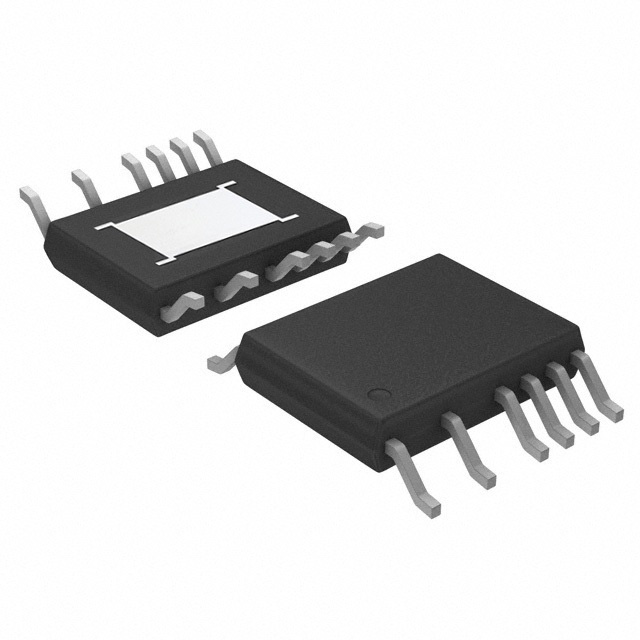




 工商网监
湘ICP备2023018690号
工商网监
湘ICP备2023018690号