LT8410/LT8410-1
Ultralow Power Boost
Converter with Output
Disconnect
DESCRIPTION
FEATURES
Ultralow Quiescent Current
8.5μA in Active Mode
0μA in Shutdown Mode
n Comparator Built into SHDN Pin
n Low Noise Control Scheme
n Adjustable FB Reference Voltage
n Wide Input Range: 2.5V to 16V
n Wide Output Range: Up to 40V
n Integrated Power NPN Switch
25mA Current Limit (LT8410)
8mA Current Limit (LT8410-1)
n Integrated Schottky Diode
n Integrated Output Disconnect
n High Value (12.4M/0.4M) Feedback Resistors
Integrated
n Built in Soft-Start (Optional Capacitor from V
REF
to GND)
n Overvoltage Protection for CAP and V
OUT Pins
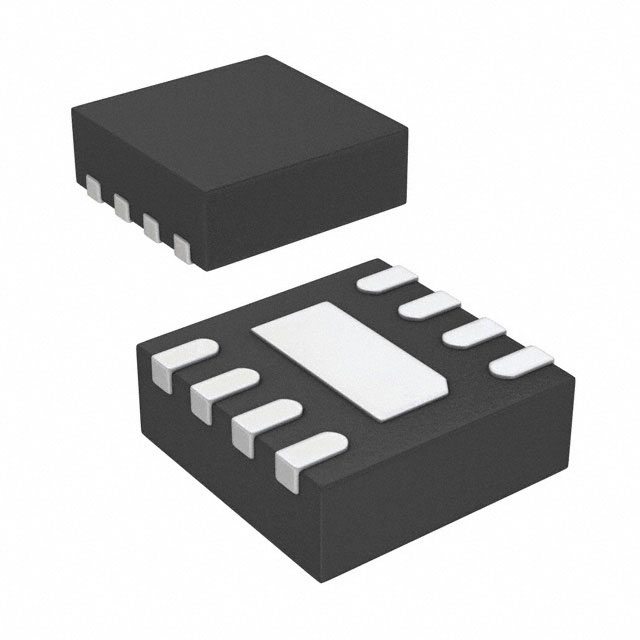
n Tiny 8-Pin 2mm × 2mm DFN Package
The LT®8410/LT8410-1 are ultralow power boost converters
with integrated power switch, Schottky diode and output
disconnect circuitry. The parts control power delivery by
varying both the peak inductor current and switch offtime. This control scheme results in low output voltage
ripple as well as high efficiency over a wide load range.
The quiescent current is a low 8.5μA, which is further
reduced to 0μA in shutdown. The internal disconnect
circuitry allows the output voltage to be blocked from the
input during shutdown. High value (12.4M/0.4M) resistors are integrated on chip for output voltage detection,
significantly reducing input referred quiescent current. The
LT8410/ LT8410-1 also features a comparator built into the
SHDN pin, overvoltage protection for the CAP and VOUT
pins, built in soft-start and comes in a tiny 8-pin 2mm ×
2mm DFN package.
n
L, LT, LTC, LTM, Linear Technology and the Linear logo are registered trademarks of Linear
Technology Corporation. All other trademarks are the property of their respective owners.
Protected by U.S. Patents, including 5481178, 6580258, 6304066, 6127815, 6498466,
6611131.
APPLICATIONS
Sensor Power
RF Mems Relay Power
n General Purpose Bias
n
n
TYPICAL APPLICATION
Output Voltage Ripple
vs Load Current
General Purpose Bias with Wide Input Voltage
Efficiency vs Load Current
10
VIN = 3.6V
2.2µF
0.1µF
SW
CAP
VCC
VOUT
VOUT = 16V
LT8410
VREF
SHDN
0.1µF*
604k
GND
0.1µF
FBP
*HIGHER VALUE CAPACITOR IS REQUIRED
WHEN THE VIN IS HIGHER THAN 5V
412k
8410-1 TA01a
VOUT PEAK-TO-PEAK RIPPLE (mV)
100µH
CHIP
ENABLE
100
90
8
EFFICIENCY (%)
VIN
2.5V to 16V
6
4
2
0
0.01
VIN = 12V
VIN = 5V
80
VIN = 3.6V
70
60
50
0.1
1
LOAD CURRENT (mA)
10
8410-1 TA02
40
0.01
0.1
1
10
LOAD CURRENT (mA)
100
8410-1 TA03
84101fc
For more information www.linear.com/LT8410
1
�LT8410/LT8410-1
ABSOLUTE MAXIMUM RATINGS
PIN CONFIGURATION
(Note 1)
VCC Voltage................................................. –0.3V to 16V
SW Voltage................................................. –0.3V to 42V
CAP Voltage................................................ –0.3V to 40V
VOUT Voltage............................................... –0.3V to 40V
SHDN Voltage............................................. –0.3V to 16V
VREF Voltage............................................... –0.3V to 2.5V
FBP Voltage ............................................... –0.3V to 2.5V
Maximum Junction Temperature .......................... 125°C
Operating Temperature Range (Note 2)..–40°C to 125°C
Storage Temperature Range....................–65°C to 150°C
TOP VIEW
8 FBP
SHDN 1
VCC 2
9
GND 3
SW 4
7 VREF
6 CAP
5 VOUT
DC PACKAGE
8-LEAD (2mm × 2mm) PLASTIC DFN
TJMAX = 125°C, θJA = 88°C/W
EXPOSED PAD (PIN #9) IS GND, MUST BE SOLDERED TO PCB
ORDER INFORMATION
(http://www.linear.com/product/LT8410#orderinfo)
LEAD FREE FINISH
TAPE AND REEL
PART MARKING*
PACKAGE DESCRIPTION
TEMPERATURE RANGE
LT8410EDC#PBF
LT8410EDC#TRPBF
LDQR
8-Lead (2mm × 2mm) Plastic DFN
– 40°C to 125°C
LT8410IDC#PBF
LT8410IDC#TRPBF
LDQR
8-Lead (2mm × 2mm) Plastic DFN
– 40°C to 125°C
LT8410EDC-1#PBF
LT8410EDC-1#TRPBF
LFCC
8-Lead (2mm × 2mm) Plastic DFN
– 40°C to 125°C
LT8410IDC-1#PBF
LT8410IDC-1#TRPBF
LFCC
8-Lead (2mm × 2mm) Plastic DFN
– 40°C to 125°C
Consult LTC Marketing for parts specified with wider operating temperature ranges. *The temperature grade is identified by a label on the shipping container.
For more information on lead free part marking, go to: http://www.linear.com/leadfree/
For more information on tape and reel specifications, go to: http://www.linear.com/tapeandreel/. Some packages are available in 500 unit reels through
designated sales channels with #TRMPBF suffix.
ELECTRICAL CHARACTERISTICS
The l denotes the specifications which apply over the full operating
temperature range, otherwise specifications are at TA = 25°C. VCC = 3V, VSHDN = VCC unless otherwise noted. (Note 2)
PARAMETER
CONDITIONS
MIN
Minimum Operating Voltage
TYP
MAX
2.2
2.5
V
16
V
1.255
V
Maximum Operating Voltage
Reference Voltage
VREF Current Limit
l
1.220
(Note 3)
VREF Discharge Time
VREF Line Regulation
1.235
UNITS
10
µA
70
µS
0.01
%/V
Quiescent Current
Not Switching
l
8.5
12
µA
Quiescent Current in Shutdown
VSHDN = 0V
l
0
1
µA
Quiescent Current from VOUT and CAP
VOUT = 16V
Minimum Switch Off Time
After Start-Up (Note 4)
During Start-Up (Note 4)
Switch Current Limit
LT8410
LT8410-1
2
l
l
20
6
3
µA
240
600
nS
nS
25
8
30
10
mA
mA
84101fc
For more information www.linear.com/LT8410
�LT8410/LT8410-1
ELECTRICAL CHARACTERISTICS
The l denotes the specifications which apply over the full operating
temperature range, otherwise specifications are at TA = 25°C. VCC = 3V, VSHDN = VCC unless otherwise noted. (Note 2)
PARAMETER
CONDITIONS
Switch VCESAT
LT8410, ISW = 10mA
LT8410-1, ISW = 4mA
Switch Leakage Current
VSW = 5V
Schottky Forward Voltage
IDIODE = 10mA
Schottky Reverse Leakage
VCAP – VSW = 5
VCAP – VSW = 40
PMOS Disconnect Current Limit
LT8410
LT8410-1
PMOS Disconnect VCAP – VOUT
IOUT = 1mA
MIN
TYP
VFBP = 0.5V, Current Flows Out of Pin
l
SHDN Minimum Input Voltage High
SHDN Rising
l
0
1
µA
650
850
mV
0
0
0.5
1
µA
µA
14
2.5
19
4
25
5
mA
mA
31.6
31.85
32.2
1.3
30
1.30
1.45
1.20
SHDN Input Voltage High Hysteresis
(Note 3)
0.08
0.1
SHDN Input Voltage Low
VSHDN = 3V
VSHDN = 16V
SHDN Pin Bias Current
V
Switching Frequency
vs Load Current
400
200
3
8410-1 G01
VCC = 3.6V
VOUT = 16V
FIGURE 4 CIRCUIT
0.4
µA
µA
40
0.2
0
–0.2
30
20
10
–0.4
–0.6
V
1
3
50
OUTPUT VOLTAGE (V)
OUTPUT VOLTAGE CHANGE (%)
600
0.3
VOUT vs FBP Voltage
0.6
VCC = 3.6V
VOUT = 16V
FIGURE 4 CIRCUIT
µA
TA = 25°C, unless otherwise noted.
Load Regulation
1000
0.14
Note 3: See the Applications Information section for more information.
Note 4: Start-up mode occurs when VOUT is less than VFBP • 64/3.
TYPICAL PERFORMANCE CHARACTERISTICS
SWITCHING FREQUENCY (kHz)
nA
mV
0
2
Note 1: Stresses beyond those listed under Absolute Maximum Ratings
may cause permanent damage to the device. Exposure to any Absolute
Maximum Rating condition for extended periods may affect device
reliability and lifetime.
Note 2: The LT8410E/LT8410E-1 are guaranteed to meet performance
specifications from 0°C to 125°C junction temperature. Specifications over
the –40°C to 125°C operating junction temperature range are assured by
design, characterization and correlation with statistical process controls.
The LT8410I/LT8410I-1 are guaranteed over the full –40°C to 125°C
operating junction temperature range.
1
2
LOAD CURRENT (mA)
mV
60
SHDN Hysteresis Current
0
mV
mV
50
l
FBP Pin Bias Current
0
UNITS
150
100
VOUT Resistor Divider Ratio
800
MAX
0
1
2
LOAD CURRENT (mA)
3
8410-1 G02
0
0
0.5
1
1.5
FBP VOLTAGE (V)
2
8410-1 G03
84101fc
For more information www.linear.com/LT8410
3
�LT8410/LT8410-1
TYPICAL PERFORMANCE CHARACTERISTICS
Output Voltage vs Temperature
VCC = 3.6V, VOUT = 16V
LOAD = 0.5mA
FIGURE 4 CIRCUIT
0.50
0.25
0
– 0.25
– 0.50
8
6
4
2
– 0.75
0
40
80
TEMPERATURE (°C)
0
120
0
4
8410-1 G04
Quiescent Current
vs SHDN Voltage
1000
6
4
2
8
12
VCC VOLTAGE (V)
16
0
1
2
3
SHDN VOLTAGE (V)
4
VCC = 3.6V
10
20
30
OUTPUT VOLTAGE (V)
0.5
0
24
120
8410-1 G10
0
4
8
12
SHDN VOLTAGE (V)
8410-1 G09
1.235
13
VCC = 3.6V
VOUT = 16V
FIGURE 5 CIRCUIT
16
VREF Voltage vs Temperature
1.234
VREF VOLTAGE (V)
PEAK INDUCTOR CURRENT (mA)
PEAK INDUCTOR CURRENT (mA)
28
40
80
TEMPERATURE (°C)
1.0
–0.5
40
15
32
0
1.5
Peak Inductor Current
vs Temperature (LT8410-1)
VCC = 3.6V
VOUT = 16V
FIGURE 4 CIRCUIT
20
– 40
2.0
8410-1 G08
Peak Inductor Current
vs Temperature (LT8410)
120
8410-1 G06
VCC = 3.6V
0
40
80
TEMPERATURE (°C)
SHDN Current vs SHDN Voltage
100
10
5
0
2.5
8410-1 G07
4
2
8410-1 G05
VCC = 3.6V
36
4
0
–40
SHDN PIN BIAS CURRENT (µA)
QUIESCENT CURRENT (µA)
8
40
6
Quiescent Current in Regulation
with No Load
10
0
8
VCC = 3.6V
–1.00
– 40
QUIESCENT CURRENT (µA)
Quiescent Current vs Temperature
10
10
QUIESCENT CURRENT (µA)
0.75
OUTPUT VOLTAGE CHANGE (%)
Quiescent Current—Not Switching
12
QUIESCENT CURRENT (µA)
1.00
1.233
11
1.232
9
1.231
7
VCC = 3.6V
5
–40
0
40
80
TEMPERATURE (°C)
120
8410-1 G11
1.230
–40
0
40
80
TEMPERATURE (°C)
120
8410-1 G12
84101fc
For more information www.linear.com/LT8410
�LT8410/LT8410-1
TYPICAL PERFORMANCE CHARACTERISTICS
LT8410 Switching Waveform
at 0.5mA Load
LT8410 Switching Waveform
at No Load
VOUT VOLTAGE
2mV/DIV
AC COUPLED
VOUT VOLTAGE
10mV/DIV
AC COUPLED
SW VOLTAGE
10V/DIV
SW VOLTAGE
10V/DIV
INDUCTOR
CURRENT
10mA/DIV
INDUCTOR
CURRENT
20mA/DIV
VCC = 3.6V
VOUT = 16V
50µs/DIV
2µs/DIV
VCC = 3.6V
VOUT = 16V
8410-1 G13
LT8410 Switching Waveform
at 3mA Load
8410-1 G14
UVLO vs Temperature
2.6
VOUT VOLTAGE
10mV/DIV
AC COUPLED
UVLO VOLTAGE (V)
2.4
SW VOLTAGE
10V/DIV
INDUCTOR
CURRENT
20mA/DIV
VCC = 3.6V
VOUT = 16V
500ns/DIV
VCC RISING
2.2
VCC FALLING
2.0
1.8
1.6
8410-1 G15
1.4
–40
0
40
80
TEMPERATURE (°C)
120
8410-1 G16
SHDN Minimum Input Voltage
High vs Temperature
Line Regulation
1.5
VOUT = 16V
0.25
1.4
SHDN MINIMUM INPUT
VOLTAGE HIGH (V)
OUTPUT VOLTAGE CHANGE (%)
0.30
0.20
0.15
0.10
SHDN FALLING
1.2
1.1
0.05
0
SHDN RISING
1.3
0
4
8
12
VCC VOLTAGE (V)
16
8410-1 G17
1.0
–40
0
40
80
TEMPERATURE (°C)
120
8410-1 G18
84101fc
For more information www.linear.com/LT8410
5
�LT8410/LT8410-1
TYPICAL PERFORMANCE CHARACTERISTICS
25
Output Disconnect PMOS Current
vs CAP to VOUT Voltage Difference
SHDN VOLTAGE
5V/DIV
VCAP = 16V
LT8410
20
PMOS CURRENT (mA)
LT8410 Start-Up Waveforms
without Capacitor at VREF Pin
INDUCTOR
CURRENT
20mA/DIV
15
CAP VOLTAGE
5V/DIV
VOUT VOLTAGE
5V/DIV
10
LT8410-1
5
0
VCC = 3.6V
VOUT = 16V
0
200µs/DIV
8410-1 G20
4
8
12
16
CAP TO VOUT VOLTAGE DIFFERENCE (V)
8410-1 G19
LT8410 Start-Up Waveforms with
0.1μF Capacitor at VREF Pin
LT8410 Transient Response
0.5mA→1.5mA→0.5mA Load Pulse
SHDN VOLTAGE
5V/DIV
VOUT VOLTAGE
200mV/DIV
AC COUPLED
INDUCTOR
CURRENT
20mA/DIV
INDUCTOR
CURRENT
20mA/DIV
LOAD
CURRENT
0.5mA/DIV
CAP VOLTAGE
5V/DIV
VOUT VOLTAGE
5V/DIV
VCC = 3.6V
VOUT = 16V
2ms/DIV
VCC = 3.6V
VOUT = 16V
8410-1 G21
2ms/DIV
8410-1 G22
SW Saturation Voltage
vs Switch Current (LT8410)
300
SWITCH VCESAT (mV)
250
200
150
100
50
0
0
5
10
15
20
SWITCH CURRENT (mA)
25
8410-1 G24
6
84101fc
For more information www.linear.com/LT8410
�LT8410/LT8410-1
PIN FUNCTIONS
SHDN (Pin 1): Shutdown Pin. This pin is used to enable/
disable the chip. Drive below 0.3V to disable the chip. Drive
above 1.45V to activate the chip. Do not float this pin.
VREF (Pin 7): Reference Pin. Soft-start can be achieved
by placing a capacitor from this pin to GND. This cap
will be discharged for 70µs (typical) at the beginning
of start-up and then be charged to 1.235V with a 10μA
current source.
VCC (Pin 2): Input Supply Pin. Must be locally bypassed
to GND. See the Typical Applications section.
FBP (Pin 8): Positive Feedback Pin. This pin is the error
amplifier’s positive input terminal. To achieve the desired
output voltage, choose the FBP pin voltage (VFBP) according to the following formula:
GND (Pin 3): Ground. Tie directly to local ground plane.
SW (Pin 4): Switch Pin. This is the collector of the internal NPN power switch. Minimize the metal trace area
connected to this pin to minimize EMI.
VOUT (Pin 5): Drain of Output Disconnect PMOS. Place
a bypass capacitor from this pin to GND.
VFBP =
VOUT
31.85
For protection purposes, the output voltage can not exceed
40V even if VFBP is driven higher than VREF .
CAP (Pin 6): Cathode of the Internal Schottky Diode. Place
a bypass capacitor from this pin to GND.
Exposed Pad (Pin 9): Pin 9 is floating but must be grounded for proper shielding.
BLOCK DIAGRAM
2
1
VCC
ENABLE
CHIP
MAX
10µA
+
5
6
VOUT
SHDN
4
CAP
SW
12.4M
1.235V
+
–
VREF
–
7
400k
1.235V
DISCHARGE
CONTROL
TIMING AND PEAK
CURRENT CONTROL
FB
FBP
1.235V
SWITCH
CONTROL
–
+
8
OUTPUT DISCONNECT
CONTROL
VC
+
+
–
EXPOSED PAD
(GND)
9
GND
3
84101fc
For more information www.linear.com/LT8410
7
�LT8410/LT8410-1
OPERATION
The LT8410 series utilizes a variable peak current, variable
off-time control scheme to provide high efficiency over a
wide output current range.
The operation of the part can be better understood by
referring to the Block Diagram. The part senses the output
voltage by monitoring the internal FB node, and servoing
the FB node voltage to be equal to the FBP pin voltage.
The chip integrates an accurate high value resistor divider
(12.4M/0.4M) from the VOUT pin. The output voltage is set
by the FBP pin voltage, which in turn is set by an external
resistor divider from the VREF pin. The FBP pin voltage can
also be directly biased with an external reference, allowing
full control of the output voltage during operation.
The switch control block senses the output of the amplifier and adjusts the switching frequency as well as other
parameters to achieve regulation. During the start-up of
the circuit, special precautions are taken to ensure that
the inductor current remains under control
The LT8410 series also has a PMOS output disconnect
switch. The PMOS switch is turned on when the part is
enabled via the SHDN pin. When the part is in shutdown,
the PMOS switch turns off, allowing the VOUT node to
go to ground. This type of disconnect function is often
required in power supplies.
The differences between the LT8410 and LT8410-1 are
the SW current limit and the output disconnect PMOS
current limit. For the LT8410, the SW current limit and
PMOS current limit are approximately 25mA and 19mA,
respectively, while those of the LT8410-1 are approximately
8mA and 4mA, respectively.
APPLICATIONS INFORMATION
Inductor Selection
Table 1. Recommended Inductors for LT8410/ LT8410-1
Several inductors that work well with the LT8410 and
LT8410-1 are listed in Table 1. The tables are not complete,
and there are many other manufacturers and devices that
can be used. Consult each manufacturer for more detailed
information and for their entire selection of related parts,
as many different sizes and shapes are available.
Inductors with a value of 47μH or higher are recommended
for most LT8410 series designs. Inductors with low core
losses and small DCR (copper wire resistance) are good
choices for LT8410 series applications. For full output
power, the inductor should have a saturation current rating
higher than the peak inductor current. The peak inductor
current can be calculated as:
VIN • 150 • 10 – 6
mA
IPK = ILIMIT +
L
where the worst case ILIMIT is 30mA and 10mA for LT8410
and LT8410-1, respectively. L is the inductance value in
henrys and VIN is the input voltage to the boost circuit.
8
PART
L
(µH)
DCR
(Ω)
SIZE
(mm)
LQH2MCN680K02
LQH32CN101K53
68
100
6.6
3.5
2.0 × 1.6 × 0.9 Murata
3.2 × 2.5 × 2.0 www.murata.com
DO2010-683ML
LPS3015-104ML
LPS3015-154ML
LPS3314-154ML
68
100
150
150
8.8
3.4
6.1
4.1
2.0 × 2.0 × 1.0 Coilcraft
3.0 × 3.0 × 1.4 www.coilcraft.com
3.0 × 3.0 × 1.4
3.3 × 3.3 × 1.3
VENDOR
Capacitor Selection
The small size and low ESR of ceramic capacitors make
them suitable for most LT8410 applications. X5R and
X7R types are recommended because they retain their
capacitance over wider voltage and temperature ranges
than other types such as Y5V or Z5U. A 2.2μF or higher
input capacitor, and a 0.1μF to 1μF output capacitor, are
sufficient for most applications. Always use a capacitor
with a sufficient voltage rating. Many ceramic capacitors
rated at 0.1μF to 1μF have greatly reduced capacitance
when bias voltages are applied. Be sure to check actual
capacitance at the desired output voltage. Generally, a 0603
84101fc
For more information www.linear.com/LT8410
�LT8410/LT8410-1
APPLICATIONS INFORMATION
or 0805 size capacitor will be adequate. A 0.1μF to 1μF
capacitor placed on the CAP node is recommended to filter
the inductor current, while a 0.1μF to 1μF capacitor placed
on the VOUT node will give excellent transient response
and stability. To make the VREF pin less sensitive to noise,
putting a capacitor on the VREF pin is recommended, but not
required. A 47nF to 220nF 0402 capacitor will be sufficient.
Table 2 shows a list of several capacitor manufacturers.
Consult the manufacturers for more detailed information
and for their entire selection of related parts.
Table 2. Recommended Ceramic Capacitor Manufacturers
MANUFACTURER
PHONE
WEB SITE
Taiyo Yuden
(408) 573-4150
www.t-yuden.com
Murata
(814) 237-1431
www.murata.com
AVX
(843) 448-9411
www.avxcorp.com
Kemet
(408) 986-0424
www.kemet.com
TDK
(847) 803-6100
www.tdk.com
Setting Output Voltage
The output voltage is set by the FBP pin voltage. VOUT is
equal to 31.85 • VFBP when the output is regulated, as
shown in Figure 1. Since the VREF pin provides a good
reference (1.235V), the FBP voltage can be easily set by
a resistor divider from the VREF pin to ground. The series
resistance of this resistor divider should be kept larger than
200KΩ to prevent loading down the VREF pin. The FBP pin
can also be biased directly by an external reference. For
overvoltage protection, the output voltage is limited to
40V. Therefore, if VFBP is higher than 1.235V, the output
voltage will stay at 40V.
Connecting the Load to the CAP Node
The efficiency of the converter can be improved by connecting the load to the CAP pin instead of the VOUT pin.
The power loss in the PMOS disconnect circuit is then
made negligible. No quiescent current will be consumed
in the internal feedback resistor divider string during
shutdown since the PMOS transistor will be open and the
internal feedback resistor divider is connected at the VOUT
pin. The disadvantage of this method is that the CAP node
cannot go to ground during shutdown, but will be limited
to around a diode drop below VCC. Loads connected to the
part should only sink current. Never force external power
supplies onto the CAP or VOUT pins.
Maximum Output Load Current
The maximum output current of a particular LT8410 series
circuit is a function of several circuit variables. The following
method can be helpful in predicting the maximum load
current for a given circuit:
Step 1. Calculate the peak inductor current:
IPK = ILIMIT +
VIN • 150 • 10 – 6
mA
L
where ILIMIT is 25mA and 8mA for LT8410 and LT8410-1
respectively. L is the inductance value in henrys and VIN
is the input voltage to the boost circuit.
Step 2. Calculate the inductor ripple current:
IRIPPLE
VOUT + 1 – VIN ) • 200 • 10 – 6
(
=
mA
50
where VOUT is the desired output voltage. If the inductor
ripple current is less than the peak current, then the circuit
will only operate in discontinuous conduction mode. The
inductor value should be increased so that IRIPPLE < IPK.
An application circuit can be designed to operate only in
discontinuous mode, but the output current capability
will be reduced.
40
OUTPUT VOLTAGE (V)
L
30
20
10
Step 3. Calculate the average input current:
0
0
0.5
1
1.5
FBP VOLTAGE (V)
2
8410-1 F01
IIN(AVG) = IPK –
Figure 1. FBP to VOUT Transfer Curve
For more information www.linear.com/LT8410
IRIPPLE
mA
2
84101fc
9
�LT8410/LT8410-1
APPLICATIONS INFORMATION
Step 4. Calculate the nominal output current:
IOUT(NOM) =
IIN(AVG) • VIN • 0.7
VOUT
mA
Step 5. Derate output current:
IOUT = IOUT(NOM) • 0.8
For low output voltages the output current capability will
be increased. When using output disconnect (load current
taken from VOUT), these higher currents will cause the
drop in the PMOS switch to be higher resulting in lower
output current capability than predicted by the preceding
equations.
protection against pin glitches and slow ramping), then
an internal 10μA current source pulls the VREF pin slowly
to 1.235V. Since the VOUT voltage is set by the FBP pin
voltage, the VOUT voltage will also slowly increase to the
regulated voltage, which results in lower peak inductor
current. The voltage ramp rate on the pin can be set by
the value of the VREF pin capacitor.
Output Disconnect
The LT8410 series has an output disconnect PMOS that
blocks the load from the input during shutdown. The
maximum current through the PMOS is limited by circuitry
inside the chip, helping the chip survive output shorts.
Inrush Current
SHDN Pin Comparator and Hysteresis Current
When VCC is stepped from ground to the operating voltage
while the output capacitor is discharged, a high level of
inrush current may flow through the inductor and Schottky
diode into the output capacitor. Conditions that increase
inrush current include a larger more abrupt voltage step
at VCC, a larger output capacitor tied to the CAP pin and
an inductor with a low saturation current. While the chip is
designed to handle such events, the inrush current should
not be allowed to exceed 0.3A. For circuits that use output
capacitor values within the recommended range and have
input voltages of less than 6V, inrush current remains low,
posing no hazard to the device. In cases where there are
large steps at VCC (more than 6V) and/or a large capacitor
is used at the CAP pin, inrush current should be measured
to ensure safe operation.
An internal comparator compares the SHDN pin voltage
with an internal voltage reference (1.3V) which gives a
precise turn-on voltage level. The internal hysteresis of this
turn-on voltage is about 60mV. When the chip is turned on,
and the SHDN pin voltage is close to this turn-on voltage,
0.1μA current flows out of the SHDN pin. This current is
called SHDN pin hysteresis current, and will go away when
the chip is off. By connecting the external resistors as in
Figure 2, a user-programmable enable voltage function
can be realized.
Soft-Start
The LT8410 series contains a soft-start circuit to limit
peak switch currents during start-up. High start-up current is inherent in switching regulators, in general, since
the feedback loop is saturated due to VOUT being far from
its final value. The regulator tries to charge the output
capacitor as quickly as possible, which results in large
peak current.
When the FBP pin voltage is generated by a resistor divider
from the VREF pin, the start-up current can be limited by
connecting an external capacitor (typically 47nF to 220nF)
to the VREF pin. When the part is brought out of shutdown,
this capacitor is first discharged for about 70μs (providing
10
The turn-on voltage for the configuration is:
R1
1.30 • 1+
R2
and the turn-off voltage is:
R1
1.24−R3 •10−7 • 1+ −(R1•10−7 )
R2
(
)
where R1, R2 and R3 are resistance value in Ω.
ENABLE VOLTAGE
R1
R3
CONNECT TO
SHDN PIN
R2
84101 F02
Figure 2. Programming Enable Voltage by Using External Resistors
For more information www.linear.com/LT8410
84101fc
�LT8410/LT8410-1
APPLICATIONS INFORMATION
Board Layout Considerations
VIN
SHDN
As with all switching regulators, careful attention must
be paid to the PCB layout and component placement. To
maximize efficiency, switch rise and fall times are made as
short as possible. To prevent electromagnetic interference
(EMI) problems, proper layout of the high frequency
switching path is essential. The voltage signal of the SW pin
has sharp rising and falling edges. Minimize the length and
area of all traces connected to the SW pin and always use
a ground plane under the switching regulator to minimize
interplane coupling. In addition, the FBP pin and VREF pin
are sensitive to noise. Minimize the length and area of all
traces to these two pins is recommended. Recommended
component placement is shown in Figure 3.
SHDN
FBP
VCC
VREF
GND
CAP
GND
SW
VOUT
8410-1 F03
CAPACITOR GROUNDS MUST BE
RETURNED DIRECTLY TO IC GROUND
Figure 3. Recommended Board Layout
84101fc
For more information www.linear.com/LT8410
11
�LT8410/LT8410-1
TYPICAL APPLICATIONS
Efficiency vs Load Current
L1
100µH
C1
2.2µF
100
SW
CAP
VCC
VOUT
C2
0.1µF
C3
0.1µF
LT8410
VREF
SHDN
TURN ON/OFF
604k
GND
FBP
VIN = 12V
90
VOUT = 16V
EFFICIENCY (%)
VIN
2.5V to 16V
C4
0.1µF
VIN = 5V
80
VIN = 3.6V
70
60
412k
50
C1: 2.2μF, 16V, X5R, 0603
8410-1 TA05
C2: 0.1μF, 25V, X5R, 0603
C3: 0.1μF, 25V, X5R, 0603 *
C4: 0.1μF, 16V, X7R, 0402
L1: MURATA LQH32CN101K53
* HIGHER CAPACITANCE VALUE IS REQUIRED FOR
C3 WHEN THE VIN IS HIGHER THAN 5V
40
0.01
Figure 4. 16V Output Converter with Wide Input Voltage
16V Output Converter with 2mm × 2mm Inductor
0.1
1
10
LOAD CURRENT (mA)
VIN (V)
IOUT (mA)
3.6
2.2
5
3.6
12
13
100
8410-1 TA07
L1
68µH
C1
2.2µF
TURN ON/OFF
SW
CAP
VCC
VOUT
Efficiency vs Load Current
C2
0.1µF
VOUT = 16V
GND
FBP
VIN = 12V
C3
0.1µF
LT8410
VREF
SHDN
90
R1
301k
VIN = 5V
80
C4
0.1µF
EFFICIENCY (%)
VIN
2.5V to 16V
R2
210k
C1: 2.2μF, 16V, X5R, 0603
8410 TA06
C2: 0.1μF, 25V, X5R, 0603
C3: 0.1μF, 25V, X5R, 0603 *
C4: 0.1μF, 16V, X7R, 0402
L1: COILCRAFT DO2010-683ML
* HIGHER CAPACITANCE VALUE IS REQUIRED FOR
C3 WHEN THE VIN IS HIGHER THAN 5V
70
VIN = 3.6V
60
50
40
0.01
0.1
1
10
LOAD CURRENT (mA)
100
8410-1 TA08
LT8410 Maximum Output Current vs Output Voltage
RESISTOR DIVIDER
FROM VREF
R1 (kΩ) / R2 ( kΩ)
VIN = 2.8V
VIN = 3.6V
VIN = 5V
VIN = 12V
40
NA
0.5
0.7
1.1
3.6
35
110/887
0.7
0.9
1.4
4.4
30
237/768
0.8
1
1.5
5.5
25
365/634
1
1.4
2.1
7.2
20
487/511
1.4
1.9
2.9
9.7
15
619/383
1.6
2.4
4
14
10
750/255
3.3
4.6
7
NA
5
866/127
8
11
17
NA
VOUT (V)
12
MAXIMUM OUTPUT CURRENT (mA)
84101fc
For more information www.linear.com/LT8410
�LT8410/LT8410-1
TYPICAL APPLICATIONS
34V Output Converter with Wide Input Voltage
Efficiency vs Load Current
90
L1
150µH
C1
2.2µF
VIN = 12V
SW
CAP
VCC
VOUT
VOUT = 34V
C3
0.1µF
LT8410
VREF
SHDN
TURN ON/OFF
C4
0.1µF
133k
GND
80
C2
0.1µF
FBP
EFFICIENCY (%)
VIN
2.5V to 16V
VIN = 5V
70
VIN = 3.6V
60
50
866k
C1: 2.2μF, 16V, X5R, 0603
8410-1 TA09
C2: 0.1μF, 100V, X5R, 0603
C3: 0.1μF, 100V, X5R, 0603 *
C4: 0.1μF, 16V, X7R, 0402
L1: COILCRAFT LPS3314-154ML
* HIGHER CAPACITANCE VALUE IS REQUIRED FOR
C3 WHEN THE VIN IS HIGHER THAN 8V
40
0.01
0.1
1
LOAD CURRENT (mA)
VIN (V)
IOUT (mA)
3.6
0.8
5
1.2
12
4
10
8410-1 TA10
L1
220µH
VIN
2.5V to 16V
C1
2.2µF
TURN ON/OFF
SW
CAP
VCC
VOUT
LT8410-1
VREF
SHDN
GND
FBP
C2
1.0µF
VOUT = 16V
C3
10000µF
R1
604k
C4
0.1µF
SHDN VOLTAGE
2V/DIV
VOUT VOLTAGE
10V/DIV
R2
412k
INPUT CURRENT
5mA/DIV
C1: 2.2μF, 16V, X5R, 0603
8410-1 TA10a
C2: 1.0μF, 25V, X5R, 0603 *
C3: 10000μF, ELECTROLYTIC CAPACITOR
C4: 0.1μF, 16V, X7R, 0402
L1: COILCRAFT LPS3008-224ML
* HIGHER CAPACITANCE VALUE IS REQUIRED FOR
C2 WHEN THE VIN IS HIGHER THAN 12V
INDUCTOR
CURRENT
10mA/DIV
VIN = 3.6V
20s/DIV
8410-1 G10b
Figure 5. Capacitor Charger with the LT8410-1
LT8410-1 Maximum Output Current vs Output Voltage
VOUT (V)
FEEDBACK RESISTOR
DIVIDER
R1 (kΩ) / R2 ( kΩ)
VIN = 2.8V
VIN = 3.6V
VIN = 5V
VIN = 12V
40
NA
0.12
0.16
0.24
0.89
35
110/887
0.14
0.19
0.3
1.1
30
237/768
0.18
0.25
0.38
1.5
25
365/634
0.25
0.35
0.55
2
20
487/511
0.34
0.48
0.76
2.9
15
619/383
0.48
0.69
1.1
3.5
10
750/255
0.84
1.2
2.1
NA
5
866/127
2.3
3.3
3.5
NA
MAXIMUM OUTPUT CURRENT (mA)
84101fc
For more information www.linear.com/LT8410
13
�LT8410/LT8410-1
PACKAGE DESCRIPTION
Please refer to http://www.linear.com/product/LT8410#packaging for the most recent package drawings.
DC8 Package
8-Lead Plastic DFN (2mm × 2mm)
(Reference LTC DWG # 05-08-1719 Rev A)
0.70 ±0.05
2.55 ±0.05
1.15 ±0.05 0.64 ±0.05
(2 SIDES)
PACKAGE
OUTLINE
0.25 ±0.05
0.45 BSC
1.37 ±0.05
(2 SIDES)
RECOMMENDED SOLDER PAD PITCH AND DIMENSIONS
APPLY SOLDER MASK TO AREAS THAT ARE NOT SOLDERED
R = 0.05
TYP
2.00 ±0.10
(4 SIDES)
PIN 1 BAR
TOP MARK
(SEE NOTE 6)
R = 0.115
TYP
5
8
0.40 ±0.10
0.64 ±0.10
(2 SIDES)
PIN 1 NOTCH
R = 0.20 OR
0.25 × 45°
CHAMFER
(DC8) DFN 0409 REVA
4
0.200 REF
1
0.23 ±0.05
0.45 BSC
0.75 ±0.05
1.37 ±0.10
(2 SIDES)
0.00 – 0.05
BOTTOM VIEW—EXPOSED PAD
NOTE:
1. DRAWING IS NOT A JEDEC PACKAGE OUTLINE
2. DRAWING NOT TO SCALE
3. ALL DIMENSIONS ARE IN MILLIMETERS
4. DIMENSIONS OF EXPOSED PAD ON BOTTOM OF PACKAGE DO NOT INCLUDE
MOLD FLASH. MOLD FLASH, IF PRESENT, SHALL NOT EXCEED 0.15mm ON ANY SIDE
5. EXPOSED PAD SHALL BE SOLDER PLATED
6. SHADED AREA IS ONLY A REFERENCE FOR PIN 1 LOCATION ON THE
TOP AND BOTTOM OF PACKAGE
14
84101fc
For more information www.linear.com/LT8410
�LT8410/LT8410-1
REVISION HISTORY
(Revision history begins at Rev B)
REV
DATE
DESCRIPTION
PAGE NUMBER
B
01/11
Corrected Pin Configuration.
2
Revised Note 2 in Electrical Characteristics.
3
C
04/16
Changed SW pin voltage Absolute Maximum to 42V.
2
84101fc
Information furnished by Linear Technology Corporation is believed to be accurate and reliable.
However, no responsibility is assumed for its use. Linear Technology Corporation makes no representation that the interconnection
of its circuits
as described
herein will not infringe on existing patent rights.
For more
information
www.linear.com/LT8410
15
�LT8410/LT8410-1
TYPICAL APPLICATION
High Voltage Power Supply Does Not Need a Transformer
DANGER HIGH VOLTAGE! OPERATION BY HIGH VOLTAGE TRAINED PERSONNEL ONLY
C3, 0.1µF
C5, 0.1µF
L1
100µH
VIN
2.5V to 16V
C1
2.2µF
D1
SW
VCC
C2
0.1µF
CAP
VOUT
143k
C1: 2.2μF, 16V, X5R, 0603
C2 – C7: 0.1μF, 100V, X5R, 0603
C8: 0.1μF, 16V, X7R, 0402
D1 – D4: ON SEMI RB751S40T1G
L1: MURATA LQH32CN101K53
GND
C4
0.1µF
FBP
C6
0.1µF
C8
0.1µF
787k
8410-1 TA11
Efficiency vs Load Current
90
VIN = 5V
VOUT = 100V
120
80
100
EFFICIENCY (%)
OUTPUT VOLTAGE (V)
D4
OUTPUT = 100V
0.4mA (VIN = 5V)
1.4mA (VIN = 12V)
Output Voltage vs FBP Voltage
140
D3
C7
0.1µF
LT8410
VREF
SHDN
TURN ON/OFF
D2
80
60
VIN = 12V
70
VIN = 5V
60
40
50
20
0
0
0.5
1
1.5
FBP VOLTAGE (V)
40
0.01
2
8410-1 TA12
0.1
1
LOAD CURRENT (mA)
10
8410-1 TA13
RELATED PARTS
PART NUMBER
DESCRIPTION
COMMENTS
LT1946/LT1946A
1.5A (ISW), 1.2MHz/2.7MHz, High Efficiency Step-Up DC/DC
Converters
VIN : 2.45V to 16V, VOUT(MAX) = 34V, IQ = 3.2mA, ISD < 1µA,
8-Lead MS Package
LT3464
85mA (ISW), High Efficiency Step-Up DC/DC Converter with
Integrated Schottky and PNP Disconnect
VIN : 2.3V to 10V, VOUT(MAX) = 34V, IQ = 25µA, ISD < 1µA,
ThinSOT™ Package
LT3471
Dual Output, Boost/Inverter, 1.3A (ISW), High Efficiency
Boost-Inverting DC/DC Converter
VIN : 2.4V to 16V, VOUT(MAX) = ±40V, IQ = 2.5mA, ISD < 1µA,
DFN Package
LT3473/LT3473A
1A (ISW), 1.2MHz, High Efficiency Step-Up DC/DC Converter
with Integrated Schottky Diode and Output Disconnect
VIN : 2.2V to 16V, VOUT(MAX) = 36V, IQ = 100µA, ISD < 1µA,
DFN Package
LT3494/LT3494A
180mA/350mA (ISW), High Efficiency, Low Noise Step-Up
DC/DC Converter with Output Disconnect
VIN : 2.1V to 16V, VOUT(MAX) = 40V, IQ = 65µA, ISD < 1µA,
DFN Package
LT3495/LT3495B/
650mA/350mA (ISW), High Efficiency, Low Noise Step-Up
LT3495-1/LT3495B-1 DC/DC Converter with Output Disconnect
VIN : 2.3 V to 16V, VOUT(MAX) = 40V, IQ = 60µA, ISD < 1µA,
DFN Package
16 Linear Technology Corporation
1630 McCarthy Blvd., Milpitas, CA 95035-7417
For more information www.linear.com/LT8410
(408) 432-1900 ● FAX: (408) 434-0507
●
www.linear.com/LT8410
84101fc
LT 0416 REV C • PRINTED IN USA
LINEAR TECHNOLOGY CORPORATION 2008
�