LTC1426
Micropower
Dual 6-Bit PWM DAC
FEATURES
DESCRIPTION
Wide Supply Range: 2.7V ≤ VCC ≤ 5.5V
nn Wide Reference Voltage Range: 0V to 5.5V
nn Two Interface Modes:
Pulse Mode (Increment Only)
Pushbutton Mode (Increment/Decrement)
nn Low Supply Current: 50µA
nn 0.2µA Supply Current in Shutdown
nn Available in 8-Pin MSOP and SO Packages
nn DAC Contents Are Retained in Shutdown
nn DACs Power-Up at Midrange
nn Low Output Impedance: < 100Ω
nn Output Frequency: 5kHz Typ
The LTC®1426 is a dual micropower 6-bit PWM DAC featuring versatile PWM outputs and a flexible pushbutton
compatible digital interface. The DAC outputs provide a
PWM signal that swings from 0V to VREF, allowing the
full-scale output to be varied by adjusting the voltage at
VREF. The PWM output frequency is typically 5kHz, easing
output filtering requirements. VCC supply current is typically 50µA and drops to 0.2µA in shutdown.
nn
The LTC1426 can be controlled using one of two interface modes: pushbutton and pulse. The LTC1426 automatically configures itself into the appropriate mode at
start-up by monitoring the state of the CLK pins. In pushbutton mode, the CLK pins can be directly connected
to external pushbuttons to control the DAC output. In
pulse mode, the CLK pins can be connected to CMOS
compatible logic. The DAC outputs initially power up at
half scale and the contents of the internal DAC registers
are retained in shutdown.
APPLICATIONS
LCD Contrast and Backlight Brightness Control
Power Supply Voltage Adjustment
nn Battery Charger Voltage and Current Adjustment
nn GaAs FET Bias Adjustment
nn Trimmer Pot Elimination
nn
nn
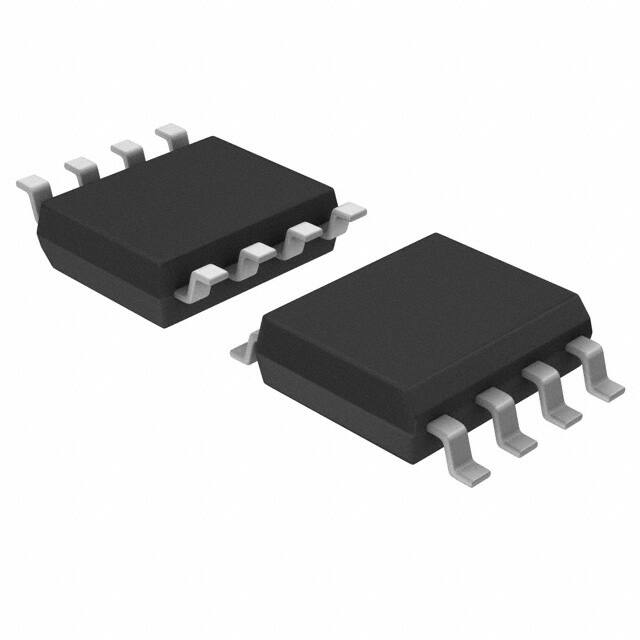
The LTC1426 is available in 8-pin MSOP and SO packages.
All registered trademarks and trademarks are the property of their respective owners.
TYPICAL APPLICATION
Pushbutton Adjustable CCFL/LCD Contrast Generator
R1
44.2k
1%
5V
RP1
47k
UP
RP2
47k
SHDN
UP CONTRAST
UP/DOWN 1
CCFL UP/DOWN 2
DOWN
DOWN
3
4
SHDN
CLK2
VCC
GND
VREF
PWM1 PWM2
R3
5.1k
1%
R4
4.99k
1%
1
2
3
4
C7 1µF
LTC1426
CLK1
ICCFL = 0µA TO 50µA
R2
44.2k
1%
C2
1µF
C1
0.1µF
RSHDN
1M
5
8
6
7
7
CCFL PGND CCFL VSW
BULB
ICCFL
DIO
LT1182
CCFL VC
5
BAT
ROYER
AGND
VIN
SHDN
FBP
LCD VC
R7 8
C8 10k
LCD PGND
0.68µF
6
UP TO 6mA
LAMP
FBN
LCD VSW
R5
20k
1%
HIGH VOLTAGE
ROYER
16
15
14
13
12
11
10
9
+
5V
C9
2.2µF
+
8V TO
28V
C10
2.2µF
35V
C11
2.2µF
35V
LCD
CONTRAST
CONVERTER
1426 TA01
C3
10µF
Document Feedback
C4
0.1µF
R6
40k
1%
CONSULT THE LT1182 DATA SHEET FOR
DETAILS ON THE HIGH VOLTAGE ROYER
AND LCD CONTRAST CONVERTER SECTIONS
For more information www.analog.com
VOUT
NEGATIVE
LCD CONTRAST
VOUT = –10V TO –30V
Rev A
1
�LTC1426
ABSOLUTE MAXIMUM RATINGS
(Note 1)
Total Supply Voltage (VCC) .........................................7V
Reference Voltage (VREF)................................ – 0.3 to 7V
Input Voltage (All Inputs) ............... – 0.3 to (VCC + 0.3V)
DAC Output Short-Circuit Duration .................. Indefinite
IPWM(MAX) ........................................................... 100mA
Operating Temperature Range
LTC1426C................................................. 0°C to 70°C
LTC1426I............................................. – 40°C to 85°C
Storage Temperature Range.................... –65°C to 150°C
Lead Temperature (Soldering, 10 sec)................... 300°C
PIN CONFIGURATION
TOP VIEW
TOP VIEW
CLK1
CLK2
GND
PWM1
1
2
3
4
8
7
6
5
SHDN
VCC
VREF
PWM2
MS8 PACKAGE
8-LEAD PLASTIC MSOP
SHDN
CLK1 1
8
CLK2 2
7
VCC
GND 3
6
VREF
PWM1 4
5
PWM2
S8 PACKAGE
8-LEAD PLASTIC SO
TJMAX = 100°C, θJA = 200°C/W
TJMAX = 100°C, θJA = 130°C/W
OBSOLETE PACKAGE
ORDER INFORMATION
LEAD FREE FINISH
TAPE AND REEL
PART MARKING
PACKAGE DESCRIPTION
TEMPERATURE RANGE
LTC1426CMS8#PBF
LTC1426CMS8#TRPBF
LTBQ
8-Lead Plastic MSOP
0°C to 70°C
LTC1426CS8#PBF
LTC1426CS8#TRPBF
1426
8-Lead Plastic SO
0°C to 70°C
LTC1426IS8#PBF
LTC1426IS8#TRPBF
1426I
8-Lead Plastic SO
–40°C to 85°C
Consult ADI Marketing for parts specified with wider operating temperature ranges.
Tape and reel specifications. Some packages are available in 500 unit reels through designated sales channels with #TRMPBF suffix.
ELECTRICAL CHARACTERISTICS
The l denotes the specifications which apply over the full operating
temperature range, otherwise specifications are at TA = 25°C.
SYMBOL PARAMETER
VCC
Supply Voltage
VREF
Reference Voltage
ICC
Supply Current
IREF
Reference Current
CONDITIONS
MIN
TYP
MAX
UNITS
l
2.7
5.5
V
l
0
5.5
V
Pulse Mode: VSHDN = VCC, VCLK1 = VCLK2 = 0V, PWM1 = PWM2 = NC
Pushbutton Mode: VSHDN = VCC, VCLK1 = VCLK2 = PWM1 = PWM2 = NC
SHDN = 0 (Note 3)
l
l
l
40
50
0.2
100
100
±10
µA
µA
µA
Pulse Mode: VSHDN = VCC, VCLK1 = VCLK2 = 0V, PWM1 = PWM2 = NC
Pushbutton Mode: VSHDN = VCC, VCLK1 = VCLK2 = PWM1 = PWM2 = NC
SHDN = 0 (Note 3)
l
l
l
75
75
0.2
150
150
±10
µA
µA
µA
DAC Resolution
6
bits
Rev A
2
For more information www.analog.com
�LTC1426
ELECTRICAL CHARACTERISTICS
The l denotes the specifications which apply over the full operating
temperature range, otherwise specifications are at TA = 25°C.
SYMBOL PARAMETER
CONDITIONS
DAC Frequency
0°C ≤ TA ≤ 70°C
– 40°C ≤ TA ≤ 85°C
l
l
DAC Output Impedance
VCC = 2.7V, VREF = 0.5V
l
MIN
TYP
MAX
3
2
5
5
6
6
20
100
UNITS
kHz
kHz
Ω
DAC Full-Scale Duty Cycle
98.44
%
DAC Zero-Scale Duty Cycle
0
%
DNL
DAC Differential Nonlinearity Monotonicity Guaranteed (Note 4)
l
±0.05
LSB
INL
DAC Integral Nonlinearity
l
±0.05
LSB
FS Error
DAC Full-Scale Error
l
±0.50
LSB
IIN
Logic Input Current
Pulse Mode: 0V ≤ VIN ≤ VCC
SHDN
CLK1, CLK2
l
l
±5
±5
µA
µA
SHDN
Pushbutton Mode: 0V ≤ VIN ≤ VCC
CLK1, CLK2
l
l
±5
±10
µA
µA
VCC = 5.5V
SHDN
CLK1, CLK2
l
l
2.0
4.4
V
V
SHDN
VCC = 3.6V
CLK1, CLK2
l
l
1.9
2.9
V
V
VCC = 4.5V
SHDN
CLK1, CLK2
l
l
0.8
0.8
V
V
SHDN
VCC = 2.7V
CLK1, CLK2
l
l
0.45
0.45
V
V
l
VIH
VIL
CLK High Level
Input Voltage (Note 5)
CLK Low Level
Input Voltage (Note 5)
(Note 4)
IOZ
Three-State Output Leakage
SHDN = 0
ZIN
CLK Input Resistance
Pushbutton Mode, CLK1/CLK2
fCLK
Clock Frequency
Pulse Mode, VCC = 3.3V
Pulse Mode, VCC = 2.7V
l
l
tCKHI
Clock High Time
Pulse Mode, VCC = 3.3V
Pulse Mode, VCC = 2.7V
l
l
450
600
ns
ns
tCKLO
Clock Low Time
Pulse Mode, VCC = 3.3V
Pulse Mode, VCC = 2.7V
l
l
450
600
ns
ns
tPW
Pulse Width
Pushbutton Mode
l
670
µs
tDEB
Debounce Time
Pushbutton Mode
l
10.7
tDELAY
Repeat Rate Delay
Pushbutton Mode
l
340
fREPEAT
Repeat Frequency
Pushbutton Mode
l
11.7
Note 1: Stresses beyond those listed under Absolute Maximum Ratings
may cause permanent damage to the device. Exposure to any Absolute
Maximum Rating condition for extended periods may affect device
reliability and lifetime.
Note 2: All currents into device pins are positive; all currents out of device
pins are negative. All voltages are referenced to ground, unless otherwise
specified. All typicals are given for VCC = VREF = 5V, TA = 25°C and PWM1/
PWM2 output to GND, CPWM = 10pF.
±5
2.5
1
750
12.8
µA
MΩ
MHz
kHz
21.3
ms
410
680
ms
19.5
23.4
Hz
Note 3: Shutdown current can be negative due to leakage currents if VCC >
VREF or VREF > VCC.
Note 4: Guaranteed by Design. Decouple the VCC and VREF pins to GND
using high quality, low ESR, low ESL 0.1µF capacitors to eliminate PWM
switching noise that may otherwise get coupled into the CLK1/CLK2 high
impedance input buffers. The decoupling capacitors should be located in
close proximity to these pins and the ground line to have maximum effect.
Note 5: Input thresholds apply for both pushbutton and pulse modes.
Rev A
For more information www.analog.com
3
�LTC1426
TYPICAL PERFORMANCE CHARACTERISTICS
0.05
0.05
0.03
0.03
0.02
0.02
1000
0.01
0
– 0.01
OUTPUT PULL-DOWN VOLTAGE (mV)
VCC = VREF = 5V
0.04 TA = 25°C
ERROR (LSB)
0.01
0
– 0.01
– 0.02
– 0.02
– 0.03
– 0.03
– 0.04
– 0.04
0
8
16
24
32 40
CODE
48
56
64
– 0.05
0
8
16
24
32 40
CODE
48
1426 G01
SUPPLY CURRENT (µA)
CLOCK HIGH TIME (ns)
VCC = 5V
100
0
– 40
10
35
TEMPERATURE (°C)
60
1
85
1
10
100
OUTPUT CURRENT SINK CAPABILITY (mA)
1426 G03
Supply Current vs Temperature
PUSHBUTTON
MODE
32.5
PULSE
MODE
30.5
28.5
26.5
22.5
TA = 25°C
CLK1 AND CLK2
TIED TOGETHER
0
1
3
4
2
LOGIC INPUT VOLTAGE (V)
1426 G04
VCC = 5V
50
34.5
24.5
– 15
– 40°C
10
60
36.5
500
200
25°C
0.1
0.1
64
38.5
600
300
85°C
100
Supply Current
vs Logic Input Voltage
VCC = 3V
VCC = 5V
1426 G02
Minimum Clock High Time
vs Temperature
400
56
SUPPLY CURRENT (µA)
DNL ERROR (LSB)
VCC = VREF = 5V
0.04 TA = 25°C
– 0.05
Output Pull-Down Voltage
vs Output Current Sink Capability
Integral Nonlinearity (INL)
Differential Nonlinearity (DNL)
PUSHBUTTON
MODE
40
30
PULSE
MODE
20
10
5
1426 F05
0
– 40
– 15
10
35
TEMPERATURE (°C)
60
85
1426 G06
PIN FUNCTIONS
CLK1 (Pin 1): Channel 1 Clock/Pushbutton Input.
CLK2 (Pin 2): Channel 2 Clock/Pushbutton Input.
GND (Pin 3): Ground. It is recommended that GND be
tied to a ground plane.
PWM1 (Pin 4): Channel 1 PWM Output.
PWM2 (Pin 5): Channel 2 PWM Output.
VREF (Pin 6): Voltage Reference Input. VREF powers the
DAC output buffers and can be used to control the output
span. Bypass VREF to GND with an external capacitor to
minimize output errors. VREF can be tied to VCC if desired.
VCC (Pin 7): Voltage Supply. This supply must be kept
free from noise and ripple by bypassing directly to the
ground plane.
SHDN (Pin 8): Shutdown. A logic low puts the chip into
shutdown mode with the PWM outputs in high impedance. The digital settings for the DACs are retained in
shutdown.
Rev A
4
For more information www.analog.com
�LTC1426
TIMING DIAGRAMS
Pulse Mode Timing
tCKL0
Pushbutton Mode Timing
tPW
tCKHI
CLK1
CLK2
CLK1
CLK2
1426 TC02
1426 TC01
BLOCK DIAGRAM
LATCH
AND
LOGIC
CLK1
CLK2
INPUT
CONDITIONING
MODE SELECT
0 = PUSHBUTTON MODE
1 = PULSE MODE
CONTROL
LOGIC
DEBOUNCE
CIRCUIT
SHDN
POWER-ON
RESET
VREF
6-BIT
UP/DOWN
COUNTER
6
6-BIT
UP/DOWN
COUNTER
6
6-BIT
UP
COUNTER
6
COMPARATOR
DRIVER
PWM1
DRIVER
PWM2
COMPARATOR
OSCILLATOR
1426 F01
Figure 1. LTC1426 Block Diagram
DEFINITIONS
LSB: The least significant bit or the ideal duty cycle difference between two successive codes.
LSB = DCMAX/64
DCMAX = The DAC output maximum duty cycle
Resolution: The resolution is the number of DAC output
states (64) that divide the full-scale output duty cycle
range. The resolution does not necessarily imply linearity.
INL: End point integral nonlinearity is the maximum deviation from a straight line passing through the end points
of the DAC transfer curve. The INL error at a given code
is calculated as follows:
INL = (DCOUT – DCIDEAL)/LSB
DCIDEAL = (Code)(LSB)
DCOUT = the DAC output duty cycle measured at the
given number of clocked in pulses.
DNL: Differential nonlinearity is the difference between
the measured duty cycle change and the ideal 1LSB duty
cycle change between any two adjacent codes. The DNL
error between any two codes is calculated as follows:
DNL = (∆DCOUT – LSB)/LSB
∆DCOUT = The measured duty cycle difference
between two adjacent codes.
Full-Scale Error: Full-scale error is the difference between
the ideal and measured DAC output duty cycles with all
bits set to one (Code = 63). The full-scale error is calculated as follows:
FSE = (DCOUT – DCIDEAL)/LSB
DCIDEAL = DCMAX
For more information www.analog.com
Rev A
5
�LTC1426
APPLICATIONS INFORMATION
Dual 6-Bit PWM DAC
Digital Interface
Figure 1 shows a block diagram of the LTC1426. Each
6-bit PWM DAC is guaranteed monotonic and is digitally
adjustable in 64 equal steps, which corresponds from 0%
to 98.5% duty cycle full scale. At power-up, the counters
reset to 100000B and both DAC outputs assume midscale
duty cycle. The PWM outputs have an output impedance
of less than 100Ω. The DAC outputs swing from 0V to the
reference voltage, VREF, which can be biased from 0V to
5.5V. The frequency of the DAC outputs is above 3kHz,
easing output filtering.
The LTC1426 can be controlled by using one of two
interface modes: pulse mode and pushbutton mode. The
operating interface mode is determined during powerup. If both CLK1 and CLK2 inputs are floating on powerup, then an interface mode detect circuit configures the
chip in pushbutton mode until the next VCC reset (Figure
3). However, if either of CLK1 or CLK2 is at logic 0 or
1 at power-up, then the chip configures in pulse mode
until the next VCC reset.
In the case of a pure resistive load, the voltage measured
across load RL is given by:
V = (VPWM)RL/(RL + ROUT)
where VPWM is the no load DAC output voltage, RL is the
resistive load and ROUT is the DAC output impedance.
Therefore, the resistive load RL should be sufficiently
large to ignore the effect of output impedance on the
load voltage.
Figure 2 shows a typical lowpass filter recommended to
filter the PWM outputs. Without filtering, results obtained
from unfiltered outputs can be erroneous when taking
measurements from a voltmeter. The ratio of the filter time
constant, t, to the PWM frequency determines the amount
of output ripple frequency that feeds into the system. In
addition, the loading of the output also determines an
additional error voltage drop across R1.
INPUT
R1
10k
C1
0.1µF
Figure 3 shows the simplified logic for determining the
interface mode at power-up. A set of pull-up/pull-down
resistors allow the LTC1426 to sense the state of the CLK
pins at power-up. If both CLK1 and CLK2 pins are floating
on power-up then the control signal from the LTC1426
leaves these resistors in place, allowing the LTC1426 to
detect three operating states at each CLK pin: high, low
and “middle” (floating). If the CLK pins are tied to either
logic 0 or 1 at power-up, then the control signal will disconnect these resistors, making CLK1 and CLK2 CMOS
compatible input pins.
Note that both CLK pins will always be in the same mode.
If one pin is floating and the other is at logic high/low on
power-up, the LTC1426 will assume pulse mode.
VCC
INTERNAL LOGIC
CLK1 INPUT
CLK2 INPUT
CONTROL
CLK1
CLK2
OUTPUT
1426 F02
LTC1426
Figure 2. Lowpass Filter for PWM Averaging
1426 F03
Figure 3. Interface Mode Detect Circuit
Rev A
6
For more information www.analog.com
�LTC1426
TYPICAL APPLICATIONS
Typical applications for this part include digital calibration, industrial process control, automatic test equipment,
cellular telephones and portable battery-powered applications. Figures 4 and 5 show how easy this part is to use.
In all applications, the PWM full-scale output voltage is
set by VREF. This makes interfacing convenient when a
variety of reference spans are needed.
Pulse Mode
Figure 4 shows the LTC1426 in a pulse mode, standalone application. The LTC1426 can interface directly
with minimum external components to most popular
microprocessors (MPUs). The Intel 8051 was chosen
to demonstrate direct interface for the LTC1426, as this
microprocessor has “quasi-bidirectional” ports that
eliminate additional pull-up resistors to VCC. However,
external pull-up resistors should be used if the microprocessor doesn’t pull the port pins high during reset.
In pulse mode, each clock pulse applied to the CLK1 or
CLK2 input increments the respective counter by one
count. When the counter increases beyond full scale
(111111B), the counter rolls over and becomes zero scale
(000000B). In this way, a single pulse applied to the CLK1
or CLK2 input increases the respective counter by one
count, and 63 pulses decrease that counter by one count.
Pushbutton Mode
Figure 5 shows how to use the LTC1426 in a typical
pushbutton application. In pushbutton mode, a logic 1
pulse applied to the CLK1 or CLK2 input increments the
respective counter by one count, and stops incrementing
when the counter reaches full scale (111111B). A logic 0
pulse applied to the CLK1 or CLK2 input decrements the
respective counter by one count, and stops decrementing
when the counter reaches zero scale (000000B). An onchip debouncing circuit has a debounce time of 12.8ms
to prevent unintended counts with bouncing pushbuttons. After a time delay of 410ms, the counter will begin
to increment/decrement at a repeat rate of 19.5Hz if the
pushbutton remains pressed.
Care should be taken to avoid running the CLK and PWM
traces close to one another. Since the CLK pins are high
impedance input nodes in pushbutton mode, current
spikes caused by the switching of the PWM outputs
feedthrough via any stray capacitance between PWM and
CLK lines if not properly routed. Use of proper grounding
techniques and spacing of these lines are highly recommended for optimal performance.
VCC
2.7V TO 5.5V
R
VCC
2.7V TO 5.5V
MPU
(e.g. 8051)
1
2
P1.1
3
PWM1
4
CLK1
SHDN
CLK2
VCC
GND
VREF
PWM1 PWM2
R
UP
LTC1426
1
UP
2
3
0.1µF
LTC1426
P1.0
VCC
2.7V TO 5.5V
8
7
DOWN
SHDN
6 VREF
0V TO 5.5V
5
PWM2
PWM1/PWM2: 0V TO 0.985(VREF)
1426 F04
DOWN
PWM1
4
CLK1
SHDN
CLK2
VCC
GND
VREF
PWM1 PWM2
0.1µF
8
7
SHDN
6 VREF
0V TO 5.5V
5
PWM2
PWM1/PWM2: 0V TO 0.985(VREF)
1426 F05
LIMITING RESISTOR R PREVENTS SHORTING OF VCC AND GND WHEN BOTH
BUTTONS ARE SIMULTANEOUSLY PUSHED. THIS RESISTOR CAN BE PLACED
EITHER IN THE VCC OR GND LEG AND THIS DETERMINES THE FUNCTION WHEN
BOTH BUTTONS ARE PUSHED. VALUE OF R < 50k
Figure 4. Stand-Alone Pulse Mode Interface
Figure 5. Pushbutton Mode Interface
Rev A
For more information www.analog.com
7
�LTC1426
TYPICAL APPLICATIONS
Shutdown Mode
Figure 6 shows a dual digitally programmable current
source using the LT ®1013 dual precision op amp and
two NPN transistors (2N3904). After the lowpass filter
combination of R1, C1 (R2, C2), its output swings from
0V to 4.93V. In the configuration shown, this voltage will
be forced across the resistor RA1 (RA2). If RA1 (RA2) is
chosen to be 493Ω, the output current will range from
0mA at zero scale to 10mA at full scale. The minimum
voltage for VS is determined by the load resistor RL1 (RL2)
and Q1(Q2)’s VCESAT voltage. With a load resistor of 50Ω,
the voltage source can be as low as 5V.
SHDN
MPU
(e.g. 8051)
P1.0
P1.1
5V
Upon the application of a logic low shutdown signal, the
entire IC converts to micropower shutdown mode where
VCC supply current reduces to less than 0.3µA typical. The
shutdown function features the data retention of the current PWM1 and PWM2 codes so that upon release from
a shutdown condition, these states are reinstated. This
is a functional difference in comparison to the half-scale
preset for both PWM1 and PWM2 outputs upon power-up.
VS
RL1
0.1µF
LTC1426
1
2
3
4
CLK1
SHDN
CLK2
VCC
GND
VREF
PWM1 PWM2
0.1µF
2N3904
8
7
6
5
1
2
3
C1
0.1µF
R2
10k
4
OUT A
V+
–IN A
OUT B
+IN A
– IN B
V–
+ IN B
C2
0.1µF
RL2
2N3904
LT1013
RA1
493Ω
R1
10k
VS
10V
8
7
RA2
493Ω
6
5
1426 F06
IOUT1/IOUT2: 0mA TO 10mA
RL1/RL2: < 50Ω
VS: 5V TO 30V
Figure 6. Dual Digitally Programmable Current Source
Rev A
8
For more information www.analog.com
�LTC1426
PACKAGE DESCRIPTION
MS8 Package
8-Lead Plastic MSOP
(Reference LTC DWG # 05-08-1660 Rev G)
0.889 ±0.127
(.035 ±.005)
5.10
(.201)
MIN
3.20 – 3.45
(.126 – .136)
3.00 ±0.102
(.118 ±.004)
(NOTE 3)
0.65
(.0256)
BSC
0.42 ± 0.038
(.0165 ±.0015)
TYP
8
7 6 5
0.52
(.0205)
REF
RECOMMENDED SOLDER PAD LAYOUT
0.254
(.010)
3.00 ±0.102
(.118 ±.004)
(NOTE 4)
4.90 ±0.152
(.193 ±.006)
DETAIL “A”
0° – 6° TYP
GAUGE PLANE
0.53 ±0.152
(.021 ±.006)
DETAIL “A”
1
2 3
4
1.10
(.043)
MAX
0.86
(.034)
REF
0.18
(.007)
SEATING
PLANE
0.22 – 0.38
(.009 – .015)
TYP
0.65
(.0256)
BSC
0.1016 ±0.0508
(.004 ±.002)
MSOP (MS8) 0213 REV G
NOTE:
1. DIMENSIONS IN MILLIMETER/(INCH)
2. DRAWING NOT TO SCALE
3. DIMENSION DOES NOT INCLUDE MOLD FLASH, PROTRUSIONS OR GATE BURRS.
MOLD FLASH, PROTRUSIONS OR GATE BURRS SHALL NOT EXCEED 0.152mm (.006") PER SIDE
4. DIMENSION DOES NOT INCLUDE INTERLEAD FLASH OR PROTRUSIONS.
INTERLEAD FLASH OR PROTRUSIONS SHALL NOT EXCEED 0.152mm (.006") PER SIDE
5. LEAD COPLANARITY (BOTTOM OF LEADS AFTER FORMING) SHALL BE 0.102mm (.004") MAX
OBSOLETE PACKAGE
Rev A
For more information www.analog.com
9
�LTC1426
PACKAGE DESCRIPTION
S8 Package
8-Lead Plastic Small Outline (Narrow .150 Inch)
(Reference LTC DWG # 05-08-1610 Rev G)
.050 BSC
.189 – .197
(4.801 – 5.004)
NOTE 3
.045 ±.005
8
.245
MIN
.160 ±.005
.010 – .020
× 45°
(0.254 – 0.508)
NOTE:
1. DIMENSIONS IN
5
.150 – .157
(3.810 – 3.988)
NOTE 3
1
RECOMMENDED SOLDER PAD LAYOUT
.053 – .069
(1.346 – 1.752)
0°– 8° TYP
.016 – .050
(0.406 – 1.270)
6
.228 – .244
(5.791 – 6.197)
.030 ±.005
TYP
.008 – .010
(0.203 – 0.254)
7
.014 – .019
(0.355 – 0.483)
TYP
INCHES
(MILLIMETERS)
2. DRAWING NOT TO SCALE
3. THESE DIMENSIONS DO NOT INCLUDE MOLD FLASH OR PROTRUSIONS.
MOLD FLASH OR PROTRUSIONS SHALL NOT EXCEED .006" (0.15mm)
4. PIN 1 CAN BE BEVEL EDGE OR A DIMPLE
2
3
4
.004 – .010
(0.101 – 0.254)
.050
(1.270)
BSC
SO8 REV G 0212
Rev A
10
For more information www.analog.com
�LTC1426
REVISION HISTORY
REV
DATE
DESCRIPTION
A
06/18
Obsoleted MS8 package option
PAGE NUMBER
2, 9
Rev A
Information furnished by Analog Devices is believed to be accurate and reliable. However, no responsibility is assumed by Analog
Devices for its use, nor for any infringements of patents or other rights of third parties that may result from its use. Specifications
subject to change without notice. No license For
is granted
implication or
otherwise under any patent or patent rights of Analog Devices.
more by
information
www.analog.com
11
�LTC1426
RELATED PARTS
PART NUMBER
DESCRIPTION
LT1182/LT1183
CCFL/LCD Contrast Switching Regulators
3V to 30V Single Supply in 16-Pin SO
LTC1257
Single 12-Bit VOUT DAC, Full Scale: 2.048V,
VCC: 4.75V to 15.75V. Reference Can Be Overdriven
Up to 12V, i.e., FS Max = 12V
5V to 15V Single Supply, Complete VOUT DAC in SO-8
LTC1329/
LTC1329-10/
LTC1329-50
Micropower IOUT 8-Bit Current DAC
2.7V to 6.5V Single Supply in SO-8
LTC1446/
LTC1446L
Dual, Serial I/O VOUT 12-Bit DAC in SO-8
Rail-to-Rail VOUT, 5V/3V Single Supply
LTC1451/LTC1452/ Complete Serial I/O VOUT 12-Bit DACs
LTC1453
COMMENTS
Rail-to-Rail VOUT, 3V/5V Single Supply in S0-8
LTC1590
Dual, Serial I/O Multiplying IOUT 12-Bit DAC
5V Single Supply in 16-Pin SO Package
LTC8043
Serial I/O Mulitplying IOUT 12-Bit DAC
5V Single Supply in SO-8
Rev A
12
D16986-0-6/18(A)
www.analog.com
ANALOG DEVICES, INC. 1997-2018
�