LTC2222/LTC2223
12-Bit,105Msps/
80Msps ADCs
FEATURES
DESCRIPTION
n
The LTC®2222 and LTC2223 are 105Msps/80Msps, sampling 12-bit A/D converters designed for digitizing high
frequency, wide dynamic range signals. The LTC2222/
LTC2223 are perfect for demanding communications
applications with AC performance that includes 68dB
SNR and 80dB spurious free dynamic range for signals
up to 170MHz. Ultralow jitter of 0.15psRMS allows
undersampling of IF frequencies with excellent noise
performance.
n
n
n
n
n
n
n
n
n
n
n
n
Sample Rate: 105Msps/80Msps
68dB SNR up to 140MHz Input
80dB SFDR up to 170MHz Input
775MHz Full Power Bandwidth S/H
Single 3.3V Supply
Low Power Dissipation: 475mW/366mW
Selectable Input Ranges: ±0.5V or ±1V
No Missing Codes
Optional Clock Duty Cycle Stabilizer
Shutdown and Nap Modes
Data Ready Output Clock
Pin Compatible Family
135Msps: LTC2224 (12-Bit), LTC2234 (10-Bit)
105Msps: LTC2222 (12-Bit), LTC2232 (10-Bit)
80Msps: LTC2223 (12-Bit), LTC2233 (10-Bit)
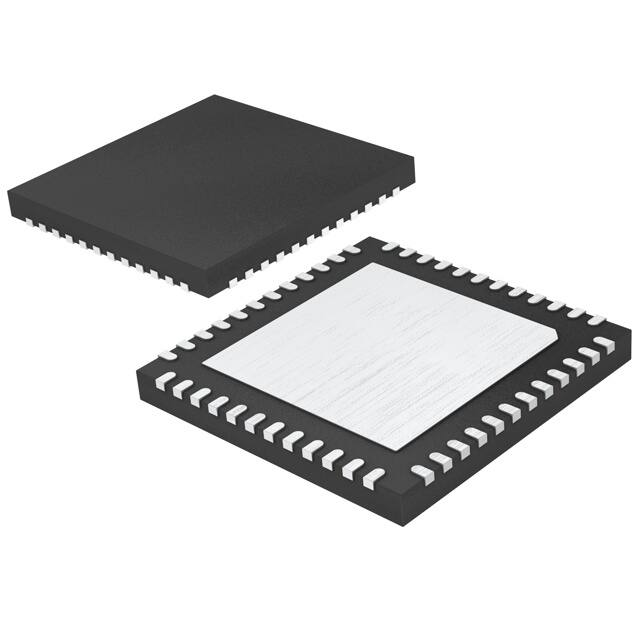
48-Pin QFN Package
APPLICATIONS
n
n
n
n
Wireless and Wired Broadband Communication
Cable Head-End Systems
Power Amplifier Linearization
Communications Test Equipment
DC specs include ±0.3LSB INL (typ), ±0.2LSB DNL (typ)
and no missing codes over temperature. The transition
noise is a low 0.5LSBRMS.
A separate output power supply allows the outputs to
drive 0.5V to 3.6V logic.
The ENC+ and ENC – inputs may be driven differentially
or single ended with a sine wave, PECL, LVDS, TTL, or
CMOS inputs. An optional clock duty cycle stabilizer allows high performance at full speed for a wide range of
clock duty cycles.
L, LT, LTC, LTM, Linear Technology and the Linear logo are registered trademarks of Linear
Technology Corporation. All other trademarks are the property of their respective owners.
TYPICAL APPLICATION
VDD
3.3V
SFDR vs Input Frequency
100
REFH
REFL
FLEXIBLE
REFERENCE
95
0VDD
0.5V TO 3.6V
ANALOG
INPUT
INPUT
S/H
–
12-BIT
PIPELINED
ADC CORE
CORRECTION
LOGIC
D11
•
•
•
D0
OUTPUT
DRIVERS
0GND
SFDR (dBFS)
+
4th OR HIGHER
90
85
80
2nd or 3rd
75
70
65
CLOCK/DUTY
CYCLE
CONTROL
60
0
22223 TA01
100
200
300
400
500
INPUT FREQUENCY (MHz)
600
22223 TA01b
ENCODE
INPUT
22223fb
1
�LTC2222/LTC2223
ABSOLUTE MAXIMUM RATINGS
PIN CONFIGURATION
OVDD = VDD (Notes 1, 2)
48 GND
47 VDD
46 VDD
45 GND
44 VCM
43 SENSE
42 MODE
41 OF
40 D11
39 D10
38 OGND
37 OVDD
TOP VIEW
AIN+ 1
AIN– 2
REFHA 3
REFHA 4
REFLB 5
REFLB 6
REFHB 7
REFHB 8
REFLA 9
REFLA 10
VDD 11
VDD 12
36 D9
35 D8
34 D7
33 OVDD
32 OGND
31 D6
30 D5
29 D4
28 OVDD
27 OGND
26 D3
25 D2
49
GND 13
VDD 14
GND 15
ENC+ 16
ENC– 17
SHDN 18
OE 19
CLOCKOUT 20
DO 21
OGND 22
OVDD 23
D1 24
Supply Voltage (VDD) ..................................................4V
Digital Output Ground Voltage (OGND) ........ –0.3V to 1V
Analog Input Voltage (Note 3) ...... –0.3V to (VDD + 0.3V)
Digital Input Voltage..................... –0.3V to (VDD + 0.3V)
Digital Output Voltage ................ –0.3V to (OVDD + 0.3V)
Power Dissipation .............................................1500mW
Operating Temperature Range
LTC2222C, LTC2223C .............................. 0°C to 70°C
LTC2222I, LTC2223I ............................–40°C to 85°C
Storage Temperature Range .................. –65°C to 125°C
UK PACKAGE
48-LEAD (7mm s 7mm) PLASTIC QFN
TJMAX = 125°C, θJA = 29°C/W
EXPOSED PAD (PIN 49) IS GND, MUST BE SOLDERED TO PCB
ORDER INFORMATION
LEAD FREE FINISH
TAPE AND REEL
PART MARKING*
PACKAGE DESCRIPTION
TEMPERATURE RANGE
LTC2222CUK#PBF
LTC2222CUK#TRPBF
LTC2222UK
48-Lead 7mm × 7mm Plastic DFN
0°C to 70°C
LTC2222IUK#PBF
LTC2222IUK#TRPBF
LTC2222UK
48-Lead 7mm × 7mm Plastic DFN
–40°C to 85°C
LTC2223CUK#PBF
LTC2223CUK#TRPBF
LTC2223UK
48-Lead 7mm × 7mm Plastic DFN
0°C to 70°C
LTC2223IUK#PBF
LTC2223IUK#TRPBF
LTC2223UK
48-Lead 7mm × 7mm Plastic DFN
–40°C to 85°C
Consult LTC Marketing for parts specified with wider operating temperature ranges. *The temperature grade is identified by a label on the shipping container.
Consult LTC Marketing for information on non-standard lead based finish parts.
For more information on lead free part marking, go to: http://www.linear.com/leadfree/
For more information on tape and reel specifications, go to: http://www.linear.com/tapeandreel/
22223fb
2
�LTC2222/LTC2223
ELECTRICAL CHARACTERISTICS
The l denotes the specifications which apply over the full operating
temperature range, otherwise specifications are at TA = 25°C.
LTC2222
PARAMETER
CONDITIONS
MIN
TYP
LTC2223
MAX
MIN
TYP
MAX
UNITS
Resolution (No Missing Codes)
l
12
Integral Linearity Error (Note 5)
Differential Analog Input
l
–1.3
±0.3
1.3
–1.1
±0.3
1.1
LSB
Differential Linearity Error
Differential Analog Input
l
–1
±0.2
1
–0.8
±0.2
0.8
LSB
12
Bits
Integral Linearity Error (Note 5)
Single-Ended Analog Input
±1
±1
LSB
Differential Linearity Error
Single-Ended Analog Input
±0.2
±0.2
LSB
Offset Error (Note 6)
Gain Error
External Reference
l
–30
±3
30
–30
±3
30
l
–2.5
±0.5
2.5
–2.5
±0.5
2.5
Offset Drift
mV
%FS
±10
±10
μV/C
Full-Scale Drift
Internal Reference
External Reference
±30
±15
±30
±15
ppm/C
ppm/C
Transition Noise
SENSE = 1V
0.5
0.5
LSBRMS
ANALOG INPUT
The l denotes the specifications which apply over the full operating temperature range, otherwise
specifications are at TA = 25°C. (Note 4)
SYMBOL
PARAMETER
CONDITIONS
VIN
Analog Input Range (AIN+ – AIN–)
3.1V < VDD < 3.5V
l
VIN, CM
Analog Input Common Mode (AIN+ + AIN–)/2
Differential Input
Single-Ended Input (Note 7)
l
l
1
0.5
IIN
Analog Input Leakage Current
0 < AIN+, AIN– < VDD
l
ISENSE
SENSE Input Leakage
0V < SENSE < 1V
l
IMODE
MODE Pin Pull-Down Current to GND
Full Power Bandwidth
Figure 8 Test Circuit
MIN
TYP
MAX
±0.5 to ±1
1.6
1.6
UNITS
V
1.9
2.1
V
V
–1
1
μA
–1
1
μA
10
μA
775
MHz
tAP
Sample and Hold Acquisition Delay Time
0
tJITTER
Sample and Hold Acquisition Delay Time Jitter
0.15
CMRR
Analog Input Common Mode Rejection Ratio
80
ns
psRMS
dB
22223fb
3
�LTC2222/LTC2223
DYNAMIC ACCURACY
The l denotes the specifications which apply over the full operating temperature range,
otherwise specifications are at TA = 25°C. AIN = –1dBFS. (Note 4)
LTC2222
SYMBOL
PARAMETER
CONDITIONS
SNR
Signal-to-Noise Ratio
30MHz Input (1V Range)
30MHz Input (2V Range)
SFDR
SFDR
S/(N+D)
Spurious Free Dynamic Range
Spurious Free Dynamic Range
4th Harmonic or Higher
Signal-to-Noise
Plus Distortion Ratio
l
Intermodulation Distortion
TYP
67
63.5
68.4
LTC2223
MAX
MIN
TYP
MAX
UNITS
67.5
63.6
68.5
dB
dB
70MHz Input (1V Range)
70MHz Input (2V Range)
63.4
68.3
63.5
68.4
dB
dB
140MHz Input (1V Range)
140MHz Input (2V Range)
63.2
67.9
63.5
68.0
dB
dB
250MHz Input (1V Range)
250MHz Input (2V Range)
62.7
67.0
63.0
67.3
dB
dB
84
84
dB
dB
30MHz Input (1V Range)
30MHz Input (2V Range)
l
84
84
72
73
70MHz Input (1V Range)
70MHz Input (2V Range)
84
84
84
84
dB
dB
140MHz Input (1V Range)
140MHz Input (2V Range)
81
81
84
81
dB
dB
250MHz Input (1V Range)
250MHz Input (2V Range)
77
77
80
75
dB
dB
30MHz Input (1V Range)
30MHz Input (2V Range)
90
90
90
90
dB
dB
70MHz Input (1V Range)
70MHz Input (2V Range)
90
90
90
90
dB
dB
140MHz Input (1V Range)
140MHz Input (2V Range)
90
90
90
90
dB
dB
250MHz Input (1V Range)
250MHz Input (2V Range)
90
90
90
90
dB
dB
63.6
68.5
dB
dB
63.5
68.2
63.6
68.3
dB
dB
81
81
dBc
30MHz Input (1V Range)
30MHz Input (2V Range)
l
70MHz Input (1V Range)
70MHz Input (2V Range)
IMD
MIN
66.5
63.5
68.4
fIN1 = 138MHz, fIN2 = 140MHz
INTERNAL REFERENCE CHARACTERISTICS
67
(Note 4)
PARAMETER
CONDITIONS
MIN
TYP
MAX
VCM Output Voltage
IOUT = 0
1.575
1.600
1.625
VCM Output Tempco
±25
UNITS
V
ppm/°C
VCM Line Regulation
3.1V < VDD < 3.5V
3
mV/V
VCM Output Resistance
–1mA < IOUT < 1mA
4
Ω
22223fb
4
�LTC2222/LTC2223
DIGITAL INPUTS AND DIGITAL OUTPUTS
The l denotes the specifications which apply over the
full operating temperature range, otherwise specifications are at TA = 25°C. (Note 4)
SYMBOL
PARAMETER
CONDITIONS
MIN
TYP
MAX
UNITS
Encode Inputs (ENC+, ENC–)
VID
Differential Input Voltage
VICM
Common Mode Input Voltage
RIN
Input Resistance
CIN
Input Capacitance
Internally Set
Externally Set (Note 7)
l
0.2
l
1.1
V
1.6
1.6
(Note 7)
V
V
2.5
6
kΩ
3
pF
Logic Inputs (OE, SHDN)
VIH
High Level Input Voltage
VDD = 3.3V
l
VIL
Low Level Input Voltage
VDD = 3.3V
l
IIN
Input Current
VIN = 0V to VDD
l
CIN
Input Capacitance
(Note 7)
3
pF
2
V
–10
0.8
V
10
μA
Logic Outputs
OVDD = 3.3V
COZ
Hi-Z Output Capacitance
OE = High (Note 7)
3
pF
ISOURCE
Output Source Current
VOUT = 0V
50
mA
ISINK
Output Sink Current
VOUT = 3.3V
50
mA
VOH
High Level Output Voltage
IO = –10μA
IO = –200μA
l
IO = 10μA
IO = 1.6mA
l
VOL
Low Level Output Voltage
3.295
3.29
3.1
V
V
0.005
0.09
V
V
0.4
OVDD = 2.5V
VOH
High Level Output Voltage
IO = –200μA
2.49
V
VOL
Low Level Output Voltage
IO = 1.6mA
0.09
V
OVDD = 1.8V
VOH
High Level Output Voltage
IO = –200μA
1.79
V
VOL
Low Level Output Voltage
IO = 1.6mA
0.09
V
POWER REQUIREMENTS
The l denotes the specifications which apply over the full operating temperature
range, otherwise specifications are at TA = 25°C. (Note 8)
LTC2222
SYMBOL
PARAMETER
CONDITIONS
VDD
Analog Supply Voltage
(Note 7)
OVDD
Output Supply Voltage
(Note 7)
LTC2223
MIN
TYP
MAX
MIN
TYP
MAX
UNITS
l
3.1
3.3
3.5
3.1
3.3
3.5
V
l
0.5
3.3
3.6
0.5
3.3
3.6
V
IVDD
Analog Supply Current
l
144
162
111
123
mA
PDISS
Power Dissipation
l
475
535
366
406
mW
PSHDN
Shutdown Power
SHDN = H, OE = H, No CLK
2
2
mW
PNAP
Nap Mode Power
SHDN = H, OE = L, No CLK
35
35
mW
22223fb
5
�LTC2222/LTC2223
TIMING CHARACTERISTICS
The l denotes the specifications which apply over the full operating temperature
range, otherwise specifications are at TA = 25°C. (Note 4)
LTC2222
SYMBOL
PARAMETER
fS
Sampling Frequency
l
1
tL
ENC Low Time
Duty Cycle Stabilizer Off
Duty Cycle Stabilizer On
l
l
4.5
3
tH
ENC High Time
Duty Cycle Stabilizer Off
Duty Cycle Stabilizer On
l
l
tAP
Sample-and-Hold Aperture Delay
tD
ENC to DATA Delay
(Note 7)
tC
ENC to CLOCKOUT Delay
tOE
CONDITIONS
MIN
TYP
LTC2223
MAX
MIN
105
1
4.76
4.76
500
500
5.9
3
4.5
3
4.76
4.76
500
500
l
1.3
2.1
(Note 7)
l
1.3
DATA to CLOCKOUT Skew
(tC - tD) (Note 7)
l
–0.6
Output Enable Delay
(Note 7)
l
Note 1: Stresses beyond those listed under Absolute Maximum Ratings
may cause permanent damage to the device. Exposure to any Absolute
Maximum Rating condition for extended periods may affect device
reliability and lifetime.
Note 2: All voltage values are with respect to ground with GND and OGND
wired together (unless otherwise noted).
Note 3: When these pin voltages are taken below GND or above VDD, they
will be clamped by internal diodes. This product can handle input currents
of greater than 100mA below GND or above VDD without latchup.
Note 4: VDD = 3.3V, fSAMPLE = 105MHz (LTC2222) or 80MHz (LTC2223),
differential ENC+/ENC– = 2VP-P sine wave, input range = 2VP-P with
differential drive, unless otherwise noted.
MAX
UNITS
80
MHz
6.25
6.25
500
500
ns
ns
5.9
3
6.25
6.25
500
500
ns
ns
4
1.3
2.1
4
ns
2.1
4
1.3
2.1
4
ns
0
0.6
–0.6
0
0.6
ns
5
10
5
10
ns
0
Pipeline Latency
TYP
5
0
5
ns
Cycles
Note 5: Integral nonlinearity is defined as the deviation of a code from a
straight line passing through the actual endpoints of the transfer curve.
The deviation is measured from the center of the quantization band.
Note 6: Offset error is the offset voltage measured from –0.5 LSB when
the output code flickers between 0000 0000 0000 and 1111 1111 1111 in
2’s complement output mode.
Note 7: Guaranteed by design, not subject to test.
Note 8: VDD = 3.3V, fSAMPLE = 105MHz (LTC2222) or 80MHz (LTC2223),
differential ENC+/ENC– = 2VP-P sine wave, input range = 1VP-P with
differential drive.
22223fb
6
�LTC2222/LTC2223
TYPICAL PERFORMANCE CHARACTERISTICS
1.0
70
0.8
0.8
69
0.6
0.6
68
0.4
0.4
67
0.2
0
–0.2
0.2
0
–0.2
66
65
64
–0.4
–0.4
63
–0.6
–0.6
62
–0.8
–0.8
61
–1.0
–1.0
1024
3072
2048
OUTPUT CODE
4096
0
1024
3072
2048
OUTPUT CODE
60
4096
100
300
400
500
200
INPUT FREQUENCY (MHz)
600
22223 G02
22223 G03
LTC2222: SNR vs Input Frequency,
–1dB, 1V Range
LTC2222: SFDR (HD2 and HD3) vs
Input Frequency, –1dB, 2V Range
LTC2222: SFDR (HD2 and HD3) vs
Input Frequency, –1dB, 1V Range
100
100
69
95
95
68
90
90
85
85
SFDR (dBFS)
66
65
64
63
62
61
SFDR (dBFS)
70
60
0
22223 G01
67
SNR (dBFS)
SNR (dBFS)
1.0
0
80
75
100
200
300
400
500
INPUT FREQUENCY (MHz)
75
70
65
65
60
60
55
0
80
70
55
0
600
100
200
300
400
500
INPUT FREQUENCY (MHz)
0
600
LTC2222: SFDR (HD4+) vs Input
Frequency, –1dB, 2V Range
95
95
95
90
90
85
85
80
75
70
65
65
60
60
55
SFDR AND SNR (dBFS)
100
SFDR (dBFS)
100
70
100
200
300
400
500
INPUT FREQUENCY (MHz)
600
22223 G07
90
SFDR
85
80
75
SNR
70
65
60
55
0
600
LTC2222: SFDR and SNR vs
Sample Rate, 2V Range,
fIN = 30MHz, –1dB
100
75
200
300
400
500
INPUT FREQUENCY (MHz)
22223 G06
LTC2222: SFDR (HD4+) vs Input
Frequency, –1dB, 1V Range
80
100
22223 G05
22223 G04
SFDR (dBFS)
LTC2222: SNR vs Input Frequency,
–1dB, 2V Range
LTC2222: DNL, 2V Range
ERROR (LSB)
ERROR (LSB)
LTC2222: INL, 2V Range
0
100
200
300
400
500
INPUT FREQUENCY (MHz)
600
22223 G08
0
20
40
60
80
100
120
SAMPLE RATE (Msps)
22223 G09
22223fb
7
�LTC2222/LTC2223
TYPICAL PERFORMANCE CHARACTERISTICS
LTC2222: SFDR and SNR vs
Sample Rate, 1V Range,
fIN = 30MHz, –1dB
100
160
95
8
2V RANGE
SFDR
140
IVDD (mA)
85
80
75
IOVDD (mA)
SFDR AND SNR (dBFS)
10
150
90
130
1V RANGE
6
4
120
SNR
70
2
110
65
60
20
0
40
60
80
100
100
120
0
20
SAMPLE RATE (Msps)
40
60
80
SAMPLE RATE (Msps)
100
22223 G10
0
120
0
90
–10
–20
–20
–30
–30
–40
–40
dBFS
SFDR (dBc AND dBFS)
80
AMPLITUDE (dB)
50
40
30
20
10
–50
–60
–70
–80
–50
–30
–20
–40
INPUT LEVEL (dBFS)
–10
–70
–80
–90
–100
–110
–110
0
5
10 15 20 25 30 35 40 45 50
FREQUENCY (MHz)
–120
LTC2222: 8192 Point FFT,
f IN = 30MHz, –1dB, 2V Range
0
–10
–20
–20
–20
–30
–30
–30
–40
–40
–40
AMPLITUDE (dB)
0
–10
AMPLITUDE (dB)
0
–80
–50
–60
–70
–80
–50
–60
–70
–80
–90
–90
–90
–100
–100
–100
–110
–110
–110
–120
–120
0
5
10 15 20 25 30 35 40 45 50
FREQUENCY (MHz)
22223 G16
10 15 20 25 30 35 40 45 50
FREQUENCY (MHz)
LTC2222: 8192 Point FFT,
f IN = 70MHz, –1dB, 2V Range
–10
–70
5
22223 G15
LTC2222: 8192 Point FFT,
f IN = 30MHz, –1dB, 1V Range
–60
0
22223 G14
22223 G13
0
5
120
–60
–100
0
–50
100
–50
–90
–120
0
–60
AMPLITUDE (dB)
0
–10
60
40
60
80
SAMPLE RATE (Msps)
LTC2222: 8192 Point FFT,
f IN = 5MHz, –1dB, 1V Range
100
dBc
20
22223 G12
LTC2222: 8192 Point FFT,
f IN = 5MHz, –1dB, 2V Range
70
0
22223 G11
LTC2222: SFDR vs Input Level,
f IN = 70MHz, 2V Range
AMPLITUDE (dB)
LTC2222: IOVDD vs Sample Rate,
5MHz Sine Wave Input,
–1dB,OVDD = 1.8V
LTC2222: IVDD vs Sample Rate,
5MHz Sine Wave Input, –1dB
10 15 20 25 30 35 40 45 50
FREQUENCY (MHz)
22223 G17
–120
0
5
10 15 20 25 30 35 40 45 50
FREQUENCY (MHz)
22223 G18
22223fb
8
�LTC2222/LTC2223
TYPICAL PERFORMANCE CHARACTERISTICS
LTC2222: 8192 Point FFT,
f IN = 140MHz, –1dB, 2V Range
LTC2222: 8192 Point FFT,
f IN = 140MHz, –1dB, 1V Range
0
0
–10
–10
–20
–20
–20
–30
–30
–30
–40
–40
–40
–50
–60
–70
–80
AMPLITUDE (dB)
0
–10
AMPLITUDE (dB)
AMPLITUDE (dB)
LTC2222: 8192 Point FFT,
f IN = 70MHz, –1dB, 1V Range
–50
–60
–70
–80
–50
–60
–70
–80
–90
–90
–90
–100
–100
–100
–110
–110
–110
–120
–120
0
5
10 15 20 25 30 35 40 45 50
FREQUENCY (MHz)
0
5
22223 G19
LTC2222: 8192 Point FFT,
f IN = 250MHz, –1dB, 1V Range
–20
–20
–20
–30
–30
–30
–40
–40
–40
–80
AMPLITUDE (dB)
0
–10
AMPLITUDE (dB)
0
–10
–70
–50
–60
–70
–80
–50
–60
–70
–80
–90
–90
–90
–100
–100
–100
–110
–110
–110
–120
–120
0
5
10 15 20 25 30 35 40 45 50
FREQUENCY (MHz)
0
5
22223 G22
0
–10
–20
–20
–30
–30
–40
–40
–80
–110
–110
22223 G25
60000
40000
–80
–90
10 15 20 25 30 35 40 45 50
FREQUENCY (MHz)
80000
–70
–100
5
97037
–60
–90
0
10 15 20 25 30 35 40 45 50
FREQUENCY (MHz)
100000
–50
–100
–120
5
LTC2222: Shorted Input Noise
Histogram
COUNT
AMPLITUDE (dB)
AMPLITUDE (dB)
0
–70
0
22223 G24
LTC2222: 8192 Point 2-Tone FFT,
f IN = 138MHz and 140MHz, –7dB
Each, 1V Range
–10
–60
–120
10 15 20 25 30 35 40 45 50
FREQUENCY (MHz)
22223 G23
LTC2222: 8192 Point 2-Tone FFT,
f IN = 68MHz and 70MHz, –7dB
Each, 2V Range
–50
10 15 20 25 30 35 40 45 50
FREQUENCY (MHz)
LTC2222: 8192 Point FFT,
f IN = 500MHz, –6dB, 1V Range
0
–60
5
22223 G21
–10
–50
0
22223 G20
LTC2222: 8192 Point FFT,
f IN = 250MHz, –1dB, 2V Range
AMPLITUDE (dB)
–120
10 15 20 25 30 35 40 45 50
FREQUENCY (MHz)
–120
20420
20000
0
0
5
10 15 20 25 30 35 40 45 50
FREQUENCY (MHz)
22223 G26
13494
80
2044
41
2045
2046
CODE
2047
2048
22223 G27
22223fb
9
�LTC2222/LTC2223
TYPICAL PERFORMANCE CHARACTERISTICS
LTC2223: SNR vs Input Frequency,
–1dB, 2V Range
LTC2223: DNL, 2V Range
1.0
70
0.8
0.8
69
0.6
0.6
68
0.4
0.4
67
0.2
0
–0.2
SNR (dBFS)
1.0
ERROR (LSB)
ERROR (LSB)
LTC2223: INL, 2V Range
0.2
0
–0.2
66
65
64
–0.4
–0.4
63
–0.6
–0.6
62
–0.8
–0.8
61
–1.0
–1.0
1024
0
3072
2048
OUTPUT CODE
4096
0
1024
3072
2048
OUTPUT CODE
60
4096
22223 G28
22223 G29
LTC2223: SNR vs Input Frequency,
–1dB, 1V Range
LTC2223: SFDR (HD2 and HD3) vs
Input Frequency, –1dB, 2V Range
100
300
400
500
200
INPUT FREQUENCY (MHz)
600
22223 G30
LTC2223: SFDR (HD2 and HD3) vs
Input Frequency, –1dB, 1V Range
70
100
100
69
95
95
90
90
85
85
68
0
66
65
64
63
SFDR (dBFS)
SFDR (dBFS)
SNR (dBFS)
67
80
75
80
75
70
70
65
65
62
61
60
0
100
200
300
400
500
INPUT FREQUENCY (MHz)
60
600
0
100
60
600
LTC2223: SFDR (HD4+) vs Input
Frequency, –1dB, 2V Range
100
95
95
95
90
90
85
85
80
75
70
70
65
65
0
100
200
300
400
500
INPUT FREQUENCY (MHz)
600
22223 G34
90
SFDR AND SNR (dBFS)
SFDR (dBFS)
100
60
200
300
400
500
INPUT FREQUENCY (MHz)
60
600
LTC2223: SFDR and SNR vs
Sample Rate, 2V Range,
fIN = 30MHz, –1dB
100
75
100
22223 G33
LTC2223: SFDR (HD4+) vs Input
Frequency, –1dB, 1V Range
80
0
22223 G32
22223 G31
SFDR (dBFS)
200
300
400
500
INPUT FREQUENCY (MHz)
SFDR
85
80
75
SNR
70
65
60
55
0
100
200
300
400
500
INPUT FREQUENCY (MHz)
600
22223 G35
50
0
20
40
60
80
100
SAMPLE RATE (Msps)
22223 G36
22223fb
10
�LTC2222/LTC2223
TYPICAL PERFORMANCE CHARACTERISTICS
LTC2223: SFDR and SNR vs
Sample Rate, 1V Range,
fIN = 30MHz, –1dB
LTC2223: IOVDD vs Sample Rate,
5MHz Sine Wave Input,
–1dB,OVDD = 1.8V
LTC2223: IVDD vs Sample Rate,
5MHz Sine Wave Input, –1dB
8
130
100
95
SFDR AND SNR (dBFS)
90
120
SFDR
6
IVDD (mA)
80
75
70
IOVDD (mA)
85
110
2V RANGE
1V RANGE
100
4
SNR
65
2
90
60
55
50
20
0
40
60
80
100
80
20
0
SAMPLE RATE (Msps)
60
80
40
SAMPLE RATE (Msps)
22223 G37
AMPLITUDE (dB)
SFDR (dBc AND dBFS)
80
dBc
50
40
30
20
10
0
–60
0
0
–10
–10
–20
–20
–30
–30
–40
–40
–50
–60
–70
–80
–40
–30
–20
INPUT LEVELS (dBFS)
–10
–60
–70
–80
–90
–100
–100
–110
–110
0
0
5
10
15 20 25 30
FREQUENCY (MHz)
35
40
–120
LTC2223: 8192 Point FFT,
f IN = 30MHz, –1dB, 2V Range
0
–10
–20
–20
–20
–30
–30
–30
–40
–40
–40
–80
AMPLITUDE (dB)
0
–10
AMPLITUDE (dB)
0
–70
–50
–60
–70
–80
–80
–90
–100
–100
–110
–110
–110
–120
–120
15 20 25 30
FREQUENCY (MHz)
35
40
22223 G43
0
5
10
15 20 25 30
FREQUENCY (MHz)
35
40
–70
–100
10
35
–60
–90
5
15 20 25 30
FREQUENCY (MHz)
–50
–90
0
10
LTC2223: 8192 Point FFT,
f IN = 70MHz, –1dB, 2V Range
–10
–60
5
22223 G42
LTC2223: 8192 Point FFT,
f IN = 30MHz, –1dB, 1V Range
–50
0
22223 G41
22223 G40
AMPLITUDE (dB)
–50
–90
–120
–50
100
LTC2223: 8192 Point FFT,
f IN = 5MHz, –1dB, 1V Range
AMPLITUDE (dB)
dBFS
60
60
80
40
SAMPLE RATE (Msps)
22223 G39
LTC2223: 8192 Point FFT,
f IN = 5MHz, –1dB, 2V Range
90
70
20
0
22223 G38
LTC2223: SFDR vs Input Level,
f IN = 70MHz, 2V Range
100
0
100
40
22223 G44
–120
0
5
10
15 20 25 30
FREQUENCY (MHz)
35
40
22223 G45
22223fb
11
�LTC2222/LTC2223
TYPICAL PERFORMANCE CHARACTERISTICS
LTC2223: 8192 Point FFT,
f IN = 140MHz, –1dB, 2V Range
LTC2223: 8192 Point FFT,
f IN = 140MHz, –1dB, 1V Range
0
0
–10
–10
–20
–20
–20
–30
–30
–30
–40
–40
–40
–50
–60
–70
–80
AMPLITUDE (dB)
0
–10
AMPLITUDE (dB)
AMPLITUDE (dB)
LTC2223: 8192 Point FFT,
f IN = 70MHz, –1dB, 1V Range
–50
–60
–70
–80
–50
–60
–70
–80
–90
–90
–90
–100
–100
–100
–110
–110
–110
–120
–120
0
5
10
15 20 25 30
FREQUENCY (MHz)
35
40
0
5
10
15 20 25 30
FREQUENCY (MHz)
22223 G46
–120
40
0
–10
–20
–20
–20
–30
–30
–30
–40
–40
–40
–80
AMPLITUDE (dB)
0
–10
AMPLITUDE (dB)
0
–70
–50
–60
–70
–80
–80
–90
–100
–100
–110
–110
–110
–120
–120
15 20 25 30
FREQUENCY (MHz)
35
40
0
5
10
15 20 25 30
FREQUENCY (MHz)
22223 G49
0
–10
–20
–20
–30
–30
–40
–40
–60
–70
–80
–110
–110
40
22223 G52
40
60000
40000
–80
–90
35
35
80000
–70
–100
15 20 25 30
FREQUENCY (MHz)
15 20 25 30
FREQUENCY (MHz)
96679
–60
–90
10
10
100000
–50
–100
5
5
LTC2223: Shorted Input Noise
Histogram
COUNT
AMPLITUDE (dB)
AMPLITUDE (dB)
0
–50
0
22223 G51
LTC2223: 8192 Point 2-Tone FFT,
f IN = 138MHz and 140MHz, –7dB
Each, 1V Range
–10
0
–120
40
22223 G50
LTC2223: 8192 Point 2-Tone FFT,
f IN = 68MHz and 70MHz, –7dB
Each, 2V Range
–120
35
40
–70
–100
10
35
–60
–90
5
15 20 25 30
FREQUENCY (MHz)
–50
–90
0
10
LTC2223: 8192 Point FFT,
f IN = 500MHz, –6dB, 1V Range
–10
–60
5
22223 G48
LTC2223: 8192 Point FFT,
f IN = 250MHz, –1dB, 1V Range
–50
0
22223 G47
LTC2223: 8192 Point FFT,
f IN = 250MHz, –1dB, 2V Range
AMPLITUDE (dB)
35
–120
0
0
5
10
15 20 25 30
FREQUENCY (MHz)
35
40
22223 G53
18080
16182
20000
42
2044
89
2045
2046
CODE
2047
2048
22223 G54
22223fb
12
�LTC2222/LTC2223
PIN FUNCTIONS
AIN+ (Pin 1): Positive Differential Analog Input.
AIN– (Pin 2): Negative Differential Analog Input.
OE (Pin 19): Output Enable Pin. Refer to SHDN pin function.
REFHA (Pins 3, 4): ADC High Reference. Bypass to Pins
5, 6 with 0.1μF ceramic chip capacitor, to Pins 9, 10 with a
2.2μF ceramic capacitor and to ground with a 1μF ceramic
capacitor.
CLOCKOUT (Pin 20): Data Valid Output. Latch data on the
falling edge of CLKOUT.
REFLB (Pins 5, 6): ADC Low Reference. Bypass to Pins
3, 4 with 0.1μF ceramic chip capacitor. Do not connect to
Pins 9, 10.
OGND (Pins 22, 27, 32, 38): Output Driver Ground.
REFHB (Pins 7, 8): ADC High Reference. Bypass to Pins
9, 10 with 0.1μF ceramic chip capacitor. Do not connect
to Pins 3, 4.
REFLA (Pins 9, 10): ADC Low Reference. Bypass to Pins
7, 8 with 0.1μF ceramic chip capacitor, to Pins 3, 4 with a
2.2μF ceramic capacitor and to ground with a 1μF ceramic
capacitor.
VDD (Pins 11, 12, 14, 46, 47): 3.3V Supply. Bypass to
GND with 0.1μF ceramic chip capacitors. Adjacent pins
can share a bypass capacitor.
GND (Pins 13, 15, 45, 48): ADC Power Ground.
ENC + (Pin 16): Encode Input. The input is sampled on
the positive edge.
ENC– (Pin 17): Encode Complement Input. The input is
sampled on the negative edge. Bypass to ground with
0.1μF ceramic for single-ended ENCODE signal.
SHDN (Pin 18): Shutdown Mode Selection Pin. Connecting
SHDN to GND and OE to GND results in normal operation
with the outputs enabled. Connecting SHDN to GND and
OE to VDD results in normal operation with the outputs at
high impedance. Connecting SHDN to VDD and OE to GND
results in nap mode with the outputs at high impedance.
Connecting SHDN to VDD and OE to VDD results in sleep
mode with the outputs at high impedance.
D0 – D11 (Pins 21, 24, 25, 26, 29, 30, 31, 34, 35, 36,
39, 40): Digital Outputs. D11 is the MSB.
OVDD (Pins 23, 28, 33, 37): Positive Supply for the
Output Drivers. Bypass to ground with 0.1μF ceramic
chip capacitors.
OF (Pin 41): Over/Under Flow Output. High when an over
or under flow has occurred.
MODE (Pin 42): Output Format and Clock Duty Cycle
Stabilizer Selection Pin. Connecting MODE to 0V selects
offset binary output format and turns the clock duty cycle
stabilizer off. Connecting MODE to 1/3 VDD selects offset
binary output format and turns the clock duty cycle stabilizer
on. Connecting MODE to 2/3 VDD selects 2’s complement
output format and turns the clock duty cycle stabilizer on.
Connecting MODE to VDD selects 2’s complement output
format and turns the clock duty cycle stabilizer off.
SENSE (Pin 43): Reference Programming Pin. Connecting
SENSE to VCM selects the internal reference and a ±0.5V
input range. VDD selects the internal reference and a ±1V
input range. An external reference greater than 0.5V and
less than 1V applied to SENSE selects an input range of
±VSENSE. ±1V is the largest valid input range.
VCM (Pin 44): 1.6V Output and Input Common Mode Bias.
Bypass to ground with 2.2μF ceramic chip capacitor.
GND (Exposed Pad): ADC Power Ground. The exposed
pad on the bottom of the package needs to be soldered
to ground.
22223fb
13
�LTC2222/LTC2223
FUNCTIONAL BLOCK DIAGRAM
AIN+
AIN–
VCM
INPUT
S/H
FIRST PIPELINED
ADC STAGE
SECOND PIPELINED
ADC STAGE
THIRD PIPELINED
ADC STAGE
FOURTH PIPELINED
ADC STAGE
1.6V
REFERENCE
2.2μF
SHIFT REGISTER
AND CORRECTION
RANGE
SELECT
REFH
SENSE
FIFTH PIPELINED
ADC STAGE
REFL
INTERNAL CLOCK SIGNALS
OVDD
REF
BUF
OF
DIFFERENTIAL
INPUT
LOW JITTER
CLOCK
DRIVER
DIFF
REF
AMP
CONTROL
LOGIC
•
•
•
OUTPUT
DRIVERS
D11
D0
CLKOUT
REFLB REFHA
2.2μF
0.1μF
1μF
22223 F01
REFLA REFHB
OGND
ENC+
ENC–
M0DE
OE
SHDN
0.1μF
1μF
Figure 1. Functional Block Diagram
TIMING DIAGRAM
Timing Diagram
tAP
ANALOG
INPUT
N+4
N+2
N
N+3
tH
N+1
tL
ENC–
ENC+
tD
N–5
D0-D11, OF
N–4
N–3
N–2
N–1
tC
22223 TD01
CLOCKOUT
OE
tOE
DATA
tOE
OF, D0-D11, CLKOUT
22223fb
14
�LTC2222/LTC2223
APPLICATIONS INFORMATION
DYNAMIC PERFORMANCE
Signal-to-Noise Plus Distortion Ratio
The signal-to-noise plus distortion ratio [S/(N + D)] is
the ratio between the RMS amplitude of the fundamental input frequency and the RMS amplitude of all other
frequency components at the ADC output. The output is
band limited to frequencies above DC to below half the
sampling frequency.
If two pure sine waves of frequencies fa and fb are applied
to the ADC input, nonlinearities in the ADC transfer function
can create distortion products at the sum and difference
frequencies of mfa ± nfb, where m and n = 0, 1, 2, 3, etc.
The 3rd order intermodulation products are 2fa + fb, 2fb
+ fa, 2fa – fb and 2fb – fa. The intermodulation distortion
is defined as the ratio of the RMS value of either
input tone to the RMS value of the largest 3rd order intermodulation product.
Signal-to-Noise Ratio
Spurious Free Dynamic Range (SFDR)
The signal-to-noise ratio (SNR) is the ratio between the
RMS amplitude of the fundamental input frequency and
the RMS amplitude of all other frequency components
except the first five harmonics and DC.
Spurious free dynamic range is the peak harmonic or spurious noise that is the largest spectral component excluding
the input signal and DC. This value is expressed in decibels
relative to the RMS value of a full scale input signal.
Total Harmonic Distortion
Input Bandwidth
Total harmonic distortion is the ratio of the RMS sum
of all harmonics of the input signal to the fundamental
itself. The out-of-band harmonics alias into the frequency
band between DC and half the sampling frequency. THD
is expressed as:
The input bandwidth is that input frequency at which the
amplitude of the reconstructed fundamental is reduced
by 3dB for a full scale input signal.
THD = 20Log (√(V22 + V32 + V42 + . . . Vn2)/V1)
where V1 is the RMS amplitude of the fundamental frequency and V2 through Vn are the amplitudes of the second
through nth harmonics. The THD calculated in this data
sheet uses all the harmonics up to the fifth.
Intermodulation Distortion
If the ADC input signal consists of more than one spectral
component, the ADC transfer function nonlinearity can
produce intermodulation distortion (IMD) in addition to
THD. IMD is the change in one sinusoidal input caused
by the presence of another sinusoidal input at a different
frequency.
Aperture Delay Time
The time from when a rising ENC+ equals the ENC– voltage
to the instant that the input signal is held by the sample
and hold circuit.
Aperture Delay Jitter
The variation in the aperture delay time from conversion
to conversion. This random variation will result in noise
when sampling an AC input. The signal to noise ratio due
to the jitter alone will be:
SNRJITTER = –20log (2π • fIN • tJITTER)
22223fb
15
�LTC2222/LTC2223
APPLICATIONS INFORMATION
CONVERTER OPERATION
As shown in Figure 1, the LTC2222/LTC2223 is a CMOS
pipelined multistep converter. The converter has five pipelined ADC stages; a sampled analog input will result in a
digitized value five cycles later (see the Timing Diagram
section). For optimal AC performance the analog inputs
should be driven differentially. For cost sensitive applications, the analog inputs can be driven single-ended with
slightly worse harmonic distortion. The encode input is
differential for improved common mode noise immunity.
The LTC2222/LTC2223 has two phases of operation, determined by the state of the differential ENC+/ENC– input
pins. For brevity, the text will refer to ENC+ greater than
ENC– as ENC high and ENC+ less than ENC– as ENC low.
Each pipelined stage shown in Figure 1 contains an ADC,
a reconstruction DAC and an interstage residue amplifier.
In operation, the ADC quantizes the input to the stage and
the quantized value is subtracted from the input by the
DAC to produce a residue. The residue is amplified and
output by the residue amplifier. Successive stages operate
out of phase so that when the odd stages are outputting
their residue, the even stages are acquiring that residue
and vice versa.
When ENC is low, the analog input is sampled differentially
directly onto the input sample-and-hold capacitors, inside
the “Input S/H” shown in the block diagram. At the instant
that ENC transitions from low to high, the sampled input is
held. While ENC is high, the held input voltage is buffered
by the S/H amplifier which drives the first pipelined ADC
stage. The first stage acquires the output of the S/H during this high phase of ENC. When ENC goes back low, the
first stage produces its residue which is acquired by the
second stage. At the same time, the input S/H goes back
to acquiring the analog input. When ENC goes back high,
the second stage produces its residue which is acquired
by the third stage. An identical process is repeated for the
third and fourth stages, resulting in a fourth stage residue
that is sent to the fifth stage ADC for final evaluation.
Each ADC stage following the first has additional range to
accommodate flash and amplifier offset errors. Results
from all of the ADC stages are digitally synchronized such
that the results can be properly combined in the correction
logic before being sent to the output buffer.
SAMPLE/HOLD OPERATION AND INPUT DRIVE
Sample/Hold Operation
Figure 2 shows an equivalent circuit for the LTC2222/
LTC2223 CMOS differential sample-and-hold. The analog
inputs are connected to the sampling capacitors (CSAMPLE)
through NMOS transistors. The capacitors shown attached
to each input (CPARASITIC) are the summation of all other
capacitance associated with each input.
LTC2222/LTC2223
VDD
AIN+
CSAMPLE
1.6pF
15Ω
CPARASITIC
1pF
VDD
AIN–
CSAMPLE
1.6pF
15Ω
CPARASITIC
1pF
VDD
1.6V
6k
ENC+
ENC–
6k
1.6V
22223 F02
Figure 2. Equivalent Input Circuit
22223fb
16
�LTC2222/LTC2223
APPLICATIONS INFORMATION
During the sample phase when ENC is low, the transistors
connect the analog inputs to the sampling capacitors and
they charge to, and track the differential input voltage.
When ENC transitions from low to high, the sampled input
voltage is held on the sampling capacitors. During the
hold phase when ENC is high, the sampling capacitors are
disconnected from the input and the held voltage is passed
to the ADC core for processing. As ENC transitions from
high to low, the inputs are reconnected to the sampling
capacitors to acquire a new sample. Since the sampling
capacitors still hold the previous sample, a charging glitch
proportional to the change in voltage between samples will
be seen at this time. If the change between the last sample
and the new sample is small, the charging glitch seen at
the input will be small. If the input change is large, such
as the change seen with input frequencies near Nyquist,
then a larger charging glitch will be seen.
ENC, the sample-and-hold circuit will connect the 1.6pF
sampling capacitor to the input pin and start the sampling
period. The sampling period ends when ENC rises, holding the sampled input on the sampling capacitor. Ideally
the input circuitry should be fast enough to fully charge
the sampling capacitor during the sampling period
1/(2FENCODE); however, this is not always possible and the
incomplete settling may degrade the SFDR. The sampling
glitch has been designed to be as linear as possible to
minimize the effects of incomplete settling.
Single-Ended Input
Figure 3 shows the LTC2222/LTC2223 being driven by
an RF transformer with a center tapped secondary. The
secondary center tap is DC biased with VCM, setting the
ADC input signal at its optimum DC level. Terminating on
the transformer secondary is desirable, as this provides
a common mode path for charging glitches caused by
the sample and hold. Figure 3 shows a 1:1 turns ratio
transformer. Other turns ratios can be used if the source
impedance seen by the ADC does not exceed 100Ω for each
ADC input. A disadvantage of using a transformer is the loss
of low frequency response. Most small RF transformers
have poor performance at frequencies below 1MHz.
For cost sensitive applications, the analog inputs can be
driven single-ended. With a single-ended input the harmonic distortion and INL will degrade, but the SNR and
DNL will remain unchanged. For a single-ended input, AIN+
should be driven with the input signal and AIN– should be
connected to 1.6V or VCM.
Common Mode Bias
For optimal performance the analog inputs should be driven
differentially. Each input should swing ±0.5V for the 2V
range or ±0.25V for the 1V range, around a common mode
voltage of 1.6V. The VCM output pin (Pin 44) may be used
to provide the common mode bias level. VCM can be tied
directly to the center tap of a transformer to set the DC
input level or as a reference level to an op amp differential
driver circuit. The VCM pin must be bypassed to ground
close to the ADC with a 2.2μF or greater capacitor.
For the best performance, it is recommended to have a
source impedance of 100Ω or less for each input. The
source impedance should be matched for the differential
inputs. Poor matching will result in higher even order
harmonics, especially the second.
Input Drive Circuits
VCM
2.2μF
0.1μF
ANALOG
INPUT
T1
1:1
25Ω
25Ω
As with all high performance, high speed ADCs, the
dynamic performance of the LTC2222/LTC2223 can be
influenced by the input drive circuitry, particularly the
second and third harmonics. Source impedance and input reactance can influence SFDR. At the falling edge of
LTC2222/23
0.1μF
12pF
25Ω
Input Drive Impedance
AIN+
25Ω
T1 = MA/COM ETC1-1T
RESISTORS, CAPACITORS
ARE 0402 PACKAGE SIZE
AIN–
22223 F03
Figure 3. Single-Ended to Differential Conversion
Using a Transformer
22223fb
17
�LTC2222/LTC2223
APPLICATIONS INFORMATION
Figure 4 demonstrates the use of a differential amplifier to
convert a single ended input signal into a differential input
signal. The advantage of this method is that it provides
low frequency input response; however, the limited gain
bandwidth of most op amps will limit the SFDR at high
input frequencies.
Figure 5 shows a single-ended input circuit. The impedance
seen by the analog inputs should be matched. This circuit
is not recommended if low distortion is required.
The 25Ω resistors and 12pF capacitor on the analog inputs
serve two purposes: isolating the drive circuitry from
the sample-and-hold charging glitches and limiting the
wideband noise at the converter input. For input frequencies higher than 100MHz, the capacitor may need to be
decreased to prevent excessive signal loss.
For input frequencies above 100MHz the input circuits of
Figure 6, 7 and 8 are recommended. The balun transformer
gives better high frequency response than a flux coupled
center tapped transformer. The coupling capacitors allow
the analog inputs to be DC biased at 1.6V. In Figure 8 the
series inductors are impedance matching elements that
maximize the ADC bandwidth.
Reference Operation
Figure 9 shows the LTC2222/LTC2223 reference circuitry
consisting of a 1.6V bandgap reference, a difference amplifier and switching and control circuit. The internal voltage
reference can be configured for two pin selectable input
ranges of 2V (±1V differential) or 1V (±0.5V differential).
Tying the SENSE pin to VDD selects the 2V range; typing
the SENSE pin to VCM selects the 1V range.
The 1.6V bandgap reference serves two functions: its
output provides a DC bias point for setting the common
mode voltage of any external input circuitry; additionally,
the reference is used with a difference amplifier to generate the differential reference levels needed by the internal
ADC circuitry. An external bypass capacitor is required
for the 1.6V reference output, VCM. This provides a high
frequency low impedance path to ground for internal and
external circuitry.
The difference amplifier generates the high and low
reference for the ADC. High speed switching circuits are
connected to these outputs and they must be externally
bypassed. Each output has four pins: two each of REFHA
and REFHB for the high reference and two each of REFLA
and REFLB for the low reference. The multiple output pins
are needed to reduce package inductance. Bypass capacitors must be connected as shown in Figure 9.
Other voltage ranges in between the pin selectable ranges
can be programmed with two external resistors as shown
in Figure 10. An external reference can be used by applying its output directly or through a resistor divider to
SENSE. It is not recommended to drive the SENSE pin
with a logic device. The SENSE pin should be tied to the
appropriate level as close to the converter as possible. If
the SENSE pin is driven externally, it should be bypassed
to ground as close to the device as possible with a 1μF
ceramic capacitor.
22223fb
18
�LTC2222/LTC2223
APPLICATIONS INFORMATION
VCM
VCM
HIGH SPEED
DIFFERENTIAL
AMPLIFIER 25Ω
ANALOG
INPUT
+
+
2.2μF
25Ω
ANALOG
INPUT
LTC2222/23
2.2μF
1k
0.1μF
AIN+
12pF
–
AIN+
LTC2222/23
3pF
CM
–
1k
12pF
25Ω
25Ω
3pF
AIN–
0.1μF
22223 F04
AIN–
22223 F05
AMPLIFIER = LTC6600-20, LT1993, ETC.
Figure 4. Differential Drive with an Amplifier
Figure 5. Single-Ended Drive
VCM
VCM
2.2μF
2.2μF
0.1μF
12Ω
ANALOG
INPUT
25Ω
AIN
LTC2222/23
25Ω
0.1μF
12Ω
25Ω
AIN–
T1 = MA/COM ETC1-1-13
RESISTORS, CAPACITORS
ARE 0402 PACKAGE SIZE
Figure 6. Recommended Front End Circuit for
Input Frequencies Between 100MHz and 250MHz
LTC2222/23
0.1μF
T1
8pF
25Ω
AIN+
ANALOG
INPUT
0.1μF
T1
0.1μF
0.1μF
+
AIN–
22223 F06
T1 = MA/COM ETC1-1-13
RESISTORS, CAPACITORS
ARE 0402 PACKAGE SIZE
22223 F07
Figure 7. Recommended Front End Circuit for
Input Frequencies Between 250MHz and 500MHz
22223fb
19
�LTC2222/LTC2223
APPLICATIONS INFORMATION
VCM
LTC2222/LTC2223
2.2μF
0.1μF
AIN+
4.7nH
ANALOG
INPUT
25Ω
1.6V
VCM
2.2μF
LTC2222/23
1V
2pF
25Ω
0.5V
RANGE
DETECT
AND
CONTROL
4.7nH
AIN–
T1 = MA/COM ETC1-1-13
RESISTORS, CAPACITORS, INDUCTORS
ARE 0402 PACKAGE SIZE
Figure 8. Recommended Front End Circuit for
Input Frequencies Above 500MHz
1.6V
1.6V BANDGAP
REFERENCE
0.1μF
T1
0.1μF
4Ω
22223 F08
TIE TO VDD FOR 2V RANGE;
TIE TO VCM FOR 1V RANGE;
RANGE = 2 • VSENSE FOR
0.5V < VSENSE < 1V
1μF
VCM
SENSE
REFLB
0.1μF
REFHA
2.2μF
BUFFER
INTERNAL ADC
HIGH REFERENCE
DIFF AMP
2.2μF
12k
0.8V
12k
1μF
SENSE
LTC2222/
LTC2223
REFLA
0.1μF
1μF
REFHB
INTERNAL ADC
LOW REFERENCE
22223 F09
22223 F10
Figure 10. 1.6V Range ADC
Figure 9. Equivalent Reference Circuit
22223fb
20
�LTC2222/LTC2223
APPLICATIONS INFORMATION
Input Range
The input range can be set based on the application.
The 2V input range will provide the best signal-to-noise
performance while maintaining excellent SFDR. The 1V
input range will have better SFDR performance, but the
SNR will degrade by 5dB. See the Typical Performance
Characteristics section.
The noise performance of the LTC2222/LTC2223 can
depend on the encode signal quality as much as on the
analog input. The ENC+/ENC– inputs are intended to be
driven differentially, primarily for noise immunity from
common mode noise sources. Each input is biased
through a 6k resistor to a 1.6V bias. The bias resistors
set the DC operating point for transformer coupled drive
circuits and can set the logic threshold for single-ended
drive circuits.
Any noise present on the encode signal will result in additional aperture jitter that will be RMS summed with the
inherent ADC aperture jitter.
LTC2222/LTC2223
VDD
TO INTERNAL
ADC CIRCUITS
1.6V BIAS
6k
ENC+
0.1μF
1:4
CLOCK
INPUT
VDD
50Ω
1. Differential drive should be used.
2. Use as large an amplitude as possible; if transformer
coupled use a higher turns ratio to increase the
amplitude.
3. If the ADC is clocked with a sinusoidal signal, filter the
encode signal to reduce wideband noise.
Driving the Encode Inputs
VDD
In applications where jitter is critical (high input frequencies) take the following into consideration:
1.6V BIAS
6k
ENC–
22223 F11
Figure 11. Transformer Driven ENC+/ENC–
4. Balance the capacitance and series resistance at both
encode inputs so that any coupled noise will appear at
both inputs as common mode noise. The encode inputs
have a common mode range of 1.1V to 2.5V. Each input
may be driven from ground to VDD for single-ended
drive.
Maximum and Minimum Encode Rates
The maximum encode rate for the LTC2222/LTC2223 is
105Msps (LTC2222) and 80Msps (LTC2223). For the
ADC to operate properly, the encode signal should have a
50% (±5%) duty cycle. Each half cycle must have at least
4.5ns (LTC2222) or 5.9ns (LTC2223) for the ADC internal
circuitry to have enough settling time for proper operation.
Achieving a precise 50% duty cycle is easy with differential
sinusoidal drive using a transformer or using symmetric
differential logic such as PECL or LVDS.
An optional clock duty cycle stabilizer circuit can be used
if the input clock has a non 50% duty cycle. This circuit
uses the rising edge of the ENC+ pin to sample the analog
input. The falling edge of ENC+ is ignored and the internal
falling edge is generated by a phase-locked loop. The input
clock duty cycle can vary from 20% to 80% and the clock
duty cycle stabilizer will maintain a constant 50% internal
duty cycle. If the clock is turned off for a long period of
time, the duty cycle stabilizer circuit will require a hundred
clock cycles for the PLL to lock onto the input clock. To
use the clock duty cycle stabilizer, the MODE pin should be
connected to 1/3VDD or 2/3VDD using external resistors.
22223fb
21
�LTC2222/LTC2223
APPLICATIONS INFORMATION
The lower limit of the LTC2222/LTC2223 sample rate is
determined by droop of the sample-and-hold circuits. The
pipelined architecture of this ADC relies on storing analog
signals on small valued capacitors. Junction leakage will
discharge the capacitors. The specified minimum operating
frequency for the LTC2222/LTC2223 is 1Msps.
DIGITAL OUTPUTS
Table 1 shows the relationship between the analog input
voltage, the digital data bits and the overflow bit.
Table 1. Output Codes vs Input Voltage
AIN+ – AIN–
(2V RANGE)
OF
D11 – D0
(OFFSET BINARY)
D11 – D0
(2’s COMPLEMENT)
>+1.000000V
+0.999512V
+0.999024V
1
0
0
1111 1111 1111
1111 1111 1111
1111 1111 1110
0111 1111 1111
0111 1111 1111
0111 1111 1110
+0.000488V
0.000000V
–0.000488V
–0.000976V
0
0
0
0
1000 0000 0001
1000 0000 0000
0111 1111 1111
0111 1111 1110
0000 0000 0001
0000 0000 0000
1111 1111 1111
1111 1111 1110
–0.999512V
–1.000000V