LTC2471/LTC2473
Selectable 208sps/833sps,
16-Bit I2C ΔΣ ADCs with 10ppm/°C
Max Precision Reference
Description
Features
n
n
n
n
n
n
16-Bit Resolution
Internal, High Accuracy Reference—10ppm/°C (Max)
Single-Ended (LTC2471) or Differential (LTC2473)
Selectable 208sps/833sps Output Rate
1mV Offset Error
0.01% Gain Error
Single Conversion Settling Time Simplifies
Multiplexed Applications
n Single-Cycle Operation with Auto Shutdown
n 3.5mA (Typ) Supply Current
n 2µA (Max) Sleep Current
n Internal Oscillator—No External Components
Required
n I2C Interface
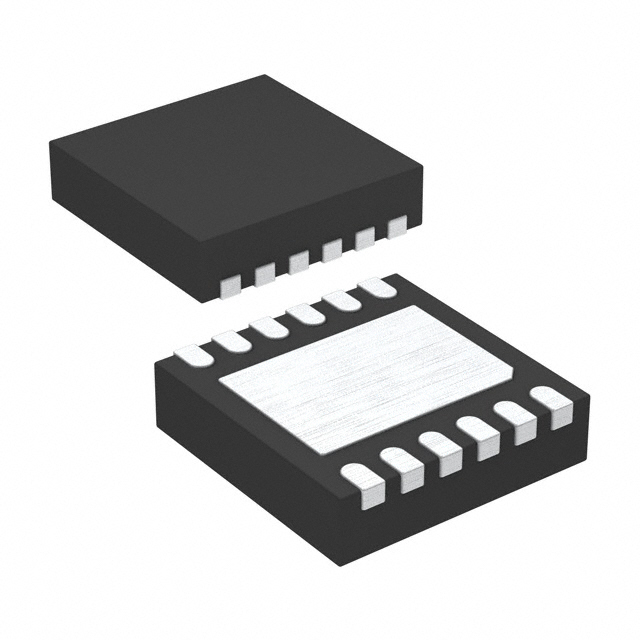
n Small 12-Lead, 3mm × 3mm DFN and MSOP
Packages
The LTC®2471/LTC2473 are small, 16-bit analog-to-digital
converters with an integrated precision reference and
a selectable 208sps or 833sps output rate. They use a
single 2.7V to 5.5V supply and communicate through an
I2C Interface. The LTC2471 is single-ended with a 0V to
VREF input range and the LTC2473 is differential with a
±VREF input range. Both ADCs include a 1.25V integrated
reference with 2ppm/°C drift performance and 0.1% initial
accuracy. The converters are available in a 12-pin DFN
3mm × 3mm package or an MSOP-12 package. They
include an integrated oscillator and perform conversions
with no latency for multiplexed applications. The LTC2471/
LTC2473 include a proprietary input sampling scheme
that reduces the average input current several orders of
magnitude when compared to conventional delta sigma
converters.
Applications
Following a single conversion, the LTC2471/LTC2473
automatically power down the converter and can also be
configured to power down the reference. When both the
ADC and reference are powered down, the supply current
is reduced to 200nA.
n
System Monitoring
Environmental Monitoring
n Direct Temperature Measurements
n Instrumentation
n Industrial Process Control
n Data Acquisition
n Embedded ADC Upgrades
n
n
L, LT, LTC, LTM, Linear Technology and the Linear logo are registered trademarks of Linear
Technology Corporation and Easy Drive and No Latency ∆∑ is a trademark of Linear Technology
Corporation. All other trademarks are the property of their respective owners. Protected by U.S.
Patents, including 6208279, 6411242, 7088280, 7164378.
The LTC2471/LTC2473 include a user selectable 208sps
or 833sps output rate and due to a large oversampling
ratio (8,192 at 208sps and 2,048 at 833sps) have relaxed
anti-aliasing requirements.
Typical Application
VREF vs Temperature
1.2520
0.1µF
0.1µF
0.1µF
10k
REFOUT
SCL
LTC2473
IN–
10k
R
0.1µF
REF–
10µF
COMP VCC
IN+
10k
0.1µF
AO
SDA
GND
2
I C
INTERFACE
REFERENCE OUTPUT VOLTAGE (V)
2.7V TO 5.5V
1.2515
1.2510
1.2505
1.2500
1.2495
1.2490
1.2485
24713 TA01a
1.2480
–50
–30
–10 10
30
50
TEMPERATURE (°C)
70
90
24713 TA01b
24713fb
For more information www.linear.com/LTC2471
1
�LTC2471/LTC2473
Absolute Maximum Ratings
(Notes 1, 2)
Supply Voltage (VCC).................................... –0.3V to 6V
Analog Input Voltage (VIN+, VIN –,
VIN, VREF –, VCOMP, VREFOUT )...........–0.3V to (VCC + 0.3V)
Digital Voltage (VSDA, VSCL, VAO).....–0.3V to (VCC + 0.3V)
Storage Temperature Range................... –65°C to 150°C
Operating Temperature Range
LTC2471C/LTC2473C................................ 0°C to 70°C
LTC2471I/LTC2473I..............................–40°C to 85°C
Pin Configuration
LTC2473
LTC2473
TOP VIEW
REFOUT
1
12 VCC
COMP
2
11 GND
10 IN–
AO
3
GND
4
SCL
5
8 REF–
SDA
6
7 GND
13
GND
TOP VIEW
REFOUT
COMP
AO
GND
SCL
SDA
9 IN+
DD PACKAGE
12-LEAD (3mm × 3mm) PLASTIC DFN
TJMAX = 125°C, θJA = 43°C/W
EXPOSED PAD (PIN 13) PCB GROUND CONNECTION
1
2
3
4
5
6
12
11
10
9
8
7
VCC
GND
IN–
IN+
REF–
GND
MS PACKAGE
12-LEAD PLASTIC MSOP
TJMAX = 125°C, θJA = 130°C/W
LTC2471
LTC2471
TOP VIEW
TOP VIEW
12 VCC
REFOUT
1
COMP
2
AO
3
GND
4
SCL
5
8 REF–
SDA
6
7 GND
REFOUT
COMP
AO
GND
SCL
SDA
11 GND
13
GND
10 GND
9 IN
DD PACKAGE
12-LEAD (3mm × 3mm) PLASTIC DFN
TJMAX = 125°C, θJA = 43°C/W
EXPOSED PAD (PIN 13) PCB GROUND CONNECTION
1
2
3
4
5
6
12
11
10
9
8
7
VCC
GND
GND
IN
REF–
GND
MS PACKAGE
12-LEAD PLASTIC MSOP
TJMAX = 125°C, θJA = 130°C/W
Order Information
LEAD FREE FINISH
TAPE AND REEL
PART MARKING*
PACKAGE DESCRIPTION
TEMPERATURE RANGE
LTC2471CDD#PBF
LTC2471CDD#TRPBF
LFPW
12-Lead Plastic (3mm × 3mm) DFN
0°C to 70°C
LTC2471IDD#PBF
LTC2471IDD#TRPBF
LFPW
12-Lead Plastic (3mm × 3mm) DFN
–40°C to 85°C
LTC2471CMS#PBF
LTC2471CMS#TRPBF
2471
12-Lead Plastic MSOP
0°C to 70°C
LTC2471IMS#PBF
LTC2471IMS#TRPBF
2471
12-Lead Plastic MSOP
–40°C to 85°C
LTC2473CDD#PBF
LTC2473CDD#TRPBF
LFPX
12-Lead Plastic (3mm × 3mm) DFN
0°C to 70°C
LTC2473IDD#PBF
LTC2473IDD#TRPBF
LFPX
12-Lead Plastic (3mm × 3mm) DFN
–40°C to 85°C
LTC2473CMS#PBF
LTC2473CMS#TRPBF
2473
12-Lead Plastic MSOP
0°C to 70°C
LTC2473IMS#PBF
LTC2473IMS#TRPBF
2473
12-Lead Plastic MSOP
–40°C to 85°C
Consult LTC Marketing for parts specified with wider operating temperature ranges. *The temperature grade is identified by a label on the shipping container.
Consult LTC Marketing for information on non-standard lead based finish parts.
For more information on lead free part marking, go to: http://www.linear.com/leadfree/
For more information on tape and reel specifications, go to: http://www.linear.com/tapeandreel/
24713fb
2
For more information www.linear.com/LTC2471
�LTC2471/LTC2473
Electrical Characteristics
The l denotes the specifications which apply over the full operating
temperature range, otherwise specifications are at TA = 25°C. (Note 2)
PARAMETER
CONDITIONS
MIN
TYP
Resolution
MAX
UNITS
16
Integral Nonlinearity
Output Rate 208sps (Note 4)
Output Rate 833sps (Note 4)
Offset Error
l
Offset Error Drift
Bits
2
8
8.5
16
±1
±2.5
l
l
0.05
LSB
LSB
mV
LSB/°C
Gain Error
l
±0.01
Gain Error Drift
l
0.15
±0.25
% of FS
LSB/°C
Transition Noise
3
µVRMS
Power Supply Rejection DC
80
dB
The
Analog
Inputs l denotes the specifications which apply over the full operating temperature range, otherwise
specifications are at TA = 25°C.
SYMBOL
PARAMETER
CONDITIONS
MAX
UNITS
VIN+
Positive Input Voltage Range
LTC2473
l
0
VREF
V
VIN
Negative Input Voltage Range
LTC2473
l
0
VREF
V
VIN
Input Voltage Range
LTC2471
l
0
VOR+, VUR+
Overrange/Underrange Voltage, IN+
VIN– = 0.625V
VOR–, VUR–
Overrange/Underrange Voltage, IN–
VIN+ = 0.625V
CIN
IN+, IN–, IN Sampling Capacitance
IDC_LEAK(IN+, IN–, IN)
IN+, IN– DC Leakage Current (LTC2473)
ICONV
Input Sampling Current (Notes 5, 8)
VREF
Reference Output Voltage
–
TYP
VREF
V
8
LSB
8
LSB
0.35
IN DC Leakage Current (LTC2471)
Reference Voltage Coefficient
MIN
VIN = GND (Note 8)
VIN = VCC (Note 8)
l
l
–10
–10
±1
±1
pF
10
10
nA
nA
50
l
(Note 9)
C-Grade
I-Grade
1.247
l
nA
1.25
1.253
±2
±5
±10
V
ppm/°C
ppm/°C
Reference Line Regulation
2.7V ≤ VCC ≤ 5.5V
–90
dB
Reference Short-Circuit Current
VCC = 5.5, Forcing Output to GND (Note 8)
l
35
mA
COMP Pin Short-Circuit Current
VCC = 5.5, Forcing Output to GND (Note 8)
l
200
µA
Reference Load Regulation
2.7V ≤ VCC ≤ 5.5V, IOUT = 100μA Sourcing
3.5
mV/mA
Reference Output Noise Density
CCOMP= 0.1μF, CREFOUT = 0.1μF, At f =
1ksps
30
nV/√Hz
Power Requirements
The l denotes the specifications which apply over the full operating temperature
range, otherwise specifications are at TA = 25°C.
SYMBOL
PARAMETER
VCC
Supply Voltage
ICC
Supply Current
Conversion
Conversion
Nap
Sleep
CONDITIONS
MIN
l
LTC2473 (Note 8)
LTC2471 (Note 8)
(Note 8)
(Note 8)
l
l
l
l
TYP
2.7
MAX
5.5
3.5
2.5
800
0.2
5
4
1500
2
UNITS
V
mA
mA
µA
µA
24713fb
For more information www.linear.com/LTC2471
3
�LTC2471/LTC2473
2C Inputs and Outputs
I The
l denotes the specifications which apply over the full operating temperature
range, otherwise specifications are at TA = 25°C. (Notes 2, 7)
SYMBOL
PARAMETER
VIH
High Level Input Voltage
CONDITIONS
l
MIN
VIL
Low Level Input Voltage
l
II
Digital Input Current
(Note 8)
l
–10
0.05VCC
TYP
MAX
UNITS
0.7VCC
V
0.3VCC
V
10
µA
VHYS
Hysteresis of Schmidt Trigger Inputs
(Note 3)
l
VOL
Low Level Output Voltage (SDA)
I = 3mA
l
0.4
V
V
IIN
Input Leakage
0.1VCC ≤ VIN ≤ 0.9VCC
l
1
µA
CI
Capacitance for Each I/O Pin
l
CB
Capacitance Load for Each Bus Line
l
VIH(A0)
High Level Input Voltage for Address Pin
l
VIL(A0)
Low Level Input Voltage for Address Pin
l
10
pF
400
pF
0.95VCC
V
0.05VCC
V
I2C Timing Characteristics
The
l denotes the specifications which apply over the full operating
temperature range, otherwise specifications are at TA = 25°C. (Notes 2, 7)
SYMBOL
PARAMETER
CONDITIONS
TYP
MAX
tCONV1
Conversion Time
SPD = 0
l
MIN
4
4.8
UNITS
ms
tCONV2
Conversion Time
SPD = 1
l
1
1.2
ms
fSCL
400
kHz
tHD(SDA,STA)
SCL Clock Frequency
l
0
Hold Time (Repeated) START Condition
l
0.6
µs
tLOW
LOW Period of the SCL Pin
l
1.3
µs
tHIGH
HIGH Period of the SCL Pin
l
0.6
µs
tSU(STA)
Set-Up Time for a Repeated START
Condition
l
0.6
µs
tHD(DAT)
Data Hold Time
l
0
0.9
µs
tSU(DAT)
Data Set-Up Time
l
100
tr
Rise Time for SDA, SCL Signals
(Note 6)
l
20 + 0.1CB
300
ns
ns
tf
Fall Time for SDA, SCL Signals
(Note 6)
l
20 + 0.1CB
300
ns
tSU(STO)
Set-Up Time for STOP Condition
l
0.6
µs
tBUF
Bus Free Time Between a STOP and
START Condition
l
1.3
µs
tOF
Output Fall Time VIHMIN to VILMAX
l
20 + 0.1CB
tSP
Input Spike Suppression
Bus Load CB = 10pF to 400pF (Note 6)
l
Note 1: Stresses beyond those listed under Absolute Maximum Ratings
may cause permanent damage to the device. Exposure to any Absolute
Maximum Rating condition for extended periods may affect device
reliability and lifetime.
Note 2. All voltage values are with respect to GND. VCC = 2.7V to 5.5V
unless otherwise specified.
VREFCM = VREF/2, FS = VREF, –VREF ≤ VIN ≤ VREF
VIN = VIN+ – VIN –, VINCM = (VIN+ + VIN –)/2. (LTC2473)
Note 3. Guaranteed by design, not subject to test.
250
ns
50
ns
Note 4. Integral nonlinearity is defined as the deviation of a code from a
straight line passing through the actual endpoints of the transfer curve.
Note 5: Input sampling current is the average input current drawn from
the input sampling network while the LTC2471/LTC2473 are converting.
Note 6: CB = capacitance of one bus line in pF.
Note 7: All values refer to VIH(MIN) and VIL(MAX) levels.
Note 8: A positive current is flowing into the DUT pin.
Note 9: Voltage temperature coefficient is calculated by dividing the
maximum change in output voltage by the specified temperature range.
24713fb
4
For more information www.linear.com/LTC2471
�LTC2471/LTC2473
Typical Performance Characteristics
Integral Nonlinearity
(TA = 25°C, unless otherwise noted)
Integral Nonlinearity
3
VCC = 2.7V
TA = –45°C, 25°C, 90°C
2 OUTPUT RATE = 208sps
Maximum INL vs Temperature
3
6
2
4
1
2
OUTPUT RATE = 208sps
INL (LSB)
0
–1
–2
–2
–2 VCC = 5.5V
TA = –45°C, 25°C, 90°C
OUTPUT RATE = 208sps
–3
0.25
0.75
–1.25
–0.75
–0.25
DIFFERENTIAL INPUT VOLTAGE (V)
–4
–3
–1.25
0.25
0.75
–0.75
–0.25
DIFFERENTIAL INPUT VOLTAGE (V)
1.25
24713 G01
Offset Error vs Temperature
ADC Gain Error vs Temperature
VCC = 4.1V
15
10
VCC = 2.7V
0
–50
–30
50
–10 10
30
TEMPERATURE (°C)
30
20
VCC = 4.1V
10
VCC = 2.7V
–10 10
30
50
TEMPERATURE (°C)
70
VCC = 5.5V
3.7
VCC = 4.1V
3.6
3.5
3.4
VCC = 2.7V
3.3
3.2
250
200
VCC = 4.1V
150
50
–10 10
30
TEMPERATURE (°C)
70
90
100
24713 G07
0
–50
VCC = 2.7V
–30
VCC = 5.5V
5
4
3
VCC = 2.7V
2
50
–10 10
30
TEMPERATURE (°C)
–30
24713 G05
VCC = 5.5V
50
3.1
–30
6
1.2508
300
SLEEP CURRENT (nA)
3.8
7
0
–50
90
350
3.9
24713 G03
8
Sleep Mode Power Supply
Current vs Temperature
4.0
90
1
24713 G04
Conversion Mode Power Supply
Current vs Temperature
3.0
–50
VCC = 5.5V
–10
–50 –30
90
70
9
0
70
30
50
–10 10
TEMPERATURE (°C)
Transition Noise vs Temperature
TRANSITION NOISE RMS (µV)
ADC GAIN ERROR (LSB)
OFFSET ERROR (LSB)
20
–30
10
40
25
5
CONVERSION CURRENT (mA)
–6
–50
1.25
50
VCC = 5.5V
VCC = 2.7V
24713 G02
35
30
VCC = 4.1V
0
–1
REFERENCE OUTPUT VOLTAGE (V)
INL (LSB)
0
INL (LSB)
VCC = 5.5V
1
70
90
24713 G08
50
–10 10
30
TEMPERATURE (°C)
70
90
24713 G06
VREF vs Temperature
1.2507
1.2506
1.2505
1.2504
1.2503
1.2502
–50
–30
50
–10 10
30
TEMPERATURE (°C)
70
90
24713 G09
24713fb
For more information www.linear.com/LTC2471
5
�LTC2471/LTC2473
Typical Performance Characteristics
Power Supply Rejection
vs Frequency Applied to VCC
Conversion Time vs Temperature
4.4
TA = 25°C
CONVERSION TIME (ms)
REJECTION (dB)
–40
–60
–80
–120
VCC = 2.7V
1
10
100 1k 10k 100k
FREQUENCY AT VCC (Hz)
1M
10M
1.250335
4.2
1.250330
VCC = 4.1V
4.1
1.250325
1.250320
4.0
3.8
–50
1.250315
VCC = 5.5V
3.9
–100
TA = 25°C
1.250340
4.3
–20
VREF vs VCC
1.250345
VREF (V)
0
(TA = 25°C, unless otherwise noted)
1.250310
–25
25
50
0
TEMPERATURE (°C)
24713 G010
75
100
24713 G11
1.250305
2.0
2.5
3.0
3.5
4.0 4.5
VCC (V)
5.0
5.5
6.0
24713 G12
Pin Functions
REFOUT (Pin 1): Reference Output Pin. Nominally 1.25V,
this voltage sets the full-scale input range of the ADC. For
noise and reference stability connect to a 0.1µF capacitor
tied to GND. This capacitor value must be less than or
equal to the capacitor tied to the reference compensation pin (COMP). REFOUT must not be overdriven by an
external reference.
COMP (Pin 2): Internal Reference Compensation Pin. For
low noise and reference stability, tie a 0.1μF capacitor to
GND.
A0 (Pin 3): Chip Address Control Pin. The A0 pin can be
tied to GND or VCC. If A0 is tied to GND, the LTC2471/
LTC2473 I2C address is 0010100. If A0 is tied to VCC, the
LTC2471/LTC2473 I2C address is 1010100.
GND (Pins 4, 7, 11, (Exposed Pad Pin 13 – DFN Package
Only)): Ground. Connect exposed pad directly to the ground
plane through a low impedance connection.
I 2C
Interface. The
SCL (Pin 5): Serial Clock Input of the
LTC2471/LTC2473 can only act as an I2C slave and the SCL
pin only accepts an external serial clock. Data is shifted
into the SDA pin on the rising edges of SCL and output
through the SDA pin on the falling edges of SCL.
SDA (Pin 6): Bidirectional Serial Data Line of the I2C Interface. The conversion result is output through the SDA pin.
The pin is high impedance unless the LTC2471/LTC2473
is in the data output mode. While the LTC2471/LTC2473 is
in the data output mode, SDA is an open drain pull down
(which requires an external 1.7k pull-up resistor to VCC).
REF– (Pin 8): Negative Reference Input to the ADC. The
voltage on this pin sets the zero input to the ADC. This
pin should tie directly to ground or the ground sense of
the input sensor.
IN+ (LTC2473), IN (LTC2471) (Pin 9): Positive input voltage for the LTC2473 differential device. ADC input for the
LTC2471 single-ended device.
IN– (LTC2473), GND (LTC2471) (Pin 10): Negative input
voltage for the LTC2473 differential device. GND for the
LTC2471 single-ended device.
VCC (Pin 12): Positive Supply Voltage. Bypass to GND with
a 10μF capacitor in parallel with a low-series-inductance
0.1μF capacitor located as close to pin 12 as possible.
24713fb
6
For more information www.linear.com/LTC2471
�LTC2471/LTC2473
Block Diagram
1
9
10
IN+
(IN)
IN–
(GND)
2
REFOUT
COMP
12
AO
INTERNAL
REFERENCE
ΔΣ A/D
CONVERTER
–
VCC
SPI
INTERFACE
DECIMATING
SINC FILTER
SCL
SDA
3
5
6
ΔΣ A/D
CONVERTER
INTERNAL
OSCILLATOR
8
REF–
( ) PARENTHESIS INDICATE LTC2471
4, 7, 11, 13 DD PACKAGE
GND
4, 7, 11 MS PACKAGE
24713 BD
Figure 1. Functional Block Diagram
Applications Information
Converter Operation
POWER-ON RESET
Converter Operation Cycle
CONVERT
The LTC2471/LTC2473 are low power, delta sigma, analog
to digital converters with a simple I2C interface and a user
selected 208sps/833sps output rate (see Figure 1). The
LTC2473 has a fully differential input while the LTC2471 is
single-ended. Both are pin and software compatible. Their
operation is composed of three distinct states: CONVERT,
SLEEP/NAP, and DATA INPUT/OUTPUT. The operation
begins with the CONVERT state (see Figure 2). Once the
conversion is finished, the converter automatically powers down (NAP) or under user control, both the converter
and reference are powered down (SLEEP). The conversion
result is held in a static register while the device is in this
state. The cycle concludes with the DATA INPUT/OUTPUT
state. Once all 16-bits are read or an abort is initiated, the
device begins a new conversion.
The CONVERT state duration is determined by the LTC2471/
LTC2473 conversion time (nominally 4.8ms or 1.2ms
depending on the selected output rate). Once started,
this operation can not be aborted except by a low power
supply condition (VCC < 2.1V) which generates an internal
power-on reset signal.
SLEEP/NAP
NO
READ/WRITE
ACKNOWLEDGE
YES
DATA INPUT/OUTPUT
NO
STOP
OR
READ 16 BITS
YES
24713 F02
Figure 2. LTC2471/LTC2473 State Transition Diagram
24713fb
For more information www.linear.com/LTC2471
7
�LTC2471/LTC2473
applications information
After the completion of a conversion, the LTC2471/LTC2473
enters the SLEEP/NAP state and remains there until a valid
read/write is acknowledged. Following this condition, the
ADC transitions into the DATA INPUT/OUTPUT state.
While in the SLEEP/NAP state, the LTC2471/LTC2473’s
converters are powered down. This reduces the supply
current by approximately 70%. While in the NAP state
the reference remains powered up. The user can power
down both the reference and the converter by enabling
the sleep mode during the DATA INPUT/OUTPUT state.
Once the next conversion is complete with the sleep
mode enabled, the SLEEP state is entered and power is
reduced to 2μA (maximum). The reference is powered up
once a valid read/write is acknowledged. The reference
startup time is 12ms (if the reference and compensation
capacitor values are both 0.1μF). As the reference and
compensation capacitors are decreased, the startup time
is reduced (see Figure 3), but the transition noise increases
(see Figure 4).
Power-Up Sequence
When the power supply voltage (VCC) applied to the converter is below approximately 2.1V, the ADC performs a
power-on reset. This feature guarantees the integrity of
the conversion result.
When VCC rises above this critical threshold, the converter
generates an internal power-on reset (POR) signal for approximately 0.5ms. For proper operation VDD needs to be
restored to normal operating range (2.7V to 5.5V) before
the conclusion of the POR cycle. The POR signal clears all
internal registers. Following the POR signal, the LTC2471/
LTC2473 start a conversion cycle and follow the succession of states shown in Figure 2. The reference startup
time following a POR is 12ms (CCOMP = CREFOUT = 0.1μF).
The first conversion following power-up will be invalid
if the reference voltage has not completely settled (see
Figure 3). The first conversion following power up can be
discarded using the data abort command or simply read
and ignored. Depending on the value chosen for CCOMP
and CREFOUT, the reference startup can take more than
one conversion period, see Figure 3. If the startup time is
less than 1.2ms (833sps output rate) or 4.8ms (208sps
output rate) then conversions following the first period
are accurate to the device specifications. If the startup
time exceeds 1.2ms or 4.8ms then the user can wait the
appropriate time or use the fixed conversion period as
a startup timer by ignoring results within the unsettled
period. Once the reference has settled, all subsequent
conversion results are valid. If the user places the device
into the sleep mode (SLP = 1, reference powered down)
the reference will require a startup time proportional to
the value of CCOMP and CREFOUT (see Figure 3).
25
200
TRANSITION NOISE (µV RMS)
250
VCC = 2.7V
TIME (ms)
150
VCC = 4.1V
100
50
VCC = 5.5V
0
–50
1
0.1
0.01
CAPACITANCE (µF)
0.001
20
15
10
5
0
0.0001
24713 F03
Figure 3. Reference Start-Up Time vs VREF and
Compensation Capacitance
0.001
0.01
0.1
CAPACITANCE (µF)
1
10
24713 F04
Figure 4. Transition Noise RMS vs COMP and
Reference Capacitance
24713fb
8
For more information www.linear.com/LTC2471
�LTC2471/LTC2473
Applications Information
Ease of Use
I2C INTERFACE
The LTC2471/LTC2473 data output has no latency, filter
settling delay, or redundant results associated with the
conversion cycle. There is a one-to-one correspondence
between the conversion and the output data. Therefore,
multiplexing multiple analog input voltages requires no
special actions.
The LTC2471/LTC2473 communicate through an I2C interface. The I2C interface is a 2-wire open-drain interface
supporting multiple devices and masters on a single bus.
The connected devices can only pull the data line (SDA)
LOW and can never drive it HIGH. SDA must be externally
connected to the supply through a pull-up resistor. When
the data line is free, it is HIGH. Data on the I2C bus can
be transferred at rates up to 100kbits/s in the standard
mode and up to 400kbits/s in the fast mode.
The LTC2471/LTC2473 include a proprietary input sampling
scheme that reduces the average input current by several
orders of magnitude when compared to traditional deltasigma architectures. This allows external filter networks
to interface directly to the LTC2471/LTC2473. Since the
average input sampling current is 50nA, an external RC
lowpass filter using 1kΩ and 0.1µF results in