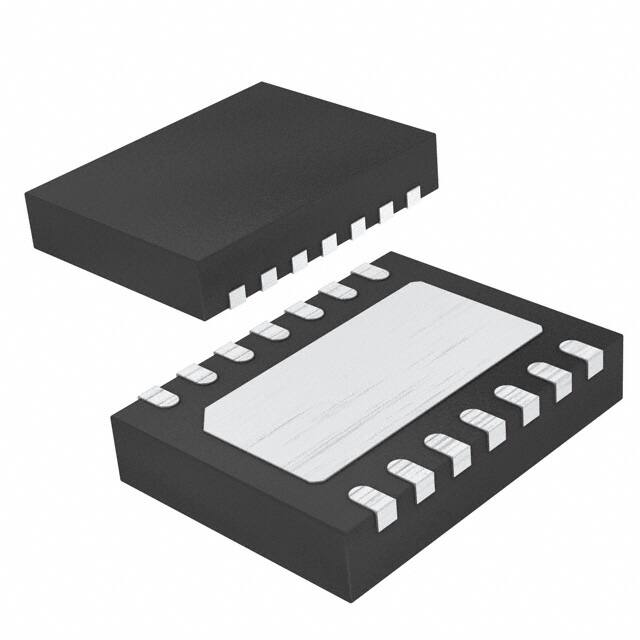
LTC2637
Octal 12-/10-/8-Bit I2C VOUT
DACs with 10ppm/°C Reference
DESCRIPTION
FEATURES
Integrated Precision Reference:
2.5V Full-Scale 10ppm/°C (LTC2637-L)
4.096V Full-Scale 10ppm/°C (LTC2637-H)
nn Maximum INL Error: 2.5LSB (LTC2637-12)
nn Low Noise: 0.75mV
P-P 0.1Hz to 200kHz
nn Guaranteed Monotonic Over –40°C to 125°C
Temperature Range
nn Selectable Internal or External Reference
nn 2.7V to 5.5V Supply Range (LTC2637-L)
nn Ultralow Crosstalk Between DACs ( 4V requires
VCC slew rates to be no greater than 110mV/µs.
Note 4: Linearity and monotonicity are defined from code kL to code 2N–1,
where N is the resolution and kL is given by kL = 0.016•(2N/ VFS), rounded
to the nearest whole code. For VFS = 2.5V and N = 12, kL = 26 and linearity
is defined from code 26 to code 4,095. For VFS = 4.096V and N = 12, kL =
16 and linearity is defined from code 16 to code 4,095.
Note 5: Inferred from measurement at code 16 (LTC2637-12), code 4
(LTC2637-10) or code 1 (LTC2637-8), and at full-scale.
Note 6: This IC includes current limiting that is intended to protect the
device during momentary overload conditions. Junction temperature can
exceed the rated maximum during current limiting. Continuous operation
above the specified maximum operating junction temperature may impair
device reliability.
MIN
TYP
MAX
UNITS
400
kHz
µs
0.9
µs
ns
Note 7: Digital inputs at 0V or VCC.
Note 8: Guaranteed by design and not production tested.
Note 9: Internal Reference mode. DAC is stepped 1/4 scale to 3/4 scale
and 3/4 scale to 1/4 scale. Load is 2kΩ in parallel with 100pF to GND.
Note 10: Temperature coefficient is calculated by dividing the maximum
change in output voltage by the specified temperature range.
Note 11: Maximum VIH = VCC(MAX) + 0.5V.
Note 12: CB = Capacitance of one bus line in pF.
Note 13: All values refer to VIH = VIN(MIN) and VIL = VIL(MAX) levels.
Note 14: Minimum VIL exceeds Absolute Maximum rating. This condition
won’t damage the IC, but could degrade performance.
Note 15: Thermal resistance of MSOP package limits IOUT to
–5mA ≤ IOUT ≤ 5mA for H-grade MSOP parts and VCC = 5V ±10%.
Rev D
10
For more information www.analog.com
�LTC2637
TYPICAL PERFORMANCE CHARACTERISTICS
TA = 25°C, unless otherwise noted. LTC2637-L12 (Internal Reference, VFS = 2.5V)
Integral Nonlinearity (INL)
1.0
Differential Nonlinearity (DNL)
1.0
VCC = 3V
0.5
DNL (LSB)
INL (LSB)
0.5
0
–0.5
–1.0
VCC = 3V
0
–0.5
1024
0
3072
2048
CODE
–1.0
4095
1024
0
3072
2048
CODE
4095
2637 G01
INL vs Temperature
INL (POS)
0.5
0
INL (NEG)
–0.5
–1.0
–50 –25
1.260
VCC = 3V
DNL (POS)
0
DNL (NEG)
–0.5
0
25 50 75 100 125 150
TEMPERATURE (°C)
1.250
1.245
–1.0
–50 –25
0
25 50 75 100 125 150
TEMPERATURE (°C)
2637 G03
1.240
–50 –25
0
25 50 75 100 125 150
TEMPERATURE (°C)
2637 G04
Settling to ±1LSB Rising
2637 G05
Settling to ±1LSB Falling
9TH CLOCK OF
3RD DATA BYTE
SCL
5V/DIV
VCC = 3V
1.255
VREF (V)
INL (LSB)
1.0
VCC = 3V
0.5
Reference Output Voltage
vs Temperature
DNL vs Temperature
DNL (LSB)
1.0
2637 G02
3/4 SCALE TO
1/4 SCALE STEP
VCC = 3V, VFS = 2.5V
RL = 2k, CL = 100pF
AVERAGE OF 256 EVENTS
VOUT
1LSB/DIV
4.5µs
3.6µs
VOUT
1LSB/DIV
1/4 SCALE TO
3/4 SCALE STEP
VCC = 3V, VFS = 2.5V
RL = 2k, CL = 100pF
AVERAGE OF 256 EVENTS
2µs/DIV
SCL
5V/DIV
2637 G06
9TH CLOCK OF
3RD DATA BYTE
2µs/DIV
2637 G07
Rev D
For more information www.analog.com
11
�LTC2637
TYPICAL PERFORMANCE CHARACTERISTICS
TA = 25°C, unless otherwise noted. LTC2637-H12 (Internal Reference, VFS = 4.096V)
Integral Nonlinearity (INL)
1.0
Differential Nonlinearity (DNL)
1.0
VCC = 5V
0.5
DNL (LSB)
INL (LSB)
0.5
0
–0.5
–1.0
VCC = 5V
0
–0.5
1024
0
3072
2048
CODE
–1.0
4095
1024
0
3072
2048
CODE
4095
2637 G08
INL vs Temperature
1.0
VCC = 5V
INL (POS)
INL (NEG)
–0.5
DNL (POS)
0
DNL (NEG)
25 50 75 100 125 150
TEMPERATURE (°C)
–1.0
–50 –25
0
25 50 75 100 125 150
TEMPERATURE (°C)
2637 G10
2.028
–50 –25
0
25 50 75 100 125 150
TEMPERATURE (°C)
2637 G12
2637 G11
Settling to ±1LSB Rising
Settling to ±1LSB Falling
9TH CLOCK OF
3RD DATA BYTE
SCL
5V/DIV
2.048
2.038
–0.5
0
VCC = 5V
2.058
0.5
0
–1.0
–50 –25
2.068
VCC = 5V
VREF (V)
INL (LSB)
0.5
Reference Output Voltage
vs Temperature
DNL vs Temperature
DNL (LSB)
1.0
2637 G09
3/4 SCALE TO
1/4 SCALE STEP
VCC = 5V, VFS = 4.095V
RL = 2k, CL = 100pF
AVERAGE OF 256 EVENTS
VOUT
1LSB/DIV
5µs
4.1µs
VOUT
1LSB/DIV
1/4 SCALE TO
3/4 SCALE STEP
VCC = 5V, VFS = 4.095V
RL = 2k, CL = 100pF
AVERAGE OF 256 EVENTS
2µs/DIV
SCL
5V/DIV
2637 G13
9TH CLOCK OF
3RD DATA BYTE
2µs/DIV
2637 G14
Rev D
12
For more information www.analog.com
�LTC2637
TYPICAL PERFORMANCE CHARACTERISTICS
TA = 25°C, unless otherwise noted.
LTC2637-10
Integral Nonlinearity (INL)
1.0
Differential Nonlinearity (DNL)
1.0
VCC = 3V
VFS = 2.5V
INTERNAL REF.
0.5
DNL (LSB)
INL (LSB)
0.5
0
–0.5
–1.0
0
–0.5
256
0
768
512
CODE
–1.0
1023
VCC = 3V
VFS = 2.5V
INTERNAL REF.
DNL (LSB)
INL (LSB)
–0.25
64
0
192
128
CODE
–0.50
255
64
0
192
128
CODE
2637 G17
Current Limiting
0.20
VCC = 5V (LTC2637-H)
VCC = 5V (LTC2637-L)
VCC = 3V (LTC2637-L)
0.15
0.10
4
∆VOUT (V)
2
0
–2
–4
Offset Error vs Temperature
3
VCC = 5V (LTC2637-H)
VCC = 5V (LTC2637-L)
VCC = 3V (LTC2637-L)
2
0.05
0
–0.05
–0.01
–6
INTERNAL REF.
CODE = MID-SCALE
–8
–20
–10
0
10
IOUT (mA)
20
30
2637 G19
–0.15
–0.20
–30
INTERNAL REF.
CODE = MID-SCALE
–20
255
2637 G18
OFFSET ERROR (mV)
Load Regulation
∆VOUT (mV)
0
–0.25
LTC2637
–10
–30
VCC = 3V
VFS = 2.5V
INTERNAL REF.
0.25
0
–0.50
1023
Differential Nonlinearity (DNL)
0.50
0.25
6
768
512
CODE
2637 G16
Integral Nonlinearity (INL)
0.50
8
256
0
2637 G15
LTC2637-8
10
VCC = 3V
VFS = 2.5V
INTERNAL REF.
–10
0
10
IOUT (mA)
20
30
2637 G20
1
0
–1
–2
–3
–50 –25
0
25 50 75 100 125 150
TEMPERATURE (°C)
2637 G21
Rev D
For more information www.analog.com
13
�LTC2637
TYPICAL PERFORMANCE CHARACTERISTICS
TA = 25°C, unless otherwise noted.
LTC2637
Large-Signal Response
Mid-Scale Glitch Impulse
Power-On Reset Glitch
LTC2637-L
9TH CLOCK OF
3RD DATA BYTE
SCL
5V/DIV
VCC
2V/DIV
VOUT
0.5V/DIV
LTC2637-H12
VCC = 5V, 3nV•s TYP
VOUT
5mV/DIV
ZERO-SCALE
VOUT
5mV/DIV
LTC2637-L12
VCC = 3V, 2.1nV•s TYP
VFS = VCC = 5V
1/4 SCALE to 3/4 SCALE
2µs/DIV
2637 G23
2µs/DIV
200µs/DIV
2637 G22
2637 G24
Headroom at Rails
vs Output Current
Exiting Power-Down to Mid-Scale
Power-On Reset to Mid-Scale
5.0
5V SOURCING
4.5
3.5
3V (LTC2637-L) SOURCING
3.0
LTC2637-H
2.5
2.0
1.5
DACs A TO G IN
POWER-DOWN
MODE
5V SINKING
1.0
0
0
1
2
3
4 5 6
IOUT (mA)
7
8
9
200µs/DIV
2637 G27
DAC to DAC Crosstalk (Dynamic)
Multiplying Bandwidth
2
9TH CLOCK OF
3RD DATA BYTE
0
–2
SCL
LTC2637-H12
5V/DIV
VCC = 5V, 3nV•s TYP
CREF = 0.1µF
1 DAC
SWITCH 0 TO FS
2V/DIV
1.4
VCC = 5V
1.2
1.0
VCC = 3V
(LTC2637-L)
–4
–6
–8
–10
–12
VOUT
2mV/DIV
0.8
0.6
2637 G26
2637 G25
SWEEP SDA, SCL,
BETWEEN 0V AND VCC
1.6
LTC2637-L
LTC2637H
VCC = 5V
INTERNAL REF
5µs/DIV
10
Supply Current vs Logic Voltage
1.8
VOUT
0.5V/DIV
VOUT
0.5V/DIV
3V (LTC2637-L) SINKING
0.5
ICC (mA)
VCC
2V/DIV
dB
VOUT (V)
9TH CLOCK OF
3RD DATA BYTE
SCL
5V/DIV
4.0
VCC = 5V
VREF(DC) = 2V
VREF(AC) = 0.2VP-P
CODE = FULL-SCALE
–14
–16
0
1
2
3
LOGIC VOLTAGE (V)
4
5
2µs/DIV
2637 G29
–18
1k
10k
100k
FREQUENCY (Hz)
1M
2637 G30
2637 G28
Rev D
14
For more information www.analog.com
�LTC2637
TYPICAL PERFORMANCE CHARACTERISTICS
TA = 25°C, unless otherwise noted.
LTC2637
Gain Error vs. Temperature
Noise Voltage vs. Frequency
500
0.5
NOISE VOLTAGE (nV/√Hz)
GAIN ERROR (%FSR)
1.0
0
–0.5
–1.0
–50 –25
0
25 50 75 100 125 150
TEMPERATURE (°C)
400
VCC = 5V
CODE = MID-SCALE
INTERNAL REF.
300
LTC2637-H
200
LTC2637-L
100
0
100
1k
10k
100k
FREQUENCY (Hz)
2637 G31
2637 G32
0.1Hz to 10Hz Voltage Noise
Gain Error vs Reference Input
1.0
VCC = 5V, VFS = 2.5V
CODE = MID-SCALE
INTERNAL REF.
VCC = 5.5V
0.8 GAIN ERROR OF 8 CHANNELS
0.6
GAIN ERROR (%FSR)
1M
0.4
0.2
10µV/DIV
0
–0.2
–0.4
–0.6
–0.8
–1.0
1
1.5
2 2.5 3 3.5 4 4.5
REFERENCE VOLTAGE (V)
5
5.5
1s/DIV
2637 G35
2637 G34
Rev D
For more information www.analog.com
15
�LTC2637
PIN FUNCTIONS
(DFN/MSOP)
VCC (Pin 1/Pin 1): Supply Voltage Input. 2.7V ≤ VCC ≤ 5.5V
(LTC2637-L) or 4.5V ≤ VCC ≤ 5.5V (LTC2637-H). Bypass
to GND with a 0.1µF capacitor.
VOUTA to VOUTH (Pins 2–5, 10–13/Pins 2–5, 12–15): DAC
Analog Voltage Outputs.
CAO (Pin 6/Pin 7): Chip Address Bit 0. Tie this pin to VCC,
GND or leave it floating to select an I2C slave address for
the part (See Tables 1 and 2).
SCL (Pin 7/Pin 8): Serial Clock Input Pin. Data is shifted
into the SDA pin at the rising edges of the clock. This
high impedance pin requires a pull-up resistor or current
source to VCC.
SDA (Pin 8/Pin 9): Serial Data Bidirectional Pin. Data is
shifted into the SDA pin and acknowledged by the SDA
pin. This pin is high impedance while data is shifted in.
Open drain N-channel output during acknowledgment.
SDA requires a pull-up resistor or current source to VCC.
REF (Pin 9/Pin 11): Reference Voltage Input or Output.
When External Reference mode is selected, REF is an input
(1V ≤ VREF ≤ VCC) where the voltage supplied sets the
full-scale DAC output voltage. When Internal Reference
is selected, the 10ppm/°C 1.25V (LTC2637-L) or 2.048V
(LTC2637-H) internal reference (half full-scale) is available at the pin. This output may be bypassed to GND with
up to 10µF, and must be buffered when driving external
DC load current.
GND (Pin 14/Pin 16): Ground.
CA2 (Pin 6, MSOP only): Chip Address Bit 2. Tie this
pin to VCC, GND or leave it floating to select an I2C slave
address for the part (See Table 1).
CA1 (Pin 10, MSOP only): Chip Address Bit 1. Tie this
pin to VCC, GND or leave it floating to select an I2C slave
address for the part (See Table 1).
Exposed Pad (Pin 15, DFN Only): Ground. Must be
soldered to PCB Ground.
Rev D
16
For more information www.analog.com
�LTC2637
BLOCK DIAGRAM
SWITCH
INTERNAL REFERENCE
REF
VREF
GND
REGISTER
REGISTER
DAC A
REGISTER
VOUTA
REGISTER
VCC
DAC H
VREF
REGISTER
REGISTER
REGISTER
REGISTER
DAC G
REGISTER
REGISTER
REGISTER
REGISTER
DAC F
REGISTER
REGISTER
REGISTER
DAC B
REGISTER
VREF
VOUTB
DAC C
VREF
VOUTD
DAC D
DAC E
(CA2)
VOUTF
VREF
VOUTE
POWER-ON RESET
CAO
(CA1)
VOUTG
VREF
VREF
VOUTC
VOUTH
DECODE
I2C
ADDRESS
DECODE
SCL
SDA
I2C INTERFACE
( ) MSOP PACKAGE ONLY
2637 BD
Rev D
For more information www.analog.com
17
�LTC2637
TEST CIRCUITS
Test Circuit 1
100Ω
CAn
VIH(CAn)/VIL(CAn)
2637 TC01
Test Circuit 2
VDD
RINH/RINL/RINF
CAn
GND
2637 TC01b
Rev D
18
For more information www.analog.com
�SCL
START
For more information www.analog.com
A5
2
A6
1
3
A4
4
A3
5
A2
SLAVE ADDRESS
6
A1
tf
7
A0
SCL
SDA
tHD(STA)
tHD(DAT)
tr
tHIGH
tSU(DAT)
tf
tSU(STA)
8
W
9
ACK
1
C3
2
C2
3
C1
5
A3
6
A2
7
A1
8
A0
9
ACK
1
2
3
4
5
2ND DATA BYTE
tHD(STA)
6
7
tSU(STO)
tSP
Figure 2. Typical LTC2637 Write Transaction
4
C0
1ST DATA BYTE
Sr
Figure 1. I2C Timing
ALL VOLTAGE LEVELS REFER TO VIH(MIN) AND VIL(MAX) LEVELS
S
tLOW
tr
8
P
9
ACK
tBUF
1
S
2
2637 F01
3
4
5
X
3RD DATA BYTE
6
X
7
X
8
X
9
ACK
2637 F02
LTC2637
TIMING DIAGRAM
Rev D
19
�LTC2637
OPERATION
The LTC2637 is a family of octal voltage output DACs in
14-lead DFN and 16-lead MSOP packages. Each DAC can
operate rail-to-rail using an external reference, or with its
full-scale voltage set by an integrated reference. Eighteen
combinations of accuracy (12-, 10-, and 8-bit), power-on
reset value (zero-scale, mid-scale in internal reference
mode, or mid-scale in external reference mode), and fullscale voltage (2.5V or 4.096V) are available. The LTC2637
is controlled using a 2-wire I2C interface.
Power-On Reset
The LTC2637-HZ/LTC2637-LZ clear the output to zeroscale when power is first applied, making system initialization consistent and repeatable.
For some applications, downstream circuits are active
during DAC power-up, and may be sensitive to nonzero
outputs from the DAC during this time. The LTC2637
contains circuitry to reduce the power-on glitch: the
analog output typically rises less than 5mV above zeroscale during power on. In general, the glitch amplitude
decreases as the power supply ramp time is increased.
See Power-On Reset Glitch in the Typical Performance
Characteristics section.
Transfer Function
The digital-to-analog transfer function is:
⎛ k ⎞
VOUT(IDEAL) = ⎜ N ⎟ VREF
⎝2 ⎠
where k is the decimal equivalent of the binary DAC
input code, N is the resolution, and VREF is either 2.5V
(LTC2637-LMI/LTC2637-LMX/LTC2637-LZ) or 4.096V
(LTC2637-HMI/LTC2637-HMX/LTC2637-HZ) when in
Internal Reference mode, and the voltage at REF when in
External Reference mode.
I2C Serial Interface
The LTC2637 communicates with a host using the standard 2-wire I2C interface. The timing diagrams (Figures
1 and 2) show the timing relationship of the signals on
the bus. The two bus lines, SDA and SCL, must be high
when the bus is not in use. External pull-up resistors or
current sources are required on these lines. The value of
these pull-up resistors is dependent on the power supply
and can be obtained from the I2C specifications. For an
I2C bus operating in the fast mode, an active pull-up will
be necessary if the bus capacitance is greater than 200pF.
The LTC2637-HMI/LTC2637-HMX/LTC2637-LMI/
LTC2637‑LMX provide an alternative reset, setting the
output to mid-scale when power is first applied. The
LTC2637-LMI and LTC2637-HMI power up in internal
reference mode, with the output set to a mid-scale voltage of 1.25V and 2.048V, respectively. The LTC2637LMX and LTC2637-HMX power-up in external reference
mode, with the output set to mid-scale of the external
reference. Default reference mode selection is described
in the Reference Modes section.
The LTC2637 is a receive-only (slave) device. The master
can write to the LTC2637. The LTC2637 will not acknowledge (NAK) a read request from the master.
Power Supply Sequencing
When the master has finished communicating with the
slave, it issues a STOP condition. A STOP condition is
generated by transitioning SDA from low to high while
SCL is high. The bus is then free for communication with
another I2C device.
The voltage at REF (Pin 9, DFN; Pin 11, MSOP) must be
kept within the range –0.3V ≤ VREF ≤ VCC + 0.3V (see
Absolute Maximum Ratings). Particular care should be
taken to observe these limits during power supply turnon and turn-off sequences, when the voltage at VCC is in
transition.
START (S) and STOP (P) Conditions
When the bus is not in use, both SCL and SDA must be
high. A bus master signals the beginning of a communication to a slave device by transmitting a START condition. A
START condition is generated by transitioning SDA from
high to low while SCL is high.
Rev D
20
For more information www.analog.com
�LTC2637
OPERATION
Acknowledge
Table 1. Slave Address Map (MSOP Package)
The Acknowledge (ACK) signal is used for handshaking
between the master and the slave. An ACK (active LOW)
generated by the slave lets the master know that the latest byte of information was properly received. The ACK
related clock pulse is generated by the master. The master
releases the SDA line (HIGH) during the ACK clock pulse.
The slave-receiver must pull down the SDA bus line during the ACK clock pulse so that it remains a stable LOW
during the HIGH period of this clock pulse. The LTC2637
responds to a write by a master in this manner but does
not acknowledge a read operation; in that case, SDA is
retained HIGH during the period of the ACK clock pulse.
Chip Address
The state of pins CA0, CA1 and CA2 (CA1 and CA2 are
only available on the MSOP package) determines the
slave address of the part. These pins can each be set to
any one of three states: VCC, GND or float. This results
in 27 (MSOP Package) or 3 (DFN Package) selectable
addresses for the part. The slave address assignments
are shown in Tables 1 and 2.
In addition to the address selected by the address pins,
the part also responds to a global address. This address
allows a common write to all LTC2637 parts to be accomplished using one 3-byte write transaction on the I2C bus.
The global address, listed at the end of Tables 1 and 2, is
a 7-bit hardwired address not selectable by CA0, CA1 or
CA2. If another global address is required, please consult
the factory.
The maximum capacitive load allowed on the address pins
(CA0, CA1 and CA2) is 10pF, as these pins are driven
during address detection to determine if they are floating.
CA2
CA1
CA0
A6
A5
A4
A3
A2
A1
A0
GND
GND
GND
0
0
1
0
0
0
0
GND
GND
FLOAT
0
0
1
0
0
0
1
GND
GND
VCC
0
0
1
0
0
1
0
GND
FLOAT
GND
0
0
1
0
0
1
1
GND
FLOAT
FLOAT
0
1
0
0
0
0
0
GND
FLOAT
VCC
0
1
0
0
0
0
1
GND
VCC
GND
0
1
0
0
0
1
0
GND
VCC
FLOAT
0
1
0
0
0
1
1
GND
VCC
VCC
0
1
1
0
0
0
0
FLOAT
GND
GND
0
1
1
0
0
0
1
FLOAT
GND
FLOAT
0
1
1
0
0
1
0
FLOAT
GND
VCC
0
1
1
0
0
1
1
FLOAT
FLOAT
GND
1
0
0
0
0
0
0
FLOAT
FLOAT
FLOAT
1
0
0
0
0
0
1
FLOAT
FLOAT
VCC
1
0
0
0
0
1
0
FLOAT
VCC
GND
1
0
0
0
0
1
1
FLOAT
VCC
FLOAT
1
0
1
0
0
0
0
FLOAT
VCC
VCC
1
0
1
0
0
0
1
VCC
GND
GND
1
0
1
0
0
1
0
VCC
GND
FLOAT
1
0
1
0
0
1
1
VCC
GND
VCC
1
1
0
0
0
0
0
VCC
FLOAT
GND
1
1
0
0
0
0
1
VCC
FLOAT
FLOAT
1
1
0
0
0
1
0
VCC
FLOAT
VCC
1
1
0
0
0
1
1
VCC
VCC
GND
1
1
1
0
0
0
0
VCC
VCC
FLOAT
1
1
1
0
0
0
1
VCC
VCC
VCC
1
1
1
0
0
1
0
1
1
1
0
0
1
1
GLOBAL ADDRESS
Table 2. Slave Address Map (DFN Package)
CA0
A6
A5
A4
A3
A2
A1
A0
GND
0
0
1
0
0
0
0
FLOAT
0
0
1
0
0
0
1
VCC
0
0
1
0
0
1
0
GLOBAL ADDRESS
1
1
1
0
0
1
1
Rev D
For more information www.analog.com
21
�LTC2637
OPERATION
Write Word Protocol
Table 3. Command Codes
The master initiates communication with the LTC2637
with a START condition and a 7-bit slave address followed
by the Write bit (W) = 0. The LTC2637 acknowledges by
pulling the SDA pin low at the 9th clock if the 7-bit slave
address matches the address of the part (set by CA0, CA1
or CA2) or the global address. The master then transmits
three bytes of data. The LTC2637 acknowledges each byte
of data by pulling the SDA line low at the 9th clock of each
data byte transmission. After receiving three complete
bytes of data, the LTC2637 executes the command specified in the 24-bit input word.
If more than three data bytes are transmitted after a valid
7-bit slave address, the LTC2637 does not acknowledge
the extra bytes of data (SDA is high during the 9th clock).
The format of the three data bytes is shown in Figure 3.
The first byte of the input word consists of the 4-bit command, followed by the 4-bit DAC address. The next two
bytes contain the 16-bit data word, which consists of the
12-, 10- or 8-bit input code, MSB to LSB, followed by
4, 6 or 8 don’t-care bits (LTC2637-12, LTC2637-10 and
LTC2637-8, respectively). A typical LTC2637 write transaction is shown in Figure 4.
The command bit assignments (C3-C0) and address (A3A0) assignments are shown in Tables 3 and 4. The first
four commands in the table consist of write and update
operations. A write operation loads a 16-bit data word
from the 32-bit shift register into the input register. In an
update operation, the data word is copied from the input
register to the DAC register. Once copied into the DAC
register, the data word becomes the active 12-, 10-, or
8-bit input code, and is converted to an analog voltage at
the DAC output. Write to and Update combines the first
two commands. The Update operation also powers up the
DAC if it had been in power-down mode. The data path
and registers are shown in the Block Diagram.
COMMAND*
C3
C2
C1
C0
0
0
0
0
Write to Input Register n
0
0
0
1
Update (Power Up) DAC Register n
0
0
1
0
Write to Input Register n, Update (Power Up) All
0
0
1
1
Write to and Update (Power Up) DAC Register n
0
1
0
0
Power Down n
0
1
0
1
Power Down Chip (All DAC’s and Reference)
0
1
1
0
Select Internal Reference (Power Up Reference)
0
1
1
1
Select External Reference (Power Down Internal
Reference)
1
1
1
1
No Operation
*Command codes not shown are reserved and should not be used.
Table 4. Address Codes
ADDRESS (n)*
A3
A2
A1
A0
0
0
0
0
DAC A
0
0
0
1
DAC B
0
0
1
0
DAC C
0
0
1
1
DAC D
0
1
0
0
DAC E
0
1
0
1
DAC F
0
1
1
0
DAC G
0
1
1
1
DAC H
1
1
1
1
All DACs
*Address codes not shown are reserved and should not be used.
Reference Modes
For applications where an accurate external reference is
either not available, or not desirable due to limited space,
the LTC2637 has a user-selectable, integrated reference.
The integrated reference voltage is internally amplified
by 2x to provide the full-scale DAC output voltage range.
Rev D
22
For more information www.analog.com
�LTC2637
OPERATION
Write Word Protocol for LTC2637
S
SLAVE ADDRESS
W ACK 1ST DATA BYTE ACK 2ND DATA BYTE ACK 3RD DATA BYTE ACK
INPUT WORD
Input Word (LTC2637-12)
C3
C2
C1 C0
A3
A2
P
A1
A1 D11 D10 D9
1ST DATA BYTE
D8
D7
D6
D5
D4 D3 D2 D1
2ND DATA BYTE
D0
X
X
X
X
X
X
X
X
3RD DATA BYTE
Input Word (LTC2637-10)
C3
C2
C1 C0
A3
A2
A1
A0
D9
D8
1ST DATA BYTE
D7
D6
D5
D4
D3
D2 D1 D0
X
2ND DATA BYTE
X
X
X
3RD DATA BYTE
Input Word (LTC2637-8)
C3
C2
C1 C0
A3
A2
1ST DATA BYTE
A1
A0
D7
D6
D5
D4
D3
D2
D1
D0
X
X
X
2ND DATA BYTE
X
X
X
3RD DATA BYTE
2637 F03
Figure 3. Command and Data Input Format
The LTC2637-LMI/LTC2637-LMX/ LTC2637-LZ provides
a full-scale output of 2.5V. The LTC2637-HMI/LTC2637HMX/LTC2637-HZ provides a full-scale output of 4.096V.
The internal reference can be useful in applications where
the supply voltage is poorly regulated. Internal Reference
mode can be selected by using command 0110b, and is
the power-on default for LTC2637-HZ/ LTC2637-LZ, as
well as for LTC2637-HMI/LTC2637-LMI.
The 10ppm/°C, 1.25V (LTC2637-LMI/LTC2637-LMX/
LTC2637-LZ) or 2.048V (LTC2637-HMI/LTC2637-HMX/
LTC2637-HZ) internal reference is available at the REF pin.
Adding bypass capacitance to the REF pin will improve
noise performance; and up to 10µF can be driven without
oscillation. The REF output must be buffered when driving
an external DC load current.
Alternatively, the DAC can operate in External Reference
mode using command 0111b. In this mode, an input
voltage supplied externally to the REF pin provides the
reference (1V ≤ VREF ≤ VCC) and the supply current is
reduced. The external reference voltage supplied sets the
full-scale DAC output voltage. External Reference mode is
the power-on default for LTC2637-HMX/LTC2637-LMX.
The reference mode of LTC2637-HZ/LTC2637-LZ/
LTC2637-HMI/LTC2637-LMI (internal reference poweron default), can be changed by software command after
power up. The same is true for LTC2637-HMX/LTC2637LMX (external reference power-on default).
Power-Down Mode
For power-constrained applications, power-down mode
can be used to reduce the supply current whenever less
than eight DAC outputs are needed. When in powerdown, the buffer amplifiers, bias circuits, and integrated
reference circuits are disabled, and draw essentially zero
current. The DAC outputs are put into a high-impedance
state, and the output pins are passively pulled to ground
through individual 200kΩ resistors. Input and DAC register contents are not disturbed during power down.
Any DAC channel or combination of channels can be put
into power-down mode by using command 0100b in combination with the appropriate DAC address, (n). The supply current is reduced approximately 10% for each DAC
powered down. The integrated reference is automatically
powered down when external reference is selected using
Rev D
For more information www.analog.com
23
�LTC2637
OPERATION
command 0111b. In addition, all the DAC channels and
the integrated reference together can be put into powerdown mode using Power Down Chip command 0101b.
When the integrated reference and all DAC channels are
in power-down mode, the REF pin becomes high impedance (typically > 1GΩ). For all power-down commands
the 16-bit data word is ignored.
Normal operation resumes after executing any command
that includes a DAC update, (as shown in Table 1). The
selected DAC is powered up as its voltage output is updated. When a DAC which is in a powered-down state is
powered up and updated, normal settling is delayed. If
less than eight DACs are in a powered-down state prior
to the update command, the power-up delay time is 10µs.
However, if all eight DACs and the integrated reference
are powered down, then the main bias generation circuit
block has been automatically shut down in addition to
the DAC amplifiers and reference buffers. In this case,
the power up delay time is 12µs. The power-up of the
integrated reference depends on the command that powered it down. If the reference is powered down using the
Select External Reference Command (0111b), then it can
only be powered back up using Select Internal Reference
Command (0110b). However, if the reference was powered down using Power Down Chip Command (0101b),
then in addition to Select Internal Reference Command
(0110b), any command that powers up the DACs will also
power up the integrated reference.
Voltage Output
The LTC2637’s DAC output integrated rail-to-rail amplifiers have guaranteed load regulation when sourcing or
sinking up to 10mA at 5V, and 5mA at 3V.
Load regulation is a measure of the amplifier’s ability to
maintain the rated voltage accuracy over a wide range of
load current. The measured change in output voltage per
change in forced load current is expressed in LSB/mA.
DC output impedance is equivalent to load regulation, and
may be derived from it by simply calculating a change in
units from LSB/mA to ohms. The amplifier’s DC output
impedance is 0.1Ω when driving a load well away from
the rails.
When drawing a load current from either rail, the output
voltage headroom with respect to that rail is limited by the
50Ω typical channel resistance of the output devices (e.g.,
when sinking 1mA, the minimum output voltage is 50Ω
• 1mA, or 50mV). See the graph Headroom at Rails vs
Output Current in the Typical Performance Characteristics
section.
The amplifier is stable driving capacitive loads of up to
500pF.
Rail-to-Rail Output Considerations
In any rail-to-rail voltage output device, the output is limited to voltages within the supply range.
Since the analog output of the DAC cannot go below
ground, it may limit for the lowest codes as shown in
Figure 5b. Similarly, limiting can occur near full scale
when the REF pin is tied to VCC. If VREF = VCC and the
DAC full-scale error (FSE) is positive, the output for the
highest codes limits at VCC, as shown in Figure 5c. No
full-scale limiting can occur if VREF is less than VCC–FSE.
Offset and linearity are defined and tested over the region
of the DAC transfer function where no output limiting can
occur.
Board Layout
The PC board should have separate areas for the analog
and digital sections of the circuit. A single, solid ground
plane should be used, with analog and digital signals carefully routed over separate areas of the plane. This keeps
digital signals away from sensitive analog signals and
minimizes the interaction between digital ground currents
Rev D
24
For more information www.analog.com
�LTC2637
OPERATION
and the analog section of the ground plane. The resistance
from the LTC2637 GND pin to the ground plane should
be as low as possible. Resistance here will add directly to
the effective DC output impedance of the device (typically
0.1Ω). Note that the LTC2637 is no more susceptible to
this effect than any other parts of this type; on the contrary, it allows layout-based performance improvements
to shine rather than limiting attainable performance with
excessive internal resistance.
supply is connected to the board and the DAC ground pin.
Thus the DAC ground pin becomes the common point for
analog ground, digital ground, and power ground. When
the LTC2637 is sinking large currents, this current flows
out the ground pin and directly to the power ground trace
without affecting the analog ground plane voltage.
It is sometimes necessary to interrupt the ground plane
to confine digital ground currents to the digital portion of
the plane. When doing this, make the gap in the plane only
as long as it needs to be to serve its purpose and ensure
that no traces cross over the gap.
Another technique for minimizing errors is to use a separate power ground return trace on another board layer.
The trace should run between the point where the power
SLAVE ADDRESS
COMMAND/ADDRESS
A6
A5
A4
A3 A2
A1
A0
SDA
A6
A5
A4
A3
A2
A1
A0
SCL
1
2
3
4
5
6
7
START
VOUT
W
8
MS DATA
C3
C2
C1
C0
A3
A2
A1
A0
ACK C3
C2
C1
C0
A3
A2
A1
A0 ACK
2
3
4
5
6
7
8
9
1
D11 D10 D9
9
D8
D7
LS DATA
D6
D5
D4
D3 D2
D1
D0
X
X
X
X
ACK
1
2
3
4
5
6
7
8
9
STOP
ACK
1
2
3
4
5
6
7
8
9
FULL-SCALE
VOLTAGE
ZERO-SCALE
VOLTAGE
X = DON’T CARE
2637 F04
Figure 4. Typical LTC2637 Input Waveform—Programming DAC Output for Full-Scale
VREF = VCC
POSITIVE
FSE
VREF = VCC
OUTPUT
VOLTAGE
OUTPUT
VOLTAGE
INPUT CODE
(c)
OUTPUT
VOLTAGE
0V
NEGATIVE
OFFSET
0V
0
2,048
INPUT CODE
(a)
2637 F04
4,095
INPUT CODE
(b)
Figure 5. Effects of Rail-to-Rail Operation On a DAC Transfer Curve (Shown for 12 Bits).
(a) Overall Transfer Function
(b) Effect of Negative Offset for Codes Near Zero
(c) Effect of Positive Full-Scale Error for Codes Near Full-Scale
Rev D
For more information www.analog.com
25
�LTC2637
TYPICAL APPLICATION
LTC2637 DACs Adjust LTC2755-16 Offsets, Amplified with LT1991 PGA to ±5V
5V
15
15V
0.1µF
0.1µF
8
7
+
5
VDD
LTC2755
IOUT1A 59
63 RCOM1
DAC A
1/2 LT1469
4
–
IOUT2A 2
6
0.1µF
2
3
–
8
1/2 LT1469
+
15V
1
OUTA
4
2
3
+
–
30k
–15V
+
–
LT1634-1.25
–
+
DAC C
DAC B
30k
0.1µF
LTC2637MS-LMI12
DAC A
DAC H
DAC B
DAC G
15
OUTB
GND
8 M9
9 M3
10 M1
1 P1
2 P3
3 P9
7
VCC
LT1991
0.1µF
OUT
6
VOUT = ±5V
REF
VEE
5
4
14
0.1µF
–15V
4
DAC C
DAC F
DAC D
DAC E
13
–15V
5
30k
–15V
1
LT1634-1.25
30k
OUTC
VCC
LT1634-1.25
LT1634-1.25
–15V
REF
0.1µF
–15V
DAC D
5V
11
0.1µF
RVOSA 58
62 REFA
+
–
0.1µF
–15V
OUTD
LTC6240
15V
RFBA 60
61 ROFSA
64 RIN1
12
19
I2C
BUS
9
SDA
8 SCL
7
CA0
10
CA1
CA2 6
16
GND
2637 TA02
Rev D
26
For more information www.analog.com
�LTC2637
PACKAGE DESCRIPTION
Please refer to http://www.linear.com/product/LTC2637#packaging for the most recent package drawings.
DE Package
14-Lead Plastic DFN (4mm × 3mm)
(Reference LTC DWG # 05-08-1708 Rev B)
0.70 ±0.05
3.30 ±0.05
3.60 ±0.05
2.20 ±0.05
1.70 ±0.05
PACKAGE
OUTLINE
0.25 ±0.05
0.50 BSC
3.00 REF
RECOMMENDED SOLDER PAD PITCH AND DIMENSIONS
APPLY SOLDER MASK TO AREAS THAT ARE NOT SOLDERED
4.00 ±0.10
(2 SIDES)
R = 0.115
TYP
8
R = 0.05
TYP
0.40 ±0.10
14
3.30 ±0.10
3.00 ±0.10
(2 SIDES)
1.70 ±0.10
PIN 1 NOTCH
R = 0.20 OR
0.35 × 45°
CHAMFER
PIN 1
TOP MARK
(SEE NOTE 6)
0.200 REF
(DE14) DFN 0806 REV B
7
0.75 ±0.05
1
0.25 ±0.05
0.50 BSC
3.00 REF
0.00 – 0.05
BOTTOM VIEW—EXPOSED PAD
NOTE:
1. DRAWING PROPOSED TO BE MADE VARIATION OF VERSION (WGED-3) IN JEDEC
PACKAGE OUTLINE MO-229
2. DRAWING NOT TO SCALE
3. ALL DIMENSIONS ARE IN MILLIMETERS
4. DIMENSIONS OF EXPOSED PAD ON BOTTOM OF PACKAGE DO NOT INCLUDE
MOLD FLASH. MOLD FLASH, IF PRESENT, SHALL NOT EXCEED 0.15mm ON ANY SIDE
5. EXPOSED PAD SHALL BE SOLDER PLATED
6. SHADED AREA IS ONLY A REFERENCE FOR PIN 1 LOCATION ON THE
TOP AND BOTTOM OF PACKAGE
Rev D
For more information www.analog.com
27
�LTC2637
PACKAGE DESCRIPTION
Please refer to http://www.linear.com/product/LTC2637#packaging for the most recent package drawings.
MS Package
16-Lead Plastic MSOP
(Reference LTC DWG # 05-08-1669 Rev A)
0.889 ±0.127
(.035 ±.005)
5.10
(.201)
MIN
3.20 – 3.45
(.126 – .136)
4.039 ±0.102
(.159 ±.004)
(NOTE 3)
0.50
(.0197)
BSC
0.305 ±0.038
(.0120 ±.0015)
TYP
RECOMMENDED SOLDER PAD LAYOUT
0.254
(.010)
DETAIL “A”
3.00 ±0.102
(.118 ±.004)
(NOTE 4)
4.90 ±0.152
(.193 ±.006)
0° – 6° TYP
0.280 ±0.076
(.011 ±.003)
REF
16151413121110 9
GAUGE PLANE
0.53 ±0.152
(.021 ±.006)
DETAIL “A”
0.18
(.007)
SEATING
PLANE
1.10
(.043)
MAX
0.17 – 0.27
(.007 – .011)
TYP
1234567 8
0.50
(.0197)
BSC
NOTE:
1. DIMENSIONS IN MILLIMETER/(INCH)
2. DRAWING NOT TO SCALE
3. DIMENSION DOES NOT INCLUDE MOLD FLASH, PROTRUSIONS OR GATE BURRS.
MOLD FLASH, PROTRUSIONS OR GATE BURRS SHALL NOT EXCEED 0.152mm (.006") PER SIDE
4. DIMENSION DOES NOT INCLUDE INTERLEAD FLASH OR PROTRUSIONS.
INTERLEAD FLASH OR PROTRUSIONS SHALL NOT EXCEED 0.152mm (.006") PER SIDE
5. LEAD COPLANARITY (BOTTOM OF LEADS AFTER FORMING) SHALL BE 0.102mm (.004") MAX
0.86
(.034)
REF
0.1016 ±0.0508
(.004 ±.002)
MSOP (MS16) 0213 REV A
Rev D
28
For more information www.analog.com
�LTC2637
REVISION HISTORY
REV
DATE
DESCRIPTION
PAGE NUMBER
A
10/09
Update LTC2637-12 Maximum Limits.
B
06/10
Added details to Note 3.
10
Revised Typical Application circuit.
25
5, 6, 8
Added Typical Application drawing and revised Related Parts.
28
C
06/17
Updated Note 3.
10
D
04/18
Edits to Note 3.
10
Rev D
Information furnished by Analog Devices is believed to be accurate and reliable. However, no responsibility is assumed by Analog
Devices for its use, nor for any infringements of patents or other rights of third parties that may result from its use. Specifications
subject to change without notice. No license For
is granted
implication or
otherwise under any patent or patent rights of Analog Devices.
more by
information
www.analog.com
29
�LTC2637
TYPICAL APPLICATION
LTC2637 DACs Adjust LTC2755-16 Offsets, Amplified with LT®1991 PGA to ±5V
5V
15
15V
0.1µF
0.1µF
8
7
+
5
VDD
LTC2755
IOUT1A 59
63 RCOM1
DAC A
1/2 LT1469
4
–
IOUT2A 2
6
0.1µF
2
3
–
8
1/2 LT1469
+
15V
1
OUTA
5V
4
11
0.1µF
RVOSA 58
62 REFA
+
–
0.1µF
DAC D
2
3
+
–
30k
–15V
–
+
DAC C
DAC B
+
–
LT1634-1.25
1
0.1µF
LTC2637MS-LMI12
DAC A
DAC H
DAC B
DAC G
15
30k
OUTB
GND
1 P1
2 P3
3 P9
0.1µF
7
VCC
LT1991
OUT
6
VOUT = ±5V
REF
VEE
5
4
0.1µF
–15V
4
DAC C
DAC F
DAC D
DAC E
13
–15V
5
30k
8 M9
9 M3
10 M1
14
LT1634-1.25
30k
OUTC
VCC
LT1634-1.25
LT1634-1.25
–15V
REF
0.1µF
–15V
–15V
OUTD
LTC6240
15V
RFBA 60
61 ROFSA
64 RIN1
19
I2C
BUS
–15V
9
SDA
8 SCL
12
7
CA0
10
CA1
CA2 6
16
GND
2637 TA03
RELATED PARTS
PART NUMBER
DESCRIPTION
COMMENTS
LTC2636
Octal 12-/10-/8-Bit, SPI VOUT DACs with 10ppm/°C Reference
125μA per DAC, 2.7V to 5.5V Supply Range, 10ppm/°C Reference,
External REF Mode, Rail-to-Rail Output, 14-Lead 4mm × 3mm
DFN and 16-Lead MSOP Packages
LTC1660/LTC1665
Octal 10/8-Bit VOUT DACs in 16-Pin Narrow SSOP
VCC = 2.7V to 5.5V, Micropower, Rail-to-Rail Output
LTC2605/LTC2615/ Octal 16-/14-/12-Bit VOUT DACs with I2C Interface
LTC2625
250μA per DAC, 2.7V to 5.5V Supply Range, Rail-to-Rail Output,
I2C Interface
LTC2600/LTC2610/ Octal 16-/14-/12-Bit VOUT DACs in 16-Lead Narrow SSOP
LTC2620
250μA per DAC, 2.5V to 5.5V Supply Range, Rail-to-Rail Output,
SPI Serial Interface
LTC2656/LTC2657
Octal 16-/12 Bit, SPI/I2C VOUT DACs with 10ppm/°C Max
Reference
±4LSB INL max at 16-Bits and ±2mV Offset Error, Rail-to-Rail
Output, 20-Lead 4mm × 5mm QFN and 16-Lead TSSOP Packages
LTC2654/LTC2655
Quad 16-/12 Bit, SPI/I2C VOUT DACs with 10ppm/°C Max
Reference
±4LSB INL max at 16-Bits and ±2mV Offset Error, Rail-to-Rail
Output, 20-Lead 4mm × 4mm QFN and 16-Lead Narrow SSOP
Packages
LTC2634/LTC2635
Quad 12-/10-/8-Bit SPI/I2C VOUT DACs with 10ppm/°C
Reference
±2.5 LSB INL, 2.7V to 5.5V Supply Range, 10ppm/°C Reference,
External REF Mode, 16-Pin 3mm × 3mm QFN and 10-Lead MSOP
Packages
LTC2630/LTC2632
Single 12-/10-/8-Bit, SPI/ I2C VOUT DACs with 10ppm/°C
Reference
180μA per DAC, 2.7V to 5.5V Supply Range, 10ppm/°C Reference,
Rail-to-Rail Output, in SC70 (LTC2630)/ ThinSOT™ (LTC2631)
LTC2640
Single 12-/10-/8-Bit, SPI VOUT DACs with 10ppm/°C Reference
180μA per DAC, 2.7V to 5.5V Supply Range, 10ppm/°C Reference,
External REF Mode, Rail-to-Rail Output, in ThinSOT
LT1991
Precision, 100µA Gain Selectable Amplifier
Gain Accuracy of 0.04%, Gains from –13 to 14, 100μA Precision
Op-Amp
LT1469
Dual 90MHz, 22V/µs 16-Bit Accurate Operational Amplifier
90MHz Gain Bandwidth, 125µV offset, 900ns , 22V/µs Slew Rate
Precision Op-Amp
Amplifiers
Rev D
30
D16869-0-5/18(D)
For more information www.analog.com
www.analog.com
ANALOG DEVICES, INC. 2009-2018
�