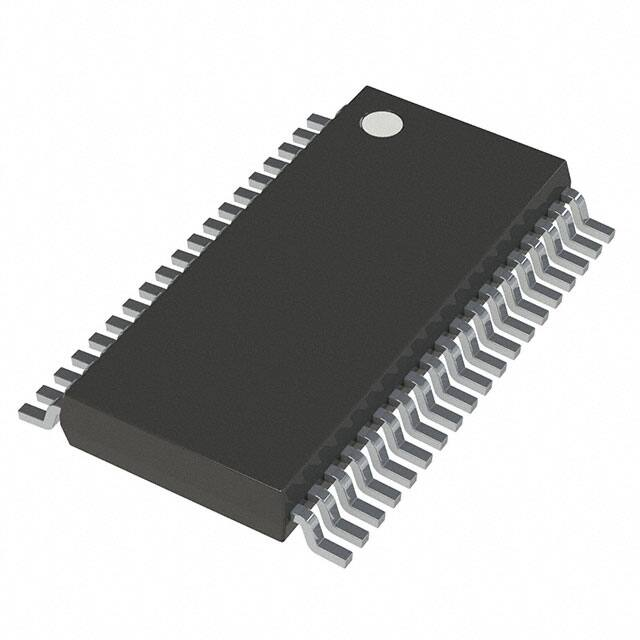
LTC2874
Quad IO-Link Master
Hot Swap Controller
and PHY
Description
Features
IO-Link® Compatible (COM1/COM2/COM3)
8V to 34V Operation
Hot Swap™ Controller Protected Supply Outputs
Discrete Power MOSFETs for Ruggedness and
Flexibility
n Configurable 100mA (4-Port), 200mA (2-Port), or
400mA (1-Port) CQ Drive Capability
n Automatic Wake-Up Pulse Generation
n Automatic Cable Sensing
n CQ Pins Protected to ±50V
n Configurable L+ Current Limit with Foldback
n Short Circuit, Input UV/OV and Thermal Protection
n Optional Interrupt and Auto-Retry after Faults
n 2.9V to 5.5V Logic Supply for Flexible Digital Interface
n No Damage or Latchup to ±8kV HBM ESD
n 38-Lead (5mm × 7mm) QFN and TSSOP Packages
n
n
n
n
Applications
IO-Link Masters
Intelligent Sensors and Actuators
n Factory Automation Networks
The LTC®2874 provides a rugged, 4-port IO-Link power and
communications interface to remote devices connected
by cables up to 20m in length.
Output supply voltage and inrush current are ramped
up in a controlled manner using external N-channel
MOSFETs, providing improved robustness compared to
fully integrated solutions.
Wake-up pulse generation, line noise suppression, connection sensing and automatic restart after fault conditions
are supported, along with signaling at 4.8kb/s, 38.4kb/s,
and 230.4kb/s.
Configuration and fault reporting are exchanged using
a SPI-compatible 4-wire interface that operates at clock
rates up to 20MHz.
The LTC2874 implements an IO-Link master PHY. For
IO-Link device designs, see the LT®3669.
L, LT, LTC, LTM, Linear Technology, the Linear logo, µModule are registered trademarks and
Hot Swap is a trademark of Linear Technology Corporation. IO-Link is a registered trademark of
PROFIBUS User Organization (PNO). All other trademarks are the property of their respective
owners.
n
n
Typical Application
Quad-Port 200mA Power Source and Signaling Interface
Operating Waveforms
8V TO 34V
100µF
VDD
1µF
VL
2.9V TO 5.5V
VCC
IRQ
4
1µF
4
CQ2
20V/DIV
SENSE–3
SENSE–4
4
0.2Ω
SENSE–1
SENSE–2
4.7k
IRQ
CQ1
SENSE+
LTC2874
TXENn
GATE1
TXDn
GATE2
RXDn
GATE3
CQ3
10Ω
CQ4
4µs/DIV
LOAD: 4nF
CQ1, CQ3: SLEW = 0
CQ2, CQ4: SLEW = 1
GATE4
µC
CS
L+1
SCK
CQ1
SDI
L+2
SDO
CQ2
L+3
CQ3
L+4
GND
GND
CQ4
2874 TA01b
1
4
2
3
1
4
2
3
1
4
3
2
1
4
3
2
2874 TA01a
2874fb
For more information www.linear.com/LTC2874
1
�LTC2874
Absolute Maximum Ratings
(Notes 1, 2, 3)
Input Supplies
VDD......................................................... –0.3V to 40V
VL............................................................. –0.3V to 6V
Input Voltages
CS, SCK, SDI, TXD ................................... –0.3V to 6V
TXEN............................................. –0.3V to VL + 0.3V
CQ.................................................... VDD – 50V to 50V
GATE – L+ (Note 4)................................. –0.3V to 10V
L+.............................................................. –6V to 50V
SENSE+, SENSE–....................... VDD – 2V to VDD + 2V
Output Voltages
GATE........................................... –0.3V to (VL+) + 15V
IRQ........................................................... –0.3V to 6V
RXD, SDO...................................... –0.3V to VL + 0.3V
Operating Temperature Range
LTC2874I...............................................–40°C to 85°C
Maximum Junction Temperature........................... 150°C
Storage Temperature Range................... –65°C to 150°C
Lead Temperature (Soldering, 10 sec)
FE Package........................................................ 300°C
Pin Configuration
TOP VIEW
36 TXEN3
L+4
4
35 TXD3
CQ4
5
34 RXD3
CQ3
6
33 CS
GATE3
7
32 SCK
SENSE–3
8
31 SDI
L+3
9
30 GND
SENSE+ 10
VDD 11
GATE2 12
39
GND
38 37 36 35 34 33 32
CQ4 1
31 TXD3
CQ3 2
30 RXD3
GATE3 3
29 CS
SENSE–3 4
28 SCK
L+3 5
27 SDI
SENSE+ 6
29 GND
28 VL
26 GND
39
GND
VDD 7
25 GND
GATE2 8
27 TXEN2
24 VL
SENSE–2 9
23 TXEN2
SENSE–2 13
26 TXD2
L+2 10
22 TXD2
L+2 14
25 RXD2
CQ2 11
21 RXD2
CQ2 15
24 SDO
CQ1 12
IRQ
TXEN1
20 RXD1
TXD1
21 TXD1
L+1 19
L+1
22 TXEN1
RXD1
GATE1
23 IRQ
SENSE–1 18
20 SDO
13 14 15 16 17 18 19
SENSE–1
CQ1 16
GATE1 17
UHF PACKAGE
38-LEAD (5mm × 7mm) PLASTIC QFN
FE PACKAGE
38-LEAD PLASTIC TSSOP
TJMAX = 150°C, θJA = 25°C/W (NOTE 5)
EXPOSED PAD (PIN 39) IS GND, MUST BE SOLDERED TO PCB
2
TXEN3
37 RXD4
3
RXD4
2
TXD4
GATE4
SENSE–4
TXEN4
TOP VIEW
GATE4
38 TXD4
SENSE–4
1
L+4
TXEN4
TJMAX = 150°C, θJA = 34°C/W (NOTE 5)
EXPOSED PAD (PIN 39) IS GND, MUST BE SOLDERED TO PCB
2874fb
For more information www.linear.com/LTC2874
�LTC2874
Order Information
LEAD FREE FINISH
TAPE AND REEL
PART MARKING
PACKAGE DESCRIPTION
TEMPERATURE RANGE
LTC2874IFE#PBF
LTC2874IFE#TRPBF
LTC2874FE
38-Lead Plastic TSSOP
–40°C to 85°C
LTC2874IUHF#PBF
LTC2874IUHF#TRPBF
2874
38-Lead (5mm × 7mm) Plastic QFN
–40°C to 85°C
Consult LTC Marketing for parts specified with wider operating temperature ranges.
Consult LTC Marketing for information on nonstandard lead based finish parts.
For more information on lead free part marking, go to: http://www.linear.com/leadfree/
For more information on tape and reel specifications, go to: http://www.linear.com/tapeandreel/
Electrical Characteristics
The l denotes the specifications which apply over the full operating
temperature range, otherwise specifications are at TA = 25°C. Unless otherwise noted, VDD = 24V, VL = 3.3V, and registers are reset
to their default states. (Note 2)
SYMBOL
PARAMETER
CONDITIONS
MIN
VDD
Input Supply Operating Range
24VMODE = 0
24VMODE = 1
l
l
IDD
VDD Input Supply Current, All
Ports Enabled
DRVEN = 0xF, ENL+ = 0xF, ILLM = 0x0
l
VDD(UVL)
UV Lockout
VDD Rising
l
TYP
MAX
UNITS
Input Supply
8
20
5.5
UV Lockout Hysteresis
VDD(UVTH)
UV Bit Threshold
OV Bit Threshold
V
V
5
8
mA
6
6.5
0.13
VDD Rising
24VMODE = 1
24VMODE = 0
l
l
16.2
6.8
UV Bit Threshold Hysteresis
VDD(OVTH)
34
34
16.8
7.1
V
17.4
7.4
0.2
VDD Rising, OV_TH = 0x1
l
31
OV Bit Threshold Hysteresis
32
V
V
V
V
33
0.4
V
V
Logic Supply
VL
Logic Supply Range
IL
VL Logic Supply Current
l
Digital Inputs at 0V or VL
l
VL+(PGTH) = VDD – V(L+)
l
2.9
5.5
0.1
1
1.5
1.9
V
mA
L+ Power Supply Output
VL+(PGTH)
L+ Power Good Threshold
1.2
L+ Power Good Hysteresis
ΔVCB(TH)
ΔVACL
Circuit Breaker Threshold
Analog Current Limit Voltage
ΔVCB(TH) = V(SENSE+) – V(SENSE–) (Note 7)
= V(SENSE+) – V(SENSE–)
ΔVACL
V(L+) = 0V, FLDBK_MODE = 1
V(L+) = VDD – 1V
Start-Up, 2XPTC Enabled, V(L+) > 18V (Note 7)
tOC(L+)
L+ Pin OC Fault Filter
V(SENSE+) – V(SENSE–) = 250mV,
LPTC = 0x03 (Figure 1)
tD(ACL)
∆VSENSE to GATE Low
V(SENSE+) – V(SENSE–) = 250mV,
LPTC = 0x03 (Figure 1)
CG = 0nF
CG = 10nF
V
100
mV
∆VACL – 0.8
mV
l
l
9.2
42
16.7
50
100
24.2
58
mV
mV
mV
l
110
122.5
135
µs
19
24
25
µs
µs
l
Start-Up Current Pulse Duration
2XPTC = 0x0
l
52
62
72
ms
SENSE– Pin Input Current
V(SENSE–) = 24V
l
0
10
25
µA
2874fb
For more information www.linear.com/LTC2874
3
�LTC2874
Electrical Characteristics
The l denotes the specifications which apply over the full operating
temperature range, otherwise specifications are at TA = 25°C. Unless otherwise noted, VDD = 24V, VL = 3.3V, and registers are reset
to their default states. (Note 2)
SYMBOL
PARAMETER
CONDITIONS
External N-Channel Gate Drive
(VGATE – VL+)
I(GATE) = –1µA
VDD = 17V to 30V
VDD = 8V
IGATE(UP)
GATE Pin Output Current,
Sourcing
V(SENSE+) – V(SENSE–) = 0V, V(GATE) = 1V
IGATE(DN)
GATE Pin Output Current, Sinking ENL+ = 0, V(GATE) = 10V
MIN
TYP
MAX
UNITS
l
l
10
4.5
13
15
15
V
V
l
–10
–14
–20
µA
Gate Drive
ΔVGATE
1.2
mA
90
mA
Pull-Down Current from GATE to
SOURCE During UVLO or L+ OC
Timeout Event
V(SENSE+) – V(SENSE–) = 0.2V, ΔVGATE = 10V
(VGATE – VL+) for Power Good
V(L+) = 8V to 30V
l
Output High, I(CQ) = –100mA
Output Low, I(CQ) = 100mA
l
l
IQPKH, IQPKL Wake-Up Request (WURQ)
Current
(Figure 2)
l
±500
±700
IQH, IQL
Current Limit
(Figure 3)
l
±110
±160
tOC(CQ)
Overcurrent Timeout
CL = 100pF, VDD – CQ or CQ = 5V (Figure 3)
SLEW = 0, SIO_MODE = 0
SLEW = 1, SIO_MODE = 0
l
l
13
13
IGATE(LIM)
3.0
3.8
4.5
V
1.2
1.1
1.6
1.5
V
V
CQ Line Driver
VRQH, VRQL
Residual Voltage (Note 6)
mA
±230
mA
24
24
µs
µs
CQ Line Receiver
VTHH
Input High Threshold Voltage
24VMODE = 1
24VMODE = 0
l
l
10.5
0.5 • VDD
11.9
13
0.7 • VDD
V
V
VTHL
Input Low Threshold Voltage
24VMODE = 1
24VMODE = 0
l
l
8
0.3 • VDD
9.4
11
0.5 • VDD
V
V
VHYS
Input Hysteresis
24VMODE = 1
24VMODE = 0
l
l
2.0
0.05 • VDD
2.5
2.9
0.2 • VDD
V
V
Input Resistance
V(CQ) = VDD – 1V, ILLM = 0x0
l
390
510
630
VOH
Output High Voltage
I(RXD) = –100µA
l
VL – 0.4
VOL
Output Low Voltage
I(RXD) = 100µA
l
Input Threshold Voltage
2.9V ≤ VL ≤ 5.5V
l
Input Leakage Current
0V ≤ VIN ≤ VL
CS, TXD
SCK, SDI, TXEN
l
l
Input Capacitance
(Note 7)
l
VOH(SDO)
SDO Output High Voltage
I(SDO) = –1mA
l
VOL(SDO)
SDO Output Low Voltage
I(SDO) = 1mA
l
0.4
V
VOL(IRQ)
IRQ Open Drain Output Low
Voltage
I(IRQ) = 3mA
I(IRQ) = 5mA
l
l
0.4
0.7
V
V
Receive-Mode Load/Discharge
Current
ILLM = 0x3, 0V ≤ V(CQ) ≤ 5V
ILLM = 0x3, 5V < V(CQ) ≤ 30V
ILLM = 0x2, 5V < V(CQ) ≤ 30V
ILLM = 0x1, 5V < V(CQ) ≤ 30V
l
l
l
l
6.2
6.2
3.7
2.5
6.8
6.8
4.2
2.8
mA
mA
mA
mA
Input to GATE Off Propagation
Delay
ENL+
UVLO_VDD (Note 7) or OV_VDD Event
l
l
2
10
4
15
µs
µs
kΩ
V
0.4
V
0.33 • VL
0.67 • VL
V
–10
–1
1
10
µA
µA
2.5
pF
Digital I/O
VL – 0.4
V
Other Pin Functions
ILL
4
0
5
3.2
2.2
2874fb
For more information www.linear.com/LTC2874
�LTC2874
Switching
Characteristics
The l denotes the specifications which apply over the full operating
temperature range, otherwise specifications are at TA = 25°C. Unless otherwise noted, VDD = 24V, VL = 3.3V, and registers are reset
to their default states.
SYMBOL
PARAMETER
CONDITIONS
GATE Turn-On Delay
tRETRY
MIN
l
Auto-Retry Delay
RETRYTC = 0x5
ESD Protection
CQ and L+ Pins
All Other Pins
Human Body Model (Note 7)
TYP
MAX
10
20
UNITS
µs
3.9
s
±8
±6
kV
kV
Driver and Receiver
fDTR
Maximum Data Transfer Rate
CL = 4nF
SLEW = 0
SLEW = 1
l
l
TBIT
Bit Time
SLEW = 0
SLEW = 1
CCQ
CQ Pin Input Capacitance
(Note 7)
Rise or Fall Time
SLEW = 0 (Figure 4)
CL = 100pF
CL = 4nF
l
l
SLEW = 1 (Figure 4)
CL = 100pF
CL = 4nF
CL = 100pF (Figure 5)
SLEW = 0
SLEW = 1
38.4
230.4
kb/s
kb/s
26.04
4.34
µs
µs
100
pF
3
3
5.2
5.2
µs
µs
l
l
0.5
0.5
0.869
0.869
µs
µs
l
l
4
1.3
8
3
µs
µs
Driver
tDR, tDF
tPHLD, tPLHD Propagation Delay
tSKEWD
Skew
CL = 100pF (Figure 5)
SLEW = 0
SLEW = 1
tZHD, tZLD
Enable Time
RL = 10kΩ, CL = 100pF, ILLM = 0x0 (Figure 6)
SLEW = 0
SLEW = 1
l
l
12
3
µs
µs
3
µs
7.5
20
µs
80
85
µs
8.3
10
ms
0.5
0.5
tHZD, tLZD
Disable Time
RL = 10kΩ, CL = 100pF, ILLM = 0x0 (Figure 6)
l
tWUDLY
Wake-Up Request (WURQ) Delay
(Figure 2)
l
tWU
WURQ Pulse Duration
(Figure 2)
l
WURQ Cooldown Timer
75
l
µs
µs
Receiver
tH, tL
(Figure 7)
TBIT = 208.3µs (COM1), NSF = 0x1
TBIT = 26.0µs (COM2), NSF = 0x2
TBIT = 4.34µs (COM3), NSF = 0x3
l
l
l
(Figure 8, Note 9)
TBIT = 208.3µs (COM1), NSF = 0x1
TBIT = 26.0µs (COM2), NSF = 0x2
TBIT = 4.34µs (COM3), NSF = 0x3
l
l
l
tPHLR, tPLHR Receiver Propagation Delay
NSF = 0x0, CL = 100pF (Figure 7)
l
Receiver Skew
NSF = 0x0, CL = 100pF (Figure 7)
tND
tSKEWR
Detection Time
Noise Suppression Time
1/16
1/16
1/16
1/10
1/9
1/7
TBIT
TBIT
TBIT
1/10
1/9
1/7
1/16
1/16
1/16
TBIT
TBIT
TBIT
200
600
ns
100
ns
2874fb
For more information www.linear.com/LTC2874
5
�LTC2874
Timing
Characteristics
The l denotes the specifications which apply over the full operating temperature
range, otherwise specifications are at TA = 25°C. VDD = 24V, VL = 2.9V to 5.5V unless otherwise noted. (See Figure 9) (Note 7)
SYMBOL
PARAMETER
CONDITIONS
MIN
TYP
MAX
UNITS
SPI Interface
tSU
CS to SCK Set-Up Time
l
7
ns
tHD
SCK Falling to CS Hold Time
tCH
SCK High Time
l
7
ns
l
19
ns
tCL
SCK Low Time
l
19
ns
tDS
SDI Set-Up Time
l
4
ns
tDH
SDI Hold Time
l
4
ns
tDO
SCK Falling to SDO Valid
SCK Frequency
C(SDO) = 10pF
4.5V ≤ VL ≤ 5.5V
2.9V ≤ VL < 4.5V
l
l
20
40
ns
ns
50% Duty Cycle (Note 8)
l
20
MHz
Note 1. Stresses beyond those listed under Absolute Maximum Ratings
may cause permanent damage to the device. Exposure to any Absolute
Maximum Rating condition for extended periods may affect device
reliability and lifetime.
Note 2. All voltages are with respect to GND. All currents into device pins
are positive; all currents out of device pins are negative.
Note 3. Numerical subscripts corresponding to port number are
sometimes omitted from pin names for brevity.
Note 4. An internal clamp limits each GATE pin to a minimum of 10V
above its respective L+ pin. Externally driving these pins to voltages
beyond the clamp may damage the device.
Note 5. This IC includes current limiting and overtemperature protection
that are intended to protect the device during momentary overload
conditions. Junction temperature can exceed the rated maximum
during current limiting. Overtemperature protection will become active
at a junction temperature greater than the rated maximum operating
temperature. Continuous operation above the specified maximum
operating junction temperature may impair device reliability.
Note 6. Residual voltages are defined as follows: VRQH = VDD – V(CQ), and
VRQL = V(CQ) – V(GND).
Note 7. Guaranteed by design and not production tested.
Note 8. SCK frequency is limited by SDO propagation delay as follows:
tSCK ≥ 2 • (tDO + ts), where ts is the setup time of the receiving device.
Note 9. Guaranteed by production testing of tH and tL.
Typical Performance Characteristics
otherwise noted.
Operation at 230.4kb/s (COM3)
and 38.4kb/s (COM2)
TA = 25°C, VDD = 24V, VL = 3.3V, unless
Driver Eye Diagram (COM3)
CQ Residual Voltage vs VDD
1.4
ICQ = ±100mA
CQ1
20V/DIV
NO CABLE
CQ4
20m CABLE
(FAR END)
VRQH
10V/DIV
CQ3
CQ4
10µs/DIV
LOAD: 4nF
CQ1, CQ3: SLEW = 0
CQ2, CQ4: SLEW = 1
CQ1
RESIDUAL VOLTAGE (V)
CQ2
2874 G01
1µs/DIV
PRBS = 28 – 1
CQ1: LOAD = 4nF
CQ4: 20m CABLE + 1nF + 300Ω
CQ2, CQ3: ASYNCHRONOUS COM3 SWITCHING
L+1 TO L+4: ENABLED AND BYPASSED AT FAR END
85°C
25°C
–40°C
1.3
1.2
1.1
2874 G02
VRQL
1.0
5
10
20
25
30
15
VDD SUPPLY VOLTAGE (V)
35
2874 G03
6
2874fb
For more information www.linear.com/LTC2874
�LTC2874
Typical Performance Characteristics
otherwise noted.
Driver Current Limit vs
Temperature
1000
CURRENT (mA)
CQ Short Circuit Protection
–IQH
IQL
800
TA = 25°C, VDD = 24V, VL = 3.3V, unless
Driver Enable/Disable
SHORT
TO GND
CQ
10V/DIV
TXEN
2V/DIV
FOUR CONNECTED CQ PINS
600
IRQ
5V/DIV
400
TWO CONNECTED CQ PINS
–I(CQ)
500mA/DIV
200
EACH CQ PIN
0
–50
–25
25
50
0
TEMPERATURE (°C)
75
TXD = GND
SIO_MODE = 0
LOAD: 50pF
100
CQ (TXD LOW)
CIRCUIT
BREAKER
4µs/DIV
10V/DIV
CQ (TXD HIGH)
2874 G05
2874 G06
2µs/DIV
SLEW = 1, ILLM = 0x0
LOAD: 100pF (GND) + 10kΩ (VDD OR GND)
2874 G04
6
CQ (NEAR END)
DELAY (µs)
NSF = 0x2
SLEW = 0
SIO_MODE = 1
SLEW = 0
3
2
RXD (NEAR END)
ABSMAX
40
0
–40
OUTPUT
HIGH
–160
0
–50
–25
25
50
0
TEMPERATURE (°C)
OUTPUT
LOW
–120
1
2874 G07
80
–80
SLEW = 1
100µs/DIV
VDD = 30V
VDD = 8V
160
120
4
10V/DIV
200
tPLHD
tPHLD
5
CQ (FAR END)
5V/DIV
LOAD = 100pF
CURRENT (mA)
10V/DIV
CQ Driver Short-Circuit Current vs
Short-Circuit Voltage
Driver Propagation Delay vs
Temperature
Driving 20m Cable to 1µF Load
75
–200
–60
100
BEFORE TIME-OUT
–40
0
20
–20
CQ PIN VOLTAGE (V)
40
2874 G09
2874 G08
Wake-Up Pulse Width vs
Temperature
140
100
85.0
85°C
–40°C
VDD = 8V
82.5
PULSE WIDTH (µs)
CURRENT (µA)
60
VDD = 30V
20
–20 VDD – V(CQ) = 50V
–60
IQPKL PULSE, VDD = 30V
IQPKL PULSE, VDD = 20V
IQPKH PULSE, VDD = 30V
IQPKH PULSE, VDD = 20V
900
80.0
IQPKL, VDD = 30V
IQPKL, VDD = 20V
IQPKH, VDD = 30V
IQPKH, VDD = 20V
800
700
600
77.5
–100
–140
–60
Wake-Up Current vs Temperature
1000
CURRENT (mA)
CQ Pin Current
60
ILLM = 0
DRIVER OFF
–40
0
20
–20
CQ PIN VOLTAGE (V)
40
60
2874 G10
500
LOAD = 26Ω TO GND OR VDD
75.0
–25
25
–50
50
0
TEMPERATURE (°C)
75
100
2874 G11
LOAD = 26Ω TO GND OR VDD
400
–25
25
–50
50
0
TEMPERATURE (°C)
75
100
2874 G12
2874fb
For more information www.linear.com/LTC2874
7
�LTC2874
Typical Performance Characteristics
otherwise noted.
Wake-Up Pulse: IQPKH
TA = 25°C, VDD = 24V, VL = 3.3V, unless
Receiver Output Voltage vs Load
Current
Wake-Up Pulse: IQPKL
0.5
16th SCK
16th SCK
5V/DIV
0.4
10V/DIV
CQ
VOLTAGE (V)
5V/DIV
CQ
10V/DIV
5V/DIV
IRQ
IRQ
5V/DIV
20µs/DIV
CQ LOAD: 4nF + 100Ω
20µs/DIV
CQ LOAD: 4nF + 100Ω
2874 G13
VL = 2.9V
VL = 3.3V
VL = 5V
0.3
VL – VOH
0.2
0.1
2874 G14
VOL
0.0
0.0
0.2
0.3
0.1
LOAD CURRENT (mA)
0.4
2874 G15
23
VDD = 30V
VDD = 20V
12
11
10
VTHL
9
NSF = 0x2
NSF = 0x0
1
75
100
0
–50
–25
4
0
25
50
TEMPERATURE (°C)
NSF = 0x3
1
75
100
0
–50
–25
0
25
50
TEMPERATURE (°C)
L+1
L+1
L+2
L+2
L+3
100
2X Current Pulse at 18V
L+
L+3
10V/DIV
75
2874 G18
L+ Start-Up (Set by CG) and
Disable
L+4
NSF = 0x2
3
2874 G17
L+ Start-Up with 100µF Load
10V/DIV
20
2
NSF = 0x3
2874 G16
FLDBK_MODE = 1
VL = 2.9V TO 5.5V
NSF = 0x1
21
4
3
DETECTED
REJECTED
22
20
2
24VMODE = 1
8
0
25
50
–50
–25
TEMPERATURE (°C)
23
NSF = 0x1
21
VTHH
Receiver Pulse Rejection and
Detection Delay vs Temperature
LOAD = 100pF
RISING RXD
FALLING RXD
22
DELAY (µs)
THRESHOLD VOLTAGE (V)
13
Receiver Propagation or Filter
Delay vs Temperature
PULSE WIDTH (µs)
Receiver Input Threshold vs
Temperature
10V/DIV
L+4
–(L+)
FLDBK_MODE = 0
2XPTC = 0x1
LPTC = 0xB
8
4ms/DIV
200mA/DIV
2874 G19
2XPTC = 0x1
FLDBK_MODE = 0
LOAD: 10µF
40ms/DIV
2874 G20
LPTC = 0xD
CG: 22nF
2XPTC = 0x0
FLDBK_MODE = 0
LOAD: 3500µF
100ms/DIV
2874 G21
2874fb
For more information www.linear.com/LTC2874
�LTC2874
Typical Performance Characteristics
otherwise noted.
–14.4
14.0
FOUR PORTS ON
VDD = 30V
VDD = 20V
VDD = 8V
13.5
∆VGATE (V)
–14.2
CURRENT (µA)
External MOSFET VGS (∆VGATE) vs
Temperature
IGATE(UP) vs Temperature
VDD = 30V
VDD = 20V
VDD = 8V
TA = 25°C, VDD = 24V, VL = 3.3V, unless
–14.0
L+ Overcurrent Behavior
FOUR PORTS ON
LOAD
STEP
(8Ω)
10V/DIV
L+
IRQ
5V/DIV
13.0
–13.8
12.5
–13.6
–50
–25
0
25
50
TEMPERATURE (°C)
75
12.0
–50
100
–25
0
25
50
TEMPERATURE (°C)
75
2874 G22
1.8
FALLING L+
VDD – L+ (V)
16.5
16.0
1.6
1.5
1.4
15.5
15.0
–50
1.3
V(L+) = 0V
FLDBK_MODE = 1
–25
0
25
50
TEMPERATURE (°C)
75
–25
0
25
50
TEMPERATURE (°C)
75
L+ Overcurrent Circuit Breaker
Delay vs ∆VSENSE Duty Cycle
1
20
40
60
DUTY CYCLE (%)
80
INPUT LOW
1.5
8
VDD = RISING
100
2874 G27b
3.5
4.0
4.5
5.0
VL SUPPLY VOLTAGE (V)
3.0
OV_TH = 0x3
36
OV_TH = 0x2
34
30
–50
5.5
ILL Sinking Current vs
CQ Voltage
TA = 85°C
TA = 25°C
TA = –40°C
ILLM = 0x3
6
–25
0
25
50
TEMPERATURE (°C)
ILLM = 0x2
4
ILLM = 0x1
2
OV_TH = 0x1
32
0.1
0
INPUT HIGH
2.0
2874 G27a
38
10
TA = 85°C
TA = 25°C
TA = –40°C
1.0
2.5
100
CURRENT (mA)
100
DELAY (ms)
40
SUPPLY VOLTAGE (V)
1000
Logic Input Threshold vs
VL Supply Voltage
2.5
VDD Overvoltage Indicator vs
Temperature
LPTC = 0xF
LPTC = 0x8
LPTC = 0x4
LPTC = 0x2
LPTC = 0x1
LPTC = 0x0
2874 G24
2874 G26
2874 G25
10000
100µs/DIV
RISING L+
1.2
–50
100
3.0
VDD = 30V
VDD = 20V
VDD = 8V
1.7
17.0
∆VACL (mV)
L+ Power Good Threshold vs
Temperature
VDD = 30V
VDD = 20V
VDD = 8V
17.5
100
THRESHOLD VOLTAGE (V)
18.0
LPTC = 0x4
IRQMASK = 0xF6
FLDBK_MODE = 0
LOAD: 50pF
2874 G23
L+ Current Limit Sense Voltage vs
Temperature
0.01
CIRCUIT
BREAKER
–I(L+)
500mA/DIV
75
100
2874 G28
0
INPUT
RESISTANCE
ILLM = 0x0
0
10
20
30
40
CQ PIN VOLTAGE (V)
50
2874 G29
2874fb
For more information www.linear.com/LTC2874
9
�LTC2874
Typical Performance Characteristics
otherwise noted.
TA = 25°C, VDD = 24V, VL = 3.3V, unless
VDD Supply Current vs Supply
Voltage
70
CQ1 TO CQ4 SWITCHING 1010,
L+1 TO L+4 ENABLED
50
SIO, 0.6kb/s, 1µF
COM2, 0.05nF
COM2. 4nF
COM2, 10nF
COM3, 0.05nF
COM3, 1nF
COM3, 4nF
40
30
20
COM2
30
0
35
4nF
1nF
20
0
15
20
25
30
VDD SUPPLY VOLTAGE (V)
COM1
40
10
10
COM3
CQ1 TO CQ4 SWITCHING 1010
L+1 TO L+4 ENABLED
50
10
5
VDD = 30V
VDD = 20V
60
SUPPLY CURRENT (mA)
SUPPLY CURRENT (mA)
60
VDD Supply Current vs Data Rate
70
0.05nF
0
50
100
150
DATE RATE (kb/s)
6
CQ Driver Edge Time vs Supply
Voltage
VL = 5V
VL = 3.3V
VL = 2.9V
5
4
3
2
0
1
2
3
4
5
6
LOAD CURRENT (mA)
7
8
2874 G32
10
RISING
FALLING
LOAD = 100pF
CQ1
CQ2
SLEW = 0
3
10V/DIV
2
0
CQ3
CQ4
1
1
0
Driving 12V Relay Coils
4
EDGE TIME (µs)
VOLTAGE (V)
5
250
2874 G31
2874 G30
SDO Voltage vs Load Current
200
SLEW = 1
5
10
15
20
25
30
VDD SUPPLY VOLTAGE (V)
35
2874 G34
20ms/DIV
24VMODE = 0
SLEW = 0
SIO_MODE = 1
RELAYS: G2R-1-E-T130 DC12 + CATCH DIODE
2874 G33
2874fb
For more information www.linear.com/LTC2874
�LTC2874
Pin Functions
(FE/UHF)
TXEN4 (Pin 1/Pin 35): Port 4 CQ4 Driver Enable. See
TXEN1.
GATE4 (Pin 2/Pin 36): Port 4 Gate Drive. See GATE1.
SENSE–4 (Pin 3/Pin 37): L+4 Supply Current Sense Negative Input. See SENSE–1.
L+4 (Pin 4/Pin 38): Port 4 Power Supply Output. See
L+1.
CQ4 (Pin 5/Pin 1): Port 4 C/Q line. See CQ1.
CQ3 (Pin 6/Pin 2): Port 3 C/Q line. See CQ1.
GATE3 (Pin 7/Pin 3): Port 3 Gate Drive. See GATE1.
SENSE–3 (Pin 8/Pin 4): L+3 Supply Current Sense Negative Input. See SENSE–1.
L+3 (Pin 9/Pin 5): Port 3 Power Supply Output. See
L+1.
SENSE+ (Pin 10/Pin 6): L+ Current Sense Common
Positive Input. Connect external sense resistors RS1
through RS4, normally 0.2Ω, between this pin and each
of the SENSE– pins in a star configuration. See Applications Information. Tie to VDD if unused. Do not leave
open.
VDD (Pin 11/Pin 7): Supply Voltage Input (8V to 34V).
Bypass to GND with a 1µF ceramic capacitor placed near
the pin and at least 100µF additional bulk capacitance.
GATE2 (Pin 12/Pin 8): Port 2 Gate Drive. See GATE1.
SENSE–2 (Pin 13/Pin 9): L+2 Supply Current Sense Negative Input. See SENSE–1.
L+2 (Pin 14/Pin 10): Port 2 Power Supply Output. See
L+1.
CQ2 (Pin 15/Pin 11): Port 2 C/Q line. See CQ1.
CQ1 (Pin 16/Pin 12): Port 1 Bidirectional Communication
or Signaling (C/Q) Line. When the port 1 driver is enabled
(either by TXEN1 or under SPI control), this pin is an output
referenced to GND, inverted in polarity with respect to the
TXD1 input. Otherwise, this pin is an input that a remote
device may drive and an optional, programmable current
sink is active. Receiver output RXD1 monitors this pin in
both cases.
GATE1 (Pin 17/Pin 13): Gate Drive for External N-Channel
MOSFET, Port 1. When the MOSFET is turned on, a 14µA
current drives the gate to 13V above the L+1 output supply
voltage. During a current limit condition, the voltage at
GATE1 reduces to maintain constant L+ port current. If a
timer expires, GATE1 pulls down, turning off the MOSFET,
and a TOC_L+ event is recorded.
SENSE–1 (Pin 18/Pin 14): L+1 Supply Current Sense
Negative Input. An external sense resistor, RS1 (normally
0.2Ω), connected between this pin and SENSE+ programs
the load current limit (∆VACL/RS1). Current is controlled by
an analog current limit amplifier and timed circuit breaker.
See L+ PIN POWER CONTROL in the Applications Information section. Tie to VDD if unused. Do not leave open.
L+1 (Pin 19/Pin 15): Port 1 Output Supply Monitor and
Source Connection. Connect this pin to the source of the
external MOSFET for port 1.
RXD1 (Pin 20/Pin 16): Port 1 Data Output from CQ1
Receiver, Referenced to VL. Active even when the driver
is on. RXD1 polarity is inverted with respect to the line
data at the CQ1 pin.
2874fb
For more information www.linear.com/LTC2874
11
�LTC2874
Pin Functions
(FE/UHF)
TXD1 (Pin 21/Pin 17): Port 1 Data Input to CQ1 Driver,
Referenced to VL. Tie to VL if unused.
TXEN1 (Pin 22/Pin 18): Port 1 CQ1 Driver Enable, Referenced to VL. Tie to GND if unused.
IRQ (Pin 23/Pin 19): Interrupt Output. Open drain output
that pulls low to alert the host microcontroller when
an event occurs, eliminating the need for continuous
software polling. Disable individual IRQ events using the
IRQMASK register. IRQ typically has a pull-up resistor to VL.
GND (Pins 29, 30, Exposed Pad Pin 39/Pins 25, 26, Exposed Pad Pin 39): Device Ground. The exposed pad metal
of the package provides both electrical contact to ground
and good thermal contact to the PCB. Solder to the board
and tie directly to the ground plane using thermal vias.
SDI (Pin 31/Pin 27): SPI Interface Data Input, Referenced
to VL. Tie to GND if unused.
SCK (Pin 32/Pin 28): SPI Interface Clock Input, Referenced
to VL. Tie to GND if unused.
SDO (Pin 24/Pin 20): SPI Interface Data Output, Referenced to VL.
CS (Pin 33/Pin 29): SPI Interface Chip Select Input (Active Low), Referenced to VL. Tie to VL if unused.
RXD2 (Pin 25/Pin 21): Port 2 Data Output from CQ2
Receiver. See RXD1.
RXD3 (Pin 34/Pin 30): Port 3 Data Output from CQ3
Receiver. See RXD1.
TXD2 (Pin 26/Pin 22): Port 2 Data Input to CQ2 Driver.
See TXD1.
TXD3 (Pin 35/Pin 31): Port 3 Data Input to CQ3 Driver.
See TXD1.
TXEN2 (Pin 27/Pin 23): Port 2 CQ2 Driver Enable. See
TXEN1.
TXEN3 (Pin 36/Pin 32): Port 3 CQ3 Driver Enable. See
TXEN1.
VL (Pin 28/Pin 24): Logic supply (2.9V to 5.5V) for the
control logic, registers, receiver outputs, driver inputs,
and SPI interface. Bypass to GND with at least a 0.1µF
capacitor.
RXD4 (Pin 37/Pin 33): Port 4 Data Output from CQ4
Receiver. See RXD1.
12
TXD4 (Pin 38/Pin 34): Port 4 Data Input to CQ4 Driver.
See TXD1.
2874fb
For more information www.linear.com/LTC2874
�LTC2874
Block Diagram
2.9V TO 5.5V
VL
SCK
SPI
SDI
CONTROL AND
MONITORING
REGISTERS
SDO
UVLO AND
SUPPLY
MONITORS
OV_VDD
UV_VDD
UVLO_VDD
UVLO_VL
THERMAL
PROTECTION
FAULT
CONTROL
CVDD1
1µF
CHARGE
PUMP
CVDD2
100µF
TO GATE DRIVERS
SENSE+
IRQ
PORT 1
16.7mV TO 50mV
+
SLEW1
DRVEN1
TXEN1
DRIVER
CONTROL
TXD1
FOLDBACK
–
18V
+
–
SENSE–
RS1
0.2Ω
1
2X
PULSE
–
4.7k
CS
+
CVL
0.1µF
8V TO 34V
VDD
ACL
NSF1
RXD1
+
RCVR
PWRGD1
FILTER
VDD – 1.5V
DRIVER
CONTROL
WKUP1
WAKEUP
GENERATION
–
CABLE
SENSE
+
ENL+1
RXD3
RXD4
L+1
1 OF 4
CABLES
ILLM1
GATE2
PORT 2
L+2
CQ2
SENSE–3
GATE3
PORT 3
L+3
CQ3
SENSE–4
TXEN4
TXD4
Q1
SENSE–2
TXEN3
TXD3
RGATE1
10Ω
CQ1
TXEN2
RXD2
GATE
DRIVER
–
FAULT
CONTROL
TXD2
GATE1
GATE4
PORT 4
L+4
CQ4
GND
2874 BD
2874fb
For more information www.linear.com/LTC2874
13
�LTC2874
Test Circuits / Timing Diagrams
250mV
∆VCB(TH)
∆VSENSE
0V
tD(ACL)
13V
∆VGATE
2V
0V
tOC(L+)
VL
50%
IRQ
VOL(IRQ)
2874 F01
Figure 1. L+ Pin Overcurrent
VDD
RL
CS
SDI
SCK
(16th CLOCK)
VL
50%
CQ
0V
tWUDLY
0A
SCK
I(CQ)
TXEN
0.5A
0.5A
IQPKH
RL
0V OR VL
0.5A
I(CQ)
IQPKL
0.5A
TWU
RL = 52.3Ω || 51.7Ω = 26Ω
0A
2874 F02
Figure 2. Wake-Up Parameters
GND
OR
VL
VDD – CQ
OR CQ
CQ
TXD
5V
50%
0V
A
+
–
TXEN
VL
VDD – 5V
OR
5V
–IQH OR IQL
I(CQ)
0A
tOC(CQ)
VL
50%
IRQ
2874 F03
VOL(IRQ)
Figure 3. CQ Pin Overcurrent
TXD
CQ
TXEN
VL
VL
TXD
tDF
CL
CQ
90%
10%
tDR
0V
90%
10%
VDD – VRQH
VRQL
2874 F04
Figure 4. Driver Edge Rate
14
2874fb
For more information www.linear.com/LTC2874
�LTC2874
Test Circuits / Timing Diagrams
TXD
TXEN
50%
TXD
CQ
tPHLD
CL
CQ
VL
50%
0V
tPLHD
VDD – VRQH
VTHH(MAX)
VTHL(MIN)
VL
VRQL
tSKEWD = |tPLHD – tPLHD|
2874 F05
Figure 5. Driver Timing
TXEN
VL
OR
GND
RL
CQ
TXEN
GND
OR
VDD
CL
50%
VL
50%
0V
tHZD
tZHD
VDD – 3V
VTHH(MAX)
CQ
VDD – VRQH
0V
tZLD
tLZD
CQ
VTHL(MIN)
VDD
3V
VRQL
2874 F06
Figure 6. Driver Enable/Disable Timing
CQ
tPHLR
RXD
RXD
CL
VDD
VTHH(MAX)
CQ
50%
NOISE
SUPPRESSION
OFF
tPHLR + tH • TBIT
50%
RXD
VTHL(MIN)
NOISE
SUPPRESSION
ON
0V
tPLHR
VOH
50%
VOL
tPLHR + tL • TBIT
50%
tSKEWR = |tPHLR – tPLHR|
VOH
VOL
2874 F07
Figure 7. Receiver Timing
SHORT GLITCH
REJECTED
tND
LONG GLITCH
DETECTED
VDD
CQ
VTHH
VTHL
0V
VOH
RXD
VOL
TBIT
TBIT
2874 F08
Figure 8. Receiver Noise Suppression
2874fb
For more information www.linear.com/LTC2874
15
�LTC2874
Test Circuits / Timing Diagrams
tSU
tDS
CS
1
SCK
0
SDI
2
0
3
0
tCH
tDH
4
A3
5
A2
6
A1
7
A0
tHD
tSCK
tCL
8
X
9
10
11
12
13
14
15
16
X
X
X
X
X
X
X
X
D7
D6
D5
D4
D3
D2
D1
D0
HI-Z
HI-Z
SDO
2874 F09
tDO
Figure 9. SPI Interface Timing (Read)
CS
1
SCK
C2
SDI
2
C1
3
C0
4
A3
5
A2
6
A1
7
A0
8
X
9
D7
10
D6
11
D5
12
D4
13
D3
14
D2
15
D1
16
D0
HI-Z
HI-Z
SDO
2874 F10
Figure 10. SPI Interface Timing (Write or WrtUpd)
16
2874fb
For more information www.linear.com/LTC2874
�LTC2874
Operation
The LTC2874 is an industrial master Hot Swap bus
controller and physical interface (PHY) that provides
power and communication to four independent 3-wire
ports through cables up to 20m in length (see Figure 11A).
The primary applications are 24V systems specified by
IEC 61131-9 single-drop communication interface (SDCI)
for small sensors and actuators, commonly known as
IO-Link. Each port on the LTC2874 includes a Hot Swap
power supply output, data transceiver, and a current
sink, as shown in Figure 11B. This set of features allows
a typical master controller for four ports to be built with
the LTC2874, a host microcontroller, and four power
MOSFETs. The basic configuration is shown on page 1.
VDD
L+
L+
C/Q
L–
C/Q
DRV
DEVICE
ILL
L+, L–: POWER SUPPLY
L–
C/Q: COMMUNICATION OR
SWITCHING SIGNAL
(A)
The rugged LTC2874 line interface has been designed to tolerate abusive conditions encountered on cable interfaces.
The CQ pins will tolerate 50V above L– (GND) and –50V
from VDD. The L+ pins offer commensurate ruggedness for
power supply outputs (see Absolute Maximum Ratings).
Discrete power MOSFETs offer the best possible system
ruggedness and allow design flexibility. They also ensure
that ports remain fully independent in the event of extreme
fault conditions.
Hot Swap
MASTER
The LTC2874 turns each port’s supply voltage on and off
in a controlled manner using external N-channel MOSFETs.
External sense resistors individually set the current
limits for each port. Optional foldback behavior reduces
maximum power dissipation in the external MOSFETs
over their operating range. Each output is protected by a
circuit breaker that responds to an overcurrent fault after
a programmable timeout delay. A current-pulse-upon-18V
feature provides additional IO-Link capability for driving
heavy, nonlinear loads.
(B)
2874 F11
Figure 11. (A) SDCI Class A 3-Wire Interface
(B) LTC2874 Master 3-Wire Interface Port
The bidirectional CQ pins are individually programmable
to operate in coded switching (COM) or switching signal
(standard IO, or SIO) format with reconfigurable behavior
including slew rate, noise suppression filter, and sinking
current. Drivers are protected against overcurrent faults
by circuit breakers that respond to a fault condition after
a mode-specific delay. For IO-Link compatibility, under
SPI control, the LTC2874 automatically generates 80µs
wake-up request (WURQ) pulses with correct polarity.
Normally, the LTC2874 will automatically restart after
supply overvoltage or port overcurrent timeout faults. The
auto-retry delay is programmable. Alternatively, latchoff
behavior is available. Overcurrent circuit breaker delays
for CQ pins are mode dependent; for L+ pins they are
programmable.
The LTC2874 provides a 4-wire SPI-compatible interface
for configuration and monitoring. The host can detect
faults and other events by polling four event registers or by
monitoring the IRQ pin, a programmable interrupt request.
Standalone Operation
The LTC2874 is designed for use with a host controller. The
SPI-compatible interface is the only means of operating
the Hot Swap power supply outputs. The transceivers can
operate standalone without the serial interface, restricted
by the default register configuration settings.
2874fb
For more information www.linear.com/LTC2874
17
�LTC2874
Applications Information
Drivers
Receivers
The LTC2874 line drivers convert digital levels at the TXD
pins to inverted polarity line levels at the CQ pins. Drive at
data rates of up to 230.4kb/s. For IO-Link operation, they
support COM1, COM2, and COM3 transmission. The four
drivers operate concurrently and independently.
The four receivers convert 24V signals detected at the
CQ line inputs to inverted-polarity logic levels at the RXD
outputs. Receiver threshold behavior is selectable, as
shown in Figure 12. When the 24VMODE bit is set low,
the receiver thresholds for all four ports track the input
VDD supply.
The drivers feature a controlled programmable slew rate
for optimum EMC performance. Rise and fall times are
programmed using a register bit and are independent of
the VDD supply voltage. Set each driver’s SLEW bit high
for edge times of 0.5µs, or low for edge times of 3µs.
Each driver is enabled either by its TXEN pin or DRVEN
register bit. When disabled, drivers are Hi-Z and the CQ
pin impedance is dominated by the ILL current sink (unless
disabled) and the receiver input resistance.
While the line drivers normally operate push-pull, each can
also operate in open-drain mode by driving the data signal
into its TXEN pin. For operation with an external pull-up,
tie its TXD pin high. For an external pull-down, disable
that port’s current sink (ILLM = 0) and tie its TXD pin low.
SIO Mode
Up to 1µF of load capacitance can be driven in SIO, or
standard I/O, mode. Set SIO_MODE = 1 and reduce the
edge rate (SLEW = 0). In SIO mode, the overcurrent circuit
breaker timeout is extended to 480µs.
Configuring CQ Outputs for 200mA or 400mA
The LTC2874 driving capability can be increased by
connecting CQ outputs and operating drivers in parallel.
Figure 36 shows a 2-port configuration that guarantees
a minimum CQ drive strength of 200mA, and Figure 37
shows a configuration for 400mA. Combine only CQ outputs from a single LTC2874.
18
20
RECEIVER THRESHOLDS (V)
The LTC2874 line drivers are current limited to 160mA. Each
is protected by an overcurrent circuit breaker with modeselectable timeout. For normal signaling (SIO_MODE = 0),
the circuit breaker will trip after being in current limit for
15µs. This timeout is more than sufficient to support IOlink requirements.
0.55*VDD
15
24VMODE = 1
VTHH
10
0.45*VDD
11.9V
9.4V
VTHL
5
24VMODE = 0
0
0
10
20
30
VDD SUPPLY VOLTAGE (V)
40
2874 F12
Figure 12. CQ Receiver Input Threshold (Typical)
Each receiver has an optional digital noise filter that rejects
narrow pulses on the CQ line. Filter delays of 0.6µs, 2.8µs
or 20.3µs are selected using port-specific NSF register
bits. Setting NSF = 0x0 disables the filter.
When the receiver is operated at an IO-Link compatible
data rate (COM3, COM2 or COM1) and the NSF bits are set
accordingly, the filter rejects pulses shorter than 1/16 of
the bit time. Figure 13 illustrates the rejection and detection bands for a positive noise glitch.
Except when Hi-Z at start-up (see Figure 26), receivers
are always active.
Driver and receiver settings appropriate for SIO mode and
IO-Link operation are summarized in Table 1.
Table 1. Recommended Driver and Receiver Settings
OPERATION
SLEW
NSF
SIO_MODE
SIO
0
0x1
1
COM1
0
0x1
0
COM2
0
0x2
0
COM3
1
0x3
0
2874fb
For more information www.linear.com/LTC2874
�LTC2874
Although WURQs may be generated with the driver enabled,
we recommend the following procedure for best results:
DETECTED
REJECTED
UNDEFINED
1. Disable driver.
2. Clear any driver fault by setting TOC_CQ event bit low.
0V
REJECTED
VTHH
REJECTED
GLITCH HIGH LEVEL
Applications Information
REJECTED
NSF = 0x01, 0x10:
N = 3/16
NSF = 0x11:
N = 4/16
N • TBIT
1/16 TBIT
GLITCH DURATION
2874 F13
Figure 13. Receiver Noise Rejection and Detection
Behavior for CQ Positive Glitch
Current Sinks
Each CQ pin has a programmable current sink for use with
sensors having high side outputs. Each port’s current sink
is independently set to a value of 0mA, 2.5mA, 3.7mA, or
6.2mA with port-specific ILLM register bits. The highest
setting guarantees 5mA for IO-link. The second setting
guarantees 2.2mA for compatibility with IEC 61131-2
digital inputs. Each current sink disables when its driver is
enabled or a wake-up request is in progress on that port.
Automatic Wake-Up Generation
The LTC2874 generates an 80µs 500mA wake-up pulse
for the purpose of gaining the attention of a remote IOLink device. To initiate WURQ generation on a particular
port, the respective WKUP bit must be set high. Acting
as a pushbutton, the bit will self-clear once the WURQ is
underway. The sequence begins by automatically determining the correct polarity for the pulse, first by disabling the
driver (as needed) and sensing the CQ line for 5µs. The
driver switches on to generate the pulse, then returns to
its state prior to the WURQ (normally off). The complete
sequence is shown in Figure 14.
WKUP BIT
SELF-CLEARS
WKUP
BIT
CQ
SENSE
5µs
80µs
READY
AGAIN
8.3ms LOCKOUT
WU
EVENT BIT
3. Generate WURQ by setting WKUP bit high.
Several measures prevent overheating during WURQ,
when driver power dissipation can be high (for example,
easily 15W at maximum operating voltage). First, if any
overtemperature condition is detected when the WKUP bit
is first set high, polarity sensing and pulse generation are
delayed until the condition clears. Second, only one port
at a time is allowed a WURQ, determined by lowest port
number in the event of a simultaneous request. Third, upon
completion of a WURQ, an 8.3ms cool-down interval is
enforced before another WURQ can be generated. While
a WURQ is underway on any port, the WKUP bits cannot
be set. (Their holding latches can be set high with a write
command, and even read out, but when updated by an
update or WrtUpd command, they will clear and not change
the register bits themselves. See the Serial Interface section
for more information.) Finally, a thermal shutdown condition will cause the driver to turn off. Normal overcurrent
circuit breaker timers are disabled during wake-up.
Setting the 24VMODE register bit low disables wake-up
generation; the WKUP bits have no effect and will not
self clear.
L+ PIN POWER CONTROL
External MOSFET, Sense R Summary
One function of the LTC2874 is to control delivery of power
through cables to four remote devices. On each port it does
this by controlling the gate voltage of an external power
MOSFET based on the current monitored by an external
sense resistor and the output voltage at the L+ pin. This
circuitry couples the raw VDD input supply to each port
through the MOSFET in a controlled manner that satisfies
the power needs of the connected device while minimizing
power dissipation in the MOSFET and disturbances on the
VDD backplane.
2874 F14
Figure 14. Wake-up Sequence
2874fb
For more information www.linear.com/LTC2874
19
�LTC2874
Applications Information
Inrush Control
When the L+ supply of any port is enabled (ENL+ = 1),
the LTC2874 ramps up the GATE pin of that port’s external
MOSFET in a controlled manner. The gate drivers use a
shared charge pump that derives its power from VDD.
Under normal power-up circumstances, the MOSFET gate
rises until the port current reaches the current limit, at
which point the GATE pin is servoed to maintain the current limit. The ramp rate of the L+ port output voltage is:
dV(L+) I(L+) ΔVACL
=
=
dt
CL+ RS • CL+
where CL+ is the capacitance on the L+ pin, including supply bypass capacitance of the connected device.
During this inrush period, an integrating up/down counter
times the duration that the current exceeds the circuit
breaker threshold ΔVCB(TH). When output charging is
complete, the port current falls and the GATE pin resumes
rising to fully enhance the MOSFET and minimize its onresistance. The final VGS is nominally 13V. If the timer
expires before the inrush period completes, the port is
turned off and a TOC_L+ fault is reported. The timer
delay is adjustable from 17.5µs to 0.25s using the LPTC
register bits.
Optionally, the L+ pin ramp rate can be slowed further using
the RGCG network shown in Figure 22. For a sufficiently
large capacitor, the ramp rate is:
current to exceed ΔVCB(TH)/RS for a limited time before
powering down the port. This duration is timed by an
integrating up/down counter for that port whose minimum timeout, which is common to all ports, is set in the
TMRCTRL register (0xC). If the current drops below the
circuit breaker current threshold before the timer expires,
the timer counts back down at the same rate. This allows
the current limit circuitry to tolerate intermittent overload
signals with duty cycles below about 50%; longer duty
cycle overloads will turn the port off.
L+ Current Limit Foldback Protection
During port start-up (inrush) or when a cable is connected
(hot-plugged) to an enabled port, most of the supply
voltage is dropped across the MOSFET as it begins to
supply charging current to the remote device. To protect
the MOSFET from overheating, the LTC2874 has a current limit foldback circuit that limits the maximum power
dissipated by the external MOSFET, thereby increasing its
robustness. Figure 15 shows how ΔVACL is linearly reduced
(folded back) according to the voltage on the L+ pin. The
circuit breaker voltage ΔVCB(TH) is also folded back and
remains no higher than ΔVACL. Figure 16 shows typical
power-on behavior with foldback.
Foldback mode may interfere with start-up into some
resistive loads. Setting the FLDBK_MODE bit low disables
foldback behavior.
50
FLDBK_MODE = 0
∆VACL (mV)
The current limit of each LTC2874 L+ port is set with a
resistor of value ΔVACL/ILIMIT. Specified variation in ΔVACL
(±10%) and tolerance of the resistor must be taken into
account. For IO-Link applications (which require a guaranteed minimum of 0.2A), 0.2Ω sense resistors (RS1 to RS4)
will set the typical limit 25% above the required minimum.
dV(L+) dV(GATE) I(GATE) 14µA
=
=
=
dt
dt
C
CG
G
Using a CG of 10nF will cause L+ to ramp on in about 20ms.
L+ Current Limit
FLDBK_MODE = 1
16.7
1.2
3
24VMODE = 0
24VMODE = 1
L+ VOLTAGE (V)
7
18
2874 F15
Figure 15. L+ Foldback Characteristic
The LTC2874 actively controls the MOSFET gate drive to
keep the port current below ΔVACL/RS. It allows the port
20
2874fb
For more information www.linear.com/LTC2874
�LTC2874
Applications Information
When the L+ pin voltage first reaches 18V, the L+ port
current limit is doubled for a timed interval. The current
sense voltage ΔVACL is increased 100%, and the circuit
breaker time is disabled until the pulse timer expires.
ENL+
BIT
VDD + 13V
VDD
L+
GATE
The start-up pulse duration is set using the 2XPTC register
bits. The default setting of 62ms satisfies the required
minimum of 50ms for IO-Link compatibility. Durations of
31ms and 124ms are also available. Set the L+ overcurrent
timer (adjusted with the LPTC register bits) to a sufficiently
high setting to ensure that the circuit breaker doesn’t trip
before L+ reaches 18V. Setting 2XPTC to 0x1 disables the
start-up pulse function.
CURRENT
LIMITED
OV
I(L+)
ILOAD
FOLDBACK
2874 F16
Figure 16. L+ Enable Behavior with Foldback
L+ Overcurrent Fault
When a circuit breaker timeout occurs, the corresponding
timeout fault event bit (TOC_L+) is set and the GATE pin
is pulled down to the L+ pin with a 90mA current. The
remaining ports of the LTC2874 are unaffected, and the
ENL+ bit remains set. If the RETRY_L+ bit is set, autoretry will re-enable the port after a delay; otherwise, the
port latches off until the event bit is cleared. Figure 24 and
Figure 25 show example behavior.
L+ Supply Current Pulse Capability
The LTC2874 can optionally double the available current
(to 2 • ∆VACL/RS) when an L+ output supply is first powered
on, accommodating connected devices that require higher
current during their own start-up phase. This function may
be useful in applications where there is no signaling that
it’s safe to turn on downstream dynamic loads.
Figure 17 shows simplified behavior when connected to
a 100µF load with a 0.2Ω sense resistor and foldback
disabled (FLDBK_MODE = 0).
ENL+
BIT
L+ Power Good and Power Changed
Power good status is signalled when the L+ pin voltage
rises to within VL+(PGTH) of the VDD supply rail and the GATE
to L+ voltage exceeds 3.8V, indicating that the MOSFET
is almost fully enhanced.
After a 10µs delay, a PWRCHNG event indicates that the
PWRGD status has changed, as shown in Figure 18.
Once an L+ output is disabled, the PWRGD status bit clears
and the PWRCHNG event bit is static.
VDD – V(L+PGTH)
L+
PWRGD
STATUS BIT
PWRCHNG
EVENT BIT
VDD
10µs
10µs
2874 F18
18V
Figure 18. Power Good Status and Power Changed Event
62ms
2X CURRENT
PULSE CAPABILITY
L+
L+ PORT
CURRENT LIMIT
CLEAR
EVENT
250mA
ACTUAL
I(L+)
500mA
2874 F17
Figure 17. L+ Current Pulse Capability
2874fb
For more information www.linear.com/LTC2874
21
�LTC2874
Applications Information
Gate Turn-Off
When a port is disabled (ENL+ = 0), its MOSFET is turned
off with a 1.2mA current pulling down the GATE pin to
GND. The L+ pin voltage drops as CL+ discharges.
The LTC2874 is designed to turn off the GATE rapidly
during certain fault conditions to prevent damage to the
MOSFET. The fault events that initiate a faster shut down
include UVLO of either supply, VDD overvoltage (unless
OV_ALLOW = 1), and overcurrent circuit breaker timeout
(TOC_L+). In these cases the GATE pin is discharged to
the L+ pin with a 90mA current.
At the maximum operating supply, the timer delay accommodates typically 100nF of combined L+ and GATE pin
loading on the master board without falsely detecting a
connection. Cable disconnection is not sensed.
Power good (PWRGD) status is low during the SENSE
and WAIT states.
L+EN
BIT
VDD – 1.5 • VPG(TH)
40ms
ISENSE
Cable Sensing
Hot-plugging, or the connection and disconnection of
cables to an already enabled port, can cause sparking and
reliability problems as connector plating wears off over
time. Connection sensing mode (CSENSE_MODE = 1)
mitigates this problem, extending connector lifetime. When
a port is enabled with this feature active, the LTC2874 waits
until it detects an external connection to its L+ pin before
enhancing the external MOSFET supplying it.
The cable sense function identifies cable connections
by measuring capacitive loading. The concept is shown
in Figure 19. When a given port is enabled, the L+ and
GATE pins are trickle-charged positive with 200µA, keeping ΔVGATE close to 0V. The LTC2874 determines that a
cable is connected if either L+ doesn’t rise within about
40ms (because it is loaded) or L+ subsequently pulls low
(because a connected cable steals trickle current charge).
Figure 20 and Figure 21 illustrate the behavior.
200µA
SENSE
L+EN = 0
L+EN = 1
40ms
L+ HIGH
CSENSE
EVENT BIT
IRQ
2874 F20
Figure 20. Cable Sense Behavior: Connection Before ENL+
L+EN
BIT
GATE ON
VDD – 1.5 • VPG(TH)
40ms
ISENSE
CABLE CONNECTED
AFTER ENL+
L+
IRQ
2874 F21
L+EN = 0
L+EN = 0
CABLE CONNECTED
BEFORE ENL+
L+
CSENSE
EVENT BIT
40ms
L+ LOW
GATE
OFF
GATE ON
WAIT
Figure 21. Cable Sense Behavior: Connection After ENL+
L+ LOW
GATE
ON
2874 F19
Figure 19. Cable Sensing State Diagram
22
2874fb
For more information www.linear.com/LTC2874
�LTC2874
Applications Information
L+ Current Limit Stability
Design Example
For many applications the LTC2874 current limit is stable
with a minimum of external components. In Figure 22,
RGATE is required to suppress the tendancy for Q1 to develop parasitic self-oscillation. A value between 10Ω and
100Ω is recommended. The bypass capacitors on the VDD
input supply play an essential role as well.
The MOSFET is sized to handle power dissipation during
inrush when L+ loads are being charged. Considering the
case of a load capacitor CL+, power dissipation during
inrush can be determined based on the principle that:
In some applications, additional components are needed
to improve stability. Small MOSFETs with especially low
CGS are less stable, as are larger sense resistors RS.
Improve stability using the RGCG compensation network
in Figure 22. For RG, choose a value between 100Ω (normally sufficient ) and 1kΩ; for CG, use between 2nF and
10nF. Do not connect CG directly between the GATE pin
and ground.
Board level short-circuit testing is recommended. The
worst-case condition for current limit stability occurs when
the output is shorted to ground after a normal start-up.
The capacitor CG serves a dual purpose, also setting the
L+ pin ramp rate described in the Inrush Control section.
Careful selection of the power MOSFET is critical to system
reliability. For IO-Link compatibility, Linear Technology
recommends Fairchild FQT7N10, or a similar planar process
device in a SOT-223 package. Larger devices may degrade
transient performance of current limiting, while smaller
devices are more likely to require external compensation
(see L+ Current Limit Stability) and require more care to
stay within the rated safe operating area (SOA).
RS
0.2Ω
CVDD2
100µF
CVDD1
1µF
This stored energy is 0.5 • CV2. For example:
Energy in CL+ = 0.5 • 100µF • (30V)2 = 0.045J
With foldback mode disabled, the time it takes to charge
up CL+ is:
V •C
30V •100µF
tSTARTUP = DD L+ =
= 12ms
ΔVACL
50mV
0.2Ω
RS
MOSFET power dissipation is:
P=
Energy in CL+
= 3.75W
tSTARTUP
In foldback mode, this power is reduced further.
MOSFET Selection
VDD
Energy in the MOSFET = Energy in CL+
Q1
CABLE
SENSE+ SENSE–
LTC2874
+
CL+
RGATE
10Ω
GATE
RG
CG
For IO-Link applications, another case to consider is the
start-up current pulse (see L+ Supply Current Pulse Capability), in which a heavy nonlinear load could be supplied
twice the normal current, or 2 • ∆VACL/RS, for up to 72ms.
Again assuming 0.2Ω sense resistors and no benefit from
foldback, average MOSFET power dissipation is:
(0V +18V)
P = 30V –
• 0.5A = 3.0W
2
The SOA (safe operating area) curves of candidate
MOSFETs must be evaluated to ensure that the heat capacity of the package tolerates the more extreme case,
3W for 72ms. The SOA curves of the Fairchild FQT7N10
provide for 350mA at 30V (>10W) for 100ms, satisfying
this requirement.
2874 F22
Figure 22. External Components for Improving Stability and
Controlling Inrush Current
2874fb
For more information www.linear.com/LTC2874
23
�LTC2874
Applications Information
Power Considerations
The LTC2874 has two power supply pins: a logic supply
pin (VL) and the primary supply (VDD). The VL supply
powers the control logic, serial interface and SPI registers,
and allows the LTC2874 to interface with any logic signal
from 2.9V to 5.5V. Bypass VL to GND with at least a 0.1µF
ceramic capacitor. There is no power supply sequencing
requirement.
Bypass capacitance between VDD and GND is important
for reliable operation. If a short circuit occurs at one of
the L+ output ports, it can take more than 20µs for the
LTC2874 to begin regulating the current. During this time
the current is limited only by minimal impedance, so a high
current spike can cause a voltage transient on the VDD
supply with the possibility that the LTC2874 resets due to
a UVLO fault. Decouple VDD to ground with at least 100µF
bulk capacitance and a 1µF, 100V X7R ceramic capacitor
placed near the VDD pin to minimize spurious resets.
Supply Monitors
The LTC2874 monitors various conditions on its two input
power supplies, and alerts the host microcontroller when
supply levels move outside of their operating range. Event
bits record when the logic supply VL has moved below its
UVLO threshold or when the main supply VDD has moved
below its UVLO threshold, below its mode-dependent UV
level, or above its programmable OV level (see Figure 23).
VDD
+
18V
32V
34V
36V
–
OV_TH[1:0]
7V
17.5V
6V
VL
2V
10µs
UV_VDD
EVENT
10µs
UVLO_VDD
EVENT
–
+
0V_VDD
EVENT
STATUS
–
+
24VMODE
10µs
STATUS
–
UVLO_VL
EVENT
+
POR
To provide immunity against supply voltage spikes, the
VDD event bits have a 10µs filter time. Status bits are live
(no-delay) indicators.
Operating Above 30V
When operating above 30V, the VDD threshold at which
overvoltage circuits disable the CQ and L+ pins must be
set higher than the default value (32V). Choose a value of
34V or 36V using the OV_TH[1:0] register bits.
Auto-Retry or Latchoff Fault Response
When a line output is shorted or the ∆VCB(TH) threshold is
otherwise exceeded, a timed circuit breaker disables the
L+ power supply output or CQ driver before overheating
can damage the MOSFET (L+) or master (CQ). Register
bits RETRY_L+ and RETRY_CQ allow independent fault
behavior for L+ and CQ pins. Set these bits high for autoretry behavior and low for latchoff. Default behavior is
auto-retry.
When configured for auto-retry behavior, the LTC2874
periodically re-enables the pin to check if the fault
condition is still present. See Erratum #1. The RETRYTC[2:0] register bits adjust the retry timer delay
from 0.12s to 15.7s to allow for cooling. Choose retry
(RETRYTC) and overcurrent timer (LPTC) settings in tandem
to keep the duty cycle of an L+ fault condition sufficiently
low to allow for cooling of the external MOSFET. In the
case of a CQ fault condition, even the fastest RETRYTC
setting limits the duty cycle to