LTC2944
60V Battery Gas Gauge
with Temperature, Voltage
and Current Measurement
Description
Features
Measures Accumulated Battery Charge
and Discharge
nn 3.6V to 60V Operating Range for Multiple Cells
nn 14-Bit ADC Measures Voltage, Current
and Temperature
nn 1% Voltage, Current and Charge Accuracy
nn ±50mV Sense Voltage Range
nn High Side Sense
nn I2C Interface/SMBus Interface
nn General Purpose Measurements for Any Battery
Chemistry and Capacity
nn Configurable Alert Output/Charge Complete Input
nn Quiescent Current Less Than 150µA
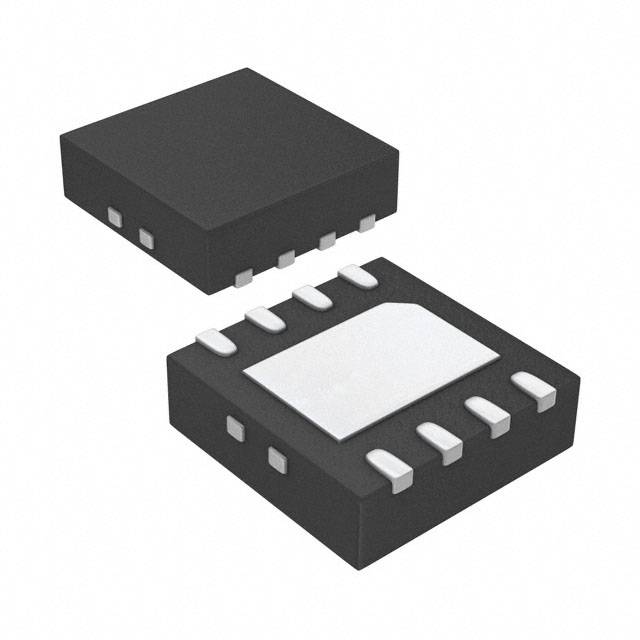
nn Small 8-Lead 3mm × 3mm DFN Package
The LTC®2944 measures battery charge state, battery voltage, battery current and its own temperature in portable
product applications. The wide input voltage range allows
use with multicell batteries up to 60V. A precision coulomb
counter integrates current through a sense resistor between
the battery’s positive terminal and the load or charger.
Voltage, current and temperature are measured with an
internal 14-bit No Latency ΔΣ™ ADC. The measurements
are stored in internal registers accessible via the onboard
I2C/SMBus Interface.
nn
nn
The LTC2944 features programmable high and low thresholds for all four measured quantities. If a programmed
threshold is exceeded, the device communicates an alert
using either the SMBus alert protocol or by setting a flag
in the internal status register. The LTC2944 requires only
a single low value sense resistor to set the measured
current range.
nn
All registered trademarks and trademarks are the property of their respective owners.
Applications
Electric and Hybrid Electric Vehicles
Power Tools
nn Electric Bicycles, Motorcycles, Scooters
nn High Power Portable Equipment
nn Photo Voltaics
nn Backup Battery Systems
Typical Application
Total Charge Error vs
Differential Sense Voltage
1A
LOAD
CHARGER
3.3V
3
1µF
2k
2k
VDD
ALCC
µP
SDA
SENSE+
SENSE–
SCL
GND
RSENSE
50mΩ
+
MULTICELL
Li-ION
2
CHARGE ERROR (%)
2k
LTC2944
VSENSE+ = 3.6V TO 60V
1
0
–1
–2
2944 TA01a
–3
0.1
1
10
100
VSENSE (mV)
2944 TA01b
2944fa
For more information www.linear.com/LTC2944
1
�LTC2944
Absolute Maximum Ratings
Pin Configuration
(Notes 1, 2)
Supply Voltage (SENSE+)............................ –0.3V to 65V
SCL, SDA, ALCC Voltage............................... –0.3V to 6V
SENSE–................(–0.3V + VSENSE+) to (VSENSE+ + 0.3V)
Operating Ambient Temperature Range
LTC2944C................................................ 0°C to 70°C
LTC2944I.............................................–40°C to 85°C
Storage Temperature Range................... –65°C to 150°C
TOP VIEW
SENSE+
1
GND
2
GND
3
SCL
4
8 SENSE–
9
7 GND
6 ALCC
5 SDA
DD PACKAGE
8-LEAD (3mm × 3mm) PLASTIC DFN
TJMAX = 150°C, θJA = 100°C/W
EXPOSED PAD (PIN 9) PCB GND CONNECTION OPTIONAL
Order Information
http://www.linear.com/product/LTC2944#orderinfo
LEAD FREE FINISH
TAPE AND REEL
PART MARKING*
PACKAGE DESCRIPTION
TEMPERATURE RANGE
LTC2944CDD#PBF
LTC2944CDD#TRPBF
LGCR
8-Lead (3mm × 3mm) Plastic DFN
0°C to 70°C
LTC2944IDD#PBF
LTC2944IDD#TRPBF
LGCR
8-Lead (3mm × 3mm) Plastic DFN
–40°C to 85°C
Consult LTC Marketing for parts specified with wider operating temperature ranges. *The temperature grade is identified by a label on the shipping container.
For more information on lead free part marking, go to: http://www.linear.com/leadfree/
For more information on tape and reel specifications, go to: http://www.linear.com/tapeandreel/. Some packages are available in 500 unit reels through
designated sales channels with #TRMPBF suffix.
Electrical Characteristics
The l denotes the specifications which apply over the full operating
temperature range, otherwise specifications are at TA = 25°C. (Note 2)
SYMBOL
PARAMETER
CONDITIONS
MIN
TYP
MAX
UNITS
Power Requirements
VSENSE+
Supply Voltage
ISUPPLY
Supply Current (Note 3)
Battery Gas Gauge On, ADC Sleep
Battery Gas Gauge On, ADC On
Shutdown
ISENSE+
Pin Current (Note 3)
Battery Gas Gauge On, ADC Sleep
Battery Gas Gauge On, ADC On
Shutdown
80
500
15
µA
µA
µA
ISENSE–
Pin Current (Note 3)
Battery Gas Gauge On, ADC Sleep
Battery Gas Gauge On, ADC On
Shutdown
1
350
1
µA
µA
µA
VUVLO
Undervoltage Lockout Threshold
VSENSE+ Falling
l
VSENSE+ – VSENSE–
l
l
3.6
80
850
15
l
l
l
3.0
3.5
60
V
150
950
30
µA
µA
µA
3.6
V
±50
mV
Coulomb Counter
VSENSE
Sense Voltage Differential Input
Range
RIDR
Differential Input Resistance Across
SENSE+ and SENSE– (Note 8)
qLSB
Charge LSB (Note 4)
Prescaler M = 4096(Default), RSENSE = 50mΩ
400
kΩ
0.340
mAh
2944fa
2
For more information www.linear.com/LTC2944
�LTC2944
Electrical Characteristics
The l denotes the specifications which apply over the full operating
temperature range, otherwise specifications are at TA = 25°C.
SYMBOL
PARAMETER
CONDITIONS
TCE
Total Charge Error (Note 5)
10mV ≤ |VSENSE| ≤ 50mV DC
10mV ≤ |VSENSE| ≤ 50mV DC
1mV ≤ |VSENSE| ≤ 10mV DC (Note 8)
l
l
VSENSE ≥ 500µV, VSENSE+ = 30V
l
(Note 8)
l
VOSE
Effective Differential Offset Voltage
(Note 9)
MIN
TYP
5
MAX
UNITS
±1
±1.5
±3.5
%
%
%
10
µV
Voltage Measurement ADC
Resolution (No Missing Codes)
VFS(V)
Full-Scale Voltage Conversion
ΔVLSB
Quantization Step of 14-Bit Voltage
ADC
TUEV
Voltage Total Unadjusted Error
14
(Note 6)
Bits
70.8
V
4.32
mV
l
1
1.3
%
%
1.3
%
±4
LSB
48
ms
GainV
Voltage Gain Accuracy
l
INLV
Integral Nonlinearity
l
TCONV(V)
Voltage Conversion Time
l
±1
Current Measurement ADC
Resolution (No Missing Codes)
(Note 8)
VFS(I)
Full-Scale Current Conversion
VSENSE
Sense Voltage Differential Input
Range
VSENSE+ – VSENSE–
ΔILSB
Quantization Step of 12-Bit Current
ADC
(Note 6)
GainI
Current Gain Accuracy
l
12
Bits
±64
mV
±50
l
31.25
Offset
INLI
Integral Nonlinearity
l
TCONV(I)
Current Conversion Time
l
µV
1
1.3
%
%
±1
±10
LSB
±1
±4
LSB
8
ms
l
VOS(I)
mV
Temperature Measurement ADC
Resolution (No Missing Codes)
(Note 8)
l
11
Bits
TFS
Full-Scale Temperature
ΔTLSB
Quantization Step of 11-Bit
Temperature ADC
TUET
Temperature Total Unadjusted Error VSENSE+ ≥ 5V
(Note 8)
l
±3
±5
K
K
Temperature Conversion Time
l
8
ms
TCONV(T)
(Note 6)
510
K
0.25
K
Digital Inputs and Digital Outputs
VITH(HV)
Logic Input Threshold
VSENSE+ ≥ 5V
l
VITH(LV)
3.6V < VSENSE+ < 5V
VOL
Low Level Output Voltage, ALCC,
SDA
I = 3mA, VSENSE+ ≥ 5V
l
0.8
2.2
V
0.5
1.8
V
0.4
V
IIN
Input Leakage, ALCC, SCL, SDA
VIN = 5V
l
1
µA
CIN
Input Capacitance, , ALCC, SCL,
SDA
(Note 8)
l
10
pF
tPCC
Minimum Charge Complete (CC)
Pulse Width
1
µs
2944fa
For more information www.linear.com/LTC2944
3
�LTC2944
Electrical Characteristics
The l denotes the specifications which apply over the full operating
temperature range, otherwise specifications are at TA = 25°C.
SYMBOL
PARAMETER
CONDITIONS
MIN
TYP
400
900
MAX
UNITS
I2C Timing Characteristics
fSCL(MAX)
Maximum SCL Clock Frequency
l
tBUF(MAX)
Bus Free Time Between Stop/Start
l
1.3
µs
tSU(STA(MIN)) Minimum Repeated Start Set-Up
Time
l
600
ns
tHD(STA(MIN)) Minimum Hold Time (Repeated)
Start Condition
l
600
ns
tSU(STO(MIN)) Minimum Set-Up Time for Stop
Condition
l
600
ns
tSU(DAT(MIN)) Minimum Data Setup Time Input
l
100
ns
THD(DAT(MIN)) Minimum Data Hold Time Input
l
50
ns
THDDATO
Data Hold Time Input Output
TOF
Data Output Fall Time
(Notes 7, 8)
Note 1. Stresses beyond those listed under Absolute Maximum Ratings
may cause permanent damage to the device. Exposure to any Absolute
Maximum Rating condition for extended periods may affect device
reliability and lifetime.
Note 2. All currents into pins are positive, all voltages are referenced to
GND unless otherwise specified.
Note 3. ISUPPLY = ISENSE+ + ISENSE–. In most operating modes ISUPPLY is
flowing in SENSE+ pin. Only during ADC conversions current is flowing in
SENSE– pin as well. Typically, ISENSE– = VSENSE–/150k during ADC voltage
conversion and ISENSE– = 20µA during ADC current conversion.
Note 4. The equivalent charge of an LSB in the accumulated charge
register depends on the value of RSENSE and the setting of the internal
prescaling factor M:
qLSB = 0.340mAh • (50mΩ/RSENSE) • (M/4096):
kHz
l
0.3
0.9
µs
l
20 + 0.1 • CB
300
ns
See Choosing RSENSE and Choosing Coulomb Counter Prescaler M section
for more information. 1mAh = 3.6C (Coulombs)
Note 5. Deviation of qLSB from its nominal value.
Note 6. The quantization step of the 14-bit ADC in voltage mode, 12-bit
ADC in current mode and 11-bit ADC in temperature mode is not the same
as the LSB of the respective combined 16-bit registers. See the Voltage,
Current and Temperature Registers section for more information.
Note 7. CB = Capacitance of one bus line in pF (10pF ≤ CB ≤ 400pF).
Note 8. Guaranteed by design, not subject to test.
Note 9. See "Effect of Differential Offset Voltage on Total Charge Error”
section.
Timing Diagram
tOF
SDA
tSU(DAT)
tHD(DAT0)
tHD(DAT1)
tBUF
tSU(STA)
tHD(STA)
tSU(STO)
2944 TD01
SCL
tHD(STA)
START
CONDITION
REPEATED START
CONDITION
STOP
CONDITION
START
CONDITION
Figure 1. Definition of Timing on I2C Bus
2944fa
4
For more information www.linear.com/LTC2944
�LTC2944
Typical Performance Characteristics
Total Charge Error vs Differential
Sense Voltage
VSENSE+ = 3.6V TO 60V
CHARGE ERROR (%)
1
0
1.00
1.00
0.75
0.75
0.50
VSENSE = 10mV
0.25
0
–0.25
–1
VSENSE = 50mV
–0.50
–2
1
10
100
–1.00
0
10
20
30
40
– (V)
50
2944 G01
TA = 85°C
–25
25
50
0
TEMPERATURE (°C)
75
100
2944 G03
Voltage Measurement ADC
Total Unadjusted Error
1.0
TA = 85°C
20
TA = –40°C
70
0.5
TA = 25°C
15
TUE (%)
TA = 25°C
ISIPPLY (µA)
ISUPPLY (µA)
–1.00
–50
25
TA = –40°C
TA = –45°C
TA = 25°C
0
TA = 85°C
10
60
–0.5
5
50
0
10
20
40
30
50
VSENSE+ (V)
60
0
70
0
10
20
40
30
VSENSE+ (V)
50
2944 G04
60
–1.0
70
1.0
2
TA = –45°C
0.5
GAIN ERROR (%)
TA = –45°C
0
–1
0
10
20
40
30
VSENSE– (V)
50
60
70
2944 G07
50
60
0
TA = 85°C
–1.0
70
VSENSE+ = 30V
0.5
TA = 25°C
0
–0.5
–0.5
TA = 25°C
–2
40
30
VSENSE– (V)
20
Current Measurement ADC
Integral Nonlinearity
1.0
TA = 85°C
10
2944 G06
Current Measurement ADC
Gain Error
3
1
0
2944 G05
Voltage Measurement ADC
Integral Nonlinearity
INL (VLSB)
70
60
30
80
–3
–0.50
Shutdown Supply Current
vs Supply Voltage
110
90
VSENSE = 50mV
–0.25
2944 G02
Supply Current vs Supply Voltage
40
0
VSENSE
VSENSE (mV)
100
VSENSE = 10mV
0.25
–0.75
–0.75
–3
0.1
0.50
INL (ILSB)
CHARGE ERROR (%)
2
Total Charge Error vs
Temperature
CHARGE ERROR (%)
3
Total Charge Error vs Supply
Voltage
0
10
20
30
40
VSENSE– (V)
50
60
70
2944 G08
–1.0
–60
–40
–20
20
0
VSENSE (mV)
40
60
2943 G09
2944fa
For more information www.linear.com/LTC2944
5
�LTC2944
Typical Performance Characteristics
Temperature Error vs Temperature
–1
VSENSE+ = 3.6V
VSENSE+ = 5.5V
VSENSE+ = 20V
VSENSE+ = 60V
–2
–3
–50
–25
0
25
50
TEMPERATURE (°C)
75
100
900
450
800
400
700
350
600
300
COUNTS
1
COUNTS
TEMPERATURE ERROR (°C)
2
0
Current Measurements Noise
Voltage Measurements Noise
3
500
400
250
200
300
150
200
100
100
50
0
–2
–1
0
4.32mV/LSB
1
2
2944 G11
2943 G10
800 READINGS
0
–3
–2
–1
0
1
31.25µV/LSB
2
3
2944 G12
Pin Functions
SENSE+ (Pin 1): Positive Current Sense Input and Power
Supply. Connect to load/charger side of the sense resistor.
VSENSE+ operating range is 3.6V to 60V. SENSE+ is also
an input to the ADC during current measurement. Bypass
to GND with a 1µF capacitor located as close to pin 1 and
pin 2 as possible.
GND (Pin 2, Pin 3, Pin 7): Device Ground. Connect directly
to the negative battery terminal.
SCL (Pin 4): Serial Bus Clock Input. SCL is internally pulled
up with 50µA (typ) above its logic input high threshold to
about 2V (typ).
SDA (Pin 5): Serial Bus Data Input and Output. SDA is
internally pulled up with 50µA (typ) above its logic input
high threshold to about 2V (typ).
ALCC (Pin 6): Alert Output or Charge Complete Input.
Configured either as an SMBus alert output or charge
complete input by control register bits B[2:1]. At power-up,
the pin defaults to alert mode conforming to the SMBus
alert response protocol. It behaves as an open-drain logic
output that pulls to GND when any threshold register value
is exceeded. When configured as a charge complete input,
connect to the charge complete output from the battery
charger circuit. A low level at CC sets the value of the
accumulated charge (registers C, D) to FFFFh.
SENSE– (Pin 8): Negative Current Sense Input. Connect
SENSE– to the positive battery terminal side of the sense
resistor. The voltage between SENSE– and SENSE+ must
remain within ±50mV in normal operation. SENSE– is also
an input to the ADC during voltage and current measurement.
Exposed Pad (Pin 9): Exposed pad may be left open or
connected to device ground (GND).
2944fa
6
For more information www.linear.com/LTC2944
�LTC2944
Block Diagram
LTC2944
VSUPPLY
1
SENSE+
CC
COULOMB COUNTER
REF
TEMPERATURE
SENSOR
ACCUMULATED
CHARGE
REGISTER
CLK
REFERENCE
GENERATOR
AL
I2C/
SMBUS
OSCILLATOR
F = 10kHz
ALCC
SCL
SDA
REF+
8
7
2
3
–
SENSE
MUX
IN
6
4
5
CLK
ADC
DATA AND
CONTROL
REGISTERS
REF–
GND
GND
GND
2944 BD
2944fa
For more information www.linear.com/LTC2944
7
�LTC2944
Operation
Overview
Voltage, Current and Temperature ADC
The LTC2944 is a battery gas gauge designed for use
with multicell batteries with terminal voltages from 3.6V
to 60V. It measures battery charge and discharge, battery
voltage, current and its own temperature.
The LTC2944 includes a 14-bit No Latency ΔΣ analog-todigital converter, with internal clock and voltage reference
circuits.
A precision analog coulomb counter integrates current
through a sense resistor between the battery’s positive
terminal and the load or charger. Battery voltage, battery
current and silicon temperature are measured with an
internal ADC.
Coulomb Counter
Charge is the time integral of current. The LTC2944 measures charge by monitoring the voltage developed across
a sense resistor. The differential voltage between SENSE+
and SENSE– is applied to an auto-zeroed differential analog
integrator to infer charge.
When the integrator output ramps to REFHI or REFLO
levels, switches S1, S2, S3 and S4 toggle to reverse the
ramp direction (Figure 2). By observing the condition of
the switches and the ramp direction, polarity is determined.
This approach also significantly lowers the impact on offset
of the analog integrator as described in the Differential
Offset Voltage section.
A programmable prescaler effectively increases integration
time by a factor M programmable from 1 to 4096. At each
underflow or overflow of the prescaler, the accumulated
charge register (ACR) value is incremented or decremented
one count. The value of accumulated charge is read via
the I2C interface.
CHARGER
The ADC can be used to monitor the battery voltage at
SENSE– or the battery current flowing through the sense
resistor or to convert the output of the on-chip temperature sensor.
Conversion of voltage, current and temperature are triggered by programming the control register via the I2C
interface. The LTC2944 includes a scan mode where
voltage, current and temperature conversion measurements are executed every 10 seconds. At the end of each
conversion the corresponding registers are updated and
the converter goes to sleep to minimize quiescent current.
The temperature sensor generates a voltage proportional
to temperature with a slope of 2mV/K resulting in a voltage of 600mV at 27°C.
Power-Up Sequence
When SENSE+ rises above a threshold of approximately
3.3V, the LTC2944 generates an internal power-on reset
(POR) signal and sets all registers to their default state.
In the default state, the coulomb counter is active while
the voltage, current and temperature ADC is switched
off. The accumulated charge register is set to mid-scale
(7FFFh), all low threshold registers are set to 0000h and all
high threshold registers are set to FFFFh. The alert mode
is enabled and the coulomb counter prescaling factor M
is set to 4096.
LOAD
1
SENSE+
REFHI
VCC
S1
S2
RSENSE
S3
8
SENSE–
S4
–
–
+
+
REFLO
BATTERY
2
CONTROL
LOGIC
M
PRESCALER
IBAT
+
+
–
ACR
POLARITY
DETECTION
GND
2944 F02
Figure 2. Coulomb Counter Section of the LTC2944
2944fa
8
For more information www.linear.com/LTC2944
�LTC2944
Applications Information
Internal Registers
The LTC2944 register map is shown in Table 1. The
LTC2944 integrates current through a sense resistor,
measures battery voltage, current and temperature and
stores the results in internal 16-bit registers accessible
via I2C. High and low limits can be programmed for each
measured quantity. The LTC2944 continuously monitors
these limits and sets a flag in the status register when a
limit is exceeded. If the alert mode is enabled, the ALCC
pin pulls low.
Table 1. Register Map
ADDRESS NAME REGISTER DESCRIPTION
R/W
DEFAULT
00h
A
Status
R
01h
B
Control
R/W
See Table 2
3Ch
02h
C
Accumulated Charge MSB
R/W
7Fh
03h
D
Accumulated Charge LSB
R/W
FFh
04h
E
Charge Threshold High MSB
R/W
FFh
05h
F
Charge Threshold High LSB
R/W
FFh
06h
G
Charge Threshold Low MSB
R/W
00h
07h
H
Charge Threshold Low LSB
R/W
00h
08h
I
Voltage MSB
R
00h
09h
J
Voltage LSB
R
00h
0Ah
K
Voltage Threshold High MSB
R/W
FFh
0Bh
L
Voltage Threshold High LSB
R/W
FFh
0Ch
M
Voltage Threshold Low MSB
R/W
00h
0Dh
N
Voltage Threshold Low LSB
R/W
00h
0Eh
O
Current MSB
R
00h
0Fh
P
Current LSB
R
00h
10h
Q
Current Threshold High MSB
R/W
FFh
11h
R
Current Threshold High LSB
R/W
FFh
12h
S
Current Threshold Low MSB
R/W
00h
13h
T
Current Threshold Low LSB
R/W
00h
14h
U
Temperature MSB
R
00h
15h
V
Temperature LSB
R
00h
16h
W
Temperature Threshold High
R/W
FFh
17h
X
Temperature Threshold Low
R/W
00h
R = Read, W = Write
The status of the charge, voltage, current and temperature
alerts is reported in the status register shown in Table 2.
Table 2. Status Register (A)
BIT
NAME
A[7]
Reserved
A[6]
Current Alert
A[5]
Accumulated
Charge
Overflow/
Underflow
A[4]
Temperature
Alert
Indicates one of the
temperature limits was
exceeded
0
A[3]
Charge Alert
High
Indicates that the ACR value
exceeded the charge threshold
high limit
0
A[2]
Charge Alert
Low
Indicates that the ACR value
exceeded the charge threshold
low limit
0
A[1]
Voltage Alert
Indicates one of the voltage
limits was exceeded
0
Undervoltage
Lockout Alert
Indicates recovery from
undervoltage. If set to 1, a
UVLO has occurred and the
contents of the registers are
uncertain
1
A[0]
OPERATION
Indicates one of the current
limits was exceeded
Indicates that the value of the
ACR hit either top or bottom
DEFAULT
0
0
After each voltage, current or temperature conversion, the
conversion result is compared to the respective threshold
registers. If a value in the threshold registers is exceeded,
the corresponding bit A[6], A[4] or A[1] is set.
The accumulated charge register (ACR) is compared to
the charge thresholds every time the analog integrator
increments or decrements the prescaler. If the ACR value
exceeds the threshold register values, the corresponding
bit A[3] or A[2] are set. Bit A[5] is set if the accumulated
charge registers (ACR) overflows or underflows. At each
overflow or underflow, the ACR rolls over and resumes
integration.
The undervoltage lockout (UVLO) bit of the status register
A[0] is set if, during operation, the voltage on the SENSE+
pin drops below 3.5V without reaching the POR level. The
analog parts of the coulomb counter are switched off while
the digital register values are retained. After recovery of the
supply voltage, the coulomb counter resumes integrating
2944fa
For more information www.linear.com/LTC2944
9
�LTC2944
Applications Information
with the stored value in the accumulated charge registers
but it has missed any charge flowing while SENSE+ < 3.5V.
BIT
NAME
OPERATION
B[2:1]
ALCC
Configure
Configures the ALCC pin.
All status register bits are cleared after being read by the
host, but might be reasserted after the next temperature,
voltage or current conversion or charge integration, if the
corresponding alert condition is still fulfilled.
[01] Charge Complete Mode. Pin
becomes logic input and accepts
charge complete inverted signal
(e.g., from a charger) to set
accumulated charge register (C,D)
to FFFFh.
The operation of the LTC2944 is controlled by programming the control register. Table 3 shows the organization
of the 8-bit control register B[7:0].
NAME
OPERATION
B[7:6]
ADC Mode
[11] Automatic Mode:
continuously performing
voltage, current and temperature
conversions
[00]
Shutdown
[00] Sleep
Sets coulomb counter prescaling
factor M between 1 and 4096.
Default is 4096.
Maximum value is limited to 4096
B[5:3]
M
000
1
001
4
010
16
011
64
100
256
101
1024
110
4096
111
4096
Shut down analog section to
reduce ISUPPLY.
[0]
Power Down B[0]
Setting B[0] to 1 shuts down the analog parts of the
LTC2944, reducing the current consumption to less than
15μA (typical). The circuitry managing I2C communication remains operating and the values in the registers are
retained. Note that any charge flowing while B[0] is 1 is
not measured and any charge information below 1LSB of
the accumulated charge register is lost.
[01] Manual Mode: performing
single conversions of voltage,
current and temperature then
sleep
Prescaler M
[11] Not allowed.
DEFAULT
[10] Scan Mode: performing
voltage, current and temperature
conversion every 10s
B[5:3]
[00] ALCC pin disabled.
B[0]
BIT
[10]
[10] Alert Mode.
Alert functionality enabled. Pin
becomes logic output.
Control Register (B)
Table 3. Control Register B
DEFAULT
[111]
Alert/Charge Complete Configuration B[2:1]
The ALCC pin is a dual function pin configured by the
control register. By setting bits B[2:1] to [10] (default),
the ALCC pin is configured as an alert pin following the
SMBus protocol. In this configuration, the ALCC is pulled
low if one of the four measured quantities (charge, voltage,
current, temperature) exceeds its high or low threshold or
if the value of the accumulated charge register overflows
or underflows. An alert response procedure started by the
master resets the alert at the ALCC pin. If the configuration of the ALCC pin is changed while it is pulled low due
to an alert condition, the part will continue to pull ALCC
low until a successful alert response procedure (ARA) has
been issued by the master. For further information see the
Alert Response Protocol section.
Setting the control bits B[2:1] to [01] configures the
ALCC pin as a digital input. In this mode, a low input on
the ALCC pin indicates to the LTC2944 that the battery
is full and the accumulated charge register is set to its
maximum, value FFFFh.
2944fa
10
For more information www.linear.com/LTC2944
�LTC2944
Applications Information
If neither the alert nor the charge complete functionality
is desired, bits B[2:1] should be set to [00]. The ALCC
pin is then disabled and should be tied to the supply of
the I2C bus with a 10k resistor.
Avoid setting B[2:1] to [11] as it enables the alert and the
charge complete modes simultaneously.
Choosing RSENSE
To achieve the specified precision of the coulomb counter,
the differential voltage between SENSE+ and SENSE– must
stay within ±50mV. With input signals up to 300mV the
LTC2944 will remain functional but the precision of the
coulomb counter is not guaranteed.
The required value of the external sense resistor, RSENSE,
is determined by the maximum input range of VSENSE and
the maximum current of the application:
RSENSE ≤
50mV
IMAX
50mΩ M
•
RSENSE 4096
0.340mAh • 216
• 50mΩ
QBAT
In an example application where the maximum current is
IMAX = 100mA, calculating RSENSE = 50mV/IMAX would
lead to a sense resistor of 500mΩ. This gives a qLSB of
34μAh and the accumulated charge register can represent
a maximum battery capacity of QBAT = 34μAh•65535 =
2228mAh. If the battery capacity is larger, RSENSE must
be lowered. For example, RSENSE should be reduced to
150mΩ if a battery with a capacity of 7200mAh is used.
In these applications with a small battery but a high maximum current, qLSB can get quite large with respect to the
battery capacity. For example, if the battery capacity is
100mAh and the maximum current is 1A, the standard
equation leads to choosing a sense resistor value of
50mΩ, resulting in:
qLSB = 0.340mAh = 1224mC
The battery capacity then corresponds to only 294 qLSB
and less than 0.5% of the accumulated charge register
is utilized.
50mΩ
RSENSE
when the prescaler is set to its default value of M = 4096.
Note that 1mAh = 3.6C (coulomb).
Choosing RSENSE = 50mV/IMAX is not sufficient in
applications where the battery capacity (QBAT) is very large
compared to the maximum current (IMAX):
QBAT >IMAX • 22Hours
If the battery capacity (QBAT) is small compared to the
maximum current (IMAX) the prescaler value M should
be changed from its default value (4096).
or
qLSB = 0.340mAh •
RSENSE ≤
Choosing Coulomb Prescaler M B[5:3]
The choice of the external sense resistor value influences
the gain of the coulomb counter. A larger sense resistor
gives a larger differential voltage between SENSE+ and
SENSE– for the same current resulting in more precise
coulomb counting. The amount of charge represented by
the least significant bit (qLSB) of the accumulated charge
(registers C, D) is equal to:
qLSB = 0.340mAh •
For such low current applications with a large battery,
choosing RSENSE according to RSENSE = 50mV/IMAX can
lead to a qLSB smaller than QBAT/216 and the 16-bit accumulated charge register may underflow before the battery
is exhausted or overflow during charge. Choose, in this
case, a maximum RSENSE of:
To preserve digital resolution in this case, the LTC2944
includes a programmable prescaler. Lowering the prescaler
factor M reduces qLSB to better match the accumulated
charge register to the capacity of the battery. The prescaling
factor M can be chosen between 1 and its default value
of 4096. The charge LSB then becomes:
qLSB = 0.34mAh •
50mΩ M
•
RSENSE 4096
2944fa
For more information www.linear.com/LTC2944
11
�LTC2944
Applications Information
To use as much of the range of the accumulated charge
register as possible the prescaler factor M should be
chosen for a given battery capacity QBAT and a sense
resistor RSENSE as:
M≥ 4096 •
RSENSE
216 • 0.340mAh 50mΩ
QBAT
•
M can be set to 1, 4, 16, ... 4096 by programming B[5:3]
of the control register as M = 22 • (4 • B[5] + 2 • B[4] + B[3]).
The default value is 4096.
In the above example of a 100mAh battery and an RSENSE
of 50mΩ, the prescaler should be programmed to
M = 64. The qLSB is then 5.313μAh and the battery capacity
corresponds to roughly 18821 qLSBs.
Figure 3 illustrates the best choice for prescaler value M
and the sense resistor as function of the ratio between
battery capacity (QBAT) and maximum current (IMAX). It
can be seen, that for high current applications with low
battery capacity the prescaler value should be reduced,
whereas in low current applications with a large battery
the sense resistor should be reduced with respect to its
default value of 50mV/IMAX.
ADC Mode B[7:6]
The LTC2944 features an ADC which measures either
voltage on SENSE– (battery voltage), voltage difference
between SENSE+ and SENSE– (battery current) or temperature via an internal temperature sensor. The reference
voltage and clock for the ADC are generated internally.
The ADC has four different modes of operation as shown
in Table 3. These modes are controlled by bits B[7:6] of
RSENSE ≤
M=1
M=4
0.005h
M = 16
0.02h
A single conversion of the three measured quantities
is initiated by setting the bit B[7:6] to [01]. After three
conversions (voltage, current and temperature), the ADC
resets B[7:6] to [00] and goes back to sleep.
The LTC2944 is set to scan mode by setting B[7:6] to
[10]. In scan mode the ADC converts voltage, current,
then temperature, then sleeps for approximately ten
seconds. It then reawakens automatically and repeats the
three conversions. The chip remains in scan mode until
reprogrammed by the host.
Programming B[7:6] to [11] sets the chip into automatic
mode where the ADC continuously performs voltage,
current and temperature conversions. The chip stays in
automatic mode until reprogrammed by the host.
Programming B[7:6] to [00] puts the ADC to sleep. If
control bits B[7:6] change within a conversion, the ADC
will complete the running cycle of conversions before
entering the newly selected mode.
A conversion of voltage requires 33ms (typical), and current and temperature conversions are completed in 4.5ms
(typical). At the end of each conversion, the corresponding
registers are updated. If the converted quantity exceeds
the values programmed in the threshold registers, a flag
is set in the status register and the ALCC pin is pulled low
(if alert mode is enabled).
During ADC conversions additional currents are sunk from
SENSE+ and SENSE–, refer to the Electrical Characteristics
table for details.
50mV
IMAX
M = 64
0.08h
the control register. At power-up, bits B[7:6] are set to
[00] and the ADC is in sleep mode.
RSENSE ≤
M = 256
0.34h
1.4h
M = 1024
5.5h
0.34mAh • 216
• 50mΩ
QBAT
M = 4096
22h
QBAT/IMAX
2944 F03
Figure 3. Choice of Sense Resistor and Prescaler as
Function of Battery Capacity and Maximum Current
2944fa
12
For more information www.linear.com/LTC2944
�LTC2944
Applications Information
Alert Thresholds Registers (E,F,G,H,K,L,M,N,Q,R,S,
T,W,X)
For each of the measured quantities (battery charge,
voltage, current and temperature) the LTC2944 features
high and low threshold registers. At power-up, the high
thresholds are set to FFFFh while the low thresholds are set
to 0000h, with the effect of disabling them. All thresholds
can be programmed to a desired value via I2C. As soon
as a measured quantity exceeds the high threshold or
falls below the low threshold, the LTC2944 sets the corresponding flag in the status register and pulls the ALCC
pin low if alert mode is enabled via bits B[2:1].
Accumulated Charge Register (C,D)
The coulomb counting circuitry in the LTC2944 integrates
current through the sense resistor. The result of this charge
integration is stored in the 16-bit accumulated charge
register (registers C, D). As the LTC2944 does not know
the actual battery status at power-up, the accumulated
charge register (ACR) is set to mid-scale (7FFFh). If the
host knows the status of the battery, the accumulated
charge (C[7:0]D[7:0]) can be either programmed to the
correct value via I2C or it can be set after charging to FFFFh
(full) by pulling the ALCC pin low if charge complete mode
is enabled via bits B[2:1]. Note that before writing to the
accumulated charge registers, the analog section should
be temporarily shut down by setting B[0] to 1. In order to
avoid a change in the accumulated charge registers between
reading MSBs C[7:0] and LSBs D[7:0], it is recommended
to read them sequentially as shown in Figure 11.
Voltage Registers (I,J), and Voltage Threshold
Registers (K,L,M,N)
The result of the 16-bit ADC conversion of the voltage at
SENSE– is stored in the voltage registers (I, J).
From the result of the 16-bit voltage registers I[7:0]J[7:0]
the measured voltage can be calculated as:
VSENSE – = 70.8V •
Example 1: a register value I[7:0] = B0h and J[7:0] = 1Ch
corresponds to a voltage on SENSE– of:
VSENSE– = 70.8V •
B01Ch
45084DEC
= 70.8V •
≈ 48.705V
FFFFh
65535
Example 2: To set a low level threshold for the battery
voltage of 31.2V, register M should be programmed to
70h and register N to D0h.
Current Registers (O,P), and Current Threshold
Registers (Q,R,S,T)
The result of the current conversion is stored in the current registers (O,P).
As the ADC resolution is 12 bits in current mode, the
lowest four bits of the combined current registers (O, P)
are always zero.
The ADC measures battery current by converting the voltage, VSENSE, across the sense resistor RSENSE. Depending
whether the battery is being charged or discharged the
measured voltage drop on RSENSE is positive or negative.
The result is stored in registers O and P in excess –32767
representation. O[7:0] = FFh, P[7:0] = F0h corresponds to
the full scale positive voltage 64mV. While O[7:0] = 00h,
P[7:0] = 00h corresponds to the full scale negative voltage –64mV. The battery current can be obtained from the
two byte register O[7:0]P[7:0] and the value of the chosen
sense resistor RSENSE:
IBAT =
VSENSE 64mV RESULTh – 7FFF h
=
•
=
R SENSE R SENSE
7FFF h
64mV RESULTDEC – 32767
•
R SENSE
32767
Positive current is measured when the battery is charging and negative current is measured when the battery is
discharging.
RESULTh
RESULTDEC
= 70.8V •
FFFFh
65535
2944fa
For more information www.linear.com/LTC2944
13
�LTC2944
Applications Information
Example 1: a register value of O[7:0] = A8h P[7:0] = 40h
together with a sense resistor RSENSE = 50mΩ corresponds
to a battery current:
IBAT =
T = 510K •
RESULTDEC
RESULTh
= 510K •
FFFFh
65535
Example: a register value of U[7:0] = 96h V[7:0] = 96h
corresponds to ~300K or ~27°C
64mV A840 h – 7FFF h
•
=
50mΩ
7FFF h
64mV 43072 – 32767
•
≈ 402.5mA
32767
50mΩ
The positive current result indicates that the battery is
being charged.
The values in the threshold register for the current mode
Q,R,S,T are also expressed in excess –32767 representation in the same manner as the current conversion result.
The alert after a current measurement is set if the result
is higher than the value stored in the high threshold registers Q,R or lower than the value stored in the low value
registers S,T.
Example 2: In an application, the user wants to get an
alert if the absolute current through the sense resistor,
RSENSE, of 50mΩ exceeds 1A. This is achieved by setting
the upper threshold IHIGH in register [Q,R] to 1A and the
lower threshold ILOW in register [S,T] to –1A. The formula
for IBAT leads to:
1A • 50mΩ
IHIGH (DEC) =
• 32767 + 32767= 58366
64mV
–1A • 50mΩ
• 32767 + 32767= 7168
ILOW (DEC) =
64mV
Leading the user to set Q[7:0] = E3h, R[7:0] = FEh for the
high threshold and S[7:0] = 1Bh and T[7:0] = FFh for the
low threshold.
Temperature Registers (U,V) and Temperature
Threshold Registers (W,X)
As the ADC resolution is 11 bits in temperature mode, the
lowest five bits of the combined temperature registers
(U, V) are always zero.
The actual temperature can be obtained from the two byte
register U[7:0]V[7:0] by:
A high temperature limit of 60°C is programmed by setting
register W to A7h. Note that the temperature threshold
register is single byte register and only the eight MSBs of
the 11 bits temperature result are checked.
Effect of Differential Offset Voltage on Total Charge
Error
In battery gas gauges, an important parameter is the
differential offset (VOS) of the circuitry monitoring the
battery charge. Many coulomb counter devices perform
an analog to digital conversion of VSENSE, where VSENSE
is the voltage drop across the sense resistor, and accumulate the conversion results to infer charge. In such
an architecture, the differential offset VOS causes relative
charge error of VOS/VSENSE. For small VSENSE values VOS
can be the main source of error.
The LTC2944 performs the tracking of the charge with an
analog integrator. This approach allows to continuously
monitor the battery charge and significantly lowers the
error due to differential offset. The relative charge error
due to offset (CEOV) can be expressed by:
V
2
CE OV = OS
VSENSE
As example, at a 1mV input signal a differential voltage
offset VOS = 20µV results in a 2% error using digital
integration, whereas the error is only 0.04% (a factor of
50 times smaller!) using the analog integration approach
of LTC2944.
The reduction of the impact of the offset in LTC2944 can
be explained by its integration scheme depicted in Figure 2.
While positive offset accelerates the up ramping of the
integrator output from REFLO to REFHI, it slows the down
ramping from REFHI to REFLO thus the effect is largely
canceled as depicted in Figure 4.
2944fa
14
For more information www.linear.com/LTC2944
�LTC2944
Applications Information
Each device on the I2C/SMbus is recognized by a unique
address stored in that device and can operate as either a
transmitter or receiver, depending on the function of the
device. In addition to transmitters and receivers, devices
can also be classified as masters or slaves when performing data transfers. A master is the device which initiates a
data transfer on the bus and generates the clock signals to
permit that transfer. At the same time any device addressed
is considered a slave. The LTC2944 always acts as a slave.
INTEGRATOR
OUTPUT
REFHI
WITHOUT OFFSET
WITH OFFSET
REFLO
FASTER
UP RAMPING
SLOWER
DOWN RAMPING
TIME
2944 F04
Figure 4. Offset Cancellation
For input signals with an absolute value smaller than the
offset of the internal op amp the LTC2944 stops integrating and does not integrate its own offset.
Figure 5 shows an overview of the data transmission on
the I2C bus.
Start and Stop Conditions
The LTC2944 is a slave only device. The serial clock line
(SCL) is input only while the serial data line (SDA) is
bidirectional. The device supports I2C standard and fast
mode. For more details refer to the I2C Protocol section.
When the bus is idle, both SCL and SDA must be high. A
bus master signals the beginning of a transmission with
a START condition by transitioning SDA from high to low
while SCL is high. When the master has finished communicating with the slave, it issues a STOP condition by
transitioning SDA from low to high while SCL is high. The
bus is then free for another transmission. When the bus
is in use, it stays busy if a repeated START (Sr) is generated instead of a STOP condition. The repeated START
(Sr) conditions are functionally identical to the START (S).
I2C Protocol
Write Protocol
The LTC2944 uses an I2C/SMBus-compatible 2-wire
interface supporting multiple devices on a single bus.
Connected devices can only pull the bus lines low and
must never drive the bus high. The bus wires are externally
connected to a positive supply voltage via current sources
or pull-up resistors. When the bus is idle, all bus lines
are high. Data on the I2C bus can be transferred at rates
of up to 100kbit/s in standard mode and up to 400kbit/s
in fast mode.
The master begins a write operation with a START condition
followed by the seven bit slave address 1100100 and the
R/W bit set to zero, as shown in Figure 6. The LTC2944
acknowledges this by pulling SDA low and the master
sends a command byte which indicates which internal
register the master is to write. The LTC2944 acknowledges
and latches the command byte into its internal register
address pointer. The master delivers the data byte, the
LTC2944 acknowledges once more and latches the data
I2C/SMBus Interface
The LTC2944 communicates with a bus master using
a 2-wire interface compatible with I2C and SMBus. The
7-bit hard coded I2C address of the LTC2944 is 1100100.
SDA
a6 - a0
b7 - b0
SCL
1-7
8
9
ADDRESS
R/W
ACK
1-7
b7 - b0
8
9
1-7
8
9
S
START
CONDITION
P
DATA
ACK
DATA
ACK
STOP
CONDITION
2944 F05
Figure 5. Data Transfer Over I2C or SMBus
2944fa
For more information www.linear.com/LTC2944
15
�LTC2944
Applications Information
into the desired register. The transmission is ended when
the master sends a STOP condition. If the master continues by sending a second data byte instead of a stop, the
LTC2944 acknowledges again, increments its address
pointer and latches the second data byte in the following
register, as shown in Figure 7.
S
ADDRESS
W
A
REGISTER
A
DATA
A
1100100
0
0
01h
0
FCh
0
command byte into its internal register address pointer.
The master then sends a repeated START condition followed by the same seven bit address with the R/W bit
now set to one. The LTC2944 acknowledges and sends
the contents of the requested register. The transmission
is ended when the master sends a STOP condition. If
the master acknowledges the transmitted data byte, the
LTC2944 increments its address pointer and sends the
contents of the following register as depicted in Figure 9.
P
2944 F06
FROM MASTER TO SLAVE
Alert Response Protocol
A: ACKNOWLEDGE (LOW)
A: NOT ACKNOWLEDGE (HIGH)
FROM SLAVE TO MASTER
In a system where several slaves share a common interrupt line, the master can use the alert response address
(ARA) to determine which device initiated the interrupt
(Figure 10).
S: START CONDITION
P: STOP CONDITION
R: READ BIT (HIGH)
W: WRITE BIT (LOW)
Figure 6. Writing FCh to the LTC2944 Control Register (B)
S
ADDRESS
W
A
REGISTER
A
DATA
A
DATA
A
1100100
0
0
02h
0
F0h
0
01h
0
The master initiates the ARA procedure with a START
condition and the special 7-bit ARA bus address (0001100)
followed by the read bit (R) = 1. If the LTC2944 is asserting the ALCC pin in alert mode, it acknowledges and
responds by sending its 7-bit bus address (1100100)
and a 0. While it is sending its address, it monitors the
SDA pin to see if another device is sending an address at
the same time using standard I2C bus arbitration. If the
LTC2944 is sending a 1 and reads a 0 on the SDA pin on
the rising edge of SCL, it assumes another device with a
lower address is sending and the LTC2944 immediately
aborts its transfer and waits for the next ARA cycle to try
again. If transfer is successfully completed, the LTC2944
will stop pulling down the ALCC pin and will not respond
to further ARA requests until a new Alert event occurs.
P
2944 F07
Figure 7. Writing F001h to the LTC2944 Accumulated Charge
Register (C, D)
Read Protocol
The master begins a read operation with a START condition
followed by the seven bit slave address 1100100 and the
R/W bit set to zero, as shown in Figure 8. The LTC2944
acknowledges and the master sends a command byte
which indicates which internal register the master is to
read. The LTC2944 acknowledges and then latches the
S
ADDRESS
W
A
REGISTER
A
1100100
0
0
00h
0
Sr
ADDRESS
R
A
DATA
A
1100100
1
0
01h
1
P
2944 F08
Figure 8. Reading the LTC2944 Status Register (A)
S
ADDRESS
W
A
REGISTER
A
1100100
0
0
08h
0
Sr
ADDRESS
R
A
DATA
A
DATA
A
1100100
1
0
F1h
0
24h
1
P
2944 F09
Figure 9. Reading the LTC2944 Voltage Register (I, J)
2944fa
16
For more information www.linear.com/LTC2944
�LTC2944
Applications Information
S
ALERT RESPONSE ADDRESS
R
A
DEVICE ADDRESS
A
0001100
1
0
11001000
1
P
2944 F10
Figure 10. LTC2944 Serial Bus SDA Alert Response Protocol
S ADDRESS W A REGISTER A S ADDRESS R A DATA A DATA A P
1100100 0 0
1100100 1 0 80h 0 01h 1
0
02h
2944 F11
Figure 11. Reading the LTC2944 Accumulated Charge
Registers (C, D)
S ADDRESS W A REGISTER A DATA P
1100100 0 0
01h
0
4C
40ms
S ADDRESS W A REGISTER A S ADDRESS R A DATA A DATA A P
1100100 0 0
08h
0
1100100 1 0 F1h 0 80h 1
2944 F12
Figure 12. ADC Single Conversion Sequence and Reading
of Voltage Registers (I,J)
PC Board Layout Suggestions
Keep all traces as short as possible to minimize noise and
inaccuracy. Use a 4-wire Kelvin sense connection for the
sense resistor, locating the LTC2944 close to the resistor
with short sense-traces to the SENSE+ and SENSE– pins.
Use wider traces from the resistor to the battery, load
and/or charger. Put the bypass capacitor close to SENSE+
and GND.
TO
CHARGER/LOAD
TO BATTERY
RSENSE
Preventing Violation of Absolute Maximum Ratings
The small size, robustness and low impedance of ceramic
capacitors make them an attractive option for the supply
bypass capacitor of LTC2944. However, these capacitors
can cause problems if the LTC2944 is plugged into a live
supply close to its maximum voltage of 65V. The low
loss ceramic capacitor, combined with stray inductance
in series with the power source, forms an under damped
tank circuit, and the voltage at the SENSE– pin of the
LTC2944 can ring several tens of volts, possibly exceeding the LTC2944 rating and damaging the part. This can
be prevented by adding a transient voltage suppression
diode to the SENSE– pin as shown in Figure 14.
Also pulling the digital communication pins SCL, SDA and
ALCC below their minimum absolute maximum voltage
of –0.3V—for example, due to differences between the
local GND and the GND of the connected microprocessor—increases the supply current of the LTC2944. At
supply voltages above 50V, the power dissipated due
to the increased supply current might damage the part,
which can be prevented by adding Schottky diodes as
shown in Figure 14.
1A
LOAD
CHARGER
3.3V
1µF
2k
2k
LTC2944
2k
VDD
ALCC
µP
SDA
SCL
SENSE+
SENSE–
GND
CMHSHS-2L
RSENSE
50mΩ
+
MULTICELL
Li-ION
SMAJ58A
2944 F14
1
C
2
3
4
8
LTC2944
Figure 14. Preventing Violation of Absolute Maximum Ratings
7
6
5
2944 F13
Figure 13. Kelvin Connection on Sense Resistor
2944fa
For more information www.linear.com/LTC2944
17
�LTC2944
Package Description
Please refer to http://www.linear.com/product/LTC2944#packaging for the most recent package drawings.
DD Package
8-Lead Plastic DFN (3mm × 3mm)
(Reference LTC DWG # 05-08-1698 Rev C)
0.70 ±0.05
3.5 ±0.05
1.65 ±0.05
2.10 ±0.05 (2 SIDES)
PACKAGE
OUTLINE
0.25 ± 0.05
0.50
BSC
2.38 ±0.05
RECOMMENDED SOLDER PAD PITCH AND DIMENSIONS
APPLY SOLDER MASK TO AREAS THAT ARE NOT SOLDERED
PIN 1
TOP MARK
(NOTE 6)
0.200 REF
3.00 ±0.10
(4 SIDES)
R = 0.125
TYP
5
0.40 ± 0.10
8
1.65 ± 0.10
(2 SIDES)
0.75 ±0.05
4
0.25 ± 0.05
1
(DD8) DFN 0509 REV C
0.50 BSC
2.38 ±0.10
0.00 – 0.05
BOTTOM VIEW—EXPOSED PAD
NOTE:
1. DRAWING TO BE MADE A JEDEC PACKAGE OUTLINE M0-229 VARIATION OF (WEED-1)
2. DRAWING NOT TO SCALE
3. ALL DIMENSIONS ARE IN MILLIMETERS
4. DIMENSIONS OF EXPOSED PAD ON BOTTOM OF PACKAGE DO NOT INCLUDE
MOLD FLASH. MOLD FLASH, IF PRESENT, SHALL NOT EXCEED 0.15mm ON ANY SIDE
5. EXPOSED PAD SHALL BE SOLDER PLATED
6. SHADED AREA IS ONLY A REFERENCE FOR PIN 1 LOCATION
ON TOP AND BOTTOM OF PACKAGE
2944fa
18
For more information www.linear.com/LTC2944
�LTC2944
Revision History
REV
DATE
DESCRIPTION
A
10/17
Updated equation for obtaining temperature (T)
PAGE NUMBER
15
2944fa
Information furnished by Linear Technology Corporation is believed to be accurate and reliable.
However, no responsibility is assumed for its use. Linear Technology Corporation makes no representaFor more
information
www.linear.com/LTC2944
tion that the interconnection
of its circuits
as described
herein will not infringe on existing patent rights.
19
�LTC2944
Typical Application
Battery Charger with Gas Gauge
33V TO 60V
IN
5mΩ
LT3845A
ITH
1.15M
47nF
CC
IID IGATE CSP
OFB
47k
LTC4000
ENC
CHRG
FLT
47k
BFB
NTC
IBMON
10nF
0.5A
LOAD
TMR
CL
0.1µF
22.1k
1.13M
VDD
R1
2k
R2
2k
µP
R3
2k
C1
1µF
LTC2944
ALCC
SDA
SCL
10k
GND BIAS
CX
24.9k
3.3V
FBG
IIMON
10nF
Si7135DP
BAT
VM
3.0V
5mΩ
CSN
BGATE
1µF
1.10M
100k
VOUT
30.4V, 15A
100µF
14.7k
RST
CLN
IN
Si7135DP
OUT
VC
SHDN
SENSE+
SENSE–
RSENSE
100mΩ
+
30V
Li-ION
BATTERY
GND
1µF
2944 TA02
Related Parts
PART NUMBER DESCRIPTION
COMMENTS
Battery Gas Gauges
LTC2943
I2C Battery Gas Gauge with Voltage, Current and
Temperature ADC
3.6V to 20V Operation, 14-Bit Δ∑-ADC, Pin Compatible with LTC2944,
LTC2943-1, 8-Lead (3mm × 3mm) DFN Package
LTC2943-1
1A Multicell Battery Gas Gauge with Temperature,
Voltage and Current Measurement
3.6V to 20V Operation, Internal Sense Resistor, 14-Bit ∆∑ ADC, Pin Compatible
with LTC2944 and LTC2943, 8-Lead (3mm × 3mm) DFN Package
LTC2941
I2C Battery Gas Gauge
2.7V to 5.5V Operation, 6-Lead (2mm × 3mm) DFN Package
LTC2941-1
1A I2C Battery Gas Gauge with Internal Sense
Resistor
2.7V to 5.5V Operation, 6-Lead (2mm × 3mm) DFN Package
LTC2942
I2C Battery Gas Gauge with Temperature, Voltage
Measurement
2.7V to 5.5V Operation, 14-Bit Δ∑-ADC, 6-Lead (2mm × 3mm) DFN Package
LTC2942-1
1A I2C Battery Gas Gauge with Internal Sense
Resistor and Temperature/Voltage Measurement
2.7V to 5.5V Operation, 14-Bit Δ∑-ADC, 6-Lead (2mm × 3mm) DFN Package
LTC4150
Coulomb Counter/Battery Gas Gauge
2.7V to 8.5V Operation, 10-Pin MSOP Package
LTC4000
High Voltage High Current Controller for Battery
Charging and Power Management
3V to 60V Operation, 28-Lead (4mm × 5mm) QFN or SSOP Packages
LTC4009
High Efficiency, Multi-Chemistry Battery Charger
6V to 28V Operation, 20-Lead (4mm × 4mm) QFN Package
LTC4012
High Efficiency, Multi-Chemistry Battery Charger
with PowerPath™ Control
6V to 28V Operation, 20-Lead (4mm × 4mm) QFN Package
LT®3652HV
Power Tracking 2A Battery Charger
Input Supply Voltage Regulation Loop for Peak Power Tracking, 5V to 34V Operation,
1MHz, 2A Charge Current, 3mm × 3mm DFN-12 and MSOP-12 Packages
Battery Chargers
2944fa
20
LT 1017 REV A • PRINTED IN USA
www.linear.com/LTC2944
For more information www.linear.com/LTC2944
LINEAR TECHNOLOGY CORPORATION 2017
�