LTC3374A
High Accuracy 8-Channel
Parallelable 1A Buck DC/DCs
FEATURES
DESCRIPTION
8-Channel 1A Independent Step-Down DC/DCs
n Master-Slave Configurable for Up to 4A of Output
Current with a Single Inductor
n Independent V Supplies for Each DC/DC
IN
(2.25V to 5.5V)
n All DC/DCs Have 0.8V to V Output Range
IN
n ±1% V
FB Accuracy, for Buck 1 (1A to 4A)
n ±1% PGOOD Accuracy
n Precision Enable Pin Thresholds for Autonomous
Sequencing
n 1MHz to 3MHz Programmable/Synchronizable
Oscillator Frequency (2MHz Default)
n Die Temperature Monitor Output
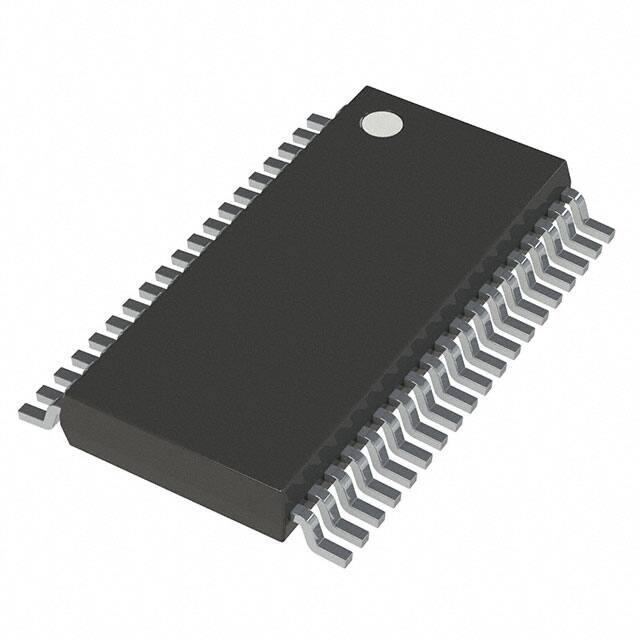
n Thermally Enhanced 38-Lead 5mm × 7mm QFN and
TSSOP Packages
n Pin-Compatible with LTC3374
n AEC-Q100 Qualified for Automotive Applications
The LTC®3374A is a multioutput power supply IC consisting of eight synchronous 1A buck converters, all powered from independent 2.25V to 5.5V input supplies. An
upgraded pin-compatible version of the LTC3374, the
LTC3374A, has higher efficiency, improved output voltage accuracy and an added overvoltage (OV) indicator.
n
APPLICATIONS
General Purpose Multichannel Power Supplies
n Industrial/Automotive/Communications
The DC/DCs may be used independently or in parallel to
achieve higher output currents of up to 4A with a shared
inductor. The common buck switching frequency may be
programmed with an external resistor, synchronized to an
external oscillator, or set to a default internal 2MHz clock.
The operating mode for all DC/DCs may be programmed
via the MODE pin.
To reduce input noise the buck converters are phased in
90° steps. Precision enable pin thresholds simplify powerup sequencing. The LTC3374A is available in a 38-lead
5mm × 7mm QFN package as well as a 38-lead exposed
pad TSSOP package.
All registered trademarks and trademarks are the property of their respective owners.
n
TYPICAL APPLICATION
Buck Efficiency vs ILOAD
Eight Synchronous 1A Buck Regulators
2.25V TO 5.5V
VIN1
SW1
EN1
FB1
VIN2
SW2
2.25V TO 5.5V
2.7V TO 5.5V
•
•
•
BUCK 2
0.8V TO VIN2
UP TO 1A
FB2
EN2
THE EIGHT BUCKS CAN
BE CONFIGURED IN 15
DIFFERENT MASTER/SLAVE
COMBINATIONS
LTC3374A
SW8
EN8
FB8
90
80
70
60
50
40
30
20
•
•
•
VIN8
100
BUCK 1
0.8V TO VIN1
UP TO 1A
EFFICIENCY (%)
2.25V TO 5.5V
BUCK 8
0.8V TO VIN8
UP TO 1A
10
0
1m
fOSC = 1MHz
VOUT
3.3V
VIN==1.8V
VOUT = 1.8V
Burst Mode OPERATION
1A BUCK, L = 4.7µH, L DCR = 40mΩ
2A BUCK, L = 2.2µH, L DCR = 13mΩ
3A BUCK, L = 1.8µH, L DCR = 10mΩ
4A BUCK, L = 1.0µH, L DCR = 8mΩ
10m
100m
LOAD CURRENT (A)
1
4
3374A TA01b
VCC
MODE
SYNC
PGOOD_ALL
RT
TEMP
GND
3374A TA01a
Rev. A
Document Feedback
For more information www.analog.com
1
�LTC3374A
ABSOLUTE MAXIMUM RATINGS
(Note 1)
VIN1-8, FB1-8, EN1-8, VCC, PGOOD_ALL,
SYNC, RT, TEMP........................................... –0.3V to 6V
MODE................... –0.3V to Lesser of (VCC + 0.3V) or 6V
IPGOOD_ALL................................................................5mA
ISW1-8........................................................................2.6A
Operating Junction Temperature Range
(Notes 2, 3)............................................. –40°C to 150°C
Storage Temperature Range................... –65°C to 150°C
PIN CONFIGURATION
TOP VIEW
36 EN7
FB1
4
35 EN8
34 FB8
EN7
37 MODE
3
MODE
2
EN1
VCC
EN2
38 37 36 35 34 33 32
TEMP
38 VCC
EN2
1
EN1
TEMP
EN8
TOP VIEW
FB1 1
31 FB8
VIN1 2
30 VIN8
VIN1
5
SW1 3
29 SW8
SW1
6
33 VIN8
SW2 4
28 SW7
SW2
7
32 SW8
VIN2 5
27 VIN7
VIN2
8
31 SW7
FB2
9
30 VIN7
FB2 6
26 FB7
39
GND
FB3 7
25 FB6
VIN3 8
24 VIN6
SW3 9
23 SW6
SW4 10
22 SW5
VIN4 11
21 VIN5
FB4 12
20 FB5
FB3 10
VIN3 11
28 FB6
27 VIN6
SW4 13
26 SW6
VIN4 14
25 SW5
FB4 15
24 VIN5
EN4 16
23 FB5
EN3 17
22 EN5
PGOOD_ALL 18
21 EN6
EN5
EN6
RT
SYNC
PGOOD_ALL
EN3
EN4
29 FB7
SW3 12
13 14 15 16 17 18 19
UHF PACKAGE
38-LEAD (5mm × 7mm) PLASTIC QFN
TJMAX = 150°C, θJA = 34°C/W
EXPOSED PAD (PIN 39) IS GND, MUST BE SOLDERED TO PCB
39
GND
SYNC 19
20 RT
FE PACKAGE
38-LEAD PLASTIC TSSOP
TJMAX = 150°C, θJA = 25°C/W
EXPOSED PAD (PIN 39) IS GND, MUST BE SOLDERED TO PCB
Rev. A
2
For more information www.analog.com
�LTC3374A
ORDER INFORMATION
LEAD FREE FINISH
TAPE AND REEL
PART MARKING*
PACKAGE DESCRIPTION
TEMPERATURE RANGE
LTC3374AEUHF#PBF
LTC3374AEUHF#TRPBF
3374A
38-Lead (5mm × 7mm) Plastic QFN
–40°C to 125°C
LTC3374AIUHF#PBF
LTC3374AIUHF#TRPBF
3374A
38-Lead (5mm × 7mm) Plastic QFN
–40°C to 125°C
LTC3374AHUHF#PBF
LTC3374AHUHF#TRPBF
3374A
38-Lead (5mm × 7mm) Plastic QFN
–40°C to 150°C
LTC3374AEFE#PBF
LTC3374AEFE#TRPBF
LTC3374AFE
38-Lead Plastic TSSOP
–40°C to 125°C
LTC3374AIFE#PBF
LTC3374AIFE#TRPBF
LTC3374AFE
38-Lead Plastic TSSOP
–40°C to 125°C
LTC3374AHFE#PBF
LTC3374AHFE#TRPBF
LTC3374AFE
38-Lead Plastic TSSOP
–40°C to 150°C
AUTOMOTIVE PRODUCTS**
LTC3374AEUHF#WPBF
LTC3374AEUHF#WTRPBF 3374A
38-Lead (5mm × 7mm) Plastic QFN
–40°C to 125°C
LTC3374AIUHF#WPBF
LTC3374AIUHF#WTRPBF 3374A
38-Lead (5mm × 7mm) Plastic QFN
–40°C to 125°C
LTC3374AHUHF#WPBF
LTC3374AHUHF#WTRPBF 3374A
38-Lead (5mm × 7mm) Plastic QFN
–40°C to 150°C
LTC3374AEFE#WPBF
LTC3374AEFE#WTRPBF
LTC3374AFE
38-Lead Plastic TSSOP
–40°C to 125°C
LTC3374AIFE#WPBF
LTC3374AIFE#WTRPBF
LTC3374AFE
38-Lead Plastic TSSOP
–40°C to 125°C
LTC3374AHFE#WPBF
LTC3374AHFE#WTRPBF
LTC3374AFE
38-Lead Plastic TSSOP
–40°C to 150°C
Contact the factory for parts specified with wider operating temperature ranges. *The temperature grade is identified by a label on the shipping container.
Tape and reel specifications. Some packages are available in 500 unit reels through designated sales channels with #TRMPBF suffix.
**Versions of this part are available with controlled manufacturing to support the quality and reliability requirements of automotive applications. These
models are designated with a #W suffix. Only the automotive grade products shown are available for use in automotive applications. Contact your
local Analog Devices account representative for specific product ordering information and to obtain the specific Automotive Reliability reports for
these models.
Rev. A
For more information www.analog.com
3
�LTC3374A
ELECTRICAL CHARACTERISTICS
The l denotes the specifications which apply over the specified operating
junction temperature range, otherwise specifications are at TA = 25°C (Note 2). VCC = VIN1-8 = 3.3V, unless otherwise specified.
SYMBOL PARAMETER
VCC
ICC
CONDITIONS
VCC Voltage Range
Undervoltage Lockout (UVLO)
Threshold on VCC
VCC Voltage Falling
VCC Voltage Rising
VCC Input Supply Current
All Switching Regulators in Shutdown
MIN
l
2.7
l
l
2.35
2.45
One or More Bucks Active
SYNC = 0V, All Enabled Bucks Sleeping
One Buck Enabled, Not Sleeping, SYNC = 0V
All Bucks Enabled, Not Sleeping, SYNC = 2MHz
fOSC
Internal Oscillator Frequency
Synchronization Frequency
VSYNC
SYNC Level High
SYNC Level Low
VRT
RT Servo Voltage
VRT = VCC, SYNC = 0V
VRT = VCC, SYNC = 0V
RT = 400k, SYNC = 0V
l
l
1.9
1.75
1.85
tLOW, tHIGH > 40ns
l
1
l
l
1.2
l
780
l
2.25
l
l
1.95
2.05
l
VFB
RT = 400k
TYP
MAX
UNITS
5.5
V
2.45
2.55
2.55
2.65
V
V
0
1
µA
45
155
200
75
230
300
µA
µA
µA
2
2
2
2.1
2.25
2.15
MHz
MHz
MHz
3
MHz
0.4
V
V
820
mV
5.5
V
2.15
2.25
V
V
VIN
V
0
20.5
400
400
2
35
550
550
µA
µA
µA
µA
1.4
1.8
3.6
5.4
7.2
2.2
A
A
A
A
800
1A Buck Regulators
VIN
Buck Input Voltage Range
Undervoltage Lockout (UVLO)
Threshold on VIN
VIN Voltage Falling
VIN Voltage Rising
2.05
2.15
VOUT
Buck Output Voltage Range
IVIN
Shutdown Input Current
Burst Mode® Operation
Burst Mode Operation
Forced Continuous Mode Operation
ILIM
PMOS Current Limit
1 Buck Converter (Note 5)
2 Buck Converters Combined (Note 5)
3 Buck Converters Combined (Note 5)
4 Buck Converters Combined (Note 5)
VFB1
Feedback Regulation Voltage
Buck 1
Buck 1
l
796
792
800
800
804
808
mV
mV
Bucks 2 to 8
l
784
800
816
mV
–50
0
50
nA
Maximum Duty Cycle
VFB = 0V
l
100
RPMOS
PMOS On-Resistance
ISW = 100mA, VIN = 5.0V
ISW = 100mA, VIN = 3.3V
205
245
mΩ
mΩ
RNMOS
NMOS On-Resistance
ISW = 100mA, VIN = 5.0V
ISW = 100mA, VIN = 3.3V
125
135
mΩ
mΩ
PMOS Leakage Current
EN = 0
NMOS Leakage Current
EN = 0
Soft-Start Time
(Note 6)
l
Rising PGOOD Threshold Voltage
Buck 1, as a Percentage of the Regulated VOUT
Bucks 2 to 8, as a Percentage of the Regulated VOUT
l
l
PGOOD Hysteresis
As a Percentage of the Regulated VOUT
VFB2-8
Feedback Regulation Voltage
Buck in Regulation, Sleeping
Buck in Regulation, Not Sleeping, ISW = 0µA (Note 4)
ISW = 0µA, VFB = 0V (Note 4)
Feedback Pin Leakage Current
–100
Overvoltage Indication
As a Percentage of the Regulated VOUT
Overvoltage Hysteresis
As a Percentage of the Regulated VOUT
l
%
0
100
nA
–100
0
100
nA
0.25
1.3
3
ms
97
94
98
95
99
96
%
%
0.5
1
1.5
%
106
107.5
109
%
2
3
4
%
Rev. A
4
For more information www.analog.com
�LTC3374A
ELECTRICAL CHARACTERISTICS
The l denotes the specifications which apply over the specified operating
junction temperature range, otherwise specifications are at TA = 25°C (Note 2). VCC = VIN1-8 = 3.3V, unless otherwise specified.
SYMBOL PARAMETER
CONDITIONS
MIN
TYP
MAX
UNITS
200
220
7
240
mV
mV/°C
Temperature Monitor
VTEMP
TEMP Voltage at 25°C
VTEMP Slope
OT
Overtemperature Shutdown (Note 3)
Temperature Rising
Hysteresis
170
10
°C
°C
Interface Logic Pins
IOH
Output High Leakage Current
5.5V at the PGOOD_ALL Pin
–1
VOL
Output Low Voltage
3mA into the PGOOD_ALL Pin
VIH
Input High Threshold
MODE Pin
l
VIL
Input Low Threshold
MODE Pin
l
IIH
Input High Leakage Current
MODE, EN1-8
–100
IIL
Input Low Leakage Current
MODE, EN1-8
–100
EN Rising Threshold
First Regulator Turning On
One Regulator Already in Use
l
l
l
EN Falling Threshold
Note 1: Stresses beyond those listed under Absolute Maximum Ratings
may cause permanent damage to the device. Exposure to any Absolute
Maximum Rating condition for extended periods may affect device
reliability and lifetime.
Note 2: The LTC3374A is tested under pulsed load conditions such that
TJ ≈ TA. The LTC3374AE is guaranteed to meet specifications from
0°C to 85°C junction temperature. Specifications over the –40°C to
125°C operating junction temperature range are assured by design,
characterization and correlation with statistical process controls. The
LTC3374AI is guaranteed over the –40°C to 125°C operating junction
temperature range and the LTC3374AH is guaranteed over the –40°C to
150°C operating junction temperature range. High junction temperatures
degrade operating lifetimes; operating lifetime is derated for junction
temperatures greater than 125°C. Note that the maximum ambient
temperature consistent with these specifications is determined by specific
operating conditions in conjunction with board layout, the rated package
thermal impedance, and other environmental factors. The junction
temperature (TJ in °C) is calculated from ambient temperature (TA in °C)
and power dissipation (PD in Watts) according to the formula:
TJ = TA + (PD • θJA)
where θJA (in °C/W) is the package thermal impedance.
0
1
0.1
0.4
1.2
µA
V
V
0.4
V
0
100
nA
0
100
nA
400
380
730
400
1200
420
mV
mV
300
320
340
mV
Note 3: The LTC3374A includes overtemperature protection which
protects the device during momentary overload conditions. Junction
temperatures will exceed 150°C when overtemperature protection is
active. Continuous operation above the specified maximum operating
junction temperature may impair device reliability.
Note 4: Static current, switches not switching. Actual current may be
higher due to gate charge losses at the switching frequency.
Note 5: The current limit features of this part are intended to protect the
IC from short term or intermittent fault conditions. Continuous operation
above the maximum specified pin current rating may result in device
degradation over time.
Note 6: The Soft-Start Time is the time from the start of switching until the
FB pin reaches 775mV. When a buck is enabled there is a 100μs (typical)
delay before switching commences.
Rev. A
For more information www.analog.com
5
�LTC3374A
TYPICAL PERFORMANCE CHARACTERISTICS
2.25
2.60
VCC RISING
2.55
2.50
VCC FALLING
2.45
2.40
0
25 50 75 100 125 150
TEMPERATURE (°C)
2.15
2.10
VIN FALLING
2.05
40
0
0
–50 –25
25 50 75 100 125 150
TEMPERATURE (°C)
400
ONE BUCK ENABLED, NOT SLEEPING
SYNC = 0V
350
VCC Quiescent Current
vs Temperature
2.20
ALL BUCKS ENABLED, NOT SLEEPING
SYNC = 2MHz
250
250
2.05
200
150
100
50
0
–50 –25
fOSC (MHz)
2.10
VCC = 2.7V
VCC = 3.3V
VCC = 5.5V
0
25 50 75 100 125 150
TEMPERATURE (°C)
50
0
–50 –25
0
2.00
1.95
1.80
–50 –25
3374A G05
2.20
2.15
2.15
2.10
2.10
2.05
2.05
fOSC (MHz)
fOSC (MHz)
RT = 400kΩ
2.00
1.95
1.90
VCC = 2.7V
VCC = 3.3V
VCC = 5.5V
1.85
25 50 75 100 125 150
TEMPERATURE (°C)
Default Oscillator Frequency
vs Temperature
0
25 50 75 100 125 150
TEMPERATURE (°C)
3374A G06
Oscillator Frequency vs VCC
VRT = VCC
2.00
RT = 400kΩ
1.95
1.90
VCC = 2.7V
VCC = 3.3V
VCC = 5.5V
1.85
1.80
–50 –25
RT Programmed Oscillator
Frequency vs Temperature
1.90
VCC = 2.7V
VCC = 3.3V
VCC = 5.5V
3374A G04
2.20
25 50 75 100 125 150
TEMPERATURE (°C)
2.15
300
100
0
3374A G03
300
150
VCC = 2.7V
VCC = 3.3V
VCC = 5.5V
3374A G02
IVCC (µA)
IVCC (µA)
60
20
1.95
–50 –25
VCC Quiescent Current
vs Temperature
200
ALL ENABLED BUCKS SLEEPING
80
3374A G01
350
VCC Quiescent Current
vs Temperature
VIN RISING
2.00
2.35
–50 –25
400
100
2.20
UV THRESHOLD (V)
UV THRESHOLD (V)
Buck VIN Undervoltage Threshold
vs Temperature
IVCC (µA)
2.65
VCC Undervoltage Threshold
vs Temperature
TA = 25°C, unless otherwise noted.
0
25 50 75 100 125 150
TEMPERATURE (°C)
1.85
1.80
2.7
3374A G07
3.1
3.5
3.9 4.3
VCC (V)
4.7
5.1
5.5
3374A G08
Rev. A
6
For more information www.analog.com
�LTC3374A
TYPICAL PERFORMANCE CHARACTERISTICS
1200
VCC = 3.3V
3.5
1000
3.0
800
2.5
VTEMP (mV)
fOSC (MHz)
4.0
2.0
1.5
EN Pin Rising Threshold vs
Temperature
VTEMP vs Temperature
900
600
400
200
1.0
ACTUAL VTEMP
0
0.5
–200
–50 –25
0
250 300 350 400 450 500 550 600 650 700 750 800
RT (kΩ)
FIRST BUCK TURNING ON
850
EN THRESHOLD (mV)
Oscillator Frequency vs RT
TA = 25°C, unless otherwise noted.
750
700
650
600
550
IDEAL VTEMP
0
800
500
–50 –25
25 50 75 100 125 150
TEMPERATURE (°C)
0
25 50 75 100 125 150
TEMPERATURE (°C)
3374A G10
3374A G11
3374A G09
EN Pin Rising Threshold vs
Temperature
415
335
410
330
400
395
390
385
50
325
320
315
310
20
10
0
300
–50 –25
25 50 75 100 125 150
TEMPERATURE (°C)
0
0
–50 –25
25 50 75 100 125 150
TEMPERATURE (°C)
3374A G12
VIN = 2.25V
VIN = 3.3V
VIN = 5.5V
808
FORCED CONTINUOUS MODE
FB = 0V
VFB vs Temperature
2.2
400
804
2.0
350
802
1.9
VFB (mV)
250
200
150
800
798
VIN = 2.25V
VIN = 3.3V
VIN = 5.5V
50
0
25 50 75 100 125 150
TEMPERATURE (°C)
3374A G15
VIN = 3.3V
1.8
1.6
VIN = 2.25V
VIN = 3.3V
VIN = 5.5V
794
792
–50 –25
PMOS Current Limit
vs Temperature
1.7
796
100
0
–50 –25
ILIM (A)
2.1
450
25 50 75 100 125 150
TEMPERATURE (°C)
3374A G14
806
300
0
3374A G13
Buck VIN Quiescent Current
vs Temperature
IVIN (µA)
30
305
380
–50 –25
500
BURST MODE OPERATION
FB = 850mV
40
IVIN (µA)
405
550
Buck VIN Quiescent Current
vs Temperature
340
ONE BUCK ALREADY ENABLED
EN THRESHOLD (mV)
EN THRESHOLD (mV)
420
EN Pin Falling Threshold vs
Temperature
0
25 50 75 100 125 150
TEMPERATURE (°C)
3374A G16
1.5
1.4
–50 –25
0
25 50 75 100 125 150
TEMPERATURE (°C)
3374A G17
Rev. A
For more information www.analog.com
7
�LTC3374A
TYPICAL PERFORMANCE CHARACTERISTICS
PMOS RDS(ON) vs Temperature
NMOS RDS(ON) vs Temperature
250
IPMOS = 100mA
RESISTANCE (mΩ)
300
250
VIN = 2.25V
VIN = 3.3V
VIN = 5.5V
200
150
–50 –25
0
80
200
175
150
125
75
–50 –25
25 50 75 100 125 150
TEMPERATURE (°C)
0
100
30
0
1m
1A Buck Efficiency vs ILOAD,
VOUT = 2.5V
100
80
80
80
40
30
20
10
0
1m
10m
100m
LOAD CURRENT (A)
Burst Mode
70 OPERATION
L = 2.2µH
L DCR = 21mΩ
fOSC = 2MHz
60
50
VIN = 2.8V
VIN = 3.3V
VIN = 5.5V
VIN = 2.8V
VIN = 3.3V
VIN = 5.5V
FORCED CONTINUOUS MODE
40
30
20
10
0
1m
1
10m
100m
LOAD CURRENT (A)
2A Buck Efficiency vs ILOAD,
VOUT = 1.2V
100
70 Burst Mode
OPERATION
60
40
20
10
0
1m
1
2A Buck Efficiency vs ILOAD,
VOUT = 1.8V
100
80
80
70
70 Burst Mode
60 OPERATION
30
20
10
0
1m
EFFICIENCY (%)
80
40
VIN = 2.25V
VIN = 3.3V
VIN = 5.5V
VIN = 2.25V
VIN = 3.3V
VIN = 5.5V
FORCED CONTINUOUS MODE
10m
100m
LOAD CURRENT (A)
1
50
40
30
20
10
2
3374A G24
10m
100m
LOAD CURRENT (A)
0
1m
L = 1.0µH
L DCR = 13mΩ
fOSC = 2MHz
VIN = 2.5V
VIN = 3.3V
VIN = 5.5V
VIN = 2.5V
VIN = 3.3V
VIN = 5.5V
FORCED CONTINUOUS MODE
10m
100m
LOAD CURRENT (A)
1
2A Buck Efficiency vs ILOAD,
VOUT = 2.5V
Burst Mode
70 OPERATION
60
50
40
30
20
10
2
3374A G25
1
3374A G23
90
50
VIN = 4.2V
VIN = 5.5V
VIN = 4.2V
VIN = 5.5V
FORCED CONTINUOUS MODE
30
90
L = 1.0µH
L DCR = 13mΩ
fOSC = 2MHz
L = 2.2µH
L DCR = 21mΩ
fOSC = 2MHz
50
90
Burst Mode
60 OPERATION
1
1A Buck Efficiency vs ILOAD,
VOUT = 3.3V
3374A G22
3374A G21
100
EFFICIENCY (%)
VIN = 2.5V
VIN = 3.3V
VIN = 5.5V
VIN = 2.5V
VIN = 3.3V
VIN = 5.5V
FORCED CONTINUOUS MODE
10m
100m
LOAD CURRENT (A)
3374A G20
90
50
L = 2.2µH
L DCR = 21mΩ
fOSC = 2MHz
VIN = 2.25V
VIN = 3.3V
VIN = 5.5V
VIN = 2.25V
VIN = 3.3V
VIN = 5.5V
FORCED CONTINUOUS MODE
40
90
EFFICIENCY (%)
EFFICIENCY (%)
50
90
L = 2.2µH
L DCR = 21mΩ
fOSC = 2MHz
Burst Mode
OPERATION
3374A G19
1A Buck Efficiency vs ILOAD,
VOUT = 1.8V
70 Burst Mode
OPERATION
60
EFFICIENCY (%)
60
10
25 50 75 100 125 150
TEMPERATURE (°C)
3374A G18
70
20
VIN = 2.25V
VIN = 3.3V
VIN = 5.5V
100
EFFICIENCY (%)
RESISTANCE (mΩ)
350
1A Buck Efficiency vs ILOAD,
VOUT = 1.2V
90
225
400
100
100
INMOS = 100mA
EFFICIENCY (%)
450
TA = 25°C, unless otherwise noted.
0
1m
L = 1.0µH
L DCR = 13mΩ
fOSC = 2MHz
VIN = 2.8V
VIN = 3.3V
VIN = 5.5V
VIN = 2.8V
VIN = 3.3V
VIN = 5.5V
FORCED CONTINUOUS MODE
10m
100m
LOAD CURRENT (A)
1
2
3374A G26
Rev. A
8
For more information www.analog.com
�LTC3374A
TYPICAL PERFORMANCE CHARACTERISTICS
100
3A Buck Efficiency vs ILOAD,
VOUT = 1.8V
100
90
90
80
80
80
70
Burst Mode
60 OPERATION
L = 0.8µH
L DCR = 5mΩ
fOSC = 2MHz
50
VIN = 2.25V
VIN = 3.3V
VIN = 5.5V
VIN = 2.25V
VIN = 3.3V
VIN = 5.5V
FORCED CONTINUOUS MODE
40
30
20
10
0
1m
10m
100m
LOAD CURRENT (A)
1
70
Burst Mode
60 OPERATION
L = 0.8µH
L DCR = 5mΩ
fOSC = 2MHz
50
VIN = 2.5V
VIN = 3.3V
VIN = 5.5V
VIN = 2.5V
VIN = 3.3V
VIN = 5.5V
40
30
20
10
10m
100m
LOAD CURRENT (A)
1
Burst Mode
60 OPERATION
50
100
10
0
1m
3
4A Buck Efficiency vs ILOAD,
VOUT = 1.8V
100
80
VIN = 2.25V
VIN = 3.3V
VIN = 5.5V
VIN = 2.25V
VIN = 3.3V
VIN = 5.5V
FORCED CONTINUOUS MODE
40
30
10
0
1m
10m
100m
LOAD CURRENT (A)
1
Burst Mode
60 OPERATION
50
VIN = 2.5V
VIN = 3.3V
VIN = 5.5V
VIN = 2.5V
VIN = 3.3V
VIN = 5.5V
FORCED CONTINUOUS MODE
40
30
20
10
0
1m
4
L = 0.6µH
L DCR = 4mΩ
fOSC = 2MHz
10m
100m
LOAD CURRENT (A)
3374A G30
100
EFFICIENCY (%)
60
50
40
30
20
ILOAD = 100mA
10
VOUT = 1.8V
0
L = 3.3µH
1
1.2 1.4 1.6 1.8 2.0 2.2 2.4 2.6 2.8 3.0
FREQUENCY (MHz)
3374A G33
70
VIN = 2.8V
VIN = 3.3V
VIN = 5.5V
VIN = 2.8V
VIN = 3.3V
VIN = 5.5V
30
FORCED CONTINUOUS MODE
10m
100m
LOAD CURRENT (A)
1
3374A G32
1A Buck Efficiency vs ILOAD
(Across Operating Frequency)
90
80
ILOAD = 20mA
50
40
30
70
Burst Mode
60 OPERATION
50
40
30
20
VIN = 3.3V
20
10
VOUT = 1.8V
10
L = 3.3µH
1
4
100
60
0
3
L = 0.6µH
L DCR = 4mΩ
fOSC = 2MHz
40
0
1m
4
ILOAD = 500mA
80
VIN = 5.5V
70
50
10
ILOAD = 100mA
90
VIN = 3.3V
80
Burst Mode
Burst Mode
60 OPERATION
1A Buck Efficiency vs Frequency
(Forced Continuous Mode)
VIN = 2.25V
90
1
70
3374A G31
1A Buck Efficiency vs Frequency
(Forced Continuous Mode)
100
1
4A Buck Efficiency vs ILOAD,
VOUT = 2.5V
20
EFFICIENCY (%)
50
70
EFFICIENCY (%)
90
80
L = 0.6µH
L DCR = 4mΩ
fOSC = 2MHz
FORCED CONTINUOUS MODE
10m
100m
LOAD CURRENT (A)
3374A G29
80
Burst Mode
60 OPERATION
VIN = 2.8V
VIN = 3.3V
VIN = 5.5V
VIN = 2.8V
VIN = 3.3V
VIN = 5.5V
30
90
70
L = 0.8µH
L DCR = 5mΩ
fOSC = 2MHz
40
90
EFFICIENCY (%)
EFFICIENCY (%)
4A Buck Efficiency vs ILOAD,
VOUT = 1.2V
20
EFFICIENCY (%)
70
3374A G28
3374A G27
100
3A Buck Efficiency vs ILOAD,
VOUT = 2.5V
20
FORCED CONTINUOUS MODE
0
1m
3
EFFICIENCY (%)
90
EFFICIENCY (%)
EFFICIENCY (%)
100
3A Buck Efficiency vs ILOAD,
VOUT = 1.2V
TA = 25°C, unless otherwise noted.
1.2 1.4 1.6 1.8 2.0 2.2 2.4 2.6 2.8 3.0
FREQUENCY (MHz)
3374A G34
0
1m
FORCED
CONTINUOUS
MODE
VIN = 3.3V, VOUT = 1.8V
fOSC = 1MHz, L = 3.3µH
fOSC = 2MHz, L = 2.2µH
fOSC = 3MHz, L = 1.0µH
fOSC = 1MHz, L = 3.3µH
fOSC = 2MHz, L = 2.2µH
fOSC = 3MHz, L = 1.0µH
10m
100m
LOAD CURRENT (A)
1
3374A G35
Rev. A
For more information www.analog.com
9
�LTC3374A
TYPICAL PERFORMANCE CHARACTERISTICS
1A Buck Regulator Line Regulation
(Forced Continuous Mode)
4A Buck Regulator Load Regulation
(Forced Continuous Mode)
1A Buck Regulator Load Regulation
(Forced Continuous Mode)
1.820
1.820
1.820
1.810
1.810
1.810
1.805
1.805
1.805
1.795
DROPOUT
1.790
1.780
1m
VOUT (V)
VOUT (V)
1.800
1.785
fOSC = 2MHz
1.815 L = 2.2µH
fOSC = 2MHz
1.815 L = 2.2µH
fOSC = 2MHz
1.815 L = 2.2µH
VOUT (V)
TA = 25°C, unless otherwise noted.
1.800
1.795
DROPOUT
1.790
VIN = 2.25V
VIN = 3.3V
VIN = 5.5V
1.785
10m
100m
LOAD CURRENT (A)
1
1.780
1m
1.785
1
4
2
4A Buck Regulator No-Load
Start-Up Transient
1A Buck Regulator No-Load
Start-Up Transient
VOUT
500mV/DIV
VOUT
500mV/DIV
0V
0V
INDUCTOR
CURRENT
250mA/DIV
0mA
EN
2V/DIV
0V
INDUCTOR
CURRENT
2A/DIV
0A
EN
2V/DIV
0V
400µs/DIV
3374A G40
1A Buck Regulator, Transient
Response (Forced Continuous
Mode)
4A Buck Regulator, Transient
Response (Burst Mode Operation)
VOUT
100mV/DIV
AC-COUPLED
4.5
5
5.5
3374A G38
40µs/DIV
LOAD STEP: 100mA to 700mA
L = 2.2µH
VIN = 3.3V
VOUT = 1.8V
3374A G41
4A Buck Regulator, Transient
Response (Forced Continuous
Mode)
VOUT
100mV/DIV
AC-COUPLED
INDUCTOR
CURRENT
1A/DIV
0A
INDUCTOR
CURRENT
1A/DIV
0A
3374A G42
3.5
4
VIN (V)
INDUCTOR
CURRENT
250mA/DIV
0mA
VIN = 3.3V
L = 0.6µH
INDUCTOR
CURRENT
250mA/DIV
0mA
3
VOUT
100mV/DIV
AC-COUPLED
3374A G39
VOUT
100mV/DIV
AC-COUPLED
2.5
1A Buck Regulator, Transient
Response (Burst Mode Operation)
VIN = 3.3V
L = 2.2µH
40µs/DIV
LOAD STEP: 100mA to 700mA
L = 2.2µH
VIN = 3.3V
VOUT = 1.8V
1.780
ILOAD = 1mA
ILOAD = 500mA
3374A G37
3374A G36
400µs/DIV
1.795
1.790
VIN = 2.25V
VIN = 3.3V
VIN = 5.5V
10m
100m
LOAD CURRENT (A)
1.800
40µs/DIV
LOAD STEP: 400mA to 2.8A
L = 0.6µH
VIN = 3.3V
VOUT = 1.8V
3374A G43
40µs/DIV
LOAD STEP: 400mA to 2.8A
L = 0.6µH
VIN = 3.3V
VOUT = 1.8V
3374A G44
Rev. A
10
For more information www.analog.com
�LTC3374A
PIN FUNCTIONS
(QFN/TSSOP)
FB1 (Pin 1/Pin 4): Feedback Pin for Buck Regulator 1.
Program the output voltage and close the control loop
by connecting this pin to the middle node of a resistor
divider between the output and ground.
VIN1 (Pin 2/Pin 5): Buck Regulator 1 Input Supply. Bypass
to GND with a 10µF or larger ceramic capacitor.
SW1 (Pin 3/Pin 6): Switch Node for Buck Regulator 1.
Connect an external inductor to this pin.
SW2 (Pin 4/Pin 7): Switch Node for Buck Regulator 2.
Connect an external inductor to this pin.
VIN2 (Pin 5/Pin 8): Buck Regulator 2 Input Supply. Bypass
to GND with a 10µF or larger ceramic capacitor. Short to
VIN1 when buck regulator 2 is combined with buck regulator 1 for higher current.
FB2 (Pin 6/Pin 9): Feedback Pin for Buck Regulator 2.
Program the output voltage and close the control loop
by connecting this pin to the middle node of a resistor
divider between the output and ground. To combine buck
regulator 2 with buck regulator 1 for higher current, connect FB2 to VIN2. Up to four converters may be combined
in this way.
FB3 (Pin 7/Pin 10): Feedback Pin for Buck Regulator 3.
Program the output voltage and close the control loop
by connecting this pin to the middle node of a resistor
divider between the output and ground. To combine buck
regulator 3 with buck regulator 2 for higher current, connect FB3 to VIN3. Up to four converters may be combined
in this way.
VIN3 (Pin 8/Pin 11): Buck Regulator 3 Input Supply.
Bypass to GND with a 10µF or larger ceramic capacitor.
Short to VIN2 when buck regulator 3 is combined with
buck regulator 2 for higher current.
Short to VIN3 when buck regulator 4 is combined with
buck regulator 3 for higher current.
FB4 (Pin 12/Pin 15): Feedback Pin for Buck Regulator
4. Program the output voltage and close the control loop
by connecting this pin to the middle node of a resistor
divider between the output and ground. To combine buck
regulator 4 with buck regulator 3 for higher current, connect FB4 to VIN4. Up to four converters may be combined
in this way.
EN4 (Pin 13/Pin 16): Enable Input for Buck Regulator 4.
Active high. Do not float.
EN3 (Pin 14/Pin 17): Enable Input for Buck Regulator 3.
Active high. Do not float.
PGOOD_ALL (Pin 15/Pin 18): PGOOD Status Pin. Opendrain output. When the regulated output voltage of
any enabled switching regulator falls below its PGOOD
threshold or rises above its overvoltage threshold, this
pin is driven LOW. When all buck regulators are disabled
PGOOD_ALL is driven LOW.
SYNC (Pin 16/Pin 19): Oscillator Synchronization Pin.
Driving SYNC with an external clock signal synchronizes
all switchers to the applied frequency. The slope compensation is automatically adapted to the external clock
frequency. The absence of an external clock signal enables
the frequency programmed by the RT pin. SYNC should
be held at ground if not used. Do not float.
RT (Pin 17/Pin 20): Oscillator Frequency Pin. Connect
a resistor from RT to ground to program the switching
frequency. Tie RT to VCC to use the default internal 2MHz
oscillator. Do not float.
EN6 (Pin 18/Pin 21): Enable Input for Buck Regulator 6.
Active high. Do not float.
SW3 (Pin 9/Pin 12): Switch Node for Buck Regulator 3.
Connect an external inductor to this pin.
EN5 (Pin 19/Pin 22): Enable Input for Buck Regulator 5.
Active high. Do not float.
SW4 (Pin 10/Pin 13): Switch Node for Buck Regulator 4.
Connect an external inductor to this pin.
FB5 (Pin 20/Pin 23): Feedback Pin for Buck Regulator
5. Program the output voltage and close the control loop
by connecting this pin to the middle node of a resistor
VIN4 (Pin 11/Pin 14): Buck Regulator 4 Input Supply.
Bypass to GND with a 10µF or larger ceramic capacitor.
Rev. A
For more information www.analog.com
11
�LTC3374A
PIN FUNCTIONS
(QFN/TSSOP)
divider between the output and ground. To combine buck
regulator 5 with buck regulator 4 for higher current, connect FB5 to VIN5. Up to four converters may be combined
in this way.
VIN5 (Pin 21/Pin 24): Buck Regulator 5 Input Supply.
Bypass to GND with a 10µF or larger ceramic capacitor.
Short to VIN4 when buck regulator 5 is combined with
buck regulator 4 for higher current.
SW5 (Pin 22/Pin 25): Switch Node for Buck Regulator 5.
Connect an external inductor to this pin.
SW6 (Pin 23/Pin 26): Switch Node for Buck Regulator 6.
Connect an external inductor to this pin.
VIN6 (Pin 24/Pin 27): Buck Regulator 6 Input Supply.
Bypass to GND with a 10µF or larger ceramic capacitor.
Short to VIN5 when buck regulator 6 is combined with
buck regulator 5 for higher current.
FB6 (Pin 25/Pin 28): Feedback Pin for Buck Regulator
6. Program the output voltage and close the control loop
by connecting this pin to the middle node of a resistor
divider between the output and ground. To combine buck
regulator 6 with buck regulator 5 for higher current, connect FB6 to VIN6. Up to four converters may be combined
in this way.
FB7 (Pin 26/Pin 29): Feedback Pin for Buck Regulator 7.
Program the output voltage and close the control loop
by connecting this pin to the middle node of a resistor
divider between the output and ground. To combine buck
regulator 7 with buck regulator 6 for higher current, connect FB7 to VIN7. Up to four converters may be combined
in this way.
VIN7 (Pin 27/Pin 30): Buck Regulator 7 Input Supply.
Bypass to GND with a 10µF or larger ceramic capacitor.
Short to VIN6 when buck regulator 7 is combined with
buck regulator 6 for higher current.
SW7 (Pin 28/Pin 31): Switch Node for Buck Regulator 7.
Connect an external inductor to this pin.
SW8 (Pin 29/Pin 32): Switch Node for Buck Regulator 8.
Connect an external inductor to this pin.
VIN8 (Pin 30/Pin 33): Buck Regulator 8 Input Supply.
Bypass to GND with a 10µF or larger ceramic capacitor.
Short to VIN7 when buck regulator 8 is combined with
buck regulator 7 for higher current.
FB8 (Pin 31/Pin 34): Feedback Pin for Buck Regulator 8.
Program the output voltage and close the control loop
by connecting this pin to the middle node of a resistor
divider between the output and ground. To combine buck
regulator 8 with buck regulator 7 for higher current, connect FB8 to VIN8. Up to four converters may be combined
in this way.
EN8 (Pin 32/Pin 35): Enable Input for Buck Regulator 8.
Active high. Do not float.
EN7 (Pin 33/Pin 36): Enable Input for Buck Regulator 7.
Active high. Do not float.
MODE (Pin 34/Pin 37): Mode Selection Logic Input.
Programs Burst Mode functionality for all buck switching regulators when the pin is set low. When the pin is
set high, all buck switching regulators operate in forced
continuous mode.
VCC (Pin 35/Pin 38): Internal Bias Supply. Bypass to GND
with a 10µF or larger ceramic capacitor.
TEMP (Pin 36/Pin 1): Temperature Indication Pin. TEMP
outputs a voltage of 220mV (typical) at 25°C. The TEMP
voltage changes by 7mV/°C (typical) giving an external
indication of the LTC3374A internal die temperature. Tie
TEMP to VCC to disable the Temperature Monitor and save
12µA (typical) of quiescent current on VCC.
EN2 (Pin 37/Pin 2): Enable Input for Buck Regulator 2.
Active high. Do not float.
EN1 (Pin 38/Pin 3): Enable Input for Buck Regulator 1.
Active high. Do not float.
GND (Exposed Pad Pin 39/Exposed Pad Pin 39): Ground.
The exposed pad must be connected to a continuous
ground plane on the printed circuit board directly under
the LTC3374A for electrical contact and rated thermal
performance.
Rev. A
12
For more information www.analog.com
�LTC3374A
BLOCK DIAGRAM
(Pin numbers denote QFN package)
VCC 35
SYNC 16
RT 17
OSCILLATOR
8
CLK
REF
BANDGAP
OT
UV
TEMP
MONITOR
UVLO
36 TEMP
15 PGOOD_ALL
MODE 34
SD
VIN1 2
SW1 3
FB1 1
BUCK REGULATOR 1
1A
EN1 38
CLK
REF
MODE
SD
PGOOD
8 PGOOD
CLK
REF
MODE
SD
PGOOD
MASTER/SLAVE LINES
VIN2 5
SW2 4
FB2 6
BUCK REGULATOR 2
1A
EN2 37
VIN3 8
FB3 7
BUCK REGULATOR 3
1A
EN3 14
CLK
REF
MODE
SD
PGOOD
CLK
REF
MODE
SD
PGOOD
SW4 10
FB4 12
EN4 13
BUCK REGULATOR 4
1A
BUCK REGULATOR 8
1A
29 SW8
31 FB8
32 EN8
27 VIN7
BUCK REGULATOR 7
1A
28 SW7
26 FB7
33 EN7
MASTER/SLAVE LINES
CLK
REF
MODE
SD
PGOOD
CLK
REF
MODE
SD
PGOOD
MASTER/SLAVE LINES
VIN4 11
30 VIN8
MASTER/SLAVE LINES
MASTER/SLAVE LINES
SW3 9
PGOOD
LOGIC
24 VIN6
BUCK REGULATOR 6
1A
23 SW6
25 FB6
18 EN6
MASTER/SLAVE LINES
CLK
REF
MODE
SD
PGOOD
CLK
REF
MODE
SD
PGOOD
21 VIN5
BUCK REGULATOR 5
1A
22 SW5
20 FB5
19 EN5
MASTER/SLAVE LINES
GND (EXPOSED PAD)
39
3374A BD
Rev. A
For more information www.analog.com
13
�LTC3374A
OPERATION
Buck Switching Regulators
Table 1. LTC3374A vs LTC3374
The LTC3374A is an upgraded, pin-compatible version
of the LTC3374 with higher efficiency and improved
accuracy. The major differences between them are
outlined in Table 1. The LTC3374A contains eight 1A
monolithic peak current mode controlled synchronous
buck switching regulators. All of the switching regulators are internally compensated and need only external
feedback resistors to set the output voltage. The switching regulators offer two operating modes: Burst Mode
operation (when the MODE pin is set low) for higher
efficiency at light loads and forced continuous PWM mode
(when the MODE pin is set high) for lower noise at light
loads. The MODE pin collectively sets the operating mode
for all enabled buck switching regulators.
In Burst Mode operation at light loads, the output capacitor is charged to a voltage slightly higher than its regulation point. The regulator then goes into a sleep state,
during which time the output capacitor provides the load
current. In sleep most of the regulator’s circuitry is powered down, helping conserve input power. When the output capacitor droops below its programmed value, the
circuitry is powered on and another burst cycle begins.
The sleep time decreases as load current increases. In
Burst Mode operation, the regulator will burst at light
loads whereas at higher loads it will operate in constant
frequency PWM mode.
In forced continuous mode, the oscillator runs continuously and the buck switch currents are allowed to reverse
under light load conditions to maintain regulation. This
mode allows the buck to run at a fixed frequency with
minimal output ripple.
FEATURE
LTC3374A
LTC3374
Buck Power Stages
8
8
Buck 1 Accuracy*
±1%
±2.5%
Bucks 2-8 Accuracy*
±2%
±2.5%
PGOOD Buck 1
98%
92.5%
PGOOD Buck 2
95%
92.5%
OV Indication
IVCC, Shutdown
107.5%
-
0μA
8μA
*Over temperature
Each buck switching regulator has its own VIN, SW, FB
and EN pins to maximize flexibility. The enable pins have
two different enable threshold voltages depending on the
operating state of the LTC3374A. With all regulators disabled, the enable pin threshold is set to 730mV (typical).
Once any regulator is enabled, the enable pin thresholds
of the remaining regulators are set to a bandgap-based
400mV and the EN pins are each monitored by a precision
comparator. This precision EN threshold may be used to
provide event-based power-up sequencing by connecting the enable pin to the output of another buck through
a resistor divider. All buck regulators have forward and
reverse-current limiting, soft-start to limit inrush current
during start-up, and short-circuit protection. When a buck
is enabled there is a 100µs (typical) delay before switching commences and the soft start ramp begins. If a buck
is the first one to be enabled there is an additional 1.5ms
delay.
The buck switching regulators are phased in 90° steps to
reduce noise and input ripple. The phase step determines
the fixed edge of the switching sequence, which is when
the PMOS turns on. The PMOS off (NMOS on) phase
is subject to the duty cycle demanded by the regulator.
Bucks 1 and 2 are set to 0°, bucks 3 and 4 are set to 90°,
Rev. A
14
For more information www.analog.com
�LTC3374A
OPERATION
bucks 5 and 6 are set to 180°, and bucks 7 and 8 are set
to 270°. In shutdown all SW nodes are high impedance.
is never a master. Fifteen unique output power stage configurations are possible to maximize application flexibility.
Buck Regulators with Combined Power Stages
Power Failure Reporting Via PGOOD_ALL Pin
Up to four adjacent buck regulators may be combined in
a master-slave configuration by connecting their SW pins
together, connecting their VIN pins together, and connecting the higher numbered bucks’ FB pin(s) to the input
supply. The lowest numbered buck is always the master.
In Figure 1, buck regulator 1 is the master. The feedback
network connected to the FB1 pin programs the output
voltage to 1.2V. The FB2 pin is tied to VIN, which configures buck regulator 2 as the slave. The SW1 and SW2
pins must be tied together, as must the VIN1 and VIN2 pins.
The slave buck control circuitry draws no DC quiescent
current. The enable of the master buck (EN1) controls the
operation of the combined bucks; the enable of the slave
buck (EN2) must be tied to ground.
Power failure conditions are reported back via the
PGOOD_ALL pin. All buck switching regulators have an
internal power good (PGOOD) signal. When the regulated output voltage of an enabled switcher rises above
98% of its programmed value for Buck 1 or 95% for
Bucks 2 through 8, the PGOOD signal transitions high.
If the regulated output voltage subsequently falls below
97% of the programmed value for Buck 1 or 94% for
Bucks 2 through 8, the PGOOD signal is pulled low. If
any internal PGOOD signal stays low for greater than
100µs, then the PGOOD_ALL pin is pulled low, indicating to a microprocessor that a power failure fault has
occurred. The 100µs filter time prevents the pin from
being pulled low during a load transient. In addition,
whenever PGOOD transitions high there will be a 100µs
assertion delay.
Any combination of 2, 3, or 4 adjacent buck regulators
may be combined to provide up to 2A, 3A or 4A of output
load current, respectively. For example, buck regulator 1
and buck regulator 2 may run independently, while buck
regulators 3 and 4 may be combined to provide 2A, while
buck regulators 5 through 8 may be combined to provide
4A. Buck regulator 1 is never a slave, and buck regulator 8
VIN
L1
VIN1
SW1
COUT
BUCK REGULATOR 1
(MASTER)
EN1
VOUT
1.2V
2A
400k
FB1
800k
VIN
VIN2
SW2
BUCK REGULATOR 2
(SLAVE)
FB2
EN2
VIN
The LTC3374A also reports overvoltage conditions at the
PGOOD_ALL pin. If any enabled buck regulator’s output
voltage rises above 107.5% of the programmed value, the
PGOOD_ALL pin is pulled low after 100µs. Similarly, if all
enabled outputs that are overvoltage subsequently fall
below 104.5% of the programmed value, the PGOOD_ALL
pin transitions high again after 100µs.
An error condition that pulls the PGOOD_ALL pin low
is not latched. When the error condition goes away, the
PGOOD_ALL pin is released and is pulled high if no other
error condition exists. PGOOD_ALL is also pulled low in
the following scenarios: if no buck switching regulators
are enabled, if any enabled buck is in UVLO, if the VCC supply is in UVLO, or if the LTC3374A is in OT (see below).
Temperature Monitoring and Overtemperature
Protection
3374A F01
Figure 1. Buck Regulators Configured as Master-Slave
To prevent thermal damage to the LTC3374A and its
surrounding components, the LTC3374A incorporates
an overtemperature (OT) function. When the LTC3374A
Rev. A
For more information www.analog.com
15
�LTC3374A
OPERATION
die temperature reaches 170°C (typical) all enabled buck
switching regulators are shut down and remain in shutdown until the die temperature falls to 160°C (typical).
The die temperature may be read by sampling the analog
TEMP pin voltage. The temperature, T, indicated by the
TEMP pin voltage is given by:
V
– 45mV
T = TEMP
• 1°C
7mV
(1)
The typical voltage at the TEMP pin is 220mV at 25°C and
is valid for die temperatures higher than 25°C. If temperature monitoring functionality is not needed, then the user
may shut down the temperature monitor in order to lower
quiescent current (by 12µA typical) by tying TEMP to VCC.
In this case all enabled buck switching regulators are still
shut down when the die temperature reaches 170°C (typical) and remain in shutdown until the die temperature falls
to 160°C (typical). If none of the buck switching regulators are enabled, the temperature monitor is shut down
to further reduce quiescent current.
Programming the Operating Frequency
Selection of the operating frequency is a trade-off between
efficiency and component size. High frequency operation
allows the use of smaller inductor and capacitor values.
Operation at lower frequencies improves efficiency by
reducing internal gate charge losses but requires larger
inductance values and/or capacitance to maintain low
output voltage ripple.
The operating frequency for all of the LTC3374A regulators is determined by an external resistor that is connected between the RT pin and ground. The operating
frequency is calculated using the following equation:
⎛ 400kΩ ⎞
fOSC = 2MHz ⎜
⎝ RT ⎟⎠
While the LTC3374A is designed to function with operating frequencies between 1MHz and 3MHz, it has safety
clamps that prevent the oscillator from running faster than
4MHz (typical) or slower than 250kHz (typical). Tying the
RT pin to VCC sets the oscillator to the default internal
operating frequency of 2MHz (typical).
The LTC3374A’s internal oscillator can alternatively be
synchronized through an internal PLL circuit to an external frequency by applying a square wave clock signal to
the SYNC pin. During synchronization, the top MOSFET
turn-on of buck switching regulators 1 and 2 are locked
to the rising edge of the external frequency source. All
other buck switching regulators are locked to the appropriate phase of the external frequency source (see Buck
Switching Regulators). While syncing, the buck switching
regulators operate in forced continuous mode, even if the
MODE pin is low. The synchronization frequency range is
1MHz to 3MHz.
After detecting an external clock on the first rising edge
of the SYNC pin, the internal PLL starts up at the current
frequency being programmed by the RT pin. The internal
PLL then requires a certain number of periods to gradually
adjust its operating frequency to match the frequency and
phase of the SYNC signal.
When the external clock is removed the LTC3374A needs
approximately 5µs to detect the absence of the external
clock. During this time, the PLL will continue to provide
clock cycles before it recognizes the lack of a SYNC input.
Once the external clock removal has been identified, the
oscillator will gradually adjust its operating frequency to
match the desired frequency programmed at the RT pin.
SYNC should be connected to ground if not used.
(2)
Rev. A
16
For more information www.analog.com
�LTC3374A
APPLICATIONS INFORMATION
Buck Switching Regulator Output Voltage
and Feedback Network
Combined Buck Regulators
The output voltage of the buck switching regulators is
programmed by a resistor divider connected from the
switching regulator’s output to its feedback pin and is
given by VOUT = VFB(1 + R2/R1) as shown in Figure 2.
Typical values for R1 range from 40k to 1M. The buck regulator transient response may improve with an optional
capacitor CFF that helps cancel the pole created by the
feedback resistors and the input capacitance of the FB
pin. Experimentation with capacitor values between 2pF
and 22pF may improve transient response.
VOUT
BUCK
SWITCHING
REGULATOR
R2
FB
CFF
+
COUT
(OPTIONAL)
R1
3374A F02
Figure 2. Feedback Components
Input and Output Decoupling Capacitor Selection
The LTC3374A has individual input supply pins for each
buck switching regulator and a separate VCC pin that
supplies power to all top level control and logic. Each of
these pins must be decoupled with low ESR capacitors
to GND. These capacitors should be placed as close to
the pins as possible. Ceramic dielectric capacitors are a
good compromise between high dielectric constant and
stability versus temperature and DC bias. Note that the
capacitance of a capacitor deteriorates at higher DC bias.
It is important to consult manufacturer data sheets to
obtain the true capacitance of a capacitor at the operating DC bias voltage. For this reason, avoid the use of Y5V
dielectric capacitors. The X5R/X7R dielectric capacitors
offer good overall performance.
VCC, pin 35/38, and the input supply voltage pins 2/5,
5/8, 8/11, 11/14, 21/24, 24/27, 27/30, and 30/33 (QFN/
TSSOP packages) all need to be decoupled with at least
10µF capacitors. Additionally, all buck regulator outputs
should be bypassed with at least 22µF to ground for the
1A configuration.
A single 2A buck regulator can be made by combining two adjacent 1A buck regulators together. Likewise
a 3A or 4A buck regulator can be made by combining
any three or four adjacent buck regulators, respectively.
Tables 3, 4 and 5 show recommended inductors for these
configurations.
For a 2A combined buck regulator, the input supply should
be decoupled with a 22µF capacitor and the output should
be decoupled with a 47µF capacitor. Similarly, for 3A and
4A configurations, the input and output capacitance
should be scaled up to account for the increased load.
Refer to the Capacitor Selection section for details on
selecting a proper capacitor.
The efficiency of a buck at a given load current may be
higher if another buck is combined with it. The combined
buck operates at the same load current and that point on
its efficiency curve may be higher than that of the single
buck. For example, a buck running at a 900mA load may
have higher efficiency when two bucks are combined to
make a 2A buck, as the 900mA load will be closer to the
peak efficiency point of the 2A buck than it was for the
1A buck. It is therefore a good idea to explore combining
any unused buck with active bucks in a given application.
Otherwise, any unused buck regulator should have it’s FB
and EN pins tied to ground. The VIN pin may be tied to
ground and the SW pin can float.
Buck Regulators
All eight buck regulators are optimized to be used with a
2.2µH inductor in the 1A, 2MHz configuration. For operation at different frequencies, the inductor value should be
scaled inversely proportional to the switching frequency.
For combined buck regulators, the inductor value should
also be scaled inversely proportional to the number of
combined stages. For example, both a 1A buck running at
2MHz and a 2A buck running at 1MHz should use a 2.2µH
inductor. Choose the nearest standard value inductor for
the desired configuration. Scaling the inductor for different configurations maintains good transient response.
Tables 2, 3, 4 and 5 show recommended inductor values
for the different configurations.
Rev. A
For more information www.analog.com
17
�LTC3374A
APPLICATIONS INFORMATION
Table 2. Recommended Inductors for 1A Buck Regulators
fOSC
1MHz
2MHz
3MHz
PART NUMBER
L (µH)
MAX IDC (A)
MAX DCR (mΩ)
SIZE IN mm (L × W × H) MANUFACTURER
XFL4020-472ME
4.7
2.7
57.4
4 × 4 × 2.1
74408943047
4.7
2.2
52
4.8 × 4.8 × 3.8
XFL4020-222ME
2.2
3.7
23.5
4 × 4 × 2.1
DFE252012P-2R2M
2.2
2.2
84
2.5 × 2.0 × 1.2
Toko
IHLP1212BZER2R2M-11
2.2
3
46
3 × 3.65 × 2.0
Vishay
74438336015
1.5
3.7
39
3×3×2
DFE252012F-1R5M
1.5
2.7
58
2.5 × 2 ×1.2
CoilCraft
Wurth Elektronik
CoilCraft
Wurth Elektronik
Toko
Table 3. Recommended Inductors for 2A Buck Regulators
fOSC
1MHz
2MHz
3MHz
PART NUMBER
L (µH)
MAX IDC (A)
MAX DCR (mΩ)
SIZE IN mm (L × W × H) MANUFACTURER
XEL4020-222ME
2.2
5.5
38.7
4 × 4 × 2.1
74438356022
2.2
4.7
35
4.1 × 4.1 × 2.1
XFL4020-102ME
1
5.4
11.9
4 × 4 × 2.1
IHLP1212BZER1R0M-11
1
4.5
24
3 × 3.65 × 2.0
Vishay
SPM4020T-1R0M-LR
1
5.6
28.1
4.1 × 4.4 × 2
TDK
744383360068
0.68
4.5
27
3×3×2
IHLP1212AEERR68M-11
0.68
5.4
22
3 × 3.65 × 1.5
CoilCraft
Wurth Elektronik
CoilCraft
Wurth Elektronik
Vishay
Table 4. Recommended Inductors for 3A Buck Regulators
fOSC
1MHz
2MHz
3MHz
PART NUMBER
L (µH)
MAX IDC (A)
MAX DCR (mΩ)
SIZE IN mm (L × W × H) MANUFACTURER
XEL4020-152ME
1.5
7.4
23.6
4 × 4 × 2.1
IHLP2020CZER1R5M11
1.5
7
18.5
5.18 × 5.49 × 3
XEL4020-821ME
0.82
10.2
13
4×4×2
FDV0530-H-R75M
0.75
9.7
7.6
6.2 × 5.8 × 3
744383560068
0.68
8.2
9
4.1 × 4.1 × 2.1
FDSD0420D-R47M
0.47
6.8
18
4.2 × 4.2 × 2
Toko
IHLP1212AEERR47M-11
0.47
6.7
15
3 × 3.65 × 1.5
Vishay
CoilCraft
Vishay
CoilCraft
Toko
Wurth Elektronik
Table 5. Recommended Inductors for 4A Buck Regulators
fOSC
1MHz
2MHz
3MHz
PART NUMBER
L (µH)
MAX IDC (A)
MAX DCR (mΩ)
XEL4020-102ME
1
9
14.6
SIZE IN mm (L × W × H) MANUFACTURER
4 × 4 × 2.1
744316100
1
11.5
5.225
5.3 × 5.5 × 4.0
XEL4020-561ME
0.56
11.3
8.8
4 × 4 × 2.1
FDV0530-H-R56M
0.56
11.1
6.3
6.2 × 5.8 × 3
Toko
SPM4020T-R47M-LR
0.47
8.7
11.8
4.1 × 4.4 × 2
TDK
XEL4014-331ME
0.33
9
12
4 × 4 × 1.4
744383560033
0.33
9.6
7.2
4.1 × 4.1 × 2.1
CoilCraft
Wurth Elektronik
CoilCraft
CoilCraft
Wurth Elektronik
Rev. A
18
For more information www.analog.com
�LTC3374A
APPLICATIONS INFORMATION
PCB Considerations
When laying out the printed circuit board, the following
list should be followed to ensure proper operation of the
LTC3374A:
1. The exposed pad of the package (Pin 39) should connect directly to a large ground plane to minimize thermal and electrical impedance. See the Analog Devices
Application Note, Application Notes for Thermally
Enhanced Leaded Plastic Packages, for the proper size
and layout of the thermal vias and solder stencils.
2. All the input supply pins should each have a local
decoupling capacitor.
3. The connections to the switching regulator input supply pins and their respective decoupling capacitors
should be kept as short as possible. The GND side of
these capacitors should connect directly to the ground
plane of the part. These capacitors provide the AC current to the internal power MOSFETs and their drivers. It
is important to minimize inductance from these capacitors to the VIN pins of the LTC3374A.
4. The switching power traces connecting SW1, SW2,
SW3, SW4, SW5, SW6, SW7, and SW8 to their respective inductors should be minimized to reduce radiated
EMI and parasitic coupling. Due to the large voltage
swing of the switching nodes, high input impedance
sensitive nodes, such as the feedback nodes, should
be kept far away or shielded from the switching nodes
or poor performance could result.
5. The GND side of the switching regulator output capacitors should connect directly to the thermal ground
plane of the part. Minimize the trace length from the
output capacitor to the inductor(s)/pin(s).
6. In a combined buck regulator application the trace
length of switch nodes to the inductor should be kept
equal to ensure proper operation.
Rev. A
For more information www.analog.com
19
�LTC3374A
APPLICATIONS INFORMATION
2.25V TO 5.5V
2.2µH
10µF 1.2V
1A
22µF
VIN8
VIN1
SW1
SW8
FB1
FB8
232k
2.2µH
10µF 3.3V
1A
22µF
22µF
536k
464k
3.3V TO 5.5V
2.25V TO 5.5V
2.2µH
2.0V
1A
10µF
1.8V
1A
10µF
1.5V
1A
10µF
1.0V
1A
10µF
357k
VIN2
VIN7
SW2
SW7
FB2
FB7
2.25V TO 5.5V
2.2µH
511k
22µF
590k
162k
475k
LTC3374A
3.0V TO 5.5V
2.2µH
10µF 3.0V
1A
22µF
VIN3
VIN6
SW3
SW6
FB3
FB6
549k
2.2µH
10µF 2.5V
1A
22µF
806k
VIN4
VIN5
SW4
SW5
FB4
FB5
22µF
255k
309k
1.02M
EN1
EN2
EN3
EN4
EN5
EN6
EN7
EN8
SYNC
MODE
RT
402k
2.25V TO 5.5V
2.2µH
665k
MICROPROCESSOR
CONTROL
22µF
715k
200k
2.5V TO 5.5V
2.25V TO 5.5V
2.2µH
VCC
2.7V TO 5.5V
10µF
1M
PGOOD_ALL
TEMP
EXPOSED PAD
MICROPROCESSOR
CONTROL
3374A F03
Figure 3. Detailed Front Page Application (All 1A Outputs)
Rev. A
20
For more information www.analog.com
�LTC3374A
APPLICATIONS INFORMATION
VIN
5.5V TO 36V
CIN
22µF
100k
INTVCC
VIN
INTVCC
2.2µF
PGOOD
PLLIN/MODE
LTC2955TS8-1
VIN
EN
KILL
INT
PB
MICROPROCESSOR
CONTROL
ILIM
PGND
470pF
FREQ
34.8k
0.1µF
1M
ITH
SENSE+
–
TRACK/SS SENSE
EXTVCC
SGND
VFB
22µF
3.3V
1A
22µF
5V
6A
100k
MTOP, MBOT: Si7850DP
L1 COILCRAFT SER1360-802KL
COUT: SANYO 10TPE330M
D1: DFLS1100
19.1k
VIN8
SW1
SW8
FB1
FB8
10µF
2.2µH
232k
2.2µH
COUT
330µF
1nF
536k
464k
10µF
RSENSE
7mΩ
MBOT
BG
VIN1
2.2µH
L1
8µH
SW
SGND
10µF
MTOP
0.1µF
LTC3891
RUN
BOOST
TMR GND ON
1.2V
1A
D1
TG
22µF
2.0V
1A
357k
VIN2
VIN7
SW2
SW7
10µF
2.2µH
511k
590k
FB2
1.8V
1A
22µF
FB7
162k
475k
LTC3374A
10µF
3.0V
1A
2.2µH
22µF
VIN3
VIN6
SW3
SW6
549k
715k
FB3
2.5V
1A
806k
VIN4
2.2µH
22µF
VIN5
SW4
SW5
255k
FB4
1.0V
1A
22µF
FB5
309k
1.02M
MODE
SYNC
EN1
EN2
EN3
EN4
EN5
EN6
EN7
EN8
RT
402k
10µF
2.2µH
665k
MICROPROCESSOR
CONTROL
1.5V
1A
22µF
FB6
200k
10µF
10µF
2.2µH
VCC
10µF
1M
PGOOD_ALL
TEMP
MICROPROCESSOR
CONTROL
EXPOSED PAD
3374A F04
Figure 4. Buck Regulators with Sequenced Start-Up Driven from a High Voltage Upstream Buck Converter (All 1A Outputs)
Rev. A
For more information www.analog.com
21
�LTC3374A
APPLICATIONS INFORMATION
2.7V TO 5.5V
10µF
1.2V
4A
0.6µH
100µF
232k
VIN1
VIN6
SW1
SW2
SW3
SW4
FB1
SW8
SW7
SW6
0.82µH
655k
10µF
FB6
464k
10µF
68µF
2.5V
3A
309k
VIN2
VIN7
FB2
FB7
10µF
LTC3374A
10µF
10µF
VIN3
VIN8
FB3
FB8
VIN4
VIN5
FB4
SW5
10µF
2.2µH
590k
22µF
1.8V
1A
10µF
FB5
475k
EN2
EN3
EN4
EN7
EN8
VCC
1M
MICROPROCESSOR
CONTROL
EN1
EN5
EN6
SYNC
MODE
PGOOD_ALL
TEMP
10µF
MICROPROCESSOR
CONTROL
RT
EXPOSED PAD
3374A F05
Figure 5. Combined Buck Regulators with Common Input Supply (4A, 3A, 1A)
Rev. A
22
For more information www.analog.com
�LTC3374A
PACKAGE DESCRIPTION
UHF Package
38-Lead Plastic QFN (5mm × 7mm)
(Reference LTC DWG # 05-08-1701 Rev C)
0.70 ± 0.05
5.50 ± 0.05
5.15 ± 0.05
4.10 ± 0.05
3.00 REF
3.15 ± 0.05
PACKAGE
OUTLINE
0.25 ± 0.05
0.50 BSC
5.5 REF
6.10 ± 0.05
7.50 ± 0.05
RECOMMENDED SOLDER PAD LAYOUT
APPLY SOLDER MASK TO AREAS THAT ARE NOT SOLDERED
0.75 ± 0.05
5.00 ± 0.10
PIN 1 NOTCH
R = 0.30 TYP OR
0.35 × 45° CHAMFER
3.00 REF
37
0.00 – 0.05
38
0.40 ±0.10
PIN 1
TOP MARK
(SEE NOTE 6)
1
2
5.15 ± 0.10
5.50 REF
7.00 ± 0.10
3.15 ± 0.10
(UH) QFN REF C 1107
0.200 REF 0.25 ± 0.05
0.50 BSC
R = 0.125
TYP
R = 0.10
TYP
BOTTOM VIEW—EXPOSED PAD
NOTE:
1. DRAWING CONFORMS TO JEDEC PACKAGE
OUTLINE M0-220 VARIATION WHKD
2. DRAWING NOT TO SCALE
3. ALL DIMENSIONS ARE IN MILLIMETERS
4. DIMENSIONS OF EXPOSED PAD ON BOTTOM OF PACKAGE DO NOT INCLUDE
MOLD FLASH. MOLD FLASH, IF PRESENT, SHALL NOT EXCEED 0.20mm ON ANY SIDE
5. EXPOSED PAD SHALL BE SOLDER PLATED
6. SHADED AREA IS ONLY A REFERENCE FOR PIN 1 LOCATION
ON THE TOP AND BOTTOM OF PACKAGE
Rev. A
For more information www.analog.com
23
�LTC3374A
PACKAGE DESCRIPTION
FE Package
38-Lead Plastic TSSOP (4.4mm)
(Reference LTC DWG # 05-08-1772 Rev C)
Exposed Pad Variation AA
4.75 REF
38
9.60 – 9.80*
(.378 – .386)
4.75 REF
(.187)
20
6.60 ±0.10
4.50 REF
2.74 REF
SEE NOTE 4
6.40
2.74
REF (.252)
(.108)
BSC
0.315 ±0.05
1.05 ±0.10
0.50 BSC
RECOMMENDED SOLDER PAD LAYOUT
4.30 – 4.50*
(.169 – .177)
0.09 – 0.20
(.0035 – .0079)
0.50 – 0.75
(.020 – .030)
NOTE:
1. CONTROLLING DIMENSION: MILLIMETERS
2. DIMENSIONS ARE IN MILLIMETERS
(INCHES)
3. DRAWING NOT TO SCALE
1
0.25
REF
19
1.20
(.047)
MAX
0° – 8°
0.50
(.0196)
BSC
0.17 – 0.27
(.0067 – .0106)
TYP
0.05 – 0.15
(.002 – .006)
FE38 (AA) TSSOP REV C 0910
4. RECOMMENDED MINIMUM PCB METAL SIZE
FOR EXPOSED PAD ATTACHMENT
*DIMENSIONS DO NOT INCLUDE MOLD FLASH. MOLD FLASH
SHALL NOT EXCEED 0.150mm (.006") PER SIDE
Rev. A
24
For more information www.analog.com
�LTC3374A
REVISION HISTORY
REV
DATE
DESCRIPTION
A
05/21
AEC-Q100 Qualified for Automotive Applications
Updated Automotive Products #W to the Order Information
PAGE NUMBER
1
3
Rev. A
Information furnished by Analog Devices is believed to be accurate and reliable. However, no responsibility is assumed by Analog
Devices for its use, nor for any infringements of patents or other rights of third parties that may result from its use. Specifications
subject to change without notice. No license For
is granted
implication or
otherwise under any patent or patent rights of Analog Devices.
more by
information
www.analog.com
25
�LTC3374A
TYPICAL APPLICATION
Combined Bucks with 3MHz Switching Frequency and Sequenced Power Up (3A, 1A, 2A, 2A)
2.25V TO 5.5V
10µF
10µF
10µF
1.2V
3A
0.47µH
68µF
232k
VIN1
VIN8
FB8
VIN2
FB2
VIN7
SW7
SW8
SW1
SW2
SW3
FB7
1.8V
1A
VIN6
FB6
10µF
0.68µH
SW4
SW5
SW6
FB4
FB5
590k
665k
475k
2.7V TO 5.5V
1M
10µF
47µF
2.5V
2A
309k
VCC
PGOOD_ALL
MICROPROCESSOR
CONTROL
3.3V
2A
2.5V TO 5.5V
10µF
VIN5
1.5µH
22µF
47µF
162k
VIN4
10µF
511k
LTC3374A
464k
2.25V TO 5.5V
10µF
0.68µH
VIN3
FB3
FB1
3.3V TO 5.5V
10µF
TEMP
SYNC
MODE
EN1
EN4
EN5
EN7
RT
267k
EXPOSED PAD
EN2
EN3
EN6
EN8
3374A TA02
RELATED PARTS
PART NUMBER DESCRIPTION
COMMENTS
LTC3370/
LTC3371
4-Channel 8A
Configurable 1A Buck
DC/DCs
Four Synchronous Buck Regulators with 8 × 1A Power Stages. Can Connect Up to Four Power Stages in
Parallel to Make a High Current Output (4A Maximum) with a Single Inductor, 8 Output Configurations
Possible, Precision PGOOD Indication. LTC3371 has a watchdog timer.
LTC3370: 32-Lead 5mm × 5mm QFN. LTC3371: 38-Lead 5mm × 7mm QFN and TSSOP
LTC3374/
LTC3375
8-Channel Parallelable
1A Buck DC/DCs
Eight 1A Synchronous Buck Regulators. Can Connect Up to Four Power Stages in Parallel to Make a High
Current Output (4A Maximum) with a Single Inductor, 15 Output Configurations Possible.
LTC3375 has I2C programming with a watchdog timer and pushbutton.
LTC3374: 38-Lead 5mm × 7mm QFN and TSSOP. LTC3375 48-Lead 7mm × 7mm QFN
LTC3589
8-Output Regulator with
Sequencing and I2C
Triple I2C Adjustable High Efficiency Step-Down DC/DC Converters: 1.6A, 1A, 1A. High Efficiency 1.2A
Buck-Boost DC/DC Converter, Triple 250mA LDO Regulators. Pushbutton On/Off Control with System Reset,
Dynamic Voltage Scaling and Slew Rate Control. Selectable 2.25MHz/1.12MHz Switching Frequency, 8µA
Standby Current, 40-Lead 6mm × 6mm QFN.
LTC3675
7-Channel Configurable
High Power PMIC
Four Synchronous Buck DC/DCs (1A/1A/500mA/500mA). Buck DC/DCs Can Be Paralleled to Deliver Up to 2A
with a Single Inductor. Independent 1A Boost and 1A Buck-Boost DC/DCs, Always-On 25mA LDO. Dual String
I2C Controlled 40V LED Driver. I2C Programmable Output Voltage and Read Back of DC/DC, Operating Mode,
and Switch Node Slew Rate for All DC/DCs. Fault Status, Pushbutton On/Off/Reset, Low Quiescent Current:
16µA (All DC/DCs Off), 4mm × 7mm 44-Lead QFN.
Rev. A
26
05/21
www.analog.com
For more information www.analog.com
ANALOG DEVICES, INC. 2016-2021
�