LTM9012
Quad 14-Bit, 125Msps ADC
with Integrated Drivers
Features
Description
4-Channel Simultaneous Sampling ADC with
Integrated, Fixed Gain, Differential Drivers
n 68.3dB SNR
n 78dB SFDR
n Low Power: 1.27W Total, 318mW per Channel
n 1.8V ADC Core and 3.3V Analog Input Supply
n Serial LVDS Outputs: 1 or 2 Bits per Channel
n Shutdown and Nap Modes
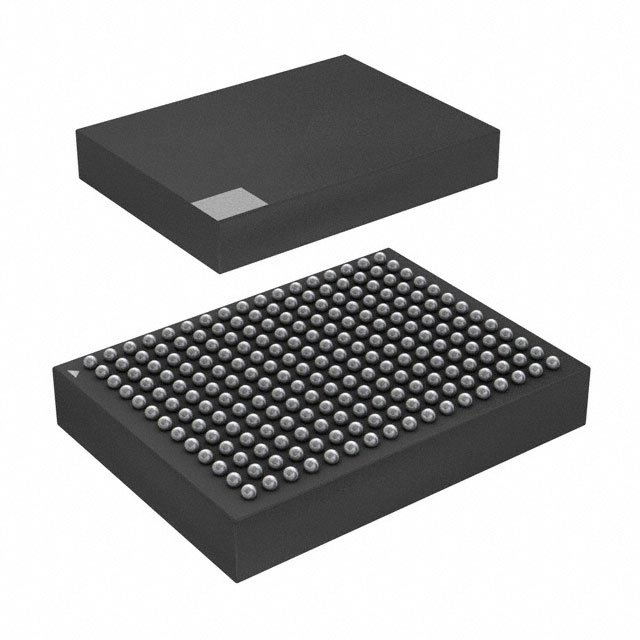
n 11.25mm × 15mm BGA Package
The LTM®9012 is a 4-channel, simultaneous sampling
14-bit µModule® analog-to-digital converter (ADC) with
integrated, fixed gain, differential ADC drivers. The low
noise amplifiers are suitable for single-ended drive and
pulse train signals such as imaging applications. Each
channel includes a lowpass filter between the driver output and ADC input.
n
DC specs include ±1.2LSB INL (typ), ±0.3LSB DNL (typ)
and no missing codes over temperature. The transition
noise is a low 1.2LSBRMS.
Applications
n
n
n
n
The digital outputs are serial LVDS and each channel outputs two bits at a time (2-lane mode). At lower sampling
rates there is a one bit option (1-lane mode). The LVDS
drivers have optional internal termination and adjustable
output levels to ensure clean signal integrity.
Industrial Imaging
Medical Imaging
Multichannel Data Acquisition
Nondestructive Testing
L, LT, LTC, LTM, Linear Technology, the Linear logo and µModule are registered trademarks of
Linear Technology Corporation. All other trademarks are the property of their respective owners.
The ENC+ and ENC– inputs may be driven differentially
or single-ended with a sine wave, PECL, LVDS, TTL or
CMOS inputs. An internal clock duty cycle stabilizer allows high performance at full speed for a wide range of
clock duty cycles.
Typical Application
Single-Ended Sensor Digitization
3.3V
1.8V
1.8V
VCC
VDD
OVDD
IMAGE
SENSOR
•
•
•
PIPELINE
ADC
PIPELINE
ADC
PIPELINE
ADC
VREF
0
LTM9012
–10
–20
14
14
DATA
CHANNEL 1
SERIALIZER
ENCODER
AND
CHANNEL 2
LVDS
DRIVERS
14
–30
FPGA
CHANNEL 3
AMPLITUDE (dBFS)
PIPELINE
ADC
LTM9012, 125Msps, 70MHz FFT
–40
–50
–60
–70
–80
–90
CHANNEL 4
14
INTERNAL
REFERENCE & SUPPLY
BYPASS CAPACITORS
ENCODE CLOCK
FR+
–110
FR–
–120
DCO+
PLL
SCK SDI SDO CS PAR/SER ENC+
–100
ENC–
DCO–
0
5 10 15 20 25 30 35 40 45 50 55 60
FREQUENCY (MHz)
9012 TA01b
9012 TA01a
9012fa
For more information www.linear.com/LTM9012
1
�LTM9012
Absolute Maximum Ratings
Pin Configuration
(Notes 1, 2)
Supply Voltages
VDD, OVDD................................................. –0.3V to 2V
VCC........................................................ –0.3V to 5.5V
Analog Input Voltage (CHn +, CHn –, SHDNn )
(Note 3)........................................................–0.3V to VCC
Analog Input Voltage (PAR/SER, SENSE)
(Note 4)......................................... –0.3V to (VDD + 0.2V)
Digital Input Voltage (ENC +, ENC –, CS, SDI, SCK)
(Note 5)...................................................... –0.3V to 3.9V
SDO (Note 5)............................................. –0.3V to 3.9V
Digital Output Voltage................. –0.3V to (OVDD + 0.3V)
Operating Temperature Range
LTM9012C................................................ 0°C to 70°C
LTM9012I.............................................–40°C to 85°C
Storage Temperature Range................... –65°C to 150°C
TOP VIEW
1
2
3
4
CH4+ CH4–
5
6
CH3+ CH3–
7
8
9
10
CH2+ CH2–
11
12
13
CH1+ CH1–
A
B
VCC3
SHDN3
VCC2
C
SHDN2
D
E
F
SHDN4
VCC4
SHDN1
G
VCC1
H
J
K
L
SDI
VDD
ENC+
ENC –
CS
OUT4B –
OUT4B+
SENSE
M
VDD
N
SDO
PAR/SER
P
REF
Q
OUT1A+
OUT1A–
R
S
FR–
OUT4A–
OUT3A–
OUT4A+
OUT3A+
OUT3B–
FR+
SCK
OUT3B+
DCO– DCO+
OVDD
OUT2A–
OUT2A+
BGA PACKAGE
221-LEAD (15mm × 11.25mm)
OUT1B+
OUT2B+
OUT1B–
OUT2B–
ALL ELSE = GND
TJMAX = 125°C, θJA = 16.5°C/W, θJCtop = 15°C/W,
θJCbottom = 6.3°C/W, θJBOARD = 10.4°C/W
θ VALUES DETERMINED PER JESD 51-9
WEIGHT = 1.07g
Order Information
http://www.linear.com/product/LTM9012#orderinfo
LEAD FREE FINISH
TRAY
PART MARKING*
PACKAGE DESCRIPTION
TEMPERATURE RANGE
LTM9012CY-AB#PBF
LTM9012CY-AB#PBF
LTM9012YAB
221-Lead (15mm × 11.25mm) Plastic BGA
0°C to 70°C
LTM9012IY-AB#PBF
LTM9012IY-AB#PBF
LTM9012YAB
221-Lead (15mm × 11.25mm) Plastic BGA
–40°C to 85°C
Consult LTC Marketing for parts specified with wider operating temperature ranges. *The temperature grade is identified by a label on the shipping container.
For more information on lead free part marking, go to: http://www.linear.com/leadfree/
For more information on tape and reel specifications, go to: http://www.linear.com/tapeandreel/. Some packages are available in 500 unit reels through
designated sales channels with #TRMPBF suffix.
9012fa
2
For more information www.linear.com/LTM9012
�LTM9012
Converter
Characteristics l denotes the specifications which apply over the full operating
The
temperature range, otherwise specifications are at TA = 25°C. (Note 6)
PARAMETER
CONDITIONS
MIN
Resolution (No Missing Codes)
l
14
TYP
MAX
UNITS
Bits
Integral Linearity Error
Differential Analog Input (Note 7)
l
–5
±1.2
5
LSB
Differential Linearity Error
Differential Analog Input
l
–0.9
±0.3
0.9
LSB
Offset Error
(Note 8)
l
–37
±3
37
mV
Gain Error
Internal Reference
External Reference
l
–3.6
–1.3
–1.3
3.0
%FS
%FS
Offset Drift
±20
µV/°C
Full-Scale Drift
Internal Reference
External Reference
±35
±25
ppm/°C
ppm/°C
Gain Matching
External Reference
±0.2
%FS
±3
mV
1.2
LSBRMS
Offset Matching
Transition Noise
External Reference
Analog
Input l denotes the specifications which apply over the full operating temperature range, otherwise
The
specifications are at TA = 25°C. (Note 6)
SYMBOL
PARAMETER
CONDITIONS
VIN
Differential Analog Input Range (CH+ – CH – )
LTM9012-AB
VIN(CM)
Analog Input Common Mode (CH+ + CH – )/2
Differential Analog Input (Note 9)
VSENSE
External Voltage Reference Applied to SENSE External Reference Mode
RIN
Differential Input Resistance
LTM9012-AB
at –1dBFS
MIN
TYP
MAX
UNITS
0.2
l
VP-P
0 to 1.5
l
0.625
1.250
V
1.300
V
100
Ω
IIN(P/S)
Input Leakage Current
0 < PAR/SER < VDD
l
–3
3
µA
IIN(SENSE)
Input Leakage Current
0.625V < SENSE < 1.3V
l
–6
6
µA
tAP
Sample-and-Hold Acquisition Delay Time
0
0.15
ns
tJITTER
Sample-and-Hold Acquisition Delay Jitter
CMRR
Analog Input Common Mode Rejection Ratio
90
psRMS
dB
BW-3dB
3dB Corner of Internal Lowpass Filter
90
MHz
Dynamic
Accuracy l denotes the specifications which apply over the full operating temperature range,
The
otherwise specifications are at TA = 25°C. (Note 6)
SYMBOL
PARAMETER
CONDITIONS
SNR
Signal-to-Noise Ratio
70MHz Input
SFDR
Spurious Free Dynamic Range
2nd or 3rd Harmonic
70MHz Input
Spurious Free Dynamic Range
4th Harmonic or Higher
S/N+D
MIN
TYP
MAX
UNITS
l
66.5
68.3
dBFS
l
66.9
78
dBFS
70MHz Input
l
76.9
86
dBFS
l
64.7
Signal-to-Noise Plus Distortion Ratio
70MHz Input
66.7
dBFS
Crosstalk, Near Channel
10MHz (Note 12)
70
dBc
Crosstalk, Far Channel
10MHz (Note 12)
90
dBc
9012fa
For more information www.linear.com/LTM9012
3
�LTM9012
Internal
Reference Characteristics l denotes the specifications which apply over the
The
full operating temperature range, otherwise specifications are at TA = 25°C.
PARAMETER
CONDITIONS
MIN
TYP
MAX
VREF Output Voltage
IOUT = 0
1.225
1.250
1.275
VREF Output Temperature Drift
UNITS
V
±25
VREF Output Resistance
–400μA < IOUT < 1mA
VREF Line Regulation
1.7V < VDD < 1.9V
ppm/°C
7
Ω
0.6
mV/V
Digital
Inputs and Outputs l denotes the specifications which apply over the full operating
The
temperature range, otherwise specifications are at TA = 25°C. (Note 6)
SYMBOL
PARAMETER
CONDITIONS
MIN
TYP
MAX
UNITS
ENCODE INPUTS (ENC+, ENC–)
Differential Encode Mode (ENC– Not Tied to GND)
VID
Differential Input Voltage
(Note 9)
l
0.2
VICM
Common Mode Input Voltage
Internally Set
Externally Set (Note 9)
l
1.1
l
0.2
VIN
Input Voltage Range
ENC+, ENC– to GND
RIN
Input Resistance
(See Figure 3)
CIN
Input Capacitance
V
1.2
1.6
V
V
3.6
V
10
kΩ
3.5
pF
Single-Ended Encode Mode (ENC– Tied to GND)
VIH
High Level Input Voltage
VDD = 1.8V
1.26
V
VIL
Low Level Input Voltage
VDD = 1.8V
0.54
V
VIN
Input Voltage Range
ENC+ to GND
0 to 3.6
RIN
Input Resistance
(See Figure 4)
30
kΩ
CIN
Input Capacitance
3.5
pF
V
Digital Inputs (CS, SDI, SCK in Serial or Parallel Programming Mode. SDO in Parallel Programming Mode)
VIH
High Level Input Voltage
VDD = 1.8V
l
VIL
Low Level Input Voltage
VDD = 1.8V
l
IIN
Input Current
VIN = 0V to 3.6V
l
CIN
Input Capacitance
1.3
V
–10
0.6
V
10
µA
3
pF
200
Ω
SDO Output (Serial Programming Mode. Open-Drain Output. Requires 2k Pull-Up Resistor if SDO is Used)
ROH
Logic Low Output Resistance to GND
VDD = 1.8V, SDO = 0V
IOH
Logic High Output Leakage Current
SDO = 0V to 3.6V
COUT
Output Capacitance
l
–10
10
3
µA
pF
Digital Input (SHDN)
VIH
High Level Input Voltage
VCC = 3.3V
l
VIL
Low Level Input Voltage
VCC = 3.3V
l
0.6
0.97
0.95
1.4
V
RSHDN
SHDN Pull-Up Resistor
VSHDN = 0V to 0.5V
l
90
150
210
kΩ
mV
mV
V
Digital Data Outputs
VOD
Differential Output Voltage
100Ω Differential Load, 3.5mA Mode
100Ω Differential Load, 1.75mA Mode
l
l
247
125
350
175
454
250
VOS
Common Mode Output Voltage
100Ω Differential Load, 3.5mA Mode
100Ω Differential Load, 1.75mA Mode
l
l
1.125
1.125
1.250
1.250
1.375
1.375
RTERM
On-Chip Termination Resistance
Termination Enabled, OVDD = 1.8V
100
V
V
Ω
9012fa
4
For more information www.linear.com/LTM9012
�LTM9012
Power
Requirements l denotes the specifications which apply over the full operating temperature
The
range, otherwise specifications are at TA = 25°C. (Note 6)
SYMBOL
PARAMETER
CONDITIONS
MIN
TYP
MAX
VDD
ADC Supply Voltage
(Note 10)
l
1.7
1.8
1.9
UNITS
V
OVDD
ADC Output Supply Voltage
(Note 10)
l
1.7
1.8
1.9
V
VCC
Amplifier Supply Voltage
(Note 10)
l
2.7
3.3
3.6
V
IVDD
ADC Supply Current
Sine Wave Input
l
298
320
mA
IOVDD
ADC Output Supply Current
2-Lane Mode, 1.75mA Mode
2-Lane Mode, 3.5mA Mode
l
l
27
49
31
54
mA
mA
IVCC
Amplifier Supply Current
l
208
224
mA
l
l
1271
1311
1473
1517
mW
mW
PDISS
2-Lane Mode, 1.75mA Mode
2-Lane Mode, 3.5mA Mode
PSLEEP
3
mW
PNAP
85
mW
20
mW
PDIFFCLK
Power Decrease with Single-Ended
Encode Mode Enabled
Timing
Characteristics l denotes the specifications which apply over the full operating temperature
The
range, otherwise specifications are at TA = 25°C. (Note 6)
SYMBOL
PARAMETER
CONDITIONS
fS
Sampling Frequency
(Note 10, Note 11)
l
MIN
5
tENCL
ENC Low Time (Note 9)
Duty Cycle Stabilizer Off
Duty Cycle Stabilizer On
l
l
3.8
2
tENCH
ENC High Time (Note 9)
Duty Cycle Stabilizer Off
Duty Cycle Stabilizer On
l
l
3.8
2
tAP
Sample-and-Hold
Acquisition Delay Time
TYP
MAX
UNITS
125
MHz
4
4
100
100
ns
ns
4
4
100
100
ns
ns
0
ns
1/(8•fS)
1/(7•fS)
1/(6•fS)
1/(16•fS)
1/(14•fS)
1/(12•fS)
sec
sec
sec
sec
sec
sec
Digital Data Outputs (RTERM = 100Ω Differential, CL = 2pF to GND on Each Output)
tSER
Serial Data Bit Period
2-Lanes, 16-Bit Serialization
2-Lanes, 14-Bit Serialization
2-Lanes, 12-Bit Serialization
1-Lane, 16-Bit Serialization
1-Lane, 14-Bit Serialization
1-Lane, 12-Bit Serialization
tFRAME
FR to DCO Delay
(Note 9)
l
tDATA
DATA to DCO Delay
(Note 9)
l
0.35•tSER
tPD
Propagation Delay
(Note 9)
l
0.7n + 2•tSER
tR
Output Rise Time
Data, DCO, FR, 20% to 80%
0.17
ns
tF
Output Fall Time
Data, DCO, FR, 20% to 80%
0.17
ns
DCO Cycle-Cycle Jitter
tSER = 1ns
0.35•tSER
Pipeline Latency
0.5•tSER
0.65•tSER
sec
0.5•tSER
0.65•tSER
sec
1.1n + 2•tSER
1.5n + 2•tSER
sec
60
psP-P
6
Cycles
SPI Port Timing (Note 9)
tSCK
SCK Period
tS
Write Mode
Read Back Mode, CSDO = 20pF, RPULLUP = 2k
l
l
40
250
ns
ns
CS to SCK Setup Time
l
5
ns
tH
SCK to CS Setup Time
l
5
ns
tDS
SDI Setup Time
l
5
ns
tDH
SDI Hold Time
l
5
tDO
SCK Falling to SDO Valid
Read Back Mode, CSDO = 20pF, RPULLUP = 2k
l
ns
125
ns
9012fa
For more information www.linear.com/LTM9012
5
�LTM9012
Electrical Characteristics
Note 1: Stresses beyond those listed under Absolute Maximum Ratings
may cause permanent damage to the device. Exposure to any Absolute
Maximum Rating condition for extended periods may affect device
reliability and lifetime.
Note 2: All voltage values are with respect to GND (unless otherwise
noted).
Note 3: Input pins are protected by steering diodes to either supply. If
the inputs should exceed either supply voltage, the input current should
be limited to less than 10mA. In addition, the inputs CHn +, CHn – are
protected by a pair of back-to-back diodes. If the differential input voltage
exceeds 1.4V, the input current should be limited to less than 10mA.
Note 4: When these pin voltages are taken below GND or above VDD, they
will be clamped by internal diodes. This product can handle input currents
greater than 100mA below GND or above VDD without latchup.
Note 5: When these pin voltages are taken below GND they will be
clamped by internal diodes. When these pin voltages are taken above VDD
they will not be clamped by internal diodes. This product can handle input
currents greater than 100mA below GND without latchup.
Note 6: VCC = 3.3V, VDD = OVDD = 1.8V, fSAMPLE = 125MHz, 2-lane output
mode, differential ENC+/ENC – = 2VP-P sine wave, input range = 200mVP-P
with differential drive, unless otherwise noted.
Note 7: Integral nonlinearity is defined as the deviation of a code from a
best fit straight line to the transfer curve. The deviation is measured from
the center of the quantization band.
Note 8: Offset error is the offset voltage measured from –0.5 LSB when
the output code flickers between 00 0000 0000 0000 and 11 1111 1111
1111 in 2’s complement output mode.
Note 9: Guaranteed by design, not subject to test.
Note 10: Recommended operating conditions.
Note 11: The maximum sampling frequency depends on the speed grade
of the part and also which serialization mode is used. The maximum serial
data rate is 1000Mbps so tSER must be greater than or equal to 1ns.
Note 12: Near-channel crosstalk refers to CH1 and CH2. Far channel
crosstalk refers to CH1 to CH4.
Timing Diagrams
2-Lane Output Mode, 16-Bit Serialization*
tAP
ANALOG
INPUT
N+1
N
tENCH
ENC–
tENCL
ENC+
tSER
DCO–
DCO+
tFRAME
FR–
FR+
OUT#A–
OUT#A+
OUT#B–
OUT#B+
tDATA
tSER
tPD
tSER
D5
D3
D1
0
D13 D11 D9
D7
D5
D3
D1
0
D13 D11 D9
D4
D2
D0
0
D12 D10 D8
D6
D4
D2
D0
0
D12 D10 D8
SAMPLE N-6
SAMPLE N-5
SAMPLE N-4
9012 TD01
*SEE THE DIGITAL OUTPUTS SECTION
9012fa
6
For more information www.linear.com/LTM9012
�LTM9012
Timing Diagrams
2-Lane Output Mode, 14-Bit Serialization
tAP
ANALOG
INPUT
N+2
N
tENCH
ENC–
N+1
tENCL
ENC+
tSER
DCO–
DCO+
tFRAME
FR–
FR+
OUT#A–
OUT#A+
OUT#B–
OUT#B+
tDATA
tSER
tPD
tSER
D7
D5
D3
D1 D13 D11 D9
D7
D5
D3
D1 D13 D11 D9
D7
D5
D3
D1 D13 D11 D9
D6
D4
D2
D0 D12 D10 D8
D6
D4
D2
D0 D12 D10 D8
D6
D4
D2
D0 D12 D10 D8
SAMPLE N-6
SAMPLE N-5
SAMPLE N-4
SAMPLE N-3
9012 TD02
NOTE THAT IN THIS MODE FR+/FR– HAS TWO TIMES THE PERIOD OF ENC+/ENC–
2-Lane Output Mode, 12-Bit Serialization
tAP
ANALOG
INPUT
N
N+1
tENCH
ENC–
tENCL
ENC+
tSER
DCO–
DCO+
FR+
tFRAME
tDATA
tPD
tSER
FR–
OUT#A–
OUT#A+
OUT#B–
OUT#B+
tSER
D9
D7
D5
D3 D13 D11 D9
D7
D5
D3 D13 D11 D9
D8
D6
D4
D2 D12 D10 D8
D6
D4
D2 D12 D10 D8
SAMPLE N-6
SAMPLE N-5
SAMPLE N-4
9012 TD03
9012fa
For more information www.linear.com/LTM9012
7
�LTM9012
Timing Diagrams
1-Lane Output Mode, 16-Bit Serialization
tAP
ANALOG
INPUT
N+1
N
tENCH
ENC–
tENCL
ENC+
tSER
DCO–
DCO+
tFRAME
FR–
FR+
OUT#A–
OUT#A+
tDATA
tSER
tPD
D1
D0
0
tSER
0
SAMPLE N-6
D13 D12 D11 D10 D9
D8
D7
D6
D5
D4
D3
D2
D1
D0
0
SAMPLE N-5
0
D13 D12 D11 D10
SAMPLE N-4
9012 TD04
OUT#B+, OUT#B– ARE DISABLED
1-Lane Output Mode, 14-Bit Serialization
tAP
ANALOG
INPUT
N+1
N
tENCH
ENC–
tENCL
ENC+
tSER
DCO–
DCO+
tFRAME
FR–
FR+
OUT#A–
OUT#A+
tDATA
tSER
tPD
D3
D2
SAMPLE N-6
D1
tSER
D0 D13 D12 D11 D10 D9
D8
D7
D6
D5
D4
D3
D2
SAMPLE N-5
D1
D0 D13 D12 D11 D10
SAMPLE N-4
9012 TD05
OUT#B+, OUT#B– ARE DISABLED
9012fa
8
For more information www.linear.com/LTM9012
�LTM9012
Timing Diagrams
1-Lane Output Mode, 12-Bit Serialization
tAP
ANALOG
INPUT
N+1
N
tENCH
ENC–
tENCL
ENC+
tSER
DCO–
DCO+
tFRAME
FR–
FR+
OUT#A–
OUT#A+
tDATA
tSER
tPD
D5
D4
D3
tSER
D2 D13 D12 D11 D10 D9
SAMPLE N-6
D8
D7
D6
D5
D4
D3
D2 D13 D12 D11
SAMPLE N-5
SAMPLE N-4
9012 TD06
OUT#B+, OUT#B– ARE DISABLED
SPI Port Timing (Readback Mode)
tDS
tS
tDH
tSCK
tH
CS
SCK
tDO
SDI
SDO
R/W
A6
A5
A4
A3
A2
A1
A0
XX
D7
HIGH IMPEDANCE
XX
D6
XX
D5
XX
D4
XX
D3
XX
D2
XX
XX
D1
D0
SPI Port Timing (Write Mode)
CS
SCK
SDI
SDO
R/W
A6
A5
A4
A3
A2
A1
A0
D7
D6
D5
D4
D3
D2
D1
D0
9012 TD07
HIGH IMPEDANCE
9012fa
For more information www.linear.com/LTM9012
9
�LTM9012
Typical Performance Characteristics
IOVDD vs Sample Rate, 5MHz Sine
Wave Input –1dBFS
60
0
50
64K Point FFT, fIN = 5MHz,
–1dBFS, SENSE = VDD
0
–10
–10
–20
–20
–30
IOVDD (mA)
30
20
1-LANE 1.75mA
1-LANE 3.5mA
2-LANE 1.75mA
2-LANE 3.5mA
10
0
0
25
50
75
100
SAMPLE RATE (Msps)
125
AMPLITUDE (dBFS)
AMPLITUDE (dBFS)
–30
40
–40
–50
–60
–70
–80
–90
–110
–110
–120
–120
0
5 10 15 20 25 30 35 40 45 50 55 60
FREQUENCY (MHz)
0
–10
–20
–20
0.5
0.4
0.3
DNL ERROR (LSB)
–40
–50
–60
–70
–80
0.2
0.1
0
–0.1
–0.2
–90
–100
–100
–110
–110
–0.4
–120
–120
–0.5
5 10 15 20 25 30 35 40 45 50 55 60
FREQUENCY (MHz)
–0.3
0
5 10 15 20 25 30 35 40 45 50 55 60
FREQUENCY (MHz)
9012 G04
Pulse Response
1.5
14000
–5
1.0
12000
–10
0.5
10000
–15
0
8000
–0.5
6000
–25
–1.0
4000
–30
–1.5
2000
–35
8192
12288
OUTPUT CODE
16384
9012 G07
0
dBFS
0
4096
8192
12288
OUTPUT CODE
0
16384
Frequency Response
16000
0
4096
9012 G06
2.0
–2.0
0
9012 G05
Integral Non-Linearity (INL)
vs Output Code
INL ERROR (LSB)
Differential Non-Linearity (DNL)
vs Output Code
–90
0
5 10 15 20 25 30 35 40 45 50 55 60
FREQUENCY (MHz)
9012 G03
–30
AMPLITUDE (dBFS)
AMPLITUDE (dBFS)
–30
–80
0
9012 G02
64K Point 2-Tone FFT, fIN = 70MHz
and fIN = 75MHz, –7dBFS per Tone,
SENSE = VDD
0
–70
–70
–80
–100
–10
–50
–50
–60
–90
9012 G01
–60
–40
–100
64K Point 2-Tone FFT, fIN = 4.8MHz
and fIN = 5.2MHz, –7dBFS per Tone,
SENSE = VDD
–40
64K Point FFT, fIN = 70MHz,
–1dBFS, SENSE = VDD
0.1 0.2 0.3 0.4 0.5 0.6 0.7 0.8 0.9
TIME (µs)
1
9012 G08
–20
–40
1
10
100
BASEBAND FREQUENCY (MHz)
1000
9012 G09
9012fa
10
For more information www.linear.com/LTM9012
�LTM9012
Pin Functions
VCC1 (H10, H13): Channel 1 Amplifier Supply. VCC is
internally bypassed to ground with 0.1µF in parallel with
0.01µF ceramic capacitors, additional bypass capacitance
is optional. The recommended operating voltage is 3.3V.
VCC2 (C8, C12): Channel 2 Amplifier Supply. VCC is internally bypassed to ground with 0.1µF in parallel with
0.01µF ceramic capacitors, additional bypass capacitance
is optional. The recommended operating voltage is 3.3V.
VCC3 (C2, C6): Channel 3 Amplifier Supply. VCC is internally bypassed to ground with 0.1µF in parallel with
0.01µF ceramic capacitors, additional bypass capacitance
is optional. The recommended operating voltage is 3.3V.
VCC4 (H1, H4): Channel 4 Amplifier Supply. VCC is internally bypassed to ground with 0.1µF in parallel with
0.01µF ceramic capacitors, additional bypass capacitance
is optional. The recommended operating voltage is 3.3V.
VDD (N4, N5, N9, N10): ADC Analog Supply. VDD is internally bypassed to ground with 0.1µF ceramic capacitors,
additional bypass capacitance is optional. The recommended operating voltage is 1.8V.
OVDD (R7, R8, S8): ADC Digital Output Supply. OVDD
is internally bypassed to ground with 0.1µF ceramic capacitors, additional bypass capacitance is optional. The
recommended operating voltage is 1.8V.
GND: Ground. Use multiple vias close to pins.
CH1+ (A11): Channel 1 Noninverting Analog Input.
CH1– (A12): Channel 1 Inverting Analog Input.
CH2+ (A8): Channel 2 Noninverting Analog Input.
CH2– (A9): Channel 2 Inverting Analog Input.
CH3+ (A5): Channel 3 Noninverting Analog Input.
CH3– (A6): Channel 3 Inverting Analog Input.
CH4+ (A2): Channel 4 Noninverting Analog Input.
CH4– (A3): Channel 4 Inverting Analog Input.
SHDN1 (G11): Channel 1 Amplifier Shutdown. Connecting SHDN1 to VCC or floating results in normal (active)
operating mode. Connecting SHDN1 to GND results in a
low power shutdown state on amplifier 1.
SHDN2 (D9): Channel 2 Amplifier Shutdown. Connecting SHDN2 to VCC or floating results in normal (active)
operating mode. Connecting SHDN2 to GND results in a
low power shutdown state on amplifier 2.
SHDN3 (D3): Channel 3 Amplifier Shutdown. Connecting SHDN3 to VCC or floating results in normal (active)
operating mode. Connecting SHDN3 to GND results in a
low power shutdown state on amplifier 3.
SHDN4 (G1): Channel 4 Amplifier Shutdown. Connecting SHDN4 to VCC or floating results in normal (active)
operating mode. Connecting SHDN4 to GND results in a
low power shutdown state on amplifier 4.
ENC+ (N1): Encode Input. Conversion starts on the rising
edge.
ENC– (P1): Encode Complement Input. Conversion starts
on the falling edge.
CS (P4): In serial programming mode, (PAR/SER = 0V),
CS is the serial interface chip select input. When CS is
low, SCK is enabled for shifting data on SDI into the mode
control registers. In the parallel programming mode (PAR/
SER = VDD), CS selects 2-lane or 1-lane output mode. CS
can be driven with 1.8V to 3.3V logic.
SCK (P5): In serial programming mode, (PAR/SER =
0V), SCK is the serial interface clock input. In the parallel
programming mode (PAR/SER = VDD), SCK selects 3.5mA
or 1.75mA LVDS output currents. SCK can be driven with
1.8V to 3.3V logic.
SDI (P3): In serial programming mode, (PAR/SER = 0V),
SDI is the serial interface data Input. Data on SDI is clocked
into the mode control registers on the rising edge of SCK.
In the parallel programming mode (PAR/SER = VDD), SDI
can be used to power down the part. SDI can be driven
with 1.8V to 3.3V logic.
SDO (P9): In serial programming mode, (PAR/SER = 0V),
SDO is the optional serial interface data output. Data on
SDO is read back from the mode control registers and can
be latched on the falling edge of SCK. SDO is an opendrain NMOS output that requires an external 2k pull-up
resistor to 1.8V – 3.3V. If read back from the mode control
registers is not needed, the pull-up resistor is not necessary and SDO can be left unconnected. In the parallel
programming mode (PAR/SER = VDD), SDO is an input
that enables internal 100Ω termination resistors. When
used as an input, SDO can be driven with 1.8V to 3.3V
logic through a 1k series resistor.
9012fa
For more information www.linear.com/LTM9012
11
�LTM9012
Pin Functions
PAR/SER (P10): Programming Mode Selection Pin. Connect to ground to enable the serial programming mode. CS,
SCK, SDI and SDO become a serial interface that controls
the A/D operating modes. Connect to VDD to enable the
parallel programming mode where CS, SCK, SDI and SDO
become parallel logic inputs that control a reduced set of
the A/D operating modes. PAR/SER should be connected
directly to ground or the VDD of the part and not be driven
by a logic signal.
LVDS Outputs
VREF (P11): Reference Voltage Output. VREF is internally
bypassed to ground with a 2.2μF ceramic capacitor, nominally 1.25V.
OUT2A–/OUT2A+, OUT2B–/OUT2B+ (R9/R10, S11/S12):
Serial data outputs for Channel 2. In 1-lane output mode
only OUT2A–/OUT2A+ are used.
SENSE (N11): Reference Programming Pin. Connecting
SENSE to VDD selects the internal reference and a ±0.1V
input range. Connecting SENSE to ground selects the
internal reference and a ±0.05V input range. An external
reference between 0.625V and 1.3V applied to SENSE
selects an input range of ±0.08 • VSENSE. SENSE is internally bypassed to ground with a 0.1μF ceramic capacitor.
OUT3A–/OUT3A+, OUT3B–/OUT3B+ (S2/S3, R4/R5): Serial data outputs for Channel 3. In 1-lane output mode
only OUT3A–/OUT3A+ are used.
All pins in this section are differential LVDS outputs. The
output current level is programmable. There is an optional
internal 100Ω termination resistor between the pins of
each LVDS output pair.
OUT1A–/OUT1A+, OUT1B–/OUT1B+ (Q9/Q10, R11/R12):
Serial data outputs for Channel 1. In 1-lane output mode
only OUT1A–/OUT1A+ are used.
OUT4A–/OUT4A+, OUT4B–/OUT4B+ (R2/R3, Q4/Q5): Serial data outputs for Channel 4. In 1-lane output mode
only OUT4A–/OUT4A+ are used.
FR–/FR+ (S4/S5): Frame Start Output.
DCO–/DCO+ (S9/S10): Data Clock Output.
Pin Configuration Table
1
2
3
4
5
6
7
8
9
10
11
12
13
A
GND
CH4+
CH4–
GND
CH3+
CH3–
GND
CH2+
CH2–
GND
CH1+
CH1–
GND
B
GND
GND
GND
GND
GND
GND
GND
GND
GND
GND
GND
GND
GND
C
GND
VCC3
GND
GND
GND
VCC3
GND
VCC2
GND
GND
GND
VCC2
GND
D
GND
GND
SHDN3
GND
GND
GND
GND
GND
SHDN2
GND
GND
GND
GND
E
GND
GND
GND
GND
GND
GND
GND
GND
GND
GND
GND
GND
GND
F
GND
GND
GND
GND
GND
GND
GND
GND
GND
GND
GND
GND
GND
G
SHDN4
GND
GND
GND
GND
GND
GND
GND
GND
GND
SHDN1
GND
GND
H
VCC4
GND
GND
VCC4
GND
GND
GND
GND
GND
VCC1
GND
GND
VCC1
J
GND
GND
GND
GND
GND
GND
GND
GND
GND
GND
GND
GND
GND
K
GND
GND
GND
GND
GND
GND
GND
GND
GND
GND
GND
GND
GND
L
GND
GND
GND
GND
GND
GND
GND
GND
GND
GND
GND
GND
GND
M
GND
GND
GND
GND
GND
GND
GND
GND
GND
GND
GND
GND
GND
N
ENC+
GND
GND
VDD
VDD
GND
GND
GND
VDD
VDD
SENSE
GND
GND
P
ENC–
GND
SDI
CS
SCK
GND
GND
GND
SDO
PAR/SER
REF
GND
GND
Q
GND
GND
GND
OUT4B–
OUT4B+
GND
GND
GND
OUT1A–
OUT1A+
GND
GND
GND
R
GND
OUT4A–
OUT4A+
OUT3B–
OUT3B+
GND
OVDD
OVDD
OUT2A–
OUT2A+
OUT1B–
OUT1B+
GND
GND
OUT3A–
OUT3A+
FR–
FR+
OVDD
DCO–
DCO+
OUT2B–
OUT2B+
GND
S
GND
GND
9012fa
12
For more information www.linear.com/LTM9012
�LTM9012
Block Diagram
3.3V
1.8V
VCC
LTM9012
1.8V
VDD
OVDD
OUT1A+
CH 1
ANALOG
INPUT
OUT1A–
14-BIT
ADC CORE
SHDN1
OUT1B+
OUT1B–
DATA
SERIALIZER
VDD/2
OUT2A+
CH 2
ANALOG
INPUT
OUT2A–
14-BIT
ADC CORE
OUT2B+
OUT2B–
SHDN2
OUT3A+
CH 3
ANALOG
INPUT
OUT3A–
14-BIT
ADC CORE
OUT3B+
OUT3B–
SHDN3
VDD/2
OUT4A+
CH 4
ANALOG
INPUT
OUT4A–
14-BIT
ADC CORE
OUT4B+
OUT4B–
SHDN4
ENC+
DCO±
PLL
ENC–
VREF
FR±
1.25V
REFERENCE
REFH REFL
RANGE
SELECT
REF
BUFFER
SENSE
SDO
SDI
SCK
CS
PAR/SER
MODE
CONTROL
REGISTERS
DIFF. REF.
AMP.
GND
9012 BD
Figure 1. Block Diagram
9012fa
For more information www.linear.com/LTM9012
13
�LTM9012
Applications Information
Converter Operation
The LTM9012 is a low power, 4-channel, 14-bit, 125Msps
A/D converter that is powered by a 1.8V ADC supply and
3.3V driver supplies. Each input includes a fixed gain,
differential amplifier. The analog inputs can be driven differentially or single-ended. The encode input can be driven
differentially for optimal jitter performance, or single-ended
for lower power consumption. The digital outputs are serial
LVDS to minimize the number of data lines. Each channel
outputs two bits at a time (2-lane mode). At lower sampling
rates there is a one bit per channel option (1-lane mode).
Many additional features can be chosen by programming
the mode control registers through a serial SPI port.
Analog Inputs
The analog inputs for each channel of the LTM9012 consist of a differential amplifier with fixed gain followed by
a lowpass filter. The 10x gain version has 49.9Ω series
resistance in each input.
The differential input can support single-ended operation
by connecting the inverting input to a fixed DC voltage or
ground. However, if ground is used, there will be a 6dB
loss of dynamic range. For maximum dynamic range, connect the inverting inputs of the LTM9012 to a DC voltage
equal to the median of the voltage excursions of the noninverting input. An op amp provides an excellent means
of providing a low impedance voltage source capable of
sourcing and sinking small amounts of current. Note the
value of this DC voltage should fall between the limits of
allowable input common mode voltages. See Figure 2 for
an example.
LTM9012
(1 CHANNEL SHOWN)
SIGNAL
–
+
¼LTC6254
VREF
0.1µF
–
+
9012 F02
The gain of the LTM9012 may also be decreased from
the nominal value by adding resistance in series with
the signal inputs. The internal op amps are fed by 49.9Ω
series resistors and employ 511Ω feedback resistors. The
voltage gain of the stage is set by the ratio of the feedback
resistance to the total series resistance. Unity gain, for
example, can be realized by adding a 464Ω resistor in
series with each input.
Reference
The LTM9012 has an internal 1.25V voltage reference. For
a 2V input range using the internal reference with a unity
gain internal amplifier configuration, connect SENSE to VDD.
For a 1V input range using the internal reference, connect
SENSE to ground. For a 2V input range with an external
reference, apply a 1.25V reference voltage to SENSE.
The input range can be adjusted by applying a voltage to
SENSE that is between 0.625V and 1.30V. The input range
will then be 1.6 • VSENSE.
The reference is shared by all four ADC channels, so it is
not possible to independently adjust the input range of
individual channels.
Encode Input
The signal quality of the encode inputs strongly affects
the A/D noise performance. The encode inputs should be
treated as analog signals—do not route them next to digital
traces on the circuit board. There are two modes of operation for the encode inputs: the differential encode mode
(Figure 3), and the single-ended encode mode (Figure 4).
The differential encode mode is recommended for sinusoidal, PECL, or LVDS encode inputs (Figure 5 and Figure 6).
The encode inputs are internally biased to 1.2V through
10k equivalent resistance. The encode inputs can be taken
above VDD (up to 3.6V), and the common mode range is
from 1.1V to 1.6V. In the differential encode mode, ENC–
should stay at least 200mV above ground to avoid falsely
triggering the single-ended encode mode. For good jitter
performance ENC+ should have fast rise and fall times.
RF
SET VREF EQUAL TO THE DC MEDIAN OF THE SIGNAL VOLTAGE
Figure 2. Single-Ended Operation
14
For more information www.linear.com/LTM9012
9012fa
�LTM9012
Applications Information
LTM9012
The single-ended encode mode should be used with CMOS
encode inputs. To select this mode, ENC– is connected
to ground and ENC+ is driven with a square wave encode
input. ENC+ can be taken above VDD (up to 3.6V) so 1.8V
to 3.3V CMOS logic levels can be used. The ENC+ threshold
is 0.9V. For good jitter performance ENC+ should have fast
rise and fall times.
VDD
DIFFERENTIAL
COMPARATOR
VDD
15k
ENC+
ENC–
Clock PLL and Duty Cycle Stabilizer
30k
The encode clock is multiplied by an internal phase-locked
loop (PLL) to generate the serial digital output data. If the
encode signal changes frequency or is turned off, the PLL
requires 25μs to lock onto the input clock.
9012 F03
Figure 3. Equivalent Encode Input Circuit
for Differential Encode Mode
A clock duty cycle stabilizer circuit allows the duty cycle
of the applied encode signal to vary from 30% to 70%.
In the serial programming mode it is possible to disable
the duty cycle stabilizer, but this is not recommended. In
the parallel programming mode the duty cycle stabilizer
is always enabled.
LTM9012
ENC+
1.8V TO 3.3V
0V
ENC–
30k
CMOS LOGIC
BUFFER
9012 F04
Figure 4. Equivalent Encode Input Circuit
for Single-Ended Encode Mode
0.1µF
ENC+
T1
50Ω
0.1µF
Digital Outputs
LTM9012
100Ω
50Ω
0.1µF
ENC–
9012 F05
T1 = MA/COM ETC1-1-13
RESISTORS AND CAPACITORS
ARE 0402 PACKAGE SIZE
Figure 5. Sinusoidal Encode Drive
0.1µF
PECL OR
LVDS
CLOCK
The digital outputs of the LTM9012 are serialized LVDS
signals. Each channel outputs two bits at a time (2-lane
mode). At lower sampling rates there is a one bit per channel option (1-lane mode). The data can be serialized with
16-, 14-, or 12-bit serialization (see the Timing Diagrams
for details). Note that with 12-bit serialization the two LSBs
are not available—this mode is included for compatibility
with potential 12-bit versions of these parts.
The output data should be latched on the rising and falling
edges of the data clock out (DCO). A data frame output
(FR) can be used to determine when the data from a new
conversion result begins. In the 2-lane, 14-bit serialization
mode, the frequency of the FR output is halved.
The maximum serial data rate for the data outputs is 1Gbps,
so the maximum sample rate of the ADC will depend on
the serialization mode as well as the speed grade of the
ENC+
LTM9012
0.1µF
ENC–
9012 F06
Figure 6. PECL or LVDS Encode Drive
9012fa
For more information www.linear.com/LTM9012
15
�LTM9012
Applications Information
ADC (see Table 1). The minimum sample rate for all serialization modes is 5Msps.
By default the outputs are standard LVDS levels: 3.5mA
output current and a 1.25V output common mode voltage. An external 100Ω differential termination resistor
is required for each LVDS output pair. The termination
resistors should be located as close as possible to the
LVDS receiver.
The outputs are powered by OVDD which is isolated from
the A/D core power.
Programmable LVDS Output Current
The default output driver current is 3.5mA. This current
can be adjusted by control register A2 in the serial programming mode. Available current levels are 1.75mA,
2.1mA, 2.5mA, 3mA, 3.5mA, 4mA and 4.5mA. In the
parallel programming mode the SCK pin can select either
3.5mA or 1.75mA.
Optional LVDS Driver Internal Termination
In most cases using just an external 100Ω termination
resistor will give excellent LVDS signal integrity. In addition, an optional internal 100Ω termination resistor can
be enabled by serially programming mode control register
A2. The internal termination helps absorb any reflections
caused by imperfect termination at the receiver. When the
internal termination is enabled, the output driver current is
doubled to maintain the same output voltage swing. In the
parallel programming mode the SDO pin enables internal
termination. Internal termination should only be used with
1.75mA, 2.1mA or 2.5mA LVDS output current modes.
Data Format
Table 2 shows the relationship between the analog input
voltage and the digital data output bits. By default the
output data format is offset binary. The 2’s complement
format can be selected by serially programming mode
control register A1.
Table 2. Output Codes vs Input Voltage
CHn + TO CHn –
(0.2V RANGE)
D13 TO D0
(OFFSET BINARY)
D13 TO D0
(2’s COMPLEMENT)
>0.1000000V
+0.0999878V
+0.0999756V
11 1111 1111 1111
11 1111 1111 1111
11 1111 1111 1110
01 1111 1111 1111
01 1111 1111 1111
01 1111 1111 1110
+0.0000122V
+0.0000000V
–0.0000122V
–0.0000244V
10 0000 0000 0001
10 0000 0000 0000
01 1111 1111 1111
01 1111 1111 1111
00 0000 0000 0001
00 0000 0000 0000
11 1111 1111 1111
11 1111 1111 1110
–0.0999878V
–0.1000000V