Click here for production status of specific part numbers.
MAX20077/MAX25277
36V, 2.5A Mini Buck Converters with 3.5μA IQ
General Description
The MAX20077/MAX25277 is a small, synchronous buck
converter with integrated high-side and low-side switches.
The device is designed to deliver up to 2.5A (2.0A for the
MAX20077ATCC/VY+ variant) with 3.5V to 36V input voltages while using only 3.5µA quiescent current at no load.
The device provides an accurate output voltage of ±2%
in FPWM mode within the normal 6V to 18V operation
input range. With 20ns minimum on-time capability, the
converter is capable of large input-to-output conversion
ratios. Voltage quality can be monitored by observing
the PGOOD signal. The device can operate in dropout
by running at 99% duty cycle, making it ideal for automotive and industrial applications. The device offers
two fixed 5V and 3.3V output voltages. In addition, the
device can be configured for 1V to 10V output voltages
using an external resistor-divider. Frequency is internally
fixed at 2.1MHz, which allows for small external components and reduced output ripple, and guarantees no AM
interference. A 400kHz option is also offered to provide
minimum switching losses and maximum efficiency. The
device automatically enters skip mode at light loads with
ultra-low 3.5µA quiescent current at no load. The device
offers pin-enabled spread-spectrum-frequency modulation designed to minimize EMI-radiated emissions due to
the modulation frequency.
The MAX20077/MAX25277 variants are available in a
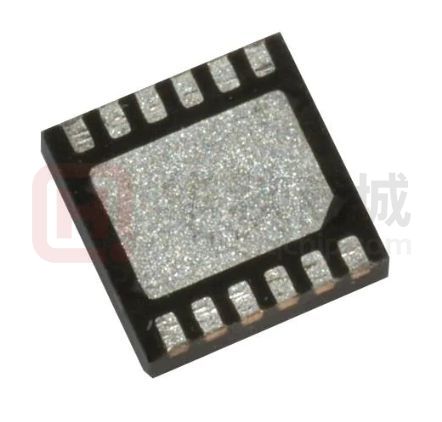
small (3mm x 3mm), 12-pin, side-wettable TDFN package with an exposed pad, and requires very few external
components.
Applications
●● Automotive
●● Industrial
●● High-Voltage DC-DC Converters
Benefits and Features
●● Synchronous DC-DC Converter with Integrated FETs
• MAX20077ATCA/VY+/B/D/E = 2.5A IOUT
• MAX20077ATCC/VY+ = 2.0A IOUT
• 3.5µA Quiescent Current in Standby Mode
●● Small Solution Size Saves Space
• 20ns Minimum On-Time
• 2.1MHz or 400kHz Operating Frequency
• Programmable 1V to 10V Output
Voltages, or Fixed 5V/3.3V Options Available
• Fixed 3.5ms Internal Soft-Start
• Fixed Output Voltage with ±2% Output Accuracy
in FPWM Mode (5V/3.3V), or Externally Resistor
Adjustable
(1V to 10V) with ±1.5% FB Accuracy
• Innovative Current-Mode-Control Architecture
Minimizes Total Board Space and BOM Count
●● PGOOD Output and High-Voltage EN Input Simplify
Power Sequencing
●● Protection Features and Operating Range Ideal for
Automotive Applications
• 3.5V to 36V Operating VIN Range
• 40V Load-Dump Protection
• 99% Duty-Cycle Operation with Low Dropout
• -40°C to +125°C Automotive Temperature Range
• AEC-Q100 Qualified
Simplified Block Diagram
SPS
HIGHVOLTAGE
LDO
EN
BIAS
BANDGAP
BST
OSC
SUP
CLK
CURRENT SENSE
+
SLOPE COMP
SOFTSTART
LOGIC
CONTROL
OUT
EAMP
Ordering Information appears at end of data sheet.
REF
SYNC
FB
PWM
LX
BIAS
FB
PGND
SW1
VRESET
COMP
MAX20077
SW2
PGOOD
19-100267; Rev 6; 6/19
AGND
�MAX20077/MAX25277
36V, 2.5A Mini Buck Converters with 3.5μA IQ
Absolute Maximum Ratings
SUP........................................................................-0.3V to +40V
EN......................................................................... -0.3V to +40V
BST to LX (Note 1).................................................................+6V
BST.........................................................................-0.3V to +45V
FB..............................................................-0.3V to VBIAS + 0.3V
SYNC........................................................-0.3V to VBIAS + 0.3V
SPS...........................................................-0.3V to VBIAS + 0.3V
OUT........................................................................-0.3V to +18V
PGOOD....................................................................-0.3V to +6V
PGND to AGND.....................................................-0.3V to +0.3V
BIAS......................................................................-0.3V to +6.0V
LX Continuous RMS Current....................................................3A
OUT Short-Circuit Duration .......................................Continuous
ESD Protection
Human Body Model .........................................................±2kV
Machine Model ..............................................................±200V
Continuous Power Dissipation (TA = +70°C)
12-pin SWTDFN
(derate 24.4mW/°C above +70°C).............................1951mW
Storage Temperature Range............................. -65°C to +150°C
Operating Junction Temperature (Note 6)......... -40°C to +150°C
Lead Temperature (Soldering, 10s).................................. +300°C
Soldering Temperature (Reflow).......................................+260°C
Stresses beyond those listed under “Absolute Maximum Ratings” may cause permanent damage to the device. These are stress ratings only, and functional operation of the device at these
or any other conditions beyond those indicated in the operational sections of the specifications is not implied. Exposure to absolute maximum rating conditions for extended periods may affect
device reliability.
Note 1: LX has internal clamp diodes to PGND/AGND and SUP. Applications that forward bias these diodes should take care not to
exceed the IC’s package power-dissipation limits.
Recommended Operating Conditions
Ambient Temperature Range............................ -40°C to +125°C
Package Information
PACKAGE TYPE: 12 SWTDFN
Package Code
TD1233Y+2C
Outline Number
21-100176
Land Pattern Number
90-100072
PACKAGE TYPE: 12 SWTDFN
Package Code
TD1233Y+3C
Outline Number
21-100284
Land Pattern Number
90-100072
THERMAL RESISTANCE, FOUR-LAYER BOARD
Junction to Ambient (θJA)
41°C/W
Junction to Case (θJC)
9°C/W
For the latest package outline information and land patterns (footprints), go to www.maximintegrated.com/packages. Note that a “+”,
“#”, or “-” in the package code indicates RoHS status only. Package drawings may show a different suffix character, but the drawing
pertains to the package regardless of RoHS status.
Package thermal resistances were obtained using the method described in JEDEC specification JESD51-7, using a 4-layer board. For
detailed information on package thermal considerations, refer to www.maximintegrated.com/thermal-tutorial.
www.maximintegrated.com
Maxim Integrated │ 2
�MAX20077/MAX25277
36V, 2.5A Mini Buck Converters with 3.5μA IQ
Electrical Characteristics
(VSUP = VEN, VSUP = 14V, VSYNC = 0V, VOUT = 5V, TJ = -40°C to +150°C, unless otherwise noted.) (Notes 2 and 3)
PARAMETER
SYMBOL
CONDITIONS
MIN
TYP
3.5
Supply Voltage Range
VSUP
40
MAX25277, after startup (Note 3)
3.0
VEN = low
Supply Current
ISUP
MAX20077ATCA/VY+,
MAX20077ATCD/VY+,
MAX20077ATCD2/VY+
LX Leakage
ILX,LEAK
5
No load, no switching
3.5
8
No load (Note 4)
4.5
6
No load (Note 4)
VSUP = 40V, LX = 0 or 40V, TA = +25°C
VBIAS rising
UVLO
BIAS Voltage
VBIAS
5.5V ≤ VSUP ≤ 36V, PWM mode
VOUT,
5.147V
MAX25277ATCA/VY+
(Note 3)
VOUT,5V
MAX20077ATCA/VY+,
MAX20077ATCD/VY+,
MAX20077ATCD2/VY+
µA
10
7.5
-1
2.53
Undervoltage Lockout
V
36
1
No load, no switching
UNITS
36
t < 1s
MAX20077ATCB/VY+,
MAX20077ATCE/VY+,
MAX20077ATCB2/VY+,
MAX20077ATCE2/VY+
MAX
Hysteresis
+1
2.73
2.93
0.13
5
µA
V
V
BUCK CONVERTER
Voltage Accuracy, 5V
VOUT,
3.395V
Voltage Accuracy, 3.3V
VOUT,3.3V
Output-Voltage Range with
External Configuration
VOUT
FB Voltage Accuracy
VFB
FB Current
IFB
FB Line Regulation
High-Side Switch On-Resistance
www.maximintegrated.com
RON,HS
MAX25277ATCB/VY+
(Note 3)
MAX20077ATCB/VY+,
MAX20077ATCB2/VY+
MAX20077ATCE/VY+,
MAX20077ATCE2/VY+
Skip mode (Note 4)
4.994 5.147
5.250
Fixed-frequency
PWM Mode
5.070 5.147
5.224
Skip mode (Note 4)
4.85
4.99
5.1
Fixed-frequency
PWM mode
4.93
5
5.07
Skip mode (Note 4)
3.293
3.395
3.467
Fixed-frequency
PWM mode
3.344
3.395
3.446
Skip mode (Note 4)
3.2
3.3
3.37
Fixed-frequency
PWM mode
3.25
3.3
3.35
MAX20077ATCC/VY+
1
3
MAX20077ATCA/VY+, MAX20077ATCB/VY+,
MAX20077ATCB2/VY+, MAX20077ATCD/VY+,
MAX20077ATCD2/VY+, MAX20077ATCE/VY+,
MAX20077ATCE2/VY+
3
10
0.985
1
1.015
V
V
V
V
VFB = 1V, TA = +25°C
0.02
µA
VSUP = 6V to 36V
0.02
%/V
VBIAS = 5V, ILX = 1A
70
125
mΩ
Maxim Integrated │ 3
�MAX20077/MAX25277
36V, 2.5A Mini Buck Converters with 3.5μA IQ
Electrical Characteristics (continued)
(VSUP = VEN, VSUP = 14V, VSYNC = 0V, VOUT = 5V, TJ = -40°C to +150°C, unless otherwise noted.) (Notes 2 and 3)
PARAMETER
Low-Side Switch On-Resistance
High-Side Current-Limit Threshold
Low-Side Negative Current-Limit
Threshold
Soft-Start Ramp Time (Note 5)
SYMBOL
RON,LS
ILIM
CONDITIONS
MIN
VBIAS = 5V, ILX = 1A
MAX
UNITS
70
125
mΩ
MAX20077ATCA/VY+, MAX20077ATCB/VY+,
MAX20077ATCD/VY+, MAX20077ATCE/VY+
3.05
3.50
3.95
MAX20077ATCC/VY+
2.55
2.90
3.25
MAX20077ATCE2/VY+, MAX20077ATCB2/VY+
MAX20077ATCD2/VY+
4.10
4.70
5.30
INEG
ISS
TYP
-1.2
MAX20077ATCA/VY+, MAX20077ATCB/VY+,
MAX20077ATCC/VY+, MAX20077ATCB2/VY+
3.5
MAX20077ATCD/VY+, MAX20077ATCD2/VY+,
MAX20077ATCE/VY+, MAX20077ATCE2/VY+
5.5
tON
Maximum Duty Cycle
PWM Switching Frequency
Spread-Spectrum Range
fSW
A
5
ms
MAX20077ATCC/VY+
Minimum On-Time
A
MAX20077ATCA/VY+, MAX20077ATCB/VY+,
MAX20077ATCB2/VY+, MAX20077ATCD/VY+,
MAX20077ATCD2/VY+, MAX20077ATCE/VY+,
MAX20077ATCE2/VY+
65
7.5
20
ns
80
ns
MAX20077ATCA/VY+, MAX20077ATCB/VY+,
MAX20077ATCB2/VY+, MAX20077ATCD/VY+,
MAX20077ATCD2/VY+, MAX20077ATCE/VY+,
MAX20077ATCE2/VY+
98
99
MAX20077ATCA/VY+, MAX20077ATCB/VY+,
MAX20077ATCB2/VY+, MAX20077ATCC/VY+
1.925
2.1
2.275
MHz
MAX20077ATCD/VY+, MAX20077ATCD2/VY+,
MAX20077ATCE/VY+, MAX20077ATCE2/VY+
360
400
440
kHz
%
SS
VSPS = 5V
±3
%
PGOOD Threshold, Rising
VTHR,PGD
VOUT rising
91
93
95
%
PGOOD Threshold, Falling
VTHF,PGD
VOUT falling
90
92
94
%
PGOOD
PGOOD Debounce Time
tDEB
MAX20077ATCA/VY+,
MAX20077ATCB2/VY+
MAX20077ATCB/VY+,
MAX20077ATCC/VY+
MAX20077ATCD/VY+,
MAX20077ATCE/VY+,
MAX20077ATCD2/VY+,
MAX20077ATCE2/VY+
PWM mode
60
Skip mode
90
PWM mode
80
Skip mode
110
µs
PGOOD High-Leakage Current
ILEAK,PGD
TA = +25°C
1
µA
PGOOD Low Level
VOUT,PGD
Sinking 1mA
0.4
V
www.maximintegrated.com
Maxim Integrated │ 4
�MAX20077/MAX25277
36V, 2.5A Mini Buck Converters with 3.5μA IQ
Electrical Characteristics (continued)
(VSUP = VEN, VSUP = 14V, VSYNC = 0V, VOUT = 5V, TJ = -40°C to +150°C, unless otherwise noted.) (Notes 2 and 3)
PARAMETER
SYMBOL
CONDITIONS
MIN
TYP
MAX
UNITS
LOGIC LEVELS
EN Level, High
VIH,EN
EN Level, Low
VIL,EN
EN Input Current
IIN,EN
2.4
0.6
VEN = VSUP = 14V, TA = +25°C
1
µA
1.7
2.6
MHz
MAX20077ATCC/VY+
2.35
2.6
MHz
MAX20077ATCD/VY+, MAX20077ATCD2/VY+,
MAX20077ATCE/VY+, MAX20077ATCE2/VY+
325
500
kHz
MAX20077ATCA/VY+, MAX20077ATCB2/VY+
MAX20077ATCB/VY+
External Input Clock Frequency
FSYNC
SYNC Threshold, High
VIH,SYNC
SYNC Threshold, Low
VIL,SYNC
SYNC Internal Pulldown
1.4
VIH,SPS
SPS Threshold, Low
VIL,SPS
V
0.4
RPD,MODE
SPS Threshold, High
V
1000
kΩ
1.4
V
0.4
SPS Internal Pulldown
V
V
1000
kΩ
THERMAL PROTECTION
Thermal Shutdown
Thermal-Shutdown Hysteresis
TSHDN
(Note 4)
175
°C
TSHDN.HYS
(Note 4)
15
°C
Note 2: Limits are 100% tested at TA = +25°C. Limits over the operating temperature range and relevant supply voltage are
guaranteed by design and characterization. Typical values are at TA = +25°C.
Note 3: VOUT and VSUP are the only electrical characteristics that differentiate the MAX25277 from MAX20077.
Note 4: Guaranteed by design; not production tested.
Note 5: Soft-start time is measured as the time taken from EN going high to PGOOD going high.
Note 6: The device is designed for continuous operation up to TJ = +125°C for 95,000 hours and TJ = +150°C for 5,000 hours.
www.maximintegrated.com
Maxim Integrated │ 5
�MAX20077/MAX25277
36V, 2.5A Mini Buck Converters with 3.5μA IQ
Typical Operating Characteristics
(VSUP = VEN = +14V, TA = +25°C, unless otherwise noted.)
EFFICIENCY vs. LOAD
(fSW = 2.1MHz)
100
toc01
100
5V
90
25
3.3V
5V
50
40
FPWM
30
20
5V
70
3.3V
60
5V
50
0.001
0.01
0.1
0
0.001
0.01
0.1
0
1
LOAD CURRENT (A)
LOAD CURRENT (A)
SHUTDOWN SUPPLY CURRENT
vs. INPUT VOLTAGE
(5VOUT, 2.1MHz)
OUTPUT-VOLTAGE CHANGE (%)
ISUP (µA)
IQ (µA)
350
5V, 2.1MHz
300
250
3.3V, 2.1MHz
150
100
3.3V, 400kHz
26
0
36
LINE REGULATION
(5VOUT , 400kHz)
2.0
0.0
0.2
0.4
0.6
0.8
SKIP
-0.5
-1.0
-2.0
1.0
6
16
OUTPUT-VOLTAGE CHANGE (%)
FPWM
0.0
SKIP
-0.5
-1.0
-1.5
36
toc08
2.0
1.5
1.0
26
LOAD REGULATION
(5VOUT , 2.1MHz)
toc07
1.5
OUTPUT-VOLTAGE CHANGE (%)
FPWM
0.0
VIN (V)
1A LOAD
-2.0
0.5
ILOAD (mA)
VIN (V)
0.5
1.0
-1.5
50
16
toc06
1.5
5V, 400kHz
200
6
36
1A LOAD
400
0.1
26
2.0
450
1
16
LINE REGULATION
(5VOUT , 2.1MHz)
toc05
500
VEN = 0V
3.3VOUT, 2.1MHz
6
VIN (V)
STANDBY CURRENT
vs. LOAD CURRENT
toc04
3.3VOUT, 400kHz
5
VIN = 14V
L = 10µH
10
1
5VOUT, 400kHz
5VOUT, 2.1MHz
FPWM
20
VIN = 14V
L = 2.2 µH
10
15
10
40
30
20
toc03
NO LOAD
IQ (µA)
3.3V
60
10
toc02
80
SKIP
70
0
QUIESCENT SUPPLY CURRENT
vs. INPUT VOLTAGE
(SKIP MODE)
3.3V
SKIP
90
EFFICIENCY (%)
80
EFFICIENCY (%)
EFFICIENCY vs. LOAD
(fSW = 400kHz)
VIN = 14V
1.0
0.5
FPWM
0.0
SKIP
-0.5
-1.0
-1.5
6
16
26
VIN (V)
www.maximintegrated.com
36
-2.0
0.0
0.5
1.0
1.5
2.0
2.5
IOUT (A)
Maxim Integrated │ 6
�MAX20077/MAX25277
36V, 2.5A Mini Buck Converters with 3.5μA IQ
Typical Operating Characteristics (continued)
(VSUP = VEN = +14V, TA = +25°C, unless otherwise noted.)
LOAD REGULATION
(5VOUT , 400kHz)
toc09
2.0
toc10
VIN = 14V
1.5
OUTPUT-VOLTAGE CHANGE (%)
STARTUP WAVEFORM
(5VOUT , 2.1MHz)
VEN
1.0
5V/div
SKIP
0.5
5V/div
VPGOOD
0.0
FPWM
-0.5
5V/div
-1.0
VOUT
-1.5
-2.0
0.0
0.5
1.0
1.5
2.0
2.5
1ms/div
IOUT (A)
SHUTDOWN WAVEFORM
(5VOUT , 2.1MHz, 2.5A LOAD)
STEADY-STATE SWITCHING WAVEFORM
(5VOUT , 2.1MHz, NO LOAD
toc11
toc12
VEN
5V/div
7V/div
VLX
IINDUCTOR
2A/div
VPGOOD
200mA/div
IINDUCTOR
5V/div
5V/div
VOUT
VOUT
5V/div
100µs/div
200ns/div
MINIMUM ON-TIME
(1.8VOUT , 2.1MHz, 36VIN, NO LOAD)
SLOW VIN RAMP
(5VOUT , 2.1MHz)
toc13
toc14
10mA Load
300mA/div
IINDUCTOR
VLX
10V/div
VIN
5V/div
VOUT
2V/div
VPGOOD
5V/div
20ns/div
5s/div
www.maximintegrated.com
Maxim Integrated │ 7
�MAX20077/MAX25277
36V, 2.5A Mini Buck Converters with 3.5μA IQ
Typical Operating Characteristics (continued)
(VSUP = VEN = +14V, TA = +25°C, unless otherwise noted.)
SHORT-CIRCUIT RESPONSE
(5VOUT , 2.1MHz)
UNDERVOLTAGE PULSE
(5VOUT , 2.1MHz)
toc15
LOAD-DUMP TEST
(5VOUT , 2.1MHz)
toc16
toc17
VOUT
5V/div
VIN
5V/div
5V/div
VOUT
5V/div
VBIAS
VPGOOD
VPGOOD
VBIAS
VIN
10V/div
5V/div
VOUT
5V/div
5V/div
VBIAS
5V/div
IINDUCTOR
5V/div
1A/div
5µs/div
LOAD-TRANSIENT RESPONSE
(1.8VOUT , 2.1MHz)
toc18
10ms/div
100ms/div
LOAD-TRANSIENT RESPONSE
(5VOUT, 2.1MHz)
SPECTRAL-ENERGY DENSITY
vs. FREQUENCY
(5VOUT, 2.1MHz)
toc19
0
ILOAD
1A/div
VOUT
100mV/div
(ACCOUPLED)
ILOAD
1A/div
VOUT
100mV/div
(ACCOUPLED)
OUTPUT SPECTRUM (dBm)
-10
toc20
VSPS = 5V
-20
-30
-40
-50
-60
-70
-80
-90
1.85
20µs/div
20µs/div
1.95
2.05
2.15
2.25
2.35
FREQUENCY (MHz)
SHORT-CIRCUIT RESPONSE
(3.3VOUT , 400kHz)
MAX20077ATCE2/VY+
STEADY-STATE SWITCHING WAVEFORM
MAX25277ATCA/VY+
toc22
toc21
VOUT
5V/div
5V/div
VPGOOD
VBIAS
5V/div
IINDUCTOR
2A/div
VIN
5V/div
VOUT
2V/div
VLX
5V/div
IINDUCTOR
10µs/div
www.maximintegrated.com
2A/div
10µs/div
Maxim Integrated │ 8
�MAX20077/MAX25277
36V, 2.5A Mini Buck Converters with 3.5μA IQ
SYNC
BIAS
OUT
FB
AGND
TOP VIEW
PGOOD
Pin Configurations
12
11
10
9
8
7
MAX20077
5
6
PGND
4
LX
EN
3
SUP
2
BST
1
SPS
+
SWTDFN
(3mm x 3mm)
Pin Description
PIN
NAME
FUNCTION
1
SPS
Spread-Spectrum Enable. Connect logic-high to enable spread spectrum of internal oscillator, or logic-low to
disable spread spectrum. This pin has a 1MΩ internal pulldown.
2
EN
High-Voltage-Compatible Enable Input. If this pin is low, the part is off.
3
BST
Bootstrap Pin for HS Driver. It is recommended to use 0.1µF from BST to LX.
4
SUP
Supply Input. Connect a 4.7µF ceramic capacitor from SUP to PGND.
5
LX
6
PGND
Power Ground. Ground return path for all high-current/high-frequency noisy signals.
7
AGND
Analog Ground. Ground return path for all ‘quiet’ signals.
8
FB
9
OUT
Buck Regulator Output-Voltage-Sense Input. Bypass OUT to PGND with ceramic capacitors.
10
BIAS
5V Internal Bias Supply. Connect a 1µF (min) ceramic capacitor to AGND.
11
SYNC
Sync Input. If connected to ground or open, skip-mode operation is enabled under light loads; if connected
to BIAS, forced-PWM mode is enabled. This pin has a 1MΩ internal pulldown.
12
PGOOD
—
EP
Buck Switching Node. Connect inductor between LX and OUT. See the Inductor Selection section. If the
part is off, this node is high impedance.
Feedback Pin. Connect a resistor-divider from OUT to FB to ground for external adjustment of the output
voltage. Connect FB to BIAS for internal fixed voltages.
Open-Drain Reset Output. External pullup required.
Exposed Pad. EP must be connected to ground plane on PCB, but is not a current-carrying path and is only
needed for thermal transfer.
www.maximintegrated.com
Maxim Integrated │ 9
�MAX20077/MAX25277
36V, 2.5A Mini Buck Converters with 3.5μA IQ
Detailed Description
The MAX20077/MAX25277 family of small, currentmode-controlled buck converters features synchronous
rectification and requires no external compensation network. The devices are designed for 2.5A output current
(2A for MAX20077ATCC/VY+) and can stay in dropout
by running at 99% duty cycle. Each device provides an
accurate output voltage of ±2% in FPWM mode within
the 6V to 18V input range. With 20ns minimum on-time,
the devices can regulate < 3V output voltages directly off
the car battery. This eliminates the need for traditional
two-stage designs for voltage rails < 3V. Voltage quality
can be monitored by observing the PGOOD signal. The
devices operate at 2.1MHz (typ) frequency, which allows
for small external components, reduced output ripple,
and guarantees no AM band interference. The devices
are also available at 400kHz (typ) for minimum switching
losses and maximum efficiency.
Each device features an ultra-low 3.5μA (typ) quiescent
supply current in standby mode. The device enters
standby mode automatically at light loads if the high-side
FET (HSFET) does not turn on for eight consecutive clock
cycles. The devices operate from a 3.5V to 36V supply
voltage and can tolerate transients up to 40V, making
them ideal for automotive applications. The devices are
available in factory-trimmed output voltages (5V, 3.3V)
and are programmable with an external resistor-divider.
For fixed output voltages outside of 3.3V and 5V, contact
factory for availability.
Enable Input (EN)
Each device is activated by driving EN high. EN is compatible from a 3.3V logic level to automotive battery
levels. EN can be controlled by microcontrollers and
automotive KEY or CAN inhibit signals. The EN input has
no internal pullup/pulldown current to minimize the over
all quiescent supply current. To realize a programmable
undervoltage-lockout level, use a resistor-divider from
SUP to EN to AGND.
Bias/UVLO
Each device features undervoltage lockout. When the
device is enabled, an internal bias generator turns on. LX
begins switching after VBIAS has exceeded the internal
undervoltage-lockout level, VUVLO = 2.73V (typ).
www.maximintegrated.com
Soft-Start
Each device features an internal soft-start timer. The output voltage soft-start time is 3.5ms (typ), which includes
the delay in PGOOD. If a short circuit or undervoltage
is encountered after the soft-start timer has expired, the
device is disabled for 7ms (typ) and then reattempts softstart again. This pattern repeats until the short circuit has
been removed.
Oscillator/Synchronization and
Efficiency (SYNC)
Each device has an on-chip oscillator that provides
a 2.1MHz (typ) or 400kHz (typ) switching frequency.
Depending on the condition of SYNC, two operation
modes exist. If SYNC is unconnected or at AGND, the
device operates in highly efficient pulse-skipping mode. If
SYNC is connected to BIAS or has a clock applied to it, the
device is in forced PWM mode (FPWM). The device can
be switched during operation between FPWM mode and
skip mode by switching SYNC.
Skip-Mode Operation
Skip mode is entered when the SYNC pin is connected
to ground or is unconnected and the peak load current
is < 600mA (typ). In this mode, the HSFET is turned
on until the inductor current ramps up to 600mA (typ)
peak value and the internal feedback voltage is above
the regulation voltage (1.0V, typ). At this point, both
the HSFETs and low-side FETs (LSFETs) are turned
off. Depending on the choice of the output capacitor
and the load current, the HSFET turns on when OUT
(valley) drops below the 1.0V (typ) feedback voltage.
When the device is in skip mode, the internal high-voltage
LDO is turned off to save current. VBIAS is supplied by the
output after the soft start is completed.
Achieving High Efficiency at Light Loads
Each device operates with very low-quiescent current at
light loads to enhance efficiency and conserve battery
life. When the device enters skip mode, the output current
is monitored to adjust the quiescent current. The lowest
quiescent-current standby mode is only available for
factory-trimmed devices between 3.0V and 5.5V output
voltages. When the output current is < ~5mA, the device
operates in the lowest quiescent-current mode, also called
standby mode. In this mode, the majority of the internal
circuitry (excluding that necessary to maintain regulation)
in the device is turned off to save current. Under no load
and with skip mode enabled, the device typically draws
3.5μA for the 3.3V parts, and 6μA for the 5.0V parts. For
load currents > 5mA, the device enters normal skip mode
and still maintains very high efficiency.
Maxim Integrated │ 10
�MAX20077/MAX25277
36V, 2.5A Mini Buck Converters with 3.5μA IQ
Output-Voltage Overshoot Protection
In dropout, the output voltage closely follows the input
voltage, but is below the regulation point. The device runs
at maximum duty cycle to satisfy the loop, and the internal error-amplifier output is railed high. When the input
voltage rises above the output, the device comes out of
dropout, but the internal error-amplifier output takes some
time to get back to steady state. This causes an overshoot
in the output voltage. To limit this overshoot, the device
clamps the output of the error amplifier while coming out
of dropout, causing it to discharge faster and limiting the
output-voltage overshoot. The actual value of the overshoot depends on the output capacitor, inductor, and load.
Controlled EMI with Forced-Fixed Frequency
In FPWM mode, the device attempts to operate at a
constant switching frequency for all load currents. For
tightest frequency control, apply the operating frequency
to SYNC. The advantage of FPWM is a constant switching frequency, which improves EMI performance; the
disadvantage is that considerable current can be thrown
away. If the load current during a switching cycle is less
than the current flowing through the inductor, the excess
current is diverted to AGND.
Extended Input Voltage Range
In some cases, the device is forced to deviate from its operating frequency, independent of the state of SYNC. For
input voltages above 18V (for MAX20077ATCB/VY+), the
required duty cycle to regulate its output may be smaller
than the minimum on-time (65ns, typ). In this event, the
device is forced to lower its switching frequency by skipping pulses. If the output voltage being regulated is < 3V,
then the MAX20077ATCC/VY+ can operate at 2.1MHz
without skipping pulses for a larger voltage range of 20ns
(typ) minimum on-time.
If the input voltage is reduced and the device approaches
dropout, it continuously tries to turn on the HSFET. To
maintain gate charge on the HSFET, the BST capacitor
must be periodically recharged. To ensure proper charge
on the BST capaci
tor when in dropout, the HSFET is
turned off every 20μs and the LSFET is turned on for
~200ns. This gives an effective duty cycle of > 99%, and a
switching frequency of 50kHz when in dropout. Since the
www.maximintegrated.com
MAX20077ATCC/VY+ supports voltages of < 3V, it does
not support operation with SUP ≤ OUT.
Spread-Spectrum Option
Each device has an optional spread spectrum enabled by
the SPS pin. If SPS is pulled high, the internal operating
frequency varies by ±3% relative to the internally generated 2.1MHz (typ) operating frequency. Spread spectrum
is offered to improve EMI performance of the device.
The internal spread spectrum does not interfere with the
external clock applied on the SYNC pin. It is active only
when the device is running with an internally generated
switching frequency.
Power-Good (PGOOD)
Each device features an open-drain power-good output.
PGOOD is an active-high output that pulls low when the
output voltage is below 92% (typ) of its nominal value.
PGOOD is high impedance when the output voltage is
above 93% (typ) of its nominal value. Connect a 20kΩ
(typ) pullup resistor to an external supply, or to the on-chip
BIAS output.
Overcurrent Protection
Each device limits the peak output current to 3.5A (typ)
for the MAX20077ATCA/VY+/B/D/E and 2.9A (typ) for
the MAX20077ATCC/VY+. The accuracy of the current
limit is ±12%, making selection of external components
very easy. To protect against short-circuit events, the
device shuts off when OUT is below 50% of VOUT
(25% of VOUT for the MAX20077ATCC/VY+) and an
overcurrent event is detected. The device attempts a
soft-start restart every 7ms and stays off if the short
circuit has not been removed. When the current limit is no
longer present, it reaches the output voltage by following
the normal soft-start sequence. If the device’s die reaches
the thermal limit of 175°C (typ) during the current-limit
event, it immediately shuts off.
Thermal-Overload Protection
Each device features thermal-overload protection. The
device turns off when the junction temperature exceeds
+175°C (typ). Once the device cools by 15°C (typ), it turns
back on with a soft-start sequence.
Maxim Integrated │ 11
�MAX20077/MAX25277
36V, 2.5A Mini Buck Converters with 3.5μA IQ
Applications Information
Setting the Output Voltage
Connect FB to BIAS for a fixed +5V/3.3V output voltage.
To set the output to other voltages between 1V and 10V,
connect a resistive divider from output (OUT) to FB to
AGND (see Figure 1). Select RFB2 (FB to AGND resistor)
≤ 500kΩ. Calculate RFB1 (OUT to FB resistor) with the
following equation:
RFB1 = RFB2 [(VOUT/VFB) - 1)]
where VFB = 1V (see the Electrical Characteristics
table).
The input ripple is mainly comprised of ΔVQ (caused
by the capacitor discharge) and ΔVESR (caused by the
ESR of the input capacitor). The total voltage ripple is
the sum of ΔVQ and ΔVESR. Assume that input-voltage
ripple from the ESR and the capacitor discharge is equal
to 50% each. The following equations show the ESR and
capacitor requirement for a target voltage ripple at the
input:
Equation 1:
∆VESR
ESR =
I OUT + ( ∆IP-P / 2)
I
× D (1- D)
C IN = OUT
∆VQ × f SW
Input Capacitor
A 4.7μF low-ESR ceramic input capacitor is recommended
for proper device operation. This value can be adjusted
based on application input-voltage-ripple requirements.
The discontinuous input current of the buck converter
causes large input-ripple current. Switching frequen
cy,
peak inductor current, and the allowable peak-to-peak
input-voltage ripple dictate the input-capacitance require
ment. Increasing the switching frequency or the inductor
value lowers the peak-to-average current ratio, yielding a
lower input-capacitance requirement.
VOUT
RFB1
MAX20077
FB
where:
(VIN - VOUT ) × VOUT
∆IP-P =
VIN × f SW × L
and:
D=
VOUT
VIN
where IOUT is the output current, D is the duty cycle,
and fSW is the switching frequency. Use additional input
capacitance at lower input voltages to avoid possible
undershoot below the UVLO threshold during transient
loading.
Inductor Selection
See Table 1 for inductor selection. The nominal standard
value selected should be within ±50% of the specified
inductance.
Table 1. Inductor Selection
RFB2
Figure 1. Adjustable Output-Voltage Setting
www.maximintegrated.com
PART
INDUCTANCE (µH)
For fSW = 2.1MHz
2.2
MAX20077ATCC/VY+
4.7
For fSW = 400kHz
10
Maxim Integrated │ 12
�MAX20077/MAX25277
36V, 2.5A Mini Buck Converters with 3.5μA IQ
Table 2. Output-Capacitance Selection
where:
OUTPUT
CAPACITANCE (µF)
PART
MAX20077ATCA/VY+/B/B2
30
MAX20077ATCC/VY+/D/E
44
MAX25277ATCA/VY+/B
30
Output Capacitor
For optimal phase margin (> 60°, typ), the recommended
output capacitances are shown in Table 2. Recommended
values are the actual capacitances after voltage derating
is taken into account.
If a lower output capacitance is required, contact the factory
for recommendations. Additional output capacitance may be
needed based on application-specific output-voltage-ripple
requirements. If the total output capacitance is more than
80μF effective, use MAX20077ATCE2/VY+, and for effective
output capacitance more than 60μF, use MAX20077ATCD2/
VY+ for 400kHz applications. For similar requirements in
2MHz application, contact the factory for an optimized solution.
The allowable output-voltage ripple and the maximum
deviation of the output voltage during step-load currents
determine the output capacitance and its ESR. The output
ripple comprises ΔVQ (caused by the capacitor discharge)
and ΔVESR (caused by the ESR of the output capacitor).
Use low-ESR ceramic or aluminum electrolytic capacitors at the output. For aluminum electrolytic capacitors,
the entire output ripple is contributed by ΔVESR. Use
Equation 2 to calculate the ESR requirement and choose
the capacitor accordingly. If using ceramic capacitors,
assume the contribution to the output ripple voltage from
the ESR and the capacitor discharge to be equal. The
following equations show the output capaci
tance and
ESR requirement for a specified output-voltage ripple.
Equation 2:
ESR =
C OUT =
www.maximintegrated.com
and:
(VIN - VOUT ) × VOUT
∆IP-P =
VIN × f SW × L
VOUT_RIPPLE = ∆VESR + ∆VQ
ΔIP-P is the peak-to-peak inductor current as calculated
above, and fSW is the converter’s switching frequency.
The allowable deviation of the output voltage during fast
transient loads also determines the output capacitance
and its ESR. The output capacitor supplies the step-load
current until the converter responds with a greater duty
cycle. The resistive drop across the output capacitor’s
ESR and the capacitor discharge causes a voltage droop
during a step load. Use a combination of low-ESR tantalum and ceramic capacitors for better transient-load and
ripple/noise performance. Keep the maximum outputvoltage deviations below the tolerable limits of the electronics being powered. When using a ceramic capacitor,
assume an 80% and 20% contribution from the outputcapacitance discharge and the ESR drop, respectively.
Use the following equations to calculate the required ESR
and capacitance value:
Equation 3:
ESR OUT =
∆VESR
I STEP
L
2 × (VSUP − VOUT ) × D MAX × ∆VQ
t
+ I STEP × DELAY
∆VQ
C OUT ≥ I STEP 2 ×
where ISTEP is the load step and tDELAY is the delay for
the PWM mode, the worst-case delay would be (1-D) tSW
when the load step occurs right after a turn-on cycle. This
delay is higher in Skip mode.
∆VESR
∆IP-P
∆IP-P
8 × ∆VQ × f SW
Maxim Integrated │ 13
�36V, 2.5A Mini Buck Converters with 3.5μA IQ
PCB Layout Guidelines
Careful PCB layout is critical to achieve low switching
power losses and clean, stable operation. Use a multilayer board whenever possible for better noise immunity.
Follow the guidelines below for a good PCB layout:
1) Place the input capacitor (CIN) close to the device to
reduce the input AC-current loop. AC current flows on
the loop formed by the input capacitor and the halfbridge MOSFETs internal to the device (see Figure 2).
A small loop would reduce the radiating effect of highswitching currents and improve EMI functionality.
as a shield against radiated noise. Have multiple vias
spread around the board, especially near the ground
connections to have better overall ground connection.
6) Keep the bias capacitor (CBIAS) close to the device
to reduce the bias current loop. This helps to reduce
noise on the bias for smoother operation.
GROUND
SUP
2) Solder the exposed pad to a large copper-plane area
under the device. To effectively use this copper area
as heat exchanger between the PCB and ambient,
expose the copper area on the top and bottom side.
Add a few small vias or one large via on the copper
pad for efficient heat transfer.
4) Keep the power traces and load connections short.
This practice is essential for high efficiency. Use
thick copper PCB to enhance full-load efficiency and
power-dissipation capability.
5) Using internal PCB layers as ground plane helps to
improve the EMI functionality as ground planes act
www.maximintegrated.com
LX
CIN
AC current
loop
COUT
INDUCTOR
GROUND
OUT
VCC
CBIAS
GROUND
VIAS
GROUND
COUT
3) Connect PGND and AGND pins directly to the exposed pad under the IC. This ensures the shortest
connection path between AGND and PGND.
MAX20077
COUT
MAX20077/MAX25277
Figure 2. Recommended PCB Layout for the MAX20077/
MAX25277
Maxim Integrated │ 14
�MAX20077/MAX25277
36V, 2.5A Mini Buck Converters with 3.5μA IQ
Typical Application Circuits
MAX20077
SUP
BST
CIN
4.7µF
CBST
0.1µF
NH
NL
SYNC
L
2.2µH
LX
VOUT
3.3V/5V
OUT
EN
COUT
30µF
FB
BIAS
PGOOD
SPS
CL
1µF
PGND
AGND
Figure 3. Configuration: 2.1MHz, 5V/3.3V Fixed Output in 12-Pin Side-Wettable TDFN Package
MAX20077
SUP
BST
CIN
4.7µF
NH
NL
SYNC
EN
CBST
0.1µF
COUT
44µF
OUT
BIAS
SPS
AGND
PGND
VOUT
1V/3V
LX
RTOP
VARIES
FB
PGOOD
L
4.7µH
CL
1µF
RBOT
50kΩ
Figure 4. MAX20077ATCC/VY+ Configuration: 2.1MHz, 1V/3V Variable Output in 12-Pin Side-Wettable TDFN Package
www.maximintegrated.com
Maxim Integrated │ 15
�MAX20077/MAX25277
36V, 2.5A Mini Buck Converters with 3.5μA IQ
Typical Application Circuits (continued)
MAX20077
SUP
BST
CIN
4.7µF
NH
NL
SYNC
EN
CBST
0.1µF
L
10µH
LX
VOUT
3.3V/5V
OUT
COUT
44µF
FB
BIAS
PGOOD
SPS
AGND
CL
1µF
PGND
Figure 5. Configuration: 400kHz, 5V/3.3V Fixed Output in 12-Pin Side-Wettable TDFN Package
www.maximintegrated.com
Maxim Integrated │ 16
�MAX20077/MAX25277
36V, 2.5A Mini Buck Converters with 3.5μA IQ
Ordering Information
PART
TEMP RANGE
PINPACKAGE
IOUT
(A)
DESCRIPTION
MAX20077ATCA/VY+
-40°C to +125°C
12 SWTDFN
2.1MHz, fixed 5V output or 3V to 10V external resistordivider
2.5
MAX20077ATCB/VY+
-40°C to +125°C
12 SWTDFN
2.1MHz, fixed 3.3V output or 3V to 10V external
resistor-divider
2.5
MAX20077ATCB2/VY+
-40°C to +125°C
12 SWTDFN
2.1MHz, fixed 3.3V output or 3V to 10V external
resistor-divider; higher current limit
2.5
MAX20077ATCC/VY+
-40°C to +125°C
12 SWTDFN
2.1MHz, 1V to 3V external resistor-divider
2.0
2.5
MAX20077ATCD/VY+
-40°C to +125°C
12 SWTDFN
400kHz, fixed 5V output or 3V to 10V external resistordivider
MAX20077ATCD2/VY+
-40°C to +125°C
12 SWTDFN
400kHz, fixed 5V output or 3V to 10V external resistordivider; optimized for higher output capacitance
2.5
MAX20077ATCE/VY+
-40°C to +125°C
12 SWTDFN
400kHz, fixed 3.3V output or 3V to 10V external
resistor-divider
2.5
MAX20077ATCE2/VY+
-40°C to +125°C
12 SWTDFN
400kHz, fixed 3.3V output or 3V to 10V external
resistor-divider; optimized for higher output capacitance
2.5
MAX25277ATCA/VY+
-40°C to +125°C
12 SWTDFN
2.1MHz, fixed 5.147V output or 3V to 10V external
resistor-divider
2.5
MAX25277ATCB/VY+
-40°C to +125°C
12 SWTDFN
2.1MHz, fixed 3.395V output or 3V to 10V external
resistor-divider
2.5
Note: All parts are OTP versions, no metal mask differences.
/V Denotes an automotive-qualified part.
+Denotes a lead(Pb)-free/RoHS-compliant package.
SW = Side-wettable TDFN package.
Chip Information
PROCESS: CMOS
www.maximintegrated.com
Maxim Integrated │ 17
�MAX20077/MAX25277
36V, 2.5A Mini Buck Converters with 3.5μA IQ
Revision History
REVISION
NUMBER
REVISION
DATE
0
3/18
Initial release
3/18
Updated Package Information and Electrical Characteristics tables; updated Input
Capacitor, Inductor Selection, Output Capacitor, and PCB Layout Guidelines sections;
updated Figure 3 and Figure 5 captions and added TOC21–TOC22 in the Typical
Operating Characteristics section
1
1.5
PAGES
CHANGED
DESCRIPTION
—
Corrected typo in the Ordering Information table
2–4, 7,
11–16
16
5/18
Added the MAX25277 to data sheet title; updated Absolute Maximum Ratings; added
Recommended Operating Conditions section; updated Electrical Characteristics table;
updated Detailed Description and Output Capacitor sections, added the
MAX20077ATCD2/VY+, removed future product status from MAX20077ATCE2/VY+,
and future produc status to MAX25277ATCA/VY+ in the Ordering Information table
6/18
Updated LX Continuous RMS Current in Absolute Maximum Ratings, removed
MAX20077ATCD2/VY+ and MAX200771TCE2/VY+ from High-Side Current-Limit
Threshold in Electrical Characteristics table, removed future product status from
MAX20077ATCE2/VY+ and added future product status to MAX25277 in Ordering
Information table
4
7/18
Updated General Description, Benefits and Features, and Detailed Description sections, updated Electrical Characteristics table, updated Table 1 and Table 2, updated
Figure 2 caption, added MAX20077ATCB2/VY+ and MAX25277ATCB/VY+ to the
Ordering Information table
1, 3, 4, 10,
12–14, 17
5
10/18
Removed future-product status from MAX20077ATCB2/VY+, MAX25277ATCA/VY+,
and MAX25277ATCB/VY+ in the Ordering Information table.
17
6
6/19
Updated General Description, Electrical Characteristics, and Detailed Description sections
2
3
2–4, 9, 10, 12,
16
2, 3, 17
1, 3, 10
For pricing, delivery, and ordering information, please visit Maxim Integrated’s online storefront at https://www.maximintegrated.com/en/storefront/storefront.html.
Maxim Integrated cannot assume responsibility for use of any circuitry other than circuitry entirely embodied in a Maxim Integrated product. No circuit patent licenses
are implied. Maxim Integrated reserves the right to change the circuitry and specifications without notice at any time. The parametric values (min and max limits)
shown in the Electrical Characteristics table are guaranteed. Other parametric values quoted in this data sheet are provided for guidance.
Maxim Integrated and the Maxim Integrated logo are trademarks of Maxim Integrated Products, Inc.
© 2018 Maxim Integrated Products, Inc. │ 18
�Mouser Electronics
Authorized Distributor
Click to View Pricing, Inventory, Delivery & Lifecycle Information:
MAX20077ATCD/VY+ MAX20077ATCA/VY+ MAX20077ATCA/VY+T MAX20077ATCB/VY+ MAX20077ATCB/VY+T
MAX20077ATCD2/VY+ MAX20077ATCD2/VY+T MAX20077ATCE/VY+ MAX20077ATCE/VY+T
MAX20077ATCE2/VY+ MAX20077ATCD/VY+T MAX20077ATCB2/VY+ MAX20077ATCB2/VY+T
MAX20077ATCE2/VY+T MAX20077ATCC/VY+ MAX20077ATCC/VY+T
�