MAX31722/MAX31723
Digital Thermometers and Thermostats
with SPI/3-Wire Interface
General Description
The MAX31722/MAX31723 digital thermometers and
thermostats with an SPI/3-wire interface provide temperature readings that indicate the device temperature.
No additional components are required; the devices
are truly temperature-to-digital converters. Temperature
readings are communicated from the device over an
SPI interface or a 3-wire serial interface. The choice of
interface is selectable by the user. For applications that
require greater temperature resolution, the user can
adjust the readout resolution from 9 to 12 bits. This is
particularly useful in applications where thermal runaway
conditions must be detected quickly. The thermostat has
a dedicated open-drain output (TOUT). Two thermostat
operating modes, comparator and interrupt, control thermostat operation based on user-defined nonvolatile trip
points (THIGH and TLOW). Both devices feature a 1.7V to
3.7V supply rail.
Applications
Benefits and Features
● Maximize System Accuracy in Broad Range of
Thermal Management Applications
• Measures Temperature from -55°C to +125°C
• MAX31722 Thermometer Accuracy of ±2°C
• MAX31723 Thermometer Accuracy of ±0.5°C
• Configurable Resolution from 9 Bits to 12 Bits
(0.5°C to 0.0625°C Resolution)
● Reduce Cost with No External Components
● Extend Performance with Low-Voltage, 1.7V to 3.7V
Power-Supply Range
● Dedicated Thermostat Output with Nonvolatile UserDefined Thresholds for Quick Detection
● Selectable SPI or 3-Wire Interface for Added
Flexibility
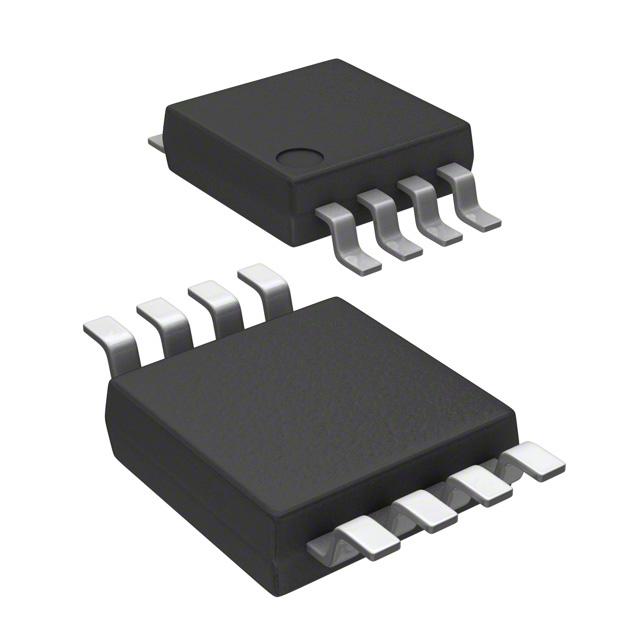
● Available in 8-Pin μMAX® Package for Board Space
Savings
Ordering Information
PART
TEMP RANGE
Networking Equipment
MAX31722MUA+
-55NC to +125NC
8 FMAX
Cellular Base Stations
MAX31722MUA+T
-55NC to +125NC
8 FMAX
MAX31723MUA+
-55NC to +125NC
8 FMAX
MAX31723MUA+T
-55NC to +125NC
8 FMAX
Industrial Equipment
Any Thermally Sensitive Systems
+Denotes a lead(Pb)-free/RoHS-compliant package.
T = Tape and reel.
Functional Diagram
VDD
VDD
SDI
SDO
SCLK
CE
SERMODE
GND
PRECISION
REFERENCE
OVERSAMPLING
MODULATOR
CONFIGURATION/
STATUS REGISTER
I/O CONTROL
AND
INPUT SENSE
DIGITAL
DECIMATOR
MAX31722
MAX31723
TEMPERATURE
REGISTER
THIGH AND TLOW
REGISTERS
µMAX is a registered trademark of Maxim Integrated Products, Inc.
19-5629; Rev 3; 6/21
PIN-PACKAGE
TOUT
THERMOSTAT
COMPARATOR
�MAX31722/MAX31723
Digital Thermometers and Thermostats
with SPI/3-Wire Interface
Absolute Maximum Ratings
Voltage Range on VDD Relative to GND...............-0.3V to +6.0V
Voltage Range on Any Other Pin Relative to GND....-0.3V to +6.0V
Continuous Power Dissipation (TA = +70NC)
FMAX (derate 4.5mW/NC above +70NC).......................362mW
EEPROM Programming Temperature Range.. ...-40NC to +85NC
Operating Junction Temperature Range.......... -55NC to +125NC
Storage Temperature Range............................. -55NC to +125NC
Lead Temperature (soldering, 10s).................................+300NC
Soldering Temperature (reflow).......................................+260NC
Stresses beyond those listed under “Absolute Maximum Ratings” may cause permanent damage to the device. These are stress ratings only, and functional operation of the device at these or any other conditions beyond those indicated in the operational sections of the specifications is not implied. Exposure to absolute
maximum rating conditions for extended periods may affect device reliability.
Recommended Operating Characteristics
(TJ = -55NC to +125NC, unless otherwise noted.)
PARAMETER
SYMBOL
CONDITIONS
Supply Voltage
VDD
(Note 1)
Input Logic-High
VIH
(Note 1)
Input Logic-Low
VIL
(Note 1)
MIN
TYP
1.7
0.7 x VDD
-0.3
MAX
UNITS
3.7
V
VDD + 0.3
V
0.3 x VDD
V
DC Electrical Characteristics
(VDD = 1.7V to 3.7V, TJ = -55NC to +125NC, unless otherwise noted.)
PARAMETER
SYMBOL
MAX31722 Thermometer Error
TERR
MAX31723 Thermometer Error
TERR
CONDITIONS
MIN
Q2.0
-55NC to +125NC
Q3.0
0NC to +70NC
Q0.5
-55NC to +125NC
Q2.0
9
9-bit conversions
Logic 0 Output (SDO, TOUT)
Logic 1 Output (SDO)
Leakage Current
tCONVT
VOL
VOH
50
100
12-bit conversions
200
(Note 2)
(Note 3)
Shutdown Current
www.maximintegrated.com
ICC1
UNITS
NC
NC
Bits
25
11-bit conversions
IL
ICC
12
10-bit conversions
0.4
VDD 0.4
-1
Active temperature conversions (Note 4)
Active Current
MAX
-40NC to +85NC
Resolution
Conversion Time
TYP
ms
V
V
+1
FA
1150
Communication only
100
EEPROM writes (-40NC to +85NC)
1150
EEPROM writes during active temperature
conversions (-40NC to +85NC)
1200
2
FA
FA
Maxim Integrated │ 2
�MAX31722/MAX31723
Digital Thermometers and Thermostats
with SPI/3-Wire Interface
AC Electrical Characteristics: 3-Wire Interface
(VDD = 1.7V to 3.7V, TJ = -55NC to +125NC, unless otherwise noted.) (Figures 1, 2)
PARAMETER
SYMBOL
CONDITIONS
MIN
Data to SCLK Setup
tDC
(Notes 5, 6)
35
SCLK to Data Hold
tCDH
(Notes 5, 6)
35
SCLK to Data Valid
tCDD
(Notes 5, 6, 7)
TYP
MAX
UNITS
ns
ns
80
ns
SCLK Low Time
tCL
(Note 6)
100
ns
SCLK High Time
tCH
(Note 6)
100
ns
SCLK Frequency
tCLK
(Note 6)
DC
SCLK Rise and Fall
tR, tF
CE to SCLK Setup
tCC
(Note 6)
400
ns
SCLK to CE Hold
tCCH
(Note 6)
100
ns
CE Inactive Time
tCWH
(Note 6)
400
CE to Output High-Z
tCDZ
(Notes 5, 6)
40
ns
SCLK to Output High-Z
tCCZ
(Notes 5, 6)
40
ns
MAX
UNITS
5.0
MHz
200
ns
ns
AC Electrical Characteristics: SPI Interface
(VDD = 1.7V to 3.7V, TJ = -55NC to +125NC, unless otherwise noted.) (Figures 3, 4)
PARAMETER
SYMBOL
CONDITIONS
MIN
Data to SCLK Setup
tDC
(Notes 5, 6)
35
SCLK to Data Hold
tCDH
(Notes 5, 6)
35
SCLK to Data Valid
tCDD
(Notes 5, 6, 7)
TYP
ns
ns
80
SCLK Low Time
tCL
(Note 6)
100
SCLK High Time
tCH
(Note 6)
100
SCLK Frequency
tCLK
(Note 6)
DC
SCLK Rise and Fall
tR, tF
ns
ns
ns
5.0
MHz
200
ns
CE to SCLK Setup
tCC
(Note 6)
400
ns
SCLK to CE Hold
tCCH
(Note 6)
100
ns
CE Inactive Time
tCWH
(Note 6)
400
CE to Output High-Z
tCDZ
(Notes 5, 6)
ns
40
ns
MAX
UNITS
15
ms
AC Electrical Characteristics: EEPROM
(VDD = 1.7V to 3.7V, TJ = -55NC to +125NC, unless otherwise noted.)
PARAMETER
SYMBOL
EEPROM Write Cycle Time
tWR
EEPROM Write Endurance
NEEWR
CONDITIONS
MIN
-40NC to +85NC (Note 8)
-40NC P TA P +85NC (Note 8)
20,000
TA = +25NC (Note 8)
80,000
TYP
Cycles
Note 1: All voltages are referenced to ground. Currents entering the IC are specified positive, and currents exiting the IC are negative.
Note 2: Logic 0 voltages are specified at a sink current of 3mA.
Note 3: Logic 1 voltages are specified at a source current of 1mA.
Note 4: ICC specified with SCLK = VDD and CE = GND.
Note 5: Measured at VIH = 0.7V x VDD or VIL = 0.3 x VDD and 10ms maximum rise and fall times.
Note 6: Measured with 50pF load.
Note 7: Measured at VOH = 0.7 x VDD or VOL = 0.3 x VDD. Measured from the 50% point of SCLK to the VOH minimum of SDO.
Note 8: VDD must be > 2.0V during EEPROM write cycles.
www.maximintegrated.com
Maxim Integrated │ 3
�MAX31722/MAX31723
CE
Digital Thermometers and Thermostats
with SPI/3-Wire Interface
tCC
SCLK
tCCZ
tCDH
tCDZ
tCDD
tCDD
tDC
A0
I/O*
A1
A7
D0
WRITE ADDRESS BYTE
D1
READ DATA BIT
*I/O IS SDI AND SDO CONNECTED TOGETHER.
Figure 1. Timing Diagram: 3-Wire Read Data Transfer
tCWH
CE
tCC
tCCH
tR
tCL
tF
SCLK
tCDH
tCH
tDC
I/O*
A0
A1
WRITE ADDRESS BYTE
A7
D0
WRITE DATA
*I/O IS SDI AND SDO CONNECTED TOGETHER.
Figure 2. Timing Diagram: 3-Wire Write Data Transfer
www.maximintegrated.com
Maxim Integrated │ 4
�MAX31722/MAX31723
CE
Digital Thermometers and Thermostats
with SPI/3-Wire Interface
tCC
SCLK
tCDD
tCDD
tCDH
tDC
SDI
A7
A6
A0
tCDZ
SDO
D7
D6
WRITE ADDRESS BYTE
D1
D0
READ DATA BYTE
NOTE: SCLK CAN BE EITHER POLARITY, TIMING SHOWN FOR CPOL = 1.
Figure 3. Timing Diagram: SPI Read Data Transfer
tCWH
CE
tCC
tR
tCL
tCCH
tF
SCLK
tCDH
tCH
tCDH
tDC
SDI
A7
A6
WRITE ADDRESS BYTE
A0
D7
D0
WRITE DATA BYTE
NOTE: SCLK CAN BE EITHER POLARITY, TIMING SHOWN FOR CPOL = 1.
Figure 4. Timing Diagram: SPI Write Data Transfer
www.maximintegrated.com
Maxim Integrated │ 5
�MAX31722/MAX31723
Digital Thermometers and Thermostats
with SPI/3-Wire Interface
Typical Operating Characteristics
(TA = +25°C, unless otherwise noted.)
TEMPERATURE CONVERSION ACTIVE
SUPPLY CURRENT vs. TEMPERATURE
1.2
1.0
ICC (µA)
800
ICC (µA)
VDD = 3.7V
MAX31722/3 toc02
VDD = 3.7V
1000
1.4
MAX31722/3 toc01
1200
STANDBY SUPPLY CURRENT
vs. TEMPERATURE
VDD = 3.0V
600
400
VDD = 1.7V
0.8
VDD = 3.0V
0.6
0.4
200
VDD = 1.7V
0.2
0
0
-55 -35 -15
5
25
45
65
-55 -35 -15
85 105 125
5
25
45
65
85 105 125
TEMPERATURE (°C)
TEMPERATURE (°C)
0.5
12-BIT TEMPERATURE CONVERSIONS
VDD = 3.0V
0.4
0.3
3σ
ERROR (°C)
0.2
MAX31722/3 toc03
TEMPERATURE CONVERSION ERROR
vs. REFERENCE TEMPERATURE
0.1
0
-0.1
-0.2
-3σ
-0.3
-0.4
-0.5
-40
-20
0
20
40
60
80
TEMPERATURE (°C)
www.maximintegrated.com
Maxim Integrated │ 6
�MAX31722/MAX31723
Digital Thermometers and Thermostats
with SPI/3-Wire Interface
Pin Configuration
TOP VIEW
TOUT
1
CE
2
SCLK
3
GND
4
+
MAX31722
MAX31723
8
VDD
7
SERMODE
6
SDI
5
SDO
µMAX
Pin Description
PIN
NAME
1
TOUT
FUNCTION
2
CE
3
SCLK
Serial-Clock Input. Used to synchronize data movement on the serial interface for either SPI or
3-wire interfaces.
4
GND
Ground. Ground connection.
5
SDO
Serial-Data Output. When SPI communication is selected, the SDO pin is the serial-data output for
the SPI bus. When 3-wire communication is selected, this pin must be connected to the SDI pin.
The SDI and SDO pins function as a single I/O pin when connected together.
6
SDI
Serial-Data Input. When SPI communication is selected, the SDI pin is the serial-data input for the
SPI bus. When 3-wire communication is selected, this pin must be connected to the SDO pin. The
SDI and SDO pins function as a single I/O pin when connected together.
7
SERMODE
Serial-Interface Mode Input. This pin selects which interface is used. When connected to VDD, SPI
communication is selected. When connected to GND, 3-wire communication is selected.
8
VDD
Thermostat Output. Open-drain output indicator for internal thermal alarm limits.
Chip Enable. Must be asserted high for communication to take place for either the SPI or 3-wire
interfaces.
Supply Voltage. Power-supply input.
Detailed Description
The MAX31722/MAX31723 are factory-calibrated temperature sensors that require no external components.
The user can alter the configuration/status register to
place the device in a continuous temperature conversion
mode or into a one-shot conversion mode. In the continuous conversion mode, the devices continuously convert
the temperature and store the result in the temperature
register. As conversions are performed in the background, reading the temperature register does not affect
the conversion in progress. In the one-shot temperature
conversion mode, the devices perform one temperature
conversion, store the result in the temperature register,
and then return to the shutdown state. This conversion
mode is ideal for power-sensitive applications. The
www.maximintegrated.com
temperature conversion results have a default resolution
of 9 bits. In applications where small incremental temperature changes are critical, the user can change the
conversion resolution from 9 bits to 10, 11, or 12. This is
accomplished by programming the configuration/status
register.
The devices can be configured as a thermostat, allowing for the TOUT pin to behave as an interrupt, triggering when the programmed limits, THIGH and TLOW, are
surpassed. The devices can communicate using either a
serial peripheral interface (SPI) or standard 3-wire interface. The user can select either communication standard
through the SERMODE pin, connecting it to VDD for SPI
and to GND for 3-wire.
Maxim Integrated │ 7
�MAX31722/MAX31723
Digital Thermometers and Thermostats
with SPI/3-Wire Interface
Measuring Temperature
mode is ideal for power-sensitive applications. Details on
how to change the setting after power-up are contained
in the Programming section.
The core of the devices’ functionality is its direct-to-digital
temperature sensor. The devices measure temperature
through the use of an on-chip temperature measurement technique with a -55NC to +125NC operating range.
The devices power up in a power-conserving shutdown
mode. After power-up, the devices can be placed in a
continuous conversion mode or in a one-shot conversion mode. In the continuous conversion mode, the
devices continuously compute the temperature and
store the most recent result in the temperature register at
addresses 01h (LSB) and 02h (MSB). As conversions are
performed in the background, reading the temperature
register does not affect the conversion in progress. The
temperature value is not updated until the SPI or 3-wire
interface is inactive. In other words, CE must be inactive
for the temperature register to be updated with the most
recent temperature conversion value. In the one-shot
conversion mode, the devices perform one temperature
conversion and then return to the shutdown mode, storing
temperature in the temperature register. This conversion
26
S
25
24
MSB
The resolution of the temperature conversion is configurable (9, 10, 11, or 12 bits) with 9 bits reading the
default state. This equates to a temperature resolution
of 0.5NC, 0.25NC, 0.125NC, or 0.0625NC. Following each
conversion, thermal data is stored in the temperature
register in two’s complement format. The information
can be retrieved over the SPI or 3-wire interface with the
address set to the temperature register, 01h (LSB) and
then 02h (MSB). Table 1 describes the exact relationship of output data to measured temperature. Table 1
assumes the devices are configured for 12-bit resolution.
If the devices are configured in a lower resolution mode,
those bits contain zeros. The data is transmitted serially
over the digital interface, MSB first for SPI communication and LSB first for 3-wire communication. The MSB of
the temperature register contains the sign (S) bit, denoting whether the temperature is positive or negative.
23
22
21
(UNITS = NC)
2-1
2-2
2-3
2-4
0
20
02h
LSB
0
0
0
01h
Figure 5. Temperature Register Format
Table 1. 12-Bit Resolution Temperature/Data Relationship
TEMPERATURE
(NC)
DIGITAL OUTPUT
(BINARY)
DIGITAL OUTPUT
(HEX)
7D00
+125
0111 1101 0000 0000
+25.0625
0001 1001 0001 0000
1910
+10.125
0000 1010 0010 0000
0A20
+0.5
0000 0000 1000 0000
0080
0
0000 0000 0000 0000
0000
-0.5
1111 1111 1000 0000
FF80
-10.125
1111 0101 1110 0000
F5E0
-25.0625
1110 0110 1111 0000
E6F0
-55
1100 1001 0000 0000
C900
www.maximintegrated.com
Maxim Integrated │ 8
�MAX31722/MAX31723
Digital Thermometers and Thermostats
with SPI/3-Wire Interface
Thermostat
tion is 9 bits, only the nine MSBs of THIGH and TLOW are
used by the thermostat comparator.
The devices’ thermostat can be programmed to power
up in either comparator mode or interrupt mode, which
activate and deactivate the open-drain thermostat output
(TOUT) based on user-programmable trip points (THIGH
and TLOW). The THIGH and TLOW registers contain
Celsius temperature values and are stored in EEPROM
memory. As such, the values are nonvolatile and can
be programmed prior to installing the devices for standalone operation.
The data format of the THIGH and TLOW registers are
similar to the temperature registers of 01h (LSB) and
02h (MSB) except that the sign bit should always be
set to 0 and allows the temperature threshold to be set
from 0°C to 125°C. After every temperature conversion,
the measurement is compared to the values stored in
the THIGH and TLOW registers. The THIGH register is
assigned to address locations 03h (LSB) and 04h (MSB),
and the TLOW register is assigned to address locations
05h (LSB) and 06h (MSB). The TOUT output is updated
based on the result of the comparison and the operating
mode of the devices. The number of THIGH and TLOW
bits used during the thermostat comparison is equal to
the conversion resolution set by the R1 and R0 bits in the
configuration/status register. For example, if the resolu-
If the user does not wish to use the thermostat capabilities of the devices, the TOUT output should be left
unconnected. Note that if the thermostat is not used, the
THIGH and TLOW registers can be used for general storage of system data.
Comparator Mode
When the thermostat is in comparator mode, TOUT can
be programmed to operate with any amount of hysteresis.
The TOUT output becomes active when the measured
temperature exceeds the THIGH value. TOUT then stays
active until the first time the temperature falls below the
value stored in TLOW. Putting the devices into shutdown
mode does not clear TOUT in comparator mode. Figure 6
illustrates thermostat comparator mode operation.
Interrupt Mode
In interrupt mode, the TOUT output first becomes active
when the measured temperature exceeds the THIGH
value. Once activated, in continuous conversion mode
TOUT can only be cleared by either putting the devices
into shutdown mode or by reading from any register
(configuration/status, temperature, THIGH, or TLOW)
on the devices. In one-shot mode, TOUT can only be
cleared by reading from any register (configuration/
THIGH
TEMPERATURE
TLOW
INACTIVE
TOUT OUTPUT—COMPARATOR MODE
ACTIVE
INACTIVE
TOUT OUTPUT—INTERRUPT MODE
ACTIVE
ASSUMES A READ
HAS OCCURED
CONVERSIONS
Figure 6. TOUT Operation Example
www.maximintegrated.com
Maxim Integrated │ 9
�MAX31722/MAX31723
Digital Thermometers and Thermostats
with SPI/3-Wire Interface
status, temperature, THIGH, or TLOW) on the devices. In
either mode, once TOUT has been deactivated, it is only
reactivated when the measured temperature falls below
the TLOW value. Thus, this interrupt/clear process is cyclical between THIGH and TLOW events (i.e, THIGH, clear,
TLOW, clear, THIGH, clear, TLOW, clear, etc.). Figure 6
illustrates the thermostat interrupt mode operation.
Programming
Table 2. Register Address Structure
Configuration/Status Register Programming
READ
ADDRESS
(HEX)
WRITE
ADDRESS
(HEX)
ACTIVE REGISTER
00
80
Configuration/Status
01
No access
Temperature LSB
02
No access
Temperature MSB
03
83
THIGH LSB
04
84
THIGH MSB
05
85
TLOW LSB
06
86
TLOW MSB
The area of interest in programming the devices is the
configuration/status register. All programming is done
through the SPI or 3-wire communication interface by
selecting the appropriate address of the desired register
location. Table 2 illustrates the addresses for the device
registers.
The configuration/status register is accessed in the
devices with the 00h address for reads and the 80h
address for writes. Data is read from or written to the
configuration/status register MSB first for SPI communication and LSB first for 3-wire communication. Table 3
illustrates the format of the register, describes the effect
each bit has on device functionality, and provides the
bit’s factory state.
Table 4 defines the resolution of the digital thermometer,
based on the settings of the R1 and R0 bits. There is a
direct trade-off between resolution and conversion time,
Table 3. Configuration/Status Register Bit Descriptions
BIT 7
BIT 6
BIT 5
BIT 4
BIT 3
BIT 2
BIT 1
BIT 0
0
MEMW
NVB
1SHOT
TM
R1
R0
SD
BIT 7
This bit is always a value of 0.
BIT 6
MEMW: Memory write bit. Power-up state = 0. The user has read/write access to the MEMW bit, which is
stored in the voltage memory.
0 = A write of the configuration/status register is stored in RAM memory.
1 = A write of the configuration/status register is stored in EEPROM.
Note: The status of this bit is ignored if a EEPROM write occurs to the other nonvolatile registers, THIGH and
TLOW. The nonvolatile bits of the configuration/status register are written if a EEPROM write cycle occurs to the
THIGH and TLOW registers.
BIT 5
NVB: Nonvolatile memory busy flag. Power-up state = 0 and is stored in volatile memory.
0 = Indicates that the nonvolatile memory is not busy.
1 = Indicates there is a write to a EEPROM memory cell in progress.
BIT 4
1SHOT: One-shot temperature conversion bit. Power-up state = 0 and is stored in volatile memory.
0 = Disables 1SHOT mode.
1 = If the SD bit is 1 (continuous temperature conversions are not taking place), a 1 written to the 1SHOT bit
causes the devices to perform one temperature conversion and store the results in the temperature register at
addresses 01h (LSB) and 02h (MSB). The bit clears itself to 0 upon completion of the temperature conversion.
The user has read/write access to the 1SHOT bit, although writes to this bit are ignored if the SD bit is a 0
(continuous conversion mode).
BIT 3
TM: Thermostat operating mode. Factory power-up state = 0. The user has read/write access to the TM bit,
which is stored in nonvolatile memory.
0 = The thermostat output is in comparator mode.
1 = The thermostat output is in interrupt mode.
www.maximintegrated.com
Maxim Integrated │ 10
�MAX31722/MAX31723
Digital Thermometers and Thermostats
with SPI/3-Wire Interface
Table 3. Configuration/Status Register Bit Descriptions (continued)
BIT 2
R1: Thermostat resolution bit 1. Factory power-up state = 0 and is stored in nonvolatile memory. Sets the
conversion resolution (see Table 4).
BIT 1
R0: Thermostat resolution bit 0. Factory power-up state = 0 and is stored in nonvolatile memory. Sets the
conversion resolution (see Table 4).
BIT 0
SD: Factory power-up state = 1. The user has read/write access to the SD bit, which is stored in nonvolatile
memory.
0 = The devices continuously perform temperature conversions and store the last completed result in the
temperature register.
1 = The conversion in progress is completed and stored, and then the devices revert to a low-power shutdown
mode. The communication port remains active.
Table 4. Thermometer Resolution
Configuration
Serial Peripheral Interface (SPI)
THERMOMETER
RESOLUTION (BITS)
MAX CONVERSION
TIME (ms)
0
9
25
1
10
50
1
0
11
100
1
1
12
200
R1
R0
0
0
as depicted in the AC Electrical Characteristics. The user
has read/write access to the R1 and R0 bits, which are
nonvolatile. See Table 4.
Serial Interface
The devices offer the flexibility to choose between two
serial interface modes. They can communicate with the
SPI interface or with a 3-wire interface. The interface
method used is determined by the SERMODE pin. When
SERMODE is connected to VDD, SPI communication
is selected. When SERMODE is connected to ground,
3-wire communication is selected.
Table 5. Function Table
The SPI is a synchronous bus for address and data transfer. The SPI mode of serial communication is selected by
connecting SERMODE to VDD. Four pins are used for the
SPI: SDO (serial-data out), SDI (serial-data in), CE (chip
enable), and SCLK (serial clock). The devices are the
slave device in an SPI application, with the microcontroller being the master. SDI and SDO are the serial-data
input and output pins for the devices, respectively. The
CE input is used to initiate and terminate a data transfer.
SCLK is used to synchronize data movement between
the master (microcontroller) and the slave (IC) devices.
The serial clock (SCLK), which is generated by the
microcontroller, is active only when CE is high and during address and data transfer to any device on the SPI
bus. The inactive clock polarity is programmable in some
microcontrollers. The devices offer an important feature
in that the level of the inactive clock is determined by
sampling SCLK when CE becomes active. Therefore,
either SCLK polarity can be accommodated. Input data
(SDI) is latched on the internal strobe edge and output
data (SDO) is shifted out on the shift edge (see Table 5
and Figure 7). There is one clock for each bit transferred.
Address and data bits are transferred in groups of eight,
MSB first.
MODE
CE
SCLK
SDI
SDO
Disable reset
Low
Input disabled
Input disabled
High impedance
Write
High
Data bit latch
High impedance
Read
High
X
Next data bit shift**
CPOL = 1*, SCLK rising
CPOL = 0, SCLK falling
CPOL = 1, SCLK falling
CPOL = 0, SCLK rising
Note: CPHA bit polarity must be set to 1.
*CPOL is the clock polarity bit that is set in the control register of the microcontroller.
**SDO remains at high impedance until 8 bits of data are ready to be shifted out during a read.
www.maximintegrated.com
Maxim Integrated │ 11
�MAX31722/MAX31723
Digital Thermometers and Thermostats
with SPI/3-Wire Interface
CPOL = 1
CE
SHIFT
INTERNAL STROBE
SHIFT
INTERNAL STROBE
SCLK
CPOL = 0
CE
SCLK
NOTE: CPOL IS A BIT THAT IS SET IN THE MICROCONTROLLER’S CONTROL REGISTER.
Figure 7. Serial Clock as a Function of Microcontroller Clock Polarity (CPOL)
Address and Data Bytes
Address and data bytes are shifted MSB first into the
serial-data input (SDI) and out of the serial-data output
(SDO). Any transfer requires the address of the byte to
specify a write or a read, followed by one or more bytes of
data. Data is transferred out of the SDO for a read operation and into the SDI for a write operation. The address
byte is always the first byte entered after CE is driven
high. The MSB (A7) of this byte determines if a read or
write takes place. If A7 is 0, one or more read cycles
occur. If A7 is 1, one or more write cycles occur.
Data transfers can occur 1 byte at a time in multiple-byte
burst mode. After CE is driven high, an address is written
to the devices. After the address, one or more data bytes
can be written or read. For a single-byte transfer, 1 byte
is read or written and then CE is driven low (see Figures 8
and 9). For a multiple-byte transfer, however, multiple
bytes can be read or written to the devices after the
www.maximintegrated.com
address has been written (see Figure 10). A single-byte
burst read/write sequentially points through all memory
locations and loops from 7Fh/FFh to 00h/80h. Invalid
memory addresses report an FFh value.
3-Wire Serial-Data Bus
The 3-wire communication mode operates similarly to
the SPI mode. However, in 3-wire mode, there is one
bidirectional I/O instead of separate data-in and data-out
signals. The 3-wire consists of the I/O (SDI and SDO pins
connected together), CE, and SCLK pins. In 3-wire mode,
each byte is shifted in LSB first, unlike SPI mode where
each byte is shifted in MSB first. As is the case with the
SPI mode, an address byte is written to the devices followed by a single data byte or multiple data bytes. Figure
11 illustrates a read and write cycle. Figure 12 illustrates
a multiple-byte burst transfer. In 3-wire mode, data is
input on the rising edge of SCLK and output on the falling
edge of SCLK.
Maxim Integrated │ 12
�MAX31722/MAX31723
Digital Thermometers and Thermostats
with SPI/3-Wire Interface
CE
SCLK
SDI
A7
SDO
A6
A5
A4
A3
A2
A1
A0
HIGH-Z
D7
D6
D5
D4
D3
D2
D1
D0
D7
D6
D5
D4
D3
D2
D1
D0
Figure 8. SPI Single-Byte Read
CE
SCLK
SDI
A7
SDO
A6
A5
A4
A3
A2
A1
A0
HIGH-Z
Figure 9. SPI Single-Byte Write
CE
SCLK
WRITE
SDI
ADDRESS
BYTE
SDI
ADDRESS
BYTE
DATA
BYTE 0
DATA
BYTE 1
DATA
BYTE N
DATA
BYTE 0
DATA
BYTE 1
DATA
BYTE N
READ
SDO
Figure 10. SPI Multiple-Byte Burst Transfer
www.maximintegrated.com
Maxim Integrated │ 13
�MAX31722/MAX31723
Digital Thermometers and Thermostats
with SPI/3-Wire Interface
CE
SCLK
I/O*
A0
A1
A2
A3
A4
A5
A6
A7
D0
D1
D2
D3
D4
D5
D6
D7
*I/O IS SDI AND SDO CONNECTED TOGETHER.
Figure 11. 3-Wire Single-Byte Transfer
CE
SCLK
I/O*
ADDRESS
BYTE
DATA
BYTE 0
DATA
BYTE 1
DATA
BYTE N
*I/O IS SDI AND SDO CONNECTED TOGETHER.
Figure 12. 3-Wire Multiple-Byte Burst Transfer
Package Information
For the latest package outline information and land patterns, go to www.maximintegrated.com/packages. Note that a “+”, “#”, or “-”
in the package code indicates RoHS status only. Package drawings may show a different suffix character, but the drawing pertains
to the package regardless of RoHS status.
PACKAGE TYPE
PACKAGE CODE
OUTLINE NO.
LAND PATTERN NO.
8 FMAX
U8+1
21-0036
90-0092
www.maximintegrated.com
Maxim Integrated │ 14
�MAX31722/MAX31723
Digital Thermometers and Thermostats
with SPI/3-Wire Interface
Revision History
REVISION
NUMBER
REVISION
DATE
0
11/10
Initial release
1
3/15
Updated Benefits and Features section
2
11/20
Updated Figure 5 and Thermostat section
8, 9
3
6/21
Updated Figure 5 and Thermostat section
8, 9
DESCRIPTION
PAGES
CHANGED
—
1
For pricing, delivery, and ordering information, please contact Maxim Direct at 1-888-629-4642, or visit Maxim Integrated’s website at www.maximintegrated.com.
Maxim Integrated cannot assume responsibility for use of any circuitry other than circuitry entirely embodied in a Maxim Integrated product. No circuit patent licenses
are implied. Maxim Integrated reserves the right to change the circuitry and specifications without notice at any time. The parametric values (min and max limits)
shown in the Electrical Characteristics table are guaranteed. Other parametric values quoted in this data sheet are provided for guidance.
Maxim Integrated and the Maxim Integrated logo are trademarks of Maxim Integrated Products, Inc.
© 2021 Maxim Integrated Products, Inc. │ 15
�