Click here to ask about the production status of specific part numbers.
MAX40660/MAX40661
High-Bandwidth Automotive Transimpedance
Amplifier with Fast Output Recovery and Input
Current Clamp for LiDAR
General Description
Benefits and Features
The MAX40660/MAX40661 are transimpedance amplifiers for optical distance measurement receivers in LiDAR
applications. Low noise, high gain, low group delay, and
fast recovery from overload make these TIAs ideal for distance-measurement applications. Important features include 2.1pA input-referred noise density (MAX40660), an
internal input clamp, pin-selectable 25kΩ and 50kΩ transimpedance, and wide bandwidth (490MHz (typ) for the
MAX40660 with 0.5pF input capacitance and 25kΩ transimpedance; 160MHz (typ) for the MAX40661 with 10pF
input capacitance). An offset current input allows optional
adjustment of input offset current. A low-power/standby
control input reduces the supply current by better than
80% to help reduce average power supply current between pulses. The MAX40660/MAX40661 transimpedance amplifiers feature AEC-Q100 qualification over the
-40°C to +125°C automotive operating temperature range
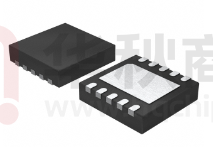
and are available in a 3mm x 3mm, 10-lead TDFN package with side-wettable flanks, making them excellent
choices for automotive LiDAR applications.
● AEC-Q100
● Enables ASIL Compliance (FMEDA Available upon
Request)
● MAX40660
• Optimized for CIN = 0.25pF to 5pF
• Bandwidth = 490MHz (typ)
In addition to the TDFN package, the MAX40660 is available as bare die.
Applications
●
●
●
●
●
Optical Distance Measurement
LiDAR Receivers
Industrial Safety Systems
Autonomous Driving Systems
Automotive Applications
19-100541; Rev 4; 1/21
● MAX40661
• Optimized for CIN = 5pF to 12pF
• Bandwidth (CIN = 10pF) = 160MHz (typ), 100MHz
(min)
● Low Noise
● Two Pin-Selectable Transimpedance Values
• 25kΩ
• 50kΩ
●
●
●
●
●
●
Internal Clamp for Input Current up to 2A (Transient)
Fast Overload Recovery: 2ns at 100mA
Offset Input Provides Offset Adjust Feature
LP Input Reduces Power Dissipation Between Pulses
3.3V Operation
10-Pin TDFN (Side-Wettable) or Bare Die
Ordering Information appears at end of data sheet.
�MAX40660/MAX40661
High-Bandwidth Automotive Transimpedance
Amplifier with Fast Output Recovery and Input
Current Clamp for LiDAR
Simplified Block Diagram
VCL
VCC
CURRENT
CLAMP
VCC
BIAS
BLOCK
MAX40660
MAX40661
50Ω
OUTP
IN
VBIAS
OUTN
50Ω
OFFSE T
LP
GND
www.maximintegrated.com
VCC
LOW-POWER MODE
SELE CT
GND
GAIN
Maxim Integrated | 2
�MAX40660/MAX40661
High-Bandwidth Automotive Transimpedance
Amplifier with Fast Output Recovery and Input
Current Clamp for LiDAR
TABLE OF CONTENTS
General Description. . . . . . . . . . . . . . . . . . . . . . . . . . . . . . . . . . . . . . . . . . . . . . . . . . . . . . . . . . . . . . . . . . . . . . . . . . . . . . 1
Applications . . . . . . . . . . . . . . . . . . . . . . . . . . . . . . . . . . . . . . . . . . . . . . . . . . . . . . . . . . . . . . . . . . . . . . . . . . . . . . . . . . . . 1
Benefits and Features . . . . . . . . . . . . . . . . . . . . . . . . . . . . . . . . . . . . . . . . . . . . . . . . . . . . . . . . . . . . . . . . . . . . . . . . . . . . 1
Simplified Block Diagram . . . . . . . . . . . . . . . . . . . . . . . . . . . . . . . . . . . . . . . . . . . . . . . . . . . . . . . . . . . . . . . . . . . . . . . . . 2
Absolute Maximum Ratings. . . . . . . . . . . . . . . . . . . . . . . . . . . . . . . . . . . . . . . . . . . . . . . . . . . . . . . . . . . . . . . . . . . . . . . . 4
Package Information . . . . . . . . . . . . . . . . . . . . . . . . . . . . . . . . . . . . . . . . . . . . . . . . . . . . . . . . . . . . . . . . . . . . . . . . . . . . . 4
10 TDFN . . . . . . . . . . . . . . . . . . . . . . . . . . . . . . . . . . . . . . . . . . . . . . . . . . . . . . . . . . . . . . . . . . . . . . . . . . . . . . . . . . . . 4
Electrical Characteristics . . . . . . . . . . . . . . . . . . . . . . . . . . . . . . . . . . . . . . . . . . . . . . . . . . . . . . . . . . . . . . . . . . . . . . . . . 4
Typical Operating Characteristics . . . . . . . . . . . . . . . . . . . . . . . . . . . . . . . . . . . . . . . . . . . . . . . . . . . . . . . . . . . . . . . . . . 7
Pin Configuration . . . . . . . . . . . . . . . . . . . . . . . . . . . . . . . . . . . . . . . . . . . . . . . . . . . . . . . . . . . . . . . . . . . . . . . . . . . . . . . 12
Pin Description . . . . . . . . . . . . . . . . . . . . . . . . . . . . . . . . . . . . . . . . . . . . . . . . . . . . . . . . . . . . . . . . . . . . . . . . . . . . . . . . 12
Die Information . . . . . . . . . . . . . . . . . . . . . . . . . . . . . . . . . . . . . . . . . . . . . . . . . . . . . . . . . . . . . . . . . . . . . . . . . . . . . . . . 13
Detailed Description . . . . . . . . . . . . . . . . . . . . . . . . . . . . . . . . . . . . . . . . . . . . . . . . . . . . . . . . . . . . . . . . . . . . . . . . . . . . 15
Gain Stage 1 . . . . . . . . . . . . . . . . . . . . . . . . . . . . . . . . . . . . . . . . . . . . . . . . . . . . . . . . . . . . . . . . . . . . . . . . . . . . . . . 15
Gain Stage 2 . . . . . . . . . . . . . . . . . . . . . . . . . . . . . . . . . . . . . . . . . . . . . . . . . . . . . . . . . . . . . . . . . . . . . . . . . . . . . . . 15
OFFSET Input . . . . . . . . . . . . . . . . . . . . . . . . . . . . . . . . . . . . . . . . . . . . . . . . . . . . . . . . . . . . . . . . . . . . . . . . . . . . . . 15
LP Input . . . . . . . . . . . . . . . . . . . . . . . . . . . . . . . . . . . . . . . . . . . . . . . . . . . . . . . . . . . . . . . . . . . . . . . . . . . . . . . . . . . 15
Applications Information . . . . . . . . . . . . . . . . . . . . . . . . . . . . . . . . . . . . . . . . . . . . . . . . . . . . . . . . . . . . . . . . . . . . . . . . . 16
Photodiode . . . . . . . . . . . . . . . . . . . . . . . . . . . . . . . . . . . . . . . . . . . . . . . . . . . . . . . . . . . . . . . . . . . . . . . . . . . . . . . . . 16
Supply Filter . . . . . . . . . . . . . . . . . . . . . . . . . . . . . . . . . . . . . . . . . . . . . . . . . . . . . . . . . . . . . . . . . . . . . . . . . . . . . . . . 16
Layout Considerations . . . . . . . . . . . . . . . . . . . . . . . . . . . . . . . . . . . . . . . . . . . . . . . . . . . . . . . . . . . . . . . . . . . . . . . . 16
Slew Rate on the Supply Ramp . . . . . . . . . . . . . . . . . . . . . . . . . . . . . . . . . . . . . . . . . . . . . . . . . . . . . . . . . . . . . . . . . 16
Typical Application Circuits . . . . . . . . . . . . . . . . . . . . . . . . . . . . . . . . . . . . . . . . . . . . . . . . . . . . . . . . . . . . . . . . . . . . . . . 17
Ordering Information . . . . . . . . . . . . . . . . . . . . . . . . . . . . . . . . . . . . . . . . . . . . . . . . . . . . . . . . . . . . . . . . . . . . . . . . . . . . 18
Revision History . . . . . . . . . . . . . . . . . . . . . . . . . . . . . . . . . . . . . . . . . . . . . . . . . . . . . . . . . . . . . . . . . . . . . . . . . . . . . . . 19
www.maximintegrated.com
Maxim Integrated | 3
�MAX40660/MAX40661
High-Bandwidth Automotive Transimpedance
Amplifier with Fast Output Recovery and Input
Current Clamp for LiDAR
Absolute Maximum Ratings
Supply Voltage ...................................................... -0.3V to +3.6V
Current Into IN (10ns pulse width, 0.5% duty cycle) ...............-2A
Current Into IN, OFFSET (continuous) ................. -0.4mA to 0mA
Current into LP, Gain (continuous) .................... -10mA to +10mA
Current into OUTP and OUTN (continuous)...... -20mA to +20mA
Voltage at OUTN, OUTP ............................................ VCC + 0.3V
Voltage at GAIN, LP ..................................... -0.3V to VCC + 0.3V
Operating Temperature Range ...........................-40°C to +125°C
Operating Junction Temperature Range (die) ....-40°C to +150°C
Storage Temperature Range ..............................-55°C to +150°C
Soldering Temperature (reflow) ........................................ +260°C
Die Attach Temperature.................................................... +400°C
Continuous Power Dissipation (TA = +125°C, derate 24.4mW/°C
above +70°C (multilayer board))................................1951.20mW
Stresses beyond those listed under “Absolute Maximum Ratings” may cause permanent damage to the device. These are stress ratings only, and functional operation of the
device at these or any other conditions beyond those indicated in the operational sections of the specifications is not implied. Exposure to absolute maximum rating conditions for
extended periods may affect device reliability.
Package Information
10 TDFN
Package Code
T1033Y+4C
Outline Number
21-100317
Land Pattern Number
90-0003
Thermal Resistance, Single-Layer Board
Junction to Ambient (θJA)
54°C/W
Junction to Case (θJC)
9°C/W
Thermal Resistance, Four-Layer Board
Junction to Ambient (θJA)
41°C/W
Junction to Case (θJC)
9°C/W
For the latest package outline information and land patterns (footprints), go to www.maximintegrated.com/packages.
Note that a “+”, “#”, or “-” in the package code indicates RoHS status only. Package drawings may show a different
suffix character, but the drawing pertains to the package regardless of RoHS status.
Package thermal resistances were obtained using the method described in JEDEC specification JESD51-7, using a
four-layer board.
For detailed information on package thermal considerations, refer to www.maximintegrated.com/thermal-tutorial.
Electrical Characteristics
(VCC = +2.9V to +3.5V, VCL = VCC, 100Ω AC-coupled load between OUTN and OUTP, TA = -40°C to +125°C, CIN (MAX40660) =
0.5pF (Note 1), CIN (MAX40661) = 8pF (Note 1), Input current is defined as flowing out of IN. Typical values are at VCC = +3.3V and
TA = +25°C, unless otherwise noted.)
PARAMETER
Power Supply Current
SYMBOL
ICC
VCL Quiescent Supply
Current
Input Bias Voltage
Transimpedance
Linearity
www.maximintegrated.com
VBIAS
TYP
MAX
LP > 2.0V (logic-high) (Note 4)
CONDITIONS
MIN
41
70
LP < 0.8V (logic-low) (Note 4)
8
13
LP > 2.0V (logic-high) (Note 4)
0.1
20
LP < 0.8V (logic-low) (Note 4)
0.1
20
IN and OFFSET
0.85
1.0
GAIN = GND (Note 2)
-10
±2
+10
GAIN = VCC (Note 2)
-10
±2
+10
UNITS
mA
µA
V
%
Maxim Integrated | 4
�MAX40660/MAX40661
High-Bandwidth Automotive Transimpedance
Amplifier with Fast Output Recovery and Input
Current Clamp for LiDAR
Electrical Characteristics (continued)
(VCC = +2.9V to +3.5V, VCL = VCC, 100Ω AC-coupled load between OUTN and OUTP, TA = -40°C to +125°C, CIN (MAX40660) =
0.5pF (Note 1), CIN (MAX40661) = 8pF (Note 1), Input current is defined as flowing out of IN. Typical values are at VCC = +3.3V and
TA = +25°C, unless otherwise noted.)
PARAMETER
SYMBOL
Z21
Transimpedance
CONDITIONS
MIN
TYP
MAX
GAIN logic-low, IIN < 2µAP-P
18
25
32
GAIN logic-high, IIN < 1µAP-P
36
50
64
In low-power standby mode: LP < VIL,
IIN = 1µARMS, fIN = 100MHz.
OFFSET Input
Transimpedance
Overload Recovery
Time
300
kΩ
mΩ
GAIN logic-low, IOFFSET < 2µAP-P
18
25
32
GAIN logic-high, IOFFSET < 1µAP-P
36
50
64
0 to -100mA input current
UNITS
2
kΩ
ns
Input Logic 0
VIL
GAIN, LP (Note 4)
0
Input Logic 1
VIH
GAIN, LP (Note 4)
2.0
Logic Input Current Low
IIL
GAIN, LP (Note 4)
±0.001
±1.0
µA
Logic Input Current High
IIH
GAIN, LP (Note 4)
±0.001
±1
µA
Time from LP > VIL to output commonmode voltage 90% of nominal value.
Measured at OUTP and OUTN.
Standby De-Assert
Delay
Output Common-Mode
Voltage
ΔVOUT
Output Impedance
ZOUT
Maximum Differential
Output Voltage Swing
Input Resistance
Bandwidth
Input Noise Density
VOUT(MAX)
VCC 0.73
IIN = 0mA, GAIN = GND
-200
IIN = 0mA, GAIN = VCC
-400
ns
VCC 0.40
V
mV
Single-ended
40
50
60
IIN = 0mA to -200µA pulse, GAIN logiclow
475
825
1290
IIN = 0mA to -200µA pulse, GAIN logichigh
500
920
1490
MAX40660, CIN = 0.5pF
300
490
660
MAX40660, CIN = 10pF
70
165
280
MAX40661, CIN = 10pF (Note 3)
100
160
210
MAX40661, CIN = 5pF (Note 3)
130
200
280
Ω
mV
RIN
BW
V
VCC
200
VCC 1.15
Differential Output
Offset
+0.8
65
MAX40660, f = 10MHz, CIN = 0.8pF
2.1
MAX40660, f = 10MHz, CIN = 10pF
2.8
MAX40661, f = 10MHz, CIN = 5pF
2.5
MAX40661, f = 10MHz, CIN = 8pF
2.7
MAX40661, f = 10MHz, CIN = 10pF
3.0
Ω
MHz
pA/√Hz
pA/√Hz
Note 1: Limits are 100% tested at TA = +25°C. Limits over the operating temperature range and relevant supply voltage range are
guaranteed by design and characterization. For die-form sale, EC table parameters are not tested, excepting parameters with
Note 4. Specs are guaranteed by design.
www.maximintegrated.com
Maxim Integrated | 5
�MAX40660/MAX40661
High-Bandwidth Automotive Transimpedance
Amplifier with Fast Output Recovery and Input
Current Clamp for LiDAR
Note 2: Linearity is calculated as follows:
For 25kΩ transimpedance, Linearity = (Large signal gain at 20µA – Large signal gain at 2µA)/Large signal gain at 2µA, where
large signal gain at X is (VOUT at I_IN = X - VOUT at I_IN = 0)/I_IN
For 50kΩ transimpedance, Linearity = (Large signal gain at 10µA – Large signal gain at 1µA)/Large signal gain at 1µA, where
large signal gain at X is (VOUT at I_IN = X - VOUT at I_IN = 0)/I_IN
Note 3: -3dB bandwidth is measured relative to the gain at 10MHz.
Note 4: For die only. Limits are 100% tested at TA = +25°C. Limits over the operating temperature range and relevant supply voltage
range are guaranteed by design and characterization.
www.maximintegrated.com
Maxim Integrated | 6
�MAX40660/MAX40661
High-Bandwidth Automotive Transimpedance
Amplifier with Fast Output Recovery and Input
Current Clamp for LiDAR
Typical Operating Characteristics
(VCC = +3.3V, CIN = 0.5pF (MAX40660), CIN = 8pF (MAX40661), TA= +25°C; unless otherwise noted.)
L OW-POWER STA ND B Y S UPPL Y CURRE NT
v s . TEMP ERA TURE
LOW-POWER STANDB Y SUPPLY CURRENT
v s . SUPPLY VOLTA GE
OUTPUT COMMON-MODE VOLTAGE CHANGE (%)
TA = -40°C
TA = +25°C
OUTPUT COMMON-MODE VOLTAGE (V)
TA = +125°C
OUTPUT COMMON-MODE VOL TA GE
v s . TEMPERATURE
OUTPUT COMMON-MODE VOL TA GE
v s . TEMPERATURE
NORMALIZED AT VCC = 3.3V
OUTPUT OFFSET VOLTAGE
v s . TEMPERATURE
OUTPUT OFFSET VOLTAGE (V)
IIN = 0μA
VCC = 3.3V
www.maximintegrated.com
Maxim Integrated | 7
�MAX40660/MAX40661
High-Bandwidth Automotive Transimpedance
Amplifier with Fast Output Recovery and Input
Current Clamp for LiDAR
Typical Operating Characteristics (continued)
(VCC = +3.3V, CIN = 0.5pF (MAX40660), CIN = 8pF (MAX40661), TA= +25°C; unless otherwise noted.)
OUTPUT DIFFERENTIAL VOLTAGE (mV)
OUTPUT DIFFERENTIAL VOLTA GE
v s . I NPUT DC CURRENT
www.maximintegrated.com
IOFFSET =
+20μA
Maxim Integrated | 8
�MAX40660/MAX40661
High-Bandwidth Automotive Transimpedance
Amplifier with Fast Output Recovery and Input
Current Clamp for LiDAR
Typical Operating Characteristics (continued)
(VCC = +3.3V, CIN = 0.5pF (MAX40660), CIN = 8pF (MAX40661), TA= +25°C; unless otherwise noted.)
GAIN = 25kΩ
CIN = 0.5pF
GAIN = 50kΩ
CIN = 0.5pF
GAIN = 25kΩ
CIN = 10pF
GAIN = 50kΩ
CIN = 10pF
www.maximintegrated.com
Maxim Integrated | 9
�MAX40660/MAX40661
High-Bandwidth Automotive Transimpedance
Amplifier with Fast Output Recovery and Input
Current Clamp for LiDAR
Typical Operating Characteristics (continued)
(VCC = +3.3V, CIN = 0.5pF (MAX40660), CIN = 8pF (MAX40661), TA= +25°C; unless otherwise noted.)
www.maximintegrated.com
Maxim Integrated | 10
�MAX40660/MAX40661
High-Bandwidth Automotive Transimpedance
Amplifier with Fast Output Recovery and Input
Current Clamp for LiDAR
Typical Operating Characteristics (continued)
(VCC = +3.3V, CIN = 0.5pF (MAX40660), CIN = 8pF (MAX40661), TA= +25°C; unless otherwise noted.)
MA X40660 PULSE RESPONSE
OUTPUT DIFFERENTIAL (V)
OUTPUT DIFFERENTIAL (V)
MA X40660 PULSE RESPONSE
TIME (ns)
MA X40661 PULSE RESPONSE
OUTPUT DIFFERENTIAL (V)
TIME (ns)
TRANSIMPEDANCE AT LP MODE (mΩ)
TIME (ns)
www.maximintegrated.com
TRANSIMPEDANCE AT LP MODE (mΩ)
OUTPUT DIFFERENTIAL (V)
MA X40661 PULSE RESPONSE
TIME (ns)
Maxim Integrated | 11
�MAX40660/MAX40661
High-Bandwidth Automotive Transimpedance
Amplifier with Fast Output Recovery and Input
Current Clamp for LiDAR
Pin Configuration
TOP VIEW
GND
10
VCC OUTP OUTN GND
9
8
7
6
MAX40660
MAX
MAX40661
40661
EP*
+
1
2
3
VCL
LP
IN OFFSET GAIN
4
5
TDFN-EP
3mm x 3mm
* THE EXPOSED PAD MUST BE CONNECTED TO
CIRCUIT BOARD GROUND FOR PROPER
THERMAL AND ELECTRICAL PERFORMANCE.
Pin Description
PIN
NAME
1
VCL
Power Supply Connection for Input Current Clamp. Connect to VCC.
FUNCTION
2
LP
Enable/Low-Power Input. Logic-high = normal operation. Logic-low = low-power standby.
3
IN
Signal Input. Connect to photodiode cathode through a coupling capacitor when using positive bias
voltage at cathode. Connect to photodiode cathode when using negative bias voltage at anode.
4
OFFSET
Offset Adjustment Input. Sink current from this input to adjust the effective input offset current. If
offset adjustment is not needed, this pin should be left unconnected.
5
GAIN
Gain Select Input. Connect to GND for gain = 25kΩ. Connect to VCC for gain = 50kΩ.
6, 10
GND
Circuit Ground
7
OUTN
Negative 50Ω Output. Increasing input current causes OUT- to decrease.
8
OUTP
Positive 50Ω Output. Increasing input current causes OUT+ to increase.
9
VCC
EP
EP
www.maximintegrated.com
+3.3V Supply Voltage
Exposed Pad (GND). This pad must be connected to ground.
Maxim Integrated | 12
�MAX40660/MAX40661
High-Bandwidth Automotive Transimpedance
Amplifier with Fast Output Recovery and Input
Current Clamp for LiDAR
Die Information
BOND PAD NAME
X COORDINATE (μm)
Y COORDINATE (μm)
CENTER
0
0
VCLAMP
-548
638
PRB For VCLAMP
-548
535
LPM
-548
411
www.maximintegrated.com
Maxim Integrated | 13
�MAX40660/MAX40661
High-Bandwidth Automotive Transimpedance
Amplifier with Fast Output Recovery and Input
Current Clamp for LiDAR
Die Information (continued)
BOND PAD NAME
X COORDINATE (μm)
Y COORDINATE (μm)
PRB For LPM
-548
286
IN
-548
21
PRB for IN
-548
181
OFFSET
-548
-130
PRB For OFFSET
-548
-290
GSEL
-548
-517
PRB For GSEL
-548
-393
VEE_PAD6
548
-518
PRB For GND
548
-415
OUTN
548
-130
PRB For OUTN
548
-311
OUTP
548
20
PRB For OUTP
548
202
VCC_PAD2
535
305
VCC_PAD1
535
408
PRB For VCC
535
511
VEE_PAD10
476
638
PRB For GND
373
638
VEE_DBTOP4
270
638
VEE_DBTOP3
166
638
VEE_DBTOP2
63
638
VEE_DBTOP1
-39
638
VEE_DBBOT1
-523
-638
VEE_DBBOT2
-420
-638
VEE_DBBOT3
-317
-638
VEE_DBBOT4
-214
-638
The back side of the die must be connected to GND.
www.maximintegrated.com
Maxim Integrated | 14
�MAX40660/MAX40661
High-Bandwidth Automotive Transimpedance
Amplifier with Fast Output Recovery and Input
Current Clamp for LiDAR
Detailed Description
The MAX40660/MAX40661 transimpedance amplifiers are designed for optical distance measurement applications and
are comprised of a transimpedance amplifier input stage and a voltage amplifier/output buffer. The input stage accepts
negative input current pulses; the input current will flow out of the TIA's input pin.
Gain Stage 1
When a photodiode with negative bias voltage is connected to the TIA input, the signal current flows out of the amplifier's
summing node and into the photodiode. The input current flows through an internal load resistor to develop a voltage
that is then applied to the input of the second stage. An internal clamp circuit protects against input currents as high as
2A for a 10ns pulse at 0.5% duty cycle. (Longer pulses or higher duty cycles will reduce this value.) The clamp circuit
also maintains very fast overload recovery times (about 2ns) for input currents up to 100mA (see Typical Operating
Characteristics).
Gain Stage 2
The second gain stage provides additional gain and converts the transimpedance amplifier's single-ended output into a
differential signal.
This stage is designed to drive a 100Ω differential load between OUT+ and OUT-. For optimum supply noise rejection,
the outputs should be terminated with a differential load. The outputs are not intended to drive a DC-coupled grounded
load. The outputs should be AC-coupled or terminated to VCC. If a single-ended output is required, both the used and
unused outputs should be terminated in a similar manner.
OFFSET Input
OFFSET is a current input. The offset input current, IOFFSET, is the current flowing from the OFFSET pin. This current
affects the TIA's output voltage with a polarity opposite that of the current flowing from IN, so it may be used to effectively
apply an offset correction to the output voltage. The OFFSET pin is biased to the same voltage as the IN pin. TOC 9A,
9B, 10A, and 10B show different load line transfer functions at the output with varying IIN and IOFFSET input currents
(see Typical Operating Characteristics). IOFFSET inputs shown in these TOCs may be used for applications where the
linear region of the output is desired for a range of input current from the sensor.
Use of OFFSET is optional. If the OFFSET function is not required, simply leave this input unconnected.
LP Input
The LP (Low Power) Input accepts a logic signal that can be used to put the TIA into a low-power standby mode, thereby
reducing the supply current significantly. Driving this input with a logic-high enables the TIA, while a logic-low disables
the circuit and places it into a low-power mode.
The MAX40660/MAX40661 transimpedance amplifiers return to active mode from low-power mode in 200ns (typ).
www.maximintegrated.com
Maxim Integrated | 15
�MAX40660/MAX40661
High-Bandwidth Automotive Transimpedance
Amplifier with Fast Output Recovery and Input
Current Clamp for LiDAR
Applications Information
Photodiode
Noise performance and bandwidth are adversely affected by capacitance on a TIA's input node. Although the MAX40660/
MAX40661 are less sensitive than most TIAs to input capacitance, it is good practice to minimize any unnecessary
capacitance. The MAX40660 is optimized for 0.25pF to 5pF of capacitance on the input. Selecting a low-capacitance
photodiode for use with the MAX40660 helps to minimize the total input capacitance on the input pin. Assembling the TIA
in die form using chip and wire technology provides the lowest capacitance input and the best possible performance. The
MAX40661 is optimized for use with higher-capacitance photodiodes in the range of 5pF to 12pF.
Supply Filter
Sensitive optical receivers require wide-band power supply decoupling. Power supply bypassing should provide low
impedance between VCC and ground for frequencies between 10kHz and 700MHz. Isolate the amplifier from noise
sources with LC supply filters and shielding. Place a supply filter as close to the amplifier as possible.
Layout Considerations
Some critical layout guidelines are listed below.
● A differential microstrip is the recommended layout for MAX40660/MAX40661 outputs with terminations done close to
the outputs. Care must be taken to avoid unwanted stubs by removing ground below the traces that are not part of the
50Ω termination line leading into input pins. The parasitic capacitance created between traces and ground slow down
and even distort the signals by creating reflections on the path.
● The input trace connecting the photodiode to IN of the MAX40660/MAX40661 should be as short as possible and
have ground etched/removed underneath. This will reduce/avoid unwanted parasitic capacitance created in the PCB.
Having longer trace lengths will increase the parasitic inductance in signal trace paths.
● Use a PC board with a low-impedance ground plane.
● Mount one or more 10nF ceramic capacitors between GND and VCC as close to the pins as possible. Multiple bypass
capacitors help to reduce the effect of trace impedance and capacitor ESR.
● Choose bypass capacitors for minimum inductance and ESR.
● Use a 100Ω termination resistor for the output, connected directly between OUTP and OUTN after the AC-coupling
capacitors, if practical. If the destination inputs can't be located adjacent to the outputs, use a 100Ω microstrip between
the output pins and the termination resistor, which should be close to the inputs of the destination component. This
will avoid the creation of stub beyond the termination resistor, which will cause reflections. The added length of the
differential trace has less degrading affects than added stub length.
● Minimize any parasitic layout inductance.
● It is recommended to use higher-performance substrate materials (e.g., Rogers).
Slew Rate on the Supply Ramp
Ramp rate of the supply needs to be 50μs or more to make sure the core clamp is not triggered during the power-up. If
the supply ramp is faster than 50μs, then the core clamp triggers and there will be excess current consumption for about
6μs.
www.maximintegrated.com
Maxim Integrated | 16
�MAX40660/MAX40661
High-Bandwidth Automotive Transimpedance
Amplifier with Fast Output Recovery and Input
Current Clamp for LiDAR
Typical Application Circuits
3.3V
3.3V
CBYPASS
CCL-BYPASS
VCL
VCC
CURRENT
CLAMP
VCC
BIAS
BLOCK
MAX40660
MAX40661
50Ω
IN
OUTP
0.1µF
100Ω
VBIAS
OUTN
RLIMIT
CAPD-BYPASS
LP
-VAPD
3.3V
0.1µF
50Ω
OFFSE T
VCC
LOW-POWER MODE
SELE CT
GND
GND
GAIN
DC-COUP LE D A P D RE CEIVE R TIA
The APD's cathode is connected to to the TIA's input, and the anode is connected to the negative bias voltage through a
resistor. Incident light pulses cause current to flow from the IN pin and into the APD. This input current also flows through
an internal resistor to create a voltage, which is then amplified by the second stage to create a differential output signal
that can drive a high-speed ADC or comparator.
www.maximintegrated.com
Maxim Integrated | 17
�MAX40660/MAX40661
High-Bandwidth Automotive Transimpedance
Amplifier with Fast Output Recovery and Input
Current Clamp for LiDAR
Typical Application Circuits (continued)
3.3V
3.3V
CCL-BYPASS
VCL
+V APD
CBYPASS
VCC
CURRENT
CLAMP
0.1µF
3.3V
VCC
BIAS
BLOCK
MA X 40 66 0
MA X 40 66 1
RLIMIT
IN
OUTP
100Ω
VBIAS
LVDS
OUTPUT
VCC
50Ω
MAX 40025/
MAX 40026
OUT+
100Ω
FPGA
OUTN
50Ω
OFFSE T
GND
VCC
LP
3.3V
LOW-POWER MODE
SELE CT
GND
GND
GAIN
A C-COUP LE D A P D RE CEIVE R TIA
The APD's cathode is connected through a coupling capacitor to to the TIA's input, with the anode connected to ground.
The bias voltage in this case is positive, and is connected to the cathode through a resistor. Incident light pulses cause
current to flow from the IN pin and into the APD. This input current also flows through an internal resistor to create a
voltage, which is then amplified by the second stage to create a differential output signal that can drive a high-speed ADC
or comparator.
Ordering Information
TEMP RANGE
PIN-PACKAGE
TOP
MARK
CIN
(pF)
BANDWIDTH
(MHz)
-40°C to +125°C
10 TDFN
—
0.25 to 5
490
MAX40660ATB/VY+
-40°C to +125°C
10 TDFN
(side-wettable)
+BCYBAC
0.25 to 5
490
MAX40660A/D+*
-40°C to +125°C
Dice*
—
0.25 to 5
490
MAX40661ATB+**
-40°C to +125°C
10 TDFN
—
5 to 12
160
MAX40661ATB/VY+
-40°C to +125°C
10 TDFN
(side-wettable)
+BCXNAA
5 to 12
160
MAX40661A/D+**
-40°C to +125°C
Dice*
—
5 to 12
160
PART NUMBER
MAX40660ATB+**
*Dice are designed to operate over a -40°C to +125°C junction temperature (Tj) range, but are tested and guaranteed at
TA = +25°C.
+ Denotes a lead(Pb)-free/RoHS-compliant package.
T = Tape and reel.
/V denotes an automotive qualified part.
**Future product—contact factory for availability.
www.maximintegrated.com
Maxim Integrated | 18
�MAX40660/MAX40661
High-Bandwidth Automotive Transimpedance
Amplifier with Fast Output Recovery and Input
Current Clamp for LiDAR
Revision History
REVISION
NUMBER
REVISION
DATE
PAGES
CHANGED
0
4/19
Initial release
—
1
6/19
Updated Ordering Information
14
2
7/19
Updated General Description, Benefits and Features, Electrical Characteristics, and
Ordering Information
3
6/20
Updated Electrical Characteristics, Typical Operating Characteristics, Die
Information, Typical Application Circuits, and Ordering Information
4
1/21
Updated Electrical Characteristics, Typical Operating Characteristics
DESCRIPTION
1, 4, 14
4, 5, 6, 8, 9, 10,
11, 13, 14, 19
5, 9, 10
For pricing, delivery, and ordering information, please visit Maxim Integrated’s online storefront at https://www.maximintegrated.com/en/storefront/storefront.html.
Maxim Integrated cannot assume responsibility for use of any circuitry other than circuitry entirely embodied in a Maxim Integrated product. No circuit patent
licenses are implied. Maxim Integrated reserves the right to change the circuitry and specifications without notice at any time. The parametric values (min and max
limits) shown in the Electrical Characteristics table are guaranteed. Other parametric values quoted in this data sheet are provided for guidance.
Maxim Integrated and the Maxim Integrated logo are trademarks of Maxim Integrated Products, Inc.
© 2021 Maxim Integrated Products, Inc.
�







 工商网监
湘ICP备2023018690号
工商网监
湘ICP备2023018690号