19-3065; Rev 0; 1/04
+1.8V to +5.5V, Ultra-Low-Power, 10-Bit,
Voltage-Output DACs
The MAX5520/MAX5521 are single, 10-bit, ultra-lowpower, voltage-output, digital-to-analog converters
(DACs) offering Rail-to-Rail® buffered voltage outputs.
The DACs operate from a 1.8V to 5.5V supply and consume less than 6µA, making them desirable for lowpower and low-voltage applications. A shutdown mode
reduces overall current, including the reference input
current, to just 0.18µA. The MAX5520/MAX5521 use a
3-wire serial interface that is compatible with SPI™,
QSPI™, and MICROWIRE™.
At power-up, the MAX5520/MAX5521 outputs are driven to zero scale, providing additional safety for applications that drive valves or for other transducers that
must be off during power-up. The zero-scale outputs
enable glitch-free power-up.
The MAX5520 accepts an external reference input. The
MAX5521 contains an internal reference and provides
an external reference output. Both devices have forcesense-configured output buffers.
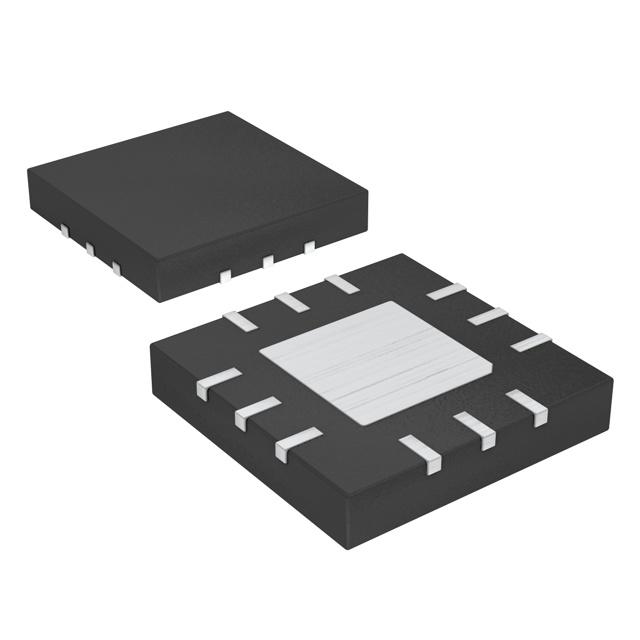
The MAX5520/MAX5521 are available in a 4mm x 4mm x
0.8mm, 12-pin, thin QFN package and are guaranteed
over the extended -40°C to +85°C temperature range.
For 12-bit compatible devices, refer to the MAX5530/
MAX5531 data sheet. For 8-bit compatible devices,
refer to the MAX5510/MAX5511 data sheet.
Applications
Features
♦ Single +1.8V to +5.5V Supply
♦ Ultra-Low 6µA Supply Current
♦ Shutdown Mode Reduces Supply Current to
0.18µA (max)
♦ Small 4mm x 4mm x 0.8mm Thin QFN Package
♦ Flexible Force-Sense-Configured Rail-to-Rail
Output Buffers
♦ Internal Reference Sources 8mA of Current
(MAX5521)
♦ Fast 16MHz 3-Wire SPI-/QSPI-/MICROWIRECompatible Serial Interface
♦ TTL- and CMOS-Compatible Digital Inputs with
Hysteresis
♦ Glitch-Free Outputs During Power-Up
Ordering Information
TEMP RANGE
PIN-PACKAGE
MAX5520ETC
PART
-40°C to +85°C
12 Thin QFN-EP*
MAX5521ETC
-40°C to +85°C
12 Thin QFN-EP*
*EP = Exposed paddle (internally connected to GND).
Portable Battery-Powered Devices
Instrumentation
Automatic Trimming and Calibration in Factory
or Field
Programmable Voltage and Current Sources
Pin Configuration
TOP VIEW
Industrial Process Control and Remote
Industrial Devices
Remote Data Conversion and Monitoring
CS
1
Programmable Liquid Crystal Display (LCD) Bias
SCLK
2
Selector Guide
DIN
3
FB
N.C.
OUT
12
11
10
9
GND
8
VDD
7
N.C.
Chemical Sensor Cell Bias for Gas Monitors
PART
REFERENCE
TOP MARK
MAX5520ETC
External
AACQ
MAX5521ETC
Internal
AACR
MAX5520
MAX5521
4
5
REFIN (MAX5520) N.C.
REFOUT(MAX5521)
6
N.C.
THIN QFN
Rail-to-Rail is a registered trademark of Nippon Motorola, Inc.
SPI and QSPI are trademarks of Motorola, Inc.
MICROWIRE is a trademark of National Semiconductor Corp
________________________________________________________________ Maxim Integrated Products
For pricing, delivery, and ordering information, please contact Maxim/Dallas Direct! at
1-888-629-4642, or visit Maxim’s website at www.maxim-ic.com.
1
MAX5520/MAX5521
General Description
�MAX5520/MAX5521
+1.8V to +5.5V, Ultra-Low-Power, 10-Bit,
Voltage-Output DACs
ABSOLUTE MAXIMUM RATINGS
VDD to GND ..............................................................-0.3V to +6V
OUT to GND ...............................................-0.3V to (VDD + 0.3V)
FB to GND ..................................................-0.3V to (VDD + 0.3V)
SCLK, DIN, CS to GND ..............................-0.3V to (VDD + 0.3V)
REFIN, REFOUT to GND ............................-0.3V to (VDD + 0.3V)
Continuous Power Dissipation (TA = +70°C)
Thin QFN (derate 16.9mW/°C above +70°C).............1349mW
Operating Temperature Range ...........................-40°C to +85°C
Storage Temperature Range .............................-65°C to +150°C
Junction Temperature ..................................................... +150°C
Lead Temperature (soldering, 10s) .................................+300°C
Stresses beyond those listed under “Absolute Maximum Ratings” may cause permanent damage to the device. These are stress ratings only, and functional
operation of the device at these or any other conditions beyond those indicated in the operational sections of the specifications is not implied. Exposure to
absolute maximum rating conditions for extended periods may affect device reliability.
ELECTRICAL CHARACTERISTICS
(VDD = +1.8V to +5.5V, OUT unloaded, TA = TMIN to TMAX, unless otherwise noted. Typical values are at TA = +25°C.)
PARAMETER
SYMBOL
CONDITIONS
STATIC ACCURACY (MAX5520 EXTERNAL REFERENCE)
Resolution
N
Integral Nonlinearity (Note 1)
Differential Nonlinearity (Note 1)
Offset Error (Note 2)
INL
DNL
VOS
MIN
±1
±4
VDD = 1.8V, VREF = 1.024V
±1
±4
Guaranteed monotonic,
VDD = 5V, VREF = 4.096V
±0.2
±1
Guaranteed monotonic,
VDD = 1.8V, VREF = 1.024V
±0.2
PSRR
LSB
LSB
±1
VDD = 5V, VREF = 4.096V
±1
±20
VDD = 1.8V, VREF = 1.024V
±1
±20
±2
GE
UNITS
Bits
VDD = 5V, VREF = 4.096V
±1
±2
VDD = 1.8V, VREF = 1.024V
±1
±2
1.8V ≤ VDD ≤ 5.5V
mV
µV/°C
VDD = 5V, VREF = 4.096V
Gain-Error Temperature
Coefficient
Power-Supply Rejection Ratio
MAX
10
Offset-Error Temperature Drift
Gain Error (Note 3)
TYP
LSB
±4
ppm/°C
85
dB
STATIC ACCURACY (MAX5521 INTERNAL REFERENCE)
Resolution
Integral Nonlinearity (Note 1)
Differential Nonlinearity (Note 1)
Offset Error (Note 2)
N
INL
DNL
VOS
10
VDD = 5V, VREF = 3.9V
±1
±4
VDD = 1.8V, VREF = 1.2V
±1
±4
Guaranteed monotonic,
VDD = 5V, VREF = 3.9V
±0.2
±1
Guaranteed monotonic,
VDD = 1.8V, VREF = 1.2V
±0.2
Gain-Error Temperature
Coefficient
2
±1
±1
±20
VDD = 1.8V, VREF = 1.2V
±1
±20
±2
GE
LSB
LSB
VDD = 5V, VREF = 3.9V
Offset-Error Temperature Drift
Gain Error (Note 3)
Bits
µV/°C
VDD = 5V, VREF = 3.9V
±1
±2
VDD = 1.8V, VREF = 1.2V
±1
±2
±4
_______________________________________________________________________________________
mV
LSB
ppm/°C
�+1.8V to +5.5V, Ultra-Low-Power, 10-Bit,
Voltage-Output DACs
(VDD = +1.8V to +5.5V, OUT unloaded, TA = TMIN to TMAX, unless otherwise noted. Typical values are at TA = +25°C.)
PARAMETER
Power-Supply Rejection Ratio
SYMBOL
PSRR
CONDITIONS
MIN
1.8V ≤ VDD ≤ 5.5V
TYP
MAX
85
UNITS
dB
REFERENCE INPUT (MAX5520)
Reference-Input Voltage Range
VREFIN
Reference-Input Impedance
RREFIN
0
Normal operation
VDD
4.1
In shutdown
V
MΩ
2.5
GΩ
REFERENCE OUTPUT (MAX5521)
Initial Accuracy
VREFOUT
Output-Voltage Temperature
Coefficient
VTEMPCO
Line Regulation
Load Regulation
Output Noise Voltage
Short-Circuit Current (Note 6)
Capacitive Load Stability Range
No external load, VDD = 1.8V
1.197
1.214
1.231
No external load, VDD = 2.5V
1.913
1.940
1.967
No external load, VDD = 3V
2.391
2.425
2.459
No external load, VDD = 5V
3.828
3.885
3.941
TA = -40°C to +85°C (Note 4)
12
30
ppm/°C
VREFOUT < VDD - 200mV (Note 5)
0.3
2
µV/V
0 ≤ IREFOUT ≤ 1mA, sourcing, VDD = 1.8V,
VREF = 1.2V
0.3
2
0 ≤ IREFOUT ≤ 8mA, sourcing, VDD = 5V,
VREF = 3.9V
0.3
2
-150µA ≤ IREFOUT ≤ 0, sinking
0.2
0.1Hz to 10Hz, VREFOUT = 3.9V
150
10Hz to 10kHz, VREFOUT = 3.9V
600
0.1Hz to 10Hz, VREFOUT = 1.2V
50
10Hz to 10kHz, VREFOUT = 1.2V
450
VDD = 5V
30
VDD = 1.8V
14
V
µV/µA
µVP-P
mA
(Note 7)
0 to 10
nF
Thermal Hysteresis
(Note 8)
200
ppm
Reference Power-Up Time (from
Shutdown)
REFOUT unloaded, VDD = 5V
5.4
REFOUT unloaded, VDD = 1.8V
4.4
Long-Term Stability
ms
200
ppm/
1khrs
1000
pF
DAC OUTPUT (OUT)
Capacitive Driving Capability
Short-Circuit Current (Note 6)
CL
VDD = 5V, VOUT set to full scale, OUT
shorted to GND, source current
65
VDD = 5V, VOUT set to 0V, OUT shorted to
VDD, sink current
65
VDD = 1.8V, VOUT set to full scale, OUT
shorted to GND, source current
14
VDD = 1.8V, VOUT set to 0V, OUT shorted to
VDD, sink current
14
mA
_______________________________________________________________________________________
3
MAX5520/MAX5521
ELECTRICAL CHARACTERISTICS (continued)
�MAX5520/MAX5521
+1.8V to +5.5V, Ultra-Low-Power, 10-Bit,
Voltage-Output DACs
ELECTRICAL CHARACTERISTICS (continued)
(VDD = +1.8V to +5.5V, OUT unloaded, TA = TMIN to TMAX, unless otherwise noted. Typical values are at TA = +25°C.)
PARAMETER
SYMBOL
CONDITIONS
TYP
VDD = 5V
VDD = 1.8V
3.8
Coming out of standby
(MAX5521)
VDD = 1.8V
to 5.5V
0.4
DAC Power-Up Time
Output Power-Up Glitch
MIN
Coming out of shutdown
(MAX5520)
MAX
UNITS
3
CL = 100pF
FB_ Input Current
ms
10
mV
10
pA
DIGITAL INPUTS (SCLK, DIN, CS)
4.5V ≤ VDD ≤ 5.5V
Input High Voltage
VIH
2.4
2.7V < VDD ≤ 3.6V
VIL
4.5V ≤ VDD ≤ 5.5V
2.7V < VDD ≤ 3.6V
1.8V≤ VDD ≤ 2.7V
Input Leakage Current
IIN
(Note 9)
Input Capacitance
CIN
Input Low Voltage
V
2.0
1.8V ≤ VDD ≤ 2.7V
0.7 x VDD
0.8
0.6
0.3 x VDD
±0.05
±0.5
V
µA
10
pF
Positive and negative (Note 10)
10
V/ms
0.1 to 0.9 of full scale to within 0.5 LSB
(Note 10)
660
µs
DYNAMIC PERFORMANCE
Voltage-Output Slew Rate
SR
Voltage-Output Settling Time
0.1Hz to 10Hz
Output Noise Voltage
10Hz to 10kHz
VDD = 5V
80
VDD = 1.8V
55
VDD = 5V
620
VDD = 1.8V
476
µVP-P
POWER REQUIREMENTS
Supply Voltage Range
VDD
1.8
MAX5520
Supply Current (Note 9)
IDD
MAX5521
Standby Supply Current
Shutdown Supply Current
4
IDDSD
IDDPD
(Note 9)
(Note 9)
5.5
VDD = 5V
2.6
4
VDD = 3V
2.6
4
VDD = 1.8V
3.6
5
VDD = 5V
5.3
7.0
VDD = 3V
4.8
7.0
VDD = 1.8V
5.4
7.0
VDD = 5V
3.3
4.5
VDD = 3V
2.8
4.0
VDD = 1.8V
2.4
3.5
0.05
0.25
_______________________________________________________________________________________
V
µA
µA
µA
�+1.8V to +5.5V, Ultra-Low-Power, 10-Bit,
Voltage-Output DACs
(VDD = +4.5V to +5.5V, TA = TMIN to TMAX, unless otherwise noted. Typical values are at TA = +25°C.)
PARAMETER
SYMBOL
CONDITIONS
MIN
TYP
MAX
UNITS
16.7
MHz
TIMING CHARACTERISTICS (VDD = 4.5V TO 5.5V)
Serial Clock Frequency
fSCLK
0
DIN to SCLK Rise Setup Time
tDS
15
ns
DIN to SCLK Rise Hold Time
tDH
0
ns
SCLK Pulse-Width High
tCH
24
ns
SCLK Pulse-Width Low
tCL
24
ns
CS Pulse-Width High
tCSW
100
ns
SCLK Rise to CS Rise Hold Time
tCSH
0
ns
CS Fall to SCLK Rise Setup Time
tCSS
20
ns
SCLK Fall to CS Fall Setup
tCSO
0
ns
CS Rise to SCK Rise Hold Time
tCS1
20
ns
TIMING CHARACTERISTICS
(VDD = +1.8V to +5.5V, TA = TMIN to TMAX, unless otherwise noted. Typical values are at TA = +25°C.)
PARAMETER
SYMBOL
CONDITIONS
MIN
TYP
MAX
UNITS
10
MHz
TIMING CHARACTERISTICS (VDD = 1.8V TO 5.5V)
Serial Clock Frequency
fSCLK
0
DIN to SCLK Rise Setup Time
tDS
24
DIN to SCLK Rise Hold Time
tDH
0
ns
SCLK Pulse-Width High
tCH
40
ns
SCLK Pulse-Width Low
tCL
40
ns
CS Pulse-Width High
tCSW
150
ns
SCLK Rise to CS Rise Hold Time
tCSH
0
ns
CS Fall to SCLK Rise Setup Time
tCSS
30
ns
SCLK Fall to CS Fall Setup
tCSO
0
ns
CS Rise to SCK Rise Hold Time
tCS1
30
ns
ns
Note 1: Linearity is tested within codes 24 to 1020.
Note 2: Offset is tested at code 24.
Note 3: Gain is tested at code 1000. FB is connected to OUT.
Note 4: Guaranteed by design. Not production tested.
Note 5: VDD must be a minimum of 1.8V.
Note 6: Outputs can be shorted to VDD or GND indefinitely, provided that the package power dissipation is not exceeded.
Note 7: Optimal noise performance is at 2nF load capacitance.
Note 8: Thermal hysteresis is defined as the change in the initial +25°C output voltage after cycling the device from TMAX to TMIN.
Note 9: All digital inputs at VDD or GND.
Note 10: Load = 10kΩ in parallel with 100pF, VDD = 5V, VREF = 4.096V (MAX5520) or VREF = 3.9V (MAX5521).
_______________________________________________________________________________________
5
MAX5520/MAX5521
TIMING CHARACTERISTICS
�Typical Operating Characteristics
(VDD = 5.0V, VREF = 4.096V (MAX5520) or VREF = 3.9V (MAX5521), TA = +25°C, unless otherwise noted.)
SUPPLY CURRENT vs. SUPPLY VOLTAGE
(MAX5521)
6
5
4
3
7
6
5
4
3
2
2
1
1
0
0
1.5 2.0 2.5 3.0 3.5 4.0 4.5 5.0 5.5 6.0
35
60
85
-40
10
35
60
CS = LOGIC LOW
CODE = 0
VREF = 1.2V
1.5
VDD = 5V
100
10
VDD = 1.8V
ALL DIGITAL INPUTS
SHORTED TOGETHER
4.5
4.0
SUPPLY CURRENT (mA)
SUPPLY CURRENT (µA)
VREF = 1.9V
5.0
MAX5520 toc05
1000
1.0
85
3.5
3.0
2.5
2.0
1.5
1.0
0.5
0.5
0
0
1
-15
10
35
60
85
0.01
0.1
1
10
100
0
1000 10000 100000
FREQUENCY (kHz)
LOGIC INPUT VOLTAGE (V)
INL vs. INPUT CODE
(VDD = VREF = 1.8V)
INL vs. INPUT CODE
(VDD = VREF = 5V)
DNL vs. INPUT CODE
(VDD = VREF = 1.8V)
0.2
0
-0.2
-0.2
INL (LSB)
0
-0.4
0.05
0.04
0.03
DNL (LSB)
0.2
0.06
-0.4
0.02
0.01
-0.6
-0.6
-0.8
-0.8
-0.01
-1.0
-1.0
-0.02
-1.2
0
-0.03
-1.2
200
400
600
800
DIGITAL INPUT CODE
1000
1200
MAX5520 toc09
0.4
MAX5520 toc07
0.4
0
0.5 1.0 1.5 2.0 2.5 3.0 3.5 4.0 4.5 5.0
TEMPERATURE (°C)
MAX5520 toc08
-40
6
-15
SUPPLY CURRENT
vs. LOGIC INPUT VOLTAGE
MAX5520 toc04
STANDBY SUPPLY CURRENT (µA)
10
SUPPLY CURRENT
vs. CLOCK FREQUENCY
2.5
2.0
-15
STANDBY SUPPLY CURRENT
vs. TEMPERATURE (MAX5521)
VREF = 2.4V
3.0
0.1
-40
TEMPERATURE (°C)
VREF = 3.9V
3.5
1
TEMPERATURE (°C)
VDD = 5V
4.0
10
SUPPLY VOLTAGE (V)
5.0
4.5
100
MAX5520 toc06
7
1000
MAX5520 toc03
8
SUPPLY CURRENT (µA)
8
9
SHUTDOWN SUPPLY CURRENT (nA)
10
SHUTDOWN SUPPLY CURRENT
vs. TEMPERATURE (MAX5521)
MAX5520 toc02
9
SUPPLY CURRENT (µA)
SUPPLY CURRENT vs. TEMPERATURE
(MAX5521)
MAX5520 toc01
10
INL (LSB)
MAX5520/MAX5521
+1.8V to +5.5V, Ultra-Low-Power, 10-Bit,
Voltage-Output DACs
0
200
400
600
800
DIGITAL INPUT CODE
1000
1200
0
200
400
600
800
DIGITAL INPUT CODE
_______________________________________________________________________________________
1000
1200
�+1.8V to +5.5V, Ultra-Low-Power, 10-Bit,
Voltage-Output DACs
OFFSET VOLTAGE
vs. TEMPERATURE
0.02
0.01
0
-0.01
0.2
0
-0.2
-0.4
0
200
400
600
800
1000
0.04
0.02
0
-0.02
-0.04
-0.06
-0.8
-0.08
-0.10
-40
1200
-15
10
35
60
85
-40
-15
10
35
60
85
DIGITAL INPUT CODE
TEMPERATURE (°C)
TEMPERATURE (°C)
DIGITAL FEEDTHROUGH RESPONSE
DAC OUTPUT LOAD REGULATION
vs. OUTPUT CURRENT
DAC OUTPUT LOAD REGULATION
vs. OUTPUT CURRENT
DIN
5V/div
0.6048
VDD = 1.8V
DAC CODE = MIDSCALE
VREF = 1.2V
0.6046
0.6044
0.6042
OUT
50mV/div
DAC OUTPUT VOLTAGE
vs. OUTPUT SOURCE CURRENT
3
VDD = 5V
2
VDD = 3V
VDD = 1.8V
1
4.5
DAC OUTPUT VOLTAGE (V)
4
0.01
0.10
1.9415
1.9410
1.9400
-10 -8
-6
-4
-2
0
2
4
6
8
10
DAC OUTPUT CURRENT (mA)
DAC OUTPUT VOLTAGE
vs. OUTPUT SINK CURRENT
OUTPUT LARGE-SIGNAL STEP RESPONSE
(VDD = 1.8V, VREF = 1.2V)
MAX5520 toc18
VREF = VDD
CODE = MIDSCALE
4.0
3.5
VDD = 5V
3.0
2.5
VOUT
200mV/div
VDD = 3V
2.0
1.5
1.0
0.5
0
0.001
1.9420
MAX5520 toc17
VREF = VDD
CODE = MIDSCALE
1.9425
DAC OUTPUT CURRENT (µA)
5.0
MAX5520 toc16
5
1.9430
VDD = 5.0V
DAC CODE = MIDSCALE
VREF = 3.9V
1.9405
0.6040
-1000-800 -600 -400 -200 0 200 400 600 800 1000
20µs/div
1.9435
DAC OUTPUT VOLTAGE (V)
SCLK
5V/div
DAC OUTPUT VOLTAGE (V)
CS
5V/div
1.9440
MAX5520 toc14
0.6050
MAX5520 toc15
MAX5520 toc13
ZERO SCALE
OUTPUT VOLTAGE (V)
0.06
-0.6
-1.0
-0.03
VDD = 5V
VREF = 3.9V
0.08
0.4
MAX5520 toc12
VDD = 5V
VREF = 3.9V
0.6
-0.02
0.10
MAX5520 toc11
0.8
OFFSET VOLTAGE (mV)
0.03
DNL (LSB)
1.0
MAX5520 toc10
0.04
GAIN-ERROR CHANGE
vs. TEMPERATURE
GAIN-ERROR CHANGE (LSB)
DNL vs. INPUT CODE
(VDD = VREF = 5V)
1
10
OUTPUT SOURCE CURRENT (mA)
100
MAX5520/MAX5521
Typical Operating Characteristics (continued)
(VDD = 5.0V, VREF = 4.096V (MAX5520) or VREF = 3.9V (MAX5521), TA = +25°C, unless otherwise noted.)
0
0.001
VDD = 1.8V
0.01
0.1
1
10
100
100µs/div
OUTPUT SINK CURRENT (mA)
_______________________________________________________________________________________
7
�+1.8V to +5.5V, Ultra-Low-Power, 10-Bit,
Voltage-Output DACs
MAX5520/MAX5521
Typical Operating Characteristics (continued)
(VDD = 5.0V, VREF = 4.096V (MAX5520) or VREF = 3.9V (MAX5521), TA = +25°C, unless otherwise noted.)
OUTPUT LARGE-SIGNAL STEP RESPONSE
(VDD = 5V, VREF = 3.9V)
OUTPUT MINIMUM SERIES RESISTANCE
vs. LOAD CAPACITANCE
MAX5520 toc19
MAX5520 toc20
MINIMUM SERIES RESISTANCE (Ω)
FOR NO OVERSHOOT
VOUT
500mV/div
POWER-UP OUTPUT VOLTAGE GLITCH
MAX5520 toc21
600
500
VDD
2V/div
400
300
200
VOUT
10mV/div
100
0
0.0001 0.001
200µs/div
0.01
0.1
1
100
10
20ms/div
CAPACITANCE (µF)
MAJOR CARRY OUTPUT VOLTAGE GLITCH
(CODE 7FFh TO 800h)
(VDD = 5V, VREF = 3.9V)
MAX5520 toc22
REFERENCE OUTPUT VOLTAGE (V)
3.940
VOUT
AC-COUPLED
5mV/div
MAX5520 toc23
REFERENCE OUTPUT VOLTAGE
vs. TEMPERATURE
VDD = 5V
3.935
3.930
3.925
3.920
3.915
3.910
3.905
3.900
-40
100µs/div
-15
10
35
60
85
TEMPERATURE (°C)
1.218
1.217
1.216
1.215
3.91
3.90
3.89
1.21750
1.21748
MAX5520 toc26
VDD = 5V
REFERENCE OUTPUT VOLTAGE (V)
1.219
3.92
MAX5520 toc25
REFERENCE OUTPUT VOLTAGE (V)
VDD = 1.8V
REFERENCE OUTPUT VOLTAGE (V)
MAX5520 toc24
1.220
REFERENCE OUTPUT VOLTAGE
vs. SUPPLY VOLTAGE
REFERENCE OUTPUT VOLTAGE
vs. REFERENCE OUTPUT CURRENT
REFERENCE OUTPUT VOLTAGE
vs. REFERENCE OUTPUT CURRENT
NO LOAD
1.21746
1.21744
1.21742
1.21740
1.21738
1.21736
1.21734
1.21732
-500
1500
3500
5500
7500
REFERENCE OUTPUT CURRENT (µA)
8
1.21730
3.88
1.214
-500
2000
4500
7000
9500 12,000 14,500
REFERENCE OUTPUT CURRENT (µA)
1.5 2.0 2.5 3.0 3.5 4.0 4.5 5.0 5.5 6.0
SUPPLY VOLTAGE (V)
_______________________________________________________________________________________
�+1.8V to +5.5V, Ultra-Low-Power, 10-Bit,
Voltage-Output DACs
REFERENCE LINE-TRANSIENT RESPONSE
(VREF = 1.2V)
REFERENCE LINE-TRANSIENT RESPONSE
(VREF = 3.9V)
MAX5520 toc27
MAX5520 toc28
2.8V
5.5V
VDD
VDD
1.8V
4.5V
VREF
500mV/div
VREF
500mV/div
3.9V
100µs/div
100µs/div
REFERENCE LOAD TRANSIENT
(VDD = 1.8V)
REFERENCE LOAD TRANSIENT
(VDD = 5V)
MAX5520 toc29
MAX5520 toc30
REFOUT
SOURCE
CURRENT
0.5mA/div
REFOUT
SOURCE
CURRENT
0.5mA/div
VREFOUT
500mV/div
3.9V
VREFOUT
500mV/div
200µs/div
200µs/div
REFERENCE LOAD TRANSIENT
(VDD = 1.8V)
REFERENCE LOAD TRANSIENT
(VDD = 5V)
MAX5520 toc31
200µs/div
MAX5520 toc32
REFOUT
SINK
CURRENT
50µA/div
REFOUT
SINK
CURRENT
100µA/div
VREFOUT
500mV/div
VREFOUT
500mV/div
3.9V
200µs/div
_______________________________________________________________________________________
9
MAX5520/MAX5521
Typical Operating Characteristics (continued)
(VDD = 5.0V, VREF = 4.096V (MAX5520) or VREF = 3.9V (MAX5521), TA = +25°C, unless otherwise noted.)
�Typical Operating Characteristics (continued)
(VDD = 5.0V, VREF = 4.096V (MAX5520) or VREF = 3.9V (MAX5521), TA = +25°C, unless otherwise noted.)
REFERENCE PSRR
vs. FREQUENCY
REFERENCE PSRR
vs. FREQUENCY
60
50
40
30
20
10
0
80
MAX5520 toc34
VDD = 1.8V
70
POWER-SUPPLY REJECTION RATIO (dB)
MAX5520 toc33
80
POWER-SUPPLY REJECTION RATIO (dB)
MAX5520/MAX5521
+1.8V to +5.5V, Ultra-Low-Power, 10-Bit,
Voltage-Output DACs
VDD = 5V
70
60
50
40
30
20
10
0
0.01
0.1
1
10
100
1000
0.01
0.1
1
10
100
FREQUENCY (kHz)
REFERENCE OUTPUT NOISE
(0.1Hz TO 10Hz) (VDD = 1.8V, VREF = 1.2V)
REFERENCE OUTPUT NOISE
(0.1Hz TO 10Hz) (VDD = 5V, VREF = 3.9V)
MAX5520 toc36
MAX5520 toc35
100µV/div
100µV/div
1s/div
10
1000
FREQUENCY (kHz)
1s/div
______________________________________________________________________________________
�+1.8V to +5.5V, Ultra-Low-Power, 10-Bit,
Voltage-Output DACs
PIN
NAME
MAX5520
MAX5521
1
1
CS
2
2
SCLK
3
3
DIN
4
—
REFIN
FUNCTION
Active-Low Digital-Input Chip Select
Serial-Interface Clock
Serial-Interface Data Input
Reference Input
—
4
REFOUT
5, 6, 7, 11
5, 6, 7, 11
N.C.
No Connection. Leave N.C. inputs unconnected (floating) or connected to GND.
Reference Output
8
8
VDD
Power Input. Connect VDD to a 1.8V to 5.5V power supply. Bypass VDD to GND with a
0.1µF capacitor.
9
9
GND
Ground
10
10
OUT
Analog Voltage Output
12
12
FB
EP
Exposed
Paddle
EP
Feedback Input
Exposed Paddle. Connect EP to GND.
MAX5520 Functional Diagram
VDD
REFIN
POWERDOWN
CONTROL
DAC
REGISTER
INPUT
REGISTER
SCLK
DIN
CS
CONTROL
LOGIC
AND
SHIFT
REGISTER
10-BIT DAC
OUT
MAX5520
FB
GND
______________________________________________________________________________________
11
MAX5520/MAX5521
Pin Description
�+1.8V to +5.5V, Ultra-Low-Power, 10-Bit,
Voltage-Output DACs
MAX5520/MAX5521
MAX5521 Functional Diagram
VDD
POWERDOWN
CONTROL
2-BIT
PROGRAMMABLE
REFERENCE
INPUT
REGISTER
SCLK
DIN
CS
REF
BUF
DAC
REGISTER
CONTROL
LOGIC
AND
SHIFT
REGISTER
REFOUT
10-BIT DAC
OUT
MAX5521
FB
GND
Detailed Description
The MAX5520/MAX5521 single, 10-bit, ultra-low-power,
voltage-output DACs offer Rail-to-Rail buffered voltage
outputs. The DACs operate from a 1.8V to 5.5V supply
and require only 6µA (max) supply current. These
devices feature a shutdown mode that reduces overall
current, including the reference input current, to just
0.18µA. The MAX5521 includes an internal reference
that saves additional board space and can source up
to 8mA, making it functional as a system reference. The
16MHz, 3-wire serial interface is compatible with SPI,
QSPI, and MICROWIRE protocols. When V DD is
applied, all DAC outputs are driven to zero scale with
virtually no output glitch. The MAX5520/MAX5521 output buffers are configured in force sense allowing users
to externally set voltage gains on the output (an outputamplifier inverting input is available). These devices
come in a 4mm x 4mm thin QFN package.
Digital Interface
The MAX5520/MAX5521 use a 3-wire serial interface
compatible with SPI, QSPI, and MICROWIRE protocols
(Figures 1 and 2).
The MAX5520/MAX5521 include a single, 16-bit, input
shift register. Data loads into the shift register through
the serial interface. CS must remain low until all 16 bits
are clocked in. Data loads MSB first, D9–D0. The 16
bits consist of 4 control bits (C3–C0), 10 data bits
(D9–D0), and 2 sub-bits (see Table 1). D9–D0 are the
DAC data bits and S1 and S0 are the sub-bits. The
sub-bits must be set to zero for proper operation. The
control bits C3–C0 control the MAX5520/MAX5521, as
outlined in Table 2.
Each DAC channel includes two registers: an input register and a DAC register. The input register holds input
data. The DAC register contains the data updated to
the DAC output.
The double-buffered register configuration allows any
of the following:
• Loading the input registers without updating the DAC
registers
• Updating the DAC registers from the input registers
• Updating all the input and DAC registers simultaneously
12
______________________________________________________________________________________
�+1.8V to +5.5V, Ultra-Low-Power, 10-Bit,
Voltage-Output DACs
CONTROL
DATA BITS
MSB
C3
LSB
C2
C1
C0
D9
D8
D7
D6
D5
D4
D3
D2
D1
D0
S1
S0
Sub-bits S1 and S0 must be set to zero for proper operation.
tCH
SCLK
tCL
tDS
C3
DIN
tCS0
C2
C1
S0
tDH
tCSH
tCSS
CS
tCSW
tCS1
Figure 1. Timing Diagram
SCLK
DIN
1
C3
2
C2
3
C1
CONTROL BITS
4
C0
5
D9
6
D8
7
D7
8
D6
9
D5
10
D4
DATA BITS
11
D3
12
D2
13
D1
14
D0
15
S1
16
S0
SUB-BITS
COMMAND
EXECUTED
CS
Figure 2. Register Loading Diagram
______________________________________________________________________________________
13
MAX5520/MAX5521
Table 1. Serial Write Data Format
�MAX5520/MAX5521
+1.8V to +5.5V, Ultra-Low-Power, 10-Bit,
Voltage-Output DACs
Table 2. Serial-Interface Programming Commands
INPUT DATA
SUB-BITS
C3
CONTROL BITS
C2
C1
C0
D9–D0
S1–S0
0
0
0
0
XXXXXXXXXX
00
No operation; command is ignored.
0
0
0
1
10-bit data
00
Load input register from shift register; DAC register
unchanged; DAC output unchanged.
0
0
1
0
—
—
Command reserved; do not use.
0
0
1
1
—
—
Command reserved; do not use.
0
1
0
0
—
—
Command reserved; do not use.
0
1
0
1
—
—
Command reserved; do not use.
0
1
1
0
—
—
Command reserved; do not use.
0
1
1
1
—
—
Command reserved; do not use.
00
Load DAC register from input register; DAC output
updated; MAX5520 enters normal operation if in
shutdown; MAX5521 enters normal operation if in
standby or shutdown.
1
0
0
0
10-bit data
FUNCTION
1
0
0
1
10-bit data
00
Load input register and DAC register from shift register;
DAC output updated; MAX5520 enters normal operation
if in shutdown; MAX5521 enters normal operation if in
standby or shutdown.
1
0
1
0
—
—
Command reserved; do not use.
1
0
1
1
—
—
Command reserved; do not use.
1
1
0
0
D9, D8,
XXXXXXXX
00
MAX5520 enters shutdown; MAX5521 enters standby*.
For the MAX5521, D9 and D8 configure the internal
reference voltage (Table 3).
00
MAX5520/MAX5521 enter normal operation; DAC output
reflects existing contents of DAC register. For the
MAX5521, D9 and D8 configure the internal reference
voltage (Table 3).
00
MAX5520/MAX5521 enter shutdown; DAC output set to
high impedance. For the MAX5521, D9 and D8 configure
the internal reference voltage (Table 3).
00
Load input register and DAC register from shift register;
DAC output updated; MAX5520 enters normal operation
if in shutdown; MAX5521 enters normal operation if in
standby or shutdown.
1
1
0
1
D9, D8,
XXXXXXXX
1
1
1
0
D9, D8,
XXXXXXXX
1
1
1
1
10-bit data
X = Don’t care.
*Standby mode can be entered from normal operation only. It is not possible to enter standby mode from shutdown.
14
______________________________________________________________________________________
�+1.8V to +5.5V, Ultra-Low-Power, 10-Bit,
Voltage-Output DACs
Shutdown Mode
The MAX5520/MAX5521 feature a software-programmable shutdown mode that reduces the typical supply
current and the reference input current to 0.18µA
(max). Writing an input control word with control bits
C[3:0] = 1110 places the device in shutdown mode
(Table 2). In shutdown, the MAX5520 reference input
and DAC output buffers go high impedance. Placing
the MAX5521 into shutdown turns off the internal reference, and the DAC output buffers go high impedance.
The serial interface remains active for all devices.
Table 2 shows several commands that bring the
MAX5520/MAX5521 back to normal operation. The
power-up time from shutdown is required before the
DAC outputs are valid.
Note: For the MAX5521, standby mode cannot be
entered directly from shutdown mode. The device must
be brought into normal operation before entering standby mode.
Table 3. Reference Output Voltage
Programming
D9
D8
REFERENCE VOLTAGE (V)
0
0
1.214
0
1
1.940
1
0
2.425
1
1
3.885
Standby Mode (MAX5521 Only)
The MAX5521 features a software-programmable
standby mode that reduces the typical supply current
to 6µA. Standby mode powers down all circuitry except
the internal voltage reference. Place the device in
standby mode by writing an input control word with
control bits C[3:0] = 1100 (Table 2). The internal reference and serial interface remain active while the DAC
output buffers go high impedance. If the MAX5521 is
coming out of standby, the power-up time from standby
is required before the DAC outputs are valid.
For the MAX5521, standby mode cannot be entered
directly from shutdown mode. The device must be
brought into normal operation before entering standby
mode. To enter standby from shutdown, issue the command to return to normal operation, followed immediately by the command to go into standby.
Table 2 shows several commands that bring the
MAX5521 back to normal operation. When transitioning from standby mode to normal operation, only the
DAC power-up time is required before the DAC outputs
are valid.
Reference Input
The MAX5520 accepts a reference with a voltage range
extending from 0 to VDD. The output voltage (VOUT) is
represented by a digitally programmable voltage
source as:
VOUT = (VREF x N / 1024) x gain
where N is the numeric value of the DAC’s binary input
code (0 to 1023), VREF is the reference voltage and
gain is the externally set voltage gain for the MAX5520/
MAX5521.
In shutdown mode, the reference input enters a highimpedance state with an input impedance of 2.5GΩ (typ).
Reference Output
The MAX5521 internal voltage reference is software
configurable to one of four voltages. Upon power-up,
the default reference voltage is 1.214V. Configure the
reference voltage using the D8 and D9 data bits (Table
3) when the control bits are as follows: C[3:0] = 1100,
1101, or 1110 (Table 2). VDD must be kept at a minimum of 200mV above VREF for proper operation.
______________________________________________________________________________________
15
MAX5520/MAX5521
Power Modes
The MAX5520/MAX5521 feature two power modes to
conserve power during idle periods. In normal operation, the device is fully operational. In shutdown mode,
the device is completely powered down, including the
internal voltage reference in the MAX5521. The
MAX5521 also offers a standby mode where all circuitry
is powered down except the internal voltage reference.
Standby mode keeps the reference powered up while
the remaining circuitry is shut down, allowing it to be
used as a system reference. Standby mode also helps
reduce the wake-up delay by not requiring the reference to power up when returning to normal operation.
�MAX5520/MAX5521
+1.8V to +5.5V, Ultra-Low-Power, 10-Bit,
Voltage-Output DACs
Applications Information
1-Cell and 2-Cell Circuit
See Figure 3 for an illustration of how to power the
MAX5520/MAX5521 with either one lithium-ion battery
or two alkaline batteries. The low current consumption
of the devices makes the MAX5520/MAX5521 ideal for
battery-powered applications.
Programmable Current Source
See the circuit in Figure 4 for an illustration of how to
configure the MAX5520 as a programmable current
source for driving an LED. The MAX5520 drives a standard NPN transistor to program the current source. The
current source (I LED ) is defined in the equation in
Figure 4.
Voltage Biasing a Current-Output
Transducer
See the circuit in Figure 5 for an illustration of how to configure the MAX5520 to bias a current-output transducer.
In Figure 5, the output voltage of the MAX5520 is a function of the voltage drop across the transducer added to
the voltage drop across the feedback resistor R.
Self-Biased Two-Electrode
Potentiostat Application
See the circuit in Figure 6 for an illustration of how to
use the MAX5520 to bias a two-electrode potentiostat
on the input of an ADC.
Bipolar Output
The MAX5520 output can be configured for bipolar
operation, as shown in Figure 8. The output voltage is
given by the following equation:
VOUT = VREF x [(NA - 512) / 512]
where NA represents the numeric value of the DAC’s
binary input code. Table 5 shows digital codes (offset
binary) and the corresponding output voltage for the
circuit in Figure 4.
Configurable Output Gain
The MAX5520/MAX5521 have a force-sense output,
which provides a connection directly to the inverting terminal of the output op amp, yielding the most flexibility.
The advantage of the force-sense output is that specific
gains can be set externally for a given application. The
gain error for the MAX5520/MAX5521 is specified in a
unity-gain configuration (op-amp output and inverting terminals connected), and additional gain error results from
external resistor tolerances. Another advantage of the
force-sense DAC is that it allows many useful circuits to
be created with only a few simple external components.
An example of a custom fixed gain using the force-sense
output of the MAX5520/MAX5521 is shown in Figure 9. In
this example R1 and R2 set the gain for VOUT.
VOUT = [(VREFIN x NA) / 1024] x [1 + (R2 / R1)]
where NA represents the numeric value of the DAC
input code.
Unipolar Output
Figure 7 shows the MAX5520 in a unipolar output configuration with unity gain. Table 4 lists the unipolar output codes.
VDD
1.8V ≤ VALKALINE ≤ 3.3V
2.2V ≤ VLITHIUM ≤ 3.3V
536kΩ
+1.25V
REFIN
DAC
VOUT
0.1µF
MAX6006
(1µA, 1.25V
SHUNT
REFERENCE)
0.01µF
VOUT (1.22mV / LSB)
V
× NDAC
VOUT = REFIN
1024
MAX5520
GND
NDAC IS THE NUMERIC VALUE
OF THE DAC INPUT CODE.
Figure 3. Portable Application Using Two Alkaline Cells or One Lithium Coin Cell
16
______________________________________________________________________________________
�+1.8V to +5.5V, Ultra-Low-Power, 10-Bit,
Voltage-Output DACs
MAX5520/MAX5521
V+
REF
LED
ILED
OUT
DAC
TO ADC
DAC
REFIN
VOUT
IF
2N3904
RF
FB
MAX5520
WE
MAX5521
ILED =
TO ADC
FB
R
VREFIN × NDAC
1024 × R
SENSOR
CE
NDAC IS THE NUMERIC VALUE OF THE DAC INPUT CODE.
Figure 4. Programmable Current Source Driving an LED
REFOUT
BAND
GAP
TO ADC
CL
Figure 6. Self-Biased Two-Electrode Potentiostat Application
DAC
REFIN
VOUT
VOUT
VOUT = VBIAS + (IT × R)
MAX5520
REFIN
FB
TRANSDUCER
VBIAS
DAC
OUT
R
IT
MAX5520
V
× NDAC
VBIAS = REFIN
1024
FB
V
× NA
VOUT = REFIN
1024
NDAC IS THE NUMERIC VALUE
OF THE DAC INPUT CODE.
NA IS THE DAC INPUT CODE
(0 TO 1023 DECIMAL).
Figure 5. Transimpedance Configuration for a Voltage-Biased
Current-Output Transducer
Figure 7. Unipolar Output Circuit
Table 4. Unipolar Code Table (Gain = +1)
Table 5. Bipolar Code Table (Gain = +1)
DAC CONTENTS
MSB
LSB
ANALOG OUTPUT
DAC CONTENTS
MSB
LSB
ANALOG OUTPUT
1111
1111
1100
+VREF (1023/21024)
1111
1111
1100
+VREF (511/512)
1000
0000
0100
+VREF (513/1024)
1000
0000
0100
+VREF (1/512)
1000
0000
0000
+VREF (512/1024) = +VREF/2
1000
0000
0000
0V
0111
1111
1100
+VREF (511/1024)
0111
1111
1100
-VREF (1/512)
0000
0001
0100
+VREF (1/1024)
0000
0000
0100
-VREF (511/512)
0000
0000
0000
0V
0000
0000
0000
-VREF (512/512) = -VREF
______________________________________________________________________________________
17
�MAX5520/MAX5521
+1.8V to +5.5V, Ultra-Low-Power, 10-Bit,
Voltage-Output DACs
Power Supply and Bypassing
Considerations
Bypass the power supply with a 0.1µF capacitor to GND.
Minimize lengths to reduce lead inductance. If noise
becomes an issue, use shielding and/or ferrite beads to
increase isolation. For the thin QFN package, connect
the exposed paddle to ground.
10kΩ
Layout Considerations
Digital and AC transient signals coupling to GND can
create noise at the output. Use proper grounding techniques, such as a multilayer board with a low-inductance
ground plane. Wire-wrapped boards and sockets are not
recommended. For optimum system performance, use
printed circuit (PC) boards. Good PC board ground layout minimizes crosstalk between DAC outputs, reference
inputs, and digital inputs. Reduce crosstalk by keeping
analog lines away from digital lines.
10kΩ
MAX5520
V+
REFIN
VOUT
DAC
OUT
VOUT
DAC
OUT
REFIN
R2
V-
MAX5520
FB
FB
R1
Figure 8. Bipolar Output Circuit
18
Figure 9. Separate Force-Sense Outputs Create Unity and
Greater-than-Unity DAC Gains Using the Same Reference
______________________________________________________________________________________
�+1.8V to +5.5V, Ultra-Low-Power, 10-Bit,
Voltage-Output DACs
MAX5520/MAX5521
1.8V ≤ VDD ≤ 5.5V
REFIN
DAC
VOUT
VOUT
H
CS1
MAX5520
FB
MAX5401
SOT-POT
100kΩ
W
SCLK
VOUT =
VREFIN × NDAC
255 - NPOT
1+
1024
255
(
)
NDAC IS THE NUMERIC VALUE OF THE DAC INPUT CODE.
NPOT IS THE NUMERIC VALUE OF THE POT INPUT CODE.
5PPM/°C
RATIOMETRIC
TEMPCO
DIN
CS2
L
Figure 10. Software-Configurable Output Gain
Chip Information
TRANSISTOR COUNT: 10,688
PROCESS: BiCMOS
______________________________________________________________________________________
19
�Package Information
(The package drawing(s) in this data sheet may not reflect the most current specifications. For the latest package outline information
go to www.maxim-ic.com/packages.)
24L QFN THIN.EPS
MAX5520/MAX5521
+1.8V to +5.5V, Ultra-Low-Power, 10-Bit,
Voltage-Output DACs
PACKAGE OUTLINE
12,16,20,24L QFN THIN, 4x4x0.8 mm
21-0139
B
1
2
PACKAGE OUTLINE
12,16,20,24L QFN THIN, 4x4x0.8 mm
21-0139
B
2
2
Maxim cannot assume responsibility for use of any circuitry other than circuitry entirely embodied in a Maxim product. No circuit patent licenses are
implied. Maxim reserves the right to change the circuitry and specifications without notice at any time.
20 ____________________Maxim Integrated Products, 120 San Gabriel Drive, Sunnyvale, CA 94086 408-737-7600
© 2004 Maxim Integrated Products
Printed USA
is a registered trademark of Maxim Integrated Products.
�