19-2225; Rev 1; 5/06
Remote-Junction Temperature-Controlled
Fan-Speed Regulator with SMBus Interface
Features
The MAX6660 is a remote temperature sensor and fanspeed regulator that provides a complete fan-control
solution. The remote temperature sensor is typically a
common-collector PNP, such as a substrate PNP of a
microprocessor, or a diode-connected transistor, typically a low-cost, easily mounted 2N3904 NPN type or
2N3906 PNP type.
♦ Integrated Thermal Sensing and Fan-Regulation
Solution
♦ Programmable Fan Threshold Temperature
♦ Programmable Temperature Range for Full-Scale
Fan Speed
♦ Accurate Closed-Loop Fan-Speed Regulation
♦ On-Chip Power Device Drives Fans Rated
Up to 250mA
♦ Programmable Under/Overtemperature Alarms
♦ SMBus 2-Wire Serial Interface with Timeout
(Cannot “Lock Up” the SMBus)
♦ Supports SMBus Alert Response
♦ ACPI Compatible, Including OVERT System
Shutdown Function
♦ ±1°C (+60°C to +100°C) Thermal-Sensing Accuracy
♦ MAX6660EVKIT Available
The device also incorporates a closed-loop fan controller that regulates fan speed with tachometer feedback. The MAX6660 compares temperature data to a
fan threshold temperature and gain setting, both programmed over the SMBus™ by the user. The result is
automatic fan control that is proportional to the remotejunction temperature. The temperature feedback loop
can be broken at any time for system control over the
speed of the fan.
Fan speed is voltage controlled as opposed to PWM
controlled, greatly reducing acoustic noise and maximizing fan reliability. An on-chip power device drives
fans rated up to 250mA.
Temperature data is updated every 0.25s and is readable at any time over the SMBus interface. The
MAX6660 is accurate to 1°C (max) when the remote
junction is between +60°C to +100°C. Data is formatted
as a 10-bit + sign word with 0.125°C resolution.
The MAX6660 is specified for -40°C to +125°C and is
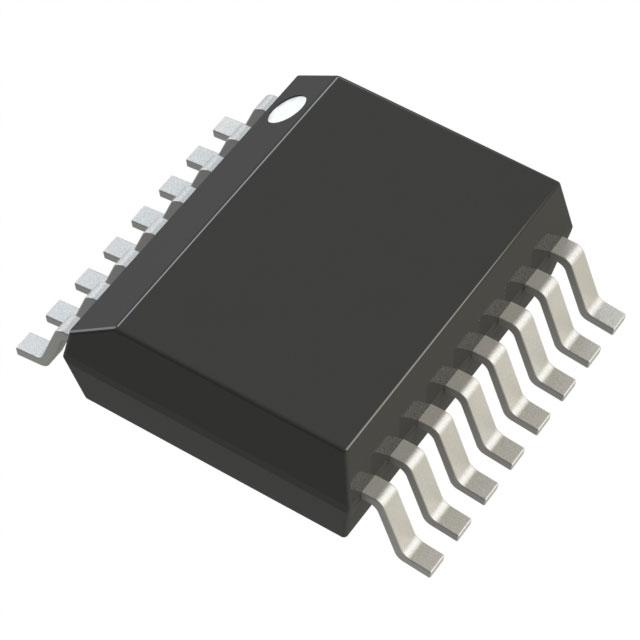
available in a 16-pin QSOP package.
Ordering Information
PART
TEMP RANGE
MAX6660AEE
-40°C to +125°C
PINPACKAGE
PKG
CODE
16 QSOP
E16-5
Typical Operating Circuit
Applications
+3V TO +5.5V
PC
0.1µF
50Ω
Notebooks
Telecom Systems
10kΩ
EACH
+12V
Industrial Control Systems
Servers
5kΩ
VFAN
VCC
STBY
Workstations
1µF
FAN
TACH IN
FAN
SMBCLK
MAX6660
SMBDATA
DATA
DXP
SMBus is a trademark of Intel Corp.
ALERT
2200pF
DXN
Pin Configuration appears at end of data sheet.
CLOCK
PENTIUM
OVERT
INTERUPT
TO µP
TO SYSTEM
SHUTDOWN
AGND
ADD0
ADD1
PGND
________________________________________________________________ Maxim Integrated Products
For pricing, delivery, and ordering information, please contact Maxim/Dallas Direct! at
1-888-629-4642, or visit Maxim’s website at www.maxim-ic.com.
1
MAX6660
General Description
�MAX6660
Remote-Junction Temperature-Controlled
Fan-Speed Regulator with SMBus Interface
ABSOLUTE MAXIMUM RATINGS
(All voltages referenced to GND.)
VCC, ADD0, ADD1, SMBDATA,
SMBCLK, ALERT, OVERT ...................................-0.3V to +6V
VFAN, TACH IN, FAN .............................................-0.3V to +16V
DXP, GAIN..................................................-0.3V to (VCC + 0.3V)
DXN.............................................................................-0.3V to 1V
SMBDATA, ALERT, OVERT Current ...................-1mA to +50mA
DXN Current ......................................................................±1mA
FAN Out Current ..............................................................500mA
ESD Protection (Human Body Model)................................2000V
Continuous Power Dissipation (TA = +70°C)
16-Pin QSOP (derate 8.3mW/°C above +70°C)..........667mW
Operating Temperature Range ........................ -40°C to +125°C
Junction Temperature .....................................................+150°C
Storage Temperature Range .............................-65°C to +150°C
Lead Temperature (soldering, 10s) .................................+300°C
Stresses beyond those listed under “Absolute Maximum Ratings” may cause permanent damage to the device. These are stress ratings only, and functional
operation of the device at these or any other conditions beyond those indicated in the operational sections of the specifications is not implied. Exposure to
absolute maximum rating conditions for extended periods may affect device reliability.
ELECTRICAL CHARACTERISTICS
(VCC = +3V to +5.5V, VVFAN = +12V, TA = -40°C to +125°C, unless otherwise specified. Typical values are at VCC = +3.3V and
TA = +25°C.) (Note 1)
PARAMETER
SYMBOL
CONDITIONS
MIN
TYP
MAX
UNITS
V
ADC AND POWER SUPPLY
VCC Supply Voltage
VCC
3.0
5.5
VFAN Supply Voltage
VVFAN
4.5
13.5
V
250
500
µA
3
10
µA
Operating Supply Current
ICC
Shutdown Supply Current
ISHDN
Fan off
Shutdown
Temperature Resolution
Temperature Error (Note 2)
TE
TA = +85°C,
VCC = +3.3V
Internal Reference Frequency
Accuracy
Conversion Rate Timing Error
-1
+1
TRJ = +25°C to +125°C
-3
+3
TRJ = -40°C to +125°C
-5
+5
+25
-25
-25
VUVLO
Undervoltage Lockout Threshold
Hysteresis
VHYST
Power-On-Reset (POR)
Threshold (VCC)
VCC falling
2.50
2.80
VDXN
+25
%
V
mV
VCC rising
1.4
2.0
High level
80
100
120
Low level
8
10
12
0.7
_______________________________________________________________________________________
%
3.00
2.5
90
IRJ
°C
s
90
POR Threshold Hysteresis
2
Bits
0.25
Undervoltage Lockout Threshold
DXN Source Voltage
°C
11
TRJ = +60°C to +100°C
Temperature Conversion Time
Remote-Junction Source Current
0.125
V
mV
µA
V
�Remote-Junction Temperature-Controlled
Fan-Speed Regulator with SMBus Interface
(VCC = +3V to +5.5V, VVFAN = +12V, TA = -40°C to +125°C, unless otherwise specified. Typical values are at VCC = +3.3V and
TA = +25°C.) (Note 1)
PARAMETER
SYMBOL
CONDITIONS
MIN
TYP
MAX
UNITS
Tach Input Transition Level
VVFAN = 12V
10.5
V
Tach Input Hysteresis
VFAN = 12V
190
mV
Current-Sense Tach Threshold
20
mA
Current-Sense Tach Hysteresis
0.3
Fan Output Current
mA
250
Fan Output Current Limit (Note 3)
Fan Output On-Resistance
mA
320
RONF
250mA load
410
mA
Ω
4
SMBus INTERFACE: SMBDATA, ALERT, STBY, OVERT
Logic Input Low Voltage
Logic Input High Voltage
Input Leakage Current
VIL
VIH
I_leak
Output Low Sink Current
IOL
Input Capacitance
Cin
Output High Leakage Current
VCC = +3.0V to +5.5V
0.8
VCC = +3.0V
2.2
VCC = +5.5V
2.6
VIN = GND or VCC
-2
VOL = 0.4V
6
fSCL
Bus Free Time Between Stop
and Start Conditions
tBUF
V
+2
(Note 4)
Start Condition Setup Time
0
µA
mA
5
VOH = 5.5V
Serial Clock Frequency
V
pF
1
µA
100
kHz
4.7
µs
4.7
µs
Repeat Start Condition Setup
Time
tSU:STA
90% to 90%
50
µs
Start Condition Hold Time
tHD:STA
10% of SMBDATA to 90% of SMBCLK
4
µs
Stop Condition Setup Time
tSU:STO
90% of SMBCLK to 10% of SMBDATA
4
µs
Clock Low Time
tLOW
10% to 10%
4.7
µs
Clock High Time
tHIGH
90% to 90%
4
µs
250
ns
0
µs
Data Setup Time
tSU:DAT
90% of SMBDATA to 10% of SMBCLK
Data Hold Time
tHD:DAT
(Note 5)
Receive SMBCLK/SMBDATA
Rise Time
tR
1
µs
Receive SMBCLK/SMBDATA
Fall Time
tF
300
ns
40
ms
SMBus Timeout
tTIMEOUT
SMBDATA and SMBCLK time low for reset
of serial interface
25
Junction Temperature = TA. This implies zero dissipation in pass transistor (no load, or fan turned off).
TRJ, Remote Temperature accuracy is guaranteed by design, not production tested.
Guaranteed by design. Not production tested.
The MAX6660 includes an SMBus timeout, which resets the interface whenever SMBCLK or SMBDATA has been low for
greater than 25ms. This feature can be disabled by setting bit 2 of the Fan Gain register at 16h/1Bh to a 1. When the timeout
is disabled, the minimum clock frequency is DC.
Note 5: Note that a transition must internally provide at least a hold time in order to bridge the undefined region (300ns max) of
SMBCLK’s falling edge.
Note 1:
Note 2:
Note 3:
Note 4:
_______________________________________________________________________________________
3
MAX6660
ELECTRICAL CHARACTERISTICS (continued)
�Typical Operating Characteristics
(VCC = +3.3V, TA = +25°C, unless otherwise noted.)
TEMPERATURE ERROR
vs. REMOTE-DIODE TEMPERATURE
PATH = DXP TO GND
5
0
-5
-10
PATH = DXP TO VCC (+5V)
-15
3
2
1
0
-1
-2
10
5
-5
-10
-15
-20
-25
-4
-25
-30
-5
100
0
50
100
100 1k
2.5
VIN = 100mVp-p
2.0
1.5
1.0
0.5
VIN = 50mVp-p
0
0
-0.5
-1.0
MAX6660 toc05
1
MAX6660 toc04
VIN = SQUARE WAVE
AC-COUPLED TO DXN
10k 100k 1M 10M 100M
FREQUENCY (Hz)
TEMPERATURE ERROR
vs. DXP-DXN CAPACITANCE
TEMPERATURE ERROR (°C)
TEMPERATURE ERROR (°C)
10
TEMPERATURE (°C)
4.0
-1
-2
-3
-4
-5
-6
-7
VIN = 25mVp-p
-8
-1.5
1
10
100
1k
10k 100k 1M 10M 100M
0 10 20 30 40 50 60 70 80 90 100
FREQUENCY (Hz)
DXP-DXN CAPACITANCE (nF)
STANDBY SUPPLY CURRENT
vs. SUPPLY VOLTAGE
AVERAGE SUPPLY CURRENT
vs. SUPPLY VOLTAGE
3
2
1
0
MAX6660 toc07
4
400
AVERAGE SUPPLY CURRENT (µA)
MAX6660 toc06
5
STANDBY SUPPLY CURRENT (µA)
1
150
TEMPERATURE ERROR
vs. COMMON-MODE NOISE FREQUENCY
3.0
VIN = 100mVp-p
-30
-50
LEAKAGE RESISTANCE (MΩ)
3.5
VIN = 250mVp-p
0
-3
10
VIN = SQUARE WAVE APPLIED TO VCC
WITH NO 0.1µF VCC CAPACITOR
15
-20
1
300
200
100
3.0
3.5
4.0
4.5
SUPPLY VOLTAGE (V)
4
20
TEMPERATURE ERROR (°C)
10
4
TEMPERATURE ERROR (°C)
15
MAX6660 toc02
5
MAX6660 toc01
20
TEMPERATURE ERROR
vs. POWER-SUPPLY NOISE FREQUENCY
MAX6660 toc03
TEMPERATURE ERROR
vs. PC BOARD RESISTANCE
TEMPERATURE ERROR (°C)
MAX6660
Remote-Junction Temperature-Controlled
Fan-Speed Regulator with SMBus Interface
5.0
5.5
3.0
3.3
3.6
3.9
4.2
4.5
4.8
5.1
5.4
SUPPLY VOLTAGE (V)
_______________________________________________________________________________________
�Remote-Junction Temperature-Controlled
Fan-Speed Regulator with SMBus Interface
PIN
NAME
1
VFAN
FUNCTION
Fan Drive Power-Supply Input. 4.5V to 13.5V.
2
VCC
Supply Voltage Input. +3V to +5.5V. Bypass VCC to ground with a 0.1µF capacitor.
3
DXP
Input: Remote-Junction Anode. Place a 2200pF capacitor between DXP and DXN for noise filtering.
4
DXN
Input: Remote-Junction Cathode. DXN is internally biased to a diode voltage above ground.
5
FAN
Open-Drain Output to Fan Low Side. Connect a minimum 1µF capacitor between FAN and VFAN.
6
ADD1
SMBus Address Select Pin. ADD0 and ADD1 are sampled upon power-up.
7
PGND
Power Ground
8
AGND
Analog Ground
9
OVERT
Overtemperature Shutdown Output. Active-low output (programmable for active high if desired). Open drain.
10
ADD0
SMBus Slave Address Select Pin. ADD0 and ADD1 are sampled upon power-up.
11
ALERT
SMBus Alert (Interrupt) Output. Open-drain, active-low output.
12
SMBDATA
13
GAIN
14
SMBCLK
15
STBY
16
TACH IN
SMBus Serial Data Input/Output. Open drain.
Gain Control. Connect an external resistor from GAIN to VCC to reduce the gain of the current-sense mode.
SMBus Clock Line from Controller. This line tolerates inputs up to VCC even if MAX6660 is not powered.
Hardware Standby Input. Drive STBY low to reduce supply current. Temperature and comparison
data are retained in standby mode.
Fan Tachometer Input. Tolerates voltages up to VFAN.
Detailed Description
The MAX6660 is a remote temperature sensor and fan
controller with an SMBus interface. The MAX6660 converts the temperature of a remote-junction temperature
sensor to a 10-bit + sign digital word. The remote temperature sensor can be a diode-connected transistor,
such as a 2N3906, or the type normally found on the
substrate of many processors’ ICs. The temperature
information is provided to the fan-speed regulator and
is read over the SMBus interface. The temperature
data, through the SMBus, can be read as a 10-bit +
sign two’s complement word with a 0.125°C resolution
(LSB) and is updated every 0.25s.
The MAX6660 incorporates a closed-loop fan controller
that regulates fan speed with tachometer feedback. The
temperature information is compared to a threshold and
range setting, which enables the MAX6660 to automatically set fan speed proportional to temperature. Full control of these modes is available, including being able to
open either the thermal control loop or the fan control
loop. Figure 1 shows a simplified block diagram.
ADC
The ADC is an averaging type that integrates over a
60ms period with excellent noise rejection. A bias cur-
rent is steered through the remote diode, where the forward voltage is measured, and the temperature is computed. The DXN pin is the cathode of the remote diode
and is biased at 0.65V above ground by an internal
diode to set up the ADC inputs for a differential measurement. The worst-case DXP-DXN differential input
voltage range is 0.25V to 0.95V. Excess resistance in
series with the remote diode causes about +1/2°C error
per ohm. Likewise, 200mV of offset voltage forced on
DXP-DXN causes approximately 1°C error.
A/D Conversion Sequence
A conversion sequence is initiated every 250ms in the
free-running autoconvert mode (bit 6 = 0 in the
Configuration register) or immediately by writing a OneShot command. The result of the new measurement is
available after the end of conversion. The results of the
previous conversion sequence are still available when
the ADC is converting.
Remote-Diode Selection
Temperature accuracy depends on having a goodquality, diode-connected small-signal transistor.
Accuracy has been experimentally verified for all
devices listed in Table 1. The MAX6660 can also direct-
_______________________________________________________________________________________
5
MAX6660
Pin Description
�MAX6660
Remote-Junction Temperature-Controlled
Fan-Speed Regulator with SMBus Interface
VFAN
TACH IN
FAN-SPEED
REGULATOR
FAN
FAN
N
REGISTERS
TMAX
DXP
MUX
ADC
THYST
COMPARAT0R
OVERT
DXN
REMOTE DATA
TEMPERATURE
CENTRAL
LOGIC
ALERT
THIGH
SMBCLK
SMBDATA
ADD0
ADD1
SMBus
INTERFACE
ADDRESS
DECODER
TLOW
CONFIGURATION
FAN COUNT DIVISOR
(FC)
TFAN (FT)
THERMAL OPEN/
CLOSED LOOP
FAN
CONTROL
CIRCUIT
FAN OPEN/
CLOSED LOOP
FAN GAIN (FG)
FAN SPEED LIMIT
(FS)
FAN LIMIT (FL)
MODE (M)
FAN CONVERSION
RATE (FCR)
FAN-SPEED CONTROL
(FSC)
STATUS
Figure 1. MAX6660 Block Diagram
6
________________________________________________________________________________________
�Remote-Junction Temperature-Controlled
Fan-Speed Regulator with SMBus Interface
The transistor must be a small-signal type with a relatively high forward voltage. Otherwise, the A/D input
range could be violated. The forward voltage must be
greater than 0.25V at 10µA. Check to ensure this is true
at the highest expected temperature. The forward voltage must be less than 0.95V at 100µA. Check to ensure
that this is true at the lowest expected temperature.
Large power transistors, power diodes, or small-signal
diodes must not be used. Also, ensure that the base
resistance is less than 100Ω. Tight specifications for
forward current gain (50 < β +150°C) and is in thermal shutdown. The fan driver remains
disabled until temperature falls below +140°C.
6
ALERT
0
When high, indicates ALERT has been activated (pulled low), regardless of
cause (internal or external).
5
Fan Driver Full
Scale
0
When high, indicates the fan driver is at full scale. Only valid in fan
closed-loop mode (Register FG B170 = 0). Set to high in fan open-loop mode
(Register FG B170 = 1).
4
Remote High
0
When high, the remote-junction temperature exceeds the temperature in the
Remote High register.
3
Remote Low
0
When high, the remote-junction temperature is lower than the temperature in the
Remote Low register.
2
Diode Open
0
When high, the remote-junction diode is open.
1
OVERT
0
When high, indicates that OVERT has been activated, regardless of cause
(internal or external).
0
Fan Failure
0
When high, indicates the count in the Fan Tachometer Count register is higher
than the limit set in the Fan Tachometer Count Limit register.
DESCRIPTION
______________________________________________________________________________________
13
�MAX6660
Remote-Junction Temperature-Controlled
Fan-Speed Regulator with SMBus Interface
Table 7. POR Slave Address Decoding
(ADD0 and ADD1)
Power-up defaults include:
• Interrupt latch is cleared.
• ADC begins autoconverting.
ADD0
GND
ADD1
GND
ADDRESS
0011 000
•
GND
High-impedance
0011 001
•
GND
VCC
0011 010
•
Command register is set to 00h to facilitate quick
internal Receive Byte queries.
THIGH and TLOW registers are set to +127°C and
-55°C, respectively.
T HYST and T MAX are set to +95°C and +100°C,
respectively.
High-impedance
GND
0101 001
High-impedance
High-impedance
0101 010
High-impedance
VCC
0101 011
Fan Control
VCC
GND
1001 100
VCC
High-impedance
1001 101
VCC
VCC
1001 110
The fan-control function can be divided into the thermal
loop, the fan-speed-regulation loop (fan loop), and the
fan-failure sensor. The thermal loop sets the desired fan
speed based on temperature while the fan-speed-regulation loop uses an internally divided down reference
oscillator to synchronize to and regulate the fan speed.
The fan-speed-regulation loop includes the fan driver
and the tachometer sensor. The fan-failure sensor provides a FAN FAIL alarm that signals when the fan
tachometer count is greater than the fan tachometer
value, which corresponds to a fan going slower than
the limit. The fan driver is an N-channel, 4Ω, 320mA
MOSFET with a 16V maximum VDS whose drain terminal connects to the low side of the fan. The tachometer
sensor (TACH IN) of the MAX6660 is driven from the
tachometer output of the fan and provides the feedback signal to the fan-speed-regulation loop for controlling the fan speed. For fans without tachometer outputs,
the MAX6660 can generate its own tachometer pulses
by monitoring the commutating current pulses (see
Commutating Current Pulses section).
TEMPDATA
FCR
0.25s TO 16s
UPDATE
TFAN
FSC
FG
4/5/6 BITS
FAN CONTROL
DRIVER CIRCUIT
Figure 6. MAX6660 Thermal Loop
14
Thermal Loop
Thermal Closed Loop
The MAX6660 can be operated in a complete closedloop mode, with both the thermal and fan loops closed,
where the remote-diode sensor temperature directly
controls fan speed. Setting bit 3 of the Configuration
register to zero places the MAX6660 in thermal closed
loop (Figure 6). The remote-diode temperature sensor
is updated every 250ms. The value is stored in a temporary register (TEMPDATA) and compared to the programmed temperature values in the T HIGH , T LOW ,
THYST, TMAX, and TFAN registers to produce the error
outputs OVERT and ALERT.
The Fan Conversion Rate (FCR) register (Table 8) can
be programmed to update the TEMPDATA every 0.25s
______________________________________________________________________________________
�Remote-Junction Temperature-Controlled
Fan-Speed Regulator with SMBus Interface
Table 8. Fan Conversion Update Rate
DATA
BINARY
FAN
UPDATE
RATE (Hz)
SECONDS
BETWEEN
UPDATES
00h
01h
02h
03h
04h
05h
00000000
00000001
00000010
00000011
00000100
00000101
0.0625
0.125
0.25
0.5
1
2
16
8
4 (POR)
2
1
0.5
06h
00000110
4
0.25
from fan off to full fan speed. If bits 6 and 5 are set to
01, the thermal control loop has a control range of 16°C
with 32 temperature steps from fan off to full fan speed.
If bits 6 and 5 are set to 00, the thermal control loop
has a control range of 8°C with 16 temperature steps
from fan off to full fan speed.
Thermal Open Loop
Setting bit 3 of the Configuration register (Table 5) to 1
places the MAX6660 in thermal open loop. In thermal
open-loop mode, the FSC register is read/write and contains the 7-bit result of UPDATE subtracted from TFAN.
In fan open loop, the FSC register programs fan voltage
with acceptable values from 0 to 64 (40h). For example,
in fan open-loop mode, 0 corresponds to zero output
and 40h corresponds to full fan voltage, for example
(11.3V, typ). Proportional control is available over the 0
to 63 (3Fh) range with 64 (40h) forcing unconditional
full speed. In fan closed-loop mode, 0 corresponds to
zero fan speed and 10h corresponds to 100% fan
speed, when the FG register is set to 4 bits, 20h at 5
bits, and 3Fh at 6 bits.
Fan Loop
The fan controller (Figure 7) is based on an up/down
counter where there is a reference clock representing
the desired fan speed counting up, while tachometer
pulses count down. The reference clock frequency is
divided down from the MAX6660 internal clock to a frequency of 8415Hz. This clock frequency is further
divided by the Fan Full-Scale (FS) register (Table 11),
which is limited to values between 127 to 255, for a
Table 9. Fan-Speed Control Register (RFSC/W FSC)
REGISTER/
ADDRESS
COMMAND
FSC (15h = READ, 1Ah = WRITE)
READ/WRITE FAN DAC REGISTER
Bit
7
N/A
6
Overflow Bit
5
(MSB)
4
Data
3
Data
2
Data
1
Data
0
Data
POR State
0
0
0
0
0
0
0
0
Note: In thermal closed-loop mode, the fan DAC is read only and contains the difference between the measured temperature and
the fan threshold temperature. The LSB is 0.5°C and bit 5 is 16°C. If the difference is higher than 32°C, then bit 6 is set to 1,
together with bits 5–0. Bit 6 can be regarded as an overflow bit for differences higher than 32°C. Bit 7 is always zero. The FSC
register can be programmed directly in thermal open mode. In fan closed-loop mode, FSC programs fan speed with acceptable values from 0 to 10h, when FG is set to 4 bits or 20h when FG is set to 5 bits, or 3F when FG is set to 6 bits. In fan openloop mode, FSC programs fan voltage with acceptable values from 0 to 64 (40h). For example, in fan closed-loop mode, zero
corresponds to zero fan speed and 10h corresponds to 100% fan speed. In fan open-loop mode, zero corresponds to zero
volts out and 40h corresponds to full fan voltage (11.3V typ).
______________________________________________________________________________________
15
MAX6660
to 16s and stores the data in an update register
(UPDATE). This enables control over timing of the thermal feedback loop to optimize stability.
The Fan Threshold (TFAN) register value is subtracted
from the UPDATE register value. If UPDATE exceeds
TFAN temperature, then the Fan-Speed Control (FSC)
register (Table 9) stores the excess temperature in the
form of a 7-bit word with an LSB of 0.5°C for bits 4–0,
with bit 5 = 16°C. If the difference between the TFAN
and UPDATE registers is higher than 32°C, then bit 6 is
set to 1, along with bits 5–1. In thermal closed loop, the
Fan Speed Control register is READ ONLY.
The Fan Gain (FG) register (Table 10) determines the
number of bits used in the Fan-Speed Control register.
This gain can be set to 4, 5, or 6. If bits 6 and 5 are set
to 10, all 6 bits of TEMPDATA are used directly to program the speed of the fan so that the thermal loop has
a control range of +32°C with 64 temperature steps
�MAX6660
Remote-Junction Temperature-Controlled
Fan-Speed Regulator with SMBus Interface
should be set such that the full-speed fan frequency
divided by the prescalar fall in the 33Hz to 66Hz range.
The (UP/DN) counter has six stages that form the input
of a 6-bit resistive ladder DAC whose voltage is divided
down from VVFAN. This DAC determines the voltage
applied to the fan. Internal coding is structured such
that when in fan closed-loop mode (which includes
thermal closed loop) that higher values in the 0 to 32
range correspond to higher fan speeds and greater
voltage across the fan. In fan open-loop mode (which
forces thermal open loop) acceptable values range
from 0 to 63 (3Fh) for proportional control; a value of 64
(40h) commands unconditional full speed.
range of reference clock full-scale frequencies from
33Hz to 66Hz. A further division is performed to set the
actual desired fan speed. This value appears in the FanSpeed Control register in thermal closed-loop mode. If
the thermal loop is open, but the fan-speed control loop
is closed, this value is programmable in the fan DAC.
When in fan open-loop mode (which forces the thermal
loop to open), the FSC register becomes a true DAC,
programming the voltage across the fan from zero to
nearly 12V to VVFAN.
The tachometer input (TACH IN) includes a programmable (1/2/4/8) prescalar. The divider ratio for the
(1/2/4/8) prescalar is stored in the Fan Count Divisor
(FCD) register (Table 12). In general, the values in FC
Table 10. Fan Gain Register (RFG/WFG)
REGISTER/
ADDRESS
COMMAND
FG (16h = READ, 1Bh = WRITE)
READ/WRITE FAN GAIN REGISTER
Bit
7
Reserved
6
Fan Gain
5
Fan Gain
4
3
2
SMBus
Timeout
POR State
1
0
0
x
x
x
1
Fan
Feedback
Mode
0
0
Fan
Driver
Mode
0
Notes:
Bit 7:
Reserved. Always 1. If bit 7 is written to zero, then bits 7, 6, and 5 are set to 100.
Bits 6, 5: Fan gain of the fan loop, where 00 = 8°C with resolution = 4 bits. This means that the fan reaches its full-scale (maximum)
speed when there is an 8°C difference between the remote-diode temperature and the value stored in TFAN, 01 = 16°C,
with a 5-bit resolution and 10 = 32°C with a 6-bit resolution.
Bits 4, 3: Reserved.
Bit 2:
SMBus Timeout. When 1, the SMBus timeout is disabled. This permits full I2C compatibility with minimum clock frequency
to DC.
Bit 1:
Fan feedback mode. When bit 1 is set to 1, the fan loop uses driver current sense rather than tachometer feedback.
Bit 0:
Fan Driver Mode. When bit 0 is set to 1, the fan driver is in fan open-loop mode. In this mode, the fan DAC programs the
fan voltage rather than the fan speed. Tachometer feedback is ignored, and the user must consider minimum fan drive and
startup issues. Thermal open loop is automatically set to 1 (see Configuration register). Fan Fail (bit 0 of the Status register)
is set to 1 in this mode and should be ignored.
Table 11. Fan Full-Scale Register (RFS/WFS)
REGISTER/
ADDRESS
COMMAND
FS (1Fh = READ, 20h = WRITE)
READ/WRITE MAXIMUM TEMPERATURE LIMIT BYTE
Bit
7
(MSB)
6
Data Bit
5
Data Bit
4
Data Bit
3
Data Bit
2
Data Bit
1
Data Bit
0
Data Bit
POR State
1
1
1
1
1
1
1
1
Note: This register determines the maximum reference frequency at the input of the phase detector. It controls a programmable
divider that can be set anywhere between 127 and 255. The value in this register must be set in accordance with the procedure described in the TACH IN section (equivalent to 8415/(Fan Frequency/Fan Count Divisor)). Programmed value below 127
defaults to 127. POR value is 255.
16
______________________________________________________________________________________
�Remote-Junction Temperature-Controlled
Fan-Speed Regulator with SMBus Interface
REGISTER/
ADDRESS
COMMAND
FCD (1Dh = READ, 1Eh = WRITE)
READ LIMIT/FAILURE REGISTER
Bit
7
6
5
4
3
2
1
0
POR State
0
0
0
0
0
0
0
1
Notes: This byte sets the prescalar division ratio for tachometer or current-sense feedback. (This register does not apply to the tach
signal used in the Fan-Speed register). Select this value such that the fan frequency (RPM/60 x number of poles) divided by
the FCD falls in the 33Hz to 66Hz range. See TACH IN section.
Bits 1, 0: 00 = divide by 1, 01 = divide by 2, 10 = divide by 4, 11 = divide by 8.
TEMPDATA
REF FREQUENCY
8415Hz
TACH IN
FS
127/255
FG
4/5/6
FTC
FTCL
1/64
COUNTER
COMPARATOR
FCD
1/2/4/8
FAN OPEN/CLOSED
LOOP
FAN FAIL
UP/DOWN
VFAN
FAN
DAC
DRIVER
N
Figure 7. MAX6660 Fan Loop Functional Diagram
______________________________________________________________________________________
17
MAX6660
Table 12. Fan Count Divisor Register (RFCD/WFCD)
�MAX6660
Remote-Junction Temperature-Controlled
Fan-Speed Regulator with SMBus Interface
Fan Conversion Rate Byte
TACH IN
The FCR register (Table 8) programs the fan’s update
time interval in free-running autonomous mode (RUN/
STOP = 0). The conversion rate byte’s POR state is 02h
(0.25Hz). The MAX6660 uses only the 3LSBs of this
register. The 4MSBs are “don’t cares.” The update rate
tolerance is ±25% (max) at any rate setting.
The TACH IN input connects directly to the tachometer
output of a fan. Most commercially available fans have
two tachometer pulses per revolution. The tachometer
input is fully compatible with tachometer signals, which
are pulled up to VVFAN.
Fan Closed Loop
When a fan does not come equipped with a tachometer
output, the MAX6660 uses commutating generated current pulses for speed detection. This mode is entered
by setting the FG register’s bit 1 to 1. An internal current pulse is generated whenever a step increase
occurs in the fan current. Connecting an external resistor between the GAIN pin and VCC can reduce the sensitivity of current pulses to changes in fan current. In
general, the lower the resistor value, then the lower the
sensitivity, and the fan is easier to turn ON and can use
a smaller external capacitor across its terminals. A suitable resistor range is 1kΩ to 5kΩ.
In the thermal open loop but fan closed-loop mode, the
feedback loop can be broken and the temperature data
read directly. After performing external manipulations,
the result can be injected back into the fan control loop
by writing to the FSC register to control fan speed. Fan
closed-loop mode is selected by setting bit 0 of the FG
to zero.
Fan Open Loop
In fan control open-loop mode, selected by setting bit 0
of the FG register to 1, the gain block is bypassed and
the FSC register is used to program the fan voltage
rather than the fan speed. In the fan open-loop mode,
both the temperature feedback loop and fan-speed
control loop are broken, which results in the TACH IN
input becoming disabled. A direct voltage can be
applied after reading the temperature, using the FSC
register, to the fan that provides more flexibility in external control algorithms. By selecting fan open-loop
mode, the MAX6660 automatically invokes thermal
open-loop mode.
Fan Driver
The fan driver consists of an amplifier and low-side
NMOS device whose drain is connected to FAN and is
the input from the low side of the fan. The FET has a
typical 4Ω on-resistance with a typical 320mA maximum current limit. The driver has a thermal shutdown
sensor that senses the driver’s temperature. It shuts
down the driver if the temperature exceeds +150°C.
The driver is reactivated once the temperature has
dropped below +140°C.
Commutating Current Pulses
Fan-Failure Detection
The MAX6660 detects fan failure by comparing the
value in the Fan Tachometer Count (FTC) register, a
READ ONLY register, with a limit stored in the Fan
Tachometer Count Limit (FTCL) register (Table 13). A
counter counts the number of on-chip oscillator pulses
between successive tachometer pulses and loads the
FTC register every time a tachometer pulse arrives. If
the value in FTC is greater than the value in FTCL, a
failure is indicated. In fan closed loop, a flag is activated when the fan is at full speed.
Set the Fan Tachometer Limit Byte to:
fL = 8415/[N ✕ f]
where N = fan fail ratio and f = frequency of fan
tachometer.
The factor N is less than 1 and produces a fan failure
indication when the fan should be running at full speed
but is only reaching a factor N of its expected frequency. The factor N is typically set to 0.75 for all fan
Table 13. Fan Tachometer Count Limit (RFTCL/WFTCL)
REGISTER/
ADDRESS
FL (18h = READ, 1Ch = WRITE)
COMMAND
READ LIMIT/FAILURE REGISTER
BIT
7
(MSB)
6
5
4
3
2
1
0
POR STATE
1
1
1
1
1
1
1
1
Note: The Fan Limit register is programmed with the maximum speed that is compared against the value in the FS register (Address
17) to produce an error output to the Status register.
18
______________________________________________________________________________________
�Remote-Junction Temperature-Controlled
Fan-Speed Regulator with SMBus Interface
Applications Information
Mode Register
Resistance in series with the remote-sensing junction
causes conversion errors on the order of 0.5°C per ohm.
The MAX6660 Mode register gives the ability to eliminate the effects of external series resistance of up to
several hundred ohms on the remote temperature measurement and to adjust the temperature measuring
ADC to suit different types of remote-diode sensor. For
systems using external switches or long cables to connect to the remote sensor, a parasitic resistance cancellation mode can be entered by setting Mode register
bit 7 = 1. This mode requires a longer conversion time
and so can only be used for fan conversion rates of
1Hz or slower. Bits 6, 1, and 0 are Reserved. Use bits
5–2 to adjust the ADC gain to achieve accurate temperature measurements with diodes not included in the
recommended list or to individually calibrate the
MAX6660 for use in specific control systems. These
bits adjust gain to set the temperature reading at
+25°C, using two’s complement format reading. Bit 5 is
the sign (1 = increase, 0 = decrease), bit 4 = 2°C shift,
bit 3 = 1°C shift, bit 2 = 1/2°C shift.
General Programming Techniques
The full-scale range of the fan regulation loop is
designed to accommodate fans operating between the
1000rpm to 8000rpm range of different fans. An onchip 8415Hz oscillator is used to generate the 33Hz to
66Hz reference frequency. Choose the prescalar such
that the fan full-speed frequency divided by the
prescalar falls in the 33Hz to 66Hz range. The full-scale
reference frequency is further divided by the value in
the FSC register to the desired fan frequency [read:
speed].
2) Set the programmable FCD to a value P so that the
above frequency falls in the 33Hz to 66Hz range.
3) Determine the value required for the Fan FS register:
FS =
8415
f
P
Example: Fan A has a 2500rpm rating:
2500rpm / 60s gives an output of 41.7Hz
41.7Hz x 2 pulses = 83.4Hz
The 83.4Hz value is out of the 33Hz to 66Hz decrement/increment range.
4) Set bits in the FC register to divide the signal down
within the 33Hz to 66Hz range. Bits 1, 0 = 10
(divide by 2: P = 2):
83.4 / 2 = 41.7Hz
5) Set the FS register to yield approximately 42Hz:
42 = 8415 / FS (value)
FS (value) = 200
FS register = 11001000
6) In current-sense feedback, a current pulse is generated whenever there is a step increase in fan current. The frequency of pulses is then not only
determined by the fan rpms and the number of
poles, but also by the update rate at which the fan
driver forces an increase in voltage across the fan.
The maximum current pulse frequency is then given
by:
fC = f ✕ P / (P-1)
Where f = {RPM/60} ✕ poles and P is the value in FCD.
The value required for the fan FS register is:
FS = 8415 / {f / (P-1)}
The fan speed limit in FCTL should be set to:
1) Determine the fan’s maximum tachometer frequency:
fL = 8415 / (N ✕ fC)
RPM
f =
x poles
60
A value of P = 1 cannot be used in current-sense mode.
Where poles = number of tachometer poles (pulses
per revolution). Most fans are two poles; therefore,
two pulses per revolution.
Fan Selection
For closed-loop operation and fan monitoring, the
MAX6660 requires fans with tachometer outputs. A
tachometer output is typically specified as an option on
many fan models from a variety of manufacturers. Verify
______________________________________________________________________________________
19
MAX6660
speeds except at very low speeds where a fan failure is
indicated by an overflow of the fan speed counter
rather than fL. The overflow flag cannot be viewed separately in the Status Byte but is ORed with bit 0, the fan
fail bit.
�MAX6660
Remote-Junction Temperature-Controlled
Fan-Speed Regulator with SMBus Interface
Low-Speed Operation
Table 14. Fan Manufacturers
MANUFACTURER
FAN MODEL OPTION
Comair Roton
All DC brushless models can be
ordered with optional tachometer
output.
EBM-Papst
Tachometer output optional on
some models.
NMB
All DC brushless models can be
ordered with optional tachometer
output.
Panasonic
Panaflo and flat unidirectional
miniature fans can be ordered with
tachometer output.
Sunon
Tachometer output optional on
some models.
the nature of the tachometer output (open collector,
totem pole) and the resultant levels and configure the
connection to the MAX6660. For a fan with an open
drain/collector output, a pullup resistor of typically 5kΩ
must be connected between FAN and VFAN. Note how
many pulses per revolution are generated by the
tachometer output (this varies from model to model and
among manufacturers, though two pulses per revolution is the most common). Table 14 lists the representative fan manufacturers and the model they make
available with tachometer outputs.
Brushless DC fans increase reliability by replacing
mechanical commutation with electronic commutation.
By lowering the voltage across the fan to reduce its
speed, the MAX6660 is also lowering the supply voltage for the electronic commutation and tachometer
electronics. If the voltage supplied to the fan is lowered
too far, the internal electronics may no longer function
properly. Some of the following symptoms are possible:
• The fan may stop spinning.
• The tachometer output may stop generating a signal.
• The tachometer output may generate more than two
pulses per revolution.
• The problems that occur and the supply voltages at
which they occur depend on which fan is used. As
a rule of thumb, 12V fans can be expected to experience problems somewhere around 1/4 and 1/2
their rated speed.
Chip Information
TRANSISTOR COUNT: 22,142
PROCESS: BiCMOS
Pin Configuration
TOP VIEW
16 TACH IN
VFAN 1
VCC 2
15 STBY
DXP 3
14 SMBCLK
DXN 4
MAX6660
13 GAIN
12 SMBDATA
FAN 5
ADD1 6
11 ALERT
PGND 7
10 ADDO
AGND 8
9
OVERT
QSOP
20
______________________________________________________________________________________
�Remote-Junction Temperature-Controlled
Fan-Speed Regulator with SMBus Interface
QSOP.EPS
PACKAGE OUTLINE, QSOP .150", .025" LEAD PITCH
21-0055
F
1
1
Maxim cannot assume responsibility for use of any circuitry other than circuitry entirely embodied in a Maxim product. No circuit patent licenses are
implied. Maxim reserves the right to change the circuitry and specifications without notice at any time.
Maxim Integrated Products, 120 San Gabriel Drive, Sunnyvale, CA 94086 408-737-7600 ____________________ 21
© 2006 Maxim Integrated Products
Printed USA
is a registered trademark of Maxim Integrated Products, Inc.
MAX6660
Package Information
(The package drawing(s) in this data sheet may not reflect the most current specifications. For the latest package outline information,
go to www.maxim-ic.com/packages.)
�