Design
Resources
Tools
and Models
Support
Click here to ask an associate for production status of specific part numbers.
MAX7418–MAX7425
5th-Order, Lowpass,
Switched-Capacitor Filters
General Description
The MAX7418–MAX7425 5th-order, low-pass, switchedcapacitor filters (SCFs) operate from a single +5V
(MAX7418–MAX7421) or +3V (MAX7422–MAX7425)
supply. These devices draw only 3mA of supply current
and allow corner frequencies from 1Hz to 45kHz, making
them ideal for low-power post-DAC filtering and antialiasing applications. They feature a shutdown mode that
reduces supply current to 0.2μA.
Two clocking options are available: self-clocking (through
the use of an external capacitor), or external clocking
for tighter corner-frequency control. An offset adjust pin
allows for adjustment of the DC output level.
The MAX7418/MAX7422 deliver 53dB of stopband
rejection and a sharp rolloff with a 1.6 transition ratio.
The MAX7421/MAX7425 achieve a sharper rolloff with a
1.25 transition ratio while still providing 37dB of stopband
rejection. The MAX7419/MAX7423 Bessel filters provide low overshoot and fast settling, and the MAX7420/
MAX7424 Butterworth filters provide a maximally flat
passband response. Their fixed response simplifies the
design task of selecting a clock frequency.
Applications
● ADC Anti-Aliasing
● DAC Postfiltering
● CT2 Base Stations
● Speech Processing
Selector Guide
PART
FILTER RESPONSE
OPERATING
VOLTAGE (V)
MAX7418
r = 1.6
+5
MAX7419
Bessel
+5
MAX7420
Butterworth
+5
MAX7421
r = 1.25
+5
Features
● 5th-Order, Lowpass Filters
• Elliptic Response
(MAX7418/MAX7421/MAX7422/MAX7425)
• Bessel Response (MAX7419/MAX7423)
• Butterworth Response (MAX7420/MAX7424)
● Clock-Turnable Corner Frequency (1Hz to 45kHz)
● Single-Supply Operation
• +5V (MAX7418–MAX7421)
• +3V (MAX7422–MAX7425)
● Low Power
• 3mA (Operating Mode)
• 0.2μA (Shutdown Mode)
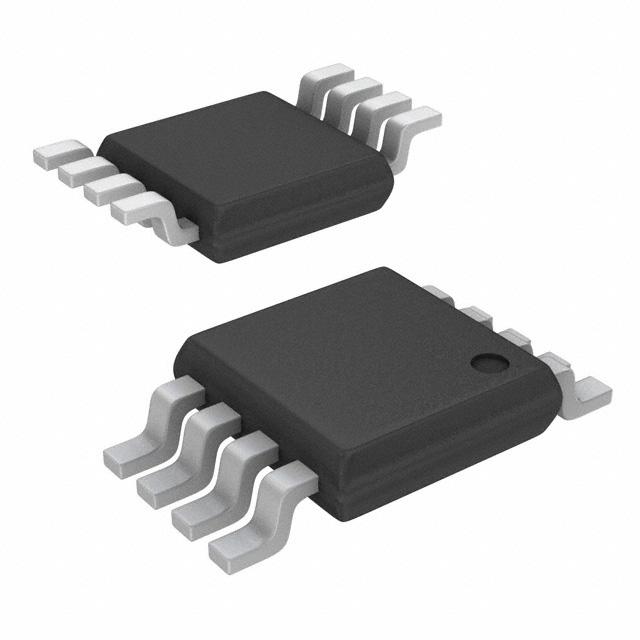
● Available in 8-Pin μMAX Package
● Low Output Offset: ±4mV
Ordering Information
PART
TEMP RANGE
MAX7418CUA
0°C to +70°C
8 μMAX
MAX7418EUA
-40°C to +85°C
8 μMAX
MAX7419CUA
0°C to +70°C
8 μMAX
MAX7419EUA
-40°C to +85°C
8 μMAX
MAX7420CUA
0°C to +70°C
8 μMAX
MAX7420EUA
-40°C to +85°C
8 μMAX
MAX7421CUA
0°C to +70°C
8 μMAX
MAX7421EUA
-40°C to +85°C
8 μMAX
Ordering Information continued at end of data sheet.
Typical Operating Circuit
VSUPPLY
Selector Guide continued at end of data sheet.
0.1µF
Pin Configuration
VDD
TOP VIEW
INPUT
COM 1
IN 2
GND
3
MAX7418–
MAX7425
VDD 4
8
CLK
7
SHDN
6
OS
5
OUT
PIN-PACKAGE
CLOCK
IN
MAX7418–
MAX7425
SHDN
OUT
OUTPUT
COM
CLK
GND
OS
0.1µF
µMAX
19-1821; Rev 2; 8/22
© 2022 Analog Devices, Inc. All rights reserved. Trademarks and registered trademarks are the property of their respective owners.
One Analog Way, Wilmington, MA 01887 U.S.A.
|
Tel: 781.329.4700
|
© 2022 Analog Devices, Inc. All rights reserved.
�MAX7418–MAX7425
5th-Order, Lowpass,
Switched-Capacitor Filters
Absolute Maximum Ratings
VDD to GND.............................................................-0.3V to +6V
IN, OUT, COM, OS, CLK, SHDN.............. -0.3V to (VDD + 0.3V)
OUT Short-Circuit Duration...................................................... 1s
Continuous Power Dissipation (TA = +70°C)
8-Pin μMAX (derate 4.1mW/°C above +70°C).............330mW
Operating Temperature Ranges
MAX74 _ _C_A....................................................0°C to +70°C
MAX74 _ _E_A................................................ -40°C to +85°C
Junction Temperature.......................................................+150°C
Storage Temperature Range............................. -65°C to +160°C
Lead Temperature (soldering, 10s).................................. +300°C
Stresses beyond those listed under “Absolute Maximum Ratings” may cause permanent damage to the device. These are stress ratings only, and functional operation of the device at these
or any other conditions beyond those indicated in the operational sections of the specifications is not implied. Exposure to absolute maximum rating conditions for extended periods may affect
device reliability.
Electrical Characteristics—MAX7418–MAX7421
(VDD = +5V, filter output measured at OUT, 10kΩ || 50pF load to GND at OUT, OS = COM, 0.1μF capacitor from COM to GND,
SHDN = VDD, fCLK = 2.2MHz, TA = TMIN to TMAX, unless otherwise noted. Typical values are at TA = +25°C.)
PARAMETER
SYMBOL
CONDITIONS
MIN
TYP
MAX
UNITS
FILTER CHARACTERISTICS
Corner Frequency
Clock-to-Corner Ratio
fC
VIN = 4Vp-p (Note 1)
0.001 to 30
fCLK / fC
Clock-to-Corner Tempco
10
Output Voltage Range
Output Offset Voltage
kHz
100:1
0.25
±4
±25
DC Insertion Gain with
Output Offset Removed
VCOM = VDD / 2
(Note 2)
MAX7418/MAX7421
0
0.2
0.4
MAX7419/MAX7420
-0.2
0
+0.2
MAX7418
-76
Total Harmonic Distortion
plus Noise
fIN = 2KHz,
VIN = 4Vp-p,
measurement
bandwidth = 80kHz
MAX7419
-78
MAX7420
-67
MAX7421
-78
Offset Voltage Gain
COM Voltage Range
Input Voltage Range at OS
Input Resistance at COM
VOFFSET
THD+N
AOS
VCOM
VOS
VIN = VCOM = VDD / 2
ppm/°C
VDD - 0.25
OS to OUT
1
2.5
3.0
Output, COM unconnected
2.3
2.5
2.7
100
Resistive Output Load Drive
RL
10
Maximum Capacitive Output
Load Drive
CL
50
Clock Feedthrough
dB
V/V
2.0
Input, OS externally driven
mV
dB
Input, COM externally driven
RCOM
V
V
VCOM ±0.1
V
140
kΩ
5
mVp-p
1
kΩ
500
pF
Input Leakage Current at COM
SHDN = GND, VCOM = 0 to VDD
±0.1
±10
μA
Input Leakage Current at OS
VOS = 0 to VDD
±0.1
±10
μA
CLOCK
Internal Oscillator Frequency
fOSC
COSC = 1000pF
(Note 3)
Clock Output Current
(Internal Oscillator Mode)
ICLK
VCLK = 0 or 5V
Clock Input High
VIH
Clock Input Low
VIL
www.analog.com
MAX7418/MAX7421
68
87
106
MAX7419/MAX7420
86
110
135
MAX7418/MAX7421
±40
±60
MAX7419/MAX7420
±50
±75
4.5
kHz
μA
V
0.5
V
Analog Devices │ 2
�MAX7418–MAX7425
5th-Order, Lowpass,
Switched-Capacitor Filters
Electrical Characteristics—MAX7418–MAX7421 (continued)
(VDD = +5V, filter output measured at OUT, 10kΩ || 50pF load to GND at OUT, OS = COM, 0.1μF capacitor from COM to GND,
SHDN = VDD, fCLK = 2.2MHz, TA = TMIN to TMAX, unless otherwise noted. Typical values are at TA = +25°C.)
PARAMETER
SYMBOL
CONDITIONS
MIN
TYP
MAX
UNITS
5.5
V
POWER REQUIREMENTS
Supply Voltage
VDD
Supply Current
IDD
4.5
Operating mode, no
load
MAX7418/MAX7421
2.9
3.6
MAX7418/MAX7421
3.4
4.1
1
Shutdown Current
ISHDN
SHDN = GND
0.2
Power-Supply Rejection Ratio
PSRR
IN = COM (Note 4)
70
mA
μA
dB
SHUTDOWN
SHDN Input High
VSDH
SHDN Input Low
VSDL
SHDN Input Leakage Current
4.5
VSHDN = 0 to VDD
V
±0.2
0.5
V
±10
μA
Electrical Characteristics—MAX7422–MAX7425
(VDD = +3V, filter output measured at OUT pin, 10kΩ || 50pF load to GND at OUT, OS = COM, 0.1μF capacitor from COM to GND,
SHDN = VDD, fCLK = 2.2MHz, TA = TMIN to TMAX, unless otherwise noted. Typical values are at TA = +25°C.)
PARAMETER
SYMBOL
CONDITIONS
MIN
TYP
MAX
UNITS
FILTER CHARACTERISTICS
Corner-Frequency Range
Clock-to-Corner Ratio
fC
VIN = 2.5Vp-p
(Note 1)
MAX7422/MAX7425
100:1 to 45
MAX7423/MAX7424
fCLK / fC
100:1
Clock-to-Corner Tempco
10
Output Voltage Range
Output Offset Voltage
kHz
0.25
VOFFSET
VIN = VCOM = VDD / 2
ppm/°C
VDD - 0.25
±4
±25
DC Insertion Gain with
Output Offset Removed
VCOM = VDD / 2
(Note 2)
MAX7422/MAX7425
0
0.2
0.4
MAX7423/MAX7424
-0.2
0
+0.2
MAX7422
-80
Total Harmonic Distortion
plus Noise
fIN = 2KHz,
VIN = 2.5Vp-p,
measurement
bandwidth = 80kHz
MAX7423
-81
MAX7424
-70
MAX7425
-80
Offset Voltage Gain
COM Voltage Range
Input Voltage Range at OS
Input Resistance at COM
THD+N
AOS
VCOM
VOS
OS to OUT
1
V/V
1.4
1.5
1.6
Output, COM internally driven
1.4
1.5
1.6
RCOM
VCOM ±0.1
100
Clock Feedthrough
dB
dB
Input, COM externally driven
Measured with respect to COM
V
mV
V
V
140
kΩ
5
mVp-p
Resistive Output Load Drive
RL
10
1
kΩ
Maximum Capacitive Load at
OUT
CL
50
500
pF
Input Leakage Current at COM
SHDN = GND, VCOM = 0 to VDD
±0.1
±10
μA
Input Leakage Current at OS
VOS = 0 to VDD
±0.1
±10
μA
www.analog.com
Analog Devices │ 3
�MAX7418–MAX7425
5th-Order, Lowpass,
Switched-Capacitor Filters
Electrical Characteristics—MAX7422–MAX7425 (continued)
(VDD = +3V, filter output measured at OUT pin, 10kΩ || 50pF load to GND at OUT, OS = COM, 0.1μF capacitor from COM to GND,
SHDN = VDD, fCLK = 2.2MHz, TA = TMIN to TMAX, unless otherwise noted. Typical values are at TA = +25°C.)
PARAMETER
SYMBOL
CONDITIONS
MIN
TYP
MAX
UNITS
CLOCK
Internal Oscillator Frequency
fOSC
COSC = 1000pF
(Note 3)
Clock Output Current
(Internal Oscillator Mode)
ICLK
VCLK = 0 or 5V
Clock Input High
VIH
Clock Input Low
VIL
MAX7422/MAX7425
68
87
106
MAX7423/MAX7424
86
110
135
MAX7422/MAX7425
68
87
106
MAX7423/MAX7424
86
110
135
kHz
kHz
2.5
0.5
POWER REQUIREMENTS
Supply Voltage
Supply Current
VDD
IDD
2.7
Operating mode, no
load
3.6
MAX7422/MAX7425
2.6
3.4
MAX7423/MAX7424
3.0
3.8
1
Shutdown Current
ISHDN
SHDN = GND
0.2
Power-Supply Rejection Ratio
PSRR
Measured at DC
70
V
mA
μA
dB
SHUTDOWN
SHDN Input High
VSDH
SHDN Input Low
VSDL
SHDN Input Leakage Current
www.analog.com
4.5
VSHDN = 0 to VDD
V
±0.2
0.5
V
±10
μA
Analog Devices │ 4
�MAX7418–MAX7425
5th-Order, Lowpass,
Switched-Capacitor Filters
Filter Characteristics
(VDD = +5V for MAX7418-MAX7420, VDD = +3V for MAX7422-MAX7425 filter output measured at OUT, 10kΩ || 50pF load to GND at
OUT, SHDN = VDD, fCLK = 2.2MHz, TA = TMIN to TMAX, unless otherwise noted.)
PARAMETER
CONDITIONS
MIN
TYP
MAX
fIN = 0.38fC
-0.4
-0.2
0.4
fIN = 0.68fC
-0.4
-0.2
0.4
fIN = 0.87fC
-0.4
-0.2
0.4
fIN = 0.97fC
-0.4
-0.2
0.4
fIN = fC
-0.7
-0.2
0.2
fIN = 1.25fC
-36
-33
fIN = 1.43fC
-37.2
-35
fIN = 3.25fC
-37.2
-35
UNITS
ELLIPTIC, R = 1.2—MAX7421/MAX7425
Insertion Gain with DC Gain
Error Removed (Note 4)
dB
BESSEL FILTERS—MAX7419/MAX7423
fIN = 0.5fC
Insertion Gain Relative to
DC Gain
fIN = fC
-1
-3.6
-0.74
-3.0
-2.4
fIN = 4fC
-41.0
-35
fIN = 7fC
-67
-60
dB
BUTTERWORTH FILTERS—MAX7420/MAX7424
Insertion Gain Relative to
DC Gain
fIN = 0.5fC
-3.0
fIN = fC
-3.6
0
-3.0
-2.4
fIN = 3fC
-47.5
-43
fIN = 5fC
-70
-65
dB
Note 1: The maximum fC is defined as the clock frequency fCLK = 100 x fC at which the peak S / (THD+N) drops to 68dB with a
sinusoidal input at 0.2fC. Maximum fC increases as VIN signal amplitude decreases.
Note 2: DC insertion gain is defined as ΔVOUT / ΔVIN.
Note 3: MAX7418/MAX7421/MAX7422/MAX7425: fOSC (kHz) ≅ 87x103 / COSC (pF).
MAX7419/MAX7420/MAX7423/MAX7424: fOSC (kHz) ≅ 110x103 / COSC (pF).
Note 4: PSRR is the change in output voltage from a VDD of 4.5V and a VDD of 5.5V.
www.analog.com
Analog Devices │ 5
�MAX7418–MAX7425
5th-Order, Lowpass,
Switched-Capacitor Filters
Typical Operating Characteristics
(VDD = +5V for MAX7418–MAX7421, VDD = +3V for MAX7422–MAX7425; fCLK = 2.2MHz; SHDN = VDD; VCOM = VOS = VDD / 2;
TA = +25°C; unless otherwise noted.)
MAX7419/MAX7423
FREQUENCY RESPONSE (BESSEL)
0
-10
0
-40
-50
-20
-30
0
20
40
60
80
-60
100
-40
-60
-50
-80
-30
-50
-40
-70
-70
0
20
40
60
80
-80
100
0
20
40
60
80
100
INPUT FREQUENCY (kHz)
INPUT FREQUENCY (kHz)
INPUT FREQUENCY (kHz)
MAX7421/MAX7425
FREQUENCY RESPONSE (ELLIPTIC, R = 1.25)
MAX7418/MAX7422
PASSBAND FREQUENCY RESPONSE
(ELLIPTIC, R = 1.6)
MAX7419/MAX7423
PASSBAND FREQUENCY RESPONSE
(BESSEL)
0.2
0
-0.5
0
GAIN (dB)
-30
-40
-50
-60
-1.0
GAIN (dB)
-20
-0.2
-0.4
0
20
40
60
80
-1.0
100
-3.5
0
INPUT FREQUENCY (kHz)
MAX7420/MAX7424
PASSBAND FREQUENCY RESPONSE
(BUTTERWORTH)
-0.5
18.0
GAIN (dB)
-2.0
-2.5
-0.2
-0.4
0
4.5
9.0
13.5
18.0
INPUT FREQUENCY (kHz)
www.analog.com
22.5
-1.0
9.0
13.5
18.0
22.5
MAX7418/MAX7422
PHASE RESPONSE (ELLIPTIC, R = 1.6)
-0.8
-3.5
4.5
MAX7421/MAX7425
PASSBAND FREQUENCY RESPONSE
(ELLIPTIC, R = 1.25)
-0.6
-3.0
0
INPUT FREQUENCY (kHz)
0
-1.5
-4.0
22.5
INPUT FREQUENCY (kHz)
0.2
-1.0
-4.0
13.5
MAX7418 toc08
0
9.0
0.4
MAX7418 toc07
0.5
4.5
0
-50
PHASE SHIFT (DEGREES)
-90
-2.0
-3.0
-0.8
-80
-1.5
-2.5
-0.6
-70
MAX7418 toc06
-10
0.5
MAX7418 toc09
0
MAX7418 toc05
0.4
MAX7418 toc04
10
GAIN (dB)
-20
GAIN (dB)
GAIN (dB)
GAIN (dB)
-30
-60
GAIN (dB)
0
-10
-10
-20
-90
10
MAX7418 toc02
10
MAX7418 toc01
10
MAX7420/MAX7424
FREQUENCY RESPONSE (BUTTERWORTH)
MAX7418 toc03
MAX7418/MAX7422
FREQUENCY RESPONSE (ELLIPTIC, R = 1.6)
-100
-150
-200
-250
-300
-350
-400
0
4.5
9.0
13.5
18.0
INPUT FREQUENCY (kHz)
22.5
-450
0
4
8
12
16
20
24
28
INPUT FREQUENCY (kHz)
Analog Devices │ 6
�MAX7418–MAX7425
5th-Order, Lowpass,
Switched-Capacitor Filters
Typical Operating Characteristics (continued)
(VDD = +5V for MAX7418–MAX7421, VDD = +3V for MAX7422–MAX7425; fCLK = 2.2MHz; SHDN = VDD; VCOM = VOS = VDD / 2;
TA = +25°C; unless otherwise noted.)
-200
-150
-200
-250
-300
0
4
8
12
16
20
24
-350
28
0
4
8
INPUT FREQUENCY (kHz)
0
-30
-40
-50
-90
1
2
3
-350
0
4
8
-90
5
0
28
-30
-40
-50
D
-70
-80
3
24
-20
-60
2
20
SEE TABLE A
-10
E
1
16
MAX7420
THD + NOISE vs. INPUT SIGNAL AMPLITUDE
(BUTTERWORTH)
D
0
12
4
-90
5
E
0
1
2
3
4
5
AMPLITUDE (Vp-p)
AMPLITUDE (Vp-p)
MAX7421
THD + NOISE vs. INPUT SIGNAL AMPLITUDE
(ELLIPTIC, R = 1.25)
MAX7422
THD + NOISE vs. INPUT SIGNAL AMPLITUDE
(ELLIPTIC, R = 1.6)
MAX7423
THD + NOISE vs. INPUT SIGNAL AMPLITUDE
(BESSEL)
-20
-40
-50
-60
-80
1
2
3
4
5
-90
-20
B
0.5
1.0
-40
-50
A
B
-70
-80
C
0
-30
-60
A
-80
AMPLITUDE (Vp-p)
www.analog.com
-50
-70
E
0
-40
-60
D
-70
-30
SEE TABLE A
-10
THD + N (dB)
THD + N (dB)
-30
SEE TABLE A
-10
0
MAX7418 toc17
SEE TABLE A
-20
-90
0
MAX7418 toc16
0
1.5
2.0
AMPLITUDE (Vp-p)
MAX7418 toc18
AMPLITUDE (Vp-p)
-10
THD + N (dB)
-50
-80
4
-300
INPUT FREQUENCY (kHz)
-40
-70
E
0
-250
-450
28
-30
-60
D
-80
24
-20
-60
-70
20
SEE TABLE A
-10
THD + N (dB)
THD + N (dB)
-20
16
THD + N (dB)
SEE TABLE A
12
MAX7419
THD + NOISE vs. INPUT SIGNAL AMPLITUDE
(BESSEL)
MAX7418 toc13
0
-200
INPUT FREQUENCY (kHz)
MAX7418
THD + NOISE vs. INPUT SIGNAL AMPLITUDE
(ELLIPTIC, R = 1.6)
-10
-150
-400
MAX7418 toc14
-250
-100
-50
-100
MAX7418 toc15
-150
-50
0
PHASE SHIFT (DEGREES)
-100
MAX7418 toc11
-50
0
PHASE SHIFT (DEGREES)
MAX7418 toc10
PHASE SHIFT (DEGREES)
0
MAX7424/MAX7425
PHASE RESPONSE (ELLIPTIC, R = 1.25)
MAX7420/MAX7424
PHASE RESPONSE (BUTTERWORTH)
MAX7418 toc12
MAX7419/MAX7423
PHASE RESPONSE (BESSEL)
2.5
3.0
-90
C
0
0.5
1.0
1.5
2.0
2.5
3.0
AMPLITUDE (Vp-p)
Analog Devices │ 7
�MAX7418–MAX7425
5th-Order, Lowpass,
Switched-Capacitor Filters
Typical Operating Characteristics (continued)
(VDD = +5V for MAX7418–MAX7421, VDD = +3V for MAX7422–MAX7425; fCLK = 2.2MHz; SHDN = VDD; VCOM = VOS = VDD / 2;
TA = +25°C; unless otherwise noted.)
-40
-50
A
-70
-80
0.5
1.0
-50
-60
B
A
-70
B
-80
C
1.5
2.0
2.5
-90
3.0
0
0.5
AMPLITUDE (Vp-p)
4
BESSEL/BUTTERWORTH
ELLIPTIC
1
10
2.5
100
1000
85.5
85.0
84.5
COSC = 1000PF
2.5
3.0
3.5
4.0
4.5
5.0
ELLIPTIC SUPPLY CURRENT
vs. SUPPLY VOLTAGE
ELLIPTIC SUPPLY CURRENT
vs. TEMPERATURE
2.9
2.7
2.9
2.3
2.5
4.5
www.analog.com
5.0
5.5
VDD = 5V
2.7
2.6
4.0
5.5
2.8
2.5
3.5
0
MAX7418 toc21
1
10
VDD = 3V
-40
-15
10
35
100
1000
CAPACITANCE ( pF)
10000
87.0
VDD = 3V
86.5
86.0
85.5
VDD = 5V
85.0
84.5
84.0
COSC = 1000PF
-40
-15
10
35
60
85
TEMPERATURE (°C)
3.0
MAX7418 toc25
3.1
SUPPLY VOLTAGE (V)
1000
ELLIPTIC INTERNAL OSCILLATOR
FREQUENCY vs. TEMPERATURE
86.0
SUPPLY VOLTAGE (V)
3.0
ELLIPTIC
2000
3.0
MAX7418 toc23
86.5
84.0
SUPPLY CURRENT (mA)
SUPPLY CURRENT (µA)
2.0
CAPACITANCE (nF)
3.3
2.5
1.5
87.0
OSCILLATOR FREQUENCY (kHz)
5
0
3000
ELLIPTIC INTERNAL OSCILLATOR
FREQUENCY vs. SUPPLY VOLTAGE
MAX7418 toc22
OSCILLATOR REQUENCY (Hz)
6
2
1.0
BESSEL/BUTTERWORTH
4000
AMPLITUDE (Vp-p)
INTERNAL OSCILLATOR FREQUENCY
vs. LARGE CAPACITANCE (nF)
3
5000
C
MAX7418 toc26
0
-40
6000
OSCILLATOR FREQUENCY (kHz)
-60
-30
7000
MAX7418 toc24
-20
THD + N (dB)
THD + N (dB)
-30
SEE TABLE A
-10
INTERNAL OSCILLATOR FREQUENCY
vs. SMALL CAPACITANCE (pF)
OSCILLATOR FREQUENCY (kHz)
SEE TABLE A
-20
-90
0
MAX7418 toc19
0
-10
MAX7418 toc20
MAX7425
THD + NOISE vs. INPUT SIGNAL AMPLITUDE
(ELLIPTIC, R = 1.25)
MAX7424
THD + NOISE vs. INPUT SIGNAL AMPLITUDE
(BUTTERWORTH)
60
Table A.
LABEL
fIN
(kHz)
fC
(kHz)
fCLK
(kHz)
BW
(kHz)
A
2
30
3000
80
B
2
22
2200
80
C
1
10
1000
22
D
2
22
2200
80
E
1
10
1000
22
85
TEMPERATURE (°C)
Analog Devices │ 8
�MAX7418–MAX7425
5th-Order, Lowpass,
Switched-Capacitor Filters
Typical Operating Characteristics (continued)
(VDD = +5V for MAX7418–MAX7421, VDD = +3V for MAX7422–MAX7425; fCLK = 2.2MHz; SHDN = VDD; VCOM = VOS = VDD / 2;
TA = +25°C; unless otherwise noted.)
DC OFFSET VOLTAGE
vs. TEMPERATURE
VDD = 5V
2.0
1.5
1.0
VDD = 3V
0.5
0
-40
-15
10
35
60
MAX7418 toc28
2.5
2.5
DC OFFSET VOLTAGE (mV)
MAX7418 toc27
DC OFFSET VOLTAGE (mV)
3.0
DC OFFSET VOLTAGE
vs. SUPPLY VOLTAGE
2.0
1.5
1.0
0.5
0
85
TEMPERATURE (°C)
2.5
3.0
3.5
4.0
4.5
5.0
5.5
SUPPLY VOLTAGE (V)
Pin Description
PIN
NAME
FUNCTION
1
COM
2
IN
3
GND
Ground
4
VDD
Positive Supply Input: +5V for MAX7418–MAX7421, +3V for MAX7422–MAX7425. Bypass VDD to GND with a
0.1μF capacitor.
5
OUT
Filter Output
6
OS
Offset Adjust Input. To adjust output offset, connect OS to an external supply through a resistive voltagedivider (Figure 4). Connect OS to COM if no offset adjustment is needed. The Offset and Common-Mode
Input Adjustment section.
7
SHDN
Shutdown Input. Drive low to enable shutdown mode; drive high or connect to VDD for normal operation.
8
CLK
Clock Input. Connect an external capacitor (COSC) from CLK to ground. To override the internal oscillator,
connect CLK to an external clock: fC = fCLK /100.
Common Input Pin. Biased internally at midsupply. Bypass COM externally to GND with a 0.1μF capacitor. To
override internal biasing, drive COM with an external supply.
Filter Input
Detailed Description
The MAX7418/MAX7421/MAX7422/MAX7425 elliptic
lowpass filters provide sharp rolloff with good stopband
rejection. The MAX7419/MAX7423 Bessel filters provide low overshoot and fast settling responses, and the
MAX7420/MAX7424 Butterworth filters provide a maximally flat passband response. All parts operate with a
100:1 clock-to-corner frequency ratio.
Most switch capacitor filters (SCFs) are designed with
biquadratic sections. Each section implements two pole-
www.analog.com
zero pairs, and the sections can be cascaded to produce
higher order filters. The advantage to this approach is
ease of design. However, this type of design is highly sensitive to component variations if any section’s Q is high.
The MAX7418–MAX7425 use an alternative approach,
which is to emulate a passive network using switchedcapacitor integrators with summing and scaling. The passive network may be synthesized using CAD programs, or
may be found in many filter books. Figure 1 shows a basic
5th-order ladder filter structure.
Analog Devices │ 9
�MAX7418–MAX7425
5th-Order, Lowpass,
Switched-Capacitor Filters
Bessel Characteristics
+
-
VIN
L2
C1
L4
C3
C5
RL
Figure 1. 5th-Order Ladder Filter Network
An SCF that emulates a passive ladder filter retains many
of the same advantages. The component sensitivity of a
passive ladder filter is low when compared to a cascaded
biquadratic design because each component affects the
entire filter shape rather than a single pole-zero pair. In
other words, a mismatched component in a biquadratic
design has a concentrated error on its respective poles,
while the same mismatch in a ladder filter design spreads
its error over all poles.
Elliptic Characteristics
Lowpass elliptic filters such as the MAX7418/MAX7421/
MAX7422/MAX7425 provide the steepest possible
rolloff with frequency of the four most common filter types
(Butterworth, Bessel, Chebyshev, and elliptic). The highQ value of the poles near the passband edge combined
with the stopband zeros allow for the sharp attenuation
characteristic of elliptic filters, making these devices ideal
for anti-aliasing and post-DAC filtering in single-supply
systems (see Anti-Aliasing and Post-DAC Filtering).
In the frequency domain, the first transmission zero
causes the filter’s amplitude to drop to a minimum level
(Figure 2). Beyond this zero, the response rises as the
frequency increases until the next transmission zero.
The stopband begins at the stopband frequency, fS. At
frequencies above fS, the filter’s gain does not exceed
the gain at fS. The corner frequency, fC, is defined as the
point at which the filter output attenuation falls just below
the passband ripple. The transition ratio (r) is defined
as the ratio of the stopband frequency to the corner
frequency:
r = fS / fC
The MAX7418/MAX7422 have a transition ratio of 1.6
and typically 53dB of stopband rejection. The MAX7421/
MAX7425 have a transition ratio of 1.25 (providing a
steeper rolloff) and typically 37dB of stopband rejection.
Lowpass Bessel filters such as the MAX7419/MAX7423
delay all frequency components equally, preserving the
line up shape of step inputs (subject to the attenuation
of the higher frequencies). Bessel filters settle quickly—
an important characteristic in applications that use a
multiplexer (mux) to select an input signal for an analogto-digital converter (ADC). An anti-aliasing filter placed
between the mux and the ADC must settle quickly after a
new channel is selected.
Butterworth Characteristics
Lowpass Butterworth filters such as the MAX7420/
MAX7424 provide a maximally flat passband response,
making them ideal for instrumentation applications that
require minimum deviation from the DC gain throughout
the passband.
The difference between Bessel and Butterworth filters can
be observed when a 1kHz square wave is applied to the
filter input (Figure 3, trace A). With the filter cutoff frequencies set at 5kHz, trace B shows the Bessel filter response
and trace C shows the Butterworth filter response.
Clock Signal
External Clock
These SCFs are designed for use with external clocks
that have a 40% to 60% duty cycle. When using an external clock, drive the CLK pin with a CMOS gate powered
from 0 to VDD. Varying the rate of the external clock
adjusts the corner frequency of the filter.
f
f C = CLK
100
RIPPLE
fC
TRANSITION RATIO = fS
fC
GAIN (dB)
RS
fS
PASSBAND
STOPBAND
fC
fS
FREQUENCY
Figure 2. Elliptic Filter Response
www.analog.com
Analog Devices │ 10
�MAX7418–MAX7425
5th-Order, Lowpass,
Switched-Capacitor Filters
VSUPPLY
2V/div
0.1µF
A
VDD
2V/div
B
INPUT
IN
COM
2V/div
C
CLOCK
SHDN
OUT
CLK
OUTPUT
0.1µF
MAX7418–
MAX7425
OS
200µs/div
0.1µF
50k
50k
GND
A: 1kHz INPUT SIGNAL
B: MAX7419 BESSEL FILTER RESPONSE; fC = 5kHz
C: MAX7420 BUTTERWORTH FILTER RESPONSE; fC = 5kHz
50k
Figure 3. Bessel vs. Butterworth Filter Response
Figure 4. Offset Adjustment Circuit
Internal Clock
Estimate the input impedance of the filter by using the
following formula:
When using the internal oscillator, the capacitance (COSC)
on CLK determines the oscillator frequency:
f OSC (kHz) =
k
C OSC (pF)
where
k=87x103 for the
MAX7418/MAX7421/MAX7422/MAX7425
and
k=110X103 for the
MAX7419/MAX7420/MAX7423/ MAX7424.
Since COSC is in the low picofarads, minimize the stray
capacitance at CLK so that it does not affect the internal oscillator frequency. Varying the rate of the internal
oscillator adjusts the filter’s corner frequency by a 100:1
clock-to-corner frequency ratio. For example, an internal
oscillator frequency of 2.2MHz produces a nominal corner
frequency of 22kHz.
Input Impedance vs. Clock Frequencies
The MAX7418–MAX7425s’ input impedance is effectively
that of a switched-capacitor resistor (see the following
equation), and is inversely proportional to frequency.
The input impedance values determined by the equation
represent the average input impedance, since the input
current is not continuous. As a rule, use a driver with
an output resistance less than 10% of the filter’s input
impedance.
Z IN =
1
(f CLK × C IN )
where fCLK = clock frequency and CIN = 1pF.
Low-Power Shutdown Mode
The MAX7418–MAX7425 have a shutdown mode that is
activated by driving SHDN low. In shutdown mode, the
filter supply current reduces to 0.2μA, and the output of
the filter becomes high impedance. For normal operation,
drive SHDN high or connect to VDD.
Applications Information
Offset (OS) and Common-Mode (COM)
Input Adjustment
COM sets the common-mode input voltage and is biased
at midsupply with an internal resistor-divider. If the application does not require offset adjustment, connect OS
to COM. For applications in which offset adjustment
is required, apply an external bias voltage through a
resistor-divider network to OS, as shown in Figure 4. For
applications that require DC level shifting, adjust OS with
respect to COM. (Note: Do not leave OS unconnected.)
The output voltage is represented by these equations:
VOUT =
( VIN − VCOM ) + VOS
V
VCOM = DD ( typical )
2
where (VIN - VCOM) is lowpass filtered by the SCF and
OS is added at the output stage. See the Electrical
www.analog.com
Analog Devices │ 11
�MAX7418–MAX7425
5th-Order, Lowpass,
Switched-Capacitor Filters
Characteristics table for the input voltage range of COM
and OS. Changing the voltage on COM or OS significantly
from midsupply reduces the dynamic range.
V+
Power Supplies
The MAX7418–MAX7421 operate from a single +5V supply and the MAX7422–MAX7425 operate from a single
+3V supply. Bypass VDD to GND with a 0.1μF capacitor.
If dual supplies are required, connect COM to the system
ground and GND to the negative supply. Figure 5 shows
an example of dual-supply operation. Single-supply and
dual-supply performance are equivalent. For either singlesupply or dual-supply operation, drive CLK and SHDN
from GND (V- in dual supply operation) to VDD. Use the
MAX7418–MAX7421 for ±2.5, and use the MAX7422–
MAX7425 for ±1.5V. For ±5V dual-supply applications,
refer to the MAX291/MAX292/MAX295/MAX296 and
MAX293/MAX294/MAX297 data sheets.
VDD
INPUT
IN
SHDN
OUT
COM
*
OUTPUT
MAX7418–
MAX7425
V+
CLOCK
V-
CLK
OS
0.1µF
0.1µF
GND
V*CONNECT SHDN TO V- FOR LOW-POWER SHUTDOWN MODE.
Input Signal Amplitude Range
The optimal input signal range is determined by observing the voltage level at which the signal-to-noise plus
distortion (SINAD) ratio is maximized for a given corner
frequency. The Typical Operating Characteristics show
the THD + Noise response as the input signal’s peak-topeak amplitude is varied.
Anti-Aliasing and Post-DAC Filtering
When using the MAX7418–MAX7425 for anti-aliasing or
post-DAC filtering, synchronize the DAC (or ADC) and
the filter clocks. If the clocks are not synchronized, beat
frequencies may alias into the desired passband.
Figure 5. Dual-Supply Operation
Harmonic Distortion
Harmonic distortion arises from nonlinearities within the
filter. These nonlinearities generate harmonics when a
pure sine wave is applied to the filter input. Tables 1, 2,
and 3 list typical harmonic distortion values with a 10kΩ
load at TA = +25°C.
Table 1. MAX7418/MAX7421/MAX7422/MAX7425 Typical Harmonic Distortion
FILTER
MAX7418
MAX7421
MAX7422
MAX7425
www.analog.com
fCLK
(MHz)
fIN
(kHz)
2.2
2
1.5
2
2.2
2
1.5
2
4.0
4
2.2
2
4.0
4
2.2
2
VIN
(Vp-p)
4
4
2
2
TYPICAL HARMONIC DISTORTION (dB)
2nd
3rd
4th
5th