EVALUATION KIT AVAILABLE
Click here to ask an associate for production status of specific part numbers.
MAX77642/MAX77643
Ultra Configurable PMIC Featuring 93% Peak
Efficiency Single-Inductor, 3-Output BuckBoost, 1-LDO for Long Battery Life
General Description
Benefits and Features
The MAX77642/MAX77643 provide power supply solutions for low-power applications where size and efficiency
are critical. The IC features a SIMO buck-boost regulator
that provides three independently programmable power
rails from a single inductor to minimize total solution size.
A 150mA LDO provides ripple rejection for audio and other
noise-sensitive applications. The LDO can also be configured as load switches to manage power consumption by
disconnecting external blocks when not required.
● Highly Integrated
• 3x Output, Single-Inductor Multiple-Output (SIMO)
Buck-Boost Regulator
• Supports Wide Output Voltage Range from 0.5V
to 5.5V for all SIMO Channels
• 1x 150mA LDO
• 100mA in LSW mode
• 2x GPIOs (MAX77643)
• Watchdog Timer (MAX77643)
The MAX77642's SIMO and LDO output voltages are individually programmable through resistors. A peak current
limit input is used to set both the inductor's peak current
limits of the device with a single resistor. Individual enable
pins combined with the flexible resistor programmability allows the device to be tailored for many applications.
● Ultra Low-Power SIMO
• 5μA Operating Current (3x SIMO Channels + 1x
LDOs)
• 1μA Operating Current per SIMO Channel
• 0.3μA Shutdown Current
• 93% Peak Efficiency in Boost-Only Mode
• 91% Peak Efficiency in Buck-Only Mode
• Less Than 20mVpp Output Ripple at VOUT = 1.8V
• Automatic Low-Power Mode to Normal-Power
Mode Transition
This MAX77643's SIMO and LDO output voltages are individually programmable through I2C and in addition, includes two GPIOs with alternate modes for scalability. A
bidirectional I2C serial interface allows for configuring and
checking the status of the devices. An internal on/off controller provides a controlled startup sequence for the regulators and provides supervisory functionality while they are
on. Numerous factory programmable options allow the device to be tailored for many applications, enabling faster
time to market.
Applications
●
●
●
●
● Flexible and Configurable
• Ultra-Configurable Resistor Programmable Output
Voltages (MAX77642)
• I2C-Programmable Output Voltages (MAX77643)
● Small Size
• 4.24mm2 Wafer-Level Package (WLP)
• 25-Bump, 0.4mm Pitch, 5 x 5 Array
Next Generation Hearables
Fitness, Health, and Activity Monitors
Safety and Security Monitors
Portable Consumer Devices
Ordering Information appears at end of data sheet.
19-100912; Rev 4; 10/21
© 2021 Analog Devices, Inc. All rights reserved. Trademarks and registered trademarks are the property of their respective owners.
One Analog Way, Wilmington, MA 01887 U.S.A. | Tel: 781.329.4700 | © 2021 Analog Devices, Inc. All rights reserved.
�MAX77642/MAX77643
Ultra Configurable PMIC Featuring 93% Peak
Efficiency Single-Inductor, 3-Output Buck-Boost,
1-LDO for Long Battery Life Applications
Simplified Block Diagram
MAX77643*
SIMO EFFICIENCY
100
IN_SBB
SYSA
2.7V TO 5.5V +
DC INPUT
*GPIO/nRST/NIRQ
NOT SHOWN
95
PGND
GND
IN_LDO
LXA
LXB
SBB0
2.0V
BST
SBB1
1.2V
SBB2
3.3V
APPLICATION
PROCESSOR
90
85
VIO
LDO
1.8V
VOUT= 1.8V
80
75
nEN
PROGRAMMABLE
PUSH-BUTTON
MODES
EFFICIENCY (%)
ULTRA CONFIGURABLE SIMO
FEATURING 91% PEAK
EFFICIENCY
VOUT = 1.2V
VSYSA = VIN_SBB = 3.7V
L = 1.5µH
IPEAK = 0.5A
70
0.0001
0.001
VOUT = 0.8V
0.01
0.1
IOUT (A)
MAX77642
Li-Ion +
SYSA
GND
LXA
LXB
BST
RSET_SBB0
IN_SBB
PGND
IN_LDO
SBB0
2.0V
SBB1
1.2V
SBB2
3.3V
LDO
1.8V
RSET_SBB1
RSET_SBB2
RSET_LDO
EN0
EN1
RSET_IPK
SYSTEM
RESOURCES
EN2
ENABLE
LOGIC INPUTS
ENLDO
www.analog.com
Analog Devices | 2
�MAX77642/MAX77643
Ultra Configurable PMIC Featuring 93% Peak
Efficiency Single-Inductor, 3-Output Buck-Boost,
1-LDO for Long Battery Life Applications
MAX77643
Li-Ion +
SYSA
GND
IN_SBB
PGND
IN_LDO
LXA
LXB
SBB0
2.0V
SBB1
1.2V
SBB2
3.3V
VIO
LDO
1.8V
SYSTEM
RESOURCES
BST
VIO/POWER
nEN
GPIO0
GPIO1
SDA
SCL
nIRQ
nRST
www.analog.com
GPIO
GPIO
SDA
SCL
nRST
nIRQ
APPLICATION
PROCESSOR
Analog Devices | 3
�MAX77642/MAX77643
Ultra Configurable PMIC Featuring 93% Peak
Efficiency Single-Inductor, 3-Output Buck-Boost,
1-LDO for Long Battery Life Applications
TABLE OF CONTENTS
General Description . . . . . . . . . . . . . . . . . . . . . . . . . . . . . . . . . . . . . . . . . . . . . . . . . . . . . . . . . . . . . . . . . . . . . . . . . . . . . . 1
Applications . . . . . . . . . . . . . . . . . . . . . . . . . . . . . . . . . . . . . . . . . . . . . . . . . . . . . . . . . . . . . . . . . . . . . . . . . . . . . . . . . . . . 1
Benefits and Features . . . . . . . . . . . . . . . . . . . . . . . . . . . . . . . . . . . . . . . . . . . . . . . . . . . . . . . . . . . . . . . . . . . . . . . . . . . . 1
Simplified Block Diagram . . . . . . . . . . . . . . . . . . . . . . . . . . . . . . . . . . . . . . . . . . . . . . . . . . . . . . . . . . . . . . . . . . . . . . . . . 2
Absolute Maximum Ratings . . . . . . . . . . . . . . . . . . . . . . . . . . . . . . . . . . . . . . . . . . . . . . . . . . . . . . . . . . . . . . . . . . . . . . . . 9
Package Information . . . . . . . . . . . . . . . . . . . . . . . . . . . . . . . . . . . . . . . . . . . . . . . . . . . . . . . . . . . . . . . . . . . . . . . . . . . . . 9
WLP . . . . . . . . . . . . . . . . . . . . . . . . . . . . . . . . . . . . . . . . . . . . . . . . . . . . . . . . . . . . . . . . . . . . . . . . . . . . . . . . . . . . . . . 9
Electrical Characteristics . . . . . . . . . . . . . . . . . . . . . . . . . . . . . . . . . . . . . . . . . . . . . . . . . . . . . . . . . . . . . . . . . . . . . . . . 10
Electrical Characteristics—Global Resources . . . . . . . . . . . . . . . . . . . . . . . . . . . . . . . . . . . . . . . . . . . . . . . . . . . . . . . . 10
Electrical Characteristics—SIMO Buck-Boost . . . . . . . . . . . . . . . . . . . . . . . . . . . . . . . . . . . . . . . . . . . . . . . . . . . . . . . . 13
Electrical Characteristics—Low Dropout Linear Regulator (LDO)/Load Switch (LSW) . . . . . . . . . . . . . . . . . . . . . . . . . 14
Electrical Characteristics—I2C Serial Communication . . . . . . . . . . . . . . . . . . . . . . . . . . . . . . . . . . . . . . . . . . . . . . . . . . 15
Typical Operating Characteristics . . . . . . . . . . . . . . . . . . . . . . . . . . . . . . . . . . . . . . . . . . . . . . . . . . . . . . . . . . . . . . . . . 18
Pin Configurations . . . . . . . . . . . . . . . . . . . . . . . . . . . . . . . . . . . . . . . . . . . . . . . . . . . . . . . . . . . . . . . . . . . . . . . . . . . . . . 23
MAX77642 . . . . . . . . . . . . . . . . . . . . . . . . . . . . . . . . . . . . . . . . . . . . . . . . . . . . . . . . . . . . . . . . . . . . . . . . . . . . . . . . . 23
MAX77643 . . . . . . . . . . . . . . . . . . . . . . . . . . . . . . . . . . . . . . . . . . . . . . . . . . . . . . . . . . . . . . . . . . . . . . . . . . . . . . . . . 24
Pin Description . . . . . . . . . . . . . . . . . . . . . . . . . . . . . . . . . . . . . . . . . . . . . . . . . . . . . . . . . . . . . . . . . . . . . . . . . . . . . . . . 25
Detailed Description . . . . . . . . . . . . . . . . . . . . . . . . . . . . . . . . . . . . . . . . . . . . . . . . . . . . . . . . . . . . . . . . . . . . . . . . . . . . 27
Part Number Decoding . . . . . . . . . . . . . . . . . . . . . . . . . . . . . . . . . . . . . . . . . . . . . . . . . . . . . . . . . . . . . . . . . . . . . . . . 27
Detailed Description—Global Resources . . . . . . . . . . . . . . . . . . . . . . . . . . . . . . . . . . . . . . . . . . . . . . . . . . . . . . . . . . . . 30
Features and Benefits . . . . . . . . . . . . . . . . . . . . . . . . . . . . . . . . . . . . . . . . . . . . . . . . . . . . . . . . . . . . . . . . . . . . . . . . 30
Voltage Monitors . . . . . . . . . . . . . . . . . . . . . . . . . . . . . . . . . . . . . . . . . . . . . . . . . . . . . . . . . . . . . . . . . . . . . . . . . . . . 30
SYSA POR Comparator . . . . . . . . . . . . . . . . . . . . . . . . . . . . . . . . . . . . . . . . . . . . . . . . . . . . . . . . . . . . . . . . . . . . 30
SYSA Undervoltage-Lockout Comparator . . . . . . . . . . . . . . . . . . . . . . . . . . . . . . . . . . . . . . . . . . . . . . . . . . . . . . . 30
SYSA Overvoltage-Lockout Comparator . . . . . . . . . . . . . . . . . . . . . . . . . . . . . . . . . . . . . . . . . . . . . . . . . . . . . . . . 30
Thermal Monitors . . . . . . . . . . . . . . . . . . . . . . . . . . . . . . . . . . . . . . . . . . . . . . . . . . . . . . . . . . . . . . . . . . . . . . . . . . . . 30
Chip Identification . . . . . . . . . . . . . . . . . . . . . . . . . . . . . . . . . . . . . . . . . . . . . . . . . . . . . . . . . . . . . . . . . . . . . . . . . . . . 31
nEN Enable Input (MAX77643) . . . . . . . . . . . . . . . . . . . . . . . . . . . . . . . . . . . . . . . . . . . . . . . . . . . . . . . . . . . . . . . . . 31
EN Enable Input (MAX77642) . . . . . . . . . . . . . . . . . . . . . . . . . . . . . . . . . . . . . . . . . . . . . . . . . . . . . . . . . . . . . . . . 31
nEN Manual Reset (MAX77643) . . . . . . . . . . . . . . . . . . . . . . . . . . . . . . . . . . . . . . . . . . . . . . . . . . . . . . . . . . . . . . 31
nEN Triple-Functionality: Push-Button vs. Slide-Switch vs. Logic (MAX77643) . . . . . . . . . . . . . . . . . . . . . . . . . . 32
nEN Internal Pullup Resistors to VSYSA . . . . . . . . . . . . . . . . . . . . . . . . . . . . . . . . . . . . . . . . . . . . . . . . . . . . . . . . 33
Interrupts (nIRQ) (MAX77643) . . . . . . . . . . . . . . . . . . . . . . . . . . . . . . . . . . . . . . . . . . . . . . . . . . . . . . . . . . . . . . . . . . 33
Reset Output (nRST) (MAX77643) . . . . . . . . . . . . . . . . . . . . . . . . . . . . . . . . . . . . . . . . . . . . . . . . . . . . . . . . . . . . . . 33
General-Purpose Input Output (GPIO) (MAX77643) . . . . . . . . . . . . . . . . . . . . . . . . . . . . . . . . . . . . . . . . . . . . . . . . . 34
Alternate Mode (MAX77643) . . . . . . . . . . . . . . . . . . . . . . . . . . . . . . . . . . . . . . . . . . . . . . . . . . . . . . . . . . . . . . . . . 35
On/Off Controller . . . . . . . . . . . . . . . . . . . . . . . . . . . . . . . . . . . . . . . . . . . . . . . . . . . . . . . . . . . . . . . . . . . . . . . . . . . . 36
Top Level On/Off Controller (MAX77642) . . . . . . . . . . . . . . . . . . . . . . . . . . . . . . . . . . . . . . . . . . . . . . . . . . . . . . . 37
On/Off Controller Transition Table (MAX77642) . . . . . . . . . . . . . . . . . . . . . . . . . . . . . . . . . . . . . . . . . . . . . . . . . . 38
www.analog.com
Analog Devices | 4
�MAX77642/MAX77643
Ultra Configurable PMIC Featuring 93% Peak
Efficiency Single-Inductor, 3-Output Buck-Boost,
1-LDO for Long Battery Life Applications
TABLE OF CONTENTS (CONTINUED)
Top Level On/Off Controller (MAX77643) . . . . . . . . . . . . . . . . . . . . . . . . . . . . . . . . . . . . . . . . . . . . . . . . . . . . . . . 39
On/Off Controller Transition Table (MAX77643) . . . . . . . . . . . . . . . . . . . . . . . . . . . . . . . . . . . . . . . . . . . . . . . . . . 40
Internal Wake-Up Flags (MAX77643) . . . . . . . . . . . . . . . . . . . . . . . . . . . . . . . . . . . . . . . . . . . . . . . . . . . . . . . . . . 40
Reset, Off, and Auto Wake-Up Sequences (MAX77643) . . . . . . . . . . . . . . . . . . . . . . . . . . . . . . . . . . . . . . . . . . . 41
Power-Up/Down Sequence (MAX77643) . . . . . . . . . . . . . . . . . . . . . . . . . . . . . . . . . . . . . . . . . . . . . . . . . . . . . . . 42
Flexible Power Sequencer (FPS) (MAX77643) . . . . . . . . . . . . . . . . . . . . . . . . . . . . . . . . . . . . . . . . . . . . . . . . . . . 43
Startup Timing Diagram Due to nEN (MAX77643) . . . . . . . . . . . . . . . . . . . . . . . . . . . . . . . . . . . . . . . . . . . . . . . . 44
Force Enabled/Disabled Channels (MAX77643) . . . . . . . . . . . . . . . . . . . . . . . . . . . . . . . . . . . . . . . . . . . . . . . . . . 44
Debounced Inputs (nEN, GPI) (MAX77643) . . . . . . . . . . . . . . . . . . . . . . . . . . . . . . . . . . . . . . . . . . . . . . . . . . . . . . . 45
Watchdog Timer (WDT) (MAX77643) . . . . . . . . . . . . . . . . . . . . . . . . . . . . . . . . . . . . . . . . . . . . . . . . . . . . . . . . . . . . 46
Detailed Description—SIMO Buck-Boost . . . . . . . . . . . . . . . . . . . . . . . . . . . . . . . . . . . . . . . . . . . . . . . . . . . . . . . . . . . . 47
SIMO Features and Benefits . . . . . . . . . . . . . . . . . . . . . . . . . . . . . . . . . . . . . . . . . . . . . . . . . . . . . . . . . . . . . . . . . . . 47
SIMO Detailed Block Diagram . . . . . . . . . . . . . . . . . . . . . . . . . . . . . . . . . . . . . . . . . . . . . . . . . . . . . . . . . . . . . . . . . . 48
SIMO Control Scheme . . . . . . . . . . . . . . . . . . . . . . . . . . . . . . . . . . . . . . . . . . . . . . . . . . . . . . . . . . . . . . . . . . . . . . . . 49
Drive Strength (MAX77643) . . . . . . . . . . . . . . . . . . . . . . . . . . . . . . . . . . . . . . . . . . . . . . . . . . . . . . . . . . . . . . . . . 49
SIMO Output Voltage Configuration . . . . . . . . . . . . . . . . . . . . . . . . . . . . . . . . . . . . . . . . . . . . . . . . . . . . . . . . . . . . . . 50
Peak Current Configuration . . . . . . . . . . . . . . . . . . . . . . . . . . . . . . . . . . . . . . . . . . . . . . . . . . . . . . . . . . . . . . . . . . . . 52
SIMO Soft-Start . . . . . . . . . . . . . . . . . . . . . . . . . . . . . . . . . . . . . . . . . . . . . . . . . . . . . . . . . . . . . . . . . . . . . . . . . . . . . 52
SIMO Registers (MAX77643) . . . . . . . . . . . . . . . . . . . . . . . . . . . . . . . . . . . . . . . . . . . . . . . . . . . . . . . . . . . . . . . . . . . 53
SIMO Active Discharge Resistance . . . . . . . . . . . . . . . . . . . . . . . . . . . . . . . . . . . . . . . . . . . . . . . . . . . . . . . . . . . . . . 53
SIMO Buck Mode (MAX77643) . . . . . . . . . . . . . . . . . . . . . . . . . . . . . . . . . . . . . . . . . . . . . . . . . . . . . . . . . . . . . . . . . 54
SIMO Boost Mode (MAX77643) . . . . . . . . . . . . . . . . . . . . . . . . . . . . . . . . . . . . . . . . . . . . . . . . . . . . . . . . . . . . . . . . . 54
Applications Information . . . . . . . . . . . . . . . . . . . . . . . . . . . . . . . . . . . . . . . . . . . . . . . . . . . . . . . . . . . . . . . . . . . . . . . 55
SIMO Available Output Current . . . . . . . . . . . . . . . . . . . . . . . . . . . . . . . . . . . . . . . . . . . . . . . . . . . . . . . . . . . . . . . 55
Inductor Selection . . . . . . . . . . . . . . . . . . . . . . . . . . . . . . . . . . . . . . . . . . . . . . . . . . . . . . . . . . . . . . . . . . . . . . . . . 55
Input Capacitor Selection . . . . . . . . . . . . . . . . . . . . . . . . . . . . . . . . . . . . . . . . . . . . . . . . . . . . . . . . . . . . . . . . . . . 56
Boost Capacitor Selection . . . . . . . . . . . . . . . . . . . . . . . . . . . . . . . . . . . . . . . . . . . . . . . . . . . . . . . . . . . . . . . . . . . 56
Output Capacitor Selection . . . . . . . . . . . . . . . . . . . . . . . . . . . . . . . . . . . . . . . . . . . . . . . . . . . . . . . . . . . . . . . . . . 56
SIMO Switching Frequency . . . . . . . . . . . . . . . . . . . . . . . . . . . . . . . . . . . . . . . . . . . . . . . . . . . . . . . . . . . . . . . . . . 56
Unused Outputs . . . . . . . . . . . . . . . . . . . . . . . . . . . . . . . . . . . . . . . . . . . . . . . . . . . . . . . . . . . . . . . . . . . . . . . . . . 57
PCB Layout Guide . . . . . . . . . . . . . . . . . . . . . . . . . . . . . . . . . . . . . . . . . . . . . . . . . . . . . . . . . . . . . . . . . . . . . . . . . 57
Capacitors . . . . . . . . . . . . . . . . . . . . . . . . . . . . . . . . . . . . . . . . . . . . . . . . . . . . . . . . . . . . . . . . . . . . . . . . . . . . 57
Input Capacitor at IN_SBB . . . . . . . . . . . . . . . . . . . . . . . . . . . . . . . . . . . . . . . . . . . . . . . . . . . . . . . . . . . . . 57
Output Capacitors at SBBx . . . . . . . . . . . . . . . . . . . . . . . . . . . . . . . . . . . . . . . . . . . . . . . . . . . . . . . . . . . . . 57
Inductor . . . . . . . . . . . . . . . . . . . . . . . . . . . . . . . . . . . . . . . . . . . . . . . . . . . . . . . . . . . . . . . . . . . . . . . . . . . . . . 58
Ground Connections . . . . . . . . . . . . . . . . . . . . . . . . . . . . . . . . . . . . . . . . . . . . . . . . . . . . . . . . . . . . . . . . . . . . 58
Example PCB Layout . . . . . . . . . . . . . . . . . . . . . . . . . . . . . . . . . . . . . . . . . . . . . . . . . . . . . . . . . . . . . . . . . . . . 58
Detailed Description—Low Dropout Linear Regulator (LDO)/Load Switch (LSW) . . . . . . . . . . . . . . . . . . . . . . . . . . . . . 59
Features and Benefits . . . . . . . . . . . . . . . . . . . . . . . . . . . . . . . . . . . . . . . . . . . . . . . . . . . . . . . . . . . . . . . . . . . . . . . . 59
www.analog.com
Analog Devices | 5
�MAX77642/MAX77643
Ultra Configurable PMIC Featuring 93% Peak
Efficiency Single-Inductor, 3-Output Buck-Boost,
1-LDO for Long Battery Life Applications
TABLE OF CONTENTS (CONTINUED)
LDO/LSW Simplified Block Diagram . . . . . . . . . . . . . . . . . . . . . . . . . . . . . . . . . . . . . . . . . . . . . . . . . . . . . . . . . . . . . 59
LDO Output Voltage Configuration . . . . . . . . . . . . . . . . . . . . . . . . . . . . . . . . . . . . . . . . . . . . . . . . . . . . . . . . . . . . . . . 59
LDO/LSW Active-Discharge Resistor . . . . . . . . . . . . . . . . . . . . . . . . . . . . . . . . . . . . . . . . . . . . . . . . . . . . . . . . . . . . . 60
LDO/LSW Soft-Start . . . . . . . . . . . . . . . . . . . . . . . . . . . . . . . . . . . . . . . . . . . . . . . . . . . . . . . . . . . . . . . . . . . . . . . . . . 61
Load Switch Configuration . . . . . . . . . . . . . . . . . . . . . . . . . . . . . . . . . . . . . . . . . . . . . . . . . . . . . . . . . . . . . . . . . . . . . 61
Applications Information . . . . . . . . . . . . . . . . . . . . . . . . . . . . . . . . . . . . . . . . . . . . . . . . . . . . . . . . . . . . . . . . . . . . . . . 62
Input Capacitor Selection . . . . . . . . . . . . . . . . . . . . . . . . . . . . . . . . . . . . . . . . . . . . . . . . . . . . . . . . . . . . . . . . . . . 62
Output Capacitor Selection . . . . . . . . . . . . . . . . . . . . . . . . . . . . . . . . . . . . . . . . . . . . . . . . . . . . . . . . . . . . . . . . . . 62
Detailed Description—I2C Serial Communication . . . . . . . . . . . . . . . . . . . . . . . . . . . . . . . . . . . . . . . . . . . . . . . . . . . . . . 63
General Description . . . . . . . . . . . . . . . . . . . . . . . . . . . . . . . . . . . . . . . . . . . . . . . . . . . . . . . . . . . . . . . . . . . . . . . . . . 63
Features . . . . . . . . . . . . . . . . . . . . . . . . . . . . . . . . . . . . . . . . . . . . . . . . . . . . . . . . . . . . . . . . . . . . . . . . . . . . . . . . . . . 63
I2C Simplified Block Diagram . . . . . . . . . . . . . . . . . . . . . . . . . . . . . . . . . . . . . . . . . . . . . . . . . . . . . . . . . . . . . . . . . . . 63
I2C System Configuration . . . . . . . . . . . . . . . . . . . . . . . . . . . . . . . . . . . . . . . . . . . . . . . . . . . . . . . . . . . . . . . . . . . . . . 64
I2C Interface Power . . . . . . . . . . . . . . . . . . . . . . . . . . . . . . . . . . . . . . . . . . . . . . . . . . . . . . . . . . . . . . . . . . . . . . . . . . 64
I2C Data Transfer . . . . . . . . . . . . . . . . . . . . . . . . . . . . . . . . . . . . . . . . . . . . . . . . . . . . . . . . . . . . . . . . . . . . . . . . . . . . 64
I2C Start and Stop Conditions . . . . . . . . . . . . . . . . . . . . . . . . . . . . . . . . . . . . . . . . . . . . . . . . . . . . . . . . . . . . . . . . . . 64
I2C Acknowledge Bit . . . . . . . . . . . . . . . . . . . . . . . . . . . . . . . . . . . . . . . . . . . . . . . . . . . . . . . . . . . . . . . . . . . . . . . . . 65
I2C Slave Address . . . . . . . . . . . . . . . . . . . . . . . . . . . . . . . . . . . . . . . . . . . . . . . . . . . . . . . . . . . . . . . . . . . . . . . . . . . 66
I2C Clock Stretching . . . . . . . . . . . . . . . . . . . . . . . . . . . . . . . . . . . . . . . . . . . . . . . . . . . . . . . . . . . . . . . . . . . . . . . . . . 66
I2C General Call Address . . . . . . . . . . . . . . . . . . . . . . . . . . . . . . . . . . . . . . . . . . . . . . . . . . . . . . . . . . . . . . . . . . . . . . 66
I2C Device ID . . . . . . . . . . . . . . . . . . . . . . . . . . . . . . . . . . . . . . . . . . . . . . . . . . . . . . . . . . . . . . . . . . . . . . . . . . . . . . . 66
I2C Communication Speed . . . . . . . . . . . . . . . . . . . . . . . . . . . . . . . . . . . . . . . . . . . . . . . . . . . . . . . . . . . . . . . . . . . . . 67
I2C Communication Protocols . . . . . . . . . . . . . . . . . . . . . . . . . . . . . . . . . . . . . . . . . . . . . . . . . . . . . . . . . . . . . . . . . . 67
Writing to a Single Register . . . . . . . . . . . . . . . . . . . . . . . . . . . . . . . . . . . . . . . . . . . . . . . . . . . . . . . . . . . . . . . . . . 67
Writing Multiple Bytes to Sequential Registers . . . . . . . . . . . . . . . . . . . . . . . . . . . . . . . . . . . . . . . . . . . . . . . . . . . 68
Reading from a Single Register . . . . . . . . . . . . . . . . . . . . . . . . . . . . . . . . . . . . . . . . . . . . . . . . . . . . . . . . . . . . . . 70
Reading from Sequential Registers . . . . . . . . . . . . . . . . . . . . . . . . . . . . . . . . . . . . . . . . . . . . . . . . . . . . . . . . . . . . 71
Engaging HS-Mode for Operation up to 3.4MHz . . . . . . . . . . . . . . . . . . . . . . . . . . . . . . . . . . . . . . . . . . . . . . . . . . 72
Register Map . . . . . . . . . . . . . . . . . . . . . . . . . . . . . . . . . . . . . . . . . . . . . . . . . . . . . . . . . . . . . . . . . . . . . . . . . . . . . . . . . . 73
MAX77643 . . . . . . . . . . . . . . . . . . . . . . . . . . . . . . . . . . . . . . . . . . . . . . . . . . . . . . . . . . . . . . . . . . . . . . . . . . . . . . . . . 73
Register Details . . . . . . . . . . . . . . . . . . . . . . . . . . . . . . . . . . . . . . . . . . . . . . . . . . . . . . . . . . . . . . . . . . . . . . . . . . . . . 74
Typical Application Circuits . . . . . . . . . . . . . . . . . . . . . . . . . . . . . . . . . . . . . . . . . . . . . . . . . . . . . . . . . . . . . . . . . . . . . . . 89
Typical Applications Circuit . . . . . . . . . . . . . . . . . . . . . . . . . . . . . . . . . . . . . . . . . . . . . . . . . . . . . . . . . . . . . . . . . . . . 89
Ordering Information . . . . . . . . . . . . . . . . . . . . . . . . . . . . . . . . . . . . . . . . . . . . . . . . . . . . . . . . . . . . . . . . . . . . . . . . . . . . 90
Revision History . . . . . . . . . . . . . . . . . . . . . . . . . . . . . . . . . . . . . . . . . . . . . . . . . . . . . . . . . . . . . . . . . . . . . . . . . . . . . . . 91
www.analog.com
Analog Devices | 6
�MAX77642/MAX77643
Ultra Configurable PMIC Featuring 93% Peak
Efficiency Single-Inductor, 3-Output Buck-Boost,
1-LDO for Long Battery Life Applications
LIST OF FIGURES
Figure 1. Part Number Decode . . . . . . . . . . . . . . . . . . . . . . . . . . . . . . . . . . . . . . . . . . . . . . . . . . . . . . . . . . . . . . . . . . . . 27
Figure 2. EN Pulldown . . . . . . . . . . . . . . . . . . . . . . . . . . . . . . . . . . . . . . . . . . . . . . . . . . . . . . . . . . . . . . . . . . . . . . . . . . . 31
Figure 3. nEN Usage Timing Diagram . . . . . . . . . . . . . . . . . . . . . . . . . . . . . . . . . . . . . . . . . . . . . . . . . . . . . . . . . . . . . . 32
Figure 4. nEN Pullup Resistor Configuration . . . . . . . . . . . . . . . . . . . . . . . . . . . . . . . . . . . . . . . . . . . . . . . . . . . . . . . . . . 33
Figure 5. GPIOx Block Diagram . . . . . . . . . . . . . . . . . . . . . . . . . . . . . . . . . . . . . . . . . . . . . . . . . . . . . . . . . . . . . . . . . . . 35
Figure 6. Top Level On/Off Controller State Diagram (MAX77642) . . . . . . . . . . . . . . . . . . . . . . . . . . . . . . . . . . . . . . . . 37
Figure 7. Top Level On/Off Controller State Diagram (MAX77643) . . . . . . . . . . . . . . . . . . . . . . . . . . . . . . . . . . . . . . . . 39
Figure 8. On/Off Controller Reset and Off-Action Sequences . . . . . . . . . . . . . . . . . . . . . . . . . . . . . . . . . . . . . . . . . . . . . 41
Figure 9. Power-Up/Down Sequence . . . . . . . . . . . . . . . . . . . . . . . . . . . . . . . . . . . . . . . . . . . . . . . . . . . . . . . . . . . . . . . 42
Figure 10. Flexible Power Sequencer Basic Timing Diagram . . . . . . . . . . . . . . . . . . . . . . . . . . . . . . . . . . . . . . . . . . . . . 43
Figure 11. Startup Timing Diagram Due to nEN . . . . . . . . . . . . . . . . . . . . . . . . . . . . . . . . . . . . . . . . . . . . . . . . . . . . . . . 44
Figure 12. Debounced Inputs . . . . . . . . . . . . . . . . . . . . . . . . . . . . . . . . . . . . . . . . . . . . . . . . . . . . . . . . . . . . . . . . . . . . . 45
Figure 13. Watchdog Timer State Machine . . . . . . . . . . . . . . . . . . . . . . . . . . . . . . . . . . . . . . . . . . . . . . . . . . . . . . . . . . . 46
Figure 14. SIMO Detailed Block Diagram . . . . . . . . . . . . . . . . . . . . . . . . . . . . . . . . . . . . . . . . . . . . . . . . . . . . . . . . . . . . 48
Figure 15. PCB Top-Layer and Component Placement Example . . . . . . . . . . . . . . . . . . . . . . . . . . . . . . . . . . . . . . . . . . 58
Figure 16. LDO Simplified Block Diagram . . . . . . . . . . . . . . . . . . . . . . . . . . . . . . . . . . . . . . . . . . . . . . . . . . . . . . . . . . . . 59
Figure 17. LDO to LSW Transition Waveform . . . . . . . . . . . . . . . . . . . . . . . . . . . . . . . . . . . . . . . . . . . . . . . . . . . . . . . . . 61
Figure 18. I2C Simplified Block Diagram . . . . . . . . . . . . . . . . . . . . . . . . . . . . . . . . . . . . . . . . . . . . . . . . . . . . . . . . . . . . . 63
Figure 19. I2C System Configuration . . . . . . . . . . . . . . . . . . . . . . . . . . . . . . . . . . . . . . . . . . . . . . . . . . . . . . . . . . . . . . . 64
Figure 20. I2C Start and Stop Conditions . . . . . . . . . . . . . . . . . . . . . . . . . . . . . . . . . . . . . . . . . . . . . . . . . . . . . . . . . . . . 65
Figure 21. Acknowledge Bit . . . . . . . . . . . . . . . . . . . . . . . . . . . . . . . . . . . . . . . . . . . . . . . . . . . . . . . . . . . . . . . . . . . . . . . 65
Figure 22. Slave Address Example . . . . . . . . . . . . . . . . . . . . . . . . . . . . . . . . . . . . . . . . . . . . . . . . . . . . . . . . . . . . . . . . . 66
Figure 23. Writing to a Single Register with the Write Byte Protocol . . . . . . . . . . . . . . . . . . . . . . . . . . . . . . . . . . . . . . . 68
Figure 24. Writing to Sequential Registers X to N . . . . . . . . . . . . . . . . . . . . . . . . . . . . . . . . . . . . . . . . . . . . . . . . . . . . . . 69
Figure 25. Reading from a Single Register with the Read Byte Protocol . . . . . . . . . . . . . . . . . . . . . . . . . . . . . . . . . . . . 70
Figure 26. Reading Continuously from Sequential Registers X to N . . . . . . . . . . . . . . . . . . . . . . . . . . . . . . . . . . . . . . . . 71
Figure 27. Engaging HS Mode . . . . . . . . . . . . . . . . . . . . . . . . . . . . . . . . . . . . . . . . . . . . . . . . . . . . . . . . . . . . . . . . . . . . 72
Figure 28. Typical Applications Circuit - RSEL Version (MAX77642) . . . . . . . . . . . . . . . . . . . . . . . . . . . . . . . . . . . . . . . 89
Figure 29. Typical Applications Circuit - I2C Version (MAX77643) . . . . . . . . . . . . . . . . . . . . . . . . . . . . . . . . . . . . . . . . . 90
www.analog.com
Analog Devices | 7
�MAX77642/MAX77643
Ultra Configurable PMIC Featuring 93% Peak
Efficiency Single-Inductor, 3-Output Buck-Boost,
1-LDO for Long Battery Life Applications
LIST OF TABLES
Table 1. Regulator Summary . . . . . . . . . . . . . . . . . . . . . . . . . . . . . . . . . . . . . . . . . . . . . . . . . . . . . . . . . . . . . . . . . . . . . 27
Table 2. Variants Table . . . . . . . . . . . . . . . . . . . . . . . . . . . . . . . . . . . . . . . . . . . . . . . . . . . . . . . . . . . . . . . . . . . . . . . . . . 27
Table 3. OTP Options Table . . . . . . . . . . . . . . . . . . . . . . . . . . . . . . . . . . . . . . . . . . . . . . . . . . . . . . . . . . . . . . . . . . . . . . 28
Table 4. GPIO MODE . . . . . . . . . . . . . . . . . . . . . . . . . . . . . . . . . . . . . . . . . . . . . . . . . . . . . . . . . . . . . . . . . . . . . . . . . . . 35
Table 5. On/Off Controller Transition/State (MAX77642) . . . . . . . . . . . . . . . . . . . . . . . . . . . . . . . . . . . . . . . . . . . . . . . . 38
Table 6. On/Off Controller Transition/State (MAX77643) . . . . . . . . . . . . . . . . . . . . . . . . . . . . . . . . . . . . . . . . . . . . . . . . 40
Table 7. Watchdog Timer Factory-Programmed Safety Options . . . . . . . . . . . . . . . . . . . . . . . . . . . . . . . . . . . . . . . . . . 46
Table 8. SBB0 Output Voltage Settings . . . . . . . . . . . . . . . . . . . . . . . . . . . . . . . . . . . . . . . . . . . . . . . . . . . . . . . . . . . . . 50
Table 9. SBB1/2 Output Voltage Settings . . . . . . . . . . . . . . . . . . . . . . . . . . . . . . . . . . . . . . . . . . . . . . . . . . . . . . . . . . . 51
Table 10. Inductor Peak Current Setting . . . . . . . . . . . . . . . . . . . . . . . . . . . . . . . . . . . . . . . . . . . . . . . . . . . . . . . . . . . . . 52
Table 11. SIMO Available Output Current for Common Applications . . . . . . . . . . . . . . . . . . . . . . . . . . . . . . . . . . . . . . . 55
Table 12. Switching Frequency Control . . . . . . . . . . . . . . . . . . . . . . . . . . . . . . . . . . . . . . . . . . . . . . . . . . . . . . . . . . . . . 56
Table 13. LDO Output Voltage Setting . . . . . . . . . . . . . . . . . . . . . . . . . . . . . . . . . . . . . . . . . . . . . . . . . . . . . . . . . . . . . . 60
Table 14. I2C Slave Address Options . . . . . . . . . . . . . . . . . . . . . . . . . . . . . . . . . . . . . . . . . . . . . . . . . . . . . . . . . . . . . . . 66
www.analog.com
Analog Devices | 8
�MAX77642/MAX77643
Ultra Configurable PMIC Featuring 93% Peak
Efficiency Single-Inductor, 3-Output Buck-Boost,
1-LDO for Long Battery Life Applications
Absolute Maximum Ratings
nEN, nIRQ, nRST, RSET_SBB0, RSET_SBB1, RSET_SBB2,
RSET_LDO, RSET_IPK, EN0, EN1, EN3 to GND ...........-0.3V to
VSYSA + 0.3V
SCL, SDA to GND ..........................................-0.3V to VIO + 0.3V
VSYSA to GND ....................................................... -0.3V to +6.0V
nIRQ, nRST, SDA, GPIO Continuous Current .................. ±20mA
IN_SBB Continuous Current (Note 1) ............................ 1.2ARMS
IN_SBB to GND ..................................................... -0.3V to +6.0V
LDO to GND .......................................... -0.3V to VIN_LDO + 0.3V
IN_LDO to GND ....................................... -0.3V to VSYSA + 0.3V
LXA Continuous Current (Note 2) .................................. 1.2ARMS
LXB Continuous Current (Note 2) .................................. 1.2ARMS
SBB0, SBB1, SBB2 to PGND ............................... -0.3V to +6.0V
BST to IN ............................................................... -0.3V to +6.0V
BST to LXB ............................................................ -0.3V to +6.0V
SBB0, SBB1, SBB2 Short-Circuit Duration .................Continuous
PGND to GND........................................................ -0.3V to +0.3V
Operating Temperature Range ...........................-40°C to +125°C
Junction Temperature ....................................................... +150°C
Storage Temperature Range ..............................-65°C to +150°C
Soldering Temperature (reflow) ........................................ +260°C
Continuous Power Dissipation (Multilayer Board, TA = +70°C,
derate 20.4mW/°C above +70°C) ...................................1632mW
GPIO0/1 to GND ........................................... -0.3V to VIO + 0.3V
SYSA to GND ........................................................ -0.3V to +6.0V
VIO ............................................................. -0.3V to SYSA + 0.3V
Note 1: Do not repeatedly hot-plug a source to the IN terminal at a rate greater than 10Hz. Hot plugging low impedance sources results
in an ~8A momentary (~2μs) current spike.
Note 2: Do not externally bias LXA or LXB. LXA has internal clamping diodes to PGND and IN. LXB has an internal low-side clamping
diode to PGND and an internal high-side clamping diode that dynamically connects to a selected SIMO output. It is normal
for these diodes to briefly conduct during switching events. When the SIMO regulator is disabled, the LXB to PGND absolute
maximum voltage is -0.3V to VSBB0 + 0.3V.
Stresses beyond those listed under “Absolute Maximum Ratings” may cause permanent damage to the device. These are stress ratings only, and functional operation of the
device at these or any other conditions beyond those indicated in the operational sections of the specifications is not implied. Exposure to absolute maximum rating conditions for
extended periods may affect device reliability.
Package Information
WLP
Package Code
N252B2+1
Outline Number
21-100480
Land Pattern Number
Refer to Application Note 1891
Thermal Resistance, Four-Layer Board:
Junction to Ambient (θJA)
49ºC/W (2s2p board)
For the latest package outline information and land patterns (footprints), go to www.maximintegrated.com/packages. Note that a “+”, “#”, or “-” in the package code indicates
RoHS status only. Package drawings may show a different suffix character, but the drawing pertains to the package regardless of RoHS status.
Package thermal resistances were obtained using the method described in JEDEC specification JESD51-7, using a four-layer board. For detailed information on package thermal
considerations, refer to www.maximintegrated.com/thermal-tutorial.
www.analog.com
Analog Devices | 9
�MAX77642/MAX77643
Ultra Configurable PMIC Featuring 93% Peak
Efficiency Single-Inductor, 3-Output Buck-Boost,
1-LDO for Long Battery Life Applications
Electrical Characteristics
(VIN_SBB = VIN_LDO = VSYSA = 3.7V, VIO = 1.8V, limits are 100% production tested at TA = +25°C. Limits over the operating
temperature range (TA = -40°C to +125°C) are guaranteed by design and characterization, unless otherwise noted.)
PARAMETER
Operating Voltage
Range
Shutdown Supply
Current
SYMBOL
CONDITIONS
VIN
ISHDN
Main Bias Quiescent
Current
Quiescent Supply
Current
MIN
TYP
2.7
Current measured
into IN_SBB and
IN_LDO, all
resources are off
(LDO, SBB0,
SBB1, SBB2), TA =
+25°C
Main bias is off;
this is the standby
state
0.3
IQ
Main bias is in normal-power mode
(CNFG_GLBL.SBIA_LPM = 0)
28
IQ
Current measured
into IN_SBB and
IN_LDO. LDO0,
SBB0, SBB1,
SBB2 are enabled
with no load
watchdog timer
disabled
4.5
Main bias is in lowpower mode
(CNFG_GLBL.SBI
A_LPM = 1)
MAX
UNITS
5.5
V
1
μA
μA
11
μA
Electrical Characteristics—Global Resources
(VIN_SBB = VIN_LDO = VSYSA = 3.7V, limits are 100% production tested at TA = +25°C, limits over the operating temperature range
(TA = -40°C to +125°C) are guaranteed by design and characterization, unless otherwise noted.)
PARAMETER
SYMBOL
CONDITIONS
MIN
TYP
MAX
UNITS
GENERAL CHARACTERISTICS
Main Bias Enable Time
tSBIAS_EN
0.5
ms
1.55
V
150
mV
VOLTAGE MONITORS / POWER-ON RESET (POR)
POR Threshold
VPOR
VSYSA falling
POR Threshold
Hysteresis
VOLTAGE MONITORS / UNDERVOLTAGE LOCKOUT (UVLO)
UVLO Threshold
VSYSAUVLO
UVLO Threshold
Hysteresis
VSYSAUVLO_H
YS
VSYSA falling, UVLO_F[3:0] = 0xA (Note
3)
2.45
TUVH[3:0] = 0x5 (Note 3)
2.6
2.73
300
V
mV
VOLTAGE MONITORS / OVERVOLTAGE LOCKOUT (OVLO)
OVLO Threshold
VSYSAOVLO
VSYSA rising
5.70
5.85
6.00
V
THERMAL MONITORS
Overtemperature
Lockout Threshold
TOTLO
TJ rising
145
°C
Thermal Alarm
Temperature 1
TJAL1
TJ rising
80
°C
Thermal Alarm
Temperature 2
TJAL2
TJ rising
100
°C
www.analog.com
Analog Devices | 10
�MAX77642/MAX77643
Ultra Configurable PMIC Featuring 93% Peak
Efficiency Single-Inductor, 3-Output Buck-Boost,
1-LDO for Long Battery Life Applications
Electrical Characteristics—Global Resources (continued)
(VIN_SBB = VIN_LDO = VSYSA = 3.7V, limits are 100% production tested at TA = +25°C, limits over the operating temperature range
(TA = -40°C to +125°C) are guaranteed by design and characterization, unless otherwise noted.)
PARAMETER
SYMBOL
CONDITIONS
MIN
Thermal Alarm
Temperature Hysteresis
TYP
MAX
15
UNITS
°C
ENABLE INPUT (nEN, ENx)
nEN Input Leakage
Current
InEN_LKG
VnEN = VSYSA =
5.5V
nEN Input Falling
Threshold
VTH_nEN_F
nEN Falling
nEN Input Rising
Threshold
VTH_nEN_R
nEN rising
TA = +25°C
Voltage threshold, rising
EN Input Threshold,
Low
VIL
Voltage threshold, falling
Manual Reset Time
nEN Internal Pullup
EN Internal Pulldown
tMRST
RnEN-PU
REN-PD
+1
±0.01
1.4
500
CNFG_GLBL0.DBEN_nEN = 1
30
ms
3
4
5
CNFG_GLBL0.T_MRST = 0
7
8
10.5
CNFG_GLBL0.PU_
DIS = 0
200
CNFG_GLBL0.PU_
DIS = 1
10000
V
μs
CNFG_GLBL0.T_MRST = 1
Pullup to VSYSA
V
V
0.4
CNFG_GLBL0.DBEN_nEN = 0
μA
V
1.4
VIH
tDBNC_nEN
±0.001
0.4
EN Input Threshold,
High
Debounce Time
-1
TA = +85°C
s
kΩ
Pulldown to GND
50
nA
OPEN-DRAIN INTERRUPT OUTPUT (nIRQ)
Output Voltage Low
VOL
ISINK = 2mA
Output Falling Edge
Time
tf_nIRQ
CIRQ = 25pF
Leakage Current
InIRQ_LKG
VSYSA = VIO =
5.5V
nIRQ is high
impedance (no
interrupts)
VnIRQ = 0V and
5.5V
0.4
2
TA = +25°C
TA = +85°C
-1
±0.001
V
ns
+1
μA
±0.01
OPEN-DRAIN RESET OUTPUT (nRST)
Output Voltage Low
VOL
ISINK = 2mA
Output Falling Edge
Time
tf_nRST
CRST = 25pF
nRST Deassert Delay
Time
tRSTODD
nRST Assert Delay
Time
tRSTOAD
www.analog.com
See Figure 11 for more information
0.4
V
2
ns
5.12
ms
10.24
ms
Analog Devices | 11
�MAX77642/MAX77643
Ultra Configurable PMIC Featuring 93% Peak
Efficiency Single-Inductor, 3-Output Buck-Boost,
1-LDO for Long Battery Life Applications
Electrical Characteristics—Global Resources (continued)
(VIN_SBB = VIN_LDO = VSYSA = 3.7V, limits are 100% production tested at TA = +25°C, limits over the operating temperature range
(TA = -40°C to +125°C) are guaranteed by design and characterization, unless otherwise noted.)
PARAMETER
Leakage Current
SYMBOL
InRST_LKG
CONDITIONS
VSYSA = VIO =
5.5V
nRST is high
impedance (no
reset)
VnRST = 0V and
5.5V
TA = +25°C
VSYS = VIO = 5.5V
nRST is high
impedance (no
reset)
VnRST = 0V and
5.5V
TA = +85°C
MIN
TYP
MAX
-1
±0.001
+1
UNITS
μA
±0.01
GENERAL PURPOSE INPUT/OUTPUT (GPIO)
GPIO Supply Voltage
Range
VIO
Input Voltage Low
VIL
VIO = 1.8V
Input Voltage High
VIH
VIO = 1.8V
Input Leakage Current
IGPI_LKG
CNFG_GPIOx.DIR
=1
VIO = 5.5V
VGPIO = 0V and
5.5V
Output Voltage Low
VOL
ISINK = 2mA
Output Voltage High
VOH
ISOURCE = 1mA
Input Debounce Time
tDBNC_GPI
Output Falling Edge
Time
Output Rising Edge
Time
V
0.3 x VIO
0.7 x VIO
TA = +25°C
-1
TA = +85°C
V
V
±0.001
+1
μA
±0.01
0.4
0.8 x VIO
V
V
CNFG_GPIOx.DBEN_GPI = 1
30
ms
tf_GPIO
CGPIO = 25pF
3
ns
tr_GPIO
CGPIO = 25pF
3
ns
1.43
ms
FLEXIBLE POWER SEQUENCER
FPS Startup Delay
tFPS_DLY
Power-Up Event Periods
tEN
See Figure 10
1.28
ms
Power-Down Event
Periods
tDIS
See Figure 10
2.56
ms
3
ms
RSET (MAX77642)
Select Resistor
Detection Time
Required Select
Resistor Accuracy
tRSET
RSEL_TOL
Total time to detect
all five resistors
VIN_SBB = 2.7V,
CRSET < 2pF
Use the nearest ±1% resistor from the
RSEL Selection Table.
-1
+1
%
Note 3: Programmed at Maxim's factory.
www.analog.com
Analog Devices | 12
�MAX77642/MAX77643
Ultra Configurable PMIC Featuring 93% Peak
Efficiency Single-Inductor, 3-Output Buck-Boost,
1-LDO for Long Battery Life Applications
Electrical Characteristics—SIMO Buck-Boost
(VIN_SBB = VIN_LDO = VSYSA = 3.7V, CSBBx = 10μF, L = 1.5μH, limits are 100% production tested at TA = +25°C, limits over the
operating temperature range (TA = -40°C to +125°C) are guaranteed by design and characterization, unless otherwise noted.)
PARAMETER
SYMBOL
CONDITIONS
MIN
TYP
MAX
UNITS
5.5
V
GENERAL CHARACTERISTICS / OUTPUT VOLTAGE RANGE (SBB0)
Programmable Output
Voltage Range
0.5
Output DAC Bits
Output DAC LSB Size
0.5V to 5.5V
8
bits
25
mV
GENERAL CHARACTERISTICS / OUTPUT VOLTAGE RANGE (SBB1)
Programmable Output
Voltage Range
0.5
Output DAC Bits
Output DAC LSB Size
0.5V to 5.5V
5.5
V
8
bits
25
mV
GENERAL CHARACTERISTICS / OUTPUT VOLTAGE RANGE (SBB2)
Programmable Output
Voltage Range
0.5
Output DAC Bits
Output DAC LSB Size
0.5V to 5.5V
5.5
V
8
bits
25
mV
OUTPUT VOLTAGE ACCURACY
VSBBx falling,
threshold where
LXA switches high.
Specified as a
percentage of
target output
voltage.
Output Voltage
Accuracy
OUT Over-Regulation
Threshold
VOV
TA = -40°C to
+125°C
-2.0
+2.0
%
3.3
%
TA = +25°C
1.7
Delay time from the SIMO receiving its
first enable signal to when it begins to
switch in order to service that output
10
μs
IPK = 1A, COUT = 10μF
5.0
mV/μs
TIMING CHARACTERISTICS
Enable Delay
Soft-Start Slew Rate
dV/dtSS
POWER STAGE CHARACTERISTICS
TA = +25°C
LXA Leakage Current
SBB0, SBB1,
SBB2 are disabled,
VIN_SBB = 5.5V,
VLXA = 0V, or 5.5V
TA = +25°C
LXB Leakage Current
SBB0, SBB1,
SBB2 are disabled,
VIN_SBB = 5.5V,
VLXA = 0V or 5.5V,
all VSBBx = 5.5V
TA = +85°C
±1.0
VIN_SBB = 5.5V,
VLXB = 5.5V, VBST
= 11V
TA = +25°C
+0.01
BST Leakage Current
TA = +85°C
+0.1
www.analog.com
-1.0
TA = +85°C
±0.1
+1.0
μA
±1.0
-1.0
±0.1
+1.0
μA
+1.0
μA
Analog Devices | 13
�MAX77642/MAX77643
Ultra Configurable PMIC Featuring 93% Peak
Efficiency Single-Inductor, 3-Output Buck-Boost,
1-LDO for Long Battery Life Applications
Electrical Characteristics—SIMO Buck-Boost (continued)
(VIN_SBB = VIN_LDO = VSYSA = 3.7V, CSBBx = 10μF, L = 1.5μH, limits are 100% production tested at TA = +25°C, limits over the
operating temperature range (TA = -40°C to +125°C) are guaranteed by design and characterization, unless otherwise noted.)
PARAMETER
SYMBOL
SBB0, SBB1,
SBB2 are disabled,
active-discharge
disabled
(CNFG_SBBx_B.A
DE_SBBx = 0),
VSBBx = 5.5V,
VLXB = 0V, VSYSA
= VIN_SBB = VBST
= 5.5V
Disabled Output
Leakage Current
Active Discharge
Resistance
CONDITIONS
RAD_SBBx
TYP
MAX
TA = +25°C
+0.1
+1.0
TA = +85°C
+0.2
SBB0, SBB1, SBB2 are disabled, active
discharge enabled
(CNFG_SBBx_B.ADE_SBBx = 1)
MIN
UNITS
μA
60
120
180
CNFG_SBBx_B.IP_SBBx[1:0] = 0b11
-18%
0.335
+18%
CNFG_SBBx_B.IP_SBBx[1:0] = 0b10
-14%
0.500
+14%
CNFG_SBBx_B.IP_SBBx[1:0] = 0b01
-8%
0.750
+8%
CNFG_SBBx_B.IP_SBBx[1:0] = 0b00
-7%
1.000
+7%
Ω
CONTROL SCHEME
Peak Current Limit
IP_SBB (Note
4)
A
Note 4: Typical values align with bench observations using the stated conditions with an inductor. Minimum and maximum values
are tested in production with DC currents without an inductor. See the Typical Operating Characteristics SIMO switching
waveforms to gain more insight on this specification.
Electrical Characteristics—Low Dropout Linear Regulator (LDO)/Load Switch (LSW)
(VIN_SBB = VIN_LDO = VSYSA = 3.7V, limits are 100% production tested at TA = +25°C, limits over the operating temperature range
(TA = -40°C to +125°C) are guaranteed by design and characterization, unless otherwise noted.)
PARAMETER
SYMBOL
CONDITIONS
MIN
TYP
MAX
UNITS
LDO
Input Voltage Range
VIN_LDO
Quiescent Supply
Current
IIN_LDO
Quiescent Supply
Current In Dropout
IIN_DRP_LDO
LDO mode
1.71
5.5
Switch mode
1.2
5.5
IOUT_LDOx = 0
1.4
2.4
IOUT_LDOx = 0, switch mode
0.5
1.2
IOUT_LDOx = 0, VIN_LDOx = 2.9V, VLDOx
= 3V
2.1
4.6
VIN_LDOx > 1.8V
150
VIN_LDOx = 1.8V or lower
100
V
µA
µA
Maximum Output
Current
IOUT_LDO
Output Voltage
(MAX77642)
VOUT_LDO
0.5
3.975
V
Output Voltage
(MAX77643)
VOUT_LDO
0.5
5.0
V
-3.1
+3.1
%
100
mV
VIN_LDOx = (VOUT_LDOx + 0.5V) or
higher, IOUT_LDOx = 1mA
Output Accuracy
Dropout Voltage
www.analog.com
VDRP_LDO
VIN_LDOx = 3V, LDOx programmed to
3V, IOUT_LDOx = 100mA
mA
Analog Devices | 14
�MAX77642/MAX77643
Ultra Configurable PMIC Featuring 93% Peak
Efficiency Single-Inductor, 3-Output Buck-Boost,
1-LDO for Long Battery Life Applications
Electrical Characteristics—Low Dropout Linear Regulator (LDO)/Load Switch (LSW)
(continued)
(VIN_SBB = VIN_LDO = VSYSA = 3.7V, limits are 100% production tested at TA = +25°C, limits over the operating temperature range
(TA = -40°C to +125°C) are guaranteed by design and characterization, unless otherwise noted.)
CONDITIONS
MIN
Line Regulation
PARAMETER
SYMBOL
VIN_LDOx = (VOUT_LDOx + 0.5 V) to 5.5V
-0.5
Load Regulation
VIN_LDOx = 1.8V or higher, IOUT_LDOx =
100μA to 100mA
Line Transient
VIN_LDOx = 4V to 5V, 5µs rise time
± 35
IOUT_LDOx = 100μA to 10mA, 200ns rise
time
100
IOUT_LDOx = 100μA to 100mA, 200ns
rise time
200
Load Transient
Active Discharge
Resistance
RAD_LDO
Switch Mode OnResistance
RON_LDO
Slew Rate
Short Circuit Current
Limit
Output Noise
TYP
0.001
MAX
UNITS
+0.5
%/V
0.005
%/mA
mV
mV
42
80
200
VIN_LDOx = 2.7V, IOUT_LDOx = 100mA
0.5
VIN_LDOx = 1.8V, IOUT_LDOx = 50mA
0.8
VIN_LDOx = 1.2V, IOUT_LDOx = 5mA
1.2
IOUT_LDO = 0mA, time from 10% to 90%
of final register value, COUT_LDO = 1μF
2.2
IOUT_LDO = 0mA, time from 10% to 90%
of final register value, COUT_LDO = 1μF,
switch mode
2.2
Ω
Ω
V/ms
VIN_LDOx = 2.7V, VOUT_LDOx = GND
230
550
VIN_LDOx = 2.7V, VOUT_LDOx = 2.55V,
switch mode
230
550
10Hz to 100kHz, VIN_LDOx = 5V,
VOUT_LDOx = 3.3V
150
10Hz to 100kHz, VIN_LDOx = 5V,
VOUT_LDOx = 2.5V
125
10Hz to 100kHz, VIN_LDOx = 5V,
VOUT_LDOx = 1.2V
90
10Hz to 100kHz, VIN_LDOx = 5V,
VOUT_LDOx = 0.9V
80
880
mA
µVRMS
Output DAC Bits
8
bits
Output DAC LSB Size
25
mV
Electrical Characteristics—I2C Serial Communication
(VIN = 3.7V, VIO = 1.8V, limits are 100% production tested at TA = +25°C, limits over the operating temperature range (TA = -40°C to
+125°C) are guaranteed by design and characterization, unless otherwise noted.)
PARAMETER
SYMBOL
CONDITIONS
MIN
TYP
MAX
UNITS
1.7
1.8
3.6
V
VIO = 3.6V, VSDA = VSCL = 0V or 3.6V,
TA = +25°C
-1
0
+1
VIO = 1.7V, VSDA = VSCL= 0V or 1.7V
-1
0
+1
POWER SUPPLY
VIO Voltage Range
VIO Bias Current
www.analog.com
VIO
μA
Analog Devices | 15
�MAX77642/MAX77643
Ultra Configurable PMIC Featuring 93% Peak
Efficiency Single-Inductor, 3-Output Buck-Boost,
1-LDO for Long Battery Life Applications
Electrical Characteristics—I2C Serial Communication (continued)
(VIN = 3.7V, VIO = 1.8V, limits are 100% production tested at TA = +25°C, limits over the operating temperature range (TA = -40°C to
+125°C) are guaranteed by design and characterization, unless otherwise noted.)
PARAMETER
SYMBOL
CONDITIONS
MIN
TYP
MAX
UNITS
SDA AND SCL I/O STAGE
SCL, SDA Input High
Voltage
VIH
VIO = 1.7V to 3.6V
SCL, SDA Input Low
Voltage
VIL
VIO = 1.7V to 3.6V
SCL, SDA Input
Hysteresis
VHYS
SCL, SDA Input
Leakage Current
II
SDA Output Low
Voltage
VOL
SCL, SDA Pin
Capacitance
Output Fall Time from
VIH to VIL
0.7 x VIO
V
0.3 x VIO
0.05 x
VIO
VIO = 3.6V, VSCL = VSDA = 0V and 3.6V
-10
Sinking 20mA
CI
V
+10
μA
0.4
V
10
tOF (Note 5)
V
pF
120
ns
1000
kHz
I2C COMPATIBLE INTERFACE TIMING (STANDARD, FAST AND FAST MODE PLUS) (Note 5)
Clock Frequency
Hold Time (REPEATED)
START Condition
fSCL
0
tHD_STA
0.26
μs
SCL Low Period
tLOW
0.5
μs
SCL High Period
tHIGH
0.26
μs
Setup Time REPEATED
START Condition
tSU_STA
0.26
μs
Data Hold Time
tHD_DAT
0
μs
Data Setup Time
tSU_DAT
50
ns
Setup Time for STOP
Condition
tSU_STO
0.26
μs
Bus Free Time between
STOP and START
Condition
tBUF
0.5
μs
Pulse Width of
Suppressed Spikes
tSP
Maximum pulse width of spikes that must
be suppressed by the input filter
50
ns
I2C COMPATIBLE INTERFACE TIMING (HIGH-SPEED MODE, CB = 100pF) (Note 5)
Clock Frequency
fSCL
3.4
MHz
Setup Time REPEATED
START Condition
tSU_STA
160
ns
Hold Time (REPEATED)
START Condition
tHD_STA
160
ns
SCL Low Period
tLOW
160
ns
SCL High Period
tHIGH
60
ns
Data Setup Time
tSU_DAT
10
Data Hold Time
tHD_DAT
0
70
ns
SCL Rise Time
trCL
10
40
ns
www.analog.com
TA = +25°C
ns
Analog Devices | 16
�MAX77642/MAX77643
Ultra Configurable PMIC Featuring 93% Peak
Efficiency Single-Inductor, 3-Output Buck-Boost,
1-LDO for Long Battery Life Applications
Electrical Characteristics—I2C Serial Communication (continued)
(VIN = 3.7V, VIO = 1.8V, limits are 100% production tested at TA = +25°C, limits over the operating temperature range (TA = -40°C to
+125°C) are guaranteed by design and characterization, unless otherwise noted.)
PARAMETER
SYMBOL
Rise Time of SCL Signal
After REPEATED
START Condition and
After Acknowledge Bit
trCL1
TA = +25°C
SCL Fall Time
tfCL
SDA Rise Time
SDA Fall Time
Setup Time for STOP
Condition
Bus Capacitance
Pulse Width of
Suppressed Spikes
CONDITIONS
MAX
UNITS
10
80
ns
TA = +25°C
10
40
ns
trDA
TA = +25°C
10
80
ns
tfDA
TA = +25°C
10
80
ns
tSU_STO
MIN
TYP
160
ns
CB
tSP
100
Maximum pulse width of spikes that must
be suppressed by the input filter
10
pF
ns
I2C COMPATIBLE INTERFACE TIMING (HIGH-SPEED MODE, CB = 400pF) (Note 5)
Clock Frequency
fSCL
1.7
MHz
Setup Time REPEATED
START Condition
tSU_STA
160
ns
Hold Time (REPEATED)
START Condition
tHD_STA
160
ns
tLOW
320
ns
SCL High Period
tHIGH
120
ns
Data Setup Time
tSU_DAT
10
ns
Data Hold Time
tHD_DAT
0
150
ns
SCL Rise Time
tRCL
TA = +25°C
20
80
ns
Rise Time of SCL Signal
After REPEATED
START Condition and
After Acknowledge Bit
tRCL1
TA = +25°C
20
80
ns
SCL Fall Time
tFCL
TA = +25°C
20
80
ns
SDA Rise Time
tRDA
TA = +25°C
20
160
ns
SDA Fall Time
tFDA
TA = +25°C
20
160
ns
SCL Low Period
Setup Time for STOP
Condition
tSU_STO
Bus Capacitance
CB
Pulse Width of
Suppressed Spikes
tSP
160
ns
400
Maximum pulse width of spikes that must
be suppressed by the input filter
10
pF
ns
Note 5: Design guidance only. Not production tested.
www.analog.com
Analog Devices | 17
�MAX77642/MAX77643
Ultra Configurable PMIC Featuring 93% Peak
Efficiency Single-Inductor, 3-Output Buck-Boost,
1-LDO for Long Battery Life Applications
Typical Operating Characteristics
(Typical Applications Circuit. VSYSA = 3.7V, VIO = 1.8V, TA = +25°C, unless otherwise noted. Inductor = DFE201612E-1R5M, 1.5μH,
72mΩ)
www.analog.com
Analog Devices | 18
�MAX77642/MAX77643
Ultra Configurable PMIC Featuring 93% Peak
Efficiency Single-Inductor, 3-Output Buck-Boost,
1-LDO for Long Battery Life Applications
Typical Operating Characteristics (continued)
(Typical Applications Circuit. VSYSA = 3.7V, VIO = 1.8V, TA = +25°C, unless otherwise noted. Inductor = DFE201612E-1R5M, 1.5μH,
72mΩ)
www.analog.com
Analog Devices | 19
�MAX77642/MAX77643
Ultra Configurable PMIC Featuring 93% Peak
Efficiency Single-Inductor, 3-Output Buck-Boost,
1-LDO for Long Battery Life Applications
Typical Operating Characteristics (continued)
(Typical Applications Circuit. VSYSA = 3.7V, VIO = 1.8V, TA = +25°C, unless otherwise noted. Inductor = DFE201612E-1R5M, 1.5μH,
72mΩ)
www.analog.com
Analog Devices | 20
�MAX77642/MAX77643
Ultra Configurable PMIC Featuring 93% Peak
Efficiency Single-Inductor, 3-Output Buck-Boost,
1-LDO for Long Battery Life Applications
Typical Operating Characteristics (continued)
(Typical Applications Circuit. VSYSA = 3.7V, VIO = 1.8V, TA = +25°C, unless otherwise noted. Inductor = DFE201612E-1R5M, 1.5μH,
72mΩ)
www.analog.com
Analog Devices | 21
�MAX77642/MAX77643
Ultra Configurable PMIC Featuring 93% Peak
Efficiency Single-Inductor, 3-Output Buck-Boost,
1-LDO for Long Battery Life Applications
Typical Operating Characteristics (continued)
(Typical Applications Circuit. VSYSA = 3.7V, VIO = 1.8V, TA = +25°C, unless otherwise noted. Inductor = DFE201612E-1R5M, 1.5μH,
72mΩ)
www.analog.com
Analog Devices | 22
�MAX77642/MAX77643
Ultra Configurable PMIC Featuring 93% Peak
Efficiency Single-Inductor, 3-Output Buck-Boost,
1-LDO for Long Battery Life Applications
Pin Configurations
MAX77642
TOP VIEW
(BUMP SIDE DOWN)
MAX77642
1
2
4
5
SYSA
RSET_SBB2
RSET_SBB1
LDO
IN_LDO
SYSA
RSET_LDO
RSET_SBB0
GND
GND
ENLDO
RSET_IPK
SBB1
LXB
SBB0
EN1
EN0
SBB2
LXB
BST
EN2
GND
IN_SBB
LXA
PGND
+
3
A
B
C
D
E
WLP
(2.06mm x 2.06mm X 0.5mm, 0.4mm Pitch)
www.analog.com
Analog Devices | 23
�MAX77642/MAX77643
Ultra Configurable PMIC Featuring 93% Peak
Efficiency Single-Inductor, 3-Output Buck-Boost,
1-LDO for Long Battery Life Applications
MAX77643
TOP VIEW
(BUMP SIDE DOWN)
MAX77643
1
2
4
5
VIO
SCL
SDA
LDO
IN_LDO
SYSA
GPIO0
NC
GND
GND
NC
GPIO1
SBB1
LXB
SBB0
nIRQ
nEN
SBB2
LXB
BST
nRST
GND
IN_SBB
LXA
PGND
+
3
A
B
C
D
E
WLP
(2.06mm x 2.06mm x 0.5mm, 0.4mm Pitch)
www.analog.com
Analog Devices | 24
�MAX77642/MAX77643
Ultra Configurable PMIC Featuring 93% Peak
Efficiency Single-Inductor, 3-Output Buck-Boost,
1-LDO for Long Battery Life Applications
Pin Description
PIN
MAX77642
MAX77643
NAME
FUNCTION
TYPE
TOP LEVEL
—
A1
VIO
I2C Interface and GPIO Driver Power
Power Input
—
D2
nEN
Active-Low Enable Input. EN supports push-button or slide-switch
configurations. If not used, connect nEN to SYS and use the
CNFG_SBBx_B.EN_SBBx[2:0] and CNFG_LDO_B.EN_LDO[2:0]
bitfields to enable channels.
Digital Input
—
D1
nIRQ
Active-Low, Open-Drain Interrupt Output. Connect a 100kΩ pullup
resistor between IRQ and a voltage equal to or less than VSYSA.
Digital Output
—
E1
nRST
Active-Low, Open-Drain Reset Output. Connect a 100kΩ pullup
resistor between nRST and a voltage equal to or less than VSYSA.
Digital Output
—
C2
GPIO1
General Purpose Input/Output. The GPIO I/O stage is internally
biased with VIO.
Digital I/O
—
B2
GPIO0
General Purpose Input/Output. The GPIO I/O stage is internally
biased with VIO.
Digital I/O
—
A2
SCL
I2C Clock
Digital Input
—
A3
SDA
I2C Data
Digital I/O
B4, B5, E2
B4, B5, E2
GND
Quiet Ground. Connect GND to PGND, and the low-impedance
ground plane of the PCB.
Ground
A2
—
RSET_SBB2
Select Resistor Pin SBB2. Connect a resistor from this pin to
GND, using the value to configure the output voltage of SBB2.
Resistor Input
A3
—
RSET_SBB1
Select Resistor Pin SBB1. Connect a resistor from this pin to
GND, using the value to configure the output voltage of SBB1.
Resistor Input
B3
—
RSET_SBB0
Select Resistor Pin SBB0. Connect a resistor from this pin to
GND, using the value to configure the output voltage of SBB0.
Resistor Input
B2
—
RSET_LDO
Select Resistor Pin LDO. Connect a resistor from this pin to GND,
using the value to configure the output voltage of LDO0.
Resistor Input
C2
—
RSET_IPK
Select Resistor Pin IPK. Connect a resistor from this pin to GND,
using the value to configure the peak inductor current.
Resistor Input
D2
—
EN0
Enable Input for SBB0. Hold high to enable output regulation.
Hold low to disable the output.
Digital Input
D1
—
EN1
Enable Input for SBB1. Hold high to enable output regulation.
Hold low to disable the output.
Digital Input
E1
—
EN2
Enable Input for SBB2. Hold high to enable output regulation.
Hold low to disable the output.
Digital Input
—
C1, B3
NC
Not Connected
No Connect
Digital Input
—
ENLDO
Enable Input for LDO. Hold high to enable output regulation. Hold
low to disable the output.
C5
C5
SBB0
SIMO Buck-Boost Output 0. SBB0 is the power output for channel
0 of the SIMO buck-boost. Bypass SBB0 to PGND with a 10μF
ceramic capacitor. If not used, see the Unused Outputs section.
Power Output
C3
C3
SBB1
SIMO Buck-Boost Output 1. SBB1 is the power output for channel
1 of the SIMO buck-boost. Bypass SBB1 to PGND with a 10μF
ceramic capacitor. If not used, see the Unused Outputs section.
Power Output
C1
SIMO BUCK-BOOST
www.analog.com
Analog Devices | 25
�MAX77642/MAX77643
Ultra Configurable PMIC Featuring 93% Peak
Efficiency Single-Inductor, 3-Output Buck-Boost,
1-LDO for Long Battery Life Applications
Pin Description (continued)
PIN
NAME
FUNCTION
TYPE
D3
SBB2
SIMO Buck-Boost Output 2. SBB2 is the power output for channel
2 of the SIMO buck-boost. Bypass SBB0 to PGND with a 10μF
ceramic capacitor. If not used, see the Unused Outputs section.
Power Output
D5
D5
BST
SIMO Power Input for the High-Side Output NMOS Drivers.
Connect a 10nF ceramic capacitor between BST and LXB.
Power Input
C4, D4
C4, D4
LXB
Switching Node B. LXB is driven between PGND and SBBx when
SBBx is enabled. LXB is driven to PGND when all SIMO channels
are disabled. Connect a 1.5μH inductor between LXA and LXB.
Power Input
Switching Node A. LXA is driven between PGND and IN_SBB
when any SIMO channel is enabled. LXA is driven to PGND when
all SIMO channels are disabled. Connect a 1.5μH inductor
between LXA and LXB.
Power I/O
MAX77642
MAX77643
D3
E4
E4
LXA
E5
E5
PGND
Power Ground for the SIMO Low-Side FETs. Connect PGND to
GND, and the low-impedance ground plane of the PCB.
A1, B1
B1
SYSA
Analog Input Supply. Connect to VIN_SBB.
Power Input
IN_SBB
SIMO Power Input. Connect IN_SBB to SYSA and bypass to
PGND with a minimum of 10μF ceramic capacitor as close as
possible to the IN_SBB pin.
Power Input
Linear Regulator Input. If connected to a SIMO output with a short
trace, IN_LDO can share the output's capacitor. Otherwise,
bypass with a 2.2μF ceramic capacitor to ground. If not used,
connect to ground or leave unconnected.
Power Input
E3
E3
Ground
LDO
A5
A5
IN_LDO
A4
A4
LDO
www.analog.com
Linear Regulator Output. Bypass with a 1.0μF ceramic capacitor
to GND. If not used, disable LDO and connect this pin to ground
or leave unconnected.
Power Output
Analog Devices | 26
�MAX77642/MAX77643
Ultra Configurable PMIC Featuring 93% Peak
Efficiency Single-Inductor, 3-Output Buck-Boost,
1-LDO for Long Battery Life Applications
Detailed Description
The MAX77642/MAX77643 provide highly-integrated power management solutions for low-power applications.
Four regulators are integrated within this device (see Table 1). A single-inductor, multiple output (SIMO) buck-boost
regulator efficiently provides three independently programmable power rails. A 150mA low-dropout linear regulator (LDO)
provides ripple rejection for audio and other noise sensitive applications.
The MAX77643 includes other features such as two GPIOs with alternate modes for various system requirements. A
bidirectional I2C serial interface allows for configuring and checking the status of the device. An internal on/off controller
provides regulator sequencing and supervisory functionality for the device.
Table 1. Regulator Summary
REGULATOR
NAME
REGULATOR
TOPOLOGY
SBB0
SIMO
SBB1
SIMO
SBB2
SIMO
LDO
PMOS LDO
MAXIMUM IOUT
(mA)
Up to 500*
150
VIN RANGE
(V)
MAX77643 VOUT RANGE/
RESOLUTION
2.7 to 5.5
0.5V to 5.5V in 25mV steps
2.7 to 5.5
0.5V to 5.5V in 25mV steps
2.7 to 5.5
0.5V to 5.5V in 25mV steps
1.7 to 5.5
0.5V to 5.0V in 25mV steps
*Shared capacity with other SBBx channels. See the SIMO Available Output Current section for more information.
Part Number Decoding
The MAX77643 has different one-time programmable (OTP) options and variants to support a variety of applications. The
OTP options set default settings such as output voltage. Variants are versions of the MAX77643 with different features.
See Figure 1 for how to identify these. Table 2 and Table 3 list all available OTP options and variants. Refer to Maxim
Products Naming Convention for more details.
MAX77643 x A N A + T
BASE PART NUMBER
OTP OPTION
OPERATING TEMP. RANGE
TAPE-AND-REEL
LEAD-FREE (RoHS)
PACKAGE TYPE
NUMBER OF PINS
Figure 1. Part Number Decode
Table 2. Variants Table
www.analog.com
PART NUMBER
MAX77642
MAX77643
Resistor Programmable Output Voltages
Yes
No
Resistor Programmable Peak Current
Yes
No
Supports LDO/LSW
Yes
Yes
Include GPIOs
No
Yes
Individual Enable Pins for LDO and SIMO Outputs
Yes
No
Analog Devices | 27
�MAX77642/MAX77643
Ultra Configurable PMIC Featuring 93% Peak
Efficiency Single-Inductor, 3-Output Buck-Boost,
1-LDO for Long Battery Life Applications
Table 2. Variants Table (continued)
PART NUMBER
MAX77642
MAX77643
Programmable Flexible Power Sequencer
No
Yes
Watchdog Timer
No
Yes
Supports I2C Serial Communication
No
Yes
Table 3. OTP Options Table
OTP LETTER AND SETTINGS
BLOCK
Global
BIT FIELD
NAME
A
B
C
E
D
S
PU_DIS
nEN Internal, Strong
Pullup Disable
Weak
(10MΩ)
Weak
(10MΩ)
Weak
(10MΩ)
Weak
(10MΩ)
Weak
(10MΩ)
Weak
(10MΩ)
MRST
Manual Reset Time
4s
4s
4s
4s
4s
4s
SBIA_LPM
Bias Power Mode
LowPower
Mode
LowPower
Mode
LowPower
Mode
LowPower
Mode
LowPower
Mode
LowPower
Mode
nEN_MODE
On-Key Default
Configuration
LogicMode
LogicMode
LogicMode
LogicMode
LogicMode
LogicMode
DBEN_nEN
Debounce Timer for
nEN
500μs
500μs
500μs
500μs
500μs
500μs
ALT_GPIO0
GPIO0 Mode
GPIO
GPIO
GPIO
GPIO
GPIO
Alt.
ALT_GPIO1
GPIO1 Mode
GPIO
GPIO
GPIO
GPIO
GPIO
GPIO
ADDR
I2C Address (7-bit)
0x48
0x4C
0x44
0x40
0x48
0x48
UVLO_F[3:0]
UVLO Falling
2.6V
2.6V
2.6V
2.6V
2.6V
2.6V
UVLO_H[3:0]
UVLO Hysteresis
0.3V
0.3V
0.3V
0.3V
0.3V
0.3V
CID[4:0]
Chip ID
0x02
0x7
0x8
0x9
0xB
0x05
WDT_LOCK
Watchdog Timer
Disable Control
Unlocked
Unlocked
Unlocked
Unlocked
Unlocked
Unlocked
WDT_EN
Watchdog Timer
Enable
Disabled
Disabled
Disabled
Disabled
Disabled
Disabled
TV_SBB0[7:0]
SBB0 VOUT
3.050V
1.200V
1.200V
2.500V
3.050V
0.650V
IP_SBB0[1:0]
SBB0 Inductor
Current Peak Limit
0.750A
0.333A
0.333A
0.333A
0.750A
0.333A
OP_MODE[1:0]
(SBB0)
SBB0 Operating Mode
BuckBoost
Buck
Buck
Buck
Buck
BuckBoost
ADE_SBB0
Active-Discharge
Resistor Enable
Enabled
Enabled
Enabled
Enabled
Enabled
Enabled
EN_SBB0[2:0]
SBB0 Enable Control
FPS Slot 0
Off
Off
Off
Off
FPS Slot 1
TV_SBB1[7:0]
SBB1 VOUT
1.800V
2.500V
2.500V
1.100V
1.800V
0.800V
IP_SBB1[1:0]
SBB1 Inductor
Current Peak Limit
0.333A
0.333A
0.333A
0.500A
0.333A
0.333A
OP_MODE[1:0]
(SBB1)
SBB1 Operating Mode
BuckBoost
Buck
Buck
Buck
BuckBoost
Buck
ADE_SBB1
Active-Discharge
Resistor Enable
Enabled
Enabled
Enabled
Enabled
Enabled
Enabled
EN_SBB1[2:0]
SBB1 Enable Control
On
Off
Off
Off
On
FPS Slot 2
TV_SBB2[7:0]
SBB2 VOUT
1.200V
1.500V
1.500V
1.500V
1.075V
1.800V
Watchdog
SIMO
SETTING NAME
www.analog.com
Analog Devices | 28
�MAX77642/MAX77643
Ultra Configurable PMIC Featuring 93% Peak
Efficiency Single-Inductor, 3-Output Buck-Boost,
1-LDO for Long Battery Life Applications
Table 3. OTP Options Table (continued)
OTP LETTER AND SETTINGS
LDO
IP_SBB2[1:0]
SBB2 Inductor
Current Peak Limit
OP_MODE[1:0]
(SBB2)
SBB2 Operating Mode
ADE_SBB2
Active-Discharge
Resistor Enable
EN_SBB2[2:0]
0.333A
0.333A
0.333A
0.333A
0.500A
0.333A
BuckBoost
Buck
Buck
Buck
BuckBoost
Buck
Enabled
Enabled
Enabled
Enabled
Enabled
Enabled
SBB2 Enable Control
FPS Slot 2
Off
Off
Off
Off
FPS Slot 0
TV_OFS_LDO
LDO VOUT Offset
No Offset
No Offset
No Offset
No Offset
No Offset
No Offset
TV_LDO[6:0]
LDO VOUT
2.800V
1.800V
1.800V
1.800V
2.825V
1.800V
LDO_MD
LDO or LSW Mode
LDO
LDO
LDO
LDO
LDO
LDO
ADE_LDO
Active-Discharge
Resistor Enable
Enabled
Enabled
Enabled
Enabled
Enabled
Enabled
EN_LDO[2:0]
LDO Enable Control
FPS Slot 1
On
On
On
Off
FPS Slot 3
www.analog.com
Analog Devices | 29
�MAX77642/MAX77643
Ultra Configurable PMIC Featuring 93% Peak
Efficiency Single-Inductor, 3-Output Buck-Boost,
1-LDO for Long Battery Life Applications
Detailed Description—Global Resources
The global resources encompass a set of circuits that serve the entire device and ensure safe, consistent, and reliable
operation.
Features and Benefits
● Voltage Monitors
• IN power-on-reset (POR) comparator generates a reset signal upon power-up
• IN undervoltage ensures repeatable behavior when power is applied to and removed from the device
• IN overvoltage monitor inhibits operation with overvoltage power sources to ensure reliability in faulty environments
● Thermal Monitors
• +145°C junction temperature shutdown
● Manual Reset
• 4s or 8s period
● Wake-Up Events
• nEN input assertion
● Interrupt Handler
• Interrupt output (nIRQ)
• All interrupts are maskable
● Push-Button/Slide-Switch/Logic Mode On-Key (nEN)
• Configurable push-button/slide-switch functionality
• 500μs or 30ms debounce timer interfaces directly with mechanical switches
● On/Off Controller
• Startup/shutdown sequencing
• Programmable sequencing delay
● GPIO, nRST Digital I/Os
Voltage Monitors
The device monitors the system voltage (VSYSA) to ensure proper operation using three comparators (POR, UVLO, and
OVLO). These comparators include hysteresis to prevent their outputs from toggling between states during noisy system
transitions.
SYSA POR Comparator
The SYSA POR comparator monitors VSYSA and generates a power-on reset (POR) signal. When VSYSA is below
VPOR, the device is held in reset (SYSARST = 1). When VSYSA rises above VPOR, internal signals and on-chip memory
stabilize and the device is released from reset (SYSRST = 0).
SYSA Undervoltage-Lockout Comparator
The SYSA undervoltage-lockout (UVLO) comparator monitors VSYSA and generates a SYSAUVLO signal when the
VSYSA falls below UVLO threshold. The SYSAUVLO signal is provided to the top-level digital controller. See Figure 6,
Table 5, Figure 7, and Table 6 for additional information regarding the UVLO comparator.
SYSA Overvoltage-Lockout Comparator
The device is rated for 5.5V maximum operating voltage (VSYSA) with an absolute maximum input voltage of 6.0V. An
overvoltage-lockout monitor increases the robustness of the device by inhibiting operation when the supply voltage is
greater than VSYSAOVLO. See Figure 6, Table 5, Figure 7, and Table 6 for additional information regarding the OVLO
comparator.
Thermal Monitors
The MAX77643 has three global on-chip thermal sensors:
www.analog.com
Analog Devices | 30
�MAX77642/MAX77643
Ultra Configurable PMIC Featuring 93% Peak
Efficiency Single-Inductor, 3-Output Buck-Boost,
1-LDO for Long Battery Life Applications
● Junction Temperature Alarm 1 → 80°C
● Junction Temperature Alarm 2 → 100°C
● Junction Temperature Shutdown → 145°C
The junction temperature alarms have maskable rising interrupts as well as status bits (see the Register Map section
for more information). Unmasking these thermal alarms is recommended for all systems. If the first alarm is triggered,
the system software should attempt to lower system power dissipation. If the second alarm is triggered, then attempts
to lower the power dissipation were unsuccessful and the system software should turn the device off. Finally, if the
junction temperature rises to junction temperature shutdown, then the MAX77643 sets the ERCFLAG.TOVLD bit and
automatically turns itself off.
After a junction temperature shutdown event, the system can be enabled again. The system software can read the
ERCFLAG register during initialization to see ERCFLAG.TOVLD = 1 and log that an extreme thermal event has occurred.
Chip Identification
The MAX77643 offers different one-time-programmable (OTP) options to, for example, set the default output voltages.
These options are identified by the chip identification number, which can be read in the CID register.
nEN Enable Input (MAX77643)
The nEN is an active-low internally debounced digital input that typically comes from the system’s on-key. The debounce
time is programmable with CNFG_GLBLx.DBEN_nEN. The primary purpose of this input is to generate a wake-up signal
for the PMIC that turns on the regulators. Maskable rising/falling interrupts are available for nEN (INT_GLBLx.nEN_R
and INT_GLBLx.nEN_F) for alternate functionality.
The nEN input can be configured to work either with a push-button (CNFG_GLBL0.nEN_MODE = 0b00), a slideswitch (CNFG_GLBL0.nEN_MODE = 0b01), or Logic Mode (CNFG_GLBL0.nEN_MODE = 0b10). See Figure 3 for more
information. In both push-button mode and slide-switch mode, the on/off controller looks for a falling edge on the nEN
input to initiate a power-up sequence.
EN Enable Input (MAX77642)
The MAX77642 features three enable pins to individually control the on/off state of the SIMO outputs. Drive each enable
pin high to turn its respective SIMO output on. Each enable pin has a 50nA pulldown current to ground (as shown in
Figure 2). The pins can be tied high for always on-applications. Do not leave the EN pins unconnected.
Logic
EN
50nA
Figure 2. EN Pulldown
nEN Manual Reset (MAX77643)
The nEN works as a manual reset input when the on/off controller is in the "Resource-On" state. The manual reset
function is useful for forcing a power-down in case communication with the processor fails. When nEN is configured for
www.analog.com
Analog Devices | 31
�MAX77642/MAX77643
Ultra Configurable PMIC Featuring 93% Peak
Efficiency Single-Inductor, 3-Output Buck-Boost,
1-LDO for Long Battery Life Applications
push-button mode and the input is asserted (nEN = LOW) for an extended period (tMRST), the on/off controller initiates
a power-down sequence and goes to shutdown mode. When nEN is configured for slide-switch mode and the input is
deasserted (nEN = HIGH) for an extended period (tMRST), the on/off controller initiates a power-down sequence and
goes to standby mode. When nEN is configured as a logic mode, the on/off controller initiates a power-up sequence and
goes into Resource ON mode when the input is asserted (nEN = LOW). When the input is deasserted (nEN = LOW), the
on/off controller initiates a power-down sequence and goes into shutdown mode.
nEN Triple-Functionality: Push-Button vs. Slide-Switch vs. Logic (MAX77643)
The nEN digital input can be configured to work with a push-button, a slide-switch, or a logic input. Figure 3 shows nEN's
triple functionality for power-on sequencing and manual reset. The default configuration of the device is push-button
mode (CNFG_GLBL0.nEN_MODE = 0b00) and no additional programming is necessary. Applications that use a slideswitch on-key and logic configuration must set CNFG_GLBL0.nEN_MODE = 0b01 and CNFG_GLBL0.nEN_MODE =
0b10 respectively within tMRST.
NOT DRAWN TO SCALE
STATE
SHUTDOWN
POWER-ON SEQUENCE
RESOURCE ON
POWER-DOWN SEQUENCE
INPUT VOLTAGE
APPLIED
VIN
MAX77643
IN
tDBNC_nEN
nEN
tDBNC_nEN
tDBNC_nEN
tMRST
PUSH-BUTTON MODE
MAX77643
IN
tDBNC_nEN
nEN
tMRST
tDBNC_nEN
SLIDE-SWITCH MODE
MAX77643
DRIVEN BY LOGIC
SIGNAL
nEN
LOGIC MODE
MAX77642
DRIVEN BY LOGIC
SIGNAL
ENx
LOGIC MODE
Figure 3. nEN Usage Timing Diagram
www.analog.com
Analog Devices | 32
�MAX77642/MAX77643
Ultra Configurable PMIC Featuring 93% Peak
Efficiency Single-Inductor, 3-Output Buck-Boost,
1-LDO for Long Battery Life Applications
nEN Internal Pullup Resistors to VSYSA
The nEN logic thresholds are referenced to VSYSA. There are internal pullup resistors between nEN and VSYSA
(RnEN_PU), which can be configured with the CNFG_GLBL0.PU_DIS bit. See Figure 4. While PU_DIS = 0, the pullup
value is approximately 200kΩ. While PU_DIS = 1, the pullup value is 10MΩ.
Applications using a slide-switch on-key or push-pull digital output connected to nEN can reduce quiescent current
consumption by changing pullup strength to 10MΩ. Applications using normally-open, momentary, and push-button onkeys (as shown in Figure 4) do not create this leakage path and should use the stronger 200kΩ pullup option.
VCCINT
10MΩ
200kΩ
ON-KEY
SWITCH CONTROL
PU_DIS
SWITCH
0b0
CLOSED
0b1
OPEN
RnEN
nEN__PU
~200kΩ
10MΩ
nEN
Figure 4. nEN Pullup Resistor Configuration
Interrupts (nIRQ) (MAX77643)
The nIRQ (MAX77643) is an active-low, open-drain output that is typically routed to the host processor's interrupt input
to signal an important change in device status. See the Register Map section for a comprehensive list of all interrupt bits
and status registers.
A pullup resistor to a voltage less than or equal to VSYSA is required for this node. The nIRQ is the logical NOR of all
unmasked interrupt bits in the register map.
All interrupts are masked by default. Masked interrupt bits do not cause the nIRQ pin to change. Unmask the interrupt
bits to allow the nIRQ to assert.
Reset Output (nRST) (MAX77643)
The nRST (MAX77643) is an open-drain, active-low output that is typically used to hold the processor in a reset state
when the device is powered down. During a power-up sequence, the nRST deasserts after the last regulator in the
power-up chain is enabled (tRSTODD). During a power-down sequence, the nRST output asserts before any regulator is
powered down (tRSTOAD). See Figure 11 for nRST timing.
A pullup resistor to a voltage less than or equal to VSYSA is required for this node.
www.analog.com
Analog Devices | 33
�MAX77642/MAX77643
Ultra Configurable PMIC Featuring 93% Peak
Efficiency Single-Inductor, 3-Output Buck-Boost,
1-LDO for Long Battery Life Applications
General-Purpose Input Output (GPIO) (MAX77643)
The MAX77643 provides two general-purpose input/output (GPIO) pins increase system flexibility. See Figure 5 for more
details.
Clear CNFG_GPIOx.DIR = 0b0 to configure GPIO as a general-purpose output (GPO). The GPO can either be in pushpull mode (CNFG_GPIOx.DRV = 1) or open-drain mode (CNFG_GPIOx.DRV = 0).
● The push-pull output mode is ideal for applications that need fast (~2ns) edges and low power consumption.
● The open-drain mode requires an external pullup resistor (typically 10kΩ to 100kΩ). Connect the external pullup
resistor to a bias voltage that is less than or equal to VIO.
• The open-drain mode can be used to communicate to different logic domains. For example, to send a signal from
the GPO on a 1.8V logic domain (VIO = 1.8V) to a device on a 1.2V logic domain, connect the external pullup
resistor to 1.2V.
• The open-drain mode can be used to connect several open-drain (or open-collector) devices together on the same
bus to create wired logic (wired AND logic is positive-true; wired OR logic is negative-true).
● The general-purpose input (GPI) functions are still available while the pin is configured as a GPO. In other words, the
CNFG_GPIOx.DI (input status) bit still functions and does not collide with the state of the CNFG_GPIOx.DIR bit.
Set CNFG_GPIOx.DIR to have the GPIO function as a GPI. The GPI features a 30ms debounce timer (tDBNC_GPI) that
can be enabled or disabled with DBEN_GPI.
● Enable the debounce timer (CNFG_GPIOx.DBEN_GPI = 1) if the GPI is connected to a device that can bounce or
chatter, like a mechanical switch.
● If the GPI is connected to a circuit with clean logic transitions and no risk of bounce, disable the debounce timer
(CNFG_GPIOx.DBEN_GPI = 0) to eliminate logic delays. With no debounce timer, the GPI input logic propagates to
nIRQ in 10ns.
A dedicated internal oscillator is used to create the 30ms (tDBNC_GPI) debounce timer. To obtain low VIO supply current,
ensure the GPIO voltage is either logic high or logic low. If the GPIO pin is unconnected (either as a GPI or an open-drain
GPO) and VIO is powered, the GPIO voltage trends towards the logic level gray area (0.3 x VIO < VGPIO < 0.7 x VIO). If
VGPIO is in the gray area, VIO current can be more than 10μA.
The GPI features edge detectors that feed into the the top-level interrupt system of the chip. This allows software to use
interrupts to service events associated with a GPI change instead of polling for these changes.
● If the application wants nIRQ to go low only on a GPI rising edge, then it should clear the GPI rising edge interrupt
mask bit (INTM_GLBLx.GPI_RM = 0) and set the GPI falling edge interrupt mask bit (INTM_GLBLx.GPI_FM = 1).
● If the application wants nIRQ to go low only on a GPI falling edge, then it should set the GPI rising edge interrupt
mask bit (INTM_GLBLx.GPI_RM = 1) and clear the GPI falling edge interrupt mask bit (INTM_GLBLx.GPI_FM = 0).
● If the application wants nIRQ to go low on both GPI falling and rising edges, then it should clear the GPI
rising edge interrupt mask bit (INTM_GLBLx.GPI_RM = 0) and clear the GPI falling edge interrupt mask bit
(INTM_GLBLx.GPI_FM = 0).
www.analog.com
Analog Devices | 34
�MAX77642/MAX77643
Ultra Configurable PMIC Featuring 93% Peak
Efficiency Single-Inductor, 3-Output Buck-Boost,
1-LDO for Long Battery Life Applications
SYSA
COMM
CNFG_GPIOx
DRVx
DIRx
DOx
GPIx_RM
GPIx_FM
DBNC_EN
DIx
GPIx_R
GPIx_F
GPIx_R
GPIx_RM
nIRQ
Q
VIO
DBNC_EN
R
IRQ
OTHER nIRQ ASSERTION
SOURCES NOT SHOWN
GPIx_FM
GPIx_F
DRVx
D 1
Q
READ
(GPIx_R)
DIx
0
1
30ms DEBOUNCE
(tDBNC_GPI)
DIRx
DOx
D 1
R
GPIOx
LOGIC
READ
(GPIx_F)
GND
Figure 5. GPIOx Block Diagram
Alternate Mode (MAX77643)
The GPIO in the MAX77643 can be configured to have a different function. Whether the GPIO is in GPIO mode
or alternate mode can be checked by reading the CNFG_GPIOx.ALT_GPIOx bit. Table 4 summarizes the alternate
functions for each GPIO.
Table 4. GPIO MODE
CNFG_GPIOx REGISTER
GPIOx
ALT_GPIOx = 0
ALT_GPIOx = 1
GPIO0
Standard GPIO
Active-high input, controls the DVS feature for SBB0.
GPIO1
Standard GPIO
Active-high output of SBB2's flexible power sequencer (FPS) slot.
www.analog.com
Analog Devices | 35
�MAX77642/MAX77643
Ultra Configurable PMIC Featuring 93% Peak
Efficiency Single-Inductor, 3-Output Buck-Boost,
1-LDO for Long Battery Life Applications
On/Off Controller
The on/off controller monitors multiple power-up (wake-up) and power-down (shutdown) conditions to enable or disable
resources that are necessary for the system and its processor to move between its operating modes.
Many systems have one power management controller and one processor and rely on the on/off controller to be the
master controller. In this case, the on/off controller receives wake-up events and enables some or all of the regulators to
power up a processor. That processor then manages the system. To conceptualize this master operation, see Figure 7
and Table 6. A typical path through the on/off controller is:
1. Apply a battery and start in the shutdown state.
2. Press the system's on-key (nEN = LOW) and follow transitions 3 and 4 to the resource-on state. If any resources are
on the FPS, transitions 5A and 5B are followed.
3. The device performs its desired functions in the resource-on state. when it is ready to turn off, a manual reset first
drives the transition through transitions 6A and 6B for FPS power down then through the 7 and 0 states to the
shutdown state.
Some systems have several power management blocks, a main processor, and subprocessors. These systems can use
this device as a subpower management block for a peripheral portion of circuitry as long as there is an I2C port available
from a higher level processor. To conceptualize this operation, see Figure 7 and Table 6. A typical path through the on/
off controller used in this way is:
1. Apply a battery to the system and start in the shutdown state.
2. The higher level processor can now control this device's resources with I2C commands (e.g., turn on/off regulators).
3. When the higher level processor is ready to turn this device off, it turns off everything through I2C to transition along
path 7 to the shutdown state.
Note that in this style of operation, the CNFG_GLBL0.SFT_CTRL[1:0] bits should not be used to turn the device off.
The CNFG_GLBL0.SFT_CTRL[1:0] bits establish directives to the on/off controller itself that does not make sense in
this subpower management block operation. If the processor uses I2C commands to enable the device's resources, the
processor should also use I2C commands to disable them.
www.analog.com
Analog Devices | 36
�MAX77642/MAX77643
Ultra Configurable PMIC Featuring 93% Peak
Efficiency Single-Inductor, 3-Output Buck-Boost,
1-LDO for Long Battery Life Applications
Top Level On/Off Controller (MAX77642)
ANY
STATE
POWER-ON RESET
(SYSAPOR = 1)
1
STATE
POWER-ON RESET
(POR)
X
2
TRANSITION NAME.
SEE TABLE 4
SHUTDOWN (BIAS OFF)
ALL RESOURCES OFF
3
BIAS ENABLE
4
7
7
ADC CONVERSION
5
RESOURCE OFF
BIAS ON, RESOURCES OFF
8
RESOURCE ON
BIAS AND AT LEAST ONE
RESOURCE IS ON
6
Figure 6. Top Level On/Off Controller State Diagram (MAX77642)
www.analog.com
Analog Devices | 37
�MAX77642/MAX77643
Ultra Configurable PMIC Featuring 93% Peak
Efficiency Single-Inductor, 3-Output Buck-Boost,
1-LDO for Long Battery Life Applications
On/Off Controller Transition Table (MAX77642)
Table 5. On/Off Controller Transition/State (MAX77642)
TRANSITION
CONDITION (TRANSITION HAPPENS WHEN...)
1
System voltage is above the POR threshold (VSYSA > VPOR)
2
VSYSA ≥ VSYSA(UVLO_R)
3
First ENx transitions from low to high
4
Main Bias enable time expires (tSBIAS_EN)
5
ADC detection time expires (tRSET)
6
Additional ENx transitions from low to high OR
ENx transitions from high to low (as long as one SIMO channel or the LDO is enabled)
7
Last ENx transitions from high to low (all SIMO channels and the LDO are disabled)
8
Chip overtemperature lockout (TJ > TOTLO) OR
SYSA undervoltage lockout (VSYSA < VSYSAUVLO) OR
SYSA overvoltage lockout (VSYSA > VSYSAOVLO)
www.analog.com
Analog Devices | 38
�MAX77642/MAX77643
Ultra Configurable PMIC Featuring 93% Peak
Efficiency Single-Inductor, 3-Output Buck-Boost,
1-LDO for Long Battery Life Applications
Top Level On/Off Controller (MAX77643)
ANY
STATE2
ANY
STATE2
2
1
STATE
POWER-ON RESET
(SYSPOR = 1)
SHUTDOWN ((BIAS OFF)
ALL RESOURCES OFF
ACTION
SEQUENCE
0F
X
0D
TRANSITION NAME.
SEE ON/OFF CONTROLLER
TRANSITION/STATE TABLE
0B
OFF/RESET/
AUTO-WAKEUP
ACTIONS
0E
0C
0A
3
BIAS
ENABLE
BIAS
DISABLE
4
7
6B
FPS POWER-DOWN
RESOURCE ON
SPS CONTROL
BIAS AND AT LEAST ONE
RESOURCE IS ON
6A
5B
5A
FPS POWER-UP
Figure 7. Top Level On/Off Controller State Diagram (MAX77643)
www.analog.com
Analog Devices | 39
�MAX77642/MAX77643
Ultra Configurable PMIC Featuring 93% Peak
Efficiency Single-Inductor, 3-Output Buck-Boost,
1-LDO for Long Battery Life Applications
On/Off Controller Transition Table (MAX77643)
Table 6. On/Off Controller Transition/State (MAX77643)
TRANSITION
CONDITION (TRANSITION HAPPENS WHEN...)
0A
Software cold reset (CNFG_GLBL0.SFT_CTRL[1:0] = 0b01) OR
Watchdog timer expired and caused reset (ERCFLAG.WDT_RST = 1, CNFG_WDT.WDT_MODE = 1)
0B
Reset actions completed
0C
Software power-off (CNFG_GLBL0.SFT_CTRL[1:0] = 0b10) OR
Watchdog expired and caused power-off (ERCFLAG.WDT_OFF = 1, CNFG_WDT.WDT_MODE = 0) OR
Chip overtemperature lockout (TJ > TOTLO) OR
SYSA undervoltage lockout (VSYSA < VSYSAUVLO + VSYSAUVLO_HYS) OR
SYSA overvoltage lockout (VSYSA > VSYSAOVLO) OR
Manual reset occurred (ERCFLAG.MRST = 1)
0D
Off actions completed
0E
Software auto wake-up (CNFG_GLBL0.SFT_CTRL = 0b11
0F
Auto wake-up actions completed
1
System voltage is above the POR threshold (VSYSA > VPOR).
Chip overtemperature lockout (TJ > TOTLO) OR
2
SYSA undervoltage lockout (VSYSA < VSYSAUVLO + VSYSUVLO_HYS) OR SYSA overvoltage lockout (VSYSA >
VSYSAOVLO)
3
Any resources force enabled OR Internal wake-up flags are set (see the Internal Wake-Up Flags (MAX77643)
section)
4
Main bias enable time expires (tSBIAS_EN) AND
Conditions in Transition 2 are not met.
FPS power-up sequence has not happened yet AND
5A
Resources are not forced off AND
Internal wake-up flags are set (see the Internal Wake-Up Flags (MAX77643) section)
5B
FPS power-up sequence completed
6A
FPS power-up sequence completed AND
Software cold reset (CNFG_GLBL0.SFT_CTRL[1:0] = 0b01) OR
Software power-off (CNFG_GLBL0.SFT_CTRL[1:0] = 0b10) OR
Software auto wake-up (CNFG_GLBL0.SFT_CTRL = 0b11 OR
Watchdog timer expired OR
Manual reset occurred (ERCFLAG.MRT = 1) OR
CNFG_GLBL1.SBB_F_SHUTDN = 0b1 AND SBB fault occurs
6B
FPS power-down sequence finished
7
Last resource turned off
Internal Wake-Up Flags (MAX77643)
After transitioning to the shutdown state because of a reset, to allow the device to power up again, internal wake-up flags
are set to remember the wake-up request. In Figure 7 and Table 6, these internal wake-up flags trigger transition 3. The
internal wake-up flags are set when any of the following happen:
● nEN is debounced (see the nEN Enable Input (MAX77643) section)
• For example, after a push-button is pressed or a slide-switch switched to HIGH.
● Software cold reset command sent (CNFG_GLBL0.SFT_CTRL[1:0] = 0b01)
www.analog.com
Analog Devices | 40
�MAX77642/MAX77643
Ultra Configurable PMIC Featuring 93% Peak
Efficiency Single-Inductor, 3-Output Buck-Boost,
1-LDO for Long Battery Life Applications
Reset, Off, and Auto Wake-Up Sequences (MAX77643)
RESET ACTIONS
OFF ACTIONS
AUTO WAKE-UP ACTIONS
0A
0C
0E
EVENT RECORDER
(ERCFLAG) LOGS
RESET CAUSE
EVENT RECORDER
(ERCFLAG) LOGS
POWER-OFF CAUSE
EVENT RECORDER
(ERCFLAG) LOGS
POWER-OFF CAUSE
RESET FLAGS CLEARED:
WDT_EXP = 0
OFF FLAGS CLEARED:
WDT_EXP = 0
RESET FLAGS CLEARED:
WDT_EXP = 0
WAIT 60ms
WAIT 60ms
WAIT AUTO WAKE-UP
TIME
RESET REGISTERS
RESET REGISTERS
REGISTERS NOT RESET
INTERNAL WAKE-UP
FLAGS SET
INTERNAL WAKE-UP
FLAGS CLEARED
INTERNAL WAKE-UP
FLAGS SET
0B
0D
0F
Figure 8. On/Off Controller Reset and Off-Action Sequences
www.analog.com
Analog Devices | 41
�MAX77642/MAX77643
Ultra Configurable PMIC Featuring 93% Peak
Efficiency Single-Inductor, 3-Output Buck-Boost,
1-LDO for Long Battery Life Applications
Power-Up/Down Sequence (MAX77643)
FPS POWER-UP ACTIONS
FPS POWER-DOWN ACTIONS
START
FROM TOP LEVEL #5A
START FROM TOP LEVEL
#6A
FPS ENABLE PULSE 0
ASSERT nRST
WAIT tEN
WAIT tRSTOAD
FPS ENABLE PULSE 1
FPS DISABLE PULSE 3
WAIT tEN
WAIT tDIS
FPS ENABLE PULSE 2
FPS DISABLE PULSE 2
WAIT tEN
WAIT tDIS
FPS ENABLE PULSE 3
FPS DISABLE PULSE 1
WAIT tRSTODD
WAIT tDIS
DE-ASSERT nRST
FPS DISABLE PULSE 0
END
TO TOP LEVEL #5B
END
TO TOP LEVEL #6B
Figure 9. Power-Up/Down Sequence
www.analog.com
Analog Devices | 42
�MAX77642/MAX77643
Ultra Configurable PMIC Featuring 93% Peak
Efficiency Single-Inductor, 3-Output Buck-Boost,
1-LDO for Long Battery Life Applications
Flexible Power Sequencer (FPS) (MAX77643)
The FPS allows resources to power up under hardware or software control. Additionally, each resource can power up
independently or among a group of other regulators with adjustable power-up/down delays (sequencing). Figure 10
shows four resources powering up under the control of the flexible power sequencer.
The flexible sequencing structure consists of one master sequencing timer and four slave resources (SBB0, SBB1, SBB2
and LDO). When the FPS is enabled, a master timer generates four sequencing events for device power-up/down.
NOT DRAWN TO SCALE
ENFPS
tDIS SAME FOR ALL FPS DISABLE PULSES.
tDIS = 2x tEN
tEN SAME FOR ALL FPS ENABLE PULSES.
PLSFPS
0
1
2
3
3
2
1
0
FPS RESOURCES
SBB0
LDO0
SBB1
SBB2
Figure 10. Flexible Power Sequencer Basic Timing Diagram
www.analog.com
Analog Devices | 43
�MAX77642/MAX77643
Ultra Configurable PMIC Featuring 93% Peak
Efficiency Single-Inductor, 3-Output Buck-Boost,
1-LDO for Long Battery Life Applications
Startup Timing Diagram Due to nEN (MAX77643)
NOT DRAWN TO SCALE
STATE
NO POWER
POR
STANDBY
POWER-UP SEQUENCE
RESOURCE ON
BATTERY
INSERTION
VSYS
VPOR~1.9V
tPOR~100µs
tDBNC_nEN
nEN
NOTE 1
tDBNC_nEN
NOTE 2
STAT_EN
nEN_F
nEN_R
tSBIA_EN
tFPS_DLY
BIAS EN
(INTERNAL)
FPS0
FPS1
tEN
FPS2
tEN
FPS3
tEN
REGULATORS
nIRQ
NOTE 3
tRSTODD
nRST
NOTES:
1 – nEN LOGIC INPUT IS CONFIGURED TO PUSH-BUTTON MODE AND HAS AN INTERNAL PULLUP TO SYSA.
2 – nEN ASSERTION RESULTS IN A WAKE-UP EVEN AFTER A DEBOUNCE TIME (tDBNC_nEN).
NOTE 4
3 – nIRQ HAS AN EXTERNAL PULLUP TO VIO WHICH IS ENABLED IN FLEXIBLE POWER SEQUENCER SLOT #1.
4 – AS PART OF ITS INITIALIZATION ROUTINE, SOFTWARE READS THE INTERRUPT REGISTERS (CLEAR ON READ) AND PROGRAMS THE INTERRUPT MASKS AS DESIRED.
Figure 11. Startup Timing Diagram Due to nEN
Force Enabled/Disabled Channels (MAX77643)
Force enable SIMO and LDO output channels by setting CNFG_SBBx_B.EN_SBBx[2:0] (SIMO) or
CNFG_LDOx_B.EN_LDOx[2:0] (LDO) = 0x6. Depending on the OTP, output channels may already be force enabled by
default. Output channels configured this way are independent of the flexible power sequence and start up as soon as
SYS > UVLO rising. The main bias also automatically turns on.
Likewise, output channels can be force disabled by setting EN_SBBx[2:0] or EN_LDOx[2:0] = 0x4.
www.analog.com
Analog Devices | 44
�MAX77642/MAX77643
Ultra Configurable PMIC Featuring 93% Peak
Efficiency Single-Inductor, 3-Output Buck-Boost,
1-LDO for Long Battery Life Applications
Debounced Inputs (nEN, GPI) (MAX77643)
The nEN and GPIO (when operating as an input) have programmable debounce timers on both the rising and falling
edges to reject undesired transitions. The input must be at a stable logic level for the entire debounce period for the
output to change its logic state. Figure 12 shows an example timing diagram for the nEN debounce.
NOT DRAWN TO SCALE
BOUNCING IS
REJECTED
STABLE
SIGNAL IS
ACCEPTED
BOUNCING IS
REJECTED
STABLE
SIGNAL IS
ACCEPTED
nEN
tDBUF
tDBUF
tDBNC_nEN
tDBNC_nEN
EN
(INTERNAL)
DBEN
(INTERNAL)
Figure 12. Debounced Inputs
www.analog.com
Analog Devices | 45
�MAX77642/MAX77643
Ultra Configurable PMIC Featuring 93% Peak
Efficiency Single-Inductor, 3-Output Buck-Boost,
1-LDO for Long Battery Life Applications
Watchdog Timer (WDT) (MAX77643)
The IC features a watchdog timer function for operational safety. If this timer expires without being cleared, the on/off
controller causes the IC to enter the shutdown state and resets configuration registers. See the On/Off Controller and
On/Off Controller Transition Table (MAX77643) sections (transitions 0A and 0C) for more details.
Write CNFG_WDT.WDT_EN = 1 through the I2C interface to enable the timer. The watchdog timer period (tWD) is
configurable from 16 seconds to 128 seconds in four steps with CNFG_WDT.WDT_PER[1:0]. The default timer period is
128 seconds. While the watchdog timer is enabled, the CNFG_WDT.WDT_CLR bit must be set through the I2C interface
periodically (within tWD) to reset the timer and prevent shutdown. See the Register Map and Figure 13 for additional
details.
WATCHDOG TIMER
RESET
INTERNAL COUNT = tWD
WDT_CLR = 0
CLEAR CONTROL SET (WDT_CLR = 1)
OR
TIMER DISABLED (WDT_EN = 0)
OR
SHUTDOWN (BIAS OFF) STATE*
OR
tWD CHANGED (NEW BITS IN WDT_PER[1:0])
TIME ELAPSED < tWD
SHUTDOWN (BIAS OFF) STATE**
(THE ON/OFF CONTROLLER FORCES THIS
TRANSITION WHEN THE TIMER EXPIRES)
CLEAR CONTROL NOT SET (WDT_CLR = 0)
AND
TIMER ENABLED (WDT_EN = 1)
AND
NOT IN SHUTDOWN (BIAS OFF) STATE*
WATCHDOG TIMER
ENABLED AND OK
TIMER COUNTING DOWN
INTENAL COUNT < tWD
TIME ELAPSED = tWD
WATCHDOG TIMER
EXPIRED
INTERNAL COUNT = 0
*WATCHDOG TIMER DOES NOT RUN WHILE IN SHUTDOWN STATE.
WDT_MODE BIT CAN CAUSE THE ON/OFF CONTROLLER TO EXIT
SHUTDOWN AUTOMATICALLY. SEE REGISTER MAP.
**SEE ON/OFF CONTROLLER STATE MACHINE
Figure 13. Watchdog Timer State Machine
The timer can be factory-programmed to be enabled by default, disabled by default, or locked from accidental disable.
The CNFG_WDT.WDT_LOCK bit is read-only and must be configured at the factory. See Table 7 for a full description.
Table 7. Watchdog Timer Factory-Programmed Safety Options
WDT_LOCK
WDT_EN
0
0
Watchdog timer is disabled by default. Timer can be enabled or disabled by I2C writes.
0
1
Watchdog timer is enabled by default. Timer can be enabled or disabled by I2C writes.
1
0
Watchdog timer is disabled by default. Timer can be enabled by an I2C write, but only a SYSRST can
reset the CNFG_WDT.WDT_EN value back to 0. Timer can not be disabled by direct I2C writes to
CNFG_WDT.WDT_EN (write from 1 → 0 is ignored, write from 0 → 1 is accepted).
1
1
Watchdog timer is enabled by default. Nothing can disable the timer.
www.analog.com
FUNCTION
Analog Devices | 46
�MAX77642/MAX77643
Ultra Configurable PMIC Featuring 93% Peak
Efficiency Single-Inductor, 3-Output Buck-Boost,
1-LDO for Long Battery Life Applications
Detailed Description—SIMO Buck-Boost
The device has a micropower single-inductor, multiple-output (SIMO) buck-boost DC-to-DC converter designed for
applications that emphasize low supply current and small solution size. A single inductor is used to regulate three
separate outputs, saving board space while delivering better total system efficiency than equivalent power solutions using
one buck and linear regulators.
The buck-boost configuration utilizes the entire battery voltage range due to its ability to create output voltages that
are above, below, or equal to the input voltage. Peak inductor current for each output is programmable to optimize the
balance between efficiency, output ripple, EMI, PCB design, and load capability.
To further boost efficiency when the output voltage is always lower than the input, individual channels of the SIMO buckboost converter can be configured to be in buck-only or boost-only mode, reducing switching losses by toggling less
switches compared to buck-boost mode. See the SIMO Buck Mode (MAX77643) and SIMO Boost Mode (MAX77643)
sections for more details.
SIMO Features and Benefits
● Three Output Channels
● Ideal for Low-Power Designs
• Delivers up to 500mA at 1.8V from a 3.7V Input
• ±2% Accurate Output Voltage
● Small Solution Size
• Multiple Outputs from a Single 1.5μH Inductor
• Small 10μF (0402) Output Capacitors
● Flexible and Easy to Use
• Single Mode of Operation
• Glitchless Transitions Between Buck, Boost, and Buck-Boost Modes
• Programmable Peak Inductor Current
• Programmable On-Chip Active Discharge
• Programmable Buck-Only and Boost-Only Mode (MAX77643)
• Resistor Programmable Output Voltages (MAX77642)
● Long Battery Life
• High Efficiency, > 91% at 1.8V Output
• Better Total System Efficiency than Buck + LDOs
• Low Quiescent Current, 1μA per Output
• Low Input Operating Voltage, 2.7V (min)
www.analog.com
Analog Devices | 47
�MAX77642/MAX77643
Ultra Configurable PMIC Featuring 93% Peak
Efficiency Single-Inductor, 3-Output Buck-Boost,
1-LDO for Long Battery Life Applications
SIMO Detailed Block Diagram
10nF
(0201)
1.5µH
(0806)
LXA
LXB
BST
IN_SBB
MAIN POWER STAGE
IN_SBB
SYS
10µF
(0402)
SYNCHRONOUS RECTIFIER
REVERSE
BLOCKING
ILIM
PGND
SBB0
M1
BST
DRV_SBB
M3_0
IZX
DRV_SBB
CHG
DIS
M2
REG0
ACTIVE-DISCHARGE
SIMO
CONTROLLER
CHG
DIS
DIS_SBB[2:0]
REG1
AD_SBB1
RAD_SSB0
(140Ω)
SYNCHRONOUS
RECTIFIER (M3_1)
AND
ERROR COMPARATOR
AND
ACTIVE-DISCHARGE
SBB1
BST
DRV_SBB
DIS_SBB1
10µF
(0402)
/
VREF
VIREF
DIS_SBB1
ERROR COMPARATOR
M4
AD_SBB0
I.LIM
I.ZX
REG[2:0]
10µF
(0402)
COMM
FPS
SYS_RST
DIGITAL AND
REGISTERS
CNFG_SBB_TOP,
CNFG_SBBX_A,
CNFG_SBBX_B
DRV_SBB
AD_SBB[2:0]
REG2
AD_SBB2
SYNCHRONOUS
RECTIFIER (M3_2)
AND
ERROR COMPARATOR
AND
ACTIVE-DISCHARGE
SBB2
BST
DRV_SBB
DIS_SBB2
10µF
(0402)
Figure 14. SIMO Detailed Block Diagram
www.analog.com
Analog Devices | 48
�MAX77642/MAX77643
Ultra Configurable PMIC Featuring 93% Peak
Efficiency Single-Inductor, 3-Output Buck-Boost,
1-LDO for Long Battery Life Applications
SIMO Control Scheme
The SIMO buck-boost is designed to service multiple outputs simultaneously. A proprietary controller ensures that all
outputs get serviced in a timely manner, even while multiple outputs are contending for the energy stored in the inductor.
When no regulator needs service, the state machine rests in a low-power rest state.
When the controller determines that a regulator requires service, it charges the inductor (M1 + M4) until the peak current
limit is reached (ILIM = CNFG_SBBx_B.IP_SBB[1:0]). The inductor energy then discharges (M2 + M3_x) into the output
until the current reaches zero (IZX). In the event that multiple output channels need servicing at the same time, the
controller ensures that no output utilizes all of the switching cycles. Instead, cycles interleave between all the outputs that
are demanding service, while outputs that do not need service are skipped.
Drive Strength (MAX77643)
The SIMO regulator's drive strength for its internal power MOSFETs is adjustable using the
CNFG_SBB_TOP.DRV_SBB[1:0] bit field. The ideal value is determined experimentally for each application. For a PCB
layout comparable to the MAX77642/MAX77643 evaluation kit, 0x1 is the best setting and represents a balance between
efficiency and EMI. Faster settings result in higher efficiency but generally require stricter layout rules or shielding to avoid
additional EMI. Slower settings limit EMI in non-ideal settings (e.g., contained layout, antennae adjacent to the device,
etc.). Change the drive strength only once during system initialization.
www.analog.com
Analog Devices | 49
�MAX77642/MAX77643
Ultra Configurable PMIC Featuring 93% Peak
Efficiency Single-Inductor, 3-Output Buck-Boost,
1-LDO for Long Battery Life Applications
SIMO Output Voltage Configuration
Each of the SIMO outputs are independently configurable. To set the output voltages at SBB0/1/2 for the MAX77642,
connect the appropriate resistors from RSET_SBB0/1/2 to GND as shown in Table 8 and Table 9. The RSET_SBB0/
1/2 resistors should have 1% or better tolerance. To set the output voltages at SBB0/1/2 for the MAX77643, use the I2C
interface to load the configuration registers CNFG_SBBx_A.TV_SBBx[7:0]. This 8-bit configuration is a linear transfer
function that starts at 0.5V and ends at 5.5V with 25mV increments, and sets the output voltage as: SBBx = 0.5V + 25mV
x TV_SBBx[7:0] (decimal).
Table 8. SBB0 Output Voltage Settings
RSET_SBB0 (kΩ)
OUTPUT VOLTAGE - SBB0 (V)
0.001
0.50
4.99
0.60
6.00
0.70
7.15
0.80
8.45
0.90
10.0
1.00
11.8
1.05
14.0
1.10
16.9
1.20
20.0
1.30
23.7
1.40
28.0
1.60
34.0
1.75
40.2
1.80
47.5
1.85
56.2
2.00
66.5
2.20
www.analog.com
80.6
2.40
95.76
2.80
113.0
3.00
133.0
3.20
162.0
3.25
191.0
3.30
226.0
3.35
267.0
3.40
324.0
3.80
383.0
4.00
452.0
4.20
536.0
4.40
634.0
4.60
768.0
5.00
909.0
5.20
Analog Devices | 50
�MAX77642/MAX77643
Ultra Configurable PMIC Featuring 93% Peak
Efficiency Single-Inductor, 3-Output Buck-Boost,
1-LDO for Long Battery Life Applications
Table 9. SBB1/2 Output Voltage Settings
RSET_SBB1/2 (kΩ)
OUTPUT VOLTAGE - SBB1/2 (V)
0.001
0.50
4.99
0.60
6.00
0.70
7.15
0.80
8.45
0.90
10.0
1.00
11.8
1.10
14.0
1.20
16.9
1.30
20.0
1.40
23.7
1.60
28.0
1.80
34.0
2.00
40.2
2.20
47.5
2.40
56.2
2.60
66.5
2.80
80.6
3.00
95.76
3.20
113.0
3.30
133.0
3.40
162.0
3.60
191.0
3.80
226.0
4.00
267.0
4.20
324.0
4.40
383.0
4.60
452.0
4.80
536.0
5.00
634.0
5.20
768.0
5.40
909.0
5.50
www.analog.com
Analog Devices | 51
�MAX77642/MAX77643
Ultra Configurable PMIC Featuring 93% Peak
Efficiency Single-Inductor, 3-Output Buck-Boost,
1-LDO for Long Battery Life Applications
Peak Current Configuration
The peak inductor current limit corresponding to each SIMO output are independently configurable. To set the inductor
peak current for the MAX77642, connect the appropriate resistors from RSET_IPK to GND as shown in Table 10. The
RSET_IPK resistors should have a 1% or better tolerance. To set the inductor peak current for the MAX77643, use the
I2C interface to load the configuration registers CNFG_SBBx_B.IP_SBBx[5:4].
Table 10. Inductor Peak Current Setting
RSET_IPK (kΩ)
SBB_PK2 (A)
SBB_PK1 (A)
SBB_PK0 (A)
Short
0.5
0.5
0.5
4.99
0.5
0.5
1.0
6.00
0.5
1.0
0.5
7.15
1.0
0.5
0.5
8.45
1.0
1.0
0.5
10.0
1.0
0.5
1.0
11.8
0.5
1.0
1.0
14.0
1.0
1.0
1.0
SIMO Soft-Start
The soft-start feature of the SIMO limits inrush current during startup. The soft-start feature is achieved by limiting the
slew rate of the output voltage during startup (dV/dtSS).
More output capacitance results in higher input current surges during startup. The following equations and example
describe the input current surge phenomenon during startup.
In buck-boost mode, the current into the output capacitor (ICSBB) during soft-start is:
dV
(
ICSBB = CSBB × dt
Equation 1
SS
)
where:
● CSBB is the capacitance on the output of the regulator
● dV/dtSS is the voltage change rate of the output
The input current (IIN) during soft-start is:
IIN =
(ICSBB + ILOAD)
ξ
VSBBx
VIN
( )
Equation 2
where:
●
●
●
●
●
www.analog.com
ICSBB is calculated using Equation 1
ILOAD is current consumed from the external load
VSBBx is the output voltage
VIN is the input voltage
ξ is the efficiency of the regulator
Analog Devices | 52
�MAX77642/MAX77643
Ultra Configurable PMIC Featuring 93% Peak
Efficiency Single-Inductor, 3-Output Buck-Boost,
1-LDO for Long Battery Life Applications
For example, given the following conditions, the peak input current (IIN) during soft-start is ~71mA:
Given:
●
●
●
●
●
●
VIN is 3.5V
VSBB2 is 3.3V
CSBB2 = 10µF
dV/dtSS = 5mV/µs
RLOAD2 = 330Ω (ILOAD2 = 3.3V/330Ω = 10mA)
ξ is 80%
Calculation:
● ICSBB = 10µF x 5mV/µs (from Equation 1)
● ICSBB = 50mA
3.3V
(50mA + 10mA) 3.5V
● IIN =
0.85
● IIN ~ 71mA
(from Equation 1)
SIMO Registers (MAX77643)
Each SIMO buck-boost channel has a dedicated register to program its target output voltage
(CNFG_SBBx_A.TV_SBBx[7:0]) and its peak current limit (CNFG_SBBx_B.IP_SBBx[1:0]). Additional controls are
available for enabling/disabling the active-discharge resistors (CNFG_SBBx_B.ADE_SBBx), buck-only, boost-only, buckboost only, and automatic mode (CNFG_SBBx_B.OP_MODE) as well as enabling/disabling the SIMO buck-boost
channels (CNFG_SBBx_B.EN_SBBx[2:0]). For a full description of bits, registers, default values, and reset conditions,
see the Register Map.
SIMO Active Discharge Resistance
Each SIMO buck-boost channel has an active-discharge resistor (RAD_SBBx) that is automatically enabled/disabled
based on a CNFG_SBBx_B.ADE_SBBx bit and the status of the SIMO regulator. The active discharge feature may be
enabled (CNFG_SBBx_B.ADE_SBBx = 1) or disabled (CNFG_SBBx_B.ADE_SBBx = 0) independently for each SIMO
channel. Enabling the active discharge feature helps ensure a complete and timely power down of all system peripherals.
If the active-discharge resistor is enabled by default, then the active-discharge resistor is on whenever VSYSA is below
VSYSAUVLO and above VPOR.
These resistors discharge the output when CNFG_SBBx_B.ADE_SBBx = 1, and their respective SIMO channel is off. If
the regulator is forced on through CNFG_SBBx_B.EN_SBBx[2:0] = 0b110 or 0b111, then the resistors do not discharge
the output even if the regulator is disabled by the main-bias.
Note that when VSYSA is less than 1.0V, the NMOS transistors that control the active-discharge resistors lose their gate
drive and become open.
www.analog.com
Analog Devices | 53
�MAX77642/MAX77643
Ultra Configurable PMIC Featuring 93% Peak
Efficiency Single-Inductor, 3-Output Buck-Boost,
1-LDO for Long Battery Life Applications
SIMO Buck Mode (MAX77643)
If the input voltage at IN_SBB never falls below the output voltage of one or more SIMO converter channels, individual
channels can be configured to be in buck mode with the CNFG_SBBx_B.OP_MODE bit. In buck mode, when an output
needs service, switch M3_x remains closed and M4 remains open (see Figure 14). Only M1 and M2 are toggled as in a
traditional buck converter. Efficiency is boosted due to three major factors:
● Reduced switching loss: Buck mode toggles only two switches versus the four in buck-boost mode. Therefore, there
are less switching events during which power is consumed.
● Lower inductor core losses: Inductor current changes from 0A to peak current. The larger the change in current the
inductor experiences, the more energy is lost in the inductor core in the form of heat. In buck mode, the peak current
can be reduced since less inductor current is needed to support a load. Less inductor current is needed because
of direct energy transfer. Direct energy transfer occurs while the inductor is charged, when the input (IN_SBB) is
connected directly to the output (SBBx) through the inductor. Therefore, the input not only provides energy to charge
the inductor, energy is also supplied to the output capacitor and load devices. Therefore, less current is needed to
charge the inductor, which is used to charge the output capacitor in the next switching state.
● Less frequent charging cycles: In buck-boost mode, the output capacitor is charged only while the inductor is being
discharged. Again because of direct energy transfer, the output capacitor is charged during both the inductor charge
and discharge times. In addition, with the same peak current limit, the inductor charge time is longer with buck mode.
Therefore, the output capacitor can support the output voltage longer before needing to be recharged.
Maintain a minimum headroom of 0.7V between IN_SBB and SBBx in buck mode because inductor charge time (dt =
L x IP_SBBx/(VIN_SBB - VSBBx)) increases as the difference between the IN_SBB and SBBx voltages shrinks. As the
inductor current takes longer to reach its peak, the output voltage might take too long to reach its target voltage, and the
MAX77643 might trigger a fault flag.
SIMO Boost Mode (MAX77643)
If the input voltage at IN_SBB never rises above the output voltage of one or more SIMO converter channels, individual
channels can be configured to be in boost mode with the CNFG_SBBx_B.OP_MODE bit. In boost mode, when an output
needs service, switch M1 remains closed and M2 remains open (see Figure 14). Only M3x and M4 are toggled as in a
traditional boost converter. Efficiency is boosted due to three major factors:
● Reduced switching loss: Boost mode toggles only two switches versus the four in buck-boost mode. Therefore, there
are less switching events during which power is consumed.
● Lower inductor core losses: Inductor current changes from 0A to peak current. The larger the change in current the
inductor experiences, the more energy is lost in the inductor core in the form of heat. In boost mode, the peak current
can be reduced since less inductor current is needed to support a load. Less inductor current is needed because
of direct energy transfer. Direct energy transfer occurs while the inductor is discharged, when the input (IN_SBB) is
connected directly to the output (SBBx) through the inductor. Therefore, the input not only provides energy to charge
the inductor, energy is also supplied to the output capacitor and load devices. Therefore, less current is needed to
charge the inductor, which is used to charge the output capacitor in the next switching state.
● Less frequent charging cycles: The inductor discharge time is longer with boost mode. Therefore, the output capacitor
can support the output voltage longer before needing to be recharged.
www.analog.com
Analog Devices | 54
�MAX77642/MAX77643
Ultra Configurable PMIC Featuring 93% Peak
Efficiency Single-Inductor, 3-Output Buck-Boost,
1-LDO for Long Battery Life Applications
Applications Information
SIMO Available Output Current
The available output current on a given SIMO channel is a function of the input voltage, output voltage, the peak current
limit setting, and the output current of the other SIMO channels. Maxim offers a calculator found in the design resources
tab of the MAX77642/MAX77643's webpage that outlines the available capacity for specific conditions. Table 11 is an
extraction from the calculator.
Table 11. SIMO Available Output Current for Common Applications
PARAMETERS
EXAMPLE 1
EXAMPLE 2
EXAMPLE 3
EXAMPLE 4
EXAMPLE 5
VIN_MIN
2.7V
2.7V
3.2V
3.4V
3.6V
RL_DCR
0.1Ω
0.1Ω
0.1Ω
0.12Ω
0.12Ω
SBB0
1.0V at 100mA
1.0V at 80mA
1.2V at 50mA
1.2V at 20mA
1.2V at 20mA
SBB1
1.2V at 75mA
1.2V at 50mA
2.05V at 100mA
2.05V at 80mA
2.05V at 80mA
SBB2
1.8V at 50mA
1.8V at 40mA
3.3V at 30mA
3.3V at 10mA
2.05V at 5mA
Operating Mode
Buck-Boost
Buck
Buck-Boost
Buck-Boost
Buck
IP_SBB0
1A
1A
1A
0.5A
1A
IP_SBB1
1A
1A
0.75A
0.5A
1A
IP_SBB2
1A
1A
1A
0.5A
0.5A
Utilized Capacity
73%
77%
79%
73%
79%
*ESRC_IN = ESRC_OUT = 5mΩ, L = 1.5μH
Inductor Selection
Choose an inductance from 1.0μH to 2.2μH; 1.5μH inductors work best for most designs. Larger inductances transfer
more energy to the output for each cycle and typically result in larger output voltage ripple and better efficiency. See the
Output Capacitor Selection section for more information on how to size your output capacitor in order to control ripple.
Choose the inductor saturation current to be greater than or equal to the maximum peak current limit setting that is used
for all of the SIMO buck-boost channels (IP_SBBx). For example, if SBB0 is set for 0.5A, SBB1 is set for 0.75A, and SBB2
is set for 1.0A, then choose the saturation current to be greater than or equal to 1.0A.
Choose the RMS current rating of the inductor (typically the current at which the temperature rises appreciably) based
on the expected load currents for the system. For systems where the expected load currents are not well known, be
conservative and choose the RMS current to be greater than or equal to half the higher maximum peak current limit
setting [IRMS ≥ MAX (IP_SBB0, IP_SBB1, IP_SBB2) / 2]. This is a conservative choice because the SIMO buck-boost
regulator implements a discontinuous conduction mode (DCM) control scheme, which returns the inductor current to zero
each cycle.
www.analog.com
Analog Devices | 55
�MAX77642/MAX77643
Ultra Configurable PMIC Featuring 93% Peak
Efficiency Single-Inductor, 3-Output Buck-Boost,
1-LDO for Long Battery Life Applications
Consider the DC-resistance (DCR), AC-resistance (ACR), and solution size of the inductor. Typically, smaller sized
inductors have larger DC-resistance and larger AC-resistance that reduces efficiency and the available output current.
Note that many inductor manufacturers have inductor families which contain different versions of core material in order
to balance trade-offs between DCR, ACR (i.e., core losses), and component cost. For this SIMO regulator, inductors with
the lowest ACR in the 1.0MHz to 2.0MHz region tend to provide the best efficiency.
Input Capacitor Selection
Choose the input bypass capacitance (CIN_SBB) to be 10µF. Larger values of CIN_SBB improve the decoupling for the
SIMO regulator.
The CIN_SBB reduces the current peaks drawn from the battery or input power source during SIMO regulator operation
and reduces switching noise in the system. The ESR/ESL of the input capacitor should be very low (i.e., ESR ≤ 5mΩ and
ESL ≤ 500pH) for frequencies up to 2MHz. Ceramic capacitors with X5R or X7R dielectric are highly recommended due
to their small size, low ESR, and small temperature coefficients.
To fully utilize the available input voltage range of the SIMO (5.5V, max), use a capacitor with a voltage rating of 6.3V at
minimum.
Boost Capacitor Selection
Choose the boost capacitance (CBST) to be 10nF. Smaller values of CBST (< 1nF) result in insufficient gate drive for M3.
Larger values of CBST (> 10nF) have the potential to degrade the startup performance. Ceramic capacitors with 0201 or
0402 case size are recommended.
Output Capacitor Selection
Choose each output bypass capacitance (CSBBx) based on the target output voltage ripple (∆VSBBx). Typical values are
22μF. Larger values of CSBBx improve the output voltage ripple but increase the input surge currents during soft-start
and output voltage changes. The output voltage ripple is a function of the inductance (L), the output voltage (VSBBx), and
the peak current limit setting (IP_SBBx). See Equation 3 to estimate required, effective capacitance.
2×L
I
CSBBx = P_SBBx
2 × VSBBx × ∆ VSBBx(Equation 3)
Maxim also offers a calculator to aid in the selection of the output capacitance found in the design resources tab of the
MAX77642/MAX77643 product page. Note that most designs concern themselves with having enough capacitance on
the output but there is also a maximum capacitance limitation that is calculated within the SIMO calculator; take care not
to exceed the maximum capacitance.
The CSBBx is required to keep the output voltage ripple small. The impedance of the output capacitor (ESR, ESL) should
be very low (i.e., ESR ≤ 5mΩ and ESL ≤ 500pH) for frequencies up to 2MHz. Ceramic capacitors with X5R or X7R
dielectric are highly recommended due to their small size, low ESR, and small temperature coefficients.
A capacitor's effective capacitance decreases with increased DC bias voltage. This effect is more pronounced as
capacitor case sizes decrease. Due to this characteristic, it is possible for an 0603 case size capacitor to perform well,
while an 0402 case size capacitor of the same value performs poorly. The SIMO regulator is stable with low output
capacitance (1μF) but the output voltage ripple would be large; consider the effective output capacitance value after initial
tolerance, bias voltage, aging, and temperature derating.
SIMO Switching Frequency
The SIMO buck-boost regulator uses a pulse frequency modulation (PFM) control scheme. The switching frequency
for each output is a function of the operating mode, input voltage, output voltage, load current, and inductance. Output
capacitance is a minor factor in SIMO switching frequency. Maxim offers a SIMO calculator found in the design resources
tab of the MAX77642/MAX77643 product page to estimate expected switching frequency.
Table 12 lists how different factors increase or decrease switching frequency.
Table 12. Switching Frequency Control
FACTOR
www.analog.com
INCREASING FREQUENCY
DECREASING FREQUENCY
Analog Devices | 56
�MAX77642/MAX77643
Ultra Configurable PMIC Featuring 93% Peak
Efficiency Single-Inductor, 3-Output Buck-Boost,
1-LDO for Long Battery Life Applications
Table 12. Switching Frequency Control (continued)
Inductor Current Peak Limit
Lower peak limit
Higher peak limit
Operating Mode
Buck-boost mode
Buck mode or boost mode
Inductor
Decrease inductance
Increase inductance
Output Capacitor
Decrease capacitance
Increase capacitance
Input Voltage
Higher voltage
Lower voltage
Output Voltage
Higher voltage
Lower voltage
Load Current
Higher current
Lower current
Unused Outputs
Do not leave unused outputs unconnected. If an output left unconnected is accidentally enabled, the charged inductor
experiences an open circuit, and the output voltage soars above the absolute maximum rating, damaging the device. If
an output is not used, do one of the following:
1. Disable the output (CNFG_SBBx_B.EN_SBBx[2:0] = 0x4 or 0x5) and connect the output to ground. If an unused
output is default enabled or can be accidentally enabled, do one of the other recommendations instead.
2. Bypass the unused output with a 1μF capacitor to ground.
3. Connect the unused output to IN_SBB or a different output channel if the unused output is programmed to a lower
voltage. Since the output voltage is higher than the unused output, the regulator does not service the unused output
even if it is unintentionally enabled.
• Note that some OTP options have the active-discharge resistors enabled by default. Connecting an unused output
to IN_SBB is not recommended if the active discharge is enabled by default. If connecting the unused output to a
different channel, disable the active-discharge resistor (CNFG_SBBx_B.ADE_SBBx = 0) of the unused channel.
PCB Layout Guide
Capacitors
Place decoupling capacitors as close as possible to the IC such that connections from capacitor pads to pin and from
capacitor pads to ground pins are short. Keeping the connections short lowers parasitic inductance and resistance,
improving performance and shrinking the physical size of hot loops.
If connections to the capacitors are through vias, use multiple vias to minimize parasitics. Also, connect loads to the
capacitor pads rather than the device pins.
Most critical are the capacitors for the switching regulator: input capacitor at IN_SBB and output capacitors at SBBx.
Input Capacitor at IN_SBB
Minimize the parasitic inductance from PGND to input capacitor to IN_SBB to reduce ringing on the LXA voltage.
Output Capacitors at SBBx
The output capacitors experience large changes in current as the regulator charges (buck mode) and discharges (both
modes) the inductor. In buck mode, the capacitor current ramps up at the same rate as mentioned in the Input Capacitor
at IN_SBB section. In buck-boost mode, the capacitor current ramps up very quickly. In both modes, the capacitor current
dI
ramps down at a rate of C_SBBx
dt
V
= SBBx
L
from inductor peak current. Since the ramp down can occur in less than
1μs, and the current increases rapidly for buck-boost mode, minimize parasitic inductance from SBBx to output capacitor
to PGND.
www.analog.com
Analog Devices | 57
�MAX77642/MAX77643
Ultra Configurable PMIC Featuring 93% Peak
Efficiency Single-Inductor, 3-Output Buck-Boost,
1-LDO for Long Battery Life Applications
Inductor
Keep the inductor close to the IC to reduce trace resistance; however, prioritize any regulator input/output capacitors over
the inductor. Use the appropriate trace width from LXA to inductor to LXB to support the peak inductor current. Likewise,
if there are vias in the path, use an appropriate amount of vias to support the peak current.
Ground Connections
As the switching regulator charges and discharges the inductor, current flows from PGND to the input capacitor ground,
from output capacitor ground to PGND, or from output capacitor ground to input capacitor ground. Therefore, use a wide,
continuous copper plane to connect PGND to the capacitor grounds.
When connecting the GND and PGND pins together, ensure noise from the power ground does not enter the analog
ground (where GND is connected). For example, assuming the ground pins are connected through a solid ground plane
on an internal layer, one via connecting GND to the internal ground plane may be sufficient to protect GND from most of
the noise in the power-ground plane. Likewise, if there are other higher current or noisy circuitry near this device, avoid
connecting the GND pin directly to their grounds.
For more guidelines on proper grounding, visit: https://www.maximintegrated.com/en/design/partners-and-technology/
design-technology/ground-layout-board-designers.html.
Example PCB Layout
Figure 15 shows an example layout of the top layer.
LDO
SDA
SCL
GND
nEN
nIRQ
nRST
GPIO0
GPIO1
CIN_SBB
INLDO
CSYSA
SYS
CVIO
VIO
GND CLDOIN
CLDO
CSBB0
SBB0
CSBB1
SBB1
CSBB2
SBB2
CBST
L
GND
GND
GND
Figure 15. PCB Top-Layer and Component Placement Example
www.analog.com
Analog Devices | 58
�MAX77642/MAX77643
Ultra Configurable PMIC Featuring 93% Peak
Efficiency Single-Inductor, 3-Output Buck-Boost,
1-LDO for Long Battery Life Applications
Detailed Description—Low Dropout Linear Regulator (LDO)/Load Switch (LSW)
The device includes an on-chip low-dropout linear regulator (LDO0) that can also be configured as load switches. The
LDO is optimized to have low-quiescent current. The input voltage range (VIN_LDO) allows it to be powered directly from
the main energy source such as a Li-Poly battery or from an intermediate regulator. The linear regulator delivers up to
150mA.
Features and Benefits
●
●
●
●
●
●
●
1x 150mA LDO
LDO Input Voltage Range: 1.71V to 5.5V
LSW Input Voltage Range: 1.20V to 5.5V
Resistor Adjustable Output Voltage (MAX77642)
I2C Adjustable Output Voltage (MAX77643)
100mV Maximum Dropout Voltage at ECT Conditions
Programmable On-Chip Active Discharge
LDO/LSW Simplified Block Diagram
The LDO/LSW block has one input (IN_LDO) and one output (LDO) and several ports that exchange information
with the rest of the device (VREF, EN_LDO, ADE_LDO). The VREF comes from the main bias circuits. The
CNFG_LDO0_B.EN_LDO and CNFG_LDO0_B.ADE_LDO are register bits for controlling the enable and activedischarge feature, respectively. See the Register Map for more information.
IN_LDOx
VREF
EN_LDOx
ADE_LDOx
150mA
LDOx
LDOx_F
SBB0
10µF*
(0402)
*THE FLOOR PLAN IS SUCH
THAT THE SBB0 OUTPUT
CAPACITOR IS ALSO THE
IN_LDOX INPUT CAPACITOR.
LDOx
DOD_x_R
RADE_LDOx
2.2µF
(0402)
LDOx
Figure 16. LDO Simplified Block Diagram
LDO Output Voltage Configuration
To set the output voltages for the on-chip LDO for the MAX77642, connect the appropriate resistor from RSET_LDO
to GND as shown in Table 13. RSET_LDO resistor should have 1% or better tolerance. To set the output voltages for
the on-chip LDO for the MAX77643, use the I2C interface to load the configuration register TV_LDO[7:0]. TV_LDO[7] is
used to enable (TV_LDO[7] = 1) or disabled (TV_LDO[7] = 0) a 1.325mV offset to the LDO's output voltage. The bits
TV_LDO[6:0] are used to set the output voltage as:
LDO = 0.5V + TV_LDO[7] + (25mV x TV_LDO[6:0] (decimal))
www.analog.com
Analog Devices | 59
�MAX77642/MAX77643
Ultra Configurable PMIC Featuring 93% Peak
Efficiency Single-Inductor, 3-Output Buck-Boost,
1-LDO for Long Battery Life Applications
Table 13. LDO Output Voltage Setting
RSET_LDO (kΩ)
LDO OUTPUT VOLTAGE (V)
Short
0.50
4.99
0.60
6.00
0.70
7.15
0.80
8.45
0.90
10.0
0.95
11.8
1.00
14.0
1.05
16.9
1.10
20.0
1.15
23.7
1.20
28.0
1.25
34.0
1.30
40.2
1.40
47.5
1.50
56.2
1.60
66.5
1.70
80.6
1.80
95.76
1.90
113.0
2.00
133.0
2.10
162.0
2.20
191.0
2.40
226.0
2.50
267.0
2.60
324.0
2.80
383.0
3.00
452.0
3.20
536.0
3.40
634.0
3.60
768.0
3.80
909.0
4.00
LDO/LSW Active-Discharge Resistor
The LDO/LSW block has an active-discharge resistor (RAD_LDO) that is enabled if CNFG_LDO0_B.ADE_LDO = 1 and
LDO is disabled. Enabling the active discharge feature helps ensure a complete and timely power down of the resource.
During power up, if VSYSA > VPOR and CNFG_LDO_B.ADE_LDO = 1, the active-discharge resistor is enabled.
www.analog.com
Analog Devices | 60
�MAX77642/MAX77643
Ultra Configurable PMIC Featuring 93% Peak
Efficiency Single-Inductor, 3-Output Buck-Boost,
1-LDO for Long Battery Life Applications
LDO/LSW Soft-Start
The soft-start feature limits inrush current during startup, and is achieved by limiting the slew rate of the output voltage
during startup (dVOUT_LDO/dtSS).
More output capacitance results in higher input current surges during startup. The following equation and example
describe the input current surge phenomenon during startup.
The input current (IIN_LDO) during soft-start is calculated as:
IIN_LDOx = CLDOx
dVOUT_LDOx
dtSS
+ IOUT_LDOx
where:
● CLDO is the capacitance on the output of the regulator
● dVOUT_LDO/dtSS is the voltage change rate of the output
For example, given the following conditions, the input current (IIN_LDO) during soft-start is 13.08mA:
Given:
●
●
●
●
CLDO = 2.2µF
dVOUT_LDO/dtSS = 2.2mV/µs
LDO programmed to 1.85V
RLDO = 185Ω (IOUT_LDO = 1.85V/185Ω = 10mA)
Calculation:
● IIN = 2.2µF x 2.2mV/µs + 10mA
● IIN = 14.84mA
Load Switch Configuration
The LDO0 can be configured as load switches with the CNFG_LDO0_B.LDO_MD bit. As shown in Figure 17, the
transition from LDO to LSW mode is controlled by a defined slew rate until dropout is detected. Once dropout is detected,
the load switch is fully closed and the dropout interrupt flag (INT_GLBL.DOD_R) is set.
NOT DRAWN TO SCALE
DOD
DETECTED
LSW TO LDO SLEW
DEPENDS ON LOAD
LDO STARTS IN LDO MODE
LDO CONFIGURED TO
BE IN LSW MODE
LDO CONFIGURED TO
BE IN LDO MODE
Figure 17. LDO to LSW Transition Waveform
www.analog.com
Analog Devices | 61
�MAX77642/MAX77643
Ultra Configurable PMIC Featuring 93% Peak
Efficiency Single-Inductor, 3-Output Buck-Boost,
1-LDO for Long Battery Life Applications
Applications Information
Input Capacitor Selection
Make sure the input bypass capacitance (CIN_LDO) is at least 2.2µF. Larger values of CIN_LDO improve the decoupling
for LDO. The floor plan of the device is such that SBB0 is adjacent to IN_LDO and if the SIMO channel 0 output powers
the input of LDO, then its output capacitor (CSBB0) can also serve as CIN_LDO such that only one capacitor is required.
The CIN_LDO reduces the current peaks drawn from the battery or input power source during operation. The impedance
of the input capacitor (ESR, ESL) should be very low (i.e., ESR ≤ 50mΩ and ESL ≤ 5nH) for frequencies up to 0.5MHz.
Ceramic capacitors with X5R or X7R dielectric are highly recommended due to their small size, low ESR, and small
temperature coefficients.
Output Capacitor Selection
For both LDO and LSW modes, choose the output bypass capacitance (CLDO) to be 1μF.
In LDO mode, larger values of CLDO improve output PSRR but increase input surge currents during soft-start and output
voltage changes. The effective output capacitance should not exceed 2.8μF to maintain stability.
While in LDO mode, CLDO is required to keep stability. The series inductance of the output capacitor and its series
resistance should be low (i.e., ESR ≤ 10mΩ and ESL ≤ 1nH) for frequencies up to 0.5MHz. Ceramic capacitors with X5R
or X7R dielectric are highly recommended due to their small size, low ESR, and small temperature coefficients.
A capacitor's effective capacitance decreases with increased DC bias voltage. This effect is more pronounced with
smaller capacitor case sizes. Due to this characteristic, 0603 case size capacitors tend to perform well while 0402 case
size capacitors of the same value perform poorly.
www.analog.com
Analog Devices | 62
�MAX77642/MAX77643
Ultra Configurable PMIC Featuring 93% Peak
Efficiency Single-Inductor, 3-Output Buck-Boost,
1-LDO for Long Battery Life Applications
Detailed Description—I2C Serial Communication
General Description
The IC features a revision 3.0 I2C-compatible, 2-wire serial interface consisting of a bidirectional serial data line (SDA)
and a serial clock line (SCL). This device acts as a slave-only device, relying on the master to generate a clock signal.
SCL clock rates from 0Hz to 3.4MHz are supported.
The I2C is an open-drain bus and therefore SDA and SCL require pullups. Optional resistors (24Ω) in series with SDA
and SCL protect the device inputs from high-voltage spikes on the bus lines. Series resistors also minimize crosstalk and
undershoot on bus signals.
Figure 18 shows the functional diagram for the I2C-based communications controller. For additional information on I2C,
refer to the I2C Bus Specification and User Manual which is available for free through the internet.
Features
●
●
●
●
●
●
I2C Revision 3.0 Compatible Serial Communications Channel
0Hz to 100kHz (Standard Mode)
0Hz to 400kHz (Fast Mode)
0Hz to 1MHz (Fast-Mode Plus)
0Hz to 3.4MHz (High-Speed Mode)
Does not utilize I2C Clock Stretching
I2C Simplified Block Diagram
There are three pins (aside from GND) for the I2C-compatible interface. The VIO determines the logic level, SCL is the
clock line, and SDA is the data line. Note that the interface does not have the ability to drive the SCL line.
COMMUNICATIONS CONTROLLER
VIO
SCL
INTERFACE
DECODERS
SHIFT REGISTERS
BUFFERS
COM
SDA
GND
PERIPHERAL
0
PERIPHERAL
1
PERIPHERAL
2
PERIPHERAL
N-1
PERIPHERAL
N
Figure 18. I2C Simplified Block Diagram
www.analog.com
Analog Devices | 63
�MAX77642/MAX77643
Ultra Configurable PMIC Featuring 93% Peak
Efficiency Single-Inductor, 3-Output Buck-Boost,
1-LDO for Long Battery Life Applications
I2C System Configuration
The I2C-compatible interface is a multimaster bus. The maximum number of devices that can attach to the bus is only
limited by bus capacitance.
A device on the I2C bus that sends data to the bus is called a transmitter. A device that receives data from the bus
is called a receiver. The device that initiates a data transfer and generates the SCL clock signals to control the data
transfer is a master. Any device that is being addressed by the master is considered a slave. The I2C-compatible interface
operates as a slave on the I2C bus with transmit and receive capabilities.
SDA
SCL
MASTER
TRANSMITTER/
RECEIVER
SLAVE
RECEIVER
SLAVE
TRANSMITTER
SLAVE
TRANSMITTER/
RECEIVER
MASTER
TRANSMITTER/
RECEIVER
Figure 19. I2C System Configuration
I2C Interface Power
The I2C interface derives its power from VIO. Typically a power input such as VIO would require a local 0.1μF ceramic
bypass capacitor to ground. However, in highly integrated power distribution systems, a dedicated capacitor might not
be necessary. If the impedance between VIO and the next closest capacitor (≥ 0.1μF) is less than 100mΩ in series with
10nH, then a local capacitor is not needed. Otherwise, bypass VIO to GND with a 0.1µF ceramic capacitor.
The VIO accepts voltages from 1.7V to 3.6V (VIO). Cycling VIO does not reset the I2C registers. When VIO is less than
VIOUVLO and VSYSA is less than VSYSAUVLO, SDA and SCL are high impedance.
I2C Data Transfer
One data bit is transferred during each SCL clock cycle. The data on SDA must remain stable during the high period
of the SCL clock pulse. Changes in SDA while SCL is high are control signals. See the I2C Start and Stop Conditions
section. Each transmit sequence is framed by a START (S) condition and a STOP (P) condition. Each data packet is 9
bits long: 8 bits of data followed by the acknowledge bit. Data is transferred with the MSB first.
I2C Start and Stop Conditions
When the serial interface is inactive, SDA and SCL idle high. A master device initiates communication by issuing a
START condition. A START condition is a high-to-low transition on SDA with SCL high. A STOP condition is a low-to-high
transition on SDA, while SCL is high. See Figure 20.
A START condition from the master signals the beginning of a transmission to the device. The master terminates
transmission by issuing a not-acknowledge followed by a STOP condition (see the I2C Acknowledge Bit section for
information on not-acknowledge). The STOP condition frees the bus. To issue a series of commands to the slave, the
master can issue repeated start (Sr) commands instead of a STOP command to maintain control of the bus. In general a
repeated start command is functionally equivalent to a regular start command.
www.analog.com
Analog Devices | 64
�MAX77642/MAX77643
Ultra Configurable PMIC Featuring 93% Peak
Efficiency Single-Inductor, 3-Output Buck-Boost,
1-LDO for Long Battery Life Applications
S
Sr
P
SDA
tSU_STA
tSU_STO
SCL
tHD_STA
tHD_STA
Figure 20. I2C Start and Stop Conditions
I2C Acknowledge Bit
Both the I2C bus master and slave devices generate acknowledge bits when receiving data. The acknowledge bit is the
last bit of each 9-bit data packet. To generate an acknowledge (A), the receiving device must pull SDA low before the
rising edge of the acknowledge-related clock pulse (ninth pulse) and keep it low during the high period of the clock pulse.
See Figure 21. To generate a not-acknowledge (nA), the receiving device allows SDA to be pulled high before the rising
edge of the acknowledge-related clock pulse and leaves it high during the high period of the clock pulse.
Monitoring the acknowledge bits allows for detection of unsuccessful data transfers. An unsuccessful data transfer occurs
if a receiving device is busy or if a system fault has occurred. In the event of an unsuccessful data transfer, the bus
master should reattempt communication at a later time.
This device issues an ACK for all register addresses in the possible address space even if the particular register does
not exist.
NOT ACKNOWLEDGE (NACK)
S
ACKNOWLEDGE (ACK)
SDA
tSU_DAT
SCL
1
2
8
tHD_DAT
9
Figure 21. Acknowledge Bit
www.analog.com
Analog Devices | 65
�MAX77642/MAX77643
Ultra Configurable PMIC Featuring 93% Peak
Efficiency Single-Inductor, 3-Output Buck-Boost,
1-LDO for Long Battery Life Applications
I2C Slave Address
The I2C controller implements 7-bit slave addressing. An I2C bus master initiates communication with the slave by issuing
a START condition followed by the slave address. See Figure 22. The OTP address is factory-programmable for one of
two options. See Table 14. All slave addresses not mentioned in Table 14 are not acknowledged.
Table 14. I2C Slave Address Options
ADDRESS
7-BIT SLAVE ADDRESS
8-BIT WRITE ADDRESS
8-BIT READ ADDRESS
Main Address
(ADDR = 0)*
0x40, 0b 100 0000
0x80, 0b 1000 0000
0x81, 0b 1000 0001
Main Address
(ADDR = 1)*
0x48, 0b 100 1000
0x90, 0b 1001 0000
0x91, 0b 1001 0001
Main Address
(ADDR = 2)*
0x44, 0b 100 0100
0x88, 0b 1000 1000
0x89, 0b 1000 1001
Main Address
(ADDR = 3)*
0x4C, 0b 100 1100
0x98, 0b 1001 1000
0x99, 0b 1001 1001
Test Mode**
0x49, 0b 100 1001
0x92, 0b 1001 0010
0x93, 0b 1001 0011
*Perform all reads and writes on the main address. The ADDR is a factory one-time programmable (OTP) option, allowing
for address changes in the event of a bus conflict.
**When test mode is unlocked, the additional address is acknowledged. Test mode details are confidential. If possible,
leave the test mode address unallocated to allow for the rare event that debugging needs to be performed in cooperation
with Maxim.
S
SDA
1
0
0
1
0
0
0
R/W
A
ACKNOWLEDGE
SCL
1
2
3
4
5
6
7
8
9
Figure 22. Slave Address Example
I2C Clock Stretching
In general, the clock signal generation for the I2C bus is the responsibility of the master device. The I2C specification
allows slow slave devices to alter the clock signal by holding down the clock line. The process in which a slave device
holds down the clock line is typically called clock stretching. The IC does not use any form of clock stretching to hold
down the clock line.
I2C General Call Address
This device does not implement the I2C specifications general call address and does not acknowledge the general call
address (0b0000_0000).
I2C Device ID
This device does not support the I2C Device ID feature.
www.analog.com
Analog Devices | 66
�MAX77642/MAX77643
Ultra Configurable PMIC Featuring 93% Peak
Efficiency Single-Inductor, 3-Output Buck-Boost,
1-LDO for Long Battery Life Applications
I2C Communication Speed
This device is compatible with all four communication speed ranges as defined by the revision 3.0 I2C specification:
●
●
●
●
0Hz to 100kHz (Standard Mode)
0Hz to 400kHz (Fast Mode)
0Hz to 1MHz (Fast-Mode Plus)
0Hz to 3.4MHz (High-Speed Mode)
Operating in standard mode, fast mode, and fast-mode plus does not require any special protocols. The main
consideration when changing bus speed through this range is the combination of the bus capacitance and pullup
resistors. Larger values of bus capacitance and pullup resistance increase the time constant (C x R), slowing bus
operation. Therefore, when increasing bus speeds, the pullup resistance must be decreased to maintain a reasonable
time constant. Refer to the Pullup Resistor Sizing section of the I2C bus specification and user manual (available for free
on the internet) for detailed guidance on the pullup resistor selection. In general for bus capacitances of 200pF, a 100kHz
bus needs 5.6kΩ pullup resistors, a 400kHz bus needs about 1.5kΩ pullup resistors, and a 1MHz bus needs 680Ω pullup
resistors. Remember that, while the open-drain bus is low, the pullup resistor is dissipating power, and lower value pullup
resistors dissipate more power (V2/R).
Operating in high-speed mode requires some special considerations. For a full list of considerations, refer to the publicly
available I2C bus specification and user manual. Major considerations with respect to this part are:
● The I2C bus master uses current source pullups to shorten the signal rise.
● The I2C slave must use a different set of input filters on its SDA and SCL lines to accommodate for the higher bus.
● The communication protocols need to utilize the high-speed master code.
At power-up and after each stop condition, the bus input filters are set for standard mode, fast mode, and fast-mode plus
(i.e., 0Hz to 1MHz). To switch the input filters for high-speed mode, use the high-speed master code protocols that are
described in the I2C Communication Protocols section.
I2C Communication Protocols
Both writing to and reading from registers are supported as described in the following subsections.
Writing to a Single Register
Figure 23 shows the protocol for the I2C master device to write one byte of data to this device. This protocol is the same
as the SMBus specification’s write byte protocol.
The write byte protocol is as follows:
1.
2.
3.
4.
5.
6.
7.
8.
The master sends a start command (S).
The master sends the 7-bit slave address followed by a write bit (R/W = 0).
The addressed slave asserts an acknowledge (A) by pulling SDA low.
The master sends an 8-bit register pointer.
The slave acknowledges the register pointer.
The master sends a data byte.
The slave updates with the new data.
The slave asserts an acknowledge or not acknowledge for the data byte. The next rising edge on SDA loads the data
byte into its target register and the data becomes active.
9. The master sends a stop condition (P) or a repeated start condition (Sr). Issuing a P ensures that the bus input filters
are set for 1MHz or slower operation. Issuing an Sr leaves the bus input filters in their current state.
www.analog.com
Analog Devices | 67
�MAX77642/MAX77643
Ultra Configurable PMIC Featuring 93% Peak
Efficiency Single-Inductor, 3-Output Buck-Boost,
1-LDO for Long Battery Life Applications
LEGEND
MASTER TO SLAVE
1
S
7
SLAVE TO MASTER
1 1
SLAVE ADDRESS
0 A
8
1
REGISTER POINTER
8
A
DATA
R/W
SDA
B1
B0
ACK
1
ACK OR
NACK
1
NUMBER
OF BITS
P OR SR*
THE DATA IS LOADED
INTO THE TARGET
REGISTER AND
BECOMES ACTIVE
DURING THIS RISING
EDGE.
ACKNOWLEDGE
SCL
7
8
9
*P FORCES THE BUS FILTERS TO
SWITCH TO SUB-MEGAHERTZ MODE.
SR LEAVES THE BUS FILTERS IN
THEIR CURRENT STATE.
Figure 23. Writing to a Single Register with the Write Byte Protocol
Writing Multiple Bytes to Sequential Registers
Figure 24 shows the protocol for writing to sequential registers. This protocol is similar to the write byte protocol in the
Writing to a Single Register section, except the master continues to write after it receives the first byte of data. When the
master is done writing, it issues a stop or repeated start.
The write to sequential registers protocol is as follows:
1.
2.
3.
4.
5.
6.
7.
The master sends a start command (S).
The master sends the 7-bit slave address followed by a write bit (R/W = 0).
The addressed slave asserts an acknowledge (A) by pulling SDA low.
The master sends an 8-bit register pointer.
The slave acknowledges the register pointer.
The master sends a data byte.
The slave acknowledges the data byte. The next rising edge on SDA loads the data byte into its target register and
the data becomes active.
8. Steps 6 to 7 are repeated as many times as the master requires.
9. During the last acknowledge related clock pulse, the master can issue an acknowledge or a not acknowledge.
10. The master sends a stop condition (P) or a repeated start condition (Sr). Issuing a P ensures that the bus input filters
are set for 1MHz or slower operation. Issuing an Sr leaves the bus input filters in their current state.
www.analog.com
Analog Devices | 68
�MAX77642/MAX77643
Ultra Configurable PMIC Featuring 93% Peak
Efficiency Single-Inductor, 3-Output Buck-Boost,
1-LDO for Long Battery Life Applications
LEGEND
MASTER TO SLAVE
SLAVE TO MASTER
1
7
1 1
8
1
8
1
S
SLAVE ADDRESS
0 A
REGISTER POINTER X
A
DATA X
A
NUMBER
OF BITS
Α
R/W
8
1
DATA X+1
A
Α
REGISTER POINTER = X + 1
8
1
DATA N-1
A
REGISTER POINTER = N-1
8
1
DATA X+2
A
NUMBER
OF BITS
Α
REGISTER POINTER = X + 2
8
1
ACK OR
NACK
DATA N
Α
REGISTER POINTER = N
1
P OR
SR*
NUMBER
OF BITS
Β
THE DATA IS LOADED
INTO THE TARGET
REGISTER AND
BECOMES ACTIVE
DURING THIS RISING
EDGE.
SDA
B1
B0
ACK
B9
9
1
ACKNOWLEDGE
SCL
7
8
DETAIL: Α
THE DATA IS LOADED
INTO THE TARGET
REGISTER AND
BECOMES ACTIVE
DURING THIS RISING
EDGE.
SDA
B1
B0
ACK
ACKNOWLEDGE
SCL
7
8
9
DETAIL: Β
*P FORCES THE BUS
FILTERS TO SWITCH
TO SUB-MEGAHERTZ
MODE. SR LEAVES
THE BUS FILTERS IN
THEIR CURRENT
STATE.
Figure 24. Writing to Sequential Registers X to N
www.analog.com
Analog Devices | 69
�MAX77642/MAX77643
Ultra Configurable PMIC Featuring 93% Peak
Efficiency Single-Inductor, 3-Output Buck-Boost,
1-LDO for Long Battery Life Applications
Reading from a Single Register
Figure 25 shows the protocol for the I2C master device to read one byte of data. This protocol is the same as the SMBus
specification’s read byte protocol.
The read byte protocol is as follows:
1.
2.
3.
4.
5.
6.
7.
8.
9.
10.
11.
The master sends a start command (S).
The master sends the 7-bit slave address followed by a write bit (R/W = 0).
The addressed slave asserts an acknowledge (A) by pulling SDA low.
The master sends an 8-bit register pointer.
The slave acknowledges the register pointer.
The master sends a repeated start command (Sr).
The master sends the 7-bit slave address followed by a read bit (R/W = 1).
The addressed slave asserts an acknowledge by pulling SDA low.
The addressed slave places 8-bits of data on the bus from the location specified by the register pointer.
The master issues a not acknowledge (nA).
The master sends a stop condition (P) or a repeated start condition (Sr). Issuing a P ensures that the bus input filters
are set for 1MHz or slower operation. Issuing an Sr leaves the bus input filters in their current state.
Note that when this device receives a stop, the register pointer is not modified. Therefore, if the master re-reads the same
register, it can immediately send another read command, omitting the command to send a register pointer.
*P FORCES THE BUS FILTERS TO
SWITCH TO SUB-MEGAHERTZ
MODE. SR LEAVES THE BUS
FILTERS IN THEIR CURRENT STATE.
LEGEND
MASTER TO SLAVE
SLAVE TO MASTER
1
7
1 1
8
1 1
7
1 1
8
S
SLAVE ADDRESS
0 A
REGISTER POINTER X
A Sr
SLAVE ADDRESS
1 A
DATA X
R/W
1
1
NUMBER
OF BITS
A P or Sr*
R/W
Figure 25. Reading from a Single Register with the Read Byte Protocol
www.analog.com
Analog Devices | 70
�MAX77642/MAX77643
Ultra Configurable PMIC Featuring 93% Peak
Efficiency Single-Inductor, 3-Output Buck-Boost,
1-LDO for Long Battery Life Applications
Reading from Sequential Registers
Figure 26 shows the protocol for reading from sequential registers. This protocol is similar to the read byte protocol
except the master issues an acknowledge to signal the slave that it wants more data. When the master has all the data
it requires, it issues a not acknowledge (nA) and a stop (P) to end the transmission.The continuous read from sequential
registers protocol is as follows:
1.
2.
3.
4.
5.
6.
7.
8.
9.
10.
11.
The master sends a start command (S).
The master sends the 7-bit slave address followed by a write bit (R/W = 0).
The addressed slave asserts an acknowledge (A) by pulling SDA low.
The master sends an 8-bit register pointer.
The slave acknowledges the register pointer.
The master sends a repeated start command (Sr).
The master sends the 7-bit slave address followed by a read bit (R/W = 1).
The addressed slave asserts an acknowledge by pulling SDA low.
The addressed slave places 8-bits of data on the bus from the location specified by the register pointer.
The master issues an acknowledge (A) signaling the slave that it wishes to receive more data.
Steps 9 to 10 are repeated as many times as the master requires. Following the last byte of data, the master must
issue a not acknowledge (nA) to signal that it wishes to stop receiving data.
12. The master sends a stop condition (P) or a repeated start condition (Sr). Issuing a stop (P) ensures that the bus
input filters are set for 1MHz or slower operation. Issuing an Sr leaves the bus input filters in their current state.
Note that when this device receives a stop, it does not modify its register pointer. Therefore, if the master re-reads the
same register, it can immediately send another read command, omitting the command to send a register pointer.
*P FORCES THE BUS FILTERS TO
SWITCH TO SUB-MEGAHERTZ
MODE. SR LEAVES THE BUS
FILTERS IN THEIR CURRENT STATE.
LEGEND
MASTER TO SLAVE
SLAVE TO MASTER
1
7
1 1
8
1 1
7
1 1
8
1
S
SLAVE ADDRESS
0 A
REGISTER POINTER X
A SR
SLAVE ADDRESS
1 A
DATA X
A
1
8
1
A
DATA X+3
A
R/NW
R/nW
8
1
8
DATA X+1
A
DATA X+2
REGISTER POINTER = X + 1
REGISTER POINTER = X + 2
1
8
1
8
1
DATA N-2
A
DATA N-1
A
DATA N
NA
REGISTER POINTER = N-1
NUMBER
OF BITS
REGISTER POINTER = X + 3
8
REGISTER POINTER = N-2
NUMBER
OF BITS
1
P OR
SR*
NUMBER
OF BITS
REGISTER POINTER = N
Figure 26. Reading Continuously from Sequential Registers X to N
www.analog.com
Analog Devices | 71
�MAX77642/MAX77643
Ultra Configurable PMIC Featuring 93% Peak
Efficiency Single-Inductor, 3-Output Buck-Boost,
1-LDO for Long Battery Life Applications
Engaging HS-Mode for Operation up to 3.4MHz
Figure 27 shows the protocol for engaging HS-mode operation. HS-mode operation allows for a bus operating speed up
to 3.4MHz. The engaging HS-mode protocol is as follows:
1.
2.
3.
4.
5.
Begin the protocol while operating at a bus speed of 1MHz or lower.
The master sends a start command (S).
The master sends the 8-bit master code of 0b0000 1XXX where 0bXXX are don’t care bits.
The addressed slave issues a not acknowledge (nA).
The master can increase its bus speed up to 3.4MHz and issue any read/write operation.
The master may continue to issue high-speed read/write operations until a stop (P) is issued. To continue operations in
high-speed mode, use repeated start (Sr)
LEGEND
MASTER TO SLAVE
SLAVE TO MASTER
1
8
1 1
S
HS-MASTER CODE
nA SR
FAST-MODE
ANY R/W PROTOCOL
FOLLOWED BY SR
SR
ANY R/W PROTOCOL
FOLLOWED BY SR
HS-MODE
SR
ANY READ/WRITE
PROTOCOL
P
FAST-MODE
Figure 27. Engaging HS Mode
www.analog.com
Analog Devices | 72
�MAX77642/MAX77643
Ultra Configurable PMIC Featuring 93% Peak
Efficiency Single-Inductor, 3-Output Buck-Boost,
1-LDO for Long Battery Life Applications
Register Map
MAX77643
ADDRESS
NAME
MSB
LSB
Global
0x00
INT_GLBL0[7:0]
0x01
INT_GLBL1[7:0]
RSVD
RSVD
0x02
ERCFLAG[7:0]
SBB_FA
ULT_F
WDT_EX
P_F
0x03
STAT_GLBL[7:0]
DIDM
BOK
0x04
INTM_GLBL0[7:0]
RSVD
0x05
INTM_GLBL1[7:0]
0x06
CNFG_GLBL0[7:0]
0x07
CNFG_GLBL1[7:0]
0x08
CNFG_GPIO0[7:0]
RSVD[1:0]
ALT_GPI
O0
DBEN_G
PI
DO
DRV
DI
DIR
0x09
CNFG_GPIO1[7:0]
RSVD[1:0]
ALT_GPI
O1
DBEN_G
PI
DO
DRV
DI
DIR
0x10
CID[7:0]
WDT_M
ODE
WDT_CL
R
WDT_E
N
WDT_LO
CK
–
–
0x17
CNFG_WDT[7:0]
RSVD
DOD_R
TJAL2_R
TJAL1_R
nEN_R
nEN_F
GPI0_R
GPI0_F
LDO_F
SBB2_F
SBB1_F
SBB0_F
GPI1_R
GPI1_F
SFT_CR
ST_F
SFT_OF
F_F
MRST_F
INUVLO
INOVLO
TOVLD
RSVD
DOD_S
TJAL2_S
TJAL1_S
STAT_E
N
STAT_IR
Q
DOD_R
M
TJAL2_R
M
TJAL1_R
M
nEN_RM
nEN_FM
GPI0_R
M
GPI0_F
M
RSVD
RSVD
LDO_M
SBB2_F
M
SBB1_F
M
SBB0_F
M
GPI1_R
M
GPI1_F
M
PU_DIS
MRST
SBIA_LP
M
nEN_MODE[1:0]
RSVD[4:0]
–
–
RSVD[1:0]
–
DBEN_n
EN
SFT_CTRL[1:0]
SBB_F_
SHUTDN
AUTO_WKT[1:0]
CID[4:0]
WDT_PER[1:0]
SBB
0x28
CNFG_SBB_TOP[7:0]
0x29
CNFG_SBB0_A[7:0]
0x2A
CNFG_SBB0_B[7:0]
0x2B
CNFG_SBB1_A[7:0]
0x2C
CNFG_SBB1_B[7:0]
0x2D
CNFG_SBB2_A[7:0]
0x2E
CNFG_SBB2_B[7:0]
0x2F
CNFG_DVS_SBB0_A[7
:0]
DIS_LP
M
–
–
–
DRV_SBB[1:0]
TV_SBB0[7:0]
OP_MODE[1:0]
IP_SBB0[1:0]
ADE_SB
B0
EN_SBB0[2:0]
TV_SBB1[7:0]
OP_MODE[1:0]
IP_SBB1[1:0]
ADE_SB
B1
EN_SBB1[2:0]
TV_SBB2[7:0]
OP_MODE[1:0]
IP_SBB2[1:0]
ADE_SB
B2
EN_SBB2[2:0]
TV_SBB0_DVS[7:0]
LDO
0x38
CNFG_LDO0_A[7:0]
0x39
CNFG_LDO0_B[7:0]
www.analog.com
TV_OFS
_LDO
TV_LDO[6:0]
RSVD[2:0]
LDO_MD
ADE_LD
O
EN_LDO[2:0]
Analog Devices | 73
�MAX77642/MAX77643
Ultra Configurable PMIC Featuring 93% Peak
Efficiency Single-Inductor, 3-Output Buck-Boost,
1-LDO for Long Battery Life Applications
Register Details
INT_GLBL0 (0x00)
BIT
Field
Reset
Access
Type
BITFIELD
7
6
5
4
3
2
1
0
RSVD
DOD_R
TJAL2_R
TJAL1_R
nEN_R
nEN_F
GPI0_R
GPI0_F
0b0
0b0
0b0
0b0
0b0
0b0
0b0
0b0
Read
Clears All
Read
Clears All
Read
Clears All
Read
Clears All
Read
Clears All
Read
Clears All
Read
Clears All
Read
Clears All
BITS
DESCRIPTION
DECODE
RSVD
7
RSVD
DOD_R
6
LDO Dropout Detector Rising Interrupt
0b0 = The LDO has not detected dropout since the
last time this bit was read.
0b1 = The LDO has detected dropout since the last
time this bit was read.
Thermal Alarm 2 Rising Interrupt
0b0 = The junction temperature has not risen
above TJAL2 since the last time this bit was read.
0b1 = The junction temperature has risen above
TJAL2 since the last time this bit was read.
Thermal Alarm 1 Rising Interrupt
0b0 = The junction temperature has not risen
above TJAL1 since the last time this bit was read.
0b1 = The junction temperature has risen above
TJAL1 since the last time this bit was read.
TJAL2_R
5
TJAL1_R
4
nEN_R
3
nEN Rising Interrupt
0b0 = No nEN rising edges have occurred since
the last time this bit was read.
0b1 = A nEN rising edge has occurred since the
last time this bit was read.
nEN_F
2
nEN Falling Interrupt
0b0 = No nEN falling edges have occurred since
the last time this bit was read.
0b1 = A nEN falling edge occurred since the last
time this bit was read.
GPI Rising Interrupt
GPI0_R
1
0b0 = No GPI rising edges have occurred since the
last time this bit was read.
0b1 = A GPI rising edge has occurred since the
last time this bit was read.
Note that "GPI" refers to the GPIO
programmed to be an input.
GPI Falling Interrupt
GPI0_F
0
Note that the GPI is the GPIO programmed to
be an input.
0b0 = No GPI falling edges have occurred since
the last time this bit was read.
0b1 = A GPI falling edge has occurred since the
last time this bit was read.
INT_GLBL1 (0x01)
BIT
7
6
5
4
3
2
1
0
GPI1_F
Field
RSVD
RSVD
LDO_F
SBB2_F
SBB1_F
SBB0_F
GPI1_R
Reset
0b000
0b000
0b0
0b0
0b0
0b0
0b0
0b0
Read
Clears All
Read
Clears All
Read
Clears All
Read
Clears All
Read
Clears All
Read
Clears All
Read
Clears All
Read
Clears All
Access
Type
BITFIELD
RSVD
www.analog.com
BITS
7
DESCRIPTION
DECODE
Reserved. Unutilized bit. Write to 0. Reads
are don't care.
Analog Devices | 74
�MAX77642/MAX77643
BITFIELD
BITS
Ultra Configurable PMIC Featuring 93% Peak
Efficiency Single-Inductor, 3-Output Buck-Boost,
1-LDO for Long Battery Life Applications
DESCRIPTION
DECODE
RSVD
6
Reserved. Unutilized bit. Write to 0. Reads
are don't care.
LDO_F
5
LDO Fault Interrupt
SBB2_F
4
SBB1_F
3
SBB0_F
2
GPI1_R
1
0b0 = No fault has occurred on LDO since the last
time this bit was read.
0b1 = LDO has fallen out of regulation since the
last time this bit was read.
0b0 = No fault has occurred on SBB2 since the last
time this bit was read.
0b1 = SBB2 has fallen out of regulation since the
last time this bit was read.
SBB2 Fault Indicator
0b0 = No fault has occurred on SBB1 since the last
time this bit was read.
0b1 = SBB1 has fallen out of regulation since the
last time this bit was read.
SBB1 Fault Indicator
0b0 = No fault has occurred on SBB0 since the last
time this bit was read.
0b1 = SBB0 has fallen out of regulation since the
last time this bit was read.
SBB0 Fault Indicator
GPI1 Rising Interrupt
0b0 = No GPI1 rising edges have occurred since
the last time this bit was read.
0b1 = A GPI1 rising edge has occurred since the
last time this bit was read.
Note that "GPI" refers to the GPIO
programmed to be an input.
GPI1 Falling Interrupt
GPI1_F
0
Note that the GPI is the GPIO programmed to
be an input.
0b0 = No GPI1 falling edges have occurred since
the last time this bit was read.
0b1 = A GPI1 falling edge has occurred since the
last time this bit was read.
ERCFLAG (0x02)
BIT
Field
Reset
Access
Type
BITFIELD
SBB_FAULT
_F
WDT_EXP_F
SFT_CRST_
F
www.analog.com
7
6
5
4
3
2
1
0
SBB_FAUL
T_F
WDT_EXP_
F
SFT_CRST
_F
SFT_OFF_
F
MRST_F
INUVLO
INOVLO
TOVLD
0b0
0b0
0b0
0b0
0b0
0b0
0b0
0b0
Read
Clears All
Read
Clears All
Read
Clears All
Read
Clears All
Read
Clears All
Read
Clears All
Read
Clears All
Read
Clears All
BITS
DESCRIPTION
DECODE
7
SBBx Fault and Shutdown Flag.
This bit sets when a SBBx fault and
consequent SBBx shutdown occurs.
0b0 = No SBB shutdown occurred since the last
time this bit was read.
0b1 = SBBx fault and SBB shutdown occurred
since the last time this bit was read.
6
Watchdog Timer OFF or RESET Flag.
This bit sets when the watchdog timer expires
and causes a power-off or a reset; based on
WDT_MODE bitfield setting.
0b0 = Watchdog timer has not caused a power-off
or reset since the last time this bit was read.
0b1 = Watchdog timer has expired and caused a
power-off or reset since the last time this bit was
read.
Software Cold Reset Flag
0b0 = The software cold reset has not occurred
since the last read of this register.
0b1 = The software cold reset has occurred since
the last read of this register. This indicates that
software has set SFT_CTRL[1:0] = 0b01.
5
Analog Devices | 75
�MAX77642/MAX77643
BITFIELD
SFT_OFF_F
MRST_F
INUVLO
INOVLO
TOVLD
BITS
4
3
2
1
0
Ultra Configurable PMIC Featuring 93% Peak
Efficiency Single-Inductor, 3-Output Buck-Boost,
1-LDO for Long Battery Life Applications
DESCRIPTION
DECODE
Software OFF Flag
0b0 = The SFT_OFF function has not occurred
since the last read of this register.
0b1 = The SFT_OFF function has occurred since
the last read of this register. This indicates that
software has set SFT_CTRL[1:0] = 0b10.
Manual Reset Timer
0b0 = A manual reset has not occurred since the
last read of this register.
0b1 = A manual reset has occurred since the last
read of this register.
IN Domain Undervoltage Lockout
0b0 = The IN domain undervoltage lockout has not
occurred since the last read of this register.
0b1 = The IN domain undervoltage lockout has
occurred since the last read of this register. This
indicates that the IN domain voltage fell below
VINUVLO (~2.6V)
IN Domain Overvoltage Lockout
0b0 = The IN domain overvoltage lockout has not
occurred since the last read of this register.
0b1 = The IN domain overvoltage lockout has
occurred since the last read of this register. This
indicates that the IN domain voltage rose above
VINOVLO (~5.85V)
Thermal Overload
0b0 = Thermal overload has not occurred since the
last read of this register.
0b1 = Thermal overload has occurred since the
last read of this register. This indicates that the
junction temperature has exceeded +165ºC.
STAT_GLBL (0x03)
7
6
5
4
3
2
1
0
Field
BIT
DIDM
BOK
RSVD
DOD_S
TJAL2_S
TJAL1_S
STAT_EN
STAT_IRQ
Reset
OTP
0b1
0b0
0b0
0b0
0b0
0b0
0b0
Read Only
Read Only
Read
Clears All
Read Only
Read Only
Read Only
Read Only
Read Only
Access
Type
BITFIELD
BITS
DESCRIPTION
DECODE
DIDM
7
Device Identification Bits for Metal Options
0b0 = MAX77643
0b1 = Reserved
BOK
6
BOK Interrupt Status
0b0 = Main bias is not ready.
0b1 = Main bias enabled and ready.
RSVD
5
Reserved. Unutilized bit. Write to 0. Reads
are don't care.
DOD_S
4
LDO Dropout Detector Rising Status
0b0 = LDO is not in dropout.
0b1 = LDO is in dropout.
TJAL2_S
3
Thermal Alarm 2 Status
0b0 = The junction temperature is less than TJA2.
0b1 = The junction temperature is greater than
TJAL2.
TJAL1_S
2
Thermal Alarm 1 Status
0b0 = The junction temperature is less than TJAL1.
0b1 = The junction temperature is greater than
TJAL1.
STAT_EN
1
Debounced Status for the nEN Input
0b0 = nEN is not active (logic high).
0b1 = nEN is active (logic low).
www.analog.com
Analog Devices | 76
�MAX77642/MAX77643
BITFIELD
STAT_IRQ
Ultra Configurable PMIC Featuring 93% Peak
Efficiency Single-Inductor, 3-Output Buck-Boost,
1-LDO for Long Battery Life Applications
BITS
DESCRIPTION
DECODE
0
Software Version of the nIRQ MOSFET Gate
Drive
0b0 = Unmasked gate drive is logic low.
0b1 = Unmasked gate drive is logic high.
INTM_GLBL0 (0x04)
7
6
5
4
3
2
1
0
Field
BIT
RSVD
DOD_RM
TJAL2_RM
TJAL1_RM
nEN_RM
nEN_FM
GPI0_RM
GPI0_FM
Reset
0b0
0b1
0b1
0b1
0b1
0b1
0b1
0b1
Write, Read
Write, Read
Write, Read
Write, Read
Write, Read
Write, Read
Write, Read
Write, Read
Access
Type
BITFIELD
RSVD
DOD_RM
TJAL2_RM
TJAL1_RM
nEN_RM
nEN_FM
GPI0_RM
GPI0_FM
www.analog.com
BITS
7
6
5
4
3
2
1
0
DESCRIPTION
DECODE
Reserved. Unutilized bit. Write to 0. Reads
are don't care.
LDO Dropout Detector Rising Interrupt Mask
0b0 = Unmasked. If DOD_R goes from 0 to 1, then
nIRQ goes low. nIRQ goes high when all interrupt
bits are cleared.
0b1 = Masked. nIRQ does not go low due to
DOD_R.
Thermal Alarm 2 Rising Interrupt Mask
0b0 = Unmasked. If TJAL2_R goes from 0 to 1,
then nIRQ goes low. nIRQ goes high when all
interrupt bits are cleared.
0b1 = Masked. nIRQ does not go low due to
TJAL2_R.
Thermal Alarm 1 Rising Interrupt Mask
0b0 = Unmasked. If TJAL1_R goes from 0 to 1,
then nIRQ goes low. nIRQ goes high when all
interrupt bits are cleared.
0b1 = Masked. nIRQ does not go low due to
TJAL1_R.
nEN Rising Interrupt Mask
0b0 = Unmasked. If nEN_R goes from 0 to 1, then
nIRQ goes low. nIRQ goes high when all interrupt
bits are cleared.
0b1 = Masked. nIRQ does not go low due to
nEN_R.
nEN Falling Interrupt Mask
0b0 = Unmasked. If nEN_F goes from 0 to 1, then
nIRQ goes low. nIRQ goes high when all interrupt
bits are cleared.
0b1 = Masked. nIRQ does not go low due to
nEN_F.
GPI0 Rising Interrupt Mask
0b0 = Unmasked. If GPI0_R goes from 0 to 1, then
nIRQ goes low. nIRQ goes high when all interrupt
bits are cleared.
0b1 = Masked. nIRQ does not go low due to
GPI0_R.
GPI0 Falling Interrupt Mask
0b0 = Unmasked. If GPI0_F goes from 0 to 1, then
nIRQ goes low. nIRQ goes high when all interrupt
bits are cleared.
0b1 = Masked. nIRQ does not go low due to
GPI0_F.
Analog Devices | 77
�MAX77642/MAX77643
Ultra Configurable PMIC Featuring 93% Peak
Efficiency Single-Inductor, 3-Output Buck-Boost,
1-LDO for Long Battery Life Applications
INTM_GLBL1 (0x05)
7
6
5
4
3
2
1
0
Field
BIT
RSVD
RSVD
LDO_M
SBB2_FM
SBB1_FM
SBB0_FM
GPI1_RM
GPI1_FM
Reset
0b0
0b0
0b1
0b0
0b0
0b0
0b1
0b1
Write, Read
Write, Read
Write, Read
Write, Read
Write, Read
Write, Read
Write, Read
Write, Read
Access
Type
BITFIELD
BITS
DESCRIPTION
DECODE
RSVD
7
Reserved. Unutilized bit. Write to 0. Reads
are don't care.
RSVD
6
Reserved. Unutilized bit. Write to 0. Reads
are don't care.
LDO_M
SBB2_FM
SBB1_FM
SBB0_FM
GPI1_RM
GPI1_FM
5
4
3
2
1
0
0b0 = Unmasked. If LDO_F goes from 0 to 1, then
nIRQ goes low. nIRQ goes high when all interrupt
bits are cleared.
0b1 = Masked. nIRQ does not go low due to
LDO_F.
LDO Fault Interrupt Mask
0b0 = Unmasked. If SBB2_F goes from 0 to 1,
then nIRQ goes low. nIRQ goes high when all
interrupt bits are cleared.
0b1 = Masked. nIRQ does not go low due to
SBB2_F.
SBB2 Fault Interrupt Mask
0b0= Unmasked. If SBB1_F goes from 0 to 1, then
nIRQ goes low. nIRQ goes high when all interrupt
bits are cleared.
0b1 = Masked. nIRQ does not go low due to
SBB1_F.
SBB1 Fault Interrupt Mask
0b0 = Unmasked. If SBB0_F goes from 0 to 1,
then nIRQ goes low. nIRQ goes high when all
interrupt bits are cleared.
0b1 = Masked. nIRQ does not go low due to
SBB0_F.
SBB0 Fault Interrupt Mask
GPI1 Rising Interrupt Mask
0b0 = Unmasked. If GPI1_R goes from 0 to 1, then
nIRQ goes low. nIRQ goes high when all interrupt
bits are cleared.
0b1 = Masked. nIRQ does not go low due to
GPI1_R.
GPI1 Falling Interrupt Mask
0b0 = Unmasked. If GPI1_F goes from 0 to 1, then
nIRQ goes low. nIRQ goes high when all interrupt
bits are cleared.
0b1 = Masked. nIRQ does not go low due to
GPI1_F.
CNFG_GLBL0 (0x06)
7
6
5
Field
BIT
PU_DIS
MRST
SBIA_LPM
nEN_MODE[1:0]
DBEN_nEN
SFT_CTRL[1:0]
Reset
OTP
OTP
OTP
OTP
OTP
0b00
Write, Read
Write, Read
Write, Read
Write, Read
Write, Read
Write, Read
Access
Type
www.analog.com
4
3
2
1
0
Analog Devices | 78
�MAX77642/MAX77643
BITFIELD
BITS
Ultra Configurable PMIC Featuring 93% Peak
Efficiency Single-Inductor, 3-Output Buck-Boost,
1-LDO for Long Battery Life Applications
DESCRIPTION
DECODE
PU_DIS
7
nEN Internal Pullup Resistor
0b0 = Strong internal nEN pullup (200kΩ)
0b1 = Weak internal nEN pullup (10MΩ)
MRST
6
Sets the Manual Reset Time (tMRST)
0b0 = 8s
0b1 = 4s
SBIA_LPM
5
Main Bias Power Mode
0b0 = Main bias is in normal-power mode by
software.
0b1 = Main bias is in low-power mode by software.
nEN Input (ON-KEY) Default Configuration
Mode
0b00 = Push-button mode
0b01 = Slide-switch mode
0b10 = Logic mode
0b11 = Reserved
nEN_MODE
4:3
0b0 = 500μs Debounce
0b1 = 30ms Debounce
DBEN_nEN
2
Debounce Timer Enable for the nEN Pin
Applies only to push button and slide switch
Mmode
Software Reset Functions
SFT_CTRL
1:0
Note that the SFT_CRST and SFT_OFF
commands initiate the power-down sequence
flow as described in the data sheet. This
power-down sequence flow has delay
elements that add up to 205.24ms (60ms
delay + 10.24ms nRST assert delay +
4x2.56ms power-down slot delays + 125ms
output discharge delay). If issuing the
SFT_CRST and/or SFT_OFF functions in
software, wait for more than 300ms before
trying to issue any additional commands
through I2C.
0b00 = No action
0b01 = Software cold reset (SFT_CRST). The
device powers down, resets, and then powers up
again.
0b10 = Software off (SFT_OFF). The device
powers down, resets, and then remains off and
waiting for a wake-up event.
0b11 = Auto Wake Up (SFT_AUTO) The device
powers down, and then automatically starts power
up sequence after time determined in AUTO_WKT.
Note that the registers do not get reset with Auto
Wake Up.
CNFG_GLBL1 (0x07)
BIT
7
6
5
4
3
2
1
0
Field
RSVD[4:0]
SBB_F_SH
UTDN
AUTO_WKT[1:0]
Reset
0b0000
0b0
0x00
Write, Read
Write, Read
Write, Read
Access
Type
BITFIELD
RSVD
SBB_F_SHU
TDN
AUTO_WKT
www.analog.com
BITS
7:3
2
1:0
DESCRIPTION
DECODE
Reserved. Unutilized bit. Write to 0. Reads
are don't care.
SBB Shutdown from SBB Fault
0b0 = The SBB regulators do not shut off when an
SBB fault occurs.
0b1 = The SBB regulators powers down
sequentially when a SBB fault occurs.
Auto Wake-Up Timer
0b00 = 100ms Auto Wake-up Time
0b01 = 200ms Auto Wake-up Time
0b10 = 500ms Auto Wake-up Time
0b11 = 1000ms Auto Wake-up Time
Analog Devices | 79
�MAX77642/MAX77643
Ultra Configurable PMIC Featuring 93% Peak
Efficiency Single-Inductor, 3-Output Buck-Boost,
1-LDO for Long Battery Life Applications
CNFG_GPIO0 (0x08)
5
4
3
2
1
0
Field
BIT
7
RSVD[1:0]
ALT_GPIO0
DBEN_GPI
DO
DRV
DI
DIR
Reset
0b0
OTP
0b0
0b0
0b0
0b0
0b1
Write, Read
Write, Read
Write, Read
Write, Read
Write, Read
Read Only
Write, Read
Access
Type
BITFIELD
RSVD
6
BITS
7:6
DESCRIPTION
DECODE
Reserved. Unutilized bit. Write to 0. Reads
are don't care.
ALT_GPIO0
5
Alternate Mode Enable for GPIO0
0b0 = Standard GPIO
0b1 = GPIO controls whether SBB0 is set by
TV_SBB0 or TV_SBB0_DVS
DBEN_GPI
4
General Purpose Input Debounce Timer
Enable
0b0 = No debounce
0b1 = 30ms debounce
This bit is a don't care when DIR = 1 (configured as
input).
DO
3
When set for GPO (DIR = 0):
0b0 = GPIO is output logic low.
0b1 = GPIO is output logic high when set as pushpull output (DRV = 1). GPIO is high-impedance
when set as an open-drain output (DRV = 0).
General Purpose Output Data Output
This bit is a don't care when DIR = 1 (configured as
input).
DRV
2
General Purpose Output Driver Type
DI
1
GPIO Digital Input Value. Irrespective of
whether the GPIO is set for GPI (DIR = 1) or
GPO (DIR = 0), DI reflects the state of the
GPIO.
0b0 = Input logic low
0b1 = Input logic high
DIR
0
GPIO Direction
0b0 = General purpose output (GPO)
0b1 = General purpose input (GPI)
When set for GPO (DIR = 0):
0b0 = Open-drain
0b1 = Push-pull
CNFG_GPIO1 (0x09)
5
4
3
2
1
0
Field
BIT
7
RSVD[1:0]
ALT_GPIO1
DBEN_GPI
DO
DRV
DI
DIR
Reset
0b00
OTP
0b0
0b0
0b0
0b0
0b1
Write, Read
Write, Read
Write, Read
Write, Read
Write, Read
Read Only
Write, Read
Access
Type
BITFIELD
RSVD
6
BITS
7:6
DESCRIPTION
DECODE
Reserved. Unutilized bit. Write to 0. Reads
are don't care.
ALT_GPIO1
5
Alternate Mode Enable for GPIO1
0b0 = Standard GPIO
0b1 = Flexible power sequencer active-high output
for SBB2.
DBEN_GPI
4
General Purpose Input Debounce Timer
Enable
0b0 = No debounce
0b1 = 30ms debounce
www.analog.com
Analog Devices | 80
�MAX77642/MAX77643
BITFIELD
Ultra Configurable PMIC Featuring 93% Peak
Efficiency Single-Inductor, 3-Output Buck-Boost,
1-LDO for Long Battery Life Applications
BITS
DESCRIPTION
DECODE
This bit is a don't care when DIR = 1 (configured as
input).
DO
3
When set for GPO (DIR = 0):
0b0 = GPIO is output logic low.
0b1 = GPIO is output logic high when set as pushpull output (DRV = 1). GPIO is high-impedance
when set as an open-drain output (DRV = 0).
General Purpose Output Data Output
This bit is a don't care when DIR = 1 (configured as
input).
DRV
2
General Purpose Output Driver Type
DI
1
GPIO Digital Input Value. Irrespective of
whether the GPIO is set for GPI (DIR = 1) or
GPO (DIR = 0), DI reflects the state of the
GPIO.
0b0 = Input logic low
0b1 = Input logic high
DIR
0
GPIO Direction
0b0 = General purpose output (GPO)
0b1 = General purpose input (GPI)
When set for GPO (DIR = 0):
0b0 = Open-drain
0b1 = Push-pull
CID (0x10)
7
6
5
Field
BIT
–
–
–
CID[4:0]
Reset
–
–
–
OTP
Access
Type
–
–
–
Read Only
BITFIELD
CID
4
3
2
1
0
BITS
DESCRIPTION
4:0
Chip Identification Code
The chip identification code refers to a set of reset values in the register map,
or the "OTP configuration."
CNFG_WDT (0x17)
BIT
7
6
5
4
3
2
1
0
WDT_CLR
WDT_EN
WDT_LOC
K
Field
RSVD[1:0]
WDT_PER[1:0]
WDT_MOD
E
Reset
0b00
0b11
0b0
0b0
OTP
OTP
Write, Read
Write, Read
Write, Read
Write, Read
Write, Read
Read Only
Access
Type
BITFIELD
RSVD
WDT_PER
www.analog.com
BITS
DESCRIPTION
7:6
Reserved. Unutilized bit. Write to 0. Reads
are don't care.
5:4
Watchdog Timer Period. Sets tWD. Watchdog
timer is reset to the programmed value as
soon as this bitfield is changed.
DECODE
0b00 = 16 seconds
0b01 = 32 seconds
0b10 = 64 seconds
0b11 = 128 seconds
Analog Devices | 81
�MAX77642/MAX77643
Ultra Configurable PMIC Featuring 93% Peak
Efficiency Single-Inductor, 3-Output Buck-Boost,
1-LDO for Long Battery Life Applications
BITFIELD
BITS
DESCRIPTION
DECODE
WDT_MODE
3
Watchdog Timer Expired Action.
Determines what the IC does after the
watchdog timer expires.
0b0 = Watchdog timer expire causes
power-off.
0b1 = Watchdog timer expire causes
power reset.
WDT_CLR
2
Watchdog Timer Clear Control. Set this
bit to feed (reset) the watchdog timer.
0b0 = Watchdog timer period is not reset.
0b1 = Watchdog timer is reset back to tWD.
WDT_EN
1
Watchdog Timer Enable. Write protected
depending on WDT_LOCK.
0b0 = Watchdog timer is not enabled.
0b1 = Watchdog timer is enabled. The timer
expires if not reset by setting WDT_CLR.
WDT_LOCK
0
Factory-Set Safety Bit for the Watchdog
Timer. Determines if the timer can be
disabled through WDT_EN or not.
0b0 = Watchdog timer can be enabled and
disabled with WDT_EN. 0b1 = Watchdog timer can
not be disabled with WDT_EN. However, WDT_EN
can still be used to enable the watchdog timer.
CNFG_SBB_TOP (0x28)
7
6
5
4
3
2
1
Field
BIT
DIS_LPM
–
–
–
–
–
DRV_SBB[1:0]
Reset
0b0
–
–
–
–
–
OTP
Write, Read
–
–
–
–
–
Write, Read
Access
Type
BITFIELD
DIS_LPM
DRV_SBB
BITS
7
1:0
DESCRIPTION
0
DECODE
Disables the Automatic Low-Power Mode for
Each SIMO Channel.
0b0 = Automatic low power mode for each SIMO
channel
0b1 = Disable low power mode feature for each
SIMO channel
SIMO Buck-Boost (All Channels) Drive
Strength Trim.
See the Drive Strength section for more
details.
0b00 = Fastest transition time
0b01 = A little slower than 0b00
0b10 = A little slower than 0b01
0b11 = A little slower than 0b10
CNFG_SBB0_A (0x29)
BIT
7
6
5
4
3
Field
TV_SBB0[7:0]
Reset
OTP
Access
Type
www.analog.com
2
1
0
Write, Read
Analog Devices | 82
�MAX77642/MAX77643
BITFIELD
TV_SBB0
BITS
Ultra Configurable PMIC Featuring 93% Peak
Efficiency Single-Inductor, 3-Output Buck-Boost,
1-LDO for Long Battery Life Applications
DESCRIPTION
DECODE
SIMO Buck-Boost Channel 0 Target Output
Voltage
This 8-bit configuration is a linear transfer
function that starts at 0.5V and ends at 5.5V
with 25mV increments.
7:0
0x00 = 0.500V
0x01 = 0.525V
0x02 = 0.550V
0x03 = 0.575V
0x04 = 0.600V
0x05 = 0.625V
0x06 = 0.650V
0x07 = 0.675V
0x08 = 0.700V
...
0xC5 = 5.425V
0xC6 = 5.450V
0xC7 = 5.475V
0xC8 to 0xFF = 5.500V
CNFG_SBB0_B (0x2A)
BIT
7
6
5
4
3
2
1
0
Field
OP_MODE[1:0]
IP_SBB0[1:0]
ADE_SBB0
EN_SBB0[2:0]
Reset
OTP
OTP
OTP
OTP
Write, Read
Write, Read
Write, Read
Write, Read
Access
Type
BITFIELD
BITS
DESCRIPTION
DECODE
OP_MODE
7:6
Operation Mode of SBB0
0b00 = Automatic
0b01 = Buck mode
0b10 = Boost mode
0b11 = Buck-boost mode
IP_SBB0
5:4
SIMO Buck-Boost Channel 0 Peak Current
Limit
0b00 = 1.000A
0b01 = 0.750A
0b10 = 0.500A
0b11 = 0.333A
SIMO Buck-Boost Channel 0 ActiveDischarge Enable
0b0 = The active discharge function is disabled.
When SBB0 is disabled, its discharge rate is a
function of the output capacitance and the external
load.
0b1 = The active discharge function is enabled.
When SBB0 is disabled, an internal resistor
(RAD_SBB0) is activated from SBB0 to PGND to
help the output voltage discharge. The output
voltage discharge rate is a function of the output
capacitance, the external loading, and the internal
RAD_SBB0 load.
ADE_SBB0
3
Enable Control for SIMO Buck-Boost Channel
0. Select the FPS slot that the channel
powers up and powers down in or whether
the channel is forced on or off.
EN_SBB0
www.analog.com
2:0
Prior to enabling the SIMO, program the bias
circuits to normal-power mode (SBIA_LPM =
0). After the SIMO is enabled, the bias
circuits may be programmed back to lowpower mode (SBIA_LPM = 1) to decrease
quiescent current.
0b000 = FPS slot 0
0b001 = FPS slot 1
0b010 = FPS slot 2
0b011 = FPS slot 3
0b100 = Off irrespective of FPS
0b101 = Same as 0b100
0b110 = On irrespective of FPS
0b111 = Same as 0b110
Analog Devices | 83
�MAX77642/MAX77643
Ultra Configurable PMIC Featuring 93% Peak
Efficiency Single-Inductor, 3-Output Buck-Boost,
1-LDO for Long Battery Life Applications
CNFG_SBB1_A (0x2B)
BIT
7
6
5
4
3
Field
TV_SBB1[7:0]
Reset
OTP
Access
Type
BITFIELD
TV_SBB1
2
1
0
Write, Read
BITS
DESCRIPTION
DECODE
SIMO Buck-Boost Channel 1 Target Output
Voltage
This 8-bit configuration is a linear transfer
function that starts at 0.5V and ends at 5.5V
with 25mV increments.
7:0
0x00 = 0.500V
0x01 = 0.525V
0x02 = 0.550V
0x03 = 0.575V
0x04 = 0.600V
0x05 = 0.625V
0x06 = 0.650V
0x07 = 0.675V
0x08 = 0.700V
...
0xC5 = 5.425V
0xC6 = 5.450V
0xC7 = 5.475V
0xC8 to 0xFF = 5.500V
CNFG_SBB1_B (0x2C)
BIT
7
6
5
4
3
2
1
0
Field
OP_MODE[1:0]
IP_SBB1[1:0]
ADE_SBB1
EN_SBB1[2:0]
Reset
OTP
OTP
OTP
OTP
Write, Read
Write, Read
Write, Read
Write, Read
Access
Type
BITFIELD
OP_MODE
IP_SBB1
ADE_SBB1
www.analog.com
BITS
DESCRIPTION
DECODE
7:6
Operation Mode of SBB1
0b00 = Automatic
0b01 = Buck mode
0b10 = Boost mode
0b11 = Buck-boost mode
5:4
SIMO Buck-Boost Channel 1 Peak Current
Limit
0b00 = 1.000A
0b01 = 0.750A
0b10 = 0.500A
0b11 = 0.333A
SIMO Buck-Boost Channel 1 ActiveDischarge Enable
0b0 = The active discharge function is disabled.
When SBB1 is disabled, its discharge rate is a
function of the output capacitance and the external
load.
0b1 = The active discharge function is enabled.
When SBB1 is disabled, an internal resistor
(RAD_SBB1) is activated from SBB1 to PGND to
help the output voltage discharge. The output
voltage discharge rate is a function of the output
capacitance, the external loading, and the internal
RAD_SBB1 load.
3
Analog Devices | 84
�MAX77642/MAX77643
BITFIELD
BITS
Ultra Configurable PMIC Featuring 93% Peak
Efficiency Single-Inductor, 3-Output Buck-Boost,
1-LDO for Long Battery Life Applications
DESCRIPTION
DECODE
Enable Control for SIMO Buck-Boost Channel
1. Select the FPS slot that the channel
powers up and powers down in or whether
the channel is forced on or off.
EN_SBB1
2:0
0b000 = FPS slot 0
0b001 = FPS slot 1
0b010 = FPS slot 2
0b011 = FPS slot 3
0b100 = Off irrespective of FPS
0b101 = Same as 0b100
0b110 = On irrespective of FPS
0b111 = Same as 0b110
Prior to enabling the SIMO, program the bias
circuits to normal-power mode (SBIA_LPM =
0). After the SIMO is enabled, the bias
circuits may be programmed back to lowpower mode (SBIA_LPM = 1) to decrease
quiescent current.
CNFG_SBB2_A (0x2D)
BIT
7
6
5
4
3
Field
TV_SBB2[7:0]
Reset
OTP
Access
Type
BITFIELD
TV_SBB2
2
1
0
Write, Read
BITS
DESCRIPTION
DECODE
SIMO Buck-Boost Channel 2 Target Output
Voltage
This 8-bit configuration is a linear transfer
function that starts at 0.5V and ends at 5.5V
with 25mV increments.
7:0
0x00 = 0.500V
0x01 = 0.525V
0x02 = 0.550V
0x03 = 0.575V
0x04 = 0.600V
0x05 = 0.625V
0x06 = 0.650V
0x07 = 0.675V
0x08 = 0.700V
...
0xC5 = 5.425V
0xC6 = 5.450V
0xC7 = 5.475V
0xC8 to 0xFF = 5.500V
CNFG_SBB2_B (0x2E)
BIT
7
6
5
4
3
2
1
0
Field
OP_MODE[1:0]
IP_SBB2[1:0]
ADE_SBB2
EN_SBB2[2:0]
Reset
OTP
OTP
OTP
OTP
Write, Read
Write, Read
Write, Read
Write, Read
Access
Type
BITFIELD
OP_MODE
IP_SBB2
www.analog.com
BITS
DESCRIPTION
DECODE
7:6
Operation Mode of SBB2
0b00 = Automatic
0b01 = Buck mode
0b10 = Boost mode
0b11 = Buck-boost mode
5:4
SIMO Buck-Boost Channel 2 Peak Current
Limit
0b00 = 1.000A
0b01 = 0.750A
0b10 = 0.500A
0b11 = 0.333A
Analog Devices | 85
�MAX77642/MAX77643
BITFIELD
ADE_SBB2
BITS
3
Ultra Configurable PMIC Featuring 93% Peak
Efficiency Single-Inductor, 3-Output Buck-Boost,
1-LDO for Long Battery Life Applications
DESCRIPTION
DECODE
0b0 = The active discharge function is disabled.
When SBB2 is disabled, its discharge rate is a
function of the output capacitance and the external
load.
0b1 = The active discharge function is enabled.
When SBB2 is disabled, an internal resistor
(RAD_SBB2) is activated from SBB2 to PGND to
help the output voltage discharge. The output
voltage discharge rate is a function of the output
capacitance, the external loading, and the internal
RAD_SBB2 load.
SIMO Buck-Boost Channel 2 ActiveDischarge Enable
Enable Control for SIMO Buck-Boost Channel
2. Select the FPS slot that the channel
powers up and powers down in or whether
the channel is forced on or off.
EN_SBB2
2:0
0b000 = FPS slot 0
0b001 = FPS slot 1
0b010 = FPS slot 2
0b011 = FPS slot 3
0b100 = Off irrespective of FPS
0b101 = Same as 0b100
0b110 = On irrespective of FPS
0b111 = Same as 0b110
Prior to enabling the SIMO, program the bias
circuits to normal power mode (SBIA_LPM =
0). After the SIMO is enabled, the bias
circuits may be programmed back to low
power mode (SBIA_LPM = 1) to decrease
quiescent current.
CNFG_DVS_SBB0_A (0x2F)
BIT
7
6
5
4
3
Field
TV_SBB0_DVS[7:0]
Reset
0x14
Access
Type
BITFIELD
TV_SBB0_D
VS
2
1
0
Write, Read
BITS
7:0
DESCRIPTION
DECODE
SIMO Buck-Boost Channel 0 Target Output
Voltage
This 7-bit configuration is a linear transfer
function that starts at 0.5V and ends at 5.5V
with 25mV increments.
0x00 = 0.500V
0x01 = 0.525V
0x02 = 0.550V
0x03 = 0.575V
0x04 = 0.600V
0x05 = 0.625V
0x06 = 0.650V
0x07 = 0.675V
0x08 = 0.700V
...
0xC5 = 5.425V
0xC6 = 5.450V
0xC7 = 5.475V
0xC8 to 0xFF = 5.500V
CNFG_LDO0_A (0x38)
BIT
7
6
5
4
3
Field
TV_OFS_L
DO
TV_LDO[6:0]
Reset
0xOTP
OTP
Write, Read
Write, Read
Access
Type
www.analog.com
2
1
0
Analog Devices | 86
�MAX77642/MAX77643
BITFIELD
BITS
TV_OFS_LD
O
7
TV_LDO
6:0
Ultra Configurable PMIC Featuring 93% Peak
Efficiency Single-Inductor, 3-Output Buck-Boost,
1-LDO for Long Battery Life Applications
DESCRIPTION
DECODE
LDO Output Voltage. This bit applies a
1.325V offset to the output voltage of the
LDO.
LDO Target Output Voltage
This 7-bit configuration is a linear transfer
function that starts at 0.5V and ends at
3.675V with 25mV increments.
0b0 = No Offset
0b1 = 1.325V Offset
0x00 = 0.500V
0x01 = 0.525V
0x02 = 0.550V
0x03 = 0.575V
0x04 = 0.600V
0x05 = 0.625V
0x06 = 0.650V
0x07 = 0.675V
0x08 = 0.700V
...
0x7E = 3.650V
0x7F = 3.675V
When TV_LDO[7] = 0, TV_LDO[6:0] sets the
LDO's output voltage range from 0.5V to 3.675V.
When TV_LDO[7] = 1, TV_LDO[6:0] sets the
LDO's output voltage from 1.825V to 5V.
CNFG_LDO0_B (0x39)
BIT
7
6
5
4
3
2
1
0
Field
RSVD[2:0]
LDO_MD
ADE_LDO
EN_LDO[2:0]
Reset
0b0
OTP
OTP
OTP
Write, Read
Write, Read
Write, Read
Write, Read
Access
Type
BITFIELD
RSVD
LDO_MD
ADE_LDO
www.analog.com
BITS
7:5
4
3
DESCRIPTION
DECODE
Reserved. Unutilized bit. Write to 0. Reads
are don't care.
Operation Mode of LDO
0b0 = Low dropout linear regulator (LDO) mode
0b1 = Load switch (LSW) mode
LDO Active-Discharge Enable
0b0 = The active discharge function is disabled.
When LDO0 is disabled, its discharge rate is a
function of the output capacitance and the external
load.
0b1 = The active discharge function is enabled.
When LDO is disabled, an internal resistor
(RAD_LDO) is activated from LDO to GND to help
the output voltage discharge. The output voltage
discharge rate is a function of the output
capacitance, the external loading, and the internal
RAD_LDO load.
Analog Devices | 87
�MAX77642/MAX77643
BITFIELD
EN_LDO
www.analog.com
BITS
2:0
Ultra Configurable PMIC Featuring 93% Peak
Efficiency Single-Inductor, 3-Output Buck-Boost,
1-LDO for Long Battery Life Applications
DESCRIPTION
Enable Control for LDO. Select the FPS slot
that the channel powers up and powers down
in or whether the channel is forced on or off.
DECODE
0b000 = FPS slot 0
0b001 = FPS slot 1
0b010 = FPS slot 2
0b011 = FPS slot 3
0b100 = Off irrespective of FPS
0b101 = Same as 0b100
0b110 = On irrespective of FPS
0b111 = Same as 0b110
Analog Devices | 88
�MAX77642/MAX77643
Ultra Configurable PMIC Featuring 93% Peak
Efficiency Single-Inductor, 3-Output Buck-Boost,
1-LDO for Long Battery Life Applications
Typical Application Circuits
Typical Applications Circuit
CSYS
1µF/6.3V
(0402)
VSYS
CIN_SBB
22µF/10V
(0603)
L
1.5µH
CBST
1000pF/6.3V
(0201)
SYSA
MAX77642
GND
IN_SBB
SBB0
PGND
VSBB0
SBB1
LXA
LXB
SIMO BUCK-BOOST
VSBB1
SBB2
22µF
10V
(0603)
BST
VSBB2
RSET_SBB0
IN_LDO0
RSET_SBB1
RSET_SBB2
RSET_LDO
SIMO/LDO
CONTROLLER
VSBB0
SYSTEM
RESOURCES
LDO/
LSW
LDO0
EN0
RSET_IPK
TOP
LEVEL
EN1
EN2
1µF
6.3V
(0402)
VLDO0
EN0
EN1
EN2
Figure 28. Typical Applications Circuit - RSEL Version (MAX77642)
www.analog.com
Analog Devices | 89
�MAX77642/MAX77643
Ultra Configurable PMIC Featuring 93% Peak
Efficiency Single-Inductor, 3-Output Buck-Boost,
1-LDO for Long Battery Life Applications
Typical Application Circuits (continued)
CSYS
1µF/6.3V
(0402)
VSYS
CSYS
22µF/10V
(0603)
L
1.5µH
CBST
1000pF/6.3V
(0201)
MAX77643
SYSA
GND
IN_SBB
SBB0
PGND
VSBB0
SBB1
LXA
LXB
SIMO BUCK-BOOST
VSBB1
SBB2
22µF
10V
(0603)
BST
IN_LDO
GPIO1
SYSTEM
RESOURCES
GPIO0
LDO
GPIO0
VSBB2
GPIO0
VSBB0
LDO
VIO
1µF
6.3V
(0402)
VLDO0
VIO/POWER
GPIO1
TOP LEVEL/I2C/GPIO
SDA
SCL
SDA
SCL
nEN
nRST
nIRQ
nRST
nIRQ
PROCESSOR
*
*
*PULLUP RESISTORS NOT DRAWN
Figure 29. Typical Applications Circuit - I2C Version (MAX77643)
Ordering Information
TEMP RANGE
PIN-PACKAGE
OPTIONS
MAX77642ANA+T
PART
-40°C to +125°C
25 WLP
—
MAX77643ANA+T*
-40°C to +125°C
25 WLP
—
MAX77643AANA+T
-40°C to +125°C
25 WLP
Table 3
MAX77643SANA+T
-40°C to +125°C
25 WLP
Table 3
MAX77643BANA+T
-40°C to +125°C
25 WLP
Table 3
MAX77643CANA+T
-40°C to +125°C
25 WLP
Table 3
MAX77643EANA+T
-40°C to +125°C
25 WLP
Table 3
MAX77643DANA+T
-40°C to +125°C
25 WLP
Table 3
+Denotes a lead(Pb)-free/RoHS-compliant package.
T = Tape and reel.
*Custom samples only. Not for production or stock. Contact factory for more information.
www.analog.com
Analog Devices | 90
�MAX77642/MAX77643
Ultra Configurable PMIC Featuring 93% Peak
Efficiency Single-Inductor, 3-Output Buck-Boost,
1-LDO for Long Battery Life Applications
Revision History
REVISION
NUMBER
REVISION
DATE
0
8/20
Initial release
1
10/20
Updated the Ordering Information table
DESCRIPTION
PAGES
CHANGED
—
88
2
4/21
Updated Table 3, Register Map tables, and Ordering Information table
28, 72, 79, 80,
86, 87
3
5/21
Updated Figure 1, Table 3, Register Details, and Ordering Information table
27–29, 73, 84
4
10/21
Updated Electrical Characteristics—SIMO Buck-Boost table, Table 3, Figure 9,
Register Map, and Register Details
13, 28, 29, 42,
73, 75
Information furnished by Analog Devices is believed to be accurate and reliable. However, no responsibility is
assumed by Analog Devices for its use, nor for any infringements of patents or other rights of third parties that may
result from its use. Specifications subject to change without notice. No license is granted by implication or otherwise
under any patent or patent rights of Analog Devices. Trademarks andregistered trademarks are the property of
their respective owners.
w w w . a n a l o g . c o m
Analog Devices | 91
�Mouser Electronics
Authorized Distributor
Click to View Pricing, Inventory, Delivery & Lifecycle Information:
MAX77642ANA+ MAX77642ANA+T
�






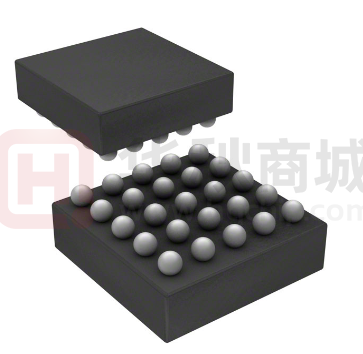



 工商网监
湘ICP备2023018690号
工商网监
湘ICP备2023018690号