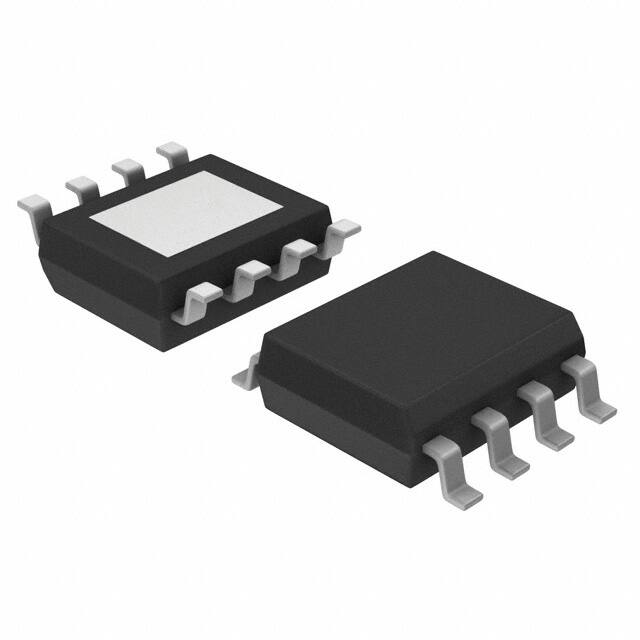
A6260
High Brightness LED Current Regulator
FEATURES AND BENEFITS
DESCRIPTION
▪ AEC-Q100 qualified
▪ LED drive current up to 350 mA
▪ 6 to 40 V supply
▪ Reverse battery protection
▪ Low drop-out voltage
▪ LED short circuit and thermal protection
▪ 10 µA maximum shutdown current
▪ PWM dimming control input
▪ Current slew rate limiting
The A6260 is a linear programmable current regulator
providing up to 350 mA for driving high-brightness LEDs.
The LED current, accurate to 4%, is set by a single low-power
sense resistor. Driving LEDs with constant current ensures
safe operation with maximum possible light output.
For automotive applications, optimum performance is
achieved when driving between 1 and 3 LEDs at currents up to 350 mA.
The low dropout voltage of the A6260 allows a single white
LED to be driven safely, at full current, with a supply voltage
down to 6 V.
An enable input allows PWM dimming and can be used to
enable low-current sleep mode. The rate of change of current
during PWM switching is limited to reduce EMI.
Overcurrent detection is provided to protect the LEDs and
the A6260 during short-to-supply or short-to-ground at any
LED terminal.
The integrated temperature monitor can be used to reduce
the LED drive current if the chip temperature exceeds the
thermal limit.
The device is available in an 8-pin SOIC package with exposed
thermal pad (suffix LJ). The device is lead (Pb) free with 100%
matte-tin leadframe plating.
PACKAGE: 8-pin SOICN with exposed
thermal pad (suffix LJ)
Not to scale
Not to scale
Typical Application
7 to 20 V
(–14 V min, 40 V max)
VIN
PWM Dimming
and
On-Off Control
LA
EN
A6260
Automotive
12 V Power Net
THTH
LC
LSS
SENSE
GND
6260-DS, Rev. 9
MCO-0000874
June 2, 2022
�A6260
High Brightness LED Current Regulator
SELECTION GUIDE
Part Number
Packing
Ambient Temperature, TA (°C)
A6260KLJTR-T
3000 pieces per reel
–40 to 125
A6260SLJTR-T
3000 pieces per reel
–20 to 85
ABSOLUTE MAXIMUM RATINGS*
Characteristic
Symbol
Notes
Rating
Units
Load Supply Voltage
VIN
–14 to 40
V
EN Pin Voltage
VEN
–14 to 40
V
LA and LC Pins Voltage
VLx
–0.3 to 40
V
VLSS
–0.3 to 0.3
V
SENSE Pin Voltage
VSENSE
–0.3 to 0.3
V
THTH Pin Voltage
VTHTH
–0.3 to 7
V
Range K
–40 to 125
°C
Range S
–20 to 85
°C
–40 to 150
°C
LSS Pin Voltage
Ambient Operating Temperature Range
TA
Junction Operating Temperature Range
TJ
Storage Temperature Range
Tstg
–55 to 150
°C
ESD Rating, Human Body Model
AEC-Q100-002, all pins
2000
V
ESD Rating, Charged Device Model
AEC-Q100-011, all pins
1050
V
*With respect to GND.
THERMAL CHARACTERISTICS*: May require derating at maximum conditions; see application section for optimization
Characteristic
Symbol
Package Thermal Resistance
(Junction to Ambient)
RθJA
Package Thermal Resistance
(Junction to Pad)
RθJP
Test Conditions*
Value
Unit
On 4-layer PCB based on JEDEC standard
35
°C/W
On 2-layer generic test PCB with 0.8 in.2 of copper area each side
62
°C/W
2
°C/W
*Additional thermal information available on the Allegro website.
Allegro MicroSystems
955 Perimeter Road
Manchester, NH 03103-3353 U.S.A.
www.allegromicro.com
2
�A6260
High Brightness LED Current Regulator
FUNCTIONAL BLOCK DIAGRAM
VBATT
VIN
Current Limited
Reg
EN
THTH
Control
Output
Logic
Monitor
Temp
Temp
Comp
Monitor
LC
Current
R
TH
LA
Switch
Reference
Slew
Generator
Limit
Regulator
LSS
SENSE
Pad
GND
RS
Pinout Diagram
SENSE
1
GND
2
THTH
3
EN
4
8 LSS
Pad
7 LC
6 LA
5 VIN
Terminal List Table
Number
Name
Description
1
SENSE
2
GND
Ground reference
3
THTH
Thermal threshold input
4
EN
Enable input
5
VIN
Main supply
6
LA
LED anode (+) connection
7
LC
LED cathode (-) connection
8
LSS
Low-side sense connection
9
Pad
Exposed pad for enhanced thermal dissipation
Current sense input
Allegro MicroSystems
955 Perimeter Road
Manchester, NH 03103-3353 U.S.A.
www.allegromicro.com
3
�A6260
High Brightness LED Current Regulator
ELECTRICAL CHARACTERISTICS: Valid at TJ = –40°C to 150°C, VIN = 7 to 40 V, unless noted otherwise
Characteristics
Symbol
Test Conditions
Min.
Typ.
Max.
Units
6
–
40
V
SUPPLY AND REFERENCE
VIN Functional Operating Range [1]
VIN
VIN Quiescent Current
IINQ
LA, LC unconnected
–
–
4
mA
VIN Shutdown Current
IINS
EN < 400 mV
–
1
10
µA
Startup Time
tON
EN 2 V to 35 mA ILC
9
18
27
µs
CURRENT REGULATION
Maximum Current Sink
Current Sink
Current Sink Accuracy
ILCmax
RS = 250 mΩ, VIN – VLA > 2 V
350
–
–
mA
ILC
RS = 286 mΩ, VIN – VLA > 2 V
333
350
367
mA
100 mA < ILC < 350 mA
–5
±4
5
%
errILC
SENSE Reference Voltage
Switch Dropout Voltage
Regulator Saturation Voltage
Output Current Slew Time
VSENREF 260 mΩ < RS < 1Ω
VDO
VSAT
97
102
107
mV
VIN – VLA , ILOAD = 350 mA
–
2.25
2.35
V
VIN – VLA , ILOAD = 150 mA
–
1.35
1.4
V
VLC – VSENSE, ILOAD = 350 mA
–
500
550
mV
VLC – VSENSE, ILOAD = 150 mA
–
250
275
mV
tr
Current rising from 10% to 90%
50
80
120
µs
tf
Current falling from 90% to 10%
60
100
150
µs
–
–
0.8
V
LOGIC INPUT
Input Low Voltage
VIL
Input High Voltage
VIH
2
–
–
V
VIhys
150
350
–
mV
Switch Overcurrent Trip Level
ILAOC
–600
–500
–400
mA
Time [2]
tOCD
–
3
–
µs
–
1.5×
ILAOC
–
mA
Input Hysteresis
PROTECTION
Overcurrent Detection
Switch Current Limit
ILALIM
LC Short Circuit Release Voltage
VSCCR
From detection to ISCU > –1.2 mA
Measured at VLC, when rising
1.0
1.2
1.4
V
Short Circuit Source Current [2]
ISCU
When short is detected
–1.5
–1.1
–0.7
mA
Thermal Monitor Activation Temperature
TJM
TJ at ILC = 90%, THTH open
90
105
120
°C
Thermal Monitor Low Current Temperature
TJL
TJ at ILC = 25%, THTH open
110
130
150
°C
Overtemperature Shutdown Threshold
TJF
Temperature increasing
–
165
–
°C
TJhys
Recovery = TJF – TJhys
–
15
–
°C
Overtemperature Hysteresis
[1] Functions
[2] For
correctly, but parameters are not guaranteed, below the general limit (7 V).
input and output current specifications, negative current is defined as coming out of (sourcing) the specified device pin.
Allegro MicroSystems
955 Perimeter Road
Manchester, NH 03103-3353 U.S.A.
www.allegromicro.com
4
�A6260
High Brightness LED Current Regulator
FUNCTIONAL DESCRIPTION
The A6260 is a linear current regulator that is designed to provide
drive current and protection for series-connected, high brightness LEDs in automotive applications. It provides programmable
current output at load voltages up to 3 V below the main supply
voltage. For automotive applications optimum performance is
achieved when driving 1 to 3 LEDs at currents up to 350 mA.
LSS Pin. Low-side current sink connection from the current regu-
The LED current is set by a single low-power sense resistor and
the LED brightness can be further controlled by a PWM input to
the EN pin. The EN input can also be used as an on/off switched
input and the A6260 will enter a low current (VSCCR
Current remains
regulated, thermal
shutdown provides
protection
Detected when switch
current exceeds trip
value for longer than
3 µs, released when
VLC >VSCCR
Current remains
regulated, thermal
shutdown provides
protection
Figure 1. Short circuit conditions detected
Allegro MicroSystems
955 Perimeter Road
Manchester, NH 03103-3353 U.S.A.
www.allegromicro.com
6
�A6260
High Brightness LED Current Regulator
the short circuit is removed the short circuit source current, ISCU ,
pulls the voltage at the LC pin above VSCCR, and the switch and
regulator are re-enabled.
LC Short to Supply (figure 1c) In this condition, the current
into the LC pin remains regulated but the power dissipated in
the A6260 increases. This higher dissipation causes the thermal
monitor to reduce the current to protect the regulator. In extreme
cases, or in cases where the thermal monitor is disabled, the
increased dissipation may cause temperature to reach the thermal
shutdown level, at which point the regulator will be disabled.
LC Short to Ground (figure 1d) This condition is detected when
the high-side switch current exceeds the trip value, ILAOC , for
longer than the overcurrent detection time, tOCD (3 µs typical).
When a short is detected, the switch and the regulator are both
disabled. When the voltage at LC drops below the short release
voltage, VSCCR, a low value current, ISCU (1.1 mA typical), is
then sourced from LA to provide a short circuit monitor. When
the short circuit is removed, ISCU pulls the voltage at the LC pin
above VSCCR, and the switch and regulator are re-enabled.
LA Short to LC (figure 1e) This condition is effectively the same
per degree Celsius typically, until the point at which the current drops
to 25% of the full level. The junction temperature at the 25% current
level is defined as TJL. If the temperature continues to rise above
TJL, the temperature monitor would continue to reduce current, but
at a slower rate, until the temperature reaches the overtemperature
shutdown temperature, TJF.
The temperature at which the current reduction begins can be
adjusted by changing the voltage on the THTH pin. When THTH
is left open, the temperature at which the current reduction begins
is typically 98°C. The thermal monitor activation temperature,
TJM, is defined in the Electrical Characteristics table at the 90%
current level.
TJM can be increased by reducing the voltage at the THTH pin,
VTHTH, and is defined as approximately:
1.503 − V THTH
TJM =
(2)
0.00363
where TJM is in °C.
A resistor connected between THTH and a reference supply
greater than 2 V will increase VTHTH and reduce TJM.
as the LC Short-to-Supply condition. In this condition, the current into the LC pin remains regulated but the power dissipated in
the A6260 increases. This higher dissipation causes the thermal
monitor to reduce the current to protect the regulator. In extreme
cases, or in cases where the thermal monitor is disabled, the
increased dissipation may cause temperature to reach the thermal
shutdown level, at which point the regulator will be disabled.
The primary function of the temperature monitor included in the
A6260 is to limit the power dissipation of the A6260 and maintain
the junction temperature below the maximum. However, it can
also be used to reduce LED current as LED temperature increases.
This can be achieved by mounting the A6260 on the same thermal
substrate as the LEDs, so that temperature rise in the LEDs would
also affect the A6260. As the junction temperature of the A6260
increases, the integrated temperature monitor lowers the regulated
current level, reducing the dissipated power in the A6260 and in the
LEDs. As shown in figure 2, from the full 100% current level (see
the LED Current Level section), current is reduced at a rate of 4%
90
Relative LED Current, ILC (%)
Temperature Monitor
100
80
60
40
25
20
0
70
90
TJM
110
TJL
130
150
170
Junction Temperature, TJ (°C)
Figure 2. Temperature monitor current reduction
Allegro MicroSystems
955 Perimeter Road
Manchester, NH 03103-3353 U.S.A.
www.allegromicro.com
7
�High Brightness LED Current Regulator
Figure 3 shows how the nominal value of the thermal monitor
activation temperature varies with the voltage at THTH and with
a pull-down resistor, RTH, to GND or with a pull-up resistor, RTH,
to 5 V.
LED Current, Power Loss, and Junction Temperature
Calculations
Figure 4 shows LED current versus input voltage and figure 5
shows junction temperature versus input voltage. Test conditions
were:
• ILED = 350 mA,
• TA = 50°C,
• RθJA = 30 °C/W, and
• The THTH pin open for thermal monitor testing
1.30
V
1.25
TH
600
500
RTH pull-down
to GND
TH
RTH pull-up
to 5 V
400
1.20
1.15
1.10
300
1.05
200
1.00
100
0.95
0.90
60
80
TJM (°C)
100
120
140
Figure 3. TJM versus RTH (pull-up or –down), and VTHTH
400
380
Without thermal monitor
ILED
360
340
I LED(mA)
(4)
then the RθJA for the device, when mounted on a typical application board, 30 °C/W. If thermal derating is used, ILED current is
reduced at a rate of 4% per °C (typ) from TJM.
• VLED = 7 V,
800
320
With thermal monitor
ILEDM
300
280
260
VLED=7V
I LED=350mA
TA=50°C
240
220
200
RθJA= 30 °C/W
8
10
12
VIN (V)
14
16
Figure 4. LED current, ILED, versus input voltage, VIN, both with and
without thermal monitor
150
140
Without thermal monitor
TJ
130
120
110
TJ(°C)
if VSENREF = 0.102 V, IINQ = 3 mA (typ), and given
Junction temperature, TJ = PD × RθJA
1.35
40
Power loss across IC, PD = (VIN – VLED – VSENREF)
× ILED + VIN × IINQ (3)
900
0
The maximum LED current the A6260 can deliver depends on
voltage drop across the IC ( VIN – VLED ), ambient temperature
( TA ), and thermal resistance ( RθJA ) from the IC junction to ambient. RθJA depends on board construction, and air flow, and can be
calculated as follows:
1.40
700
RTH (kΩ)
In extreme cases, if the chip temperature exceeds the overtemperature limit, TJF, both the sink regulator and the source switch
will be disabled. The temperature will continue to be monitored
and the output re-activated when the temperature drops below the
threshold provided by the specified hysteresis, TJhys.
1000
VTHTH (V)
A6260
100
With thermal
monitor, TJM
90
80
VLED=7V
I LED=350mA
TA=50°C
RθJA= 30 °C/W
70
60
50
8
10
12
VIN (V)
14
16
Figure 5. Junction temperature, TJ, versus input voltage, VIN, both with and
without thermal monitor
Allegro MicroSystems
955 Perimeter Road
Manchester, NH 03103-3353 U.S.A.
www.allegromicro.com
8
�A6260
High Brightness LED Current Regulator
Thermal Dissipation
Optimizing Thermal Layout
The amount of heat that can pass from the silicon of the A6260
to the surrounding ambient environment depends on the thermal
resistance of the structures connected to the A6260. The thermal
resistance, RθJA , is a measure of the temperature rise created by
power dissipation and is usually measured in degrees Celsius per
watt (°C/W).
The features of the printed circuit board, including heat conduction and adjacent thermal sources such as other components,
have a very significant effect on the thermal performance of the
device. To optimize thermal performance, the following should
be taken into account:
The temperature rise, ΔT, is calculated from the power dissipated,
PD , and the thermal resistance, RθJA , as:
ΔT = PD × RθJA
(5)
A thermal resistance from silicon to ambient, RθJA , of approximately 35°C/W can be achieved by mounting the A6260 on a
standard FR4 double-sided printed circuit board (PCB) with a
copper area of a few square inches on each side of the board
under the A6260. Additional improvements in the range of 20%
may be achieved by optimizing the PCB design.
• The device exposed thermal pad should be connected to as
much copper area as is available.
• Copper thickness should be as high as possible (for example,
2 oz. or greater for higher power applications).
• The greater the quantity of thermal vias, the better the dissipation. If the expense of vias is a concern, studies have shown
that concentrating the vias directly under the device in a tight
pattern, as shown in figure 6, has the greatest effect.
• Additional exposed copper area on the opposite side of the
board should be connected by means of the thermal vias. The
copper should cover as much area as possible.
• Other thermal sources should be placed as remote from the
device as possible
Signal traces
LJ package
footprint
0.7 mm
0.7 mm
LJ package
exposed
thermal pad
Top-layer
exposed copper
Ø0.3 mm via
Figure 6. Suggested PCB layout for thermal optimization
(maximum available bottom-layer copper recommended)
Allegro MicroSystems
955 Perimeter Road
Manchester, NH 03103-3353 U.S.A.
www.allegromicro.com
9
�A6260
High Brightness LED Current Regulator
APPLICATIONS INFORMATION
Automotive
12V Power Net
Automotive
12V Power Net
VIN
LA
VIN
LA
A6260
PWM Dimming
and
On-Off Control
A6260
PWM Dimming
and
On-Off Control
EN
EN
LC
THTH
GND
LC
THTH
LSS
SENSE
LSS
GND
Ground
SENSE
Ground
(a) Basic circuit with PWM
Automotive
12 V Power Net
(b) Switched supply plus high-side PWM source
Low Voltage
(>6V) Supply
VIN
VIN
LA
LA
A6260
A6260
PWM Dimming
and
On-Off Control
EN
THTH
GND
EN
LC
THTH
LSS
SENSE
GND
Ground
LC
LSS
SENSE
Ground
(c) Simple switched supply (lamp replacement)
Automotive
12 V Power Net
(d) Low voltage operation
VIN
LA
VIN
LA
A6260
PWM Dimming
and
On-Off Control
A6260
EN
THTH
GND
EN
LC
LSS
SENSE
LC
LSS
SENSE
THTH
GND
Ground
(e) Parallel operation for higher LED current
Figure 7. Typical applications circuits
Allegro MicroSystems
955 Perimeter Road
Manchester, NH 03103-3353 U.S.A.
www.allegromicro.com
10
�A6260
High Brightness LED Current Regulator
Package LJ 8-Pin SOICN with Exposed Thermal Pad
For Reference Only – Not for Tooling Use
(Reference Allegro DWG-0000380, Rev. 2 and JEDEC MS-012BA)
Dimensions in millimeters – NOT TO SCALE
Dimensions exclusive of mold flash, gate burrs, and dambar protrusions
Exact case and lead configuration at supplier discretion within limits shown
4.90 ±0.10
8°
0°
8
0.25
0.17
B
3.90 ±0.10
2.41 NOM
6.00 ±0.20
A
1.04 REF
1
2
1.27
0.40
3.30 NOM
0.25 BSC
Branded Face
SEATING PLANE
GAUGE PLANE
C
8×
0.10
1.73 MAX
C
0.51
0.31
SEATING
PLANE
XXXXXXXX
Date Code
Lot Number
0.15
0.00
1.27 BSC
1.27
0.65
D
8
Lines 1, 2 = 8 characters.
Line 3 = 6 characters.
1.75
2.41
1
2
3.30
C
Standard Branding Reference View
Line 1: Part Number
Line 2: Logo A, 4 digit Date Code
Line 3: Characters 5, 6, 7, 8 of
Assembly Lot Number
5.60
A
Terminal #1 mark area
B
Exposed thermal pad (bottom surface)
C
Reference land pattern layout (reference IPC7351 SOIC127P600X175-9AM);
all pads a minimum of 0.20 mm from all adjacent pads; adjust as necessary
to meet application process requirements and PCB layout tolerances; when
mounting on a multilayer PCB, thermal vias at the exposed thermal pad land
can improve thermal dissipation (reference EIA/JEDEC Standard JESD51-5)
D
Branding scale and appearance at supplier discretion
PCB Layout Reference View
Allegro MicroSystems
955 Perimeter Road
Manchester, NH 03103-3353 U.S.A.
www.allegromicro.com
11
�A6260
High Brightness LED Current Regulator
REVISION HISTORY
Number
Date
Description
7
September 12, 2013
8
May 28, 2020
Minor editorial updates
9
June 2, 2022
Updated package drawing (page 11) and minor editorial updates
Update functional description
Copyright 2022, Allegro MicroSystems.
Allegro MicroSystems reserves the right to make, from time to time, such departures from the detail specifications as may be required to permit
improvements in the performance, reliability, or manufacturability of its products. Before placing an order, the user is cautioned to verify that the
information being relied upon is current.
Allegro’s products are not to be used in any devices or systems, including but not limited to life support devices or systems, in which a failure of
Allegro’s product can reasonably be expected to cause bodily harm.
The information included herein is believed to be accurate and reliable. However, Allegro MicroSystems assumes no responsibility for its use; nor
for any infringement of patents or other rights of third parties which may result from its use.
Copies of this document are considered uncontrolled documents.
For the latest version of this document, visit our website:
www.allegromicro.com
Allegro MicroSystems
955 Perimeter Road
Manchester, NH 03103-3353 U.S.A.
www.allegromicro.com
12
�