ARG81401
Adjustable Frequency Buck or Buck-Boost Pre-Regulator
with 2 LDOs, Window Watchdog Timer, and NPOR
FEATURES AND BENEFITS
•
•
•
•
•
•
•
•
•
•
•
•
•
•
•
•
Automotive AEC-Q100 qualified
VIN operating range from 3 to 36 V, with 40 V maximum
Buck or buck-boost pre-regulator (VREG)
Adjustable PWM switching frequency: 250 kHz to 2.4 MHz
PWM frequency can be synchronized to external clock
Two internal LDO regulators with foldback short-circuit
protection
Power-on reset (NPOR) with fixed delay of 22.5 ms
Programmable window watchdog timer with a fixed
activation delay of 30 ms
Active low, watchdog timer enable/disable pin (WDENn)
Dual bandgaps for increased reliability:
□ BG1 for VREG, 3V3, and VCP reference
□ BG2 for V5 reference, and VREG, 3V3, and VCP fault
detection
Ignition-enable input (ENBAT)
Frequency dithering helps reduce EMI/EMC
Undervoltage protection for all output rails
Pin-to-pin and pin-to-ground tolerant at every pin
Thermal shutdown protection
−40°C to 150°C junction temperature range
DESCRIPTION
The ARG81401 is a power management IC that uses a buck
or buck-boost pre-regulator to efficiently convert automotive
battery voltages into a tightly regulated intermediate voltage,
complete with control, diagnostics, and protections. The output
of the pre-regulator supplies a 5 V, 300 mA LDO and a 3.3 V,
200 mA LDO. Designed to supply CAN or microprocessor
power supplies in high-temperature environments, the
ARG81401 is ideal for underhood applications.
Enable-input to the ARG81401 is compatible to a high-voltage
battery level (ENBAT).
Diagnostic outputs from the ARG81401 include a poweron-reset output (NPOR) with a fixed 22.5 ms typical delay.
Dual bandgaps, one for regulation and one for fault checking,
improve long-term reliability of a system designed around
the ARG81401.
The ARG81401 contains a window watchdog timer that can
be programmed to accept a wide range of clock frequencies
(WDADJ). The watchdog timer has a fixed 30 ms activation
delay to accommodate processor startup. The watchdog timer
has an enable/disable pin (active low, WDENn) to facilitate
initial factory programming or field reflash programming.
Continued on next page...
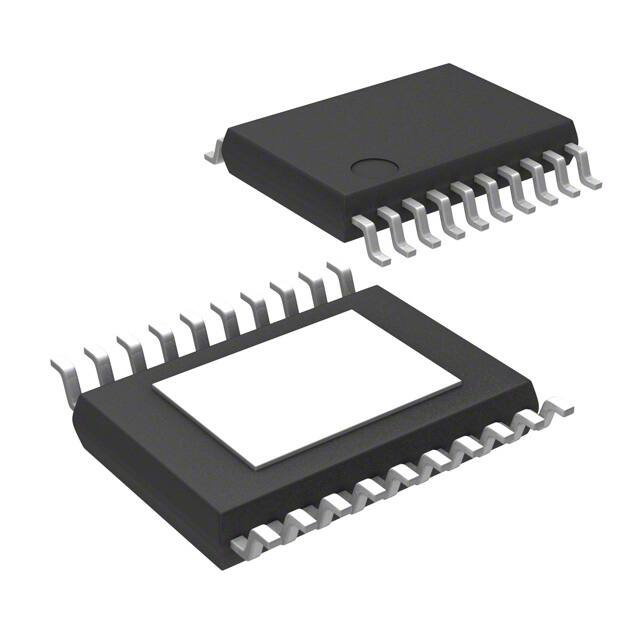
PACKAGE: 20-Pin eTSSOP (suffix LP)
APPLICATIONS
Provides System Power for (µC/DSP, CAN, sensors, etc.)
in Automototive Control Modules, such as:
•
•
•
•
•
Not to scale
6.6 V
(VREG)
Buck-Boost
Pre-Regulator
Bandgap 1
Bandgap 2
Charge
Pump
Electronic Power Steering (EPS)
Transmission Control Units (TCU)
Advanced Braking Systems (ABS)
Emissions Control Modules
Other automotive applications
5 V LDO
(V5)
with Foldback
Protection
Thermal
Shutdown
(TSD)
NPOR
Output
3.3 V LDO
(3V3)
with Foldback
Protection
Programmable
Window Watchdog
Timer with
Activation Delay
ARG81401 Simplified Block Diagram
ARG81401-DS, Rev. 3
MCO-0000223
March 19, 2021
�Adjustable Frequency Buck or Buck-Boost Pre-Regulator
with 2 LDOs, Window Watchdog Timer, and NPOR
ARG81401
DESCRIPTION (continued)
Protection features include dual control loop for pre-regulator rail.
In case of a shorted output, all linear regulators feature foldback
overcurrent protection. The switching regulator includes pulseby-pulse current limit, hiccup mode short-circuit protection, LX
short-circuit protection, missing asynchronous diode protection,
and thermal shutdown.
The ARG81401 is supplied in a low-profile (1.2 mm maximum
height), 20-lead eTSSOP package (suffix “LP”) with exposed
thermal pad.
SELECTION GUIDE
[1]
Part Number
Package
Packing [1]
Lead Frame
ARG81401KLPATR
20-pin eTSSOP with thermal pad
4000 pieces per 13-in. reel
100% Matte Tin
Contact Allegro for additional packing options.
ABSOLUTE MAXIMUM RATINGS [2]
Characteristic
Symbol
VIN pin
Notes
VIN
VENBAT
ENBAT pin
With current limiting resistor [3]
IENBAT
LX pin
VLX
t < 250 ns
t < 50 ns
Rating
Unit
−0.3 to 40
V
−0.3 to 8
V
−13 to 40
V
±75
mA
−0.3 to VIN + 0.3
V
−1.5
V
VIN + 3
V
VVCP, VCPx
−0.3 to 50
V
−0.3 to 7.5
V
Junction Temperature
TJ
−40 to 150
°C
Storage Temperature Range
TS
−55 to 150
°C
VCP, CP1, and CP2 pins
All other pins
Stresses beyond those listed in this table may cause permanent damage to the device. The absolute maximum ratings are stress ratings only, and functional operation of
the device at these or any other conditions beyond those indicated in the Electrical Characteristics table is not implied. Exposure to absolute-maximum-rated conditions
for extended periods may affect device reliability.
[3] The higher ENBAT ratings (–13 V and 40 V) are measured at node “A” in the following circuit configuration:
[2]
Node “A”
≥450 Ω
ENBAT
+
ARG81401
VENBAT -
GND
THERMAL CHARACTERISTICS: May require derating at maximum conditions; see application information
Characteristic
Symbol
Junction-to-Ambient Thermal Resistance
RθJC
[4] Additional
Test Conditions [4]
Value
Unit
32
°C/W
eTSSOP-20 (LP) Package
thermal information available on the Allegro website.
Allegro MicroSystems
955 Perimeter Road
Manchester, NH 03103-3353 U.S.A.
www.allegromicro.com
2
�ARG81401
Adjustable Frequency Buck or Buck-Boost Pre-Regulator
with 2 LDOs, Window Watchdog Timer, and NPOR
Table of Contents
Features and Benefits............................................................ 1
Description........................................................................... 1
Applications.......................................................................... 1
Package.............................................................................. 1
Simplified Block Diagram....................................................... 1
Selection Guide.................................................................... 2
Absolute Maximum Ratings.................................................... 2
Thermal Characteristics......................................................... 2
Functional Block Diagram...................................................... 4
Pinout Diagram and Terminal List............................................ 5
Electrical Characteristics........................................................ 6
Startup and Shutdown Logic................................................. 14
Summary of Fault Mode Operation........................................ 15
Timing Diagrams................................................................. 17
Design and Component Selection......................................... 21
PCB Layout Guidelines........................................................ 27
Pin ESD Structures............................................................. 29
Package Outline Drawing..................................................... 30
Allegro MicroSystems
955 Perimeter Road
Manchester, NH 03103-3353 U.S.A.
www.allegromicro.com
3
�Adjustable Frequency Buck or Buck-Boost Pre-Regulator
with 2 LDOs, Window Watchdog Timer, and NPOR
ARG81401
1 µF
VBAT
CP2
CP1
VCP
2.2 µF
VREG
DIN
VIN
0.1 µF
0603
50-100 µF
50 V
KEY_SW
BG1_UV
BG1
BG1
BG2
2 × 4.7 µF
50 V
1210
LDO
EN
BG2
BG2
17.4 kΩ
OSC2
3.3 nF
CLK @ fOSC
100 nA
SYNC (optional)
CLK1MHz
BUCK-BOOST
PRE-REGULATOR
(VREG)
WITH HICCUP MODE
BG1
VREG ON
VCP UV
3V3
FB2
SS OK
MASTER
IC POR
SOFT START
2Ω
tSS
VLDO
FOLDBACK
NPOR
TIMING
NPOR
WDSTART
STARTUP /
SHUTDOWN
SEQUENCE
2.2 µF
5V
LDO
BG2
LDOs ON
EN
2.2 µF
VREG ON
BG2
LDOs ON
3V3 UV
3V3 UV
DEGLITCH
td(FILT)
3V3
LXb
LX
ENBAT
+
650 kΩ
0.1 µF
CLKIN
WDIN
WDENn
WDENn
3.3 VTYP
2.6 VTYP
WD
OSC
WDADJ
tWDTO(FAST) = 0.5 ms
5V
200 mA
V5
3.3 kΩ
13 kΩ
tWDTO(SLOW) = 4 ms
3.3 V
300 mA
3V3
FOLDBACK
WDFAULT
3V3 UV
*D1MISSING
*ILX(LIM)
ON
2.2 µF
3.3V
LDO
BG1
CLK1MHz
2 kΩ
TSD
* indicates a
latched fault
MPOR
3V3 UV
VREG_OK
FB1
4 × 10 µF
16 V / X7R / 1206
Q1
VREG
MPOR
NPOR
LXb
LG
8.66 kΩ
–
DEGLITCH
td(ENBAT,FILT)
ON
FALLING
DELAY
td(off)LDO
EN
0603
50 V
1206
1/4 W
0603
50 V
0603
1/10 W
GND
WDCLK
WDENn = 0 or OPEN enables WD
60 kΩ
6.6 V
250 mA
D2
D1
STOP PWM
VREG_OV
BG1_UV
BG2_UV
VIN_UV
VCP OV
*D1MISSING
*ILX(LIM)
REMOVE D2 AND Q1
FOR BUCK ONLY MODE
LX
OSC1
FSET/SYNC
L1
6.8 µH
≤ 60 mΩTYP
75 mΩ
BG2
10 pF
0.1 µA
COMP
COMP
1 µF
CHARGE
PUMP
BG2_UV
BG1
VCC
VCP
UV/OV
WINDOW
WATCHDOG
TIMER
(WWDT)
PGND
CLK1MHz
ONE SHOT
tWD(FAULT)
WDFAULT
Snubbers reduce ringing and
high-frequency noise/emissions
WDSTART
ARG81401
Functional Block Diagram / Typical Schematic
Buck-Boost Mode (fOSC = 2 MHz)
Allegro MicroSystems
955 Perimeter Road
Manchester, NH 03103-3353 U.S.A.
www.allegromicro.com
4
�Adjustable Frequency Buck or Buck-Boost Pre-Regulator
with 2 LDOs, Window Watchdog Timer, and NPOR
ARG81401
PINOUT DIAGRAM AND TERMINAL LIST
VCP
1
20
CP2
VIN
2
19
CP1
ENBAT
3
18
LX
GND
4
17
PGND
VCC
5
16
LG
PAD
COMP
6
15
VREG
FSET/SYNC
7
14
VLDO
NPOR
8
13
WDADJ
WDENn
9
12
V5
WDIN
10
11
3V3
Package LP, 20-Pin eTSSOP Pinout Diagram
Terminal List
Number
Name
Function
1
VCP
Charge pump reservoir capacitor
2
VIN
Input voltage
3
ENBAT
4
GND
Ground
5
VCC
Internal voltage regulator bypass capacitor pin
6
COMP
Error amplifier compensation network pin for the buck-boost pre-regulator
7
FSET/
SYNC
Frequency setting and synchronization input
8
NPOR
Active low, open-drain regulator fault detection output
9
WDENn
Watchdog enable pin: Open/Low – WD is enabled, High – WD is disabled
10
WDIN
11
3V3
3.3 V, 300 mA regulator output
12
V5
5 V, 200 mA regulator output
13
WDADJ
The watchdog window time is programmed by connecting RADJ from this
pin to ground
14
VLDO
Input for the LDOs
15
VREG
Feeback pin for VREG output, connect to VREG converter output
capacitors
16
LG
17
PGND
18
LX
19
CP1
Charge pump capacitor connection
20
CP2
Charge pump capacitor connection
–
PAD
Ignition-enable input from the key/switch through a 1 kΩ resistor
Watchdog refresh input (rising edge triggered) from a microcontroller or
DSP
Boost gate drive output for the buck-boost pre-regulator
Power ground
Switching node for the buck-boost pre-regulator
Allegro MicroSystems
955 Perimeter Road
Manchester, NH 03103-3353 U.S.A.
www.allegromicro.com
5
�Adjustable Frequency Buck or Buck-Boost Pre-Regulator
with 2 LDOs, Window Watchdog Timer, and NPOR
ARG81401
ELECTRICAL CHARACTERISTICS – GENERAL SPECIFICATIONS [1]: Valid at 3 V ≤ VIN ≤ 36 V in buck-boost mode and
VIN having first reached VIN(START), –40°C ≤ TJ ≤ 150°C, unless otherwise specified.
Characteristic
Symbol
Test Conditions
Min.
Typ.
Max.
Unit
After VIN > VIN(START), VENBAT ≥ 4 V, buck-boost
pre-regulator
3
13.5
36
V
5.5
13.5
36
V
−
5
V
GENERAL SPECIFICATIONS
Operating Input Voltage
VIN
After VIN > VIN(START), VENBAT ≥ 4 V, buck preregulator
VIN UVLO Start
VIN(START)
VIN rising
−
VIN UVLO Stop
VIN(STOP)
Supply Quiescent Current [1]
VIN falling, when in buck-boost mode
−
−
2.9
V
IQ
VIN = 13.5 V, VENBAT ≥ 4 V, no load on VREG
–
10
–
mA
IQ(SLEEP)
VIN = 13.5 V, VENBAT ≤ 2 V, no load on VREG
–
–
10
µA
PWM SWITCHING FREQUENCY AND DITHERING
Switching Frequency
Frequency Divide By 2
fOSC
RFSET = 8.66 kΩ
1.8
2
2.2
MHz
RFSET = 57.6 kΩ
343
400
457
kHz
V
Start [2]
VIN(FREQ/2,START)
VIN rising, frequency = fOSC / 2
18
19
20
Frequency Divide By 2 Stop [2]
VIN(FREQ/2,STOP)
VIN falling, frequency = fOSC / 2
17
18
19
V
As a percent of fOSC
–
±12
–
%
Low range, VIN rising
9
9.5
10
V
High range, VIN falling
17
18
19
V
Low range, VIN falling
8.5
9
9.5
V
High range, VIN rising
18
19
20
V
–
500
–
mV
4.1
6.6
–
V
–
65
–
kHz
–
4.6
–
V
160
170
180
°C
–
20
–
°C
Frequency Dithering
ΔfOSC
VIN Dithering START Threshold
VIN(DITHER,ON)
VIN Dithering STOP Threshold
VIN(DITHER,OFF)
VIN Dithering Hysteresis
VIN(DITHER,HYS)
CHARGE PUMP (VCP)
Output Voltage
ΔVVCP
Switching Frequency
fSW(CP)
VVCP – VIN
VCC OUTPUT
Output Voltage
VVCC
VVREG = 6.6 V
Thermal Shutdown Threshold [2]
TTSD
TJ rising
Thermal Shutdown Hysteresis [2]
THYS
THERMAL PROTECTION
[1]
[2]
Negative current is defined as coming out of the node or pin (sourcing), positive current is defined as going into the node or pin (sinking).
Ensured by design and characterization, not production tested.
Allegro MicroSystems
955 Perimeter Road
Manchester, NH 03103-3353 U.S.A.
www.allegromicro.com
6
�Adjustable Frequency Buck or Buck-Boost Pre-Regulator
with 2 LDOs, Window Watchdog Timer, and NPOR
ARG81401
ELECTRICAL CHARACTERISTICS – BUCK AND BUCK-BOOST PRE-REGULATOR SPECIFICATIONS [1]: Valid at
3 V ≤ VIN ≤ 36 V in buck-boost mode and VIN having first reached VIN(START), –40°C ≤ TJ ≤ 150°C, unless otherwise specified.
Characteristic
Symbol
Test Conditions
Min.
Typ.
Max.
Unit
VIN = 13.5 V, ENBAT = 1,
0.1 A ≤ IVREG ≤ 1 A
6.47
6.6
6.7
V
VREG pin open, measured at VLDO pin,
VIN = 13.5 V, ENBAT = 1,
0.1 A ≤ IVREG ≤ 1 A
5.88
6
6.12
V
VCOMP for 0% duty cycle
–
400
–
mV
OUTPUT VOLTAGE SPECIFICATIONS
Pre-Regulator Output Voltage –
VREG Regulating
VVREG
Pre-Regulator Output Voltage –
VLDO Regulating
VVLDO(REG)
PULSE WIDTH MODULATION (PWM)
PWM Ramp Offset
LX Rising Slew
VPWMOFFSET
Rate [2]
SRLX(RISE)
VIN = 13.5 V, 10% to 90%, IVREG = 1 A
–
1.7
–
V/ns
LX Falling Slew Rate [2]
SRLX(FALL)
VIN = 13.5 V, 10% to 90%, IVREG = 1 A
–
1.5
–
V/ns
Buck Minimum
On-Time [2]
Buck Minimum Off-Time
Buck Maximum Duty Cycle
tON(BUCK,MIN)
–
85
160
ns
tOFF(BUCK,MIN)
–
0
–
ns
DBUCK(MAX)
–
100
–
%
–
60
120
ns
–
70
–
%
Boost Minimum On-Time
tON(BOOST,MIN)
Boost Maximum Duty Cycle
DBOOST(MAX)
COMP to LX Current Gain
VIN = 3.5 V
–
4.5
–
A/V
fOSC = 2 MHz
3.84
4.8
5.76
A/µs
fOSC = 400 kHz
0.76
0.96
1.16
A/µs
VIN = 13.5 V, TJ = ‒40°C [2], IDS = 0.1 A
–
60
75
mΩ
VIN = 13.5 V, TJ = 25°C [2], IDS = 0.1 A
–
80
100
mΩ
VIN = 13.5 V, TJ = 150°C, IDS = 0.1 A
–
140
170
mΩ
VENBAT ≤ 2 V, VLX = 0 V, VIN = 13.5 V,
−40°C ≤ TJ ≤ 85°C [2]
–
–
10
µA
VENBAT ≤ 2 V, VLX = 0 V, VIN = 13.5 V,
−40°C ≤ TJ ≤ 125°C [2]
–
–
100
µA
VENBAT ≤ 2 V, VLX = 0 V, VIN = 13.5 V,
−40°C ≤ TJ ≤ 150°C
–
50
150
µA
AVOL
–
65
–
dB
Transconductance
gm(EA)
550
750
950
µA/V
Output Current
IO(EA)
–
±75
–
µA
Maximum Output Voltage
VO(EA,MAX)
1.3
1.7
2.1
V
Minimum Output Voltage
VO(EA,MIN)
–
–
200
mV
–
1
–
kΩ
Slope Compensation [2]
gm(POWER)
SE
INTERNAL MOSFET
MOSFET On Resistance
MOSFET Leakage
RDS(on)
IFET(LEAK)
ERROR AMPLIFIER
Open Loop Voltage Gain
COMP Pull-Down Resistance
[1]
[2]
RCOMP
HICCUP = 1 or FAULT = 1 or IC disabled
Negative current is defined as coming out of the node or pin (sourcing), positive current is defined as going into the node or pin (sinking).
Ensured by design and characterization, not production tested.
Allegro MicroSystems
955 Perimeter Road
Manchester, NH 03103-3353 U.S.A.
www.allegromicro.com
7
�ARG81401
Adjustable Frequency Buck or Buck-Boost Pre-Regulator
with 2 LDOs, Window Watchdog Timer, and NPOR
ELECTRICAL CHARACTERISTICS – BUCK AND BUCK-BOOST PRE-REGULATOR SPECIFICATIONS (continued) [1]:
Valid at 3 V ≤ VIN ≤ 36 V in buck-boost mode and VIN having first reached VIN(START), –40°C ≤ TJ ≤ 150°C, unless otherwise specified.
Characteristic
Symbol
Test Conditions
Min.
Typ.
Max.
Unit
BOOST MOSFET (LG) GATE DRIVER
LG High Output Voltage
VLG(ON)
VIN = 7 V, VVREG = 6.35 V
4.6
–
6.35
V
LG Low Output Voltage
VLG(OFF)
VIN = 13.5 V, VVREG = 6.85 V
–
0.2
0.4
V
LG Source
Current [1]
ILG(ON)
VIN = 7 V, VVREG = 6.35 V, VLG = 1 V
–
–500
–
mA
LG Sink Current [1]
ILG(OFF)
VIN = 13.5 V, VVREG = 6.85 V, VLG = 1 V
–
500
–
mA
LG Leakage Current [2]
ILG(LEAK)
VIN = 13.5 V, VVREG = 6.6 V, VLG = 3 V
–
–
10
µA
–
1
–
ms
0 V ≤ VVREG ≤ 3.3 V, VCOMP = VO(EA,MAX)
–
fOSC / 8
–
–
0 V ≤ VVREG ≤ 3.3 V
–
fOSC / 2
–
–
VVREG > 3.3 V
–
fOSC
–
–
VVREG < 2.4 V (typical), VCOMP = VO(EA,MAX)
–
15
–
PWM
cycles
VVREG > 2.4 V (typical), VCOMP = VO(EA,MAX)
–
60
–
PWM
cycles
LX switching stops to LX switching starts,
during VREG overcurrent
–
2
–
ms
SOFT START
SS Ramp Time
tSS(ramp)
SS PWM Frequency Foldback
fSW(SS)
HICCUP MODE
Hiccup OCP PWM Counts
Hiccup Mode Recovery Time
tHIC(OCP)
trec(HIC)
CURRENT PROTECTIONS
Pulse-by-Pulse Current Limit
ILIM
3.6
4.1
4.6
A
LX Short-Circuit Current Limit
ILIM(LX)
6
7
–
A
MISSING ASYNCHRONOUS DIODE (D1) PROTECTION
Detection Level
VD(OPEN)
−1.5
−1.3
−0.9
V
Time Filtering [2]
tD(OPEN)
50
–
250
ns
[1]
[2]
Negative current is defined as coming out of the node or pin (sourcing), positive current is defined as going into the node or pin (sinking).
Ensured by design and characterization, not production tested.
Allegro MicroSystems
955 Perimeter Road
Manchester, NH 03103-3353 U.S.A.
www.allegromicro.com
8
�Adjustable Frequency Buck or Buck-Boost Pre-Regulator
with 2 LDOs, Window Watchdog Timer, and NPOR
ARG81401
ELECTRICAL CHARACTERISTICS – LINEAR REGULATOR (LDO) SPECIFICATIONS [1]: Valid at 3 V ≤ VIN ≤ 36 V in
buck-boost mode and VIN having first reached VIN(START), –40°C ≤ TJ ≤ 150°C, unless otherwise specified.
Characteristic
Symbol
Test Conditions
Min.
Typ.
Max.
Unit
10 mA ≤ IV5 ≤ 200 mA, VVREG = 5.4 V
4.9
5
5.1
V
IV5 = 200 mA, VVLDO = 4.91 V
4.75
–
–
V
1
–
22
µF
V5 LINEAR REGULATOR
V5 Accuracy and Load Regulation
V5 Dropout
VV5
VV5(DROPOUT)
V5 Output Capacitance
Range [2]
CV5(OUT)
V5 OVERCURRENT PROTECTION
V5 Current Limit [1]
V5 Foldback
Current [1]
IV5(LIM)
VV5 = 5 V
−230
−325
–
mA
IV5(FB)
VV5 = 0 V
−80
−120
−160
mA
–
0.24
1
ms
3.23
3.3
3.37
V
1
–
22
µF
V5 STARTUP
V5 Startup Time [2]
tV5(START)
CV5 ≤ 2.9 µF, load = 25 Ω ±5% (200 mA)
3V3 LINEAR REGULATOR
3V3 Accuracy and Load Regulation
V3V3
3V3 Output Capacitance Range [2]
C3V3(OUT)
10 mA ≤ I3V3 ≤ 300 mA, VVREG = 5.4 V
3V3 OVERCURRENT PROTECTION
3V3 Current Limit [1]
3V3 Foldback
Current [1]
I3V3(LIM)
V3V3 = 3.3 V
−345
−485
–
mA
I3V3(FB)
V3V3 = 0 V
−120
−165
−210
mA
–
0.24
1
ms
3V3 STARTUP
3V3 Startup Time [2]
[1]
[2]
t3V3(START)
C3V3 ≤ 2.9 µF, load = 15 Ω ±5% (220 mA)
Negative current is defined as coming out of the node or pin (sourcing), positive current is defined as going into the node or pin (sinking).
Ensured by design and characterization, not production tested.
Allegro MicroSystems
955 Perimeter Road
Manchester, NH 03103-3353 U.S.A.
www.allegromicro.com
9
�Adjustable Frequency Buck or Buck-Boost Pre-Regulator
with 2 LDOs, Window Watchdog Timer, and NPOR
ARG81401
ELECTRICAL CHARACTERISTICS – CONTROL INPUTS [1]: Valid at 3 V ≤ VIN ≤ 36 V in buck-boost mode and VIN having
first reached VIN(START), –40°C ≤ TJ ≤ 150°C, unless otherwise specified.
Characteristic
Symbol
Test Conditions
Min.
Typ.
Max.
Unit
IGNITION-ENABLE (ENBAT) INPUT
ENBAT Thresholds
ENBAT Hysteresis
ENBAT Bias Current [1]
ENBAT Resistance
VENBAT(H)
VENBAT rising
2.8
3.2
3.5
V
VENBAT(L)
VENBAT falling
2.1
2.5
2.8
V
VENBAT(H) – VENBAT(L)
–
700
–
mV
TJ = 25°C [2], VENBAT = 3.51 V
–
28
45
µA
TJ = 150°C, VENBAT = 3.51 V
–
35
60
µA
RENBAT
–
650
–
kΩ
td(ENBAT,FILT)
10
15
20
µs
Measure td(off)LDO from the falling edge of
ENBAT to the time when all LDOs begin to
decay
15
50
100
µs
No external SYNC signal
–
800
–
mV
VENBAT(HYS)
IIB(ENBAT)
ENBAT DEGLITCH
Enable Filter/Deglitch Time
ENBAT SHUTDOWN DELAY
LDO Shutdown Delay
td(off)LDO
FSET/SYNC INPUT
FSET/SYNC Pin Voltage
VFSET/SYNC
FSET/SYNC Open Circuit
(Undercurrent) Detection Time
tFSET/SYNC(UC)
PWM switching frequency becomes 900 kHz
upon detection
–
3
–
µs
FSET/SYNC Short-Circuit
(Overcurrent) Detection Time
tFSET/SYNC(OC)
PWM switching frequency becomes 900 kHz
disabled upon detection
–
3
–
µs
Sync. High Threshold
VSYNC(H)
VSYNC rising
–
–
2
V
Sync. Low Threshold
VSYNC(L)
VSYNC falling
0.5
–
–
V
Sync. Input Duty Cycle
DSYNC
–
–
80
%
Sync. Input Pulse Width
tPW(SYNC)
200
–
–
ns
tT(SYNC)
–
10
15
ns
Sync. Input Transition Times [2]
[1]
[2]
Negative current is defined as coming out of the node or pin (sourcing), positive current is defined as going into the node or pin (sinking).
Ensured by design and characterization, not production tested.
Allegro MicroSystems
955 Perimeter Road
Manchester, NH 03103-3353 U.S.A.
www.allegromicro.com
10
�ARG81401
Adjustable Frequency Buck or Buck-Boost Pre-Regulator
with 2 LDOs, Window Watchdog Timer, and NPOR
ELECTRICAL CHARACTERISTICS – DIAGNOSTIC OUTPUTS [1]: Valid at 3 V ≤ VIN ≤ 36 V in buck-boost mode and
VIN having first reached VIN(START), –40°C ≤ TJ ≤ 150°C, unless otherwise specified.
Characteristic
Symbol
Test Conditions
Min.
Typ.
Max.
Unit
NPOR UNDERVOLTAGE PROTECTION THRESHOLDS
3V3 Undervoltage Thresholds
3V3 Undervoltage Hysteresis
V3V3(UV,H)
V3V3 rising
–
3.1
–
V
V3V3(UV,L)
V3V3 falling
2.97
3.07
3.17
V
–
30
–
mV
18
22.5
27
ms
ENBAT low to NPOR low, measured after
ENBAT deglitch time td(ENBAT,FILT)
–
–
3
µs
ENBAT high, VIN ≥ 2.5 V, INPOR = 4 mA
–
150
400
mV
ENBAT high, VIN = 1.5 V, INPOR = 2 mA
–
–
800
mV
VNPOR = 3.3 V
–
–
2
µA
Applies to undervoltage of the 3V3 voltage
10
15
20
µs
V3V3(UV,HYS)
V3V3(UV,H) – V3V3(UV,L)
NPOR TURN-ON AND TURN-OFF DELAYS
NPOR Turn-On Delay
td(on)NPOR
NPOR Turn-Off Propagation Delay
td(off)NPOR
NPOR OUTPUT VOLTAGES
NPOR Output Low Voltage
VNPOR(L)
NPOR Leakage Current [1]
INPOR(LEAK)
NPOR UNDERVOLTAGE FILTERING/DEGLITCH
NPOR Undervoltage Filter/Deglitch Times
[1]
td(NPOR,FILT)
Negative current is defined as coming out of the node or pin (sourcing), positive current is defined as going into the node or pin (sinking).
Allegro MicroSystems
955 Perimeter Road
Manchester, NH 03103-3353 U.S.A.
www.allegromicro.com
11
�Adjustable Frequency Buck or Buck-Boost Pre-Regulator
with 2 LDOs, Window Watchdog Timer, and NPOR
ARG81401
ELECTRICAL CHARACTERISTICS – DIAGNOSTIC OUTPUTS (continued) [1]: Valid at 3 V ≤ VIN ≤ 36 V in buck-boost
mode and VIN having first reached VIN(START), –40°C ≤ TJ ≤ 150°C, unless otherwise specified.
Characteristic
Symbol
Test Conditions
Min.
Typ.
Max.
Unit
6.8
6.93
7.18
V
–
100
–
mV
VREG, VCP, AND BG THRESHOLDS
VREG Overvoltage Threshold
VVREG(OV,H)
VREG Overvoltage Hysteresis
VVREG(OV,HYS)
VREG Undervoltage Thresholds
VREG Undervoltage Hysteresis
VCP Overvoltage Threshold
VCP Undervoltage Thresholds
VCP Undervoltage Hysteresis
BG1 and BG2 Undervoltage
Thresholds [2]
VVREG rising, PWM disabled
VVREG(UV,H)
VVREG rising
4.16
4.41
4.64
V
VVREG(UV,L)
VVREG falling
–
4.3
–
V
VVREG(UV,HYS)
VVREG(UV,H) – VVREG(UV,L)
–
100
–
mV
VVCP(OV,H)
VVCP rising, PWM disabled
11
12.5
14
V
VVCP(UV,H)
VVCP rising, PWM enabled
3
3.2
3.4
V
VVCP(UV,L)
VVCP falling, PWM disabled
–
2.7
–
V
VVCP(UV,H) – VVCP(UV,L)
–
500
–
mV
BG1 or BG2 rising
1
1.05
1.1
V
td(UV,FILT)
10
15
20
µs
td(OV,FILT)
–
1
–
µs
VVCP(UV,HYS)
VBGx(UV)
UNDERVOLTAGE AND OVERVOLTAGE FILTERING/DEGLITCH
Undervoltage Filter/Deglitch Time
Overvoltage Response
[1]
[2]
Time [2]
Negative current is defined as coming out of the node or pin (sourcing), positive current is defined as going into the node or pin (sinking).
Ensured by design and characterization, not production tested.
Allegro MicroSystems
955 Perimeter Road
Manchester, NH 03103-3353 U.S.A.
www.allegromicro.com
12
�ARG81401
Adjustable Frequency Buck or Buck-Boost Pre-Regulator
with 2 LDOs, Window Watchdog Timer, and NPOR
ELECTRICAL CHARACTERISTICS – WINDOW WATCHDOG TIMER (WWDT) [1]: Valid at 3 V ≤ VIN ≤ 36 V in buck-boost
mode and VIN having first reached VIN(START), –40°C ≤ TJ ≤ 150°C, unless otherwise specified.
Characteristic
Symbol
Test Conditions
Min.
Typ.
Max.
Unit
VWDENn(L)
VWDENn falling, WWDT enabled
0.8
–
–
V
VWDENn(H)
VWDENn rising, WWDT disabled
–
–
2
V
–
60
–
kΩ
0.8
–
–
V
–
–
2
V
−10
±1
10
µA
fWDIN
–
–
750
Hz
WD ENABLE INPUT (WDENn)
WDENn Voltage Thresholds
WDENn Input Resistance
RWDENn
WDIN VOLTAGE THRESHOLDS AND CURRENT
WDIN Input Voltage Thresholds
WDIN Input
Current [1]
VWDIN(L)
VWDIN falling, WDADJ pulled low by RADJ
VWDIN(H)
VWDIN rising, WDADJ charging
IWDIN
VWDIN = 5 V
WDIN TIMING SPECIFICATIONS
WDIN Frequency
WDIN Duty Cycle
Watchdog Activation Delay
DWDIN
20
50
80
%
tWD(START)
24
30
36
ms
tWDTO(FAST)
0.5
–
12.5
ms
WD PROGRAMMING
WD Timeout FAST Range [2]
WD Timeout SLOW
Range [2]
WD Timeout, FAST Clock
WD Timeout, SLOW Clock
tWDTO(SLOW)
tWDTO(FASTCLK)
tWDTO(SLOWCLK)
4
–
100
ms
0.4
0.5
0.6
ms
RADJ = 324 kΩ
10
12.5
15
ms
RADJ = 13 kΩ
3.2
4
4.8
ms
RADJ = 324 kΩ
80
100
120
ms
1.6
2
2.4
ms
RADJ = 13 kΩ
WD ONE-SHOT TIME
WD Pulse Time After WD Fault
[1]
[2]
tWD(FAULT)
Negative current is defined as coming out of the node or pin (sourcing), positive current is defined as going into the node or pin (sinking).
Ensured by design and characterization, not production tested.
Allegro MicroSystems
955 Perimeter Road
Manchester, NH 03103-3353 U.S.A.
www.allegromicro.com
13
�Adjustable Frequency Buck or Buck-Boost Pre-Regulator
with 2 LDOs, Window Watchdog Timer, and NPOR
ARG81401
Table 1: Startup and Shutdown Logic (signal names consistent with Functional Block Diagram)
Supply Control
(0=OFF, 1=ON)
ARG81401 Status Signals
ARG81401
MODE
MPOR
VREG UV
3V3_UV
VREG ON
LDOs ON
X
1
X
X
0
0
RESET
0
0
1
1
0
0
OFF
1
0
1
1
1
0
STARTUP
1
0
0
1
1
0
↓
1
0
0
1
1
1
↓
1
0
0
0
1
1
RUN
0
0
0
0
1
1
50 µs DELAY
0
0
0
0
1
0
SHUTDOWN
0
0
0
1
1
0
↓
0
0
0
1
0
0
↓
0
0
1
1
0
0
OFF
TIME
ENBAT
X = DON’T CARE
MPOR = BG1_UV or BG2_UV or VIN_UV or TSD or VCP_UV or VCP_OV or D1MISSING
(latched) + ILIM(LX) (latched)
Allegro MicroSystems
955 Perimeter Road
Manchester, NH 03103-3353 U.S.A.
www.allegromicro.com
14
�ARG81401
Adjustable Frequency Buck or Buck-Boost Pre-Regulator
with 2 LDOs, Window Watchdog Timer, and NPOR
Table 2: Summary of Fault Mode Operation
ARG81401 RESPONSE TO FAULT
NPOR
LATCHED
FAULT?
RESET METHOD or
CORRECTION
3V3 undervoltage
Closed loop control will try to raise the voltage but
may be constrained by the foldback current limit
Low
NO
Decrease the load
3V3 overcurrent
Foldback current limit will reduce the output
voltage
Transitions low if
3V3 < V3V3(UV,L)
NO
Decrease the load
V5 undervoltage
Closed loop control will try to raise the voltage but
may be constrained by the foldback current limit
Not affected
NO
Decrease the load
V5 overcurrent
Foldback current limit will reduce the output
voltage
Not affected
NO
Decrease the load
VREG pin open circuit
VLDO pin will take over regulation, power
dissipation in IC will increase
Not affected
NO
Connect the VREG pin
VREG shorted to ground,
VVREG < 2.4 V,
VCOMP ≠ EAVO(MAX)
Continue to PWM but turn off LX when the highside MOSFET current exceeds ILIM
Depends on 3V3
NO
Remove the short circuit
VREG overcurrent,
VVREG < 2.4 V,
VCOMP = EAVO(MAX)
Enters hiccup mode after 15 OCP faults
Depends on 3V3
NO
Decrease the load
VREG overcurrent,
VVREG > 2.4 V,
VCOMP = EAVO(MAX)
Enters hiccup mode after 60 OCP faults
Depends on 3V3
NO
Decrease the load
VREG asynchronous diode (D1)
missing
Results in an MPOR after 1 detection, so all
regulators are off
Low
YES
Place D1 then cycle ENBAT
or VIN
Asynchronous diode (D1) short
circuited or LX shorted to ground
Results in an MPOR after the high-side MOSFET
current exceeds ILIM,LX, so all regulators are off
Low
YES
Remove the short then
cycle ENBAT or VIN
FSET/SYNC pin open circuit
Oscillator frequency becomes default frequency
900 kHz
Not affected
NO
Connect the FSET/SYNC
pin
FSET/SYNC pin shorted to ground
Oscillator frequency becomes default frequency
900 kHz
Not affected
NO
Remove the short circuit
Charge pump (VCP) overvoltage
Results in an MPOR, so all regulators are shut off
Depends on 3V3
NO
Check VCP/CP1/CP2 pins
and components, then
cycle ENBAT or VIN
Charge pump (VCP) undervoltage
Results in an MPOR, so all regulators are shut off
Depends on 3V3
NO
Check VCP/CP1/CP2 pins
and components
VCP pin open circuit
Results in VCP_UV and an MPOR, so all
regulators are shut off
Depends on 3V3
NO
Connect the VCP pin
VCP pin shorted to ground
Results in high current from the charge pump
and (intentional) fusing of an internal trace. Also
results in an MPOR, so all regulators are shut off
Depends on 3V3
NO
Remove the short circuit
and replace the ARG81401
COMP shorted high
VREGOV,H will trip, so all regulators are shut off
Depends on 3V3
YES
Remove the high level from
the COMP pin then cycle
ENBAT or VIN
CP1 or CP2 pin open circuit
Results in VCP_UV and an MPOR, so all
regulators are shut off
Depends on 3V3
NO
Connect the CP1 or CP2
pins
CP1 pin shorted to ground
Results in VCP_UV and an MPOR, so all
regulators are shut off
Depends on 3V3
NO
Remove the short circuit
FAULT TYPE and CONDITION
Continued on next page...
Allegro MicroSystems
955 Perimeter Road
Manchester, NH 03103-3353 U.S.A.
www.allegromicro.com
15
�ARG81401
Adjustable Frequency Buck or Buck-Boost Pre-Regulator
with 2 LDOs, Window Watchdog Timer, and NPOR
Table 2: Summary of Fault Mode Operation (continued)
ARG81401 RESPONSE TO FAULT
NPOR
LATCHED
FAULT?
RESET METHOD or
CORRECTION
CP2 pin shorted to ground
Results in high current from the charge pump
and (intentional) fusing of an internal trace. Also
results in an MPOR, so all regulators are shut off.
Depends on 3V3
NO
Remove the short circuit
and replace the ARG81401
BG1 or BG2 undervoltage
Results in an MPOR, so all regulators are shut off
Depends on 3V3
NO
Raise VIN or wait for BGs
to power up
BG1 or BG2 overvoltage
If BG1 is too high, 3V3 will appear to be
overvoltage, because BG2 is good.
If BG2 is too high, 3V3 will appear to be
undervoltage, because BG1 is good.
Low
NO
Replace the ARG81401
VIN undervoltage
Results in an MPOR, so all regulators are shut off
Depends on 3V3
NO
Raise VIN
Thermal shutdown
Results in an MPOR, so all regulators are shut off
Depends on 3V3
NO
Let the ARG81401 cool
WDADJ pin shorted to ground or
open circuit
A WDADJ fault only affects the NPOR output. The
remainder of the ARG81401 operates normally.
Low
NO
Remove the short circuit or
connect the pin
FAULT TYPE and CONDITION
Allegro MicroSystems
955 Perimeter Road
Manchester, NH 03103-3353 U.S.A.
www.allegromicro.com
16
�Adjustable Frequency Buck or Buck-Boost Pre-Regulator
with 2 LDOs, Window Watchdog Timer, and NPOR
ARG81401
TIMING DIAGRAMS
(not to scale)
> VIN(START, MAX)
VIN
SHUT
TDOWN SEQUENCE MUST FINISH
BEFOR
RE RE-START IS ACK
KNOWLEDGED
ENBAT
t < t d(ENBAT,FILT)
t d(ENBAT,FILT)
L
CO
OMP
fOSC / 2
fOSC
LX
tSS(ramp)
td(SS)
VVREEG(UV,H)
VR
REG
V3V3(UV,H)
V3V3(UV,L)
t d(off)LDO
3V3
3V
V3 < V3V3(UV,L)
V5
3V3 > V3V3(UV,H)
t d(on)NPOR
t d(off)NPOR
NP
POR
Figure 1: Startup and Shutdown Sequence
Allegro MicroSystems
955 Perimeter Road
Manchester, NH 03103-3353 U.S.A.
www.allegromicro.com
17
�Adjustable Frequency Buck or Buck-Boost Pre-Regulator
with 2 LDOs, Window Watchdog Timer, and NPOR
ARG81401
13.5 V
Deccay rate of the VIN pin will depend on
acitance and load
ds.
the
e total input capa
VIN PIN: ~6.7 V @ 25ºC
VIN
VVCC > VVCC(STOP)
EN BAT
OMP
CO
100% Duty Cycle
fOSC / 2
fOSC
LX
tSS(ramp)
fOSC
VVREEG(UV,H)
~5.6 V @ 25ºC
VREG
td(SS)
V3V3(UV,H)
V3V3(UV,L)
3V3
Dropout will depend
on output load
V5
POR
NP
t d(on)NPOR
Figure 2: Input Undervoltage Timing, when VIN > VIN(STOP)
Allegro MicroSystems
955 Perimeter Road
Manchester, NH 03103-3353 U.S.A.
www.allegromicro.com
18
�Adjustable Frequency Buck or Buck-Boost Pre-Regulator
with 2 LDOs, Window Watchdog Timer, and NPOR
ARG81401
13.5 V
VIN PIN: ~ 6.7 V @ 25ºC
ecay rate of the VIN
V pin will depend on
De
pacitance and loa
he total input cap
th
ads.
V
VIN
VIN < VIN(STOP)
MPOR
ENBA
AT
COM
MP
fOSC / 2
100% Duty
D
Cycle
fOSC
LX
fOSC
tSS(ramp)
VVREG(UV,H)
VR
REG
td(SS)
~5.6 V @ 25ºC
V3V3(UV,H)
V3V3(UV,L)
3V3
V5
t d(on)NPOR
NP
POR
t d(on)NPOR
t d(NPOR,FILT)
Figure 3: Input Undervoltage Timing, when VIN < VIN(STOP)
Allegro MicroSystems
955 Perimeter Road
Manchester, NH 03103-3353 U.S.A.
www.allegromicro.com
19
�Adjustable Frequency Buck or Buck-Boost Pre-Regulator
with 2 LDOs, Window Watchdog Timer, and NPOR
ARG81401
VR
REG
EN_H
HIC*
H
HIC*
VO(EA,MAX)
CO
OMP
fOSC/8
fOSC/8
15
5×
OC
CP
fOSC/2
fOSC/8
trec(HIC)
fOSC/2
fOSC/8
fOSC
LX
15×
OCP
fOSC/2
15×
OCP
O
OCP*
Figure 4: VREG Short Circuit to Ground Hiccup Operation
* Signal is internal to ARG81401
Allegro MicroSystems
955 Perimeter Road
Manchester, NH 03103-3353 U.S.A.
www.allegromicro.com
20
�Adjustable Frequency Buck or Buck-Boost Pre-Regulator
with 2 LDOs, Window Watchdog Timer, and NPOR
ARG81401
DESIGN AND COMPONENT SELECTION
Setting Up the Pre-Regulator
frequency (fOSC). Therefore, it is important to calculate an inductor value so the falling slope of the inductor current (SF) will
work well with the ARG81401’s slope compensation.
This section describes component selection for the ARG81401
pre-regulator, including charge-pump circuit, inductor, diodes,
boost MOSFET, and input and output capactors. This section
also covers loop compensation.
Equation 3 can be used to calculate a range of values for the
output inductor for buck or buck-boost.
Charge Pump Capacitors
The charge pump requires two capacitors: a 2.2 µF capacitor connected from pin VCP to pin VIN, and a 1 µF capacitor connected
between pins CP1 and CP2. These capacitors should be high
quality ceramic capacitors, such as X7R, with a voltage rating of
at least 50 V.
PWM Switching Frequency
When the PWM switching frequency is chosen, the designer
should be aware of the minimum controllable on-time, tON(MIN),
of the ARG81401. If the system’s required on-time is less than
the ARG81401’s minimum controllable on-time, then switchnode jitter will occur and the output voltage will have increased
ripple or oscillations.
The PWM switching frequency should be calculated using equation 1, where tON(BUCK,MIN) is the minimum controllable on-time
of the ARG81401 (160 ns typical), and VIN(MAX) is the maximum
required operational input voltage (not the peak surge voltage).
fOSC <
6.6 V
tON(BUCK,MIN) × VIN(MAX)
(1)
RFSET can be estimated using equation 2 below.
1
– 1.98 (kΩ)
0.0455 × fOSC
(3)
where VF is the asynchronous diode forward voltage, fOSC is the
programmed oscillator frequency in kHz, and SE slope compensation can be calculated from equation 4 and is in amperes
per microsecond (A/µs). The resultant inductor value will be in
microhenries (µH).
SE = 0.0024 × fOSC
(4)
If equation 3 yields an inductor value that is not a standard value,
then the next closest available value should be used. The final
inductor value should allow for 10%-20% of initial tolerance and
20%-30% of inductor saturation.
The inductor should not saturate given the peak operating current
during overload. Equation 5 calculates the current. In equation 5,
VIN(MAX) is the maximum continuous input voltage, such as 16 V,
and VF is the asynchronous diodes forward voltage.
IPEAK = 4.6 A –
SE × ( VREG + VF )
0.9 × fOSC × ( VIN(MAX)+VF )
(5)
After an inductor is chosen, it should be tested during output
overload and short-circuit conditions. The inductor current should
be monitored using a current probe. A good design should ensure
the inductor or the regulator is not damaged when the output
is shorted to ground at maximum input voltage and the highest
expected ambient temperature.
If the ARG81401’s synchronization function is used, then the
base oscillator frequency should be chosen such that jitter will
not result at the maximum synchronized switching frequency
according to equation 1.
RFSET =
( VREG + VF )
2 × ( VREG + VF )
≤ L1 ≤
SE
SE
(2)
where fOSC is in MHz.
Pre-Regulator Output Inductor (L1)
For peak current mode control, it is well known that the system
will become unstable when the duty cycle is above 50% without
adequate slope compensation (SE). However, the slope compensation in the ARG81401 is a fixed value based on the oscillator
Inductor ripple current can be calculated using equation 6 for
buck mode and equation 7 for buck-boost mode.
ΔIL1 =
ΔIB / B =
( VIN – VREG ) × VREG
fSW × L1× VIN
VIN × DBOOST
fSW × L1
Allegro MicroSystems
955 Perimeter Road
Manchester, NH 03103-3353 U.S.A.
www.allegromicro.com
(6)
(7)
21
�Adjustable Frequency Buck or Buck-Boost Pre-Regulator
with 2 LDOs, Window Watchdog Timer, and NPOR
ARG81401
Pre-Regulator Output Capacitors
Ceramic Input Capacitors
The output capacitors filter the output voltage to provide an
acceptable level of ripple voltage, and they store energy to help
maintain voltage regulation during a load transient. The voltage
rating of the output capacitors must support the output voltage
with sufficient design margin.
The ceramic input capacitor or capacitors must limit the voltage
ripple at the VIN pin to a relatively low voltage during maximum
load. Equation 11 can be used to calculate the minimum input
capacitance,
The output voltage ripple (ΔVOUT ) is a function of the output
capacitors parameters: CO, ESRCO, ESLCO.
ΔVOUT = ΔIL1× ESRCO +
VIN – VREG
ΔIL1
× ESLCO +
L1
8× fSW× CO
(8)
The type of output capacitors will determine which terms of
equation 8 are dominant. For ceramic output capacitors, the
ESRCO and ESLCO are virtually zero, so the output voltage ripple
will be dominated by the third term of equation 8.
ΔIL1
ΔVREG =
8× fSW × CO
(9)
To reduce the voltage ripple of a design using ceramic output
capacitors, simply increase the total capacitance, reduce the
inductor current ripple (i.e. increase the inductor value), or
increase the switching frequency.
The transient response of the regulator depends on the number
and type of output capacitors. In general, minimizing the ESR of
the output capacitance will result in a better transient response.
The ESR can be minimized by simply adding more capacitors in
parallel or by using higher quality capacitors. At the instant of a
fast load transient (di/dt), the output voltage will change by the
amount
di
ΔVREG = ΔILOAD × ESRCO +
ESLCO
(10)
dt
After the load transient occurs, the output voltage will deviate
from its nominal value for a short time. This time will depend
on the system bandwidth, the output inductor value, and output
capacitance. Eventually, the error amplifier will bring the output
voltage back to its nominal value.
The speed at which the error amplifier will bring the output voltage back to its setpoint will depend mainly on the closed-loop
bandwidth of the system. A higher bandwidth usually results in a
shorter time to return to the nominal voltage. However, it may be
more difficult to obtain acceptable gain and phase margins in a a
higher bandwidth system. Selection of the compensation components (RZ, CZ, CP) are discussed in more detail in the Compensation Components section of this datasheet.
CIN ≥
IVREG(MAX)× 0.25
0.9× fSW× 50 mV
(11)
where IVREG(MAX) is the maximum current from the pre-regulator,
IVREG(MAX) ≡ ILINEAR + IAUX + 20 mA
(12)
where ILINEAR is the sum of all internal linear regulators output
currents, and IAUX is any extra current drawn from the VREG
output to power other devices external to the ARG81401.
A good design should consider the dc-bias effect on a ceramic
capacitor— as the applied voltage approaches the rated value, the
capacitance value decreases. An X7R type capacitor should be the
primary choice due to its stability with both dc bias and temperature variation. For all ceramic capacitors, the dc-bias effect is
even more pronounced on smaller case sizes, so a good design
will use the largest affordable case size.
Also for improved noise performance, it is recommended to add
smaller-sized capacitors close to the ARG81401 VIN pin and the
D1 anode. Use a 0.1 µF, 0603 capacitor.
Buck-Boost Asynchronous Diode (D1)
The highest peak current in the asynchronous diode (D1) occurs
during overload and is limited by the ARG81401. Equation 5 can
be used to calculate this current.
The highest average current in the asynchronous diode occurs
when VIN is at its maximum, DBOOST = 0%, and DBUCK = minimum (10%),
IAVG = 0.9 × IVREG(MAX)
(13)
where IVREG(MAX) is calculated using equation 12.
Boost MOSFET (Q1)
The RMS current in the boost MOSFET (Q1) occurs when VIN is
at its minimum and both the buck and boost operate at their maximum duty cycles (approximately 64% and 58%, respectively),
Allegro MicroSystems
955 Perimeter Road
Manchester, NH 03103-3353 U.S.A.
www.allegromicro.com
22
�Adjustable Frequency Buck or Buck-Boost Pre-Regulator
with 2 LDOs, Window Watchdog Timer, and NPOR
ARG81401
IQ1(RMS) =
√
DBOOST ×
[(
ΔIB / B
IPEAK −
2
)
2
]
ΔI
+ B/B
12
1
<
2� × CO × ESRCO
(14)
CP =
Boost Diode (D2)
Pre-Regulator Compensation Components
(RZ, CZ, CP)
Although the ARG81401 can operate in buck-boost mode at low
input voltages, it can still be considered a buck converter when
looking at the control loop. The following equations can be used
to calculate the compensation components.
(15)
4
2�× RZ× fC
60
180
50
135
40
90
PM = 52.5°
30
20
(16)
Determine if the second compensation capacitor (CP) is required.
It is required if the ESR zero of the output capacitor is located at
less than half of the switching frequency or the following relationship is valid:
45
0
10
fC = 25.2 kHz
0
-45
-90
-10
-135
GM = 22 dB
-20
-30
The series capacitor, CZ, along with the resistor, RZ, set the location of the compensation zero. This zero should be placed no
lower than ¼ of the crossover frequency and should be kept to
minimum value. Equation 18 can be used to estimate this capacitor value.
(18)
Phase - °
First, the target crossover frequency for the final system must be
selected. Although the ARG81401 can switch at over 2 MHz, the
crossover will be governed by the required phase margin. Since
a type II compensation scheme is used, there are limits to the
amount of phase that can be added. Therefore, a crossover frequency, fC, of around 40 kHz is selected. The total system phase
will drop off at higher crossover frequencies. The RZ selection is
based on the gain required at the crossover frequency, and can be
calculated by the following simplified equation:
COUT × ESR
RZ
Finally, take a look at the combined bode plot of both the controlto-output and the compensated error amp— see the red curves
shown in Figure 5. Careful examination of this plot shows that
the magnitude and phase of the entire system are simply the
sum of the error amp response (blue) and the control-to-output
response (green). As shown in Figure 5, the bandwidth of this
system (fC) is 25.2 kHz, the phase margin is 52.5 degrees, and
the gain margin is 22 dB. These values are theoretical; actual
measured values may be different. Some fine-tuning of the final
compensation components may be necessary in the lab.
Gain - dB
In buck mode, this diode will simply conduct the output current.
However, in buck-boost mode, the peak currents in this diode
may increase significantly. The ARG81401 limits the peak current to the value calculated using equation 5. The average current
is simply the output current.
CZ >
(17)
If this is the case, then add the second compensation capacitor
(CP) to set the pole fP3 at the location of the ESR zero. Determine
the CP value by the equation:
where IPEAK and ΔIB/B are derived using equations 5 and 7,
respectively.
13.36 × � × fC × CO
RZ =
gm(POWER) × gm(EA)
fSW
2
-40
100
Total Gain
C to O Gain
E/A Gain
Total Phase
C to O Phase
E/A Phase
1000
10000
-180
-225
100000
-270
1000000
Frequency - Hz
Figure 5: Bode plot of the complete system (red curve)
RZ = 6.19 kΩ, CZ = 4.7 nF, CP = 10 pF
LO = 33 µH, CO = 4 × 10 µF ceramic
Linear Regulators
The two linear regulators only require a ceramic capacitor to
ensure stable operation. The capacitor can be any value between
1 µF and 22 µF. A 2.2 µF or 4.7 µF capacitor per regulator is
recommended.
Allegro MicroSystems
955 Perimeter Road
Manchester, NH 03103-3353 U.S.A.
www.allegromicro.com
23
�Adjustable Frequency Buck or Buck-Boost Pre-Regulator
with 2 LDOs, Window Watchdog Timer, and NPOR
ARG81401
Internal Bias (VCC)
The internal bias voltage should be decoupled at the VCC pin
using a 1 µF, 25 V X7R ceramic capacitor. It is not recommended
to use this pin as a source.
Signal Pins (NPOR, ENBAT)
The NPOR signal is an open drain output and requires an external
pull-up resistor. It is recommended to pull NPOR up to the 3V3
rail, so when the ARG81401 is disabled, NPOR will not be high.
The ENBAT is a high-voltage input pin. It does require a currentlimiting resistor when connected to voltages greater than 8 V.
There are limitations on this resistor value based on ENBAT sink
current, ENBAT enable threshold, and input voltage operating
conditions. Minimum ENBAT resistor is 450 Ω. If ENBAT must
ensure ARG81401 is enabled down to the minimum operating
voltage, then a resistor less than 3.37 kΩ is recommended.
Watchdog (WDENn, WDIN, WDADJ)
The ARG81401 window watchdog circuit monitors an external
clock applied to the WDIN pin. This clock should be generated
by the microcontroller or DSP. The time between rising edges of
the clock must fall within an acceptable “window” or a watchdog fault will be generated. A watchdog fault will set NPOR for
tWD(FAULT) (typically 2 ms). A watchdog fault will occur if the
time between rising edges is either too short (a FAST fault) or too
long (a SLOW fault).
WD
OSC
WDADJ
CLKIN
WDENn
RADJ = 64.9 kΩ for
tWDTO(SLOW) = 20 ms
WDIN
WDENn
The watchdog time “window” is programmable via the WDADJ
pin according to the following equations:
RADJ = 3.24 × tWDTO(SLOW)
tWDTO(FAST) = tWDTO(SLOW) / 8
where tWDTO(SLOW) is the nominal watchdog timeout (in ms)
and RADJ is the required external resistor value (in kΩ) from the
WDADJ pin to ground. Typical watchdog operation under FAST
and SLOW fault conditions are shown in Figure 7 and Figure 8.
The watchdog is enabled if two conditions are met:
1. the WDENn pin is a logic low, and
2. all regulators (3V3 and V5) have been above their undervoltage thresholds for at least 30 msTYP (tWD(START)).
After startup, if no clock edges are detected at WDIN for at least
tWD(START) + tWDTO(SLOW), the ARG81401 will set NPOR low for
tWD(FAULT) and reset its counters. This process will repeat until
the system recovers and clock edges are applied to WDIN.
A timing diagram for the “missing clock” situation is shown
in Figure 9. Figure 10 shows the WDFAULT signal during a fast
clock fault.
WDCLK
WDENn = 0 or OPEN enables WD
60 kΩ
WDSTART
WINDOW
WATCHDOG
TIMER
(WWDT)
CLK1MHz
ONE SHOT
tWD(FAULT)
WDFAULT
Figure 6: Watchdog Block Diagram
Allegro MicroSystems
955 Perimeter Road
Manchester, NH 03103-3353 U.S.A.
www.allegromicro.com
24
�Adjustable Frequency Buck or Buck-Boost Pre-Regulator
with 2 LDOs, Window Watchdog Timer, and NPOR
ARG81401
tWDTO(FAST) set to 5 ms (±1 ms)
tWDTO(SLOW) set to 40 ms (±8 ms)
N
NPOR
WDSTART
*
S
tWD(START)
T < 4 ms
6 ms < T < 32 ms
tWD(START)
WDIN
tWD(FAULT)
WDFAULT
*
F
Figure 7: Window Watchdog Timer FAST Fault, T = WDIN period
* Signal is internal to ARG81401
tWDTO(FAST) set to 5 ms (±1 ms)
tWDTO(SLOW) set to 40 ms (±8
t ms)
N
NPOR
WDSTART*
tWD(START)
6 ms < T < 32 ms
T > 48 ms
tWD(START)
WDIN
tWD(FAULT)
WDFAULT
*
F
Figure 8: Window Watchdog Timer SLOW Fault, T = WDIN period
* signal is internal to ARG81401
Allegro MicroSystems
955 Perimeter Road
Manchester, NH 03103-3353 U.S.A.
www.allegromicro.com
25
�Adjustable Frequency Buck or Buck-Boost Pre-Regulator
with 2 LDOs, Window Watchdog Timer, and NPOR
ARG81401
td(on)NPOR
NPOR
tWD(START)
W DSTART*
tWD(START)
tWDTO(SLOW)
tWD(START)
tWDTO(SLOW)
WDIN
WD
DFAULT*
S
STARTUP
tWD(FAULT)
tWD(FAULT)
Figure 9: Window Watchdog Timer operation during slow clock fault, WDIN stuck low or high
* signal is internal to ARG81401
tWDTO(FAST)
N
NPOR
WDSTART
*
S
tWDTO(FAST)
tWDTO(FAST)
tWDTO(FAST)
td(on)NPOR
tWD(START)
tWD(START)
tWD(START)
tWD(START)
WDIN
WD
DFAULT*
ST
TARTUP
tWD(FAULT)
tWD(FAULT)
tWD(FAULT)
tWD(FAULT)
Figure 10: Window Watchdog Timer operation during fast clock fault
* signal is internal to ARG81401
Allegro MicroSystems
955 Perimeter Road
Manchester, NH 03103-3353 U.S.A.
www.allegromicro.com
26
�Adjustable Frequency Buck or Buck-Boost Pre-Regulator
with 2 LDOs, Window Watchdog Timer, and NPOR
ARG81401
PCB LAYOUT GUIDELINES
Good layout of the power components and high di/dt loops is
critical to proper operation of the ARG81401. It also helps to
reduce EMI generation.
The first loop to consider is the buck regulator input loop. This
consists of the input capacitors C3, C4, and C5, pins 2 and 18 of
the ARG81401, and the diode D2. Figure 11 shows this loop in
red.
C3
4.7 µF
C4
C5
100 pF
0.1 µF
C6
C7
2.2 µF
1 µF
U1
3
2
1
VIN
V
VCP CP1
ENBAT
19
ARG81401
L1
D7
L1
D
D2
GND
If the ARG81401 is configured as a buck-boost, then the boost
output loop needs to be considered. This is made up of the boost
MOSFET Q1, boost diode D7, and output capacitors C30 and
C8. The boost switch node (L1, Q1 drain, and D7 anode) should
be as short and as wide as possible to ensure the lowest possible
impedance.
Q1
Q
C30
C8
p
180 pF
10 µF
20
CP2
GND
LX
18
Figure 11: Buck High di/dt Loop
An example of how these components may be placed is shown
below. Ensure that these components and connecting traces are on
the same side of the PCB. Also ensure the enclosed area within
the loop is as small as possible. The switch node trace connected
to LX should be as short and as wide as possible to ensure the
lowest possible impedance.
GND
Figure 13: Boost Output Loop
Layout below shows the boost high di/dt loop.
Figure 12
Figure 14: Boost High di/dt Loop
Allegro MicroSystems
955 Perimeter Road
Manchester, NH 03103-3353 U.S.A.
www.allegromicro.com
27
�Adjustable Frequency Buck or Buck-Boost Pre-Regulator
with 2 LDOs, Window Watchdog Timer, and NPOR
ARG81401
Also if configured for buck-boost mode, then care must be taken
with the gate drive trace. The turn-on pulse is from C17 through
ARG81401 pin 16 to Q1 gate and source back to C17. The turnoff pulse is from Q1 gate to ARG81401 pin 16 back to Q1 source
through the ground.
Other sensitive nodes to keep small are the FSET/SYNC to R3,
the COMP pin to C15 and C16, and WDADJ pin to RADJ.
Figure 16
Figure 15
Allegro MicroSystems
955 Perimeter Road
Manchester, NH 03103-3353 U.S.A.
www.allegromicro.com
28
�Adjustable Frequency Buck or Buck-Boost Pre-Regulator
with 2 LDOs, Window Watchdog Timer, and NPOR
ARG81401
PIN ESD STRUCTURES
PIN
8V
GND
Figure 17: VCC, COMP, FSET/SYNC, NPOR, WDENn,
WDIN, 3V3, V5, WDADJ, VLDO, VREG, LG
PGND
Figure 18: GND, PGND
CP1
VIN
CP2
8V
VCP
40 V
LX
40 V
Figure 19: VCP, CP1, CP2
Figure 20: VIN, LX
ENBAT
40 V
Figure 21: ENBAT
Allegro MicroSystems
955 Perimeter Road
Manchester, NH 03103-3353 U.S.A.
www.allegromicro.com
29
�Adjustable Frequency Buck or Buck-Boost Pre-Regulator
with 2 LDOs, Window Watchdog Timer, and NPOR
ARG81401
PACKAGE OUTLINE DRAWING
For Reference Only – Not for Tooling Use
(Reference MO-153 ACT)
NOT TO SCALE
Dimensions in millimeters
Dimensions exclusive of mold flash, gate burrs, and dambar protrusions
Exact case and lead configuration at supplier discretion within limits shown
6.50 NOM
0.45
0.65
4.20
4º
20
20
0.20
0.09
1.70
C
3.00
4.40 NOM
3.00
6.40 NOM
6.10
A
0.60 NOM
1
1.00 REF
2
1
0.25 BSC
2
4.20
SEATING PLANE
20X
C
0.10
1.20 MAX
C
GAUGE PLANE
B
SEATING
PLANE
0.30
0.19
0.65 BSC
0.05 NOM
NNNNNNN
YYWW
LLLLLLL
A
Terminal #1 mark area
B
Reference land pattern layout (reference IPC7351 SOP65P640X110-21M); all pads a minimum of 0.20 mm from all adjacent pads;
adjust as necessary to meet application process requirements and PCB layout tolerances; when mounting on a multilayer PCB,
thermal vias at the exposed thermal pad land can improve thermal dissipation (reference EIA/JEDEC Standard JESD51-5)
C
PCB Layout Reference View
1
B
Exposed thermal pad (bottom surface)
Standard Branding Reference View
N = Device part number
= Supplier emblem
Y = Last two digits of year of manufacture
W = Week of manufacture
L = Lot number
Figure 22: Package LP, 20-Pin eTSSOP
Allegro MicroSystems
955 Perimeter Road
Manchester, NH 03103-3353 U.S.A.
www.allegromicro.com
30
�Adjustable Frequency Buck or Buck-Boost Pre-Regulator
with 2 LDOs, Window Watchdog Timer, and NPOR
ARG81401
Revision History
Number
Date
Description
–
June 21, 2017
Initial Release
1
June 25, 2018
Minor editorial updates
2
July 3, 2019
Minor editorial updates
3
March 19, 2021
Updated Equation 4 (page 21)
Copyright 2021, Allegro MicroSystems.
Allegro MicroSystems reserves the right to make, from time to time, such departures from the detail specifications as may be required to permit
improvements in the performance, reliability, or manufacturability of its products. Before placing an order, the user is cautioned to verify that the
information being relied upon is current.
Allegro’s products are not to be used in any devices or systems, including but not limited to life support devices or systems, in which a failure of
Allegro’s product can reasonably be expected to cause bodily harm.
The information included herein is believed to be accurate and reliable. However, Allegro MicroSystems assumes no responsibility for its use; nor
for any infringement of patents or other rights of third parties which may result from its use.
Copies of this document are considered uncontrolled documents.
For the latest version of this document, visit our website:
www.allegromicro.com
Allegro MicroSystems
955 Perimeter Road
Manchester, NH 03103-3353 U.S.A.
www.allegromicro.com
31
�