Datasheet
AS1367
150mA, Adaptive Low Drop-Out Linear Regulator
1 General Description
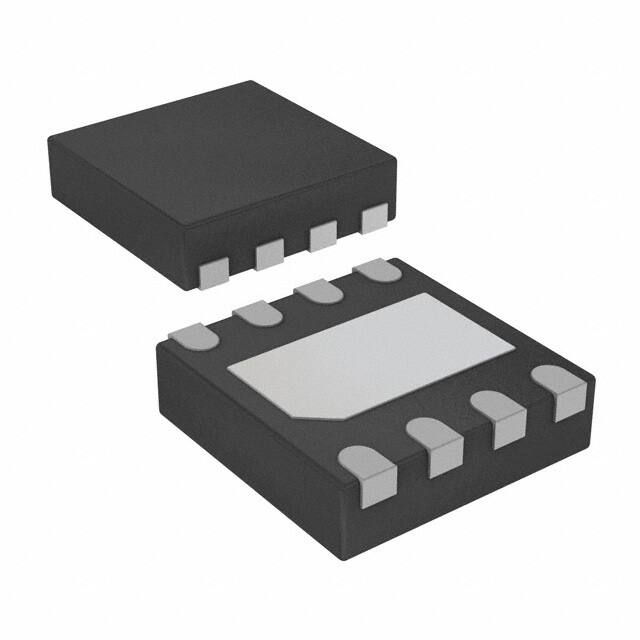
The AS1367 is a precise, low noise, high speed, low dropout regulator with adaptive operation. Features included are high ripple rejection and low dropout voltage, a reference voltage source, an error amplifier and a current limiter. The AS1367 provides high speed operation, low power consumption and high efficiency by automatically switching between a light load and a heavy load mode depending upon the output current level. The EN function enables the output to be turned off, while the electric charge at the output capacitor is discharged via the internal auto-discharge resistance, and as a result the VOUT pin quickly returns to the GND level. Furthermore a Bypass Pin is included to reduce noise. The device features integrate short-circuit and over current protection. Under-Voltage lockout prevents erratic operation when the input voltage is slowly decaying. Thermal Protection shuts down the device when die temperature reaches 160°C. This is a useful protection when the device is under sustained short circuit conditions. The device is available in a 8-pin TDFN 2x2 package.
2 Key Features
! ! ! ! ! ! ! ! ! ! ! ! ! !
Low Dropout Voltage: 110mV @ 150mA load Operating Input Voltage Range: 2.0V to 5.5V Output Voltage Range: 1.2V to 5.0V (50mV steps) Max. Output Current: 150mA Low Shutdown Current: 100nA High PSRR: 60dB @ 10kHz Integrated Overtemperature/Overcurrent Protection Under-Voltage Lockout Feature Chip Enable Input Power-OK Low Quiescent Current: 10µA Low Output Noise: 15µV @ 100kHz Bandwidth Operating Temperature Range: -40°C to +85°C 8-pin TDFN 2x2 Package
3 Applications
The AS1367 is ideal for cellular phones, cordless phones, wireless communication equipment, portable games, cameras, video recorders, portable audio-video equipment and personal digital assistants.
Figure 1. AS1367 - Typical Application Diagram
Input 2V to 5.5V CIN 1µF IN OUT
Output 1.2V to 5.0V
AS1367
IN POK
RPU 100kΩ
COUT 3.3µF
CBYP 10nF ON / OFF EN BYP
GND
SET
www.austriamicrosystems.com
Revision 1.02
1 - 14
�AS1367
Datasheet - P i n A s s i g n m e n t s
4 Pin Assignments
Figure 2. Pin Assignments (Top View)
OUT 1 BYP 2 SET 3 EN 4
Exposed Pad
8 IN
AS1367
7 IN 6 POK 5 GND
Pin Descriptions
Table 1. Pin Descriptions Pin Name OUT BYP SET EN GND POK Description Regulated Output Voltage. The current flowing out of this pin is equivalent to a DC load current. Fixed 1.2, 1.5, 1.8, 3.0, 3.3 and 4.5V output, as well as 1 versions from 1.2V up to 5.0V can be ordered. Bypass this pin with 3.3µF to GND. 2 Bypass. This pin should be connected via a 10nF capacitor to pin OUT. Set Input. Connect to GND for preset output. Connect to a resistive voltage3 divider between OUT and GND to set the output voltage between 1.2V and 5.0V. Active-High Enable Input. A logic low reduces the supply current to < 1µA. 4 Connect this pin to pin IN for normal operation. Ground. This pin also functions as a heat sink. Solder it to a large pad or to 5 the circuit-board ground plane to maximize power dissipation. Power-OK Output. Active-low, open-drain output indicates an out-of6 regulation condition. Connect a 100kΩ pull-up resistor to pin OUT for logic levels. Leave this pin unconnected if the Power-OK feature is not used. Input Voltage. These pins should be connected to the positive terminal of 7, 8 the input capacitor. Bypass this pin with 1µF to GND. Input voltage can range from 2.0V to 5.5V. Exposed Pad. This pin also functions as a heat sink. Solder it to a large pad Exposed Pad or to the circuit-board ground plane to maximize power dissipation. Internally it is connected GND. Pin Number
IN
GND
www.austriamicrosystems.com
Revision 1.02
2 - 14
�AS1367
Datasheet - A b s o l u t e M a x i m u m R a t i n g s
5 Absolute Maximum Ratings
Stresses beyond those listed in Table 2 may cause permanent damage to the device. These are stress ratings only, and functional operation of the device at these or any other conditions beyond those indicated in Section 6 Electrical Characteristics on page 4 is not implied. Exposure to absolute maximum rating conditions for extended periods may affect device reliability. Table 2. Absolute Maximum Ratings Parameter IN, POK to GND OUT to GND BYP to GND Output Short-Circuit Duration Continuous Power Dissipation Operating Temperature Range Junction Temperature TJ Thermal Resistance ΘJA Storage Temperature Range -65 -40 Min -0.3 -0.3 -0.3 Indefinite 300 +85 +150 +140 +150 Max +7 VIN + 0.3 VOUT + 0.3 Typ Units V V V V mW ºC ºC ºC/W ºC The reflow peak soldering temperature (body temperature) specified is in accordance with IPC/JEDEC J-STD020D “Moisture/Reflow Sensitivity Classification for non-hermetic Solid State Surface Mount Devices” Internally limited Derate 7.1mW/ºC above +70ºC Comments
Package Body Temperature
+260
ºC
www.austriamicrosystems.com
Revision 1.02
3 - 14
�AS1367
Datasheet - E l e c t r i c a l C h a r a c t e r i s t i c s
6 Electrical Characteristics
VIN = VOUT(NOM) + 0.5V or VIN = 2V (whichever is greater) , EN = IN, CIN = 1µF, COUT = 3.3µF, CBYP = 10nF, TAMB = 40°C to +85ºC (unless otherwise specified). Typical values are at TAMB = +25ºC. Table 3. Electrical Characteristics Symbol VIN VOUT ΔVOUT Parameter Input Voltage Output Voltage Conditions Min 2.0 1.2 -1 -2.5 -20 -50 150 50 -100 Typ Max 5.5 5.0 1 2.5 20 50 Unit V V % mV mA mA mV nA µA mV
IOUT ILIM VSET ISET IQ VIN -VOUT ΔVLNR ΔVLDR
Trimmable in 50mV steps TAMB = +25ºC, IOUT = 1mA, VOUT > 2V IOUT = 100µA to 150mA, VOUT > 2V Output Voltage Accuracy TAMB = +25ºC, IOUT = 1mA, VOUT ≤ 2V IOUT = 100µA to 150mA, VOUT ≤ 2V Maximum Output Current VOUT forced to GND Current Limit VOUT up to VIN, IOUT = 1mA SET Threshold SET = 0V SET Input Bias Current IOUT = 0mA IOUT = 100µA Quiescent Current IOUT = 150mA Dropout Voltage Line Regulation Load Regulation
1
180 100 10 10 15 110 0.02
150 100 16 20 30 200
3.0V < VOUT, IOUT = 150mA VIN = (VOUT(NOM) + 0.5V) to 5.5V, IOUT = 1mA
PSRR Shutdown tON IOFF VIH VIL RSHDN
IOUT = 100µA to 150mA VIN = (VOUT(NOM) + 0.5V) to 5.5V within 10µs, Dynamic Line Transient IOUT = 1mA Dynamic Load Transient IOUT = 1mA to 150mA within 10µs Output Noise Voltage IOUT = 10mA, f = 100Hz to 100kHz IOUT = 10mA, f = 1kHz Output Voltage Power- IOUT = 10mA, f = 10kHz Supply Rejection Ratio IOUT = 10mA, f = 100kHz
3 4
2 %/V 0.06 0.001 0.01 % / mA
17 12 15 75 60 52 50
mV mV µVRMS dB
EN Exit Delay Shutdown Supply Current Enable Input Threshold
IOUT = 0mA EN = 0V 1.4 0.1
500 1 0.4
µs µA V Ω
Autodischarge Resistance Power-OK Output VPOK VOL IPOK SET VSET ISET Power-OK Voltage Threshold
EN = 0V, IOUT = 0mA 90
740 94 3 1 50 -100 100 97.5 0.3 100 150 100
IOUT = 0mA, VOUTRISING IOUT = 0mA, VOUTFALLING POK Output Low Voltage POK sinking 1mA, EN = 0V POK Leakage Current VOUT in regulation SET Threshold Voltage Set Input Bias Current VOUT to VIN SET = 0V
% VOUT V nA mV nA
www.austriamicrosystems.com
Revision 1.02
4 - 14
�AS1367
Datasheet - E l e c t r i c a l C h a r a c t e r i s t i c s
Table 3. Electrical Characteristics (Continued) Symbol Parameter Thermal Protection Thermal Shutdown TSHDN Temperature Thermal Shutdown ΔTSHDN Hysteresis Conditions Min Typ 160 20 Max Unit ºC ºC
1. Dropout voltage = VIN - VOUT when VOUT is 100mV < VOUT for VIN = VOUT(NOM) + 0.5V (applies only to nominal output voltages ≥ 2.5V). 2. Guaranteed by design. 3. The rise and fall time of the shutdown signal must not exceed 1ms. 4. The delay time is defined as time required to set VOUT to 95% of its final nominal value. Note: All limits are guaranteed. The parameters with min and max values are guaranteed with production tests or SQC (Statistical Quality Control) methods.
www.austriamicrosystems.com
Revision 1.02
5 - 14
�AS1367
Datasheet - Ty p i c a l O p e r a t i n g C h a r a c t e r i s t i c s
7 Typical Operating Characteristics
VOUT = 3.3V, IOUT = 10mA, TAMB = +25°C (unless otherwise specified); Figure 3. Output Voltage vs. Output Current
3.38 3.36
Figure 4. Output Voltage vs. Input Voltage
3.5 3
Output Voltage (V)
Output Voltage (V)
3.34 3.32 3.3 3.28 3.26 3.24 3.22 0.1 1 10 100 1000
2.5 2 1.5 1 0.5 0 1.5 2 2.5 3 3.5 4 4.5 5 5.5
Output Current (mA) Figure 5. Output Voltage vs. Temperature
3.38 3.36
Input Voltage (V) Figure 6. No Load Battery Current vs. Input Voltage
50
Output Voltage (V)
3.34 3.32 3.3 3.28 3.26 3.24 3.22 -40
Battery Current (µA)
40
30
20
10
0 -20 0 20 40 60 80 1.5 2 2.5 3 3.5 4 4.5 5 5.5
Temperature (°C) Figure 7. Quiescent Current vs. Output Current
16 14
Input Voltage (V) Figure 8. Quiescent Current vs. Input Voltage
100
no l oad l oad = 150mA
Quiescent Current (µA)
12 10 8 6 4 2 0 0.1 1 10 100 1000
Quiescent Current (µA)
80
60
40
20
0 2 2.5 3 3.5 4 4.5 5 5.5
Output Current (mA) www.austriamicrosystems.com Revision 1.02
Input Voltage (V) 6 - 14
�AS1367
Datasheet - Ty p i c a l O p e r a t i n g C h a r a c t e r i s t i c s
Figure 9. PSRR vs. Frequency
100 90 80
PSRR (dB)
70 60 50 40 30 20 100
Iout = 100µA Iout = 1mA Iout = 10mA
1000
10000
100000
Frequency (Hz)
Figure 10. Startup; VIN = 3.8V, IOUT = 100mA
Figure 11. Startup; VIN = 3.8V, IOUT = 100mA
1V/Div
EN
1V/DIV
EN
VOUT
VOUT
100µs/Div
20µs/Div
Figure 12. Line Transient Response; VIN = 3.8V to 4.1V, IOUT = 100mA
Figure 13. Line Transient Response; VIN = 3.8V to 4.1V, IOUT = 100mA
200mV/Div
20mV/DIV
1ms/Div
200µs/Div
www.austriamicrosystems.com
Revision 1.02
20mV/DIV
VOUT
VOUT
500mV/Div
VIN
VIN
1V/DIV
1V/Div
7 - 14
�AS1367
Datasheet - Ty p i c a l O p e r a t i n g C h a r a c t e r i s t i c s
Figure 14. Load Transient Response; VIN = 3.8V, IOUT = 1mA to 100mA
Figure 15. Load Transient Response; VIN = 3.8V, IOUT = 1mA to 100mA
100mA/DIV
10mV/Div
VOUT
200µs/Div
10µs/Div
www.austriamicrosystems.com
Revision 1.02
100mA/DIV
IOUT
IOUT
20mV/Div
VOUT
8 - 14
�AS1367
Datasheet - D e t a i l e d D e s c r i p t i o n
8 Detailed Description
The AS1367 is low-dropout, low-quiescent-current linear regulator intended for LDO regulator applications where output current load requirements range from no load to 150mA. All devices come standard with adjustable output voltages of 1.2V to 5.0V and fixed output voltages (see Ordering Information on page 13). The AS1367 also features a Power-OK output to indicate when the output is within 6% of final value, and also an Enable pin. Shutdown current for the whole regulator is typically 10nA. The device features integrated short-circuit and over current protection. Under-Voltage lockout prevents erratic operation when the input voltage is slowly decaying (e.g. in a battery powered application). Thermal Protection shuts down the device when die temperature reaches 160°C. This is a useful protection when the device is under sustained short circuit conditions. As illustrated in Figure 16, the devices comprise a reference, error amplifier, P-channel MOSFET pass transistor, Power-OK detect logic, internal voltage divider, current limiter, reverse-battery protection, thermal sensor and shutdown logic. The bandgap reference is connected to the inverting input of the error amplifier. The error amplifier compares this reference with the feedback voltage and amplifies the difference. If the feedback voltage is lower than the reference voltage, the P-channel MOSFET gate is pulled lower, allowing more current to pass to the output, and increases the output voltage. If the feedback voltage is too high, the pass-transistor gate is pulled up, allowing less current to pass to the output. The output voltage feeds back through an internal resistor voltage divider connected to pin OUT.
Figure 16. AS1367 - Block Diagram
IN EN
ReverseBattery Protection Shutdown/ Power-On Control Logic Error Amplifier +
AS1367
Thermal Overload Protection
OUT
Bandgap Voltage & Current Reference
Trimmable Reference Voltage
POK
Power-OK Compare Logic NMOS
GND
Output Voltages
Standard products are factory-set with output voltages from 1.2V to 5.0V. A two-digit suffix of the part number identifies the nominal output (see Ordering Information on page 13). Non-standard devices are available. For more information contact: http://www.austriamicrosystems.com/contact-us
www.austriamicrosystems.com
Revision 1.02
9 - 14
�AS1367
Datasheet - D e t a i l e d D e s c r i p t i o n
Power-OK
The AS1367’s power-ok is built around an N-channel MOSFET. The circuitry monitors the voltage on pin SET and if the voltage goes out of regulation (e.g. during dropout, current limit, or thermal shutdown) the pin POK goes low. If the pin SET is connected to GND an internal resistive-divider is activated and connected to the output. Therefore, the PowerOK functionality can be realised with no additional external components. The Power-OK feature is not active during shutdown and provides a power-on-reset function that can operate down to VIN = 2.0V. A capacitor to GND may be added to generate a power-on-reset delay. To obtain a logic-level output, connect a pull-up resistor from pin POK to pin OUT. Larger values for this resistor will help to minimize current consumption; a 100kΩ resistor is perfect for most applications (see Figure 1 on page 1).
Current Limiting
The AS1367 include current limiting circuitry to protect against short-circuit conditions. The circuitry monitors and controls the gate voltage of the P-channel MOSFET, typically limiting the output current to 180mA. The P-channel MOSFET output can be shorted to ground for an indefinite period of time without damaging the device.
Thermal-Overload Protection
The devices are protected against thermal runaway conditions by the integrated thermal sensor circuitry. Thermal shutdown is an effective tool to prevent die overheating since the power transistor is the principle heat source in the device. If the junction temperature exceeds 160ºC with 20ºC hysteresis, the thermal sensor starts the shutdown logic, at which point the P-channel MOSFET is switched off. After the device temperature has dropped by approximately 20ºC, the thermal sensor will turn the P-channel MOSFET on again. Note that this will be exhibited as a pulsed output under continuous thermal-overload conditions. Note: The absolute maximum junction-temperature of +150ºC should not be exceeding during continual operation.
Operating Region and Power Dissipation
Maximum power dissipation is determined by the thermal resistance of the package and circuit board, the temperature difference between the die junction and the ambient air and the rate of the air flow. The power dissipation of the device is calculated by: P = I OUT × ( V IN – V OUT ) Maximum power dissipation is calculated by: T J – T AMB P MAX = -----------------------θ JA Where: TJ - TAMB is the temperature difference between the device die junction and the surrounding air. (EQ 2) (EQ 1)
θJA is the thermal resistance through the circuit board, copper traces, and other materials to the surrounding.
Note: Pin GND is a multi-function pin providing a connection to the system ground and acting as a heat sink. This pin should be connected to the system ground using a large pad or a ground plane.
www.austriamicrosystems.com
Revision 1.02
10 - 14
�AS1367
Datasheet - A p p l i c a t i o n I n f o r m a t i o n
9 Application Information
Capacitor Selection and Regulator Stability
Ceramic capacitors are highly recommended as they offer distinct advantages over their tantalum and aluminum electrolytic components. For stable operation with load currents up to the maximum over the entire device temperature range, use a 3.3µF (min) ceramic output capacitor with an ESR