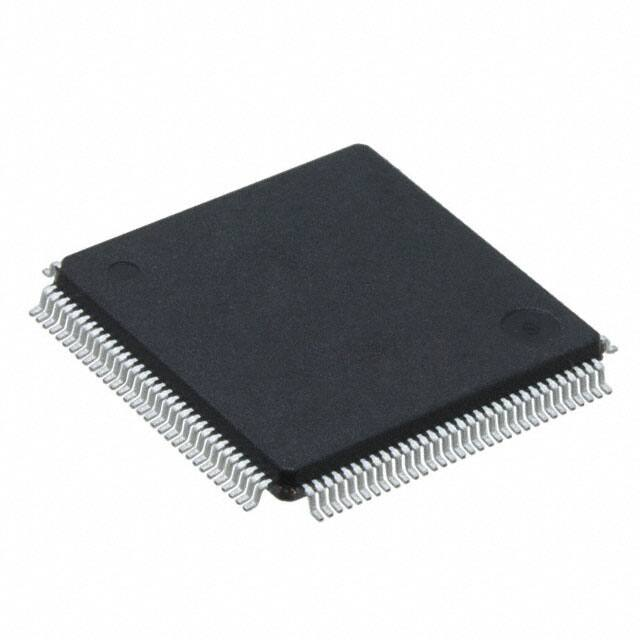
PI7C9X113SL
PCI Express-to-PCI Bridge
Preliminary Datasheet
Revision 0.3
3545 North 1ST Street, San Jose, CA 95134
Phone: 1-877-PERICOM (1-877-737-4266)
FAX: 1-408-435-1100
Internet: http://www.pericom.com
10-0209
�PI7C9X113SL
PCIe-to-PCI Bridge
LIFE SUPPORT POLICY
Pericom Semiconductor Corporation’s products are not authorized for use as critical components in life support devices or systems unless a specific
written agreement pertaining to such intended use is executed between the manufacturer and an officer of PSC.
1)
2)
Life support devices or system are devices or systems which:
a) Are intended for surgical implant into the body or
b) Support or sustain life and whose failure to perform, when properly used in accordance with instructions for use provided in the labeling, can
be reasonably expected to result in a significant injury to the user.
A critical component is any component of a life support device or system whose failure to perform can be reasonably expected to cause the failure of
the life support device or system, or to affect its safety or effectiveness. Pericom Semiconductor Corporation reserves the right to make changes to
its products or specifications at any time, without notice, in order to improve design or performance and to supply the best possible product. Pericom
Semiconductor does not assume any responsibility for use of any circuitry described other than the circuitry embodied in a Pericom Semiconductor
product. The Company makes no representations that circuitry described herein is free from patent infringement or other rights of third parties which
may result from its use. No license is granted by implication or otherwise under any patent, patent rights or other rights, of Pericom Semiconductor
Corporation.
All other trademarks are of their respective companies.
Page 2 of 79
Pericom Semiconductor
10-0209
July 2010, Revision 0.3
�PI7C9X113SL
PCIe-to-PCI Bridge
REVISION HISTORY
DATE
REVISION #
5/27/2009
9/15/2009
0.1
0.2
7/26/2010
0.3
DESCRIPTION
Preliminary Datasheet
Updated Section 6.3 (I/O Limit Register – Offset 1Ch, Interrupt Line Register –
Offset 3Ch, Arbiter Enable Register – Offset 48h, Memory ReadSmart Range
Control Register – Offset 58h, Upstream Memory Read/Write Control Register –
Offset 68h, XPIP Configuration Register 1 – Offset D0h)
Updated Section 12 IEEE 1149.1 Compatible JTAG Controller (Removed
TRST_L)
Updated Table 14-2 DC Electrical Characteristics (VDDA)
Updated Section 2 Pin Definitions (Pin 22 to NC)
Updated Section 6.3 PCI Configuration Registers (Offset 40h, 44h, 6Ch, A4h,
D0h, D4h)
Updated VDDC and VDDA voltage to 1.1V (Section 2.7, Table 14-2)
PREFACE
The datasheet of PI7C9X113SL will be enhanced periodically when updated information is available. The
technical information in this datasheet is subject to change without notice. This document describes the
functionalities of PI7C9X113SL (PCI Express Bridge) and provides technical information for designers to design
their hardware using PI7C9X113SL.
Page 3 of 79
Pericom Semiconductor
10-0209
July 2010, Revision 0.3
�PI7C9X113SL
PCIe-to-PCI Bridge
TABLE OF CONTENTS
1
INTRODUCTION ........................................................................................................................ 11
1.1
1.2
1.3
1.4
2
INDUSTRY SPECIFICATION COMPLIANCE ................................................................... 11
GENERAL FEATURES......................................................................................................... 12
PCI EXPRESS FEATURES ................................................................................................... 12
PCI FEATURES ..................................................................................................................... 12
PIN DEFINITIONS...................................................................................................................... 13
SIGNAL TYPES..................................................................................................................... 13
PCI EXPRESS SIGNALS....................................................................................................... 13
PCI SIGNALS ........................................................................................................................ 13
MODE SELECT AND STRAPPING SIGNALS ................................................................... 15
JTAG BOUNDARY SCAN SIGNALS .................................................................................. 15
MISCELLANEOUS SIGNALS ............................................................................................. 15
POWER AND GROUND PINS ............................................................................................. 15
PIN ASSIGNMENTS ............................................................................................................. 17
2.1
2.2
2.3
2.4
2.5
2.6
2.7
2.8
3
MODE SELECTION AND PIN STRAPPING.......................................................................... 18
FUNCTIONAL MODE SELECTION.................................................................................... 18
PIN STRAPPING ................................................................................................................... 18
3.1
3.2
4
TRANSPARENT AND FORWARD BRIDGING..................................................................... 19
TRANSPARENT MODE ....................................................................................................... 19
FORWARD BRDIGE............................................................................................................. 19
4.1
4.2
5
PCI EXPRESS FUNCTIONAL OVERVIEW........................................................................... 21
TLP STRUCTURE ................................................................................................................. 21
VIRTUAL ISOCHRONOUS OPERATION .......................................................................... 21
5.1
5.2
6
CONFIGURATION REGISTER ACCESS............................................................................... 22
CONFIGURATION REGISTER MAP .................................................................................. 22
PCI EXPRESS EXTENDED CAPABILITY REGISTER MAP ............................................ 24
PCI CONFIGURATION REGISTERS .................................................................................. 26
6.1
6.2
6.3
6.3.1
6.3.2
6.3.3
6.3.4
6.3.5
6.3.6
6.3.7
6.3.8
6.3.9
6.3.10
6.3.11
VENDOR ID – OFFSET 00h ................................................................................................................ 26
DEVICE ID – OFFSET 00h.................................................................................................................. 26
COMMAND REGISTER – OFFSET 04h .............................................................................................. 26
PRIMARY STATUS REGISTER – OFFSET 04h................................................................................... 27
REVISION ID REGISTER – OFFSET 08h ........................................................................................... 28
CLASS CODE REGISTER – OFFSET 08h ........................................................................................... 28
CACHE LINE SIZE REGISTER – OFFSET 0Ch.................................................................................. 28
PRIMARY LATENCY TIMER REGISTER – OFFSET 0Ch .................................................................. 28
HEADER TYPE REGISTER – OFFSET 0Ch........................................................................................ 28
RESERVED REGISTERS – OFFSET 10h TO 17h................................................................................ 29
PRIMARY BUS NUMBER REGISTER – OFFSET 18h ........................................................................ 29
Page 4 of 79
Pericom Semiconductor
10-0209
July 2010, Revision 0.3
�PI7C9X113SL
PCIe-to-PCI Bridge
6.3.12
6.3.13
6.3.14
6.3.15
6.3.16
6.3.17
6.3.18
6.3.19
6.3.20
6.3.21
6.3.22
6.3.23
6.3.24
6.3.25
6.3.26
6.3.27
6.3.28
6.3.29
6.3.30
6.3.31
6.3.32
6.3.33
6.3.34
6.3.35
6.3.36
6.3.37
6.3.38
6.3.39
6.3.40
6.3.41
6.3.42
6.3.43
6.3.44
6.3.45
6.3.46
6.3.47
6.3.48
6.3.49
6.3.50
6.3.51
6.3.52
6.3.53
6.3.54
6.3.55
6.3.56
6.3.57
6.3.58
6.3.59
6.3.60
6.3.61
6.3.62
SECONDARY BUS NUMBER REGISTER – OFFSET 18h .................................................................. 29
SUBORDINATE BUS NUMBER REGISTER – OFFSET 18h .............................................................. 29
SECONDARY LATENCY TIME REGISTER – OFFSET 18h................................................................ 29
I/O BASE REGISTER – OFFSET 1Ch.................................................................................................. 29
I/O LIMIT REGISTER – OFFSET 1Ch................................................................................................. 29
SECONDARY STATUS REGISTER – OFFSET 1Ch ............................................................................ 29
MEMORY BASE REGISTER – OFFSET 20h ....................................................................................... 30
MEMORY LIMIT REGISTER – OFFSET 20h ...................................................................................... 30
PREFETCHABLE MEMORY BASE REGISTER – OFFSET 24h ......................................................... 31
PREFETCHABLE MEMORY LIMIT REGISTER – OFFSET 24h........................................................ 31
PREFETCHABLE BASE UPPER 32-BIT REGISTER – OFFSET 28h................................................. 31
PREFETCHABLE LIMIT UPPER 32-BIT REGISTER – OFFSET 2Ch............................................... 31
I/O BASE UPPER 16-BIT REGISTER – OFFSET 30h......................................................................... 31
I/O LIMIT UPPER 16-BIT REGISTER – OFFSET 30h........................................................................ 31
CAPABILITY POINTER – OFFSET 34h .............................................................................................. 31
EXPANSION ROM BASE ADDRESS REGISTER – OFFSET 38h ....................................................... 32
INTERRUPT LINE REGISTER – OFFSET 3Ch................................................................................... 32
INTERRUPT PIN REGISTER – OFFSET 3Ch ..................................................................................... 32
BRIDGE CONTROL REGISTER – OFFSET 3Ch ................................................................................ 32
PCI DATA PREFETCHING CONTROL REGISTER – OFFSET 40h .................................................. 33
CHIP CONTROL 0 REGISTER – OFFSET 40h ................................................................................... 35
RESERVED REGISTER – OFFSET 44h............................................................................................... 36
ARBITER ENABLE REGISTER – OFFSET 48h................................................................................... 36
ARBITER MODE REGISTER – OFFSET 48h...................................................................................... 36
ARBITER PRIORITY REGISTER – OFFSET 48h ................................................................................ 37
RESERVED REGISTERS – OFFSET 4Ch ............................................................................................ 37
MEMORY READSMART BASE LOWER 32-Bit REGISTER 1 – OFFSET 50h.................................... 38
MEMORY READSMART BASE UPPER 32-Bit REGISTER 1 – OFFSET 54h .................................... 38
MEMORY READSMART RANGE CONTROL REGISTER 1 – OFFSET 58h ...................................... 38
MEMORY READSMART BASE LOWER 32-Bit REGISTER 2 – OFFSET 5Ch ................................... 38
MEMORY READSMART BASE UPPER 32-Bit REGISTER 2 – OFFSET 60h .................................... 38
MEMORY READSMART RANGE SIZE REGISTER 2 – OFFSET 64h ................................................ 38
UPSTREAM MEMORY READ/WRITE CONTROL REGISTER – OFFSET 68h.................................. 39
PHY TRANSMIT/RECEIVE CONTROL REGISTER – OFFSET 6Ch .................................................. 39
EEPROM AUTOLOAD CONTROL/STATUS REGISTER – OFFSET 70h........................................... 40
RESERVED REGISTER – OFFSET 74h............................................................................................... 42
GPIO DATA AND CONTROL REGISTER – OFFSET 78h.................................................................. 42
RESERVED REGISTER – OFFSET 7Ch .............................................................................................. 42
PCI-X CAPABILITY ID REGISTER – OFFSET 80h ............................................................................ 42
NEXT CAPABILITY POINTER REGISTER – OFFSET 80h ................................................................ 42
PCI-X SECONDARY STATUS REGISTER – OFFSET 80h.................................................................. 42
PCI-X BRIDGE STATUS REGISTER – OFFSET 84h.......................................................................... 43
UPSTREAM SPLIT TRANSACTION REGISTER – OFFSET 88h ........................................................ 44
DOWNSTREAM SPLIT TRANSACTION REGISTER – OFFSET 8Ch ................................................. 44
POWER MANAGEMENT ID REGISTER – OFFSET 90h.................................................................... 44
NEXT CAPABILITY POINTER REGISTER – OFFSET 90h ................................................................ 44
POWER MANAGEMENT CAPABILITY REGISTER – OFFSET 90h .................................................. 44
POWER MANAGEMENT CONTROL AND STATUS REGISTER – OFFSET 94h .............................. 45
PCI-TO-PCI SUPPORT EXTENSION REGISTER – OFFSET 94h ..................................................... 46
SUBTRACTIVE DECODING PCI-TO-PCI BRIDGE ENABLE – OFFSET 98h.................................. 46
RESERVED REGISTERS – OFFSET 9Ch ............................................................................................ 46
Page 5 of 79
Pericom Semiconductor
10-0209
July 2010, Revision 0.3
�PI7C9X113SL
PCIe-to-PCI Bridge
6.3.63
6.3.64
6.3.65
6.3.66
6.3.67
6.3.68
6.3.69
6.3.70
6.3.71
6.3.72
6.3.73
6.3.74
6.3.75
6.3.76
6.3.77
6.3.78
6.3.79
6.3.80
6.3.81
6.3.82
6.3.83
6.3.84
6.3.85
6.3.86
6.3.87
6.3.88
6.3.89
6.3.90
6.3.91
6.3.92
6.3.93
6.3.94
6.3.95
6.3.96
6.3.97
6.3.98
6.3.99
6.3.100
6.3.101
6.3.102
6.3.103
6.3.104
6.3.105
6.3.106
6.3.107
6.3.108
6.3.109
6.3.110
6.3.111
6.3.112
6.3.113
CAPABILITY ID REGISTER – OFFSET A0h....................................................................................... 46
NEXT POINTER REGISTER – OFFSET A0h....................................................................................... 46
SLOT NUMBER REGISTER – OFFSET A0h ....................................................................................... 47
CHASSIS NUMBER REGISTER – OFFSET A0h ................................................................................. 47
SECONDARY CLOCK AND CLKRUN CONTROL REGISTER – OFFSET A4h................................. 47
XPIP CONFIGURATION REGISTER 3 – OFFSET A4h ..................................................................... 48
CAPABILITY ID REGISTER – OFFSET A8h....................................................................................... 48
NEXT POINTER REGISTER – OFFSET A8h....................................................................................... 48
RESERVED REGISTER – OFFSET A8h .............................................................................................. 48
SUBSYSTEM VENDOR ID REGISTER – OFFSET ACh...................................................................... 48
SUBSYSTEM ID REGISTER – OFFSET ACh ...................................................................................... 49
PCI EXPRESS CAPABILITY ID REGISTER – OFFSET B0h .............................................................. 49
NEXT CAPABILITY POINTER REGISTER – OFFSET B0h ................................................................ 49
PCI EXPRESS CAPABILITY REGISTER – OFFSET B0h ................................................................... 49
DEVICE CAPABILITY REGISTER – OFFSET B4h............................................................................. 49
DEVICE CONTROL REGISTER – OFFSET B8h................................................................................. 50
DEVICE STATUS REGISTER – OFFSET B8h..................................................................................... 51
LINK CAPABILITY REGISTER – OFFSET BCh ................................................................................. 51
LINK CONTROL REGISTER – OFFSET C0h...................................................................................... 52
LINK STATUS REGISTER – OFFSET C0h.......................................................................................... 53
RESERVED REGISTER – OFFSET C4 – C8h ..................................................................................... 53
XPIP CONFIGURATION REGISTER 0 – OFFSET CCh..................................................................... 53
XPIP CONFIGURATION REGISTER 1 – OFFSET D0h ..................................................................... 53
XPIP CONFIGURATION REGISTER 2 – OFFSET D4h ..................................................................... 54
CAPABILITY ID REGISTER – OFFSET D8h ...................................................................................... 54
NEXT POINTER REGISTER – OFFSET D8h ...................................................................................... 54
VPD REGISTER – OFFSET D8h ......................................................................................................... 54
VPD DATA REGISTER – OFFSET DCh.............................................................................................. 54
EXTENDED CONFIGURATION ACCESS ADDRESS REGISTER – OFFSET E0h............................ 55
EXTENDED CONFIGURATION ACCESS DATA REGISTER – OFFSET E4h................................... 55
RESERVED REGISTERS – OFFSET E8h – ECh ................................................................................. 55
MESSAGE SIGNALED INTERRUPTS ID REGISTER – F0h............................................................... 55
NEXT CAPABILITIES POINTER REGISTER – F0h............................................................................ 55
MESSAGE CONTROL REGISTER – OFFSET F0h ............................................................................. 55
MESSAGE ADDRESS REGISTER – OFFSET F4h .............................................................................. 56
MESSAGE UPPER ADDRESS REGISTER – OFFSET F8h................................................................. 56
MESSAGE DATA REGISTER – OFFSET FCh..................................................................................... 56
ADVANCE ERROR REPORTING CAPABILITY ID REGISTER – OFFSET 100h .............................. 56
ADVANCE ERROR REPORTING CAPABILITY VERSION REGISTER – OFFSET 100h .................. 56
NEXT CAPABILITY OFFSET REGISTER – OFFSET 100h ................................................................ 56
UNCORRECTABLE ERROR STATUS REGISTER – OFFSET 104h ................................................... 56
UNCORRECTABLE ERROR MASK REGISTER – OFFSET 108h ...................................................... 57
UNCORRECTABLE ERROR SEVERITY REGISTER – OFFSET 10Ch............................................... 57
CORRECTABLE ERROR STATUS REGISTER – OFFSET 110h......................................................... 58
CORRECTABLE ERROR MASK REGISTER – OFFSET 114h ............................................................ 58
ADVANCED ERROR CAPABILITIES AND CONTROL REGISTER – OFFSET 118h........................ 58
HEADER LOG REGISTER 1 – OFFSET 11Ch .................................................................................... 58
HEADER LOG REGISTER 2 – OFFSET 120h..................................................................................... 58
HEADER LOG REGISTER 3 – OFFSET 124h..................................................................................... 59
HEADER LOG REGISTER 4 – OFFSET 128h..................................................................................... 59
SECONDARY UNCORRECTABLE ERROR STATUS REGISTER – OFFSET 12Ch ........................... 59
Page 6 of 79
Pericom Semiconductor
10-0209
July 2010, Revision 0.3
�PI7C9X113SL
PCIe-to-PCI Bridge
6.3.114
6.3.115
6.3.116
6.3.117
6.3.118
6.3.119
6.3.120
6.3.121
6.3.122
6.3.123
6.3.124
6.3.125
6.3.126
6.3.127
6.3.128
6.3.129
6.3.130
6.3.131
6.3.132
6.3.133
6.3.134
SECONDARY UNCORRECTABLE ERROR MASK REGISTER – OFFSET 130h ............................... 59
SECONDARY UNCORRECTABLE ERROR SEVERITY REGISTER – OFFSET 134h ........................ 60
SECONDARY ERROR CAPABILITY AND CONTROL REGISTER – OFFSET 138h.......................... 61
SECONDARY HEADER LOG REGISTER – OFFSET 13Ch – 148h.................................................... 61
RESERVED REGISTER – OFFSET 14Ch ............................................................................................ 61
VC CAPABILITY ID REGISTER – OFFSET 150h ............................................................................... 61
VC CAPABILITY VERSION REGISTER – OFFSET 150h ................................................................... 61
NEXT CAPABILITY OFFSET REGISTER – OFFSET 150h ................................................................ 61
PORT VC CAPABILITY REGISTER 1 – OFFSET 154h ...................................................................... 61
PORT VC CAPABILITY REGISTER 2 – OFFSET 158h ...................................................................... 62
PORT VC CONTROL REGISTER – OFFSET 15Ch............................................................................. 62
PORT VC STATUS REGISTER – OFFSET 15Ch................................................................................. 62
VC0 RESOURCE CAPABILITY REGISTER – OFFSET 160h ............................................................. 62
VC0 RESOURCE CONTROL REGISTER – OFFSET 164h ................................................................. 62
VC0 RESOURCE STATUS REGISTER – OFFSET 168h ..................................................................... 62
RESERVED REGISTERS – OFFSET 16Ch – 2FCh ............................................................................. 63
EXTENDED GPIO DATA AND CONTROL REGISTER – OFFSET 300h........................................... 63
EXTENDED GPI/GPO DATA AND CONTROL REGISTER – OFFSET 304h .................................... 63
RESERVED REGISTERS – OFFSET 308h – 30Ch .............................................................................. 63
REPLAY AND ACKNOWLEDGE LATENCY TIMERS – OFFSET 310h ............................................. 63
RESERVED REGISTERS – OFFSET 314h – FFCh ............................................................................. 63
7
GPIO PINS AND SM BUS ADDRESS....................................................................................... 64
8
CLOCK SCHEME ....................................................................................................................... 65
9
INTERRUPTS .............................................................................................................................. 69
10
EEPROM (I2C) INTERFACE AND SYSTEM MANAGEMENT BUS................................. 70
10.1
10.2
10.3
EEPROM (I2C) INTERFACE................................................................................................ 70
SYSTEM MANAGEMENT BUS .......................................................................................... 70
EEPROM AUTOLOAD CONFIGURATION ....................................................................... 70
11
RESET SCHEME......................................................................................................................... 72
12
IEEE 1149.1 COMPATIBLE JTAG CONTROLLER ............................................................. 73
12.1
12.2
12.3
12.4
12.5
INSTRUCTION REGISTER.................................................................................................. 73
BYPASS REGISTER ............................................................................................................. 73
DEVICE ID REGISTER......................................................................................................... 73
BOUNDARY SCAN REGISTER .......................................................................................... 74
JTAG BOUNDARY SCAN REGISTER ORDER ................................................................. 74
13
POWER MANAGEMENT.......................................................................................................... 75
14
ELECTRICAL AND TIMING SPECIFICATIONS ................................................................ 76
14.1
14.2
14.3
15
ABSOLUTE MAXIMUM RATINGS.................................................................................... 76
DC SPECIFICATIONS .......................................................................................................... 76
AC SPECIFICATIONS .......................................................................................................... 77
PACKAGE INFORMATION ..................................................................................................... 78
Page 7 of 79
Pericom Semiconductor
10-0209
July 2010, Revision 0.3
�PI7C9X113SL
PCIe-to-PCI Bridge
16
ORDERING INFORMATION ................................................................................................... 79
Page 8 of 79
Pericom Semiconductor
10-0209
July 2010, Revision 0.3
�PI7C9X113SL
PCIe-to-PCI Bridge
TABLE OF FIGURES
FIGURE 1-1 PI7C9X113SL TOPOLOGY ............................................................................................... 11
FIGURE 4-1 FORWARD BRIDGE MODE ..................................................................................................... 20
FIGURE 8-1 TOPOLOGY OF INTERNAL CLOCK GENERATOR AND INTERNAL CLOCK BUFFERING – INTERNAL
FEEDBACK MODE ............................................................................................................................. 66
FIGURE 8-2 TOPOLOGY OF INTERNAL CLOCK GENERATOR AND INTERNAL CLOCK BUFFERING – EXTERNAL
FEEDBACK MODE ............................................................................................................................. 66
FIGURE 8-3 TOPOLOGY OF EXTERNAL CLOCK GENERATOR AND INTERNAL CLOCK BUFFERING – INTERNAL
FEEDBACK MODE ............................................................................................................................. 67
FIGURE 8-4 TOPOLOGY OF EXTERNAL CLOCK GENERATOR AND INTERNAL CLOCK BUFFERING – EXTERNAL
FEEDBACK MODE ............................................................................................................................. 67
FIGURE 8-5 TOPOLOGY OF EXTERNAL CLOCK GENERATOR AND EXTERNAL CLOCK BUFFERING ............... 68
FIGURE 14-1 PCI SIGNAL TIMING CONDITIONS......................................................................................... 77
FIGURE 15-1 PACKAGE OUTLINE DRAWING ............................................................................................. 78
LIST OF TABLES
TABLE 2-1 PIN ASSIGNMENTS.................................................................................................................. 17
TABLE 3-1 MODE SELECTION .................................................................................................................. 18
TABLE 3-2 PIN STRAPPING FOR CLOCK POWER MANAGEMENT ............................................................... 18
TABLE 5-1 TLP FORMAT ......................................................................................................................... 21
TABLE 6-1 CONFIGURATION REGISTER MAP (00H – FFH) ....................................................................... 22
TABLE 6-2 PCI EXPRESS EXTENDED CAPABILITY REGISTER MAP (100H – FFFH) .................................. 25
TABLE 7-1 SM BUS DEVICE ID STRAPPING ............................................................................................. 64
TABLE 8-1 FREQUENCY OF PCI CLKOUT WITH INTERNAL CLOCK SOURCE:........................................... 65
TABLE 9-1 PCI INTERRUPT TO PCIE INTERRUPT MESSAGE MAPPING IN FORWARD BRIDGE MODE ............ 69
TABLE 12-1 INSTRUCTION REGISTER CODES ............................................................................................ 73
TABLE 12-2 JTAG DEVICE ID REGISTER.................................................................................................. 73
TABLE 14-1 ABSOLUTE MAXIMUM RATINGS ............................................................................................ 76
TABLE 14-2 DC ELECTRICAL CHARACTERISTICS ..................................................................................... 76
TABLE 14-3 PCI BUS TIMING PARAMETERS.............................................................................................. 77
Page 9 of 79
Pericom Semiconductor
10-0209
July 2010, Revision 0.3
�PI7C9X113SL
PCIe-to-PCI Bridge
This page intentionally left blank.
Page 10 of 79
Pericom Semiconductor
10-0209
July 2010, Revision 0.3
�PI7C9X113SL
PCIe-to-PCI Bridge
1
INTRODUCTION
PI7C9X113SL is a PCIe-to-PCI/PCI-X bridge. PI7C9X113SL is compliant with the PCI Express Base
Specification, Revision 1.1, the PCI Express Card Electromechanical Specification, Revision 1.1, the PCI Local
Bus Specification, Revision 3.0 and PCI Express to PCI/PCI-X Bridge Specification, Revision 1.0. PI7C9X113SL
supports transparent mode operation and forward bridging. PI7C9X113SL has an x1 PCI Express upstream port
and a 32-bit PCI downstream port. The 32-bit PCI downstream port is 66MHz capable (see Figure 1-1).
PI7C9X113SL configuration registers are backward compatible with existing PCI bridge software and firmware.
No modification of PCI bridge software and firmware is needed for the original operation.
Figure 1-1 PI7C9X113SL Topology
Tx
Rx
x1 PCI Express Port
PI7C9X113L
PCI 32bit / 66MHz Bus
PCI
Device
1.1
PCI
Device
PCI
Device
PCI
Device
INDUSTRY SPECIFICATION COMPLIANCE
Compliant with PCI Express Base Specification, Revision 1.1
Compliant with PCI Express to PCI/PCI-X Bridge Specification, Revision 1.0
Compliant with PCI Express Card Electromechanical Specification, Revision 1.0a
Compliant with PCI-to-PCI Bridge Architecture Specification, Revision 1.2
Compliant with PCI Local Bus Specification, Revision 3.0
Compliant with PCI SHPC and Subsystem Specification, Revision 1.0
Compliant with PCI Mobile Design Guide, Version 1.1
Compliant with PCI Bus PM Interface Specification, Revision 1.2
Compliant with System Management (SM) Bus, Version 2.0
Compliant with Advanced Configuration and Power Interface Specification (ACPI), Revision 2.0b
Page 11 of 79
Pericom Semiconductor
10-0209
July 2010, Revision 0.3
�PI7C9X113SL
PCIe-to-PCI Bridge
1.2
GENERAL FEATURES
1.3
PCI EXPRESS FEATURES
1.4
Forward bridging (PCI Express as primary bus, PCI as secondary bus)
x1 PCI Express interface (2.5Gb/s data rate)
32-bit PCI interface capable of 66MHz
GPIO support (4 bi-directional pins). When external arbiter is used, 3 additional GPI (input) and GPO
(output) pins
Power Management (including ACPI, PCI_PM, CLKRUN_L and CLKREQ_L,)
Transparent mode support
Subtractive Decoding PCI-to-PCI bridge to support legacy device
Masquerade support (user-defined vendor, device, revision, subsystem device, and subsystem vendor ID)
EEPROM (I2C) Interface
SM Bus Interface
10k byte buffer: 2K byte buffer for downstream memory read, 4K bytes for upstream memory read, and
2K byte buffer for memory write in both directions
Auxiliary powers (VAUX, VDDAUX, VDDCAUX) support
Power consumption less than 350 mW in typical condition
Extended commercial temperature range (0C to 85C)
Physical Layer interface (x1 link with 2.5Gb/s data rate)
Virtual Isochronous support (upstream TC1-7 generation, downstream TC1-7 mapping)
CRC (16-bit), LCRC (32-bit)
ECRC and advanced error reporting
Lane polarity toggle
ASPM support
WAKE_L support
Maximum payload size to 512 bytes
CLKREQ_L support to disable Refclk at L1 and L2 state
PCI FEATURES
Provides two level arbitration support for four PCI Bus masters
3.3V PCI signaling with 5V I/O tolerance
PME_L support
LOCK support
16-bit address decode for VGA
Subsystem Vendor and Subsystem Device IDs support
PCI INT interrupt or MSI Function support
Adaptive fragmentation support for memory write
Internal clock generator for PCI bus
CLKRUN_L support to stop the PCI clock
Page 12 of 79
Pericom Semiconductor
10-0209
July 2010, Revision 0.3
�PI7C9X113SL
PCIe-to-PCI Bridge
2
PIN DEFINITIONS
2.1
SIGNAL TYPES
TYPE OF SIGNAL - DESCRIPTIONS
B
I
IU
ID
IOD
OD
O
P
G
Bi-directional
Input
Input with pull-up
Input with pull-down
Bi-directional with open drain output
Open drain output
Output
Power
Ground
“_L” in signal name indicates Active LOW signal
2.2 PCI EXPRESS SIGNALS
NAME
REFCLKP
REFCLKN
RP
RN
TP
TN
PERST_L
PIN ASSIGNMENT
13, 12
TYPE
I
DESCRIPTION
Reference Clock Inputs: Connect to external 100MHz differential clock.
21, 20
I
PCI Express Data Inputs: Differential data receiver input signals
17, 16
O
PCI Express Data Outputs: Differential data transmitter output signals
29
I
PCI Express Fundamental Reset (Active LOW): PI7C9X113SL The device uses
this signal reset to initialize the internal state machines.
TYPE
B
DESCRIPTION
Address / Data: Multiplexed address and data bus. Address phase is aligned with
first clock of FRAME_L assertion. Data phase is aligned with IRDY_L or TRDY_L
assertion. Data is transferred on rising edges of CLKOUT[0] when both IRDY_L and
TRDY_L are asserted. During bus idle (both FRAME_L and IRDY_L are deasserted), PI7C9X113SL drives AD to a valid logic level when arbiter is parking to
PI7C9X113SL on PCI bus.
B
Command / Byte Enables (Active LOW): Multiplexed command at address phase
and byte enable at data phase. During address phase, the initiator drives commands on
CBE [3:0] signals to start the transaction. If the command is a write transaction, the
initiator will drive the byte enables during data phase. Otherwise, the target will drive
the byte enables during data phase. During bus idle, PI7C9X113SL drives CBE [3:0]
signals to a valid logic level when arbiter is parking to PI7C9X113SL on PCI bus.
Parity Bit: Parity bit is an even parity (i.e. even number of 1’s), which generates
based on the values of AD [31:0], CBE [3:0]. If PI7C9X113SL is an initiator with a
write transaction, PI7C9X113SL will tri-state PAR. If PI7C9X113SL is a target and
a write transaction, PI7C9X113SL will drive PAR one clock after the address or data
phase. If PI7C9X113SL is a target and a read transaction, PI7C9X113SL will drive
PAR one clock after the address phase and tri-state PAR during data phases. PAR is
tri-stated one cycle after the AD lines are tri-stated. During bus idle, PI7C9X113SL
drives PAR to a valid logic level when arbiter is parking to PI7C9X113SL on PCI
bus.
FRAME (Active LOW): Driven by the initiator of a transaction to indicate the
beginning and duration an access. The de-assertion of FRAME_L indicates the final
data phase signaled by the initiator in burst transfers. Before being tri-stated, it is
driven to a de-asserted state for one cycle.
2.3 PCI SIGNALS
NAME
AD [31:0]
CBE_L[3:0]
PIN ASSIGNMENT
125, 126, 124, 121,
122, 120, 119, 117,
113, 111, 110, 109,
108, 106, 103, 104,
90, 88, 86, 85, 83, 80,
79, 78, 75, 74, 71, 70,
68, 69, 67, 64
116, 99, 89, 76
PAR
94
B
FRAME_L
63
B
Page 13 of 79
Pericom Semiconductor
10-0209
July 2010, Revision 0.3
�PI7C9X113SL
PCIe-to-PCI Bridge
NAME
IRDY_L
PIN ASSIGNMENT
97
TYPE
B
TRDY_L
100
B
DEVSEL_L
98
B
STOP_L
96
B
LOCK_L
93
B
PERR_L
92
B
SERR_L
61
IOD
REQ_L [3:0]
33, 34, 32, 31
I
GNT_L [3:0]
41, 39, 40, 37
O
CLKOUT [3:0]
49, 54, 56, 59
B
M66EN
102
I
RESET_L
46
O
INTA_L
INTB_L
INTC_L
INTD_L
36,
43,
57,
60
I
DESCRIPTION
IRDY (Active LOW): Driven by the initiator of a transaction to indicate its ability to
complete current data phase on the primary side. Once asserted in a data phase, it is
not de-asserted until the end of the data phase. Before tri-stated, it is driven to a deasserted state for one cycle.
TRDY (Active LOW): Driven by the target of a transaction to indicate its ability to
complete current data phase on the primary side. Once asserted in a data phase, it is
not de-asserted until the end of the data phase. Before tri-stated, it is driven to a deasserted state for one cycle.
Device Select (Active LOW): Asserted by the target indicating that the device is
accepting the transaction. As a master, PI7C9X113SL waits for the assertion of this
signal within 5 cycles of FRAME_L assertion; otherwise, terminate with master
abort. Before tri-stated, it is driven to a de-asserted state for one cycle.
STOP (Active LOW): Asserted by the target indicating that the target is requesting
the initiator to stop the current transaction. Before tri-stated, it is driven to a deasserted state for one cycle.
LOCK (Active LOW): Asserted by the initiator for multiple transactions to
complete. PI7C9X113SL does not support any upstream LOCK transaction.
Parity Error (Active LOW): Asserted when a data parity error is detected for data
received on the PCI bus interface. Before being tri-stated, it is driven to a de-asserted
state for one cycle.
System Error (Active LOW): Can be driven LOW by any device to indicate a
system error condition. If SERR control is enabled, PI7C9X113SL will drive this pin
on:
Address parity error
Posted write data parity error on target bus
Master abort during posted write transaction
Target abort during posted write transaction
Posted write transaction discarded
Delayed write request discarded
Delayed read request discarded
Delayed transaction master timeout
Errors reported from PCI Express port (advanced error reporting) in transparent
mode.
This signal is an open drain buffer that requires an external pull-up resistor for proper
operation.
Request (Active LOW): REQ_L’s are asserted by bus master devices to request for
transactions on the PCI bus. The master devices de-assert REQ_Ls for at least 2 PCI
clock cycles before asserting them again. If external arbiter is selected, REQ_L [0]
will be the bus grant input to PI7C9X113SL. Also, REQ_L [3:1] will become the
GPI [2:0].
When powered up, if both REQ_L[2] and REQ_L[3] and pulled low (Active LOW)
and stay low in normal operation, the PI7C9X113SL will change the function of
CLKOUT[3] to CLKRUN_L and CLKOUT[2] to CLKREQ_L, respectively.
Grant (Active LOW): PI7C9X113SL asserts GNT_Ls to release PCI bus control to
bus master devices. During idle and all GNT_Ls are de-asserted and arbiter is parking
to PI7C9X113SL, PI7C9X113SL will drive AD, CBE, and PAR to valid logic levels.
If external arbiter is selected, GNT_L [0] will be the bus request from PI7C9X113SL
to external arbiter. Also, GNT_L [3:1] will become the GPO [2:0].
PCI Clock Outputs: PCI clock outputs are derived from the CLKIN and provide
clocking signals to external PCI Devices. In external feedback mode, CLKOUT[0]
becomes an input for feedback clock and CLKOUT[1:3] remain as clock outputs to
provide clock signals to external PCI Devices. Please see Chapter 8 for further
information.
66MHz Enable: This input is used to specify if Bridge is capable of running at
66MHz. For 66MHz operation on the PCI bus, this signal should be pulled “HIGH”.
For 33MHz operation on the PCI bus, this signal should be pulled LOW.
RESET_L (Active LOW): When RESET_L active, all PCI signals should be
asynchronously tri-stated.
Interrupt: Signals are asserted to request an interrupt. After asserted, it can be
cleared by the device driver. INTA_L, INTB_L, INTC_L, INTD_L signals are inputs
and asynchronous to the clock in the forward mode.
Page 14 of 79
Pericom Semiconductor
10-0209
July 2010, Revision 0.3
�PI7C9X113SL
PCIe-to-PCI Bridge
NAME
CLKIN
2.4
PIN ASSIGNMENT
44
TYPE
I
DESCRIPTION
PCI Clock Input: PCI Clock Input Signal connects to an external clock source.
The PCI Clock Outputs CLKOUT [3:0] pins are derived from CLKIN Input.
MODE SELECT AND STRAPPING SIGNALS
NAME
TM0
PIN ASSIGNMENT
128
TM1
23
TYPE
ID
ID
DESCRIPTION
Mode Select 0: Mode Selection Pin to select EEPROM or SM Bus. TM0=0 for
EEPROM (I2C) support and TM0=1 for SM Bus support. TM0 is a strapping pin.
See Table 3-1 mode selection and Table 3-2 for strapping control.
Mode Select 1: Mode Selection Pin for normal operation. Set TM1=0 for normal
operation. TM1=1 is reserved. TM1 is a strapping pin. See Table 3-1 mode selection
and Table 3-2 for strapping control.
2.5 JTAG BOUNDARY SCAN SIGNALS
2.6
NAME
TCK
PIN ASSIGNMENT
26
TYPE
IU
TMS
TDO
24
27
IU
O
TDI
28
IU
DESCRIPTION
Test Clock: TCK is the test clock to synchronize the state information and data on
the PCI bus side of PI7C9X113SL during boundary scan operation.
Test Mode Select: TMS controls the state of the Test Access Port (TAP) controller.
Test Data Output: TDO is the test data output and connects to the end of the JTAG
scan chain.
Test Data Input: TDI is the test data input and connects to the beginning of the
JTAG scan chain. It allows the test instructions and data to be serially shifted into the
PCI side of PI7C9X113SL.
MISCELLANEOUS SIGNALS
NAME
GPIO [3:0]
PIN ASSIGNMENT
47, 48, 51, 52
TYPE
B
SMBCLK /
SCL
3
B
SMBDATA /
SDA
5
B/IOD
PME_L
1
I
WAKE_L
4
O
REXTP,
REXTN
NC
8, 9
I
22
-
DESCRIPTION
General Purpose I/O Data Pins: The 4 general-purpose signals are programmable as
either input-only or bi-directional signals by writing the GPIO output enable control
register in the configuration space.
SMBUS / EEPROM Clock Pin: When EEPROM (I2C) interface is selected
(TM0=0), this pin is an output of SCL clock and connected to EEPROM clock input.
When SMBUS interface is selected (TM0=1), this pin is an input for the clock of
SMBUS.
SMBUS / EEPROM Data Pin: Data Interface Pin to EERPOM or SMBUS. When
EEPROM (I2C) interface is selected (TM0=0), this pin is a bi-directional signal.
When SMBUS interface is selected (TM0=1), this pin is an open drain signal.
Power Management Event Pin: Power Management Event Signal is asserted to
request a change in the device or link power state.
Wakeup Signal (Active LOW): This signal is asserted when PME_L pin is asserted
and the link is in the L2 state
External Precision Resistor: Connect an external resistor (1.43K Ohm +/- 1%) to
provide a reference to both the bias currents and impedance calibration circuitry.
Not Connected
2.7 POWER AND GROUND PINS
NAME
VDDA
PIN ASSIGNMENT
15, 18
VDDA33
10
VDDC
30, 35, 45, 53, 62,
73, 81, 95, 105,
114, 127
7
VDDCAUX
TYPE
P
P
DESCRIPTION
Analog Voltage Supply for PCI Express Interface: Connect to the 1.1V Power
Supply.
High Voltage Supply for PCI Express Interface: Connect to the 3.3V Power
Supply.
Core Supply Voltage: Connect to the 1.1V Power Supply.
P
Auxiliary Core Supply Voltage: Connect to the 1.0V Power Supply.
Page 15 of 79
Pericom Semiconductor
10-0209
July 2010, Revision 0.3
�PI7C9X113SL
PCIe-to-PCI Bridge
NAME
VD33
VAUX
VSS
PIN ASSIGNMENT
25, 38, 50, 55, 58, 66
72, 77, 82, 87, 91,
101, 107, 112,
118, 123
2
TYPE
P
6, 11, 14, 19, 42, 65,
84, 115
P
P
DESCRIPTION
I/O Supply Voltage for PCI Interface: Connect to the 3.3V Power Supply for PCI
I/O Buffers.
Auxiliary I/O Supply Voltage for PCI interface: Connect to the 3.3V Power
Supply.
Ground: Connect to Ground.
Page 16 of 79
Pericom Semiconductor
10-0209
July 2010, Revision 0.3
�PI7C9X113SL
PCIe-to-PCI Bridge
2.8 PIN ASSIGNMENTS
Table 2-1 Pin Assignments
PIN
1
2
3
4
5
6
7
8
9
10
11
12
13
14
15
16
17
18
19
20
21
22
23
24
25
26
27
28
29
30
31
32
NAME
PME_L
VAUX
SMBCLK / SCL
WAKE_L
SMBDAT / SDA
VSS
VDDCAUX
REXTP
REXTN
VDDA33
VSS
REFCLKN
REFCLKP
VSS
VDDA
TN
TP
VDDA
VSS
RN
RP
NC
TM1
TMS
VD33
TCK
TDO
TDI
PERST_L
VDDC
REQ_L[0]
REQ_L[1]
PIN
33
34
35
36
37
38
39
40
41
42
43
44
45
46
47
48
49
50
51
52
53
54
55
56
57
58
59
60
61
62
63
64
NAME
REQ_L[3]
REQ_L[2]
VDDC
INTA_L
GNT_L[0]
VD33
GNT_L[2]
GNT_L[1]
GNT_L[3]
VSS
INTB_L
CLKIN
VDDC
RESET_L
GPIO[3]
GPIO[2]
CLKOUT[3]
VD33
GPIO[1]
GPIO[0]
VDDC
CLKOUT[2]
VD33
CLKOUT[1]
INTC_L
VD33
CLKOUT[0]
INTD_L
SERR_L
VDDC
FRAME_L
AD[0]
PIN
65
66
67
68
69
70
71
72
73
74
75
76
77
78
79
80
81
82
83
84
85
86
87
88
89
90
91
92
93
94
95
96
NAME
VSS
VD33
AD[1]
AD[3]
AD[2]
AD[4]
AD[5]
VD33
VDDC
AD[6]
AD[7]
CBE[0]
VD33
AD[8]
AD[9]
AD[10]
VDDC
VD33
AD[11]
VSS
AD[12]
AD[13]
VD33
AD[14]
CBE[1]
AD[15]
VD33
PERR_L
LOCK_L
PAR
VDDC
STOP_L
PIN
97
98
99
100
101
102
103
104
105
106
107
108
109
110
111
112
113
114
115
116
117
118
119
120
121
122
123
124
125
126
127
128
NAME
IRDY_L
DEVSEL_L
CBE[2]
TRDY_L
VD33
M66EN
AD[17]
AD[16]
VDDC
AD[18]
VD33
AD[19]
AD[20]
AD[21]
AD[22]
VD33
AD[23]
VDDC
VSS
CBE[3]
AD[24]
VD33
AD[25]
AD[26]
AD[28]
AD[27]
VD33
AD[29]
AD[31]
AD[30]
VDDC
TM0
Page 17 of 79
Pericom Semiconductor
10-0209
July 2010, Revision 0.3
�PI7C9X113SL
PCIe-to-PCI Bridge
3
MODE SELECTION AND PIN STRAPPING
3.1
FUNCTIONAL MODE SELECTION
PI7C9X113SL uses TM1 and TM0 pins to select different modes of operations. These input signals are required
to be stable during normal operation. One of the four combinations of normal operation can be selected by setting
the logic values for the three mode select pins. For example, if the logic values are low for both two (TM1 and
TM0) pins, the normal operation will have EEPROM (I2C) support with internal arbiter. The designated operation
with respect to the values of the TM1 and TM0 pins are defined on Table 3-1:
Table 3-1 Mode Selection
TM1 Strapped
0
0
3.2
TM0 Strapped
0
1
Functional Mode
EEPROM (I2C) support
SM Bus support
PIN STRAPPING
If TM1 is strapped to low, PI7C9X113SL uses REQ_L[3:2] as the strapping pins at the PCIe PERST_L deassertion to enable Clock Power Management feature.
Table 3-2 Pin Strapping for Clock Power Management
TM1 Strapped
0
REQ_L[3:2] Strapped
2’b0
Test Functions
Clock Power Management is enabled, only two
PCI devices supported.
CLKOUT[2] is used as CLKREQ_L
CLKOUT[3] is used as CLKRUN_L
Page 18 of 79
Pericom Semiconductor
10-0209
July 2010, Revision 0.3
�PI7C9X113SL
PCIe-to-PCI Bridge
4
TRANSPARENT AND FORWARD BRIDGING
4.1
TRANSPARENT MODE
In transparent bridge mode, base class code of PI7C9X113SL is set to be 06h (bridge device). The sub-class code is
set to be 04h (PCI-to-PCI bridge). Programming interface is set to either 00h or 01h. If this interface is set to 00h,
subtractive decoding is not supported. If it is set to 01h, legacy support is enabled and subtractive decoding is
supported.
When Subtractive Decoding PCI-to-PCI bridge is enabled by setting the legacy bit (bit 0 of offset 98h), all cycles
(Memory/IO) are forwarded to downstream PCI devices. However, the Type-1 configuration cycle still should be
checked for the bus number in order to be forwarded to PCI bus. The PCI-X/PCIe capability is not included in the
Capability List and all PCI-X/PCIe capability registers and Extended Configuration registers are treated as reserved
registers. As a result, all Write accesses are completed normally but data is discarded, and all Read accesses are
returned with data value of 0.
When PCI bus Subtractive Decoding Enable bit (bit 1 of 98h) is set, the device performs subtractive decode at PCI
bus when the cycle is outside the range (negative decoding is used).
PI7C9X113SL has type-1 configuration header. These configuration registers are the same as traditional transparent
PCI-to-PCI Bridge. In fact, it is backward compatible to the software that supporting traditional transparent PCI-toPCI bridges. Configuration registers can be accessed from several different ways. For PCI Express access, PCI
Express configuration transaction is in forward bridge mode. For I2C access, I2C bus protocol is used with
EEPROM selected (TM0=0). For SM bus access, SM bus protocol is used with SM bus selected (TM0=1).
4.2
FORWARD BRDIGE
PI7C9X113SL supports forward mode of bridging. In forward bridging mode, its PCI Express interface is
connected to a root complex and its PCI bus interface is connected to PCI devices.
PCI based systems and peripherals are ubiquitous in the I/O interconnect technology market today. It will be a
tremendous effort to convert existing PCI based products to be used in PCI Express systems. PI7C9X113SL
provides a solution to bridge existing PCI based products to the latest PCI Express technology.
Page 19 of 79
Pericom Semiconductor
10-0209
July 2010, Revision 0.3
�PI7C9X113SL
PCIe-to-PCI Bridge
Figure 4-1 Forward Bridge Mode
Host
Processor
System
Memory
Root
Complex
x1 link
PI7C9X113SL
PCI 32bit / 66MHz
USB /
1394
Fibre
Channel
Fast
Ethernet
SCSI
HDD
Page 20 of 79
Pericom Semiconductor
10-0209
July 2010, Revision 0.3
�PI7C9X113SL
PCIe-to-PCI Bridge
5
PCI EXPRESS FUNCTIONAL OVERVIEW
5.1
TLP STRUCTURE
PCI Express TLP (Transaction Layer Packet) Structure is comprised of format, type, traffic class, attributes, TLP
digest, TLP poison, and length of data payload.
There are four TLP formats defined in PI7C9X113SL based on the states of FMT [1] and FMT [0] as shown on
Table 5-1 .
Table 5-1 TLP Format
FMT [1]
0
0
1
1
FMT [0]
0
1
0
1
TLP Format
3 double word, without data
4 double word, without data
3 double word, with data
4 double word, with data
Data payload of PI7C9X113SL can range from 4 (1DW) to 512 (128DW) bytes. PI7C9X113SL supports three TLP
routing mechanisms. They are comprised of Address, ID, and Implicit routings. Address routing is being used for
Memory and IO requests. ID based (bus, device, function numbers) routing is being used for configuration requests.
Implicit routing is being used for message routing. There are two message groups (baseline and advanced
switching). The baseline message group contains INTx interrupt signaling, power management, error signaling,
locked transaction support, slot power limit support, vendor defined messages, hot-plug signaling. The other is
advanced switching support message group. The advanced switching support message contains data packet and
signal packet messages. Advanced switching is beyond the scope of PI7C9X113SL implementation.
The r [2:0] values of the "type" field will determine the destination of the message to be routed. All baseline
messages must use the default traffic class zero (TC0).
5.2
VIRTUAL ISOCHRONOUS OPERATION
This section provides a summary of Virtual Isochronous Operation supported by PI7C9X113SL. Virtual
Isochronous support is disabled by default. Virtual Isochronous feature can be turned on with setting bit [26] of
offset 40h to one. Control bits are designated for selecting which traffic class (TC1-7) to be used for upstream (PCI
-to-PCI Express). PI7C9X113SL accepts only TC0 packets of configuration, IO, and message packets for
downstream (PCI Express-to-PCI). If configuration, IO and message packets have traffic class other than TC0,
PI7C9X113SL will treat them as malformed packets. PI7C9X113SL maps all downstream memory packets from
PCI Express to PCI transactions regardless the virtual Isochronous operation is enabled or not.
Page 21 of 79
Pericom Semiconductor
10-0209
July 2010, Revision 0.3
�PI7C9X113SL
PCIe-to-PCI Bridge
6
CONFIGURATION REGISTER ACCESS
PI7C9X113SL supports Type-0 and Type-1 configuration space headers and Capability ID of 01h (PCI power
management) to 10h (PCI Express capability structure).
PI7C9X113SL supports PCI Express capabilities register structure with capability version set to 1h (bit [3:0] of
offset 02h).
6.1
CONFIGURATION REGISTER MAP
PI7C9X113SL supports capability pointer with PCI power management (ID=01h), PCI bridge sub-system vendor
ID (ID=0Dh), PCI Express (ID=10h), and message signaled interrupt (ID=05h).
Table 6-1 Configuration Register Map (00h – FFh)
Primary Bus
Configuration Access or
Secondary Bus
Configuration Access
01h - 00h
03h – 02h
05h – 04h
07h – 06h
0Bh – 08h
0Ch
0Dh
0Eh
0Fh
17h – 10h
18h
19h
1Ah
1Bh
1Ch
1Dh
1Fh – 1Eh
21h – 20h
23h – 22h
25h – 24h
27h – 26h
2Bh – 28h
2Dh – 2Ch
PCI Configuration
Register Name
(type1)
EEPROM
(I2C)
Access
SM Bus
Access
Vendor ID
Device ID
Command Register
Primary Status
Register
Class Code and
Revision ID
Cacheline Size
Register
Primary Latency Timer
Header Type Register
Reserved
Reserved
Primary Bus Number
Register
Secondary Bus
Number Register
Subordinate Bus
Number Register
Secondary Latency
Timer
I/O Base Register
I/O Limit Register
Secondary Status
Register
Memory Base Register
Memory Limit
Register
Prefetchable Memory
Base Register
Prefetchable Memory
Limit Register
Prefetchable Memory
Base Upper 32-bit
Register
Prefetchable Memory
Limit Upper 32-bit
Register
Yes1
Yes1
Yes
Yes
Yes2
Yes2
Yes
Yes
Yes1
Yes2
Yes
Yes
Yes
Yes
Yes
Yes
Yes
Yes
Yes
Yes
Yes
Yes
Yes
Yes
Yes
Yes
Yes
Yes
Yes
Yes
Yes
Yes
Yes
Yes
Yes
Yes
Yes
Yes
Yes
Yes
Yes
Yes
Page 22 of 79
Pericom Semiconductor
10-0209
July 2010, Revision 0.3
�PI7C9X113SL
PCIe-to-PCI Bridge
Primary Bus
Configuration Access or
Secondary Bus
Configuration Access
2Fh – 2Eh
31h – 30h
33h – 32h
34h
37h – 35h
3Bh – 38h
3Ch
3Dh
3Fh – 3Eh
41h – 40h
43h – 42h
47h – 44h
4Bh – 48h
4Fh – 4Ch
53h – 50h
57h – 54h
5Bh – 58h
5Fh – 5Ch
63h – 60h
67h – 64h
6Ah – 68h
6Bh
6Fh – 6Ch
73h – 70h
77h – 74h
7Bh – 78h
7Ch – 7Ch
83h – 80h
87h – 84h
8Bh – 88h
8Fh – 8Ch
93h – 90h
97h – 94h
PCI Configuration
Register Name
(type1)
EEPROM
(I2C)
Access
SM Bus
Access
Prefetchable Memory
Limit Upper 32-bit
Register
I/O Base Upper 16-bit
Register
I/O Limit Upper 16-bit
Register
Capability Pointer
Reserved
Reserved
Interrupt Line
Interrupt Pin
Bridge Control
PCI Data Prefetching
Control
Chip Control 0
Reserved
Yes
Yes
Yes
Yes
Yes
Yes
Yes
No
No
Yes
Yes
Yes
Yes
Yes
Yes
Yes
Yes
Yes
Yes
Yes
Yes
-
Yes
-
-
-
Yes
Yes
Yes
Yes
Yes
Yes
Yes
Yes
Yes
Yes
Yes
Yes
Yes
Yes
Yes
Yes
Yes
No
Yes
Yes
Yes
Yes
Yes
Yes
Yes
Yes
Yes
Yes
Yes
Yes
Yes
Yes
Yes
Yes
Arbiter Mode, Enable,
Priority
Reserved
Memory Readsmart
Base Lower 32-Bit
Register 1
Memory Readsmart
Base Upper 32-Bit
Register 1
Memory Readsmart
Range Control Register
1
Memory Readsmart
Memory Base Lower
32-Bit Register 2
Memory Readsmart
Base Upper 32-Bit
Register 2
Memory Readsmart
Range Size Register 2
Reserved
Upstream Memory
Read/Write Control
PHY TX/RX Control
EEPROM (I2C)
Control and Status
Register
Reserved
GPIO Data and
Control
Reserved
PCI-X Capability
PCI-X Bridge Status
Upstream Split
Transaction
Downstream Split
Transaction
Power Management
Capability
Power Management
Control and Status
Page 23 of 79
Pericom Semiconductor
10-0209
July 2010, Revision 0.3
�PI7C9X113SL
PCIe-to-PCI Bridge
Primary Bus
Configuration Access or
Secondary Bus
Configuration Access
98h
PCI Configuration
Register Name
(type1)
EEPROM
(I2C)
Access
SM Bus
Access
Subtractive Decoding
Yes
Yes
PCI-to-PCI Bridge
Enable
9Bh – 99h
Reserved
9Fh – 9Ch
Reserved
A3h – A0h
Slot ID Capability
Yes
Yes
A5h – A4h
Secondary Clock and
Yes
Yes
CLKRUN Control
A6h
XPIP Configuration
Register 3
A7h
Reserved
Yes
Yes
A9h – A8h
Subsystem ID and
Yes
Yes
Subsystem Vendor ID
Capability
ABh – AAh
Reserved
AFh – ACh
Subsystem ID and
Yes
Yes
Subsystem Vendor ID
B3h – B0h
PCI Express Capability Yes
Yes
B7h – B4h
Device Capability
Yes
Yes
BBh – B8h
Device Control and
Yes
Yes
Status
BFh – BCh
Link Capability
Yes
Yes
C3h – C0h
Link Control and
Yes
Yes
Status
CBh – C4h
Reserved
CFh – CCh
XPIP Configuration
Yes
Yes
Register 0
D3h – D0h
XPIP Configuration
Yes
Yes
Register 1
D6h – D4h
XPIP Configuration
Yes
Yes
Register 2
D7h
Reserved
DBh – D8h
VPD Capability
Yes
Yes
Register
DFh – DCh
VPD Data Register
Yes3
Yes
E3h – E0h
Extended Config
Yes
Yes
Access Address
E7h – E4h
Extended Config
Yes
Yes
Access Data
EBh – E8h
Reserved
EFh – ECh
Reserved
F3h – F0h
MSI Capability
Yes
Yes
Register
F7h – F4h
Message Address
Yes
Yes
FBh – F8h
Message Upper
Yes
Yes
Address
FFh – FCh
Message Data
Yes
Yes
Note 1: When masquerade is enabled, it is pre-loadable.
Note 2: Read access only.
Note 3: The VPD data is read/write through I2C during VPD operation.
6.2
PCI EXPRESS EXTENDED CAPABILITY REGISTER MAP
PI7C9X113SL also supports PCI Express Extended Capabilities with from 257-byte to 4096-byte space. The offset
range is from 100h to FFFh. The offset 100h is defined for Advance Error Reporting (ID=0001h). The offset 150h
is defined for Virtual Channel (ID=0002h).
Page 24 of 79
Pericom Semiconductor
10-0209
July 2010, Revision 0.3
�PI7C9X113SL
PCIe-to-PCI Bridge
When Subtractive Decoding PCI-to-PCI bridge is enabled, the PCI-X/PCIe capability is not included in the
Capability List and all PCI-X/PCIe capability registers and Extended Configuration registers are treated as reserved
registers.
Table 6-2 PCI Express Extended Capability Register Map (100h – FFFh)
Primary Bus
Configuration Access or
Secondary Bus
Configuration Access
103h – 100h
107h – 104h
10Bh – 108h
10Fh – 10Ch
113h – 110h
117h – 114h
11Bh – 118h
12Bh – 11Ch
12Fh – 12Ch
133h – 130h
137h – 134h
13Bh – 138h
14Bh – 13Ch
14Fh – 14Ch
153h – 150h
157h – 154h
15Bh – 158h
15Fh – 15Ch
163h – 160h
167h – 164h
16Bh – 168h
2FFh – 16Ch
303h – 300h
307h – 304h
30Fh – 308h
310h
FFFh – 314h
Note 5: Read access only.
Transparent Mode
(type1)
EEPROM
(I2C)
Access
SM Bus
Access
Advanced Error
Reporting (AER)
Capability
Uncorrectable Error
Status
Uncorrectable Error
Mask
Uncorrectable Severity
Correctable Error
Status
Correctable Error
Mask
AER Capabilities and
Control
Header Log Registers
Secondary
Uncorrectable Error
Status
Secondary
Uncorrectable Error
Mask
Secondary
Uncorrectable Severity
Secondary AER
Capability and Control
Secondary Header Log
Register
Reserved
VC Capability
Port VC Capability 1
Port VC Capability 2
Port VC Status and
Control
VC0 Resource
Capability
VC0 Resource Control
VC0 Resource Status
Reserved
Extended GPIO Data
and Control
Extended GPI/GPO
Data and Control
Reserved
Replay and
Acknowledge Latency
Timer
Reserved
Yes
Yes2
No
Yes
Yes
Yes
No
No
Yes
Yes
No
Yes
No
Yes
No
No
Yes
Yes
No
Yes
No
Yes
No
Yes
No
Yes
No
No
No
No
No
Yes
Yes
Yes
Yes
Yes
No
Yes
No
No
No
No
Yes
Yes
No
Yes
No
Yes
No
Yes
No
Yes
No
No
Page 25 of 79
Pericom Semiconductor
10-0209
July 2010, Revision 0.3
�PI7C9X113SL
PCIe-to-PCI Bridge
6.3
PCI CONFIGURATION REGISTERS
The following section describes the configuration space when the device is in transparent mode. The descriptions
for different register type are listed as follow:
Register Type
RO
ROS
RW
RWC
RWS
RWCS
6.3.1
VENDOR ID – OFFSET 00h
BIT
15:0
6.3.2
FUNCTION
Vendor ID
TYPE
RO
DESCRIPTION
Identifies Pericom as the vendor of this device. Returns 12D8h when read.
TYPE
RO
DESCRIPTION
Identifies this device as the PI7C9X113SL. Returns E113 when read.
DEVICE ID – OFFSET 00h
BIT
31:16
6.3.3
Descriptions
Read Only
Read Only and Sticky
Read/Write
Read/Write “1” to clear
Read/Write and Sticky
Read/Write “1” to clear and Sticky
FUNCTION
Device ID
COMMAND REGISTER – OFFSET 04h
BIT
0
FUNCTION
I/O Space Enable
TYPE
RW
1
Memory Space Enable
RW
2
Bus Master Enable
RW
3
Special Cycle Enable
RO
4
Memory Write and
Invalidate Enable
RO
5
VGA Palette Snoop Enable
RO
6
Parity Error Response
Enable
RW
7
Wait Cycle Control
RO
DESCRIPTION
0: Ignore I/O transactions on the primary interface
1: Enable response to memory transactions on the primary interface
Reset to 0
0: Ignore memory read transactions on the primary interface
1: Enable memory read transactions on the primary interface
Reset to 0
0: Do not initiate memory or I/O transactions on the primary interface and
disable response to memory and I/O transactions on the secondary interface
1: Enable the bridge to operate as a master on the primary interfaces for
memory and I/O transactions forwarded from the secondary interface.
Reset to 0
0: PI7C9X113SL does not respond as a target to Special Cycle transactions,
so this bit is defined as Read-Only and must return 0 when read
Reset to 0
0: PI7C9X113SL does not originate a Memory Write and Invalidate
transaction. Implements this bit as Read-Only and returns 0 when read
(unless forwarding a transaction for another master).
Reset to 0
VGA Palette Snoop Enable is not supported.
Reset to 0
0: May ignore any parity error that is detected and take its normal action
1: This bit if set, enables the setting of Master Data Parity Error bit in the
Status Register when poisoned TLP received or parity error is detected and
takes its normal action
Reset to 0
Wait Cycle Control is not supported.
Page 26 of 79
Pericom Semiconductor
10-0209
July 2010, Revision 0.3
�PI7C9X113SL
PCIe-to-PCI Bridge
6.3.4
BIT
FUNCTION
TYPE
8
SERR_L Enable Bit
RW
9
Fast Back-to-Back Enable
RO
10
Interrupt Disable
RW
15:11
Reserved
RO
DESCRIPTION
Reset to 0
0: Disable
1: Enable PI7C9X113SL in forward bridge mode to report non-fatal or fatal
error message to the Root Complex.
Reset to 0
Fast Back-to-back Enable is not supported
Reset to 0
0: INTA_L can be asserted on PCI interface
1: Prevent INTA_L from being asserted on PCI interface
Reset to 0
Reset to 00000
PRIMARY STATUS REGISTER – OFFSET 04h
BIT
19:16
20
FUNCTION
Reserved
Capability List Capable
TYPE
RO
RO
21
66MHz Capable
RO
Reset to 1
1: 66MHz capable
22
23
Reserved
Fast Back-to-Back Capable
RO
RO
Reset to 0
Reset to 0
1: Enable fast back-to-back transactions
24
Master Data Parity Error
Detected
RWC
DESCRIPTION
Reset to 0000
0: PI7C9X113SL does not support the capability list
1: PI7C9X113SL supports the capability list (offset 34h in the pointer to the
data structure)
Reset to 0
This bit is set if its Parity Error Enable bit is set and either of the conditions
occurs on the primary:
RO
Receives a completion marked poisoned
Poisons a write request
Reset to 0
DEVSEL_L Timing is not supported.
26:25
DEVSEL_L Timing
(medium decode)
27
Signaled Target Abort
RWC
Reset to 00
This bit is set when PI7C9X113SL completes a request using completer abort
status on the primary
28
Received Target Abort
RWC
Reset to 0
This bit is set when PI7C9X113SL receives a completion with completer
abort completion status on the primary
29
Received Master Abort
RWC
Reset to 0
This bit is set when PI7C9X113SL receives a completion with Unsupported
Request Completion Status on the primary
30
Signaled System Error
RWC
Reset to 0
This bit is set when PI7C9X113SL sends an ERR_FATAL or
ERR_NON_FATAL message on the primary
31
Detected Parity Error
RWC
Reset to 0
This bit is set when poisoned TLP is detected on the primary
Reset to 0
Page 27 of 79
Pericom Semiconductor
10-0209
July 2010, Revision 0.3
�PI7C9X113SL
PCIe-to-PCI Bridge
6.3.5
REVISION ID REGISTER – OFFSET 08h
BIT
7:0
6.3.6
FUNCTION
Revision ID
TYPE
RO
DESCRIPTION
Reset to 00000000h
CLASS CODE REGISTER – OFFSET 08h
BIT
15:8
23:16
FUNCTION
Programming Interface
Sub-Class Code
TYPE
RO
RO
DESCRIPTION
00000000: Subtractive decoding of PCI-PCI bridge is not supported
00000001: Subtractive decoding of PCI-PCI bridge is supported
RO as 00000000 when legacy bit (bit 0 of offset 98h) is clear, and 00000001
when legacy bit is set.
Sub-Class Code
00000100: PCI-to-PCI bridge
31:24
Base Class Code
RO
Reset to 00000100
Base class code
00000110: Bridge Device
Reset to 00000110
6.3.7
CACHE LINE SIZE REGISTER – OFFSET 0Ch
BIT
1:0
FUNCTION
Reserved
TYPE
RO
DESCRIPTION
Bit [1:0] not supported
2
Cache Line Size
RW
Reset to 00
1: Cache line size = 4 double words
3
Cache Line Size
RW
Reset to 0
1: Cache line size = 8 double words
4
Cache Line Size
RW
Reset to 0
1: Cache line size = 16 double words
5
Cache Line Size
RW
Reset to 0
1: Cache line size = 32 double words
7:6
Reserved
RO
Reset to 0
Bit [7:6] not supported
Reset to 00
6.3.8
PRIMARY LATENCY TIMER REGISTER – OFFSET 0Ch
BIT
15:8
FUNCTION
Primary Latency Timer
TYPE
RO
DESCRIPTION
8 bits of primary latency timer in PCI bus
Reset to 00h
6.3.9
HEADER TYPE REGISTER – OFFSET 0Ch
BIT
22:16
FUNCTION
PCI-to-PCI Bridge
Configuration
TYPE
RO
DESCRIPTION
PCI-to-PCI bridge configuration (10 – 3Fh)
Page 28 of 79
Pericom Semiconductor
10-0209
July 2010, Revision 0.3
�PI7C9X113SL
PCIe-to-PCI Bridge
BIT
FUNCTION
TYPE
23
Single Function Device
RO
31:24
BIST
RO
DESCRIPTION
Reset to 0000001
0: Indicates single function device
1: Indicates multiple function device
Reset to 0
Reset to 00h
6.3.10 RESERVED REGISTERS – OFFSET 10h TO 17h
6.3.11 PRIMARY BUS NUMBER REGISTER – OFFSET 18h
BIT
7:0
FUNCTION
Primary Bus Number
TYPE
RW
DESCRIPTION
Reset to 00h
6.3.12 SECONDARY BUS NUMBER REGISTER – OFFSET 18h
BIT
15:8
FUNCTION
Secondary Bus Number
TYPE
RW
DESCRIPTION
Reset to 00h
6.3.13 SUBORDINATE BUS NUMBER REGISTER – OFFSET 18h
BIT
23:16
FUNCTION
Subordinate Bus Number
TYPE
RW
DESCRIPTION
Reset to 00h
6.3.14 SECONDARY LATENCY TIME REGISTER – OFFSET 18h
BIT
31:24
FUNCTION
Secondary Latency Timer
TYPE
RW
DESCRIPTION
Reset to 40h
6.3.15 I/O BASE REGISTER – OFFSET 1Ch
BIT
1:0
FUNCTION
32-bit I/O Addressing
Support
3:2
7:4
Reserved
I/O Base
TYPE
RO
DESCRIPTION
01: Indicates PI7C9X113SL supports 32-bit I/O addressing
Reset to 01
Reset to 00
Indicates the I/O base (0000_0000h)
RO
RW
Reset to 0000
6.3.16 I/O LIMIT REGISTER – OFFSET 1Ch
BIT
9:8
FUNCTION
32-bit I/O Addressing
Support
11:10
15:12
Reserved
I/O Limit
TYPE
RO
RO
RW
DESCRIPTION
01: Indicates PI7C9X113SL supports 32-bit I/O addressing
Reset to 01
Reset to 00
Indicates the I/O Limit (0000_0FFFh)
Reset to 0000
6.3.17 SECONDARY STATUS REGISTER – OFFSET 1Ch
BIT
FUNCTION
TYPE
DESCRIPTION
Page 29 of 79
Pericom Semiconductor
10-0209
July 2010, Revision 0.3
�PI7C9X113SL
PCIe-to-PCI Bridge
BIT
20:16
21
FUNCTION
Reserved
66MHz Capable
TYPE
RO
RO
DESCRIPTION
Reset to 00000
Indicates PI7C9X113SL is 66MHz capable
Reset to 1
22
23
Reserved
Fast Back-to-Back Capable
24
Master Data Parity Error
Detected
RO
RO
RWC
Reset to 0
1: Indicates PI7C9X113SL supports Fast Back-to-Back Capable
Reset to 1
This bit is set if its parity error enable bit is set and either of the conditions
occur on the primary:
RO
Detected parity error when receiving data or split response for read
Observes S_PERR_L asserted when sending data or receiving split
response for write
Receives a split completion message indicating data parity error
occurred for non-posted write
Reset to 0
01: medium DEVSEL_L decoding
26:25
DEVSEL_L Timing
(medium decoding)
27
Signaled Target Abort
RWC
Reset to 01
This bit is set when PI7C9X113SL signals target abort on the secondary
interface.
28
Received Target Abort
RWC
Reset to 0
This bit is set when PI7C9X113SL detects target abort on the secondary
interface.
29
Received Master Abort
RWC
Reset to 0
This bit is set when PI7C9X113SL detects master abort on the secondary
interface.
30
Received System Error
RWC
Reset to 0
This bit is set when PI7C9X113SL detects SERR_L assertion on the
secondary interface.
31
Detected Parity Error
RWC
Reset to 0
This bit is set when PI7C9X113SL detects address or data parity error on the
secondary interface.
Reset to 0
6.3.18 MEMORY BASE REGISTER – OFFSET 20h
BIT
3:0
15:4
FUNCTION
Reserved
Memory Base
TYPE
RO
RW
DESCRIPTION
Reset to 0000
Memory Base (00000000h)
Reset to 000h
6.3.19 MEMORY LIMIT REGISTER – OFFSET 20h
BIT
19:16
31:20
FUNCTION
Reserved
Memory Limit
TYPE
RO
RW
DESCRIPTION
Reset to 0000
Memory Limit (000FFFFFh)
Reset to 000h
Page 30 of 79
Pericom Semiconductor
10-0209
July 2010, Revision 0.3
�PI7C9X113SL
PCIe-to-PCI Bridge
6.3.20 PREFETCHABLE MEMORY BASE REGISTER – OFFSET 24h
BIT
3:0
FUNCTION
64-bit Addressing Support
TYPE
RO
15:4
Prefetchable Memory Base
RW
DESCRIPTION
0001: Indicates PI7C9X113SL supports 64-bit addressing
Reset to 0001
Prefetchable Memory Base (00000000h)
Reset to 000h
6.3.21 PREFETCHABLE MEMORY LIMIT REGISTER – OFFSET 24h
BIT
19:16
FUNCTION
64-bit Addressing Support
TYPE
RO
31:20
Prefetchable Memory Limit
RW
DESCRIPTION
0001: Indicates PI7C9X113SL supports 64-bit addressing
Reset to 0001
Prefetchable Memory Limit (000FFFFFh)
Reset to 000h
6.3.22 PREFETCHABLE BASE UPPER 32-BIT REGISTER – OFFSET 28h
BIT
31:0
FUNCTION
Prefetchable Base Upper 32bit
TYPE
RW
DESCRIPTION
Bit [63:32] of prefetchable base
Reset to 00000000h
6.3.23 PREFETCHABLE LIMIT UPPER 32-BIT REGISTER – OFFSET 2Ch
BIT
31:0
FUNCTION
Prefetchable Limit Upper
32-bit
TYPE
RW
DESCRIPTION
Bit [63:32] of prefetchable limit
Reset to 00000000h
6.3.24 I/O BASE UPPER 16-BIT REGISTER – OFFSET 30h
BIT
15:0
FUNCTION
I/O Base Upper 16-bit
TYPE
RW
DESCRIPTION
Bit [31:16] of I/O Base
Reset to 0000h
6.3.25 I/O LIMIT UPPER 16-BIT REGISTER – OFFSET 30h
BIT
31:16
FUNCTION
I/O Limit Upper 16-bit
TYPE
RW
DESCRIPTION
Bit [31:16] of I/O Limit
Reset to 0000h
6.3.26 CAPABILITY POINTER – OFFSET 34h
BIT
7:0
FUNCTION
Capability Pointer
31:8
Reserved
TYPE
RO
RO
DESCRIPTION
Capability pointer
Reset to 80h (RO as 90h in Legacy Mode to by pass PCI-X capability)
Reset to 0
Page 31 of 79
Pericom Semiconductor
10-0209
July 2010, Revision 0.3
�PI7C9X113SL
PCIe-to-PCI Bridge
6.3.27 EXPANSION ROM BASE ADDRESS REGISTER – OFFSET 38h
BIT
31:0
FUNCTION
Expansion ROM Base
Address
TYPE
RO
DESCRIPTION
Expansion ROM is not supported.
Reset to 00000000h
6.3.28 INTERRUPT LINE REGISTER – OFFSET 3Ch
BIT
7:0
FUNCTION
Interrupt Line
TYPE
RW
DESCRIPTION
For initialization code to program to tell which input of the interrupt
controller the PI7C9X113SL’s INTA_L in connected to.
Reset to 00h
6.3.29 INTERRUPT PIN REGISTER – OFFSET 3Ch
BIT
15:8
FUNCTION
Interrupt Pin
TYPE
RO
DESCRIPTION
Designates interrupt pin, INTA_L, is used
Reset to 01h
6.3.30 BRIDGE CONTROL REGISTER – OFFSET 3Ch
BIT
16
FUNCTION
Parity Error Response
Enable
TYPE
RW
DESCRIPTION
0: Ignore parity errors on the secondary
1: Enable parity error detection on secondary
Controls the response to uncorrectable address attribute and data errors on the
secondary
17
SERR_L Enable
RW
18
ISA Enable
RW
19
VGA Enable
RW
20
VGA 16-bit Decode
RW
Reset to 0
0: Disable the forwarding of SERR_L to ERR_FATAL and
ERR_NONFATAL
1: Enable the forwarding of SERR_L to ERR_FATAL and
ERR_NONFATAL
Reset to 0
0: Forward downstream all I/O addresses in the address range defined by the
I/O Base and Limit registers
1: Forward upstream all I/O addresses in the address range defined by the
I/O Base and Limit registers that are in the first 64KB of PCI I/O address
space (top 768 bytes of each 1KB block)
Reset to 0
0: Do not forward VGA compatible memory and I/O addresses from the
primary to secondary, unless they are enabled for forwarding by the defined
I/O and memory address ranges
1: Forward VGA compatible memory and I/O addresses from the primary
and secondary (if the I/O enable and memory enable bits are set),
independent of the ISA enable bit
Reset to 0
0: Execute 10-bit address decodes on VGA I/O accesses
1: Execute 16-bit address decode on VGA I/O accesses
Reset to 0
Page 32 of 79
Pericom Semiconductor
10-0209
July 2010, Revision 0.3
�PI7C9X113SL
PCIe-to-PCI Bridge
BIT
21
FUNCTION
Master Abort Mode
TYPE
RW
22
Secondary Interface Reset
RW
23
Fast Back-to-Back Enable
RO
24
Primary Master Timeout
RW
DESCRIPTION
0: Do not report master aborts (return FFFFFFFFh on reads and discards
data on write)
1: Report master abort by signaling target abort if possible or by the
assertion of SERR_L (if enabled).
Reset to 0
0: Do not force the assertion of RESET_L on secondary PCI bus
1: Force the assertion of RESET_L on secondary PCI bus
Reset to 0
Fast back-to-back is not supported
Reset to 0
0: Primary discard timer counts 215 PCI clock cycles
1: Primary discard timer counts 210 PCI clock cycles
This bit is ignored by the PI7C9X113SL
25
Secondary Master Timeout
RW
26
Master Timeout Status
RWC
27
Discard Timer SERR_L
Enable
RW
31:28
Reserved
RO
Reset to 0
0: Secondary discard timer counts 215 PCI clock cycles
1: Secondary discard timer counts 210 PCI clock cycles
Reset to 0
This bit is set when the discard timer expires and a delayed completion is
discarded at the PCI interface
Reset to 0
This bit is set to enable to generate ERR_NONFATAL or ERR_FATAL as a
result of the expiration of the discard timer on the PCI interface.
Reset to 0
Reset to 0000
6.3.31 PCI DATA PREFETCHING CONTROL REGISTER – OFFSET 40h
BIT
0
FUNCTION
Secondary Internal Arbiter’s
PARK Function
TYPE
RW
DESCRIPTION
0: Park to the last master
1: Park to PI7C9X113SL secondary port
1
Memory Read Prefetching
Dynamic Control Disable
RW
Reset to 0
0: Enable memory read prefetching dynamic control for PCI to PCIe read
1: Disable memory read prefetching dynamic control for PCI to PCIe read
2
Completion Data Prediction
Control Disable
RW
Reset to 0
0: Enable completion data prediction for PCI to PCIe read.
1: Disable completion data prediction
3
CFG Type0-to-Type1
Conversion Enable
RW
Reset to 0
0: CFG Type0-to-Type1 conversion is disabled.
1: CFG Type0-to-Type1 conversion is enabled if the AD[31:28] is all 1s.
PI7C9X113SL will ignore the AD[0] and always treats the cfg transaction as
type 1, other AD bit (except AD[31:28], AD[0]) must meet the Type 1 format
Reset to 0
Page 33 of 79
Pericom Semiconductor
10-0209
July 2010, Revision 0.3
�PI7C9X113SL
PCIe-to-PCI Bridge
BIT
5:4
FUNCTION
PCI Read Multiple Prefetch
Mode
TYPE
RW
DESCRIPTION
00: One cache line prefetch if memory read multiple address is in
prefetchable range at the PCI interface
01: Full prefetch if address is in prefetchable range at PCI interface, and the
PI7C9X113SL will keep remaining data after it disconnects the external
master during burst read with read multiple command until the discard timer
expires
10: Full prefetch if address is in prefetchable range at PCI interface
11: Full prefetch if address is in prefetchable range at PCI interface and the
PI7C9X113SL will keep remaining data after the read multiple is terminated
either by an external master or by the PI7C9X113SL, until the discard time
expires
7:6
PCI Read Line Prefetch
Mode
RW
Reset to 10
00: Once cache line prefetch if memory read address is in prefetchable range
at PCI interface
01: Full prefetch if address is in prefetchable range at PCI interface and the
PI7C9X113SL will keep remaining data after it is disconnected by an
external master during burst read with read line command, until discard timer
expires
10: Full prefetch if memory read line address is in prefetchable range at PCI
interface
11: Full prefetch if address is in prefetchable range at PCI interface and the
PI7C9X113SL will keep remaining data after the read line is terminated
either by an external master or by the PI7C9X113SL, until the discard timer
expires
9:8
PCI Read Prefetch Mode
RW
Reset to 00
00: One cache line prefetch if memory read address is in prefetchable range
at PCI interface
01: Reserved
10: Full prefetch if memory read address is in prefetchable range at PCI
interface
11: Disconnect on the first DWORD
10
PCI Special Delayed Read
Mode Enable
RW
Reset to 00
0: Retry any master at PCI bus that repeats its transaction with command
code changes.
1: Allows any master at PCI bus to change memory command code (MR,
MRL, MRM) after it has received a retry. The PI7C9X113SL will complete
the memory read transaction and return data back to the master if the address
and byte enables are the same.
11
Optional Malformed Packet
checking Enable
RW
Reset to 0
0: Optional Malformed Packet checking is disabled
1: Optional Malformed Packet checking is enabled
Reset to 0
Page 34 of 79
Pericom Semiconductor
10-0209
July 2010, Revision 0.3
�PI7C9X113SL
PCIe-to-PCI Bridge
BIT
14:12
FUNCTION
Maximum Memory Read
Byte Count
TYPE
RW
DESCRIPTION
Maximum byte count is used by the PI7C9X113SL when generating memory
read requests on the PCIe link in response to a memory read initiated on the
PCI bus and bit [9:8], bit [7:6], and bit [5:4] are set to “full prefetch”.
000:
001:
010:
011:
100:
101:
110:
111:
512 bytes (default)
128 bytes
256 bytes
512 bytes
1024 bytes
2048 bytes
4096 bytes
512 bytes
Reset to 000
6.3.32 CHIP CONTROL 0 REGISTER – OFFSET 40h
BIT
15
FUNCTION
Flow Control Update
Control
TYPE
RW
16
PCI Retry Counter Status
RWC
18:17
PCI Retry Counter Control
RW
19
PCI Discard Timer Disable
RW
DESCRIPTION
0: Flow control is updated for every two credits available
1: Flow control is updated for every on credit available
Reset to 0
0: The PCI retry counter has not expired since the last reset
1: The PCI retry counter has expired since the last reset
Reset to 0
00: No expiration limit
01: Allow 256 retries before expiration
10: Allow 64K retries before expiration
11: Allow 2G retries before expiration
Reset to 00
0: Enable the PCI discard timer in conjunction with bit [24] or bit [25] of
offset 3Ch (bridge control register)
1: Disable the PCI discard timer in conjunction with bit [24] or bit [25] of
offset 3Ch (bridge control register)
20
PCI Discard Timer Short
Duration
RW
Reset to 0
0: Use bit [25] offset 3Ch to indicate how many PCI clocks should be
allowed before the PCI discard timer expires
1: 64 PCI clocks allowed before the PCI discard timer expires
22:21
Configuration Request Retry
Timer Counter Value
Control
RW
23
Delayed Transaction Order
Control
RW
25:24
Completion Timer Counter
Value Control
RW
Reset to 0
00: Timer expires at 25us
01: Timer expires at 0.5ms
10: Timer expires at 5ms
11: Timer expires at 25ms
Reset to 01
0: Enable out-of-order capability between delayed transactions
1: Disable out-of-order capability between delayed transactions
Reset to 0
00: Timer expires at 50us
01: Timer expires at 10ms
10: Timer expires at 50ms
11: Timer disabled
Reset to 01
Page 35 of 79
Pericom Semiconductor
10-0209
July 2010, Revision 0.3
�PI7C9X113SL
PCIe-to-PCI Bridge
BIT
26
FUNCTION
Isochronous Traffic Support
Enable
TYPE
RW
DESCRIPTION
0: All memory transactions from PCI to PCIe will be mapped to TC0
1: All memory transactions from PCI to PCIe will be mapped to Traffic Class
defined in bit [29:27] of offset 40h.
29:27
30
31
Traffic Class Used For
Isochronous Traffic
Power Saving Mode Enable
Power Saving Mode Enable
at ASPM L0s
Reset to 0
Reset to 001
RW
RW
0: Disable the power saving mode;
1: Enable the power saving mode. The internal clock for MAC/DLL/TLP and
PCI logic is disabled at L1s and L1 state.
Reset to 1
0: Disables the power saving mode at ASPM L0s
1: Enables the power saving mode at ASPM L0s
RW
Reset to 1
6.3.33 RESERVED REGISTER – OFFSET 44h
BIT
31:0
FUNCTION
Reserved
TYPE
RO
DESCRIPTION
Reset to 00000000h
6.3.34 ARBITER ENABLE REGISTER – OFFSET 48h
BIT
0
FUNCTION
Enable Arbiter 0
TYPE
RW
DESCRIPTION
0: Disable arbitration for internal PI7C9X113SL request
1: Enable arbitration for internal PI7C9X113SL request
1
Enable Arbiter 1
RW
Reset to 1
0: Disable arbitration for master 1
1: Enable arbitration for master 1
2
Enable Arbiter 2
RW
Reset to 1
0: Disable arbitration for master 2
1: Enable arbitration for master 2
3
Enable Arbiter 3
RW
Reset to 1
0: Disable arbitration for master 3
1: Enable arbitration for master 3
4
Enable Arbiter 4
RW
Reset to 1
0: Disable arbitration for master 4
1: Enable arbitration for master 4
8:5
Reserved
RO
Reset to 1
Reset to 0h
6.3.35 ARBITER MODE REGISTER – OFFSET 48h
BIT
9
FUNCTION
External Arbiter Bit
TYPE
RW
DESCRIPTION
0: Enable internal arbiter
1: Use external arbiter and disable internal arbiter
Reset to 0
Page 36 of 79
Pericom Semiconductor
10-0209
July 2010, Revision 0.3
�PI7C9X113SL
PCIe-to-PCI Bridge
BIT
10
FUNCTION
Broken Master Timeout
Enable
TYPE
RW
DESCRIPTION
0: Broken master timeout disable
1: This bit enables the internal arbiter to count 16 PCI bus cycles while
waiting for FRAME_L to become active when a device’s PCI bus GNT is
active and the PCI bus is idle. If the broken master timeout expires, the PCI
bus GNT for the device is de-asserted.
11
Broken Master Refresh
Enable
RW
Reset to 0
0: A broken master will be ignored forever after de-asserting its REQ_L for
at least 1 clock
1: Refresh broken master state after all the other masters have been served
once
19:12
Arbiter Fairness Counter
RW
20
GNT_L Output Toggling
Enable
RW
Reset to 0
08h: These bits are the initialization value of a counter used by the internal
arbiter. It controls the number of PCI bus cycles that the arbiter holds a
device’s PCI bus GNT active after detecting a PCI bus REQ_L from another
device. The counter is reloaded whenever a new PCI bus GNT is asserted.
For every new PCI bus GNT, the counter is armed to decrement when it
detects the new fall of FRAME_L. If the arbiter fairness counter is set to 00h,
the arbiter will not remove a device’s PCI bus GNT until the device has deasserted its PCI bus REQ.
Reset to 08h
0: GNT_L not de-asserted after granted master assert FRAME_L
1: GNT_L de-asserts for 1 clock after 2 clocks of the granted master asserting
FRAME_L
21
Reserved
RO
Reset to 0
Reset to 0
6.3.36 ARBITER PRIORITY REGISTER – OFFSET 48h
BIT
22
FUNCTION
Arbiter Priority 0
TYPE
RW
DESCRIPTION
0: Low priority request to internal PI7C9X113SL
1: High priority request to internal PI7C9X113SL
23
Arbiter Priority 1
RW
Reset to 1
0: Low priority request to master 1
1: High priority request to master 1
24
Arbiter Priority 2
RW
Reset to 0
0: Low priority request to master 2
1: High priority request to master 2
25
Arbiter Priority 3
RW
Reset to 0
0: Low priority request to master 3
1: High priority request to master 3
26
Arbiter Priority 4
RW
Reset to 0
0: Low priority request to master 4
1: High priority request to master 4
31:27
Reserved
RO
Reset to 0
Reset to 00h
6.3.37 RESERVED REGISTERS – OFFSET 4Ch
Page 37 of 79
Pericom Semiconductor
10-0209
July 2010, Revision 0.3
�PI7C9X113SL
PCIe-to-PCI Bridge
6.3.38 MEMORY READSMART BASE LOWER 32-Bit REGISTER 1 – OFFSET 50h
BIT
31:0
FUNCTION
Memory Readsmart Base
Lower 32-bit Register 1
TYPE
RW
DESCRIPTION
Memory Readsmart Base Address 1 in conjunction with Memory Readsmart
Base Lower 32-bit register 1 and Memory Readsmart Range Size register 1,
defines address range 1 in which PCI memory read are allowed
(or not allowed) to use the Readsmart mode which is controlled
by bit [7:4] of 40h.
Reset to 00000000h
6.3.39 MEMORY READSMART BASE UPPER 32-Bit REGISTER 1 – OFFSET 54h
BIT
31:0
FUNCTION
Memory Readsmart Base
Upper 32-bit register 1
TYPE
RW
DESCRIPTION
Bit[63:32] of Memory Readsmart Base Address 1
Reset to 00000000h
6.3.40 MEMORY READSMART RANGE CONTROL REGISTER 1 – OFFSET 58h
BIT
0
FUNCTION
Memory Readsmart Range
Control
TYPE
RW
31:1
Memory Readsmart Range
Address 1
RW
DESCRIPTION
Memory Readsmart Range Control register
0: any PCI memory read with address falling in the range are not
allowed to use Readsmart mode.
1: only PCI memory read with address falling in the range are
allowed to use Readsmart mode.
Reset to 0
Define the size of the range 1, maximum 4G byte with granuity of 2 bytes
Reset to 00000000h
6.3.41 MEMORY READSMART BASE LOWER 32-Bit REGISTER 2 – OFFSET 5Ch
BIT
31:0
FUNCTION
Readsmart Memory Base
Lower 32-bit Register 2
TYPE
RW
DESCRIPTION
Memory Readsmart Base Address 1 in conjunction with Memory Readsmart
Base Lower 32-bit register 2 and Memory Readsmart Range Size register 2,
defines address range 1 in which PCI memory read are allowed
(or not allowed) to use the Readsmart mode which is controlled by bit [7:4]
of 40h.
Reset to 00000000h
6.3.42 MEMORY READSMART BASE UPPER 32-Bit REGISTER 2 – OFFSET 60h
BIT
31:0
FUNCTION
Memory Readsmart Base
Upper 32-bit register 2
TYPE
RW
DESCRIPTION
Bit[63:32] of Memory Readsmart Base Address 2
Reset to 00000000h
6.3.43 MEMORY READSMART RANGE SIZE REGISTER 2 – OFFSET 64h
BIT
31:0
FUNCTION
Memory Readsmart Range
Size register 2
TYPE
RW
DESCRIPTION
Memory Readsmart Range Address 2 defines the size of the range 2,
maximum 4G byte
Page 38 of 79
Pericom Semiconductor
10-0209
July 2010, Revision 0.3
�PI7C9X113SL
PCIe-to-PCI Bridge
BIT
FUNCTION
TYPE
DESCRIPTION
Reset to 00000000h
6.3.44 UPSTREAM MEMORY READ/WRITE CONTROL REGISTER – OFFSET 68h
BIT
26:0
29:27
FUNCTION
Reserved
Upstream Memory Read
Request Transmitting
Control
TYPE
RO
RW
DESCRIPTION
Reset to 0
Control when to transmit a second memory read request to PCIe link before
receiving Completion data for the previous request which is from the same
read channel.
000: Do not send 2nd request until receiving all completion data for the
previous request.
001: Do not send 2nd request until 1 ADQ data left unrecived for the
previous request.
010: Do not send 2nd request until 2 ADQ data left unrecived for the
previous request.
011: Do not send 2nd request until 4 ADQ data left unrecived for the
previous request.
1xx: Do not send 2nd request until 8 ADQ data left unrecived for the
previous request.
31:30
Memory Write Fragment
Control
RW
Reset to 7h
Upstream Memory Write Fragment Control
00: Fragment at 32-byte boundary
01: Fragment at 64-byte boundary
1x: Fragment at 128-byte boundary
Reset to 10
6.3.45 PHY TRANSMIT/RECEIVE CONTROL REGISTER – OFFSET 6Ch
BIT
2:0
FUNCTION
Timing Threshold
TYPE
RW
DESCRIPTION
Timing threshold before sampling receiver detection circuit
000:
001:
010:
011:
100:
101:
110:
111:
1.0us
2.0us
4.0us(default)
5.0us
10.0us
20.0us
40.0us
50.0us
Reset to 2h
xxx1: Enable stage 0
xx1x: Enable stage 1
x1xx: Enable stage 2
6:3
Receiver Equalization Stage
Enable (2.5G)
RW
7
Clock and Data Recovery
(CDR) Second Order Loop
Enable
Set CDR Second Order Loop
Gain
Receiver Signal Detect Level
Select
Threshold Of Clock
Recovery Filter
RW
Reset to 2h
Reset to 0
RW
Reset to 2h
RW
Reset to 1h
RW
Reset to 3h
9:8
11:10
13:12
Page 39 of 79
Pericom Semiconductor
10-0209
July 2010, Revision 0.3
�PI7C9X113SL
PCIe-to-PCI Bridge
BIT
14
15
16
17
22:18
27:23
30:28
31
FUNCTION
De-Emphasis Offset Drive
Level to the Lane Driver in
Transmit Margin Mode
Enable
De-Emphasis Offset Drive
Level to the Lane Driver in
Normal Mode Enable
Base Offset Drive Level to
the Lane Driver in Normal
Mode Enable
Base Offset Drive Level to
the Lane Driver in Transmit
Margin Mode Enable
De-Emphasis -3.5db of
Transmit De-Emphasis Base
De-Emphasis -3.5db of
Transmit Level Base
Transmitter Main Output
Voltage Drive Level
Reserved
TYPE
RW
DESCRIPTION
Reset to 0
RW
Reset to 0
RW
Reset to 0
RW
Reset to 0
RW
Reset to 0Dh
RW
Reset to 13h
RW
Set Transmitter main output voltage drive levels based on Drive Margin
setting:
000 : Nominal
001 : Margin 1 case
010 : Margin 2 case
011 : Margin 3 case
100 : Margin 4 case
Other : Reserved
RO
Reset to 0h
Reset to 0
6.3.46 EEPROM AUTOLOAD CONTROL/STATUS REGISTER – OFFSET 70h
BIT
0
FUNCTION
Initiate EEPROM Read or
Write Cycle
TYPE
RW
DESCRIPTION
This bit will be reset to 0 after the EEPROM operation is finished.
0: EEPROM AUTOLOAD disabled
0 -> 1: Starts the EEPROM Read or Write cycle
1
Control Command for
EEPROM
RW
Reset to 0
0: Read
1: Write
2
EEPROM Error
RO
Reset to 0
0: EEPROM acknowledge is always received during the EEPROM cycle
1: EEPROM acknowledge is not received during EEPROM cycle
3
EPROM Autoload Complete
Status
RO
Reset to 0
0: EEPROM autoload is not successfully completed
1: EEPROM autoload is successfully completed
5:4
EEPROM Clock Frequency
Control
RW
Reset to 0
Where PCLK is 256MHz
00: PCLK / 8192
01: PCLK / 4096
10: PCLK / 2048
11: PCLK / 256
6
EEPROM Autoload Control
RW
Reset to 00
0: Enable EEPROM autoload
1: Disable EEPROM autoload
Reset to 0
Page 40 of 79
Pericom Semiconductor
10-0209
July 2010, Revision 0.3
�PI7C9X113SL
PCIe-to-PCI Bridge
BIT
7
FUNCTION
Fast EEPROM Autoload
Control
TYPE
RW
8
EEPROM Autoload Status
RO
15:9
EEPROM Word Address
RW
31:16
EEPROM Data
RW
DESCRIPTION
=0: normal speed of EEPROM autoload
=1: speeds up EEPROM autoload by 8 times
Reset to 1
0: EEPROM autoload is not on going
1: EEPROM autoload is on going
Reset to 0
EEPROM word address for EEPROM cycle
Reset to 0000000
EEPROM data to be written into the EEPROM or received from the
EEPROM after read cycle has completed
Reset to 0000h
Page 41 of 79
Pericom Semiconductor
10-0209
July 2010, Revision 0.3
�PI7C9X113SL
PCIe-to-PCI Bridge
6.3.47 RESERVED REGISTER – OFFSET 74h
6.3.48 GPIO DATA AND CONTROL REGISTER – OFFSET 78h
BIT
11:0
15:12
19:16
23:20
27:24
31:28
FUNCTION
Reserved
GPIO Output Write-1-toClear
GPIO Output Write-1-to-Set
GPIO Output Enable Write1-to-Clear
GPIO Output Enable Write1-to-Set
GPIO Input Data Register
TYPE
RO
RW
DESCRIPTION
Reset to 000h
Reset to 0h
RW
RW
Reset to 0h
Reset to 0h
RW
Reset to 0h
RO
Reset to 0h
6.3.49 RESERVED REGISTER – OFFSET 7Ch
6.3.50 PCI-X CAPABILITY ID REGISTER – OFFSET 80h
BIT
7:0
FUNCTION
PCI-X Capability ID
TYPE
RO
DESCRIPTION
PCI-X Capability ID
Reset to 07h
6.3.51 NEXT CAPABILITY POINTER REGISTER – OFFSET 80h
BIT
15:8
FUNCTION
Next Capability Pointer
TYPE
RO
DESCRIPTION
Point to power management
Reset to 90h
6.3.52 PCI-X SECONDARY STATUS REGISTER – OFFSET 80h
BIT
16
FUNCTION
64-bit Device on Secondary
Bus Interface
TYPE
RO
17
133MHz Capable
RO
Reset to 0
133MHz capable on secondary interface.
18
Split Completion Discarded
RO
Reset to 0
Split Completion Discarded
19
Unexpected Split
Completion
20
21
Split Completion Overrun
Split Request Delayed
RWC
RO
RO
DESCRIPTION
64-bit is not supported
Reset to 0
0: No unexpected split completion has been received.
1: An unexpected split completion has been received with the request ID
equaled to the bridge's secondary port number, device number 00h, and
function number 0 on the bridge secondary interface.
Reset to 0
Reset to 0
0: The bridge has not delayed a split request.
1: The bridge has delayed a split request because the bridge cannot forward a
transaction to secondary port due to not enough room within the limit
specified in the split transaction commitment limit field in the downstream
split transaction control register.
Reset to 0
Page 42 of 79
Pericom Semiconductor
10-0209
July 2010, Revision 0.3
�PI7C9X113SL
PCIe-to-PCI Bridge
BIT
24:22
FUNCTION
Secondary Clock Frequency
31:25
Reserved
TYPE
RO
RO
DESCRIPTION
000: Conventional PCI mode (minimum clock period not applicable)
001: 66MHz (minimum clock period is 15ns)
010: 100 to 133MHz (minimum clock period is 7.5ns)
011: Reserved
1xx: Reserved
Reset to 000
Reset to 0000000
6.3.53 PCI-X BRIDGE STATUS REGISTER – OFFSET 84h
BIT
2:0
FUNCTION
Function Number
TYPE
RO
7:3
Device Number
RO
15:8
Bus Number
RO
16
64-bit Device on Primary
Bus Interface
RO
Reset to 11111111
64-bit device.
17
133MHz Capable
RO
Reset to 0
133MHz capable on primary interface.
18
19
Split Completion Discarded
Unexpected Split
Completion
RO
RWC
20
21
Split Completion Overrun
Split Request Delayed
RO
RWC
31:22
Reserved
RO
DESCRIPTION
Function Number; the function number (AD[10:8] of a type-0 configuration
transaction) to which the bridge responds.
Reset to 000
Device Number; the device number (AD[15:11] of a type-0 configuration
transaction) is assigned to the bridge by the connection of system hardware.
Each time the bridge is addressed by a configuration write transaction, the
bridge updates this register with the contents of AD[15:11] of the address
phase of the configuration transaction, regardless of which register in the
bridge is addressed by the transaction. The bridge is addressed by a
configuration write transaction if all of the following are true:
The transaction uses a configuration write command.
IDSEL is asserted during the address phase.
AD[1:0] are 00 (type-0 configuration transaction).
AD[10:8] of the configuration address contain the appropriate function
number.
Reset to 11111
Bus Number; It is an additional address from which the contents of the
primary bus number register on type-1 configuration space header is read.
The bridge uses the bus number, device number, and function number fields
to create the completer ID when responding with a split completion to a read
of an internal bridge register. These fields are also used for cases when one
interface is in conventional PCI mode and the other is in PCIX mode.
Reset to 0
Reset to 0
0: No unexpected split completion has been received.
1: An unexpected split completion has been received with the request ID
equaled to the bridge's primary port number, device number, and function
number on the bridge primary interface.
Reset to 0
Reset to 0
When this bit is set to 1, a split request is delayed because PI7C9X113SL is
not able to forward the split request transaction to its primary bus due to
insufficient room within the limit specified in the split transaction
commitment limit field of the downstream split transaction control register
Reset to 0
Reset to 0000000000
Page 43 of 79
Pericom Semiconductor
10-0209
July 2010, Revision 0.3
�PI7C9X113SL
PCIe-to-PCI Bridge
6.3.54 UPSTREAM SPLIT TRANSACTION REGISTER – OFFSET 88h
BIT
15:0
FUNCTION
Upstream Split Transaction
Capability
TYPE
RO
31:16
Upstream Split Transaction
Commitment Limit
RW
DESCRIPTION
Upstream Split Transaction Capability specifies the size of the buffer (in the
unit of ADQs) to store split completions for memory read. It applies to the
requesters on the secondary bus in addressing the completers on the primary
bus. The 0010h value shows that the buffer has 16 ADQs or 2K bytes
storage
Reset to 0010h
Upstream Split Transaction Commitment Limit indicates the cumulative
sequence size of the commitment limit in units of ADQs. This field can be
programmed to any value or equal to the content of the split capability field.
For example, if the limit is set to FFFFh, PI7C9X113SL is allowed to
forward all split requests of any size regardless of the amount of buffer space
available. If the limit is set to 0100h or greater will cause the bridge to
forward accepted split requests of any size regardless of the amount of buffer
space available. The split transaction commitment limit is set to 0010h that
is the same value as the split transaction capability.
Reset to 0010h
6.3.55 DOWNSTREAM SPLIT TRANSACTION REGISTER – OFFSET 8Ch
BIT
15:0
FUNCTION
Downstream Split
Transaction Capability
31:16
Downstream Split
Transaction Commitment
Limit
TYPE
RO
RW
DESCRIPTION
Downstream Split Transaction Capability specifies the size of the buffer (in
the unit of ADQs) to store split completions for memory read. It applies to
the requesters on the primary bus in addressing the completers on the
secondary bus. The 0010h value shows that the buffer has 16 ADQs or 2K
bytes storage
Reset to 0010h
Downstream Split Transaction Commitment Limit indicates the cumulative
sequence size of the commitment limit in units of ADQs. This field can be
programmed to any value or equal to the content of the split capability field.
For example, if the limit is set to FFFFh, PI7C9X113SL is allowed to
forward all split requests of any size regardless of the amount of buffer space
available. If the limit is set to 0100h or greater will cause the bridge to
forward accepted split requests of any size regardless of the amount of buffer
space available. The split transaction commitment limit is set to 0010h that
is the same value as the split transaction capability.
Reset to 0010h
6.3.56 POWER MANAGEMENT ID REGISTER – OFFSET 90h
BIT
7:0
FUNCTION
Power Management ID
TYPE
RO
DESCRIPTION
Power Management ID Register
Reset to 01h
6.3.57 NEXT CAPABILITY POINTER REGISTER – OFFSET 90h
BIT
15:8
FUNCTION
Next Pointer
TYPE
RO
DESCRIPTION
Next pointer (point to Subsystem ID and Subsystem Vendor ID)
Reset to A8h
6.3.58 POWER MANAGEMENT CAPABILITY REGISTER – OFFSET 90h
Page 44 of 79
Pericom Semiconductor
10-0209
July 2010, Revision 0.3
�PI7C9X113SL
PCIe-to-PCI Bridge
BIT
18:16
FUNCTION
Version Number
TYPE
RO
DESCRIPTION
Version number that complies with revision 1.2 of the PCI Power
Management Interface specification.
19
PME Clock
RO
20
21
Reserved
Device Specific Initialization
(DSI)
RO
RO
24:22
AUX Current
RO
25
D1 Power Management
RO
Reset to 001
D1 power management is not supported
26
D2 Power Management
RO
Reset to 0
D2 power management is not supported
31:27
PME_L Support
RO
Reset to 0
PME_L is supported in D3 cold, D3 hot, and D0 states.
Reset to 011
PME clock is not required for PME_L generation
Reset to 0
Reset to 0
DSI – no special initialization of this function beyond the standard PCI
configuration header is required following transition to the D0 un-initialized
state
Reset to 0
000: 0mA
001: 55mA
010: 100mA
011: 160mA
100: 220mA
101: 270mA
110: 320mA
111: 375mA
Reset to 11001
6.3.59 POWER MANAGEMENT CONTROL AND STATUS REGISTER – OFFSET 94h
BIT
1:0
FUNCTION
Power State
TYPE
RW
DESCRIPTION
Power State is used to determine the current power state of PI7C9X113SL.
If a non-implemented state is written to this register, PI7C9X113SL will
ignore the write data. When present state is D3 and changing to D0 state by
programming this register, the power state change causes a device reset
without activating the RESET_L of PCI bus interface
00: D0 state
01: D1 state not implemented
10: D2 state not implemented
11: D3 state
2
3
Reserved
No Soft Reset
RO
RO
7:4
8
Reserved
PME Enable
RO
RWS
12:9
Data Select
RO
Reset to 00
Reset to 0
0: Internal reset occurs at D3hot->D0
1: No internal reset occurs and configuration registers are preserved at
D3hot->D0
Reset to 1
Reset to 0h
0: PME_L assertion is disabled
1: PME_L assertion is enabled
Reset to 0
Data register is not implemented
Reset to 0000
Page 45 of 79
Pericom Semiconductor
10-0209
July 2010, Revision 0.3
�PI7C9X113SL
PCIe-to-PCI Bridge
BIT
14:13
FUNCTION
Data Scale
TYPE
RO
DESCRIPTION
Data register is not implemented
15
PME Status
RWCS
Reset to 00
PME_L is supported
Reset to 0
6.3.60 PCI-TO-PCI SUPPORT EXTENSION REGISTER – OFFSET 94h
BIT
21:16
22
FUNCTION
Reserved
B2/B3 Support
TYPE
RO
RO
DESCRIPTION
Reset to 000000
0: B2 / B3 is not support for D3hot
23
PCI Bus Power/Clock
Control Enable
RO
Reset to 0
0: PCI Bus Power/Clock is disabled
31:24
Data Register
RO
Reset to 0
Data register is not implemented
Reset to 00h
6.3.61 SUBTRACTIVE DECODING PCI-TO-PCI BRIDGE ENABLE – OFFSET 98h
BIT
0
FUNCTION
Subtractive Decoding PCIto-PCI Bridge Enable
TYPE
RW
1
PCI Bus Subtractive
Decoding Enable
RW
31:3
Reserved
RO
DESCRIPTION
0:
1: PI7C9X113SL’s class code is 060401h, and the bridge forwards all cycles
(Memory/IO) to downstream PCI devices. All PCI-X/PCIe Capability
registers and Extended Configuration registers are treated as reserved
registers:
Write access is completed normally but data is discarded.
Read accesses is returned with data value of 0.
Reset to 0
0: PI7C9X113SL does not perform Subtractive Decoding at PCI Bus
1: PI7C9X113SL performs Subtractive Decoding at PCI Bus
Reset to 0
Reset to 0
6.3.62 RESERVED REGISTERS – OFFSET 9Ch
6.3.63 CAPABILITY ID REGISTER – OFFSET A0h
BIT
7:0
FUNCTION
Capability ID
TYPE
RO
DESCRIPTION
Capability ID for Slot Identification. SI is off by default but can be turned on
through EEPROM interface
Reset to 04h
6.3.64 NEXT POINTER REGISTER – OFFSET A0h
BIT
15:8
FUNCTION
Next Pointer
TYPE
RO
DESCRIPTION
Next pointer – points to PCI Express capabilities register
Reset to B0h
Page 46 of 79
Pericom Semiconductor
10-0209
July 2010, Revision 0.3
�PI7C9X113SL
PCIe-to-PCI Bridge
6.3.65 SLOT NUMBER REGISTER – OFFSET A0h
BIT
20:16
FUNCTION
Expansion Slot Number
TYPE
RW
DESCRIPTION
Expansion slot number
21
First In Chassis
RW
Reset to 00000
First in chassis
23:22
Reserved
RO
Reset to 0
Reset to 00
6.3.66 CHASSIS NUMBER REGISTER – OFFSET A0h
BIT
31:24
FUNCTION
Chassis Number
TYPE
RW
DESCRIPTION
Chassis number
Reset to 00h
6.3.67 SECONDARY CLOCK AND CLKRUN CONTROL REGISTER – OFFSET A4h
BIT
1:0
FUNCTION
S_CLKOUT0 Enable
TYPE
RW
DESCRIPTION
S_CLKOUT0 should be always enabled in order to feed the internal
secondary interface logic, unless there is external clock input feeding to the
pin.
00: enable S_CLKOUT0
01: enable S_CLKOUT0
10: enable S_CLKOUT0
11: disable S_CLKOUT0 and driven LOW
3:2
S_CLKOUT1 Enable
RW
Reset to 00
S_CLKOUT (Slot 1) Enable
00: enable S_CLKOUT1
01: enable S_CLKOUT1
10: enable S_CLKOUT1
11: disable S_CLKOUT1 and driven LOW
5:4
S_CLKOUT2 Enable
RW
Reset to 00
S_CLKOUT (Slot 2) Enable
00: enable S_CLKOUT2
01: enable S_CLKOUT2
10: enable S_CLKOUT2
11: disable S_CLKOUT2 and driven LOW
7:6
S_CLKOUT3 Enable
RW
Reset to 00
S_CLKOUT (Slot 3) Enable
00: enable S_CLKOUT3
01: enable S_CLKOUT3
10: enable S_CLKOUT3
11: disable S_CLKOUT3 and driven LOW
12:8
Reserved
RO
Reset to 00
Reset to 0
Page 47 of 79
Pericom Semiconductor
10-0209
July 2010, Revision 0.3
�PI7C9X113SL
PCIe-to-PCI Bridge
BIT
13
FUNCTION
Secondary Clock Stop Status
TYPE
RO
DESCRIPTION
Secondary clock stop status
0: secondary clock not stopped
1: secondary clock stopped
14
15
Secondary Clkrun Protocol
Enable
Clkrun Mode
RO /
RW
RO /
RW
Reset to 0
0: disable protocol
1: enable protocol
The bit is RO as 0 when Clock Power Management feature is disabled, or it
is RW (default 1) when Clock Power Management feature is enabled by
strapping REQ_L[3:2] to both low at deassertion of RESET_L
0: Stop the secondary clock only when bridge is at D3hot state
1: Stop the secondary clock whenever the secondary bus is idle and there are
no requests from the primary bus
The bit is RO when Clock Power Management feature is disabled, or it is
RW when Clock Power Management feature is enabled by strapping
REQ_L[3:2] to both low at deassertion of RESET_L
Reset to 0
6.3.68 XPIP CONFIGURATION REGISTER 3 – OFFSET A4h
BIT
16
FUNCTION
ASPM L0s Enable Control
TYPE
RW
18:17
20:19
31:21
Scrambling Control
L0 Enter L1 Timer Control
Reserved
RW
RW
RO
DESCRIPTION
0: bridge may enter ASPM L0s regardless if Receiver is Electrical Idle
1: bridge may enter ASPM L0s only if Receiver is Electrical Idle
Reset to 1
Reset to 00
Reset to 01
Reset to 00
6.3.69 CAPABILITY ID REGISTER – OFFSET A8h
BIT
7:0
FUNCTION
Capability ID
TYPE
RO
DESCRIPTION
Capability ID for subsystem ID and subsystem vendor ID
Reset to 0Dh
6.3.70 NEXT POINTER REGISTER – OFFSET A8h
BIT
15:8
FUNCTION
Next Item Pointer
TYPE
RO
DESCRIPTION
Next item pointer (point to PCI Express Capability by default but can be
programmed to A0h if Slot Identification Capability is enabled)
Reset to B0h (RO as F0h in Legacy Mode to bypass PCIe capability)
6.3.71 RESERVED REGISTER – OFFSET A8h
BIT
31:16
FUNCTION
Reserved
TYPE
RO
DESCRIPTION
Reset to 0000h
6.3.72 SUBSYSTEM VENDOR ID REGISTER – OFFSET ACh
BIT
FUNCTION
TYPE
DESCRIPTION
Page 48 of 79
Pericom Semiconductor
10-0209
July 2010, Revision 0.3
�PI7C9X113SL
PCIe-to-PCI Bridge
BIT
15:0
FUNCTION
Subsystem Vendor ID
TYPE
RO
DESCRIPTION
Subsystem vendor ID identifies the particular add-in card or subsystem
Reset to 00h
6.3.73 SUBSYSTEM ID REGISTER – OFFSET ACh
BIT
31:16
FUNCTION
Subsystem ID
TYPE
RO
DESCRIPTION
Subsystem ID identifies the particular add-in card or subsystem
Reset to 00h
6.3.74 PCI EXPRESS CAPABILITY ID REGISTER – OFFSET B0h
BIT
7:0
FUNCTION
PCI Express Capability ID
TYPE
RO
DESCRIPTION
PCI Express capability ID
Reset to 10h
6.3.75 NEXT CAPABILITY POINTER REGISTER – OFFSET B0h
BIT
15:8
FUNCTION
Next Item Pointer
TYPE
RO
DESCRIPTION
Next Capabilities Pointer Register
Reset to F0h
6.3.76 PCI EXPRESS CAPABILITY REGISTER – OFFSET B0h
BIT
19:16
23:20
FUNCTION
Capability Version
Device / Port Type
24
29:25
31:30
Slot Implemented
Interrupt Message Number
Reserved
TYPE
RO
RO
RO
RO
RO
DESCRIPTION
Reset to 1h
0000: PCI Express endpoint device
0001: Legacy PCI Express endpoint device
0100: Root port of PCI Express root complex
0101: Upstream port of PCI Express switch
0110: Downstream port of PCI Express switch
0111: PCI Express to PCI bridge
1000: PCI to PCI Express bridge
Others: Reserved
Reset to 7h
Reset to 0
Reset to 0h
Reset to 0
6.3.77 DEVICE CAPABILITY REGISTER – OFFSET B4h
BIT
2:0
FUNCTION
Maximum Payload Size
4:3
Phantom Functions
TYPE
RO
RO
DESCRIPTION
000: 128 bytes
001: 256 bytes
010: 512 bytes
011: 1024 bytes
100: 2048 bytes
101: 4096 bytes
110: reserved
111: reserved
Reset to 2h
Phantom functions is not supported
Reset to 00
Page 49 of 79
Pericom Semiconductor
10-0209
July 2010, Revision 0.3
�PI7C9X113SL
PCIe-to-PCI Bridge
BIT
5
FUNCTION
8-bit Tag Field
8:6
Endpoint L0’s Latency
TYPE
RO
RO
DESCRIPTION
8-bit tag field supported
Reset to 1
Endpoint L0’s acceptable latency
000: less than 64 ns
001: 64 – 128 ns
010: 128 – 256 ns
011: 256 – 512 ns
100: 512 ns – 1 us
101: 1 – 2 us
110: 2 – 4 us
111: more than 4 us
11:9
Endpoint L1’s Latency
RO
Reset to 000
Endpoint L1’s acceptable latency
000: less than 1 us
001: 1 – 2 us
010: 2 – 4 us
011: 4 – 8 us
100: 8 – 16 us
101: 16 – 32 us
110: 32 – 64 us
111: more than 64 us
12
13
14
15
Attention Button Present
Attention Indicator Present
Power Indicator Present
Role-Based Error Reporting
RO
RO
RO
RO
Reset to 000
Reset to 0
Reset to 0
Reset to 0
1: Role-Based Error Reporting is supported by the bridge.
17:16
25:18
Reserved
Captured Slot Power Limit
Value
RO
RO
Reset to 1
Reset to 000
These bits are set by the Set_Slot_Power_Limit message
27:26
Captured Slot Power Limit
Scale
RO
Reset to 00h
This value is set by the Set_Slot_Power_Limit message
31:28
Reserved
RO
Reset to 00
Reset to 0h
6.3.78 DEVICE CONTROL REGISTER – OFFSET B8h
BIT
0
1
2
3
4
FUNCTION
Correctable Error Reporting
Enable
Non-Fatal Error Reporting
Enable
Fatal Error Reporting Enable
Unsupported Request
Reporting Enable
Relaxed Ordering Enable
TYPE
RW
DESCRIPTION
Reset to 0h
RW
Reset to 0h
RW
RW
Reset to 0h
Reset to 0h
RO
Relaxed Ordering is not supported
Reset to 0h
Page 50 of 79
Pericom Semiconductor
10-0209
July 2010, Revision 0.3
�PI7C9X113SL
PCIe-to-PCI Bridge
BIT
7:5
FUNCTION
Max Payload Size
TYPE
RW
DESCRIPTION
This field sets the maximum TLP payload size for the PI7C9X113SL
000: 128 bytes
001: 256 bytes
010: 512 bytes
011:1024 bytes
100: 2048 bytes
101: 4096 bytes
110: reserved
111: reserved
8
9
Extended Tag Field Enable
Phantom Functions Enable
RW
RO
Reset to 000
Reset to 0
Phantom functions is not supported
10
Auxiliary Power PM Enable
RO
Reset to 0
Auxiliary power PM is not supported
11
No Snoop Enable
RO
Reset to 0
Bridge never sets the No Snoop attribute in the transaction it initiates
14:12
Maximum Read Request
Size
RW
Reset to 0
This field sets the maximum Read Request Size for the device as a requester
000: 128 bytes
001: 256 bytes
010: 512 bytes
011: 1024 bytes
100: 2048 bytes
101: 4096 bytes
110: reserved
111: reserved
15
Configuration Retry Enable
RW
Reset to 2h
Reset to 0
6.3.79 DEVICE STATUS REGISTER – OFFSET B8h
BIT
16
17
18
19
20
21
FUNCTION
Correctable Error Detected
Non-Fatal Error Detected
Fatal Error Detected
Unsupported Request
Detected
AUX Power Detected
Transaction Pending
31:22
Reserved
TYPE
RWC
RWC
RWC
RWC
RO
RO
RO
DESCRIPTION
Reset to 0
Reset to 0
Reset to 0
Reset to 0
Reset to 1
0: No transaction is pending on transaction layer interface
1: Transaction is pending on transaction layer interface
Reset to 0
Reset to 0000000000
6.3.80 LINK CAPABILITY REGISTER – OFFSET BCh
BIT
3:0
FUNCTION
Maximum Link Speed
TYPE
RO
DESCRIPTION
Indicates the maximum speed of the Express link
0001: 2.5Gb/s link
Reset to 1
Page 51 of 79
Pericom Semiconductor
10-0209
July 2010, Revision 0.3
�PI7C9X113SL
PCIe-to-PCI Bridge
BIT
9:4
FUNCTION
Maximum Link Width
TYPE
RO
DESCRIPTION
Indicates the maximum width of the Express link (x1 at reset)
000000: reserved
000001: x1
000010: x2
000100: x4
001000: x8
001100: x12
010000: x16
100000: x32
11:10
ASPM Support
RO
Reset to 01/04h
This field indicates the level of Active State Power Management Support
00: reserved
01: L0’s entry supported
10: reserved
11: L0’s and L1’s supported
Reset to 11
Reset to 3h
The bits are RO as 0h when Clock Power Management feature is disabled, or
RO as 6h when Clock Power Management feature is enabled by strapping
REQ_L[3:2] to both low at deassertion of RESET_L.
14:12
17:15
L0’s Exit Latency
L1’s Exit Latency
RO
RO
18
Clock Power Management
Capable
RO
19
20
Reserved
Data Link Layer Link Active
Reporting Capable
Reserved
Port Number
RO
RO
Reset to 0/1
Reset to 0
Reset to 0
RO
RO
Reset to 0h
Reset to 00h
23:21
31:24
Reset to 0/6h
The bit is RO as 0 when Clock Power Management feature is disabled, or RO
as 1 when Clock Power Management feature is enabled by strapping
REQ_L[3:2] to both low at deassertion of RESET_L.
6.3.81 LINK CONTROL REGISTER – OFFSET C0h
BIT
1:0
FUNCTION
ASPM Control
TYPE
RW
DESCRIPTION
This field controls the level of ASPM supported on the Express link
00: disabled
01: L0’s entry enabled
10: L1’s entry enabled
11: L0’s and L1’s entry enabled
2
3
Reserved
Read Completion Boundary
(RCB)
RO
RO
Reset to 00
Reset to 0
Read completion boundary is not supported
4
5
6
Link Disable
Retrain Link
Common Clock
Configuration
Extended Sync
RO
RO
RW
Reset to 0
Reset to 0
Reset to 0
Reset to 0
RW
Reset to 0
7
Page 52 of 79
Pericom Semiconductor
10-0209
July 2010, Revision 0.3
�PI7C9X113SL
PCIe-to-PCI Bridge
BIT
8
FUNCTION
Enable Clock Power
Management
15:9
Reserved
TYPE
RO /
RW
RO
DESCRIPTION
The bit is RO when Clock Power Management feature is disabled, or RW
when Clock Power Management feature is enabled by strapping REQ_L[3:2]
to both low at deassertion of RESET_L
Reset to 0
Reset to 00h
6.3.82 LINK STATUS REGISTER – OFFSET C0h
BIT
19:16
FUNCTION
Link Speed
TYPE
RO
DESCRIPTION
This field indicates the negotiated speed of the Express link
001: 2.5Gb/s link
25:20
Negotiated Link Width
RO
26
27
28
29
Link Train Error
Link Training
Slot Clock Configuration
Data Link Layer Link Active
RO
RO
RO
RO
31:30
Reserved
RO
Reset to 1h
000000: reserved
000001: x1
000010: x2
000100: x4
001000: x8
001100: x12
010000: x16
100000: x32
Reset to 000001
Reset to 0
Reset to 0
Reset to 1
0: Indicates the Data Link Active state
1: Indicates the Data Link Non-Active state
Reset to 0
Reset to 0
6.3.83 RESERVED REGISTER – OFFSET C4 – C8h
6.3.84 XPIP CONFIGURATION REGISTER 0 – OFFSET CCh
BIT
0
1
2
3
4
7:5
12:8
14:13
15
31:16
FUNCTION
Hot Reset Enable
Loopback Function Enable
Cross Link Function Enable
Software Direct to
Configuration State when in
LTSSM state
Internal Selection for Debug
Mode
Negotiate Lane Number of
Times
TS1 Number Counter
Transmit N_FTS Number
Control
Compliance Pattern Parity
Control
LTSSM Enter L1 Timer
Default Value
TYPE
RW
RW
RW
RW
DESCRIPTION
Reset to 0
Reset to 0
Reset to 0
Reset to 0
RW
Reset to 0
RW
Reset to 3h
RW
RW
Reset to 10h
Reset to 0h
RW
Reset to 0
RW
Reset to 0400h
6.3.85 XPIP CONFIGURATION REGISTER 1 – OFFSET D0h
Page 53 of 79
Pericom Semiconductor
10-0209
July 2010, Revision 0.3
�PI7C9X113SL
PCIe-to-PCI Bridge
BIT
15:0
31:16
FUNCTION
L0s Lifetime Timer
L1 Lifetime Timer
TYPE
RW
RW
DESCRIPTION
Reset to 0800h
Reset to 0400h
6.3.86 XPIP CONFIGURATION REGISTER 2 – OFFSET D4h
BIT
7:0
FUNCTION
CDR Recovery Time (in the
number of FTS order sets)
TYPE
RW
14:8
15
22:16
23
L0’s Exit to L0 Latency
RXP/RXN Polarity
Inversion Enable
L1 Exit to L0 Latency
Power Down Wait Time
RW
RW
31:24
Reserved
RO
DESCRIPTION
A Fast Training Sequence order set composes of one K28.5 (COM) Symbol
and three K28.1 Symbols.
Reset to 54h
Reset to 2h
Reset to 1
RW
RW
Reset to 19h
Power management always waits a fixed time and then enters power down
mode.
Reset to 1
Reset to 0h
6.3.87 CAPABILITY ID REGISTER – OFFSET D8h
BIT
7:0
FUNCTION
Capability ID for VPD
Register
TYPE
RO
DESCRIPTION
Reset to 03h
6.3.88 NEXT POINTER REGISTER – OFFSET D8h
BIT
15:8
FUNCTION
Next Pointer
TYPE
RO
DESCRIPTION
Next pointer (F0h, points to MSI capabilities)
Reset to F0h
6.3.89 VPD REGISTER – OFFSET D8h
BIT
17:16
23:18
30:24
31
FUNCTION
Reserved
VPD Address for
Read/Write Cycle
Reserved
VPD Operation
TYPE
RO
RW
DESCRIPTION
Reset to 0
Reset to 0
RO
RW
Reset to 0
0: Generate a read cycle from the EEPROM at the VPD address specified in
bits [7:2] of offset D8h. This bit remains at ‘0’ until EEPROM cycle is
finished, after which the bit is then set to ‘1’. Data for reads is available at
register ECh.
1: Generate a write cycle to the EEPROM at the VPD address specified in
bits [7:2] of offset D8h. This bit remains at ‘1’ until EEPROM cycle is
finished, after which it is then cleared to ‘0’.
Reset to 0
6.3.90 VPD DATA REGISTER – OFFSET DCh
BIT
FUNCTION
TYPE
DESCRIPTION
Page 54 of 79
Pericom Semiconductor
10-0209
July 2010, Revision 0.3
�PI7C9X113SL
PCIe-to-PCI Bridge
BIT
31:0
FUNCTION
VPD Data
TYPE
RW
DESCRIPTION
VPD Data (EEPROM data [address + 0x40])
The least significant byte of this register corresponds to the byte of VPD at
the address specified by the VPD address register. The data read form or
written to this register uses the normal PCI byte transfer capabilities.
Reset to 0
6.3.91 EXTENDED CONFIGURATION ACCESS ADDRESS REGISTER – OFFSET E0h
BIT
7:0
11:8
30:12
FUNCTION
Register Number
Extended Register Number
Reserved
TYPE
RW
RW
RO
DESCRIPTION
Reset to 00h
Reset to 0h
Reset to 0
6.3.92 EXTENDED CONFIGURATION ACCESS DATA REGISTER – OFFSET E4h
BIT
31:0
FUNCTION
Extended Configuration
Access Data
TYPE
RW
DESCRIPTION
Access to this register will access the internal configuration registers indexed
by bit [11:0] at offset E0h
Reset to 0
6.3.93 RESERVED REGISTERS – OFFSET E8h – ECh
6.3.94 MESSAGE SIGNALED INTERRUPTS ID REGISTER – F0h
BIT
7:0
FUNCTION
Capability ID for MSI
Registers
TYPE
RO
DESCRIPTION
Reset to 05h
6.3.95 NEXT CAPABILITIES POINTER REGISTER – F0h
BIT
15:8
FUNCTION
Next Pointer
TYPE
RO
DESCRIPTION
Next pointer (00h indicates the end of capabilities)
Reset to 00h
6.3.96 MESSAGE CONTROL REGISTER – OFFSET F0h
BIT
16
FUNCTION
MSI Enable
19:17
Multiple Message Capable
TYPE
RW
RO
DESCRIPTION
0: Disable MSI and default to INTx for interrupt
1: Enable MSI for interrupt service and ignore INTx interrupt pins
Reset to 0
000: 1 message requested
001: 2 messages requested
010: 4 messages requested
011: 8 messages requested
100: 16 messages requested
101: 32 messages requested
110: reserved
111: reserved
Reset to 000
Page 55 of 79
Pericom Semiconductor
10-0209
July 2010, Revision 0.3
�PI7C9X113SL
PCIe-to-PCI Bridge
BIT
22:20
FUNCTION
Multiple Message Enable
23
31:24
64-bit Address Capable
Reserved
TYPE
RW
RO
RO
DESCRIPTION
000: 1 message requested
001: 2 messages requested
010: 4 messages requested
011: 8 messages requested
100: 16 messages requested
101: 32 messages requested
110: reserved
111: reserved
Reset to 000
Reset to 1
Reset to 00h
6.3.97 MESSAGE ADDRESS REGISTER – OFFSET F4h
BIT
1:0
31:2
FUNCTION
Reserved
System Specified Message
Address
TYPE
RO
RW
DESCRIPTION
Reset to 00
Reset to 00000000h
6.3.98 MESSAGE UPPER ADDRESS REGISTER – OFFSET F8h
BIT
31:0
FUNCTION
System Specified Message
Upper Address
TYPE
RW
DESCRIPTION
Reset to 00000000h
6.3.99 MESSAGE DATA REGISTER – OFFSET FCh
BIT
15:0
31:16
FUNCTION
System Specified Message
Data
Reserved
TYPE
RW
RO
DESCRIPTION
Reset to 0000h
Reset to 0000h
6.3.100 ADVANCE ERROR REPORTING CAPABILITY ID REGISTER – OFFSET 100h
BIT
15:0
FUNCTION
Advance Error Reporting
Capability ID
TYPE
RO
DESCRIPTION
Reset to 0001h
6.3.101 ADVANCE ERROR REPORTING CAPABILITY VERSION REGISTER – OFFSET 100h
BIT
19:16
FUNCTION
Advance Error Reporting
Capability Version
TYPE
RO
DESCRIPTION
Reset to 1h
6.3.102 NEXT CAPABILITY OFFSET REGISTER – OFFSET 100h
BIT
31:20
FUNCTION
Next Capability Offset
TYPE
RO
DESCRIPTION
Next capability offset (150h points to VC capability)
Reset to 150h
6.3.103 UNCORRECTABLE ERROR STATUS REGISTER – OFFSET 104h
BIT
0
FUNCTION
Training Error Status
TYPE
RWCS
DESCRIPTION
Reset to 0
Page 56 of 79
Pericom Semiconductor
10-0209
July 2010, Revision 0.3
�PI7C9X113SL
PCIe-to-PCI Bridge
BIT
3:1
4
11:5
12
13
14
15
16
17
18
19
20
31:21
FUNCTION
Reserved
Data Link Protocol Error
Status
Reserved
Poisoned TLP Status
Flow Control Protocol Error
Status
Completion Timeout Status
Completer Abort Status
Unexpected Completion
Status
Receiver Overflow Status
Malformed TLP Status
ECRC Error Status
Unsupported Request Error
Status
Reserved
TYPE
RO
RWCS
DESCRIPTION
Reset to 0
Reset to 0
RO
RWCS
RWCS
Reset to 0
Reset to 0
Reset to 0
RWCS
RWCS
RWCS
Reset to 0
Reset to 0
Reset to 0
RWCS
RWCS
RWCS
RWCS
Reset to 0
Reset to 0
Reset to 0
Reset to 0
RO
Reset to 0
6.3.104 UNCORRECTABLE ERROR MASK REGISTER – OFFSET 108h
BIT
0
3:1
4
11:5
12
13
14
15
16
17
18
19
20
31:21
FUNCTION
Training Error Mast
Reserved
Data Link Protocol Error
Mask
Reserved
Poisoned TLP Mask
Flow Control Protocol Error
Mask
Completion Timeout Mask
Completion Abort Mask
Unexpected Completion
Mask
Receiver Overflow Mask
Malformed TLP Mask
ECRC Error Mask
Unsupported Request Error
Mask
Reserved
TYPE
RWS
RO
RWS
DESCRIPTION
Reset to 0
Reset to 0
Reset to 0
RO
RWS
RWS
Reset to 0
Reset to 0
Reset to 0
RWS
RWS
RWS
Reset to 0
Reset to 0
Reset to 0
RWS
RWS
RWS
RWS
Reset to 0
Reset to 0
Reset to 0
Reset to 0
RO
Reset to 0
6.3.105 UNCORRECTABLE ERROR SEVERITY REGISTER – OFFSET 10Ch
BIT
0
3:1
4
11:5
12
13
14
15
16
17
18
19
FUNCTION
Training Error Severity
Reserved
Data Link Protocol Error
Severity
Reserved
Poisoned TLP Severity
Flow Control Protocol Error
Severity
Completion Timeout
Severity
Completer Abort Severity
Unexpected Completion
Severity
Receiver Overflow Severity
Malformed TLP Severity
ECRC Error Severity
TYPE
RWS
RO
RWS
DESCRIPTION
Reset to 1
Reset to 0
Reset to 1
RO
RWS
RWS
Reset to 0
Reset to 0
Reset to 1
RWS
Reset to 0
RWS
RWS
Reset to 0
Reset to 0
RWS
RWS
RWS
Reset to 1
Reset to 1
Reset to 0
Page 57 of 79
Pericom Semiconductor
10-0209
July 2010, Revision 0.3
�PI7C9X113SL
PCIe-to-PCI Bridge
BIT
20
31:21
FUNCTION
Unsupported Request Error
Severity
Reserved
TYPE
RWS
RO
DESCRIPTION
Reset to 0
Reset to 0
6.3.106 CORRECTABLE ERROR STATUS REGISTER – OFFSET 110h
BIT
0
5:1
6
7
8
11:9
12
13
31:14
FUNCTION
Receiver Error Status
Reserved
Bad TLP Status
Bad DLLP Status
REPLAY_NUM Rollover
Status
Reserved
Replay Timer Timeout
Status
Advisory Non-Fatal Error
Status
Reserved
TYPE
RWCS
RO
RWCS
RWCS
RWCS
DESCRIPTION
Reset to 0
Reset to 0
Reset to 0
Reset to 0
Reset to 0
RO
RWCS
Reset to 0
Reset to 0
RWCS
Reset to 0
RO
Reset to 0
6.3.107 CORRECTABLE ERROR MASK REGISTER – OFFSET 114h
BIT
0
5:1
6
7
8
11:9
12
13
31:14
FUNCTION
Receiver Error Mask
Reserved
Bad TLP Mask
Bad DLLP Mask
REPLAY_NUM Rollover
Mask
Reserved
Replay Timer Timeout Mask
Advisory Non-Fatal Error
Mask
Reserved
TYPE
RWS
RO
RWS
RWS
RWS
DESCRIPTION
Reset to 0
Reset to 0
Reset to 0
Reset to 0
Reset to 0
RO
RWS
RWS
Reset to 0
Reset to 0
This bit is set by default to be compatible with software that does not
comprehend Role-Based Error Reporting
RO
Reset to 1
Reset to 0
6.3.108 ADVANCED ERROR CAPABILITIES AND CONTROL REGISTER – OFFSET 118h
BIT
4:0
5
6
7
8
31:9
FUNCTION
First Error Pointer
ECRC Generation Capable
ECRC Generation Enable
ECRC Check Capable
ECRC Check Enable
Reserved
TYPE
ROS
RO
RWS
RO
RWS
RO
DESCRIPTION
Reset to 0h
Reset to 1
Reset to 0
Reset to 1
Reset to 0
Reset to 0
6.3.109 HEADER LOG REGISTER 1 – OFFSET 11Ch
BIT
7:0
15:8
23:16
31:24
FUNCTION
Header Byte 3
Header Byte 2
Header Byte 1
Header Byte 0
TYPE
ROS
ROS
ROS
ROS
DESCRIPTION
Reset to 0
Reset to 0
Reset to 0
Reset to 0
6.3.110 HEADER LOG REGISTER 2 – OFFSET 120h
Page 58 of 79
Pericom Semiconductor
10-0209
July 2010, Revision 0.3
�PI7C9X113SL
PCIe-to-PCI Bridge
BIT
7:0
15:8
23:16
31:24
FUNCTION
Header Byte 7
Header Byte 6
Header Byte 5
Header Byte 4
TYPE
ROS
ROS
ROS
ROS
DESCRIPTION
Reset to 0
Reset to 0
Reset to 0
Reset to 0
6.3.111 HEADER LOG REGISTER 3 – OFFSET 124h
BIT
7:0
15:8
23:16
31:24
FUNCTION
Header Byte 11
Header Byte 10
Header Byte 9
Header Byte 8
TYPE
ROS
ROS
ROS
ROS
DESCRIPTION
Reset to 0
Reset to 0
Reset to 0
Reset to 0
6.3.112 HEADER LOG REGISTER 4 – OFFSET 128h
BIT
7:0
15:8
23:16
31:24
FUNCTION
Header Byte 15
Header Byte 14
Header Byte 13
Header Byte 12
TYPE
ROS
ROS
ROS
ROS
DESCRIPTION
Reset to 0
Reset to 0
Reset to 0
Reset to 0
6.3.113 SECONDARY UNCORRECTABLE ERROR STATUS REGISTER – OFFSET 12Ch
BIT
0
1
2
3
4
5
6
7
8
9
10
11
12
13
31:14
FUNCTION
Target Abort on Split
Completion Status
Master Abort on Split
Completion Status
Received Target Abort
Status
Received Master Abort
Status
Reserved
Unexpected Split
Completion Error Status
Uncorrectable Split
Completion Message Data
Error Status
Uncorrectable Data Error
Status
Uncorrectable Attribute
Error Status
Uncorrectable Address Error
Status
Delayed Transaction Discard
Timer Expired Status
PERR_L Assertion Detected
Status
SERR_L Assertion Detected
Status
Internal Bridge Error Status
Reserved
TYPE
RWCS
DESCRIPTION
Reset to 0
RWCS
Reset to 0
RWCS
Reset to 0
RWCS
Reset to 0
RO
RWCS
Reset to 0
Reset to 0
RWCS
Reset to 0
RWCS
Reset to 0
RWCS
Reset to 0
RWCS
Reset to 0
RWCS
Reset to 0
RWCS
Reset to 0
RWCS
Reset to 0
RWCS
RO
Reset to 0
Reset to 0
6.3.114 SECONDARY UNCORRECTABLE ERROR MASK REGISTER – OFFSET 130h
BIT
0
FUNCTION
Target Abort on Split
Completion Mask
TYPE
RWS
DESCRIPTION
Reset to 0
Page 59 of 79
Pericom Semiconductor
10-0209
July 2010, Revision 0.3
�PI7C9X113SL
PCIe-to-PCI Bridge
BIT
1
2
3
4
5
6
7
8
9
10
11
12
13
31:14
FUNCTION
Master Abort on Split
Completion Mask
Received Target Abort Mask
Received Master Abort
Mask
Reserved
Unexpected Split
Completion Error Mask
Uncorrectable Split
Completion Message Data
Error Mask
Uncorrectable Data Error
Mask
Uncorrectable Attribute
Error Mask
Uncorrectable Address Error
Mask
Delayed Transaction Discard
Timer Expired Mask
PERR_L Assertion Detected
Mask
SERR_L Assertion Detected
Mask
Internal Bridge Error Mask
Reserved
TYPE
RWS
DESCRIPTION
Reset to 0
RWS
RWS
Reset to 0
Reset to 1
RO
RWS
Reset to 0
Reset to 1
RWS
Reset to 0
RWS
Reset to 1
RWS
Reset to 1
RWS
Reset to 1
RWS
Reset to 1
RWS
Reset to 0
RWS
Reset to 1
RWS
RO
Reset to 0
Reset to 0
6.3.115 SECONDARY UNCORRECTABLE ERROR SEVERITY REGISTER – OFFSET 134h
BIT
0
1
2
3
4
5
6
7
8
9
10
11
12
13
31:14
FUNCTION
Target Abort on Split
Completion Severity
Master Abort on Split
Completion Severity
Received Target Abort
Severity
Received Master Abort
Severity
Reserved
Unexpected Split
Completion Error Severity
Uncorrectable Split
Completion Message Data
Error Severity
Uncorrectable Data Error
Severity
Uncorrectable Attribute
Error Severity
Uncorrectable Address Error
Severity
Delayed Transaction Discard
Timer Expired Severity
PERR_L Assertion Detected
Severity
SERR_L Assertion Detected
Severity
Internal Bridge Error
Severity
Reserved
TYPE
RWS
DESCRIPTION
Reset to 0
RWS
Reset to 0
RWS
Reset to 0
RWS
Reset to 0
RO
RWS
Reset to 0
Reset to 0
RWS
Reset to 1
RWS
Reset to 0
RWS
Reset to 1
RWS
Reset to 1
RWS
Reset to 0
RWS
Reset to 0
RWS
Reset to 1
RWS
Reset to 0
RO
Reset to 0
Page 60 of 79
Pericom Semiconductor
10-0209
July 2010, Revision 0.3
�PI7C9X113SL
PCIe-to-PCI Bridge
6.3.116 SECONDARY ERROR CAPABILITY AND CONTROL REGISTER – OFFSET 138h
BIT
4:0
31:5
FUNCTION
Secondary First Error
Pointer
Reserved
TYPE
ROS
RO
DESCRIPTION
Reset to 0
Reset to 0
6.3.117 SECONDARY HEADER LOG REGISTER – OFFSET 13Ch – 148h
BIT
35:0
FUNCTION
Transaction Attribute
TYPE
ROS
39:36
Transaction Command
Lower
ROS
43:40
Transaction Command
Upper
ROS
63:44
95:64
Reserved
Transaction Address
ROS
ROS
127:96
Transaction Address
ROS
DESCRIPTION
Transaction attribute, CBE [3:0] and AD [31:0] during attribute phase
Reset to 0
Transaction command lower, CBE [3:0] during first address phase
Reset to 0
Transaction command upper, CBE [3:0] during second address phase of
DAC transaction
Reset to 0
Reset to 0
Transaction address, AD [31:0] during first address phase
Reset to 0
Transaction address, AD [31:0] during second address phase of DAC
transaction
Reset to 0
6.3.118 RESERVED REGISTER – OFFSET 14Ch
6.3.119 VC CAPABILITY ID REGISTER – OFFSET 150h
BIT
15:0
FUNCTION
VC Capability ID
TYPE
RO
DESCRIPTION
Reset to 0002h
6.3.120 VC CAPABILITY VERSION REGISTER – OFFSET 150h
BIT
19:16
FUNCTION
VC Capability Version
TYPE
RO
DESCRIPTION
Reset to 0001
6.3.121 NEXT CAPABILITY OFFSET REGISTER – OFFSET 150h
BIT
31:20
FUNCTION
Next Capability Offset
TYPE
RO
DESCRIPTION
Next capability offset – the end of capabilities
Reset to 0
6.3.122 PORT VC CAPABILITY REGISTER 1 – OFFSET 154h
BIT
2:0
3
6:4
7
9:8
FUNCTION
Extended VC Count
Reserved
Low Priority Extended VC
Count
Reserved
Reference Clock
TYPE
RO
RO
RO
RO
RO
DESCRIPTION
Reset to 0
Reset to 0
Reset to 0
Reset to 0
Reset to 0
Page 61 of 79
Pericom Semiconductor
10-0209
July 2010, Revision 0.3
�PI7C9X113SL
PCIe-to-PCI Bridge
BIT
11:10
31:12
FUNCTION
Port Arbitration Table Entry
Size
Reserved
TYPE
RO
RO
DESCRIPTION
Reset to 0
Reset to 0
6.3.123 PORT VC CAPABILITY REGISTER 2 – OFFSET 158h
BIT
7:0
23:8
31:24
FUNCTION
VC Arbitration Capability
Reserved
VC Arbitration Table Offset
TYPE
RO
RO
RO
DESCRIPTION
Reset to 0
Reset to 0
Reset to 0
6.3.124 PORT VC CONTROL REGISTER – OFFSET 15Ch
BIT
0
3:1
15:4
FUNCTION
Load VC Arbitration Table
VC Arbitration Select
Reserved
TYPE
RO
RO
RO
DESCRIPTION
Reset to 0
Reset to 0
Reset to 0
6.3.125 PORT VC STATUS REGISTER – OFFSET 15Ch
BIT
16
31:17
FUNCTION
VC Arbitration Table Status
Reserved
TYPE
RO
RO
DESCRIPTION
Reset to 0
Reset to 0
6.3.126 VC0 RESOURCE CAPABILITY REGISTER – OFFSET 160h
BIT
7:0
13:8
14
15
22:16
23
31:24
FUNCTION
Port Arbitration Capability
Reserved
Advanced Packet Switching
Reject Snoop Transactions
Maximum Time Slots
Reserved
Port Arbitration Table Offset
TYPE
RO
RO
RO
RO
RO
RO
RO
DESCRIPTION
Reset to 0
Reset to 0
Reset to 0
Reset to0
Reset to 0
Reset to 0
Reset to 0
6.3.127 VC0 RESOURCE CONTROL REGISTER – OFFSET 164h
BIT
0
FUNCTION
TC / VC Map
TYPE
RO
7:1
TC / VC Map
RW
15:8
16
19:17
23:20
26:24
30:27
31
Reserved
Load Port Arbitration Table
Port Arbitration Select
Reserved
VC ID
Reserved
VC Enable
RO
RO
RO
RO
RO
RO
RO
DESCRIPTION
For TC0
Reset to 1
For TC7 to TC1
Reset to 7Fh
Reset to 0
Reset to 0
Reset to 0
Reset to 0
Reset to 0
Reset to 0
Reset to 1
6.3.128 VC0 RESOURCE STATUS REGISTER – OFFSET 168h
BIT
0
1
31:2
FUNCTION
Port Arbitration Table 1
VC0 Negotiation Pending
Reserved
TYPE
RO
RO
RO
DESCRIPTION
Reset to 0
Reset to 0
Reset to 0
Page 62 of 79
Pericom Semiconductor
10-0209
July 2010, Revision 0.3
�PI7C9X113SL
PCIe-to-PCI Bridge
6.3.129 RESERVED REGISTERS – OFFSET 16Ch – 2FCh
6.3.130 EXTENDED GPIO DATA AND CONTROL REGISTER – OFFSET 300h
BIT
2:0
5:3
8:6
11:9
14:12
31:15
FUNCTION
Extended GPIO Output
Write-1-to-Clear
Extended GPIO Output
Write-1-to-Set
Extended GPIO Output
Enable Write-1-to-Clear
Extended GPIO Output
Enable Write-1-to-Set
Extended GPIO Input Data
Register
Reserved
TYPE
RW
DESCRIPTION
Reset to 0
RW
Reset to 0
RW
Reset to 0
RW
Reset to 0
RO
Reset to 0
RO
Reset to 0
6.3.131 EXTENDED GPI/GPO DATA AND CONTROL REGISTER – OFFSET 304h
BIT
2:0
FUNCTION
Extended GPO Output
Write-1-to-Clear
5:3
Extended GPO Output
Write-1-to-Set
Reserved
Extended GPO Output
Enable Write-1-to-Clear
Extended GPO Output
Enable Write-1-to-Set
Reserved
Extended GPI Input Data
Register
Reserved
7:6
10:8
13:11
15:14
18:16
31:19
TYPE
RW
DESCRIPTION
GPI/GPO Data and Control Register is only valid when external arbiter is
used.
RW
Reset to 0
Reset to 0
RO
RW
Reset to 0
Reset to 0
RW
Reset to 0
RO
RO
Reset to 0
Reset to 0
RO
Reset to 0
6.3.132 RESERVED REGISTERS – OFFSET 308h – 30Ch
6.3.133 REPLAY AND ACKNOWLEDGE LATENCY TIMERS – OFFSET 310h
BIT
11:0
FUNCTION
Replay Timer
12
Replay Timer Enable
RW
15:13
29:16
Reserved
Acknowledge Latency Timer
RO
RW
30
Acknowledge Latency Timer
Enable
Reserved
RW
31
TYPE
RW
RO
DESCRIPTION
Replay Timer
Reset to 115h
Replay Timer Enable
Reset to 0
Reset to 0
Acknowledge Latency Timer
Reset to CDh
Acknowledge Latency Timer Enable
Reset to 0
Reset to 0
6.3.134 RESERVED REGISTERS – OFFSET 314h – FFCh
Page 63 of 79
Pericom Semiconductor
10-0209
July 2010, Revision 0.3
�PI7C9X113SL
PCIe-to-PCI Bridge
7
GPIO PINS AND SM BUS ADDRESS
GPIO[3:0] are defined for SMBUS device ID if TM0=1.
GPIO[3:0] can be further defined to serve other functions in the further generations.
With 128QFP package, additional three GPI and three GPO pins can be used when external arbiter is selected, and
REQ_L[3:1] and GNT_L[3:1] will be mapped to GPI[2:0] and GPO[2:0] respectively.
The address-strapping table of SMBUS with GPIO [3:0] pins is defined in the following table:
Table 7-1 SM Bus Device ID Strapping
SM Bus Address Bit
Address bit [7]
Address bit [6]
Address bit [5]
Address bit [4]
Address bit [3]
Address bit [2]
Address bit [1]
SM Bus device ID
=1
=1
=0
= GPIO [3]
= GPIO [2]
= GPIO [1]
= GPIO [0]
Page 64 of 79
Pericom Semiconductor
10-0209
July 2010, Revision 0.3
�PI7C9X113SL
PCIe-to-PCI Bridge
8
CLOCK SCHEME
PCI Express Interface:
PI7C9X113SL requires 100MHz differential clock inputs through the pins of REFCLKP and REFCLKN.
PCI Interface:
PI7C9X113SL generates four clock outputs, from either external clock input (1MHz to 66MHz) at CLKIN or
internal clock generator:
PI7C9X113SL can use configuration control to enable or disable the secondary clock output: CLKOUT[3:0].
PI7C9X113SL used either internally feedbacked clock from CLKOUT[0] or external clock input applied at
CLKOUT[0], for internal secondary interface logic.
For using internal clock source, the internal clock generator needs to be enabled with CLKIN driven high or low.
CLKIN and M66EN signals become the selection for PCI Frequency at 50MHz/25MHz or 66MHz/33MHz.
Table 8-1 Frequency of PCI CLKOUT with internal clock source:
CLKIN
0
0
1
1
M66EN
0
1
0
1
PCI Clock
33MHz
66MHz
25MHz
50MHz
The PI7C9X113SL PCI Clock Outputs, CLKOUT [3:0], can be enabled or disabled through the configuration
register.
PI7C9X113SL supports three different implementations of PCI clock.
Internal clock generator, and internal clock buffering.
o Internal feedback
o External feedback
External clock source, and internal clock buffering.
o Internal feedback
o External feedback
External clock source, and external clock buffering.
Page 65 of 79
Pericom Semiconductor
10-0209
July 2010, Revision 0.3
�PI7C9X113SL
PCIe-to-PCI Bridge
Figure 8-1 Topology of internal clock generator and internal clock buffering – internal feedback mode
Figure 8-2 Topology of internal clock generator and internal clock buffering – external feedback mode
Page 66 of 79
Pericom Semiconductor
10-0209
July 2010, Revision 0.3
�PI7C9X113SL
PCIe-to-PCI Bridge
Figure 8-3 Topology of external clock generator and internal clock buffering – internal feedback mode
PI7C9X113SL
CLKOUT[0]
CLKOUT[1]
Clock Source
Clock
Generator
CLKIN
CLKOUT[2]
CLKOUT[3]
PCI Device
PCI Device
PCI Device
PCI Device
Figure 8-4 Topology of external clock generator and internal clock buffering – external feedback mode
PI7C9X113SL
CLKOUT[0]
Note: Feedback
source could be
from any CLKOUT
CLKOUT[1]
Clock
Generator
Clock Source
CLKIN
CLKOUT[2]
CLKOUT[3]
PCI Device
PCI Device
In this configuration, user simply connects the external clock source to CLKIN pin. And user needs to make sure
the clock is preset (toggling) before the fundamental reset de-asserted (e.g. PERST_L). In this mode, the frequency
is the same as the input clock source.
Page 67 of 79
Pericom Semiconductor
10-0209
July 2010, Revision 0.3
�PI7C9X113SL
PCIe-to-PCI Bridge
Figure 8-5 Topology of external clock generator and external clock buffering
In this configuration, user simply connects the external clock from the clock buffers to CLKOUT0. And user needs
to make sure the clock is preset (toggling) before the fundamental reset de-asserted (e.g. PERST_L deassertion).
Page 68 of 79
Pericom Semiconductor
10-0209
July 2010, Revision 0.3
�PI7C9X113SL
PCIe-to-PCI Bridge
9
INTERRUPTS
PI7C9X113SL supports interrupt message packets on PCIe side. PI7C9X113SL supports PCI interrupt (INTA, B, C,
D) pins or MSI (Message Signaled Interrupts) on PCI side. PCI interrupts and MSI are mutually exclusive. In order
words, if MSI is enabled, PCI interrupts will be disabled. PI7C9X113SL support 64-bit addressing MSI.
PI7C9X113SL maps the PCI interrupts pins or MSI if enable on PCI side to interrupt message packets on PCIe side.
There are eight interrupt message packets. They are Assert_INTA, Assert_INTB, Assert_INTC, Assert_INTD,
Deassert_INTA, Deassert_INTB, Deassert_INTC, and Deassert_INTD. PI7C9X113SL tracks the PCI interrupt
(INTA, INTB, INTC, and INTD) pins and maps them to the eight interrupt messages. See Table 9-1 for interrupt
mapping information.
Table 9-1 PCI interrupt to PCIe interrupt message mapping in forward bridge mode
PCI Interrupts (from sources of interrupts)
INTA
INTB
INTC
INTD
PCIe Interrupt message packets (to host controller)
INTA message
INTB message
INTC message
INTD message
Page 69 of 79
Pericom Semiconductor
10-0209
July 2010, Revision 0.3
�PI7C9X113SL
PCIe-to-PCI Bridge
10
EEPROM (I2C) INTERFACE AND SYSTEM MANAGEMENT BUS
10.1 EEPROM (I2C) INTERFACE
PI7C9X113SL supports EEPROM interface through I2C bus. In EEPROM interface, pin 4 is the EEPROM clock
(SCL) and pin 6 is the EEPROM data (SDL). TM1 and TM0 are strapped accordingly to select EEPROM interface
or System Management Bus. EEPROM (I2C) interface is enabled with TM1=0 and TM0=0. When EEPROM
interface is selected , SCL is an output. SCL is the I2C bus clock to the I2C device. In addition, SDL is a bidirectional signal for sending and receiving data.
10.2 SYSTEM MANAGEMENT BUS
PI7C9X113SL supports SM bus protocol if TM1=0 and TM0=1. In addition, SMBCLK (pin 4) and SMBDAT (pin
6) are utilized as the clock and data pins respectively for the SM bus.
When SM bus interface is selected, SMBCLK pin is an input for the clock of SM bus and SMBDAT pin is an open
drain buffer that requires external pull-up resistor for proper operation.
10.3 EEPROM AUTOLOAD CONFIGURATION
EEPROM Byte
Addresses
00-01h
Cfg Offset
Description
00-01h
02-03h
08h
09h
0A-0Bh
34h
40-41h
42-43h
48-4Bh
68-6Bh
81-82h
108h
91-93h
A1-A3h
A4-A7h
A8-ABh
EEPROM signature: Autoload will only proceed if it reads a value
of 1516h on the first word loaded.
Region Enable: Enables or disables certain regions of PCI
configuration space from being loaded from the EEPROM.
bit 0: reserved
bit 4-1: 0000=stop autoload at offset 0Bh: Group 1
0001=stop autoload at offset 67h: Group 2
0011=stop autoload at offset AFh: Group 3
0111=stop autoload at offset D7h: Group 4
other combinations are undefined
bit 7-5: reserved
Enable Miscellaneous functions: (for transparent mode only)
bit 0: ISA Enable control bit write protect: when this
bit is set, 9x111 will change the bit 2 of 3Eh into RO, and ISA
enable feature will not be available.
Vendor ID
Device ID
Revision ID
Class Code: low bytes of Class Code register
Class Code higher bytes: upper bytes of Class Code register
Capability Pointer
PCI data prefetching control
Chip control 0
Arbiter Mode/Enable/Priority
PCIE Transmitter/Receiver control
PCIX Capability
Uncorrectable Error Mask register
Power Management Capability
SI Capability
Secondary Clock and Clkrun Control
SSID/SSVID Capability
02h
03h
04-05h
06-07h
08h
09h
0A-0Bh
0Ch
0D-0Eh
0F-10h
11-14h
15-18h
19-1Ah
1Bh
1C-1Eh
1F-21h
22-25h
26-29h
Page 70 of 79
Pericom Semiconductor
10-0209
July 2010, Revision 0.3
�PI7C9X113SL
PCIe-to-PCI Bridge
EEPROM Byte
Addresses
2A-2Dh
2E-30h
31-34h
35-38h
39-3Ch
3D-40h
41-44h
45-48h
49-4Ah
4B-4Ch
4Dh
4E-4Fh
50-51h
52-55h
56-57h
58-5Bh
5C-5Dh
5E-61h
62-63h
64-67h
68-77h
79-7Bh
7C-7Dh
7Eh
7F-82h
83-86h
87-8Ah
8B-8Eh
8F-91h
92h
93h
94h
95-96h
97-98h
99-9Ah
9B-9Eh
9F-A2h
A3-A6h
A7-A8h
A9h
AA-ABh
AC-ADh
AE-AFh
B0-B3h
B4-B6h
B7h
B8-BBh
BC-BFh
C0-C3h
C4-C7h
C8-CBh
CC-CFh
D0-D3h
D4-D5h
D6-D7h
D8-FFh
Cfg Offset
Description
AC-AFh
B1-B3h
B4-B7h
BC-BFh
C4-C7h
CC-CFh
D0-D3h
D4-D7h
D9-DAh
F1-F2h
100h
109-10Ah
E0-E1h
E4-E7h
E0-E1h
E4-E7h
E0_E1h
E4-E7h
E0_E1h
E4-E7h
SSID/SSVID
PCI Express Capabilities
Device Capabilities
Link Capabilities
Slot Capabilities
XPIP Configuration Register 0
XPIP Configuration Register 1
XPIP Configuration Register 2
VPD Capability
MSI Capability
Advance Error Reporting Capability
Uncorrectable Error Mask register
Extended Cfg Access Address
Extended Cfg Access Data
Extended Cfg Access Address
Extended Cfg Access Data
Extended Cfg Access Address
Extended Cfg Access Data
Extended Cfg Access Address
Extended Cfg Access Data
Reserved
GPIO Data and Control
Reserved
PCIX Bridge status
Upstream Split Transaction
Downstream Split Transaction
PM Control and Status
Device Capabilities
Device Control/Status
Reserved
Link Control/Status
Reserved
Link Control/Status
Slot Control/Status
Interrupt Control
VPD data
Message Address
Message Upper Address
Message Data
Reserved
Sec Interrupt Control
Replay Timer
Ack Latency Timer
Command/Status
Cacheline/Primary Latency Timer/Header Type
Reserved
Bus Number/Secondary Latency Timer
I/O Base/Limit / Secondary Status
Memory Base/Limit
Prefetch Memory Base/Limit
Prefetch Upper 32 Base
Prefetch Upper 32 Limit
I/O Upper 16 Base/Limit
Reserved
Bridge Control
Reserved
79-7Bh
86h
88-8Bh
8C-8Fh
94-97h
B4-B7h
B8-BAh
C0h
C2-C3h
C8-C9h
3C-3Dh
DC-DFh
F4-F7h
F8-FBh
FC-FDh
7C-7Dh
310-311h
312-313h
04-07h
0C-0Eh
18-1Bh
1C-1Fh
20-23h
24-27h
28-2Bh
2C-2Fh
30-33h
3E-3Fh
Page 71 of 79
Pericom Semiconductor
10-0209
July 2010, Revision 0.3
�PI7C9X113SL
PCIe-to-PCI Bridge
11
RESET SCHEME
PI7C9X113SL requires the fundamental reset (PERST_L) input for internal logic. Also, PI7C9X113SL has a
power-on-reset (POR) circuit to detect VDDCAUX power supply for auxiliary logic control.
Cold Reset:
A cold reset is a fundamental or power-on reset that occurs right after the power is applied to PI7C9X113SL (during
initial power up). See section 7.1.1 of PCI Express to PCI Bridge Specification, Revision 1.0 for details.
Warm Reset:
A warm reset is a reset that triggered by the hardware without removing and re-applying the power sources to
PI7C9X113SL.
Hot Reset:
A hot reset is a reset that used an in-band mechanism for propagating reset across a PCIe link to PI7C9X113SL.
PI7C9X113SL will enter to training control reset when it receives two consecutive TS1 or TS2 order-sets with reset
bit set.
DL_DOWN Reset:
If the PCIe link goes down, the Transaction and Data Link Layer will enter DL_DOWN status. PI7C9X113SL
discards all transactions and returns all logic and registers to initial state except the sticky registers.
Upon receiving reset (cold, warm, hot, or DL_DOWN) on PCIe interface, PI7C9X113SL will generate PCI reset
(RESET_L) to the downstream devices on the PCI bus in forward bridge mode. The PCI reset de-assertion follows
the de-assertion of the reset received from PCIe interface. The reset bit of Bridge Control Register may be set
depending on the application. PI7C9X113SL will tolerant to receive and process SKIP order-sets at an average
interval between 1180 to 1538 Symbol Times. PI7C9X113SL does not keep PCI reset active when VD33 power is
off even though VAUX (3.3v) is supported. It is recommended to add a weak pull-down resistor on its application
board to ensure PCI reset is low when VD33 power is off (see section 7.3.2 of PCI Bus Power management
Specification Revision 1.1).
PI7C9X113SL transmits one Electrical Idle order-set and enters to Electrical Idle.
Page 72 of 79
Pericom Semiconductor
10-0209
July 2010, Revision 0.3
�PI7C9X113SL
PCIe-to-PCI Bridge
12
IEEE 1149.1 COMPATIBLE JTAG CONTROLLER
An IEEE 1149.1 compatible Test Access Port (TAP) controller and associated TAP pins are provided to support
boundary scan in PI7C9X113SL for board-level continuity test and diagnostics. The supported TAP pins are TCK,
TDI, TDO and TMS. All digital input, output, input/output pins are tested except TAP pins.
The IEEE 1149.1 Test Logic consists of a TAP controller, an instruction register, and a group of test data registers
including Bypass and Boundary Scan registers. The TAP controller is a synchronous 16-state machine driven by the
Test Clock (TCK) and the Test Mode Select (TMS) pins. An independent power on reset circuit is provided to
ensure the machine is in TEST_LOGIC_RESET state at power-up. The JTAG signal lines are not active when the
PCI resource is operating PCI bus cycles.
12.1 INSTRUCTION REGISTER
PI7C9X113SL implements a 5-bit Instruction register to control the operation of the JTAG logic. The defined
instruction codes are shown in Table 14-1. Those bit combinations that are not listed are equivalent to the BYPASS
(11111) instruction:
Table 12-1 Instruction register codes
Instruction
EXTEST
SAMPLE
HIGHZ
CLAMP
Operation Code (binary)
00000
00001
00101
00100
Register Selected
Boundary Scan
Boundary Scan
Bypass
Bypass
IDCODE
01100
Device ID
BYPASS
INT_SCAN
MEM_BIST
11111
00010
01010
Bypass
Internal Scan
Memory BIST
Operation
Drives / receives off-chip test data
Samples inputs / pre-loads outputs
Tri-states output and I/O pins except TDO pin
Drives pins from boundary-scan register and selects Bypass register
for shifts
Accesses the Device ID register, to read manufacturer ID, part
number, and version number
Selected Bypass Register
Scan test
Memory BIST test
12.2 BYPASS REGISTER
The required bypass register (one-bit shift register) provides the shortest path between TDI and TDO when a bypass
instruction is in effect. This allows rapid movement of test data to and from other components on the board. This
path can be selected when no test operation is being performed on the PI7C9X113SL.
12.3 DEVICE ID REGISTER
This register identifies Pericom as the manufacturer of the device and details the part number and revision number
for the device.
Table 12-2 JTAG device ID register
Bit
31:28
27:12
11:1
0
Type
RO
RO
RO
RO
Value
01h
E110h
23Fh
1b
Description
Version number
Last 4 digits (hex) of the die part number
Pericom identifier assigned by JEDEC
Fixed bit equal to 1’b1
Page 73 of 79
Pericom Semiconductor
10-0209
July 2010, Revision 0.3
�PI7C9X113SL
PCIe-to-PCI Bridge
12.4 BOUNDARY SCAN REGISTER
The boundary scan register has a set of serial shift-register cells. A chain of boundary scan cells is formed by
connected the internal signal of the PI7C9X113SL package pins. The VDD, VSS, and JTAG pins are not in the
boundary scan chain. The input to the shift register is TDI and the output from the shift register is TDO. There are 4
different types of boundary scan cells, based on the function of each signal pin.
The boundary scan register cells are dedicated logic and do not have any system function. Data may be loaded into
the boundary scan register master cells from the device input pins and output pin-drivers in parallel by the
mandatory SAMPLE and EXTEST instructions. Parallel loading takes place on the rising edge of TCK.
12.5 JTAG BOUNDARY SCAN REGISTER ORDER
TBD
Page 74 of 79
Pericom Semiconductor
10-0209
July 2010, Revision 0.3
�PI7C9X113SL
PCIe-to-PCI Bridge
13
POWER MANAGEMENT
PI7C9X113SL supports D0, D3-hot, D3-cold Power States. D1 and D2 states are not supported. The PCI Express
Physical Link Layer of the PI7C9X113SL device supports the PCI Express Link Power Management with L0, L0s,
L1, L2/L3 ready and L3 Power States. For the PCI Port of PI7C9X113SL, it supports the standard PCI Power
Management States with B0, B1, B2 and B3.
During D3-hot state, the main power supplies of VDDP, VDDC, and VD33 can be turned off to save power while
keeping the VDDAUX, VDDCAUX, and VAUX with the auxiliary power supplies to maintain all necessary
information to be restored to the full power D0 state. PI7C9X113SL has been designed to have sticky registers that
are powered by auxiliary power supplies. PME_L pin allows PCI devices to request power management state
changes. Along with the operating system and application software, PCI devices can achieve optimum power
saving by using PME_L. PI7C9X113SL converts PME_L signal information to power management messages to
the upstream switches or root complex.
PI7C9X113SL also supports ASPM (Active State Power Management) to facilitate the link power saving.
PI7C9X113SL supports WAKE_L signal but does not support beacon generation during power management.
Page 75 of 79
Pericom Semiconductor
10-0209
July 2010, Revision 0.3
�PI7C9X113SL
PCIe-to-PCI Bridge
14
ELECTRICAL AND TIMING SPECIFICATIONS
14.1 ABSOLUTE MAXIMUM RATINGS
Table 14-1 Absolute maximum ratings
(Above which the useful life may be impaired. For user guidelines, not tested.)
-65oC to 150oC
-40oC to 85oC
-0.3v to 3.0v
Storage Temperature
Ambient Temperature with power applied
PCI Express supply voltage to ground potential (VDDA, VDDC, and
VDDCAUX)
PCI supply voltage to ground potential (VD33 and VAUX)
DC input voltage for PCI Express signals
DC input voltage for PCI signals
-0.3v to 3.6v
-0.3v to 3.0v
-0.5v to 5.75v
Note:
Stresses greater than those listed under MAXIMUM RATINGS may cause permanent damage to the device. This is a stress
rating only and functional operation of the device at these or any conditions above those indicated in the operational sections of
this specification is not implied. Exposure to absolute maximum rating conditions for extended periods of time may affect
reliability.
14.2 DC SPECIFICATIONS
Table 14-2 DC electrical characteristics
Power Pins
VDDA
VDDA33
VDDC
VDDCAUX
VD33
VAUX
Min.
1.05v
3.0v
1.05v
0.9v
3.0v
3.0v
Typ.
1.1v
3.3v
1.1v
1.0v
3.3v
3.3v
Max.
1.15v
3.6v
1.15v
1.15v
3.6v
3.6v
VDDA: analog power supply for PCI Express Interface
VDDA33: high power supply for PCI Express Interface
VDDC: digital power supply for the core
VDDCAUX: digital auxiliary power supply for the core
VD33: digital power supply for PCI interface
VAUX: digital auxiliary power supply for PCI interface
In order to support auxiliary power management fully, it is recommended to have VD33/VDDC and
VAUX/VDDCAUX separated. However, if auxiliary power management is not required, VD33 and VDDC can be
connected to VAUX and VDDCAUX respectively.
The typical power consumption of PI7C9X113SL is less than 350 mW.
PI7C9X113SL is capable of sustaining 1500V human body model for the ESD protection without any damages.
Page 76 of 79
Pericom Semiconductor
10-0209
July 2010, Revision 0.3
�PI7C9X113SL
PCIe-to-PCI Bridge
14.3 AC SPECIFICATIONS
Table 14-3 PCI bus timing parameters
Symbol
Tsu
Tsu (ptp)
Th
Tval
Tval (ptp)
Ton
Toff
1.
2.
3.
4.
Parameter
Input setup time to CLK – bused signals 1,2,3
Input setup time to CLK – point-to-point 1,2,3
Input signal hold time from CLK 1,2
CLK to signal valid delay – bused signals 1,2,3
CLK to signal valid delay – point-to-point 1,2,3
Float to active delay 1,2
Active to float delay 1,2
MIN
3
5
0
2
2
2
-
66 MHz
MAX
6
6
14
33 MHz
MIN
MAX
7
10, 124
0
2
11
2
12
2
28
Units
ns
See Figure 16 –1 PCI Signal Timing Measurement Conditions.
All PCI interface signals are synchronized to CLKOUT0.
Point-to-point signals are REQ_L [7:0], GNT_L [7:0], LOO, and ENUM_L. Bused signals are AD, CBE,
PAR, PERR_L, SERR_L, FRAME_L, IRDY_L, TRDY_L, LOCK_L, STOP_L and IDSEL.
REQ_L signals have a setup of 10ns and GNT_L signals have a setup of 12ns.
Figure 14-1 PCI signal timing conditions
Page 77 of 79
Pericom Semiconductor
10-0209
July 2010, Revision 0.3
�PI7C9X113SL
PCIe-to-PCI Bridge
15
PACKAGE INFORMATION
The package of PI7C9X113SL comes in 14mm x 14mm LQFP (128 Pin) package. The pin pitch is 0.4mm. This
package also includes an exposed ground on the bottom surface of the package. Pericom highly recommends
implementing this exposed ground pad on any customer boards. The following are the package information and
mechanical dimension:
Figure 15-1 Package outline drawing
Page 78 of 79
Pericom Semiconductor
10-0209
July 2010, Revision 0.3
�PI7C9X113SL
PCIe-to-PCI Bridge
16
ORDERING INFORMATION
PART NUMBER
PIN – PACKAGE
PB-FREE & GREEN
TEMPERATURE RANGE
PI7C9X113SLFDE
128 – LQFP (Exposed ground pad)
YES
0C TO +85C
Page 79 of 79
Pericom Semiconductor
10-0209
July 2010, Revision 0.3
�