Product
Folder
Sample &
Buy
Technical
Documents
Support &
Community
Tools &
Software
SN74LVC2G241
SCES210O – APRIL 1999 – REVISED DECEMBER 2015
SN74LVC2G241 Dual Buffer and Driver With 3-State Outputs
1 Features
3 Description
•
This dual buffer and line driver is designed for 1.65-V
to 5.5-V VCC operation.
1
•
•
•
•
•
•
•
•
•
•
•
Available in the Texas Instruments
NanoFree™ Package
Supports 5-V VCC Operation
Inputs Accept Voltages to 5.5 V
Max tpd of 4.1 ns at 3.3 V
Low Power Consumption, 10-µA Maximum ICC
±24-mA Output Drive at 3.3 V
Typical VOLP (Output Ground Bounce)
2 V at VCC = 3.3 V, TA = 25°C
Ioff Supports Live Insertion, Partial-Power-Down
Mode, and Back-Drive Protection
Can Be Used as a Down Translator to Translate
Inputs From a Max of 5.5 V Down
to the VCC Level
Latch-Up Performance Exceeds 100 mA Per
JESD 78, Class II
ESD Protection Exceeds JESD 22
– 2000-V Human-Body Model (A114-A)
– 200-V Machine Model (A115-A)
– 1000-V Charged-Device Model (C101)
The SN74LVC2G241 device is designed specifically
to improve both the performance and density of 3state memory-address drivers, clock drivers, and busoriented receivers and transmitters.
NanoFree package technology is a major
breakthrough in IC packaging concepts, using the die
as the package.
The SN74LVC2G241 device is organized as two 1-bit
line drivers with separate output-enable (1OE, 2OE)
inputs. When 1OE is low and 2OE is high, the device
passes data from the A inputs to the Y outputs. When
1OE is high and 2OE is low, the outputs are in the
high-impedance state.
To ensure the high-impedance state during power up
or power down, OE should be tied to VCC through a
pullup resistor, and OE should be tied to GND
through a pulldown resistor; the minimum value of the
resistor is determined by the current-sinking or the
current-sourcing capability of the driver.
This device is fully specified for partial-power-down
applications using Ioff. The Ioff circuitry disables the
outputs, preventing damaging current backflow
through the device when it is powered down.
2 Applications
•
•
•
•
•
•
•
•
•
•
•
•
AV Receivers
Blu-ray Players and Home Theaters
DVD Recorders and Players
Desktop or Notebook PCs
Digital Radio or Internet Radio Players
Digital Video Cameras (DVC)
Embedded PCs
GPS: Personal Navigation Devices
Mobile Internet Devices
Network Projector Front-Ends
Portable Media Players
Pro Audio Mixers
Device Information(1)
PART NUMBER
PACKAGE
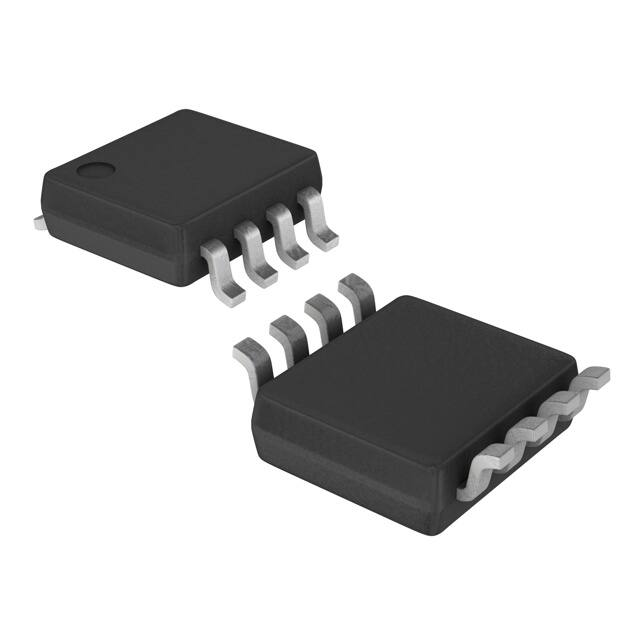
SN74LVC2G241DCT
SM8 (8)
BODY SIZE (NOM)
2.95 mm × 2.80 mm
SN74LVC2G241DCU VSOOP (8)
2.30 mm × 2.00 mm
SN74LVC2G241YZP
1.91 mm × 0.91 mm
DSBGA (8)
(1) For all available packages, see the orderable addendum at
the end of the data sheet.
Logic Diagram (Positive Logic)
1OE
1A
2OE
2A
1
2
6
1Y
7
5
3
2Y
1
An IMPORTANT NOTICE at the end of this data sheet addresses availability, warranty, changes, use in safety-critical applications,
intellectual property matters and other important disclaimers. PRODUCTION DATA.
�SN74LVC2G241
SCES210O – APRIL 1999 – REVISED DECEMBER 2015
www.ti.com
Table of Contents
1
2
3
4
5
6
7
8
Features ..................................................................
Applications ...........................................................
Description .............................................................
Revision History.....................................................
Pin Configuration and Functions .........................
Specifications.........................................................
1
1
1
2
3
4
6.1
6.2
6.3
6.4
6.5
6.6
6.7
6.8
6.9
4
4
4
5
5
6
6
7
7
Absolute Maximum Ratings .....................................
ESD Ratings..............................................................
Recommended Operating Conditions ......................
Thermal Information ..................................................
Electrical Characteristics...........................................
Switching Characteristics, TA = –40°C to 85°C ........
Switching Characteristics, TA = –40°C to 125°C ......
Operating Characteristics..........................................
Typical Characteristic................................................
Parameter Measurement Information .................. 8
Detailed Description .............................................. 9
8.1 Overview ................................................................... 9
8.2 Functional Block Diagram ......................................... 9
8.3 Feature Description................................................... 9
8.4 Device Functional Modes.......................................... 9
9
Application and Implementation ........................ 10
9.1 Application Information............................................ 10
9.2 Typical Application ................................................. 10
10 Power Supply Recommendations ..................... 11
11 Layout................................................................... 11
11.1 Layout Guidelines ................................................. 11
11.2 Layout Example .................................................... 11
12 Device and Documentation Support ................. 12
12.1
12.2
12.3
12.4
12.5
Documentation Support ........................................
Community Resources..........................................
Trademarks ...........................................................
Electrostatic Discharge Caution ............................
Glossary ................................................................
12
12
12
12
12
13 Mechanical, Packaging, and Orderable
Information ........................................................... 12
4 Revision History
NOTE: Page numbers for previous revisions may differ from page numbers in the current version.
Changes from Revision N (November 2013) to Revision O
•
Page
Added Applications section, Device Information table, ESD Ratings table, Thermal Information table, Typical
Characteristics, Feature Description section, Device Functional Modes, Application and Implementation section,
Power Supply Recommendations section, Layout section, Device and Documentation Support section, and
Mechanical, Packaging, and Orderable Information section. ................................................................................................. 1
Changes from Revision M (February 2007) to Revision N
Page
•
Updated document to new TI data sheet format. ................................................................................................................... 1
•
Removed Ordering Information table. .................................................................................................................................... 1
•
Updated Features. .................................................................................................................................................................. 1
•
Updated operating temperature range. .................................................................................................................................. 4
2
Submit Documentation Feedback
Copyright © 1999–2015, Texas Instruments Incorporated
Product Folder Links: SN74LVC2G241
�SN74LVC2G241
www.ti.com
SCES210O – APRIL 1999 – REVISED DECEMBER 2015
5 Pin Configuration and Functions
DCT Package
8-Pin SM8
Top View
1OE
1
DCU Package
8-Pin VSSOP
Top View
VCC
8
1A
2
7
2OE
2Y
3
6
1Y
GND
4
5
2A
1OE
1A
2Y
GND
1
8
VCC
2
7
2OE
1Y
2A
3
6
4
5
YZP Package
8-Pin DSBGA
Bottom View
GND
2Y
1A
1OE
4 5
3 6
2 7
1 8
2A
1Y
2OE
VCC
Pin Functions (1) (2)
PIN
NAME
NO.
1A
2
1OE
1Y
I/O
DESCRIPTION
I
Input
1
I
Output enable (Active low)
6
O
Output
2A
5
I
Input
2Y
3
O
Output
2OE
7
I
Output enable (Active high)
GND
4
—
Ground
VCC
8
—
Power pin
(1)
(2)
N.C. – No internal connection
See Mechanical, Packaging, and Orderable Information for dimensions
Submit Documentation Feedback
Copyright © 1999–2015, Texas Instruments Incorporated
Product Folder Links: SN74LVC2G241
3
�SN74LVC2G241
SCES210O – APRIL 1999 – REVISED DECEMBER 2015
www.ti.com
6 Specifications
6.1 Absolute Maximum Ratings
over operating free-air temperature range (unless otherwise noted) (1)
VCC
MIN
MAX
UNIT
Supply voltage
–0.5
6.5
V
(2)
VI
Input voltage
–0.5
6.5
V
VO
Voltage applied to any output in the high-impedance or power-off state (2)
–0.5
6.5
V
VO
Voltage applied to any output in the high or low state (2) (3)
–0.5
VCC + 0.5
V
IIK
Input clamp current
VI < 0
–50
mA
IOK
Output clamp current
VO < 0
–50
mA
IO
Continuous output current
±50
mA
Continuous current through VCC or GND
±100
mA
TJ
Maximum junction temperature
150
°C
Tstg
Storage temperature
150
°C
(1)
(2)
(3)
–65
Stresses beyond those listed under Absolute Maximum Ratings may cause permanent damage to the device. These are stress ratings
only, and functional operation of the device at these or any other conditions beyond those indicated under Recommended Operating
Conditions is not implied. Exposure to absolute-maximum-rated conditions for extended periods may affect device reliability.
The input negative-voltage and output voltage ratings may be exceeded if the input and output current ratings are observed.
The value of VCC is provided in the Recommended Operating Conditions table.
6.2 ESD Ratings
VALUE
V(ESD)
(1)
(2)
Electrostatic
discharge
Human-body model (HBM), per ANSI/ESDA/JEDEC JS-001, all pins
(1)
UNIT
±2000
Charged-device model (CDM), per JEDEC specification JESD22-C101, all
pins (2)
V
±1000
JEDEC document JEP155 states that 500-V HBM allows safe manufacturing with a standard ESD control process.
JEDEC document JEP157 states that 250-V CDM allows safe manufacturing with a standard ESD control process.
6.3 Recommended Operating Conditions (1)
VCC
Supply voltage
Operating
Data retention only
VCC = 1.65 V to 1.95 V
VIH
High-level input voltage
VCC = 2.3 V to 2.7 V
VCC = 3 V to 3.6 V
VCC = 4.5 V to 5.5 V
MIN
MAX
1.65
5.5
1.5
Low-level input voltage
VI
Input voltage
1.7
Output voltage
0.7 × VCC
0.35 × VCC
VCC = 2.3 V to 2.7 V
0.7
VCC = 3 V to 3.6 V
0.8
5.5
High or low state
0
VCC
3-state
0
5.5
VCC = 2.3 V
High-level output current
VCC = 3 V
VCC = 4.5 V
(1)
4
V
0.3 × VCC
0
VCC = 1.65 V
IOH
V
2
VCC = 4.5 V to 5.5 V
VO
V
0.65 × VCC
VCC = 1.65 V to 1.95 V
VIL
UNIT
V
V
–4
–8
–16
mA
–24
–32
All unused inputs of the device must be held at VCC or GND to ensure proper device operation. Refer to the TI application report
Implications of Slow or Floating CMOS Inputs, SCBA004.
Submit Documentation Feedback
Copyright © 1999–2015, Texas Instruments Incorporated
Product Folder Links: SN74LVC2G241
�SN74LVC2G241
www.ti.com
SCES210O – APRIL 1999 – REVISED DECEMBER 2015
Recommended Operating Conditions(1) (continued)
MIN
IOL
Low-level output current
MAX
VCC = 1.65 V
4
VCC = 2.3 V
8
16
VCC = 3 V
Δt/Δv Input transition rise or fall rate
mA
24
VCC = 4.5 V
32
VCC = 1.8 V ± 0.15 V, 2.5 V ± 0.2 V
20
VCC = 3.3 V ± 0.3 V
10
VCC = 5 V ± 0.5 V
TA
UNIT
ns/V
5
Operating free-air temperature
–40
85
°C
6.4 Thermal Information
SN74LVC2G241
THERMAL METRIC (1)
RθJA
(1)
Junction-to-ambient thermal resistance
DCT
(SM8)
DCU
(VSSOP)
YZP
(DSBGA)
8 PINS
8 PINS
8 PINS
220
227
102
UNIT
°C/W
For more information about traditional and new thermal metrics, see the Semiconductor and IC Package Thermal Metrics application
report, SPRA953.
6.5 Electrical Characteristics
over recommended operating free-air temperature range, TA = –40ºC to 125°C (unless otherwise noted)
PARAMETER
TEST CONDITIONS
VCC
IOH = –100 µA
VOH
1.65 V
1.2
IOH = –8 mA
2.3 V
1.9
MAX
2.3
4.5 V
IOL = 100 µA
1.65 V to 5.5 V
0.1
IOL = 4 mA
1.65 V
0.45
IOL = 8 mA
2.3 V
0.3
3.8
0.4
3V
IOL = 24 mA
IOL = 32 mA
4.5 V
VI = 5.5 V or GND
UNIT
V
IOH = –32 mA
IOL = 16 mA
A or control
inputs
TYP (1)
2.4
3V
IOH = –24 mA
II
MIN
VCC – 0.1
IOH = –4 mA
IOH = –16 mA
VOL
TA
1.65 V to 5.5 V
0.55
TA = –40ºC to
85°C
V
0.55
TA = –40ºC to
125°C
0 to 5.5 V
±5
µA
Ioff
VI or VO = 5.5 V
0
±10
µA
IOZ
VO = 0 to 5.5 V
3.6 V
10
µA
ICC
VI = 5.5 V or GND,
1.65 V to 5.5 V
10
µA
ΔICC
One input at VCC – 0.6 V,
Other inputs at VCC or GND
3 V to 5.5 V
500
µA
Ci
VI = VCC or GND
3.3 V
TA = –40ºC to
85°C
3.5
pF
Co
VO = VCC or GND
3.3 V
TA = –40ºC to
85°C
6.5
pF
(1)
IO = 0
All typical values are at VCC = 3.3 V, TA = 25°C.
Submit Documentation Feedback
Copyright © 1999–2015, Texas Instruments Incorporated
Product Folder Links: SN74LVC2G241
5
�SN74LVC2G241
SCES210O – APRIL 1999 – REVISED DECEMBER 2015
www.ti.com
6.6 Switching Characteristics, TA = –40°C to 85°C
over recommended operating free-air temperature range (unless otherwise noted) (see Figure 2)
PARAMETER
tpd
FROM
(INPUT)
TO
(OUTPUT)
A
ten
MIN
MAX
VCC = 1.8 V ± 0.15 V
3.3
8.8
VCC = 2.5 V ± 0.2 V
1.5
4.8
VCC = 3.3 V ± 0.3 V
1.4
4.3
Y
OE
tdis
VCC
VCC = 5 V ± 0.5 V
1
3.7
VCC = 1.8 V ± 0.15 V
4
9.9
VCC = 2.5 V ± 0.2 V
1.9
5.6
VCC = 3.3 V ± 0.3 V
1.2
4.7
Y
OE
VCC = 5 V ± 0.5 V
1.2
3.8
VCC = 1.8 V ± 0.15 V
1.5
11.6
VCC = 2.5 V ± 0.2 V
1
5.8
VCC = 3.3 V ± 0.3 V
1.4
1.4
Y
VCC = 5 V ± 0.5 V
ten
OE
tdis
1
3.4
VCC = 1.8 V ± 0.15 V
3.2
8.8
VCC = 2.5 V ± 0.2 V
1.5
4.7
VCC = 3.3 V ± 0.3 V
1.6
4.1
VCC = 5 V ± 0.5 V
1.1
3.3
VCC = 1.8 V ± 0.15 V
1.7
12.5
VCC = 2.5 V ± 0.2 V
1
5.2
VCC = 3.3 V ± 0.3 V
1
4.2
VCC = 5 V ± 0.5 V
1
3.3
VCC
MIN
MAX
VCC = 1.8 V ± 0.15 V
3.3
9.8
VCC = 2.5 V ± 0.2 V
1.5
5.8
VCC = 3.3 V ± 0.3 V
1.4
5.3
Y
OE
Y
UNIT
ns
ns
ns
ns
ns
6.7 Switching Characteristics, TA = –40°C to 125°C
over recommended operating free-air temperature range (unless otherwise noted) (see Figure 2)
PARAMETER
tpd
FROM
(INPUT)
A
ten
OE
tdis
OE
TO
(OUTPUT)
Y
VCC = 5 V ± 0.5 V
1
4.2
VCC = 1.8 V ± 0.15 V
4
10.9
VCC = 2.5 V ± 0.2 V
1.9
6.6
VCC = 3.3 V ± 0.3 V
1.2
5.7
VCC = 5 V ± 0.5 V
1.2
4.3
VCC = 1.8 V ± 0.15 V
1.5
12.6
VCC = 2.5 V ± 0.2 V
1
6.8
VCC = 3.3 V ± 0.3 V
1.4
5.4
1
4.4
VCC = 1.8 V ± 0.15 V
3.2
9.8
VCC = 2.5 V ± 0.2 V
1.5
5.7
VCC = 3.3 V ± 0.3 V
1.6
5.1
Y
Y
VCC = 5 V ± 0.5 V
ten
OE
tdis
6
OE
Y
VCC = 5 V ± 0.5 V
1.1
3.8
VCC = 1.8 V ± 0.15 V
1.7
13.5
VCC = 2.5 V ± 0.2 V
1
6.2
VCC = 3.3 V ± 0.3 V
1
5.2
VCC = 5 V ± 0.5 V
1
4.3
Y
Submit Documentation Feedback
UNIT
ns
ns
ns
ns
ns
Copyright © 1999–2015, Texas Instruments Incorporated
Product Folder Links: SN74LVC2G241
�SN74LVC2G241
www.ti.com
SCES210O – APRIL 1999 – REVISED DECEMBER 2015
6.8 Operating Characteristics
TA = 25°C
PARAMETER
TEST CONDITIONS
VCC
Outputs enabled
Cpd
Power dissipation
capacitance
per buffer/driver
f = 10 MHz
Outputs disabled
TYP
VCC = 1.8 V
19
VCC = 2.5 V
19
VCC = 3.3 V
20
VCC = 5 V
22
VCC = 1.8 V
2
VCC = 2.5 V
2
VCC = 3.3 V
2
VCC = 5 V
3
UNIT
pF
pF
6.9 Typical Characteristic
3.5
3
Propagation Delay (tPD)
2.5
2
1.5
1
0.5
Typ. Char.
0
0
1
2
3
4
5
6
Supply Voltage [VCC] (V)
C001
Figure 1. tpd vs Vcc Over Full Temperature Range
Submit Documentation Feedback
Copyright © 1999–2015, Texas Instruments Incorporated
Product Folder Links: SN74LVC2G241
7
�SN74LVC2G241
SCES210O – APRIL 1999 – REVISED DECEMBER 2015
www.ti.com
7 Parameter Measurement Information
VLOAD
S1
RL
From Output
Under Test
Open
TEST
GND
CL
(see Note A)
S1
Open
VLOAD
tPLH/tPHL
tPLZ/tPZL
tPHZ/tPZH
RL
GND
LOAD CIRCUIT
INPUTS
VCC
1.8 V ± 0.15 V
2.5 V ± 0.2 V
3.3 V ± 0.3 V
5 V ± 0.5 V
VI
tr/tf
VCC
VCC
3V
VCC
£2 ns
£2 ns
£2.5 ns
£2.5 ns
VM
VLOAD
CL
RL
VD
VCC/2
VCC/2
1.5 V
VCC/2
2 × VCC
2 × VCC
6V
2 × VCC
30 pF
30 pF
50 pF
50 pF
1 kW
500 W
500 W
500 W
0.15 V
0.15 V
0.3 V
0.3 V
VI
Timing Input
VM
0V
tW
tsu
VI
Input
VM
VM
th
VI
Data Input
VM
VM
0V
0V
VOLTAGE WAVEFORMS
PULSE DURATION
VOLTAGE WAVEFORMS
SETUP AND HOLD TIMES
VI
VM
Input
VM
0V
tPLH
VOH
Output
VM
VOL
tPHL
VM
VM
0V
Output
Waveform 1
S1 at VLOAD
(see Note B)
tPLH
tPLZ
VLOAD/2
VM
tPZH
VOH
Output
VM
tPZL
tPHL
VM
VI
Output
Control
VM
VOL
VOLTAGE WAVEFORMS
PROPAGATION DELAY TIMES
INVERTING AND NONINVERTING OUTPUTS
Output
Waveform 2
S1 at GND
(see Note B)
VOL + VD
VOL
tPHZ
VM
VOH – VD
VOH
»0 V
VOLTAGE WAVEFORMS
ENABLE AND DISABLE TIMES
LOW- AND HIGH-LEVEL ENABLING
NOTES: A. CL includes probe and jig capacitance.
B. Waveform 1 is for an output with internal conditions such that the output is low, except when disabled by the output control.
Waveform 2 is for an output with internal conditions such that the output is high, except when disabled by the output control.
C. All input pulses are supplied by generators having the following characteristics: PRR £ 10 MHz, ZO = 50 W.
D. The outputs are measured one at a time, with one transition per measurement.
E. tPLZ and tPHZ are the same as tdis.
F. tPZL and tPZH are the same as ten.
G. tPLH and tPHL are the same as tpd.
H. All parameters and waveforms are not applicable to all devices.
Figure 2. Load Circuit and Voltage Waveforms
8
Submit Documentation Feedback
Copyright © 1999–2015, Texas Instruments Incorporated
Product Folder Links: SN74LVC2G241
�SN74LVC2G241
www.ti.com
SCES210O – APRIL 1999 – REVISED DECEMBER 2015
8 Detailed Description
8.1 Overview
The SN74LVC2G241 device is designed specifically to improve both the performance and density of 3-state
memory-address drivers, clock drivers, and bus-oriented receivers and transmitters. The SN74LVC2G241 device
is organized as two 1-bit line drivers with separate output-enable (1OE, 2OE) inputs. When 1OE is low and 2OE
is high, the device passes data from the A inputs to the Y outputs. When 1OE is high and 2OE is low, the
outputs are in the high-impedance state.
The SN74LVC2G241 is also an effective redriver, with a maximum output current drive of 32 mA.
8.2 Functional Block Diagram
1
1OE
2
1A
6
1Y
7
2OE
5
2A
3
2Y
Figure 3. Logic Diagram (Positive Logic)
8.3 Feature Description
To ensure the high-impedance state during power up or power down, OE should be tied to VCC through a pullup
resistor, and OE should be tied to GND through a pulldown resistor; the minimum value of the resistor is
determined by the current-sinking or the current-sourcing capability of the driver.
This device is fully specified for partial-power-down applications using Ioff. The Ioff circuitry disables the outputs,
preventing damaging current backflow through the device when it is powered down.
8.4 Device Functional Modes
Table 1 and Table 2 list the functional modes of the SN74LVC2G241.
Table 1. Gate 1 Functional Table
INPUTS
1OE
1A
OUTPUT
1Y
L
H
H
L
L
L
H
X
Z
Table 2. Gate 2 Functional Table
INPUTS
2OE
2A
OUTPUT
2Y
H
H
H
H
L
L
L
X
Z
Submit Documentation Feedback
Copyright © 1999–2015, Texas Instruments Incorporated
Product Folder Links: SN74LVC2G241
9
�SN74LVC2G241
SCES210O – APRIL 1999 – REVISED DECEMBER 2015
www.ti.com
9 Application and Implementation
NOTE
Information in the following applications sections is not part of the TI component
specification, and TI does not warrant its accuracy or completeness. TI’s customers are
responsible for determining suitability of components for their purposes. Customers should
validate and test their design implementation to confirm system functionality.
9.1 Application Information
Typical Application shows a simple application where a physical push button is connected to the
SN74LVC2G241. The push button is in a physical location far enough away from the processor that the input
signal is weak and needs to be redriven. The SN74LVC2G241 acts as a redriver, providing a strong input signal
to the processor with as little as 1 ns of propagation delay.
9.2 Typical Application
VCC
Physical Push
Button
Microprocessor
SN74LVC2G241
(One driver)
Figure 4. SN74LVC2G241 Application
9.2.1 Design Requirements
This device uses CMOS technology and has balanced output drive. Take care to avoid bus contention because it
can drive currents that would exceed maximum limits. The high drive also creates fast edges into light loads, so
routing and load conditions must be considered to prevent ringing.
9.2.2 Detailed Design Procedure
1. Recommended Input Conditions
– Rise time and fall time specs. See (Δt/ΔV) in Recommended Operating Conditions.
– Specified high and low levels. See (VIH and VIL) in Recommended Operating Conditions.
– Inputs are overvoltage tolerant allowing them to go as high as (VI max) in Recommended Operating
Conditions at any valid VCC.
2. Recommend Output Conditions
– Load currents must not exceed (IO max) per output and must not exceed (Continuous current through VCC
or GND) total current for the part. These limits are located in Absolute Maximum Ratings.
– Outputs must not be pulled above VCC during normal operation or 5.5 V in high-z state.
10
Submit Documentation Feedback
Copyright © 1999–2015, Texas Instruments Incorporated
Product Folder Links: SN74LVC2G241
�SN74LVC2G241
www.ti.com
SCES210O – APRIL 1999 – REVISED DECEMBER 2015
Typical Application (continued)
9.2.3 Application Curve
1600
Icc
Icc
Icc
Icc
1400
1200
1.8V
2.5V
3.3V
5V
Icc - µA
1000
800
600
400
200
0
0
20
40
Frequency - MHz
60
80
D001
Figure 5. ICC vs Frequency
10 Power Supply Recommendations
The power supply can be any voltage between the minimum and maximum supply voltage rating located in
Recommended Operating Conditions.
Each VCC pin should have a good bypass capacitor to prevent power disturbance. For devices with a single
supply, a 0.1-μF capacitor is recommended and if there are multiple VCC pins then a 0.01-μF or 0.022-μF
capacitor is recommended for each power pin. It is ok to parallel multiple bypass capacitors to reject different
frequencies of noise. 0.1-μF and 1-μF capacitors are commonly used in parallel. The bypass capacitor should be
installed as close to the power pin as possible for best results.
11 Layout
11.1 Layout Guidelines
When using multiple bit logic devices inputs must not ever float. In many cases, functions or parts of functions of
digital logic devices are unused; for example, when only two inputs of a triple-input AND gate are used or only 3
of the 4 buffer gates are used. Such input pins must not be left unconnected because the undefined voltages at
the outside connections result in undefined operational states. Specified below are the rules that must be
observed under all circumstances. All unused inputs of digital logic devices must be connected to a high or low
bias to prevent them from floating. The logic level that should be applied to any particular unused input depends
on the function of the device. Generally they will be tied to GND or VCC, whichever make more sense or is more
convenient.
11.2 Layout Example
VCC
Unused Input
Input
Output
Unused Input
Output
Input
Figure 6. Layout Diagram
Submit Documentation Feedback
Copyright © 1999–2015, Texas Instruments Incorporated
Product Folder Links: SN74LVC2G241
11
�SN74LVC2G241
SCES210O – APRIL 1999 – REVISED DECEMBER 2015
www.ti.com
12 Device and Documentation Support
12.1 Documentation Support
12.1.1 Related Documentation
For related documentation, see the following:
Implications of Slow or Floating CMOS Inputs, SCBA004
12.2 Community Resources
The following links connect to TI community resources. Linked contents are provided "AS IS" by the respective
contributors. They do not constitute TI specifications and do not necessarily reflect TI's views; see TI's Terms of
Use.
TI E2E™ Online Community TI's Engineer-to-Engineer (E2E) Community. Created to foster collaboration
among engineers. At e2e.ti.com, you can ask questions, share knowledge, explore ideas and help
solve problems with fellow engineers.
Design Support TI's Design Support Quickly find helpful E2E forums along with design support tools and
contact information for technical support.
12.3 Trademarks
NanoFree, E2E are trademarks of Texas Instruments.
All other trademarks are the property of their respective owners.
12.4 Electrostatic Discharge Caution
These devices have limited built-in ESD protection. The leads should be shorted together or the device placed in conductive foam
during storage or handling to prevent electrostatic damage to the MOS gates.
12.5 Glossary
SLYZ022 — TI Glossary.
This glossary lists and explains terms, acronyms, and definitions.
13 Mechanical, Packaging, and Orderable Information
The following pages include mechanical packaging and orderable information. This information is the most
current data available for the designated devices. This data is subject to change without notice and revision of
this document. For browser based versions of this data sheet, refer to the left hand navigation.
12
Submit Documentation Feedback
Copyright © 1999–2015, Texas Instruments Incorporated
Product Folder Links: SN74LVC2G241
�PACKAGE OPTION ADDENDUM
www.ti.com
17-Aug-2015
PACKAGING INFORMATION
Orderable Device
Status
(1)
Package Type Package Pins Package
Drawing
Qty
Eco Plan
Lead/Ball Finish
MSL Peak Temp
(2)
(6)
(3)
Op Temp (°C)
Device Marking
(4/5)
74LVC2G241DCTRE4
ACTIVE
SM8
DCT
8
3000
Green (RoHS
& no Sb/Br)
CU NIPDAU
Level-1-260C-UNLIM
-40 to 125
C41
Z
74LVC2G241DCTRG4
ACTIVE
SM8
DCT
8
3000
Green (RoHS
& no Sb/Br)
CU NIPDAU
Level-1-260C-UNLIM
-40 to 125
C41
Z
74LVC2G241DCURE4
ACTIVE
VSSOP
DCU
8
3000
Green (RoHS
& no Sb/Br)
CU NIPDAU
Level-1-260C-UNLIM
-40 to 125
C41R
74LVC2G241DCUTE4
ACTIVE
VSSOP
DCU
8
TBD
Call TI
Call TI
-40 to 125
74LVC2G241DCUTG4
ACTIVE
VSSOP
DCU
8
250
Green (RoHS
& no Sb/Br)
CU NIPDAU
Level-1-260C-UNLIM
-40 to 125
C41R
SN74LVC2G241DCTR
ACTIVE
SM8
DCT
8
3000
Green (RoHS
& no Sb/Br)
CU NIPDAU
Level-1-260C-UNLIM
-40 to 125
C41
Z
SN74LVC2G241DCUR
ACTIVE
VSSOP
DCU
8
3000
Green (RoHS
& no Sb/Br)
CU NIPDAU | CU SN
Level-1-260C-UNLIM
-40 to 125
(C41Q ~ C41R)
SN74LVC2G241DCUT
ACTIVE
VSSOP
DCU
8
250
Green (RoHS
& no Sb/Br)
CU NIPDAU | CU SN
Level-1-260C-UNLIM
-40 to 125
(C41Q ~ C41R)
SN74LVC2G241YZPR
ACTIVE
DSBGA
YZP
8
3000
Green (RoHS
& no Sb/Br)
SNAGCU
Level-1-260C-UNLIM
-40 to 125
(C2 ~ C27)
(1)
The marketing status values are defined as follows:
ACTIVE: Product device recommended for new designs.
LIFEBUY: TI has announced that the device will be discontinued, and a lifetime-buy period is in effect.
NRND: Not recommended for new designs. Device is in production to support existing customers, but TI does not recommend using this part in a new design.
PREVIEW: Device has been announced but is not in production. Samples may or may not be available.
OBSOLETE: TI has discontinued the production of the device.
(2)
Eco Plan - The planned eco-friendly classification: Pb-Free (RoHS), Pb-Free (RoHS Exempt), or Green (RoHS & no Sb/Br) - please check http://www.ti.com/productcontent for the latest availability
information and additional product content details.
TBD: The Pb-Free/Green conversion plan has not been defined.
Pb-Free (RoHS): TI's terms "Lead-Free" or "Pb-Free" mean semiconductor products that are compatible with the current RoHS requirements for all 6 substances, including the requirement that
lead not exceed 0.1% by weight in homogeneous materials. Where designed to be soldered at high temperatures, TI Pb-Free products are suitable for use in specified lead-free processes.
Pb-Free (RoHS Exempt): This component has a RoHS exemption for either 1) lead-based flip-chip solder bumps used between the die and package, or 2) lead-based die adhesive used between
the die and leadframe. The component is otherwise considered Pb-Free (RoHS compatible) as defined above.
Green (RoHS & no Sb/Br): TI defines "Green" to mean Pb-Free (RoHS compatible), and free of Bromine (Br) and Antimony (Sb) based flame retardants (Br or Sb do not exceed 0.1% by weight
in homogeneous material)
(3)
MSL, Peak Temp. - The Moisture Sensitivity Level rating according to the JEDEC industry standard classifications, and peak solder temperature.
Addendum-Page 1
Samples
�PACKAGE OPTION ADDENDUM
www.ti.com
(4)
17-Aug-2015
There may be additional marking, which relates to the logo, the lot trace code information, or the environmental category on the device.
(5)
Multiple Device Markings will be inside parentheses. Only one Device Marking contained in parentheses and separated by a "~" will appear on a device. If a line is indented then it is a continuation
of the previous line and the two combined represent the entire Device Marking for that device.
(6)
Lead/Ball Finish - Orderable Devices may have multiple material finish options. Finish options are separated by a vertical ruled line. Lead/Ball Finish values may wrap to two lines if the finish
value exceeds the maximum column width.
Important Information and Disclaimer:The information provided on this page represents TI's knowledge and belief as of the date that it is provided. TI bases its knowledge and belief on information
provided by third parties, and makes no representation or warranty as to the accuracy of such information. Efforts are underway to better integrate information from third parties. TI has taken and
continues to take reasonable steps to provide representative and accurate information but may not have conducted destructive testing or chemical analysis on incoming materials and chemicals.
TI and TI suppliers consider certain information to be proprietary, and thus CAS numbers and other limited information may not be available for release.
In no event shall TI's liability arising out of such information exceed the total purchase price of the TI part(s) at issue in this document sold by TI to Customer on an annual basis.
Addendum-Page 2
�PACKAGE MATERIALS INFORMATION
www.ti.com
1-Apr-2017
TAPE AND REEL INFORMATION
*All dimensions are nominal
Device
74LVC2G241DCUTG4
Package Package Pins
Type Drawing
VSSOP
SPQ
Reel
Reel
A0
Diameter Width (mm)
(mm) W1 (mm)
DCU
8
250
180.0
8.4
2.25
B0
(mm)
K0
(mm)
P1
(mm)
W
Pin1
(mm) Quadrant
3.35
1.05
4.0
8.0
Q3
SN74LVC2G241DCTR
SM8
DCT
8
3000
180.0
13.0
3.35
4.5
1.55
4.0
12.0
Q3
SN74LVC2G241DCUR
VSSOP
DCU
8
3000
180.0
8.4
2.25
3.35
1.05
4.0
8.0
Q3
SN74LVC2G241YZPR
DSBGA
YZP
8
3000
180.0
8.4
1.02
2.02
0.63
4.0
8.0
Q1
Pack Materials-Page 1
�PACKAGE MATERIALS INFORMATION
www.ti.com
1-Apr-2017
*All dimensions are nominal
Device
Package Type
Package Drawing
Pins
SPQ
Length (mm)
Width (mm)
Height (mm)
74LVC2G241DCUTG4
VSSOP
DCU
SN74LVC2G241DCTR
SM8
DCT
8
250
202.0
201.0
28.0
8
3000
182.0
182.0
20.0
SN74LVC2G241DCUR
VSSOP
SN74LVC2G241YZPR
DSBGA
DCU
8
3000
202.0
201.0
28.0
YZP
8
3000
210.0
185.0
35.0
Pack Materials-Page 2
�MECHANICAL DATA
MPDS049B – MAY 1999 – REVISED OCTOBER 2002
DCT (R-PDSO-G8)
PLASTIC SMALL-OUTLINE PACKAGE
0,30
0,15
0,65
8
0,13 M
5
0,15 NOM
ÇÇÇÇÇ
ÇÇÇÇÇ
ÇÇÇÇÇ
ÇÇÇÇÇ
2,90
2,70
4,25
3,75
Gage Plane
PIN 1
INDEX AREA
1
0,25
4
0° – 8°
3,15
2,75
0,60
0,20
1,30 MAX
Seating Plane
0,10
0,10
0,00
NOTES: A.
B.
C.
D.
4188781/C 09/02
All linear dimensions are in millimeters.
This drawing is subject to change without notice.
Body dimensions do not include mold flash or protrusion
Falls within JEDEC MO-187 variation DA.
POST OFFICE BOX 655303
• DALLAS, TEXAS 75265
��PACKAGE OUTLINE
YZP0008
DSBGA - 0.5 mm max height
SCALE 8.000
DIE SIZE BALL GRID ARRAY
B
A
E
BALL A1
CORNER
D
C
0.5 MAX
SEATING PLANE
0.19
0.15
0.05 C
BALL TYP
0.5 TYP
D
C
SYMM
1.5
TYP
0.5
TYP
8X
0.015
D: Max = 1.918 mm, Min =1.858 mm
B
0.25
0.21
C A B
E: Max = 0.918 mm, Min =0.858 mm
A
1
2
SYMM
4223082/A 07/2016
NOTES:
1. All linear dimensions are in millimeters. Any dimensions in parenthesis are for reference only. Dimensioning and tolerancing
per ASME Y14.5M.
2. This drawing is subject to change without notice.
www.ti.com
�EXAMPLE BOARD LAYOUT
YZP0008
DSBGA - 0.5 mm max height
DIE SIZE BALL GRID ARRAY
(0.5) TYP
8X ( 0.23)
2
1
A
(0.5) TYP
B
SYMM
C
D
SYMM
LAND PATTERN EXAMPLE
SCALE:40X
SOLDER MASK
OPENING
0.05 MAX
( 0.23)
SOLDER MASK
OPENING
0.05 MIN
( 0.23)
METAL
METAL UNDER
SOLDER MASK
NON-SOLDER MASK
DEFINED
(PREFERRED)
SOLDER MASK
DEFINED
SOLDER MASK DETAILS
NOT TO SCALE
4223082/A 07/2016
NOTES: (continued)
3. Final dimensions may vary due to manufacturing tolerance considerations and also routing constraints.
For more information, see Texas Instruments literature number SNVA009 (www.ti.com/lit/snva009).
www.ti.com
�EXAMPLE STENCIL DESIGN
YZP0008
DSBGA - 0.5 mm max height
DIE SIZE BALL GRID ARRAY
(0.5) TYP
8X ( 0.25)
(R0.05) TYP
1
2
A
(0.5)
TYP
B
SYMM
C
METAL
TYP
D
SYMM
SOLDER PASTE EXAMPLE
BASED ON 0.1 mm THICK STENCIL
SCALE:40X
4223082/A 07/2016
NOTES: (continued)
4. Laser cutting apertures with trapezoidal walls and rounded corners may offer better paste release.
www.ti.com
���IMPORTANT NOTICE FOR TI DESIGN INFORMATION AND RESOURCES
Texas Instruments Incorporated (‘TI”) technical, application or other design advice, services or information, including, but not limited to,
reference designs and materials relating to evaluation modules, (collectively, “TI Resources”) are intended to assist designers who are
developing applications that incorporate TI products; by downloading, accessing or using any particular TI Resource in any way, you
(individually or, if you are acting on behalf of a company, your company) agree to use it solely for this purpose and subject to the terms of
this Notice.
TI’s provision of TI Resources does not expand or otherwise alter TI’s applicable published warranties or warranty disclaimers for TI
products, and no additional obligations or liabilities arise from TI providing such TI Resources. TI reserves the right to make corrections,
enhancements, improvements and other changes to its TI Resources.
You understand and agree that you remain responsible for using your independent analysis, evaluation and judgment in designing your
applications and that you have full and exclusive responsibility to assure the safety of your applications and compliance of your applications
(and of all TI products used in or for your applications) with all applicable regulations, laws and other applicable requirements. You
represent that, with respect to your applications, you have all the necessary expertise to create and implement safeguards that (1)
anticipate dangerous consequences of failures, (2) monitor failures and their consequences, and (3) lessen the likelihood of failures that
might cause harm and take appropriate actions. You agree that prior to using or distributing any applications that include TI products, you
will thoroughly test such applications and the functionality of such TI products as used in such applications. TI has not conducted any
testing other than that specifically described in the published documentation for a particular TI Resource.
You are authorized to use, copy and modify any individual TI Resource only in connection with the development of applications that include
the TI product(s) identified in such TI Resource. NO OTHER LICENSE, EXPRESS OR IMPLIED, BY ESTOPPEL OR OTHERWISE TO
ANY OTHER TI INTELLECTUAL PROPERTY RIGHT, AND NO LICENSE TO ANY TECHNOLOGY OR INTELLECTUAL PROPERTY
RIGHT OF TI OR ANY THIRD PARTY IS GRANTED HEREIN, including but not limited to any patent right, copyright, mask work right, or
other intellectual property right relating to any combination, machine, or process in which TI products or services are used. Information
regarding or referencing third-party products or services does not constitute a license to use such products or services, or a warranty or
endorsement thereof. Use of TI Resources may require a license from a third party under the patents or other intellectual property of the
third party, or a license from TI under the patents or other intellectual property of TI.
TI RESOURCES ARE PROVIDED “AS IS” AND WITH ALL FAULTS. TI DISCLAIMS ALL OTHER WARRANTIES OR
REPRESENTATIONS, EXPRESS OR IMPLIED, REGARDING TI RESOURCES OR USE THEREOF, INCLUDING BUT NOT LIMITED TO
ACCURACY OR COMPLETENESS, TITLE, ANY EPIDEMIC FAILURE WARRANTY AND ANY IMPLIED WARRANTIES OF
MERCHANTABILITY, FITNESS FOR A PARTICULAR PURPOSE, AND NON-INFRINGEMENT OF ANY THIRD PARTY INTELLECTUAL
PROPERTY RIGHTS.
TI SHALL NOT BE LIABLE FOR AND SHALL NOT DEFEND OR INDEMNIFY YOU AGAINST ANY CLAIM, INCLUDING BUT NOT
LIMITED TO ANY INFRINGEMENT CLAIM THAT RELATES TO OR IS BASED ON ANY COMBINATION OF PRODUCTS EVEN IF
DESCRIBED IN TI RESOURCES OR OTHERWISE. IN NO EVENT SHALL TI BE LIABLE FOR ANY ACTUAL, DIRECT, SPECIAL,
COLLATERAL, INDIRECT, PUNITIVE, INCIDENTAL, CONSEQUENTIAL OR EXEMPLARY DAMAGES IN CONNECTION WITH OR
ARISING OUT OF TI RESOURCES OR USE THEREOF, AND REGARDLESS OF WHETHER TI HAS BEEN ADVISED OF THE
POSSIBILITY OF SUCH DAMAGES.
You agree to fully indemnify TI and its representatives against any damages, costs, losses, and/or liabilities arising out of your noncompliance with the terms and provisions of this Notice.
This Notice applies to TI Resources. Additional terms apply to the use and purchase of certain types of materials, TI products and services.
These include; without limitation, TI’s standard terms for semiconductor products http://www.ti.com/sc/docs/stdterms.htm), evaluation
modules, and samples (http://www.ti.com/sc/docs/sampterms.htm).
Mailing Address: Texas Instruments, Post Office Box 655303, Dallas, Texas 75265
Copyright © 2017, Texas Instruments Incorporated
�