ADS1601
SBAS322 − DECEMBER 2004
16 Bit, 1.25MSPS Analog to Digital Converter
FEATURES D High Speed: D
Data Rate: 1.25MSPS Bandwidth: 615kHz Outstanding Performance: SNR: 92dB at fIN = 100kHz, −1dBFS THD: −103dB at fIN = 100kHz, −6dBFS SFDR: 105dB at fIN = 100kHz, −6dBFS Ease-of-Use: High-Speed 3-Wire Serial Interface Directly Connects to TMS320 DSPs On-Chip Digital Filter Simplifies Anti-Alias Requirements Simple Pin-Driven Control—No On-Chip Registers to Program Selectable On-Chip Voltage Reference Simultaneous Sampling with Multiple ADS1601s Low Power: 330mW at 1.25MSPS 145mW at 625kSPS Power-Down Mode
DESCRIPTION
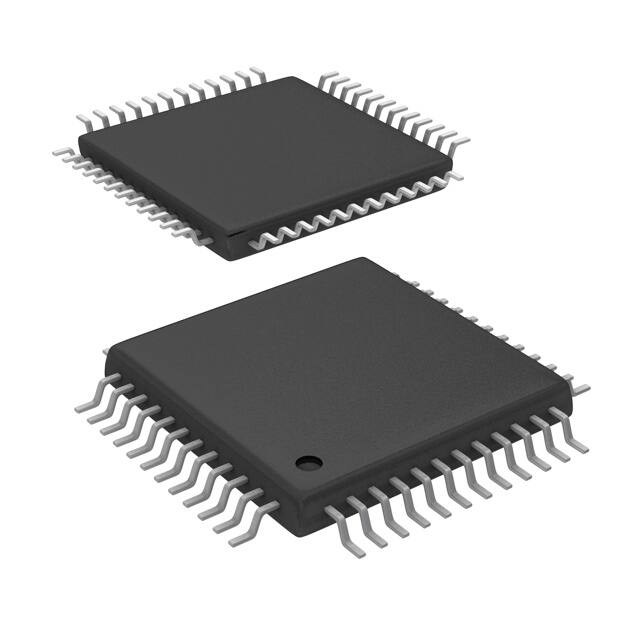
The ADS1601 is a high-speed, high-precision, delta-sigma analog-to-digital converter (ADC) manufactured on an advanced CMOS process. The ADS1601 oversampling topology reduces clock jitter sensitivity during the sampling of high-frequency, large amplitude signals by a factor of four over that achieved by Nyquist-rate ADCs. Consequently, signal-to-noise ratio (SNR) is particularly improved. Total harmonic distortion (THD) is −103dB, and the spurious-free dynamic range (SFDR) is 105dB. Optimized for power and performance, the ADS1601 dissipates only 330mW while providing a full-scale differential input range of ±3V. Having such a wide input range makes out-of-range signals unlikely. The OTR pin indicates if an analog input out-of-range condition does occur. The differential input signal is measured against the differential reference, which can be generated internally or supplied externally on the ADS1601. The ADS1601 uses an inherently stable advanced modulator with an on-chip decimation filter. The filter stop band extends to 19.3MHz, which greatly simplifies the anti-aliasing circuitry. The modulator samples the input signal up to 20MSPS, depending on fCLK, while the 16x decimation filter uses a series of four half-band FIR filter stages to provide 75dB of stop band attenuation and 0.001dB of passband ripple. Output data is provided over a simple 3-wire serial interface at rates up to 1.25MSPS, with a −3dB bandwidth of 615kHz. The output data or its complementary format directly connects to DSPs such as TI’s TMS320 family, FPGAs, or ASICs. A dedicated synchronization pin enables simultaneous sampling with multiple ADS1601s in multi-channel systems. Power dissipation is set by an external resistor that allows a reduction in dissipation when operating at slower speeds. All of the ADS1601 features are controlled by dedicated I/O pins, which simplify operation by eliminating the need for on-chip registers. The high performing, easy-to-use ADS1601 is especially suitable for demanding measurement applications in sonar, vibration analysis, and data acquisition. The ADS1601 is offered in a small, 7mm x 7mm TQFP-48 package and is specified from −40°C to +85°C.
D
D
APPLICATIONS D Sonar D Vibration Analysis D Data Acquisition
VREFP VREFN VMID RBIAS VCAP AVDD DVDD IOVDD CLK SYNC Reference and Bias Circuits FSO FSO AINP AINN Serial Interface SCLK SCLK DOUT DOUT OTR PD
∆Σ Modulator
Linear Phase FIR Digital Filter
ADS1601
AGND DGND
REFEN
Please be aware that an important notice concerning availability, standard warranty, and use in critical applications of Texas Instruments semiconductor products and disclaimers thereto appears at the end of this data sheet. All trademarks are the property of their respective owners.
PRODUCTION DATA information is current as of publication date. Products conform to specifications per the terms of Texas Instruments standard warranty. Production processing does not necessarily include testing of all parameters.
Copyright 2004, Texas Instruments Incorporated
www.ti.com
�ADS1601
www.ti.com SBAS322 − DECEMBER 2004
PACKAGE/ORDERING INFORMATION
For the most current package and ordering information see the Package Option Addendum located at the end of this datasheet.
ABSOLUTE MAXIMUM RATINGS
over operating free-air temperature range unless otherwise noted(1) ADS1601 AVDD to AGND DVDD to DGND IOVDD to DGND AGND to DGND Input Current Input Current Analog I/O to AGND Digital I/O to DGND Maximum Junction Temperature Operating Temperature Range Storage Temperature Range −0.3 to +6 −0.3 to +3.6 −0.3 to +6 −0.3 to +0.3 100mA, Momentary 10mA, Continuous −0.3 to AVDD + 0.3 −0.3 to IOVDD + 0.3 +150 −40 to +105 −60 to +150 V V °C °C °C UNIT V V V V
This integrated circuit can be damaged by ESD. Texas Instruments recommends that all integrated circuits be handled with appropriate precautions. Failure to observe proper handling and installation procedures can cause damage. ADS1601 passes standard 200V machine model and 1.5K CDM testing. ADS1601 passes 1kV human body model testing (TI Standard is 2kV). ESD damage can range from subtle performance degradation to complete device failure. Precision integrated circuits may be more susceptible to damage because very small parametric changes could cause the device not to meet its published specifications.
Lead Temperature (soldering, 10s) +260 °C (1) Stresses above these ratings may cause permanent damage. Exposure to absolute maximum conditions for extended periods may degrade device reliability. These are stress ratings only, and functional operation of the device at these or any other conditions beyond those specified is not implied.
2
�ADS1601
www.ti.com SBAS322 − DECEMBER 2004
ELECTRICAL CHARACTERISTICS
All specifications at TA = −40°C to +85°C, AVDD = 5V, DVDD = IOVDD = 3V, fCLK = 20MHz, VREF = +3V, VCM = +2.7V, and RBIAS = 60kΩ, unless otherwise noted.
ADS1601 PARAMETER
Analog Input Differential input voltage (VIN) (AINP − AINN) Common-mode input voltage (VCM) (AINP + AINN) / 2 Differential input voltage (VIN) (AINP or AINN with respect to AGND) Dynamic Specifications Data Rate fIN = 10kHz, −1dBFS fIN = 10kHz, −3dBFS fIN = 10kHz, −6dBFS fIN = 100kHz, −1dBFS Signal-to-noise ratio (SNR) fIN = 100kHz, −3dBFS fIN = 100kHz, −6dBFS fIN = 500kHz, −1dBFS fIN = 500kHz, −3dBFS fIN = 500kHz, −6dBFS fIN = 10kHz, −1dBFS fIN = 10kHz, −3dBFS fIN = 10kHz, −6dBFS fIN = 100kHz, −1dBFS Total harmonic distortion (THD) fIN = 100kHz, −3dBFS fIN = 100kHz, −6dBFS fIN = 500kHz, −1dBFS fIN = 500kHz, −3dBFS fIN = 500kHz, −6dBFS fIN = 10kHz, −1dBFS fIN = 10kHz, −3dBFS fIN = 10kHz, −6dBFS fIN = 100kHz, −1dBFS Signal-to-noise + distortion (SINAD) fIN = 100kHz, −3dBFS fIN = 100kHz, −6dBFS fIN = 500kHz, −1dBFS fIN = 500kHz, −3dBFS fIN = 500kHz, −6dBFS fIN = 10kHz, −1dBFS fIN = 10kHz, −3dBFS fIN = 10kHz, −6dBFS fIN = 100kHz, −1dBFS Spurious-free dynamic range (SFDR) fIN = 100kHz, −3dBFS fIN = 100kHz, −6dBFS fIN = 500kHz, −1dBFS fIN = 500kHz, −3dBFS fIN = 500kHz, −6dBFS Intermodulation distortion (IMD) Aperture delay f1 = 499kHz, −6dBFS f2 = 501kHz, −6dBFS 90 97 91 98 85 84 85 84 87 84 87 84
1.25 f CLK 20MHz
TEST CONDITIONS
MIN
TYP
MAX
UNIT
0dBFS
±VREF
V V 3.5 V
2.7 0dBFS −0.1
MSPS dB dB dB dB dB dB dB dB dB dB −90 −97 dB dB dB −90 −96 dB dB dB dB dB dB dB dB dB dB dB dB dB dB dB dB dB dB dB dB dB dB dB dB ns
92 90 87 92 90 87 91 89 87 −91 −100 −104 −88 −96 −103 −115 −112 −110 88 89 87 87 88 86 91 89 87 92 100 109 88 97 105 120 118 115 94 4
3
�ADS1601
www.ti.com SBAS322 − DECEMBER 2004
ELECTRICAL CHARACTERISTICS (continued)
All specifications at TA = −40°C to +85°C, AVDD = 5V, DVDD = IOVDD = 3V, fCLK = 20MHz, VREF = +3V, VCM = +2.7V, and RBIAS = 60kΩ, unless otherwise noted.
ADS1601 PARAMETER
Digital Filter Characteristics Passband Passband ripple −0.1dB attenuation Passband transition −3.0dB attentuation
f CLK 20MHz 615 f CLK 20MHz f CLK 20MHz f CLK 575 20MHz
TEST CONDITIONS
MIN
TYP
MAX
UNIT
0
550
f CLK 20MHz
kHz dB kHz
±0.001
kHz
Stop band Stop band attenuation Group delay
0.7
19.3
MHz dB
75
20.8 20MHZ f CLK 20MHZ f CLK
µs
Settling time Static Specifications Resolution No missing codes Input-referred noise Integral nonlinearity Differential nonlinearity Offset error Offset error drift Gain error Gain error drift Common-mode rejection Power-supply rejection Internal Voltage Reference VREF = (VREFP − VREFN) VREFP VREFN VMID VREF drift Startup time External Voltage Reference VREF = (VREFP − VREFN) VREFP VREFN VMID
Complete settling
40.8
µs
16 16 0.5 −0.5dBFS signal 0.75 0.25 −0.05 0.5 0.25 Excluding reference drift At DC At DC REFEN = low 2.75 3.5 0.5 2.3 3 3.8 0.8 2.4 50 15 REFEN = High 2.0 3.5 0.5 2.3 3 4 1 2.5 3.25 4.25 1.5 2.6 3.25 4.1 1.1 2.6 10 75 65 0.75
Bits Bits LSB, rms LSB LSB %FSR
ppmFSR/ °C
% ppm/°C dB dB
V V V V ppm/°C ms
V V V V
4
�ADS1601
www.ti.com SBAS322 − DECEMBER 2004
ELECTRICAL CHARACTERISTICS (continued)
All specifications at TA = −40°C to +85°C, AVDD = 5V, DVDD = IOVDD = 3V, fCLK = 20MHz, VREF = +3V, VCM = +2.7V, and RBIAS = 60kΩ, unless otherwise noted.
ADS1601 PARAMETER
Clock Input Frequency (fCLK) Duty Cycle Digital Input/Output VIH VIL VOH VOL Input leakage Power-Supply Requirements AVDD DVDD IOVDD AVDD current (IAVDD) DVDD current (IDVDD) IOVDD current (IIOVDD) Power dissipation Temperature Range Specified Operating Storage −40 −40 −60 +85 +105 +150 °C °C °C IOH = 50µA REFEN = low REFEN = high IOVDD = 3V IOVDD = 3V AVDD = 5V, DVDD = 3V, IOVDD = 3V, REFEN = high PD = low, CLK disabled 4.75 2.7 2.7 65 55 15 3 330 10 5.25 3.3 5.25 77 65 18 8 380 V V V mA mA mA mA mW mW IOH = 50µA IOL = 50µA DGND < VDIGIN < IOVDD 0.7 IOVDD DGND IOVDD − 0.5 DGND + 0.5 ±10 IOVDD 0.3 IOVDD V V V V µA fCLK = 20MHz 45 20 55 MHz %
TEST CONDITIONS
MIN
TYP
MAX
UNIT
5
�ADS1601
www.ti.com SBAS322 − DECEMBER 2004
DEFINITIONS
Absolute Input Voltage
Absolute input voltage, given in volts, is the voltage of each analog input (AINN or AINP) with respect to AGND.
Intermodulation Distortion (IMD)
IMD, given in dB, is measured while applying two input signals of the same magnitude, but with slightly different frequencies. It is calculated as the difference between the rms amplitude of the input signal to the rms amplitude of the peak spurious signal.
Aperture Delay
Aperture delay is the delay between the rising edge of CLK and the sampling of the input signal.
Common-Mode Input Voltage
Common-mode input voltage (VCM) is the average voltage of the analog inputs:
Offset Error
Offset Error, given in % of FSR, is the output reading when the differential input is zero.
(AINP ) AINN) 2 Differential Input Voltage
Differential input voltage (VIN) is the voltage difference between the analog inputs (AINP−AINN).
Offset Error Drift
Offset error drift, given in ppm of FSR/_C, is the drift over temperature of the offset error. The offset error is specified as the larger of the drift from ambient (T = 25_C) to the minimum or maximum operating temperatures.
Signal-to-Noise Ratio (SNR)
SNR, given in dB, is the ratio of the rms value of the input signal to the sum of all the frequency components below fCLK/2 (the Nyquist frequency) excluding the first six harmonics of the input signal and the dc component.
Differential Nonlinearity (DNL)
DNL, given in least-significant bits of the output code (LSB), is the maximum deviation of the output code step sizes from the ideal value of 1LSB.
Full-Scale Range (FSR)
FSR is the difference between the maximum and minimum measurable input signals (FSR = 2VREF).
Signal-to-Noise and Distortion (SINAD)
SINAD, given in dB, is the ratio of the rms value of the input signal to the sum of all the frequency components below fCLK/2 (the Nyquist frequency) including the harmonics of the input signal but excluding the dc component.
Gain Error
Gain error, given in %, is the error of the full-scale input signal with respect to the ideal value.
Spurious-Free Dynamic Range (SFDR)
SFDR, given in dB, is the difference between the rms amplitude of the input signal to the rms amplitude of the peak spurious signal.
Gain Error Drift
Gain error drift, given in ppm/_C, is the drift over temperature of the gain error. The gain error is specified as the larger of the drift from ambient (T = 25_C) to the minimum or maximum operating temperatures.
Total Harmonic Distortion (THD)
THD, given in dB, is the ratio of the sum of the rms value of the first six harmonics of the input signal to the rms value of the input signal.
Integral Nonlinearity (INL)
INL, given in least-significant bits of the output code (LSB), is the maximum deviation of the output codes from a best fit line.
6
�ADS1601
www.ti.com SBAS322 − DECEMBER 2004
VREFN
VREFN
VREFP
VREFP
PIN ASSIGNMENTS
48
47
46
45
44
43
42
41
40
39
38
37
AGND AVDD AGND AINN AINP AGND AVDD
1 2 3 4 5 6 7 8 9
IOVDD
DGND
AGND
AGND
AVDD
VCAP
VMID
CLK
36 DGND 35 NC 34 DVDD 33 DGND 32 FSO
ADS1601
31 FSO 30 DOUT 29 DOUT 28 SCLK 27 SCLK 26 NC 25 NC
TQFP PACKAGE (TOP VIEW)
RBIAS AGND
AVDD 10 AGND 11 AVDD 12
13 REFEN
14 NC
15 RPULLUP
16 NC
17 PD
18 DVDD
19 DGND
20 SYNC
21 OTR
22 DGND
23 DVDD
24 NC
Terminal Functions
TERMINAL NAME AGND AVDD AINN AINP RBIAS REFEN NC RPULLUP PD DVDD DGND SYNC OTR SCLK SCLK DOUT
DOUT
NO. 1, 3, 6, 9, 11, 39, 41 2, 7, 10, 12, 42 4 5 8 13 14, 16, 24−26, 35 15 17 18, 23, 34 19, 22, 33, 36, 38 20 21 28 27 30 29 32 31 37 40 43 44, 45 46 47, 48
FUNCTION Analog Analog Analog input Analog input Analog Digital input: active low Do not connect Digital Input Digital input: active low Digital Digital Digital input Digital output Digital output Digital output Digital output Digital output Digital output Digital output Digital Digital input Analog Analog Analog Analog Analog ground Analog supply Negative analog input Positive analog input
DESCRIPTION
Terminal for external analog bias setting resistor. Internal reference enable. Internal pull-down resistor of 170kΩ to DGND. These terminals must be left unconnected. Pull-up to DVDD with 10kΩ resistor (see Figure 50). Power down all circuitry. Internal pull-up resistor of 170kΩ to DGND. Digital supply Digital ground Synchronization control input Indicates analog input signal is out of range. Serial clock output Serial clock output, complementary signal. Data output Data output, complementary signal. Frame synchronization output Frame synchronization output, complementary signal. Digital I/O supply Clock input Terminal for external bypass capacitor connection to internal bias voltage. Negative reference voltage Midpoint voltage Positive reference voltage 7
FSO FSO IOVDD CLK VCAP VREFN VMID VREFP
�ADS1601
www.ti.com SBAS322 − DECEMBER 2004
TIMING DIAGRAMS
CLK t STL SYNC tSYPW
FSO
Figure 1. Initialization Timing
TIMING REQUIREMENTS
For TA = −40°C to +85°C, DVDD = 2.7V to 3.6V, IOVDD = 2.7V to 5.25V. SYMBOL tSYPW tSTL DESCRIPTION SYNC positive pulse width Settling time of ADS1601(1) MIN 2 51 816 TYP MAX 16 52 832 UNIT CLK periods Conversions CLK periods
NOTE: (1) An FSO pulse occuring prior to TSTL ≥ 816 CLK period should be ignored.
tC CLK
t CPW
tCPW tCF FSO tFPW tCS SCLK tDHD DOUT Bit 0 (LSB) tDPD Bit 15 (MSB) Bit 14 Bit 1 Bit 0 (LSB)
Old Data
New Data
Figure 2. Data Retrieval Timing
TIMING REQUIREMENTS
For TA = −40°C to +85°C, DVDD = 2.7V to 3.6V, IOVDD = 2.7V to 5.25V. SYMBOL tC tCPW tCF tFPW tCS tDHD tDPD DESCRIPTION CLK period (1/fCLK) CLK positive or negative pulse width Rising edge of CLK to rising edge of FSO FSO positive pulse width Rising edge of CLK to rising edge of SCLK SCLK rising edge to old DOUT invalid (hold time) SCLK rising edge to new DOUT valid (propagation delay) 0 5 1 15 MIN 50 25 15 TYP MAX UNIT ns ns ns CLK period ns ns ns
8
�ADS1601
www.ti.com SBAS322 − DECEMBER 2004
TYPICAL CHARACTERISTICS
All specifications at TA = 25°C, AVDD = 5V, DVDD = IOVDD = 3V, fCLK = 20MHz, VREF = +3V, VCM = +2.7V, and RBIAS = 60kΩ, unless otherwise noted.
SPECTRAL RESPONSE 0 − 20 − 40 Amplitude (dB) − 60 − 80 − 100 − 120 − 140 − 160 0 100 200 300 400 500 600 Frequency (kHz) fIN = 10kHz, − 1dBFS SNR = 92dB THD = − 91dB SFDR = 92dB 0 − 20 − 40 Amplitude (dB) − 60 − 80 −100 −120 −140 −160 0 100
SPECTRAL RESPONSE f IN = 10kHz, − 6dBFS SNR = 87dB THD = − 108dB SFDR = 111dB
200 300 400 Frequency (kHz)
500
600
Figure 3
SPECTRAL RESPONSE 0 − 20 − 40 Amplitude (dB) − 60 − 80 − 100 − 120 − 140 − 160 0 100 200 300 400 500 600 Frequency (kHz) fIN = 10kHz, − 10dBFS SNR = 83dB THD = − 106dB SFDR = 111dB 0 − 20 − 40 Amplitude (dB) − 60 − 80 − 100 − 120 − 140 − 160 0 100
Figure 4
SPECTRAL RESPONSE f IN = 100kHz, − 1dBFS SNR = 92dB THD = − 88dB SFDR = 88dB
200 300 400 Frequency (kHz)
500
600
Figure 5
SPECTRAL RESPONSE 0 − 20 − 40 Amplitude (dB) − 60 − 80 − 100 − 120 − 140 − 160 0 100 200 300 400 500 600 Frequency (kHz) f IN = 100kHz, − 6dBFS SNR = 87dB THD = − 103dB SFDR = 105dB 0 − 20 − 40 Amplitude (dB) − 60 − 80 − 100 − 120 − 140 − 160 0 100
Figure 6
SPECTRAL RESPONSE fIN = 100kHz, − 10dBFS SNR = 83dB THD = − 103dB SFDR = 105dB
200 300 400 Frequency (kHz)
500
600
Figure 7
Figure 8
9
�ADS1601
www.ti.com SBAS322 − DECEMBER 2004
TYPICAL CHARACTERISTICS (continued)
All specifications at TA = 25°C, AVDD = 5V, DVDD = IOVDD = 3V, fCLK = 20MHz, VREF = +3V, VCM = +2.7V, and RBIAS = 60kΩ, unless otherwise noted.
SPECTRAL RESPONSE 0 − 20 − 40 Amplitude (dB) − 60 − 80 − 100 − 120 − 140 − 160 0 100 200 300 400 500 600 Frequency (kHz) fIN = 504kHz, − 1dBFS SNR = 91dB THD = − 117dB SFDR = 122dB 0 − 20 − 40 Amplitude (dB) − 60 − 80 − 100 − 120 − 140 − 160 0 100 200 300 400 500 600 Frequency (kHz) fIN = 504kHz, − 6dBFS SNR = 86dB THD = − 110dB SFDR = 115dB
SPECTRAL RESPONSE
Figure 9
SPECTRAL RESPONSE 0 − 20 − 40 Amplitude (dB) − 60 − 80 −100 −120 −140 −160 0 100 400 200 300 Frequency (kHz) 500 600 f IN = 504kHz, − 10dBFS SNR = 83dB THD = − 110dB SFDR = 117dB SIGNAL−TO−NOISE RATIO, TOTAL HARMONIC DISTORTION, SPURIOUS−FREE DYNAMIC RANGE (dB) 140 120 100 80 60 40 20 − 80
Figure 10
SNR, THD, and SFDR vs INPUT SIGNAL AMPLITUDE
SFDR THD
SNR
f IN = 10kHz − 70 − 60 − 50 − 40 − 30 − 20 − 10 0
Input Signal Amplitude, VIN (dB)
Figure 11
SNR, THD, and SFDR vs INPUT SIGNAL AMPLITUDE SIGNAL−TO−NOISE RATIO, TOTAL HARMONIC DISTORTION, SPURIOUS−FREE DYNAMIC RANGE (dB) SIGNAL−TO−NOISE RATIO, TOTAL HARMONIC DISTORTION, SPURIOUS−FREE DYNAMIC RANGE (dB) 140 120 100 80 SNR 60 40 fIN = 100kHz 20 − 80 − 70 − 60 − 50 − 40 − 30 − 20 − 10 0 140 120 100
Figure 12
SNR, THD, and SFDR vs INPUT SIGNAL AMPLITUDE
SFDR THD
SFDR 80 THD 60 SNR 40 fIN = 500kHz 20 − 80 − 70 − 60 − 50 − 40 − 30 − 20 − 10 0
Input Signal Amplitude, VIN (dB)
Input Signal Amplitude, VIN (dB)
Figure 13
Figure 14
10
�ADS1601
www.ti.com SBAS322 − DECEMBER 2004
TYPICAL CHARACTERISTICS (continued)
All specifications at TA = 25°C, AVDD = 5V, DVDD = IOVDD = 3V, fCLK = 20MHz, VREF = +3V, VCM = +2.7V, and RBIAS = 60kΩ, unless otherwise noted.
SIGNAL−TO−NOISE RATIO vs INPUT FREQUENCY 100 95 VIN = − 1dB 90 SNR (dB) 85 80 75 70 10k − 120 10k VIN = − 10dB THD (dB) VIN = − 6dB − 90 − 80 VIN = − 1dB
TOTAL HARMONIC DISTORTION vs INPUT FREQUENCY
− 100
VIN = − 10dB
− 110
VIN = − 6dB
100k Input Frequency, f IN (Hz)
1M
100k Input Frequency, f IN (Hz)
1M
Figure 15
SPURIOUS−FREE DYNAMIC RANGE vs INPUT FREQUENCY 120 VIN = − 10dB 110 90 SFDR (dB) 100 VIN = − 6dB SNR (dB) 85 80 90 VIN = − 1dB 75 70 10k 100k Input Frequency, fIN (Hz) 1M 1.0 1.4 100 95
Figure 16
SIGNAL−TO−NOISE RATIO vs INPUT COMMON−MODE VOLTAGE fIN = 10kHz, VIN = − 1dB fIN = 100kHz, VIN = − 1dB
fIN = 100kHz, VIN = − 6dB
f IN = 10kHz, VIN = − 6dB
80
1.8
2.2
2.6
3.0
3.4
Input Common−Mode Voltage, VCM (V)
Figure 17
TOTAL HARMONIC DISTORTION vs INPUT COMMON−MODE VOLTAGE − 80 120 fIN = 100kHz, VIN = − 1dB
Figure 18
SPURIOUS−FREE DYNAMIC RANGE vs INPUT COMMON−MODE VOLTAGE
fIN = 10kHz, VIN = − 6dB − 90 SFDR (dB) fIN = 10kHz, VIN = − 1dB THD (dB) −100 f IN = 10kHz, VIN = − 6dB −110 fIN = 100kHz, VIN = − 6dB 80 1.0 1.4 1.8 2.2 2.6 3.0 3.4 1.0 1.4 1.8 Input Common−Mode Voltage, VCM (V) fIN = 100kHz, VIN = − 1dB 2.2 2.6 3.0 3.4 110
100 fIN = 10kHz, VIN = − 1dB 90 fIN = 100kHz, VIN = − 6dB
−120
Input Common−Mode Voltage, VCM (V)
Figure 19
Figure 20
11
�ADS1601
www.ti.com SBAS322 − DECEMBER 2004
TYPICAL CHARACTERISTICS (continued)
All specifications at TA = 25°C, AVDD = 5V, DVDD = IOVDD = 3V, fCLK = 20MHz, VREF = +3V, VCM = +2.7V, and RBIAS = 60kΩ, unless otherwise noted.
SIGNAL−TO−NOISE RATIO vs CLOCK FREQUENCY 100 95 RBIAS = 60kΩ 90 SNR (dB) THD (dB) 85 RBIAS = 210kΩ 80 75 VIN = − 6dBFS, f IN = 10kHz 70 0 5 10 15 20 Clock Frequency, fCLK (MHz) − 120 0 R BIAS = 267kΩ RBIAS = 140kΩ − 100 − 90 − 80
TOTAL HARMONIC DISTORTION vs CLOCK FREQUENCY VIN = − 6dBFS, fIN = 10kHz RBIAS = 210kΩ
RBIAS = 267kΩ
− 110 RBIAS = 60kΩ 5 10 RBIAS = 140kΩ
15
20
Clock Frequency, fCLK (MHz)
Figure 21
SPURIOUS−FREE DYNAMIC RANGE vs CLOCK FREQUENCY 120 RBIAS = 60kΩ RBIAS = 140kΩ 1000
Figure 22
NOISE vs DC INPUT VOLTAGE
110 RMS Noise (LSB) RBIAS = 267kΩ VIN = − 6dBFS, fIN = 10kHz 80 0 5 10 15 20 Clock Frequency, fCLK (MHz) SFDR (dB)
100
100 RBIAS = 210kΩ 90
10
1
0.1
−3
−2
−1
0
1
2
3
Input DC Voltage (V)
Figure 23
Figure 24
OFFSET DRIFT OVER TIME
NOISE HISTOGRAM 1500 1400 1300 1200 1100 1000 900 800 700 600 500 400 300 200 100 0 VIN = 0V Offset (LSB)
3 2 1 0 −1 −2 −3 −4 0 100 200 300 400 500 600 700 800 900 1000
Occurrences
−4
−3
−2
−1
0
1
2
3
4
Time Interval (s)
Output Code (LSB)
Figure 25
12
Figure 26
�ADS1601
www.ti.com SBAS322 − DECEMBER 2004
TYPICAL CHARACTERISTICS (continued)
All specifications at TA = 25°C, AVDD = 5V, DVDD = IOVDD = 3V, fCLK = 20MHz, VREF = +3V, VCM = +2.7V, and RBIAS = 60kΩ, unless otherwise noted.
POWER−SUPPLY CURRENT vs TEMPERATURE 80 70 60 Current (mA) 50 40 30 20 10 0 − 40 − 15 10 35 60 85 Temperature (_ C) RBIAS = 60kΩ, fCLK = 20MHz IDVDD + I IOVDD IAVDD (REFEN = high) IAVDD (REFEN = low) Supply Current (mA) 80 70
SUPPLY−CURRENT vs CLOCK FREQUENCY
I AVDD (REFEN = low) 60 50 40 30 20 10 0 0 5 10 15 20 25 Clock Frequency, fCLK (MHz) I IOVDD + IDVDD RBIAS = 60kΩ I AVDD (REFEN = high)
Figure 27
ANALOG SUPPLY CURRENT vs RBIAS 70 Analog Supply Current, IAVDD (mA) 60 50 SNR (dB) 40 IAVDD (REFEN = low) 30 IAVDD (REFEN = high) 20 f CLK = 20MHz 10 0 50 100 150 RBIAS (kΩ ) 200 250 300 70 − 40 − 15 75 fIN = 100kHz 100 95
Figure 28
SIGNAL−TO−NOISE RATIO vs TEMPERATURE
VIN = − 1dB 90 85 80 VIN = − 10dB VIN = − 6dB
10
35
60
85
Temperature (_ C)
Figure 29
Figure 30
SPURIOUS−FREE DYNAMIC RANGE vs TEMPERATURE 120
TOTAL HARMONIC DISTORTION vs TEMPERATURE − 80 VIN = − 1dB − 90 SFDR (dB) THD (dB) VIN = − 6dB − 100 VIN = − 10dB − 110 fIN = 100kHz − 40 − 15 10 35 60 85 110
VIN = − 6dB
100 VIN = − 10dB 90 VIN = − 1dB 80 − 40 − 15 10 35 f IN = 100kHz 60 85
− 120
Temperature (_ C)
Temperature (_ C)
Figure 31
Figure 32
13
�ADS1601
www.ti.com SBAS322 − DECEMBER 2004
TYPICAL CHARACTERISTICS (continued)
All specifications at TA = 25°C, AVDD = 5V, DVDD = IOVDD = 3V, fCLK = 20MHz, VREF = +3V, VCM = +2.7V, and RBIAS = 60kΩ, unless otherwise noted.
VREF vs TEMPERATURE 3 2.99 2.98 Amplitude (dB) 2.97 VREF (V) 2.96 2.95 2.94 2.93 2.92 2.91 2.90 − 40 − 15 10 35 60 85 Temperature (_ C) − 40 − 60 − 80 − 100 − 120 − 140 480 0 − 20
INTERMODULATION RESPONSE fIN1 = 499kHz fIN2 = 501kHz IMD = − 94dB
485
490
495 500 505 Frequency (kHz)
510
515
520
Figure 33
Figure 34
14
�ADS1601
www.ti.com SBAS322 − DECEMBER 2004
OVERVIEW
The ADS1601 is a high-performance delta-sigma ADC. The modulator uses an inherently stable 2-1-1 multi-stage architecture incorporating proprietary circuitry that allows for very linear high-speed operation. The modulator samples the input signal at 20MSPS (when fCLK = 20MHz). A low-ripple linear phase digital filter decimates the modulator output by 16 to provide high resolution 16-bit output data. Conceptually, the modulator and digital filter measure the differential input signal, VIN = (AINP – AINN), against the scaled differential reference, VREF = (VREFP – VREFN), as shown in Figure 35. The voltage reference can either be generated internally or supplied externally. A 3-wire serial interface, designed for direct connection to DSPs, outputs the data. A separate power supply for the I/O allows flexibility for interfacing to different logic families. Out-of-range conditions are indicated with a dedicated digital output pin. Analog power dissipation is controlled using an external resistor. This control allows reduced dissipation when operating at slower speeds. When not in use, power consumption can be dramatically reduced by setting the PD pin low to enter Power-Down mode.
digital output code of 7FFFh. Likewise, the most negative measurable differential input is –VREF, which produces the most negative digital output code of 8000h. The ADS1601 supports a very wide range of input signals. For VREF = 3V, the full-scale input voltages are ±3V. Having such a wide input range makes out-of-range signals unlikely. However, should an out-of-range signal occur, the digital output OTR will go high. The analog inputs must be driven with a differential signal to achieve optimum performance. For the input signal:
V CM + AINP ) AINN 2
the recommended common-mode voltage is 2.7V. In addition to the differential and common-mode input voltages, the absolute input voltage is also important. This is the voltage on either input (AINP or AINN) with respect to AGND. The range for this voltage is:
* 0.1V t (AINN or AINP) t 4.6V
If either input is taken below –0.1V, ESD protection diodes on the inputs will turn on. Exceeding 4.6V on either input will result in degradation in the linearity performance. ESD protection diodes will also turn on if the inputs are taken above AVDD (+5V). The recommended absolute input voltage is:
ANALOG INPUTS (AINP, AINN)
The ADS1601 measures the differential signal, VIN = (AINP − AINN), against the differential reference, VREF = (VREFP – VREFN). The most positive measurable differential input is VREF, which produces the most positive
* 0.1V t (AINN or AINP) t 4.2V
Keeping the inputs within this range provides for optimum performance.
VREFP VREFN
IOVDD CLK
Σ
VREF AINP AINN VIN Σ∆ Modulator Digital Filter Serial Interface
Σ
FSO FSO SCLK SCLK DOUT DOUT
Figure 35. Conceptual Block Diagram
15
�ADS1601
www.ti.com SBAS322 − DECEMBER 2004
INPUT CIRCUITRY
The ADS1601 uses switched-capacitor circuitry to measure the input voltage. Internal capacitors are charged by the inputs and then discharged internally with this cycle repeating at the frequency of CLK. Figure 36 shows a conceptual diagram of these circuits. Switches S2 represent the net effect of the modulator circuitry in discharging the sampling capacitors; the actual implementation is different. The timing for switches S1 and S2 is shown in Figure 37.
ADS1601 S1 AINP S2 10pF 8pF
external capacitors, between the inputs and from each input to AGND, improve linearity and should be placed as close to the pins as possible. Place the drivers close to the inputs and use good capacitor bypass techniques on their supplies, such as a smaller high-quality ceramic capacitor in parallel with a larger capacitor. Keep the resistances used in the driver circuits low—thermal noise in the driver circuits degrades the overall noise performance. When the signal can be ac-coupled to the ADS1601 inputs, a simple RC filter can set the input common-mode voltage. The ADS1601 is a high-speed, high-performance ADC. Special care must be taken when selecting the test equipment and setup used with this device. Pay particular attention to the signal sources to ensure they do not limit performance when measuring the ADS1601.
392 Ω
VMID S1 AINN S2 10pF 8pF
V CM(1) − V IN 2 0.01 µF 392 Ω
OPA 28 22 (2)
392 Ω
40pF
49.9Ω AINP 100pF
VMID AGND
392 Ω
1µ F 392 Ω
1kΩ
(2)
VCM(1)
(2)
100pF(3)
ADS1601
Figure 36. Conceptual Diagram of Internal Circuitry Connected to the Analog Inputs
VIN 2
392 Ω
40pF
1kΩ 0.01 µF 49.9Ω AINN 100pF
392 Ω V CM(1)
OPA 28 22
(2)
t SAMPLE = 1/f CLK On S1 Off On S2 Off
392 Ω
1µ F
A GND
(1) Recommended VCM = 2.7V. (2) Optional ac−coupling circuit provides common−mode input voltage. (3) Increase to 390pF when fIN ≤ 100kHz for improved SNR and THD.
Figure 38. Recommended Driver Circuit Using the OPA2822
22pF 24.9Ω
Figure 37. Timing for the Switches in Figure 36
DRIVING THE INPUTS
The external circuits driving the ADS1601 inputs must be able to handle the load presented by the switching capacitors within the ADS1601. The input switches S1 in Figure 36 are closed for approximately one-half of the sampling period, tsample, allowing only ≈ 24ns for the internal capacitors to be charged by the inputs when fCLK = 20MHz. Figure 38 and Figure 39 show the recommended circuits when using single-ended or differential op amps, respectively. The analog inputs must be driven differentially to achieve optimum performance. The
392Ω − VIN VCM +VIN 392Ω
AINP 392Ω
THS4503
100pF 100pF 24.9Ω AINN 100pF
ADS1601
392Ω
22pF
Figure 39. Recommended Driver Circuit Using the THS4503 Differential Amplifier
16
�ADS1601
www.ti.com SBAS322 − DECEMBER 2004
REFERENCE INPUTS (VREFN, VREFP, VMID)
The ADS1601 can operate from an internal or external voltage reference. In either case, the reference voltage VREF is set by the differential voltage between VREFN and VREFP: VREF = (VREFP – VREFN). VREFP and VREFN each use two pins, which should be shorted together. VMID equals approximately 2.5V and is used by the modulator. VCAP connects to an internal node and must also be bypassed with an external capacitor.
of providing both a dc and a transient current. Figure 41 shows a simplified diagram of the internal circuitry of the reference when the internal reference is disabled. As with the input circuitry, switches S1 and S2 open and close as shown by the timing in Figure 37.
ADS1601 S1 VREFP VREFP S2 300Ω VREFN VREFN S1 50pF
INTERNAL REFERENCE (REFEN = LOW)
To use the internal reference, set the REFEN pin low. This activates the internal circuitry that generates the reference voltages. The internal reference voltages are applied to the pins. Good bypassing of the reference pins is critical to achieve optimum performance and is done by placing the bypass capacitors as close to the pins as possible. Figure 40 shows the recommended bypass capacitor values. Use high-quality ceramic capacitors for the smaller values. Avoid loading the internal reference with external circuitry. If the ADS1601 internal reference is to be used by other circuitry, buffer the reference voltages to prevent directly loading the reference pins.
ADS1601 VREFP VREFP
Figure 41. Conceptual Internal Circuitry for the Reference When REFEN = High
Figure 42 shows the recommended circuitry for driving these reference inputs. Keep the resistances used in the buffer circuits low to prevent excessive thermal noise from degrading performance. Layout of these circuits is critical; be sure to follow good high-speed layout practices. Place the buffers, and especially the bypass capacitors, as close to the pins as possible. VCAP is unaffected by the setting on REFEN and must be bypassed when using the internal or an external reference.
392Ω 0.001µF ADS1601
10µ F
0.1µ F
0.1µF
VMID 10µ F 0.1µF
OPA2822
4V 392Ω
10µF 0.1µF 0.1µF
VREFP VREFP
VREFN VREFN 10µ F 0.1µF
0.001µF
OPA2822
VMID 10µF 0.1µF
VCAP 0.1µF AGND
2.5V 392Ω 0.001µF
Figure 40. Reference Bypassing When Using the Internal Reference EXTERNAL REFERENCE (REFEN = HIGH)
To use an external reference, set the REFEN pin high. This deactivates the internal generators for VREFP, VREFN and VMID, and saves approximately 25mA of current on the analog supply (AVDD). The voltages applied to these pins must be within the values specified in the Electrical Characteristics table. Typically, VREFP = 4V, VMID = 2.5V and VREFN = 1V. The external circuitry must be capable
OPA2822
VREFN VREFN 10µF 0.1µF
1V
VCAP 0.1µF AGND
Figure 42. Recommended Buffer Circuit When Using an External Reference
17
�ADS1601
www.ti.com SBAS322 − DECEMBER 2004
CLOCK INPUT (CLK)
The ADS1601 requires an external clock signal to be applied to the CLK input pin. The sampling of the modulator is controlled by this clock signal. As with any high-speed data converter, a high quality clock is essential for optimum performance. Crystal clock oscillators are the recommended CLK source; other sources, such as frequency synthesizers, are usually inadequate. Make sure to avoid excess ringing on the CLK input; keeping the trace as short as possible will help. Measuring high-frequency, large amplitude signals requires tight control of clock jitter. The uncertainty during sampling of the input from clock jitter limits the maximum achievable SNR. This effect becomes more pronounced with higher frequency and larger magnitude inputs. Fortunately, the ADS1601 oversampling topology reduces clock jitter sensitivity over that of Nyquist rate converters such as pipeline and successive approximation converters by a factor of 16. In order to not limit the ADS1601 SNR performance, keep the jitter on the clock source below the values shown in Table 1. When measuring lower frequency and lower amplitude inputs, more CLK jitter can be tolerated. In determining the allowable clock source jitter, select the worst-case input (highest frequency, largest amplitude) that will be seen in the application.
DATA FORMAT
The 16-bit output data is in binary two’s complement format as shown in Table 2. When the input is positive out-of-range, exceeding the positive full-scale value of VREF, the output clips to all 7FFFh and the OTR output goes high. Likewise, when the input is negative out-of-range by going below the negative full-scale value of –VREF, the output clips to 8000h and the OTR output goes high. The OTR remains high while the input signal is out-of-range.
Table 2. Output Code Versus Input Signal
INPUT SIGNAL (INP – INN) ≥ +VREF (> 0dB) VREF (0dB) IDEAL OUTPUT CODE(1) 7FFFh 7FFFh 0001h 0000h FFFFh 8000h 8000h OTR 1 0 0 0 0 0 1
+V REF 2 15 *1
0
−V REF 2 15 −V REF *1 2 15 2 15 * 1 2 15 2 15 * 1
v −V REF
Table 1. Maximum Allowable Clock Source Jitter for Different Input Signal Frequencies and Amplitude
INPUT SIGNAL MAXIMUM FREQUENCY 500kHz 500kHz 100kHz 100kHz MAXIMUM AMPLITUDE −0.5dB −20dB −0.5dB −20dB MAXIMUM ALLOWABLE CLOCK SOURCE JITTER 6ps 60ps 30ps 300ps
(1) Excludes effects of noise, INL, offset and gain errors.
OUT-OF-RANGE INDICATION (OTR)
If the output code exceeds the positive or negative full-scale, the out-of-range digital output OTR will go high on the falling edge of SCLK. When the output code returns within the full-scale range, OTR returns low on the falling edge of SCLK.
DATA RETRIEVAL
Data retrieval is controlled through a simple serial interface. The interface operates in a master fashion by outputting both a frame sync indicator (FSO) and a serial clock (SCLK). Complementary outputs are provided for the frame sync output (FSO), serial clock (SCLK) and data output (DOUT). When not needed, leave the complementary outputs unconnected.
18
�ADS1601
www.ti.com SBAS322 − DECEMBER 2004
INITIALIZING THE ADS1601
After the power supplies have stabilized, you must initialize the ADS1601 by issuing a SYNC pulse as shown in Figure 1. This operation needs only to be done once after power-up and does not need to be performed when exiting the Power-Down mode.
STEP RESPONSE
Figure 44 plots the normalized step response for an input applied at t = 0. The x-axis units of time are conversions cycles. It takes 51 cycles to fully settle; for fCLK = 20MHz, this corresponds to 40.8µs.
SYNCHRONIZING MULTIPLE ADS1601s
The SYNC input can be used to synchronize multiple ADS1601s to provide simultaneous sampling. All devices to be synchronized must use a common CLK input. With the CLK inputs running, pulse SYNC on the falling edge of CLK, as shown in Figure 43. Afterwards, the converters will be converting synchronously with the FSO outputs updating simultaneously. After synchronization, FSO is held low until the digital filter has fully settled.
1.2 1.0 0.8 Step Response 0.6 0.4 0.2 0
ADS16011 SYNC CLK SYNC CLK FSO DOUT FSO1 DOUT1
− 0.2 0 10 20 30 40 50 Time (Conversion Cycles)
ADS16012 SYNC CLK FSO DOUT FSO2 DOUT2
Figure 44. Step Response
CLK
...
...
SYNC t STL FSO 1 FSO 2
Figure 43. Synchronizing Multiple Converters
19
�ADS1601
www.ti.com SBAS322 − DECEMBER 2004
FREQUENCY RESPONSE
The linear phase FIR digital filter sets the overall frequency response. Figure 45 shows the frequency response from dc to 10MHz for fCLK = 20MHz. The frequency response of the ADS1601 filter scales directly with CLK frequency. For example, if the CLK frequency is decreased by half (to 10MHz), the values on the X-axis in Figure 45 would need to be scaled by half, with the span becoming dc to 5MHz. Figure 46 shows the passband ripple from dc to 600kHz (fCLK = 20MHz). Figure 47 shows a closer view of the passband transition by plotting the response from 400kHz to 650kHz (fCLK = 20MHz).
0.5 0 − 0.5 Magnitude (dB) − 1.0 − 1.5 − 2.0 − 2.5 − 3.0 − 3.5 400 450 500 550 600 650 Frequency (kHz) fCLK = 20MHz
20 fCLK = 20MHz 0 − 20 Magnitude (dB) − 40 − 60 − 80 − 100 − 120 − 140 0 1 2 3 4 5 6 7 8 9 10 Frequency (MHz)
Figure 47. Passband Transition
ANTI−ALIAS REQUIREMENTS
Higher frequency, out-of-band signals must be eliminated to prevent aliasing with ADCs. Fortunately, the ADS1601 on-chip digital filter greatly simples this filtering requirement. Figure 48 shows the ADS1601 response out to 60MHz (fCLK = 20MHz). Since the stopband extends out to 19.3MHz, the anti-alias filter in front of the ADS1601 only needs to be designed to remove higher frequency signals thatn this, which can usually be accomplished with a simple RC circuit on the input driver.
Figure 45. Frequency Response
20 0.001 0.0008 0.0006 Magnitude (dB) Magnitude (dB) 0.0004 0.0002 0 − 0.0002 − 0.0004 − 0.0006 − 0.0008 − 0.001 0 100 200 300 Frequency (kHz) fCLK = 20MHz 400 500 600 − 20 − 40 − 60 − 80 − 100 − 120 − 140 0 10 20 30 40 50 60 Frequency (MHz) fCLK = 20MHz 0
Figure 48. Frequency Response Out to 120MHz Figure 46. Passband Ripple
20
�ADS1601
www.ti.com SBAS322 − DECEMBER 2004
ANALOG POWER DISSIPATION
An external resistor connected between the RBIAS pin and the analog ground sets the analog current level, as shown in Figure 49. The current is inversely proportional to the resistor value. Table 3 shows the recommended values of RBIAS for different CLK frequencies. Notice that the analog current can be reduced when using a slower frequency CLK input because the modulator has more time to settle. Avoid adding any capacitance in parallel to RBIAS, since this will interfere with the internal circuitry used to set the biasing.
Table 3. Recommended RBIAS Resistor Values for Different CLK Frequencies
fCLK 5MHz 10MHz 15MHz 20MHz DATA RATE 315kSPS 625kSPS 940kSPS 1.25MSPS RBIAS 267k 210k 140k 60k TYPICAL POWER DISSIPATION WITH REFEN HIGH 110mW 145mW 200mW 325mW
POWER DOWN (PD)
When not in use, the ADS1601 can be powered down by taking the PD pin low. All circuitry will be shut down, including the voltage reference. To minimize the digital current during power down, stop the clock signal supplied to the CLK input. There is an internal pull-up resistor of 170kΩ on the PD pin, but it is recommended that this pin be connected to IOVDD if not used. Make sure to allow time for the reference to start up after exiting power-down mode. The internal reference typically requires 15ms. After the reference has stabilized, allow at least 100 conversions for the modulator and digital filter to settle before retrieving data.
ADS1601 RBIAS RBIAS AGND
Figure 49. External Resistor Used to Set Analog Power Dissipation
21
�ADS1601
www.ti.com SBAS322 − DECEMBER 2004
POWER SUPPLIES
Three supplies are used on the ADS1601: analog (AVDD), digital (DVDD) and digital I/O (IOVDD). Each supply must be suitably bypassed to achieve the best performance. It is recommended that a 1µF and 0.1µF ceramic capacitor be placed as close to each supply pin as possible. Connect each supply-pin bypass capacitor to the associated
ground, as shown in Figure 50. Each main supply bus should also be bypassed with a bank of capacitors from 47µF to 0.1µF, as shown. The I/O and digital supplies (IOVDD and DVDD) can be connected together when using the same voltage. In this case, only one bank of 47µF to 0.1µF capacitors is needed on the main supply bus, though each supply pin must still be bypassed with a 1µF and 0.1µF ceramic capacitor.
DVDD 47µF 4.7µ F 1 µF 0.1µ F
IOVDD 47µF AVDD 47µF 4.7µ F 1 µF 0.1µ F 42 AVDD 1 CP AGND 41 AGND 55 AGND 38 DGND 37 IOVDD 34 DVDD 33 DGND DGND 36 4.7µ F 1 µF 0.1µ F CP CP CP
If using separate analog and digital ground planes, connect together on the ADS1601 PCB.
2 3
AVDD
6 CP
AGND
DGND
AGND
7
AVDD
ADS1601
9
AGND
NOTE: CP = 1µF 0.1µF
CP 10 AVDD 11 AGND CP 12 AVDD RPULLUP
DGND
DGND 22 CP
DVDD
15
18 CP
19
23
10kΩ
Figure 50. Recommended Power-Supply Bypassing
22
DVDD
�ADS1601
www.ti.com SBAS322 − DECEMBER 2004
LAYOUT ISSUES AND COMPONENT SELECTION
The ADS1601 is a very high-speed, high-resolution data converter. In order to achieve maximum performance, the user must give very careful consideration to both the layout of the printed circuit board (PCB) in addition to the routing of the traces. Capacitors that are critical to achieve the best performance from the device should be placed as close to the pins of the device as possible. These include capacitors related the analog inputs, the reference and the power supplies. For critical capacitors, it is recommended that Class II dielectrics such as Z5U be avoided. These dielectrics have a narrow operating temperature, a large tolerance on the capacitance and will lose up to 20% of the rated capacitance over 10,000 hours. Rather, select capacitors with a Class I dielectric. C0G (also known as NP0), for example, has a tight tolerance < ±30PPM/ °C and is very stable over time. Should Class II capacitors be chosen because of the size constraints, select an X7R or X5R dielectric to minimize the variations of the capacitor’s critical characteristics. The resistors used in the circuits driving the input and reference should be kept as low as possible to prevent excess thermal noise from degrading the system performance. The digital outputs from the device should always be buffered. This will have a number of benefits: it will reduce the loading of the internal digital buffers, which decreases noise generated within the device, and it will also reduce device power consumption.
D D D
Full-duplex communication Double-buffered data registers Independent framing and clocking for reception and transmission of data
The sequence begins with a one-time synchronization of the serial port by the microprocessor. The ADS1601 recognizes the SYNC signal if it is high for a least 1 CLK period. Transfers are initiated by the ADS1601 after the SYNC signal is de-asserted by the microprocessor. The FSO signal from the ADS1601 indicates that data is available to be read, and is connected to the Frame Sync Receive (FSR) pin of the DSP. The Clock Receiver (CLKR) is derived directly from the ADS1601 serial clock output to ensure continued synchronization of data with the clock.
ADS1601 FSO
TMS320 FSR
SCLK
CLKR
DOUT
DR
SYNC
FSX
Figure 51. ADS1601—TMS320 Interface Connection
An Evaluation Module (EVM) is available from Texas Instruments. The module consists of the ADS1601 and supporting circuits, allowing users to quickly assess the performance and characteristics of the ADS1601. The EVM easily connects to various microcontrollers and DSP systems. For more details, or to download a copy of the ADS1601EVM User’s Guide, visit the Texas Instruments web site at www.ti.com.
APPLICATIONS INFORMATION
Interfacing the ADS1601 to the TMS320 DSP family. Since the ADS1601 communicates with the host via a serial interface, the most suitable method to connect to any of the TMS320 DSPs is via the Multi-channel Buffered Serial Port (McBSP). A typical connection to the TMS320 DSP is shown in Figure 51. The McBSP provides a host of functions including:
23
�PACKAGE OPTION ADDENDUM
www.ti.com
30-Mar-2005
PACKAGING INFORMATION
Orderable Device ADS1601IPFBR ADS1601IPFBT
(1)
Status (1) ACTIVE ACTIVE
Package Type TQFP TQFP
Package Drawing PFB PFB
Pins Package Eco Plan (2) Qty 48 48 1000 Green (RoHS & no Sb/Br) 250 Green (RoHS & no Sb/Br)
Lead/Ball Finish CU NIPDAU CU NIPDAU
MSL Peak Temp (3) Level-2-260C-1 YEAR Level-2-260C-1 YEAR
The marketing status values are defined as follows: ACTIVE: Product device recommended for new designs. LIFEBUY: TI has announced that the device will be discontinued, and a lifetime-buy period is in effect. NRND: Not recommended for new designs. Device is in production to support existing customers, but TI does not recommend using this part in a new design. PREVIEW: Device has been announced but is not in production. Samples may or may not be available. OBSOLETE: TI has discontinued the production of the device.
(2)
Eco Plan - The planned eco-friendly classification: Pb-Free (RoHS) or Green (RoHS & no Sb/Br) - please check http://www.ti.com/productcontent for the latest availability information and additional product content details. TBD: The Pb-Free/Green conversion plan has not been defined. Pb-Free (RoHS): TI's terms "Lead-Free" or "Pb-Free" mean semiconductor products that are compatible with the current RoHS requirements for all 6 substances, including the requirement that lead not exceed 0.1% by weight in homogeneous materials. Where designed to be soldered at high temperatures, TI Pb-Free products are suitable for use in specified lead-free processes. Green (RoHS & no Sb/Br): TI defines "Green" to mean Pb-Free (RoHS compatible), and free of Bromine (Br) and Antimony (Sb) based flame retardants (Br or Sb do not exceed 0.1% by weight in homogeneous material)
(3)
MSL, Peak Temp. -- The Moisture Sensitivity Level rating according to the JEDEC industry standard classifications, and peak solder temperature. Important Information and Disclaimer:The information provided on this page represents TI's knowledge and belief as of the date that it is provided. TI bases its knowledge and belief on information provided by third parties, and makes no representation or warranty as to the accuracy of such information. Efforts are underway to better integrate information from third parties. TI has taken and continues to take reasonable steps to provide representative and accurate information but may not have conducted destructive testing or chemical analysis on incoming materials and chemicals. TI and TI suppliers consider certain information to be proprietary, and thus CAS numbers and other limited information may not be available for release. In no event shall TI's liability arising out of such information exceed the total purchase price of the TI part(s) at issue in this document sold by TI to Customer on an annual basis.
Addendum-Page 1
�MECHANICAL DATA
MTQF019A – JANUARY 1995 – REVISED JANUARY 1998
PFB (S-PQFP-G48)
PLASTIC QUAD FLATPACK
0,50 36 25
0,27 0,17
0,08 M
37
24
48
13 0,13 NOM 1 5,50 TYP 7,20 SQ 6,80 9,20 SQ 8,80 0,05 MIN 1,05 0,95 Seating Plane 0,75 0,45 Gage Plane 0,25 0°– 7° 12
1,20 MAX
0,08 4073176 / B 10/96
NOTES: A. All linear dimensions are in millimeters. B. This drawing is subject to change without notice. C. Falls within JEDEC MS-026
POST OFFICE BOX 655303
• DALLAS, TEXAS 75265
�IMPORTANT NOTICE Texas Instruments Incorporated and its subsidiaries (TI) reserve the right to make corrections, modifications, enhancements, improvements, and other changes to its products and services at any time and to discontinue any product or service without notice. Customers should obtain the latest relevant information before placing orders and should verify that such information is current and complete. All products are sold subject to TI’s terms and conditions of sale supplied at the time of order acknowledgment. TI warrants performance of its hardware products to the specifications applicable at the time of sale in accordance with TI’s standard warranty. Testing and other quality control techniques are used to the extent TI deems necessary to support this warranty. Except where mandated by government requirements, testing of all parameters of each product is not necessarily performed. TI assumes no liability for applications assistance or customer product design. Customers are responsible for their products and applications using TI components. To minimize the risks associated with customer products and applications, customers should provide adequate design and operating safeguards. TI does not warrant or represent that any license, either express or implied, is granted under any TI patent right, copyright, mask work right, or other TI intellectual property right relating to any combination, machine, or process in which TI products or services are used. Information published by TI regarding third-party products or services does not constitute a license from TI to use such products or services or a warranty or endorsement thereof. Use of such information may require a license from a third party under the patents or other intellectual property of the third party, or a license from TI under the patents or other intellectual property of TI. Reproduction of information in TI data books or data sheets is permissible only if reproduction is without alteration and is accompanied by all associated warranties, conditions, limitations, and notices. Reproduction of this information with alteration is an unfair and deceptive business practice. TI is not responsible or liable for such altered documentation. Resale of TI products or services with statements different from or beyond the parameters stated by TI for that product or service voids all express and any implied warranties for the associated TI product or service and is an unfair and deceptive business practice. TI is not responsible or liable for any such statements. Following are URLs where you can obtain information on other Texas Instruments products and application solutions: Products Amplifiers Data Converters DSP Interface Logic Power Mgmt Microcontrollers amplifier.ti.com dataconverter.ti.com dsp.ti.com interface.ti.com logic.ti.com power.ti.com microcontroller.ti.com Applications Audio Automotive Broadband Digital Control Military Optical Networking Security Telephony Video & Imaging Wireless Mailing Address: Texas Instruments Post Office Box 655303 Dallas, Texas 75265 Copyright 2005, Texas Instruments Incorporated www.ti.com/audio www.ti.com/automotive www.ti.com/broadband www.ti.com/digitalcontrol www.ti.com/military www.ti.com/opticalnetwork www.ti.com/security www.ti.com/telephony www.ti.com/video www.ti.com/wireless
�