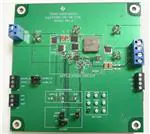
User's Guide
SLUU410 – February 2010
bq24600/20/40 EVM (HPA421) Multi Cell Synchronous
Switch-Mode Charger
1
2
3
4
5
6
Contents
Introduction .................................................................................................................. 2
1.1
EVM Features ...................................................................................................... 2
1.2
General Description ................................................................................................ 2
1.3
I/O Description ...................................................................................................... 2
1.4
Controls and Key Parameters Setting ........................................................................... 3
Test Summary ............................................................................................................... 4
2.1
Definitions ........................................................................................................... 4
2.2
Equipment ........................................................................................................... 4
2.3
Equipment Setup ................................................................................................... 5
2.4
Procedure ........................................................................................................... 5
PCB Layout Guideline ...................................................................................................... 7
Board Layout ................................................................................................................ 8
Schematics ................................................................................................................. 13
Bill of Materials ............................................................................................................. 14
List of Figures
1
Original Test Setup for HPA421 (bq24600/20/40 EVM) ............................................................... 5
2
Top Layer .................................................................................................................... 8
3
2nd Layer
4
3rd Layer ..................................................................................................................... 9
5
Bottom Layer
6
Top Assembly .............................................................................................................. 10
7
Bottom Assembly .......................................................................................................... 11
8
Top Silkscreen ............................................................................................................. 12
9
bq246xx EVM Schematic (Sheet 1 of 1)
....................................................................................................................
................................................................................................................
...............................................................................
8
9
13
List of Tables
1
I/O description ............................................................................................................... 2
2
Controls and Key Parameters Setting .................................................................................... 3
3
Recommended Operating Conditions .................................................................................... 3
4
Bill of Materials............................................................................................................. 14
PowerPAD is a trademark of Texas Instruments.
SLUU410 – February 2010
Submit Documentation Feedback
bq24600/20/40 EVM (HPA421) Multi Cell Synchronous Switch-Mode Charger
Copyright © 2010, Texas Instruments Incorporated
1
�Introduction
www.ti.com
1
Introduction
1.1
EVM Features
•
•
•
•
•
•
•
1.2
Evaluation Module for bq24600/bq24620/bq24640
High Efficiency Synchronous Buck Charger
User-programmable up to 26V Battery Voltage
AC Adapter Operating Range 5V–28V
LED Indication for Control and Status Signals.
Test Points for Key Signals Available for Testing Purpose. Easy Probe Hook-up.
Jumpers Available. Easy to Change Connections.
General Description
The bq24600 is a highly integrated Li-ion or Li-polymer switch-mode battery charge controller. The
bq24620 is highly integrated switch-mode battery charge controller designed specifically to charge Lithium
Phosphate battery chemistries. The bq24640 is highly integrated super capacitor switch-mode charge
controller.
The devices offer a constant-frequency synchronous PWM controller with high accuracy charge current
and voltage regulation, adapter current regulation, termination, charge preconditioning, and charge status
monitoring, The bq24600/bq24620 charges the battery in three phases: preconditioning, constant current,
and constant voltage. Charge is terminated when the current reaches a minimum user-selectable level. A
programmable charge timer provides a safety backup for charge termination.
The bq24600/bq24620 automatically restarts the charge cycle if the battery voltage falls below an internal
threshold, and enters a low-quiescent current sleep mode when the input voltage falls below the battery
voltage.
For details, see bq24600 (SLUS891); BQ24620 (SLUS893) and bq24640 data sheet.
1.3
I/O Description
Table 1. I/O description
2
Jack
Description
J1 – ACPWR
AC adapter, positive output
J1 – GND
AC adapter, negative output
J2 – BATDRV_EXT
External BATDRV signal
J2 – ACDRV_EXT
External ACDRV signal
J2 – GND
Ground
J3 – VSYS
Connected to system
J3 – VBAT
Connected to battery pack
J3 – GND
Ground
J3 – TS
Temperature Qualification Voltage Input
J4 – GND
External power supply, negative output
J4 – ISET1
Charge Current Program Pin
J4 – VEXT
External power supply, positive output
J5 – PG
Power Good (active low)
J5 – CHGEN
Charge-enable active-HIGH logic input.
J5 – VREF
IC reference voltage VREF
J5 – GND
Ground
JP1 – BATDRV_EXT
External BATDRV signal
JP1 – BATDRV
BATDRV net
JP1 – BATDRV_IN
Internal BATDRV signal
JP2 – ACDRV_EXT
External ACDRV signal
bq24600/20/40 EVM (HPA421) Multi Cell Synchronous Switch-Mode Charger
Copyright © 2010, Texas Instruments Incorporated
SLUU410 – February 2010
Submit Documentation Feedback
�Introduction
www.ti.com
Table 1. I/O description (continued)
1.4
Jack
Description
JP2 – ACDRV
ACDRV net
JP2 – ACDRV_IN
Internal ACDRV signal
JP3 – VEXT
External power supply from J4
JP3 – PULLUP
Pull-up voltage source
JP3 – VREF
IC reference voltage VREF
JP4 – CHGEN
Charge-enable signal
JP4 – GND
Ground
JP5 – LEDPWR
LED Pull-up power line
JP5 – VPULLUP
Pull-up voltage source from JP3
Controls and Key Parameters Setting
Table 2. Controls and Key Parameters Setting
Jack
Description
Factory Setting
JP1
BATDRV setting
Connect BATDRV to external signal BATDRV_EXT
Connect BATDRV to internal signal BATDRV_IN
Connect BATDRV to BATDRV_IN
JP2
ACDRV setting
Connect ACDRV to external signal ACDRV_EX
Connect ACDRV to internal signal ACDRV_IN
Connect ACDRV to ACDRV_IN
JP3
VPULLUP setting
1-2 : Connect VPULLUP to VREF
2-3 : Connect VPULLUP to VEXT
Jumper On 1-2 (VPULLUP and VREF)
JP4
CHGEN is pulled high and the output is enabled when Jumper is on.
Jumper Off
JP5
The pull-up power source supplies the LEDs when on.
LED has no power source when off.
Jumper On
Table 3. Recommended Operating Conditions
Symbol
Description
Supply voltage, VIN
Input voltage from ac adapter input
Battery voltage, VBAT
Voltage applied at VBAT terminal of J5
Supply current, IAC
Maximum input current from ac adapter input
0
Charge current, Ichrg
Battery charge current
2
Operating junction
temperature range, TJ
Min
Typ
Max
5
24
28
V
2.1
21
26
V
4.5
A
8
A
125
°C
0
3
Unit
Notes
The bq246000/20/40 EVM board requires a regulated supply approximately 0.5 V minimum above the
regulated voltage of the battery pack to a maximum input voltage of 28 VDC. R14 and R15 can be
changed to regulate output.
R14 ù
R14 ù
é
é
VBAT = 2.1 V ´ ê1 +
for bq24600/40;
VBAT = 1.8 V ´ ê1 +
for bq24620
ú
R15 û
R15 úû
ë
ë
Adjust the input voltage as required. Output set to operate at 21V (bq24600), 18V (bq24620) or 19.8V
(bq24640) from the factory.
SLUU410 – February 2010
Submit Documentation Feedback
bq24600/20/40 EVM (HPA421) Multi Cell Synchronous Switch-Mode Charger
Copyright © 2010, Texas Instruments Incorporated
3
�Test Summary
2
Test Summary
2.1
Definitions
www.ti.com
This procedure details how to configure the HPA421 evaluation board. On the test procedure the following
naming conventions are followed. See the HPA421 schematic for details.
VXXX :
LOADW:
V(TPyyy):
V(Jxx):
V(TP(XXX)):
V(XXX, YYY):
I(JXX(YYY)):
Jxx(BBB):
Jxx ON :
Jxx OFF:
Jxx (-YY-) ON:
Measure:→A,B
Observe → A,B
External voltage supply name (VADP, VBT, VSBT)
External load name (LOADR, LOADI)
Voltage at internal test point TPyyy. For example, V(TP12) means the voltage at
TP12.
Voltage at jack terminal Jxx.
Voltage at test point "XXX". For example, V(ACDET) means the voltage at the test
point which is marked as "ACDET".
Voltage across point XXX and YYY.
Current going out from the YYY terminal of jack XX.
Terminal or pin BBB of jack xx
Internal jumper Jxx terminals are shorted
Internal jumper Jxx terminals are open
Internal jumper Jxx adjacent terminals marked as "YY" are shorted
Check specified parameters A, B. If measured values are not within specified limits
the unit under test has failed.
Observe if A, B occur. If they do not occur, the unit under test has failed.
Assembly drawings have location for jumpers, test points and individual components.
2.2
2.2.1
Equipment
Power Supplies
Power Supply #1 (PS#1): a power supply capable of supplying 30-V at 5-A is required.
Power Supply #2 (PS#2): a power supply capable of supplying 5-V at 1-A is required.
Power Supply #3 (PS#3): a power supply capable of supplying 30-V at 1-A is required.
2.2.2
LOAD #1
A 30V (or above), 5A (or above) electronic load that can operate at constant current mode
2.2.3
LOAD #2
A Kepco bipolar operational power supply/amplifier, 0 ± 30V (or above), 0 ± 6A (or above).
2.2.4
METERS
Seven Fluke 75 multimeters, (equivalent or better)
Or: Four equivalent voltage meters and three equivalent current meters.
The current meters must be capable of measuring 5A+ current.
4
bq24600/20/40 EVM (HPA421) Multi Cell Synchronous Switch-Mode Charger
Copyright © 2010, Texas Instruments Incorporated
SLUU410 – February 2010
Submit Documentation Feedback
�Test Summary
www.ti.com
2.3
Equipment Setup
(A) Set the power supply #1 for 0V ± 100mVDC, 5 ± 0.1A current limit and then turn off supply.
(B) Connect the output of power supply #1 in series with a current meter (multimeter) to J1 (VIN, GND).
(C) Connect a voltage meter across J1 (VIN, GND).
(D) Set the power supply #2 for 0V ± 100mVDC, 1 ± 0.1A current limit and then turn off supply.
(E) Connect the output of the power supply #2 to J3 (TS, GND).
(F) Connect Load #1 in series with a current meter to J3 (SYS, GND). Turn off Load #1.
(G) Connect Load #2 in series with a current meter to J3 (BAT, GND).Turn off Load #2.
(H) Connect a voltage meter across J3 (BAT, GND).
(I) Connect an oscilloscope’s probe across J3 (BAT, GND).
(J) Connect a voltage meter across J3 (SYS, GND).
(K) JP1: Connect to BATDRV_IN, JP2: Connect to ACDRV_IN, JP3 (VPULLUP and VREF): ON, JP4:
OFF, JP5: ON.
After the steps above, the test setup for HPA421 is shown in Figure 1.
Power
supply
BQ24600\20\ 40 EVM
HPA421A
J1
I
Iin
PGND
V
PH
ACPWR
TP11
Isys
TP14/VSYS
I
ACPWR
J3
V
VSYS
VBAT
U1
TP10
VBAT
JP1
BATDRV_EXT
BATDRV_IN
ACDRV_EXT
ACDRV_IN
GND
I
PGND
V
Ibat
TS
Load
#1
Load
#2
JP2
J2
APPLICATION CIRCUIT
/PG
CHGEN
/STAT1
J5
GND
PG
ISET1
VEXT
J4
JP5
CHGEN
VPULLUP
VEXT
CHGE
NVREF
JP4
LEDPWR
Test Point
GND
Power
supply
VREF
JP3
Figure 1. Original Test Setup for HPA421 (bq24600/20/40 EVM)
2.4
Procedure
2.4.1
AC ADAPTER DETECTION THRESHOLD
1. Make sure EQUIPMENT SETUP steps are followed. Turn on PS#2.
2. Turn on PS#1
Measure → V(J3(SYS)) = 0 ± 500mV
Measure → V(TP(VREF)) = 0V ± 1000mV
Measure → V(TP(REGN)) = 0V ± 500mV
3. Increase the output voltage on PS#1 until D6 (PG) on but do not exceed 5V. Set the power supply #2
to 1.8V ± 100mVDC
Measure → V(J1(VIN)) = 4.2V ± 0.5V
Measure → V(J3(SYS)) = 4.2V ± 0.5V
Measure → V(TP(VREF)) = 3.3V ± 200mV
Measure → V(TP(REGN)) = 0V ± 500mV
Observe → D7 (STAT) blink; D6 (PG) on
SLUU410 – February 2010
Submit Documentation Feedback
bq24600/20/40 EVM (HPA421) Multi Cell Synchronous Switch-Mode Charger
Copyright © 2010, Texas Instruments Incorporated
5
�Test Summary
www.ti.com
2.4.2
CHARGER REGULATION VOLTAGE
1. Increase the voltage of PS#1 until V(J1(VIN)) = 24V ± 0.1V.
Measure → V(J3(BAT, GND)) = 0V ± 1V
2. Put JP4 on.
Measure → Peak V(J3(BAT)) = 21V ± 1V (bq24600)
Measure → Peak V(J3(BAT)) = 18V ± 1V (bq24620)
Measure → Peak V(J3(BAT)) = 19.8V ± 1V (bq24640)
Measure → V(TP(REGN)) = 6V ± 500mV
Observe → D5(CHGEN) on; D7(STAT) blink; D6 (PG) on. (bq24600/20)
Observe → D5(CHGEN) on; D7(STAT) on; D6 (PG) on. (bq24640)
2.4.3
CHARGE CURRENT
1. Take JP4 off (Disable the charging).
2. Connect the Load #2 in series with a current meter (multimeter) to J3 (BAT, GND). Make sure a
voltage meter is connected across J3 (BAT, GND). Turn on the Load #2. Use the constant voltage
mode. Set the output voltage to 12V (HPA421 -001) or 2V (HPA421,-002,-003).
3. Connect the output of the Load #1 in series with a current meter (multimeter) to J3 (SYS, GND). Make
sure a voltage meter is connected across J3 (SYS, GND). Turn on the power of the Load #1. Set the
load current to 1A ±50mA but disable the output. Make sure Ibat = 0A ± 10mA and Isys = 0A ± 10mA.
4. Put JP4 on (Enable the charging).
Observe → D5 (CHG EN) on
5. Measure → Ibat = 300mA ± 200mA (bq24600)
Measure → Ibat = 125mA ± 60mA (bq24620)
Measure → Ibat = 3A ± 300mA (bq24640)
Observe → D7 (STAT) on.
6. Set the Load #2 output voltage to 16.5V.
Measure → Ibat = 3000mA ± 300mA
Observe → D7 (STAT) on.
7. Set the Load #2 output voltage to 22V (bq600/40) or 19V (bq620).
Measure → Ibat = 0mA ± 300mA
Observe → D5(CHGEN) on; D6 (PG) on. (bq24600/20)
Observe → D5(CHGEN) on; D7(STAT) blink, D6 (PG) on. (bq24640)
8. Set the Load #2 output voltage back to 16.5V.
Measure → Ibat = 3000mA ± 300mA
Observe → D5(CHGEN) on; D7(STAT) on, D6 (PG) on.
2.4.4
CHARGER CUT-OFF BY THERMISTOR
1. Slowly increase the output voltage of PS2 until Ibat = 0 ±10mA.
Measure → V(J3(TS)) = 2.44V ±300mV
Observe → D7 (STAT) blink.
2. Slowly decrease the output voltage of PS2 to 1.4V±0.1V.
Measure → V(J3(TS)) = 1.4V ±100mV
Measure → Ibat = 3000mA ± 300mA (bq24600/640)
Measure → Ibat = 375mA ± 150mA (bq24620)
Observe → D7(STAT) on.
3. Slowly decrease the output voltage of PS2
Continue to decrease the output voltage of PS2 slowly until Ibat = 0 ±10mA
Measure → V(J4(TS)) = 1.14V ±200mV
Observe → D7(STAT) blink.
4. Slowly increase the output voltage of PS2 to 1.8V ± 300mV.
Measure → Ibat = 3000V ± 200mV
Observe → D7(STAT) on.
6
bq24600/20/40 EVM (HPA421) Multi Cell Synchronous Switch-Mode Charger
Copyright © 2010, Texas Instruments Incorporated
SLUU410 – February 2010
Submit Documentation Feedback
�PCB Layout Guideline
www.ti.com
2.4.5
POWER PATH SELECTION
1. Take JP4 off (Disable the charging)
Observe → D5(CHGEN) off; D7 (STAT) blink.
2. Set JP3 Jumper On 2-3 (VPULLUP and VEXT). Connect the output of the power supply #3 to
J2(VEXT, GND). Set the power supply #3 for 3.3V ± 200mVDC, 1 ± 0.1A current limit.
3. Set Load #2 at 16.5V ± 500mV.
Measure → V(J3(SYS)) = 24V ±1mV (adapter connected to system)
Measure → ACDRV = 9V ± 2V; BATDRV = 24V ± 1V
Observe → D6(PG) on.
4. Turn off PS#1
5. Measure → V(J3(SYS)) = 16.5V ± 0.5mV (battery connected to system)
Measure → ACDRV = 16V ± 1V; BATDRV = 1.5V ± 1V
6. Observe → D6(PG) off.
7. Turn off power supply #2 and #3. Set JP3 on 1-2 (VPULLUP and VREF).
3
PCB Layout Guideline
1. It is critical that the exposed PowerPAD™ on the backside of the bq24600/20/40 package be soldered
to the PCB ground. Make sure there are sufficient thermal vias right underneath the IC, connecting to
the ground plane on the other layers.
2. The control stage and the power stage should be routed separately. At each layer, the signal ground
and the power ground are connected only at the power pad.
3. Charge current sense resistor must be connected to SRP, SRN with a Kelvin contact. The area of this
loop must be minimized. The decoupling capacitors for these pins should be placed as close to the IC
as possible.
4. Decoupling capacitors for DCIN, VREF, VCC, REGN should make the interconnections to the IC as
short as possible.
5. Decoupling capacitors for BAT must be placed close to the corresponding IC pins and make the
interconnections to the IC as short as possible.
6. Decoupling capacitor(s) for the charger input must be placed very close to Q4 drain and Q5 source.
SLUU410 – February 2010
Submit Documentation Feedback
bq24600/20/40 EVM (HPA421) Multi Cell Synchronous Switch-Mode Charger
Copyright © 2010, Texas Instruments Incorporated
7
�Board Layout
4
www.ti.com
Board Layout
Figure 2. Top Layer
Figure 3. 2nd Layer
8
bq24600/20/40 EVM (HPA421) Multi Cell Synchronous Switch-Mode Charger
Copyright © 2010, Texas Instruments Incorporated
SLUU410 – February 2010
Submit Documentation Feedback
�Board Layout
www.ti.com
Figure 4. 3rd Layer
Figure 5. Bottom Layer
SLUU410 – February 2010
Submit Documentation Feedback
bq24600/20/40 EVM (HPA421) Multi Cell Synchronous Switch-Mode Charger
Copyright © 2010, Texas Instruments Incorporated
9
�Board Layout
www.ti.com
Figure 6. Top Assembly
10
bq24600/20/40 EVM (HPA421) Multi Cell Synchronous Switch-Mode Charger
Copyright © 2010, Texas Instruments Incorporated
SLUU410 – February 2010
Submit Documentation Feedback
�Board Layout
www.ti.com
Figure 7. Bottom Assembly
SLUU410 – February 2010
Submit Documentation Feedback
bq24600/20/40 EVM (HPA421) Multi Cell Synchronous Switch-Mode Charger
Copyright © 2010, Texas Instruments Incorporated
11
�Board Layout
www.ti.com
Figure 8. Top Silkscreen
12
bq24600/20/40 EVM (HPA421) Multi Cell Synchronous Switch-Mode Charger
Copyright © 2010, Texas Instruments Incorporated
SLUU410 – February 2010
Submit Documentation Feedback
�Schematics
www.ti.com
5
Schematics
Figure 9. bq246xx EVM Schematic (Sheet 1 of 1)
SLUU410 – February 2010
Submit Documentation Feedback
bq24600/20/40 EVM (HPA421) Multi Cell Synchronous Switch-Mode Charger
Copyright © 2010, Texas Instruments Incorporated
13
�Bill of Materials
6
www.ti.com
Bill of Materials
Table 4. Bill of Materials
bq24600
-001
bq24620
-002
bq24640
-003
1
0
0
14
RefDes
Value
Description
Size
Part Number
MFR
0
U1
BQ24600RVA
IC, 28V Synchronous Switchmode Charge
Management
QFN16[RVA]
BQ24600RVA
TI
1
0
U1
BQ24620RVA
IC, 28V Synchronous Switchmode Charge
Management
QFN16[RVA]
BQ24620RVA
TI
0
0
1
U1
BQ24640RVA
IC, 28V Synchronous Switchmode Charge
Management
QFN16[RVA]
BQ24640RVA
TI
6
6
6
C1,C12,C14,C15 0.1uF
,C17,C22
Capacitor, Ceramic, 50V, X7R, 10%
603
C1608X7R1H104K
TDK
2
2
2
C23, C24
22nF
Capacitor, Ceramic, 50V, X7R, 10%
603
Std
TDK
1
1
1
C21
22p
Capacitor, Ceramic, 50V, X7R, 10%
603
Std
TDK
0
0
0
C16
DNP
Capacitor, Ceramic, 50V, X7R, 10%
603
Std
TDK
0
0
0
C25
DNP
Capacitor, Ceramic, 50V, X7R, 10%
603
Std
TDK
5
5
5
C5,C13,C18,C19 1.0uF
,C20
Capacitor, Ceramic, 50V, X7R, 10%
1206
C3216X7R1H105K
TDK
1
1
1
C2
2.2uF
Capacitor, Ceramic, 50V, X7R, 10%
1206
C3216X7R1H225K
TDK
0
0
0
C8,C9
DNP
Capacitor, Ceramic, 50V, X5R, 20%
1210
Std
Vishay
6
6
6
C3,C4,C6,C7,C1 10uF
0,C11
Capacitor, Ceramic, 50V, X5S, 20%
1812
UMK432C106MM-T
Taiyo Yuden
2
2
2
D4,D10
1N4148W
Diode, Signal, 300-mA, 75-V, 350-mW
SOD-123
1N4148W
Diodes
3
3
3
D9,D13,D14
BZT52C15
Diode, Zener, Planar Power, 15V
SOD-123
BZT52C15
Diodes
2
2
2
D11,D12
BZX84B15-V
Diode, Zener, 15-V, 300-mW
SOT-23
BZX84B15-V
Diodes
0
0
0
D8
DNP
Diode, Zener, xx-V, 300-mW
SOT-23
BZX84Bxx-x
Diodes
0
0
0
D2
DNP
Diode, Schottky, 1A, 30V
SMB
MBRS130TR
IR
2
2
2
D5,D7
Green
Diode, LED, Green, 2.1V, 20mA, 6mcd
603
LTST-C190GKT
Lite On
1
1
1
D6
Red
Diode, LED, Red, 1.8V, 20mA, 20mcd
603
LTST-C190CKT
Lite On
2
2
2
D1,D3
ZLLS350
Diode, Schottky, 1.16A, 40-V
SOD-523
ZLLS350
Zetex
0
1
0
L1
8.2uH
Inductor, IHLP5050EZERxxxM01
0.51 x 0.52 inch
IHLP5050EZERxxxM01
Vishay
1
0
0
L1
3.3uH
Inductor, IHLP5050EZERxxxM01
0.51 x 0.52 inch
IHLP5050EZERxxxM01
Vishay
0
0
1
L1
6.8uH
Inductor, IHLP5050EZERxxxM01
0.51 x 0.52 inch
IHLP5050EZERxxxM01
Vishay
2
2
2
JP4,JP5
PEC02SAAN
Header, Male 2-pin, 100mil spacing,
0.100 inch x 2
PEC02SAAN
Sullins
3
3
3
JP1–JP3
PEC03SAAN
Header, Male 3-pin, 100mil spacing,
0.100 inch x 3
PEC03SAAN
Sullins
5
5
5
SJ1–SJ5
929950-00
Shorting jumpers, 2-pin, 100mil spacing,
929950-00
3M/ESD
2
2
2
R8,R13
0
Resistor, Chip, 1/16W, 5%
Std
Std
bq24600/20/40 EVM (HPA421) Multi Cell Synchronous Switch-Mode Charger
Copyright © 2010, Texas Instruments Incorporated
402
SLUU410 – February 2010
Submit Documentation Feedback
�Bill of Materials
www.ti.com
Table 4. Bill of Materials (continued)
bq24600
-001
bq24620
-002
bq24640
-003
RefDes
Value
Description
Size
Part Number
MFR
1
0
0
1
1
R10
9.31K
Resistor, Chip, 1/16W, 1%
402
Std
Std
0
R10
2.2K
Resistor, Chip, 1/16W, 1%
402
Std
1
Std
0
1
R11
430K
Resistor, Chip, 1/16W, 1%
402
Std
Std
0
1
0
R11
6.8K
Resistor, Chip, 1/16W, 1%
402
Std
Std
1
1
1
R1
100
Resistor, Chip, 1/16W, 1%
402
Std
Std
1
1
1
R5
100K
Resistor, Chip, 1/16W, 1%
402
Std
Std
1
1
1
R4
200K
Resistor, Chip, 1/16W, 1%
402
Std
Std
1
1
1
R6
499k
Resistor, Chip, 1/16W, 1%
402
Std
Std
0
0
0
R26
DNP
Resistor, Chip, 1/16W, 1%
402
Std
Std
1
1
1
R28
1k
Resistor, Chip, 1/16W, 1%
603
Std
Std
1
1
1
R30
4.7
Resistor, Chip, 1/16W, 1%
603
Std
Std
1
1
1
R27
10
Resistor, Chip, 1/16W, 1%
603
Std
Std
3
3
3
R22–R24
2.21k
Resistor, Chip, 1/16W, 1%
603
Std
Std
1
1
1
R18
22.1K
Resistor, Chip, 1/16W, 1%
603
Std
Vishay
1
1
1
R12
100k
Resistor, Chip, 1/16W, 1%
603
Std
Std
2
2
2
R7,R25
200k
Resistor, Chip, 1/16W, 1%
603
Std
Std
1
1
1
R9
499k
Resistor, Chip, 1/16W, 1%
603
Std
Std
0
0
0
R20
DNP
Resistor, Chip, 1/16W, 1%
603
Std
Std
1
1
1
R3
2M
Resistor, Chip, 1/10W, 1%
805
Std
Std
3
3
3
R15,R16,R21
100K
Resistor, Chip, 1/10W, 1%
805
Std
Std
1
1
0
R14
909K
Resistor, Chip, 1/10W, 1%
805
Std
Std
0
0
1
R14
845K
Resistor, Chip, 1/10W, 1%
805
Std
Std
1
1
1
R29
10
Resistor, Metal Film, 1/4 watt, 5%
1206
Std
Std
2
2
2
R17,R19
3.9
Resistor, 1/2W, 5%
1210
Std
Std
1
1
1
R2
0.01
Resistor, Chip, 1/2W, 1%
2010
WSL2010R0100FEA
Vishay, Dale
2
2
2
J2,J4
ED555/3DS
Terminal Block, 3-pin, 6-A, 3.5mm
0.41 x 0.25 inch
ED555/3DS
OST
1
1
1
J5
ED1516
Terminal Block, 4 pin, 6A, 3.5mm
0.55 x 0.25 inch
ED1516
OST
1
1
1
J1
ED1609-ND
Terminal Block, 2 pin, 15A, 5.1mm
0.40 x 0.35 inch
ED1609
OST
1
1
1
J3
ED2227
Terminal Block, 4 pin, 15A, 5.1mm
0.80 x 0.35 inch
ED2227
OST
1
1
1
TP17
GND
Test Point, Black, Thru Hole Color Keyed
0.100 x 0.100 inch
5001
Keystone
0
0
0
TP1–TP4,
TP6–TP8, TP12,
TP13
SLUU410 – February 2010
Submit Documentation Feedback
Test Point, 0.020 Hole
bq24600/20/40 EVM (HPA421) Multi Cell Synchronous Switch-Mode Charger
Copyright © 2010, Texas Instruments Incorporated
15
�Bill of Materials
www.ti.com
Table 4. Bill of Materials (continued)
bq24600
-001
bq24620
-002
bq24640
-003
8
8
4
16
RefDes
Value
Description
Size
Part Number
MFR
8
TP5, TP15,
TP16,
TP18–TP22
CHGEN,ISET,REGN Test Point, White, Thru Hole Color Keyed
,STAT,TS,VCC,VRE
F,~PG
0.100 x 0.100 inch
5002
Keystone
4
4
TP9–TP11,TP14 131-4244-00
Adaptor, 3.5-mm probe clip
(or 131-5031-00)
0.200 inch
131-4244-00
Tektronix
1
1
1
Q7
2N7002DICT
MOSFET, N-ch, 60-V, 115-mA, 1.2-Ω
SOT23
2N7002DICT
VishayLiteon
1
1
1
Q6
2N7002DICT
MOSFET, N-ch, 60V, 115mA, 1.2Ω
SOT23
2N7002DICT
VishayLiteon
2
2
3
3
2
Q8, Q9
NDS0605
MOSFET,P-ch, -60 V, 180-mA, 5 Ω
SOT-23
NDS0605
Vishay
3
Q1–Q3
Si4401BDY
MOSFET, PChan, –40V, –8.7A, 21mΩ
PWRPAK S0-8
Si4401BDY
Vishay
1
4
1
1
Q4, Q5
SiR426DP
MOSFET, NChan, 40V, 30A, 12.5 mΩ
PWRPAK S0-8
SiR426DP
Vishay
4
4
6-32 NYL nuts
NY HN 632
H620-ND
Building
Fasteners
4
4
4
ST1–ST4
4816
STANDOFF M/F HEX 6-32 NYL 0.500"
sf_thvt_325_rnd
4816
Keystone
1
1
1
PCB
HPA421
4x4.25 inch 4 layer 2oz. PCB
4x4.25 inch
PCB
bq24600/20/40 EVM (HPA421) Multi Cell Synchronous Switch-Mode Charger
Copyright © 2010, Texas Instruments Incorporated
SLUU410 – February 2010
Submit Documentation Feedback
�Evaluation Board/Kit Important Notice
Texas Instruments (TI) provides the enclosed product(s) under the following conditions:
This evaluation board/kit is intended for use for ENGINEERING DEVELOPMENT, DEMONSTRATION, OR EVALUATION
PURPOSES ONLY and is not considered by TI to be a finished end-product fit for general consumer use. Persons handling the
product(s) must have electronics training and observe good engineering practice standards. As such, the goods being provided are
not intended to be complete in terms of required design-, marketing-, and/or manufacturing-related protective considerations,
including product safety and environmental measures typically found in end products that incorporate such semiconductor
components or circuit boards. This evaluation board/kit does not fall within the scope of the European Union directives regarding
electromagnetic compatibility, restricted substances (RoHS), recycling (WEEE), FCC, CE or UL, and therefore may not meet the
technical requirements of these directives or other related directives.
Should this evaluation board/kit not meet the specifications indicated in the User’s Guide, the board/kit may be returned within 30
days from the date of delivery for a full refund. THE FOREGOING WARRANTY IS THE EXCLUSIVE WARRANTY MADE BY
SELLER TO BUYER AND IS IN LIEU OF ALL OTHER WARRANTIES, EXPRESSED, IMPLIED, OR STATUTORY, INCLUDING
ANY WARRANTY OF MERCHANTABILITY OR FITNESS FOR ANY PARTICULAR PURPOSE.
The user assumes all responsibility and liability for proper and safe handling of the goods. Further, the user indemnifies TI from all
claims arising from the handling or use of the goods. Due to the open construction of the product, it is the user’s responsibility to
take any and all appropriate precautions with regard to electrostatic discharge.
EXCEPT TO THE EXTENT OF THE INDEMNITY SET FORTH ABOVE, NEITHER PARTY SHALL BE LIABLE TO THE OTHER
FOR ANY INDIRECT, SPECIAL, INCIDENTAL, OR CONSEQUENTIAL DAMAGES.
TI currently deals with a variety of customers for products, and therefore our arrangement with the user is not exclusive.
TI assumes no liability for applications assistance, customer product design, software performance, or infringement of
patents or services described herein.
Please read the User’s Guide and, specifically, the Warnings and Restrictions notice in the User’s Guide prior to handling the
product. This notice contains important safety information about temperatures and voltages. For additional information on TI’s
environmental and/or safety programs, please contact the TI application engineer or visit www.ti.com/esh.
No license is granted under any patent right or other intellectual property right of TI covering or relating to any machine, process, or
combination in which such TI products or services might be or are used.
FCC Warning
This evaluation board/kit is intended for use for ENGINEERING DEVELOPMENT, DEMONSTRATION, OR EVALUATION
PURPOSES ONLY and is not considered by TI to be a finished end-product fit for general consumer use. It generates, uses, and
can radiate radio frequency energy and has not been tested for compliance with the limits of computing devices pursuant to part 15
of FCC rules, which are designed to provide reasonable protection against radio frequency interference. Operation of this
equipment in other environments may cause interference with radio communications, in which case the user at his own expense
will be required to take whatever measures may be required to correct this interference.
EVM Warnings and Restrictions
It is important to operate this EVM within the input voltage range of 18 V to 22 V and the output voltage range of 0 V to 18 V .
Exceeding the specified input range may cause unexpected operation and/or irreversible damage to the EVM. If there are
questions concerning the input range, please contact a TI field representative prior to connecting the input power.
Applying loads outside of the specified output range may result in unintended operation and/or possible permanent damage to the
EVM. Please consult the EVM User's Guide prior to connecting any load to the EVM output. If there is uncertainty as to the load
specification, please contact a TI field representative.
During normal operation, some circuit components may have case temperatures greater than 60°C. The EVM is designed to
operate properly with certain components above 125°C as long as the input and output ranges are maintained. These components
include but are not limited to linear regulators, switching transistors, pass transistors, and current sense resistors. These types of
devices can be identified using the EVM schematic located in the EVM User's Guide. When placing measurement probes near
these devices during operation, please be aware that these devices may be very warm to the touch.
Mailing Address: Texas Instruments, Post Office Box 655303, Dallas, Texas 75265
Copyright © 2010, Texas Instruments Incorporated
�