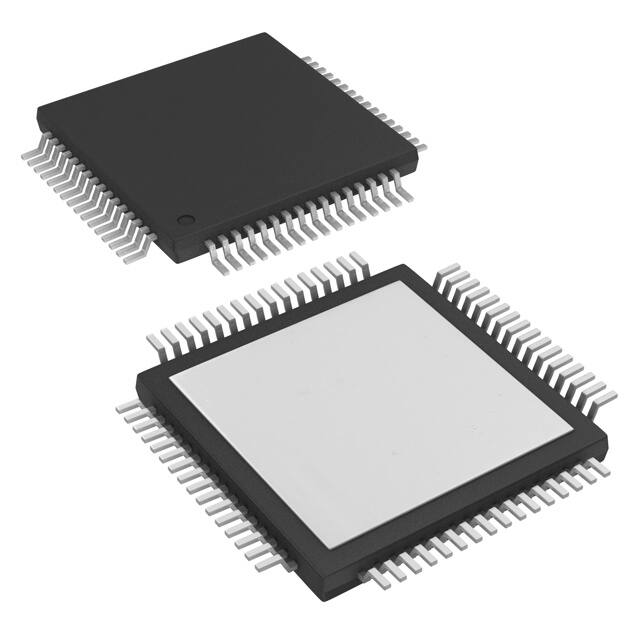
bq76PL536
www.ti.com
SLUSA08A – DECEMBER 2009 – REVISED JULY 2010
3 to 6 Series Cell Lithium-Ion Battery Monitor and Secondary Protection IC for EV and
HEV Applications
Check for Samples: bq76PL536
FEATURES
APPLICATIONS
•
•
•
•
•
•
•
•
•
1
2
•
•
•
•
•
•
•
•
3 to 6 Series Cell Support, All Chemistries
Hot-Pluggable
High-Speed SPI for Data Communications
Stackable Vertical Interface
No Isolation Components Required Between
ICs
Industrial Temperature Range, –40°C to 85°C
High-Accuracy Analog-to-Digital Converter
(ADC):
– ±3 mV Typical accuracy
– 14-Bit Resolution, 6-µs Conversion Time
– Nine ADC Inputs: 6 Cell Voltages, 1 Six-Cell
Brick Voltage, 2 Temperatures, 1
General-Purpose Input
– Dedicated Pins for Synchronizing
Measurements
Configuration Data Stored in ECC-OTP
Registers
Built-In Comparators (Secondary Protector)
for:
– Over- and Undervoltage Protection
– Overtemperature Protection
– Programmable Thresholds and Delay Times
– Dedicated Fault Output Signals for OV, UV,
OT
Cell Balancing Control Outputs With Safety
Timeout
– Balance Current Set by External
Components
Supply Voltage Range from 6 V to 30 V
Continuous and 36 V Peak
Low Power:
– Typical 12-µA Sleep, 45-µA Idle
Integrated Precision 5-V, 3-mA LDO
Uninterruptible Power Systems (UPS)
E-Bike and E-Scooter
Large-Format Battery Systems
Electric and Hybrid Electric Vehicles
DESCRIPTION
The bq76PL536 is a stackable three to six series cell
lithium-ion battery pack protector and analog front
end
(AFE)
that
incorporates
a
precision
analog-to-digital converter (ADC); independent cell
voltage and temperature protection; cell balancing,
and a precision 5-V regulator to power user circuitry.
The bq76PL536 integrates a voltage translation and
precision analog-to-digital converter system to
measure battery cell voltages with high accuracy and
speed.
The bq76PL536 provides full protection (secondary
protection) for overvoltage, undervoltage, and
overtemperature conditions. When safety thresholds
are exceeded, the bq76PL536 sets the FAULT
output. No external components are needed to
configure or enable the protection features.
Cell voltage and temperature protection functions are
independent of the ADC system. Programmable
protection thresholds and detection delay times are
stored in Error Check/Correct (ECC) OTP EPROM,
which increases the flexibility and reliability of the
battery management system.
The bq76PL536 is intended to be used with a host
controller to maximize the functionality of the battery
management system. However, the protection
functions do not require a host controller.
The bq76PL536 can be stacked vertically to monitor
up to 192 cells without additional isolation
components between ICs. A high-speed serial
peripheral interface (SPI) bus operates between each
bq76PL536 to provide reliable communications
through a high-voltage battery cell stack.
1
2
Please be aware that an important notice concerning availability, standard warranty, and use in critical applications of Texas
Instruments semiconductor products and disclaimers thereto appears at the end of this data sheet.
PowerPAD is a trademark of Texas Instruments.
PRODUCTION DATA information is current as of publication date.
Products conform to specifications per the terms of the Texas
Instruments standard warranty. Production processing does not
necessarily include testing of all parameters.
Copyright © 2009–2010, Texas Instruments Incorporated
�bq76PL536
SLUSA08A – DECEMBER 2009 – REVISED JULY 2010
www.ti.com
These devices have limited built-in ESD protection. The leads should be shorted together or the device placed in conductive foam
during storage or handling to prevent electrostatic damage to the MOS gates.
DESCRIPTION (CONTINUED)
The host microcontroller controls cell balancing of individual cells by setting the registers (via SPI) which control
the appropriate CBx outputs. These outputs can be turned off via the same control, or automatically by the
internal programmable safety timer. The balancing bypass current is set via an external series resistor and FET.
TYPICAL IMPLEMENTATION
PACK+
CONTROL (North)
SPI
FAULT
ALERT
CONV
DRDY
TO NEXT DEVICE
SPI
(North)
CELL_6
bq76PL536
HO S T I NT ERF ACE
(n o t u sed )
GPIO
CBx (6)
CELL_1
CONTROL (North)
SPI
(South)
SPI
ALERT
FAULT
DRDY
CONV
CONTROL (South)
REG50
AUX
••• CELL_2-5 •••
GPAI
SPI
(North)
CELL_6
GPIO
bq76PL536
AUX
••• CELL_2-5 •••
GPAI
DRDY
FAULT
ALERT
SPI
HO S T I NT ERF ACE
HOST
INTERFACE
CONV
CBx (6)
CELL_1
South Interface
(not used on bottom device)
PACK-
Figure 1. Simplified System Connection
PIN DETAILS
PIN FUNCTIONS
PIN
NO.
(1)
2
NAME
TYPE (1)
DESCRIPTION
1
VC6
AI
Sense voltage input terminal for the positive terminal of the sixth cell
2
CB6
O
Cell-balance control output
3
VC5
AI
Sense voltage input terminal for the positive terminal of the fifth cell
4
CB5
O
Cell-balance control output
5
VC4
AI
Sense voltage input terminal for the positive terminal of the fourth cell
6
CB4
O
Cell-balance control output
Key: I = digital input, AI = analog input, O = digital output, OD = open-drain output, T = 3-state output, P = power.
Submit Documentation Feedback
Copyright © 2009–2010, Texas Instruments Incorporated
Product Folder Link(s) :bq76PL536
�bq76PL536
www.ti.com
PIN
NO.
NAME
SLUSA08A – DECEMBER 2009 – REVISED JULY 2010
TYPE (1)
DESCRIPTION
7
VC3
AI
Sense voltage input terminal for the positive terminal of the third cell
8
CB3
O
Cell-balance control output
9
VC2
AI
Sense voltage input terminal for the positive terminal of the second cell
10
CB2
O
Cell-balance control output
11
VC1
AI
Sense voltage input terminal for positive terminal of the first cell
12
CB1
O
Cell-balance control output
13
VC0
AI
Sense-voltage input terminal for negative terminal of first cell (VSS)
14
VSS1
P
VSS
15
AGND
AI
Internal analog VREF (–)
16
VREF
P
Internal analog voltage reference (+), requires 10-µF, low-ESR ceramic capacitor to AGND for stability
17
LDOA
P
Internal analog 5-V LDO bypass connection, requires 2.2-µF ceramic capacitor for stability
18
LDOD1
P
Internal digital 5-V LDO bypass connection 1, requires 2.2-µF ceramic capacitor for stability. This pin is tied
internally to LDOD2. This pin should be tied to LDOD2 externally.
19
TS1–
AI
Differential temperature sensor input
20
TS1+
AI
Differential temperature sensor input
21
CONV_S
I
22
DRDY_S
OD
Current-mode output indicating conversion data is ready to the next lower bq76PL536
23
ALERT_S
OD
Current-mode output indicating a system status change to the next lower bq76PL536
24
FAULT_S
OD
Current-mode output
25
VSS2
P
VSS
26
SCLK_S
I
Current-mode input SPI clock from the next-lower bq76PL536
27
SDO_S
OD
Current-mode output for SPI data to the next-lower bq76PL536
28
SDI_S
I
Current-mode input for SPI data from the next-lower bq76PL536
29
CS_S
I
Current-mode input SPI chip-select (slave-select) from the next-lower bq76PL536
30
NC
–
No connection
31
AUX
O
Switched 1-mA limited output from REG50
32
REG50
P
5-V user LDO output, requires 2.2-µF ceramic capacitor for stability
33
VSS3
P
VSS
34
VSS4
P
VSS
35
VSS5
P
VSS
36
CONV_H
I
Host-to-device interface – initiates a synchronous conversion. Pin has 250-nA internal sink to VSS.
37
DRDY_H
O
Host-to-device interface – conversion complete, data-ready indication
38
ALERT_H
O
Host-to-device interface – ALERT condition detected in this or higher (North) device
39
FAULT_H
O
Host-to-device interface – FAULT condition detected in this or higher (North) device
40
SCLK_H
I
Host-to-device interface – SPI clock from host
41
SDO_H
O
Host-to-device interface – data from device to host (host MISO signal), 3-state pin, 250-nA internal pullup
42
SDI_H
I
Host-to-device interface – data from host to device (host MOSI signal)
43
CS_H
I
Host-to-device interface – active-low chip select from host. Internal 100-kΩ pullup resistor
44
HSEL
I
Host interface enable, 0 = enable, 1 = disable
45
GPIO
IOD
46
LDOD2
P
Internal digital 5-V LDO bypass connection 2, requires 2.2-µF ceramic capacitor for stability. This pin is tied
internally to LDOD1. This pin should be tied to LDOD1 externally.
47
GPAI–
AI
General-purpose (differential) analog input, connect to VSS if unused.
48
GPAI+
AI
General-purpose (differential) analog input, connect to VSS if unused.
49
VSS6
P
VSS
50
TEST
I
Factory Test pin. Connect to VSS in user circuitry. This pin includes ~100K internal pull-down
51
NC
–
No connect
52
CS_N
OD
Input from the adjacent lower bq76PL536 to initiate a conversion
Digital open-drain I/O. A 10 kΩ–2-MΩ pullup is recommended.
Current-mode output used to select the next-higher bq76PL536 for SPI communication
Submit Documentation Feedback
Copyright © 2009–2010, Texas Instruments Incorporated
Product Folder Link(s) :bq76PL536
3
�bq76PL536
SLUSA08A – DECEMBER 2009 – REVISED JULY 2010
PIN
NO.
NAME
www.ti.com
TYPE (1)
DESCRIPTION
53
SDI_N
OD
Current-mode output for SPI data to the next-higher bq76PL536
54
SDO_N
I
Current-mode input for SPI data from the next-lower bq76PL536
55
SCLK_N
OD
56
FAULT_N
I
Current-mode input indicating a system status change from the next-higher bq76PL536
57
ALERT_N
I
Current-mode input indicating a system status change from the next-higher bq76PL536
58
DRDY_N
I
Current-mode input indicating conversion data is ready from next-higher bq76PL536
59
CONV_N
OD
Current-mode output to the next-higher bq76PL536 to initiate a conversion
60
TS2–
AI
Differential temperature sensor input
61
TS2+
AI
Differential temperature sensor input
62
NC
–
No connect
63
BAT1
P
Power-supply voltage, connect to most positive cell +, tie to BAT2 on PCB
64
BAT2
P
Power-supply voltage, connect to most positive cell +, tie to BAT1 on PCB
65
TAB
–
Tab on bottom of PowerPAD™ package, this must be soldered to similar-size copper area on PCB,
connected to VSS, to meet stated specifications herein. Provides heat-sinking to part.
Current-mode output SPI clock to the next-higher bq76PL536
VSS
TEST
NC51
CS_N
SDI_N
SDO_N
SCLK_N
ALERT_N
FAULT_N
DRDY_N
TS2–
CONV_N
TS2+
NC62
BAT
BAT
PINOUT DIAGRAM
64 63 62 61 60 59 58 57 56 55 54 53 52 51 50 49
VC6
1
48
GPAI+
CB6
2
47
GPAI–
VC5
3
46
LDOD2
CB5
4
45
GPIO
VC4
5
44
HSEL
CB4
6
43
CS_H
VC3
7
42
SDI_H
CB3
8
bq76PL536
41
SDO_H
VC2
9
LQFP-64
40
SCLK_H
CB2
10
39
FAULT _H
VC1
11
38
ALERT_H
CB1
12
37
DRDY_H
VC0
13
36
CONV_H
VSS
14
35
VSS
AGND
15
34
VSS
VREF
16
33
VSS
Submit Documentation Feedback
REG50
AUX
NC30
CS_S
SDI_S
SDO_S
SCLK_S
VSS
FAULT_S
ALERT_S
DRDY_S
CONV_S
TS1-
TS1+
LDOA
4
LDOD1
17 18 19 20 21 22 23 24 25 26 27 28 29 30 31 32
Copyright © 2009–2010, Texas Instruments Incorporated
Product Folder Link(s) :bq76PL536
�bq76PL536
www.ti.com
SLUSA08A – DECEMBER 2009 – REVISED JULY 2010
ORDERING INFORMATION
(1)
TA
PACKAGE
PART NO.
–40°C To 85°C
64 TQFP PowerPAD
package
bq76PL536PAP (1)
The bq76PL536 can be ordered in tape and reel as
bq76PL536PAPR (quantity 1000) or bq76PL536PAPT (quantity
250).
LDOD
LDO-A
LDO-D
VBAT
LDOA
REG50
AUX
FUNCTIONAL BLOCK DIAGRAM
bq76PL536
CONV_N
TS2+
OT1
1.25V REF2
DRDY_N
FAULT _N
LEVELSHIFTED
NORTH
COMM’s
INTERFACE
ALERT_N
CS_N
SCLK_N
TS2-
5V LDO
(User Circuitry)
TS1+
OT2
TS1THERMAL
SHUTDOWN
OV
VC6
UV
SDI_N
CB6
EPROM
OV
SDO_N
VC5
SHADOW RAM
CONV_H
UV
DRDY_H
SDI_H
DIGITAL
CONTROL
LOGIC
SDO_H
CONV_S
2.5V
DRDY_S
FAULT _S
ALERT_S
CS_S
SCLK_S
VREF
LEVELSHIFTED
SOUTH
COMM’s
INTERFACE
+
-
CELL BALANCING
14 bit
ADC
LEVEL SHIFT & MUX
SCLK_H
ULTRA-PRECISION
BANDGAP
CS_H
HOST
INTERFACE
FAULT _H
ALERT_H
CB5
OV
UV
OV
UV
OV
VC4
CB4
VC3
CB3
VC2
UV
CB2
OV
VC1
UV
CB1
SDI_S
OSC
SDO_S
VC0
VSS
VSS
GPAI–
GPAI+
AGND
VREF
GPIO
REF2
Figure 2. bq76PL536 Block Diagram
Submit Documentation Feedback
Copyright © 2009–2010, Texas Instruments Incorporated
Product Folder Link(s) :bq76PL536
5
�bq76PL536
SLUSA08A – DECEMBER 2009 – REVISED JULY 2010
www.ti.com
ABSOLUTE MAXIMUM RATINGS
over operating free-air temperature range (unless otherwise noted)
(1)
(2)
VALUE
UNIT
Supply voltage range, VMAX
BAT1
–0.3 to 36
V
BAT voltage to any other pin
BAT to any pin
–0.3 to 36
V
VC1–VC6
–0.3 to 36
VC0
–0.3 to 2
VCn to VCn-1, n=1 to 6
Input voltage range, VIN
0 to 36
TS1+, TS1–, TS2+, TS2–
–0.3 V to 6
–0.3 to 6
GPIO
–0.3 to VREG50 + 0.3
DRDY_N, SDO_N, FAULT_N, ALERT_N
–0.3 to 36
CONV_S, SDI_S, SCLK_S, CS_S
–2 to 1
CONV_N, SDI_N, SCLK_N, CS_N
–0.3 to 36
DRDY_S, SDO_S, FAULT_S, ALERT_S
Output voltage range, VO
–0.3 to 5
GPIO
–0.3 to VREG50 + 0.3
CB1…CB6 (CBREF = 0x00)
–0.3 to 36
REG50, AUX
–0.3 to 6
Junction temperature
Storage temperature range, TSTG
(1)
(2)
V
GPAI
V
150
°C
–65 to 150
°C
Stresses beyond those listed under Absolute Maximum Ratings may cause permanent damage to the device. These are stress ratings
only; functional operation of the device at these or any other conditions beyond those indicated under Recommended Operating
Conditions is not implied. Exposure to absolute-maximum-rated conditions for extended periods may affect device reliability.
All voltages are with respect to VS of this device except VCn–VC(n+1), where n = 1 to 6 cell voltage.
RECOMMENDED OPERATING CONDITIONS
Typical values stated where TA = 25ºC and BAT = 20 V, Min/Max values stated where TA = –40˚C to 85ºC and BAT = 7.2 V to
30 V (unless otherwise noted)
MIN
VBAT
VI
Supply voltage
Input voltage range
BAT
NOM
MAX
7.2
27
VCn–VC(n – 1) (1)
1
4.5
GPAI
0
2.5
GPIO
0
VREG50
VC(n –
1)
VCn
CBn (1)
TS1+, TS1–, TS2+, TS2–
0
DRDY_N, SDO_N, FAULT_N, ALERT_N
UNIT
V
V
VREG50/2
BAT + 1
CONV_S, SDI_S, SCLK_S, CS_S
–1
CONV_N, SDI_N, SCLK_N, CS_N
BAT – 1
VO
Output voltage range
CREG50
External capacitor
REG50 pin
2.2
CVREF
External capacitor
VREF pin
9.2
15
µF
CLDO
External capacitor
LDOx pin
2.2
3.3
µF
TOPR
Operating temperature (2)
–40
85
°C
(1)
(2)
6
DRDY_S, SDO_S, FAULT_S, ALERT_S
V
1
µF
10
n = 1 to 6
Device specifications stated within this range.
Submit Documentation Feedback
Copyright © 2009–2010, Texas Instruments Incorporated
Product Folder Link(s) :bq76PL536
�bq76PL536
www.ti.com
SLUSA08A – DECEMBER 2009 – REVISED JULY 2010
ELECTRICAL CHARACTERISTICS
SUPPLY CURRENT
Typical values stated where TA = 25°C and BAT = 20 V, Min/Max values stated where TA = –40°C to 85°C and BAT = 7.2 V
to 27 V (unless otherwise noted)
PARAMETER
TEST CONDITION
MIN
TYP
MAX
UNIT
12
20
µA
ICCSLEEP
Supply current
No load at REG50, SCLK_N, SDI_N, SDO_N, FAULT_N,
CONV_N, DRDY_S, ALERT_N, TSx, AUX, or CBx;
CB_CTRL = 0; CBT_CONTROL = 0;
CONV_H = 0 (not converting), IO_CTRL[SLEEP] = 1
ICCPROTECT
Supply current
No load at REG50, SCLK_N, SDI_N, SDO_N, FAULT_N,
CONV_N, DRDY_S, ALERT_N, TSx, AUX, or CBx;
CB_CTRL = 0; CBT_CONTROL = 0;
CONV_H = 0 (not converting), IO_CTRL[SLEEP] = 0
45
60
µA
ICCBALANCE
Supply current
No load at REG50, SCLK_N, SDI_N, SDO_N, FAULT_N,
CONV_N, DRDY_S, ALERT_N, TSx, or AUX;
No DC load at CBx; CB_CTRL ≠ 0; CBT_CONTROL ≠0;
CONV_H = 0 (not converting) , IO_CTRL[SLEEP] = 0
46
60
µA
ICCCONVERT
Supply current
No load at REG50, SCLK_N, SDI_N, SDO_N, FAULT_N,
CONV_N, DRDY_S, ALERT_N, TSx or CBx; CONV_S = 1
(conversion active) , IO_CTRL[SLEEP] = 0
10.5
15
mA
ICCTSD
Supply current
Thermal shutdown activated; ALERT_STATUS[TSD] = 1;
Device die temperature ≥ 100°C
1.6
2.2
mA
REG50, INTEGRATED 5-V LDO
Typical values stated where TA = 25°C and BAT = 20 V, Min/Max values stated where TA = –40°C to 85°C and BAT = 7.2 V
to 27 V (unless otherwise noted)
PARAMETER
TEST CONDITION
VREG50
Output voltage
IREG50OUT ≤ 0.5 mA, C = 2.2 mF to 22 mF
ΔVREG50LINE
Line regulation
6 V ≤ BAT ≤ 27 V, IREG50OUT = 2 mA
ΔVREG50LOAD
Load regulation
IREG50MAX
Current limit
IAUXMAX
Current limit
RAUX
AUX output
MIN
TYP
MAX
4.9
5
5.1
V
10
25
mV
0.2 mA ≤ IREG50OUT ≤ 2 mA
15
0.2 mA ≤ IREG50OUT ≤ 5 mA
25
12
25
I = 1 mA, max. capacitance = VREG50
Capacitor: CVAUX ≤ CVREG50 / 10
UNIT
mV
35
mA
5
mA
50
Ω
LEVEL SHIFT INTERFACE
Typical values stated where TA = 25°C and BAT = 20 V, Min/Max values stated where TA = –40°C to 85°C and BAT = 7.2 V
to 27 V (unless otherwise noted)
TEST CONDITION
MIN
TYP
MAX
UNIT
INTX1
North 1 transmitter current
PARAMETER
SCLK_N, CS_N, SDI_N, CONV_N
–755
–840
–1020
µA
INTX0
North 0 transmitter current
SCLK_N, CS_N, SDI_N, CONV_N
–1
µA
ISRX
South 1 receiver current
SCLK_S, CS_S, SDI_S, CONV_S
525
620
665
µA
ISTX1
South 1 transmitter current
SDO_S, ALERT_N, FAULT_S, DRDY_S
925
1040
1200
µA
ISTX1
South 0 transmitter current
SDO_S, ALERT_S, FAULT_S, DRDY_S
1
µA
INRX
North 1 receiver current
SDO_N, ALERT_N, FAULT_N, DRDY_N
–350
–420
–580
µA
CIN
Input capacitance (1)
(1)
15
pF
Specified by design, not tested in production.
Submit Documentation Feedback
Copyright © 2009–2010, Texas Instruments Incorporated
Product Folder Link(s) :bq76PL536
7
�bq76PL536
SLUSA08A – DECEMBER 2009 – REVISED JULY 2010
www.ti.com
HOST INTERFACE
Typical values stated where TA = 25°C and BAT = 20 V, Min/Max values stated where TA = –40°C to 85°C and BAT = 7.2 V
to 27 V (unless otherwise noted)
PARAMETER
TEST CONDITION
VOH
Logic-level output voltage, high; SDO_H, FAULT_H,
ALERT_H, DRDY
CL = 20 pF, IOH < 5 mA (1)
VOL
Logic-level output voltage, low; SDO_H, FAULT_H,
ALERT_H, DRDY
CL = 20 pF, IOL < 5 mA
VIH
Logic-level input voltage, high; SCLK_H, SDI_H, CS_H,
CONV
VIL
Logic-level input voltage, low; SCLK_H, SDI_H, CS_H,
CONV
CIN
Input capacitance (2) SCLK_H, SDI_H, CS_H, CONV
ILKG
(1)
(2)
Input leakage current
(2)
MIN
TYP
MAX
UNIT
4.5
VLDOD
V
VSS
0.5
V
2
5.2
V
VSS
0.8
V
5
pF
SCLK_H, SDI_H, CS_H, CONV
1
µA
Total simultaneous current drawn from all pins is limited by LDOD current to ≤10 mA.
Specified by design, not tested in production.
GENERAL PURPOSE INPUT/OUTPUT (GPIO)
Typical values stated where TA = 25°C and BAT = 20 V, Min/Max values stated where TA = –40°C to 85°C and BAT = 7.2 V
to 27 V (unless otherwise noted)
PARAMETER
TEST CONDITION
MIN
Vin ≤ VREG50
VIH
Logic-level input voltage, high
VIL
Logic-level input voltage, low
VOH
Output high-voltage pullup voltage
Supplied by external ~100K resistor
VOL
Logic-level output voltage, low
IOL = 1mA
CIN
Input capacitance(1)
ILKG
Input leakage current
TYP
MAX
2
UNIT
V
0.8
V
VREG50
V
0.3
V
5
pF
1
µA
CELL BALANCING CONTROL OUTPUT (CBx)
Typical values stated where TA = 25°C and BAT = 20 V, Min/Max values stated where TA = –40°C to 85°C and BAT = 7.2 V
to 27 V (unless otherwise noted)
PARAMETER
CBz
Output impedance
VRANGE
Output V
TEST CONDITIONS
1 V < VCELL < 5 V
MIN
TYP
MAX
UNIT
80
100
120
kΩ
VCn
V
VCn-1
ANALOG-TO-DIGITAL CONVERTER
ADC Common Specifications
Typical values stated where TA = 25°C and BAT = 20 V, Min/Max values stated where TA = –40°C to 85°C and BAT = 7.2 V
to 27 V (unless otherwise noted)
PARAMETER
TEST CONDITION
tCONV_START
CONV high to conversion start (1),
tCONV
Conversion time per selected channel (4), (3)
ADC_CONTROL[ADC_ON] = 1
FUNCTION_CONFG[ADCTx]=00
ILKG
Input leakage current
Not converting
(1)
(2)
(3)
(4)
8
(2) (3)
ADC_CONTROL[ADC_ON] = 1
,
MIN
TYP
MAX
5.4
6
6.6
ADC_CONTROL[ADC_ON] = 0
500
5.4
UNIT
µs
µs
6
6.6
µs
VOT for tOT
ALERT_S
ALERT_H
ALERT
ALERT_STATUS[OT2]
OT1
VTS1 > VOT for tOT
ALERT_S
ALERT_H
ALERT
ALERT_STATUS[OT1]
Fault Recovery Procedure
When any error flag in DEVICE_STATUS[], FAULT_STATUS[], or ALERT_STATUS[] is set and latched, the
state can only be cleared by host communication via SPI. Writing to the respective FAULT_STATUS or
ALERT_STATUS register bit with a 1 clears the latch for that bit. The exceptions are the two FORCE bits, which
are cleared by writing a 0 to the bit.
The FAULT_STATUS[] and ALERT_STATUS[] register bits are read-only, with the exception of the FORCE bit,
which may be directly written to either a 1 or 0.
Secondary Protector Built-In Self-Test Features
The secondary protector functions have built-in test for verifying the connections through the signal chain of ICs
in the stack back to the host CPU. This verifies the wiring, connections, and signal path through the ICs by
forcing a current through the signal path.
To implement this feature, host firmware should set the FAULT[FORCE] or ALERT[FORCE] bit in the top-most
device in the stack. The device asserts the associated pin on the South interface, and it propagates down the
stack, back to the base device. The base device in turn asserts the FAULT_H (ALERT_H) pin to the host,
allowing the host to check for the received signal and thereby verify correct operation.
CELL BALANCING
The bq76PL536 has six dedicated outputs (CB1…CB6) that can be used to control external N-FETs as part of a
cell balancing system. The implementation of appropriate algorithms is controlled by the system host. The
CB_CTRL[CBAL1–6] bits control the state of each of the outputs. The outputs are copied from the bit state of the
CB_CTRL register, i.e., a 1 in this register activates the external balance FET by placing a high on the
associated pin.
The CBx pins switch between approximately the positive and negative voltages of the cell across which the
external FET is connected. This allows the use of small, low-cost N-FETs in series with a power resistor to
provide cell balancing.
Cell Balance Control Safety Timer
The CBx outputs are cleared when the internal safety timer expires. The internal safety timer (CB_TIME) value is
programmed in units of seconds or minutes (range set by CB_CTRL bit 7) with an accuracy of ±10%.
The timer begins when any CB_CTRL bit changes from 0 to 1. The timer is reset if all CB_CTRL bits are
modified by the host from 1 to 0, or by expiration of the timing period. The timing begins counting the
programmed period from start each time the CB_CTRL[] register is programmed from a zero to a non-zero value
in the lower six bits. In example, if the CB_TIME[] is set for 30 s, then one or more bits are set in the CB_CTRL[]
register to balance the corresponding cells; then after 10 s the user firmware sets CB_CTRL[] to 0x00, takes a
measurement, then reprograms CB_CTRL[] with the same or new bit pattern, the timer begins counting 30 s
again before expiring and disabling balancing. This restart occurs each time the CB_CTRL bits are set to a
Submit Documentation Feedback
Copyright © 2009–2010, Texas Instruments Incorporated
Product Folder Link(s) :bq76PL536
23
�bq76PL536
SLUSA08A – DECEMBER 2009 – REVISED JULY 2010
www.ti.com
non-zero value. If this is done at a greater rate than the balancing period for which timer CB_TIME[] is set,
balancing is effectively never disabled – until the timer is either allowed to expire without changing the
CB_CTRL[] register to a non-zero value, or the CB_CTRL[] register is set to zero by the user firmware. If the
CB_CTRL[] register is not manipulated from zero to non-zero while the timer is running, the timer expires as
expected. Alterations of the value from a non-zero to a different non-zero value do not restart the timer (i.e., from
0x02 to 0x03, etc).
While the timer is running, the host may set or reset any bit in the CB_CTRL[] register at any time, and the CBx
output follows the bit.
The host may re-program the timer at any time. The timer must always be programmed to allow the CBx outputs
to be asserted. While the timer is non-zero, the CB_CTRL[] settings are reflected at the outputs.
During periods when the timer is actively running (not expired), then DEVICE_STATUS[CBT] is set.
OTHER FEATURES AND FUNCTIONS
Internal Voltage Regulators
The bq76PL536 derives power from the BAT pin using several internal low dropout (LDO) voltage regulators.
There are separate LDOs for internal analog circuits (4.5 V at LDOA), digital circuits (5 V at LDOD1 and LDOD2),
and external, user circuits (5 V at REG50). The BAT pin should be connected to the most-positive cell input from
cell 3, 4, 5, or 6, depending on the number of cells connected. A small series resistor and filter capacitors close
to the IC are recommended. The internal LDOs and internal VREF should not be used to power external circuitry.
Internal 4.5-V Analog Supply
The internal analog supply should be bypassed at the LDOA pin with a good-quality, low-ESR, 2.2-mF ceramic
capacitor.
Internal 5-V Analog Supply
The internal digital supply should be bypassed at the LDOD1(2) pin with a good-quality, low-ESR, 2.2-mF ceramic
capacitor. The two pins are connected internally and provided to enhance single-pin failure-mode fault tolerance.
They should also be connected together externally.
Designer Note: Because the LDODx inputs are pulled briefly to ~7 V during programming, the LDODx pins
should not be used as sources for pullups to 5-V digital pins, such as HSEL and SPI(bus)_H connected pins.
Use LDOA or VREG50 instead, unless all programming is completed prior to mounting on the application
PCB, in which case LDODx is a good choice.
Low-Dropout Regulator (REG50)
The bq76PL536 has a low-dropout (LDO) regulator provided to power the thermistors and other external circuitry.
The input for this regulator is VBAT. The output of REG50 is typically 5 V. A minimum 2.2-mF capacitor is required
for stable operation. The output is internally current-limited. The output is reduced to near zero if excess current
is drawn, causing die temperatures to rise to unacceptable levels.
The 2.2-µF output capacitor is required whether REG50 is used in the design or not.
REG50 is disabled in SLEEP mode, and may be turned off under thermal-shutdown conditions, and therefore
should not be used as a pullup source for terminating device pins where required.
Auxiliary Power Output (AUX)
The bq76PL536 provides an approximately 1-mA auxiliary power output that is controlled via
IO_CONTROL[AUX]. This output is taken directly from REG50. The current drawn from this pin must be included
in the REG50 current-limit budget by the designer.
Undervoltage Lockout and Power-On Reset
The device incorporates two comparators to detect low VBAT conditions. The first detects low voltage where some
device digital operations are still available. The second, (POR) detects a voltage below which device operation is
not ensured.
24
Submit Documentation Feedback
Copyright © 2009–2010, Texas Instruments Incorporated
Product Folder Link(s) :bq76PL536
�bq76PL536
www.ti.com
SLUSA08A – DECEMBER 2009 – REVISED JULY 2010
UVLO
When the UVLO threshold voltage is sensed for a period ≥ UVLODELAY, the device is no longer able to make
accurate analog measurements and conversions. The ADC, cell-balancing and fault-detection circuitry are
disabled. The digital circuitry, including host CPU and vertical communications between ICs, is fully functional.
Register contents are preserved with the exception that CB_CTRL is set to 0, and the UVLO bit is set in
DEVICE_STATUS[].
Power-On Reset (POR)
When the POR voltage threshold or lower is sensed for a period ≥ UVLODELAY, the device is no longer able to
function reliably. The device is disabled, including all fault-detection circuitry, host SPI communications, vertical
communications, etc.
After the voltage rises above the hysteresis limit longer than the delay time, the device exits the reset state, with
all registers set to default conditions. The FAULT_STATUS[POR] bit is set and latched until reset by the host.
The device no longer has a valid address (DEVICE_ADDRESS[AR] = 0, ADDRESS_CONTROL[] = 0). The
device should be reprogrammed with a valid address, and any registers re-written if non-default values are
desired.
Reset Command
The bq76PL536 can also be reset by writing the reset code (0xa5) to the RESET register. All devices respond to
a broadcast RESET command regardless of their current assigned address. The result is identical to a POR with
the exception that the normal POR period is reduced to several hundred microseconds.
Thermal Shutdown (TSD)
The bq76PL536 contains an integrated thermal shutdown circuit whose sensor is located near the REG50 LDO
and has a threshold of TSD. When triggered, the REG50 regulator reduces its output voltage to zero, and the
ADC is turned off to conserve power. The thermal shutdown circuit has a built-in hysteresis that delays recovery
until the die has cooled slightly. When the thermal shutdown is active, the DEVICE_STATUS[TSD] bit is set. The
IO_CONTROL[SLEEP] and ALERT[SLEEP] bits also become set to reduce power consumption.
WARNING
The secondary protector settings are DISABLED in the TSD state.
CAUTION
Temperature measurement and monitoring do not function due to loss of power if the
thermistors are powered from the REG50 or AUX pins and TSD occurs.
Protection-dependent schemes implemented by the designer which depend on the
REG50 voltage also may not function as a result of loss of the REG50 output.
GPIO
The bq76PL536 includes a general-purpose input/output pin controlled by the IO_CONTROL[GPIO_OUT] bit.
The state of this bit is reflected on the pin. To use the pin as an input, program GPIO_OUT to a 1, and then read
the IO_CONTROL[GPIO_IN] bit. A pullup (10 kΩ–1 MΩ, typ.) is required on this pin if used as an input. If the
pullup is not included in the design, system firmware must program a 0 in IO_CONTROL[GPIO_OUT] to prevent
excess current draw from the floating input. Use of a pullup is recommended in all designs to prevent an
unintentional increase in current draw.
SLEEP Functionality
The bq76PL536 provides the host a mechanism to put the part into a low-power sleep state by setting the
IO_CONTROL[SLEEP] bit. When this bit is set/reset, the following actions occur:
Submit Documentation Feedback
Copyright © 2009–2010, Texas Instruments Incorporated
Product Folder Link(s) :bq76PL536
25
�bq76PL536
SLUSA08A – DECEMBER 2009 – REVISED JULY 2010
www.ti.com
Sleep State Entry (bit set)
If a conversion is in progress, the device waits for it to complete, then sets DRDY true (high).
The device sets the ALERT_STATUS[SLEEP] bit, which in turn causes the ALERT pin to be asserted.
The device gates off all other sources of FAULT or ALERT except ALERT[SLEEP]. The existing state of the
FAULT and ALERT registers is preserved. The host should service and reset the ALERT generated by the
SLEEP bit being set to minimize SLEEP state current draw by writing a 1 to ALERT[SLEEP] followed by a 0 to
ALERT[SLEEP]. The ALERT North-South signal chain can draw up to ~1 mA of current when active, so this
ALERT source should be cleared prior to the host entering the SLEEP state of its own. This signaling is provided
to notify the host that the unmonitored/unprotected state is being entered.
The REG50 LDO is shut down and the output is allowed to float. The ADC, its reference, and clocks are
disabled. The COV, CUV, and OT circuits are disabled, and their band-gap reference shut off. Note that this
effectively removes protection and monitoring from the cells; the designer should take the necessary
design steps and verifications to ensure the cells cannot be put into an unsafe condition by other parts
of the system or usage characteristics.
IO_CONTROL[TS1(2)] bits are not modified. The host must also set these bits to zero to minimize current draw
of the thermistors themselves.
SPI communications are preserved; all registers may be read or written.
Sleep State Exit (Bit Reset)
VREG50 operation is restored.
COV, CUV, OT circuits are re-enabled.
The ADC circuitry returns to its former state. Note that there is a warm-up delay associated with the ADC enable,
the same delay as specified for enabling from a cold start.
The FAULT and ALERT registers are restored to their pre-SLEEP state. If a FAULT or ALERT condition was
present prior to SLEEP, the FAULT or ALERT pin is immediately asserted.
IO_CONTROL[TS1(2)] should be set by the host if the OT function or temperature measurement functions are
desired.
COMMUNICATIONS
SPI Communications – Device to Host
Device-to-host (D2H) mode is provided on the SPI interface pins for connection to a local host microcontroller,
logic, etc. D2H communications operate in voltage mode as a standard SPI interface for ease of connection to
the outside world from the bq76PL536 device. Standard TTL-compatible logic levels are presented. All relevant
SPI timing and performance parameters are met by this interface.
The host interface operates in SPI mode 1, where CPOL = 0 and CPHA = 1. The SPI clock is normally low; data
changes on rising edges, and is sampled on the falling edge. All transfers are MSB-first.
The pins of the base IC (only) in a stack should have the SCLK_H and SDI_H pins terminated with pullups to
minimize current draw of the part if the host ever enters a state where the pins are not driven. In non-base
devices, the _H pins are forced to be all outputs driven low when the HSEL pin is high. In non-base devices, all
_H pins should remain unconnected.
The CS_H has a pullup resistor of approximately 100 kΩ. SDO_H is a 3-state output and is terminated with a
weak pullup.
Designer Note: When VBAT is at or below the UVLO trip point voltage, the internal LDO which supplies the
xxxx_H host SPI communications pins (VLODx) begins to fall out of regulation. The output high voltage on
the xxxx_H pins falls off with the LDO voltage in an approximately linear manner until at the POR voltage trip
point it is reduced to approximately 3.5 V. This action is not tested in production.
26
Submit Documentation Feedback
Copyright © 2009–2010, Texas Instruments Incorporated
Product Folder Link(s) :bq76PL536
�bq76PL536
www.ti.com
SLUSA08A – DECEMBER 2009 – REVISED JULY 2010
Application Notes on the Host SPI Interface Pin States
The CS_H pin is active-low. The host asserts the pin to a logic zero to initiate communications. The CS pin
should remain low until the end of the current packet. When the CS_H pin is asserted, the SPI receiver and
interface of the device are reset and resynchronized. This action ensures that a slave device that has lost
synchronization during a previous transmission or as the result of noise on the bus does not remain permanently
hung. CS_H must be driven false (high) between packets; see AC Timing Characteristics for timing details.
Device-to-Device Vertical Bus (VBUS) Interface
Device-to-device (D2D) communications makes use of a unique, current-mode interface which provides
common-mode voltage isolation between successive bq76PL536s. This vertical bus (VBUS) is found on the _N
and corresponding _S pins. It provides high-speed I/O for both the SPI bus and the direct I/O pins CONV and
DRDY. The current-mode interface minimizes the effects of wiring capacitance on the interface speed.
The _S (South-facing) pins connect to the next-lower device (operating at a lower potential) in the stack of
bq76PL536s. The _N (North facing) pins connect to the next-higher device. The pins cannot be swapped; _S
always points South, and _N always point North. The _S and _N pins are interconnected to the pin with the
same name, but opposite suffix. All pins operate within the voltages present at the BAT and VSS pins. Use
caution; these pins may be several hundred volts above system ground, depending on their position in
the stack.
Designer Note: North (_N) pins of the top, most-positive device in the stack should be connected to the
BAT1(2) pins of the device for correct operation of the string. South (_S) pins of the lowest, most-negative
device in the stack should be connected to VSS of the device. The connections may direct, or via a pullup
resistor (_N) or pulldown resistor (_S) in the range of 100 Ω–1 MΩ.
The maximum SCLK frequency is limited by the number of devices in the vertical stack and other factors. Each
device imposes an approximately 30-nS delay on the round trip communications speed, i.e., from SCLK rising
(an input to all devices) to the SDO pin transitioning requires ~30 ns per device. The designer must add to this
the delay caused by the PCB trace (in turn determined by the material and layout), any connectors in series with
the connection, and any other wiring or cabling between devices in the system. To maximize speed, these other
system components should be carefully selected to minimize delays and other detrimental effects on signal
quality. Wiring and connectors should receive special attention to their transmission line characteristics.
Other factors which should be considered are clock duty cycle, clock jitter, temperature effects on clock and
system components, user-selected drive level for the level-shift interface, and desired design margin.
The VBUS SPI interface is placed in a low-power mode when CS_H is not asserted on the base device.
The CS_N/S pins are asserted by a logic high on the vertical interface bus (logically inverted from CS_H). This
creates a default VBUS CS condition of logic low, reducing current consumption to a minimum.
To reduce power consumption of the SPI interface to a minimum, the SCLK_H and SDI_H should be maintained
at a logic low (de-asserted). The VBUS versions of these signals are not inverted from the host interface. The
device also de-asserts by default the SDO_N/S pins to minimize power consumption.
Packet Formats
Data Read Packet
When the bq76PL536 is selected (CS_S [CS_H for first device] is active and the bq76PL536 has been
addressed) and read request has been initiated, then the data is transmitted on the SDO_S pin to the SDO_N
pin of the next device down the stack. This continues to the first device in the stack, where the data in from the
SDO_N pin is transmitted to the host via the SDO_H pin. The device supplying the read data generates a CRC
as the last byte sent.
Submit Documentation Feedback
Copyright © 2009–2010, Texas Instruments Incorporated
Product Folder Link(s) :bq76PL536
27
�bq76PL536
SLUSA08A – DECEMBER 2009 – REVISED JULY 2010
www.ti.com
CS
SDI
SDO
n + 1 placeholder bytes
DEV ADDR
REG ADDR
CNT = n
0x00
0x00
0x00
0x00
0x00
0x00
0x00
READ 1
READ 2
READ n...
CRC
1 byte
time
Figure 8. READ Packet Format
Read Packet
0
Device Address
R/W
0
Start Reg Address
Read Length n
Read Data 1
CS Assertion
Read Data n
CRC
Figure 9. READ Packet Detail
Data Write Packet
When the bq76PL536 is selected (CS_S is active and the bq76PL536 has been addressed) and a write request
has been initiated, the bq76PL536 receives data through the SDI_S pin, which is connected to the SDO_N of the
lower device. For the first device in the stack, the data is input to the SDI_H pin from the host, and transmitted up
the stack on the SDI_S pin to the SDI_N pin of the next higher device. If enabled, the device checks the CRC,
which it expects as the last byte sent. If the CRC is valid, no action is taken. If the CRC is invalid or missing, the
device asserts the ALERT_S signal to the next lower device, which ripples down the stack to the ALERT_H pin
on the lowest device. The host should then take action to clear the condition.
Unused or undefined register bits should be written as zeros.
CS
SDI
Start of next packet
DEV ADDR
REG ADDR
WRT DATA
CRC
DEV ADDR
REG ADDR
...
1 byte
time
Figure 10. WRITE Packet Format
Write Packet
0
Device Address
R/W
1
Reg Address
Reg Data
CS Assertion
CRC
Figure 11. WRITE Packet Detail
28
Submit Documentation Feedback
Copyright © 2009–2010, Texas Instruments Incorporated
Product Folder Link(s) :bq76PL536
�bq76PL536
www.ti.com
SLUSA08A – DECEMBER 2009 – REVISED JULY 2010
Broadcast Writes
The bq76PL536 supports broadcasting single register writes to all devices. A write to device address 0x3f is
recognized by all devices on the bus with a valid address, and permits efficient simultaneous configuration of all
registers in the stack of devices. This also permits synchronizing all ADC conversions by a firmware command
sent to the CONVERT_CTRL[] register as an alternative to using the CONV and DRDY pins.
Communications Packet Structure
The bq76PL536 has two primary communication modes via the SPI interface. These two modes enable
single-byte read / write and multiple data reads. All writes are single-byte; the logical address is shifted one bit
left, and the LSB = 1 for writing.
All transactions are in the form of packets comprising:
BYTE
DESCRIPTION
#1
6-bit bq76PL536 slave address + R/W bit 0b0xxx xxxW
#2
Starting data-register offset
#3
Number of data bytes to be read (n) (omitted for writes)
#4 to 3+n
Data bytes
#4+n
CRC (omit if IO_CONFIG[CRC_DIS] = 1)
CRC Algorithm
The cyclic redundancy check (CRC) is a CRC-8 error-checking byte, calculated on all the message bytes
(including addresses). It is identical in structure to the SMBus 2.0 packet error check (PEC), and is also known
as the ATM-8 CRC. The CRC is appended to the message for all SPI packets by the device that supplied the
data as the last byte in the packet (when IO_CONTROL[CRC] == 1).
Each bus transaction requires a CRC calculation by both the transmitter and receiver within each packet. The
CRC is calculated in a way that conforms to the polynomial, C(x) = x8 + x2 + x1 + 1 and must be calculated in the
order of the bits as received, MSB first. The CRC calculation includes all bytes in the transmission, including
address, command, and data. When reading data from the device, the CRC is based on the ADDRESS +
FIRST_REGISTER + LENGTH + returned_device_data[n]. The stuff-bytes used to clock out the data from the IC
are not used as part of the calculation, although if the value 0x00 is used, the 0s have no effect on the CRC.
CRC verification is performed by the receiver when the CS_x line goes false, indicating the end of a packet. If
the CRC verification fails, the message is ignored (discarded), the CRC failure flag is set in the
FAULT_STATUS[CRC] register, and the FAULT line becomes asserted and latched until the error is read and
cleared by the host.
The CRC bit returned in the FAULT_STATUS[] register reflects the last packet received, not the CRC condition
of the packet reading the FAULT_STATUS contents. CRC errors should be handled at a high priority by the host
controller, before writing to additional registers.
Data Packet Usage Examples
The bq76PL536 can be enabled via the host to read just the specific voltage data which would require a total of 2
written bytes (chip address and R/W [#1] + first (starting) register offset [#2]) + LENGTH [#3] and 13 stuff
bytes (12 [n] data bytes + CRC).
The data packet can be periodically expanded to accommodate temperature and GPAI readings as well as
device status as needed by changing the REGISTER_FIRST offset and LENGTH values.
Device Addressing
Each individual device in the series stack requires an address to allow it to be communicated with. Each
bq76PL536 has a CS_S and CS_N that are used in assigning addresses. Once addresses have been assigned,
the normal operation of the CS_N/S lines is asserted (logic high) during communications, and the appropriate
bq76PL536 in the stack responds according to the address transmitted as part of the packet.
When the bq76PL536 is reset, the DEVICE_STATUS[AR] (address request) flag is cleared, the address register
Submit Documentation Feedback
Copyright © 2009–2010, Texas Instruments Incorporated
Product Folder Link(s) :bq76PL536
29
�bq76PL536
SLUSA08A – DECEMBER 2009 – REVISED JULY 2010
www.ti.com
is set to 0x00, and ALERT_S is set and passed down the stack. In this state, where address = 0x00, the CS_N
signal is forced to a de-asserted state (CS is not passed north when an address = 0). In this manner, after a
reset the host is assured that a response at address 0x00 is from the first physical device in the stack. After
address assignment of the current device, the host is assured that the next response at address 0x00 is from the
next physical device in the stack.
Once a valid address is assigned to the device, the CS_N signal responds normally, and follows the CS_H or
CS_S signal, propagating to the next device in the stack. Valid addresses are in the range 0x01 through 0x3e.
0x00 is reserved for device discovery after reset. 0x3f is reserved as a broadcast address for all devices.
Designer Note: Broadcast messages are only received by devices with a valid address, and the next higher
device. Any device with an address of 0x00 blocks messages to devices above it. A broadcast message may
not be received by all devices in a stack in situations where some devices do not have a valid address.
30
Submit Documentation Feedback
Copyright © 2009–2010, Texas Instruments Incorporated
Product Folder Link(s) :bq76PL536
�bq76PL536
www.ti.com
SLUSA08A – DECEMBER 2009 – REVISED JULY 2010
POR
All devices:
ADDRESS = 0x00
n=0; i=expected+1
Look for next device –
read DEVICE_STATUS []
at address 0x00
MSB = 0?
Optionally, read other
registers for unique
pattern
Y
N
Send
BROADCAST_RESET
i-- == 0?
Control iteration
count to prevent
endless loop
READ @0x00
[0x00]
[0x00] =
0xxx xxxxb
?
N
Y
Assign unique address
(n) to this part
Assign ADDRESS
ADDR_CTRL[] = ++n
Now, read same device
for unique address (n)
just assigned as
verification
READ @n,
ADDR_CTRL[]
Validated?
ADDR_CTRL[] =
n?
Y
N
All devices found?
n ==
expected system
size?
N
Error()
Y
Done
System_Fault()
Figure 12. Simple Address Discovery and Assignment Algorithm
Once the address is written the ADDRESS_CONTROL[AR] bit will be set which is copied to the
DEVICE_STATUS[AR] and also de-asserts ALERT_S if ALERT_N is also de-asserted. This allows the CS_N pin
to follow (asserted) the CS_S pin assertions. The process of addressing can now be repeated as device ‘n’ has a
new address and device n+1 has the default address of 0x00, and can be changed to its correct address in the
stack.
Submit Documentation Feedback
Copyright © 2009–2010, Texas Instruments Incorporated
Product Folder Link(s) :bq76PL536
31
�bq76PL536
SLUSA08A – DECEMBER 2009 – REVISED JULY 2010
www.ti.com
If a device loses its address through a POR or it is replaced then this device will be the highest logical device in
the stack able to be addressed (0x00) as its CS_N will be disabled and the addressing process is required to be
undertaken for this, and higher devices.
REGISTER ARCHITECTURE
I/O Register Details
The bq76PL536 has 48 addressable I/O registers. These registers provide status, control, and configuration
information for the battery protection system. Reserved registers return 0x00. Unused registers should not be
written to; the results are undefined. Unused or undefined bits should be written as zeros, and will always read
back as zeros. Several types of registers are provided, detailed as follows.
Register Types
Read-Only (Group 1)
These registers contain the results of conversions, or device status information set by internal logic. The contents
are re-initialized by a device reset as a result of either POR or the RESET command. Contents of the register are
changed by either a conversion command, or when there is an internal state change (i.e., a fault condition is
sensed).
Read / Write (Group 2)
This register group modifies the operations or behavior of the device, or indicates detailed status in the
ALERT_STATUS[] and FAULT_STATUS[] registers. The contents are re-initialized by a device reset as a result
of either POR or the RESET command. Contents of the register are changed either by a conversion command,
or when there is an internal state change (i.e., a fault condition is sensed).
Contents may also be changed by a write from the host CPU to the register. Writes may only modify a single
register at a time. If CRCs are enabled, the write packet is buffered until the CRC is checked for correctness.
Packets with bad CRCs are discarded without writing the value to the register, after setting the
FAULT_STATUS[CRC] flag.
Unused or undefined bits in any register should be written as zeros, and will always read back as zeros.
SPI DE -SERIALIZER
INTERNAL DATA BUS
CONTROL, STATUS & DATA REGISTERS
REGISTER
CRC CHECK LOGIC
7
6
5
4
3
2
1
0
WRITE
FAULT _STATUS FLAGS
CRC_ERR
Figure 13. Register Group-2 Architecture
Read / Write, Initialized From EPROM (Group 3)
These registers control the device configuration and functionality. The contents of the registers are initialized
from EPROM-stored constants as a result of POR, RESET command, or the RELOAD_SHADOW command.
This feature ensures that the secondary protector portion of the device (COV, CUV, OT) is fully functional after
any reset, without host CPU involvement.
32
Submit Documentation Feedback
Copyright © 2009–2010, Texas Instruments Incorporated
Product Folder Link(s) :bq76PL536
�bq76PL536
www.ti.com
SLUSA08A – DECEMBER 2009 – REVISED JULY 2010
These registers may only be modified by using a special, sequential-write sequence to guard against accidental
changes. The value loaded from EPROM at reset (or by command) may be temporarily overridden by using the
special write sequence. The temporary value is overwritten to the programmed EPROM initialization value by the
next reset or command to reload. To write to a these protected registers, first write 0x35 to SHDW_CONTROL[],
immediately followed by the write to the desired register. Any intervening write cancels the special sequence.
To re-initialize the entire set of group-3 registers to the EPROM defaults, write the value 0x27 to
SHDW_CONTROL[].
These registers are further protected against corruption by a ninth parity bit that is automatically updated when
the register is written using even parity. If the contents of the register ever become corrupted, the bad parity
causes the ALERT_STATUS[PARITY] bit to become set, alerting the host CPU of the problem.
The EPROM-stored constants are programmed by writing the values to the register(s), then applying the
programming voltage to the LDODx pins, then issuing the EPROM_WRITE command to register E_EN[]. All
group-3 registers are programmed simultaneously, and this operation can only be performed once to the
one-time-programmable (OTP) memory cells. The process is not reversible.
SPI DE-SERIALIZER
INTERNAL DATA BUS
CRC CHECK LOGIC
PROTECTED
REGISTER
REGISTER CONTROL & STATUS BITS
WRITE-PROTECT KEY
7
6
5
4
3
2
1
0
P
STATUS FLAGS
PARITY LOGIC
WRITE
PARITY
SYNDROME CHECKER / GENERATOR
1 bit error
ERROR CHECK /
CORRECT (ECC) LOGIC
REFRESH-PROTECT KEY
POR
REFRESH
EPROM
KEY requires sequenced
write to unlock function
2+ bit errors
LOAD
PROGRAM
VOLTAGE &
TIMING CONTROL
ECC_COR
ECC_ERR
PGM-PROTECT KEY
CHECK BITS
7
6
5
4
3
2
No direct access to this register.
1
0
Cn+1...
Cn
C0
LOAD signal evaluates
ECC syndrome bits
Figure 14. Protected Register Group-3 Architecture, Simplified View
Error Checking and Correcting (ECC) EPROM
The EPROM used to initialize this group is also protected by error-check-and-correct (ECC) logic. The ECC bits
provide a highly reliable storage solution in the presence of external disturbances. This feature cannot be
disabled by user action. Implementation is fully self-contained and automatic and requires no special
computations or provisioning by the user.
When the group-3 contents are permanently written to EPROM, an additional array of hidden ECC-OTP cells is
also automatically programmed. The ECC logic implements a Hamming code that automatically corrects all
single-bit errors in the EPROM array, and senses additional multi-bit errors. If any corrections are made, the
DEVICE_STATUS[ECC_COR] flag bit is set. If any multi-bit errors are sensed, the ALERT_STATUS[ECC_ERR]
flag is set. The corrective action or detection is performed anytime the contents of EPROM are loaded into the
registers – POR, RESET, or by SHADOW_LOAD command. Note: The ECC_COR and ECC_ERR bits may
glitch during OTP-EPROM writes; this is normal. If this occurs, reset the tripped bit; it should remain cleared.
When a double-bit (uncorrectable) error is found, DEVICE_STATUS[ALERT] is set, the ALERT_S (ALERT_H for
bottom stack device) line is activated, and the ALERT_STATUS[] register returns the ECC_ERR and/or I_FAULT
bit = 1(true). The device may return erroneous measurement data, and/or fail to detect COV, CUV, or OT faults
in this state.
EPROM bits are shipped from the factory set to 0, and must be programmed to the 1 state as required.
Submit Documentation Feedback
Copyright © 2009–2010, Texas Instruments Incorporated
Product Folder Link(s) :bq76PL536
33
�bq76PL536
SLUSA08A – DECEMBER 2009 – REVISED JULY 2010
www.ti.com
Table 4. Data and Control Register Descriptions
ADDR
GROUP
ACCESS (1)
RESET
DESCRIPTION
0x00
1
R
0
Status register
GPAI
0x01, 0x02
1
R
0
GPAI measurement data
VCELL1
0x03, 0x04
1
R
0
Cell 1 voltage data
VCELL2
0x05, 0x06
1
R
0
Cell 2 voltage data
VCELL3
0x07, 0x08
1
R
0
Cell 3 voltage data
VCELL4
0x09, 0x0a
1
R
0
Cell 4 voltage data
VCELL5
0x0b, 0x0c
1
R
0
Cell 5 voltage data
VCELL6
0x0d, 0x0e
1
R
0
Cell 6 voltage data
TEMPERATURE1
0x0f, 0x10
1
R
0
TS1+ to TS1– differential voltage data
TEMPERATURE2
0x11, 0x12
1
R
0
TS2+ to TS2– differential voltage data
RSVD
0x13–0x1f
–
–
–
Reserved for future use
ALERT_STATUS
0x20
2
R/W
0x80
Indicates source of ALERT signal
FAULT_STATUS
0x21
2
R/W
0x08
Indicates source of FAULT signal
COV_FAULT
0x22
1
R
0
Indicates cell in OV fault state
CUV_FAULT
0x23
1
R
0
Indicates cell in UV fault state
PRESULT_A
0x24
1
R
0
Parity result of group-3 protected registers (A)
PRESULT_B
0x25
1
R
0
Parity result of group-3 protected registers (B)
0x26–0x2f
–
–
–
Reserved for future use
ADC_CONTROL
0x30
2
R/W
0
ADC measurement control
IO_CONTROL
0x31
2
R/W
0
I/O pin control
CB_CTRL
0x32
2
R/W
0
Controls the state of the cell-balancing outputs CBx
CB_TIME
0x33
2
R/W
0
Configures the CB control FETs maximum on time
ADC_CONVERT
0x34
2
R/W
0
ADC conversion start
0x35–0x39
–
–
–
Reserved for future use
SHDW_CTRL
0x3a
2
R/W
0
Controls WRITE access to group-3 registers
ADDRESS_CONTROL
0x3b
2
R/W
0
Address register
RESET
0x3c
2
W
0
RESET control register
TEST_SELECT
0x3d
2
R/W
0
Test mode selection register
RSVD
0x3e
–
–
–
Reserved for future use
E_EN
0x3f
2
R/W
0
EPROM programming mode enable
FUNCTION_CONFIG
0x40
3
R/W
EPROM
Default configuration of device
IO_CONFIG
0x41
3
R/W
EPROM
I/O pin configuration
CONFIG_COV
0x42
3
R/W
EPROM
Overvoltage set point
CONFIG_COVT
0x43
3
R/W
EPROM
Overvoltage time-delay filter
CONFIG_CUV
0x44
3
R/W
EPROM
Undervoltage setpoint
CONFIG_CUVT
0x45
3
R/W
EPROM
Undervoltage time-delay filter
CONFIG_OT
0x46
3
R/W
EPROM
Overtemperature set point
CONFIG_OTT
0x47
3
R/W
EPROM
Overtemperature time-delay filter
USER1
0x48
3
R
EPROM
User data register 1, not used by device
USER2
0x49
3
R
EPROM
User data register 2, not used by device
USER3
0x4a
3
R
EPROM
User data register 3, not used by device
USER4
0x4b
3
R
EPROM
User data register 4, not used by device
RSVD
0x4c–0xff
–
–
–
NAME
DEVICE_STATUS
RSVD
RSVD
(1)
34
Reserved
Key: R = Read; W = Write
Submit Documentation Feedback
Copyright © 2009–2010, Texas Instruments Incorporated
Product Folder Link(s) :bq76PL536
�bq76PL536
www.ti.com
SLUSA08A – DECEMBER 2009 – REVISED JULY 2010
REGISTER DETAILS
DEVICE_STATUS REGISTER (0x00)
7
AR
6
FAULT
5
ALERT
4
–
3
ECC_COR
2
UVLO
1
CBT
0
DRDY
The STATUS register provides information about the current state of the bq76PL536.
[7]
(ADDR_RQST)
This bit is written to indicate that the ADDR[0]…[5] bits have been written to the correct
address. This bit is a copy of in the ADDRESS_CONTROL[AR] bit.
0 = Address has not been assigned
1 = Address has been assigned
[6] (FAULT):
This bit indicates that this bq76PL536 has detected a condition causing the FAULT signal to
become asserted.
0 = No FAULT exists
1 = A FAULT exists. Read FAULT_STATUS[] to determine the cause.
[5] (ALERT):
This bit indicates that this bq76PL536 has detected a condition causing the ALERT pin to
become asserted.
0 = No FAULT exists
1 = An ALERT exists. Read ALERT_STATUS[] to determine the cause.
[4] (not implemented)
[3] (ECC_COR):
This bit indicates a one-bit error has been detected and corrected in the EPROM.
0 = No errors are detected in the EPROM
1 = A one-bit (single bit) error has been detected and corrected by on-chip logic.
[2] (UVLO):
This bit indicates the device VBAT has fallen below the undervoltage lockout trip point.
Some device operations are not valid in this condition.
0 = Normal operation
1 = UVLO trip point reached, device operation is not ensured.
[1] (CBT):
This bit indicates the cell balance timer is running.
0 = The cell balance timer is has not started or has expired.
1 = The cell balance timer is running.
[0] (DRDY):
This bit indicates the data is ready to read (no conversions active).
0 = There are conversion(s) running.
1 = There are no conversion(s) running.
Submit Documentation Feedback
Copyright © 2009–2010, Texas Instruments Incorporated
Product Folder Link(s) :bq76PL536
35
�bq76PL536
SLUSA08A – DECEMBER 2009 – REVISED JULY 2010
www.ti.com
GPAI (0x01, 0x02)
15
GPAI[15]
7
GPAI [7]
14
GPAI [14]
6
GPAI [6]
13
GPAI [13]
5
GPAI [5]
12
GPAI [12]
4
GPAI [4]
11
GPAI [11]
3
GPAI [3]
10
GPAI [10]
2
GPAI [2]
9
GPAI [9]
1
GPAI [1]
8
GPAI [8]
0
GPAI [0]
9
VCELLn[9]
1
VCELLn[1]
8
VCELLn[8]
0
VCELLn[0]
The GPAI register reports the ADC measurement of GPAI+/GPAI– in units of LSBs.
Bits 15–8 are returned at address 0x01, bits 7–0 at address 0x02.
VCELLn REGISTER (0x03…0x0e)
15
VCELLn[15]
7
VCELLn[7]
14
VCELLn[14]
6
VCELLn[6]
13
VCELLn[13]
5
VCELLn[5]
12
VCELLn[12]
4
VCELLn[4]
11
VCELLn[11]
3
VCELLn[3]
10
VCELLn[10]
2
VCELLn[2]
The VCELLn registers report the converted data for cell n, where n = 1 to 6.
Bits 15–8 are returned at odd addresses (e.g. 0x03), bits 7–0 at even addresses (e.g. 0x04).
TEMPERATURE1 REGISTER (0x0f, 0x10)
15
TEMP1[15]
7
TEMP1[7]
14
TEMP1[14]
6
TEMP1[6]
13
TEMP1[13]
5
TEMP1[5]
12
TEMP1[12]
4
TEMP1[4]
11
TEMP1[11]
3
TEMP1[3]
10
TEMP1[10]
2
TEMP1[2]
9
TEMP1[9]
1
TEMP1[1]
8
TEMP1[8]
0
TEMP1[0]
The TEMPERATURE1 register reports the converted data for TS1+ to TS1–.
Bits 15–8 are returned at odd addresses (e.g., 0x0f), bits 7–0 at even addresses (e.g., 0x10).
TEMPERATURE2 REGISTER (0x11, 0x12)
15
TEMP2[15]
7
TEMP2[7]
14
TEMP2[14]
6
TEMP2[6]
13
TEMP2[13]
5
TEMP2[5]
12
TEMP2[12]
4
TEMP2[4]
11
TEMP2[11]
3
TEMP2[3]
10
TEMP2[10]
2
TEMP2[2]
9
TEMP2[9]
1
TEMP2[1]
8
TEMP2[8]
0
TEMP2[0]
The TEMPERATURE2 register reports the converted data for TS2+ to TS2–.
Bits 15–8 are returned at odd addresses (e.g., 0x11), bits 7–0 at even addresses (e.g., 0x12).
ALERT_STATUS REGISTER (0x20)
7
AR
6
PARITY
5
ECC_ERR
4
FORCE
3
TSD
2
SLEEP
1
OT2
0
OT1
The ALERT_STATUS register provides information about the source of the ALERT signal. The host must clear
each alert flag by writing a 1 to the bit that is set. The exception is bit 4, which may be written 1 or 0 as needed
to implement self-test of the IC stack and wiring.
[7] AR
This bit indicates that the ADDR[0]…[5] bits have been written to a valid address. This bit
is an inverted copy of the ADDRESS_CONTROL[AR] bit. It is not cleared until an
address has been programmed in ADDRESS_CONTROL and a 1 followed by a 0 (two
writes) is written to the bit.
0 = Address has been assigned.
1 = Address has not been assigned (default at RESET).
36
Submit Documentation Feedback
Copyright © 2009–2010, Texas Instruments Incorporated
Product Folder Link(s) :bq76PL536
�bq76PL536
www.ti.com
SLUSA08A – DECEMBER 2009 – REVISED JULY 2010
[6] (PARITY):
This bit is used to validate the contents of the protected group-3 registers.
0 = Group-3 protected register(s) contents are valid.
1 = Group-3 protected register(s) contents are invalid. Group-3 registers should be
refreshed from OTP or directly written from the host.
[5] (ECC_ERR):
This bit is used to validate the OTP register blocks.
0 = No double-bit errors (a corrected one-bit error may/may not exist)
1 = An uncorrectable error has been detected in the OTP-EPROM register bank.
OTP-EPROM register(s) are not valid.
[4] (FORCE):
This bit asserts the ALERT signal. It can be used to verify correct operation and
connectivity of the ALERT as a part of system self-test.
0 = Deassert ALERT (default)
1 = Assert the ALERT signal.
[3] (TSD):
This bit indicates thermal shutdown is active.
0 = Thermal shutdown is inactive (default).
1 = Die temperature has exceeded TSD.
[2] (SLEEP):
This bit indicates SLEEP mode was activated. This bit is only set when SLEEP is first
activated; no continuous ALERT or SLEEP status is indicated after the host resets the
bit, even if the IO_CTRL[SLEEP] bit remains true. (See IO_CTRL[] register for details.)
0 = Normal operation
1 = SLEEP mode was activated.
[1] (OT2):
This bit indicates an overtemperature fault has been detected via TS2.
0 = Temperature is lower than or equal to the VOT2 (or input disabled by
IO_CONTROL[TS2] = 0).
1 = Temperature is higher than VOT2.
[0] (OT1):
This bit indicates an overtemperature fault has been detected via TS1.
0 = Temperature is lower than or equal to the VOT1 (or input disabled by
IO_CONTROL[TS1] = 0).
1 = Temperature is higher than VOT1.
FAULT_STATUS REGISTER (0x21)
7
–
6
–
5
I_FAULT
4
FORCE
3
POR
2
CRC
1
CUV
0
COV
The FAULT_STATUS register provides information about the source of the FAULT signal. The host must clear
each fault flag by writing a 1 to the bit that is set. The exception is bit 4, which may be written 1 or 0 as needed
to implement self-test of the IC stack and wiring.
[7] (not implemented)
[6] (not implemented)
[5] (I_FAULT):
The device has failed an internal register consistency check. Measurement data and
protection function status may not be accurate and should not be used.
0 = No internal register consistency check fault exists.
Submit Documentation Feedback
Copyright © 2009–2010, Texas Instruments Incorporated
Product Folder Link(s) :bq76PL536
37
�bq76PL536
SLUSA08A – DECEMBER 2009 – REVISED JULY 2010
www.ti.com
1 = The internal consistency check has failed self-test. The host should attempt to reset
the device, see the RESET section. If the fault persists, the failure should be
considered uncorrectable.
[4] (FORCE):
This bit asserts the FAULT signal. It can be used to verify correct operation and
connectivity of the FAULT line as a part of system self-test.
0 = Deassert FAULT (default)
1 = Assert the FAULT signal.
[3] (POR):
This bit indicates a power-on reset has occurred.
0 = No POR has occurred since this bit was last cleared by the host.
1 = A POR has occurred. This notifies the host that default values have been loaded to
group-1, -2 registers, and OTP contents have been copied to group-3 registers.
[2] (CRC):
This bit indicates a garbled packet reception by the device.
0 = No errors
1 = A CRC error was detected in the last packet received.
[1] (CUV):
This bit indicates that this bq76PL536 has detected a cell undervoltage (CUV) condition.
Examine CUV_FAULT[] to determine which cell caused the ALERT.
0 = All cells are above the CUV threshold (default).
1 = One or more cells is below the CUV threshold.
[0] (COV):
This bit indicates that this bq76PL536 has detected a cell overvoltage (COV) condition.
Examine COV_FAULT[] to determine which cell caused the FAULT.
0 = All cells are below the COV threshold (default).
1 = One or more cells is above the COV threshold.
COV_FAULT REGISTER (0x22)
7
–
6
–
[0..5] (OV[1]..[6]):
5
OV[6]
4
OV[5]
3
OV[4]
2
OV[3]
1
OV[2]
0
OV[1]
These bits indicate which cell caused the DEVICE_STATUS[COV] flag to be set.
0 = Cell[n] does not have an overvoltage fault (default).
1 = Cell[n] does have an overvoltage fault.
COV_FAULT REGISTER (0x23)
7
–
b0..5 (UV[1]..[6]):
6
–
5
UV[6]
4
UV[5]
3
UV[4]
2
UV[3]
1
UV[2]
0
UV[1]
These bits indicate which cell caused the DEVICE_STATUS[CUV] flag to be set.
0 = Cell[n] does not have an overvoltage fault (default).
1 = Cell[n] does have an overvoltage fault.
PARITY_H REGISTER (0x24) (PRESULT_A (R/O))
7
OTT
38
6
OTV
5
CUVT
4
CUVV
3
COVT
Submit Documentation Feedback
2
COVV
1
IO
0
FUNC
Copyright © 2009–2010, Texas Instruments Incorporated
Product Folder Link(s) :bq76PL536
�bq76PL536
www.ti.com
SLUSA08A – DECEMBER 2009 – REVISED JULY 2010
The PRESULT_A register holds the parity result bits for the first eight group-3 protected registers.
PARITY_H REGISTER (0x25) (PRESULT_B (R/O))
7
0
6
0
5
0
4
0
3
USER4
2
USER3
1
USER2
0
USER1
The PRESULT_B register holds the parity result bits for the first eight group-3 protected registers.
ADC_CONTROL REGISTER (0x30)
7
–
6
ADC_ON
5
TS2
4
TS1
3
GPAI
2
CELL_SEL[2]
1
CELL_SEL[1]
0
CELL_SEL[0]
The ADC_CONTROL register controls some features of the bq76PL536.
[7] not implemented. Must be written as 0.
[6] (ADC_ON):
This bit forces the ADC subsystem ON. This has the effect of eliminating internal start-up
and settling delays, but increases current consumption.
0 = Auto mode. ADC subsystem is OFF until a conversion is requested. The ADC is
turned on, a wait is applied to allow the reference to stabilize. Automatically
returns to OFF state at end of requested conversion. Note that there is a start-up
delay associated with turning the ADC to the ON state in this mode.
1 = ADC subsystem is ON, regardless of conversion state. Power consumption is
increased.
[5..4] (TS[1]..[0]):
[3] (GPAI):
These two bits select whether any of the temperature sensor inputs are to be measured
on the next conversion sequence start.
TS[1]
TS[0]
Measure T
0
0
None (default)
0
1
TS1
1
0
TS2
1
1
Both
This bit enables and disables the GPAI input to be measured on the next
conversion-sequence start.
0 = GPAI is not selected for measurement.
1 = GPAI is selected for measurement.
[2–0] (CELL_SEL):
These three bits select the series cells for voltage measurement translation on the next
conversion sequence start.
CELL_SEL[2]
CELL_SEL[1]
CELL_SEL[0]
0
0
0
Cell 1 only
0
0
1
Cells 1-2
0
1
0
Cells 1-2-3
0
1
1
Cells 1-2-3-4
1
0
0
Cells 1-2-3-4-5
1
0
1
Cells 1-2-3-4-5-6
Other
SELECTED CELL
Cell 1 only
Submit Documentation Feedback
Copyright © 2009–2010, Texas Instruments Incorporated
Product Folder Link(s) :bq76PL536
39
�bq76PL536
SLUSA08A – DECEMBER 2009 – REVISED JULY 2010
www.ti.com
IO_CONTROL REGISTER (0x31)
7
AUX
6
GIPI_OUT
5
GPIO_IN
4
0
3
0
2
SLEEP
1
TS2
0
TS1
The IO_CONTROL register controls some features of the bq76PL536 external I/O pins.
[7] (AUX):
Controls the state of the AUX output pin, which is internally connected to REG50.
0 = Open
1 = Connected to REG50
[6] (GPIO_OUT):
Controls the state of the open-drain GPIO output pin; the pin should be programmed to 1
to use the GPIO pin as an input.
0 = Output low
1 = Open-drain
[5] (GPIO_IN):
Represents the input state of GPIO pin when used as an input
0 = GPIO input is low.
1 = GPIO input is high.
[4] Not implemented. Must be written as 0.
[3] Not implemented. Must be written as 0.
[2] (SLEEP):
Places the device in a low-quiescent-current state. All CUV, COV, and OT comparators
are disabled. A 1-ms delay to stabilize the reference voltage is required to exit SLEEP
mode and return to active COV, CUV monitoring.
0 = ACTIVE mode
1 = SLEEP mode
[1..0] (TSx)
Controls the connection of the TS1(2) inputs to the ADC VSS connection point. When set,
the TSx(–) input is connected to VSS. These bits should be set to 0 to reduce the current
draw of the system.
0 = Not connected
1 = Connected
CB_CTRL REGISTER (0x32)
7
–
6
–
5
CBAL[6]
4
CBAL[5]
3
CBAL[4]
2
CBAL[3]
1
CBAL[2]
0
CBAL[1]
The CB_CTRL register determines the internal cell balance output state.
CB_CTRL b(n = 5 to 0) (CBAL(n + 1)): This bit determines if the CB(n) output is high or low.
0 = CB[n] output is low (default).
1 = CB[n] output is high (active).
40
Submit Documentation Feedback
Copyright © 2009–2010, Texas Instruments Incorporated
Product Folder Link(s) :bq76PL536
�bq76PL536
www.ti.com
SLUSA08A – DECEMBER 2009 – REVISED JULY 2010
CB_TIME REGISTER (0x33)
7
CBT[7]
6
–
5
CBT[5]
4
CBT[4]
3
CBT[3]
2
CBT[2]
1
CBT[1]
0
CBT[0]
The CB_TIME register sets the maximum high (active) time for the cell balance outputs from 0 seconds to 63
minutes. When set to 0, no balancing can occur – balancing is effectively disabled.
[7]
Controls minutes/seconds counting resolution.
0 = Seconds (default)
1 = Minutes
[5..0]
Sets the time duration as scaled by CBT.7
ADC_CONVERT REGISTER (0x34)
7
–
6
–
5
–
4
–
3
–
2
–
1
–
0
CONV
The CONVERT_CTRL register is used to start conversions.
[0] (CONV):
This bit starts a conversion, using the settings programmed into the ADC_CONTROL[]
register. It provides a programmatic method of initiating conversions.
0 = No conversion (default)
1 = Initiate conversion. This bit is automatically reset after conversion begins, and always
returns 0 on READ.
SHDW_CTRL REGISTER (0x3a)
7
SHDW[7]
6
SHDW[6]
5
SHDW[5]
4
SHDW[4]
3
SHDW[3]
2
SHDW[2]
1
SHDW[1]
0
SHDW[0]
The SHDW_CTRL register controls writing to group-3 protected registers. Default at RESET = 0x00.
The value 0x35 must be written to this register to allow writing to group-3 protected registers in the range
0x40–0x4f. The register always returns 0x00 on read. The register is reset to 0x00 after any successful write,
including a write to non-group-3 registers. A read operation does not reset this register.
Writing the value 0x27 results in all group-3 protected registers being refreshed from OTP programmed values.
The register is reset to 0x00 after the REFRESH is complete.
Submit Documentation Feedback
Copyright © 2009–2010, Texas Instruments Incorporated
Product Folder Link(s) :bq76PL536
41
�bq76PL536
SLUSA08A – DECEMBER 2009 – REVISED JULY 2010
www.ti.com
ADDRESS_CONTROL REGISTER (0x3b)
7
AR
6
0
5
ADDR[5]
4
ADDR[4]
3
ADDR[3]
2
ADDR[2]
1
ADDR[1]
0
ADDR[0]
The ADDRESS_CONTROL register allows the host to assign an address to the bq76PL536 for communication.
The default for this register is 0x00 at RESET.
[7] (ADDR_RQST):
This bit is written to indicate that the ADDR[0]…[5] bits have been written to the correct
address. This bit is reflected in the DEVICE_STATUS[AR] bit
0 = Address has not been assigned (default at RESET).
1 = Address has been assigned.
[5..0] (ADDR):
These bits set the device address for SPI communication. This provides to a range of
addresses from 0x00 to 0x3f. Address 0x3f is reserved for broadcast messages to all
connected and addressed 76PL536 devices. The default for these 6 bits is 0x00 at
RESET.
RESET REGISTER (0x3c)
7
RST[7]
6
RST[6]
5
RST[5]
4
RST[4]
3
RST[3]
2
RST[2]
1
RST[1]
0
RST[0]
2
TSEL[2]
1
TSEL[1]
0
TSEL[0]
The RESET register allows the host to reset the bq76PL536 directly.
Writing 0xa5 causes the device to RESET. Other values are ignored.
TEST_SELECT REGISTER (0x3d)
7
TSEL[7]
6
TSEL[6]
5
TSEL[5]
4
TSEL[4]
3
TSEL[3]
The TEST_SELECT places the SPI port in a special mode useful for debug.
TSEL (b7–b0) is used to place the SPI_H interface pins in a mode to support test/debug of a string of
bq76PL536 devices. 0 = normal operating mode.
When the sequence 0xa4, 0x25 ("JR") is written on subsequent write cycles, the device enters a special TEST
mode useful for stack debugging. Writes to other registers between the required sequence bytes results in the
partial sequence being voided; the entire sequence must be written again. POR, RESET, or writing a 0x00 to this
register location exits this mode.
In this state, SPI pin SCLK and SDI become outputs and are enabled, and reflect the state of the SCLK_S,
SDI_S pins of the device. SDO remains an output. This allows observation of bus traffic mid-string. The lowest
device in the string should not be set to operate in this mode. The user is cautioned to condition the connection
to a mid- or top-string device with suitable isolation circuitry to prevent injury or damage to connected devices.
Programming the most-negative device on the stack in this mode prevents further communications with the stack
until POR, and may result in device destruction; this condition should be avoided.
E_EN REGISTER (0x3f)
7
E_EN[7]
6
E_EN [6]
5
E_EN [5]
4
E_EN [4]
3
E_EN [3]
2
E_EN [2]
1
E_EN [1]
0
E_EN [0]
The E_EN register controls the access to the programming of the integrated OTP EPROM.
This register should be written the value 0x91 to permit writing the USER block of EPROM. Values other than
0x00 and 0x91 are reserved and may result in undefined operation. The next read or write of any type to the
device resets (closes) the write window. If a group-3 protected write occurs, the window is closed after the write.
42
Submit Documentation Feedback
Copyright © 2009–2010, Texas Instruments Incorporated
Product Folder Link(s) :bq76PL536
�bq76PL536
www.ti.com
SLUSA08A – DECEMBER 2009 – REVISED JULY 2010
FUNCTION_CONFIG REGISTER (0x40)
7
ADCT[1]
6
ADCT[0]
5
GPAI_REF
4
GPAI_SRC
3
CN[1]
2
CN[0]
1
–
0
0
The FUNCTION_CONFIG sets the default configuration for special features of the device.
[7..6] (ADCT[0,1]):
These bits set the conversion timing of the ADC measurement.
[5] (GPAI_REF):
ADCT[1]
ADCT[0]
~Conversion Time (ms)
0
0
3
0
1
6 (recommended)
1
0
12
1
1
24
This bit sets the reference for the GPAI ADC measurement.
0 = Internal ADC bandgap reference
1 = VREG50 (ratiometric)
[4] (GPAI_SRC):
This bit controls multiplexing of the GPAI register and determines whether the ADC mux
is connected to the external GPAI inputs, or internally to the BAT1 pin. The register
results are automatically scaled to match the input.
0 = External GPAI inputs are converted to result in GPAI register 0x01–02.
1 = BAT pin to VSS voltage is measured and reported in the GPAI register.
[3..2] (CN[1..0]):
These two bits configure the number of series cells used. If fewer than 6 cells are
configured, the corresponding OV/UV faults are ignored. For example, if the CN[x] bits
are set to 10b (2), then the OV/UV comparators are ignored for cells 5 and 6.
CN[1]
CN[0]
SERIES CELLS
0
0
6 (DEFAULT)
0
1
5
1
0
4
1
1
3
IO_CONFIG REGISTER (0x41)
7
–
6
–
5
–
4
–
3
–
2
–
1
–
0
CRC_DIS
The IO_CONFIG sets the default configuration for miscellaneous I/O features of the device.
[0] (CRC_DIS):
This bit enables and disables the automatic generation of the CRC for the SPI
communication packet. The packet size is determined by the host as part of the read
request protocol. The CRC is checked at the deassertion of the CS pin. TI recommends
that this bit be changed using the broadcast address (0x3f) so that all devices in a battery
stack use the same protocol.
0 = A CRC is expected, and generated as the last byte of the packet.
1 = A CRC is not used in communications.
Submit Documentation Feedback
Copyright © 2009–2010, Texas Instruments Incorporated
Product Folder Link(s) :bq76PL536
43
�bq76PL536
SLUSA08A – DECEMBER 2009 – REVISED JULY 2010
www.ti.com
CONFIG_COV REGISTER (0x42)
7
DISABLE
6
–
5
COV[5]
4
COV[4]
3
COV[3]
2
COV[2]
1
COV[1]
0
COV[0]
The CONFIG_COV register determines cell overvoltage threshold voltage.
[7] (DISABLE):
Disables the overvoltage function when set
0 = Overvoltage function enabled
1 = Overvoltage function disabled
[5..0] (COV[5]…[0]):
Configuration bits with corresponding voltage threshold
0x00 = 2 V; each binary increment adds 50 mV until 0x3c = 5 V.
CONFIG_COVT REGISTER (0x43)
7
µs/ms
6
–
5
–
4
COVD[4]
3
COVD[3]
2
COVD[2]
1
COVD[1]
0
COVD[0]
The CONFIG_COVT register determines cell overvoltage detection delay time.
[7] (µs/ms):
Determines the units of the delay time, microseconds or milliseconds
0 = Microseconds
1 = Milliseconds
[4..0] COVD:
0x01 = 100; each binary increment adds 100 until 0x1f = 3100
Note:
When this register is programmed to 0x00, the delay becomes 0s AND the COV state
is NOT latched in the COV_FAULT[] register. In this operating mode, the overvoltage
state for a cell is virtually instantaneous in the COV_FAULT[] register. This mode may
cause system firmware to miss a dangerous cell overvoltage condition.
CONFIG_UV REGISTER (0x44)
7
DISABLE
6
–
5
–
4
CUV[4]
3
CUV[3]
2
CUV[2]
1
CUV[1]
0
CUV[0]
The CUV register determines cell under voltage threshold voltage.
[7] (DISABLE):
Disables the undervoltage function when set
0 = Undervoltage function enabled
1 = Undervoltage function disabled
[5..0] (CUV[4]…[0]):
44
Configuration bits with corresponding voltage threshold
0x00 = 0.7 V; each binary increment adds 100 mV until 0x1a = 3.3 V.
Submit Documentation Feedback
Copyright © 2009–2010, Texas Instruments Incorporated
Product Folder Link(s) :bq76PL536
�bq76PL536
www.ti.com
SLUSA08A – DECEMBER 2009 – REVISED JULY 2010
CONFIG_CUVT REGISTER (0x45)
7
µs/ms
6
–
5
–
4
CUVD[4]
3
CUVD[3]
2
CUVD[2]
1
CUVD[1]
0
CUVD[0]
The CONFIG_CUVT register determines cell overvoltage detection delay time.
[7] (µs/ms):
Determines the units of the delay time, microseconds or milliseconds
0 = Microseconds
1 = Milliseconds
[4..0] CUVD:
0x01 = 100; each binary increment adds 100 until 0x1f = 3100.
Note:
When this register is programmed to 0x00, the delay becomes 0s AND the CUV state
is NOT latched in the CUV_FAULT[] register. In this operating mode, the overvoltage
state for a cell is virtually instantaneous in the CUV_FAULT[] register. This mode may
cause system firmware to miss a dangerous cell undervoltage condition.
CONFIG_OT REGISTER (0x46)
7
OT2[3]
6
OT2[2]
5
OT2[1]
4
OT2[0]
3
OT1[3]
2
OT1[2]
1
OT1[1]
0
OT1[0]
The CONFIG_OT register holds the configuration of the overtemperature thresholds for the two TS inputs.
For each respective nibble (OT1 or OT2), the value 0x0 disables this function. Other settings program a trip
threshold. See the Ratiometric Sensing section for details of setting this register. Values above 0x0b are illegal
and should not be used.
CONFIG_OTT REGISTER (0x47)
7
COTD[7]
6
COTD[6]
5
COTD[5]
4
COTD[4]
3
COTD[3]
2
COTD[2]
1
COTD[1]
0
COTD[0]
The CONFIG_OTT register determines cell overtemperature detection delay time.
0x01 = 10 ms; each binary increment adds 10 ms until 0xff = 2.55 seconds.
Note: When this register is programmed to 0x00, the delay becomes 0s AND the OT state is NOT
latched in the ALERT_STATUS[] register. In this operating mode, the overtemperature state
for a TSn input is virtually instantaneous in the register. This mode may cause system
firmware to miss a dangerous overtemperature condition.
USERx REGISTER (0x48–0x4b) (USER1–4)
7
USER[7]
6
USER[6]
5
USER[5]
4
USER[4]
3
USER[3]
2
USER[2]
1
USER[1]
0
USER[0]
The four USER registers can be used to store user data. The part does not use these registers for any internal
function. They are provided as convenient storage for user S/N, date of manufacture, etc.
Submit Documentation Feedback
Copyright © 2009–2010, Texas Instruments Incorporated
Product Folder Link(s) :bq76PL536
45
�bq76PL536
SLUSA08A – DECEMBER 2009 – REVISED JULY 2010
www.ti.com
PROGRAMMING THE EPROM CONFIGURATION REGISTERS
The bq76PL536 has a block of OTP-EPROM that is used for configuring the operation of the bq76PL536.
Programming of the EPROM should take place during pack/system manufacturing. A 7-V (VPP) pulse is required
on the PROG pin. The part uses an internal window comparator to check the voltage, and times the internal
pulse delivered to the EPROM array.
The user first writes the desired values to all of the equivalent group-3 protected register addresses. The desired
data is written to the appropriate address by first applying 7 V to the LDOD1(2) pins. Programming then
performed by writing to the EE_EN register (address 0x3f) with data 0x91. After a time period > 1500 µs, the 7 V
is removed. Nominally, the voltage pulse should be applied for approximately 2–3 ms. Applying the voltage for an
extended period of time may lead to device damage. The write is self-timed internally after receipt of the
command. The following flow chart illustrates the procedure for programming.
No
Host writes data to Registers in USER
Block 0x40–0x47
Verify Data in 0x40–0x47
Enable Group3 Write:
Write: 0x35 to SHDW_CTRL (0x3a)
Copy EPROM back to Registers
Write 0x27 to SHDW_CTRL (0x3a)
Write data to Registers
Write: 0xnn to 0x4x
Read Register block
0x40–0x4b
ADDR++
ADDR > 0x4b?
Contents match
programmed value?
Yes
Yes
Apply 7 V to
LDOD1(2) pin
Nominal time
~ 2 ms to 3 ms
No
Verify ECC bits
Read DEVICE_STATUS [ECC_COR]
Read ALERT_STATUS [PARITY]
Read ALERT_STATUS [PARITY]
Host enables write to USER Block
Write: 0x91 to E_EN @0x3f
No
All == 0?
Remove 7 V from
LDOD1(2) pins
Yes
SUCCESS
Programming complete
FAIL
Figure 15. EPROM Programming
46
Submit Documentation Feedback
Copyright © 2009–2010, Texas Instruments Incorporated
Product Folder Link(s) :bq76PL536
�CELL 16 +
CELL 15 +
4
2-VSS
C84
.001uf 50V
CAP0603
7
TP5
6
5
6
2-VSS
TP4
3-VSS
CELL 4 +
7
CELL 1 -
TP1
5
6
CELL 2 +
CELL 1 +
4
3
CELL 5 +
CELL 3 +
1
2
CELL 6 +
1-VSS
P1
39502-1007_7-POS
TP2
1-VSS
C51
.001uf 50V
CAP0603
TP3
7
CELL 7 +
CELL 7 -
4
5
CELL 9 +
3
CELL 11 +
CELL 10 +
CELL 8 +
1
2
CELL 12 +
P2
39502-1007_7-POS
CELL 13 -
CELL 13 +
CELL 14 +
3
GROUND PLANE OF CIRCUIT 3
CAUTION
HIGH VOLTAGE
GROUND PLANE OF CIRCUIT 1
GROUND PLANE OF CIRCUIT 2
COMM PINS OF THE CHIP BELOW
TO JUST BELOW THE NORTH
UNDER THE SOUTH COMM LINES
EXTEND THE GROUND PLANE
GROUND PLANE OF CIRCUIT 2
3-CELL6
1-CELL0
1-CELL1
1-CELL2
1-CELL3
1-CELL4
1-CELL5
1-CELL6
1-VBAT
2-CELL0
2-CELL1
2-CELL2
2-CELL3
2-CELL4
2-CELL5
2-CELL6
2-VBAT
3-CELL0
3-CELL1
3-CELL2
3-CELL3
3-CELL4
3-CELL5
3-VBAT
CELL0
CELL1
CELL2
CELL3
CELL4
CELL5
CELL6
VBAT
CONV_N
CELL6
CELL5
CELL0
CELL1
CELL2
CELL3
CELL4
CELL0
CELL1
CELL2
CELL3
CELL4
CELL5
CELL6
R81
1K
RES0603
3-VBAT
R143
R144
R145
1K
1K
1K
RES0603 RES0603 RES0603
CONV_S
R142
1K
RES0603
3-VBAT
BQ76PL536_CIRCUIT3
SHEET-4
3-VBAT
LOCATE R143, R144, R168, R176
CLOSE TO THE MOST NORTH IC
R146
1K
RES0603
R147
1K
RES0603
R148
R149
1K
1K
RES0603 RES0603
LOCATE R195, R196, R197, R199
CLOSE TO THE MOST NORTH IC
SHEET-3
BQ76PL536_CIRCUIT2
LOCATE R142, R175, R192, R193
CLOSE TO THE MOST SOUTH IC
DRDY_N
R82
R83
R84
1K
1K
1K
RES0603 RES0603 RES0603
DRDR_S
R85
1K
RES0603
R86
1K
RES0603
R91
R92
1K
1K
RES0603 RES0603
SHEET-2
BQ76PL536_CIRCUIT1
LOCATE R194, R198, R200, R201
CLOSE TO THE MOST SOUTH IC
DRDY_N
DRDY_S
2
DRDY_N
DRDY_S
3-DRDY_S
2-DRDY_N
2-DRDY_S
1-DRDY_N
1-CELL0
CELL 17 +
ALERT_N
ALERT_S
ALERT_N
3-VBAT
3-VBAT
3-ALERT_S
2-ALERT_N
2-ALERT_S
1-ALERT_N
TP6
FAULT_N
FAULT_S
FAULT_N
FAULT_S
1
FAULT_N
FAULT_S
3-FAULT_S
2-FAULT_N
2-FAULT_S
1-FAULT_N
1-CELL0
3-CONV_S
SCLK_N
SCLK_S
SCLK_S
SCLK_N
SCLK_S
P3
39502-1007_7-POS
2-SCLK_S
1-SCLK_N
1-CELL0
2-CONV_N
3-VBAT
3-SCLK_S
SCLK_N
2-SCLK_N
3-SDO_S
2-SDO_N
2-SDO_S
1-SDO_N
1-CELL0
2-CONV_S
SDO_N
SDO_S
SDO_N
SDO_S
SD0_N
SD0_S
1-CONV_N
1-CELL0
3-VBAT
3-CS_S
2-CS_N
2-CS_S
1-CS_N
CONV_N
3-VBAT
3-SDI_S
2-SDI_N
2-SDI_S
1-SDI_N
CELL 18 +
SDI_S
CONV_S
SDI_N
SDI_S
SDI_N
SDI_S
SDI_N
ALERT_S
ALERT_N
ALERT_S
1-CELL0
CONV_N
CONV_S
CS_N
CS_S
CS_N
CS_S
CS_N
CS_S
Product Folder Link(s) :bq76PL536
1-CELL0
Copyright © 2009–2010, Texas Instruments Incorporated
1-CELL0
GPIO
SPI-SS
SPI-SCLK
SPI-MOSI
SPI-MISO
CONV
DRDY
ALERT
FAULT
1-GPIO
1-SPI-SS
1-SPI-SCLK
1-SPI-MOSI
1-SPI-MISO
1-CONV/RX
1-DRDY/TX
1-ALERT
1-FAULT
2-VSS
1-VSS
2-VSS
C85
.0033uf 50V
CAP0603
C52
.0033uf 50V
CAP0603
3-VSS
CAUTION
HIGH VOLTAGE
INDIVIDUAL GROUND PLANES ARE NECESSARY FOR PROPER
NOISE REJECTION AND STABILITY OF THESE CIRCUITS
R12
100
RES0603
R13
100
RES0603
R14
100
RES0603
R15
100
RES0603
1-VSS
10
9
8
7
6
5
4
3
2
1
SCLK
CS
MOSI
MISO
GND
CONV
DRDY
ALERT
FAULT
VSIG
P4
MTA100-HEADER-10PIN
Only the ground reference CELL0 of circuit 1 is safe to
connect non-isolated test equipment grounds.
S001
DO NOT connect ground references from different chips
NOTE: The ground reference per circuit block is unique
The most negative connection of CELL0 is the ground
reference for each chip.
www.ti.com
SLUSA08A – DECEMBER 2009 – REVISED JULY 2010
bq76PL536
REFERENCE SCHEMATIC
Figure 16. Schematic (Page 1 of 4)
Submit Documentation Feedback
47
�Product Folder Link(s) :bq76PL536
[1] 1-CELL2
[1] 1-CELL1
[1] 1-CELL0
CELL 2 +
CELL 1 +
CELL 1 -
[1] 1-CELL3
CELL 3 +
[1] 1-CELL6
[1] 1-CELL5
[1] 1-CELL4
CELL 6 +
CELL 5 +
CELL 4 +
R24
47
RES2512
Z5
5.1 VDC 500mW
Q6
SOD-123
FDN359AN
SOT-23
R38
47
RES2512
Z1
5.1 VDC 500mW
Q2
SOD-123
FDN359AN
SOT-23
R9
47
RES2512
Z3
5.1 VDC 500mW
Q4
SOD-123
FDN359AN
SOT-23
C9
0.1uf 50V
CAP0603
C19
0.1uf 50V
CAP0603
R49
47
RES2512
Z7
5.1 VDC 500mW
Q7
SOD-123
FDN359AN
SOT-23
C27
0.1uf 50V
CAP0603
C37
0.1uf 50V
CAP0603
Z9
5.1 VDC 500mW
Q8
SOD-123
FDN359AN
SOT-23
R69
47
RES2512
SOT-23
Z11
5.1 VDC 500mW
Q9
SOD-123
FDN359AN
C42
0.1uf 50V
CAP0603
C48
0.1uf 50V
CAP0603
R79
47
RES2512
Z2
5.1VDC
SOD-323
Z4
5.1VDC
SOD-323
Z6
5.1VDC
SOD-323
Z8
5.1VDC
SOD-323
Z10
5.1VDC
SOD-323
Z12
5.1VDC
SOD-323
** C28
0.1uf 50V
CAP0603
R2
1.0K 1%
RES0603
R7
1M 1%
RES0603
R8
1.0K 1%
RES0603
1-VSS -VSS1
** C30
0.1uf 50V
CAP0603
R18
1.0K 1%
RES0603
R21
1M 1%
RES0603
R22
1.0K 1%
RES0603
**C32
0.1uf 50V
CAP0603
R28
1.0K 1%
RES0603
R35
1M 1%
RES0603
R32
1.0K 1%
RES0603
** C33
0.1uf 50V
CAP0603
R40
1.0K 1%
RES0603
R44
1M 1%
RES0603
R45
1.0K 1%
RES0603
** C38
0.1uf 50V
CAP0603
R57
1.0K 1%
RES0603
R61
1M 1%
RES0603
R62
1.0K 1%
RES0603
0.1uf 50V
CAP0603
**C40
R75
1.0K 1%
RES0603
R76
1M 1%
RES0603
R77
1.0K 1%
RES0603
** C41
0.1uf 50V
CAP0603
13
12
11
10
9
8
7
6
5
4
3
2
1
VC0
CB1
VC1
CB2
VC2
CB3
VC3
CB4
VC4
CB5
VC5
CB6
VC6
63
BAT1
64
BAT2
1-VSS
C43 **
0.1uf 50V
CAP0603
1-VSS
bq76PL536TPAPQ1
U1
C105
DNP
CAP0603
1-VSS
1-
TS1-
TS1+
TS2-
TS2+
47
48
16
46
18
17
15
C34 **
C39 **
2.2uf 10V 0.1uf 50V
CAP0805 CAP0603
C24 **
2.2uf 10V
CAP0805
CAUTION
HIGH VOLTAGE
1-VSS
** Locate these components
very close to U1.
LDOD2
LDOD1
LDOA
AGND
VREF
1-VSS
C25
0.1uf 50V
CAP0603
C7
DNP
CAP0603
1-LDOA
R50
0R0
RES0603
R58
0R0
RES0603
T2-2
R71
1.47K 1%
RES0603
T1
T1-3
1-VSS
R27
1.47K 1%
RES0603
T1-4
R124
10K 1%
B=3435K
NTC0603
R30
100
RES0603
R29
100K
RES0603
D1
LTW-C192TL2
White LED
1-GPIO [1]
1-VSS
Q5
2N7002LT1
SOT-23
R25
2.7K
RES0603
1-VSS
TP-VSS1
TP-VPROG1
1-LDOD
S002
[1]
1-SPI-MISO
[1]
1-SPI-MOSI
[1]
1-SPI-SCLK
[1]
1-SPI-SS
C23 **
10uf 10V
CAP1206
C6
DNP
CAP0603
R33
1.82K 1%
RES0603
T2-1
R123
10K 1%
B=3435K
NTC0603
41
SDO_H
42
SDI_H
40
SCLK_H
43
CS_H
C4
DNP
CAP0603
T2
R63
1.82K 1%
RES0603
C21
0.047uf 16V
CAP0603
THERMISTOR NTC 10K OHM 1% 0603
PANASONIC PART NUMBER # ERT-J1VG103FA
T2-1,2 T1-3,4 pair on 0.100" spacing
1-FAULT [1]
1-ALERT [1]
1-DRDY/TX [1]
1-CONV/RX [1]
45
J13-1
J12-1
J11-1
J10-1
C46
0.047uf 16V
CAP0603
CAUTION
HIGH VOLTAGE
** - Locate these components
very close to U1.
39
FAULT_H
38
ALERT_H
37
DRDY_H
36
CONV_H
GPIO
51
NC2
30
NC1
62
NC3
GPAI-
19
20
60
61
1-VSS
C26 **
2.2uf 10V
CAP0805
C108
DNP
CAP0603
1-VSS
GPAI+
C47
DNP
CAP0603
R72
2.0M
RES0603
R190
2.0M
RES0603
R195
2.0M
RES0603
1-VSS -VSS VSS
1
"Bottom" part connects
all _S pins to 1-VSS.
21
CONV_S
22
DRDY_S
23
ALERT_S
24
FAULT_S
44
C113
DNP
CAP0603
50
TEST
R80
1.0K 1%
RES0603
1-CONV_N [1]
1-DRDY_N [1]
1-ALERT_N [1]
1-FAULT_N [1]
59
CONV_N
58
DRDY_N
57
ALERT_N
56
FAULT_N
26
SCLK_S
27
SDO_S
28
SDI_S
29
CS_S
1-VBAT
[1]
1-SCLK_N [1]
1-SDO_N [1]
1-SDI_N [1]
[1]
1-CS_N
55
SCLK_N
54
SDO_N
53
SDI_N
52
CS_N
1-CONV_S
1-DRDY_S
1-ALERT_S
1-FAULT_S
Submit Documentation Feedback
1-SCLK_S
1-SDO_S
1-SDI_S
1-CS_S
HSEL
32
REG50
31
AUX
VSS6
VSS5
VSS4
VSS3
VSS2
VSS1
49
35
34
33
25
14
TAB
65
48
GROUND PLANE OF CIRCUIT 1
GROUND PLANE OF CIRCUIT 2
bq76PL536
SLUSA08A – DECEMBER 2009 – REVISED JULY 2010
www.ti.com
Figure 17. Schematic (Page 2 of 4)
Copyright © 2009–2010, Texas Instruments Incorporated
�[1] 2-CELL2
[1] 2-CELL0
CELL 1 -
[1] 2-CELL3
CELL 3 +
[1] 2-CELL1
[1] 2-CELL4
CELL 4 +
CELL 2 +
[1] 2-CELL5
CELL 1 +
[1] 2-CELL6
CELL 6 +
CELL 5 +
Z14
5.1 VDC 500mW
Q10
SOD-123
FDN359AN
SOT-23
R98
47
RES2512
Q11
FDN359AN
SOT-23
R104
47
RES2512
Z16
5.1 VDC 500mW
SOD-123
C54
0.1uf 50V
CAP0603
C58
0.1uf 50V
CAP0603
Z18
5.1 VDC 500mW
Q13
SOD-123
FDN359AN
SOT-23
R114
47
RES2512
Q14
FDN359AN
SOT-23
R121
47
RES2512
Z22
5.1 VDC 500mW
Q15
SOD-123
FDN359AN
SOT-23
R132
47
RES2512
Z20
5.1 VDC 500mW
SOD-123
C65
0.1uf 50V
CAP0603
C72
0.1uf 50V
CAP0603
R139
47
RES2512
Z24
5.1 VDC 500mW
Q16
SOD-123
FDN359AN
SOT-23
C76
0.1uf 50V
CAP0603
C81
0.1uf 50V
CAP0603
Z15
5.1VDC
SOD-323
Z17
5.1VDC
SOD-323
Z19
5.1VDC
SOD-323
Z21
5.1VDC
SOD-323
Z23
5.1VDC
SOD-323
Z25
5.1VDC
SOD-323
** C64
0.1uf 50V
CAP0603
R93
1.0K 1%
RES0603
R94
1M 1%
RES0603
R95
1.0K 1%
RES0603
2-VSS
** C66
0.1uf 50V
CAP0603
R99
1.0K 1%
RES0603
R100
1M 1%
RES0603
R101
1.0K 1%
RES0603
CAP0603
** C67
0.1uf 50V
R109
1.0K 1%
RES0603
R110
1M 1%
RES0603
R111
1.0K 1%
RES0603
** C68
0.1uf 50V
CAP0603
R117
1.0K 1%
RES0603
R119
1M 1%
RES0603
R120
1.0K 1%
RES0603
** C70
0.1uf 50V
CAP0603
R128
1.0K 1%
RES0603
R129
1M 1%
RES0603
R130
1.0K 1%
RES0603
** C73
0.1uf 50V
CAP0603
R135
1.0K 1%
RES0603
R136
1M 1%
RES0603
R137
1.0K 1%
RES0603
0.1uf 50V
CAP0603
**C74
R140
1.0K 1%
RES0603
2-VSS
VC0
CB1
VC1
CB2
VC2
CB3
VC3
CB4
VC4
CB5
VC5
CB6
VC6
2-VSS
C56
DNP
CAP0603
13
12
11
10
9
8
7
6
5
4
3
2
1
63
BAT1
64
BAT2
2-VSS
C75**
0.1uf 50V
CAP0603
2-VSS
C82
DNP
CAP0603
2-VBAT
[1]
2-SCLK_N 1]
[
2-SDO_N 1][
2-SDI_N 1][
2-CS_N 1] [
R115
100K
RES0603
2-VSS
2-VSS
TS2-
TS1-
TS1+
47
48
19
20
60
61
2-VSS
GPIO
45
2-VSS
46
18
17
15
16
C60**
10uf 10V
CAP1206
2-VSS
2-VSS
C53
DNP
CAP0603
EXTEND THE GROUND PLANE
UNDER THE SOUTH COMM LINES
COMM PINS OF THE CHIP BELOW
TO JUST BELOW THE NORTH
T2-5
2-LDOD
TP-VSS2
CAUTION
HIGH VOLTAGE
2-LDOA [3]
R1
0R0
RES0603
TP-VPROG2
2-VSS
C62
0.1uf 50V
CAP0603
T1
R3
0R0
RES0603
T2-6
R157
10K 1%
B=3435K
NTC0603
R134
1.47K 1%
RES0603
C11
DNP
CAP0603
R107
1.82K 1%
RES0603
C61**
2.2uf 10V
CAP0805
C10
DNP
CAP0603
T2
1-VSS
R103
1.47K 1%
RES0603
T1-8
R158
10K 1%
B=3435K
NTC0603
T1-7
R106
100
RES0603
R105
100K
RES0603
T2-5,6 T1-7,8 pair on 0.100" spacing
THERMISTOR NTC 10K OHM 1% 0603
PANASONIC PART NUMBER # ERT-J1VG103FA
** - Locate these components
very close to U1.
R131
1.82K 1%
RES0603
C59
0.047uf 16V
CAP0603
** Locate these components
very close to U1.
LDOD2
LDOD1
LDOA
AGND
VREF
41
SDO_H
42
SDI_H
40
SCLK_H
43
CS_H
39
FAULT_H
38
ALERT_H
37
DRDY_H
36
CONV_H
C8
DNP
CAP0603
J19-1
J16-1
J15-1
J14-1
C78
0.047uf 16V
CAP0603
CAUTION
HIGH VOLTAGE
C69 **
C71**
2.2uf 10V 0.1uf 50V
CAP0805 CAP0603
C63**
2.2uf 10V
CAP0805
51
NC2
30
NC1
62
NC3
GPAI-
GPAI+
C55
DNP
CAP0603
2-VSS
C79
DNP
CAP0603
2-VSS
TS2+
C80
DNP
CAP0603
GROUND PLANE OF CIRCUIT 2
2-VSS
2-LDOA
[3]
2-VSS
C83
DNP
CAP0603
C57
DNP
CAP0603
bq76PL536TPAPQ1
U2
GROUND PLANE OF CIRCUIT 3
GROUND PLANE OF CIRCUIT 2
50
TEST
44
HSEL
32
REG50
31
AUX
49
VSS6
35
VSS5
34
VSS4
33
VSS3
25
VSS2
14
VSS1
2-CONV_N 1
[]
2-DRDY_N 1]
[
2-ALERT_N [1]
2-FAULT_N [1]
59
CONV_N
58
DRDY_N
57
ALERT_N
56
FAULT_N
21
CONV_S
22
DRDY_S
23
ALERT_S
24
FAULT_S
[1] 2-CONV_S
[1] 2-DRDY_S
[1] 2-ALERT_S
[1] 2-FAULT_S
55
SCLK_N
54
SDO_N
53
SDI_N
52
CS_N
26
SCLK_S
27
SDO_S
28
SDI_S
29
CS_S
[1] 2-SCLK_S
[1] 2-SDO_S
[1] 2-SDI_S
[1]
2-CS_S
Product Folder Link(s) :bq76PL536
TAB
Copyright © 2009–2010, Texas Instruments Incorporated
65
D4
LTW-C192TL2
White LED
2-VSS
S003
Q12
2N7002LT1
SOT-23
R102
2.7K
RES0603
www.ti.com
SLUSA08A – DECEMBER 2009 – REVISED JULY 2010
bq76PL536
Figure 18. Schematic (Page 3 of 4)
Submit Documentation Feedback
49
�[1] 3-CELL2
[1] 3-CELL1
[1] 3-CELL0
CELL 1 -
CELL 3 +
CELL 2 +
[1] 3-CELL3
CELL 4 +
CELL 1 +
[1] 3-CELL5
[1] 3-CELL6
[1] 3-CELL4
CELL 6 +
CELL 5 +
Z31
R167
47
RES2512
5.1 VDC 500mW
Q20
SOD-123
FDN359AN
SOT-23
R177
47
RES2512
Q21
FDN359AN
SOT-23
R183
47
RES2512
Z27
5.1 VDC 500mW
Q17
SOD-123
FDN359AN
SOT-23
R155
47
RES2512
Z29
5.1 VDC 500mW
Q18
SOD-123
FDN359AN
SOT-23
C86
0.1uf 50V
CAP0603
C87
0.1uf 50V
CAP0603
Z35
5.1 VDC 500mW
Q22
SOD-123
FDN359AN
SOT-23
R193
47
RES2512
Q23
FDN359AN
SOT-23
Z33
5.1 VDC 500mW
SOD-123
C94
0.1uf 50V
CAP0603
C101
0.1uf 50V
CAP0603
R199
47
RES2512
Z37
5.1 VDC 500mW
SOD-123
C109
0.1uf 50V
CAP0603
C114
0.1uf 50V
CAP0603
Z28
5.1VDC
SOD-323
Z30
5.1VDC
SOD-323
Z32
5.1VDC
SOD-323
Z34
5.1VDC
SOD-323
Z36
5.1VDC
SOD-323
Z39
5.1VDC
SOD-323
3-VSS
** C93
0.1uf 50V
CAP0603
R151
1.0K 1%
RES0603
R152
1M 1%
RES0603
R153
1.0K 1%
RES0603
** C95
0.1uf 50V
CAP0603
R160
1.0K 1%
RES0603
R162
1M 1%
RES0603
R163
1.0K 1%
RES0603
** C96
0.1uf 50V
CAP0603
R170
1.0K 1%
RES0603
R173
1M 1%
RES0603
R174
1.0K 1%
RES0603
** C97
0.1uf 50V
CAP0603
R179
1.0K 1%
RES0603
R180
1M 1%
RES0603
R181
1.0K 1%
RES0603
** C99
0.1uf 50V
CAP0603
R185
1.0K 1%
RES0603
R186
1M 1%
RES0603
R187
1.0K 1%
RES0603
CAP0603
**C102
0.1uf 50V
R196
1.0K 1%
RES0603
R197
1M 1%
RES0603
R198
1.0K 1%
RES0603
**C103
0.1uf 50V
CAP0603
R208
1.0K 1%
RES0603
CAUTION
HIGH VOLTAGE
3-VSS
13
12
11
10
9
8
7
6
5
4
3
2
1
3-VSS
C2
DNP
CAP0603
VC0
CB1
VC1
CB2
VC2
CB3
VC3
CB4
VC4
CB5
VC5
CB6
VC6
63
BAT1
64
BAT2
3-VSS
C104**
0.1uf 50V
CAP0603
3-VSS
3-SCLK_N
3-SDO_N
3-SDI_N
3-CS_N
"Top" part connects
all _N pins to CELL6 of U3
GPIO
45
46
18
17
15
16
3-VSS
C3
DNP
CAP0603
3-VSS
3-REG50 [4]
3-VSS
EXTEND THE GROUND PLANE
UNDER THE SOUTH COMM LINES
COMM PINS OF THE CHIP BELOW
TO JUST BELOW THE NORTH
T2
C91
0.1uf 50V
CAP0603
C14
DNP
CAP0603
3-LDOD
3-LDOA [4]
R4
0R0
RES0603
TP-VSS3
3-VSS
T1
R5
0R0
RES0603
TP-VPROG3
R194
1.47K 1%
RES0603
T2-10
R191
10K 1%
B=3435K
NTC0603
T2-9
1-VSS
R165
1.47K 1%
RES0603
T1-12
R192
10K 1%
B=3435K
NTC0603
T1-11
R169
100
RES0603
R168
100K
RES0603
T2-9,10 T1-11,12 pair on 0.100" spacing
R171
1.82K 1%
RES0603
C90 **
2.2uf 10V
CAP0805
** - Locate these components
very close to U1.
THERMISTOR NTC 10K OHM 1% 0603
PANASONIC PART NUMBER # ERT-J1VG103FA
R188
1.82K 1%
RES0603
C88
0.047uf 16V
CAP0603
C13
DNP
CAP0603
C100
** C98**
2.2uf 10V 0.1uf 50V
CAP0805 CAP0603
C89 **
10uf 10V
CAP1206
C12
DNP
CAP0603
J23-1
J22-1
J21-1
J20-1
C111
0.047uf 16V
CAP0603
** Locate these components
very close to U1.
LDOD2
LDOD1
LDOA
AGND
VREF
41
SDO_H
42
SDI_H
40
SCLK_H
43
CS_H
39
FAULT_H
38
ALERT_H
37
DRDY_H
36
CONV_H
C1
DNP
CAP0603
3-VSS
47
48
19
20
60
61
51
NC2
30
NC1
62
NC3
GPAI-
GPAI+
TS1-
TS1+
TS2-
TS2+
3-VSS
C92 **
2.2uf 10V
CAP0805
GROUND PLANE OF CIRCUIT 3
3-VSS
C5
DNP
CAP0603
R156
510K
RES0603
bq76PL536TPAPQ1
U3
3-LDOA
[4]
R178
100K
RES0603
[4]3-REG50
50
TEST
44
HSEL
31
AUX
VSS6
VSS5
VSS4
VSS3
VSS2
VSS1
32
REG50
3-CONV_N
3-DRDY_N
3-ALERT_N
3-FAULT_N
59
CONV_N
58
DRDY_N
57
ALERT_N
56
FAULT_N
21
CONV_S
22
DRDY_S
23
ALERT_S
24
FAULT_S
[1] 3-CONV_S
[1] 3-DRDY_S
[1] 3-ALERT_S
[1] 3-FAULT_S
TAB
55
SCLK_N
54
SDO_N
53
SDI_N
52
CS_N
26
SCLK_S
27
SDO_S
28
SDI_S
29
CS_S
3-SCLK_S
3-SDO_S
3-SDI_S
3-CS_S
Product Folder Link(s) :bq76PL536
[1]
[1]
[1]
[1]
Submit Documentation Feedback
49
35
34
33
25
14
50
65
3-VBAT
[1]
CAUTION
HIGH VOLTAGE
D5
LTW-C192TL2
White LED
3-VSS
S004
Q19
2N7002LT1
SOT-23
R164
2.7K
RES0603
bq76PL536
SLUSA08A – DECEMBER 2009 – REVISED JULY 2010
www.ti.com
Figure 19. Schematic (Page 4 of 4)
Full size reference schematics are available from TI upon request.
Copyright © 2009–2010, Texas Instruments Incorporated
�bq76PL536
www.ti.com
SLUSA08A – DECEMBER 2009 – REVISED JULY 2010
REVISION HISTORY
Changes from Original (December 2009) to Revision A
Page
•
Added and changed Bulleted list in Features, replaced description text, added Figure 1, Pin Descriptions and
replaced the Functional Block Diagram ................................................................................................................................ 1
•
Added New text and tables from the Absolute Max table to end of document .................................................................... 6
Submit Documentation Feedback
Copyright © 2009–2010, Texas Instruments Incorporated
Product Folder Link(s) :bq76PL536
51
�PACKAGE OPTION ADDENDUM
www.ti.com
10-Dec-2020
PACKAGING INFORMATION
Orderable Device
Status
(1)
Package Type Package Pins Package
Drawing
Qty
Eco Plan
(2)
Lead finish/
Ball material
MSL Peak Temp
Op Temp (°C)
Device Marking
(3)
(4/5)
(6)
BQ76PL536PAPR
NRND
HTQFP
PAP
64
1000
RoHS & Green
NIPDAU
Level-3-260C-168 HR
BQ76PL536PAPT
NRND
HTQFP
PAP
64
250
RoHS & Green
NIPDAU
Level-3-260C-168 HR
-40 to 85
BQ76PL536
BQ76PL536
(1)
The marketing status values are defined as follows:
ACTIVE: Product device recommended for new designs.
LIFEBUY: TI has announced that the device will be discontinued, and a lifetime-buy period is in effect.
NRND: Not recommended for new designs. Device is in production to support existing customers, but TI does not recommend using this part in a new design.
PREVIEW: Device has been announced but is not in production. Samples may or may not be available.
OBSOLETE: TI has discontinued the production of the device.
(2)
RoHS: TI defines "RoHS" to mean semiconductor products that are compliant with the current EU RoHS requirements for all 10 RoHS substances, including the requirement that RoHS substance
do not exceed 0.1% by weight in homogeneous materials. Where designed to be soldered at high temperatures, "RoHS" products are suitable for use in specified lead-free processes. TI may
reference these types of products as "Pb-Free".
RoHS Exempt: TI defines "RoHS Exempt" to mean products that contain lead but are compliant with EU RoHS pursuant to a specific EU RoHS exemption.
Green: TI defines "Green" to mean the content of Chlorine (Cl) and Bromine (Br) based flame retardants meet JS709B low halogen requirements of