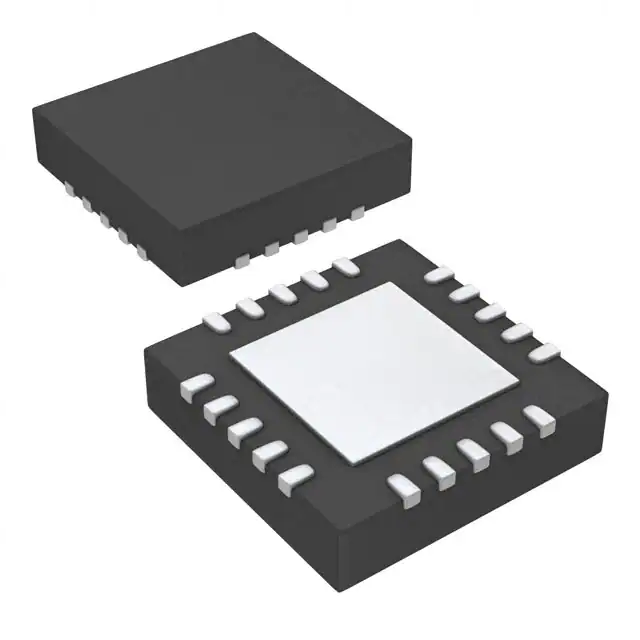
Product
Folder
Sample &
Buy
Tools &
Software
Technical
Documents
Support &
Community
CC115L
SWRS105B – MAY 2011 – REVISED JUNE 2014
CC115L Value Line Transmitter
1 Device Overview
1.1
Features
1
• RF Performance
– Programmable Output Power up to +12 dBm
– Programmable Data Rate from 0.6 to 600 kbps
– Frequency Bands: 300–348 MHz,
387–464 MHz, and 779–928 MHz
– 2-FSK, 4-FSK, GFSK, and OOK Supported
• Digital Features
– Flexible Support for Packet Oriented Systems
– On-chip Support for Sync Word Insertion,
Flexible Packet Length, and Automatic CRC
Calculation
• Low-Power Features
– 200-nA Sleep Mode Current Consumption
– Fast Startup Time; 240 μs From Sleep to TX
Mode
– 64-Byte TX FIFO
1.2
•
•
•
Applications
Ultra Low-Power Wireless Applications Operating
in the 315-, 433-, 868-, 915-MHz ISM or SRD
Bands
Wireless Alarm and Security Systems
Industrial Monitoring and Control
1.3
• General
– Few External Components; Fully Integrated
Frequency Synthesizer
– Green Package: RoHS Compliant and No
Antimony or Bromine
– Small Size (QLP 4- x 4-mm Package, 20 Pins)
– Suited for Systems Targeting Compliance with
EN 300 220 V2.3.1 (Europe) and FCC CFR Part
15 (US)
– Support for Asynchronous and Synchronous
Serial Transmit Mode for Backward
Compatibility with Existing Radio
Communication Protocols
•
•
•
•
Remote Controls
Toys
Home and Building Automation
Active RFID
Description
The CC115L is a cost optimized sub-1 GHz RF transmitter. The circuit is based on the popular CC1101
RF transceiver, and RF performance characteristics are identical. The CC115L value line transmitter
together with the CC113L value line receiver enables a low-cost RF link.
The RF transmitter is integrated with a highly configurable baseband modulator. The modem supports
various modulation formats and has a configurable data rates from 0.6 to 600 kbps.
The CC115L provides extensive hardware support for packet handling, data buffering, and burst
transmissions.
The main operating parameters and the 64-byte transmit FIFO of CC115L can be controlled through a
serial peripheral interface (SPI). In a typical system, the CC115L will be used together with a
microcontroller and a few additional passive components.
Device Information (1)
PART NUMBER
CC115LRGP
(1)
PACKAGE
BODY SIZE
QFN (20)
4.00 mm × 4.00 mm
For more information on these devices, see Section 8, Mechanical Packaging and Orderable
Information.
1
An IMPORTANT NOTICE at the end of this data sheet addresses availability, warranty, changes, use in safety-critical applications,
intellectual property matters and other important disclaimers. PRODUCTION DATA.
�CC115L
SWRS105B – MAY 2011 – REVISED JUNE 2014
1.4
www.ti.com
Functional Block Diagram
Figure 1-1 shows a functional block diagram of the device.
Radio Control
SCLK
Digital Interface to MCU
PA
RF_N
TX FIFO
FREQ
SYNTH
Packet Handler
RF_P
Modulator
SO (GDO1)
SI
CSn
GDO0
GDO2
BIAS
RBIAS
XOSC
XOSC_Q1
XOSC_Q2
Figure 1-1. Functional Block Diagram
2
Device Overview
Copyright © 2011–2014, Texas Instruments Incorporated
Submit Documentation Feedback
Product Folder Links: CC115L
�CC115L
www.ti.com
SWRS105B – MAY 2011 – REVISED JUNE 2014
Table of Contents
1
2
3
Device Overview ......................................... 1
5.9
Modulation Formats ................................. 26
1.1
Features .............................................. 1
5.10
Radio Control ........................................ 27
1.2
Applications ........................................... 1
5.11
TX FIFO ............................................. 32
1.3
Description ............................................ 1
5.12
Frequency Programming ............................ 34
1.4
Functional Block Diagram ............................ 2
5.13
VCO ................................................. 35
Revision History ......................................... 4
Terminal Configuration and Functions .............. 5
5.14
Voltage Regulators .................................. 35
5.15
Output Power Programming
.......................................... 5
3.2
Signal Descriptions ................................... 6
Specifications ............................................ 7
4.1
Absolute Maximum Ratings .......................... 7
4.2
Handling Ratings ..................................... 7
4.3
Recommended Operating Conditions ................ 7
4.4
General Characteristics .............................. 7
4.5
Current Consumption ................................. 8
4.6
RF Transmit Section .................................. 9
4.7
Crystal Oscillator .................................... 11
4.8
Frequency Synthesizer Characteristics ............. 11
4.9
DC Characteristics .................................. 11
4.10 Power-On Reset .................................... 12
4.11 Thermal Characteristics ............................. 12
Detailed Description ................................... 13
5.1
Overview ............................................ 13
5.2
Functional Block Diagram ........................... 13
5.3
Configuration Overview ............................. 14
5.4
Configuration Software .............................. 16
5.5
4-wire Serial Configuration and Data Interface ..... 17
5.6
Microcontroller Interface and Pin Configuration ..... 21
5.7
Data Rate Programming ............................ 22
5.8
Packet Handling Hardware Support ................. 23
5.16
General Purpose and Test Output Control Pins .... 38
5.17
Asynchronous and Synchronous Serial Operation .. 40
5.18
System Considerations and Guidelines ............. 41
5.19
Configuration Registers
5.20
Development Kit Ordering Information .............. 57
3.1
4
5
Pin Diagram
6
7
8
........................
.............................
36
43
Applications, Implementation, and Layout........ 58
6.1
Bias Resistor ........................................ 58
6.2
Balun and RF Matching ............................. 58
6.3
Crystal ............................................... 60
6.4
Reference Signal .................................... 60
6.5
Additional Filtering
6.6
Power Supply Decoupling ........................... 60
6.7
PCB Layout Recommendations ..................... 61
..................................
60
Device and Documentation Support ............... 62
7.1
Device Support ...................................... 62
7.2
Documentation Support ............................. 63
7.3
Trademarks.......................................... 63
7.4
Electrostatic Discharge Caution ..................... 64
7.5
Export Control Notice
7.6
Glossary ............................................. 64
7.7
Additional Acronyms
...............................
................................
64
64
Mechanical Packaging and Orderable
Information .............................................. 66
8.1
Packaging Information
..............................
Table of Contents
Copyright © 2011–2014, Texas Instruments Incorporated
Submit Documentation Feedback
Product Folder Links: CC115L
66
3
�CC115L
SWRS105B – MAY 2011 – REVISED JUNE 2014
www.ti.com
2 Revision History
NOTE: Page numbers for previous revisions may differ from page numbers in the current version.
Changes from Revision A (September 2011) to Revision B
•
•
•
4
Page
Changed format of data sheet to standard TI format. ........................................................................... 1
Changed reset value from 0x09 to 0x19 ......................................................................................... 55
Changed the package designator from RTK to RGP .......................................................................... 66
Revision History
Copyright © 2011–2014, Texas Instruments Incorporated
Submit Documentation Feedback
Product Folder Links: CC115L
�CC115L
www.ti.com
SWRS105B – MAY 2011 – REVISED JUNE 2014
3 Terminal Configuration and Functions
3.1
Pin Diagram
GND
RBIAS
GND
DGUARD
SI
The CC115L pinout is shown in Figure 3-1 and Table 3-1. See Section 5.16 for details on the I/O
configuration.
20 19 18 17 16
SCLK 1
15 AVDD
SO (GDO1) 2
14 AVDD
GDO2 3
13 RF_N
DVDD 4
12 RF_P
DCOUPL 5
11 AVDD
7
8
9 10
GDO0
CSn
XOSC_Q1
AVDD
XOSC_Q2
6
GND
Exposed die
attach pad
Figure 3-1. Pinout Top View
NOTE
The exposed die attach pad must be connected to a solid ground plane as this is the main
ground connection for the chip.
Terminal Configuration and Functions
Copyright © 2011–2014, Texas Instruments Incorporated
Submit Documentation Feedback
Product Folder Links: CC115L
5
�CC115L
SWRS105B – MAY 2011 – REVISED JUNE 2014
3.2
www.ti.com
Signal Descriptions
Table 3-1. Signal Descriptions
Pin No.
Pin Name
Pin Type
1
SCLK
Digital
Input
Description
Serial configuration interface, clock input
2
SO
(GDO1)
Digital
Output
Serial configuration interface, data output
3
GDO2
Digital
Output
Digital output pin for general use:
•
Test signals
•
TX FIFO status signals
•
Clock output, down-divided from XOSC
4
DVDD
Power
(Digital)
1.8 - 3.6 V digital power supply for digital I/Os and for the digital core voltage regulator
5
DCOUPL
Power
(Digital)
1.6 - 2.0 V digital power supply output for decoupling
Optional general output pin when CSn is high
NOTE: This pin is intended for use with the CC115L only. It can not be used to provide supply
voltage to other devices
6
GDO0
Digital I/O
7
CSn
Digital
Input
8
9
10
11
6
Digital output pin for general use:
•
Test signals
•
TX FIFO status signals
•
Clock output, down-divided from XOSC
•
Serial input TX data
Serial configuration interface, chip select
XOSC_Q1 Analog I/O Crystal oscillator pin 1, or external clock input
AVDD
Power
(Analog)
1.8 - 3.6 V analog power supply connection
XOSC_Q2 Analog I/O Crystal oscillator pin 2
AVDD
Power
(Analog)
1.8 - 3.6 V analog power supply connection
12
RF_P
RF I/O
Positive RF output signal from PA in transmit mode
13
RF_N
RF I/O
Negative RF output signal from PA in transmit mode
14
AVDD
Power
(Analog)
1.8 - 3.6 V analog power supply connection
15
AVDD
Power
(Analog)
1.8 - 3.6 V analog power supply connection
16
GND
Ground
(Analog)
Analog ground connection
17
RBIAS
18
DGUARD
Analog I/O External bias resistor for reference current
Power
(Digital)
Power supply connection for digital noise isolation
19
GND
Ground
(Digital)
Ground connection for digital noise isolation
20
SI
Digital
Input
Serial configuration interface, data input
Terminal Configuration and Functions
Copyright © 2011–2014, Texas Instruments Incorporated
Submit Documentation Feedback
Product Folder Links: CC115L
�CC115L
www.ti.com
SWRS105B – MAY 2011 – REVISED JUNE 2014
4 Specifications
4.1
Absolute Maximum Ratings
Under no circumstances must the absolute maximum ratings be violated. Stress exceeding one or more of the limiting values
may cause permanent damage to the device.
Parameter
Min
Max
Unit
Supply voltage
–0.3
3.9
V
Voltage on any digital pin
–0.3
VDD + 0.3,
max 3.9
V
Voltage on the pins RF_P, RF_N,
DCOUPL, RBIAS
–0.3
2.0
V
Voltage ramp-up rate
120
kV/µs
Input RF level
+10
dBm
4.2
Condition
All supply pins must have the same voltage
Handling Ratings
Parameter
Storage temperature
range, Tstg
ESD Stress Voltage,
VESD
(1)
(2)
4.3
(default)
Human Body Model (HBM), per ANSI/ESDA/JEDEC JS001
Charged Device Model (CDM), per JJESD22-C101 (2)
MAX
UNIT
–50
150
°C
750
V
400
V
JEDEC document JEP155 states that 500-V HBM allows safe manufacturing with a standard ESD control process.
JEDEC document JEP157 states that 250-V HBM allows safe manufacturing with a standard ESD control process.
Recommended Operating Conditions
Parameter
Min
Max
Unit
Operating temperature
–40
85
°C
Operating supply voltage
1.8
3.6
V
4.4
(1)
MIN
Condition
All supply pins must have the same voltage
General Characteristics
Parameter
Frequency range
Data rate
Min
Max
Unit
300
Typ
348
MHz
Condition
387
464
MHz
779
928
MHz
0.6
500
kBaud
2-FSK
0.6
250
kBaud
GFSK and OOK
0.6
300
kBaud
4-FSK (the data rate in kbps will be twice the baud rate)
Optional Manchester encoding (the data rate in kbps will be
half the baud rate)
If using a 27 MHz crystal, the lower frequency limit for this
band is 392 MHz
Specifications
Copyright © 2011–2014, Texas Instruments Incorporated
Submit Documentation Feedback
Product Folder Links: CC115L
7
�CC115L
SWRS105B – MAY 2011 – REVISED JUNE 2014
4.5
www.ti.com
Current Consumption
TA = 25°C, VDD = 3.0 V if nothing else stated. All measurement results are obtained using SWRR046 and
SWRR045.
spacer
Parameter
Min
Typ
Max
Unit
0.2
1
µA
Voltage regulator to digital part off, register values retained
(SLEEP state). All GDO pins programmed to 0x2F (HW to
0)
100
µA
Voltage regulator to digital part off, register values
retained, XOSC running (SLEEP state with
MCSM0.OSC_FORCE_ON set)
165
µA
Voltage regulator to digital part on, all other modules in
power down (XOFF state)
1.7
mA
Only voltage regulator to digital part and crystal oscillator
running (IDLE state)
8.4
mA
Only the frequency synthesizer is running (FSTXON state).
This current consumption is also representative for the
other intermediate states when going from IDLE to TX,
including the calibration state
27.4
mA
Transmit mode, +10 dBm output power
15.0
mA
Transmit mode, 0 dBm output power
12.3
mA
Transmit mode, –6 dBm output power
29.2
mA
Transmit mode, +10 dBm output power
16.0
mA
Transmit mode, 0 dBm output power
13.1
mA
Transmit mode, –6 dBm output power
34.2
mA
Transmit mode, +12 dBm output power, 868 MHz
30.0
mA
Transmit mode, +10 dBm output power, 868 MHz
16.8
mA
Transmit mode, 0 dBm output power, 868 MHz
16.4
mA
Transmit mode, –6 dBm output power, 868 MHz.
33.4
mA
Transmit mode, +11 dBm output power, 915 MHz
30.7
mA
Transmit mode, +10 dBm output power, 915 MHz
17.2
mA
Transmit mode, 0 dBm output power, 915 MHz
17.0
mA
Transmit mode, –6 dBm output power, 915 MHz
Current consumption
in power down modes
Current consumption
Current consumption,
315 MHz
Current consumption,
433 MHz
Current consumption,
868/915 MHz
4.5.1
Condition
Typical TX Current Consumption over Temperature and Supply Voltage, 868 MHz
Supply Voltage
Supply Voltage
VDD = 1.8 V
VDD = 3.0 V
Supply Voltage
VDD = 3.6 V
Temperature [°C]
−40
25
85
−40
25
85
−40
25
85
Current [mA], PATABLE=0xC0, +12 dBm
32.7
31.5
30.5
35.3
34.2
33.3
35.5
34.4
33.5
Current [mA], PATABLE=0xC5, +10 dBm
30.1
29.2
28.3
30.9
30.0
29.4
31.1
30.3
29.6
Current [mA], PATABLE=0x50, 0 dBm
16.4
16.0
15.6
17.3
16.8
16.4
17.6
17.1
16.7
4.5.2
Typical TX Current Consumption over Temperature and Supply Voltage, 915 MHz
Supply Voltage
Supply Voltage
Supply Voltage
VDD = 1.8 V
VDD = 3.0 V
VDD = 3.6 V
Temperature [°C]
−40
25
85
−40
25
85
−40
25
85
Current [mA], PATABLE=0xC0, +11 dBm
31.9
30.7
29.8
34.6
33.4
32.5
34.8
33.6
32.7
Current [mA], PATABLE=0xC3, +10 dBm
30.9
29.8
28.9
31.7
30.7
30.0
31.9
31.0
30.2
Current [mA], PATABLE=0x8E, 0 dBm
17.2
16.8
16.4
17.6
17.2
16.9
17.8
17.4
17.1
8
Specifications
Copyright © 2011–2014, Texas Instruments Incorporated
Submit Documentation Feedback
Product Folder Links: CC115L
�CC115L
www.ti.com
4.6
SWRS105B – MAY 2011 – REVISED JUNE 2014
RF Transmit Section
TA = 25°C, VDD = 3.0 V, +10 dBm if nothing else stated. All measurement results are obtained using SWRR046 and
SWRR045.
Parameter
Min
Typ
Max
Unit
Condition
Differential load
impedance
122 + j31
Ω
433 MHz
116 + j41
Ω
868/915 MHz
86.5 + j43
Ω
315 MHz
Output power, highest
setting
Differential impedance as seen from the RF-port (RF_P
and RF_N) towards the antenna.
Output power is programmable, and full range is
available in all frequency bands. Output power may be
restricted by regulatory limits.
See Design Note DN013 SWRA168, which gives the
output power and harmonics when using multi-layer
inductors. The output power is then typically +10 dBm
when operating at 868/915 MHz.
Delivered to a 50-Ω single-ended load through the RF
matching network in SWRR046 and SWRR045
315 MHz
+10
dBm
433 MHz
+10
dBm
868 MHz
+12
dBm
915 MHz
+11
dBm
Output power, lowest
setting
−30
dBm
2nd Harm, 433 MHz
−49
dBm
3rd Harm, 433 MHz
−40
dBm
2nd Harm, 868 MHz
−47
dBm
3rd Harm, 868 MHz
−55
dBm
2nd Harm, 915 MHz
−50
dBm
3rd Harm, 915 MHz
−54
dBm
< −35
dBm
Frequencies below 960 MHz
< −53
dBm
Frequencies above 960 MHz
−43
dBm
Frequencies below 1 GHz
< −45
dBm
Frequencies above 1 GHz
Measured with +12 dBm CW at 868 MHz
Harmonics, radiated
Harmonics, conducted
315 MHz
433 MHz
868 MHz 2nd Harm
other harmonics
915 MHz 2nd Harm
other harmonics
Other harmonics
433 MHz
Measured on SWRR046 and SWRR045 with CW,
maximum output power
The antennas used during the radiated measurements
(SMAFF-433 from R.W. Badland and Nearson S331
868/915) play a part in attenuating the harmonics
Note: All harmonics are below −41.2 dBm when
operating in the 902 - 928 MHz band
Measured with +10 dBm CW at 315 MHz and 433 MHz
−36
dBm
< −46
dBm
−34
dBm
< −50
dBm
Spurious emissions
conducted, harmonics
not included
315 MHz
Output power is programmable, and full range is
available in all frequency bands
Delivered to a 50-Ω single-ended load through the RF
matching network in SWRR046 and SWRR045
Measured with +11 dBm CW at 915 MHz (requirement is
−20 dBc under FCC 15.247)
Measured with +10 dBm CW at 315 MHz and 433 MHz
< −58
Frequencies below 960 MHz
< −53
Frequencies above 960 MHz
< −50
Frequencies below 1 GHz
< −54
Frequencies above 1 GHz
< −56
Frequencies within 47-74, 87.5-118, 174-230, 470-862
MHz
Measured with +12 dBm CW at 868 MHz
868 MHz
< −50
Frequencies below 1 GHz
< −52
Frequencies above 1 GHz
< −53
Frequencies within 47-74, 87.5-118, 174-230, 470-862
MHz
Specifications
Copyright © 2011–2014, Texas Instruments Incorporated
Submit Documentation Feedback
Product Folder Links: CC115L
9
�CC115L
SWRS105B – MAY 2011 – REVISED JUNE 2014
www.ti.com
TA = 25°C, VDD = 3.0 V, +10 dBm if nothing else stated. All measurement results are obtained using SWRR046 and
SWRR045.
Parameter
Min
Typ
Max
Unit
Condition
All radiated spurious emissions are within the limits of
ETSI. The peak conducted spurious emission is −53
dBm at 699 MHz (868 MHz - 169 MHz), which is in a
frequency band limited to −54 dBm by EN 300 220
V2.3.1. An alternative filter can be used to reduce the
emission at 699 MHz below −54 dBm, for conducted
measurements, and is shown in Figure 6-2. See more
information in DN017 SWRA168.
For compliance with modulation bandwidth requirements
under EN 300 220 V2.3.1 in the 863 to 870 MHz
frequency range it is recommended to use a 26 MHz
crystal for frequencies below 869 MHz and a 27 MHz
crystal for frequencies above 869 MHz.
Measured with +11 dBm CW at 915 MHz
< −51
915 MHz
< −54
TX latency
4.6.1
Frequencies below 960 MHz
Frequencies above 960 MHz
8
bit
Serial operation. Time from sampling the data on the
transmitter data input pin until it is observed on the RF
output ports.
Typical Variation in Output Power over Temperature and Supply Voltage, 868 MHz
Supply Voltage
Supply Voltage
VDD = 1.8 V
Supply Voltage
VDD = 3.0 V
VDD = 3.6 V
Temperature [°C]
−40
25
85
−40
25
85
−40
25
85
Output Power [dBm], PATABLE=0xC0, +12 dBm
12
11
10
12
12
11
12
12
11
Output Power [dBm], PATABLE=0xC5, +10 dBm
11
10
9
11
10
10
11
10
10
Output Power [dBm], PATABLE=0x50, 0 dBm
1
0
-1
2
1
0
2
1
0
4.6.2
Typical Variation in Output Power over Temperature and Supply Voltage, 915 MHz
Supply Voltage
Supply Voltage
VDD = 1.8 V
VDD = 3.0 V
Supply Voltage
VDD = 3.6 V
Temperature [°C]
−40
25
85
−40
25
85
−40
25
85
Output Power [dBm], PATABLE=0xC0, +11 dBm
11
10
10
12
11
11
12
11
11
Output Power [dBm], PATABLE=0x8E, +0 dBm
2
1
0
2
1
0
2
1
0
10
Specifications
Copyright © 2011–2014, Texas Instruments Incorporated
Submit Documentation Feedback
Product Folder Links: CC115L
�CC115L
www.ti.com
4.7
SWRS105B – MAY 2011 – REVISED JUNE 2014
Crystal Oscillator
TA = 25°C, VDD = 3.0 V if nothing else is stated. All measurement results obtained using SWRR046 and SWRR045.
Parameter
Crystal frequency
Min
26
Tolerance
Load capacitance
Typ
Max
26
27
±40
10
13
ESR
Start-up time
4.8
Unit
Condition
MHz
For compliance with modulation bandwidth
requirements under EN 300 220 V2.3.1 in the
863 to 870 MHz frequency range it is
recommended to use a 26 MHz crystal for
frequencies below 869 MHz and a 27 MHz
crystal for frequencies above 869 MHz.
ppm
This is the total tolerance including a) initial
tolerance, b) crystal loading, c) aging, and d)
temperature dependence. The acceptable
crystal tolerance depends on RF frequency
and channel spacing / bandwidth.
20
pF
100
Ω
150
µs
Simulated over operating conditions
This parameter is to a large degree crystal
dependent. Measured on SWRR046 and
SWRR045 using crystal AT-41CD2 from NDK
Frequency Synthesizer Characteristics
TA = 25°C, VDD = 3.0 V if nothing else is stated. All measurement results are obtained using SWRR046 and SWRR045.
Minimum figures are given using a 27 MHz crystal. Typical and maximum figures are given using a 26 MHz crystal.
Parameter
Programmed frequency resolution
Min
397
Typ
16
FXOSC/2
Max
Unit
Condition
412
Hz
26- to 27-MHz crystal. The resolution (in Hz)
is equal for all frequency bands
Given by crystal used. Required accuracy
(including temperature and aging) depends
on frequency band and channel bandwidth /
spacing
Synthesizer frequency tolerance
±40
ppm
RF carrier phase noise
–92
dBc/Hz
at 50 kHz offset from carrier
RF carrier phase noise
–92
dBc/Hz
at 100 kHz offset from carrier
RF carrier phase noise
–92
dBc/Hz
at 200 kHz offset from carrier
RF carrier phase noise
–98
dBc/Hz
at 500 kHz offset from carrier
RF carrier phase noise
–107
dBc/Hz
at 1 MHz offset from carrier
RF carrier phase noise
–113
dBc/Hz
at 2 MHz offset from carrier
RF carrier phase noise
–119
dBc/Hz
at 5 MHz offset from carrier
RF carrier phase noise
–129
dBc/Hz
at 10 MHz offset from carrier
PLL turn-on or hop time
(See Table 5-5)
72
75
75
µs
Time from leaving the IDLE state until arriving
in the FSTXON or TX state, when not
performing calibration. Crystal oscillator
running.
PLL calibration time
(See Table 5-6)
685
712
724
µs
Calibration can be initiated manually or
automatically before entering or after leaving
TX
4.9
DC Characteristics
TA = 25°C if nothing else stated.
Digital Inputs/Outputs
Min
Max
Unit
Condition
Logic "0" input voltage
0
0.7
V
Logic "1" input voltage
VDD – 0.7
VDD
V
Logic "0" output voltage
0
0.5
V
For up to 4 mA output current
Logic "1" output voltage
VDD – 0.3
VDD
V
For up to 4 mA output current
Logic "0" input current
N/A
–50
nA
Input equals 0 V
Logic "1" input current
N/A
50
nA
Input equals VDD
Specifications
Copyright © 2011–2014, Texas Instruments Incorporated
Submit Documentation Feedback
Product Folder Links: CC115L
11
�CC115L
SWRS105B – MAY 2011 – REVISED JUNE 2014
www.ti.com
4.10 Power-On Reset
For proper Power-On-Reset functionality the power supply should comply with the requirements in Section 4.10. Otherwise,
the chip should be assumed to have unknown state until transmitting an SRES strobe over the SPI interface. See
Section 5.10.1, Power-On Start-Up Sequence, for further details.
Parameter
Min
Typ
Power-up ramp-up time
Power off time
1
Max
Unit
Condition
5
ms
From 0 V until reaching 1.8 V
ms
Minimum time between power-on and poweroff
4.11 Thermal Characteristics
NAME
DESCRIPTION
RθJA
Junction-to-ambient thermal resistance
RθJC(top)
Junction-to-case (top) thermal resistance
RθJB
Junction-to-board thermal resistance
13.6
RθJC(bot)
Junction-to-case (bottom) thermal resistance
5.12
12
QFN (°C/W)
Specifications
47
45
Copyright © 2011–2014, Texas Instruments Incorporated
Submit Documentation Feedback
Product Folder Links: CC115L
�CC115L
www.ti.com
SWRS105B – MAY 2011 – REVISED JUNE 2014
5 Detailed Description
5.1
Overview
The CC115L transmitter is based on direct synthesis of the RF frequency. The frequency synthesizer
includes a completely on-chip LC VCO.
A crystal is to be connected to XOSC_Q1 and XOSC_Q2. The crystal oscillator generates the reference
frequency for the synthesizer, as well as clocks for the ADC and the digital part.
A 4-wire SPI is used for configuration and data buffer access.
The digital baseband includes support for channel configuration, packet handling, and data buffering.
5.2
Functional Block Diagram
A simplified block diagram of CC115L is shown in Figure 5-1.
Radio Control
SCLK
Digital Interface to MCU
PA
RF_N
TX FIFO
FREQ
SYNTH
Packet Handler
RF_P
Modulator
SO (GDO1)
SI
CSn
GDO0
GDO2
BIAS
RBIAS
XOSC
XOSC_Q1
XOSC_Q2
Figure 5-1. CC115L Simplified Block Diagram
Detailed Description
Copyright © 2011–2014, Texas Instruments Incorporated
Submit Documentation Feedback
Product Folder Links: CC115L
13
�CC115L
SWRS105B – MAY 2011 – REVISED JUNE 2014
5.3
www.ti.com
Configuration Overview
CC115L can be configured to achieve optimum performance for many different applications. Configuration
is done using the SPI interface. See Section 5.5 for more description of the SPI interface. The following
key parameters can be programmed:
• Power-down / power up mode
• Crystal oscillator power-up / power-down
• Carrier frequency / RF channel
• Transmit mode
• Data rate
• Modulation format
• RF output power
• Data buffering with separate 64-byte TX FIFO
• Packet radio hardware support
Details of each configuration register can be found in Section 5.19.
Figure 5-2 shows a simplified state diagram that explains the main CC115L states together with typical
usage and current consumption. For detailed information on controlling the CC115L state machine, and a
complete state diagram, see Section 5.10.
14
Detailed Description
Copyright © 2011–2014, Texas Instruments Incorporated
Submit Documentation Feedback
Product Folder Links: CC115L
�CC115L
www.ti.com
SWRS105B – MAY 2011 – REVISED JUNE 2014
Sleep
SPWD
SIDLE
Default state when the radio is not
transmitting. Typ. current
consumption: 1.7 mA.
Used for calibrating frequency
synthesizer upfront (entering
Manual freq.
transmit mode can then be
synth. calibration
done quicker). Transitional
state. Typ. current
consumption: 8.4 mA.
Frequency synthesizer is on,
ready to start transmitting.
Transmission starts very
quickly after receiving the STX
command strobe.Typ. current
consumption: 8.4 mA.
CSn=0
IDLE
SXOFF
SCAL
CSn=0
Crystal
oscillator off
STX or SFSTXON
SFSTXON
Lowest power mode. Most
register values are retained.
Typ. current consumption:
200 nA
Frequency
synthesizer startup,
optional calibration,
settling
All register values are
retained. Typ. current
consumption: 165 uA.
Frequency synthesizer is turned on, can optionally be
calibrated, and then settles to the correct frequency.
Transitional state. Typ. current consumption: 8.4 mA.
Frequency
synthesizer on
STX
STX
TXOFF_MODE=01
Typ. current consumption:
16.8 mA at 0 dBm output
power, 868 MHz
Transmit mode
TXOFF_MODE=00
In Normal mode, this state is
enetered if the TX FIFO is emptied
before the complete packet has
been written to the FIFO.
Typ. current consumption: 1.7 mA.
TX FIFO
underflow
Optional transitional state.
Optional freq.
Typ. current consumption: 8.4 mA. synth. calibration
SFTX
IDLE
Figure 5-2. Simplified Radio Control State Diagram with Typical Current Consumption
Detailed Description
Copyright © 2011–2014, Texas Instruments Incorporated
Submit Documentation Feedback
Product Folder Links: CC115L
15
�CC115L
SWRS105B – MAY 2011 – REVISED JUNE 2014
5.4
www.ti.com
Configuration Software
CC115L can be configured using the SmartRF™ Studio software SWRC176. The SmartRF Studio
software is highly recommended for obtaining optimum register settings, and for evaluating performance
and functionality.
After chip reset, all the registers have default values as shown Section 5.19. The optimum register setting
might differ from the default value. After a reset all registers that shall be different from the default value
therefore needs to be programmed through the SPI interface.
16
Detailed Description
Copyright © 2011–2014, Texas Instruments Incorporated
Submit Documentation Feedback
Product Folder Links: CC115L
�CC115L
www.ti.com
5.5
SWRS105B – MAY 2011 – REVISED JUNE 2014
4-wire Serial Configuration and Data Interface
CC115L is configured through a simple 4-wire SPI-compatible interface (SI, SO, SCLK and CSn) where
CC115L is the slave. This interface is also used write buffered data. All transfers on the SPI interface are
done most significant bit first.
All transactions on the SPI interface start with a header byte containing a R/W bit, a burst access bit (B),
and a 6-bit address (A5–A0).
The CSn pin must be kept low during transfers on the SPI bus. If CSn goes high during the transfer of a
header byte or during read/write from/to a register, the transfer will be cancelled. The timing for the
address and data transfer on the SPI interface is shown in Figure 5-3 with reference to Table 5-1.
When CSn is pulled low, the MCU must wait until CC115L SO pin goes low before starting to transfer the
header byte. This indicates that the crystal is running. Unless the chip was in the SLEEP or XOFF states,
the SO pin will always go low immediately after taking CSn low.
tsp
tch
tcl
tsd
t hd
tns
SCLK:
CSn:
Write to register:
SI
X
0
B
A5
A4
A3
A2
A1
A0
SO
Hi-Z
S7
B
S5
S4
S3
S2
S1
S0
SI
X
SO
Hi-Z
DW7
DW6
DW5
DW4
DW3
DW2
DW1
DW0
S7
S6
S5
S4
S3
S2
S1
S0
DR 7
DR6
DR5
DR4
DR3
DR2
DR1
X
X
Hi-Z
Read from register:
1
B
A5
A4
A3
A2
A1
A0
S7
B
S5
S4
S3
S2
S1
S0
X
DR0
Hi-Z
Figure 5-3. Configuration Registers Write and Read Operations
Table 5-1. SPI Interface Timing Requirements
Parameter
Description
Min
Max
–
10
–
9
–
6.5
Units
SCLK frequency
100 ns delay inserted between address byte and data byte (single access), or
between address and data, and between each data byte (burst access).
fSCLK
SCLK frequency, single access
No delay between address and data byte
SCLK frequency, burst access
No delay between address and data byte, or between data bytes
MHz
tsp,pd
CSn low to positive edge on SCLK, in power-down mode
150
–
µs
tsp
CSn low to positive edge on SCLK, in active mode
20
–
ns
tch
Clock high
50
–
ns
tcl
Clock low
50
–
ns
trise
Clock rise time
–
40
ns
tfall
Clock fall time
–
40
ns
Single access
55
–
tsd
Setup data (negative SCLK edge) to positive edge on
SCLK (tsd applies between address and data bytes,
and between data bytes)
Burst access
76
–
thd
Hold data after positive edge on SCLK
20
–
ns
tns
Negative edge on SCLK to CSn high.
20
–
ns
Detailed Description
Copyright © 2011–2014, Texas Instruments Incorporated
Submit Documentation Feedback
Product Folder Links: CC115L
ns
17
�CC115L
SWRS105B – MAY 2011 – REVISED JUNE 2014
www.ti.com
NOTE
The minimum tsp,pd figure in Table 5-1 can be used in cases where the user does not read
the CHIP_RDYn signal. CSn low to positive edge on SCLK when the chip is woken from
power-down depends on the start-up time of the crystal being used. The 150 μs in Table 5-1
is the crystal oscillator start-up time measured on SWRR046 and SWRR045 using crystal
AT-41CD2 from NDK.
5.5.1
Chip Status Byte
When the header byte, data byte, or command strobe is sent on the SPI interface, the chip status byte is
sent by the CC115L on the SO pin. The status byte contains key status signals, useful for the MCU. The
first bit, s7, is the CHIP_RDYn signal and this signal must go low before the first positive edge of SCLK.
The CHIP_RDYn signal indicates that the crystal is running.
Bits 6, 5, and 4 comprise the STATE value. This value reflects the state of the chip. The XOSC and power
to the digital core are on in the IDLE state, but all other modules are in power down. The frequency and
channel configuration should only be updated when the chip is in this state.
The last four bits (3:0) in the status byte contains FIFO_BYTES_AVAILABLE. For these bits to give any
valid information, the R/W bit in the header byte must be set to 0. The FIFO_BYTES_AVAILABLE field
contains the number of bytes that can be written to the TX FIFO. When FIFO_BYTES_AVAILABLE=15, 15
or more bytes can be written.
Table 5-2 gives a status byte summary.
Table 5-2. Status Byte Summary
Bits
Name
7
CHIP_RDYn
Description
Stays high until power and crystal have stabilized. Should always be low when
using the SPI interface.
Indicates the current main state machine mode
6:4
3:0
18
STATE[2:0]
FIFO_BYTES_AVAILABLE[3:0]
Value
State
Description
000
IDLE
IDLE state
(Also reported for some transitional states
instead of SETTLING or CALIBRATE)
001
Reserved
010
TX
Transmit mode
011
FSTXON
Fast TX ready
100
CALIBRATE
101
SETTLING
110
Reserved
111
TXFIFO_UNDERFLOW
Frequency synthesizer calibration is
running
PLL is settling
TX FIFO has underflowed. Acknowledge
with SFTX
The number of bytes that can be written to the TX FIFO
Detailed Description
Copyright © 2011–2014, Texas Instruments Incorporated
Submit Documentation Feedback
Product Folder Links: CC115L
�CC115L
www.ti.com
5.5.2
SWRS105B – MAY 2011 – REVISED JUNE 2014
Register Access
The configuration registers on the CC115L are located on SPI addresses from 0x00 to 0x2E. Table 5-14
lists all configuration registers. It is highly recommended to use SmartRF Studio SWRC176 to generate
optimum register settings. The detailed description of each register is found in Section 5.19.1 and
Section 5.19.2. All configuration registers can be both written to and read. The R/W bit controls if the
register should be written to or read. When writing to registers, the status byte is sent on the SO pin each
time a header byte or data byte is transmitted on the SI pin. When reading from registers, the status byte
is sent on the SO pin each time a header byte is transmitted on the SI pin.
Registers with consecutive addresses can be accessed in an efficient way by setting the burst bit (B) in
the header byte. The address bits (A5 - A0) set the start address in an internal address counter. This
counter is incremented by one each new byte (every 8 clock pulses). The burst access is either a read or
a write access and must be terminated by setting CSn high.
For register addresses in the range 0x30 - 0x3D, the burst bit is used to select between status registers
when burst bit is one, and between command strobes when burst bit is zero (see Section 5.5.3). Because
of this, burst access is not available for status registers and they must be accessed one at a time. The
status registers can only be read.
5.5.3
SPI Read
When reading register fields over the SPI interface while the register fields are updated by the radio
hardware (that is, MARCSTATE or TXBYTES), there is a small, but finite, probability that a single read
from the register is being corrupt. As an example, the probability of any single read from TXBYTES being
corrupt, assuming the maximum data rate is used, is approximately 80 ppm. Refer to the CC115L Errata
Notes SWRZ037 for more details.
5.5.4
Command Strobes
Command Strobes may be viewed as single byte instructions to CC115L. By addressing a command
strobe register, internal sequences will be started. These commands are used to disable the crystal
oscillator, enable transmit mode, enable calibration etc. The 11 command strobes are listed in Table 5-13.
NOTE
An SIDLE strobe will clear all pending command strobes until IDLE state is reached. This
means that if for example an SIDLE strobe is issued while the radio is in TX state, any other
command strobes issued before the radio reaches IDLE state will be ignored.
The command strobe registers are accessed by transferring a single header byte (no data is being
transferred). That is, only the R/W bit, the burst access bit (set to 0), and the six address bits (in the range
0x30 through 0x3D) are written. The R/W bit should be set to zero if the FIFO_BYTES_AVAILABLE field
in the status byte should be interpreted.
When writing command strobes, the status byte is sent on the SO pin.
A command strobe may be followed by any other SPI access without pulling CSn high. However, if an
SRES strobe is being issued, one will have to wait for SO to go low again before the next header byte can
be issued as shown in Figure 5-4. The command strobes are executed immediately, with the exception of
the SPWD and the SXOFF strobes, which are executed when CSn goes high.
CSn
SO
SI
HeaderSRES
HeaderAddr
Data
Figure 5-4. SRES Command Strobe
Detailed Description
Copyright © 2011–2014, Texas Instruments Incorporated
Submit Documentation Feedback
Product Folder Links: CC115L
19
�CC115L
SWRS105B – MAY 2011 – REVISED JUNE 2014
5.5.5
www.ti.com
TX FIFO Access
The 64-byte TX FIFO is accessed through the 0x3F address. The TX FIFO is write-only and the R/W bit
should therefore be zero.
The burst bit is used to determine if the TX FIFO access is a single byte access or a burst access. The
single byte access method expects a header byte with the burst bit set to zero and one data byte. After
the data byte, a new header byte is expected; hence CSn can remain low. The burst access method
expects one header byte and then consecutive data bytes until terminating the access by setting CSn
high.
The following header bytes access the FIFO:
• 0x3F: Single byte access to TX FIFO
• 0x7F: Burst access to TX FIFO
When writing to the TX FIFO, the status byte (see Section 5.5.1) is output on SO for each new data byte
as shown in Figure 5-3. This status byte can be used to detect TX FIFO underflow while writing data to
the TX FIFO. Note that the status byte contains the number of bytes free before writing the byte in
progress to the TX FIFO. When the last byte that fits in the TX FIFO is transmitted on SI, the status byte
received concurrently on SO will indicate that one byte is free in the TX FIFO.
The TX FIFO may be flushed by issuing a SFTX command strobe. A SFTX command strobe can only be
issued in the IDLE, or TXFIFO_UNDERFLOW states. The TX FIFO is flushed when going to the SLEEP
state.
Figure 5-5 gives a brief overview of different register access types possible.
5.5.6
PATABLE Access
The 0x3E address is used to access the PATABLE, which is used for selecting PA power control settings.
The SPI expects one or two data bytes after receiving the address (the burst bit must be set if two bytes
are to be written). For OOK, two bytes should be written to PATABLE; the first byte after the address will
set the logic 0 power level and the second byte written will set the logic 1 power level. For all other
modulations formats, only one byte should be written to PATABLE. Use SmartRF Studio SWRC176 or
DN013 SWRA168 for recommended register values for a given output power.
The PATABLE can also be read by setting the R/W bit to 1. The read operation can be done as a single
byte or burst access, depending on how many bytes should be read (one or two). Note that pulling CSn
high will reset the index counter to zero, meaning that burst access needs to be used for reading/writing
the second PATABLE entry. For the same reason, if one byte is written to the PATABLE and this value is
to be read out, CSn must be set high before the read access in order to set the index counter back to
zero.
The content of the PATABLE is lost when entering the SLEEP state, except for the first byte, meaning that
if OOK is used, the PATABLE needs to be reprogrammed when waking up from SLEEP.
CSn:
Command strobe(s):
HeaderStrobe
HeaderStrobe
HeaderStrobe
Read or write register(s):
HeaderReg
Data
HeaderReg
Data
Read or write consecutive
registers (s):
Write n + 1 bytes
to the TX FIFO:
HeaderReg n
Datan
Datan + 1
Datan + 2
HeaderFIFO
DataByte 0
DataByte 1
DataByte 2
Combinations:
HeaderReg
Data
HeaderStrobe
HeaderReg
HeaderReg
Data
Data
DataByte n - 1
DataByte n
HeaderStrobe
HeaderFIFO
DataByte 0
DataByte 1
Figure 5-5. Register Access Types
20
Detailed Description
Copyright © 2011–2014, Texas Instruments Incorporated
Submit Documentation Feedback
Product Folder Links: CC115L
�CC115L
www.ti.com
5.6
Microcontroller Interface and Pin Configuration
In
•
•
•
5.6.1
SWRS105B – MAY 2011 – REVISED JUNE 2014
a typical system, CC115L will interface to a microcontroller. This microcontroller must be able to:
Program CC115L into different modes
Write buffered data
Read back status information through the 4-wire SPI-bus configuration interface (SI, SO, SCLK, and
CSn)
Configuration Interface
The microcontroller uses four I/O pins for the SPI configuration interface (SI, SO, SCLK, and CSn). The
SPI is described in Section 5.5.
5.6.2
General Control and Status Pins
The CC115L has two dedicated configurable pins (GDO0 and GDO2) and one shared pin (GDO1) that
can output internal status information useful for control software. These pins can be used to generate
interrupts on the MCU. See Section 5.16 for more details on the signals that can be programmed.
GDO1 is shared with the SO pin in the SPI interface. The default setting for GDO1/SO is 3-state output.
By selecting any other of the programming options, the GDO1/SO pin will become a generic pin. When
CSn is low, the pin will always function as a normal SO pin.
In the synchronous and asynchronous serial modes, the GDO0 pin is used as a serial TX data input pin
while in transmit mode.
Detailed Description
Copyright © 2011–2014, Texas Instruments Incorporated
Submit Documentation Feedback
Product Folder Links: CC115L
21
�CC115L
SWRS105B – MAY 2011 – REVISED JUNE 2014
5.7
www.ti.com
Data Rate Programming
The data rate used when transmitting is programmed by the MDMCFG3.DRATE_M and the
MDMCFG4.DRATE_E configuration registers. The data rate is given by the formula below. As the formula
shows, the programmed data rate depends on the crystal frequency.
RDATA =
(256 + DRATE _ M) × 2DRATE _ E
228
× ƒ XOSC
(1)
The following approach can be used to find suitable values for a given data rate:
æR
× 220
DRATE _ E = log2 ç DATA
ç ƒ XOSC
è
DRATE _ M =
RDATA × 2
ö
÷
÷
ø
(2)
28
ƒ XOSC × 2DRATE _ E
- 256
(3)
If DRATE_M is rounded to the nearest integer and becomes 256, increment DRATE_E and use
DRATE_M = 0.
The data rate can be set from 0.6 kBaud to 500 kBaud with the minimum step size according to Table 5-3.
See Section 4.4 for the minimum and maximum data rates for the different modulation formats.
Table 5-3. Data Rate Step Size (Assuming a 26-MHz Crystal)
22
Min Data Rate [kBaud]
Typical Data Rate [kBaud]
Max Data Rate [kBaud]
Data rate Step Size [kBaud]
0.6
1.0
0.79
0.0015
0.79
1.2
1.58
0.0031
1.59
2.4
3.17
0.0062
3.17
4.8
6.33
0.0124
6.35
9.6
12.7
0.0248
12.7
19.6
25.3
0.0496
25.4
38.4
50.7
0.0992
50.8
76.8
101.4
0.1984
101.6
153.6
202.8
0.3967
203.1
250
405.5
0.7935
406.3
500
500
1.5869
Detailed Description
Copyright © 2011–2014, Texas Instruments Incorporated
Submit Documentation Feedback
Product Folder Links: CC115L
�CC115L
www.ti.com
5.8
SWRS105B – MAY 2011 – REVISED JUNE 2014
Packet Handling Hardware Support
The CC115L has built-in hardware support for packet oriented radio protocols. The packet handler can be
configured to add the following elements to the packet stored in the TX FIFO:
• A programmable number of preamble bytes
• A two byte synchronization (sync) word. Can be duplicated to give a 4-byte sync word. It is not
possible to only insert preamble or only insert a sync word
• A CRC checksum computed over the data field.
• In a system where the CC115L is transmitting packets to the CC110L, CC113L or CC1101, the
recommended setting is 4- byte preamble and 4-byte sync word, except for 500 kBaud data rate where
the recommended preamble length is 8 bytes.
NOTE
Register fields that control the packet handling features should only be altered when CC115L
is in the IDLE state.
5.8.1
Packet Format
The format of the data packet can be configured and consists of the following items (see Figure 5-6):
• Preamble
• Synchronization word
• Optional length byte
• Optional address byte
• Payload
• Optional 2 byte CRC
Legend:
Inserted automatically
16 /32 bits
8
bits
Data Field
8
bits
8 x n bits
CRC-16
Address Field
8 x nbits
Length Field
Preamble bits
(1010...1010)
Sync Word
Optional CRC-16 Calculation
Optional user-provided fields (the length field is
processed by the radio)
Unprocessed user data
16 bits
Figure 5-6. Packet Format
The preamble pattern is an alternating sequence of ones and zeros (10101010…). The minimum length of
the preamble is programmable through the value of MDMCFG1.NUM_PREAMBLE. When enabling TX,
the modulator will start transmitting the preamble. When the programmed number of preamble bytes has
been transmitted, the modulator will send the sync word and then data from the TX FIFO if data is
available. If the TX FIFO is empty, the modulator will continue to send preamble bytes until the first byte is
written to the TX FIFO. The modulator will then send the sync word and then the data bytes.
The synchronization word is a two-byte value set in the SYNC1 and SYNC0 registers. If the CC110L,
CC113L, or CC1101 are used at the receiving end, they will need the sync word for byte synchronization
of the incoming packet. The synchronization word is automatically inserted by the CC115L. A one-byte
sync word can be emulated by setting the SYNC1 value to the preamble pattern. It is also possible to
emulate a 32 bit sync word by setting MDMCFG2.SYNC_MODE to 3. The sync word will then be repeated
twice.
CC115L supports both constant packet length protocols and variable length protocols. Variable or fixed
packet length mode can be used for packets up to 255 bytes. For longer packets, infinite packet length
mode must be used.
Detailed Description
Copyright © 2011–2014, Texas Instruments Incorporated
Submit Documentation Feedback
Product Folder Links: CC115L
23
�CC115L
SWRS105B – MAY 2011 – REVISED JUNE 2014
www.ti.com
Fixed packet length mode is selected by setting PKTCTRL0.LENGTH_CONFIG=0. The desired packet
length is set by the PKTLEN register. This value must be different from 0.
In variable packet length mode, PKTCTRL0.LENGTH_CONFIG=1, the packet length is configured by the
first byte transmitted after the sync word. The packet length is defined as the payload data, excluding the
length byte and the optional CRC. The PKTLEN value must be different from 0.
With PKTCTRL0.LENGTH_CONFIG=2, the packet length is set to infinite and transmission will continue
until turned off manually. As described in , this can be used to support packet formats with different length
configuration than natively supported by CC115L. One should make sure that TX mode is not turned off
during the transmission of the first half of any byte. Refer to the CC115L Errata Notes SWRZ036 for more
details.
NOTE
The minimum packet length supported (excluding the optional length byte and CRC) is one
byte of payload data.
5.8.1.1
Packet Length > 255
The packet automation control register, PKTCTRL0, can be reprogrammed during TX. This opens the
possibility to transmit packets that are longer than 256 bytes and still be able to use the packet handling
hardware support. At the start of the packet, the infinite packet length mode (
PKTCTRL0.LENGTH_CONFIG=2) must be active and the PKTLEN register is set to mod(length, 256).
When less than 256 bytes remains of the packet, the MCU disables infinite packet length mode and
activates fixed packet length mode ( PKTCTRL0.LENGTH_CONFIG=0). When the internal byte counter
reaches the PKTLEN value, the transmission ends (the radio enters the state determined by
TXOFF_MODE). Automatic CRC appending/checking can also be used (by setting
PKTCTRL0.CRC_EN=1).
When for example a 600-byte packet is to be transmitted, the MCU should do the following (see Figure 57).
• Set PKTCTRL0.LENGTH_CONFIG=2.
• Pre-program the PKTLEN register to mod(600, 256) = 88.
• Transmit at least 345 bytes (600 - 255), for example by filling the 64-byte TX FIFO six times (384 bytes
transmitted).
• Set PKTCTRL0.LENGTH_CONFIG=0.
• The transmission ends when the packet counter reaches 88. A total of 600 bytes are transmitted.
Internal byte counter in packet handler counts from 0 to 255 and then starts at 0 again
0, 1............, 88, .............................................255, 0, ........, 88, .............................................255, 0, ........, 88, .............................................255, 0, ..
Infinite packet length mode enabled
Fixed packet length mode anbled when
less than 256 bytes remains of packet
600 bytes transmitted
Length field transmitted. PKTLEN set to
mod(600, 256) = 88
Figure 5-7. Packet Length > 255
24
Detailed Description
Copyright © 2011–2014, Texas Instruments Incorporated
Submit Documentation Feedback
Product Folder Links: CC115L
�CC115L
www.ti.com
5.8.2
SWRS105B – MAY 2011 – REVISED JUNE 2014
Packet Handling
The payload that is to be transmitted must be written into the TX FIFO. The first byte written must be the
length byte when variable packet length is enabled. The length byte has a value equal to the payload of
the packet (including the optional address byte). If the receiver is the CC110L, CC113L, or CC1101, and
address recognition is enabled, the second byte written to the TX FIFO must be the address byte.
If fixed packet length is enabled, the first byte written to the TX FIFO should be the address (assuming the
receiver uses address recognition).
The modulator will first send the programmed number of preamble bytes. If data is available in the TX
FIFO, the modulator will send the two-byte (optionally 4-byte) sync word followed by the payload in the TX
FIFO. If CRC is enabled, the checksum is calculated over all the data pulled from the TX FIFO, and the
result is sent as two extra bytes following the payload data. If the TX FIFO runs empty before the
complete packet has been transmitted, the radio will enter TXFIFO_UNDERFLOW state. The only way to
exit this state is by issuing an SFTX strobe. Writing to the TX FIFO after it has underflowed will not restart
TX mode.
5.8.3
Packet Handling in Firmware
When implementing a packet oriented radio protocol in firmware, the MCU needs to know when a packet
has been transmitted. Additionally, for packets longer than 64 bytes, the TX FIFO needs to be refilled
while in TX. This means that the MCU needs to know the number of bytes that can be written to the TX
FIFO. There are two possible solutions to get the necessary status information:
a. Interrupt Driven Solution
The GDO pins can be used to give an interrupt when a sync word has been transmitted or when a
complete packet has been transmitted by setting IOCFGx.GDOx_CFG=0x06. In addition, there are two
configurations for the IOCFGx.GDOx_CFG register that can be used as an interrupt source to provide
information on how many bytes that are in the TX FIFO (IOCFGx.GDOx_CFG=0x02 and
IOCFGx.GDOx_CFG=0x03). See Table 5-12 for more information.
b. SPI Polling
The PKTSTATUS register can be polled at a given rate to get information about the current GDO2 and
GDO0 values respectively. The TXBYTES registers can be polled at a given rate to get information about
the number of bytes in the and TX FIFO. Alternatively, the number of bytes in the TX FIFO can be read
from the chip status byte returned on the MISO line each time a header byte, data byte, or command
strobe is sent on the SPI bus.
It is recommended to employ an interrupt driven solution due to a small, but finite, probability that a single
read from registers PKTSTATUS and TXBYTES is being corrupt. The same is the case when reading the
chip status byte (see Section 5.5.3 and the CC115L Errata Notes SWRZ036).
Detailed Description
Copyright © 2011–2014, Texas Instruments Incorporated
Submit Documentation Feedback
Product Folder Links: CC115L
25
�CC115L
SWRS105B – MAY 2011 – REVISED JUNE 2014
5.9
www.ti.com
Modulation Formats
CC115L supports amplitude, frequency, and phase shift modulation formats. The desired modulation
format is set in the MDMCFG2.MOD_FORMAT register.
Optionally, the data stream can
MDMCFG2.MANCHESTER_EN=1.
be
Manchester
coded
by
the
modulator
by
setting
NOTE
Manchester encoding is not supported at the same time as using 4-FSK modulation.
5.9.1
Frequency Shift Keying
CC115L supports 2-(G)FSK and 4-FSK modulation. When selecting 4-FSK, the preamble and sync word
is sent using 2-FSK (see Figure 5-8).
The frequency deviation is programmed with the DEVIATION_M and DEVIATION_E values in the
DEVIATN register. The value has an exponent/mantissa form, and the resultant deviation is given by:
ƒ
ƒ dev = XOSC
× (8 + DEVIATION _ M) × 2DEVIATION _ E
(4)
217
The symbol encoding is shown in Table 5-4.
Table 5-4. Symbol Encoding for 2-FSK/GFSK and 4-FSK Modulation
Format
Symbol
Coding
0
– Deviation
1
+ Deviation
2-FSK/GFSK
4-FSK
1/Baud Rate
01
– Deviation
00
– 1/3×Deviation
10
+ 1/3×Deviation
11
+ Deviation
1/Baud Rate
1/Baud Rate
+1
+1/3
-1/3
-1
1
0
1
0
1
0
Preamble
0xAA
1
0
1
1
0
1
0
0
1
1
Sync
0xD3
00 01 01 11 10 00 11 01
Data
0x17 0x8D
Figure 5-8. Data Sent Over the Air ( MDMCFG2.MOD_FORMAT=100)
5.9.2
Amplitude Modulation
The amplitude modulation supported by CC115L is On-Off Keying (OOK). OOK modulation simply turns
the PA on or off to modulate ones and zeros respectively.
The DEVIATN register setting has no effect when using OOK.
26
Detailed Description
Copyright © 2011–2014, Texas Instruments Incorporated
Submit Documentation Feedback
Product Folder Links: CC115L
�CC115L
www.ti.com
SWRS105B – MAY 2011 – REVISED JUNE 2014
5.10 Radio Control
SIDLE
SLEEP
0
SPWD
CAL_COMPLETE
MANCAL
3,4,5
IDLE
1
CSn = 0
SXOFF
SCAL
CSn = 0
XOFF
2
STX | SFSTXON
FS_WAKEUP
6,7
FS_AUTOCAL = 01
and
STX | SFSTXON
FS_AUTOCAL = 00 | 10 | 11
and
STX | SFSTXON
SFSTXON
FSTXON
18
SETTLING
9,10
CALIBRATE
8
CAL_COMPLETE
STX
STX
TXOFF_MODE = 01
TXOFF_MODE = 10
TX
19,20
TXFIFO_UNDERFLOW
TXOFF_MODE = 00
and
FS_AUTOCAL = 10 | 11
CALIBRATE
12
TXOFF_MODE = 00
and
FS_AUTOCAL = 00 | 01
TX_UNDERFLOW
22
SFTX
IDLE
1
Figure 5-9. Complete Radio Control State Diagram
CC115L has a built-in state machine that is used to switch between different operational states (modes).
The change of state is done either by using command strobes or by internal events such as TX FIFO
underflow.
A simplified state diagram, together with typical usage and current consumption, is shown in Figure 5-2.
The complete radio control state diagram is shown in Figure 5-9. The numbers refer to the state number
readable in the MARCSTATE status register. This register is primarily for test purposes.
Detailed Description
Copyright © 2011–2014, Texas Instruments Incorporated
Submit Documentation Feedback
Product Folder Links: CC115L
27
�CC115L
SWRS105B – MAY 2011 – REVISED JUNE 2014
www.ti.com
5.10.1 Power-On Start-Up Sequence
When the power supply is turned on, the system must be reset. This is achieved by one of the two
sequences described below, that is, automatic power-on reset (POR) or manual reset. After the automatic
power-on reset or manual reset, it is also recommended to change the signal that is output on the GDO0
pin. The default setting is to output a clock signal with a frequency of CLK_XOSC/192. However, to
optimize performance in TX, an alternative GDO setting from the settings found in Table 5-12 should be
selected.
5.10.1.1 Automatic POR
A power-on reset circuit is included in the CC115L. The minimum requirements stated in Section 4.10
must be followed for the power-on reset to function properly. The internal power-up sequence is
completed when CHIP_RDYn goes low. CHIP_RDYn is observed on the SO pin after CSn is pulled low.
See Section 5.5.1 for more details on CHIP_RDYn.
When the CC115L reset is completed, the chip will be in the IDLE state and the crystal oscillator will be
running. If the chip has had sufficient time for the crystal oscillator to stabilize after the power-on-reset, the
SO pin will go low immediately after taking CSn low. If CSn is taken low before reset is completed, the SO
pin will first go high, indicating that the crystal oscillator is not stabilized, before going low as shown in
Figure 5-10.
CSn
SO
XOSC Stable
Figure 5-10. Power-On Reset with SRES
5.10.1.2 Manual Reset
The other global reset possibility on CC115L uses the SRES command strobe. By issuing this strobe, all
internal registers and states are set to the default, IDLE state. The manual power-up sequence is as
follows (see Figure 5-11):
• Set SCLK = 1 and SI = 0.
• Strobe CSn low / high.
• Hold CSn low and then high for at least 40 µs relative to pulling CSn low
• Pull CSn low and wait for SO to go low ( CHIP_RDYn).
• Issue the SRES strobe on the SI line.
• When SO goes low again, reset is complete and the chip is in the IDLE state.
XOSC and voltage regulator switched on
XOSC and voltage regulator switched on
40 us
CSn
SO
XOSC Stable
SI
SRES
Figure 5-11. Power-On Reset with SRES
28
Detailed Description
Copyright © 2011–2014, Texas Instruments Incorporated
Submit Documentation Feedback
Product Folder Links: CC115L
�CC115L
www.ti.com
SWRS105B – MAY 2011 – REVISED JUNE 2014
NOTE
The above reset procedure is only required just after the power supply is first turned on. If
the user wants to reset the CC115L after this, it is only necessary to issue an SRES
command strobe.
5.10.2 Crystal Control
The crystal oscillator (XOSC)
MCSM0.XOSC_FORCE_ON is set.
is
either
automatically
controlled
or
always
on,
if
In the automatic mode, the XOSC will be turned off if the SXOFF or SPWD command strobes are issued;
the state machine then goes to XOFF or SLEEP respectively. This can only be done from the IDLE state.
The XOSC will be turned off when CSn is released (goes high). The XOSC will be automatically turned on
again when CSn goes low. The state machine will then go to the IDLE state. The SO pin on the SPI
interface must be pulled low before the SPI interface is ready to be used as described in Section 5.5.1.
If the XOSC is forced on, the crystal will always stay on even in the SLEEP state.
Crystal oscillator start-up time depends on crystal ESR and load capacitances. The electrical specification
for the crystal oscillator can be found in Section 4.7.
5.10.3 Voltage Regulator Control
The voltage regulator to the digital core is controlled by the radio controller. When the chip enters the
SLEEP state which is the state with the lowest current consumption, the voltage regulator is disabled. This
occurs after CSn is released when a SPWD command strobe has been sent on the SPI interface. The
chip is then in the SLEEP state. Setting CSn low again will turn on the regulator and crystal oscillator and
make the chip enter the IDLE state.
Detailed Description
Copyright © 2011–2014, Texas Instruments Incorporated
Submit Documentation Feedback
Product Folder Links: CC115L
29
�CC115L
SWRS105B – MAY 2011 – REVISED JUNE 2014
www.ti.com
5.10.4 Transmit Mode (TX)
Transmit mode is activated directly by the MCU by using the STX command strobe.
The frequency synthesizer must be calibrated regularly. CC115L has one manual calibration option (using
the SCAL strobe), and three automatic calibration options that are controlled by the
MCSM0.FS_AUTOCAL setting:
• Calibrate when going from IDLE to TX (or FSTXON)
• Calibrate when going from TX to IDLE automatically (not forced in IDLE by issuing an SIDLE strobe)
• Calibrate every fourth time when going from TX to IDLE automatically (not forced in IDLE by issuing an
SIDLE strobe)
If the radio goes from TX to IDLE by issuing an SIDLE strobe, calibration will not be performed. The
calibration takes a constant number of XOSC cycles; see Table 5-5 for timing details regarding calibration.
When TX is active the chip will remain in the TX state until the current packet has been successfully
transmitted. Then the state will change as indicated by the MCSM1.TXOFF_MODE setting. The possible
destinations are:
• IDLE
• FSTXON: Frequency synthesizer on and ready at the TX frequency. Activate TX with STX
• TX: Start sending preamble
The SIDLE command strobe can always be used to force the radio controller to go to the IDLE state.
5.10.5 Timing
5.10.5.1 Overall State Transition Times
The main radio controller needs to wait in certain states in order to make sure that the internal
analog/digital parts have settled down and are ready to operate in the new states. A number of factors are
important for the state transition times:
• The crystal oscillator frequency, fxosc
• OOK used or not
• The data rate in cases where OOK is used
• The value of the TEST0, TEST1, and FSCAL3 registers
Table 5-5 shows timing in crystal clock cycles for key state transitions.
Note that the TX to IDLE transition time is a function of data rate (fbaudrate). When OOK is used (that is,
FREND0.PA_POWER=001b), TX to IDLE will require 1/8×f baudrate longer times than the time stated in
Table 5-5.
30
Detailed Description
Copyright © 2011–2014, Texas Instruments Incorporated
Submit Documentation Feedback
Product Folder Links: CC115L
�CC115L
www.ti.com
SWRS105B – MAY 2011 – REVISED JUNE 2014
Table 5-5. Overall State Transition Times [Example for 26-MHz Crystal Oscillator, 250 kBaud Data Rate,
and TEST0 = 0x0B (Maximum Calibration Time)].
Description
Transition Time (FREND0.PA_POWER=0)
Transition Time [µs]
IDLE to TX/FSTXON, no calibration
1954/fxosc
75.2
IDLE to TX/FSTXON, with calibration
1953/fxosc + FS calibration Time
799
TX to IDLE, no calibration
~0.25/fbaudrate
~1
TX to IDLE, with calibration
~0.25/fbaudrate + FS calibration Time
725
Manual calibration
283/fxosc + FS calibration Time
735
5.10.5.2 Frequency Synthesizer Calibration Time
Table 5-6 summarizes the frequency synthesizer (FS) calibration times for possible settings of TEST0 and
FSCAL3.CHP_CURR_CAL_EN. Setting FSCAL3.CHP_CURR_CAL_EN to 00b disables the charge pump
calibration stage. TEST0 is set to the values recommended by SmartRF Studio software SWRC176. The
possible values for TEST0 when operating with different frequency bands are 0x09 and 0x0B. SmartRF
Studio software always sets FSCAL3.CHP_CURR_CAL_EN to 10b.
The calibration time can be reduced from 712/724 µs to 145/157 µs. See Section 5.18.2 for more details.
Table 5-6. Frequency Synthesizer Calibration Times (26- and 27-MHz Crystal)
TEST0
FSCAL3.CHP_CURR_CAL_EN
FS Calibration Time fxosc = 26
MHz
FS Calibration Time fxosc = 27
MHz
0x09
00b
3764/fxosc = 145 µs
3764/fxosc = 139 µs
18506/fxosc = 685 µs
0x09
10b
18506/fxosc = 712 µs
0x0B
00b
4073/fxosc = 157 µs
4073/fxosc = 151 µs
0x0B
10b
18815/fxosc = 724 µs
18815/fxosc = 697 µs
Detailed Description
Copyright © 2011–2014, Texas Instruments Incorporated
Submit Documentation Feedback
Product Folder Links: CC115L
31
�CC115L
SWRS105B – MAY 2011 – REVISED JUNE 2014
www.ti.com
5.11 TX FIFO
The CC115L contains a 64-byte TX FIFO for data to be transmitted and the SPI interface is used to write
to the TX FIFO (see Section 5.5.5 for more details). The FIFO controller will detect underflow in the TX
FIFO.
When writing to the TX FIFO it is the responsibility of the MCU to avoid TX FIFO overflow. A TX FIFO
overflow will result in an error in the TX FIFO content.
The chip status byte that is available on the SO pin while transferring the SPI header and contains the fill
grade of the TX FIFO if the access is a write operation. Section 5.5.1 contains more details on this.
The number of bytes in the TX FIFO can be read from the status registers TXBYTES.NUM_TXBYTES.
The 4-bit FIFOTHR.FIFO_THR setting is used to program threshold points in the TX FIFO.
Table 5-7 lists the 16 FIFO_THR settings and the corresponding thresholds for the TX FIFO.
Table 5-7. FIFO_THR Settings and the Corresponding FIFO Thresholds
FIFO_THR
Bytes in TX FIFO
0 (0000)
61
1 (0001)
57
2 (0010)
53
3 (0011)
49
4 (0100)
45
5 (0101)
41
6 (0110)
37
7 (0111)
33
8 (1000)
29
9 (1001)
25
10 (1010)
21
11 (1011)
17
12 (1100)
13
13 (1101)
9
14 (1110)
5
15 (1111)
1
A signal will assert when the number of bytes in the TX FIFO is equal to or higher than the programmed
threshold. This signal can be viewed on the GDO pins (see Table 5-12).
Figure 5-12 shows the number of bytes in the TX FIFO when the threshold signal toggles in the case of
FIFO_THR=13. Figure 5-13 shows the signal on the GDO pin as the TX FIFO is filled above the threshold,
and then drained below in the case of FIFO_THR=13.
32
Detailed Description
Copyright © 2011–2014, Texas Instruments Incorporated
Submit Documentation Feedback
Product Folder Links: CC115L
�CC115L
www.ti.com
SWRS105B – MAY 2011 – REVISED JUNE 2014
FIFO_THR=13
Underflow
margin
8 bytes
TX FIFO
Figure 5-12. Example of FIFO at Threshold
NUM_TXBYTES
6
7
8
9
10
9
8
7
6
GDO
Figure 5-13. Number of Bytes in TX FIFO vs. the GDO Signal (GDOx_CFG=0x02 and FIFO_THR=13)
Detailed Description
Copyright © 2011–2014, Texas Instruments Incorporated
Submit Documentation Feedback
Product Folder Links: CC115L
33
�CC115L
SWRS105B – MAY 2011 – REVISED JUNE 2014
www.ti.com
5.12 Frequency Programming
The frequency programming in CC115L is designed to minimize the programming needed when changing
frequency.
To set up a system with channel numbers, the desired channel spacing is programmed with the
MDMCFG0.CHANSPC_M and MDMCFG1.CHANSPC_E registers. The channel spacing registers are
mantissa and exponent respectively. The base or start frequency is set by the 24 bit frequency word
located in the FREQ2, FREQ1, and FREQ0 registers. This word will typically be set to the center of the
lowest channel frequency that is to be used.
The desired channel number is programmed with the 8-bit channel number register, CHANNR.CHAN,
which is multiplied by the channel offset. The resultant carrier frequency is given by:
ƒ
ƒcarrier = XOSC
× (FREQ + CHAN × ((256 + CHANSPC _ M) × 2CHANSPC _ 2-2 ))
(5)
216
With a 26 MHz crystal the maximum channel spacing is 405 kHz. To get that is, 1-MHz channel spacing,
one solution is to use 333 kHz channel spacing and select each third channel in CHANNR.CHAN.
The preferred IF frequency is programmed with the FSCTRL1.FREQ_IF register. The IF frequency is
given by:
ƒ
ƒIF = XOSC
× FREQ _ IF
(6)
210
If any frequency programming register is altered when the frequency synthesizer is running, the
synthesizer may give an undesired response. Hence, the frequency should only be updated when the
radio is in the IDLE state.
34
Detailed Description
Copyright © 2011–2014, Texas Instruments Incorporated
Submit Documentation Feedback
Product Folder Links: CC115L
�CC115L
www.ti.com
SWRS105B – MAY 2011 – REVISED JUNE 2014
5.13 VCO
The VCO is completely integrated on-chip.
5.13.1 VCO and PLL Self-Calibration
The VCO characteristics vary with temperature and supply voltage changes as well as the desired
operating frequency. In order to ensure reliable operation, CC115L includes frequency synthesizer selfcalibration circuitry. This calibration should be done regularly, and must be performed after turning on
power and before using a new frequency (or channel). The number of XOSC cycles for completing the
PLL calibration is given in Table 5-5.
The calibration can be initiated automatically or manually. The synthesizer can be automatically calibrated
each time the synthesizer is turned on, or each time the synthesizer is turned off automatically. This is
configured with the MCSM0.FS_AUTOCAL register setting. In manual mode, the calibration is initiated
when the SCAL command strobe is activated in the IDLE mode.
NOTE
The calibration values are maintained in SLEEP mode, so the calibration is still valid after
waking up from SLEEP mode unless supply voltage or temperature has changed
significantly.
To check that the PLL is in lock, the user can program register IOCFGx.GDOx_CFG to 0x0A, and use the
lock detector output available on the GDOx pin as an interrupt for the MCU (x = 0, 1, or 2). A positive
transition on the GDOx pin means that the PLL is in lock. As an alternative the user can read register
FSCAL1. The PLL is in lock if the register content is different from 0x3F. Refer also to the CC115L Errata
Notes SWRZ037.
For more robust operation, the source code could include a check so that the PLL is re-calibrated until
PLL lock is achieved if the PLL does not lock the first time.
5.14 Voltage Regulators
CC115L contains several on-chip linear voltage regulators that generate the supply voltages needed by
low-voltage modules. These voltage regulators are invisible to the user, and can be viewed as integral
parts of the various modules. The user must however make sure that the absolute maximum ratings and
required pin voltages in Table 3-1 and Table 5-1 are not exceeded.
By setting the CSn pin low, the voltage regulator to the digital core turns on and the crystal oscillator
starts. The SO pin on the SPI interface must go low before the first positive edge of SCLK (setup time is
given in Table 5-1).
If the chip is programmed to enter power-down mode (SPWD strobe issued), the power will be turned off
after CSn goes high. The power and crystal oscillator will be turned on again when CSn goes low.
The voltage regulator for the digital core requires one external decoupling capacitor.
The voltage regulator output should only be used for driving the CC115L.
Detailed Description
Copyright © 2011–2014, Texas Instruments Incorporated
Submit Documentation Feedback
Product Folder Links: CC115L
35
�CC115L
SWRS105B – MAY 2011 – REVISED JUNE 2014
www.ti.com
5.15 Output Power Programming
The RF output power level from the device has two levels of programmability. The PATABLE register can
hold two user selected output power settings and the FREND0.PA_POWER value selects the PATABLE
entry to use (0 or 1). PATABLE must be programmed in burst mode if writing to other entries than
PATABLE[0]. See Section 5.5.6 for more programming details.
For OOK modulation, FREND0.PA_POWER should be 1 and the logic 0 and logic 1 power levels shall be
programmed to index 0 and 1 respectively. For all other modulation formats, the desired output power
should be programmed to index 0.
Table 5-8 contains the recommended PATABLE settings for various output levels and frequency bands.
DN013 SWRA168 gives the complete tables for the different frequency bands using multi-layer inductors.
Using PA settings from 0x61 to 0x6F is not allowed. Table 5-11 contains output power and current
consumption for default PATABLE setting (0xC6). The measurements are done on SWRR045.
NOTE
All content of the PATABLE except for the first byte (index 0) is lost when entering the
SLEEP state.
Table 5-8. Optimum PATABLE Settings for Various Output Power Levels Using Wire-Wound Inductors in
868- and 915-MHz Frequency Bands
868 MHz
915 MHz
Output Power [dBm]
Setting
Current Consumption,
Typ. [mA]
Setting
Current Consumption,
Typ. [mA]
12/11
0xC0
34.2
0xC0
33.4
10
0xC5
30.0
0xC3
30.7
7
0xCD
25.8
0xCC
25.7
5
0x86
19.9
0x84
20.2
0
0x50
16.8
0x8E
17.2
−6
0x37
16.4
0x38
17.0
−10
0x26
14.5
0x27
14.8
−15
0x1D
13.3
0x1E
13.3
−20
0x17
12.6
0x0E
12.5
−30
0x03
12.0
0x03
11.9
Table 5-9. Output Power and Current Consumption for Default PATABLE Setting Using Wire-Wound
Inductors in 868- and 915-MHz Frequency Bands
868 MHz
915 MHz
Default Power Setting
Output Power [dBm]
Current Consumption,
Typ. [mA]
Output Power [dBm]
Current Consumption,
Typ. [mA]
0xC6
9.6
29.4
8.9
28.7
36
Detailed Description
Copyright © 2011–2014, Texas Instruments Incorporated
Submit Documentation Feedback
Product Folder Links: CC115L
�CC115L
www.ti.com
SWRS105B – MAY 2011 – REVISED JUNE 2014
Table 5-10. Optimum PATABLE Settings for Various Output Power Levels Using Multi-layer Inductors in
868- and 915-MHz Frequency Bands
868 MHz
915 MHz
Setting
Current Consumption,
Typ. [mA]
Setting
Current Consumption,
Typ. [mA]
10
0xC2
32.4
0xC0
31.8
7
0xCB
26.8
0xC7
26.9
5
0x81
21.0
0xCD
24.3
Output Power [dBm]
0
0x50
16.9
0x8E
16.7
−10
0x27
15.0
0x27
14.9
−15
0x1E
13.4
0x1E
13.4
−20
0x0F
12.7
0x0E
12.6
−30
0x03
12.1
0x03
12.0
Table 5-11. Output Power and Current Consumption for Default PATABLE Setting Using Multi-layer
Inductors in 868- and 915-MHz Frequency Bands
868 MHz
915 MHz
Default Power Setting
Current Consumption,
Typ. [mA]
Output Power [dBm]
Current Consumption,
Typ. [mA]
Output Power [dBm]
0xC6
8.5
29.5
7.2
27.4
Detailed Description
Copyright © 2011–2014, Texas Instruments Incorporated
Submit Documentation Feedback
Product Folder Links: CC115L
37
�CC115L
SWRS105B – MAY 2011 – REVISED JUNE 2014
www.ti.com
5.16 General Purpose and Test Output Control Pins
The three digital output pins GDO0, GDO1, and GDO2 are general control pins configured with
IOCFG0.GDO0_CFG, IOCFG1.GDO1_CFG, and IOCFG2.GDO2_CFG respectively. Table 5-12 shows
the different signals that can be monitored on the GDO pins. These signals can be used as inputs to the
MCU.
GDO1 is the same pin as the SO pin on the SPI interface, thus the output programmed on this pin will
only be valid when CSn is high. The default value for GDO1 is 3-stated which is useful when the SPI
interface is shared with other devices.
The default value for GDO0 is a 135–141 kHz clock output (XOSC frequency divided by 192). Since the
XOSC is turned on at power-on-reset, this can be used to clock the MCU in systems with only one crystal.
When the MCU is up and running, it can change the clock frequency by writing to IOCFG0.GDO0_CFG.
If the IOCFGx.GDOx_CFG setting is less than 0x20 and IOCFGx_GDOx_INV is 0 (1), the GDO0 and
GDO2 pins will be hardwired to 0 (1), and the GDO1 pin will be hardwired to 1 (0) in the SLEEP state.
These signals will be hardwired until the CHIP_RDYn signal goes low.
If the IOCFGx.GDOx_CFG setting is 0x20 or higher, the GDO pins will work as programmed also in
SLEEP state. As an example, GDO1 is high impedance in all states if IOCFG1.GDO1_CFG=0x2E.
Table 5-12. GDOx Signal Selection (x = 0, 1, or 2)
GDOx_CFG
[5:0]
Description
0 (0x00) – 1 Reserved – used for test.
(0x01)
2 (0x02)
Associated to the TX FIFO: Asserts when the TX FIFO is filled at or above the TX FIFO threshold. Deasserts when the TX
FIFO is below the same threshold.
3 (0x03)
Associated to the TX FIFO: Asserts when TX FIFO is full. Deasserts when the TX FIFO is drained below the TX FIFO
threshold.
4 (0x04)
Reserved – used for test.
5 (0x05)
Asserts when the TX FIFO has underflowed. Deasserts when the FIFO is flushed.
6 (0x06)
Asserts when sync word has been sent, and de-asserts at the end of the packet. The pin will de-assert if the TX FIFO
underflows.
7 (0x07) – 9 Reserved - used for test.
(0x09)
10 (0x0A)
Lock detector output. The PLL is in lock if the lock detector output has a positive transition or is constantly logic high. To
check for PLL lock the lock detector output should be used as an interrupt for the MCU.
11 (0x0B)
Serial Clock. Synchronous to the data in synchronous serial mode. Data is sampled by CC 115L115L115L on the rising edge
of the serial clock when GDOx_INV=0.
12 (0x0C)
Serial Synchronous Data Output. Used for synchronous serial mode.
13 (0x0D)
Serial Data Output. Used for asynchronous serial mode.
14 (0x0E) – Reserved - used for test.
26 (0x1A)
27 (0x1B)
PA_PD. Note: PA_PD will have the same signal level in SLEEP and TX states. To control an external PA in applications
where the SLEEP state is used it is recommended to use GDOx_CFGx=0x2F instead.
28 (0x1D) – Reserved - used for test.
40 (0x28)
41 (0x29)
CHIP_RDYn
42 (0x2A)
Reserved - used for test.
43 (0x2B)
XOSC_STABLE
44 (0x2C) 45 (0x2D)
Reserved - used for test.
46 (0x2E)
High impedance (3-state)
47 (0x2F)
HW to 0 (HW1 achieved by setting GDOx_INV=1). Can be used to control an external PA.
38
Detailed Description
Copyright © 2011–2014, Texas Instruments Incorporated
Submit Documentation Feedback
Product Folder Links: CC115L
�CC115L
www.ti.com
SWRS105B – MAY 2011 – REVISED JUNE 2014
Table 5-12. GDOx Signal Selection (x = 0, 1, or 2) (continued)
GDOx_CFG
[5:0]
Description
48 (0x30)
CLK_XOSC/1
49 (0x31)
CLK_XOSC/1.5
50 (0x32)
CLK_XOSC/2
51 (0x33)
CLK_XOSC/3
52 (0x34)
CLK_XOSC/4
53 (0x35)
CLK_XOSC/6
54 (0x36)
CLK_XOSC/8
55 (0x37)
CLK_XOSC/12
56 (0x38)
CLK_XOSC/16
57 (0x39)
CLK_XOSC/24
58 (0x3A)
CLK_XOSC/32
59 (0x3B)
CLK_XOSC/48
60 (0x3C)
CLK_XOSC/64
61 (0x3D)
CLK_XOSC/96
62 (0x3E)
CLK_XOSC/128
63 (0x3F)
CLK_XOSC/192
Note: There are 3 GDO pins, but only one
CLK_XOSC/n can be selected as an output at any
time. If CLK_XOSC/n is to be monitored on one of
the GDO pins, the other two GDO pins must be
configured to values less than 0x30. The GDO0
default value is CLK_XOSC/192.
To optimize RF performance, these signals should
not be used while the radio is in TX mode.
Detailed Description
Copyright © 2011–2014, Texas Instruments Incorporated
Submit Documentation Feedback
Product Folder Links: CC115L
39
�CC115L
SWRS105B – MAY 2011 – REVISED JUNE 2014
www.ti.com
5.17 Asynchronous and Synchronous Serial Operation
Several features and modes of operation have been included in the CC115L to provide backward
compatibility with previous Chipcon products and other existing RF communication systems. For new
systems, it is recommended to use the built-in packet handling features, as they can give more robust
communication, significantly offload the microcontroller, and simplify software development.
5.17.1 Asynchronous Serial Operation
Asynchronous transfer is included in the CC115L for backward compatibility with systems that are already
using the asynchronous data transfer.
When asynchronous transfer is enabled, all packet handling support is disabled and it is not possible to
use Manchester encoding.
Asynchronous serial mode is enabled by setting PKTCTRL0.PKT_FORMAT to 3. Strobing STX will
configure the GDO0 pin as data input (TX data) regardless of the content of the IOCFG0 register. Data
output can be on GDO0, GDO1, or GDO2. This is set by the IOCFG0.GDO0_CFG, IOCFG1.GDO1_CFG
and IOCFG2.GDO2_CFG fields.
The CC115L modulator samples the level of the asynchronous input 8 times faster than the programmed
data rate. The timing requirement for the asynchronous stream is that the error in the bit period must be
less than one eighth of the programmed data rate.
5.17.2 Synchronous Serial Operation
Setting PKTCTRL0.PKT_FORMAT to 1 enables synchronous serial mode. When using this mode, sync
detection should be disabled together with CRC calculation ( MDMCFG2.SYNC_MODE=000 and
PKTCTRL0.CRC_EN=0).
Infinite
packet
length
mode
should
be
used
(
PKTCTRL0.LENGTH_CONFIG=10b).
In synchronous serial mode, data is transferred on a two-wire serial interface. The CC115L provides a
clock that is used to set up new data on the data input line or sample data on the data output line. Data
input (TX data) is on the GDO0 pin. This pin will automatically be configured as an input when TX is
active. The TX latency is 8 bits.
The MCU must handle preamble and sync word insertion/detection in software, together with CRC
calculation and insertion.
40
Detailed Description
Copyright © 2011–2014, Texas Instruments Incorporated
Submit Documentation Feedback
Product Folder Links: CC115L
�CC115L
www.ti.com
SWRS105B – MAY 2011 – REVISED JUNE 2014
5.18 System Considerations and Guidelines
5.18.1 SRD Regulations
International regulations and national laws regulate the use of radio receivers and transmitters. Short
Range Devices (SRDs) for license free operation below 1 GHz are usually operated in the 315 MHz, 433
MHz, 868 MHz, or 915 MHz frequency bands. The CC115L is specifically designed for such use with its
300–348 MHz, 387–464 MHz, and 779–928 MHz operating ranges. The most important regulations when
using the CC115L in the 315 MHz, 433 MHz, 868 MHz, or 915 MHz frequency bands are EN 300 220
V2.3.1 (Europe) and FCC CFR47 Part 15 (USA).
For compliance with modulation bandwidth requirements under EN 300 220 V2.3.1 in the 863 to 870 MHz
frequency range it is recommended to use a 26-MHz crystal for frequencies below 869 MHz and a 27
MHz crystal for frequencies above 869 MHz.
Compliance with regulations is dependent on the complete system performance. It is the customer's
responsibility to ensure that the system complies with regulations.
5.18.2 Calibration in Multi-Channel Systems
CC115L is highly suited for multi-channel systems due to its agile frequency synthesizer and effective
communication interface.
Charge pump current, VCO current, and VCO capacitance array calibration data is required for each
frequency when implementing a multi-channel system. There are 3 ways of obtaining the calibration data
from the chip:
1. Calibration for every frequency change. The PLL calibration time is 712/724 μs (26 MHz crystal and
TEST0 = 0x09/0B, see Table 5-6). The blanking interval between each frequency hop is then 787/799
µs.
2. Perform all necessary calibration at startup and store the resulting FSCAL3, FSCAL2, and FSCAL1
register values in MCU memory. The VCO capacitance calibration FSCAL1 register value must be
found for each RF frequency to be used. The VCO current calibration value and the charge pump
current calibration value available in FSCAL2 and FSCAL3 respectively are not dependent on the RF
frequency, so the same value can therefore be used for all RF frequencies for these two registers.
Between each frequency hop, the calibration process can then be replaced by writing the FSCAL3,
FSCAL2 and FSCAL1 register values that corresponds to the next RF frequency. The PLL turn on time
is approximately 75 µs (see Table 5-5). The blanking interval between each frequency hop is then
approximately 75 µs.
3. Run calibration on a single frequency at startup. Next write 0 to FSCAL3[5:4] to disable the charge
pump calibration. After writing to FSCAL3[5:4], strobe STX with MCSM0.FS_AUTOCAL=1 for each
new frequency hop. That is, VCO current and VCO capacitance calibration is done, but not charge
pump current calibration. When charge pump current calibration is disabled the calibration time is
reduced from 712/724 µs to 145/157 µs (26 MHz crystal and TEST0 = 0x09/0B, see Table 5-6). The
blanking interval between each frequency hop is then 220/232 µs.
There is a trade off between blanking time and memory space needed for storing calibration data in nonvolatile memory. Solution 2) above gives the shortest blanking interval, but requires more memory space
to store calibration values. This solution also requires that the supply voltage and temperature do not vary
much in order to have a robust solution. Solution 3) gives 567 µs smaller blanking interval than solution 1).
The recommended settings for TEST0.VCO_SEL_CAL_EN change with frequency. This means that one
should always use SmartRF Studio to get the correct settings for a specific frequency before doing a
calibration, regardless of which calibration method is being used.
NOTE
The content in the TEST0 register is not retained in SLEEP state, thus it is necessary to rewrite this register when returning from the SLEEP state.
Detailed Description
Copyright © 2011–2014, Texas Instruments Incorporated
Submit Documentation Feedback
Product Folder Links: CC115L
41
�CC115L
SWRS105B – MAY 2011 – REVISED JUNE 2014
www.ti.com
5.18.3 Wideband Modulation when not Using Spread Spectrum
Digital modulation systems under FCC Section 15.247 include 2-FSK, GFSK, and 4-FSK modulation. A
maximum peak output power of 1 W (+30 dBm) is allowed if the 6 dB bandwidth of the modulated signal
exceeds 500 kHz. In addition, the peak power spectral density conducted to the antenna shall not be
greater than +8 dBm in any 3 kHz band.
Operating at high data rates and frequency separation, the CC115L is suited for systems targeting
compliance with digital modulation system as defined by FCC Section 15.247. An external power amplifier
such as CC1190 SWRS089 is needed to increase the output above +11 dBm. Refer to DN006 SWRA123
for further details concerning wideband modulation and CC115L.
5.18.4 Data Burst Transmissions
The high maximum data rate of CC115L opens up for burst transmissions. A low average data rate link
(e.g. 10 kBaud) can be realized by using a higher over-the-air data rate. Buffering the data and
transmitting in bursts at high data rate (e.g. 500 kBaud) will reduce the time in TX mode, and hence also
reduce the average current consumption significantly. Reducing the time in TX mode will reduce the
likelihood of collisions with other systems in the same frequency range.
5.18.5 Continuous Transmissions
In data streaming applications, the CC115L opens up for continuous transmissions at 500 kBaud effective
data rate. As the modulation is done with a closed loop PLL, there is no limitation in the length of a
transmission (open loop modulation used in some radios often prevents this kind of continuous data
streaming and reduces the effective data rate).
5.18.6 Increasing Output Power
The PA portion of the CC1190 SWRS089 can be used together with CC115L in applications where
increased output power is needed.
42
Detailed Description
Copyright © 2011–2014, Texas Instruments Incorporated
Submit Documentation Feedback
Product Folder Links: CC115L
�CC115L
www.ti.com
SWRS105B – MAY 2011 – REVISED JUNE 2014
5.19 Configuration Registers
The configuration of CC115L is done by programming 8-bit registers. The optimum configuration data
based on selected system parameters are most easily found by using the SmartRF Studio software
SWRC176. Complete descriptions of the registers are given in the following tables. After chip reset, all the
registers have default values as shown in the tables. The optimum register setting might differ from the
default value. After a reset, all registers that shall be different from the default value therefore needs to be
programmed through the SPI interface.
There are 9 command strobe registers, listed in Table 5-13. Accessing these registers will initiate the
change of an internal state or mode. There are 34 normal 8-bit configuration registers listed in Table 5-14
and SmartRF Studio SWRC176 will provide recommended settings for these registers (Addresses marked
as “Not Used” can be part of a burst access and one can write a dummy value to them. Addresses
marked as “Reserved” must be configured according to SmartRF Studio SWRC176).
There are also 5 status registers that are listed in Table 5-15. These registers, which are read-only,
contain information about the status of CC115L.
The TX FIFO is accessed through one 8-bit register. During the header byte transfer and while writing
data to a register or the TX FIFO, a status byte is returned on the SO line. This status byte is described in
Table 5-2.
Table 5-16 summarizes the SPI address space. The address to use is given by adding the base address
to the left and the burst and read/write bits on the top. Note that the burst bit has different meaning for
base addresses above and below 0x2F.
Table 5-13. Command Strobes
Address
Strobe Name
Description
0x30
SRES
Reset chip.
0x31
SFSTXON
0x32
SXOFF
0x33
SCAL
0x34
Reserved
0x35
STX
0x36
SIDLE
0x37 - 0x38
Reserved
0x39
SPWD
0x3A
Reserved
0x3B
SFTX
0x3C
Reserved
0x3D
SNOP
Enable and calibrate frequency synthesizer
(if MCSM0.FS_AUTOCAL=1).
Turn off crystal oscillator.
Calibrate frequency synthesizer and turn it
off. SCAL can be strobed from IDLE mode
without setting manual calibration mode (
MCSM0.FS_AUTOCAL=0)
In IDLE state: Enable TX. Perform calibration
first if MCSM0.FS_AUTOCAL=1.
Enter IDLE state
Enter power down mode when CSn goes
high.
Flush the TX FIFO buffer. Only issue SFTX
in IDLE or TXFIFO_UNDERFLOW states.
No operation. May be used to get access to
the chip status byte.
Detailed Description
Copyright © 2011–2014, Texas Instruments Incorporated
Submit Documentation Feedback
Product Folder Links: CC115L
43
�CC115L
SWRS105B – MAY 2011 – REVISED JUNE 2014
www.ti.com
Table 5-14. Configuration Registers Overview
44
Address
Register
Description
Preserved in SLEEP
State
Details on Page Number
0x00
IOCFG2
GDO2 output pin
configuration
Yes
Table 5-17
0x01
IOCFG1
GDO1 output pin
configuration
Yes
Table 5-18
0x02
IOCFG0
GDO0 output pin
configuration
Yes
Table 5-19
0x03
FIFOTHR
TX FIFO thresholds
Yes
Table 5-20
0x04
SYNC1
Sync word, high byte
Yes
Table 5-21
0x05
SYNC0
Sync word, low byte
Yes
Table 5-22
0x06
PKTLEN
Packet length
Yes
Table 5-23
0x07
Not used
0x08
PKTCTRL0
Packet automation control
Yes
Table 5-24
Channel number
Yes
Table 5-25
0x09
Not used
0x0A
CHANNR
0x0B
Not used
0x0C
FSCTRL0
Frequency synthesizer
control
Yes
Table 5-26
0x0D
FREQ2
Frequency control word,
high byte
Yes
Table 5-27
0x0E
FREQ1
Frequency control word,
middle byte
Yes
Table 5-28
0x0F
FREQ0
Frequency control word,
low byte
Yes
Table 5-29
0x10
MDMCFG4
Modem configuration
Yes
Table 5-30
0x11
MDMCFG3
Modem configuration
Yes
Table 5-31
0x12
MDMCFG2
Modem configuration
Yes
Table 5-32
0x13
MDMCFG1
Modem configuration
Yes
Table 5-33
0x14
MDMCFG0
Modem configuration
Yes
Table 5-34
0x15
DEVIATN
Modem deviation setting
Yes
Table 5-35
0x16
Not used
0x17
MCSM1
Main Radio Control State
Machine configuration
Yes
Table 5-36
0x18
MCSM0
Main Radio Control State
Machine configuration
Yes
Table 5-37
Yes
Table 5-38
0x19 - 0x1F
Not Used
0x20
RESERVED
0x21
Not Used
0x22
FREND0
Front end TX
configuration
Yes
Table 5-39
0x23
FSCAL3
Frequency synthesizer
calibration
Yes
Table 5-40
0x24
FSCAL2
Frequency synthesizer
calibration
Yes
Table 5-41
0x25
FSCAL1
Frequency synthesizer
calibration
Yes
Table 5-42
0x26
FSCAL0
Frequency synthesizer
calibration
Yes
Table 5-43
0x27 - 0x28
Not Used
0x29 - 0x2B
RESERVED
No
Table 5-44
0x2C
TEST2
Various test settings
No
Table 5-47
0x2D
TEST1
Various test settings
No
Table 5-48
Detailed Description
Copyright © 2011–2014, Texas Instruments Incorporated
Submit Documentation Feedback
Product Folder Links: CC115L
�CC115L
www.ti.com
SWRS105B – MAY 2011 – REVISED JUNE 2014
Table 5-14. Configuration Registers Overview (continued)
Address
Register
Description
Preserved in SLEEP
State
Details on Page Number
0x2E
TEST0
Various test settings
No
Table 5-49
Table 5-15. Status Registers Overview
Address
Register
Description
Details on page number
0x30 (0xF0)
PARTNUM
Part number for CC115L
Table 5-50
0x31 (0xF1)
VERSION
Current version number
Table 5-51
0x32 – 0x34 (0xF2 – 0xF4)
Reserved
Control state machine state
Table 5-52
Current GDOx status and packet status
Table 5-53
Underflow and number of bytes in the TX
FIFO
Table 5-54
0x35 (0xF5)
MARCSTATE
0x36 - 0x37 (0xF6 – 0xF7)
Reserved
0x38 (0xF8)
PKTSTATUS
0x39 (0xF9)
Reserved
0x3A (0xFA)
TXBYTES
0x3B - 0x3D (0xFB - 0xFD)
Reserved
Detailed Description
Copyright © 2011–2014, Texas Instruments Incorporated
Submit Documentation Feedback
Product Folder Links: CC115L
45
�CC115L
SWRS105B – MAY 2011 – REVISED JUNE 2014
www.ti.com
Table 5-16. SPI Address Space
Write
46
Read
Burst
Single Byte
Burst
+0x00
+0x40
+0x80
+0xC0
0x00
IOCFG2
0x01
IOCFG1
0x02
IOCFG0
0x03
FIFOTHR
0x04
SYNC1
0x05
SYNC0
0x06
PKTLEN
0x07
Not Used
0x08
PKTCTRL0
0x09
Not Used
0x0A
CHANNR
0x0B
Not Used
0x0C
FSCTRL0
0x0D
FREQ2
0x0E
FREQ1
0x0F
FREQ0
0x10
MDMCFG4
0x11
MDMCFG3
0x12
MDMCFG2
0x13
MDMCFG1
0x14
MDMCFG0
0x15
DEVIATN
0x16
Not Used
0x17
MCSM1
0x18
MCSM0
0x19
Not Used
0x1A
Not Used
0x1B
Not Used
0x1C
Not Used
0x1D
Not Used
0x1E
Not Used
0x1F
Not Used
0x20
Not Used
0x21
Not Used
0x22
FREND0
0x23
FSCAL3
0x24
FSCAL2
0x25
FSCAL1
0x26
FSCAL0
0x27
Not Used
0x28
Not Used
0x29
RESERVED
0x2A
RESERVED
0x2B
RESERVED
0x2C
TEST2
0x2D
TEST1
0x2E
TEST0
0x2F
Not Used
Detailed Description
R/W configuration registers, burst access possible
Single Byte
Copyright © 2011–2014, Texas Instruments Incorporated
Submit Documentation Feedback
Product Folder Links: CC115L
�CC115L
www.ti.com
SWRS105B – MAY 2011 – REVISED JUNE 2014
Table 5-16. SPI Address Space (continued)
Read
Burst
Single Byte
Burst
+0x00
+0x40
+0x80
+0xC0
0x30
SRES
SRES
PARTNUM
0x31
SFSTXON
SFSTXON
VERSION
0x32
SXOFF
SXOFF
Reserved
0x33
SCAL
SCAL
Reserved
0x34
Not Used
Reserved
Reserved
0x35
STX
STX
MARCSTATE
Reserved
0x36
SIDLE
SIDLE
0x37
Reserved
Reserved
Reserved
0x38
Reserved
Reserved
PKTSTATUS
0x39
SPWD
SPWD
Reserved
0x3A
Reserved
Reserved
TXBYTES
0x3B
SFTX
SFTX
Reserved
0x3C
Reserved
Reserved
Reserved
0x3D
SNOP
SNOP
Reserved
0x3E
PATABLE
PATABLE
PATABLE
PATABLE
0x3F
TX FIFO
TX FIFO
Reserved
Reserved
Command Strobes, Status registers (read only) and multi byte registers
Write
Single Byte
5.19.1 Configuration Register Details - Registers with preserved values in SLEEP state
Table 5-17. 0x00: IOCFG2 - GDO2 Output Pin Configuration
Bit
Field Name
Reset
7
6
5:0
R/W
R0
GDO2_INV
GDO2_CFG[5:0]
Description
Not used
0
R/W
Invert output, that is, select active low (1) / high (0)
41 (101001)
R/W
Default is CHP_RDYn (see Table 5-12).
Table 5-18. 0x01: IOCFG1 - GDO1 Output Pin Configuration
Bit
Field Name
7
GDO_DS
6
GDO1_INV
5:0
GDO1_CFG[5:0]
Reset
R/W
Description
0
R/W
Set high (1) or low (0) output drive strength on the GDO
pins.
0
R/W
Invert output, that is, select active low (1) / high (0)
46 (101110)
R/W
Default is 3-state (see Table 5-12).
Table 5-19. 0x02: IOCFG0 - GDO0 Output Pin Configuration
Bit
Field Name
Reset
R/W
0
R/W
Use setting from SmartRF Studio
0
R/W
Invert output, that is, select active low (1) / high (0)
63 (0x3F)
R/W
Default is CLK_XOSC/192 (see Table 5-12).
It is recommended to disable the clock output in
initialization, in order to optimize RF performance.
7
6
5:0
GDO0_INV
GDO0_CFG[5:0]
Description
Detailed Description
Copyright © 2011–2014, Texas Instruments Incorporated
Submit Documentation Feedback
Product Folder Links: CC115L
47
�CC115L
SWRS105B – MAY 2011 – REVISED JUNE 2014
www.ti.com
Table 5-20. 0x03: FIFOTHR - TX FIFO Thresholds
Bit
Field Name
7:4
Reset
R/W
0
R/W
Description
Use setting from SmartRF Studio
Set the threshold for the TX FIFO. The threshold is
exceeded when the number of bytes in the TX FIFO is
equal to or higher than the threshold value.
3:0
FIFO_THR[3:0]
7 (0111)
R/W
Setting
Bytes in TX FIFO
0 (0000)
61
1 (0001)
57
2 (0010)
53
3 (0011)
49
4 (0100)
45
5 (0101)
41
6 (0110)
37
7 (0111)
33
8 (1000)
29
9 (1001)
25
10 (1010)
21
11 (1011)
17
12 (1100)
13
13 (1101)
9
14 (1110)
5
15 (1111)
1
Table 5-21. 0x04: SYNC1 - Sync Word, High Byte
Bit
7:0
Field Name
SYNC[15:8]
Reset
R/W
211 (0xD3)
R/W
Description
8 MSB of 16-bit sync word
Table 5-22. 0x05: SYNC0 - Sync Word, Low Byte
Bit
7:0
Field Name
SYNC[7:0]
Reset
R/W
145 (0x91)
R/W
Description
8 LSB of 16-bit sync word
Table 5-23. 0x06: PKTLEN - Packet Length
Bit
7:0
Field Name
PACKET_LENGTH
Reset
255 (0xFF)
R/W
Description
R/W
Indicates the packet length when fixed packet length mode
is enabled. This value must be different from 0.
Table 5-24. 0x08: PKTCTRL0 - Packet Automation Control
Bit
Field Name
Reset
R/W
1
R/W
7
6
48
R0
Description
Not used
Use setting from SmartRF Studio
Detailed Description
Copyright © 2011–2014, Texas Instruments Incorporated
Submit Documentation Feedback
Product Folder Links: CC115L
�CC115L
www.ti.com
SWRS105B – MAY 2011 – REVISED JUNE 2014
Table 5-24. 0x08: PKTCTRL0 - Packet Automation Control (continued)
Bit
Field Name
Reset
R/W
Description
Format of TX data
5:4
PKT_FORMAT[1:0]
0 (00)
3
2
1:0
0
R0
1
R/W
1 (01)
R/W
CRC_EN
LENGTH_CONFIG[1:0]
R/W
Setting
Packet format
0 (00)
Normal mode, use TX FIFO
1 (01)
Synchronous serial mode, Data in on
GDO0
2 (10)
Random TX mode; sends random data
using PN9 generator. Used for test.
3 (11)
Asynchronous serial mode, Data in on
GDO0
Not used
1: CRC calculation enabled
0: CRC calculation disabled
Configure the packet length
Setting
Packet length configuration
0 (00)
Fixed packet length mode. Length
configured in PKTLEN register
1 (01)
Variable packet length mode. Packet
length configured by the first byte written
to the TX FIFO
2 (10)
Infinite packet length mode
3 (11)
Reserved
Table 5-25. 0x0A: CHANNR - Channel Number
Bit
7:0
Field Name
CHAN[7:0]
Reset
0 (0x00)
R/W
R/W
Description
The 8-bit unsigned channel number, which is multiplied by
the channel spacing setting and added to the base
frequency.
Table 5-26. 0x0C: FSCTRL0 - Frequency Synthesizer Control
Bit
7:0
Field Name
FREQOFF[7:0]
Reset
0 (0x00)
R/W
Description
R/W
Frequency offset added to the base frequency before being
used by the frequency synthesizer. (2s-complement).
Resolution is FXTAL/214 (1.59kHz-1.65kHz); range is ±202
kHz to ±210 kHz, dependent of XTAL frequency.
Table 5-27. 0x0D: FREQ2 - Frequency Control Word, High Byte
Bit
7:6
Field Name
FREQ[23:22]
Reset
0 (00)
R/W
R
Description
FREQ[23:22] is always 0 (the FREQ2 register is less than
36 with 26 - 27 MHz crystal)
FREQ[23:0] is the base frequency for the frequency
synthesizer in increments of fXOSC/216.
5:0
FREQ[21:16]
30 (011110)
R/W
ƒcarrier =
ƒ XOSC
216
× FREQ[23 : 0]
Table 5-28. 0x0E: FREQ1 - Frequency Control Word, Middle Byte
Bit
7:0
Field Name
FREQ[15:8]
Reset
R/W
196 (0xC4)
R/W
Description
See Table 5-27.
Detailed Description
Copyright © 2011–2014, Texas Instruments Incorporated
Submit Documentation Feedback
Product Folder Links: CC115L
49
�CC115L
SWRS105B – MAY 2011 – REVISED JUNE 2014
www.ti.com
Table 5-29. 0x0F: FREQ0 - Frequency Control Word, Low Byte
Bit
7:0
Field Name
FREQ[7:0]
Reset
R/W
236 (0xEC)
R/W
Description
See Table 5-27.
Table 5-30. 0x10: MDMCFG4 - Modem Configuration
Bit
Field Name
7:4
3:0
DRATE_E[3:0]
Reset
R/W
8 (1000)
R/W
Use setting from SmartRF Studio SWRC176
Description
12 (1100)
R/W
The exponent of the user specified symbol rate
Table 5-31. 0x11: MDMCFG3 - Modem Configuration
Bit
Field Name
Reset
R/W
Description
The mantissa of the user specified symbol rate. The symbol
rate is configured using an unsigned, floating-point number
with 9-bit mantissa and 4-bit exponent. The 9th bit is a
hidden '1'. The resulting data rate is:
7:0
DRATE_M[7:0]
34 (0x22)
R/W
RDATA =
(256 + DRATE _ M) × 2DRATE _ E
228
× ƒ XOSC
The default values give a data rate of 115.051 kBaud
(closest setting to 115.2 kBaud), assuming a 26.0 MHz
crystal.
50
Detailed Description
Copyright © 2011–2014, Texas Instruments Incorporated
Submit Documentation Feedback
Product Folder Links: CC115L
�CC115L
www.ti.com
SWRS105B – MAY 2011 – REVISED JUNE 2014
Table 5-32. 0x12: MDMCFG2 - Modem Configuration
Bit
Field Name
Reset
R/W
0
R/W
7
Description
Use setting from SmartRF Studio SWRC176
The modulation format of the radio signal
6:4
MOD_FORMAT[2:0]
0 (000)
R/W
Setting
Modulation format
0 (000)
2-FSK
1 (001)
GFSK
2 (010)
Reserved
3 (011)
OOK
4 (100)
4-FSK
5 (101)
Reserved
6 (110)
Reserved
7 (111)
Reserved
4-FSK modulation cannot be used together with Manchester
encoding
Enables Manchester encoding/decoding.
0 = Disable
3
MANCHESTER_EN
0
R/W
1 = Enable
Manchester encoding cannot be used when using
asynchronous serial mode or 4-FSK modulation
Number of sync bits transmitted
2:0
SYNC_MODE[2:0]
2 (010)
R/W
Setting
Sync-word qualifier mode
0 (000)
No preamble/sync
1 (001)
16-bits sync word
2 (010)
Reserved
3 (011)
32-bits sync word
4 (100) – 7
(111)
Reserved
Table 5-33. 0x13: MDMCFG1 - Modem Configuration
Bit
Field Name
Reset
R/W
0
R/W
7
Description
Use setting from SmartRF Studio SWRC176
Sets the minimum number of preamble bytes to be transmitted
6:4
NUM_PREAMBLE[2:0]
2 (010)
3:2
1:0
R/W
R0
CHANSPC_E[1:0]
2 (10)
R/W
Setting
Number of preamble bytes
0 (000)
2
1 (001)
3
2 (010)
4
3 (011)
6
4 (100)
8
5 (101)
12
6 (110)
16
7 (111)
24
Not used
2 bit exponent of channel spacing
Detailed Description
Copyright © 2011–2014, Texas Instruments Incorporated
Submit Documentation Feedback
Product Folder Links: CC115L
51
�CC115L
SWRS105B – MAY 2011 – REVISED JUNE 2014
www.ti.com
Table 5-34. 0x14: MDMCFG0 - Modem Configuration
Bit
Field Name
Reset
R/W
Description
8-bit mantissa of channel spacing. The channel spacing is
multiplied by the channel number CHAN and added to the
base frequency. It is unsigned and has the format:
7:0
CHANSPC_M[7:0]
248 (0xF8)
R/W
D ƒCHANNEL =
ƒ XOSC
218
× (256 + CHANSPC _ M) × 2CHANSPC _ E
The default values give 199.951 kHz channel spacing (the
closest setting to 200 kHz), assuming 26.0 MHz crystal
frequency.
Table 5-35. 0x15: DEVIATN - Modem Deviation Setting
Bit
Field Name
Reset
R/W
DEVIATION_E[2:0]
4 (100)
R/W
7
6:4
R0
3
2:0
R0
DEVIATION_M[2:0]
7 (111)
R/W
Description
Not used.
Deviation exponent.
Not used.
2-FSK/GFSK/4FSK
Specifies the nominal frequency deviation
from the carrier for a '0' (-DEVIATN) and '1'
(+DEVIATN) in a mantissa- exponent
format, interpreted as a 4-bit value with
MSB implicit 1. The resulting frequency
deviation is given by:
ƒ dev =
ƒ XOSC
217
× (8 + DEVIATION _ M) × 2DEVIATION _ E
The default values give ±47.607 kHz
deviation assuming 26.0 MHz crystal
frequency.
OOK
This setting has no effect
Table 5-36. 0x17: MCSM1 - Main Radio Control State Machine Configuration
Bit
Field Name
Reset
7:6
R/W
R0
5:2
3 (1100)
R/W
Description
Not used
Use setting from SmartRF Studio SWRC176
Select what should happen when a packet has been sent
1:0
52
TXOFF_MODE[1:0]
0 (00)
R/W
Setting
Next state after finishing packet transmission
0 (00)
IDLE
1 (01)
FSTXON
2 (10)
Stay in TX (start sending preamble)
3 (11)
Reserved
Detailed Description
Copyright © 2011–2014, Texas Instruments Incorporated
Submit Documentation Feedback
Product Folder Links: CC115L
�CC115L
www.ti.com
SWRS105B – MAY 2011 – REVISED JUNE 2014
Table 5-37. 0x18: MCSM0 - Main Radio Control State Machine Configuration
Bit
Field Name
Reset
7:6
R/W
R0
Description
Not used
Automatically calibrate when going to or from TX mode
5:4
FS_AUTOCAL[1:0]
0 (00)
R/W
Setting
When to perform automatic calibration
0 (00)
Never (manually calibrate using SCAL strobe)
1 (01)
When going from IDLE to TX (or FSTXON)
2 (10)
When going from TX back to IDLE
automatically
3 (11)
Every 4th time when going from TX to IDLE
automatically
Programs the number of times the six-bit ripple counter must
expire after the XOSC has settled before CHP_RDYn goes
low. (1)
If XOSC is on (stable) during power-down, PO_TIMEOUT
shall be set so that the regulated digital supply voltage has
time to stabilize before CHP_RDYn goes low
(PO_TIMEOUT=2 recommended). Typical start-up time for the
voltage regulator is 50 μs.
For robust operation it is recommended to use PO_TIMEOUT
= 2 or 3 when XOSC is off during power-down.
3:2
PO_TIMEOUT
1 (01)
R/W
Setting
Expire count
Timeout after
XOSC start
0 (00)
1
Approximately 2.3
- 2.4 μs
1 (01)
16
Approximately 37 39 μs
2 (10)
64
Approximately 149
- 155 μs
3 (11)
256
Approximately 597
- 620 μs
Exact timeout depends on crystal frequency.
1
0
(1)
XOSC_FORCE_ON
0
R/W
Use setting from SmartRF Studio SWRC176
0
R/W
Force the XOSC to stay on in the SLEEP state.
Note that the XOSC_STABLE signal will be asserted at the same time as the CHIP_RDYn signal; that is, the PO_TIMEOUT delays both
signals and does not insert a delay between the signals.
Table 5-38. 0x20: RESERVED
Bit
Field Name
7:3
Reset
R/W
31 (11111)
R/W
2
R0
1:0
0 (00)
R/W
Description
Use setting from SmartRF Studio SWRC176
Not used
Use setting from SmartRF Studio SWRC176
Table 5-39. 0x22: FREND0 - Front End TX Configuration
Bit
Field Name
Reset
7:6
5:4
R0
LODIV_BUF_CURRENT_
TX[1:0]
1 (01)
R/W
3
2:0
R/W
R0
PA_POWER[2:0]
0 (000)
R/W
Description
Not used
Adjusts current TX LO buffer (input to PA). The value to use in
this field is given by the SmartRF Studio software SWRC176.
Not used
Selects PA power setting. This value is an index to the
PATABLE, which can be programmed with up to 2 different PA
settings. When using OOK, PA_POWER should be 001, and for
all other modulation formats it should be 000, see Section 5.5.6.
Detailed Description
Copyright © 2011–2014, Texas Instruments Incorporated
Submit Documentation Feedback
Product Folder Links: CC115L
53
�CC115L
SWRS105B – MAY 2011 – REVISED JUNE 2014
www.ti.com
Table 5-40. 0x23: FSCAL3 - Frequency Synthesizer Calibration
Bit
Field Name
Reset
R/W
Description
7:6
FSCAL3[7:6]
2 (10)
R/W
Frequency synthesizer calibration configuration. The value to
write in this field before calibration is given by the SmartRF Studio
software SWRC176.
5:4
CHP_CURR_CAL_EN[1:
0]
2 (10)
R/W
Disable charge pump calibration stage when 0.
R/W
Frequency synthesizer calibration result register. Digital bit vector
defining the charge pump output current, on an exponential scale:
I_OUT = I0×2FSCAL3[3:0]/4
See Section 5.18.2 for more details.
3:0
FSCAL3[3:0]
9 (1001)
Table 5-41. 0x24: FSCAL2 - Frequency Synthesizer Calibration
Bit
Field Name
Reset
R/W
7:6
5
R0
VCO_CORE_H_EN
4:0
FSCAL2[4:0]
Description
Not used
0
R/W
Choose high (1) / low (0) VCO
10 (01010)
R/W
Frequency synthesizer calibration result register. VCO current
calibration result and override value. See Section 5.18.2 for more
details.
Table 5-42. 0x25: FSCAL1 - Frequency Synthesizer Calibration
Bit
Field Name
Reset
R/W
7:6
5:0
R0
FSCAL1[5:0]
32 (0x20)
R/W
Description
Not used
Frequency synthesizer calibration result register. Capacitor array
setting for VCO coarse tuning.
See Section 5.18.2 for more details.
Table 5-43. 0x26: FSCAL0 - Frequency Synthesizer Calibration
Bit
Field Name
Reset
7
R/W
R0
6:0
FSCAL0[6:0]
13 (0x0D)
R/W
Description
Not used
Frequency synthesizer calibration control. The value to use in this
register is given by the SmartRF Studio software
5.19.2 Configuration Register Details - Registers that Lose Programming in SLEEP State
Table 5-44. 0x29: RESERVED
Bit
Field Name
7:0
Reset
R/W
89 (0x59)
R/W
Description
Use setting from SmartRF Studio SWRC176
Table 5-45. 0x2A: RESERVED
Bit
Field Name
7:0
Reset
R/W
127 (0x7F)
R/W
Description
Use setting from SmartRF Studio SWRC176
Table 5-46. 0x2B: RESERVED
Bit
Field Name
7:0
54
Reset
R/W
63 (0x3F)
R/W
Description
Use setting from SmartRF Studio SWRC176
Detailed Description
Copyright © 2011–2014, Texas Instruments Incorporated
Submit Documentation Feedback
Product Folder Links: CC115L
�CC115L
www.ti.com
SWRS105B – MAY 2011 – REVISED JUNE 2014
Table 5-47. 0x2C: TEST2 - Various Test Settings
Bit
7:0
Field Name
TEST2[7:0]
Reset
136 (0x88)
R/W
Description
R/W
Use setting from SmartRF Studio SWRC176
This register will be forced to 0x88 or 0x81 when it wakes up from
SLEEP mode, depending on the configuration of
FIFOTHR.ADC_RETENTION.
The value read from this register when waking up from SLEEP
always is the reset value (0x88) regardless of the
ADC_RETENTION setting. The inverting of some of the bits due to
the ADC_RETENTION setting is only seen INTERNALLY in the
analog part.
Table 5-48. 0x2D: TEST1 - Various Test Settings
Bit
7:0
Field Name
TEST1[7:0]
Reset
R/W
49 (0x31)
R/W
Description
Use setting from SmartRF Studio SWRC176
Table 5-49. 0x2E: TEST0 - Various Test Settings
Bit
7:2
Field Name
TEST0[7:2]
Reset
R/W
2 (000010)
R/W
Use setting from SmartRF Studio SWRC176
Description
1
VCO_SEL_CAL_EN
1
R/W
Enable VCO selection calibration stage when 1
0
TEST0[0]
1
R/W
Use setting from SmartRF Studio SWRC176
5.19.3 Status Register Details
Table 5-50. 0x30 (0xF0): PARTNUM - Chip ID
Bit
7:0
Field Name
PARTNUM[7:0]
Reset
R/W
0 (0x00)
R
Description
Chip part number
Table 5-51. 0x31 (0xF1): VERSION - Chip ID
Bit
7:0
Field Name
VERSION[7:0]
Reset
R/W
25 (0x19)
R
Description
Chip version number. Subject to change without notice.
Detailed Description
Copyright © 2011–2014, Texas Instruments Incorporated
Submit Documentation Feedback
Product Folder Links: CC115L
55
�CC115L
SWRS105B – MAY 2011 – REVISED JUNE 2014
www.ti.com
Table 5-52. 0x35 (0xF5): MARCSTATE - Main Radio Control State Machine State
Bit
Field Name
Reset
7:5
R/W
R0
Description
Not used
Main Radio Control FSM State
4:0
MARC_STATE[4:0]
R
Value
State name
State (see Figure 5-9)
0 (0x00)
SLEEP
SLEEP
1 (0x01)
IDLE
IDLE
2 (0x02)
XOFF
XOFF
3 (0x03)
VCOON_MC
MANCAL
4 (0x04)
REGON_MC
MANCAL
5 (0x05)
MANCAL
MANCAL
6 (0x06)
VCOON
FS_WAKEUP
7 (0x07)
REGON
FS_WAKEUP
8 (0x08)
STARTCAL
CALIBRATE
9 (0x09)
BWBOOST
SETTLING
10 (0x0A)
FS_LOCK
SETTLING
11 (0x0B)
Reserved
12 (0x0C)
ENDCAL
13 (0x0D) – 17
(0x11)
Reserved
18 (0x12)
FSTXON
FSTXON
19 (0x13)
TX
TX
20 (0x14)
TX_END
TX
21 (0x15)
Reserved
22 (0x16)
TXFIFO_UNDERF
LOW
CALIBRATE
TXFIFO_UNDERFLOW
Note: it is not possible to read back the SLEEP or XOFF state
numbers because setting CSn low will make the chip enter the IDLE
mode from the SLEEP or XOFF states.
Table 5-53. 0x38 (0xF8): PKTSTATUS - Current GDOx Status and Packet Status
Bit
Field Name
Reset
7:3
2
GDO2
1
0
GDO0
R/W
Description
R
Reserved
R
Current GDO2 value. Note: the reading gives the non-inverted value
irrespective of what IOCFG2.GDO2_INV is programmed to.
It is not recommended to check for PLL lock by reading
PKTSTATUS[2] with GDO2_CFG=0x0A.
R0
Not used
R
Current GDO0 value. Note: the reading gives the non-inverted value
irrespective of what IOCFG0.GDO0_INV is programmed to.
It is not recommended to check for PLL lock by reading
PKTSTATUS[0] with GDO0_CFG=0x0A.
Table 5-54. 0x3A (0xFA): TXBYTES - Underflow and Number of Bytes
Bit
Field Name
7
TXFIFO_UNDERFLOW
R
NUM_TXBYTES
R
6:0
56
Reset
R/W
Description
Number of bytes in TX FIFO
Detailed Description
Copyright © 2011–2014, Texas Instruments Incorporated
Submit Documentation Feedback
Product Folder Links: CC115L
�CC115L
www.ti.com
SWRS105B – MAY 2011 – REVISED JUNE 2014
5.20 Development Kit Ordering Information
Orderable Evaluation Module
Description
CC11xLDK-868-915
CC11xL Development Kit, 868/915 MHz
Minimum Order Quantity
1
CC11xLEMK-433
CC11xL Evaluation Module Kit, 433 MHz
1
Detailed Description
Copyright © 2011–2014, Texas Instruments Incorporated
Submit Documentation Feedback
Product Folder Links: CC115L
57
�CC115L
SWRS105B – MAY 2011 – REVISED JUNE 2014
www.ti.com
6 Applications, Implementation, and Layout
The low cost application circuits (SWRR081 and SWRR082), which use multi layer inductors, are shown in
Figure 6-1 and Figure 6-2 (see Table 6-1 for component values).
The designs in SWRR046 and SWRR045 were used for CC115L characterization. The 315 MHz and 433
MHz design SWRR046 use inexpensive multi-layer inductors similar to the low cost application circuit
while the 868 MHz and 915 MHz design SWRR045 use wire-wound inductors. Wire-wound inductors give
better output power and attenuation of harmonics compared to using multi-layer inductors.
Refer to design note DN032 SWRA346 for information about performance when using wire-wound
inductors from different vendors. See also Design Note DN013 SWRA168, which gives the output power
and harmonics when using multi-layer inductors. The output power is then typically +10 dBm when
operating at 868/915 MHz.
6.1
Bias Resistor
The 56-kΩ bias resistor R171 is used to set an accurate bias current.
6.2
Balun and RF Matching
The balun and LC filter component values and their placement are important to keep the performance
optimized. Gerber files and schematics for the reference designs are available for download from the TI
website.
The components between the RF_N/RF_P pins and the point where the two signals are joined together
(C131, C122, L122, and L132 in Figure 6-1 and L121, L131, C121, L122, C131, C122, and L132 in
Figure 6-2) form a balun that converts the differential RF signal on CC115L to a single-ended RF signal.
C124 is needed for DC blocking. L123, L124, and C123 (plus C125 in Figure 6-1) form a low-pass filter for
harmonics attenuation.
The balun and LC filter components also matches the CC115L input impedance to a 50-Ω load. C126
provides DC blocking and is only needed if there is a DC path in the antenna. For the application circuit in
Figure 6-2, this component may also be used for additional filtering, see Section 6.5.
1.8 V - 3.6 V
Power Supply
R171
SO
(GDO1)
GDO2
(optional)
2 SO
(GDO1)
GND 16
RBIAS 17
GND 19
1 SCLK
AVDD 14
C131
L132
C126
RF_N 13
DIE ATTACH PAD:
RF_P 12
9 AVDD
10 XOSC_Q2
7 CSn
5 DCOUPL
8 XOSC_Q1
4 DVDD
C51
Antenna
(50 W)
AVDD 15
CC115L
3 GDO2
6 GDO0
Digital Inteface
SCLK
DGUARD 18
SI 20
SI
AVDD 11
C122
L122
L123
L124
C123
C125
C124
GDO0
(optional)
CSn
XTAL
C81
C101
Figure 6-1. Typical Application and Evaluation Circuit 315 or 433 MHz
(Excluding Supply Decoupling Capacitors)
58
Applications, Implementation, and Layout
Copyright © 2011–2014, Texas Instruments Incorporated
Submit Documentation Feedback
Product Folder Links: CC115L
�CC115L
www.ti.com
SWRS105B – MAY 2011 – REVISED JUNE 2014
1.8 V - 3.6 V
Power Supply
R171
2 SO
(GDO1)
GND 16
AVDD 15
RF_N 13
4 DVDD
DIE ATTACH PAD:
RF_P 12
10 XOSC_Q2
CC115L
AVDD 11
9 AVDD
L132
L131
C126
3 GDO2
7 CSn
Antenna
(50 W)
C131
AVDD 14
5 DCOUPL
C51
RBIAS 17
GND 19
1 SCLK
8 XOSC_Q1
SO
(GDO1)
GDO2
(optional)
6 GDO0
Digital Interface
SCLK
DGUARD 18
SI 20
SI
L123
L124
C121 C122
L121
C123
L122
GDO0
(optional)
CSn
C127 L125
C127 and L125
may be added to
build an optional
filter to reduce
emission at 699
MHz
C124
XTAL
C81
C101
Figure 6-2. Typical Application and Evaluation Circuit 868/915 MHz
(Excluding Supply Decoupling Capacitors)
Table 6-1. External Components
Component
Value at 315 MHz
Value at 433 MHz
Value at 868/915 MHz
Without C127 and L125
C121
C122
6.8 pF
3.9 pF
With C127 and L125
1 pF
1 pF
1.5 pF
1.5 pF
C123
12 pF
8.2 pF
3.3 pF
3.3 pF
C124
220 pF
220 pF
100 pF
100 pF
C125
6.8 pF
5.6 pF
C126
220 pF
220 pF
100 pF
12 pF
6.8 pF
3.9 pF
1.5 pF
1.5 pF
12 nH
12 nH
L122
33 nH
27 nH
18 nH
18 nH
L123
18 nH
22 nH
12 nH
12 nH
L124
33 nH
27 nH
12 nH
12 nH
C127
C131
47 pF
L121
L125
3.3 nH
L131
L132
33 nH
27 nH
12 nH
12 nH
18 nH
18 nH
Applications, Implementation, and Layout
Copyright © 2011–2014, Texas Instruments Incorporated
Submit Documentation Feedback
Product Folder Links: CC115L
59
�CC115L
SWRS105B – MAY 2011 – REVISED JUNE 2014
6.3
www.ti.com
Crystal
A crystal in the frequency range 26 - 27 MHz must be connected between the XOSC_Q1 and XOSC_Q2
pins. The oscillator is designed for parallel mode operation of the crystal. In addition, loading capacitors
(C81 and C101) for the crystal are required. The loading capacitor values depend on the total load
capacitance, CL, specified for the crystal. The total load capacitance seen between the crystal terminals
should equal CL for the crystal to oscillate at the specified frequency.
1
+ Cparasitic
CL =
1
1
+
C81 C101
(7)
The parasitic capacitance is constituted by pin input capacitance and PCB stray capacitance. Total
parasitic capacitance is typically 2.5 pF.
The crystal oscillator is amplitude regulated. This means that a high current is used to start up the
oscillations. When the amplitude builds up, the current is reduced to what is necessary to maintain
approximately 0.4 Vpp signal swing. This ensures a fast start-up, and keeps the drive level to a minimum.
The ESR of the crystal should be within the specification in order to ensure a reliable start-up (see
Section 4.7).
The initial tolerance, temperature drift, aging and load pulling should be carefully specified in order to meet
the required frequency accuracy in a certain application.
Avoid routing digital signals with sharp edges close to XOSC_Q1 PCB track or underneath the crystal dc
operating point and result in duty cycle variation.
For compliance with modulation bandwidth requirements under EN 300 220 V2.3.1 in the 863 to 870 MHz
frequency range it is recommended to use a 26 MHz crystal for frequencies below 869 MHz and a 27 MHz
crystal for frequencies above 869 MHz.
6.4
Reference Signal
The chip can alternatively be operated with a reference signal from 26 to 27 MHz instead of a crystal. This
input clock can either be a full- swing digital signal (0 V to VDD) or a sine wave of maximum 1 V peakpeak amplitude. The reference signal must be connected to the XOSC_Q1 input. The sine wave must be
connected to XOSC_Q1 using a serial capacitor. When using a full-swing digital signal, this capacitor can
be omitted. The XOSC_Q2 line must be left un-connected. C81 and C101 can be omitted when using a
reference signal.
6.5
Additional Filtering
In the 868/915 MHz reference design SWRR082, C127 and L125 together with C126 build an optional
filter to reduce emission at carrier frequency - 169 MHz. This filter is necessary for applications with an
external antenna connector that seek compliance with ETSI EN 300 220 V2.3.1. For more information,
see DN017 SWRA168. If this filtering is not necessary, C126 will work as a DC block (only necessary if
there is a DC path in the antenna). C127 and L125 should in that case be left unmounted.
Additional external components (that is, an RF SAW filter) may be used in order to improve the
performance in specific applications.
6.6
Power Supply Decoupling
The power supply must be properly decoupled close to the supply pins. Note that decoupling capacitors
are not shown in the application circuit. The placement and the size of the decoupling capacitors are very
important to achieve the optimum performance (SWRR081 and SWRR082 should be followed closely).
60
Applications, Implementation, and Layout
Copyright © 2011–2014, Texas Instruments Incorporated
Submit Documentation Feedback
Product Folder Links: CC115L
�CC115L
www.ti.com
6.7
SWRS105B – MAY 2011 – REVISED JUNE 2014
PCB Layout Recommendations
The top layer should be used for signal routing, and the open areas should be filled with metallization
connected to ground using several vias.
The area under the chip is used for grounding and shall be connected to the bottom ground plane with
several vias for good thermal performance and sufficiently low inductance to ground.
In SWRR081 and SWRR082, 5 vias are placed inside the exposed die attached pad. These vias should
be “tented” (covered with solder mask) on the component side of the PCB to avoid migration of solder
through the vias during the solder reflow process.
The solder paste coverage should not be 100%. If it is, out gassing may occur during the reflow process,
which may cause defects (splattering, solder balling). Using “tented” vias reduces the solder paste
coverage below 100%. See Figure 6-3 for top solder resist and top paste masks.
Each decoupling capacitor should be placed as close as possible to the supply pin it is supposed to
decouple. Each decoupling capacitor should be connected to the power line (or power plane) by separate
vias. The best routing is from the power line (or power plane) to the decoupling capacitor and then to the
CC115L supply pin. Supply power filtering is very important.
Each decoupling capacitor ground pad should be connected to the ground plane by separate vias. Direct
connections between neighboring power pins will increase noise coupling and should be avoided unless
absolutely necessary. Routing in the ground plane underneath the chip or the balun/RF matching circuit,
or between the chip's ground vias and the decoupling capacitor's ground vias should be avoided. This
improves the grounding and ensures the shortest possible current return path.
Avoid routing digital signals with sharp edges close to XOSC_Q1 PCB track or underneath the crystal Q1
pad as this may shift the crystal dc operating point and result in duty cycle variation.
The external components should ideally be as small as possible (0402 is recommended) and surface
mount devices are highly recommended. Components with different sizes than those specified may have
differing characteristics.
Precaution should be used when placing the microcontroller in order to avoid noise interfering with the RF
circuitry.
A CC11xL Development Kit with a fully assembled CC115L Evaluation Module is available. It is strongly
advised that this reference layout is followed very closely in order to get the best performance. The
schematic, BOM and layout Gerber files are all available from the TI website (SWRR081 and SWRR082).
Figure 6-3. Left: Top Solder Resist Mask (Negative) – Right: Top Paste Mask. Circles are Vias
Applications, Implementation, and Layout
Copyright © 2011–2014, Texas Instruments Incorporated
Submit Documentation Feedback
Product Folder Links: CC115L
61
�CC115L
SWRS105B – MAY 2011 – REVISED JUNE 2014
www.ti.com
7 Device and Documentation Support
7.1
7.1.1
Device Support
Device Nomenclature
To designate the stages in the product development cycle, TI assigns prefixes to the part numbers of all
microprocessors (MPUs) and support tools. Each device has one of three prefixes: X, P, or null (no prefix)
(for example, CC115L). Texas Instruments recommends two of three possible prefix designators for its
support tools: TMDX and TMDS. These prefixes represent evolutionary stages of product development
from engineering prototypes (TMDX) through fully qualified production devices and tools (TMDS).
Device development evolutionary flow:
X
Experimental device that is not necessarily representative of the final device's electrical
specifications and may not use production assembly flow.
P
Prototype device that is not necessarily the final silicon die and may not necessarily meet
final electrical specifications.
null
Production version of the silicon die that is fully qualified.
Support tool development evolutionary flow:
TMDX
Development-support product that has not yet completed Texas Instruments internal
qualification testing.
TMDS
Fully-qualified development-support product.
X and P devices and TMDX development-support tools are shipped against the following disclaimer:
"Developmental product is intended for internal evaluation purposes."
Production devices and TMDS development-support tools have been characterized fully, and the quality
and reliability of the device have been demonstrated fully. TI's standard warranty applies.
Predictions show that prototype devices (X or P) have a greater failure rate than the standard production
devices. Texas Instruments recommends that these devices not be used in any production system
because their expected end-use failure rate still is undefined. Only qualified production devices are to be
used.
TI device nomenclature also includes a suffix with the device family name. This suffix indicates the
package type (for example, RGP) and the temperature range (for example, blank is the default
commercial temperature range).
For orderable part numbers of CC115L devices in the QFN package types, see the Package Option
Addendum of this document, the TI website (www.ti.com), or contact your TI sales representative.
62
Device and Documentation Support
Copyright © 2011–2014, Texas Instruments Incorporated
Submit Documentation Feedback
Product Folder Links: CC115L
�CC115L
www.ti.com
7.2
7.2.1
SWRS105B – MAY 2011 – REVISED JUNE 2014
Documentation Support
Related Documentation from Texas Instruments
The following documents describe the CC115L transmitter. Copies of these documents are available on
the Internet at www.ti.com.
7.2.2
SWRR046
Characterization Design 315 - 433 MHz (Identical to the CC1101EM 315 - 433 MHz
Reference Design)
SWRR045
Characterization Design 868 - 915 MHz (Identical to the CC1101EM 868 - 915 MHz
Reference Design)
SWRZ036
CC115L Errata Notes
SWRC176
SmartRF Studio
SWRA168
DN017 CC11xx 868/915 MHz RF Matching
SWRA123
DN006 CC11xx Settings for FCC 15.247 Solutions
SWRA168
DN013 Programming Output Power on CC1101
SWRS089
CC1190 Data Sheet
SWRA346
DN032 Options for Cost Optimized CC11xx Matching
SWRR081
CC110LEM / CC115LEM 433 MHz Reference Design
SWRR082
CC110LEM / CC115LEM 868 - 915 MHz Reference Design
Community Resources
The following links connect to TI community resources. Linked contents are provided "AS IS" by the
respective contributors. They do not constitute TI specifications and do not necessarily reflect TI's views;
see TI's Terms of Use.
TI E2E™ Online Community TI's Engineer-to-Engineer (E2E) Community. Created to foster
collaboration among engineers. At e2e.ti.com, you can ask questions, share knowledge,
explore ideas and help solve problems with fellow engineers.
TI Embedded Processors Wiki Texas Instruments Embedded Processors Wiki. Established to help
developers get started with Embedded Processors from Texas Instruments and to foster
innovation and growth of general knowledge about the hardware and software surrounding
these devices.
7.3
Trademarks
E2E is a trademark of Texas Instruments.
All other trademarks are the property of their respective owners.
Device and Documentation Support
Copyright © 2011–2014, Texas Instruments Incorporated
Submit Documentation Feedback
Product Folder Links: CC115L
63
�CC115L
SWRS105B – MAY 2011 – REVISED JUNE 2014
7.4
www.ti.com
Electrostatic Discharge Caution
This integrated circuit can be damaged by ESD. Texas Instruments recommends that all integrated circuits be handled with
appropriate precautions. Failure to observe proper handling and installation procedures can cause damage.
ESD damage can range from subtle performance degradation to complete device failure. Precision integrated circuits may be more
susceptible to damage because very small parametric changes could cause the device not to meet its published specifications.
7.5
Export Control Notice
Recipient agrees to not knowingly export or re-export, directly or indirectly, any product or technical data
(as defined by the U.S., EU, and other Export Administration Regulations) including software, or any
controlled product restricted by other applicable national regulations, received from Disclosing party under
this Agreement, or any direct product of such technology, to any destination to which such export or reexport is restricted or prohibited by U.S. or other applicable laws, without obtaining prior authorization from
U.S. Department of Commerce and other competent Government authorities to the extent required by
those laws.
7.6
Glossary
SLYZ022 — TI Glossary.
This glossary lists and explains terms, acronyms and definitions.
7.7
Additional Acronyms
Additional acronyms used in this data sheet are described below.
64
2-FSK
Binary Frequency Shift Keying
4-FSK
Quaternary Frequency Shift Keying
ADC
Analog to Digital Converter
AMR
Automatic Meter Reading
BOM
Bill of Material
BT
Bandwidth-Time product
CFR
Code of Federal Regulations
CRC
Cyclic Redundancy Check
CW
Continuous Wave (Unmodulated Carrier)
DC
Direct Current
ESR
Equivalent Series Resistance
FCC
Federal Communications Commission
FIFO
First-In-First-Out
FS
Frequency Synthesizer
GFSK
Gaussian shaped Frequency Shift Keying
IF
Intermediate Frequency
I/Q
In-Phase/Quadrature
ISM
Industrial, Scientific, Medical
LC
Inductor-Capacitor
LO
Local Oscillator
LSB
Least Significant Bit
MCU
Microcontroller Unit
Device and Documentation Support
Copyright © 2011–2014, Texas Instruments Incorporated
Submit Documentation Feedback
Product Folder Links: CC115L
�CC115L
www.ti.com
SWRS105B – MAY 2011 – REVISED JUNE 2014
MSB
Most Significant Bit
N/A
Not Applicable
NRZ
Non Return to Zero (Coding)
OOK
On-Off Keying
PA
Power Amplifier
PCB
Printed Circuit Board
PD
Power Down
PER
Packet Error Rate
PLL
Phase Locked Loop
POR
Power-On Reset
QLP
Quad Leadless Package
QPSK
Quadrature Phase Shift Keying
RC
Resistor-Capacitor
RF
Radio Frequency
SPI
Serial Peripheral Interface
SRD
Short Range Devices
TX
Transmit, Transmit Mode
VCO
Voltage Controlled Oscillator
XOSC
Crystal Oscillator
XTAL
Crystal
Device and Documentation Support
Copyright © 2011–2014, Texas Instruments Incorporated
Submit Documentation Feedback
Product Folder Links: CC115L
65
�CC115L
SWRS105B – MAY 2011 – REVISED JUNE 2014
www.ti.com
8 Mechanical Packaging and Orderable Information
8.1
Packaging Information
The following pages include mechanical packaging and orderable information. This information is the most
current data available for the designated devices. This data is subject to change without notice and
revision of this document. For browser-based versions of this data sheet, refer to the left-hand navigation.
66
Mechanical Packaging and Orderable Information
Submit Documentation Feedback
Product Folder Links: CC115L
Copyright © 2011–2014, Texas Instruments Incorporated
�PACKAGE OPTION ADDENDUM
www.ti.com
10-Dec-2020
PACKAGING INFORMATION
Orderable Device
Status
(1)
Package Type Package Pins Package
Drawing
Qty
Eco Plan
(2)
Lead finish/
Ball material
MSL Peak Temp
Op Temp (°C)
Device Marking
(3)
(4/5)
(6)
CC115LRGPR
ACTIVE
QFN
RGP
20
3000
RoHS & Green NIPDAU | NIPDAUAG
Level-3-260C-168 HR
-40 to 85
CC115L
CC115LRGPT
ACTIVE
QFN
RGP
20
250
RoHS & Green NIPDAU | NIPDAUAG
Level-3-260C-168 HR
-40 to 85
CC115L
(1)
The marketing status values are defined as follows:
ACTIVE: Product device recommended for new designs.
LIFEBUY: TI has announced that the device will be discontinued, and a lifetime-buy period is in effect.
NRND: Not recommended for new designs. Device is in production to support existing customers, but TI does not recommend using this part in a new design.
PREVIEW: Device has been announced but is not in production. Samples may or may not be available.
OBSOLETE: TI has discontinued the production of the device.
(2)
RoHS: TI defines "RoHS" to mean semiconductor products that are compliant with the current EU RoHS requirements for all 10 RoHS substances, including the requirement that RoHS substance
do not exceed 0.1% by weight in homogeneous materials. Where designed to be soldered at high temperatures, "RoHS" products are suitable for use in specified lead-free processes. TI may
reference these types of products as "Pb-Free".
RoHS Exempt: TI defines "RoHS Exempt" to mean products that contain lead but are compliant with EU RoHS pursuant to a specific EU RoHS exemption.
Green: TI defines "Green" to mean the content of Chlorine (Cl) and Bromine (Br) based flame retardants meet JS709B low halogen requirements of